Search Header Logo
Lesson : 9.4 -Polar Forms of Conic Sections

Lesson : 9.4 -Polar Forms of Conic Sections

Assessment

Presentation

Mathematics

12th Grade

Practice Problem

Easy

CCSS
HSF.TF.A.1, HSG.GPE.A.2, HSF.TF.A.2

+4

Standards-aligned

Created by

Mohamed Arshidat

Used 1+ times

FREE Resource

30 Slides • 24 Questions

1
media

2

media

3

media

4

Multiple Choice

What is the significance of studying polar forms of conic sections in mathematics?

1

They help us understand planetary orbits and navigation.

2

They are only used in art and design.

3

They are not relevant to real-world applications.

4

They are mainly used for solving basic algebra problems.

5

Multiple Choice

Question image
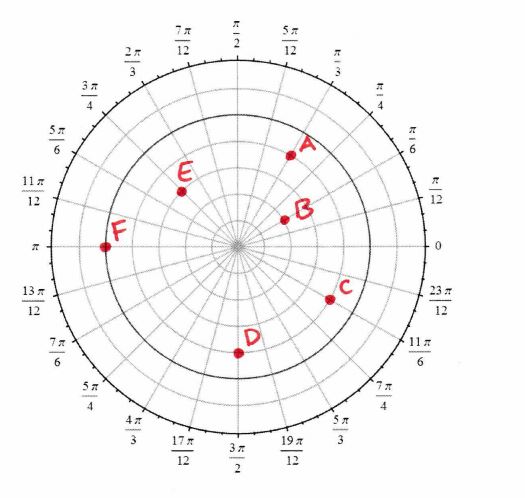
Which point represents (5, π)
1
F
2
E
3
B
4
A

6

media

7

Multiple Choice

Question image
What is the function of the graph?
1
r=3
2
r=3sinΘ
3
r=3sinΘ+3cosΘ
4
r=3cosΘ

8

media

9

Multiple Choice

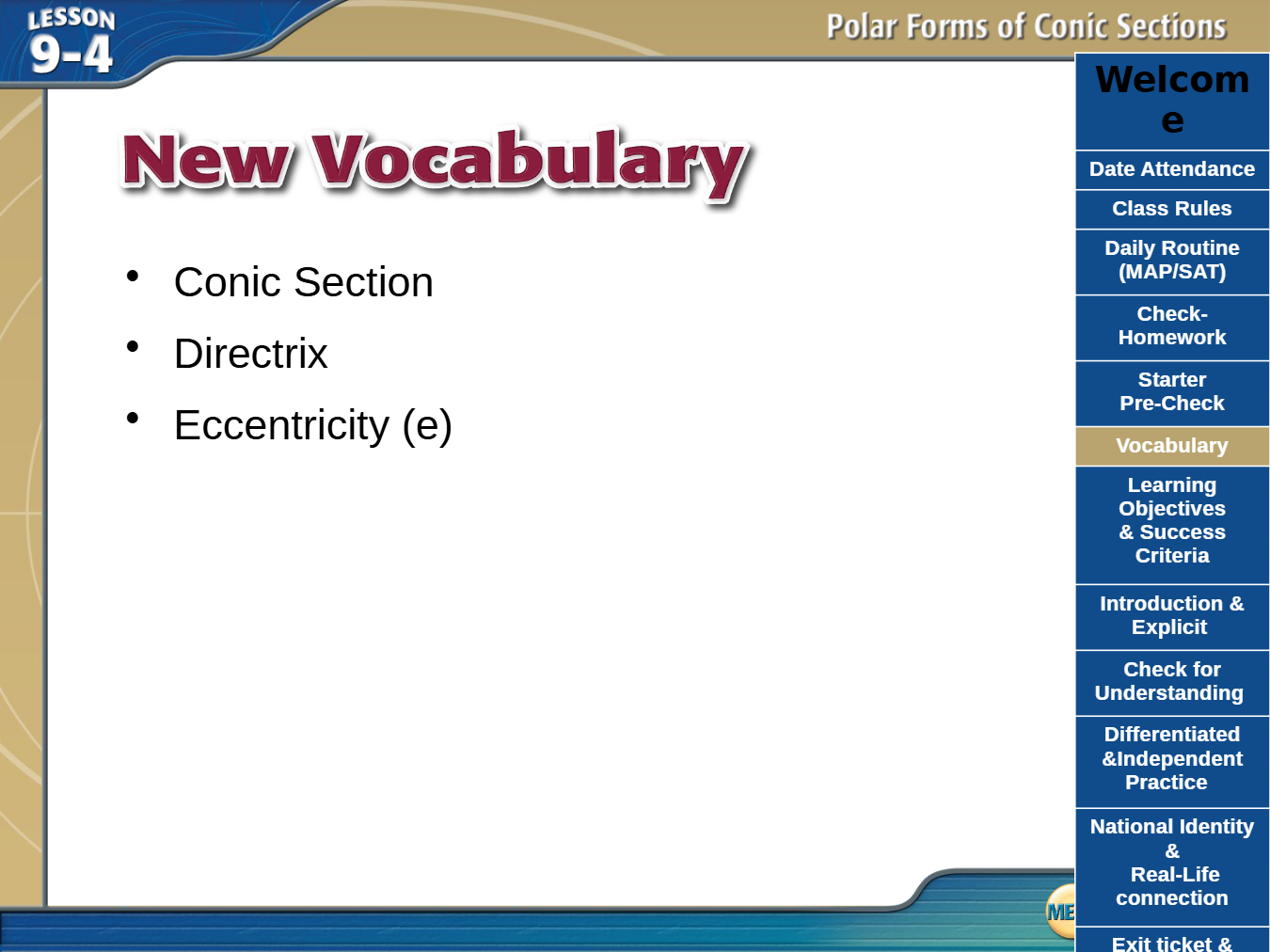
Which vocabulary term describes the line used to define conic sections in polar equations?

1

Conic Section

2

Directrix

3

Eccentricity

4

Focus

10

Multiple Choice

Question image
Which equation represents the polar graph?
1
r = sin θ
2
r = sin 4θ
3
r = 4 sin θ
4
r = 4 cos θ

11

Multiple Choice

Question image
Find the ordered pair for the focus of the conic pictured.
1
(5, 4)
2
(3, 6)
3
(1, 4)
4
(3, 2)

12

media

13

Multiple Choice

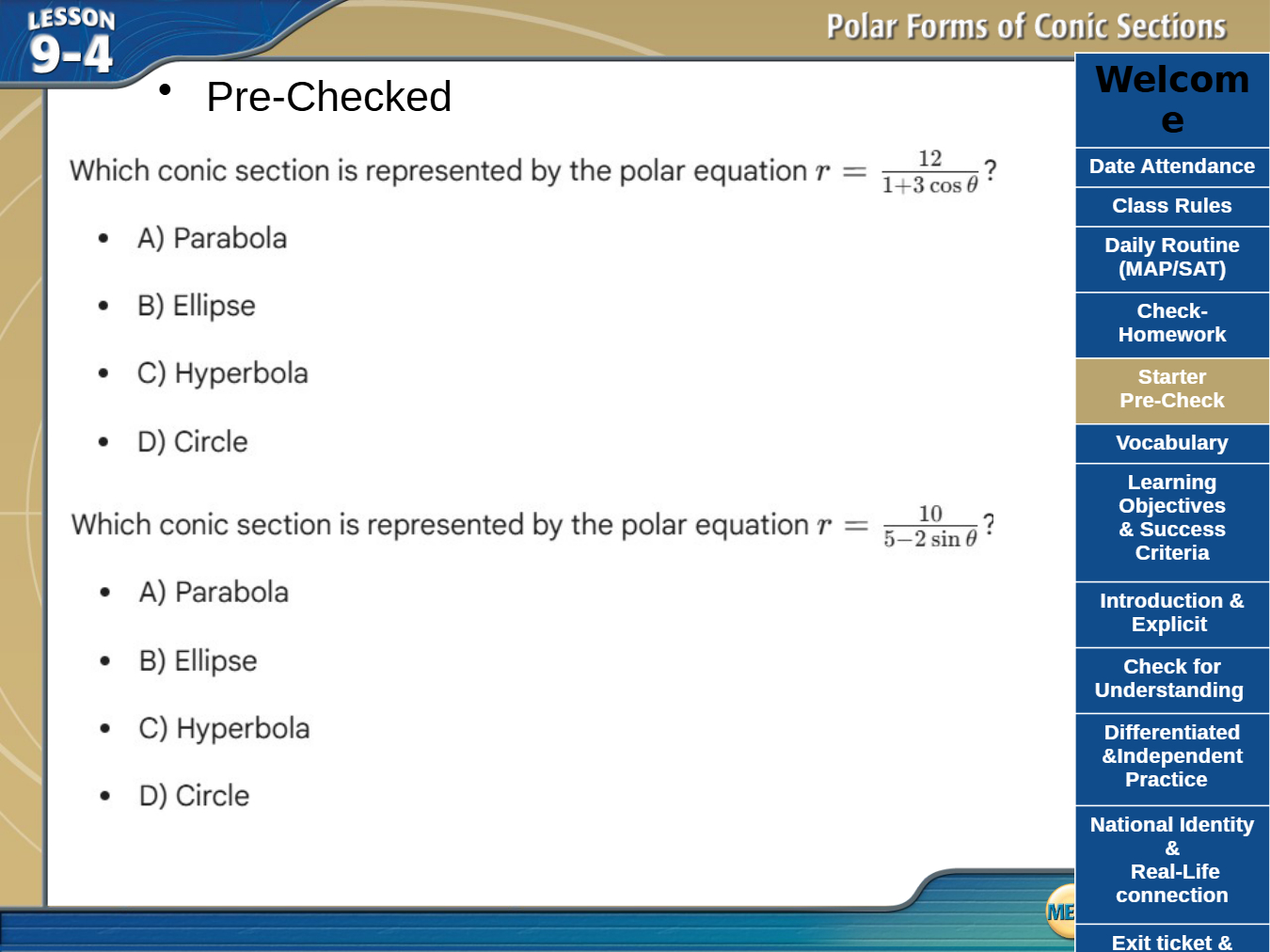
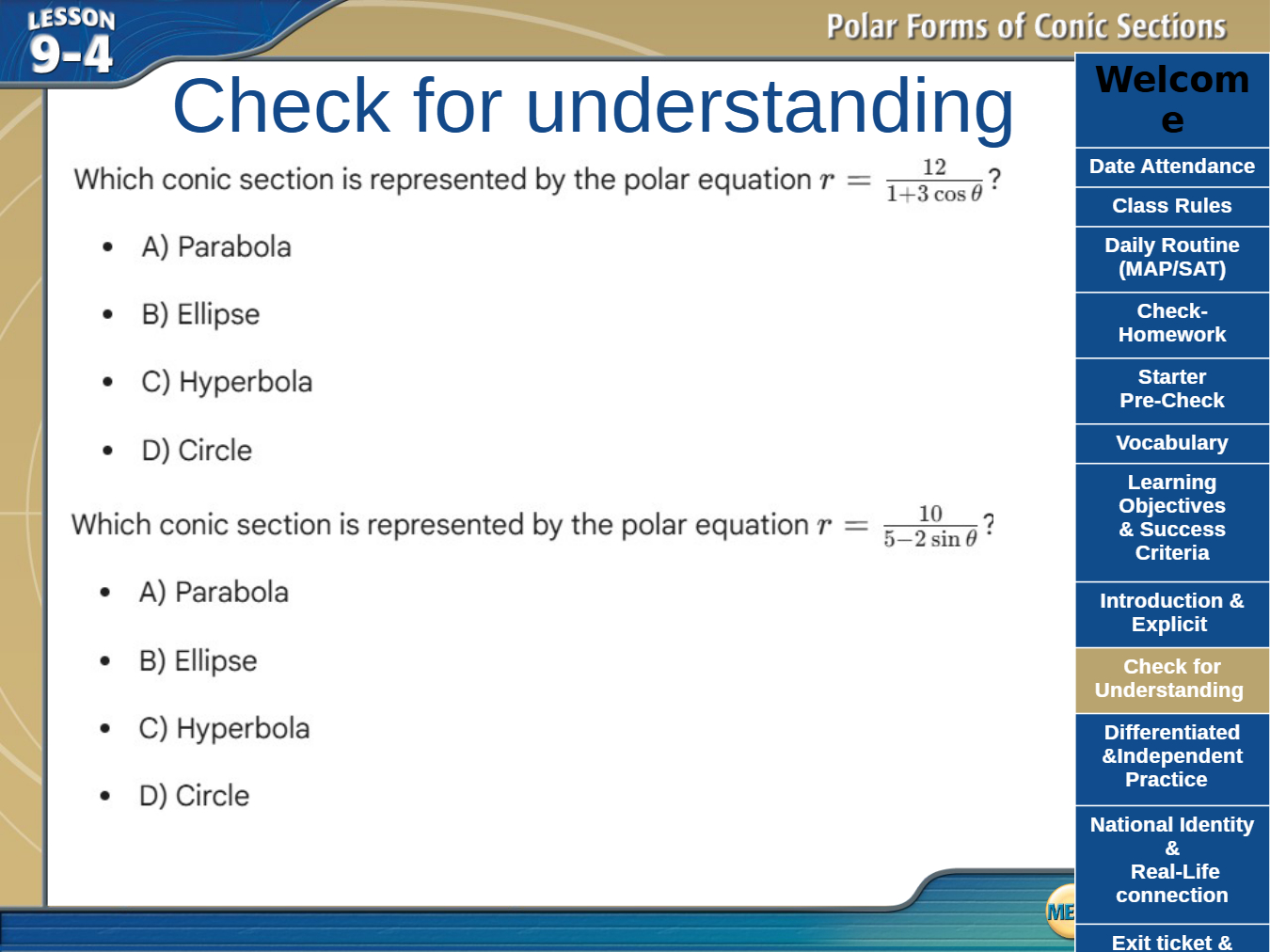
Which conic section is represented by the polar equation r = 12/(1+3cosθ)?

1

Parabola

2

Ellipse

3

Hyperbola

4

Circle

14

media

15

Fill in the Blanks

Type answer...

16

Open Ended

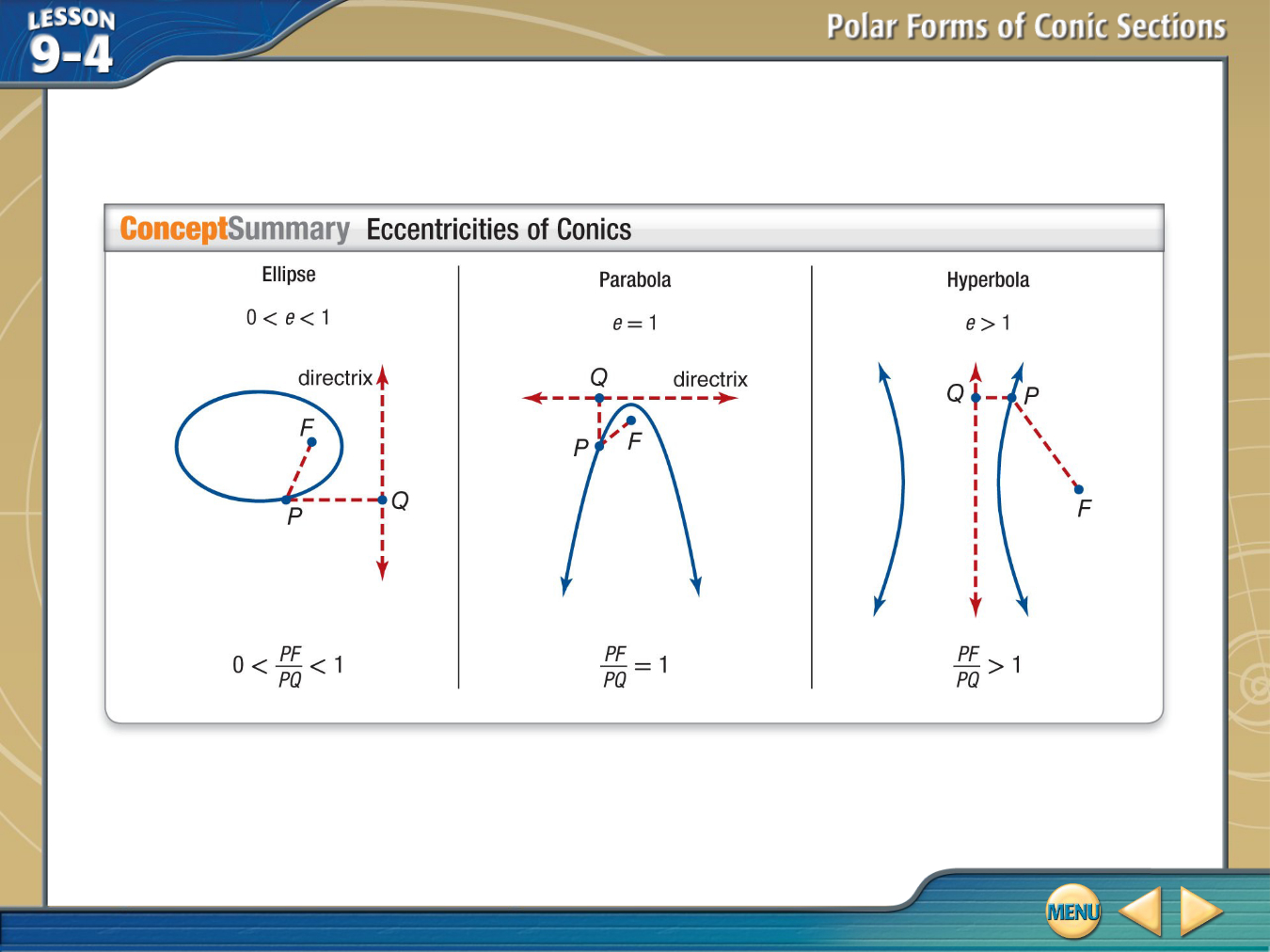
Explain how eccentricity determines the classification of a conic section as an ellipse, parabola, or hyperbola.

17

media

18

Open Ended

Describe the relationship between the focus, directrix, and eccentricity for an ellipse, parabola, and hyperbola.

19

Multiple Select

Select all equations that represent a parabola in polar form.

1

r = 12/(1+3cosθ)

2

r = ed/(1+e cosθ) with e=1

3

r = 10/(5-2sinθ)

4

r = ed/(1-e sinθ) with e=1

20

media

21

media

22

media

23

media

24

Fill in the Blanks

Type answer...

25

Multiple Choice

The eccentricity of a parabola is/could be _____.
1
0
2
0.5
3
1
4
5

26

media

27

media

28

media

29

Open Ended

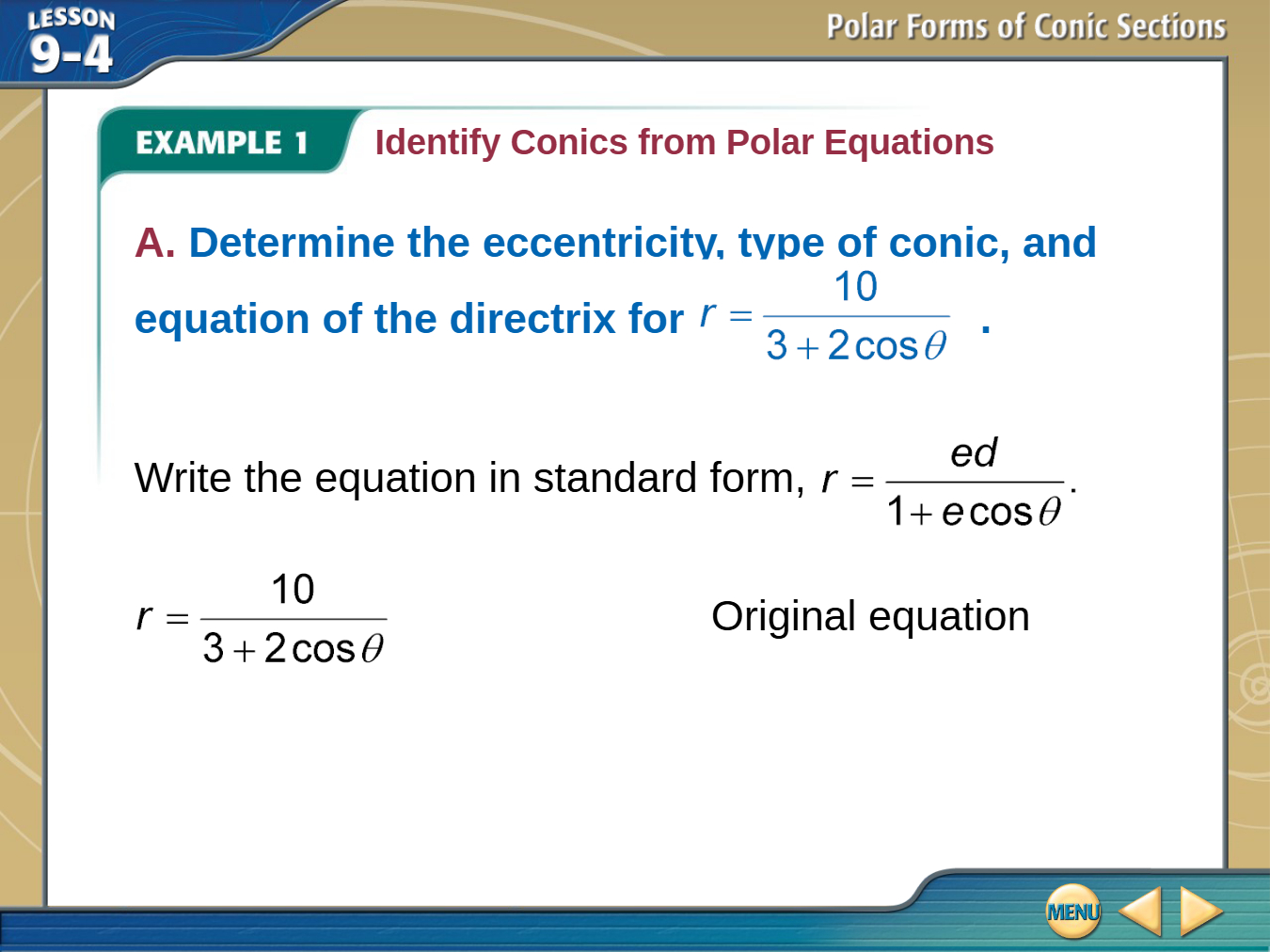
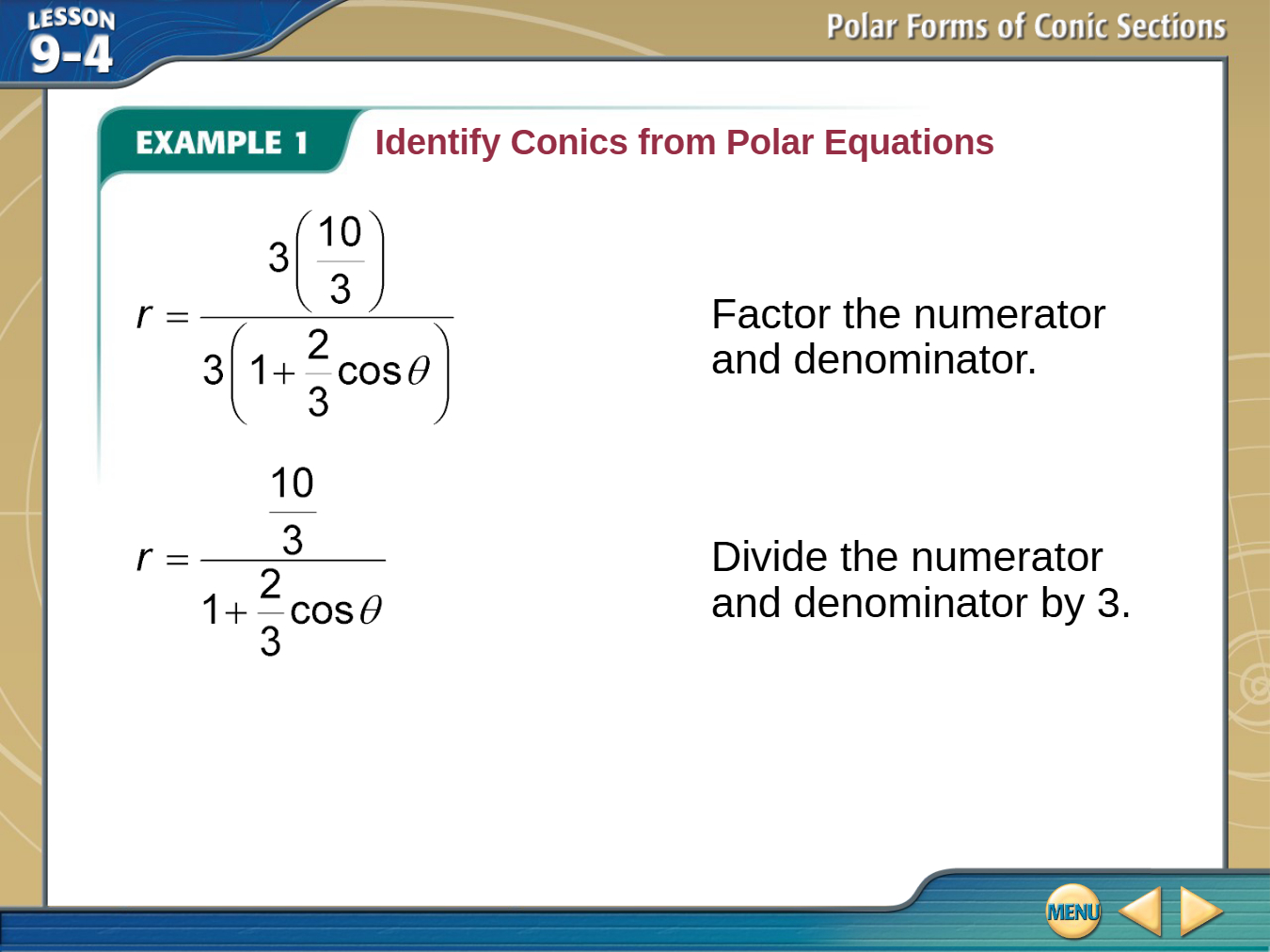
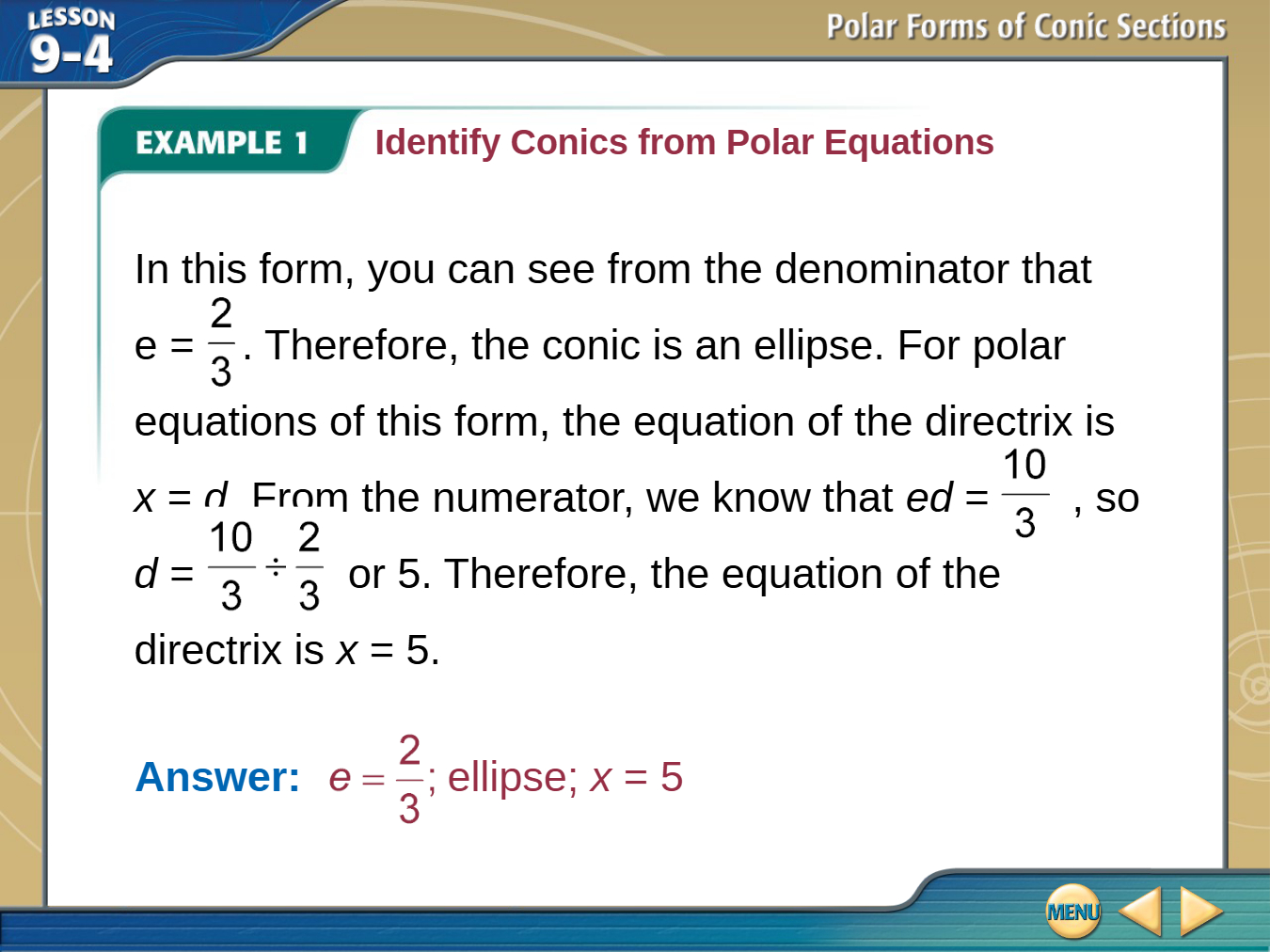
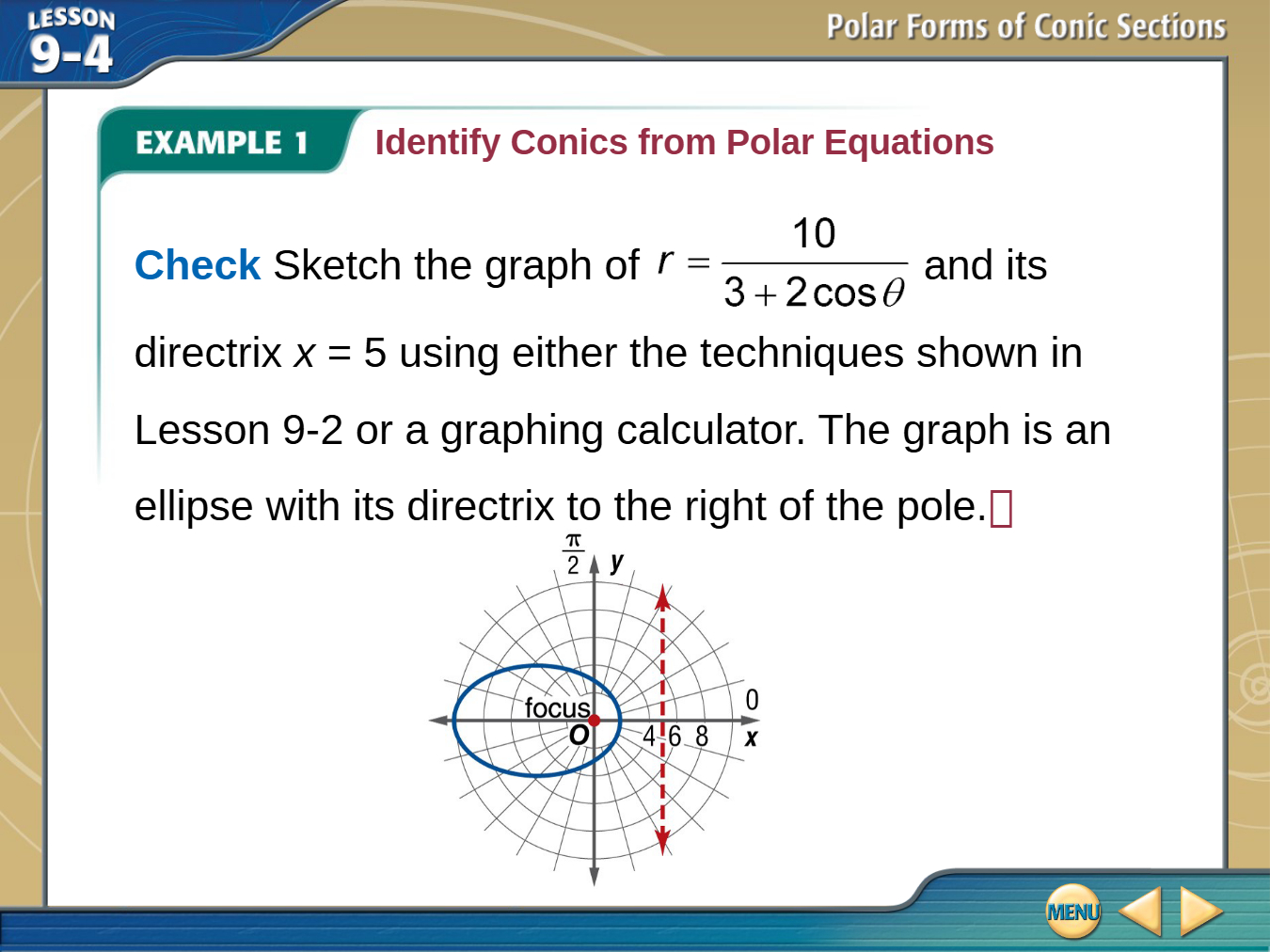
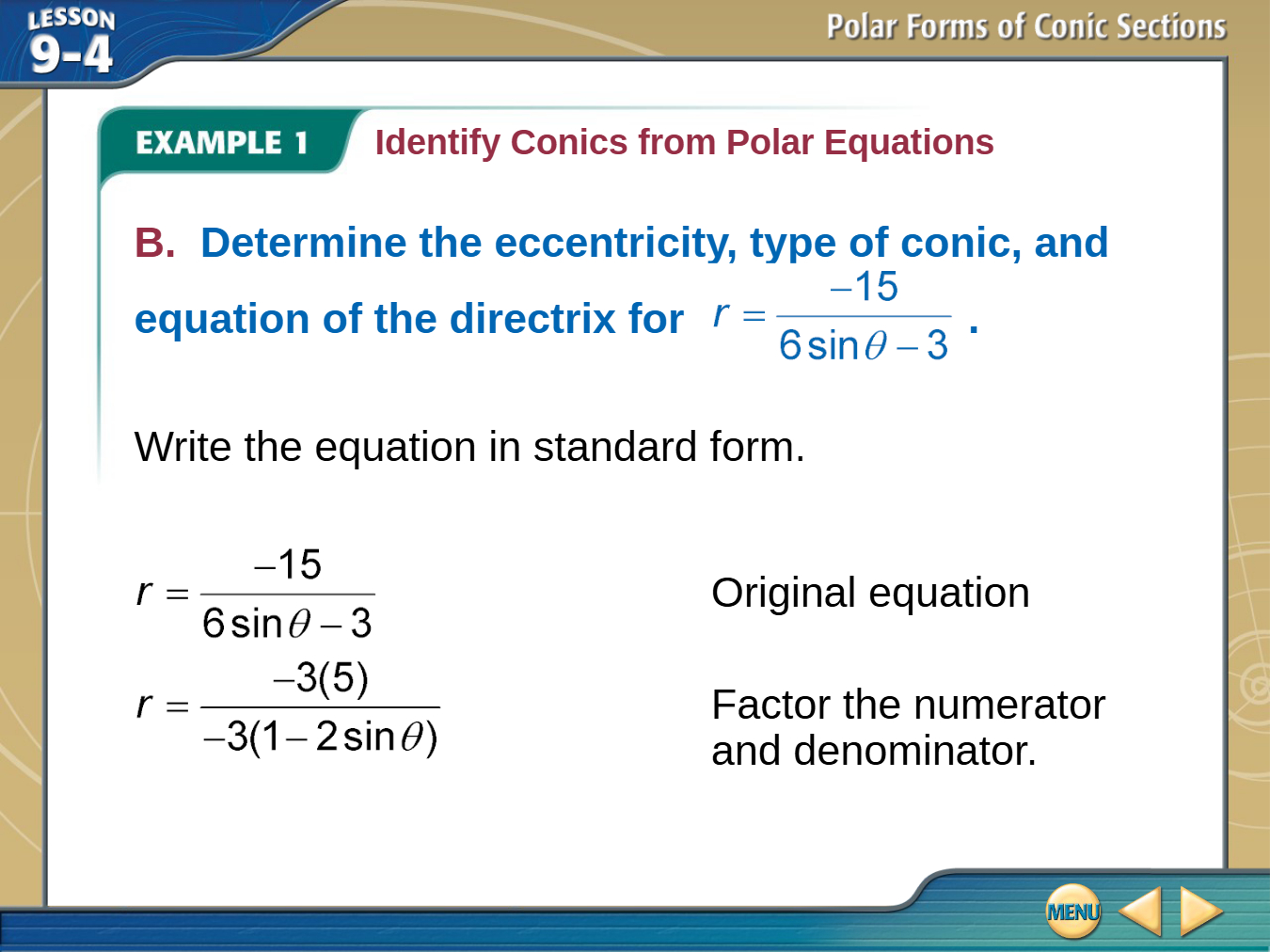
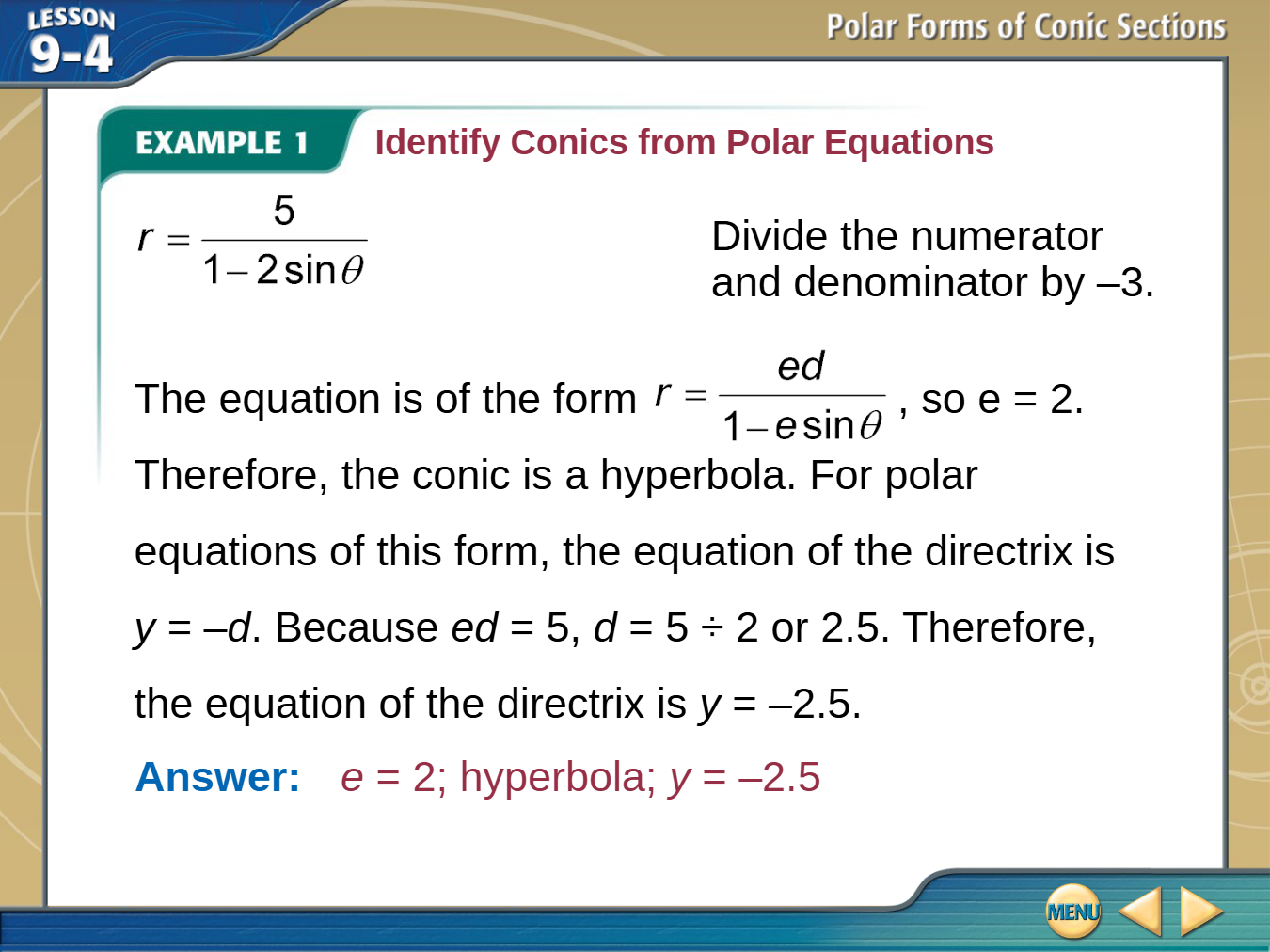
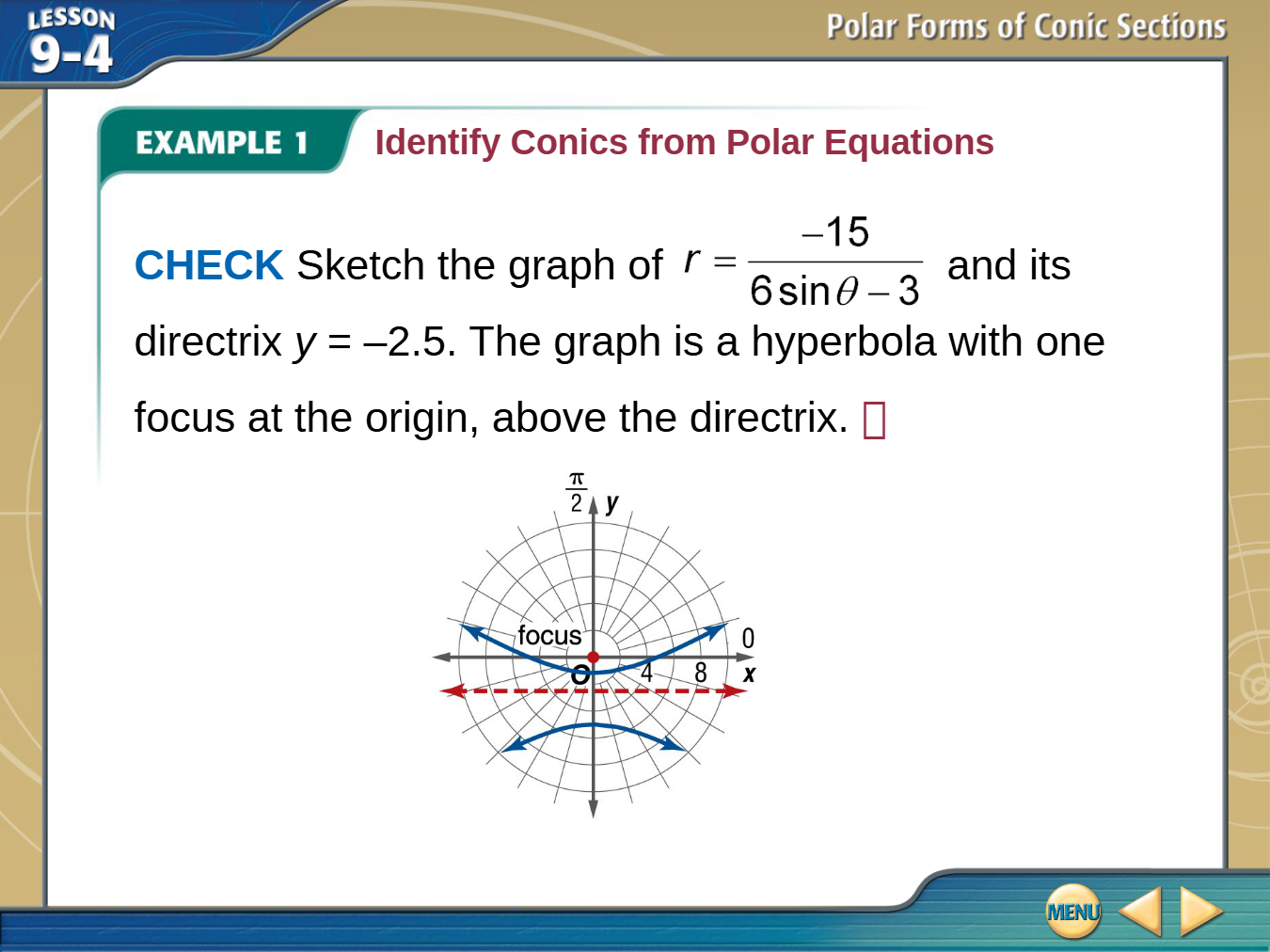
Compare the process of finding the eccentricity and directrix for the equations r = 10 / (3 + 2cosθ) and r = -15 / (6sinθ - 3). What are the key similarities and differences?

30

Multiple Choice

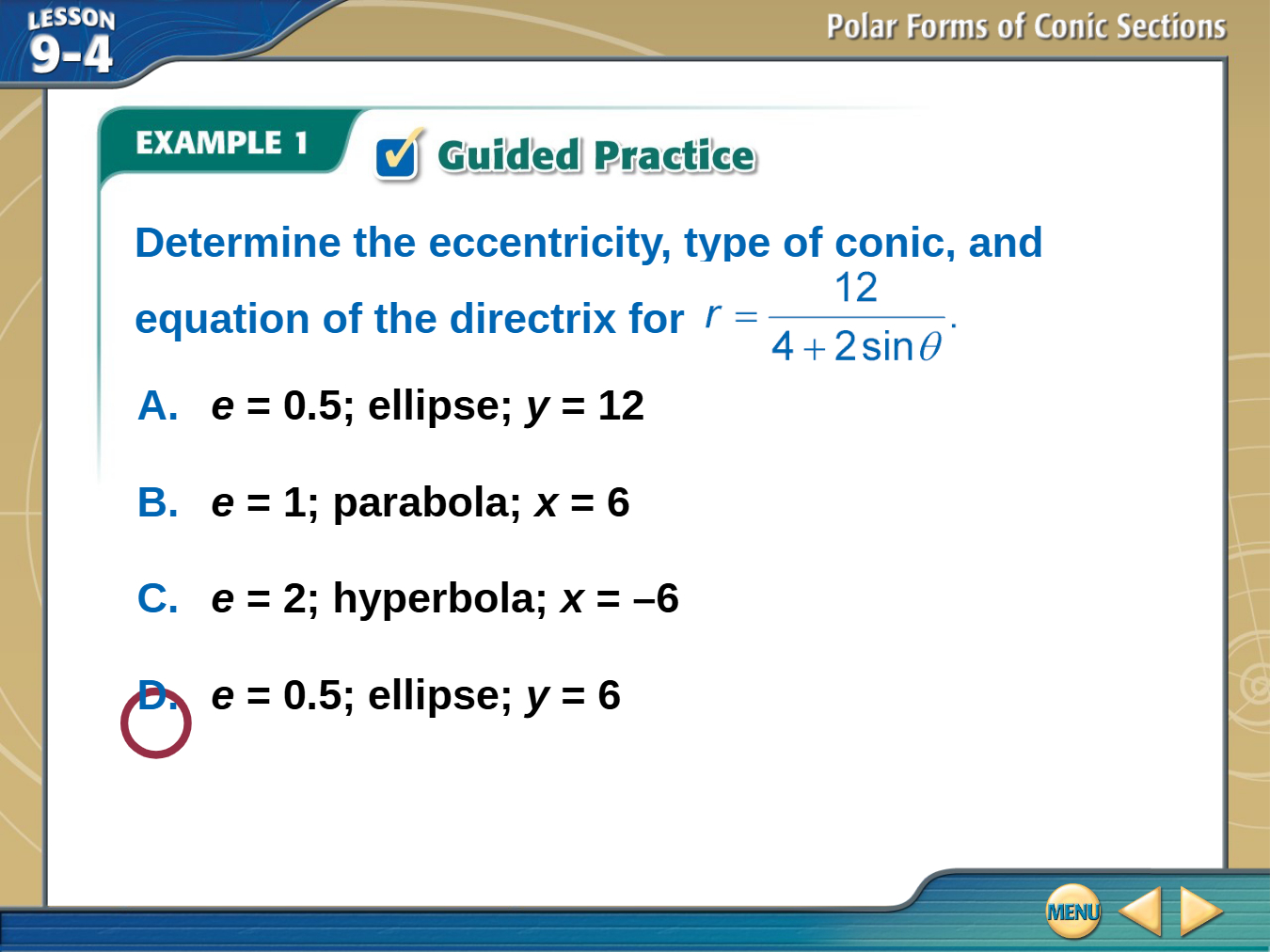
Determine the eccentricity, type of conic, and equation of the directrix for r = 12/(4 + 2sinθ).

1

e = 0.5; ellipse; y = 12

2

e = 1; parabola; x = 6

3

e = 2; hyperbola; x = -6

4

e = 0.5; ellipse; y = 6

31

media

32

media

33

Multiple Choice

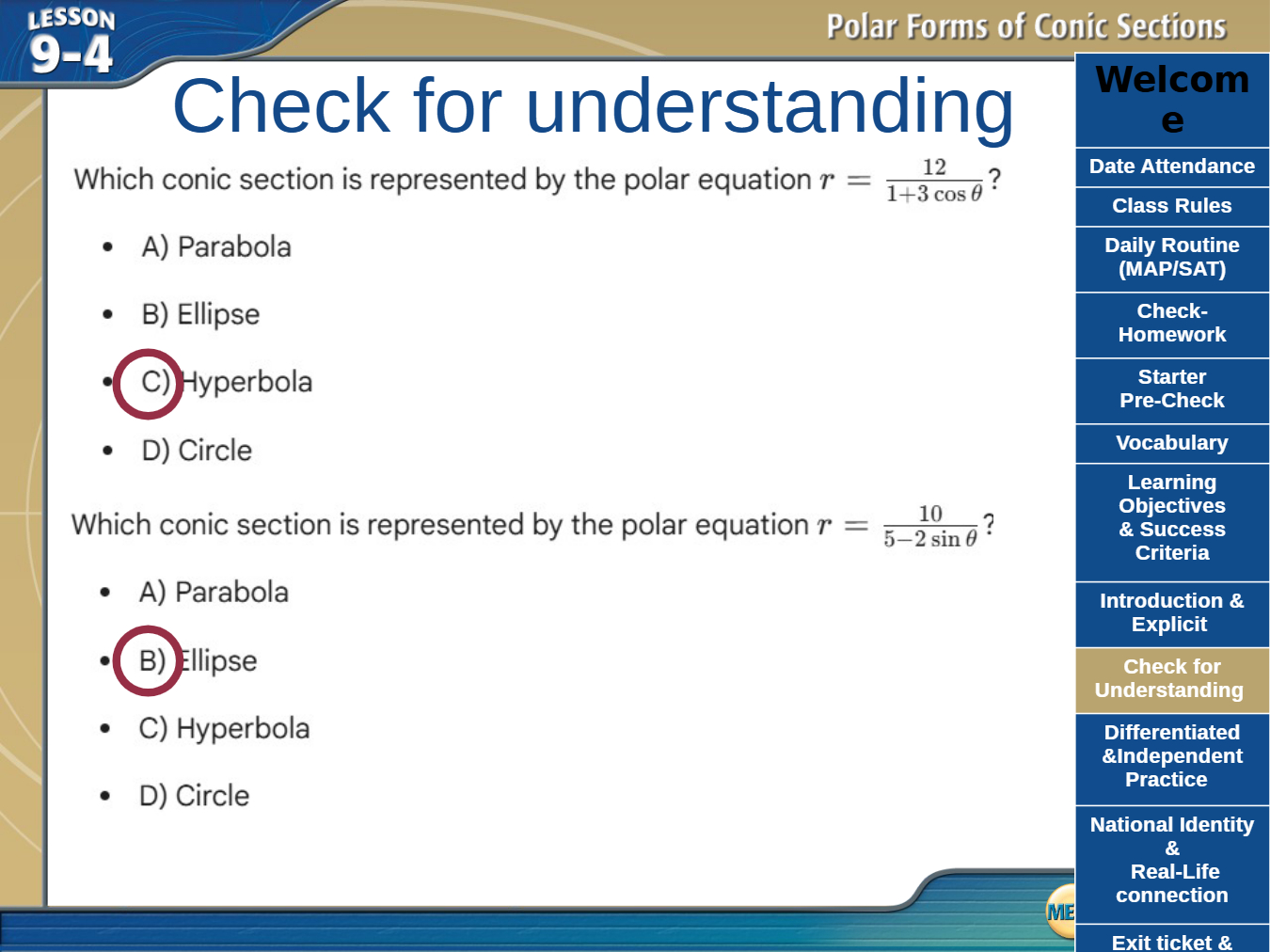
Which conic section is represented by the polar equation r = 12/(1 + 3cosθ)?

1

Parabola

2

Ellipse

3

Hyperbola

4

Circle

34

media

35

media

36

media

37

Fill in the Blanks

Type answer...

38

media

39

Multiple Choice

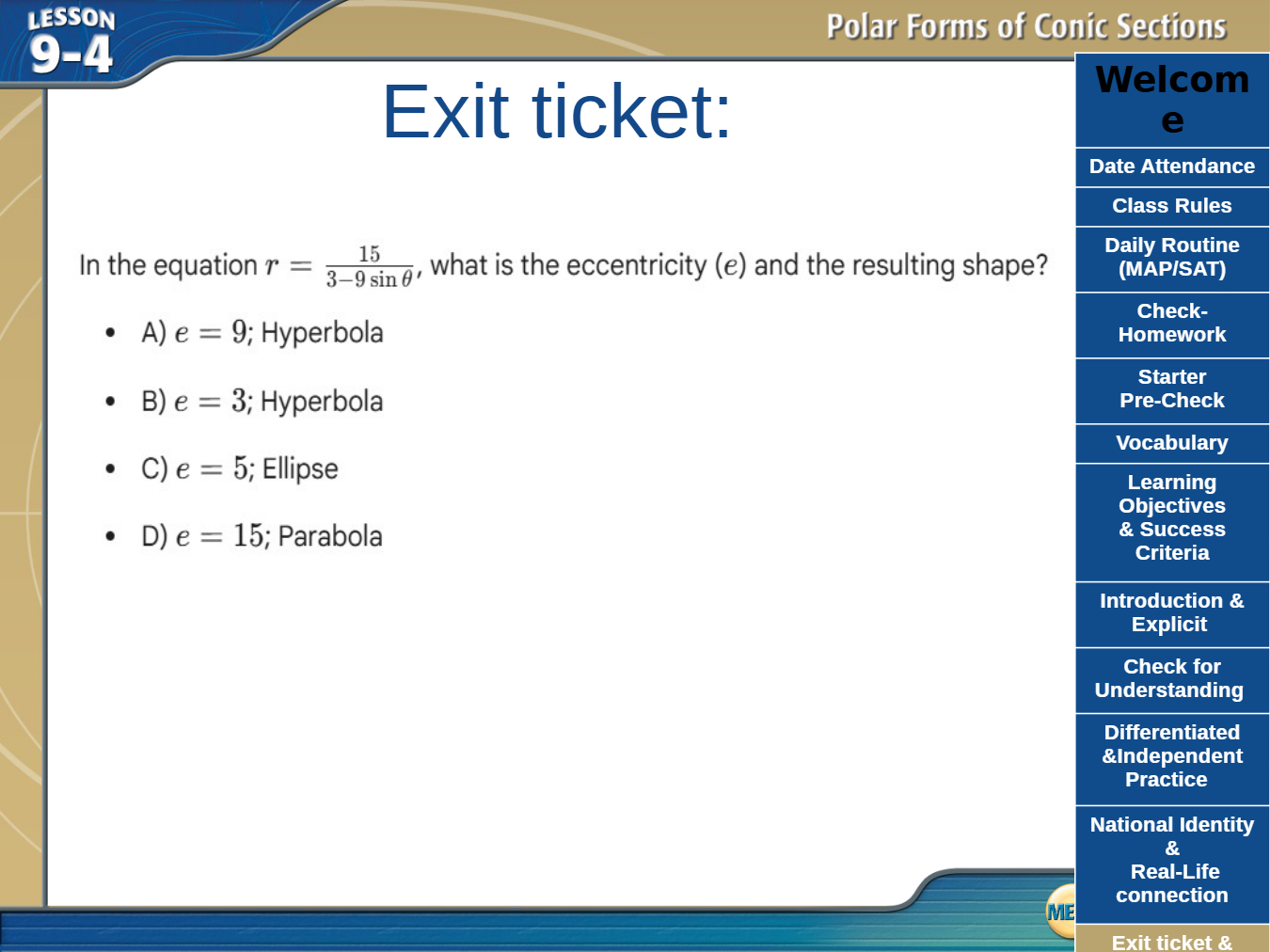
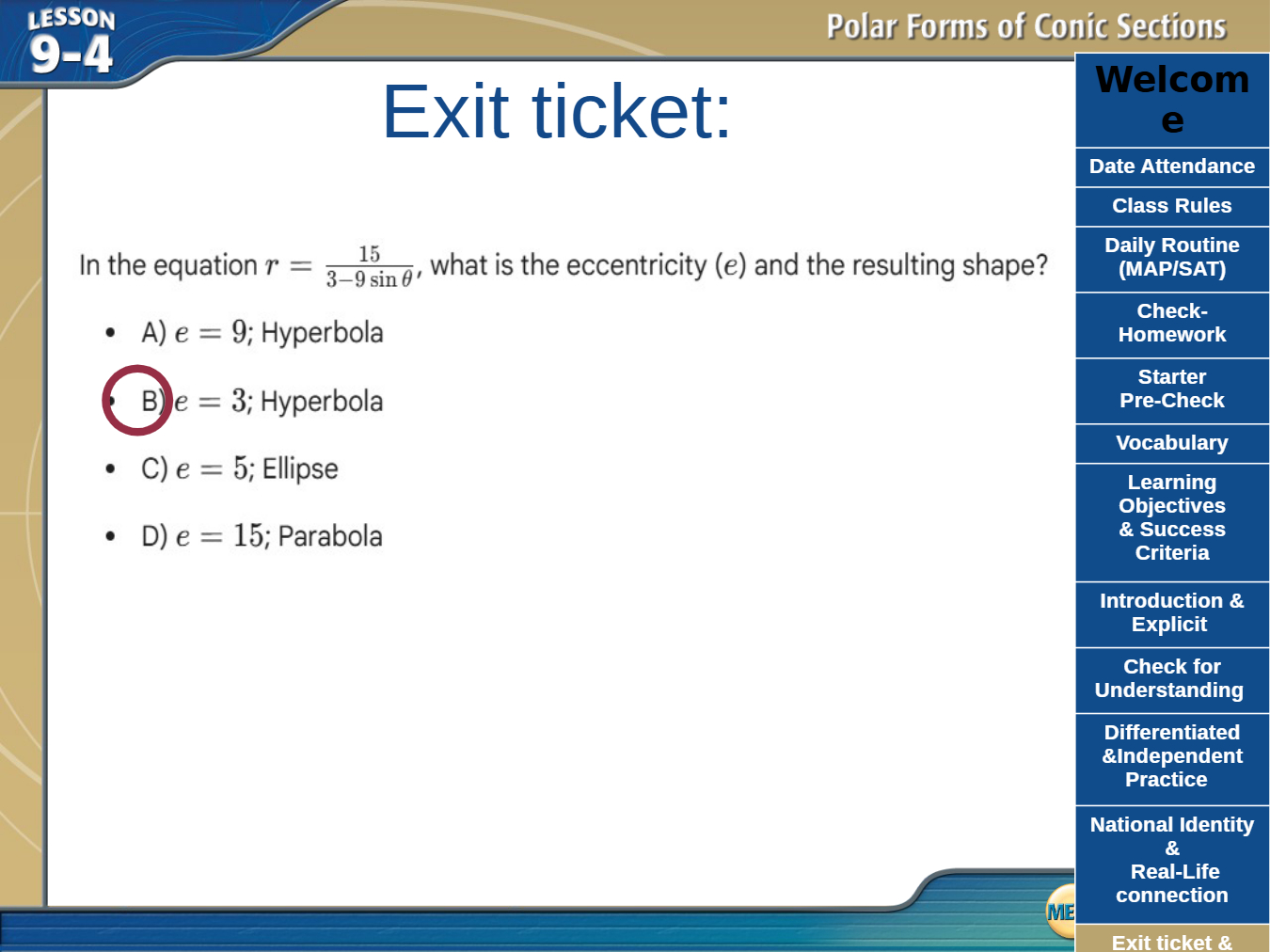
In the equation r = 15/(3 - 9sinθ), what is the eccentricity (e) and the resulting shape?

1

e = 9; Hyperbola

2

e = 3; Hyperbola

3

e = 5; Ellipse

4

e = 15; Parabola

40

media

41

media

42

Fill in the Blanks

Type answer...

43

media

44

media

45

Open Ended

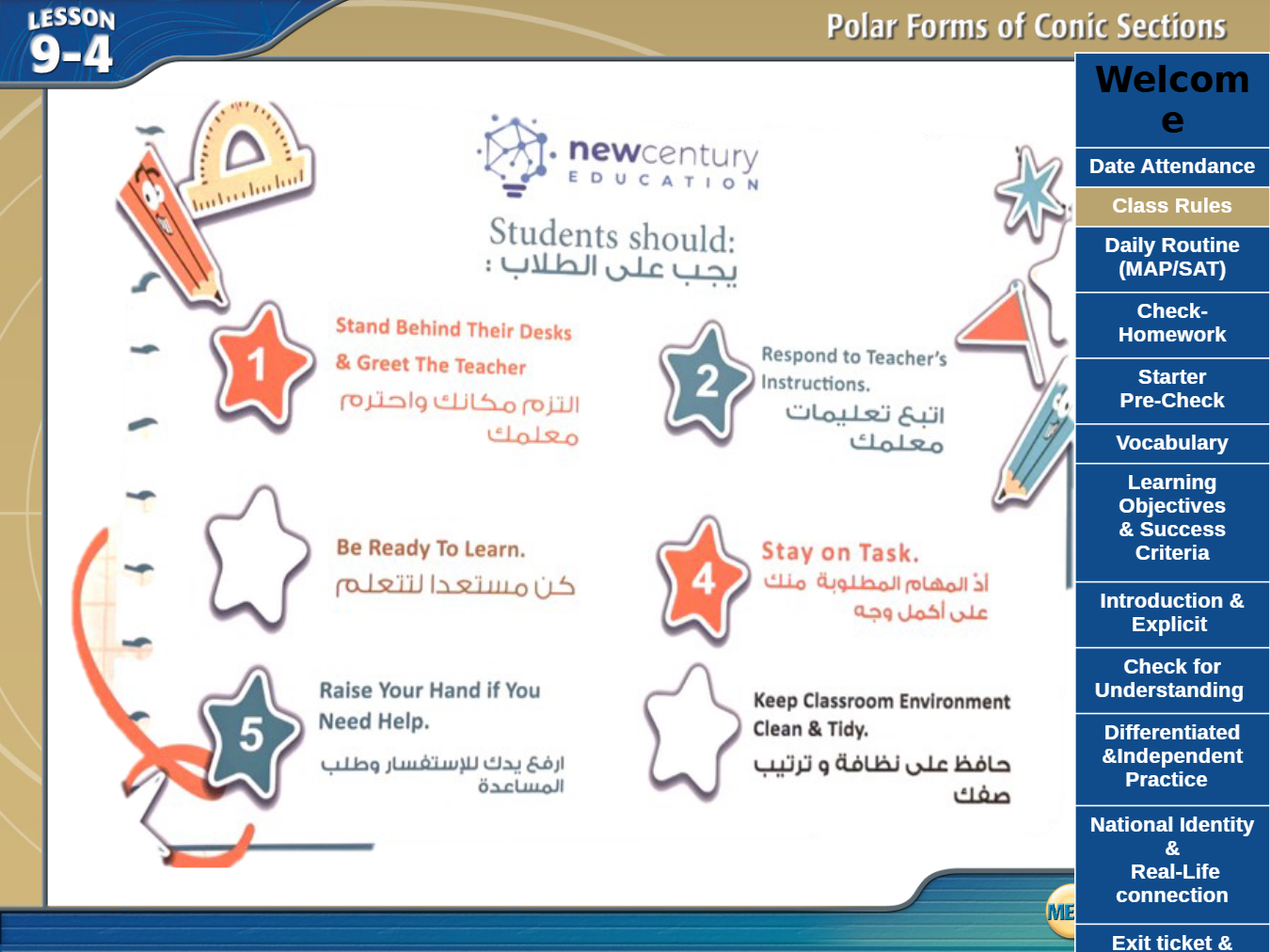
What are the key classroom rules students should follow according to the lesson?

46

media

47

Open Ended

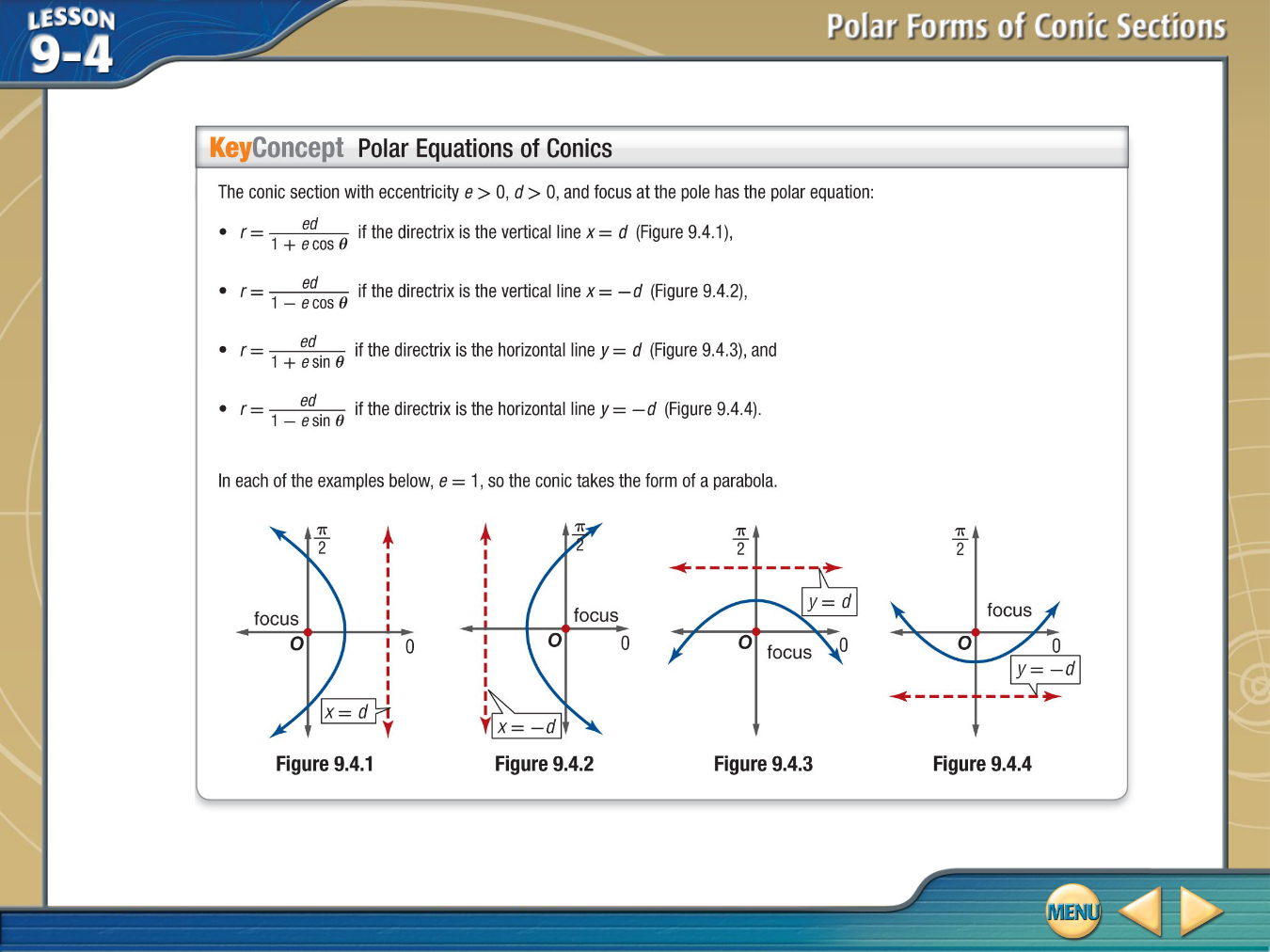
Explain how the polar equation of a conic section changes when the directrix is vertical versus horizontal.

48

Multiple Choice

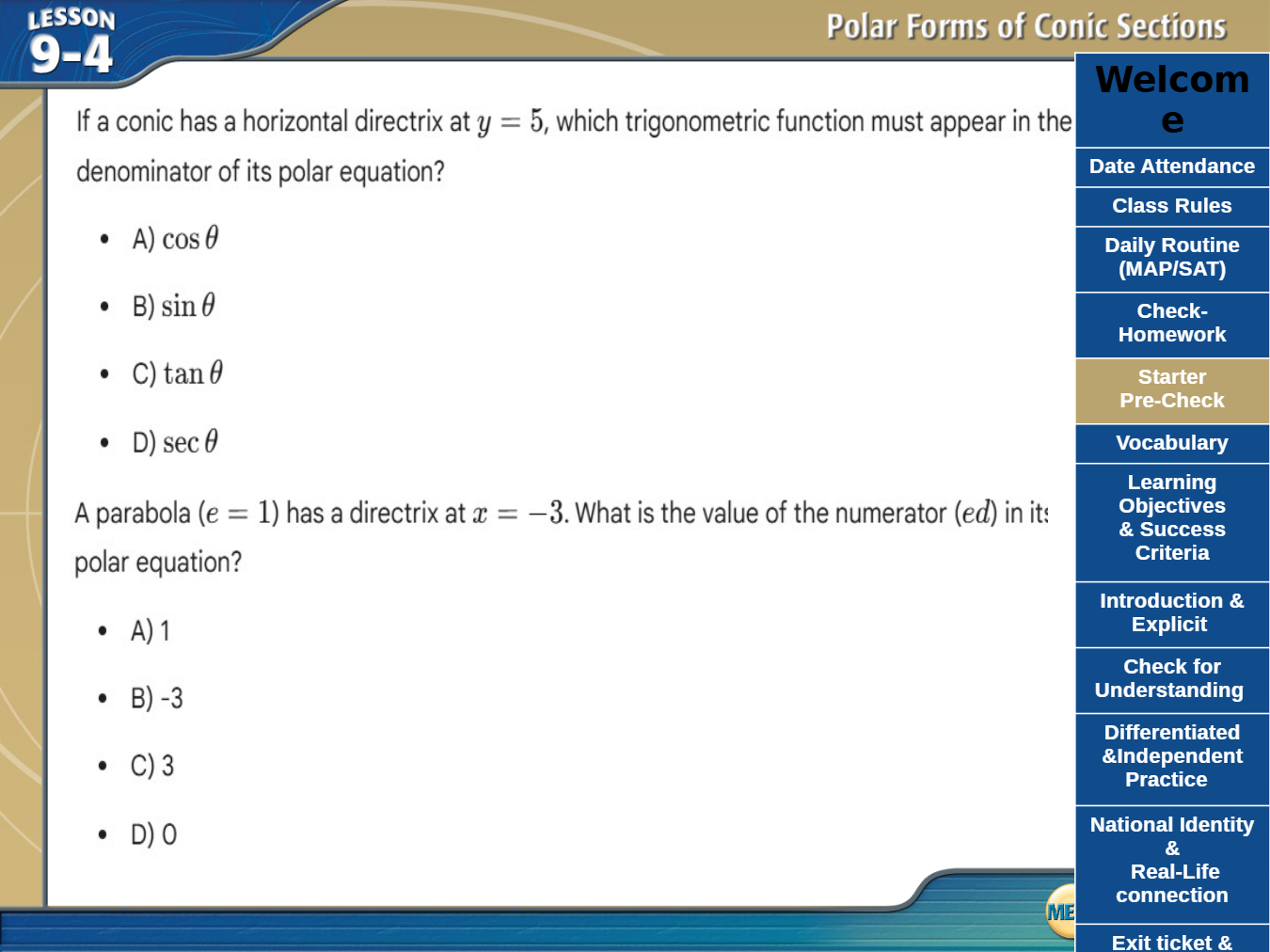
A parabola (e = 1) has a directrix at x = -3. What is the value of the numerator (ed) in its polar equation?

1

1

2

-3

3

3

4

0

49

Multiple Choice

If a conic has a horizontal directrix at y = 5, which trigonometric function must appear in the denominator of its polar equation?

1

cosθ

2

sinθ

3

tanθ

4

secθ

50

media

51

media

52

media

53

media

54

Open Ended

What is one thing you learned today about polar forms of conic sections?

media

Show answer

Auto Play

Slide 1 / 54

SLIDE