

CHAPTER 4 WHEATHERING

Presentation
•
Engineering
•
10th Grade
•
Practice Problem
•
Easy

NURUL HIDAYAH BINTI MOHD KAMARUDDIN NURUL HIDAYAH BINTI MOHD KAMARUDDIN
Used 6+ times
FREE Resource
30 Slides • 26 Questions
1
2
3
Multiple Choice

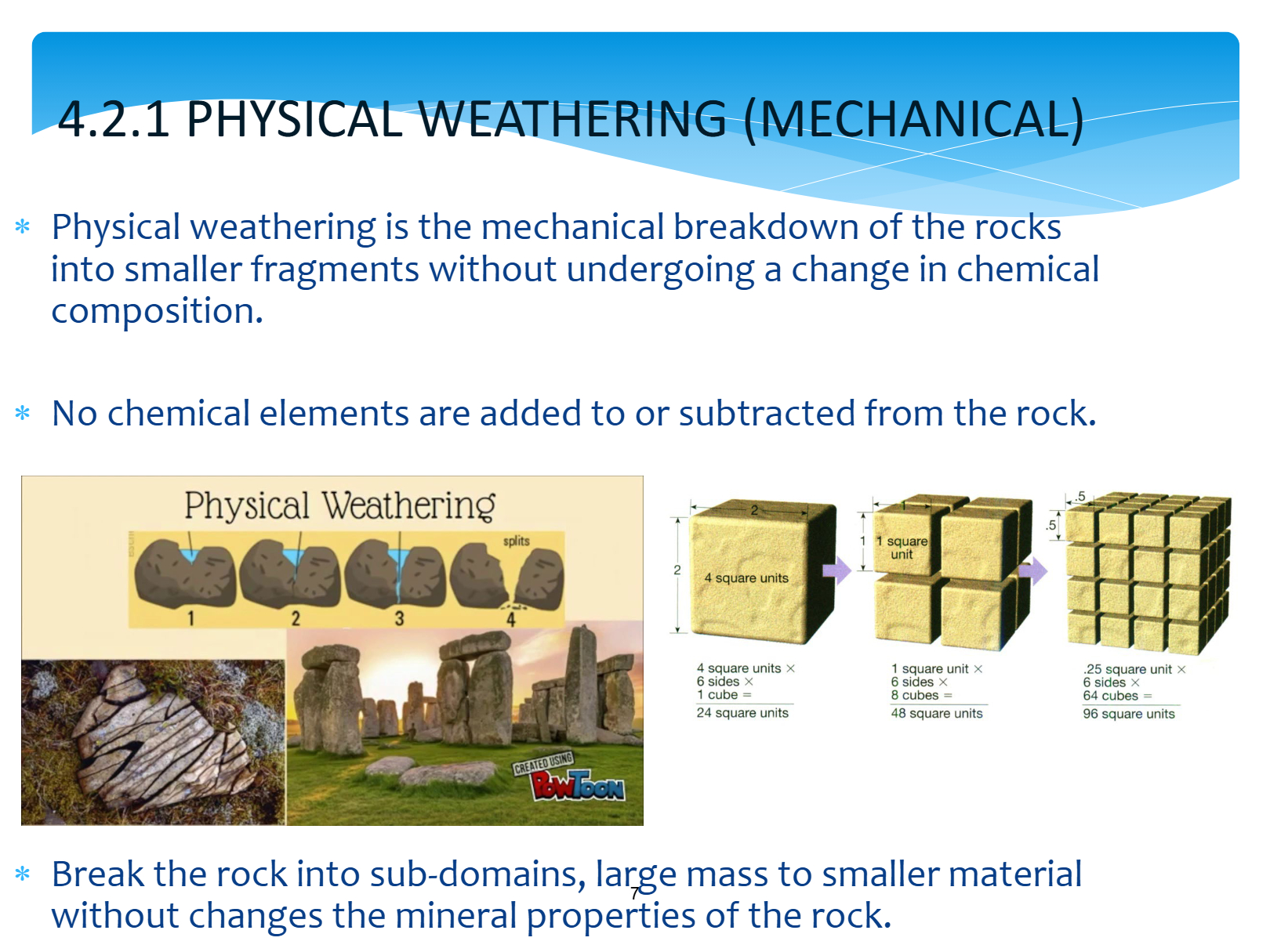
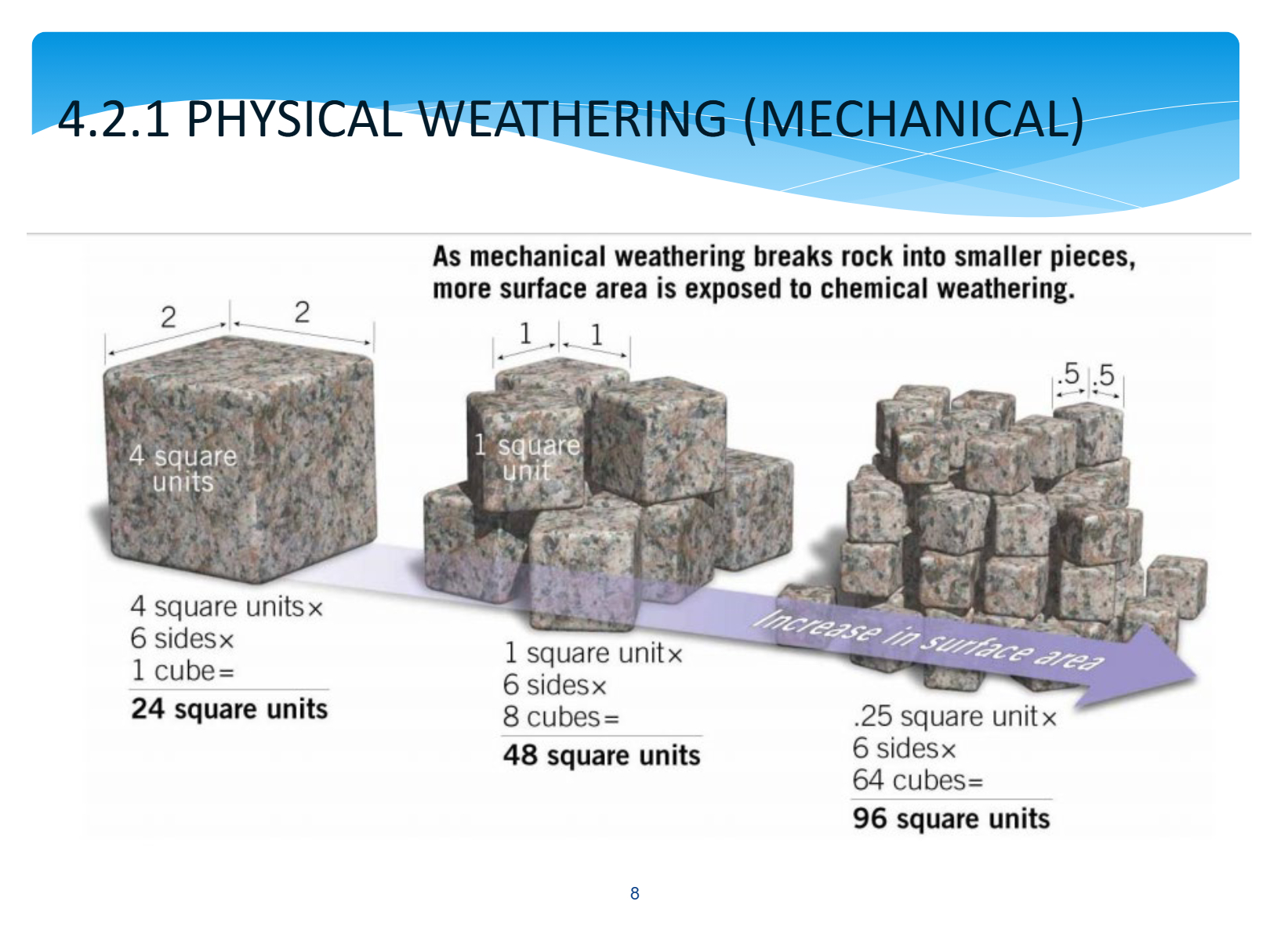
What is the main effect of mechanical weathering on rocks as shown in the diagrams?
Increase in surface area
Decrease in volume
Change in chemical composition
Formation of new minerals
4
Open Ended
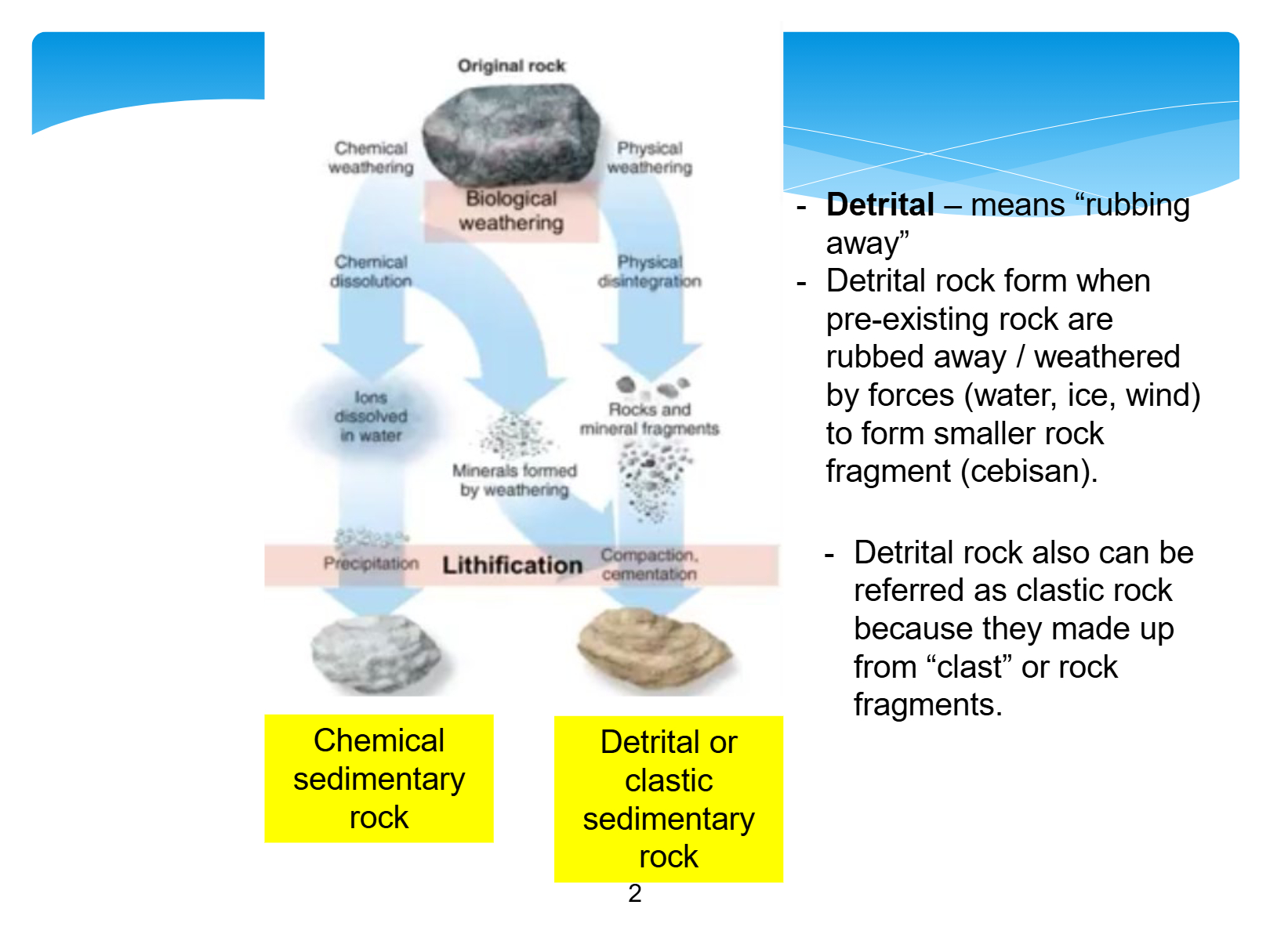
How do physical forces such as water, ice, and wind contribute to the formation of detrital sedimentary rocks?
5
Multiple Choice
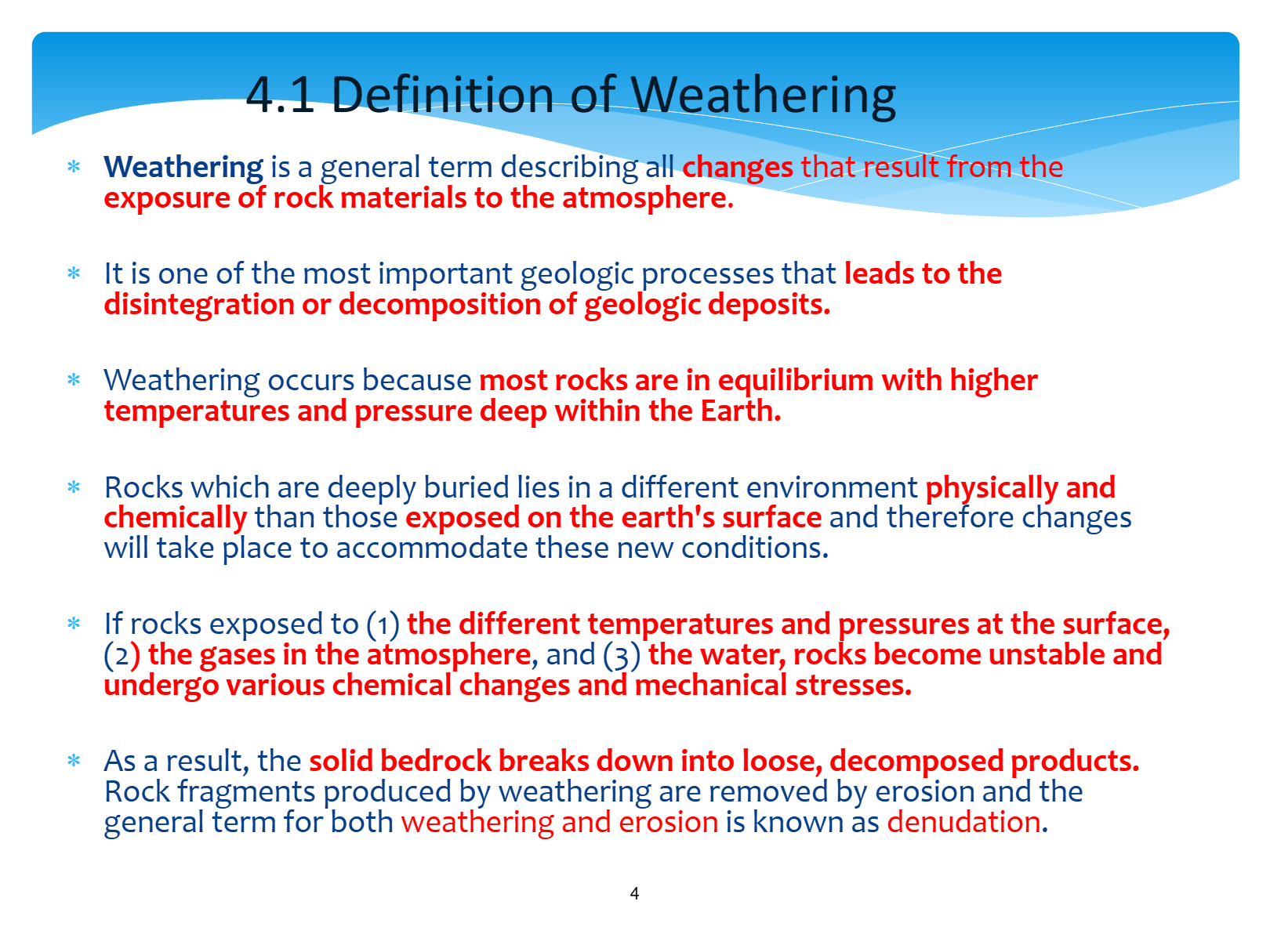
What is the significance of weathering in shaping the Earth's surface?
It helps in soil formation and landscape development.
It only destroys rocks without any benefits.
It prevents the formation of sedimentary rocks.
It has no impact on the environment.
6
7
Multiple Choice
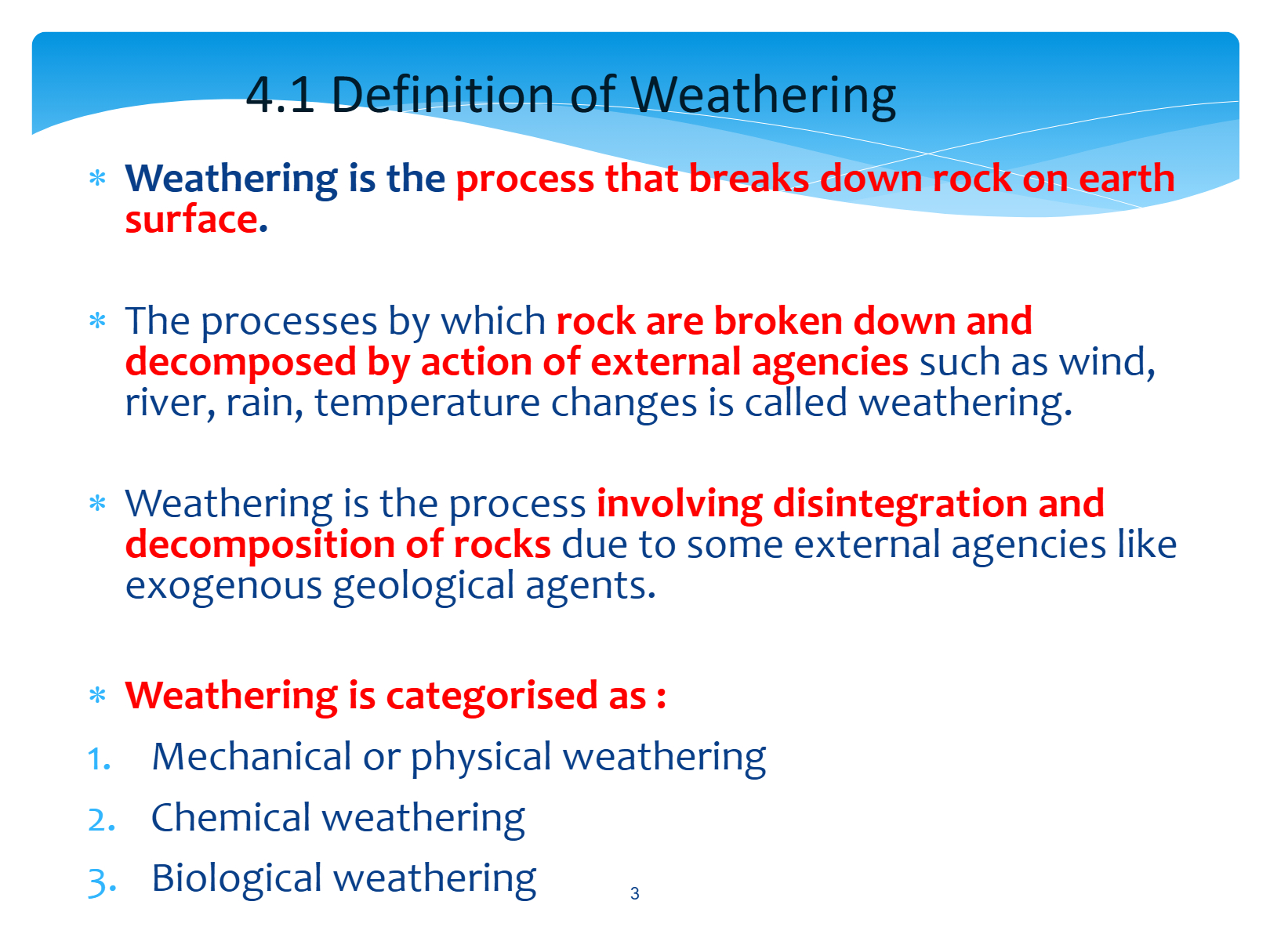
Which of the following best describes the process of weathering?
The process that breaks down rock on earth surface
The process that forms new rocks
The process that moves rocks from one place to another
The process that melts rocks
8
9
Open Ended
Explain how external agencies contribute to the decomposition of rocks as described in the slides.
10
11
Open Ended
Describe the difference between weathering and denudation.
12
13
Multiple Select
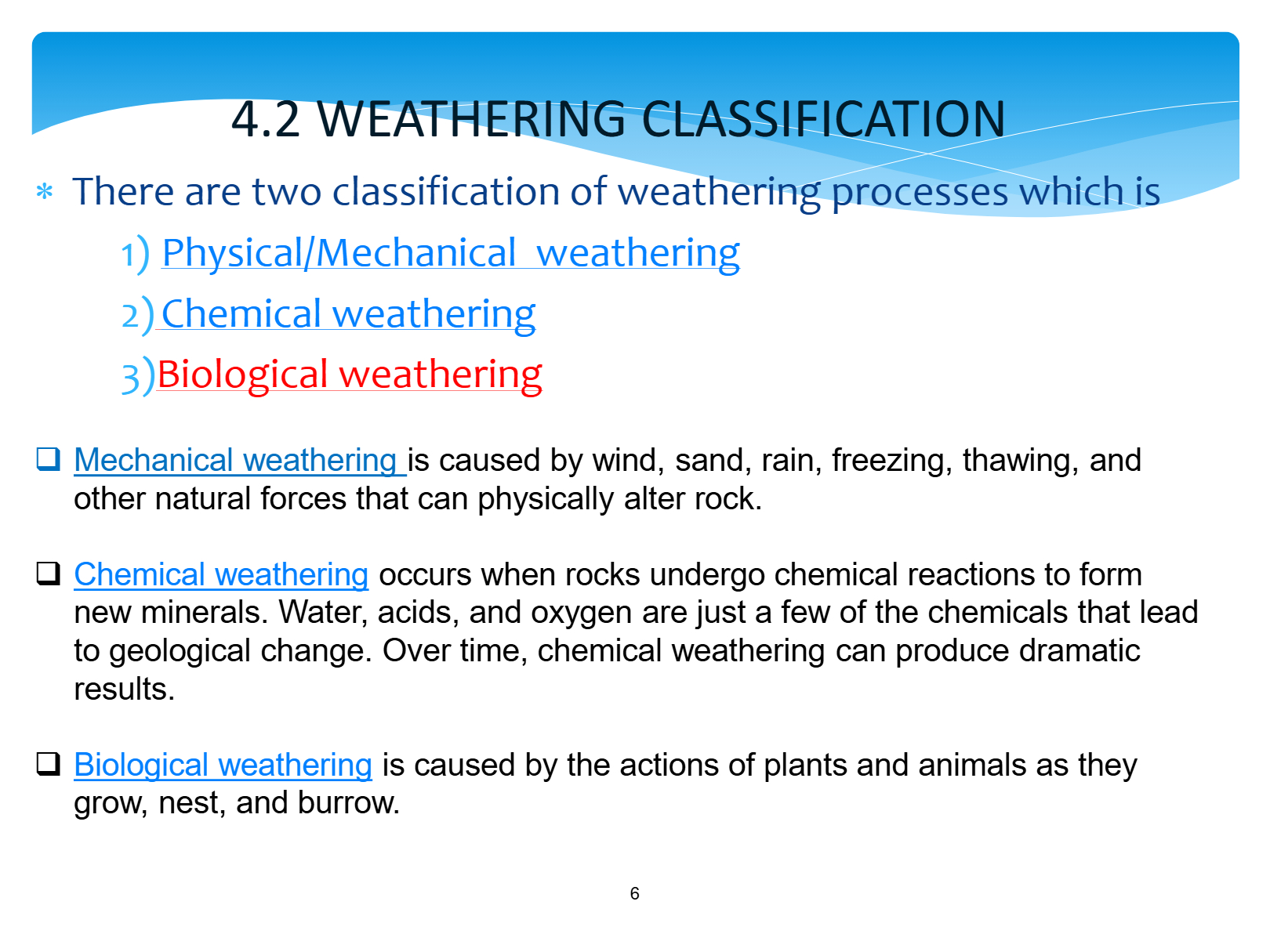
Select all the types of weathering mentioned in the slides.
Mechanical weathering
Chemical weathering
Biological weathering
Thermal weathering
14
15
16
17
18
19
Multiple Choice
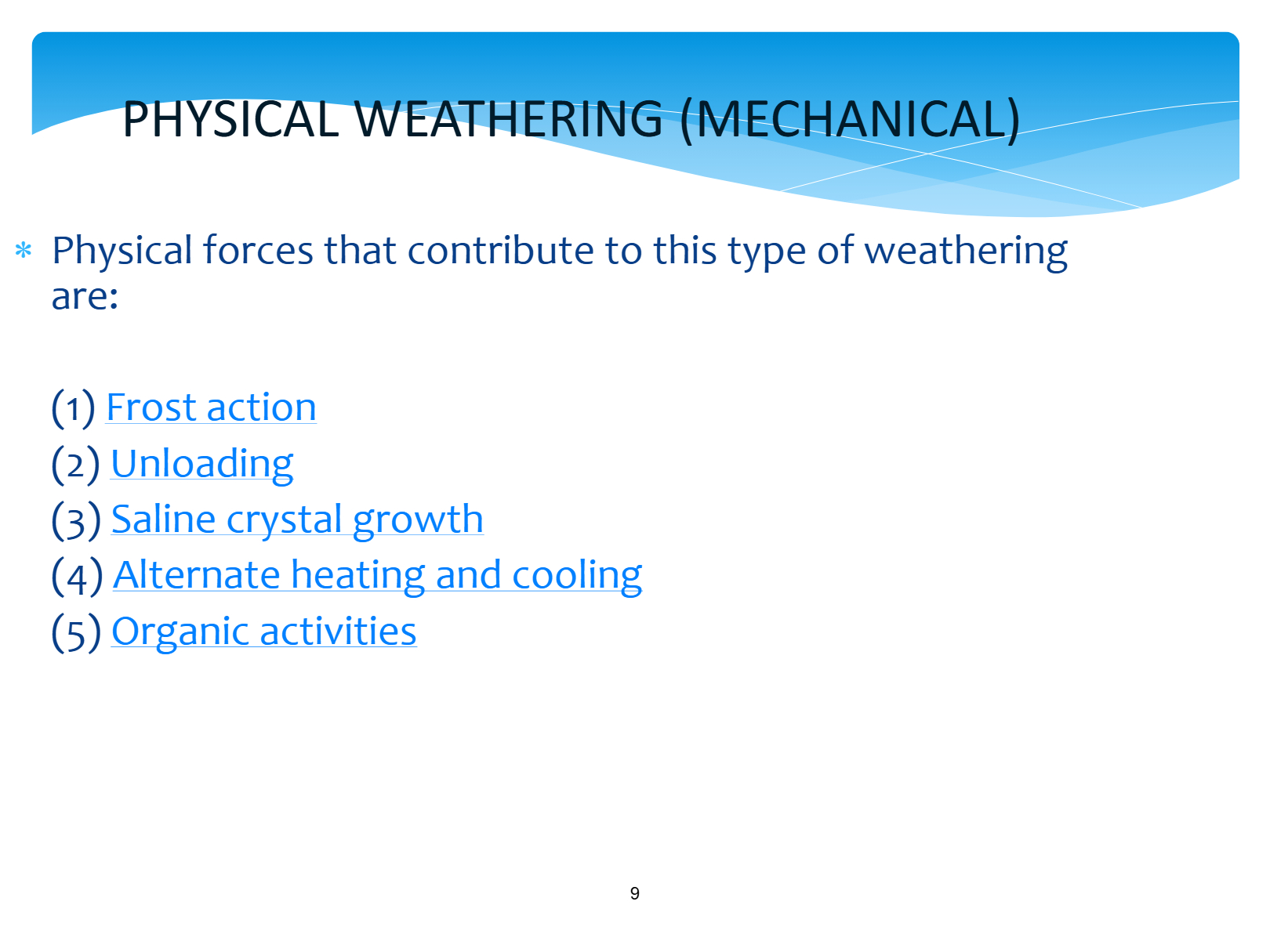
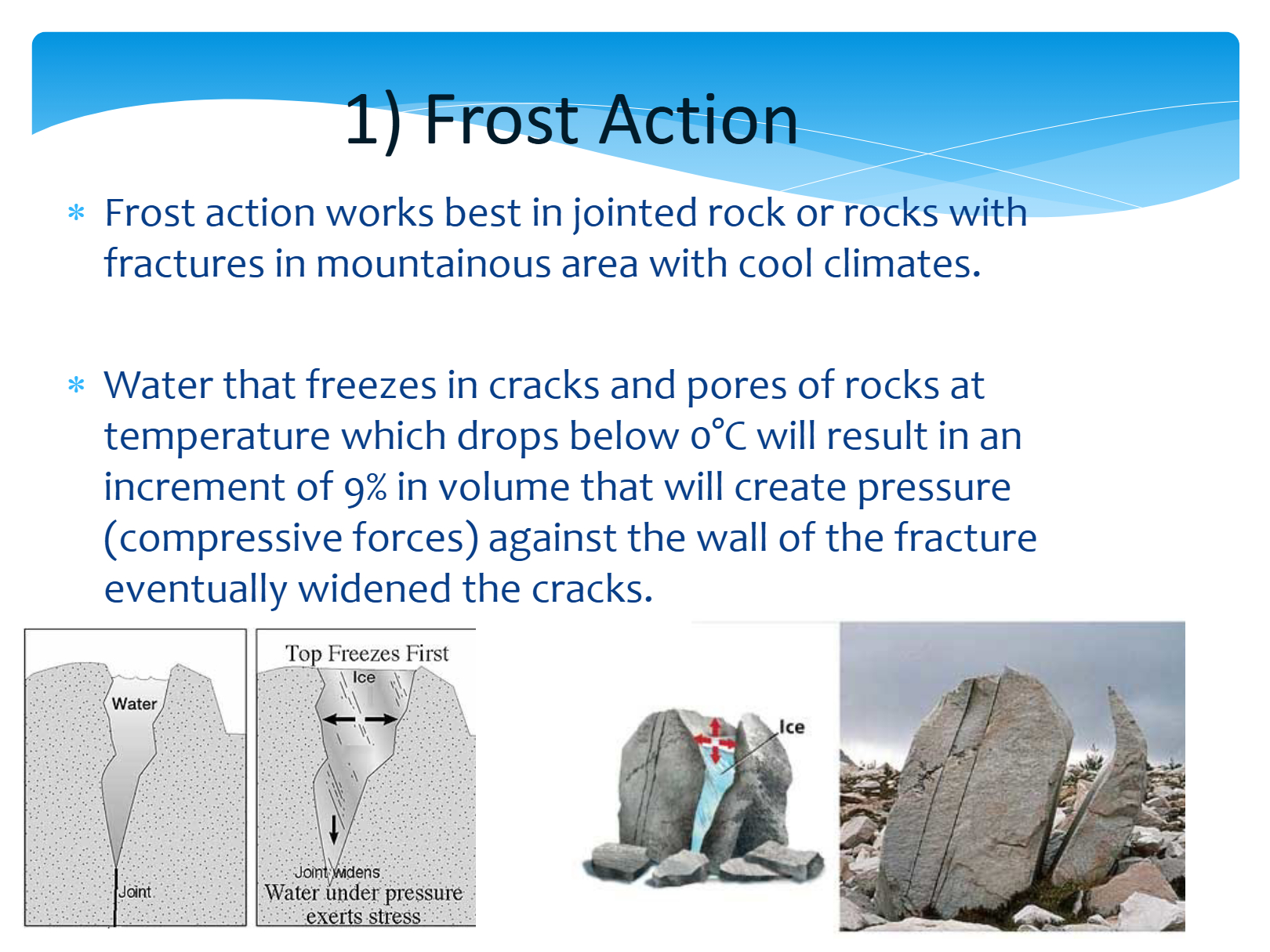
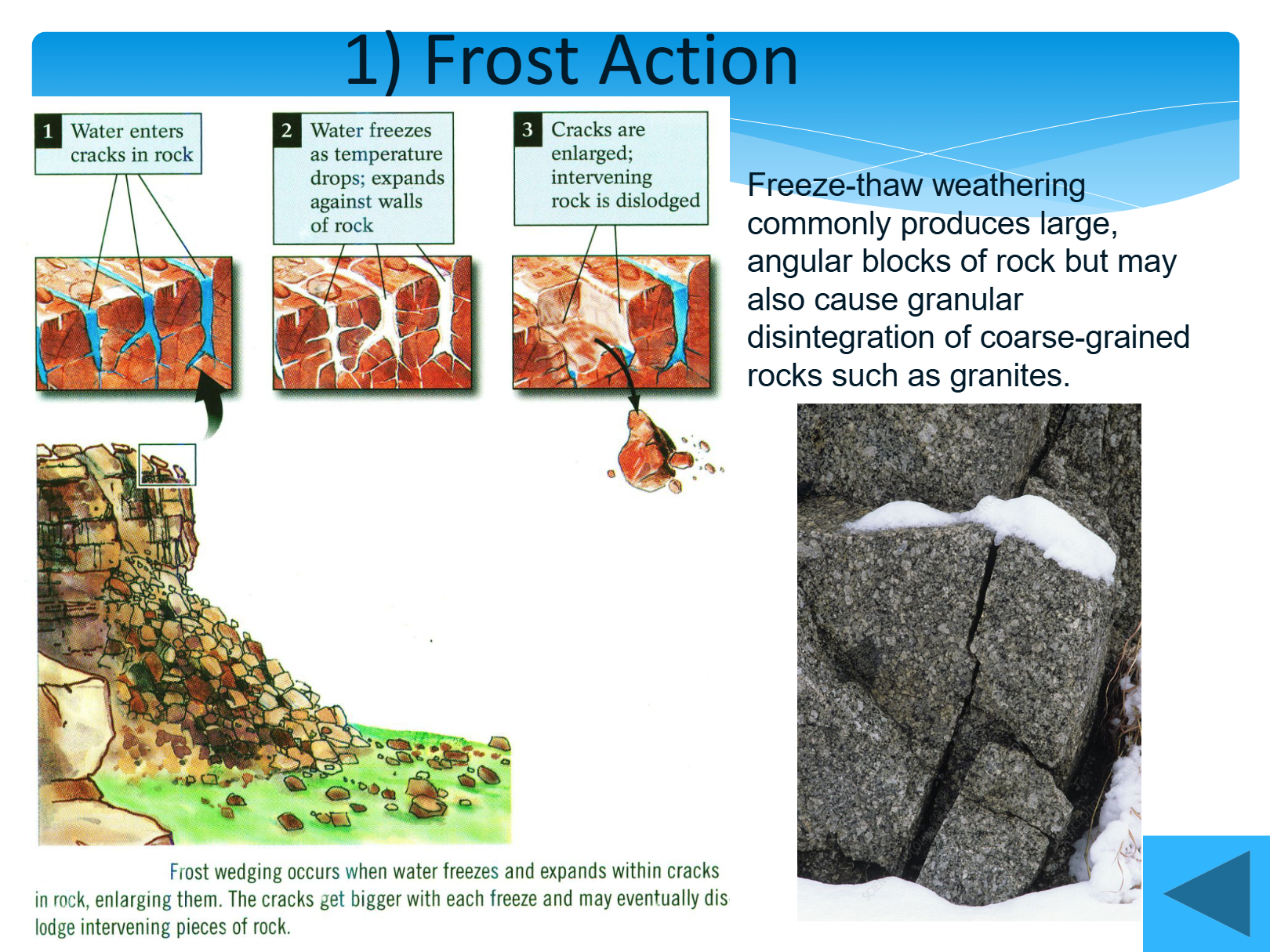
Which physical force is responsible for the widening of cracks in rocks due to freezing and expansion of water?
Frost action
Unloading
Saline crystal growth
Organic activities
20
21
Multiple Select
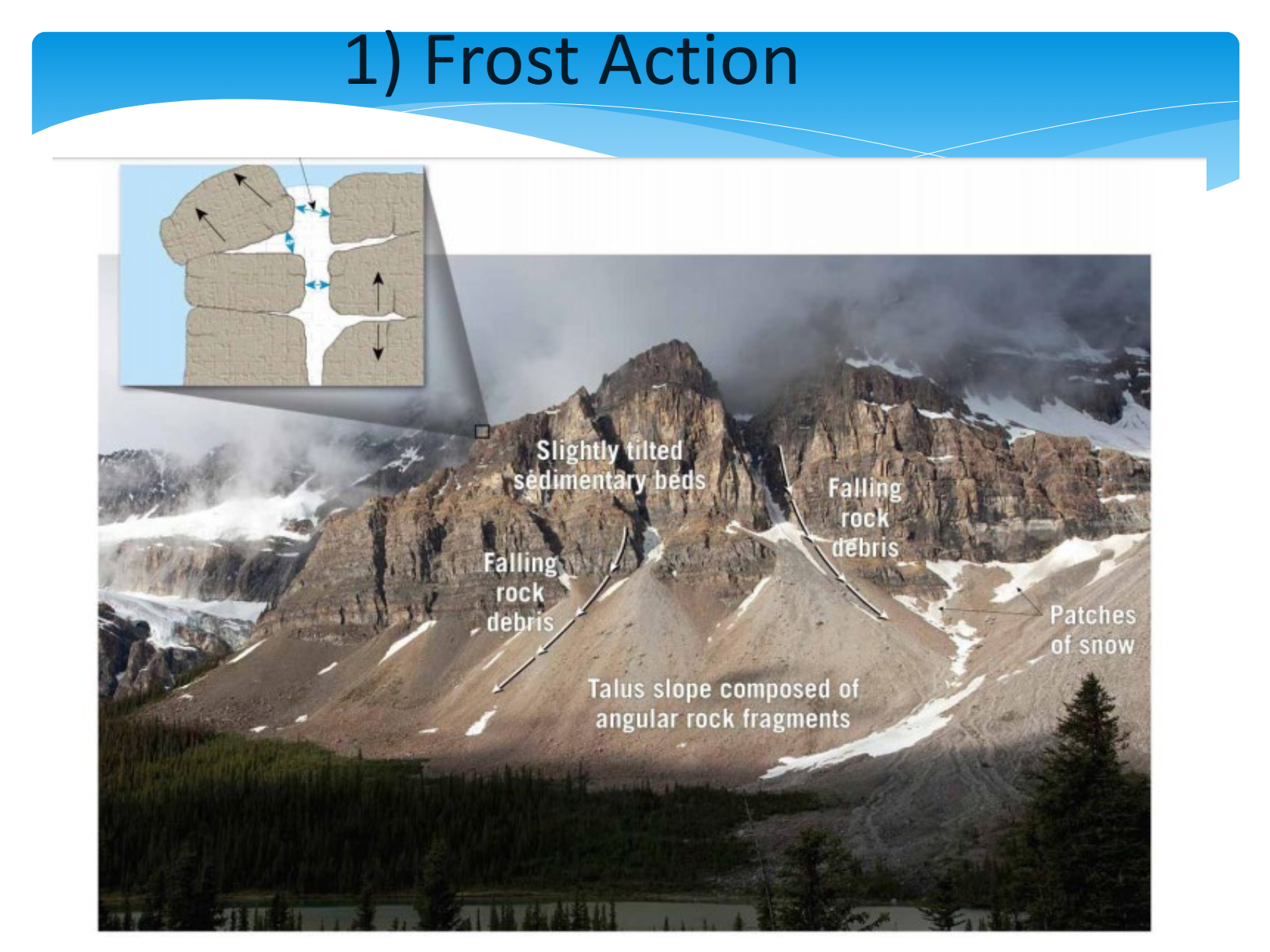
Select all effects that can result from frost action on rocks.
Widening of cracks
Formation of angular rock fragments
Reduction of confining pressure
Granular disintegration of coarse-grained rocks
22
Open Ended
Explain how frost action leads to the disintegration of rocks in mountainous areas with cool climates.
23
24
Fill in the Blanks
Type answer...
25
26
Multiple Choice
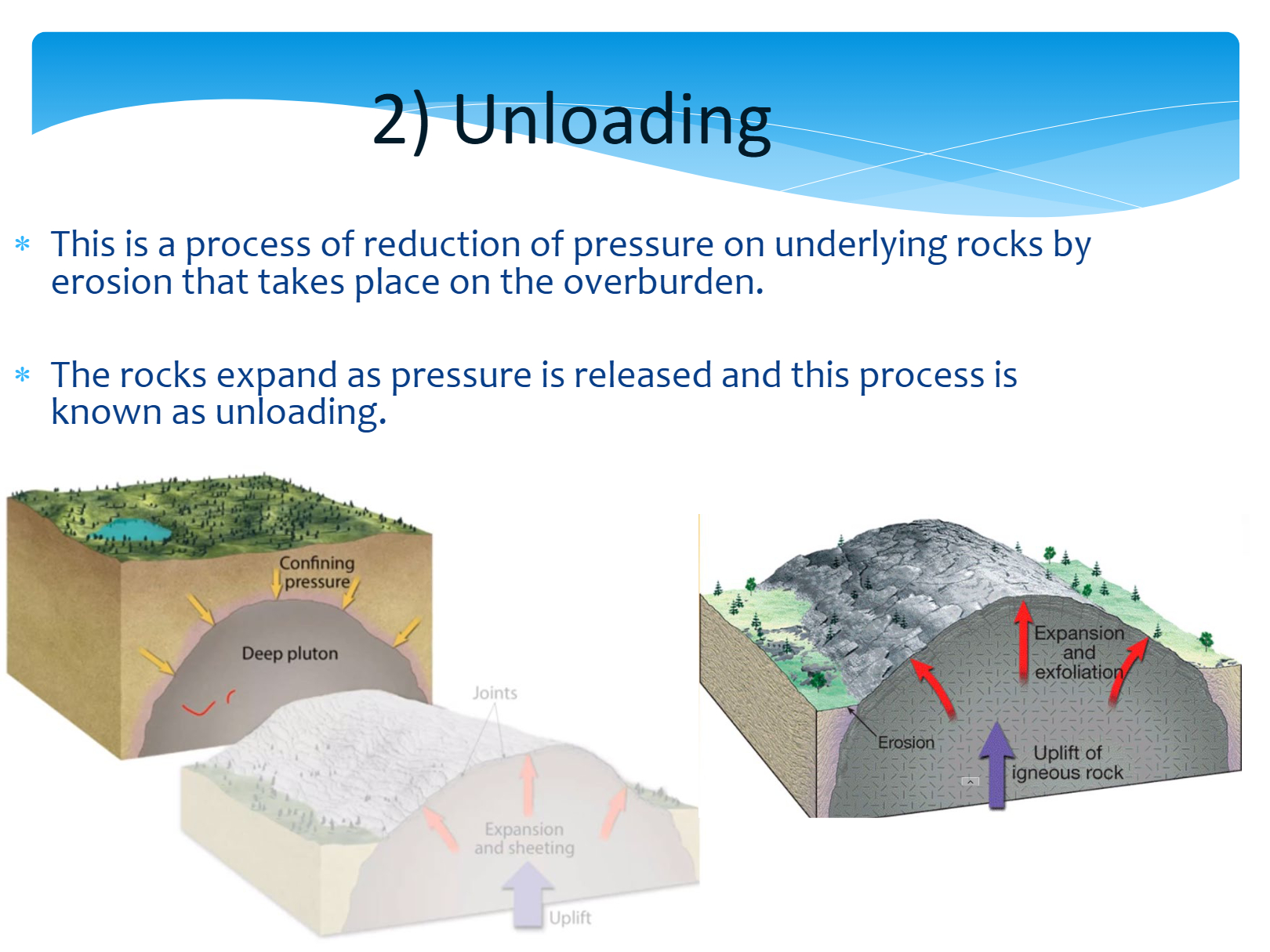
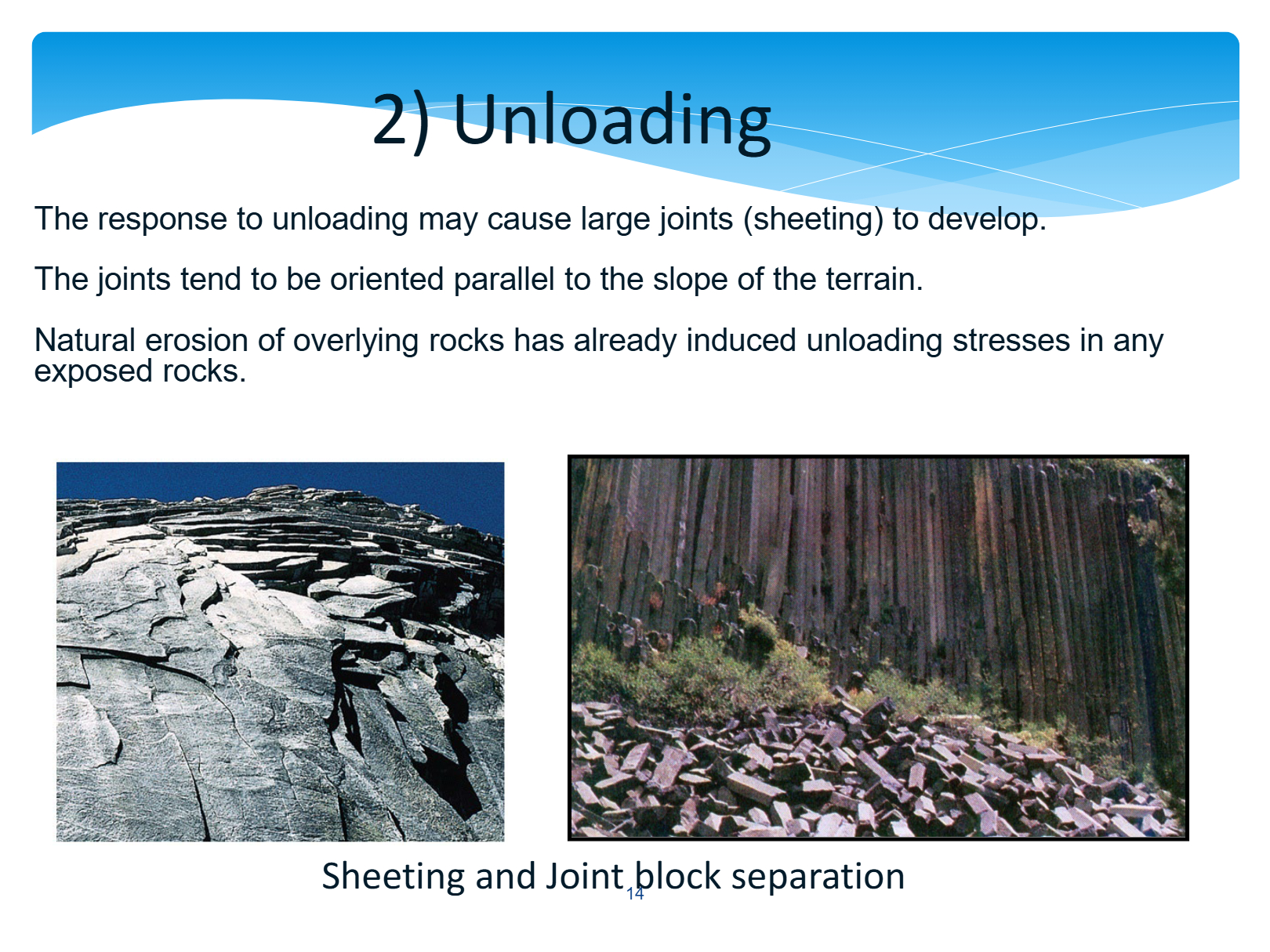
Which of the following statements about unloading is correct?
Unloading causes rocks to expand as pressure is released.
Unloading occurs when water freezes in cracks.
Unloading results in granular disintegration of rocks.
Unloading is only found in coastal regions.
27
Multiple Choice
Describe the changes that occur in rocks during the unloading process and how these changes affect the landscape.
28
29
Multiple Choice
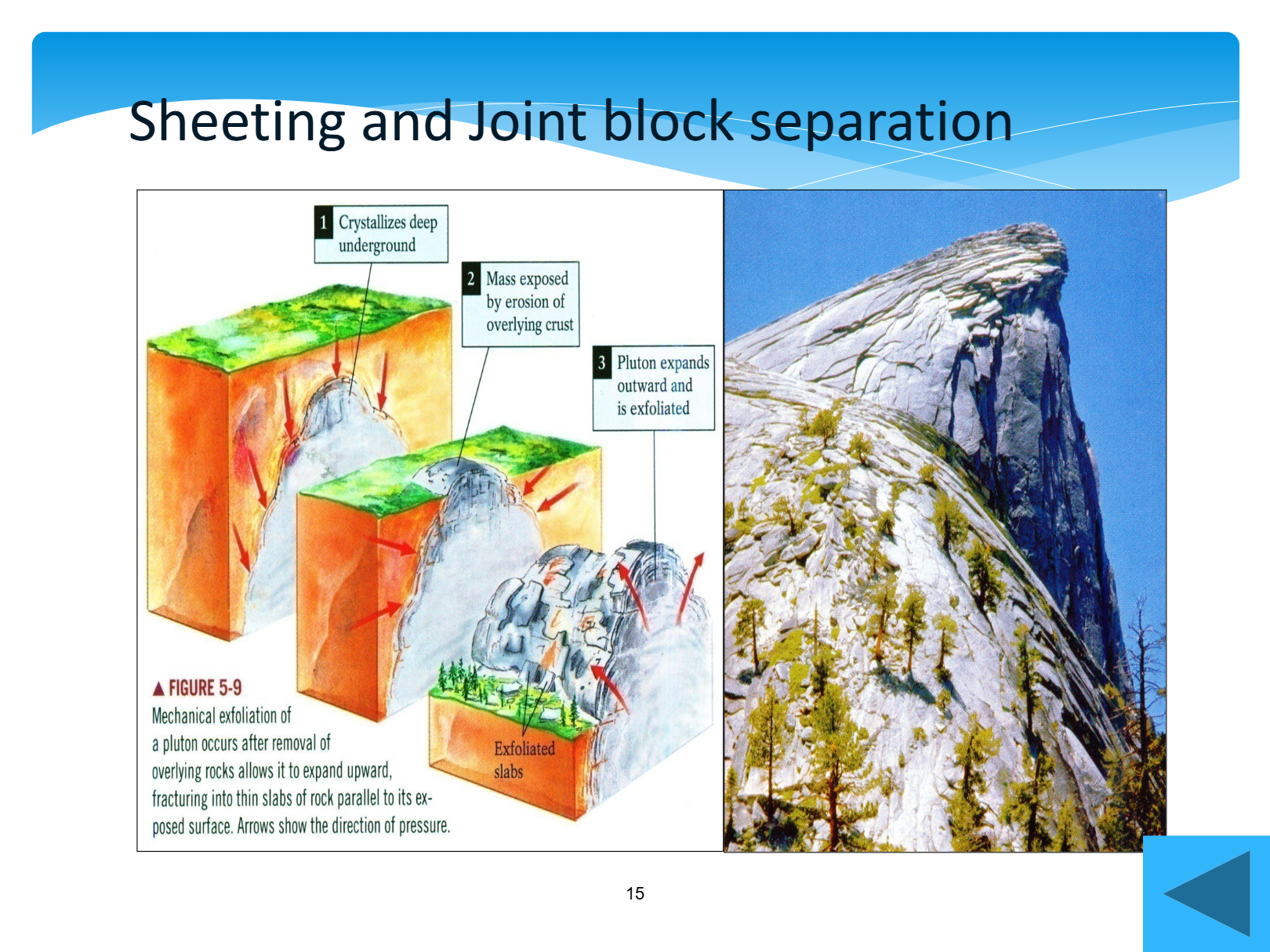
What is the main cause of sheeting and joint block separation in rocks as shown in the diagram?
Mechanical exfoliation due to removal of overlying rocks
Chemical weathering by acids
Saline crystal growth
Alternate heating and cooling
30
31
32
Multiple Select
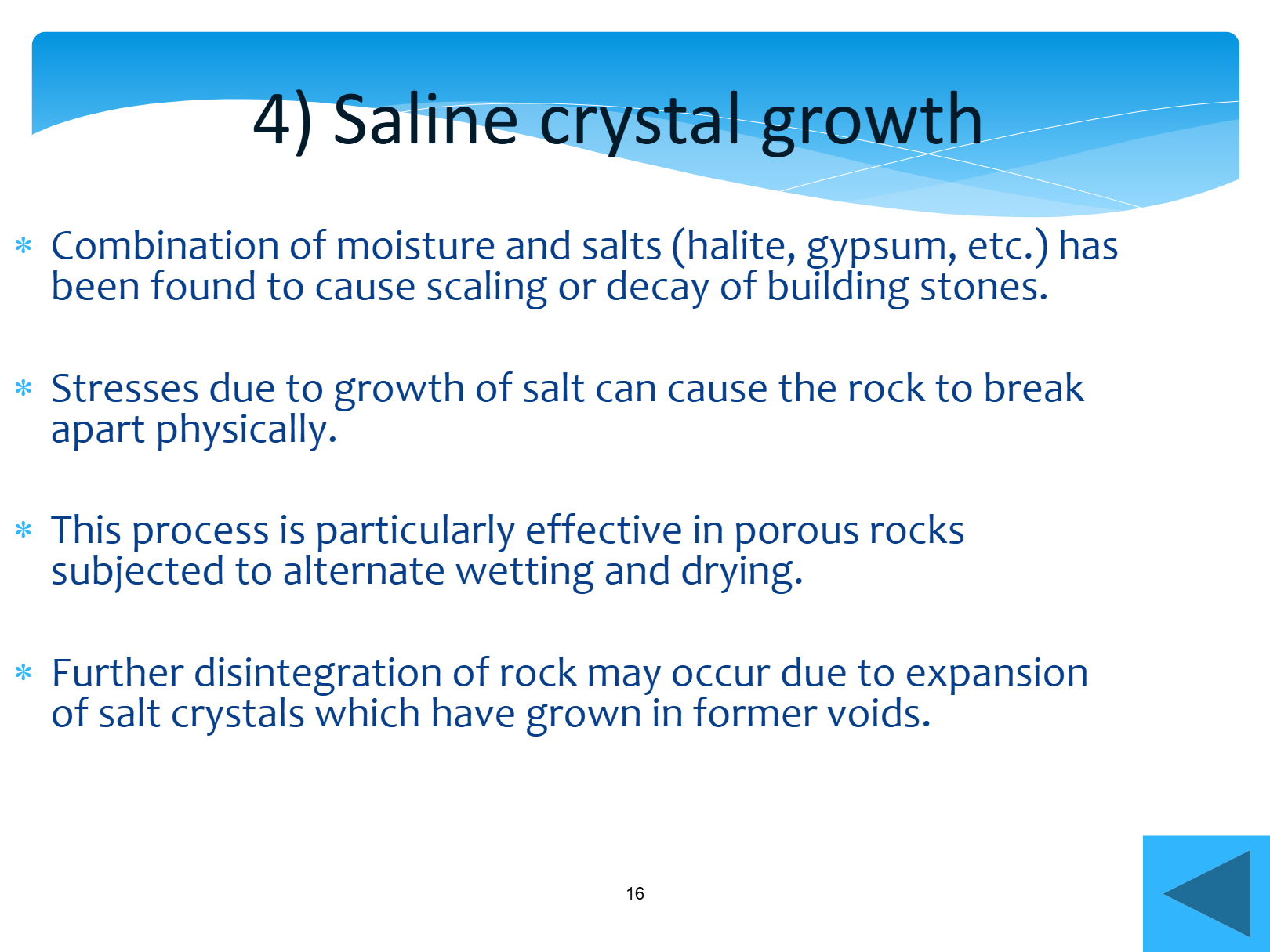
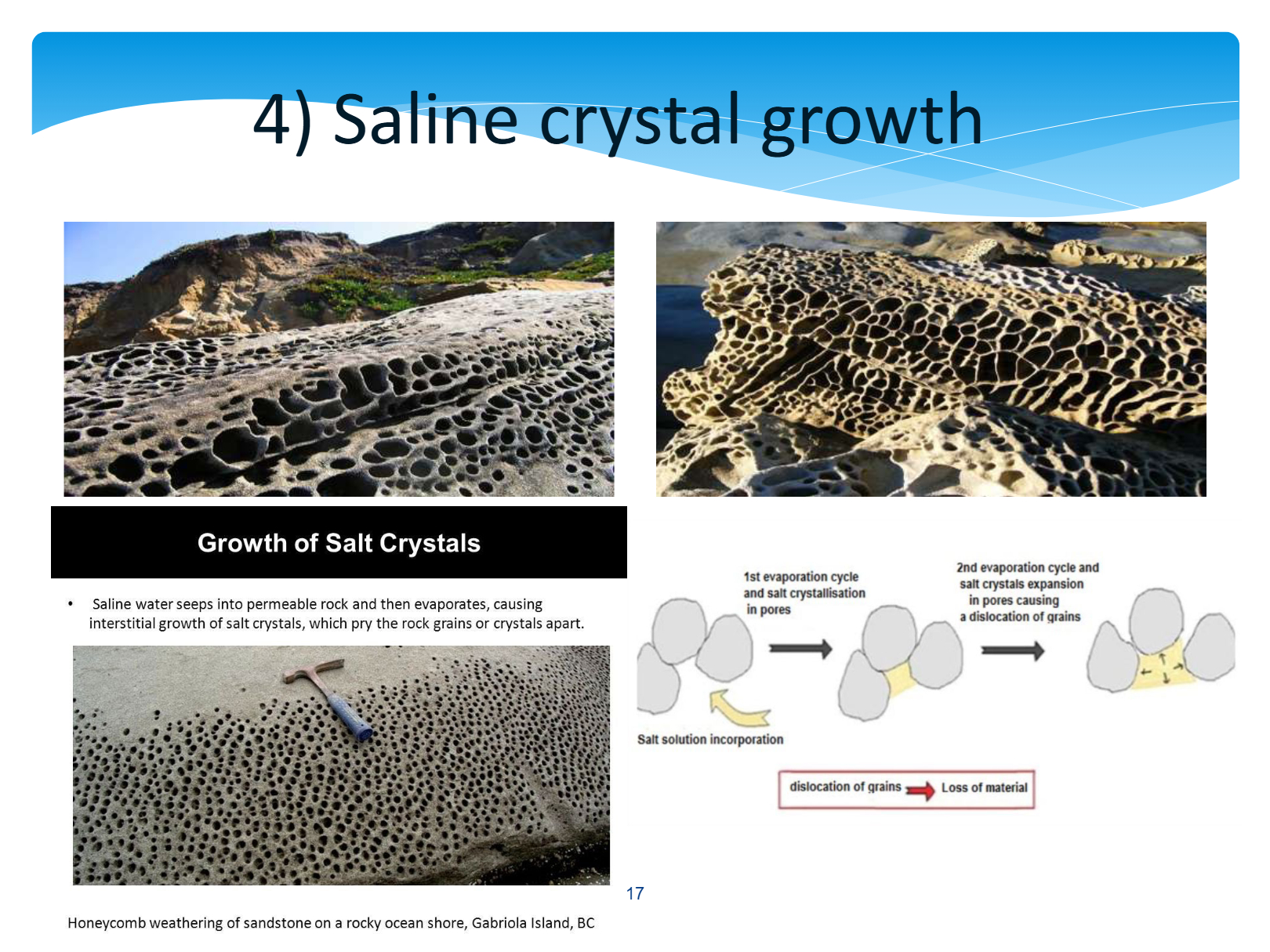
Which of the following conditions make saline crystal growth particularly effective in breaking down rocks? Select all that apply.
Porous rocks subjected to alternate wetting and drying
Rocks with high iron content
Rocks exposed to freezing temperatures
Rocks with voids where salt crystals can expand
33
Open Ended
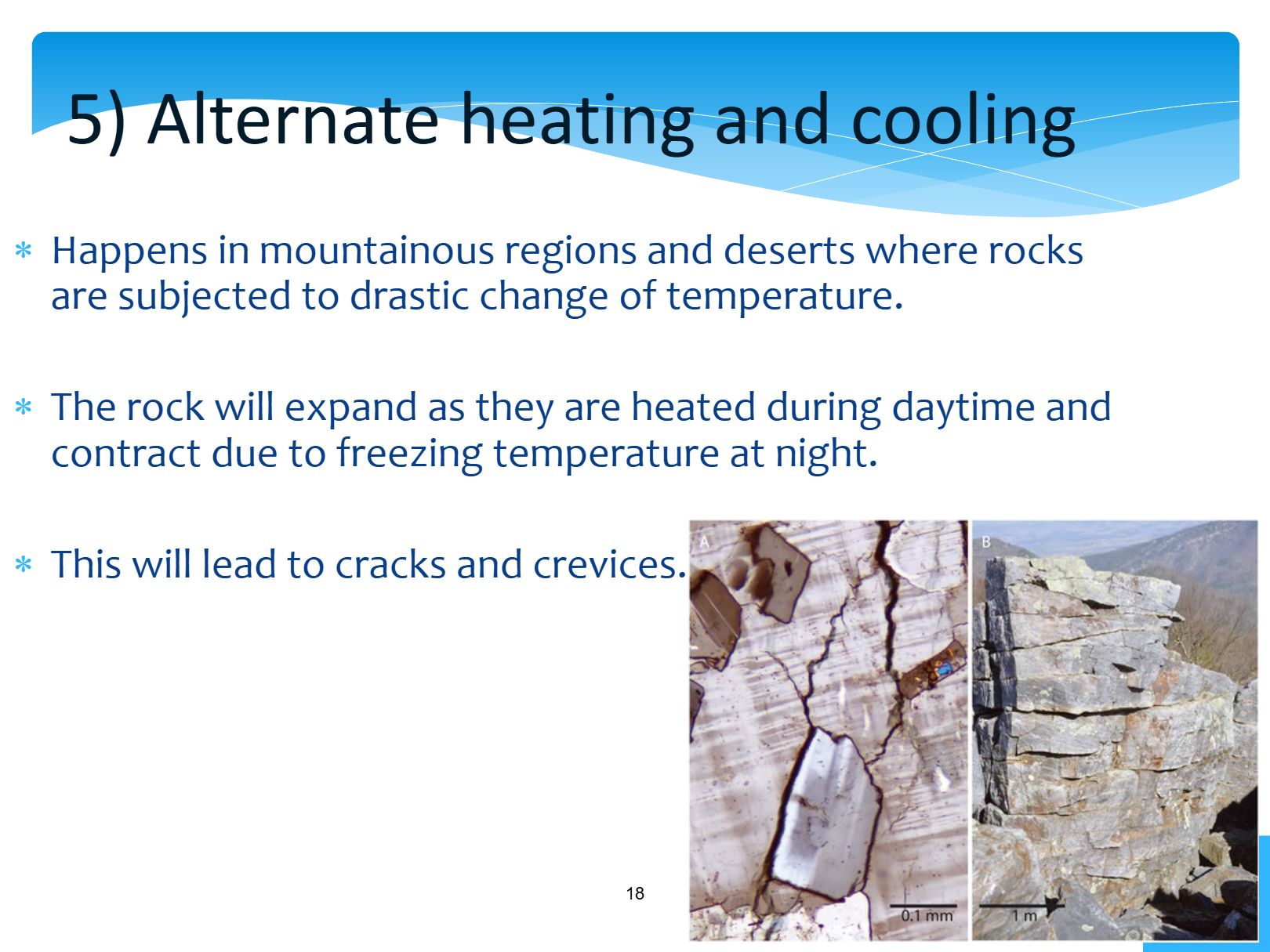
Explain how saline crystal growth can lead to the physical breakdown of rocks. Use information from both slides to support your answer.
34
35
Fill in the Blanks
Type answer...
36
37
Open Ended
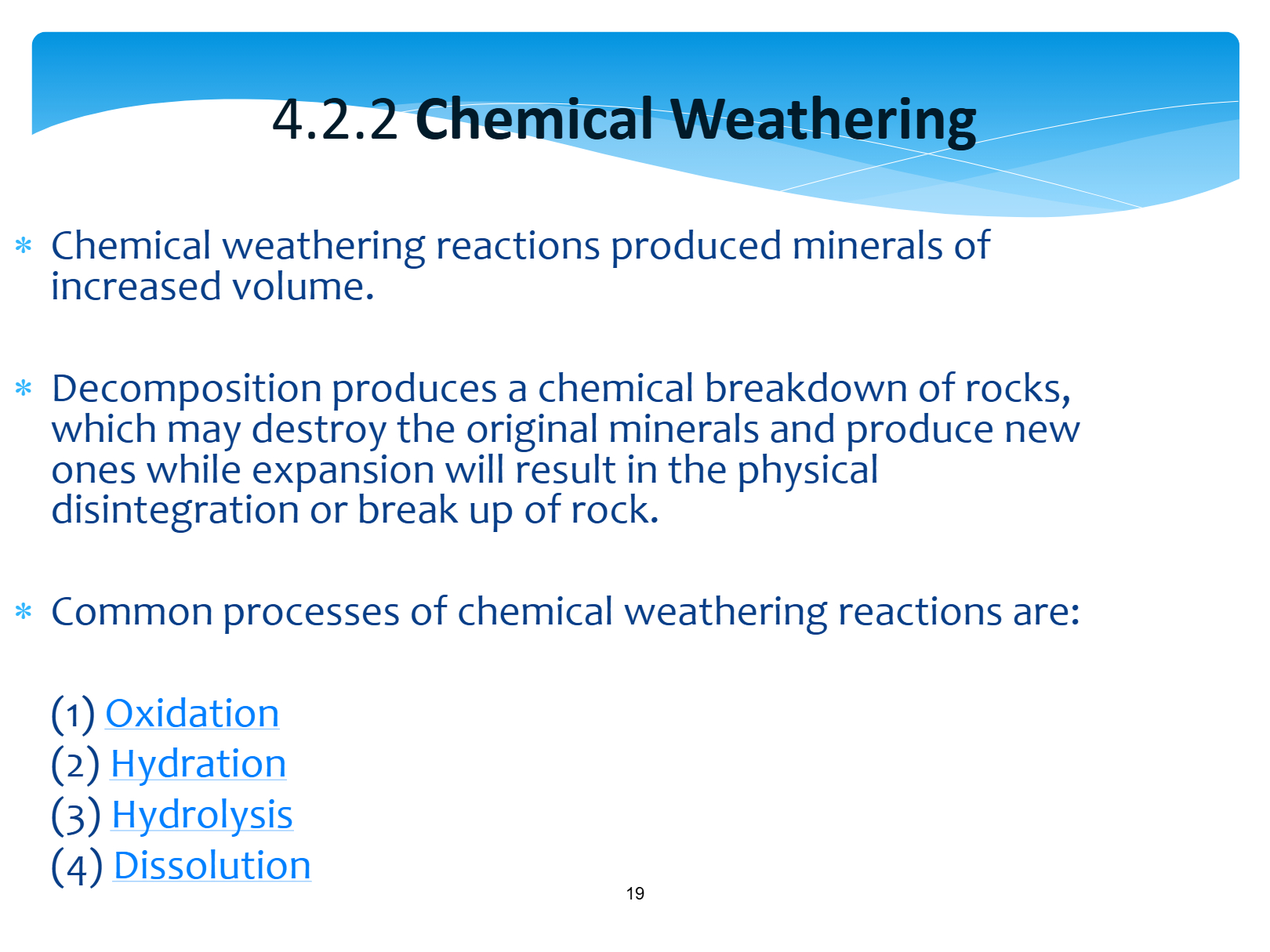
Describe the process of chemical weathering and its impact on rock minerals. Include the main types of chemical weathering reactions mentioned.
38
39
Multiple Choice
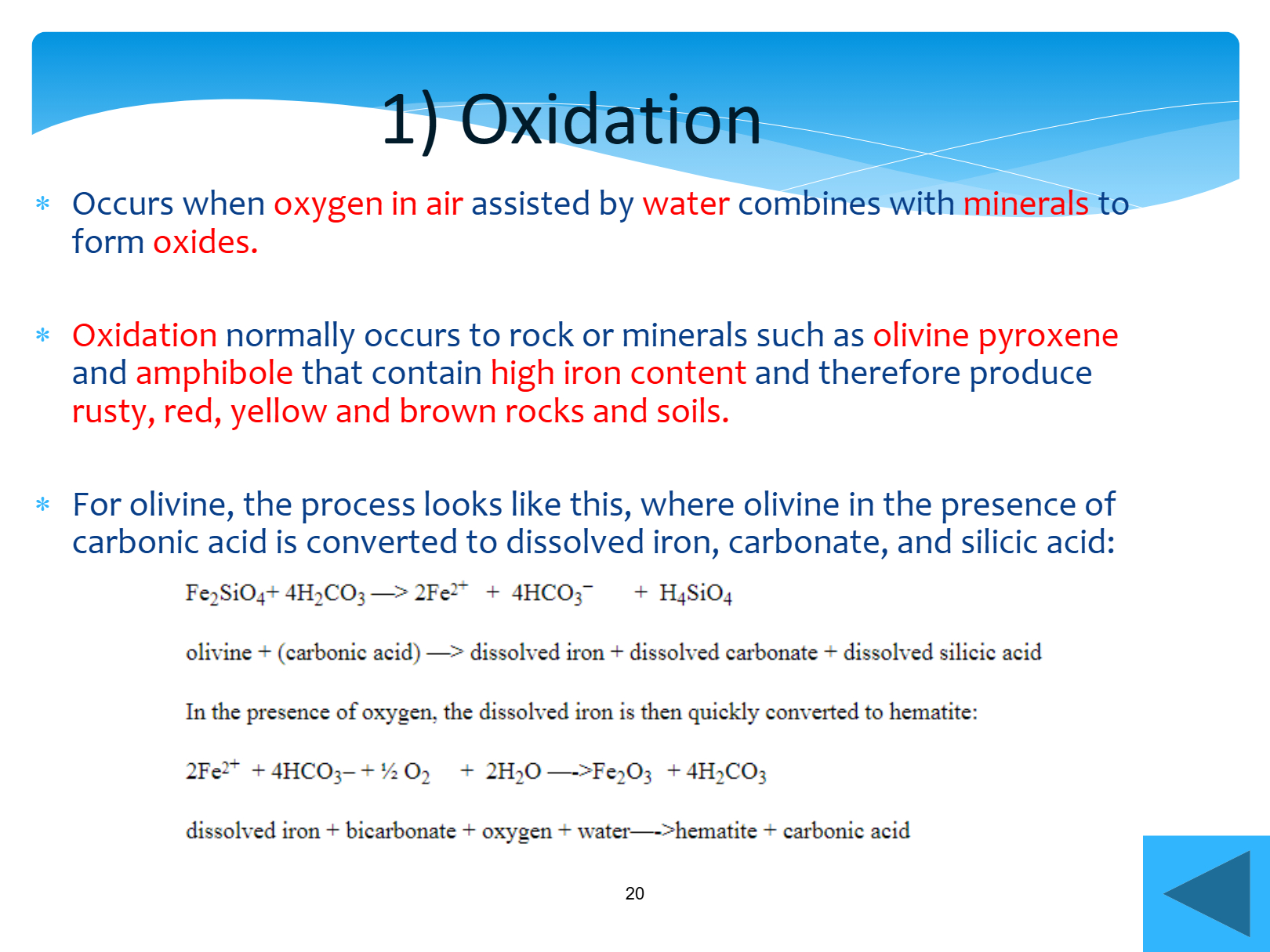
Oxidation in rocks typically produces which colors due to high iron content?
Rusty, red, yellow, and brown
Blue and green
White and grey
Black and purple
40
41
Multiple Choice
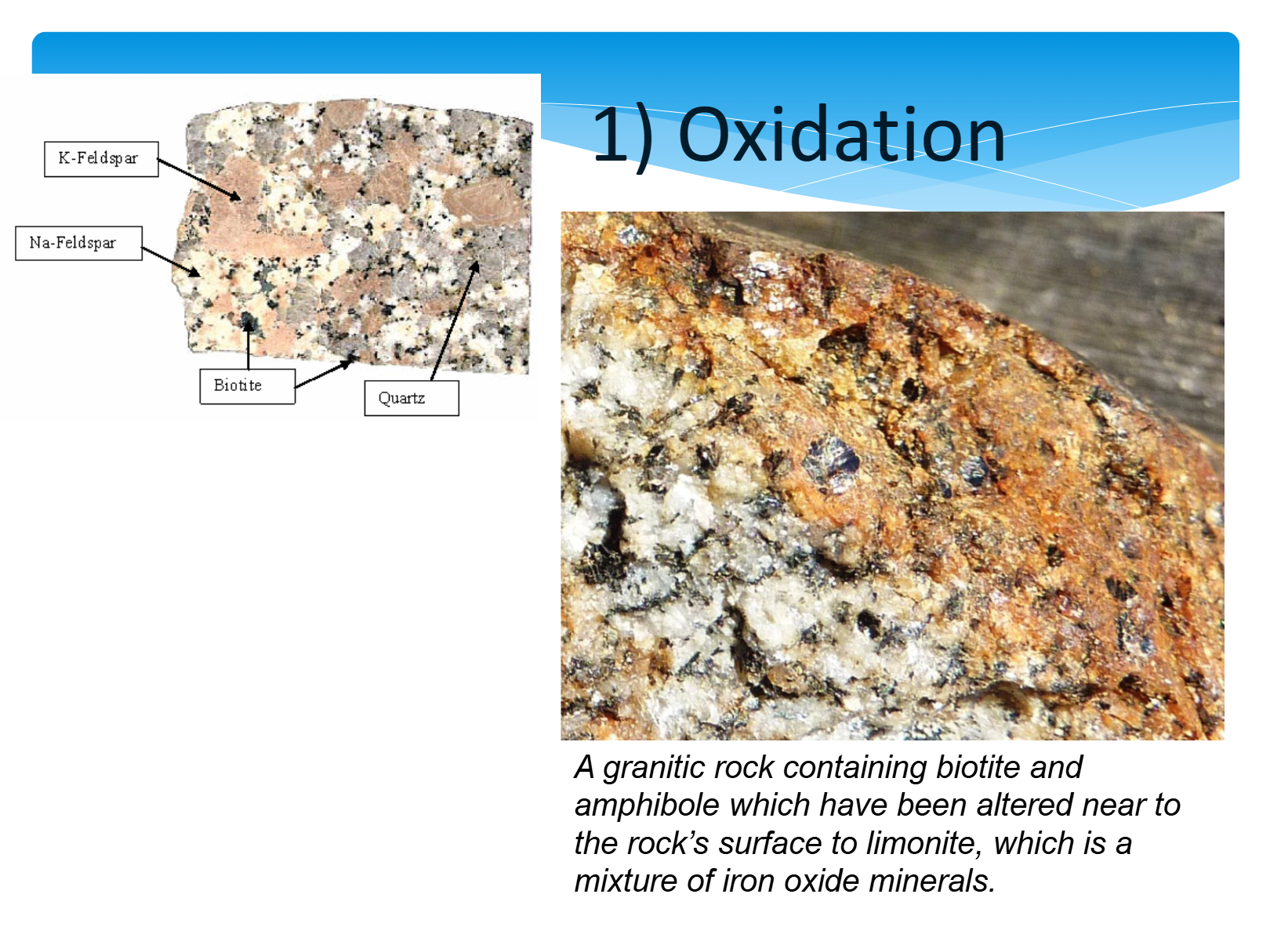
Which minerals in granite are most affected by oxidation, and what is the result of this process near the rock's surface?
Quartz and biotite, resulting in quartz crystals
K-feldspar and Na-feldspar, resulting in clay formation
Biotite and amphibole, resulting in limonite formation
Quartz and amphibole, resulting in sand formation
42
43
Multiple Choice
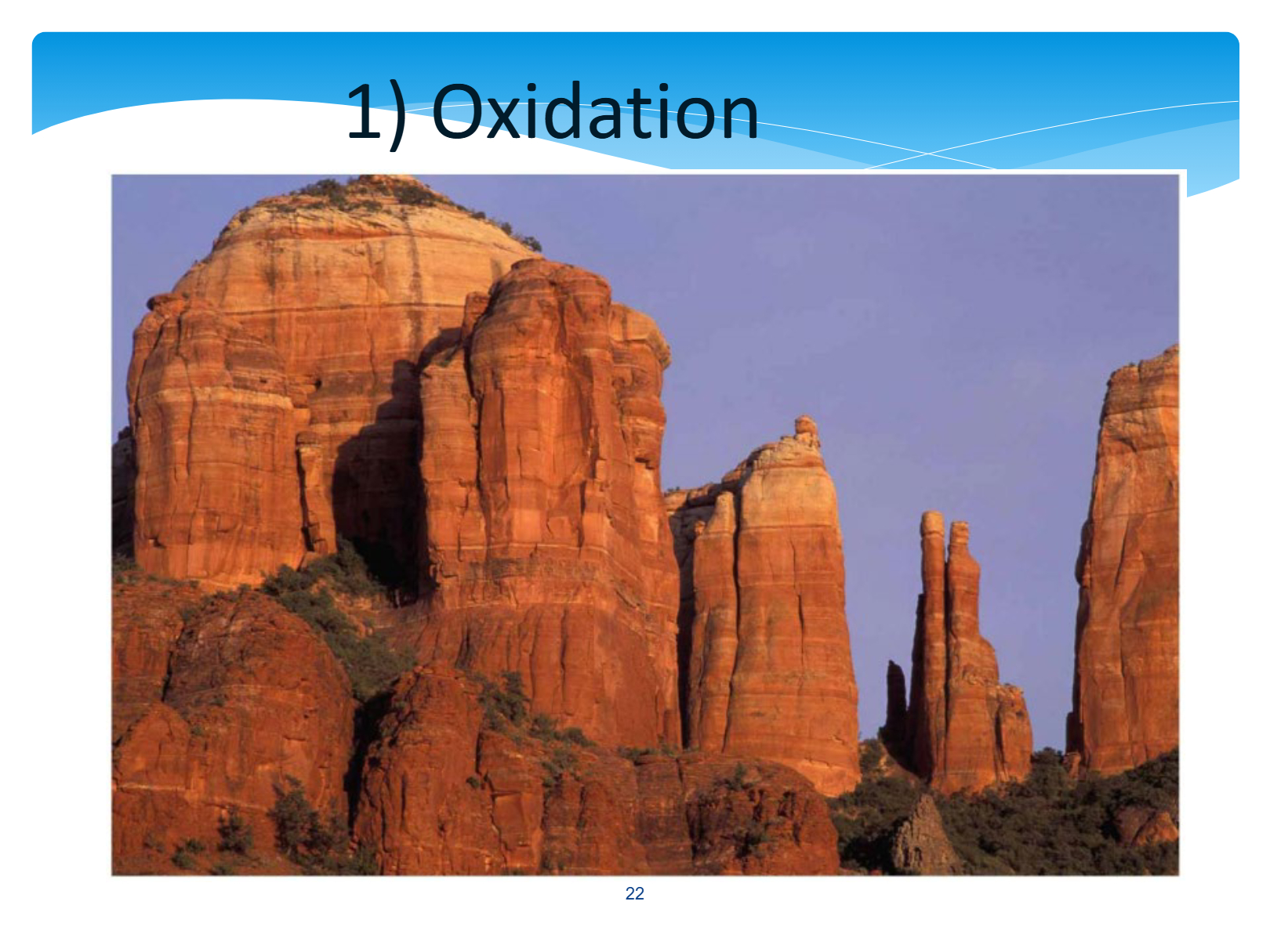
How does oxidation contribute to the coloration of rock formations such as those shown in the second image?
Oxidation causes rocks to turn blue due to copper minerals.
Oxidation leads to the formation of iron oxide minerals, giving rocks a reddish color.
Oxidation makes rocks appear white due to salt deposits.
Oxidation results in green coloration from chlorite minerals.
44
45
Multiple Select
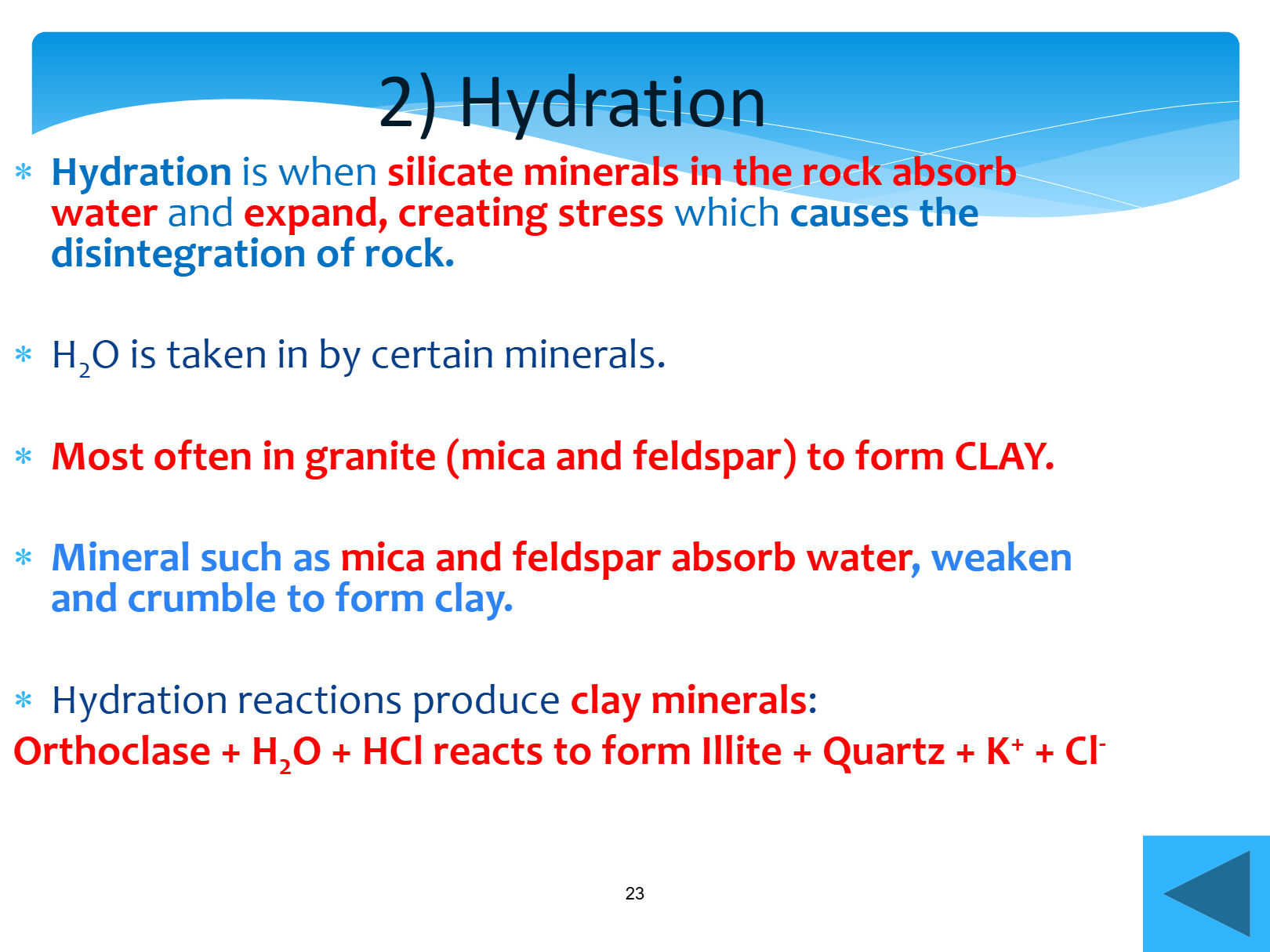
Which minerals are most likely to absorb water and weaken, leading to the formation of clay? Select all that apply.
Quartz
Mica
Feldspar
Amphibole
46
Open Ended
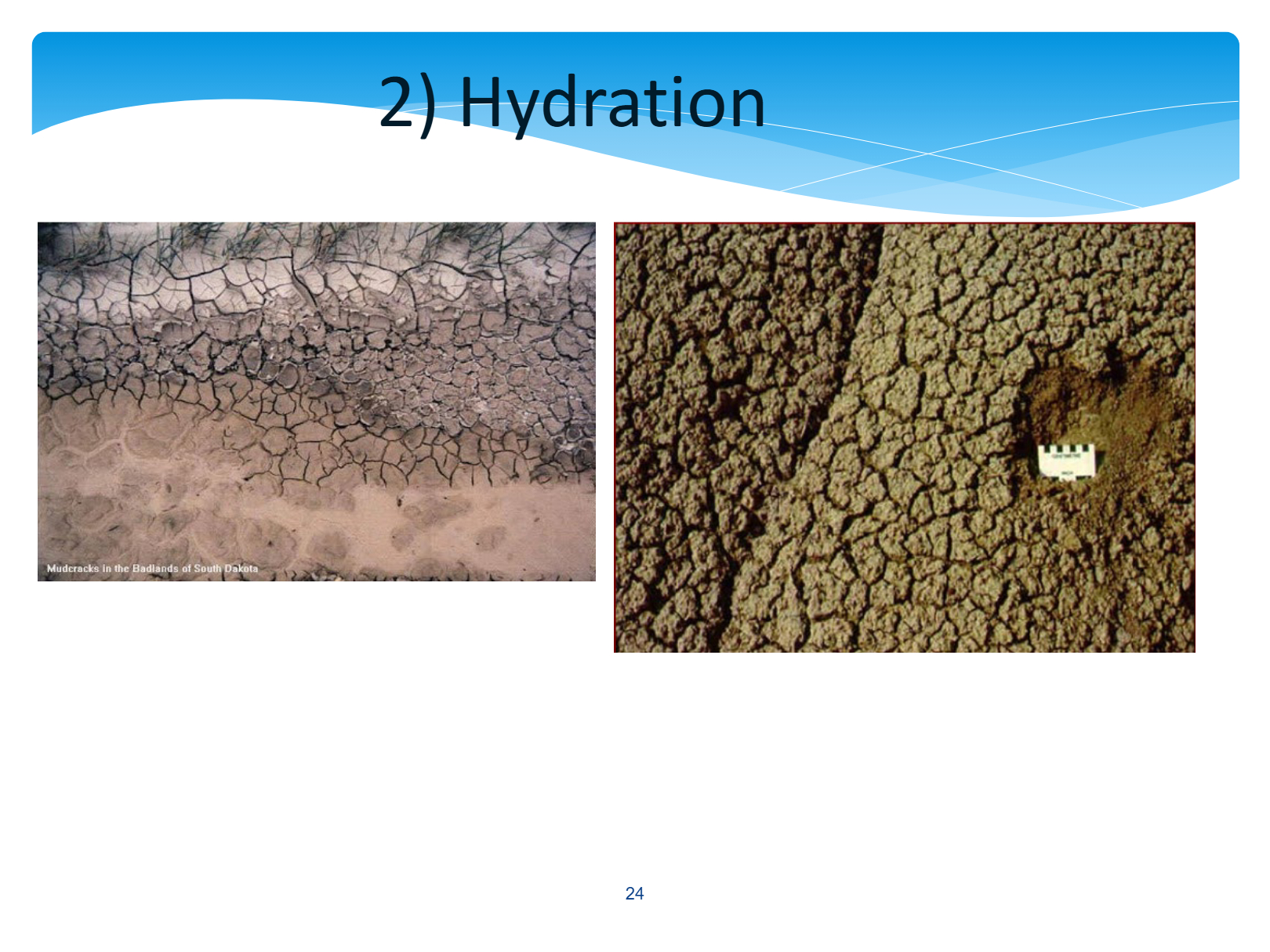
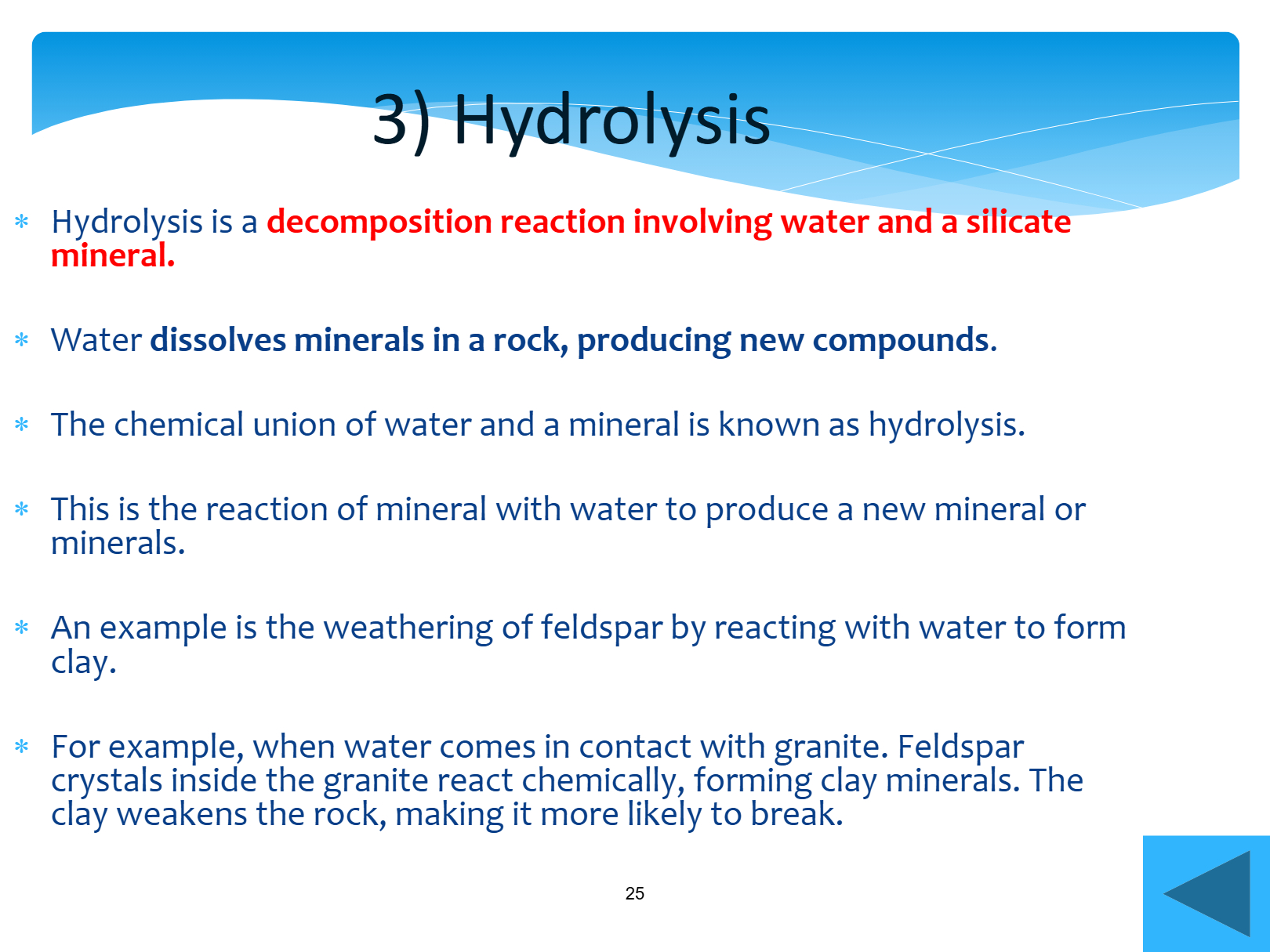
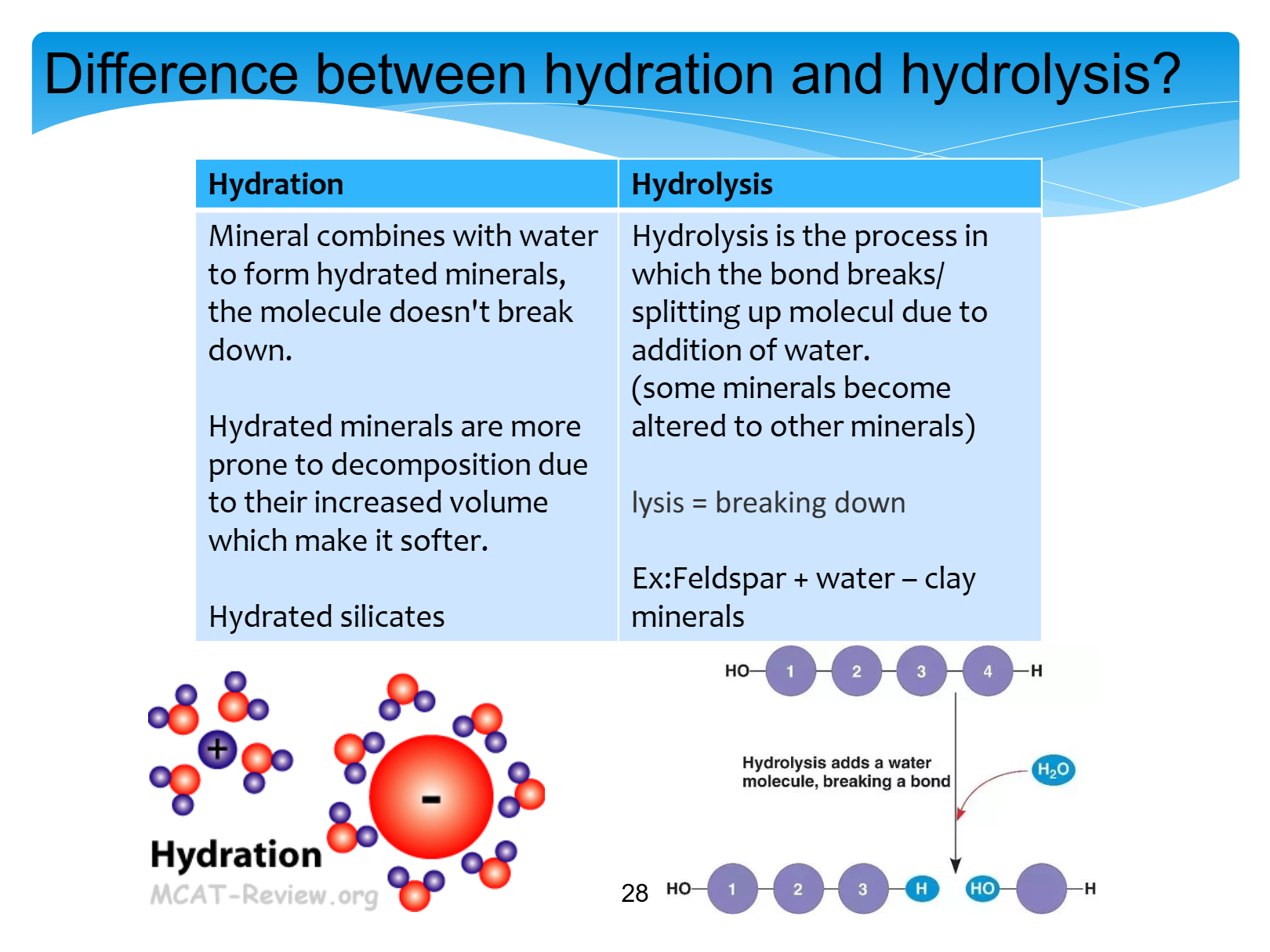
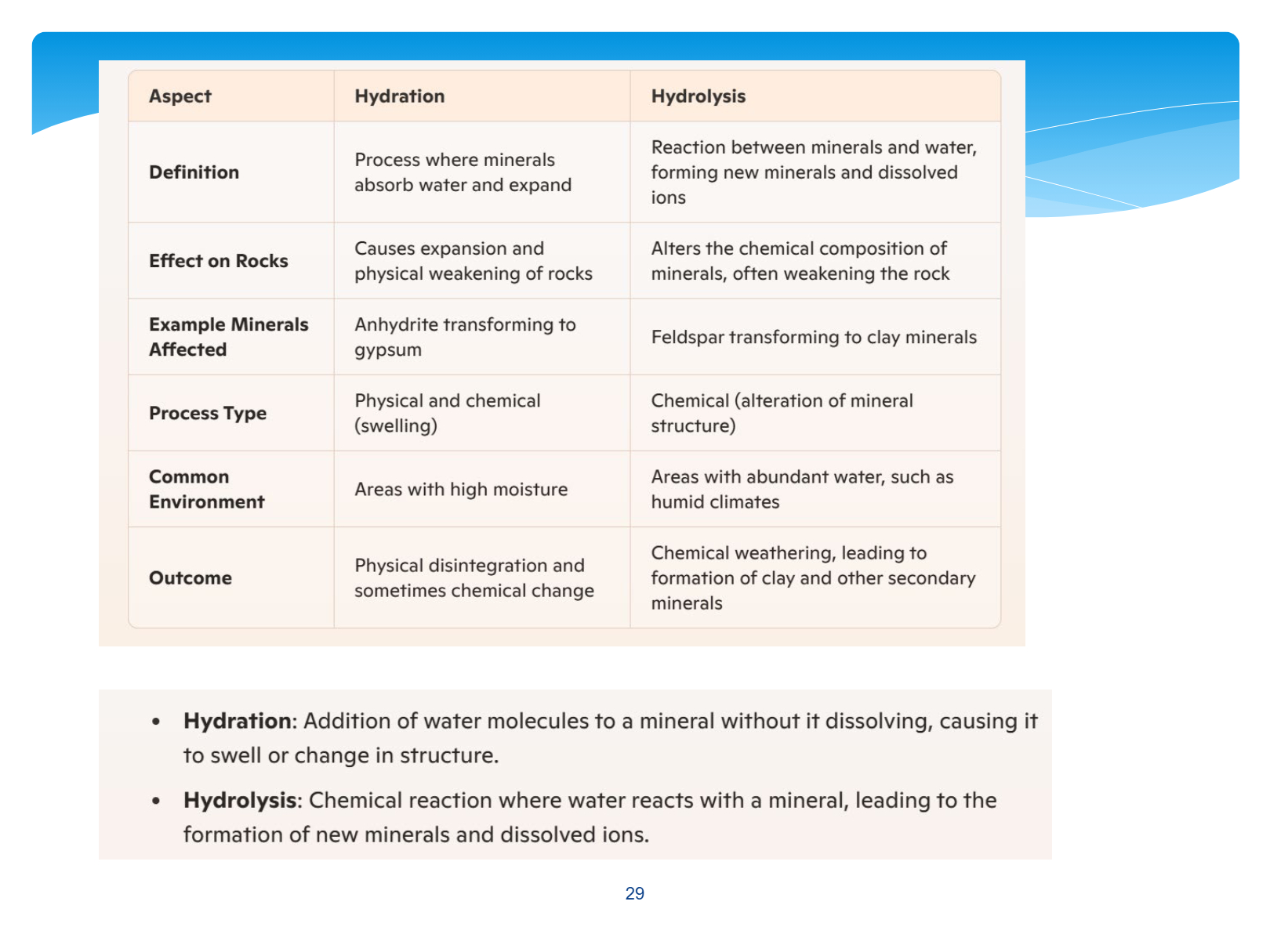
Explain how hydration affects silicate minerals in granite and the resulting changes in the rock's structure.
47
48
49
Open Ended
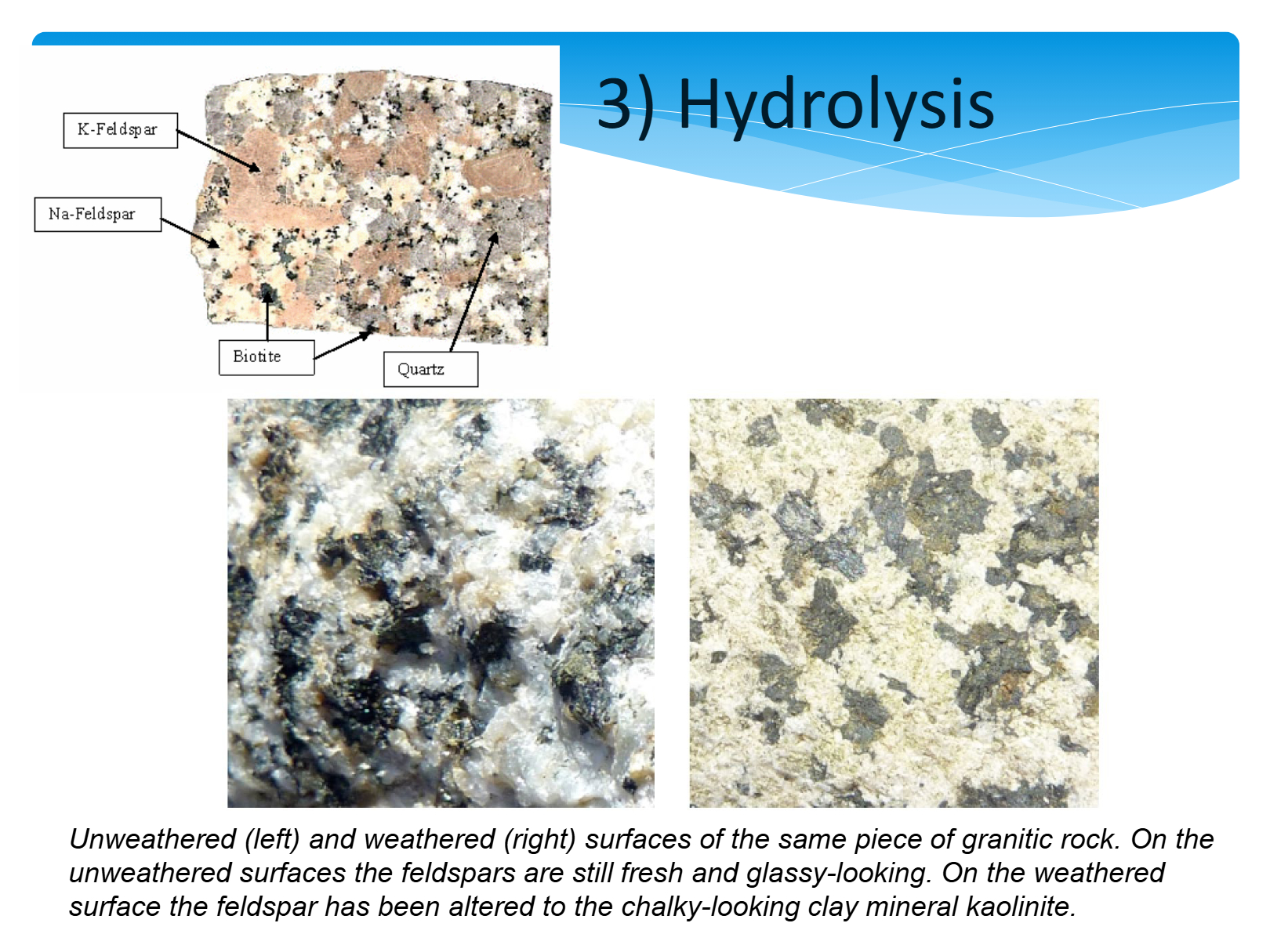
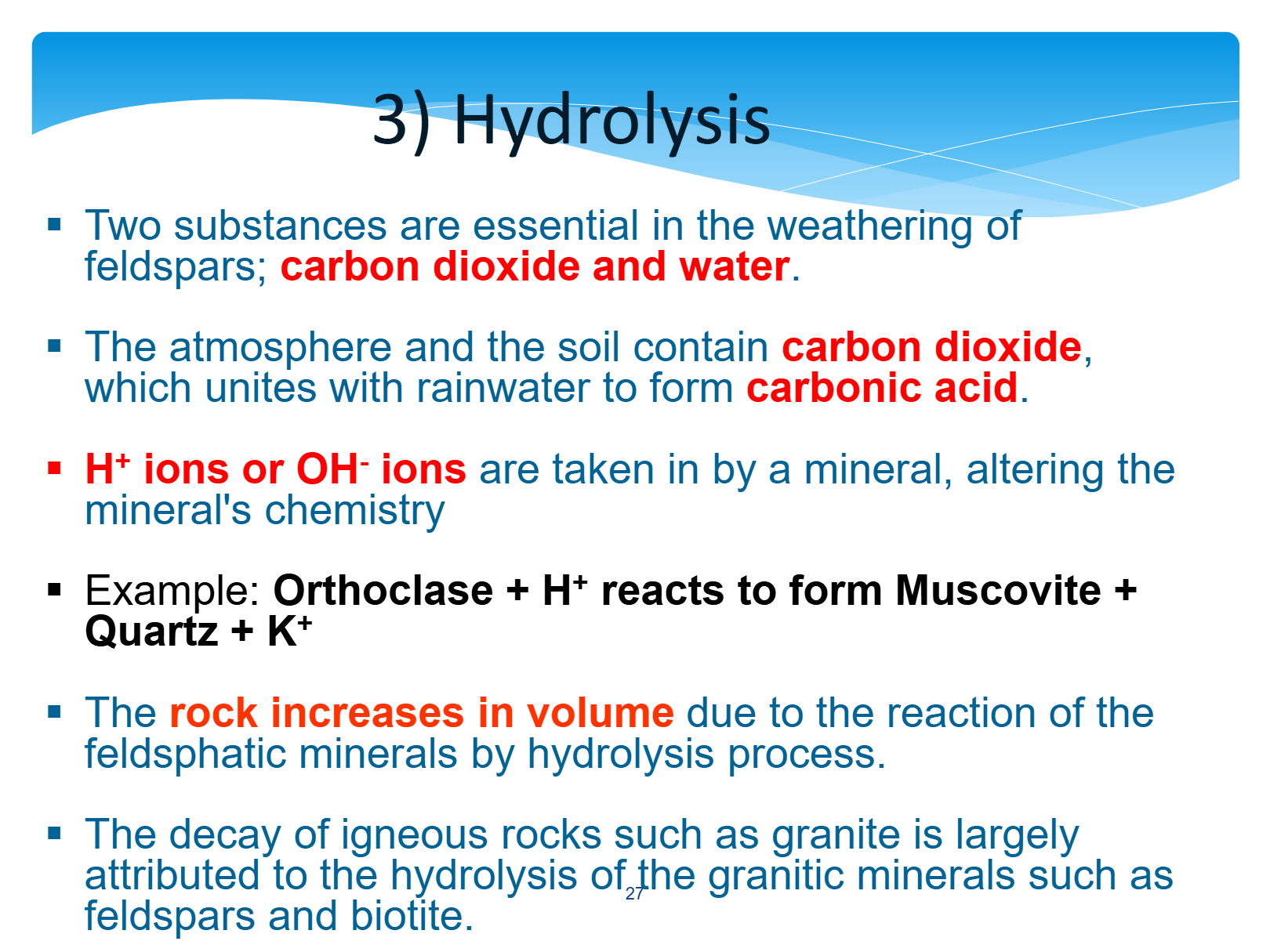
Compare the effects of hydrolysis and hydration on granite, using the information and images provided.
50
Fill in the Blanks
Type answer...
51
52
53
54
55
56
Multiple Choice
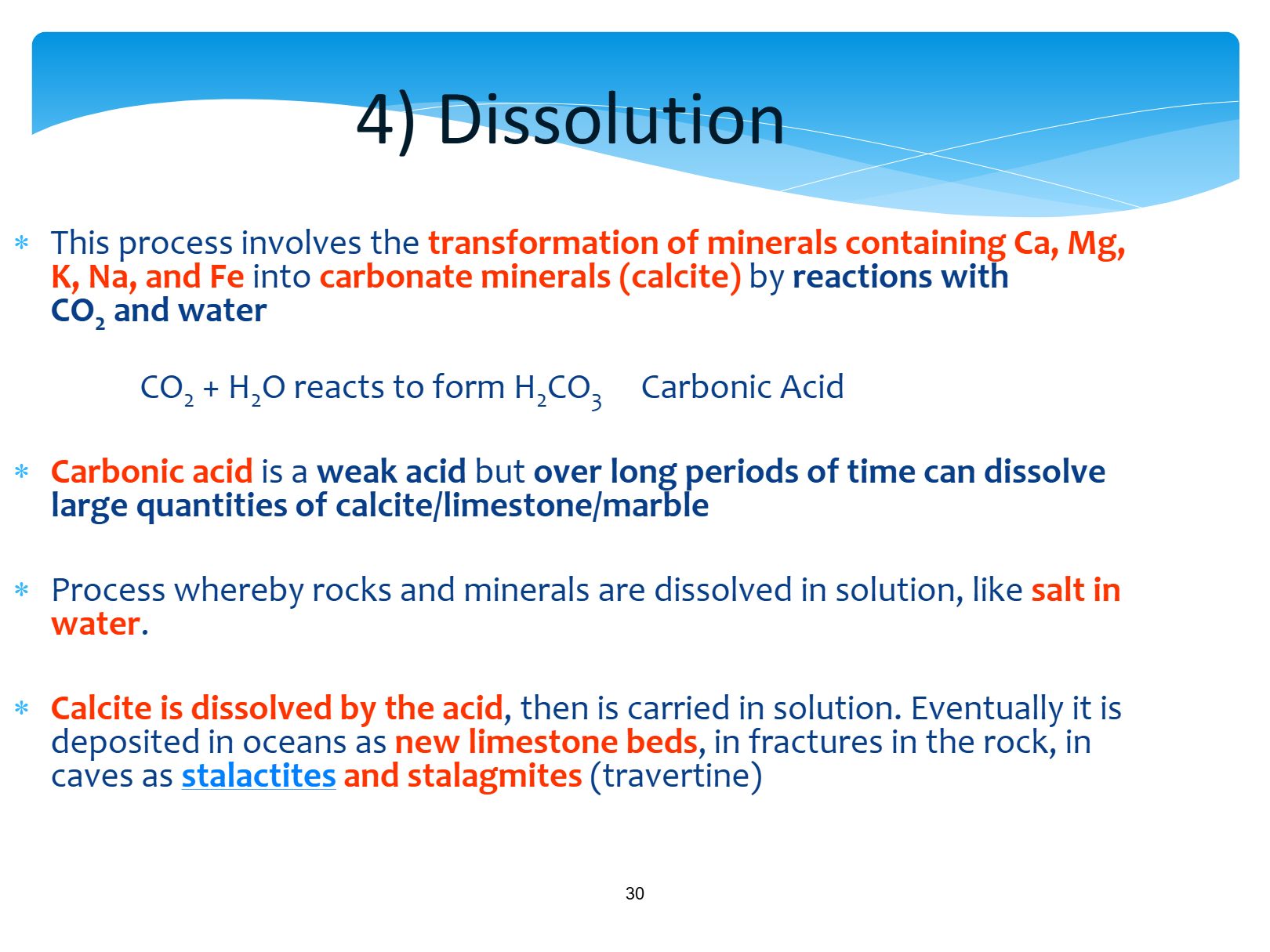
What is the main difference between chemical sedimentary rock and detrital (clastic) sedimentary rock?
Chemical sedimentary rocks form from dissolved ions, while detrital rocks form from rock fragments.
Detrital rocks form from dissolved ions, while chemical sedimentary rocks form from rock fragments.
Both types form from biological weathering only.
Chemical sedimentary rocks are always larger than detrital rocks.
Show answer
Auto Play
Slide 1 / 56
SLIDE
Popular Resources on Wayground

10 questions
Factors 4th grade

Quiz
•
4th Grade
10 questions
Cinco de Mayo Trivia Questions

Interactive video
•
3rd - 5th Grade
13 questions
Cinco de mayo
Interactive video
•
6th - 8th Grade
20 questions
Math Review
Quiz
•
3rd Grade
20 questions
Main Idea and Details
Quiz
•
5th Grade
20 questions
Context Clues
Quiz
•
6th Grade
20 questions
Inferences
Quiz
•
4th Grade
19 questions
Classifying Quadrilaterals
Quiz
•
3rd Grade
Discover more resources for Engineering
10 questions
Cinco De Mayo
Presentation
•
10th Grade
5 questions
A.EO.1-4 Quizizz Day 1
Quiz
•
9th - 12th Grade
100 questions
Biology EOC Review
Quiz
•
9th - 12th Grade
5 questions
A.EO.1-4 Quizizz Day 2
Quiz
•
9th - 12th Grade
5 questions
A.EI.1-3 Quizizz Day 4
Quiz
•
9th - 12th Grade
20 questions
Simple Probability
Quiz
•
10th Grade
20 questions
Food Chains, Food Webs, and Ecological Pyramids
Quiz
•
9th - 10th Grade
38 questions
Biology EOC Review Game
Quiz
•
10th Grade