
Cnidarians & Ctenophores
Authored by Melanie Scott
Biology
10th - 12th Grade
NGSS covered
Used 134+ times


AI Actions
Add similar questions
Adjust reading levels
Convert to real-world scenario
Translate activity
More...
Content View
Student View
35 questions
Show all answers
1.
MULTIPLE CHOICE QUESTION
30 sec • 1 pt
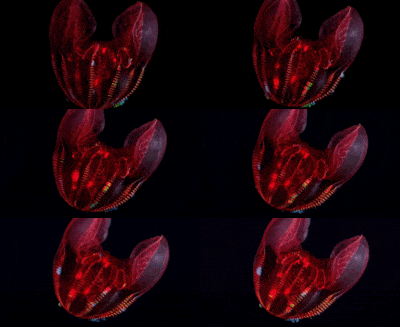
Phylum Ctenophora have _______________ made of ___________ for locomotion.
tentacles ; colloblasts
comb rows ; cilia
tentacles ; cilia
comb rows ; colloblasts
2.
MULTIPLE CHOICE QUESTION
30 sec • 1 pt
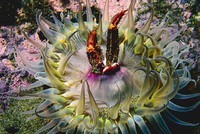
When a Cnidarian catches prey, it uses stinging cells called...
Colloblasts
Stingers
Cnidocytes
Blastoscytes
3.
MULTIPLE CHOICE QUESTION
30 sec • 1 pt
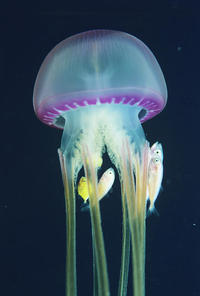
How do Cnidarians get their prey into their mouths?
contractile cells in gastrovascular cavity
nematocysts pull prey into mouth
contractile cells in feeding arms pull prey into mouth
cnidocytes digest prey outside of stomach
4.
MULTIPLE CHOICE QUESTION
30 sec • 1 pt
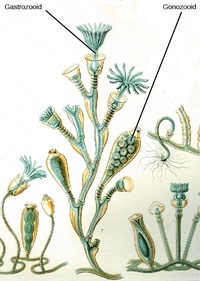
Which of the following is a correct description of the polyp body form?
It's mostly sessile and the tentacles point downward.
It's mostly sessile and the tentacles point upward.
It's mostly mobile and the tentacles point downward.
It's mostly mobile and the tentacles point upward.
5.
MULTIPLE CHOICE QUESTION
30 sec • 1 pt
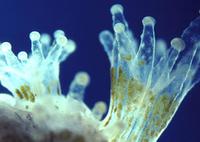
Which group of Cnidarians have a symbiosis with algae?
anemones
corals
jellyfish
comb jellies
Tags
NGSS.MS-LS2-3
6.
MULTIPLE CHOICE QUESTION
30 sec • 1 pt

The _____ enables cnidarians to respond to stimuli in their environment and send electrical impulses to the muscles.
nerve net
brain
peripheral nerves
nerve cord
7.
MULTIPLE CHOICE QUESTION
30 sec • 1 pt

Which body form is represented by this diagram?
Tags
NGSS.MS-LS4-2


Access all questions and much more by creating a free account
Create resources
Host any resource
Get auto-graded reports

Continue with Google

Continue with Email

Continue with Classlink

Continue with Clever
or continue with

Microsoft
%20(1).png)
Apple

Others
Already have an account?


