
7SCI-Q2-T7-The Theory of Plate Tectonics
Authored by Juan Martinez
Science
7th Grade
NGSS covered
Used 4+ times


AI Actions
Add similar questions
Adjust reading levels
Convert to real-world scenario
Translate activity
More...
Content View
Student View
25 questions
Show all answers
1.
MULTIPLE CHOICE QUESTION
30 sec • 1 pt
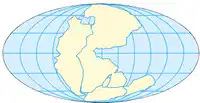
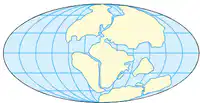
A map sequence shows continents as a single landmass about 250 million years ago, then partly separated 115–200 million years ago, and finally today. Which reasoning best explains the changing arrangement of continents over time?
Earth’s rotation flings continents toward the equator
Ocean tides push continents westward each day
Wind erosion shifts continents across the oceans
Mantle convection slowly moves lithospheric plates
Tags
NGSS.HS-ESS1-5
NGSS.HS-ESS2-1
2.
MULTIPLE CHOICE QUESTION
30 sec • 1 pt
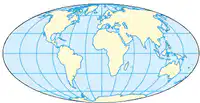
Scientists use satellites to measure plate motion at 1–10 centimeters per year. Over millions of years, what conclusion can you draw about the impact of these rates?
Small yearly motion accumulates into major continental shifts
Rates are too tiny to change coastlines significantly
Movements cancel out, keeping continents stationary
Short bursts of speed make continents jump suddenly
Tags
NGSS.HS-ESS1-5
3.
MULTIPLE CHOICE QUESTION
30 sec • 1 pt
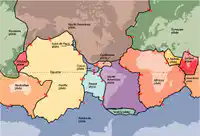
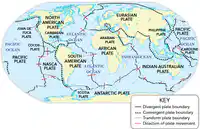
The lithosphere is broken into puzzle-like plates that move relative to each other. Which inference best predicts where earthquakes and volcanoes are most likely?
Only near the North and South Poles
Randomly scattered across all oceans
Along boundaries where plates interact
In the centers of stable plates
Tags
NGSS.HS-ESS1-5
NGSS.HS-ESS2-1
4.
MULTIPLE CHOICE QUESTION
30 sec • 1 pt
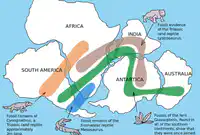
The term theory in science is used for ideas supported by diverse evidence. If new satellite data matches fossil and rock evidence for continental drift, what should scientists do?
Strengthen the theory by integrating the new evidence
Rename the idea as a guess or speculation
Ignore data that conflicts with old maps
Discard the theory and start from scratch
Tags
NGSS.HS-ESS1-5
5.
MULTIPLE CHOICE QUESTION
30 sec • 1 pt

Convection involves material rising when it becomes less dense and sinking when it becomes denser. Using the boiling water analogy, what chain of events in the mantle drives plate motion?
Heating reduces density, rock rises; cooling increases density, rock sinks
Density stays constant, rock neither rises nor sinks
Cooling reduces density, rock rises; heating increases density, rock sinks
Heating increases density, rock sinks; cooling reduces density, rock rises
Tags
NGSS.HS-ESS2-3
6.
MULTIPLE CHOICE QUESTION
30 sec • 1 pt
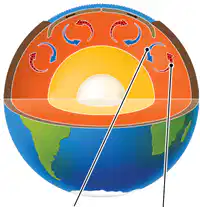
The mantle is heated from below by Earth’s core and radioactivity. How does this energy source shape plate boundaries over time?
Rising warm mantle creates spreading centers; sinking cool mantle drives subduction
Warmth makes plates expand evenly; continents stop drifting
Heat pushes plates outward uniformly; boundaries weaken everywhere
Energy melts the entire lithosphere; boundaries vanish
Tags
NGSS.HS-ESS1-5
NGSS.HS-ESS2-1
7.
MULTIPLE CHOICE QUESTION
30 sec • 1 pt
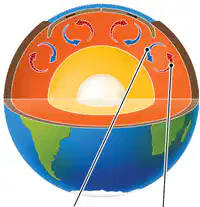
A diagram labels cooler, denser rock sinking toward the core and warmer, less dense rock rising. Which prediction about surface features follows from this circulation?
Mid-ocean ridges form where upwelling mantle spreads plates
Deep-sea trenches form only at ridge crests
Mountains grow only in plate interiors
Ridges appear where cold rock sinks downward
Tags
NGSS.HS-ESS1-5
NGSS.HS-ESS2-1
NGSS.HS-ESS2-3
Access all questions and much more by creating a free account
Create resources
Host any resource
Get auto-graded reports

Continue with Google

Continue with Email

Continue with Classlink

Continue with Clever
or continue with

Microsoft
%20(1).png)
Apple

Others
Already have an account?



