
Understanding Definite Integrals and Antiderivatives

Interactive Video
•
Mathematics
•
9th - 12th Grade
•
Practice Problem
•
Hard

Mia Campbell
FREE Resource
Read more
9 questions
Show all answers
1.
MULTIPLE CHOICE QUESTION
30 sec • 1 pt
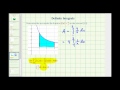
What is the function f(x) that we are finding the area under?
f(x) = x/4
f(x) = 4/x
f(x) = 4x
f(x) = x^4
2.
MULTIPLE CHOICE QUESTION
30 sec • 1 pt
What is the interval over which we are finding the area under the curve?
From 0 to 4
From 1 to 4
From 1 to 3
From 0 to 3
3.
MULTIPLE CHOICE QUESTION
30 sec • 1 pt
Which theorem is used to evaluate the definite integral in this problem?
Intermediate Value Theorem
Pythagorean Theorem
Fundamental Theorem of Calculus
Mean Value Theorem
4.
MULTIPLE CHOICE QUESTION
30 sec • 1 pt
What is the antiderivative of 1/x?
x^2/2
e^x + C
ln(x) + C
1/x + C
5.
MULTIPLE CHOICE QUESTION
30 sec • 1 pt
Why is the constant of integration not included in definite integration?
It is always zero
It is only used in differentiation
It cancels out when evaluating at the bounds
It is not needed for indefinite integrals
6.
MULTIPLE CHOICE QUESTION
30 sec • 1 pt
What is the exact area under the curve from x = 1 to x = 3?
4
4 ln(3)
ln(3)
3 ln(4)
7.
MULTIPLE CHOICE QUESTION
30 sec • 1 pt
What is the decimal approximation of the area under the curve?
4.39
3.14
2.71
5.00
Access all questions and much more by creating a free account
Create resources
Host any resource
Get auto-graded reports

Continue with Google

Continue with Email

Continue with Classlink

Continue with Clever
or continue with

Microsoft
%20(1).png)
Apple

Others
Already have an account?

