
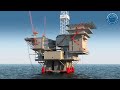
Impact of Technology in Oil and Gas

Interactive Video
•
Business, Science, Geography
•
9th - 12th Grade
•
Practice Problem
•
Hard

Patricia Brown
FREE Resource
Read more
10 questions
Show all answers
1.
MULTIPLE CHOICE QUESTION
30 sec • 1 pt
What is one of the primary uses of oil in everyday life?
Production of textiles
Manufacturing of electronic devices
Fuel for vehicles
Construction of buildings
2.
MULTIPLE CHOICE QUESTION
30 sec • 1 pt
What is a key difference between onshore and offshore drilling?
Onshore drilling does not require staff to live on site
Offshore drilling requires less preparation
Offshore drilling is faster to start
Onshore drilling is more expensive
3.
MULTIPLE CHOICE QUESTION
30 sec • 1 pt
Why is onshore drilling generally less costly than offshore drilling?
It has lower daily operational costs
It involves simpler technology
It is less regulated
It requires fewer workers
4.
MULTIPLE CHOICE QUESTION
30 sec • 1 pt
What is a significant advantage of offshore drilling?
It reduces dependency on OPEC
It is environmentally friendly
It requires less equipment
It is easier to manage
5.
MULTIPLE CHOICE QUESTION
30 sec • 1 pt
How does offshore drilling contribute to a country's economy?
By creating tax windfalls and jobs
By increasing oil imports
By reducing oil prices globally
By decreasing energy consumption
6.
MULTIPLE CHOICE QUESTION
30 sec • 1 pt
What is a major safety concern in the oil and gas industry?
Lack of training programs
Poor communication systems
High rates of workplace fatalities
Inadequate safety equipment
7.
MULTIPLE CHOICE QUESTION
30 sec • 1 pt
What is a recommended safety practice for oil and gas workers?
Working alone to avoid distractions
Ignoring minor hazards
Regular inspection of potential hazards
Avoiding communication with emergency responders
Access all questions and much more by creating a free account
Create resources
Host any resource
Get auto-graded reports

Continue with Google

Continue with Email

Continue with Microsoft
or continue with

%20(1).png)
Apple

Others
Already have an account?


