
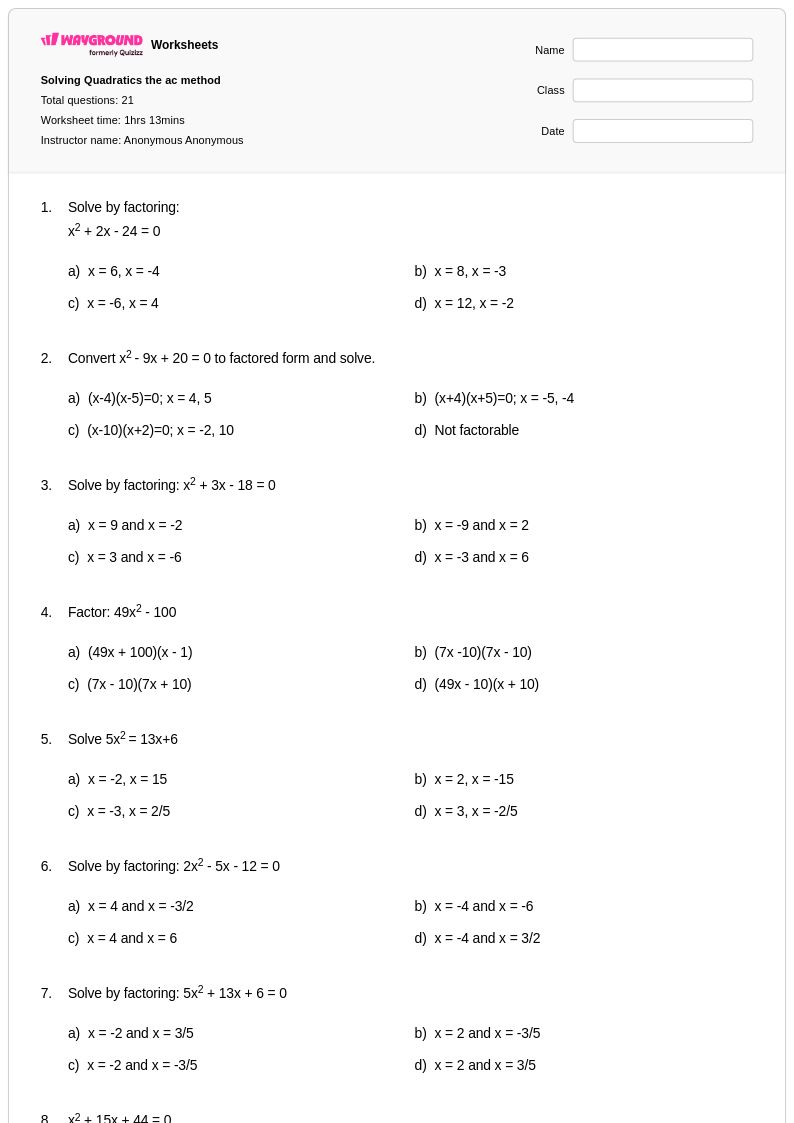
21 Q
10th
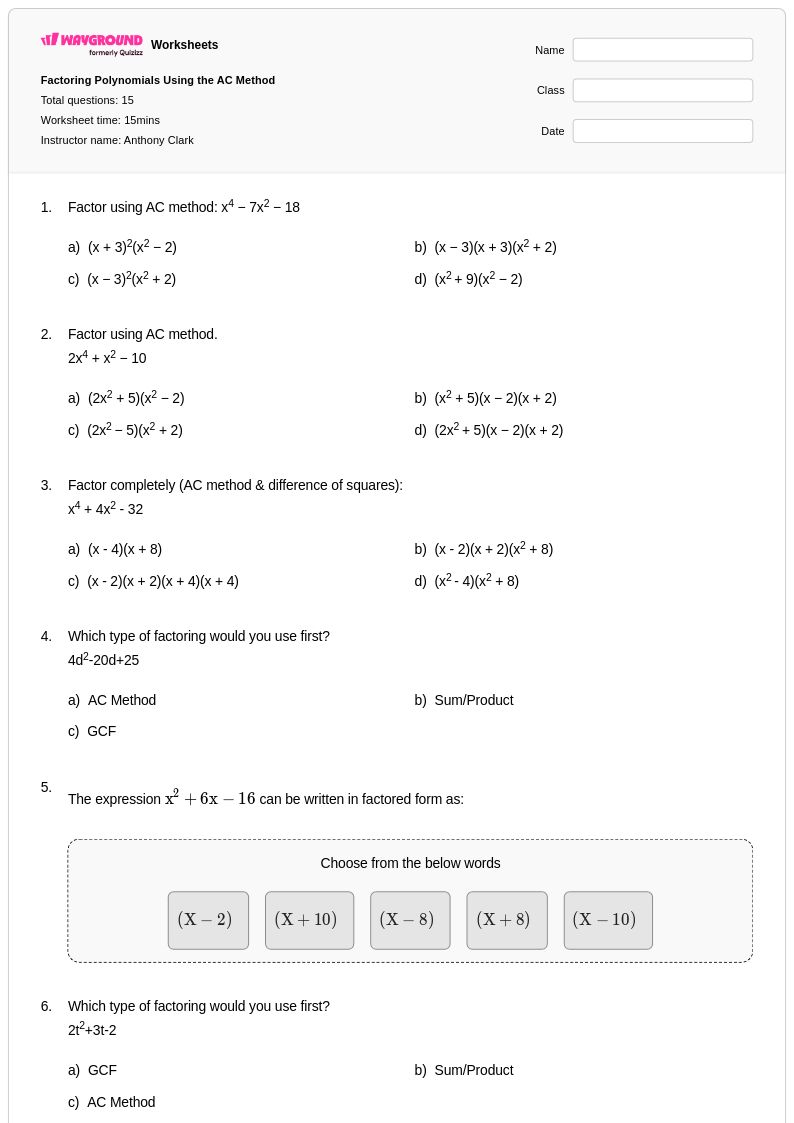
15 Q
10th - Uni
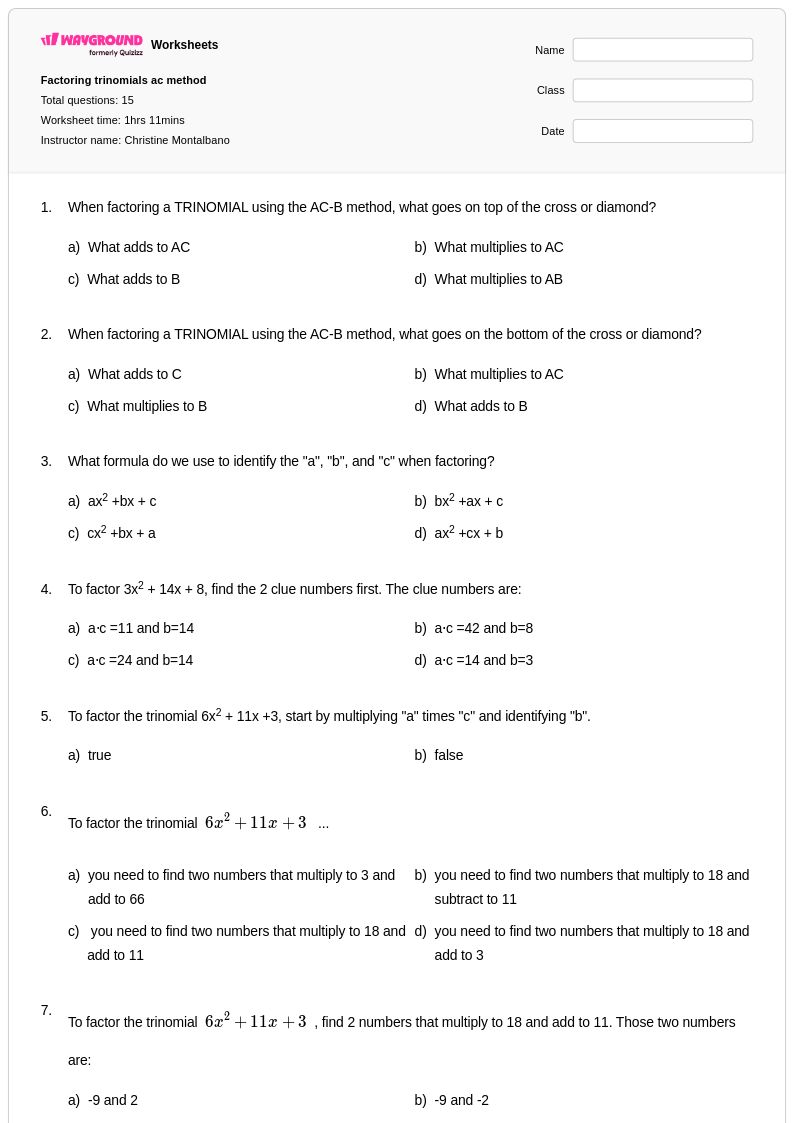
15 Q
9th - 12th

19 Q
9th - Uni
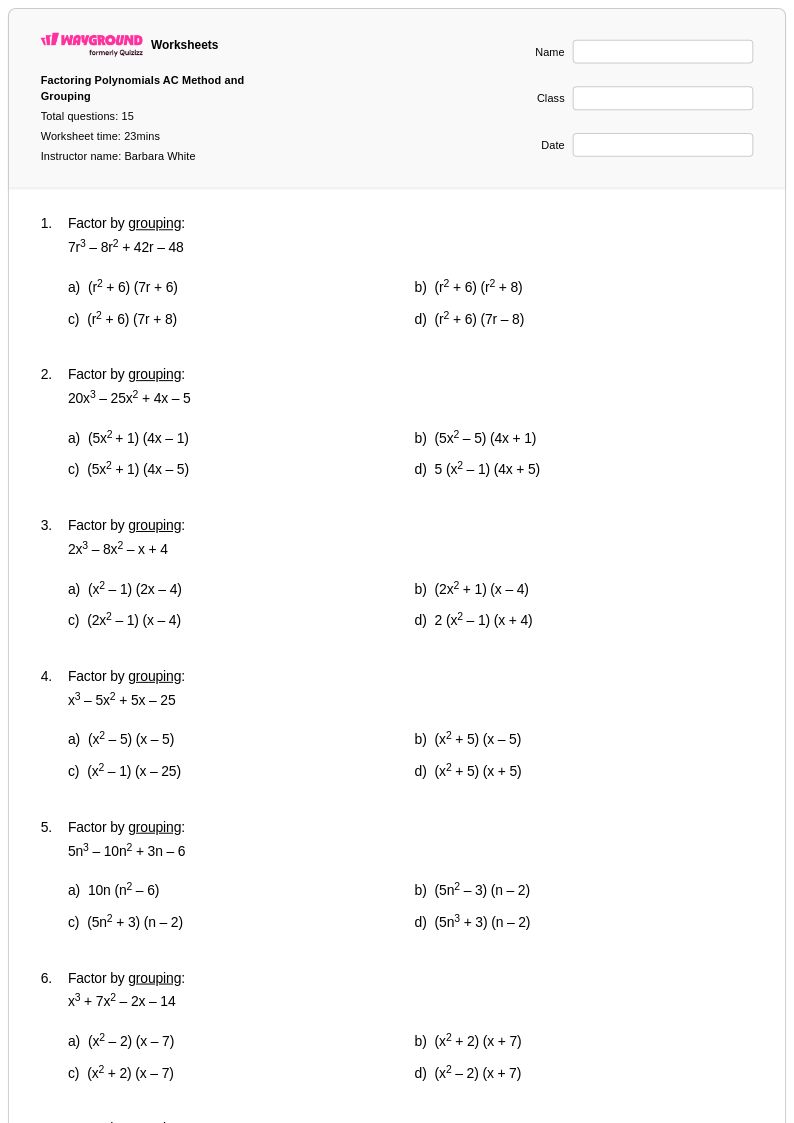
15 Q
9th - 12th
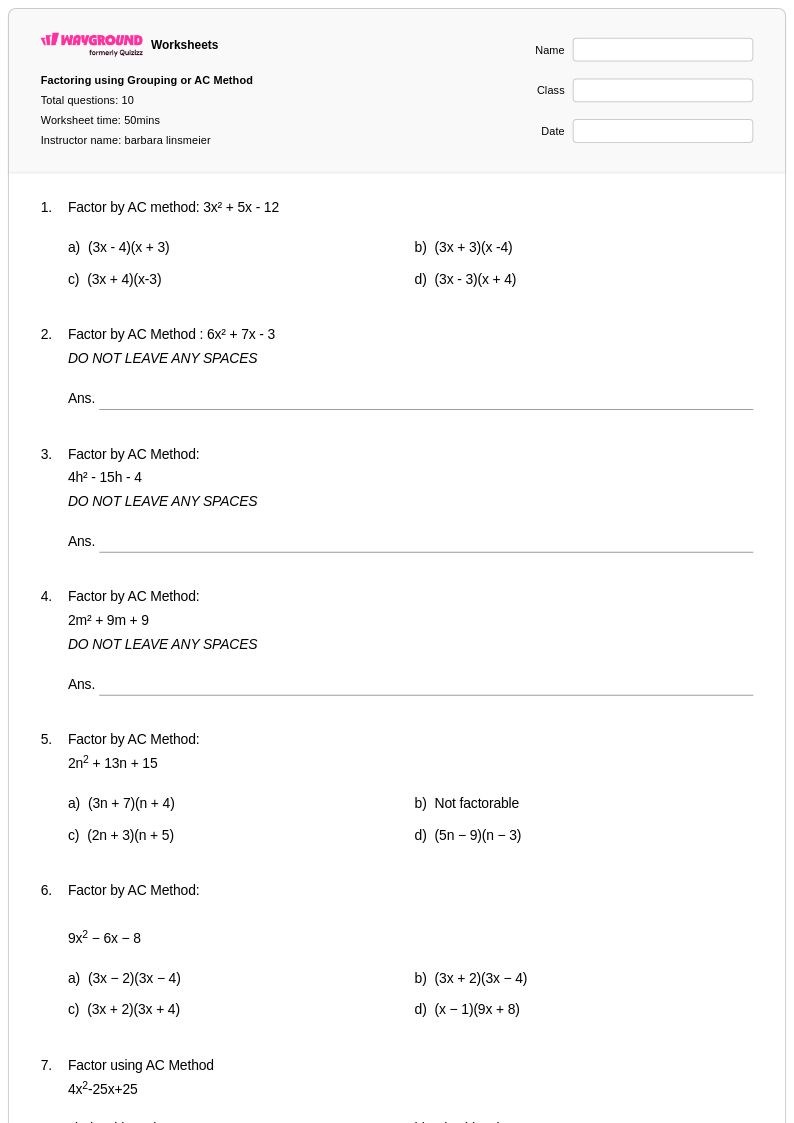
10 Q
9th - 12th
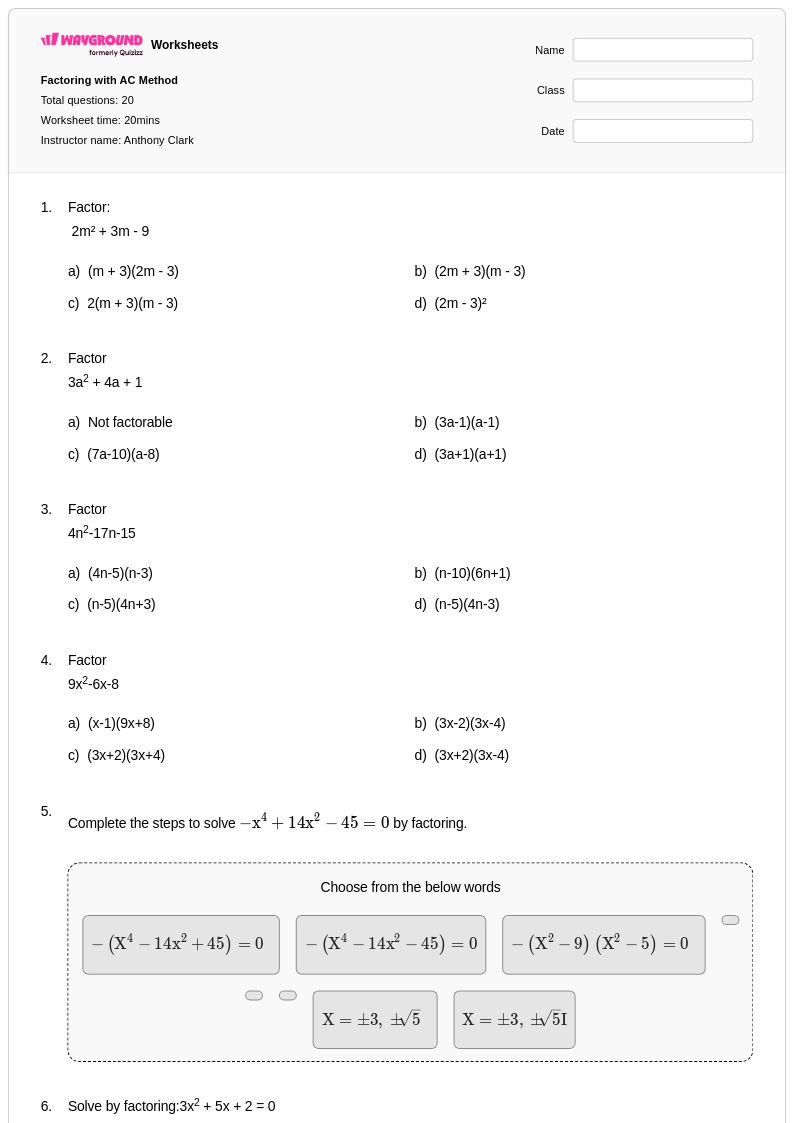
20 Q
9th - Uni
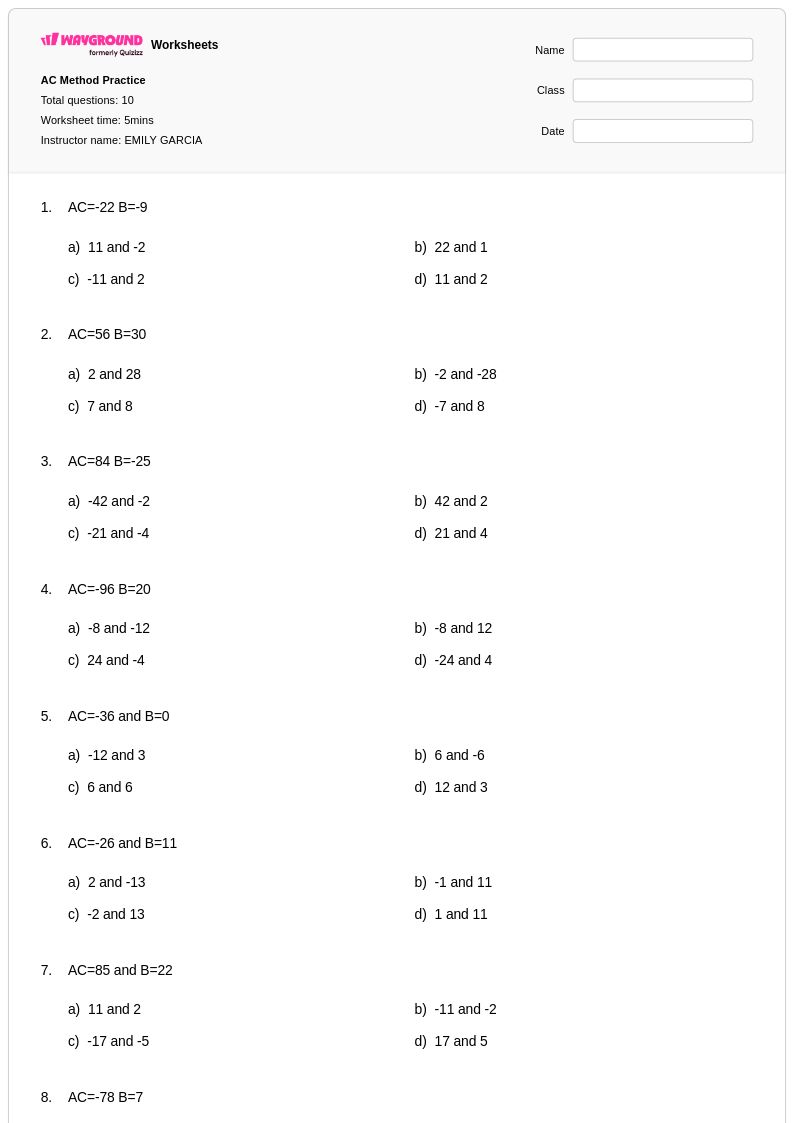
10 Q
9th - 12th

9 Q
9th - Uni
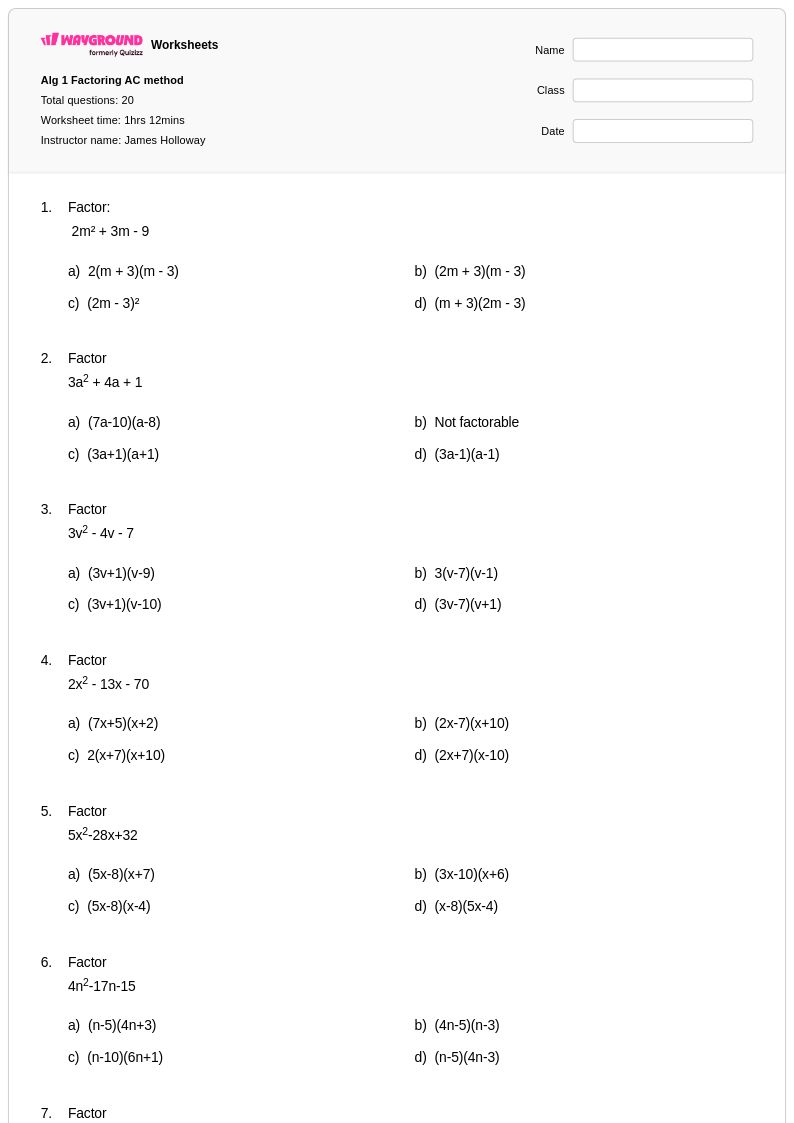
20 Q
9th - 12th
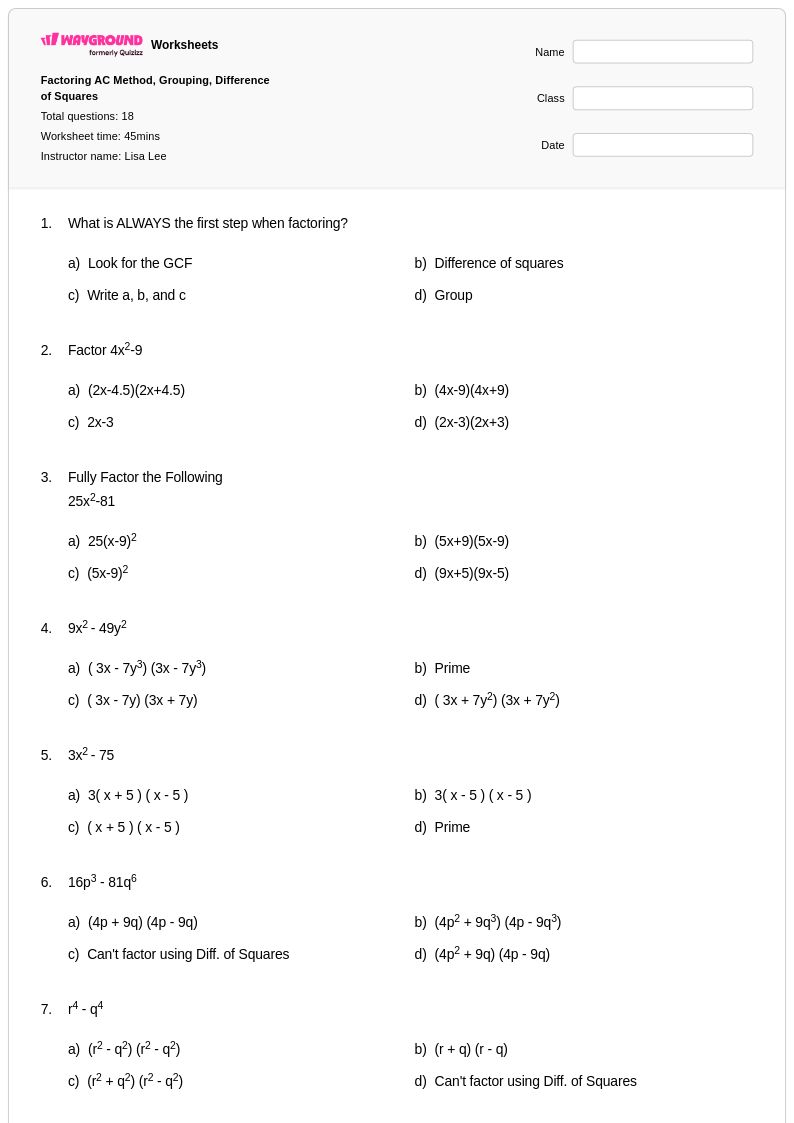
18 Q
9th - 11th
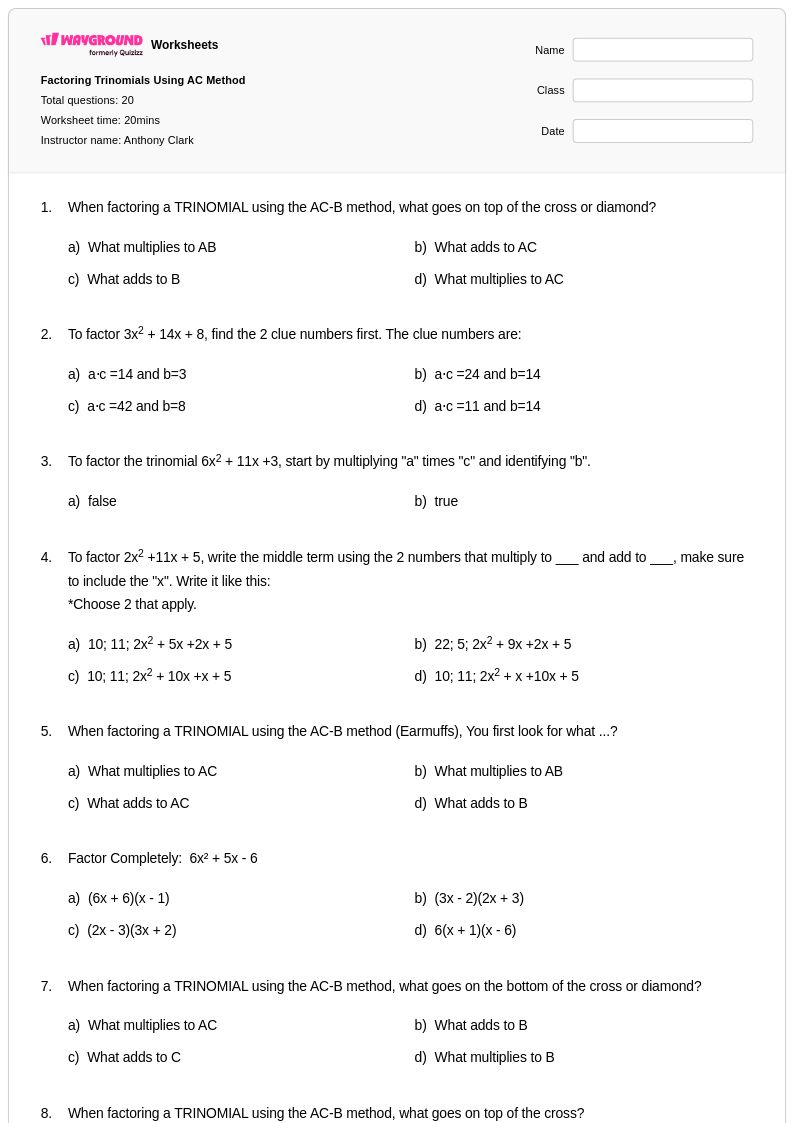
20 Q
9th - Uni
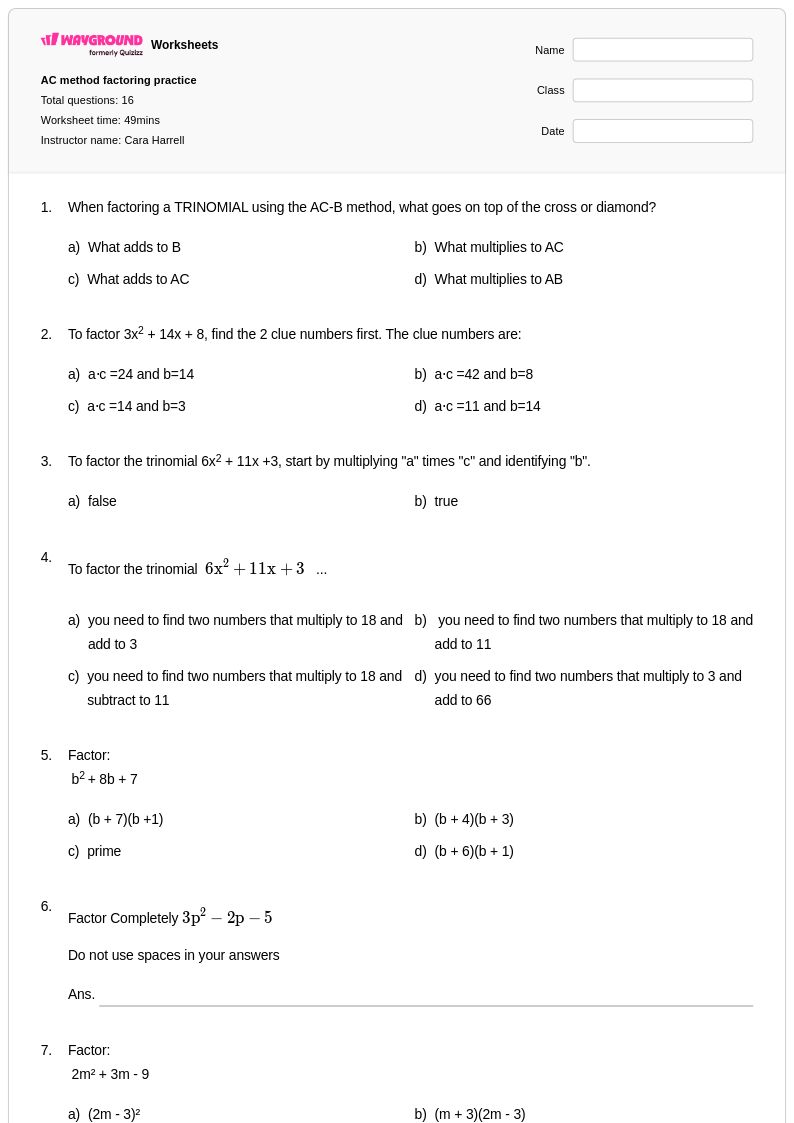
16 Q
9th - 12th
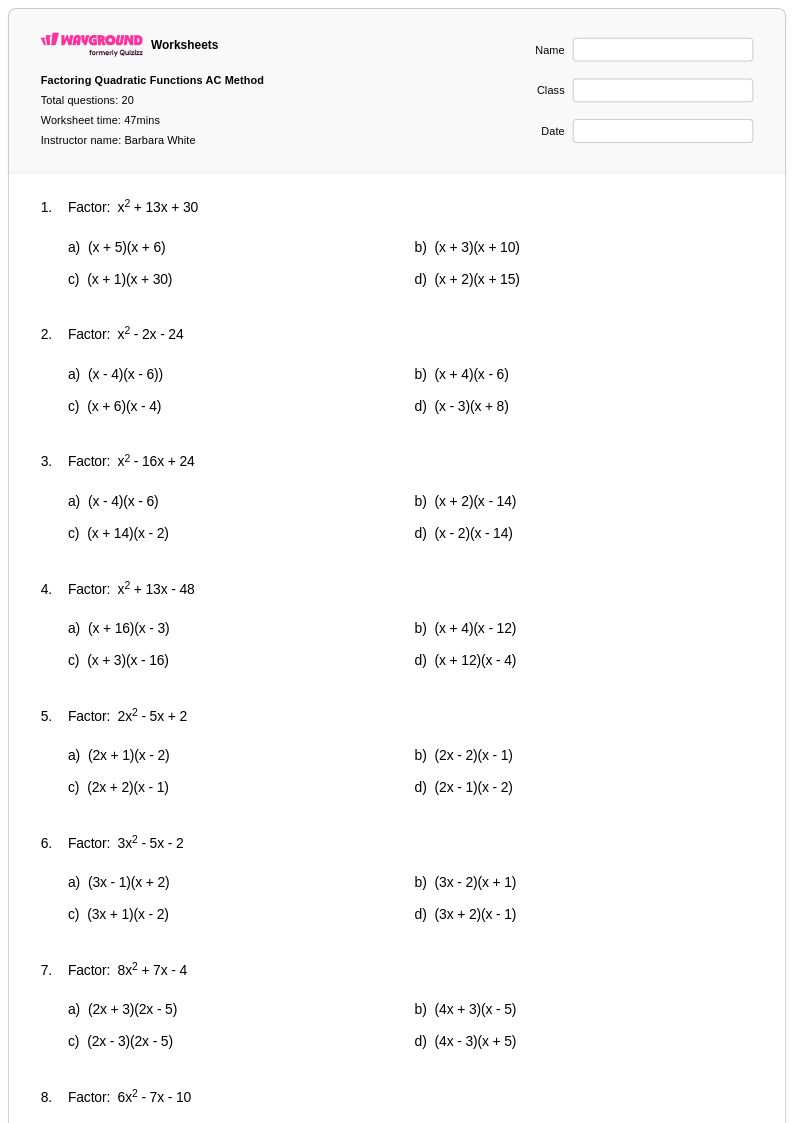
20 Q
8th - 12th
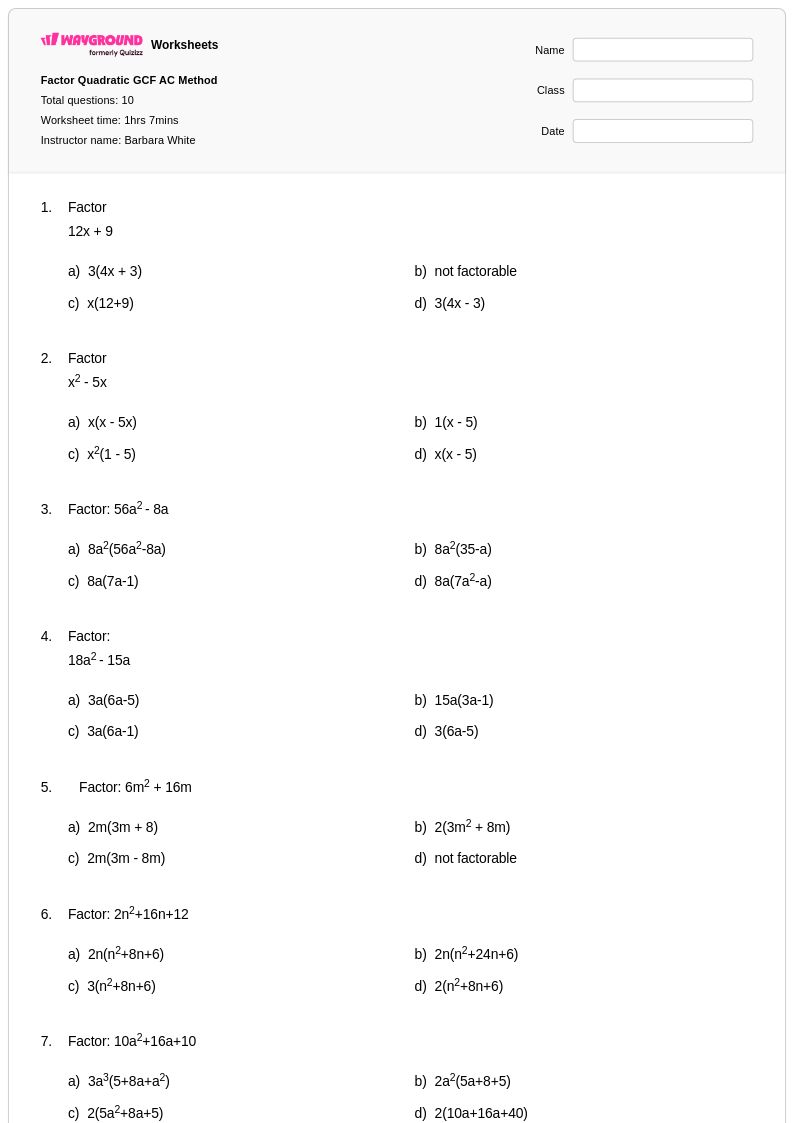
10 Q
9th - 12th
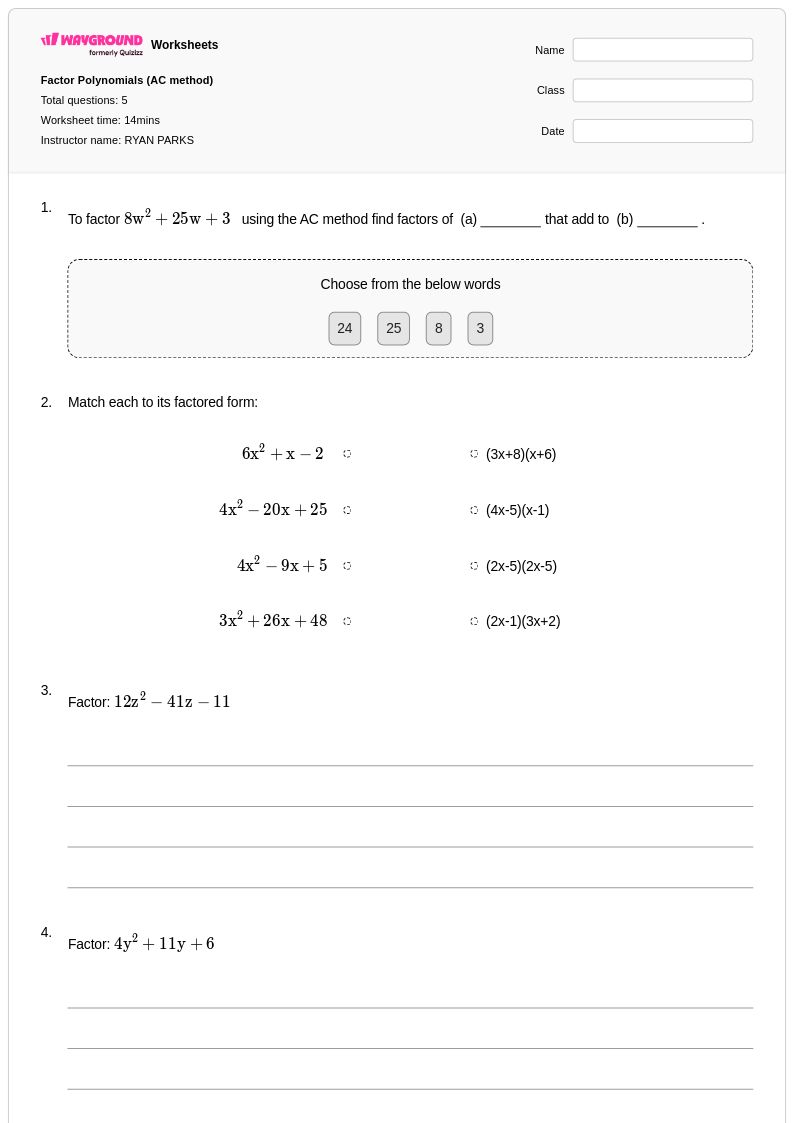
5 Q
9th - 12th
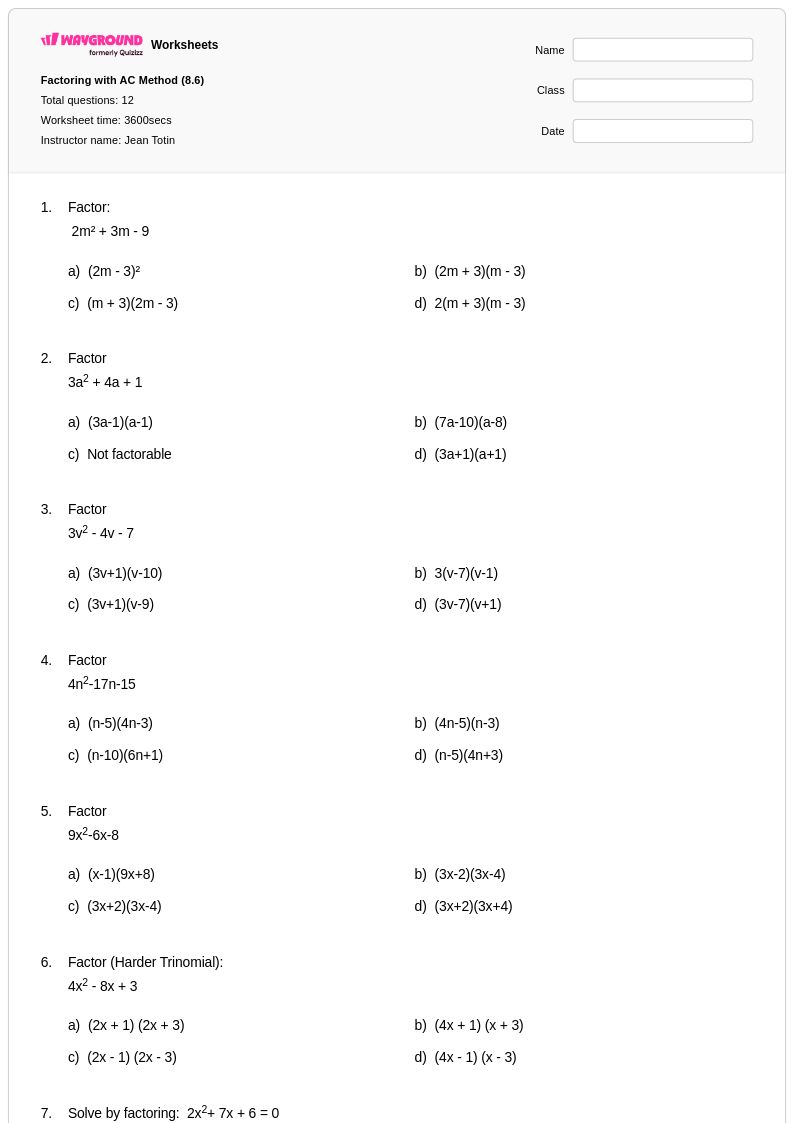
12 Q
8th - 10th
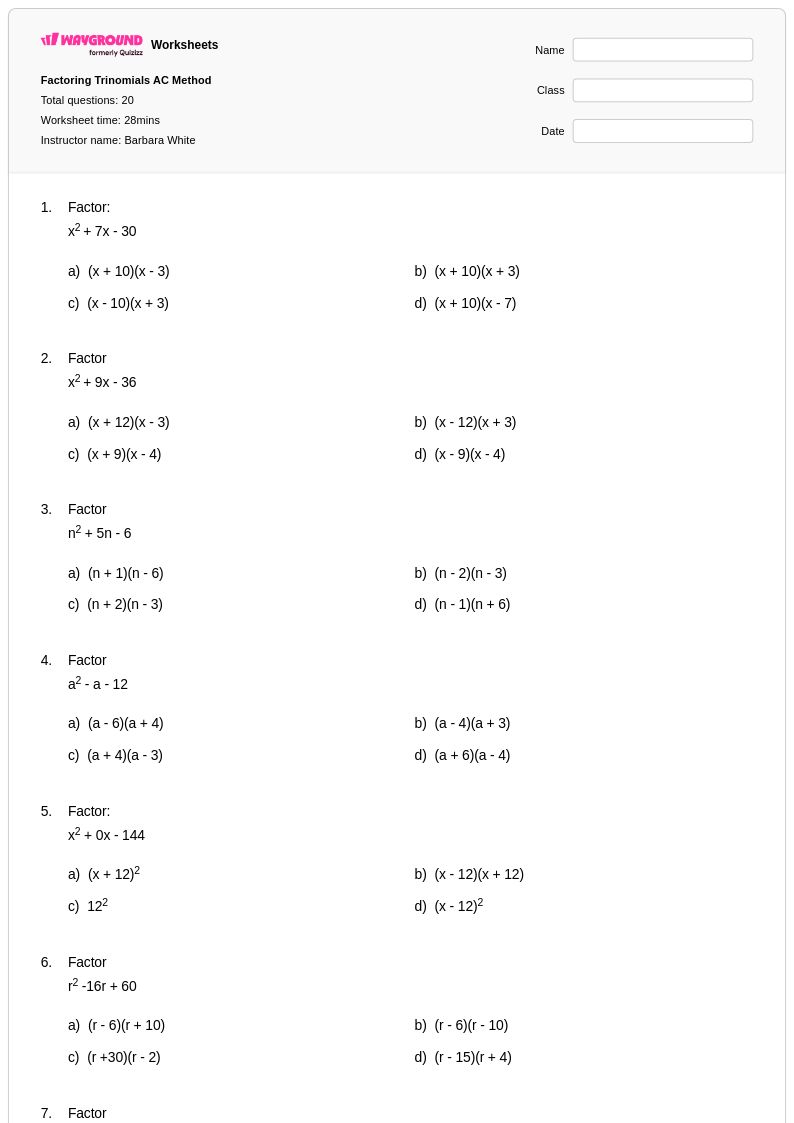
20 Q
1st - 12th
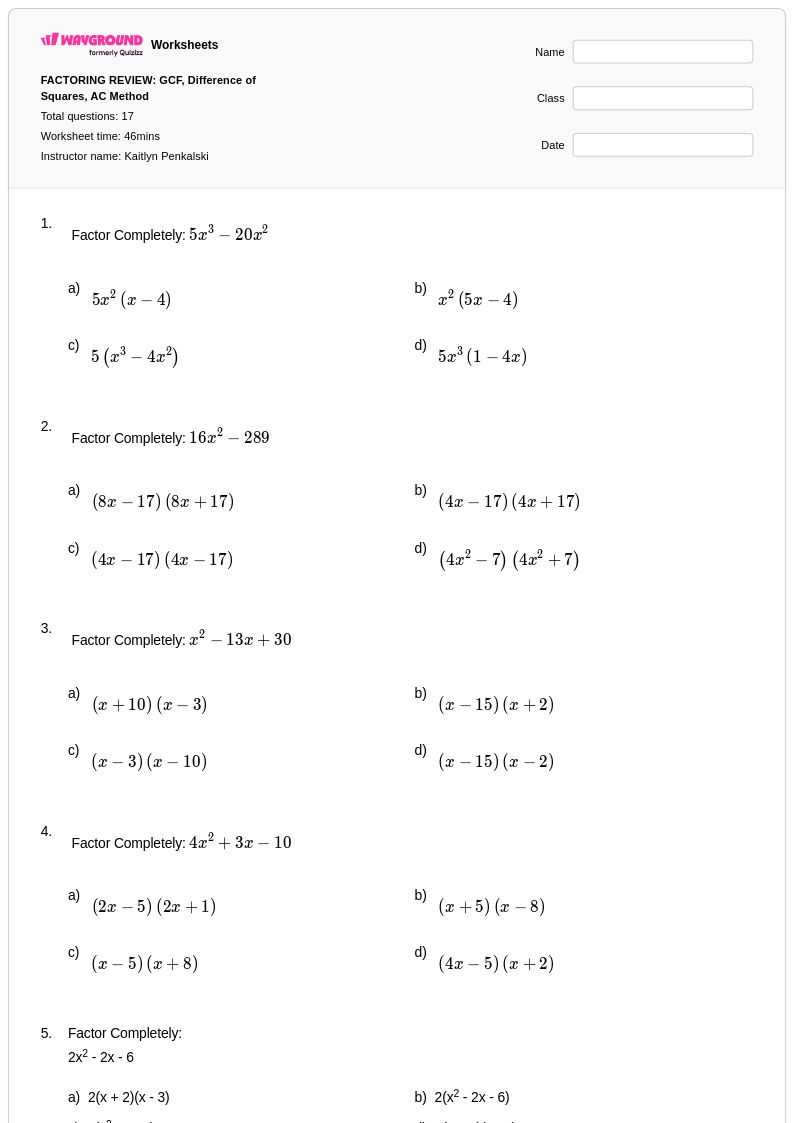
17 Q
9th - 12th
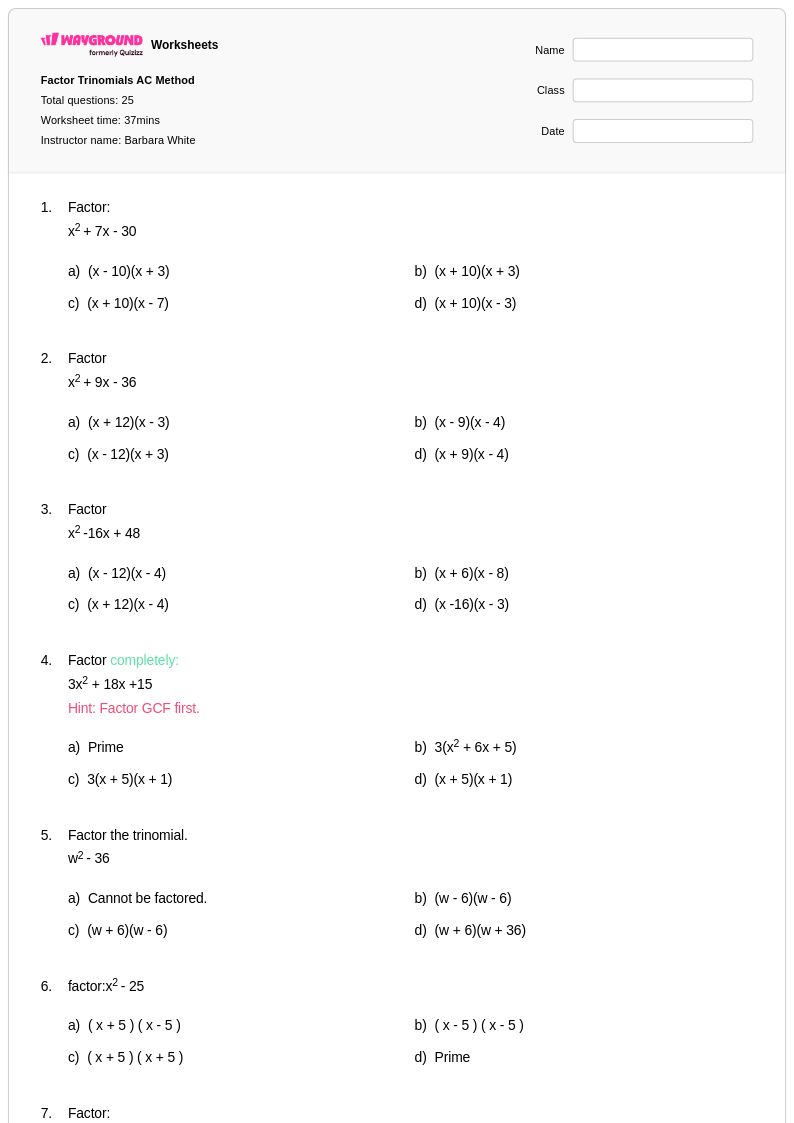
25 Q
8th - 12th
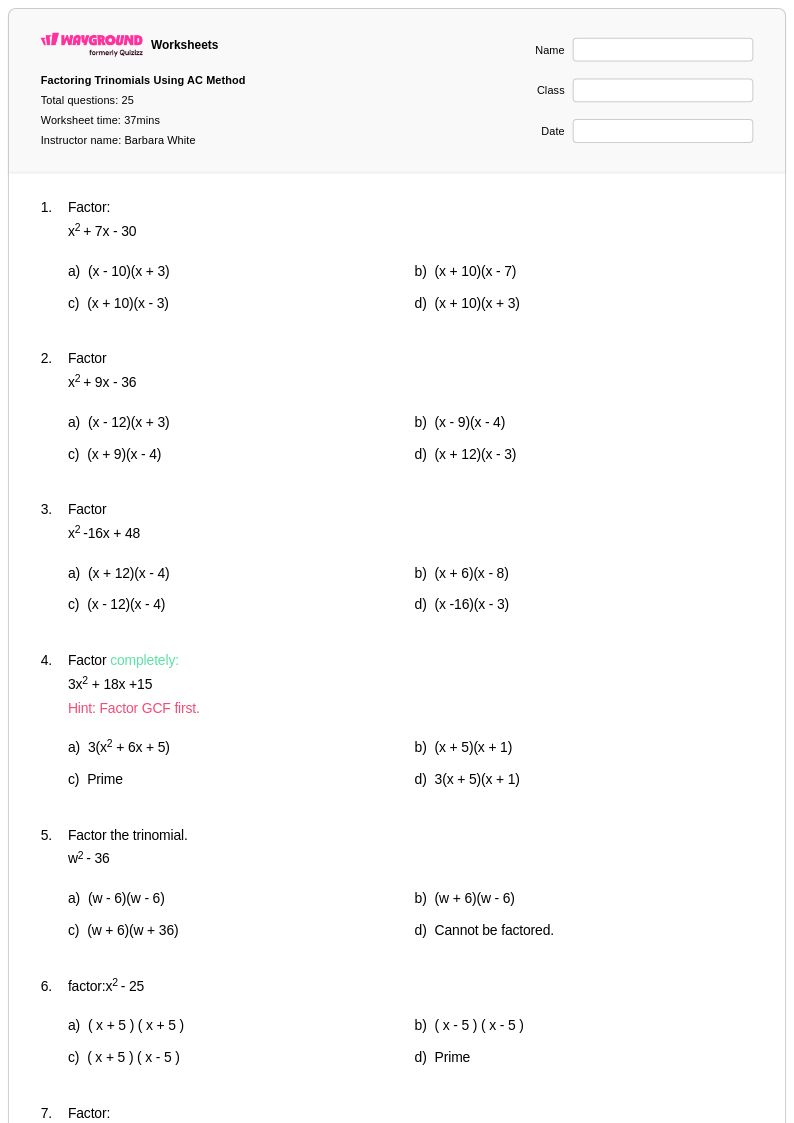
25 Q
8th - 12th
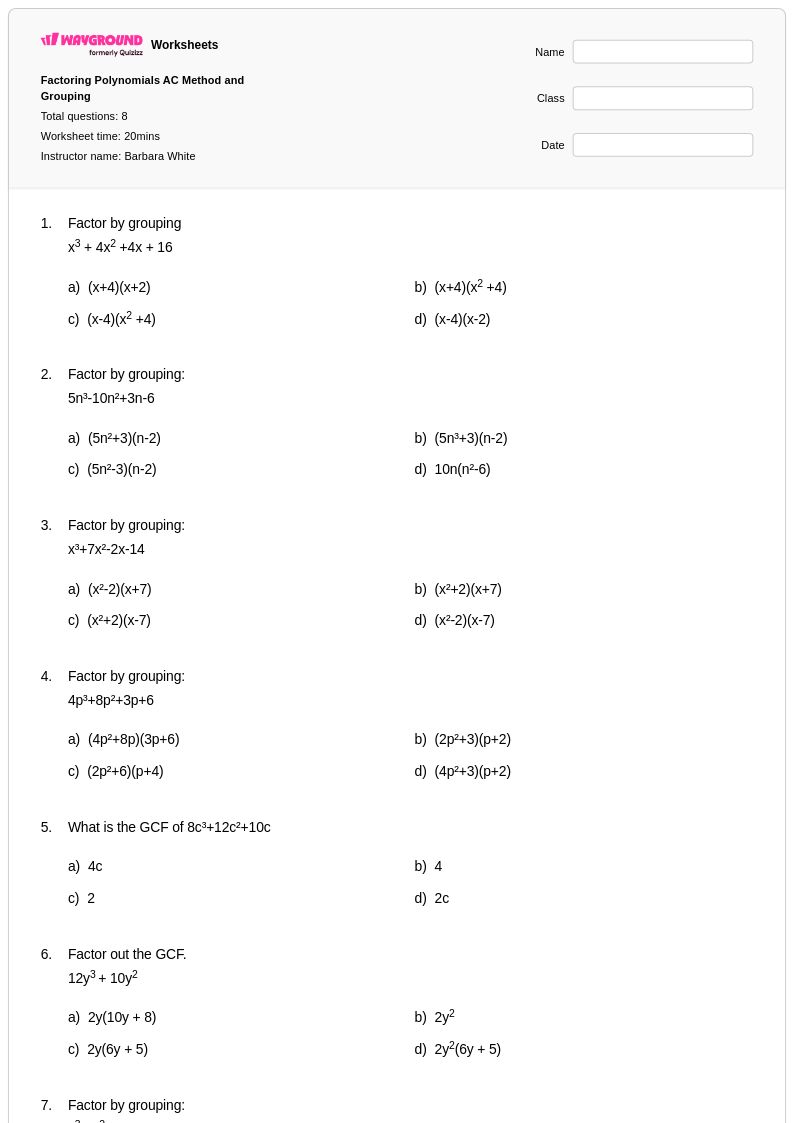
8 Q
8th - 11th
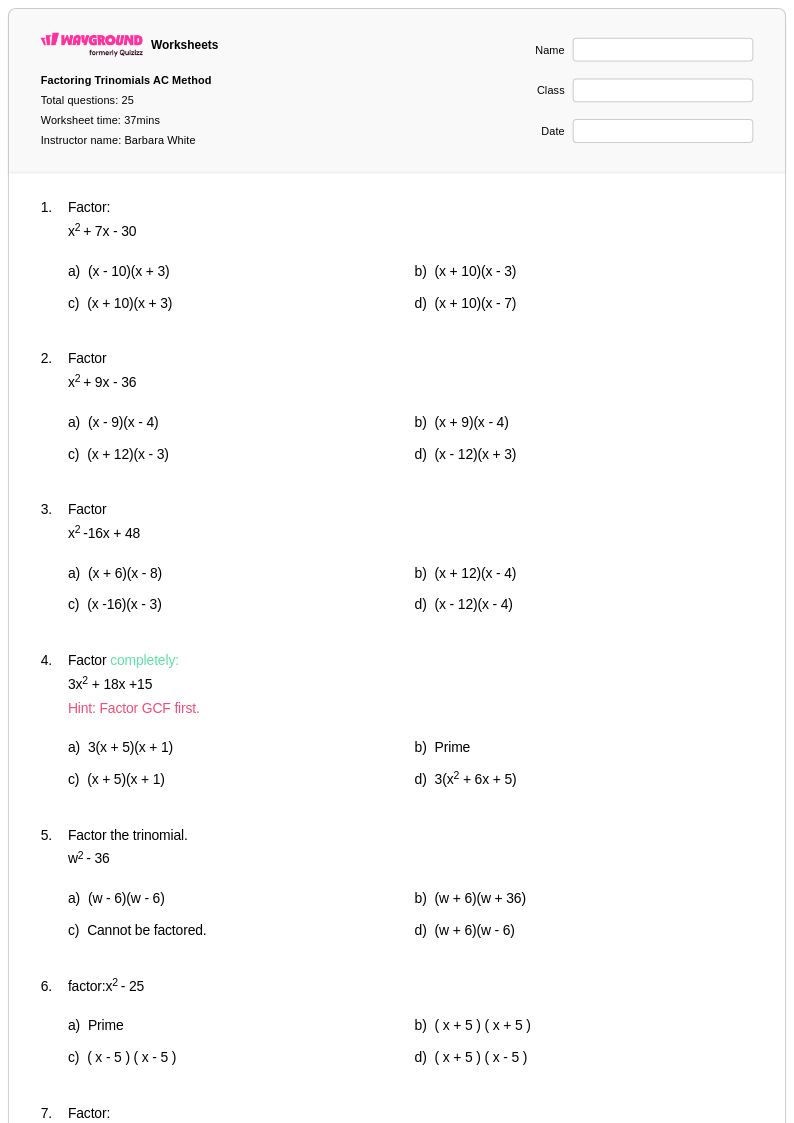
25 Q
8th - 12th
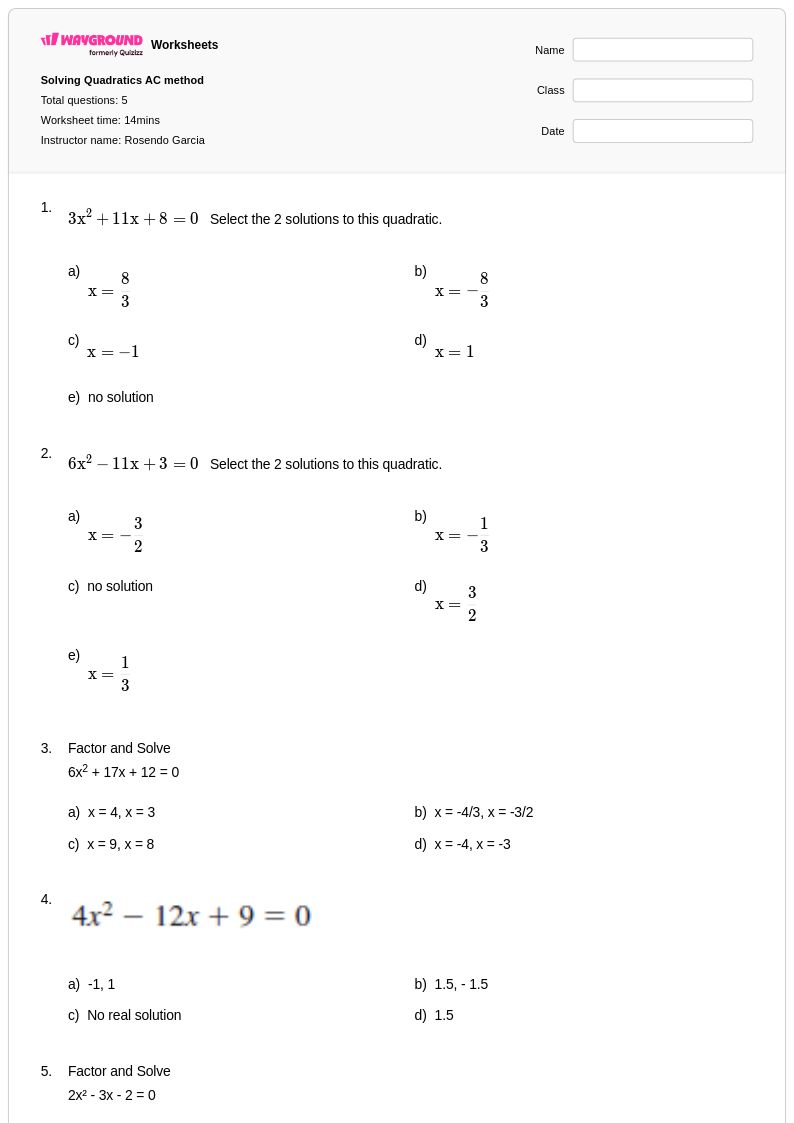
5 Q
9th - 12th
Explore Other Subject Worksheets for year 10
Explore printable Ac Method worksheets for Year 10
Year 10 AC Method worksheets available through Wayground (formerly Quizizz) provide comprehensive practice with this essential algebraic technique for factoring quadratic expressions of the form ax² + bx + c where a ≠ 1. These expertly designed worksheets guide students through the systematic process of finding two numbers that multiply to give the product of the leading coefficient and constant term (ac) while also adding to give the middle coefficient (b). Students develop critical thinking skills as they decompose the middle term, group terms strategically, and factor by grouping to arrive at the final factored form. Each worksheet includes a complete answer key and is available as a free printable PDF, offering structured practice problems that progress from basic applications to more complex scenarios involving negative coefficients and larger numerical values.
Wayground (formerly Quizizz) empowers mathematics teachers with an extensive collection of millions of teacher-created AC Method resources that streamline lesson planning and enhance student outcomes. The platform's robust search and filtering capabilities allow educators to quickly locate worksheets that align with specific curriculum standards and match their students' current skill levels. Teachers can customize existing materials or create differentiated versions to support struggling learners while providing enrichment opportunities for advanced students, with all resources available in both printable PDF format and interactive digital versions. These comprehensive tools enable effective remediation of factoring misconceptions, targeted skill practice for mastery, and flexible assessment options that accommodate diverse learning preferences and classroom management needs.
FAQs
What is the best way to teach the AC Method in Grade 10?
Which problems provide effective AC Method practice?
What misconceptions should I look for when assessing the AC Method?
How do I use Wayground's Grade 10 AC Method worksheets?
How does factoring with the AC Method connect to Common Core?
How can I differentiate Grade 10 AC Method practice?
Why is the AC Method taught in Grade 10?