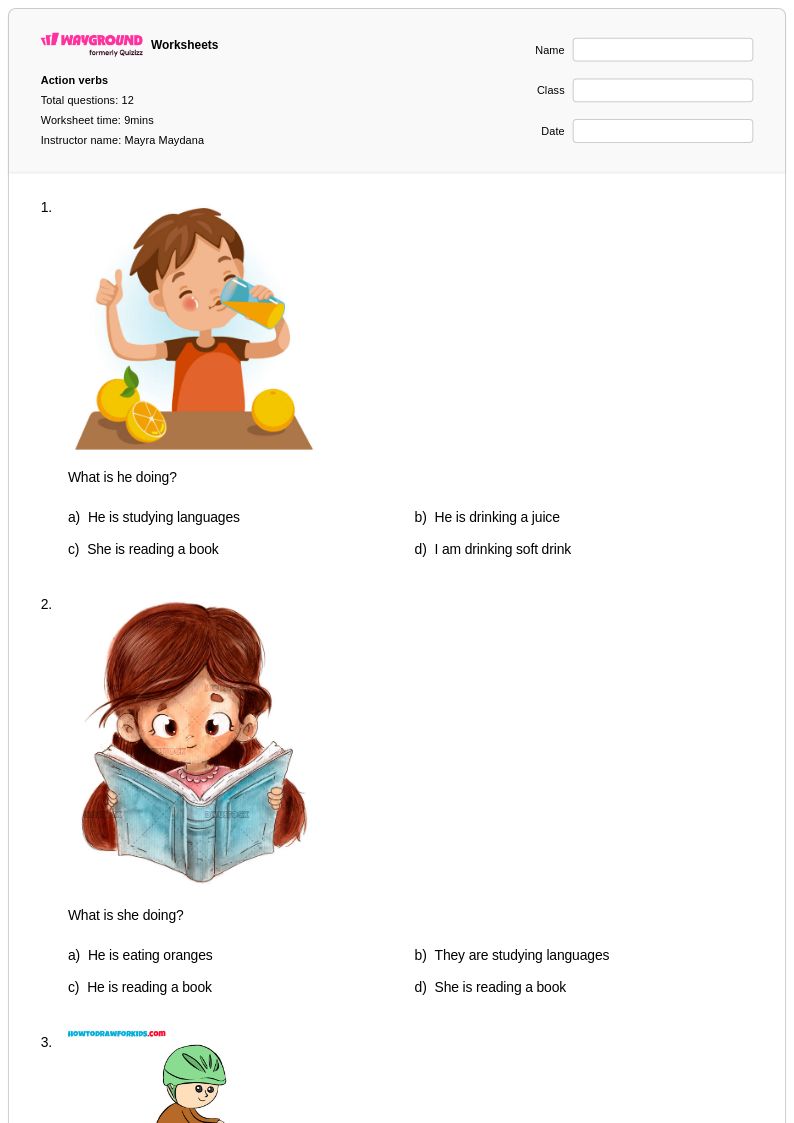
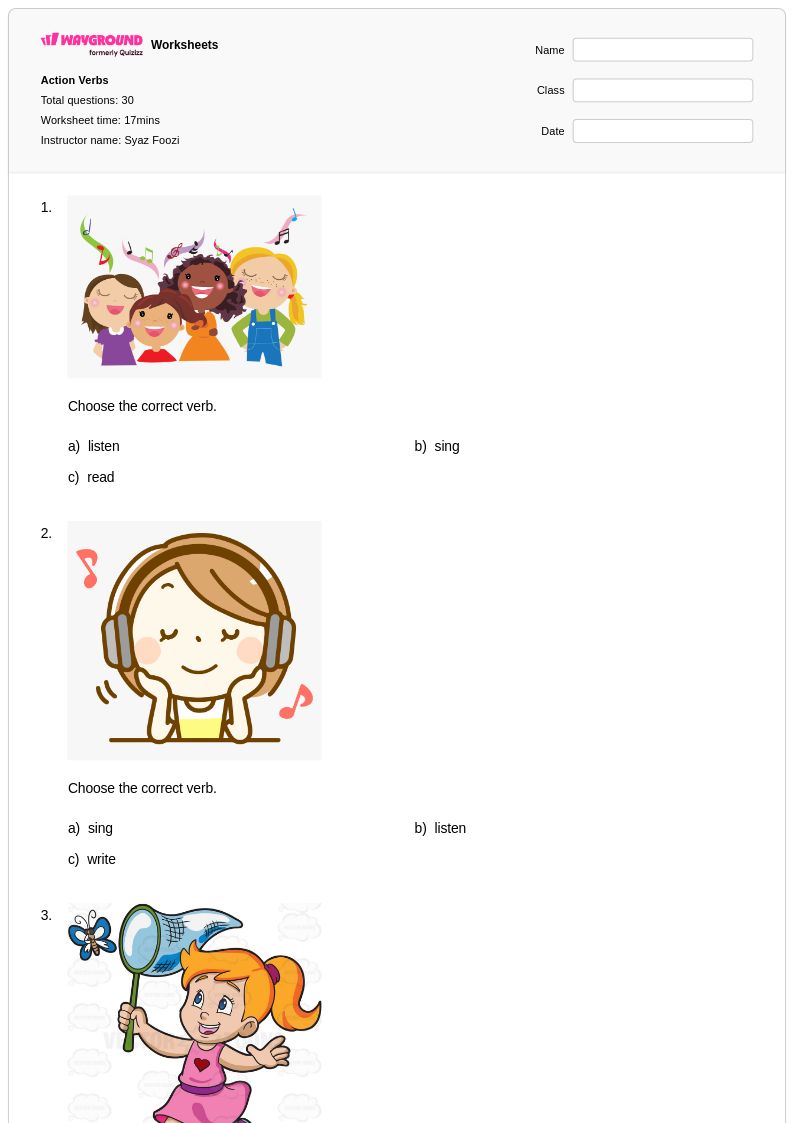
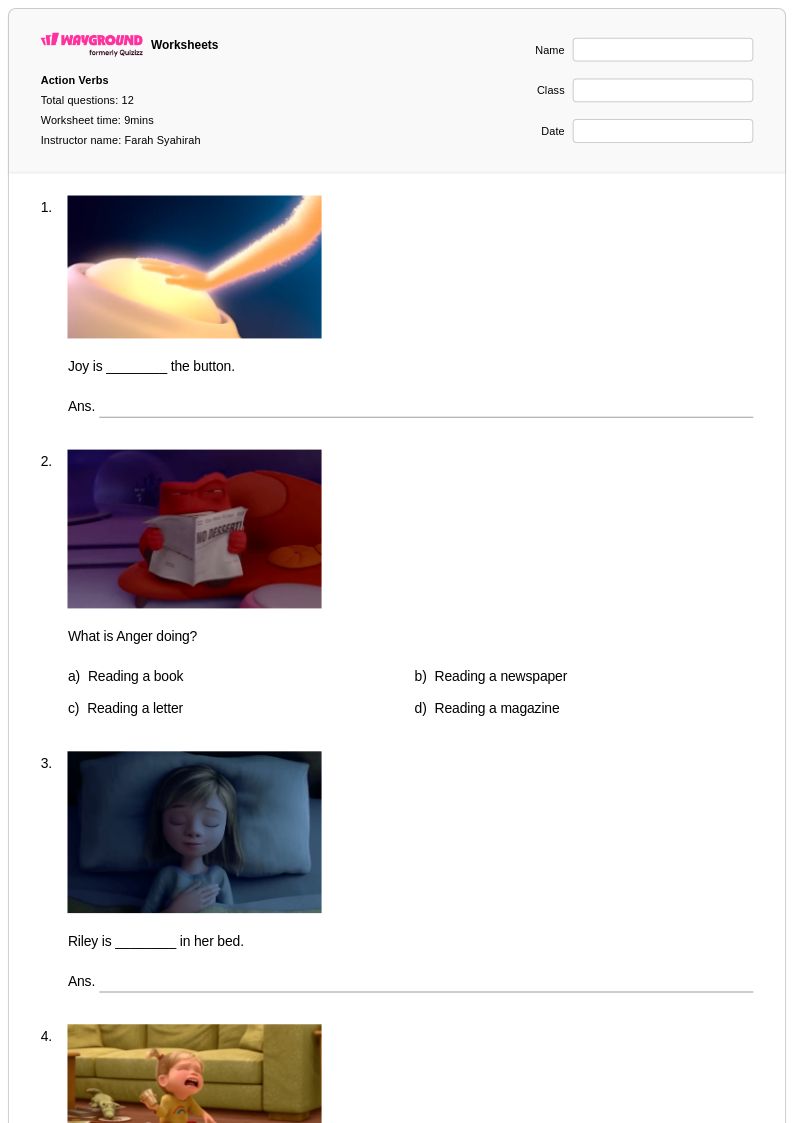
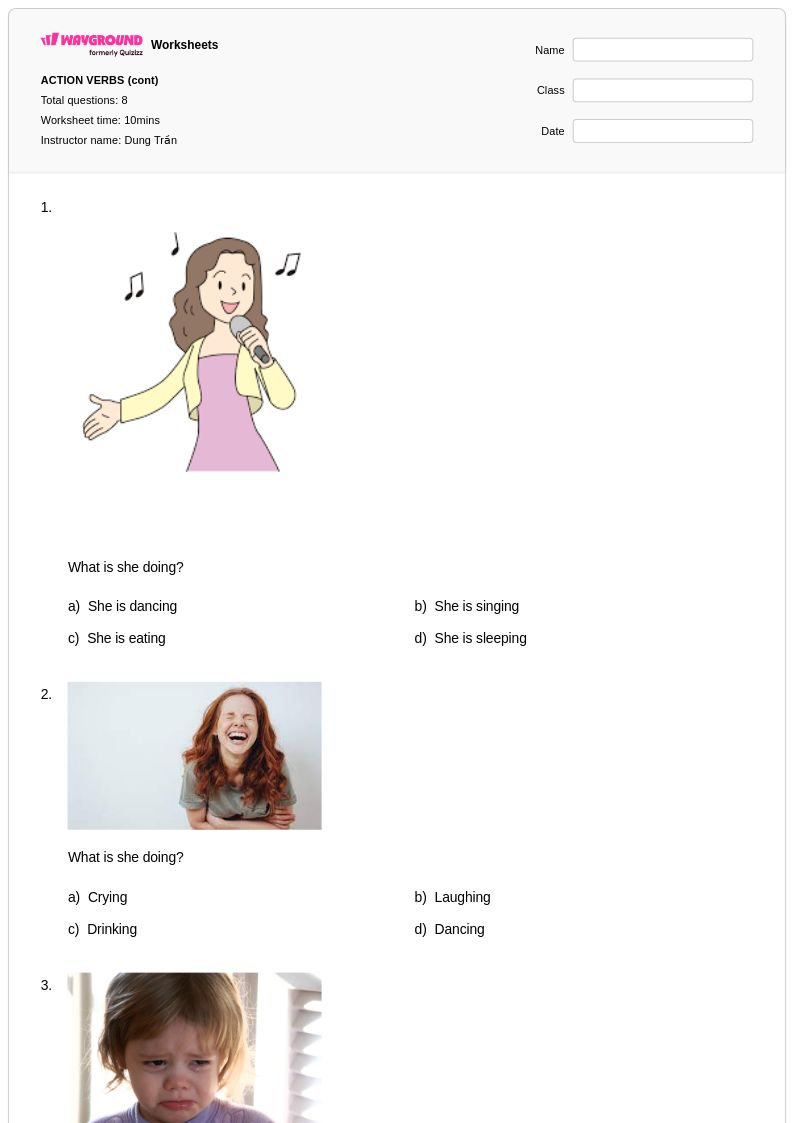
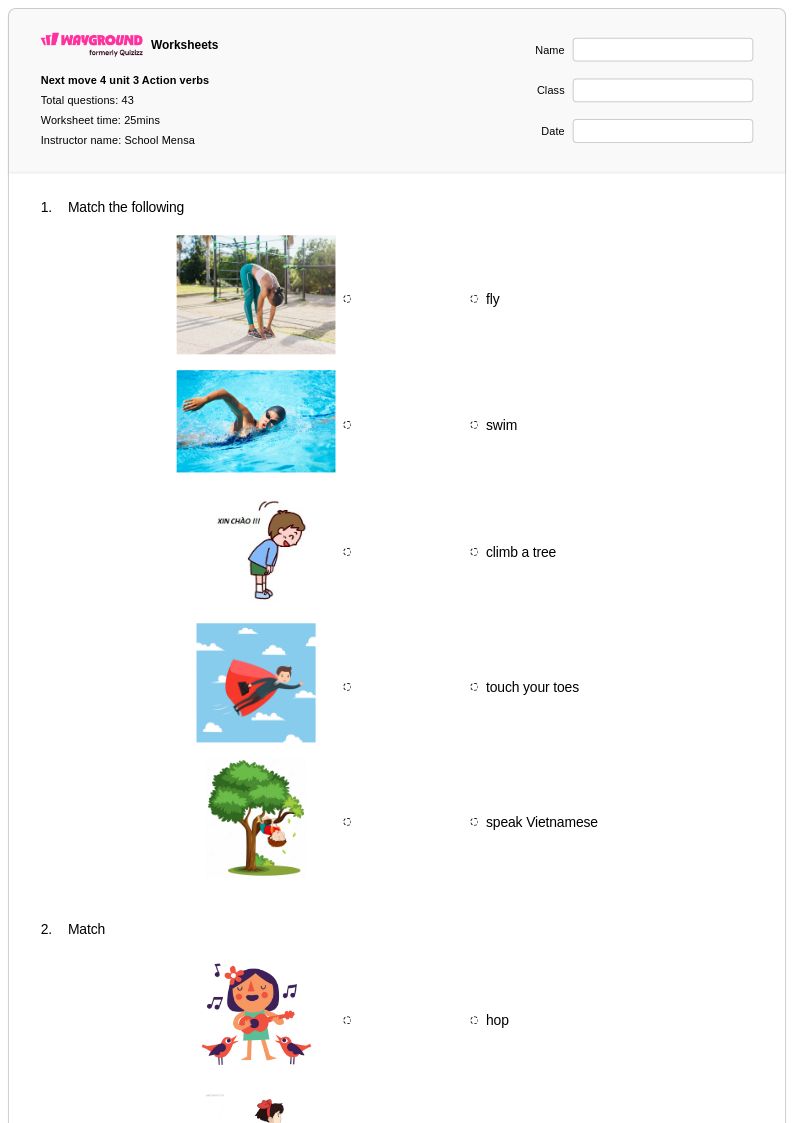
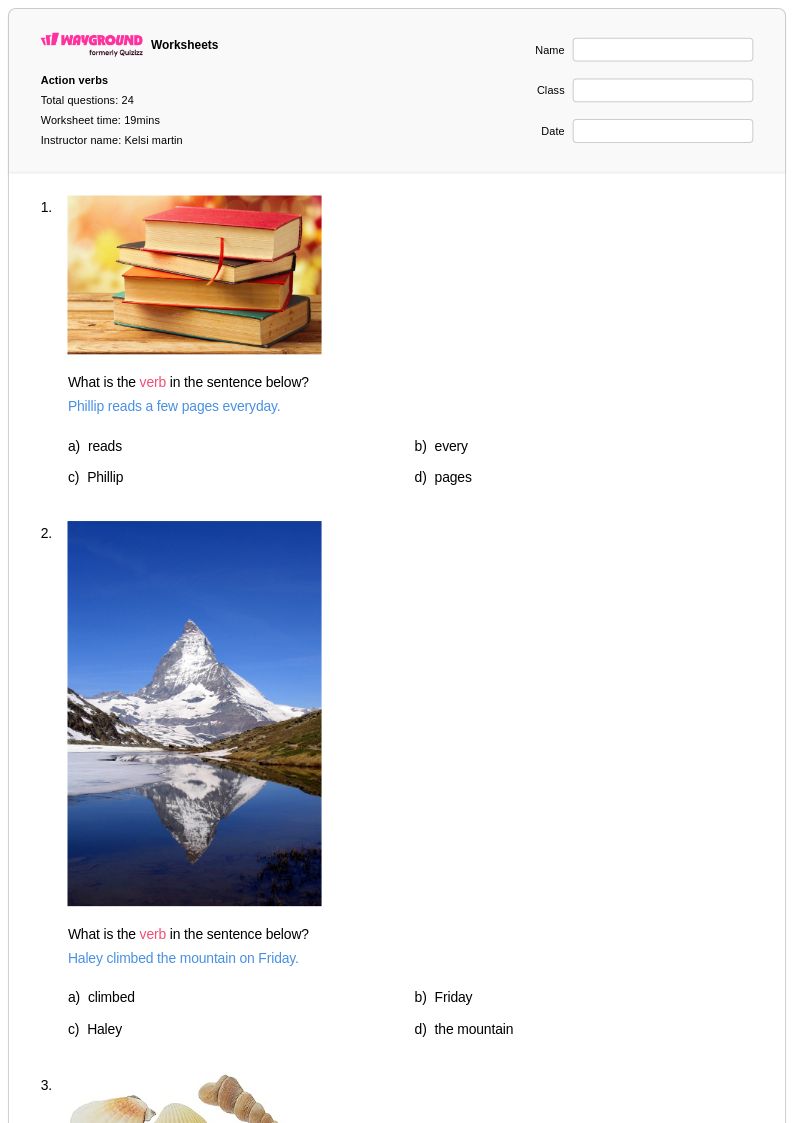
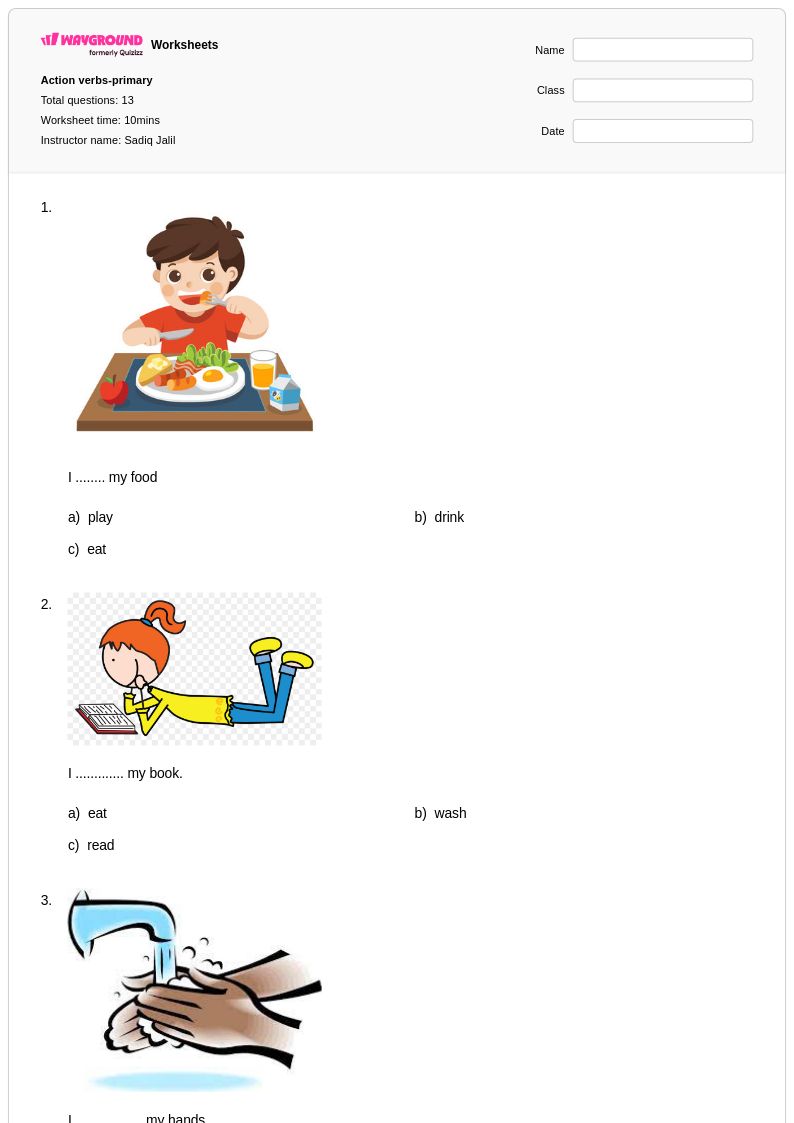
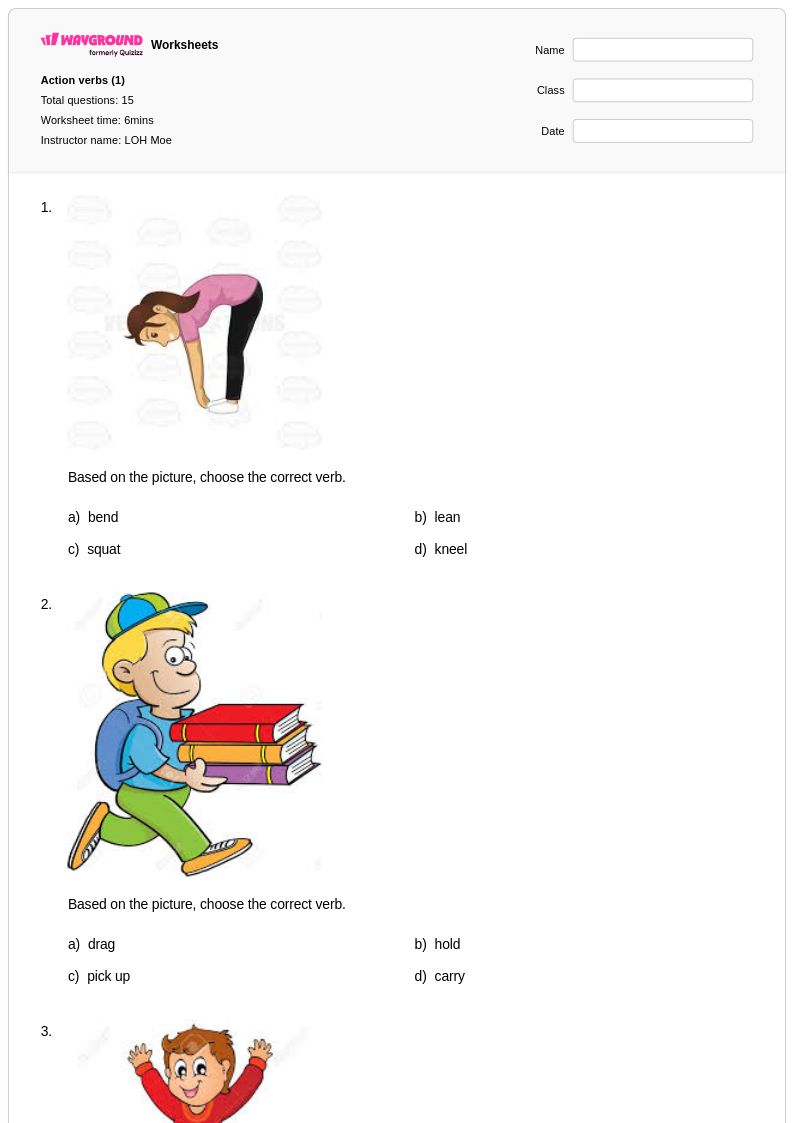
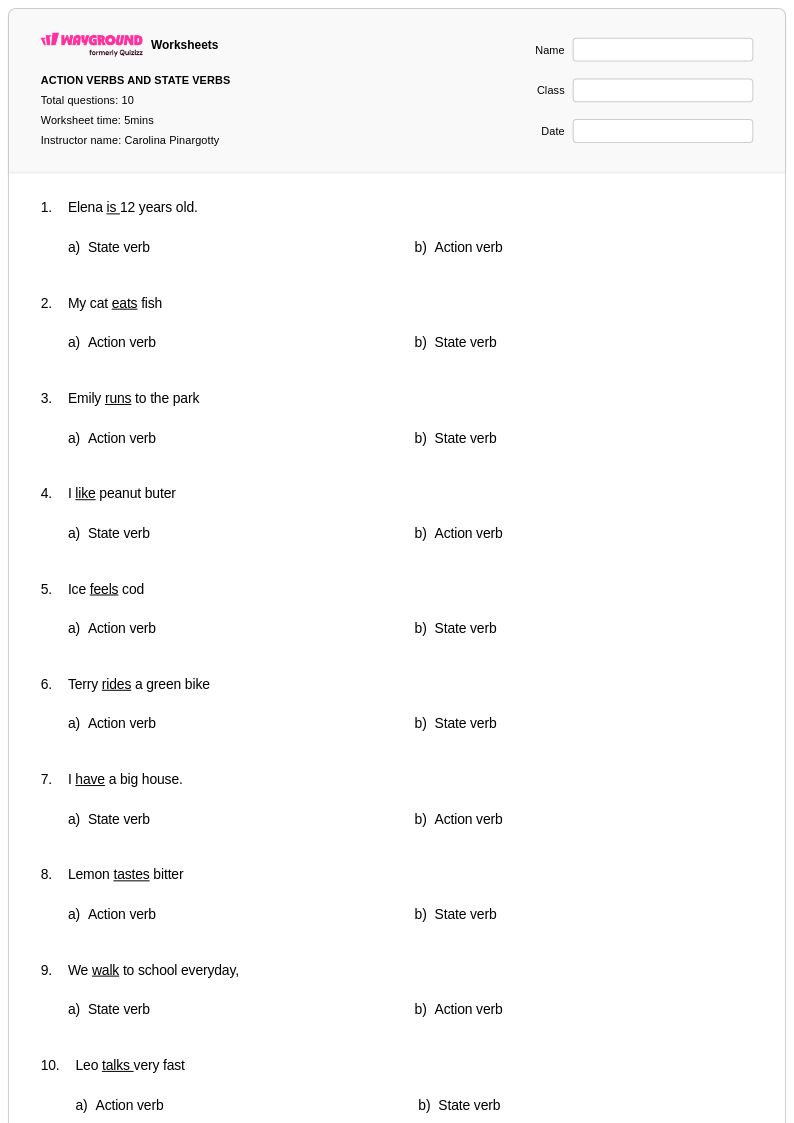
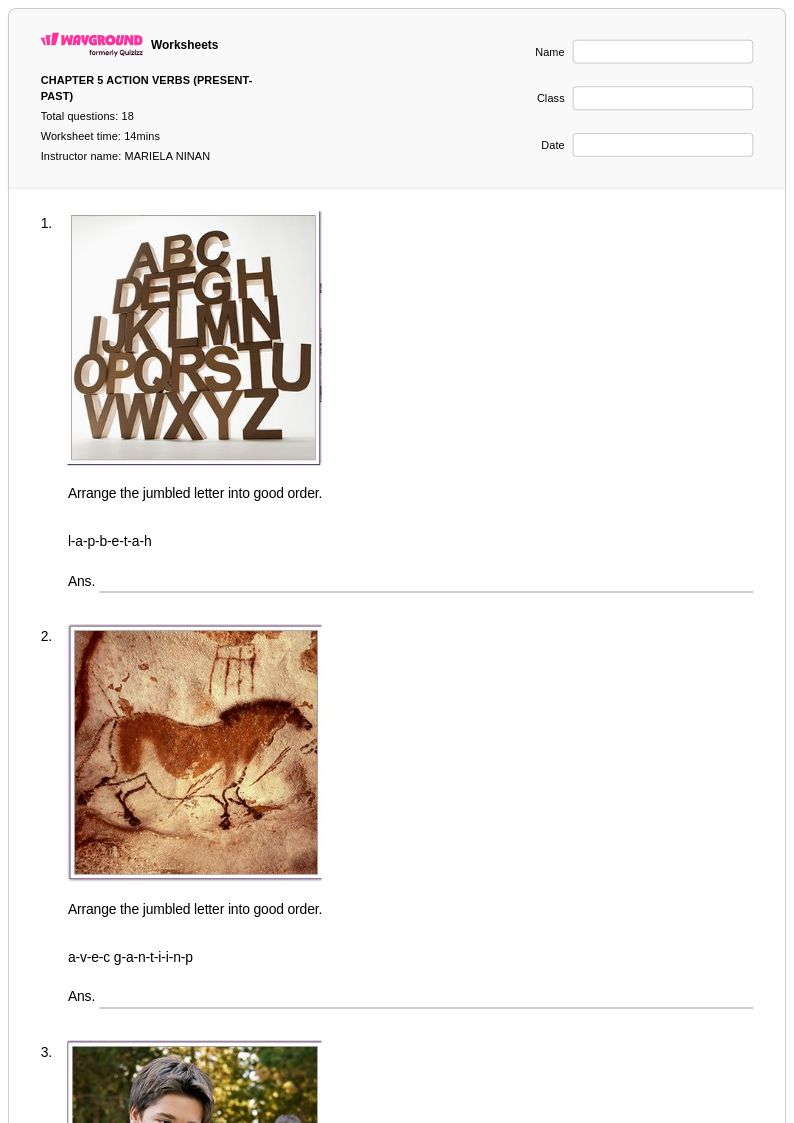
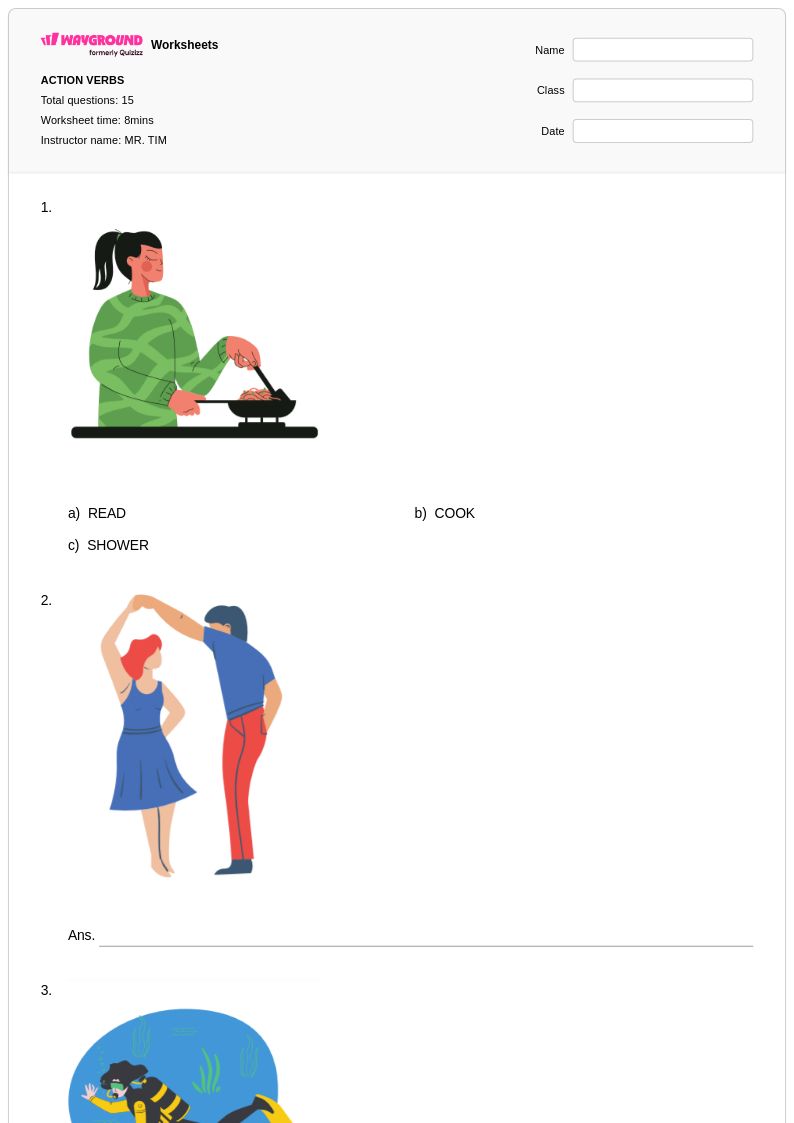
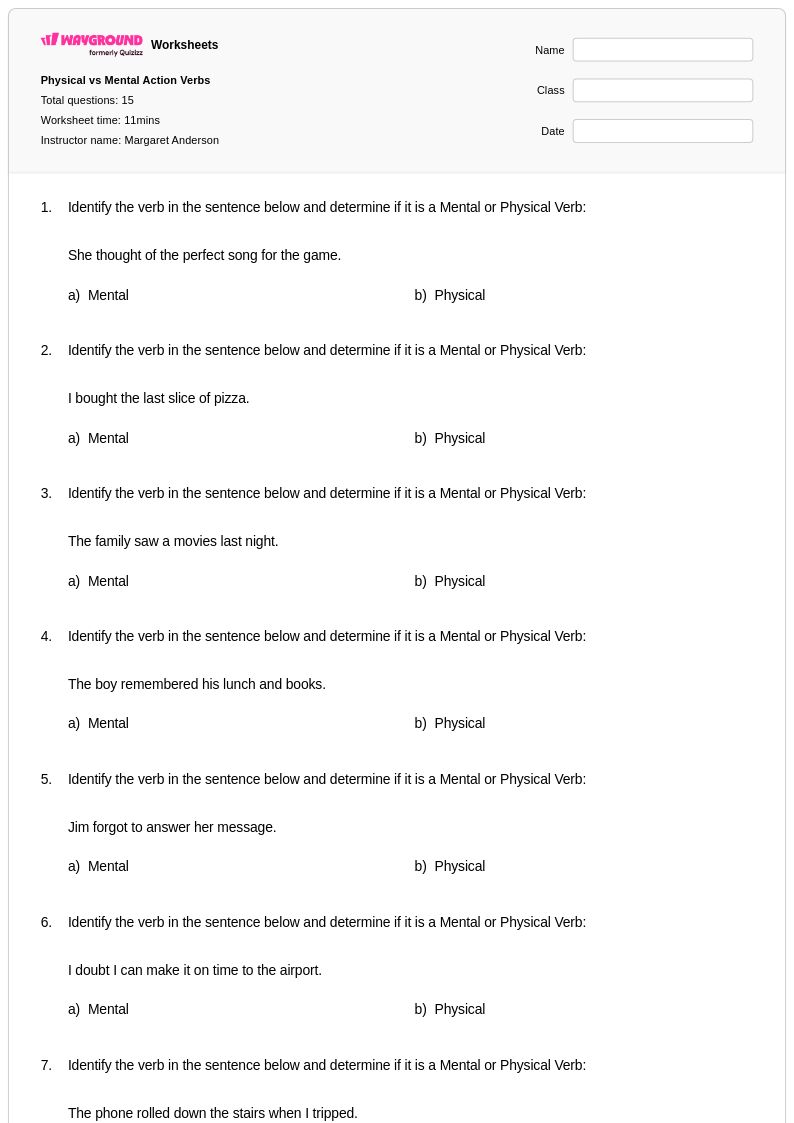
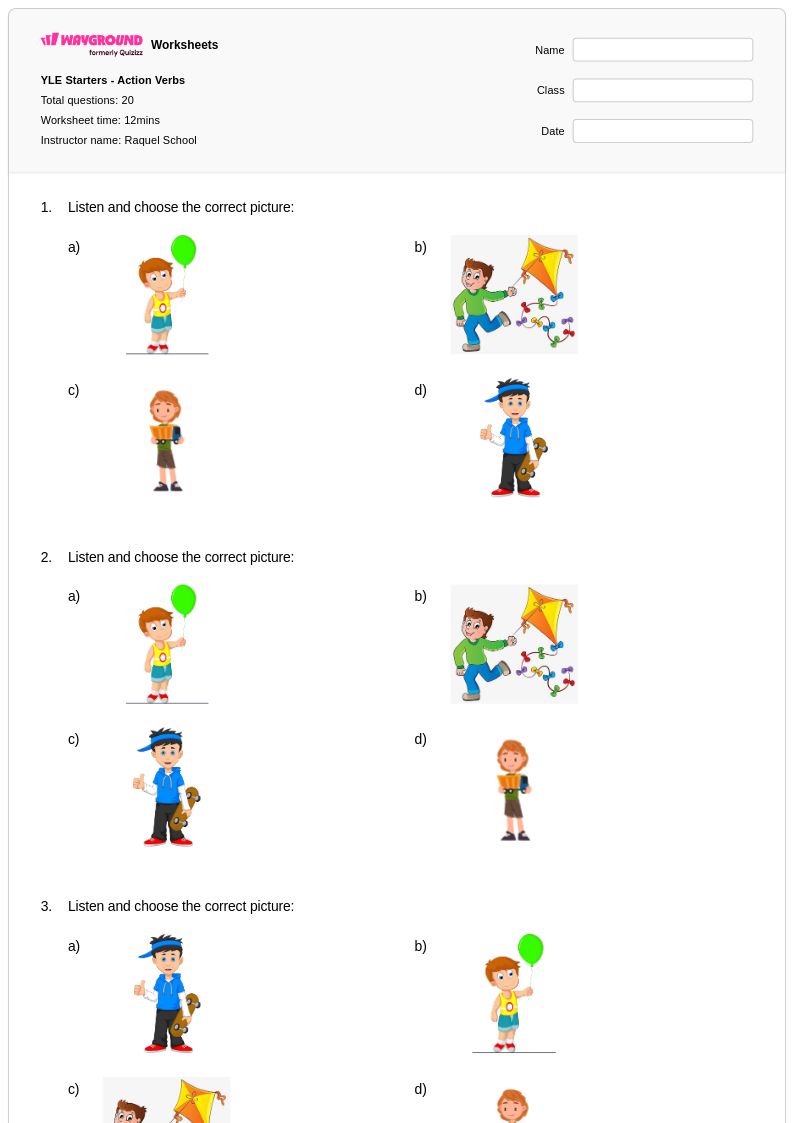
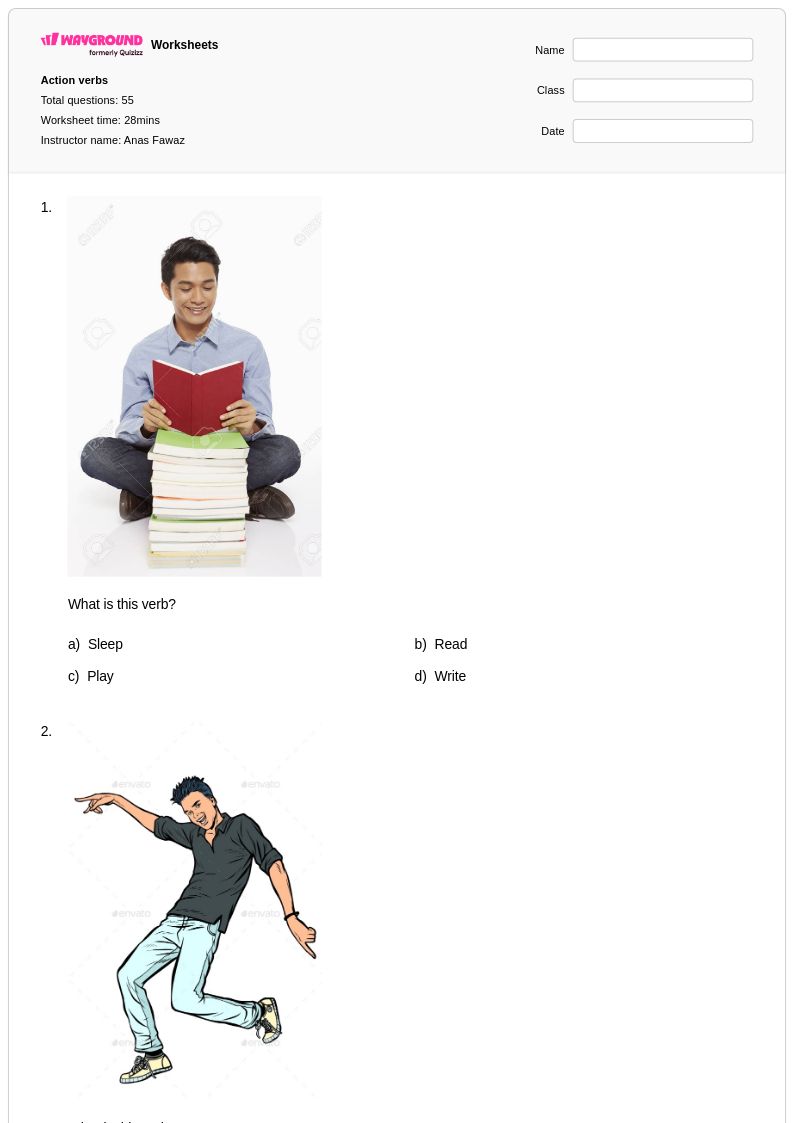
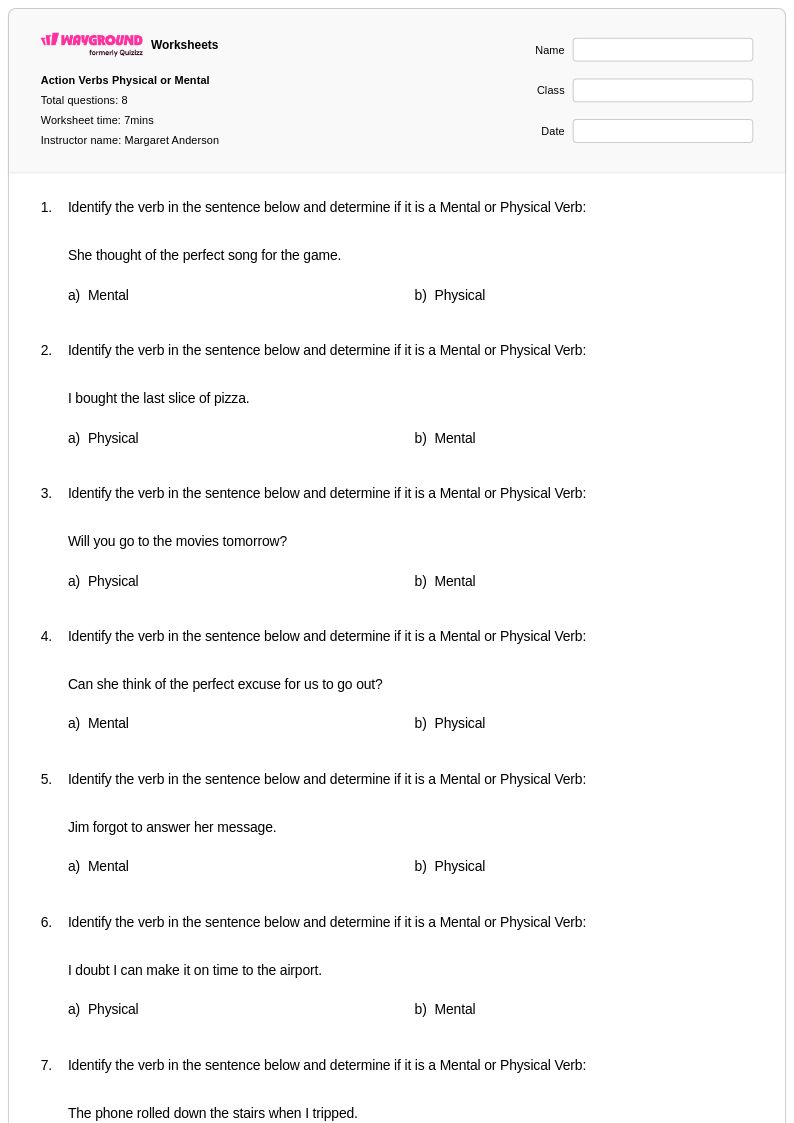
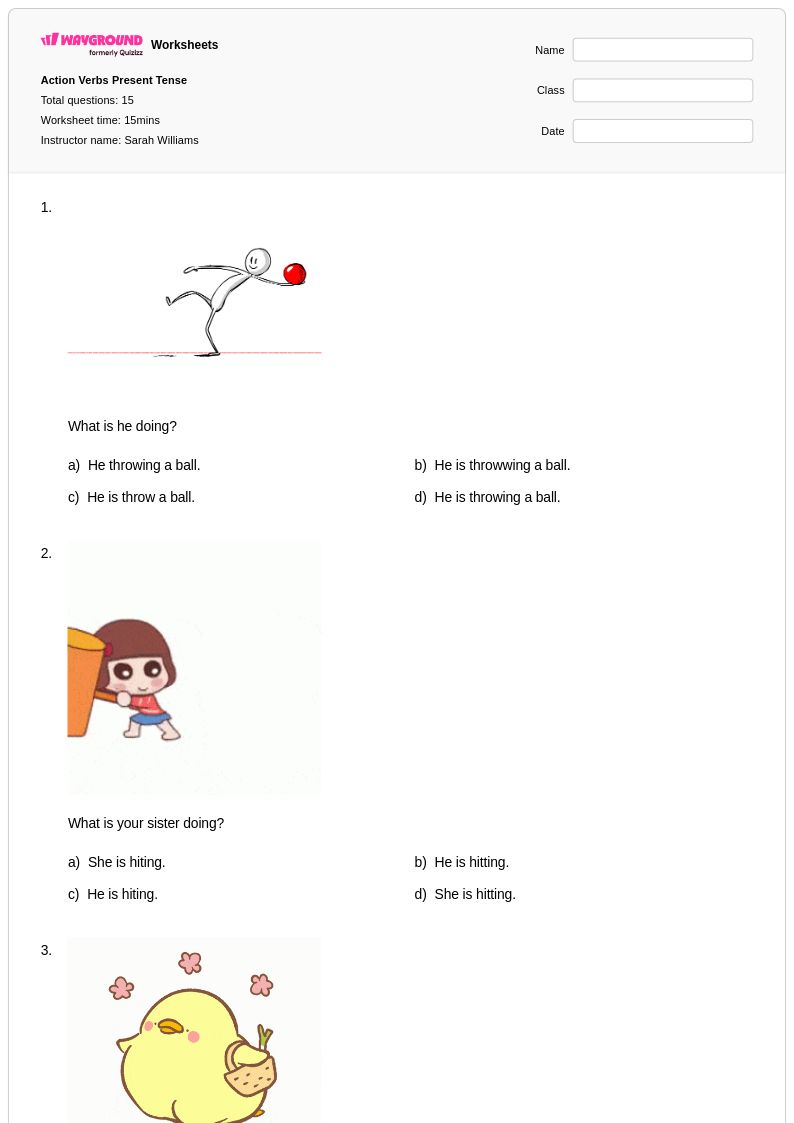
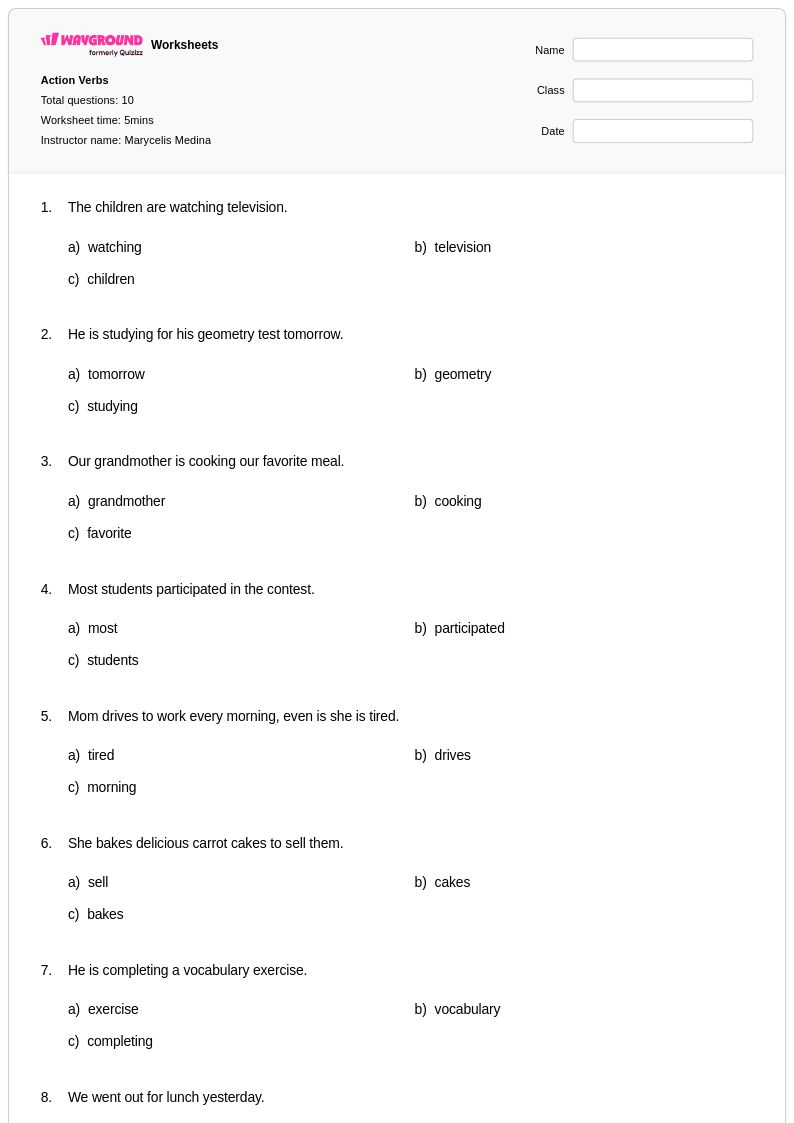
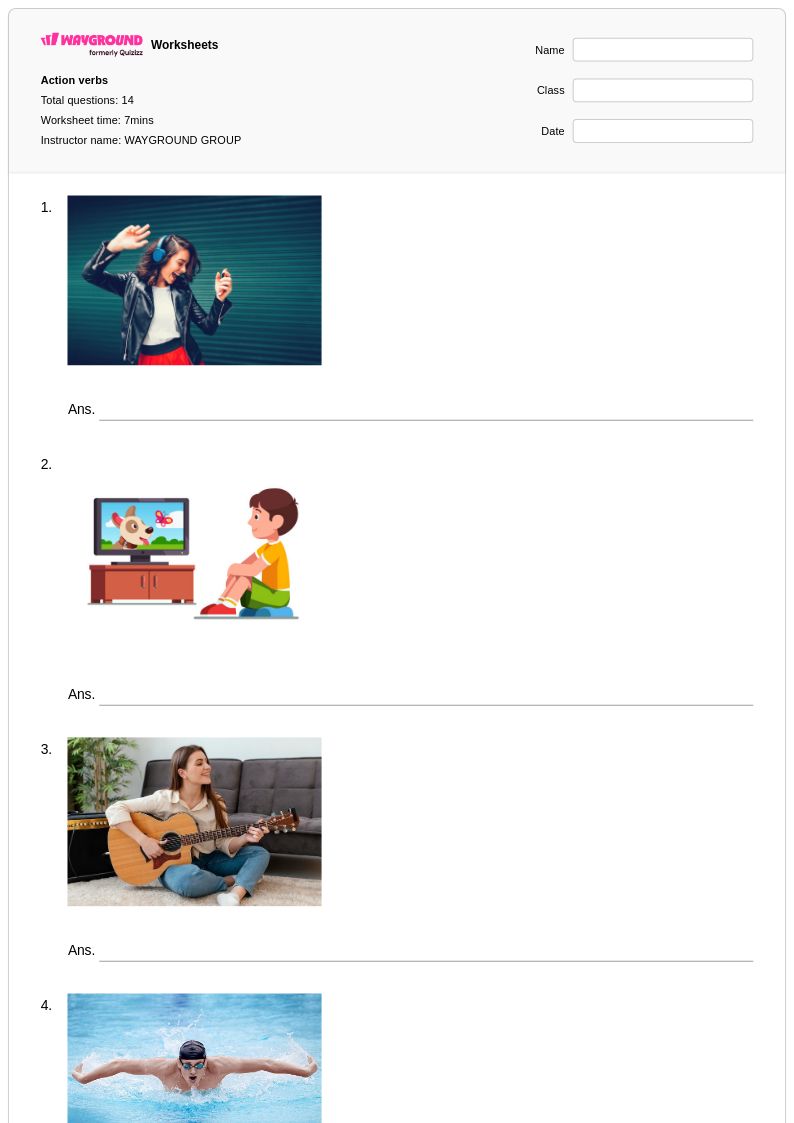
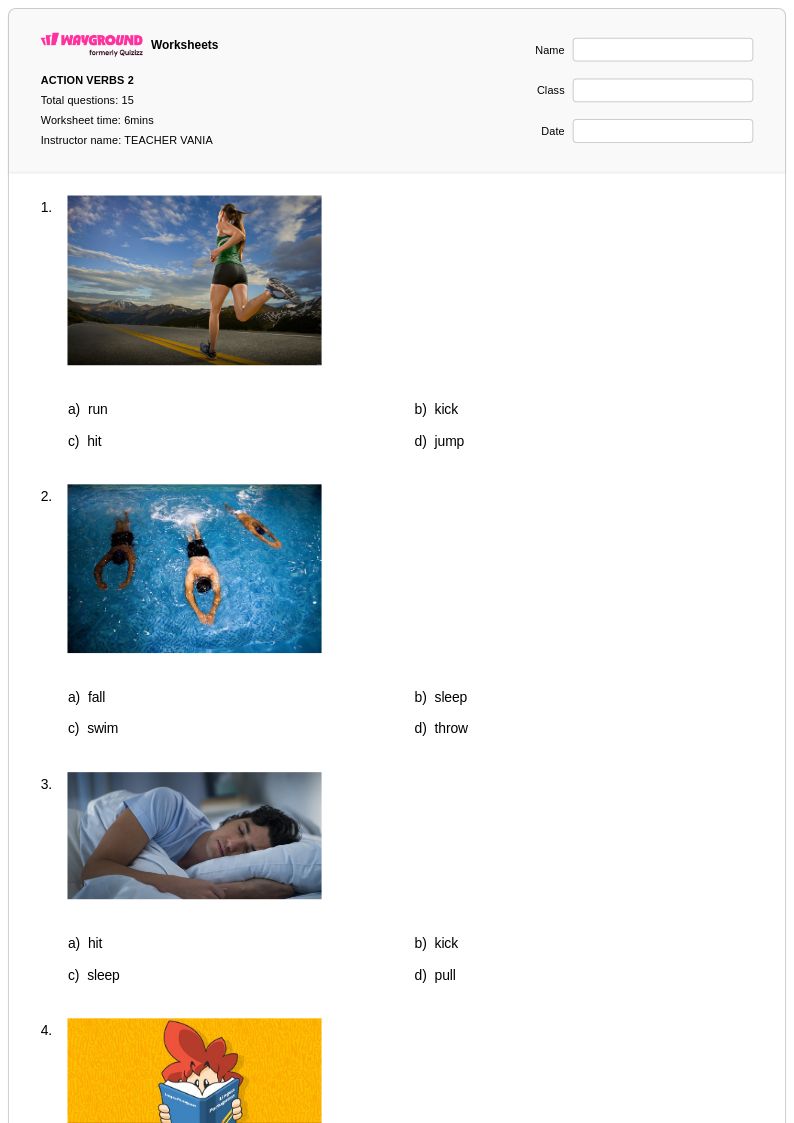
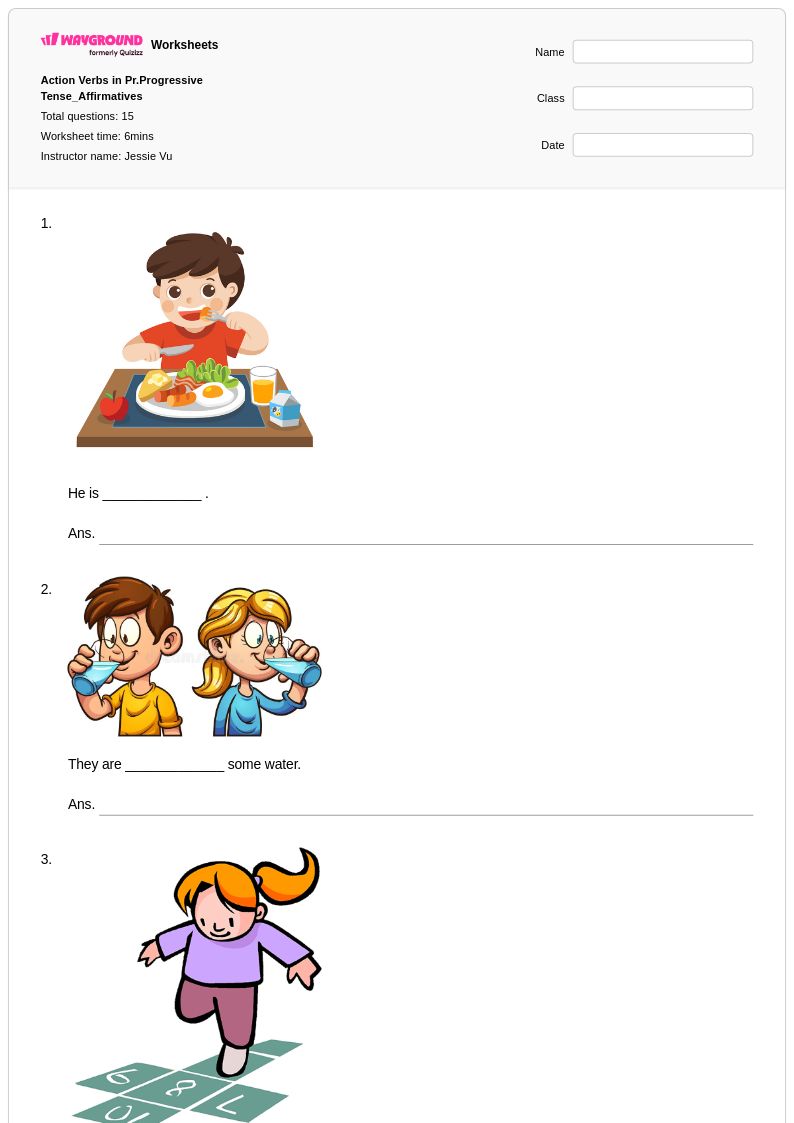
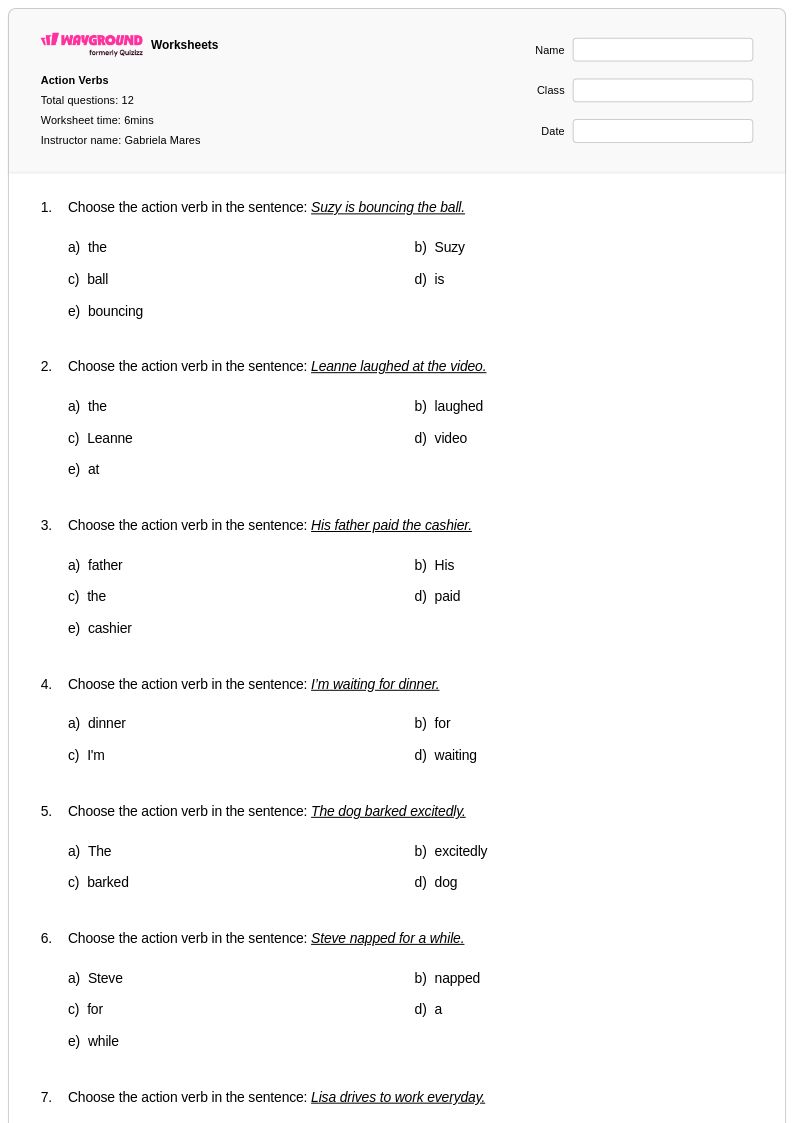
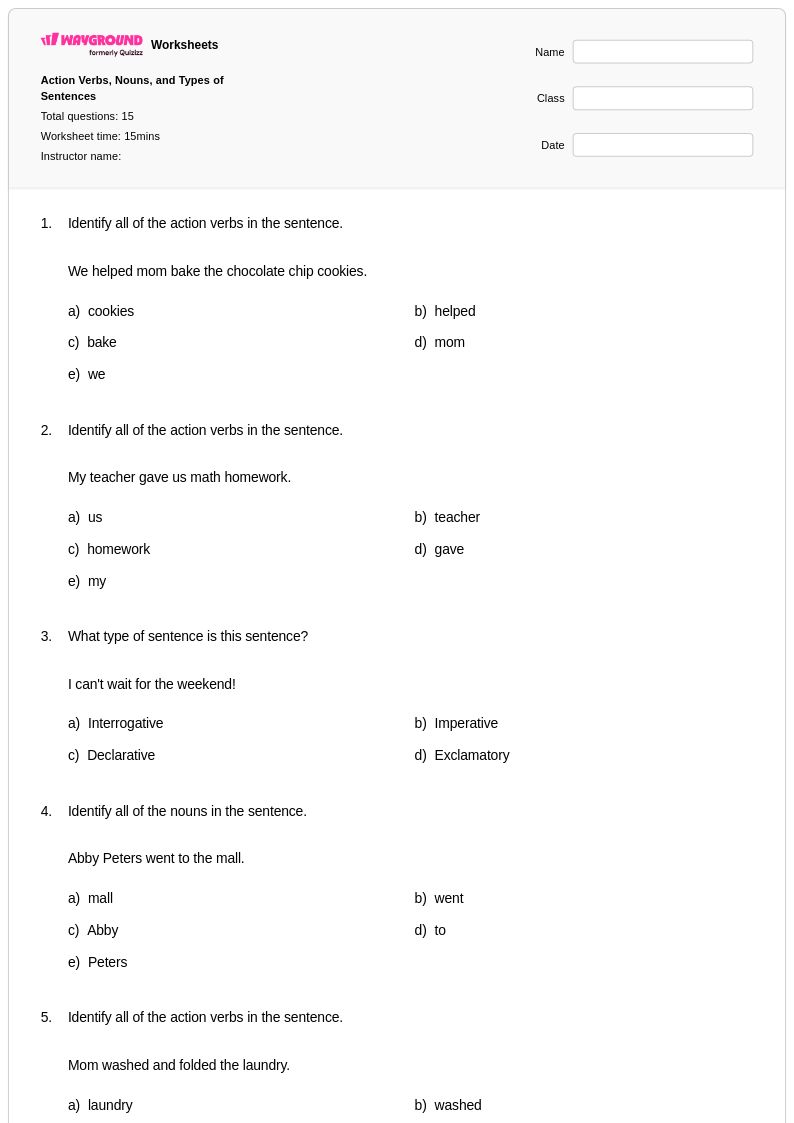
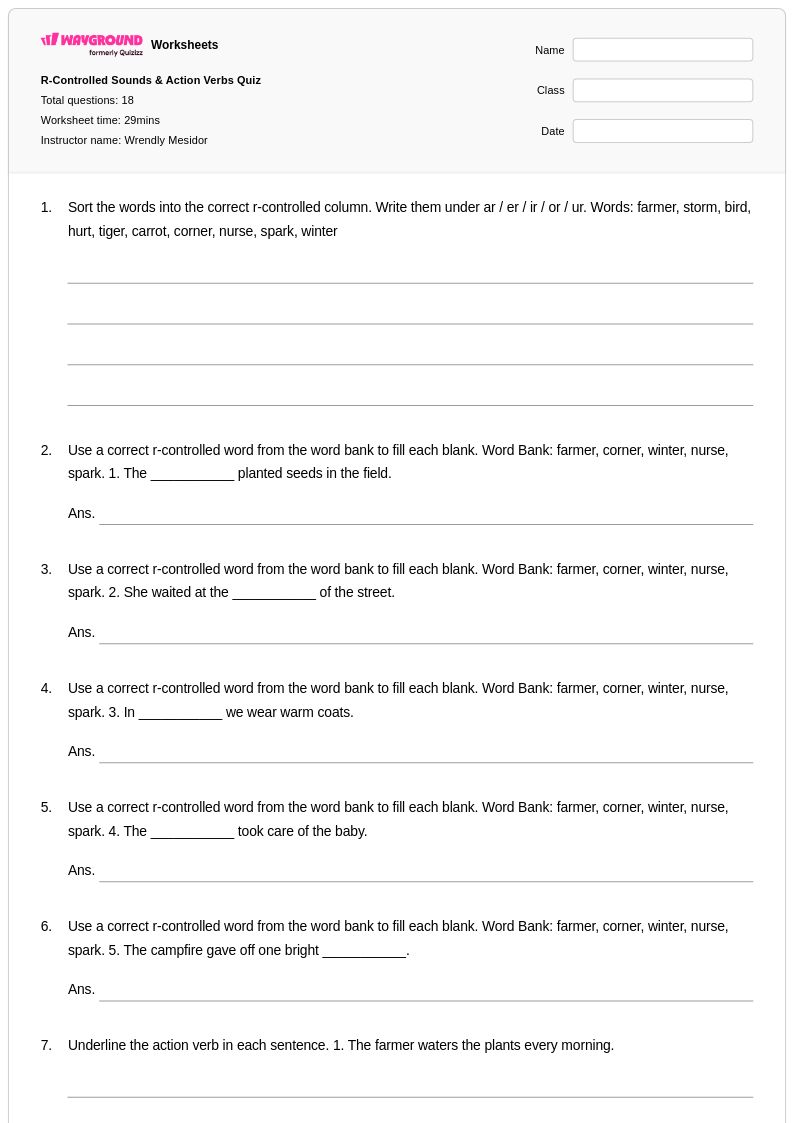
Year 4 action verbs worksheets help students identify and practice using action words through engaging printables, free PDF exercises, and comprehensive practice problems with answer keys.
Explore printable Action Verbs worksheets for Year 4
Action verbs form the foundation of dynamic writing and clear communication for Year 4 students, and Wayground's comprehensive worksheet collection provides targeted practice to master this essential language skill. These carefully crafted worksheets guide students through identifying, categorizing, and using action verbs effectively in sentences and paragraphs. Students engage with practice problems that challenge them to distinguish action verbs from other word types, complete sentences with appropriate action words, and transform static descriptions into vivid narratives. Each worksheet includes a detailed answer key to support independent learning and self-assessment, while the free printable format ensures accessibility for all classrooms. The pdf resources progress systematically from basic recognition exercises to more complex applications, helping fourth graders build confidence in recognizing how action verbs energize their writing and make meaning more precise.
Wayground's extensive library draws from millions of teacher-created resources specifically designed for Year 4 action verb instruction, offering educators unprecedented flexibility in planning differentiated lessons. The platform's robust search and filtering capabilities allow teachers to locate worksheets aligned with specific standards and learning objectives, while customization tools enable modifications to match diverse student needs and ability levels. Whether delivered as printable handouts for traditional classroom use or digital assignments for remote learning, these worksheets seamlessly integrate into existing curriculum frameworks. Teachers utilize this comprehensive collection for targeted skill practice, remediation support for struggling learners, and enrichment opportunities for advanced students, ensuring every fourth grader develops mastery of action verbs through engaging, research-based activities that support both immediate learning goals and long-term language development.
FAQs
How do I teach action verbs to elementary students?
Start by distinguishing action verbs from linking and helping verbs using concrete, physical examples — words like 'run', 'write', and 'think' that students can act out or visualize. Pairing movement-based activities with written practice helps students internalize the concept before applying it to sentences. Once students can identify action verbs in isolation, progress to recognizing them within sentences and short passages to build transferable grammar skills.
What exercises help students practice identifying action verbs?
Effective practice includes underlining action verbs in sentences, sorting words into action verb and non-action verb categories, and completing fill-in-the-blank sentences with appropriate action verbs. Exercises that use varied contexts — from simple sentences to longer passages — build the flexibility students need to spot action verbs in real reading and writing. Regular, low-stakes practice across different sentence types reinforces recognition without overwhelming learners.
What mistakes do students commonly make when learning action verbs?
The most frequent error is confusing action verbs with linking verbs, particularly 'is', 'are', 'was', and 'were', which describe states rather than actions. Students also frequently mislabel mental action verbs — such as 'think', 'believe', or 'imagine' — as non-verbs because no physical movement is visible. Targeted practice that explicitly contrasts action verbs with linking and helping verbs helps students resolve these distinctions.
How can I differentiate action verbs instruction for students at different skill levels?
For students who need support, start with high-frequency physical action verbs in simple sentence structures before introducing mental action verbs or complex passages. Advanced learners benefit from exercises that ask them to write original sentences, vary verb tense, or analyze how verb choice affects meaning and tone. On Wayground, teachers can apply accommodations such as reduced answer choices or read-aloud support for individual students while the rest of the class works with standard settings.
How do I use action verbs worksheets from Wayground in my classroom?
Wayground's action verbs worksheets are available as printable PDFs for traditional classroom use and in digital formats for technology-integrated instruction, giving teachers flexibility across in-person, hybrid, and remote settings. Each worksheet includes an answer key, making them practical for independent practice, formative assessment, or homework assignments. Teachers can also host worksheets as a quiz directly on Wayground, enabling interactive student completion with instant feedback.
How do action verbs worksheets support grammar development in language arts?
Action verbs are foundational to sentence construction — without them, students cannot write complete, meaningful sentences or analyze how authors convey movement, thought, and causality. Worksheet practice that moves from identification to application helps students connect grammar rules to actual writing, strengthening both their reading comprehension and their ability to write with precision. This makes action verb instruction a high-leverage entry point into broader grammar and composition skills.