
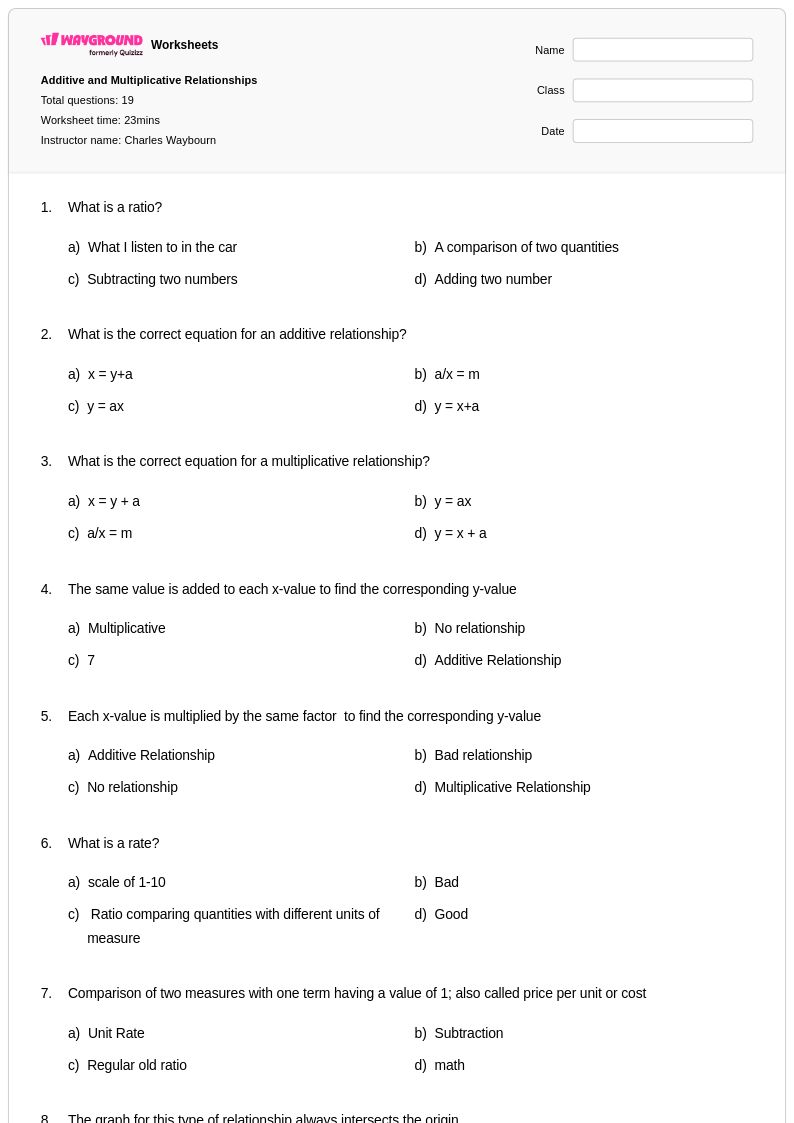
19 T
5th - 7th
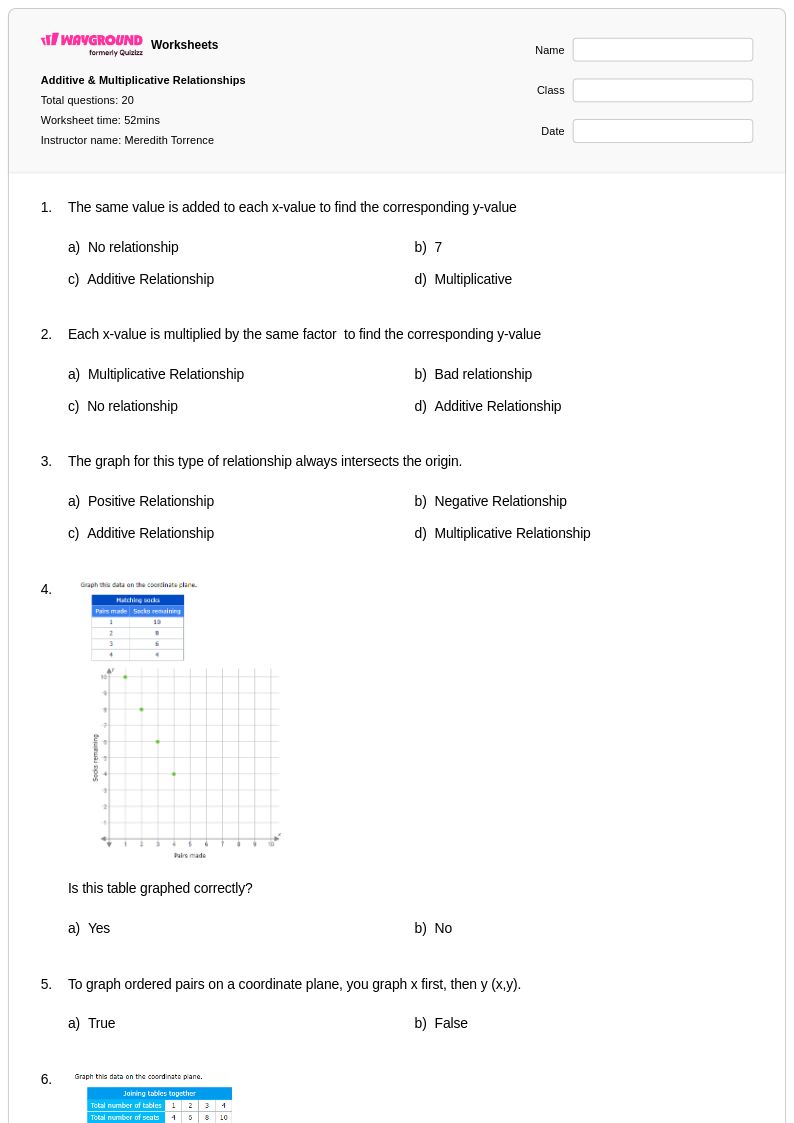
20 T
5th
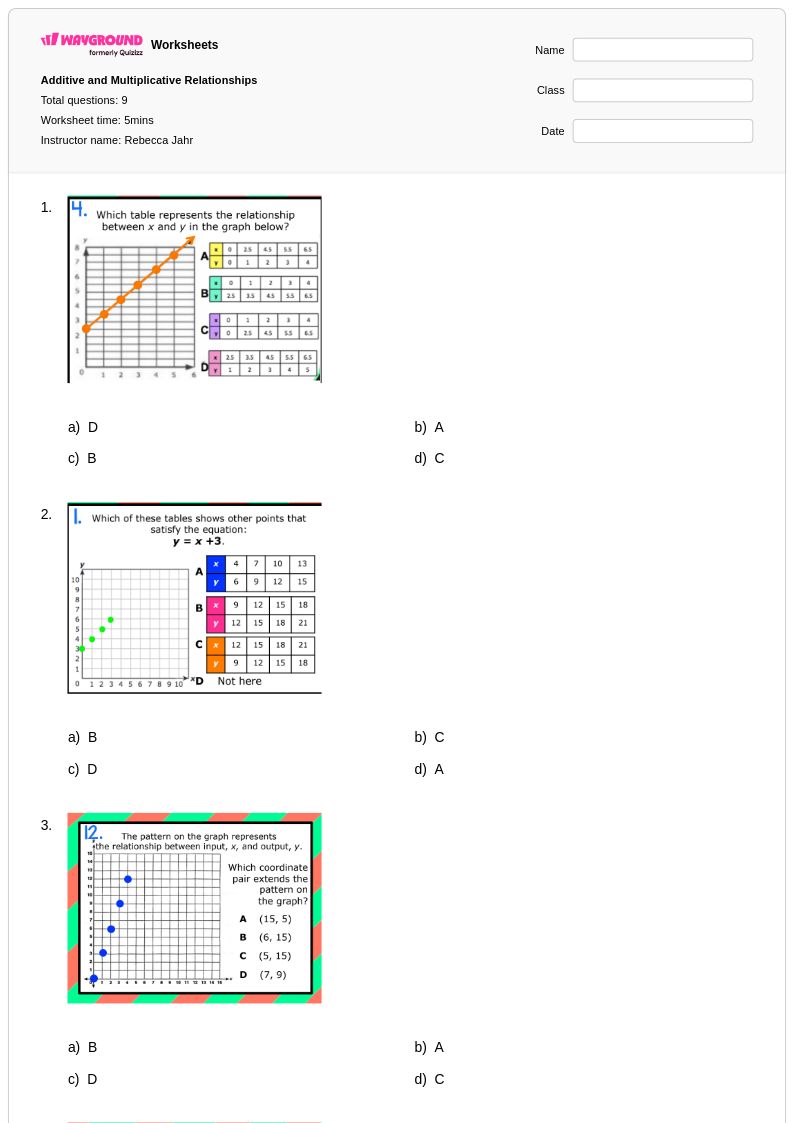
9 T
5th
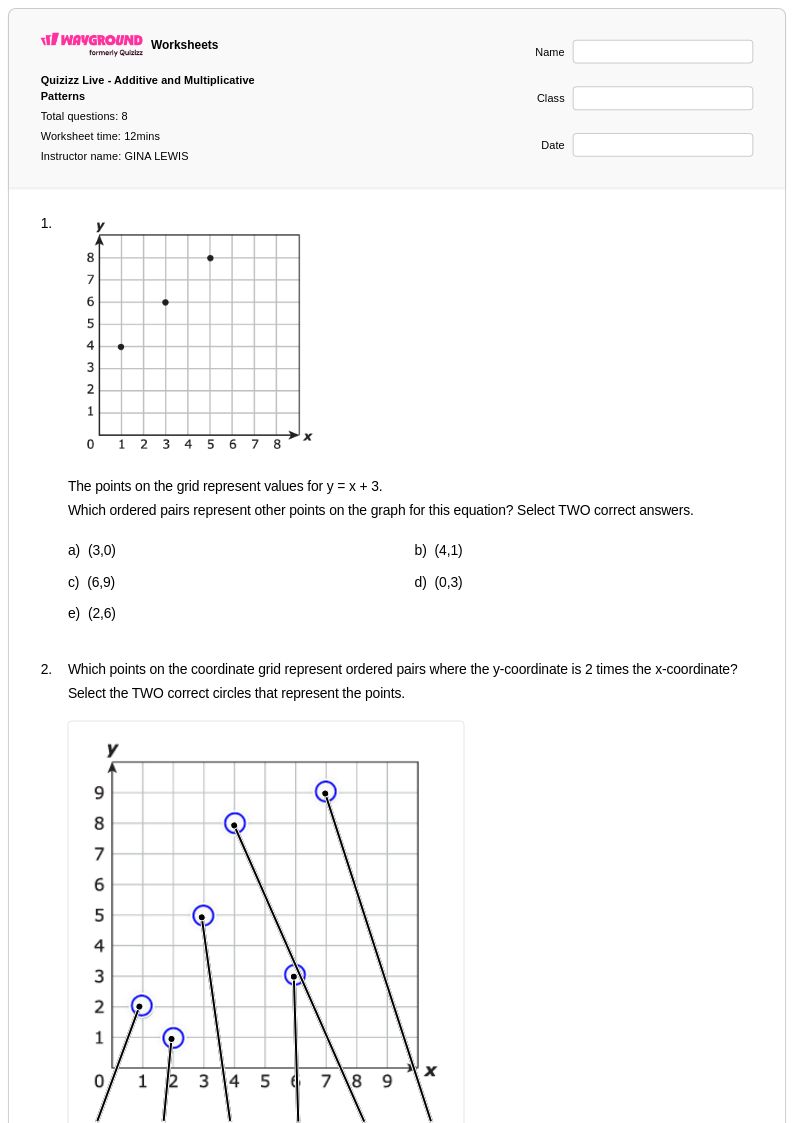
8 T
5th
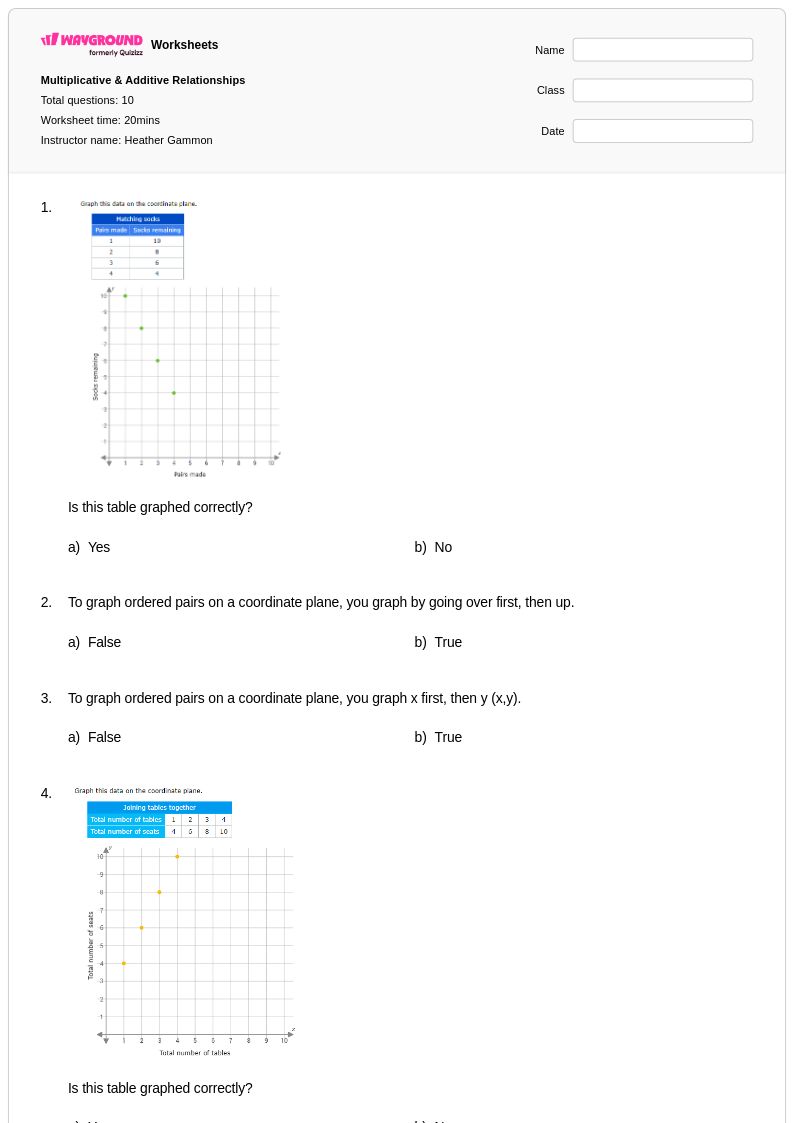
10 T
5th - 8th
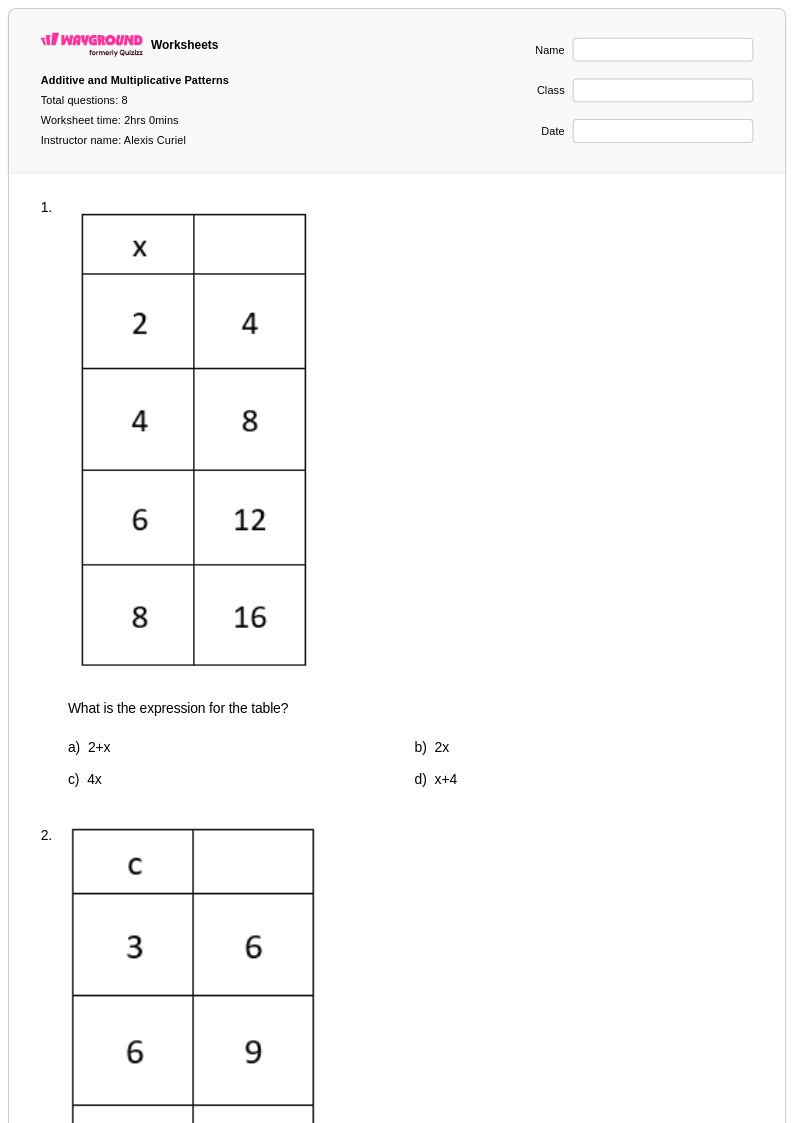
8 T
5th
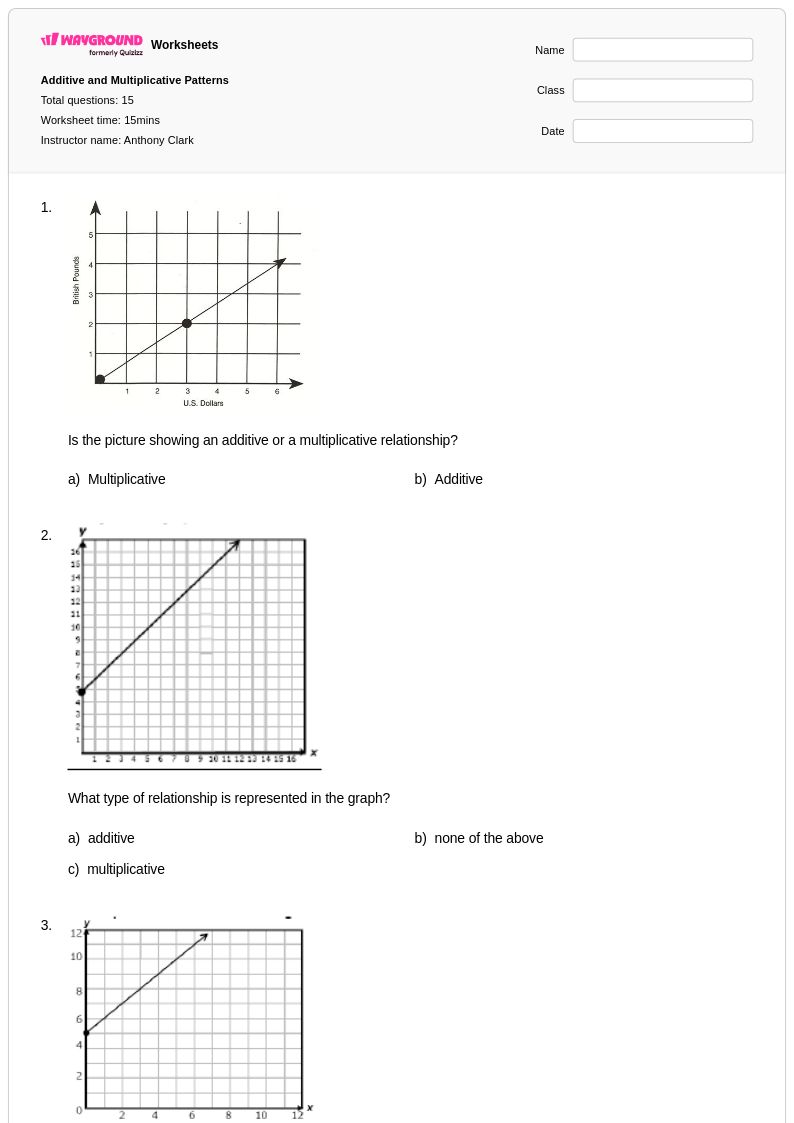
15 T
5th - Uni
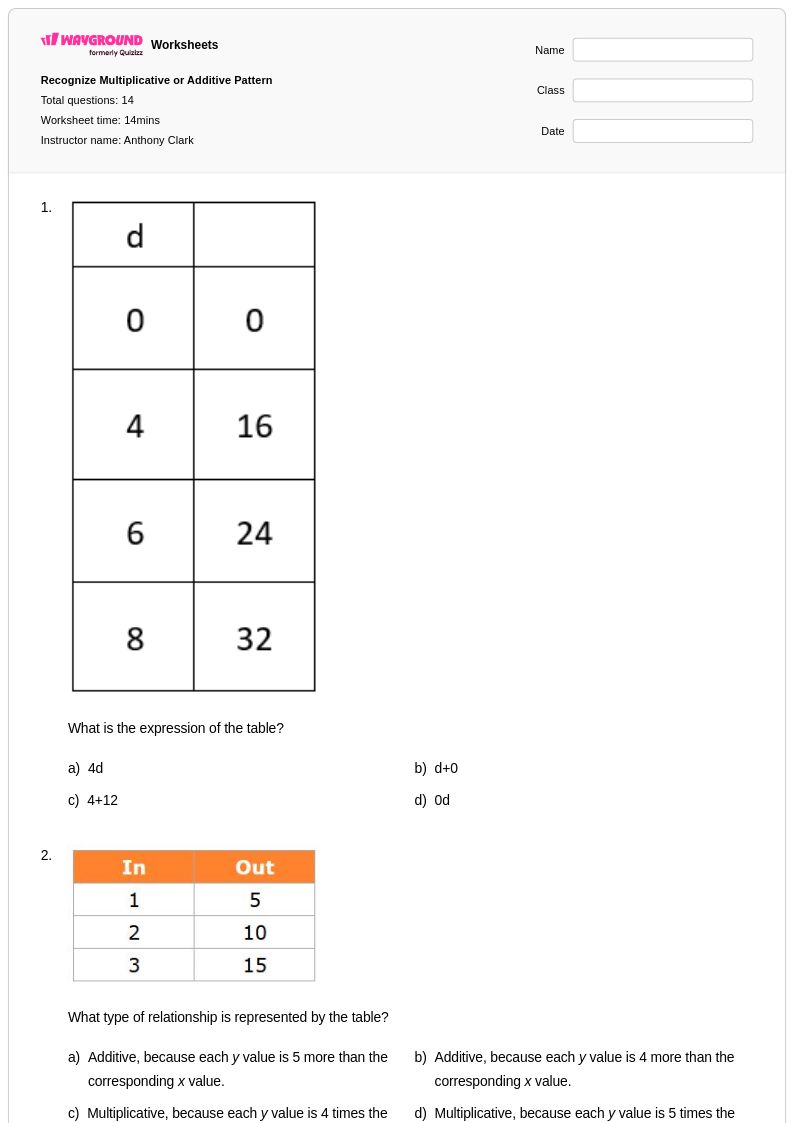
14 T
5th - Uni
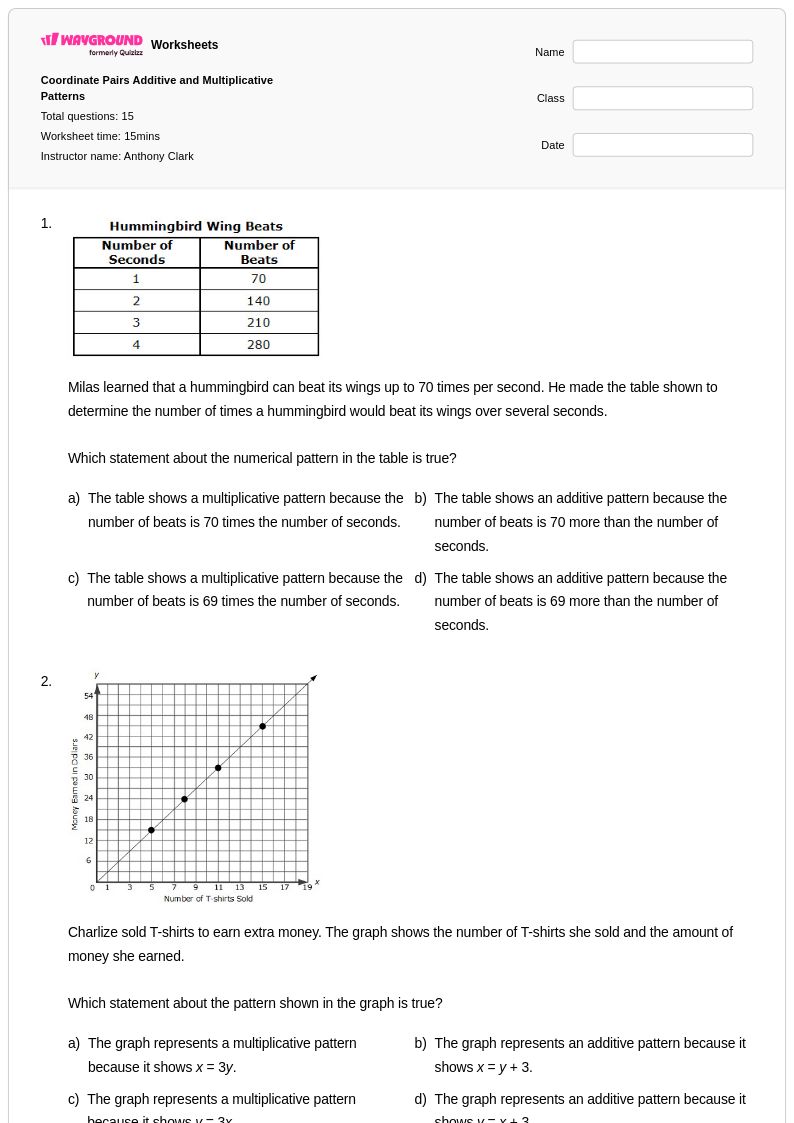
15 T
5th - Uni
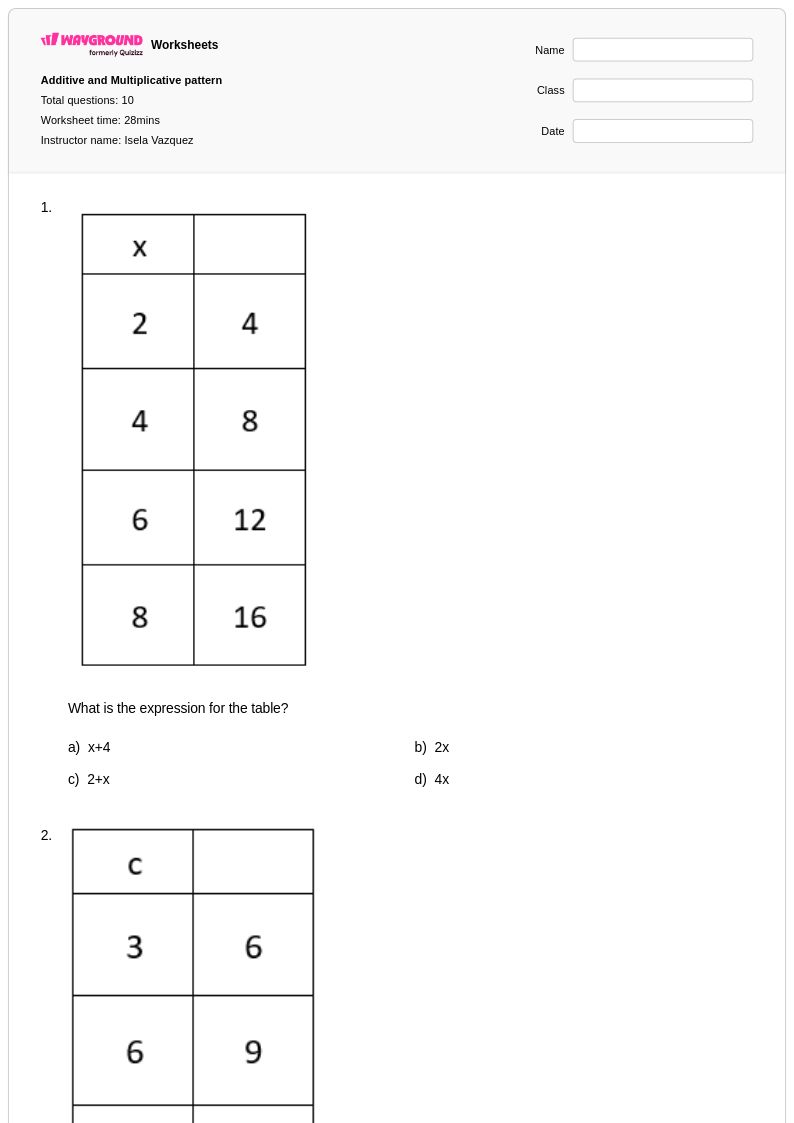
10 T
5th
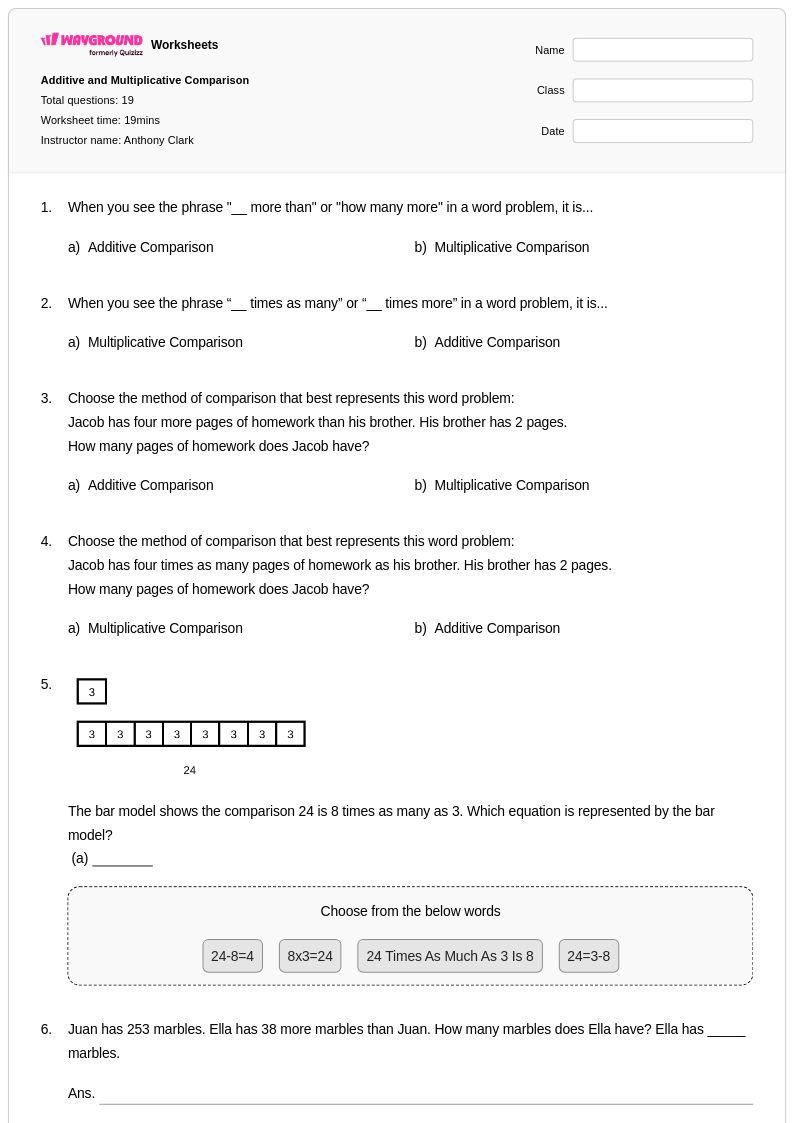
19 T
4th - Uni
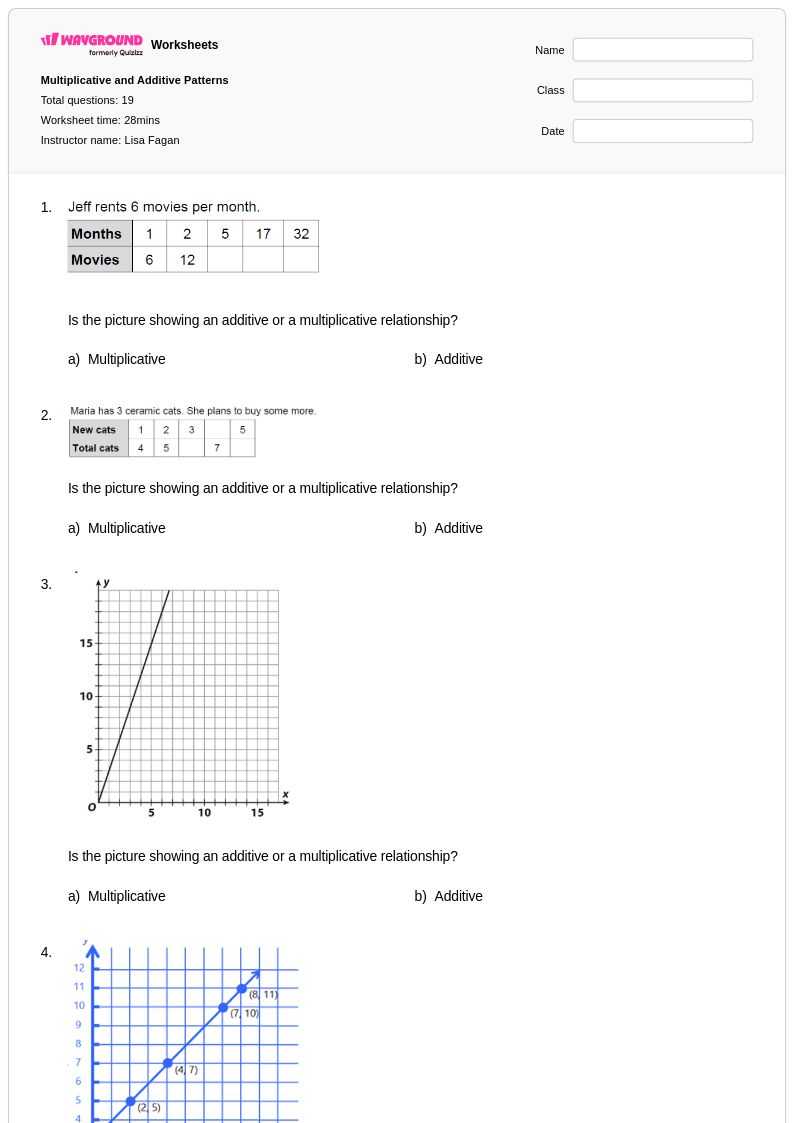
19 T
5th
11 T
5th
10 T
5th
15 T
4th - Uni
20 T
5th
12 T
5th - Uni
19 T
4th - Uni
20 T
4th - Uni
20 T
5th - Uni
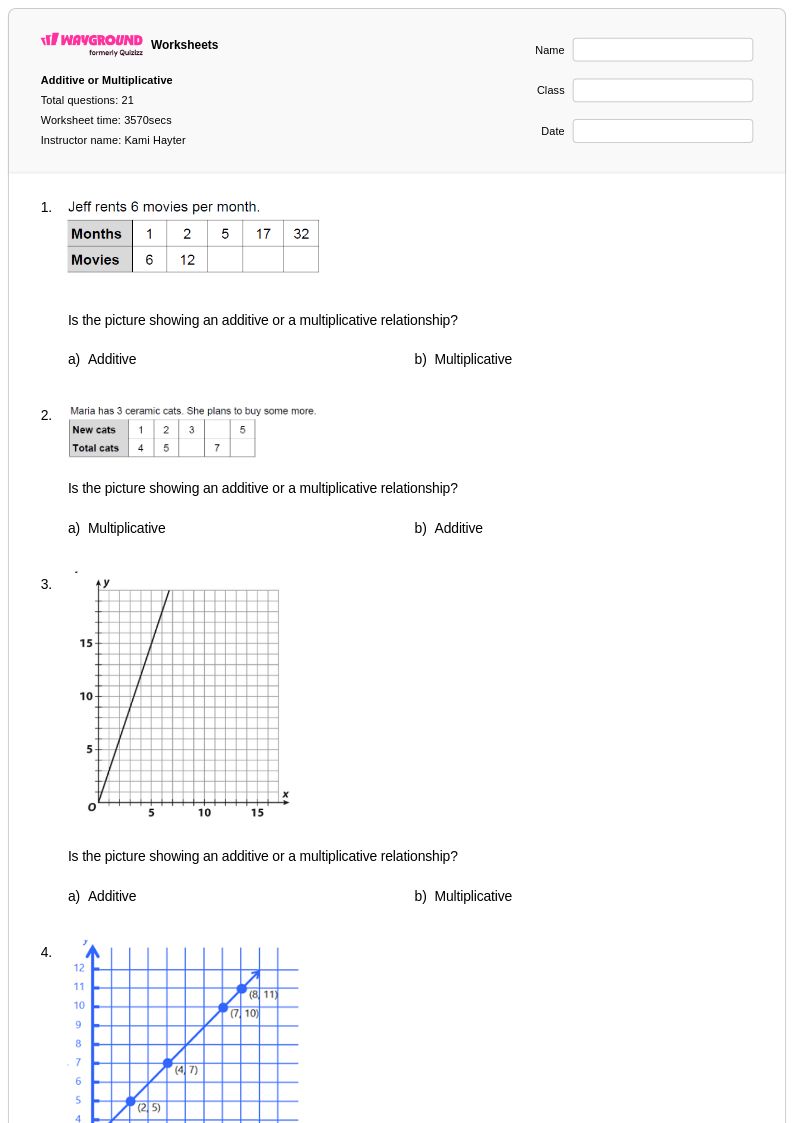
21 T
5th
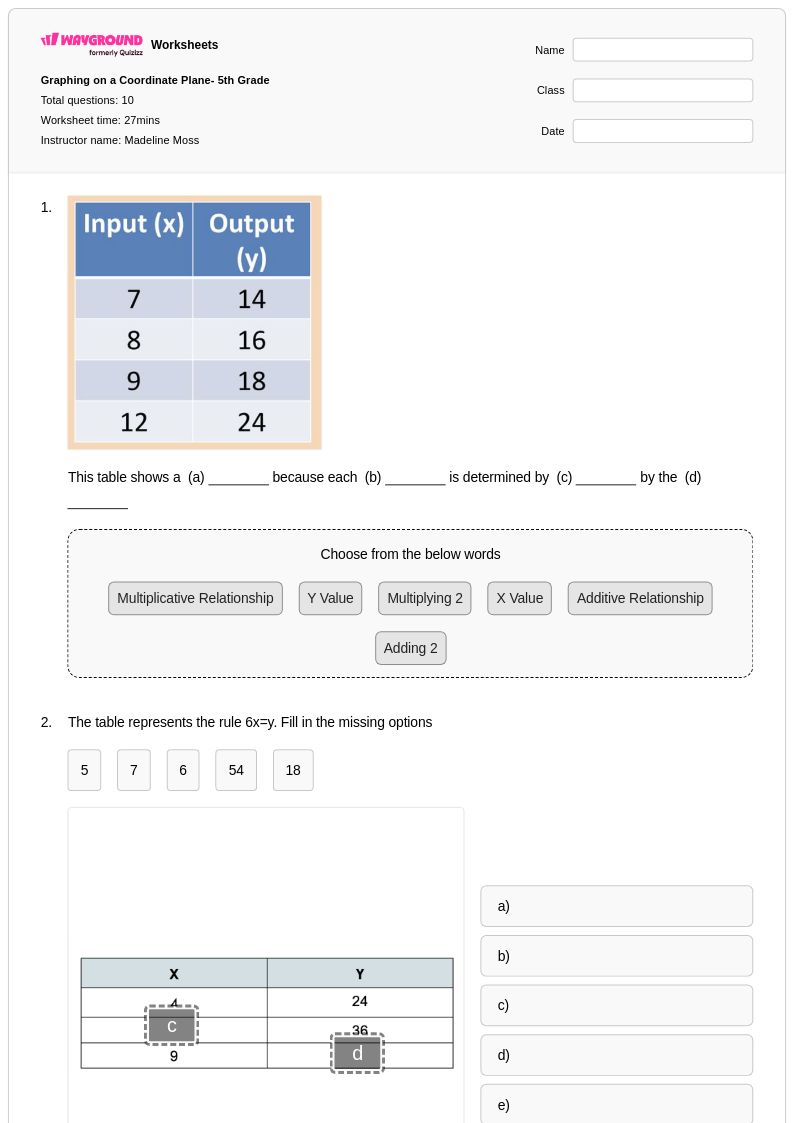
10 T
5th
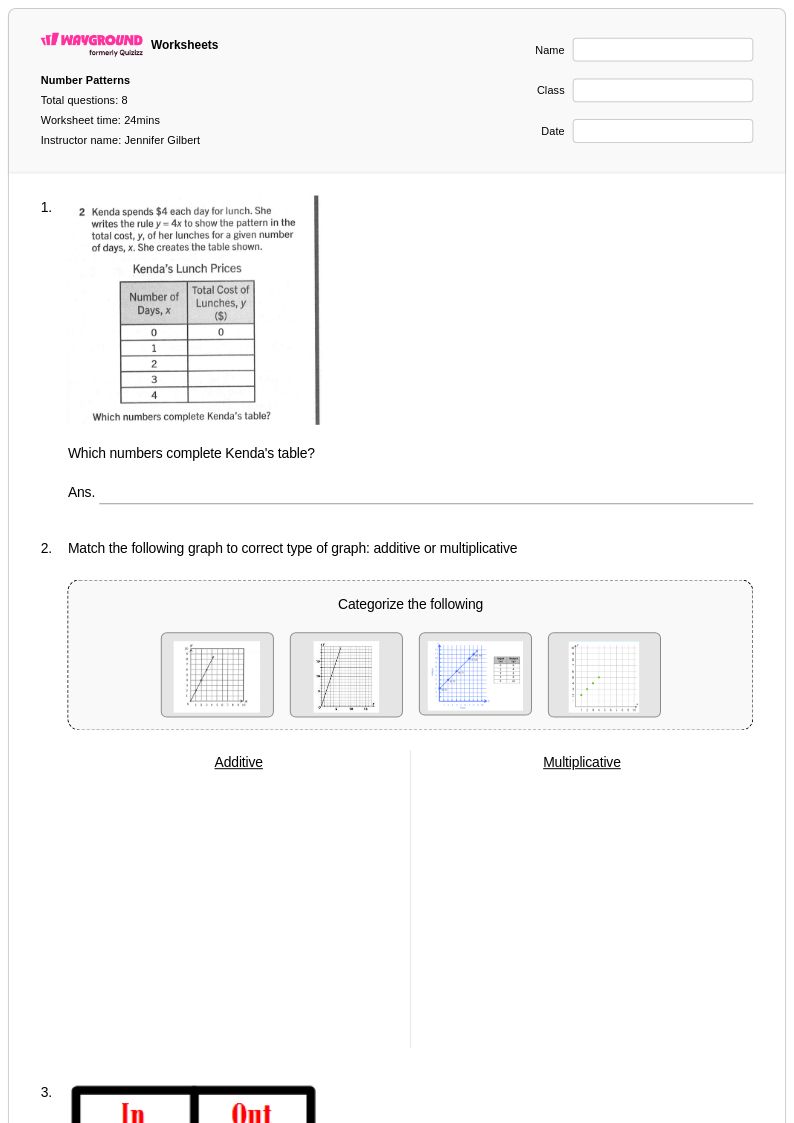
8 T
5th
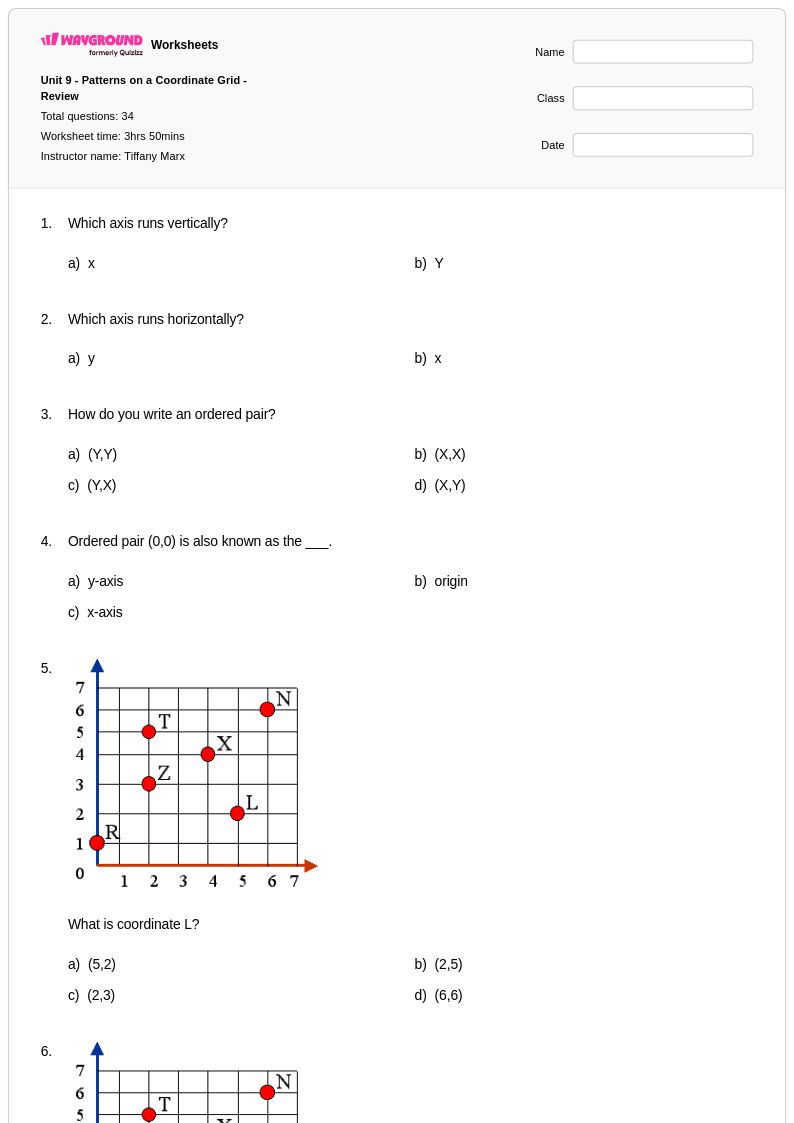
34 T
5th
Jelajahi Additive and Multiplicative Relationships Lembar Kerja berdasarkan Nilai
Jelajahi Lembar Kerja Mata Pelajaran Lainnya untuk year 5
Explore printable Additive and Multiplicative Relationships worksheets for Year 5
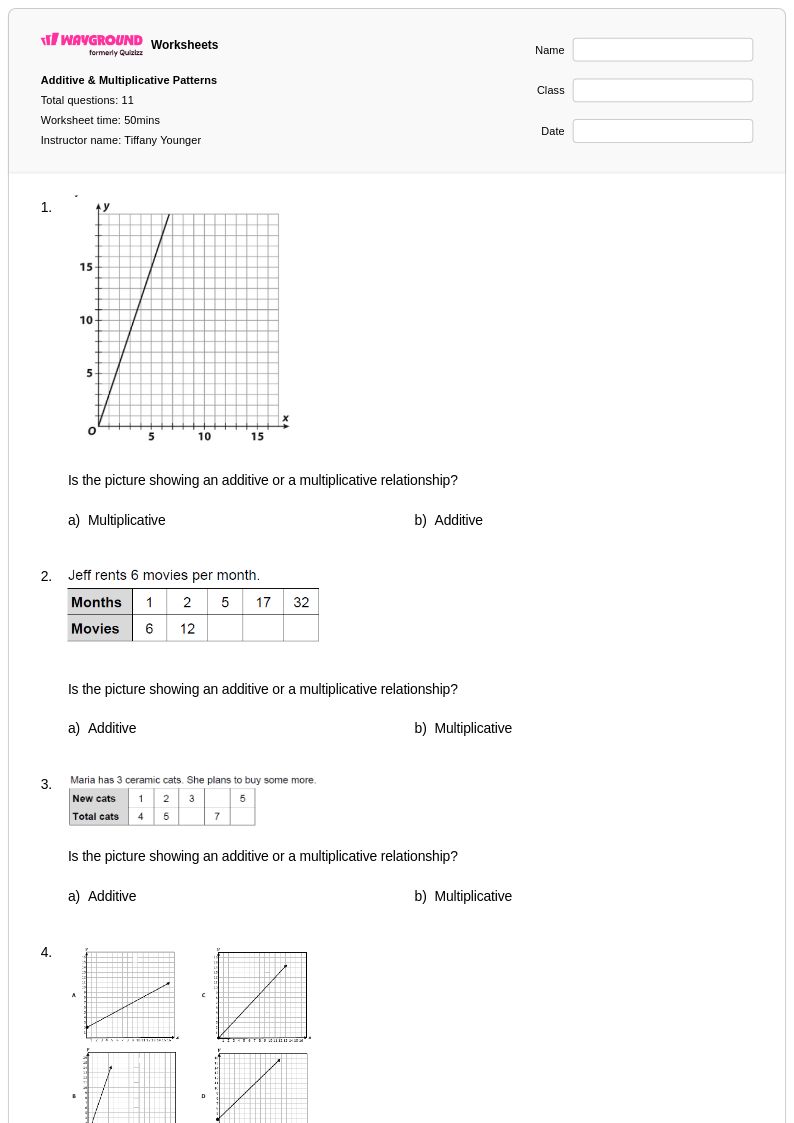
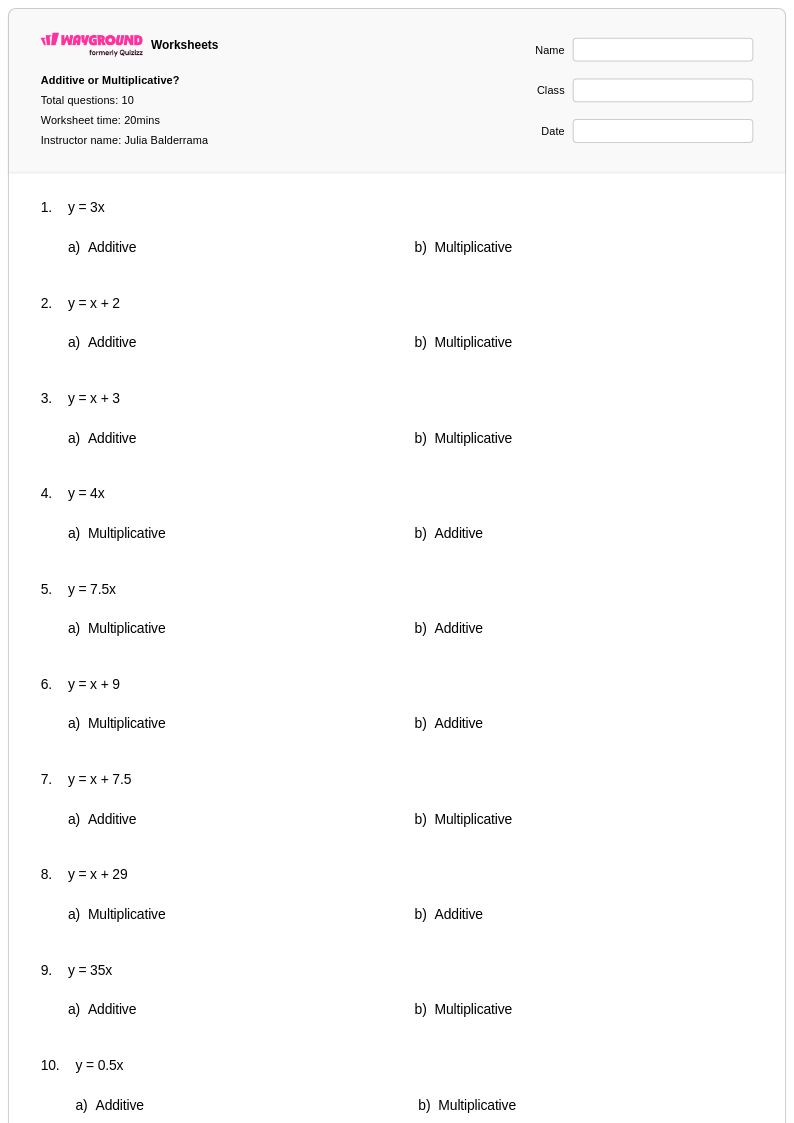
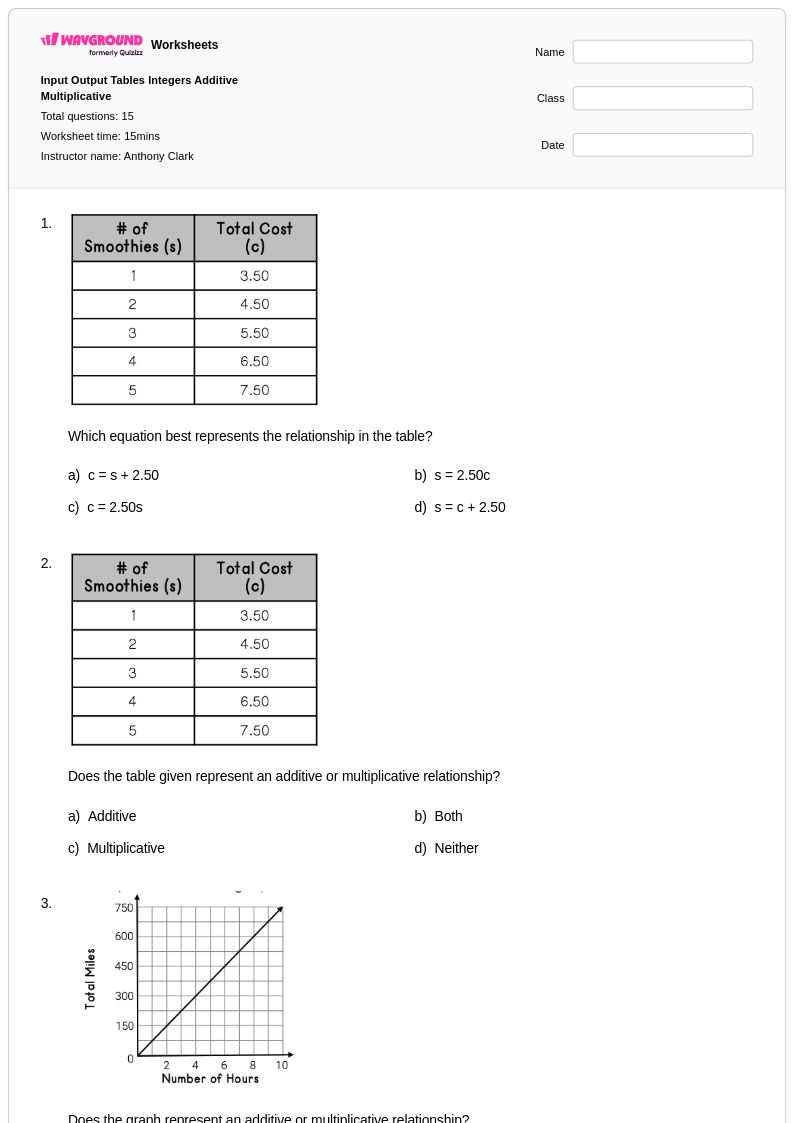
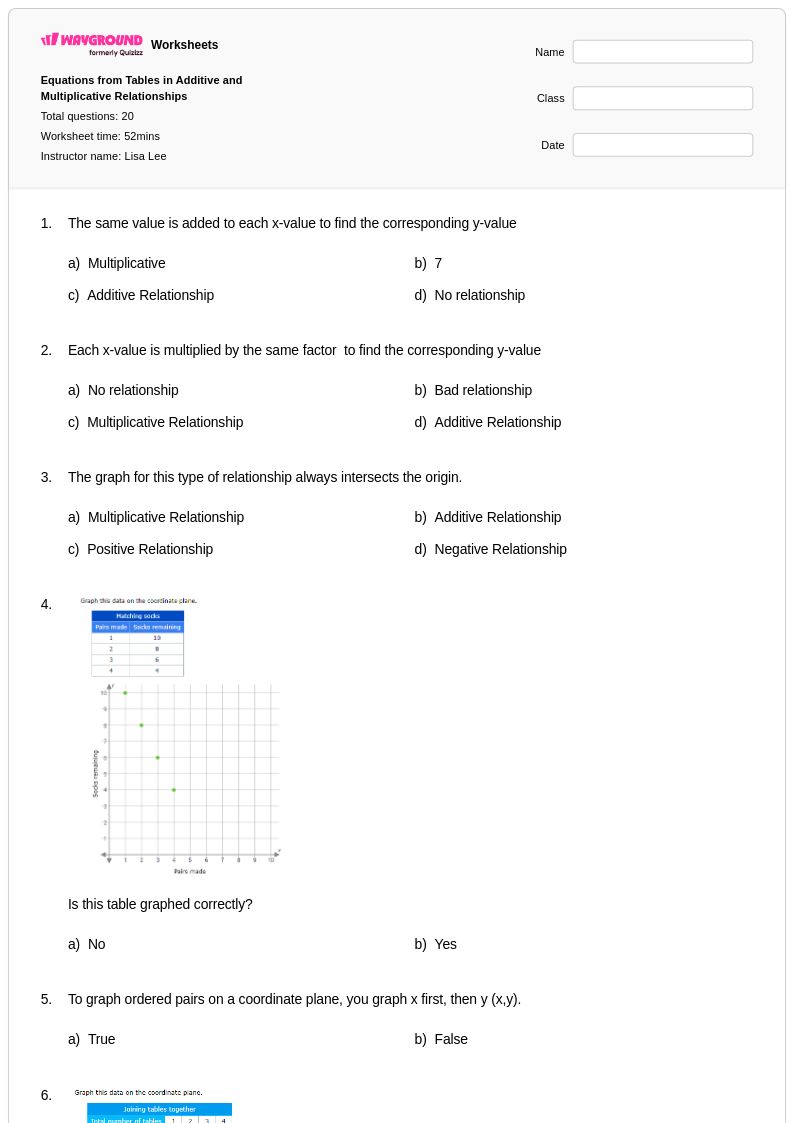
Additive and multiplicative relationships form the cornerstone of Year 5 mathematical reasoning, bridging the gap between basic arithmetic and advanced problem-solving skills. Wayground's comprehensive worksheet collection focuses specifically on helping students understand how addition and multiplication connect and interact within number systems. These carefully crafted practice problems guide fifth graders through exploring patterns in skip counting, understanding the distributive property, and recognizing how repeated addition relates to multiplication. Each worksheet includes a complete answer key and is available as a free printable PDF, allowing students to work through increasingly complex scenarios where they identify, extend, and create additive and multiplicative patterns while building confidence in their mathematical reasoning abilities.
Wayground's platform, formerly known as Quizizz, empowers educators with millions of teacher-created resources specifically designed to support additive and multiplicative relationship instruction at the Year 5 level. The robust search and filtering system enables teachers to quickly locate worksheets that align with specific learning standards and match their students' current skill levels, whether they need foundational practice or advanced enrichment activities. Differentiation tools allow educators to customize content difficulty and presentation format, ensuring every student receives appropriately challenging material for remediation or skill extension. These versatile resources are available in both printable PDF format for traditional classroom use and digital formats for interactive learning environments, giving teachers the flexibility to seamlessly integrate additive and multiplicative relationship practice into their lesson planning and assessment strategies.
FAQs
How do I teach additive and multiplicative relationships in Grade 5?
What exercises help fifth graders practice additive and multiplicative patterns?
What mistakes do students make with additive and multiplicative patterns?
How can I use these Grade 5 worksheets for practice or assessment?
How does Common Core address numerical patterns in Grade 5?
How can I differentiate pattern practice for fifth graders?
What grade do students compare additive and multiplicative patterns?