
Recommended Topics for you
- Adding Integers
- Adding Negative Numbers
- Operations with Integers
- Opposites of Integers
- Positive and Negative Numbers
10 Q
3rd - 7th
17 Q
5th - 7th
10 Q
4th - 6th
20 Q
5th - 8th
24 Q
5th - 7th
25 Q
5th - 6th
18 Q
5th - 6th
15 Q
5th - 7th
9 Q
5th
14 Q
5th - 6th
25 Q
5th
25 Q
5th - 6th
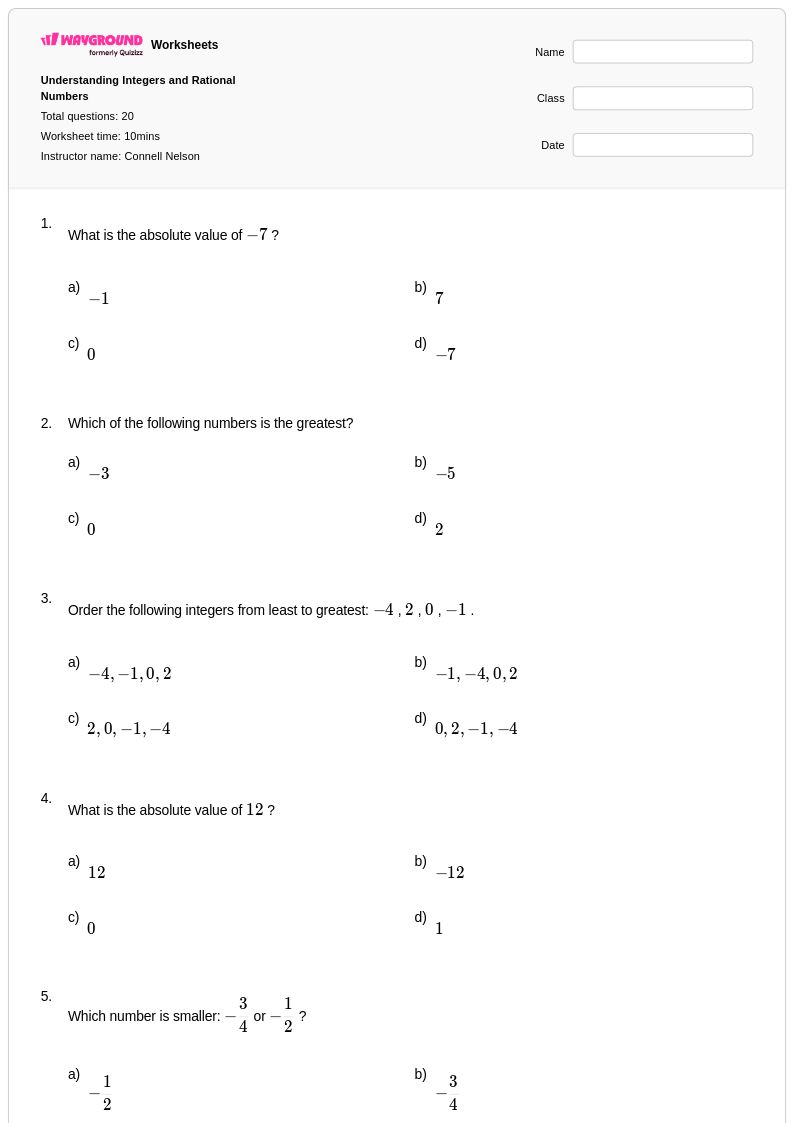
20 Q
5th
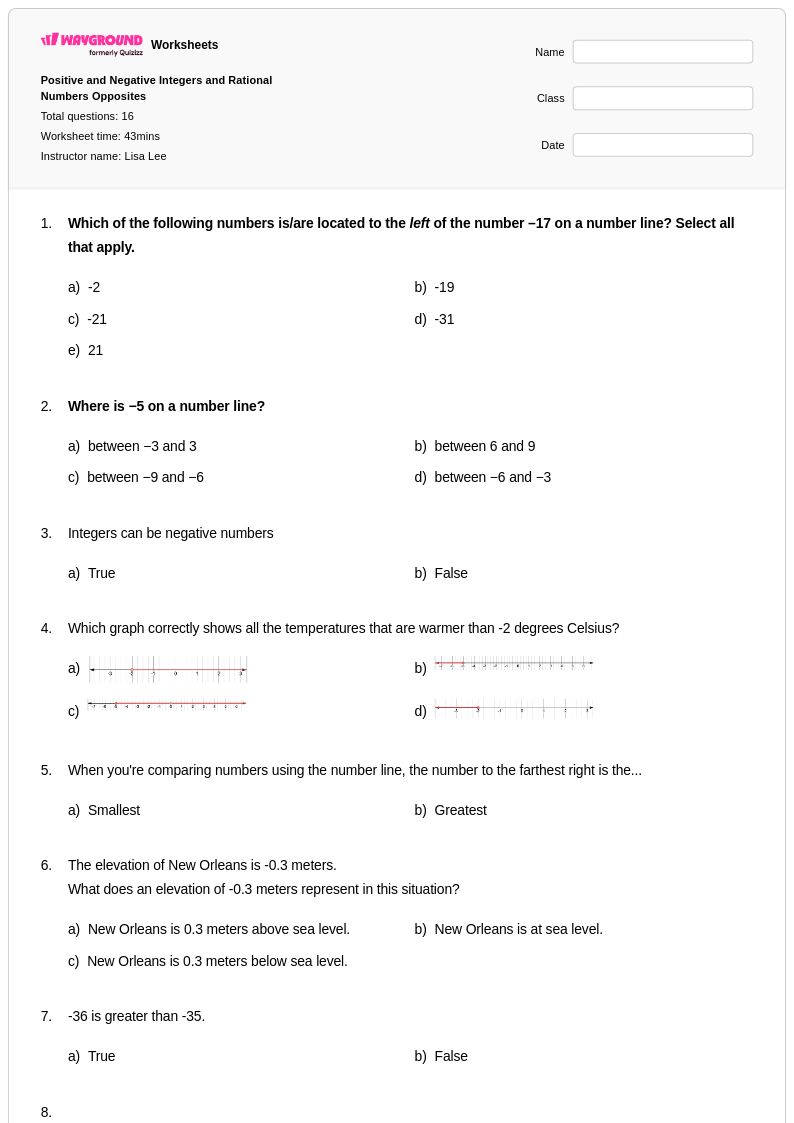
16 Q
5th - 7th
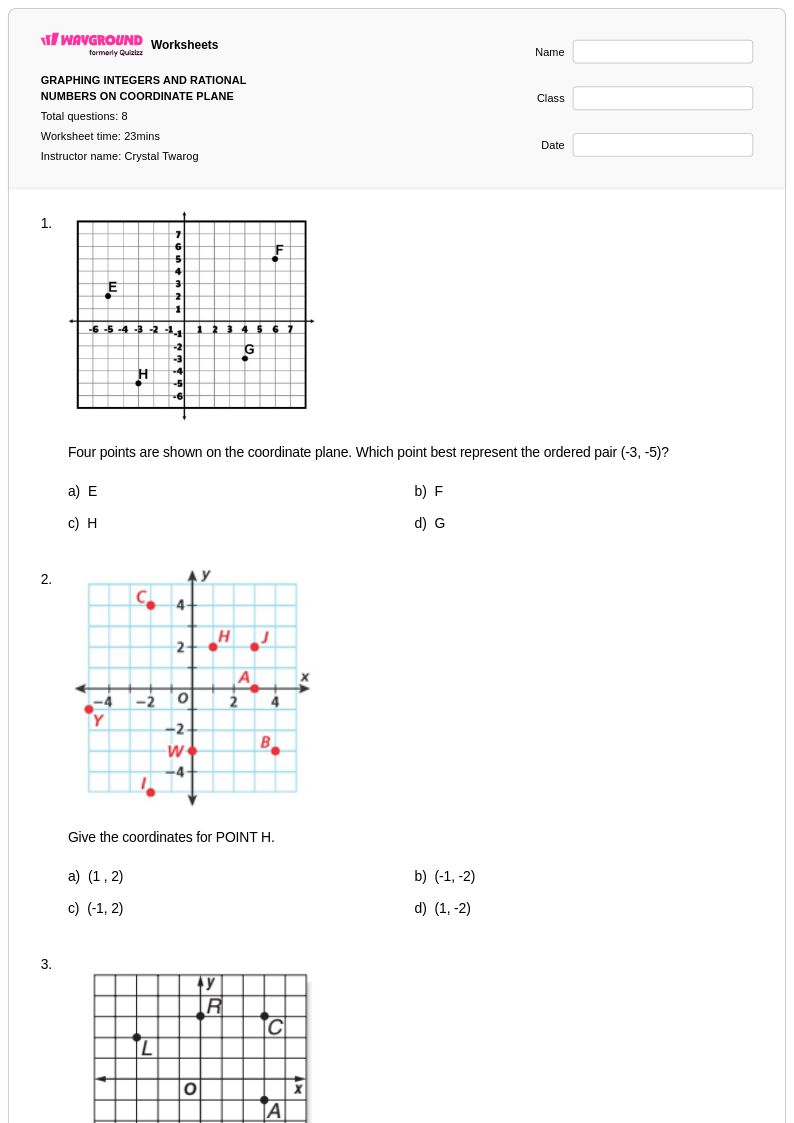
8 Q
5th - 6th
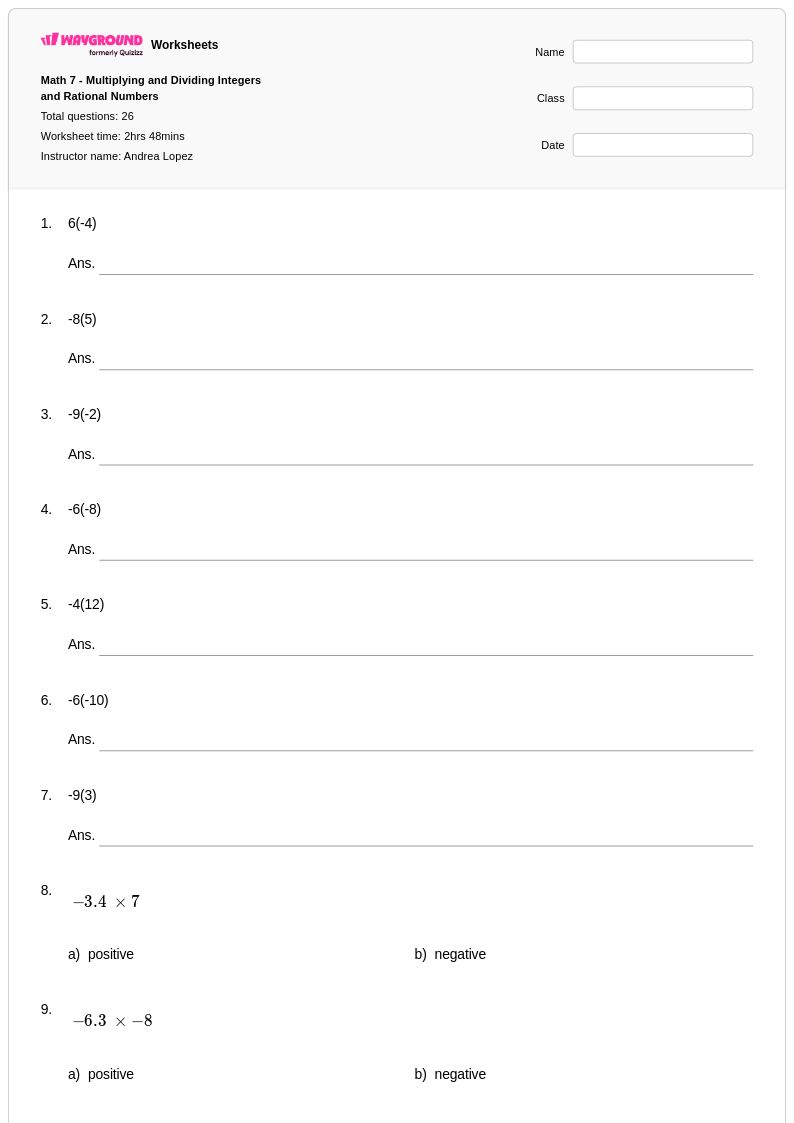
26 Q
5th - 7th

29 Q
5th
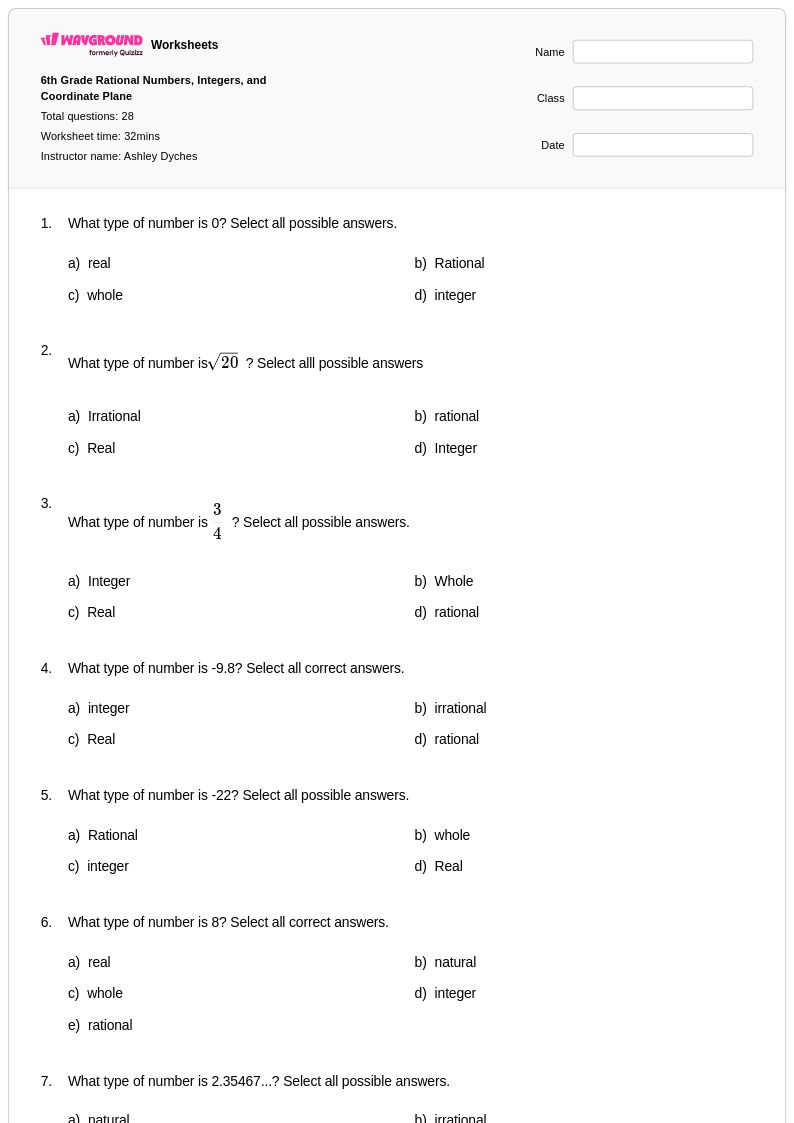
28 Q
5th - 8th
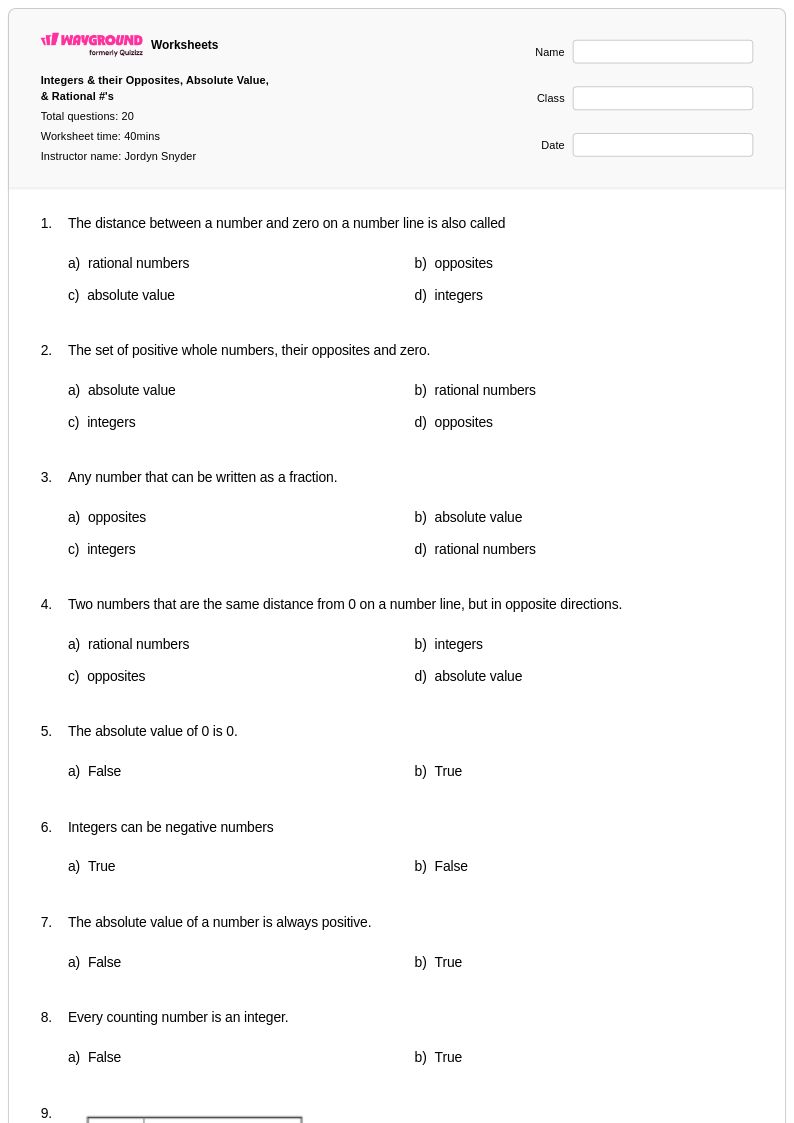
20 Q
5th - 7th
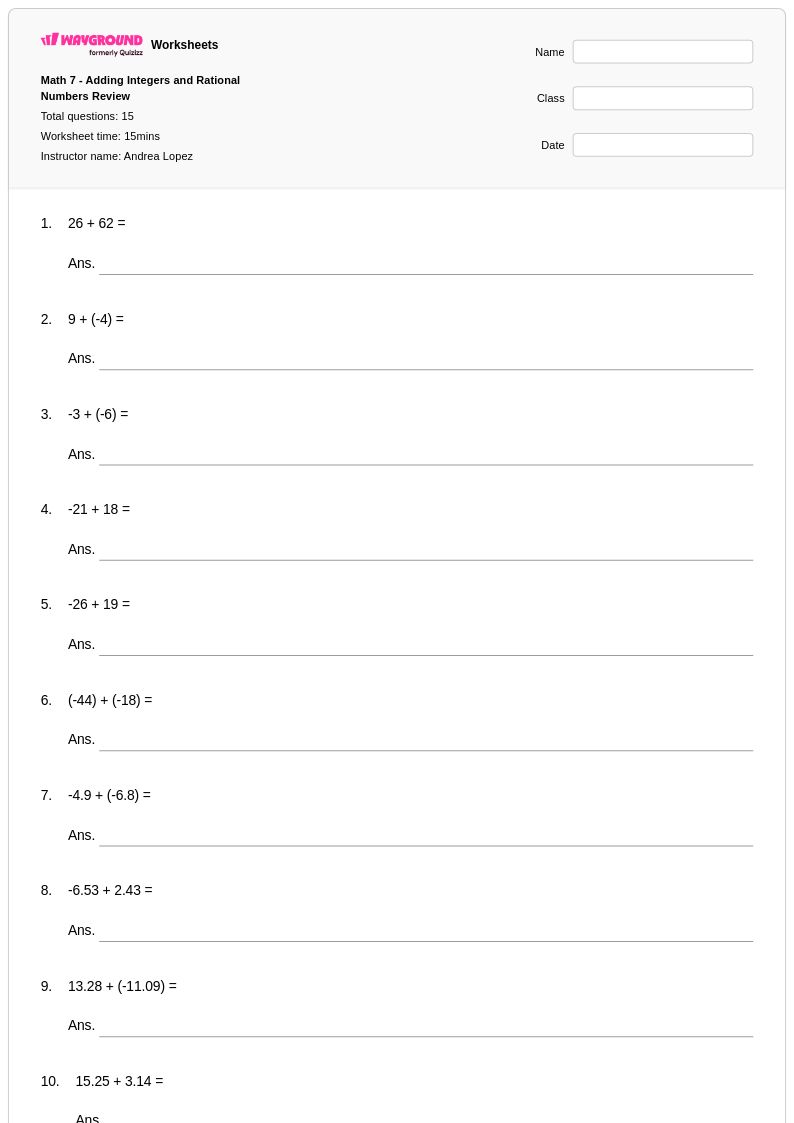
15 Q
5th - 7th
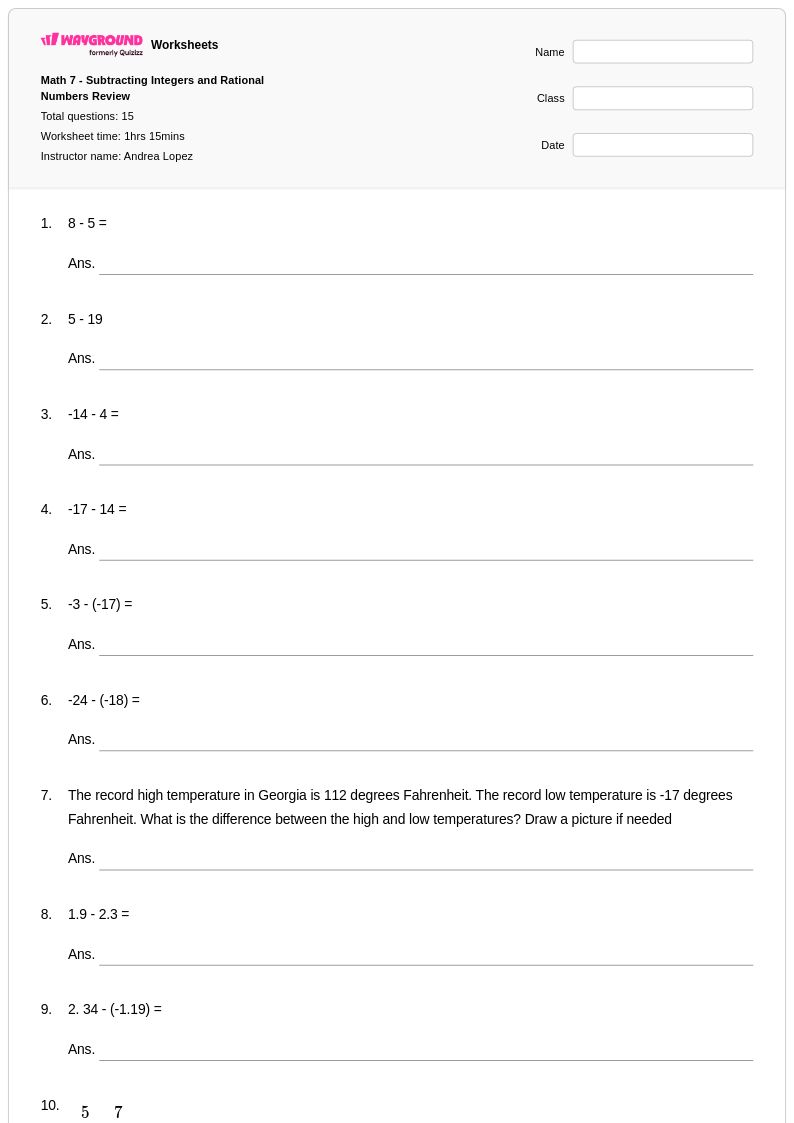
15 Q
5th - 7th
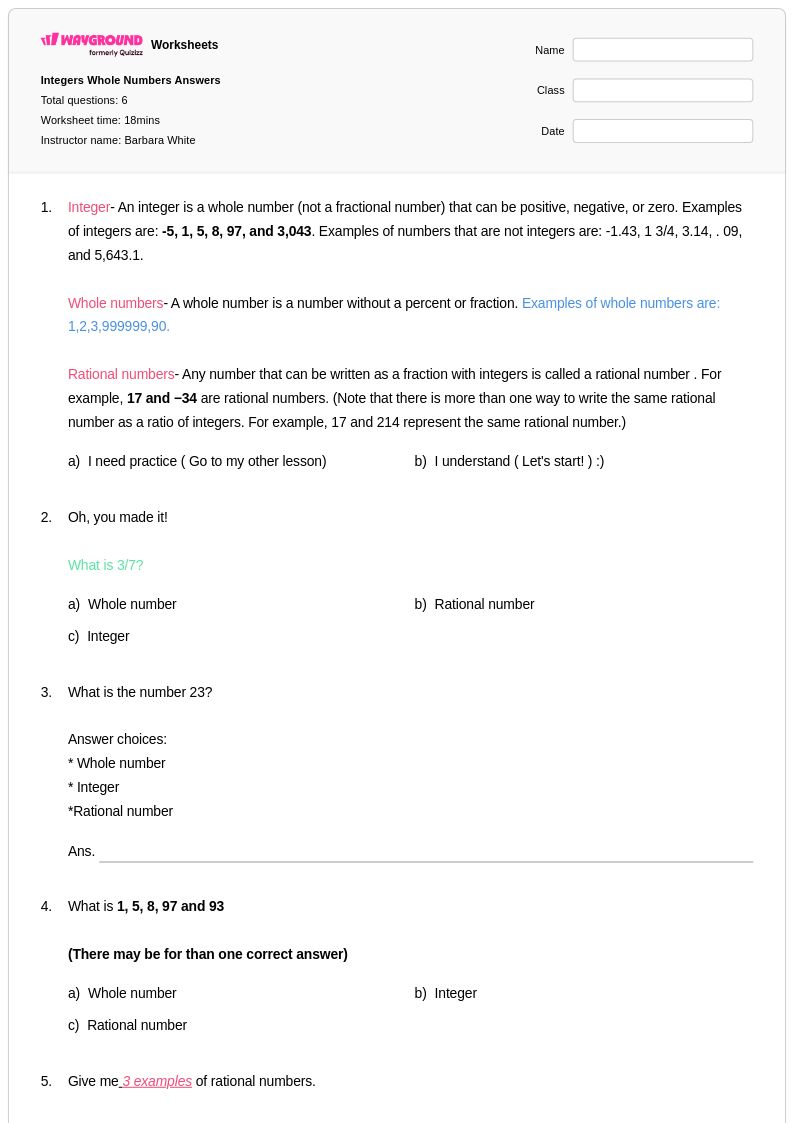
6 Q
5th - 8th
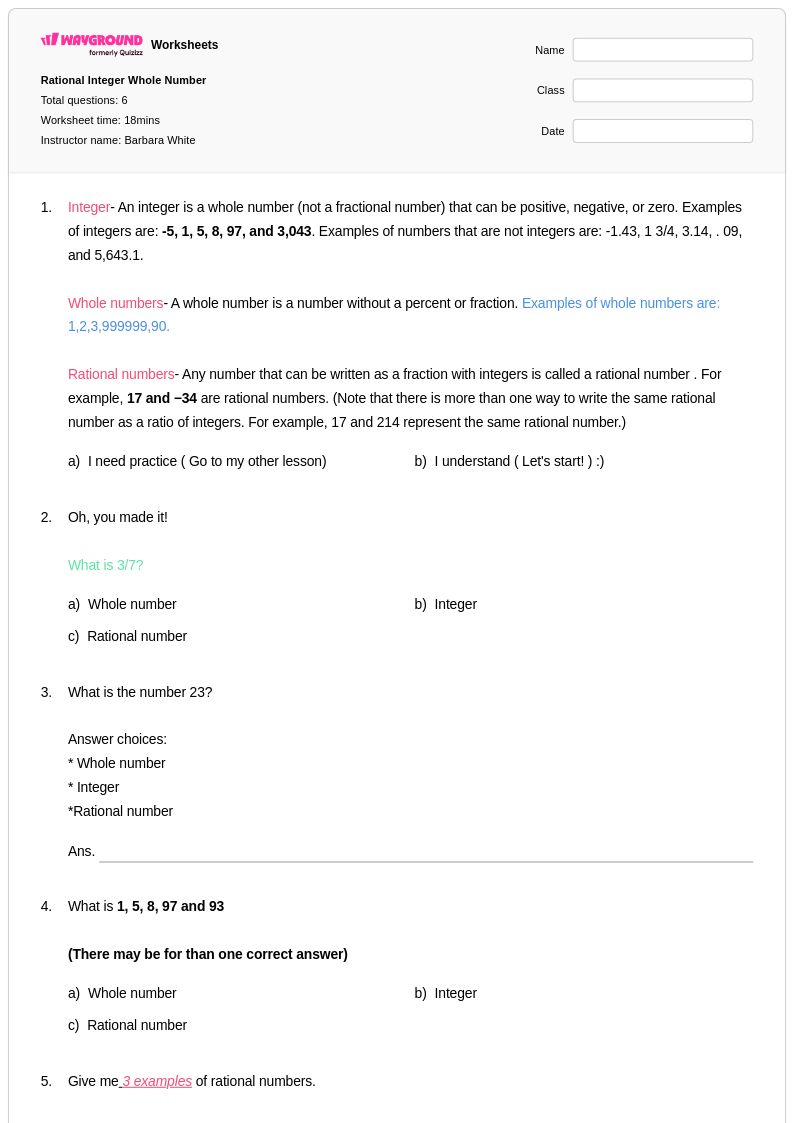
6 Q
5th - 8th
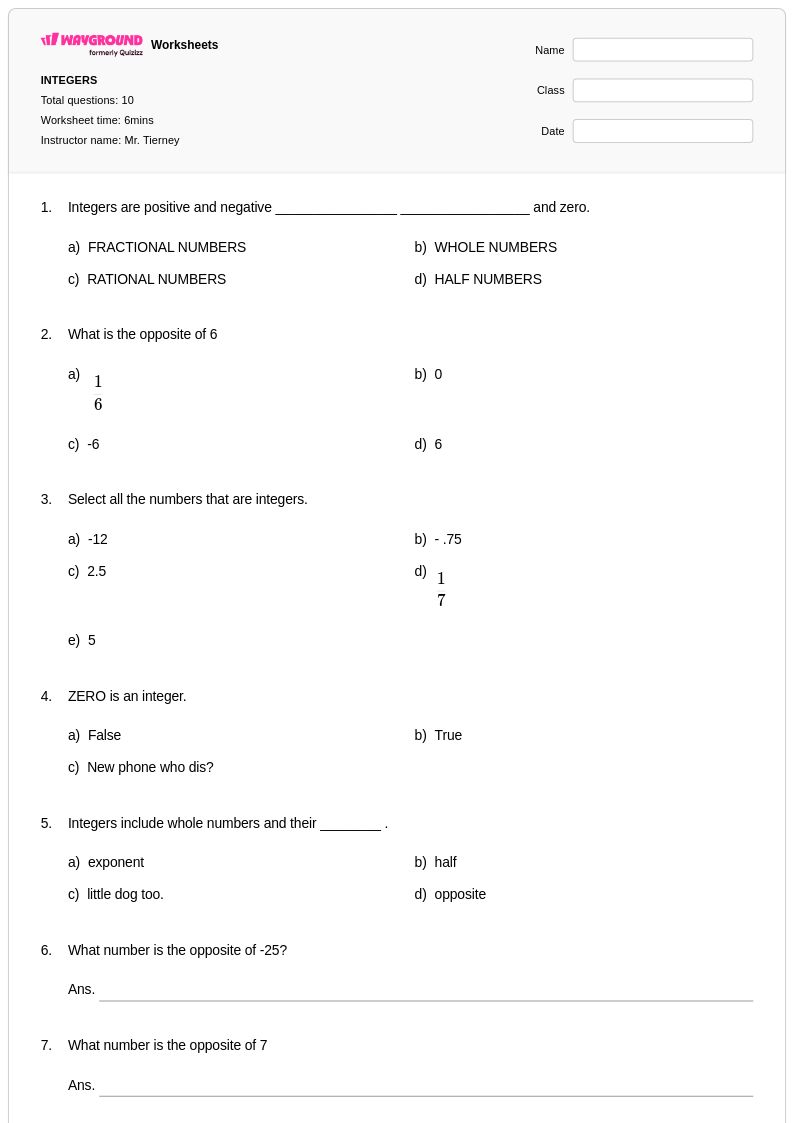
10 Q
5th - 8th
Explore Integers and Rational Numbers Worksheets by Grades
Explore Integers and Rational Numbers Worksheets for year 5 by Topic
Explore Other Subject Worksheets for year 5
Explore printable Integers and Rational Numbers worksheets for Year 5
Integers and rational numbers form a critical foundation in Year 5 mathematics, representing students' first formal introduction to negative numbers and numbers that can be expressed as fractions. Wayground's comprehensive collection of integers and rational numbers worksheets provides fifth-grade educators with expertly designed practice problems that systematically build understanding of these essential number concepts. These free printable resources strengthen key skills including comparing and ordering integers on number lines, understanding absolute value, performing basic operations with negative numbers, and recognizing rational numbers in decimal and fractional forms. Each worksheet comes complete with a detailed answer key, allowing teachers to efficiently assess student progress while providing students with immediate feedback on their mathematical reasoning and computational accuracy.
Wayground, formerly Quizizz, empowers teachers with millions of teacher-created resources specifically designed to support integers and rational numbers instruction at the fifth-grade level. The platform's robust search and filtering capabilities enable educators to quickly locate worksheets aligned with specific curriculum standards, while differentiation tools allow for seamless customization to meet diverse learner needs. Teachers can access these materials in both printable PDF format for traditional classroom use and digital formats for technology-integrated learning environments. This flexibility proves invaluable for lesson planning, targeted remediation of misconceptions about negative numbers, enrichment activities for advanced learners, and ongoing skill practice that reinforces the foundational understanding students need before advancing to more complex algebraic concepts in middle school mathematics.
FAQs
What new concepts about integers are introduced in Grade 5?
How can I introduce the concept of absolute value to 5th graders?
What is a common point of confusion for students learning absolute value?
How does the 5th grade curriculum use integers and rational numbers?
What types of problems help students practice with integers in Grade 5?
How can I use these worksheets to support my 5th grade math class?