
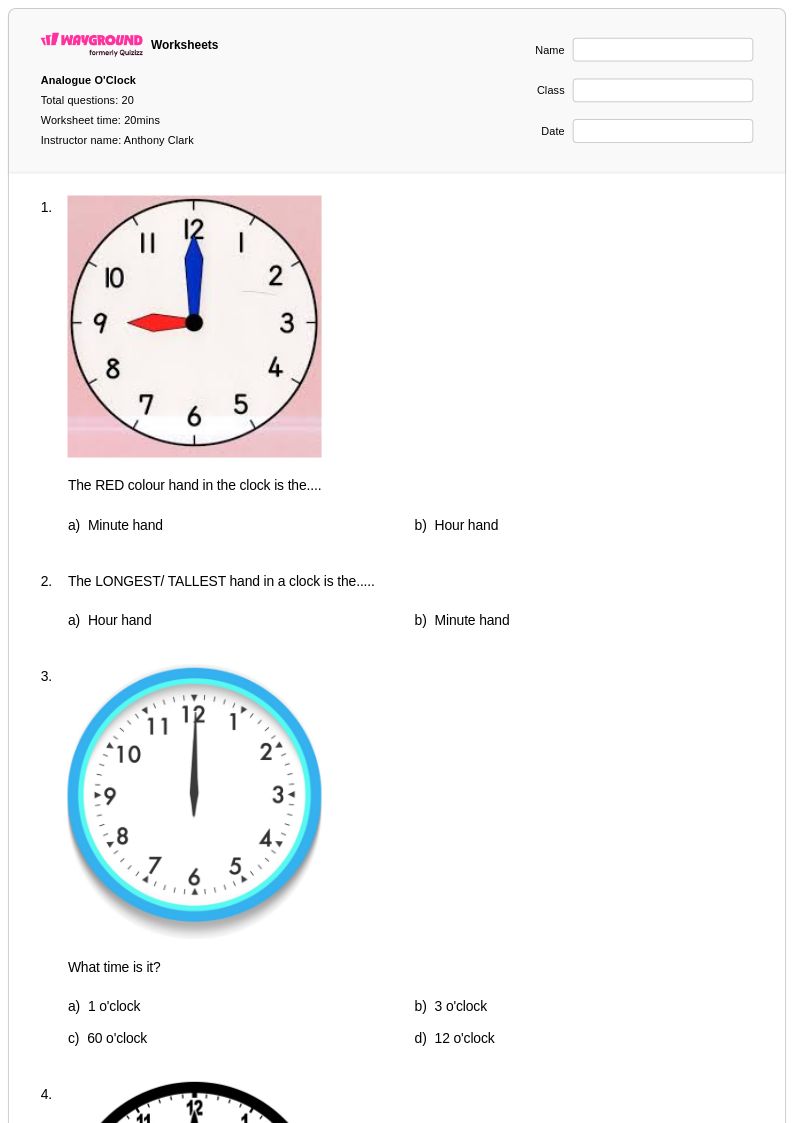
20 Q
3rd - Uni
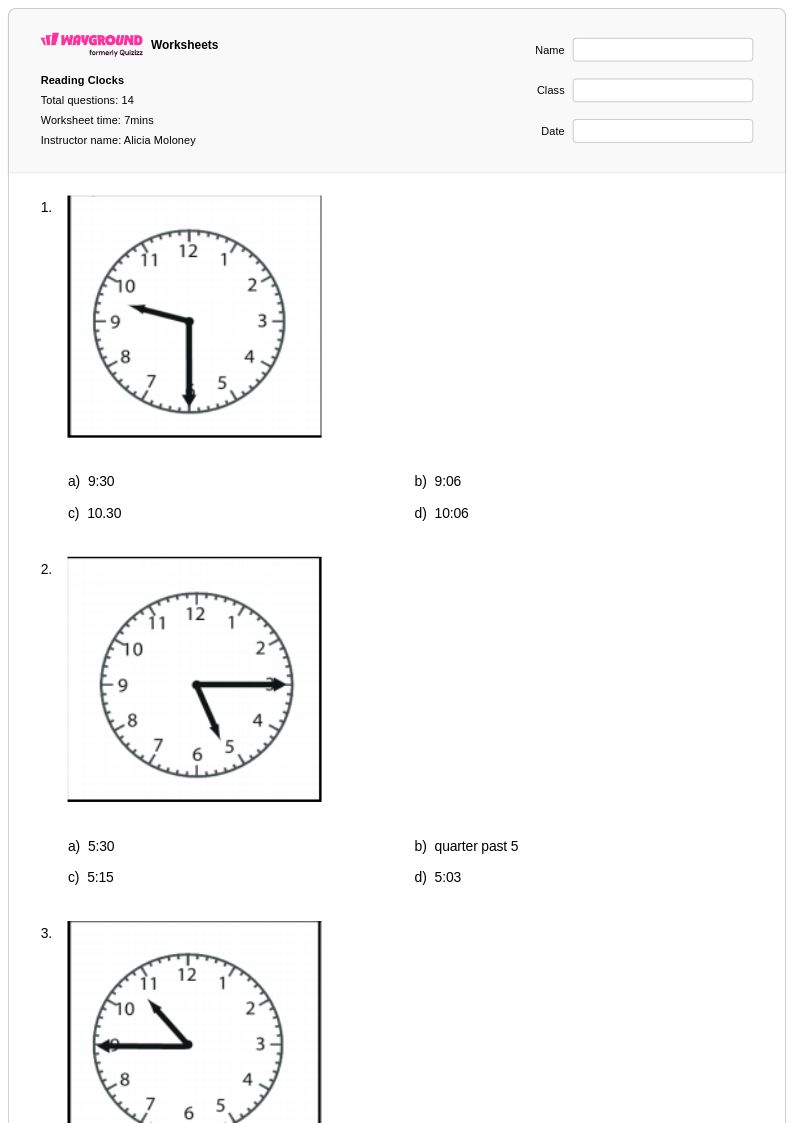
14 Q
4th - 6th
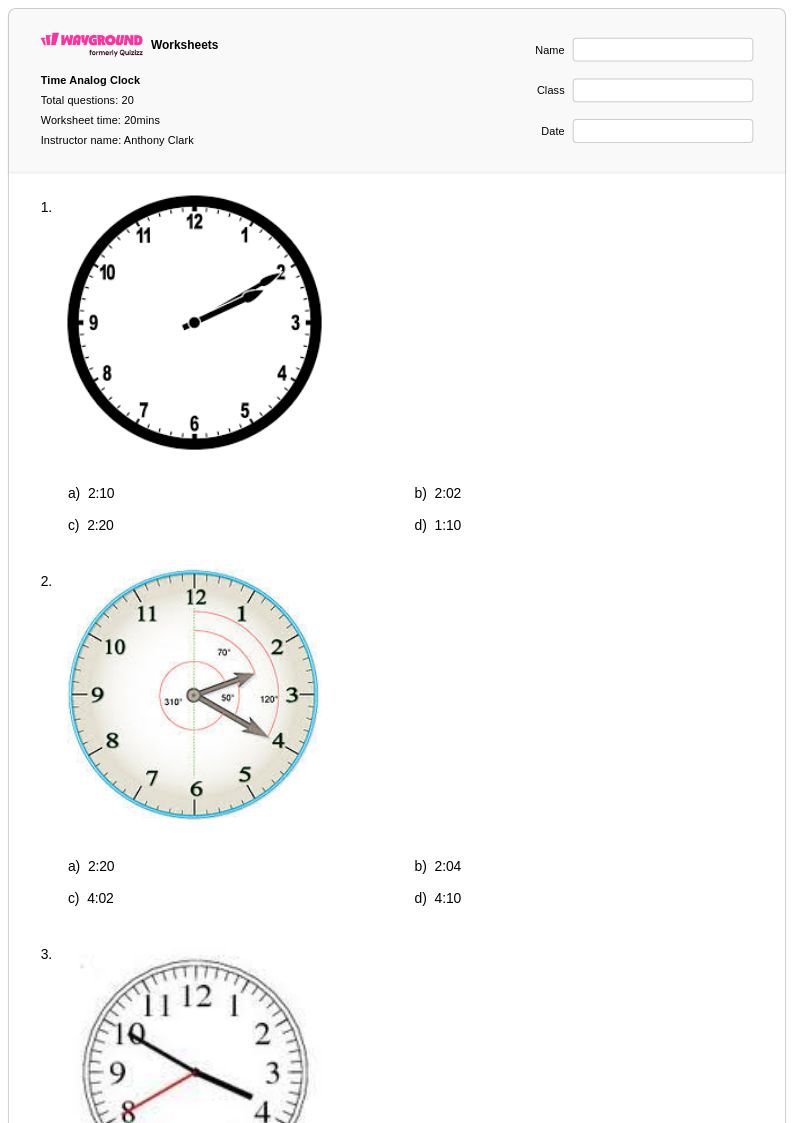
20 Q
2nd - Uni
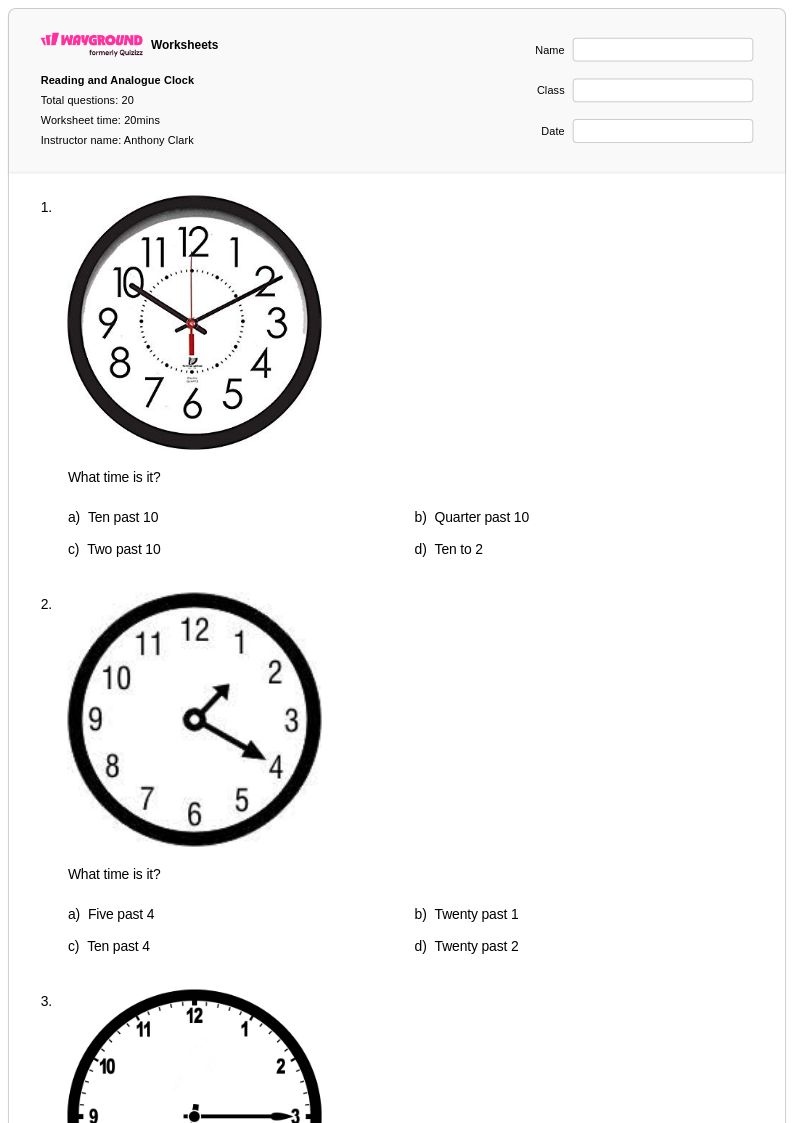
20 Q
2nd - Uni
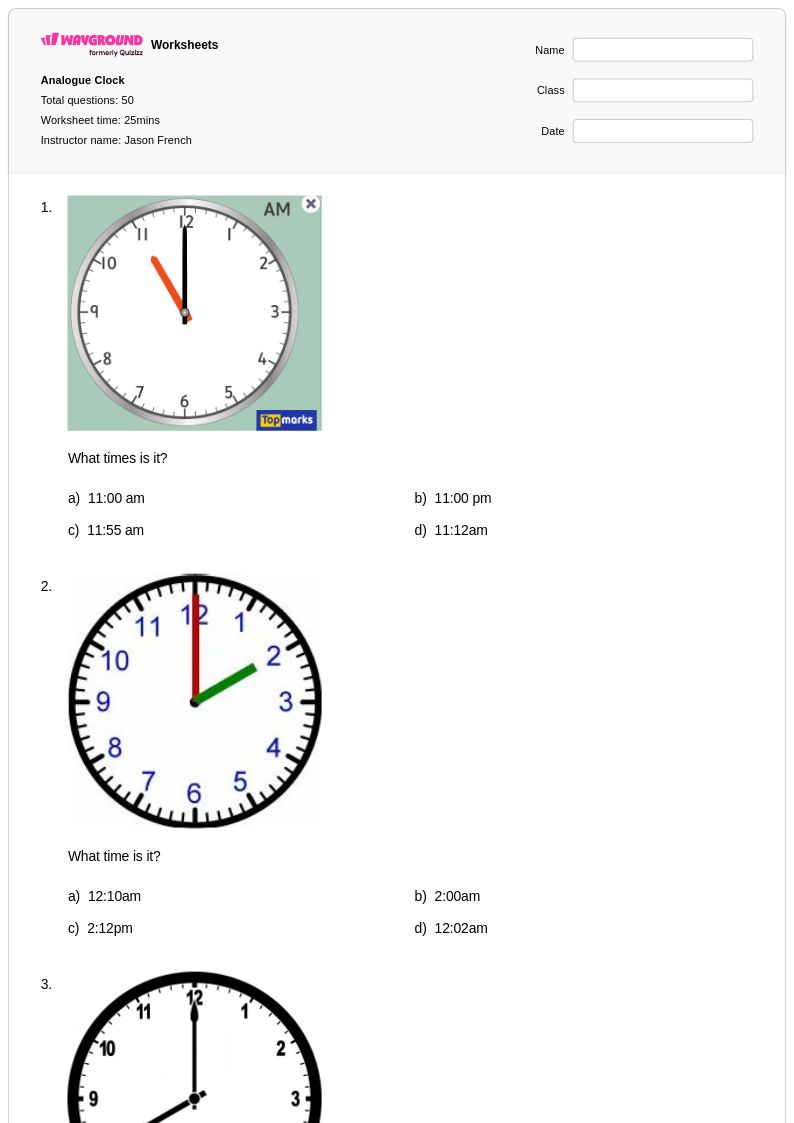
50 Q
5th
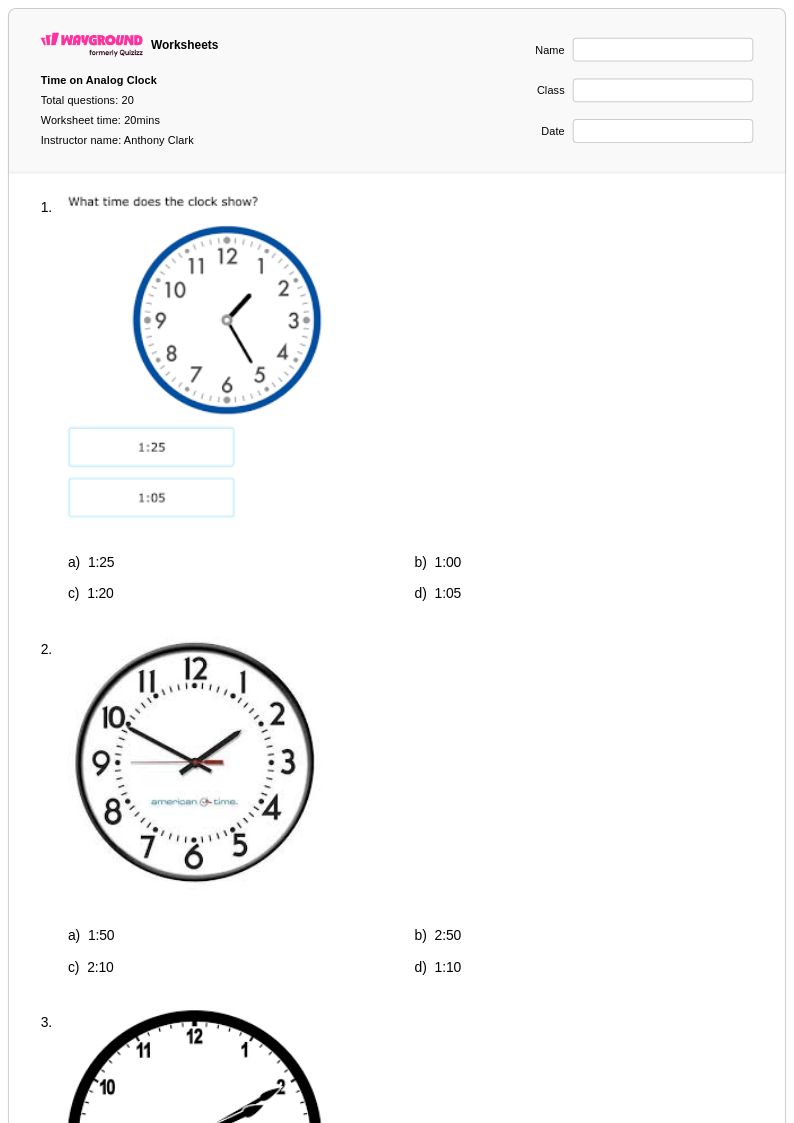
20 Q
2nd - Uni
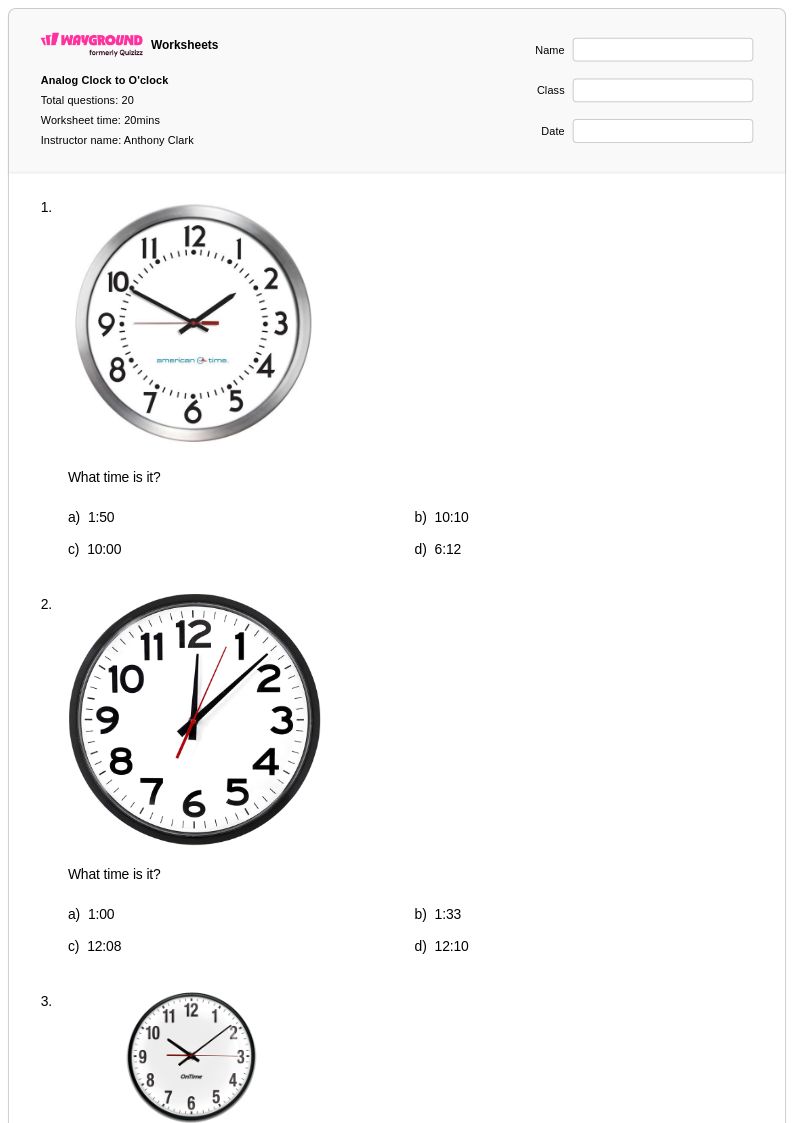
20 Q
2nd - Uni
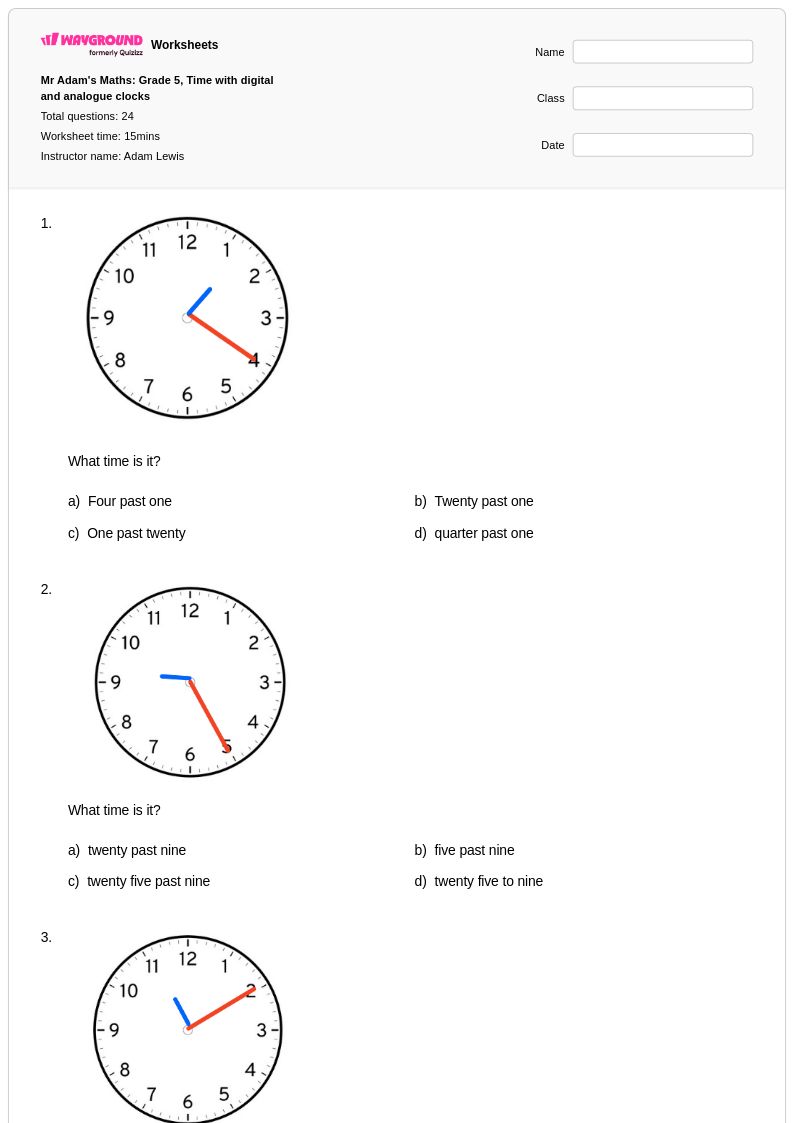
24 Q
5th
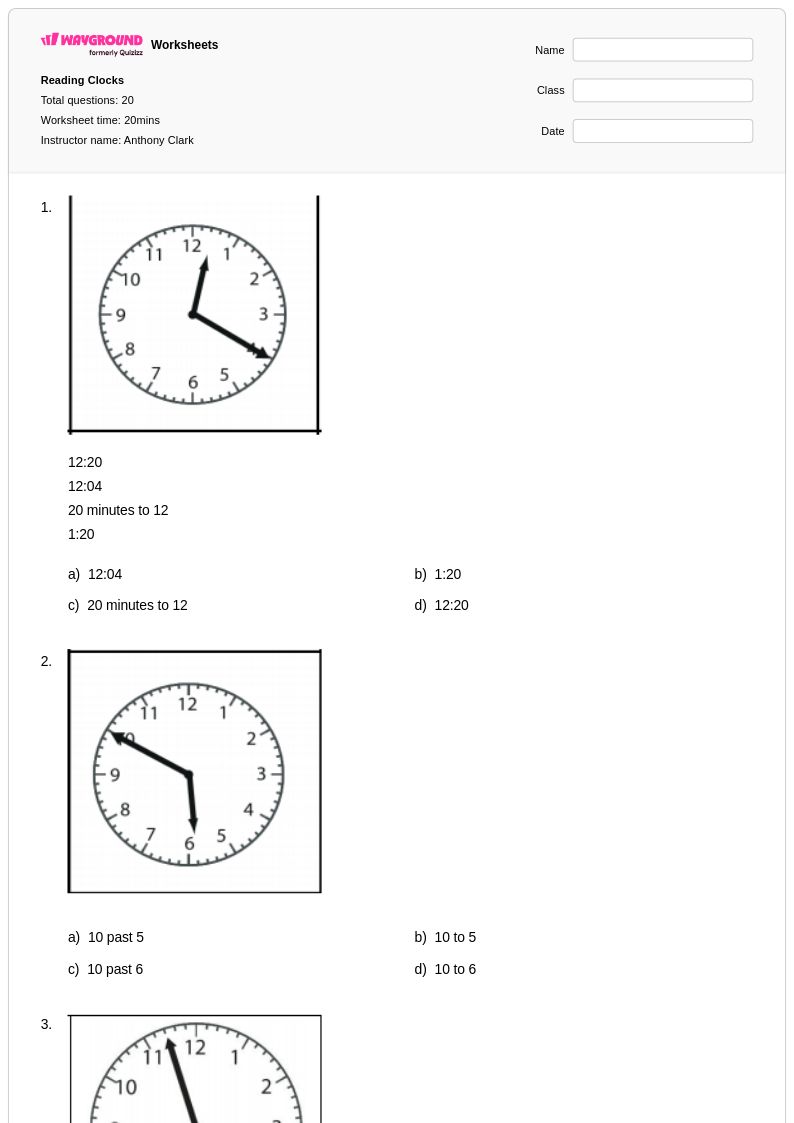
20 Q
3rd - Uni
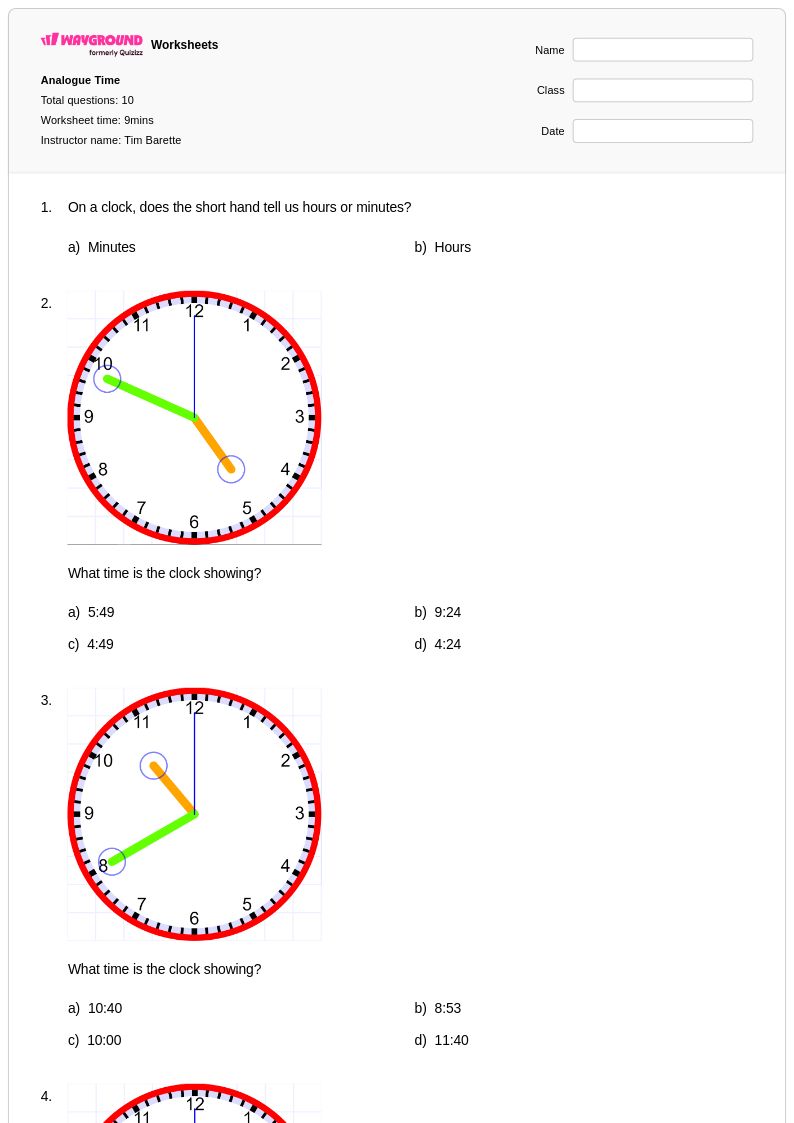
10 Q
3rd - 8th
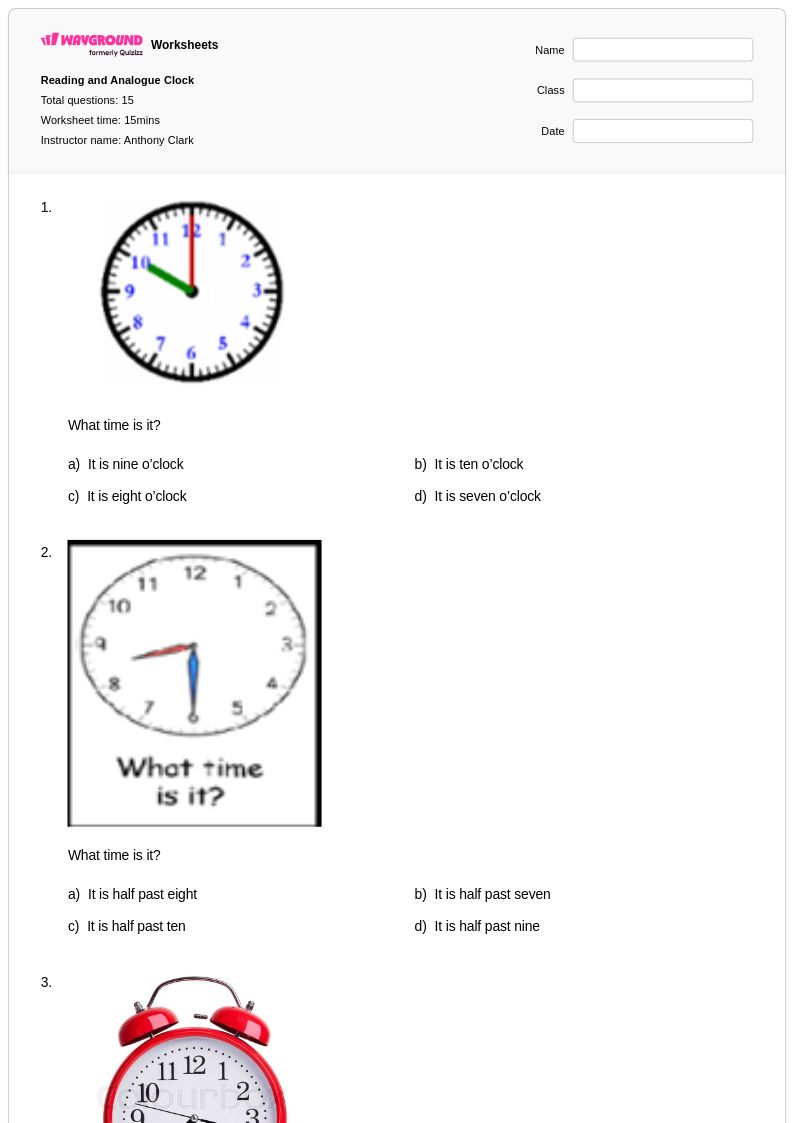
15 Q
2nd - Uni
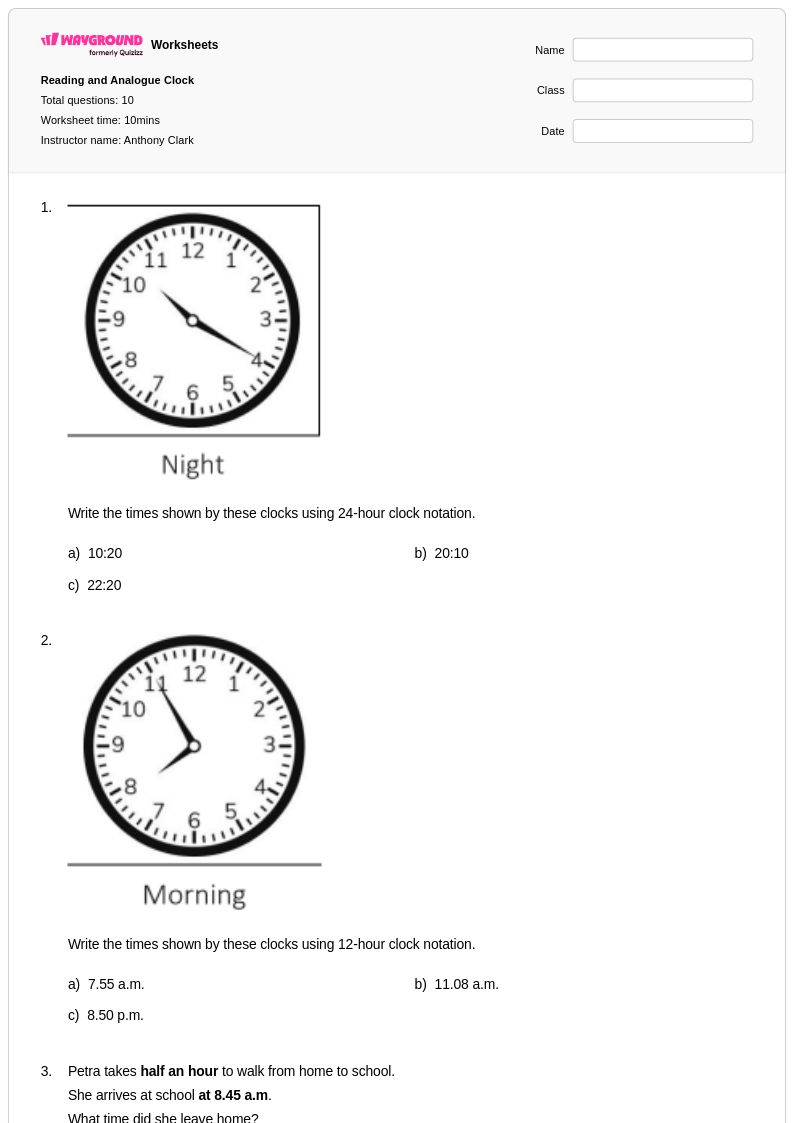
10 Q
2nd - Uni
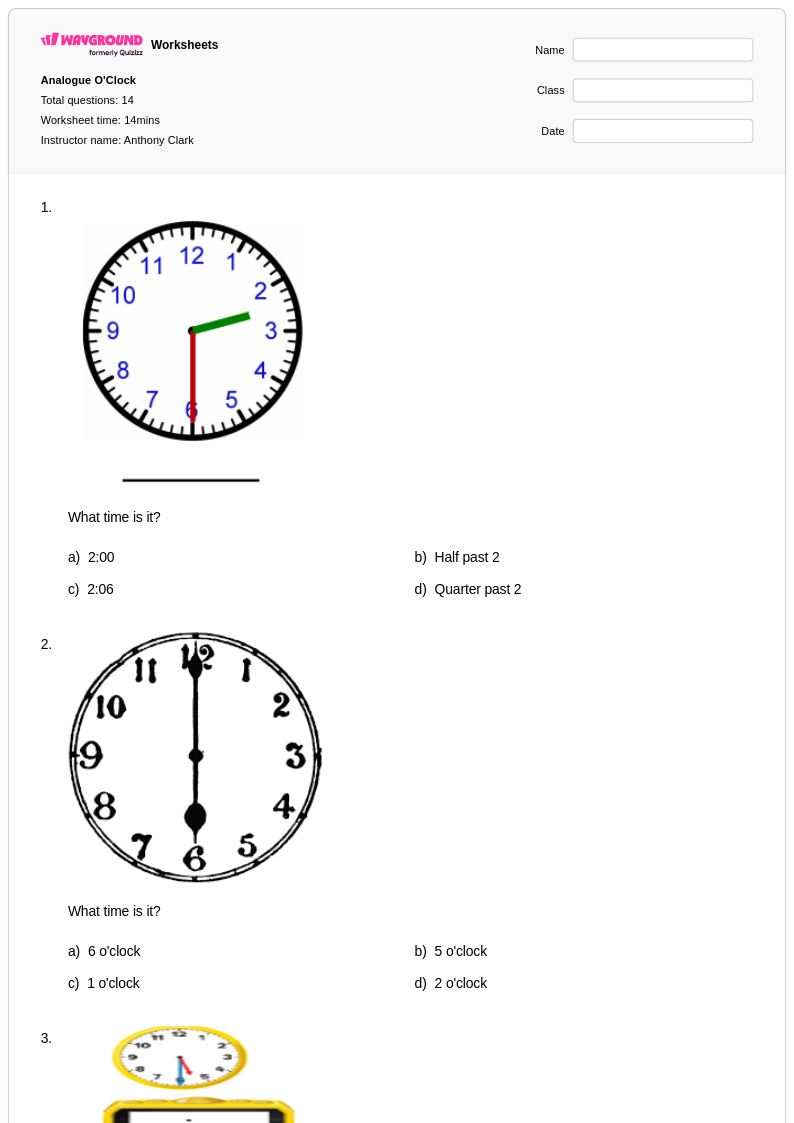
14 Q
3rd - Uni
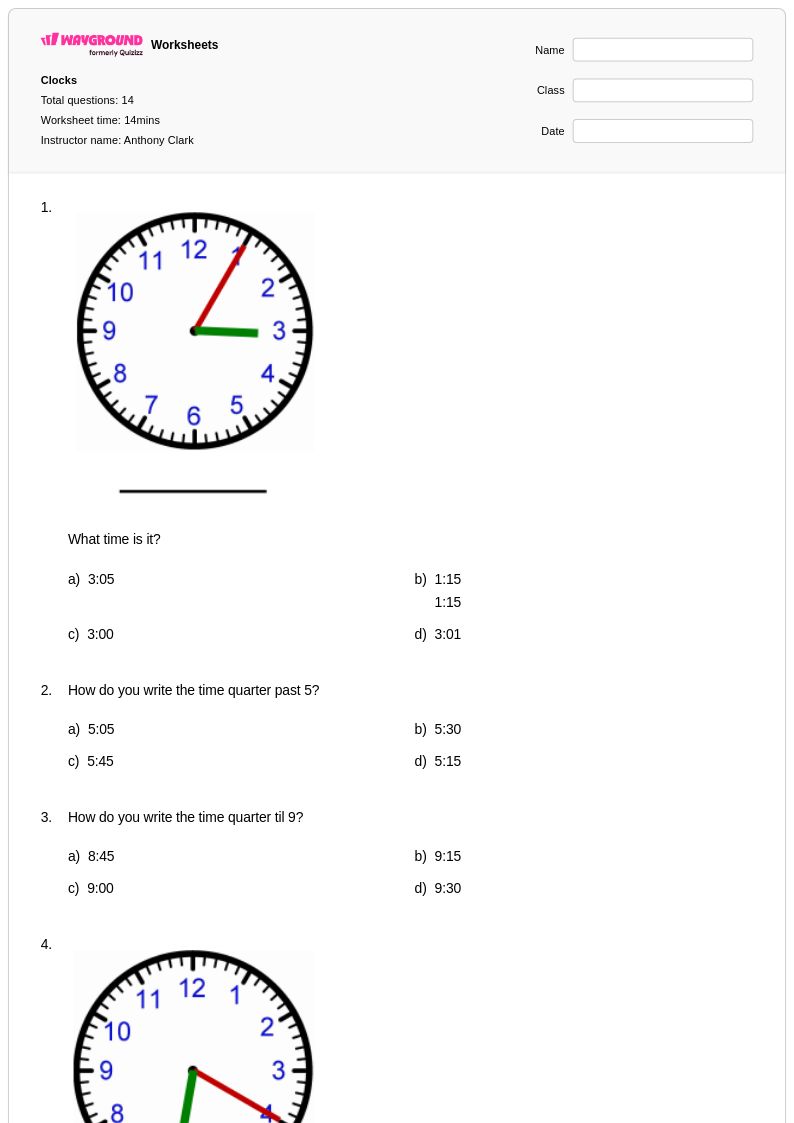
14 Q
1st - Uni
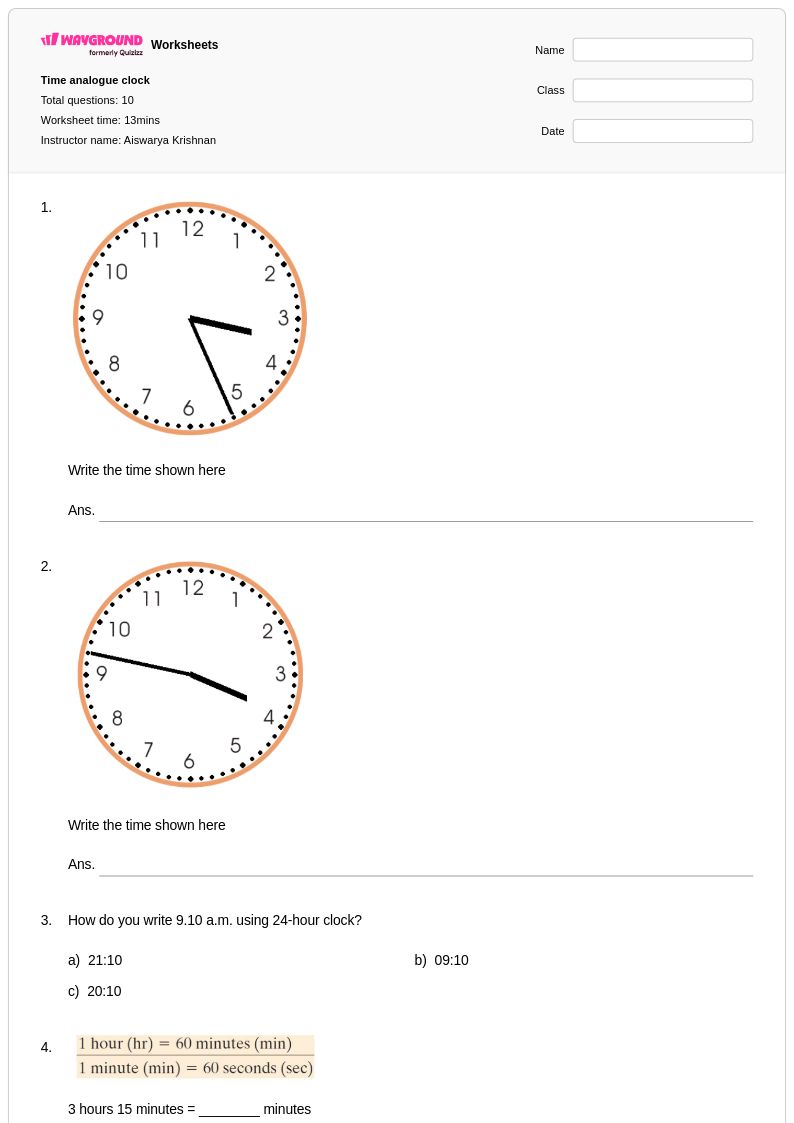
10 Q
5th
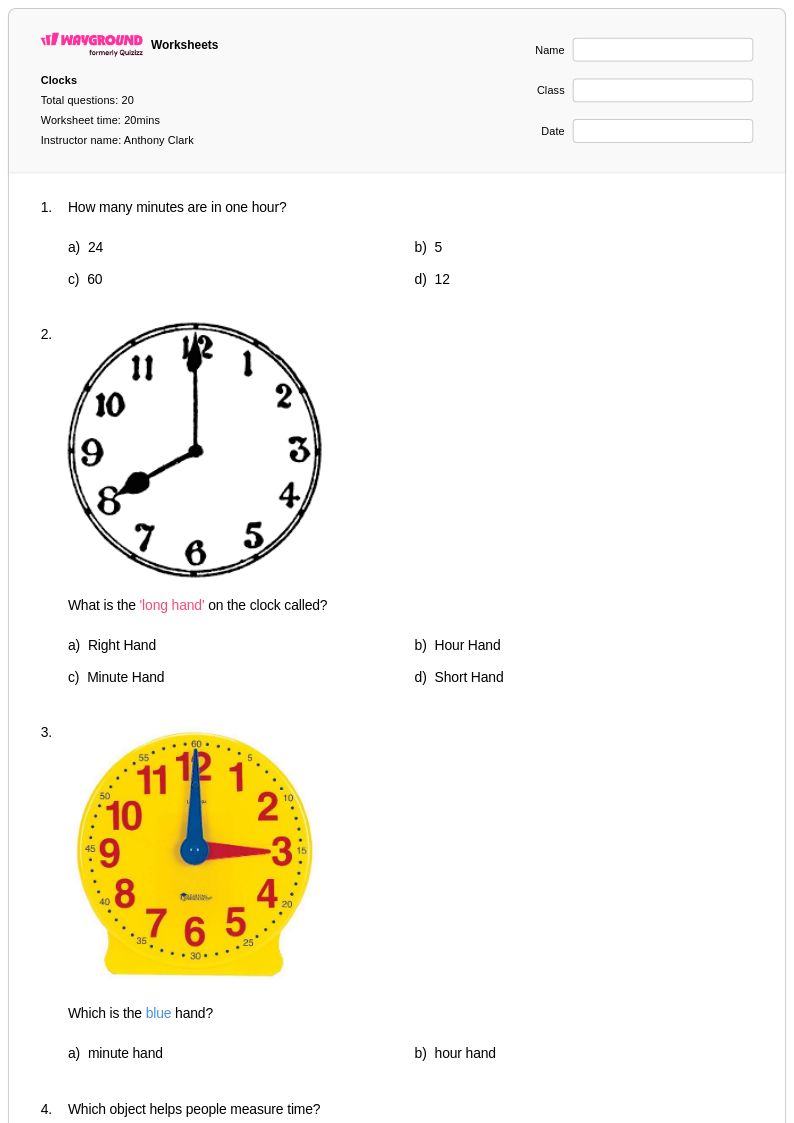
20 Q
1st - Uni
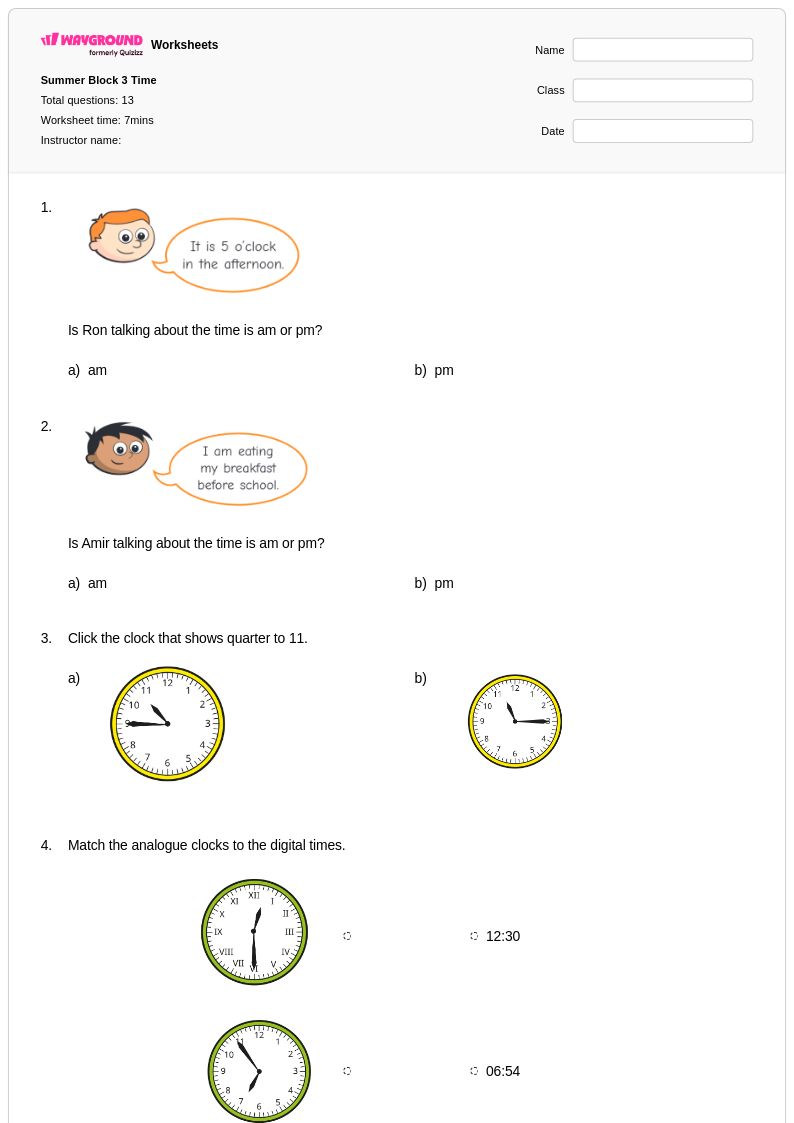
13 Q
3rd - Uni
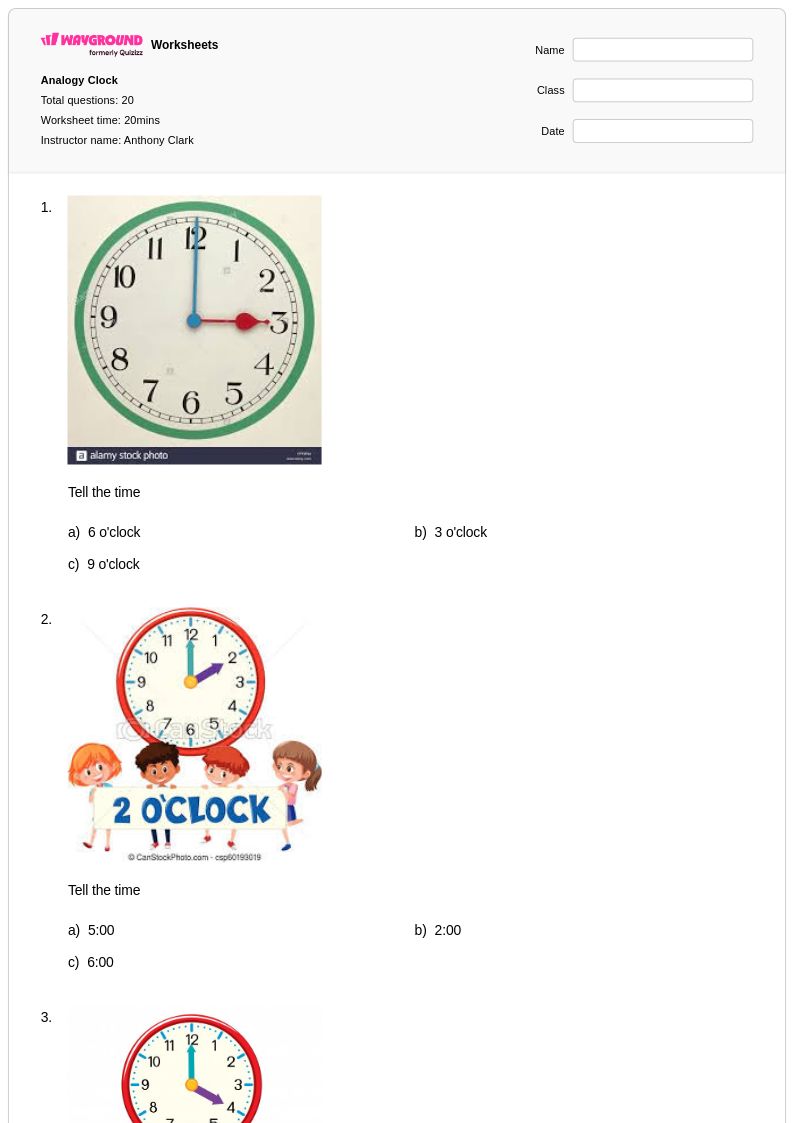
20 Q
2nd - Uni
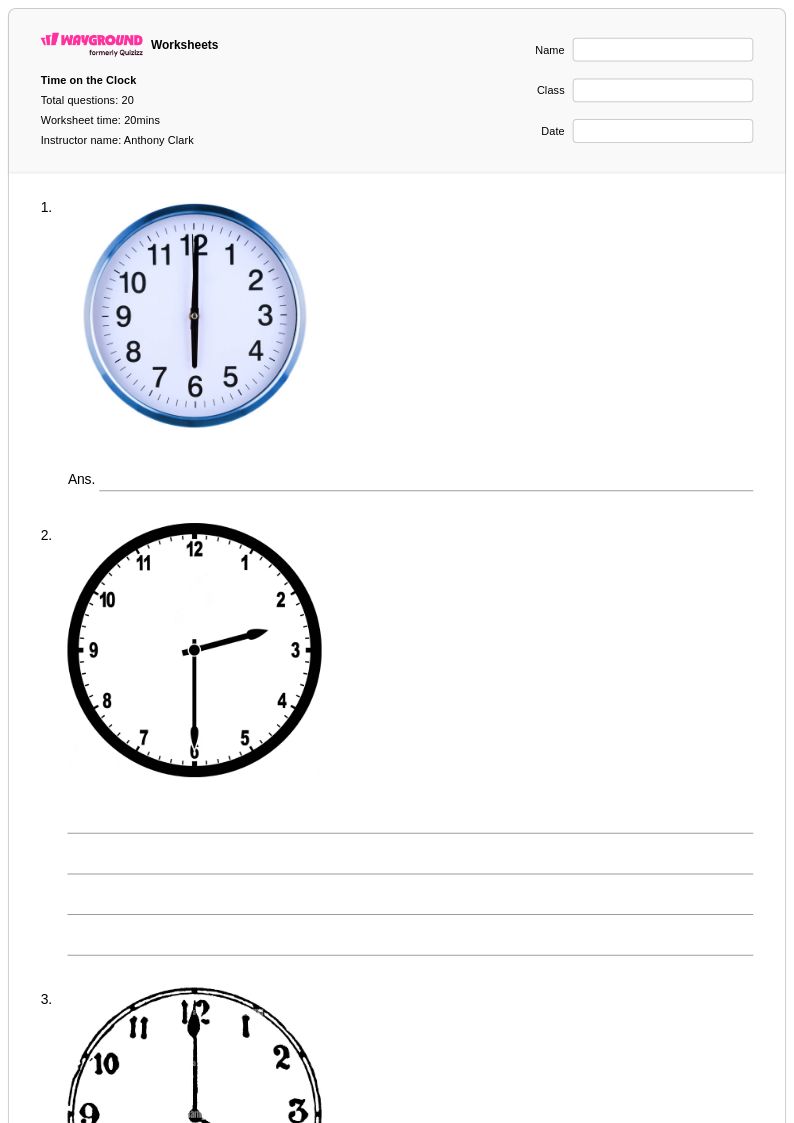
20 Q
3rd - Uni
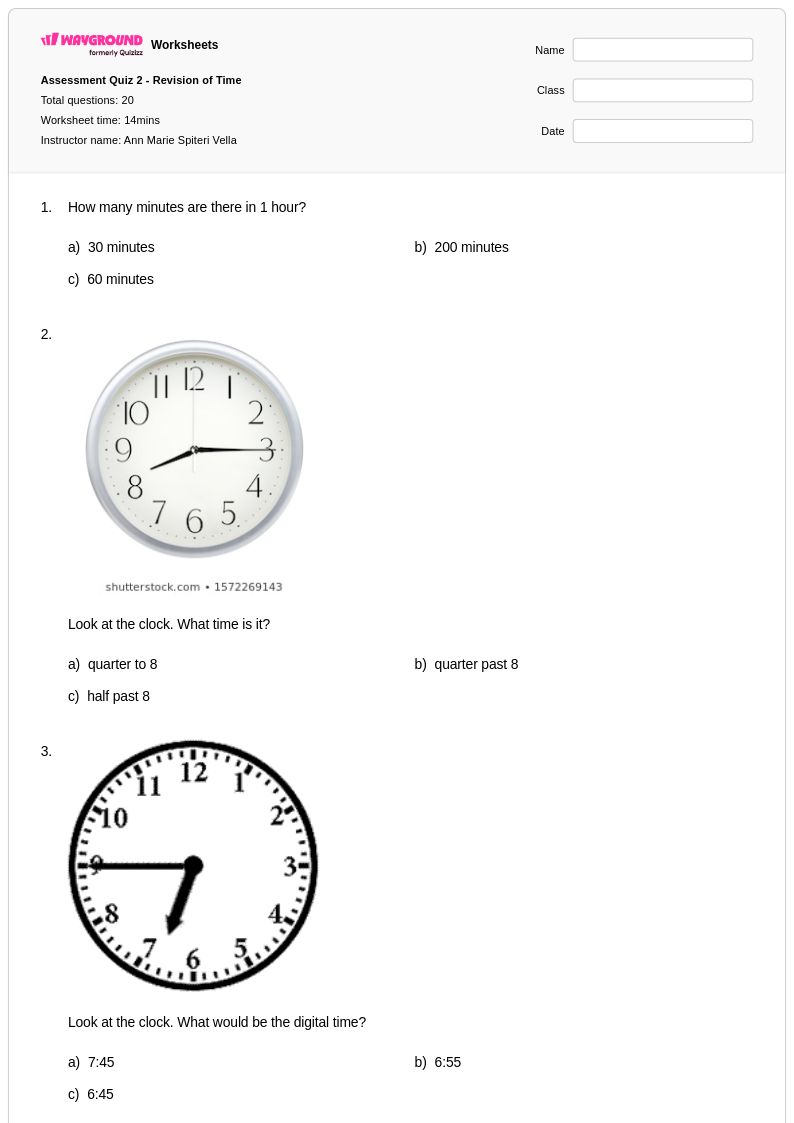
20 Q
5th
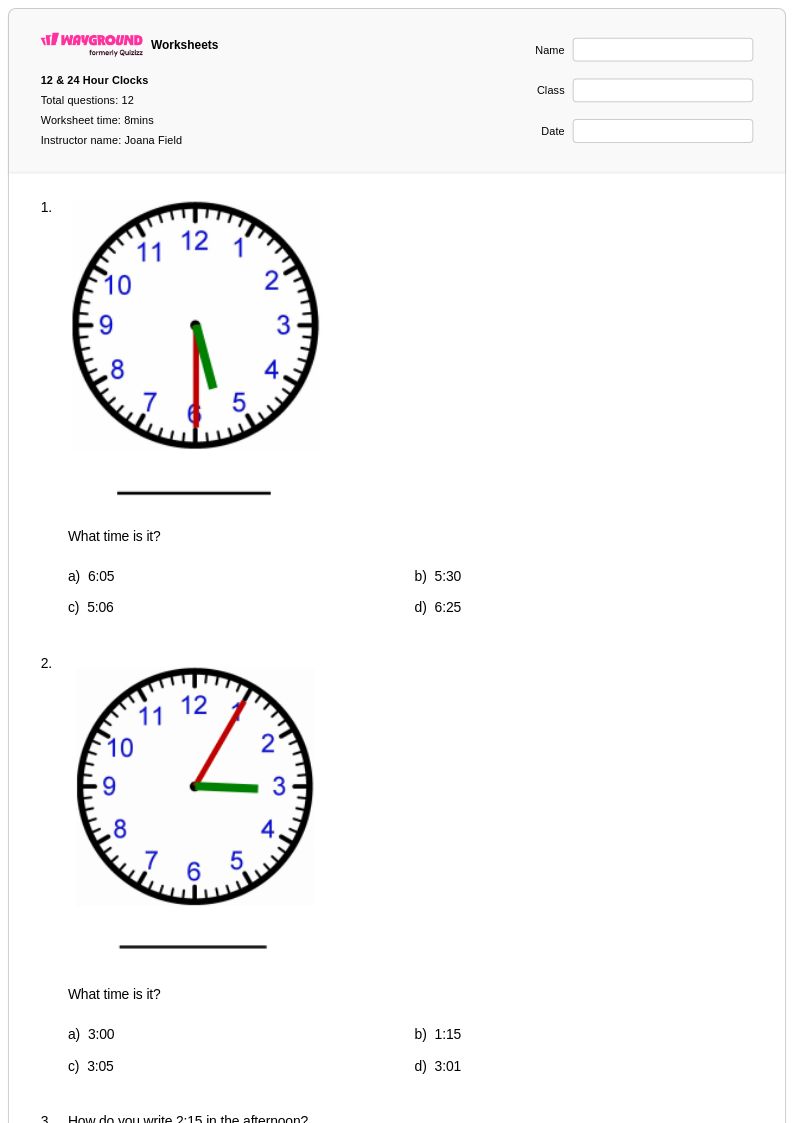
12 Q
3rd - 5th
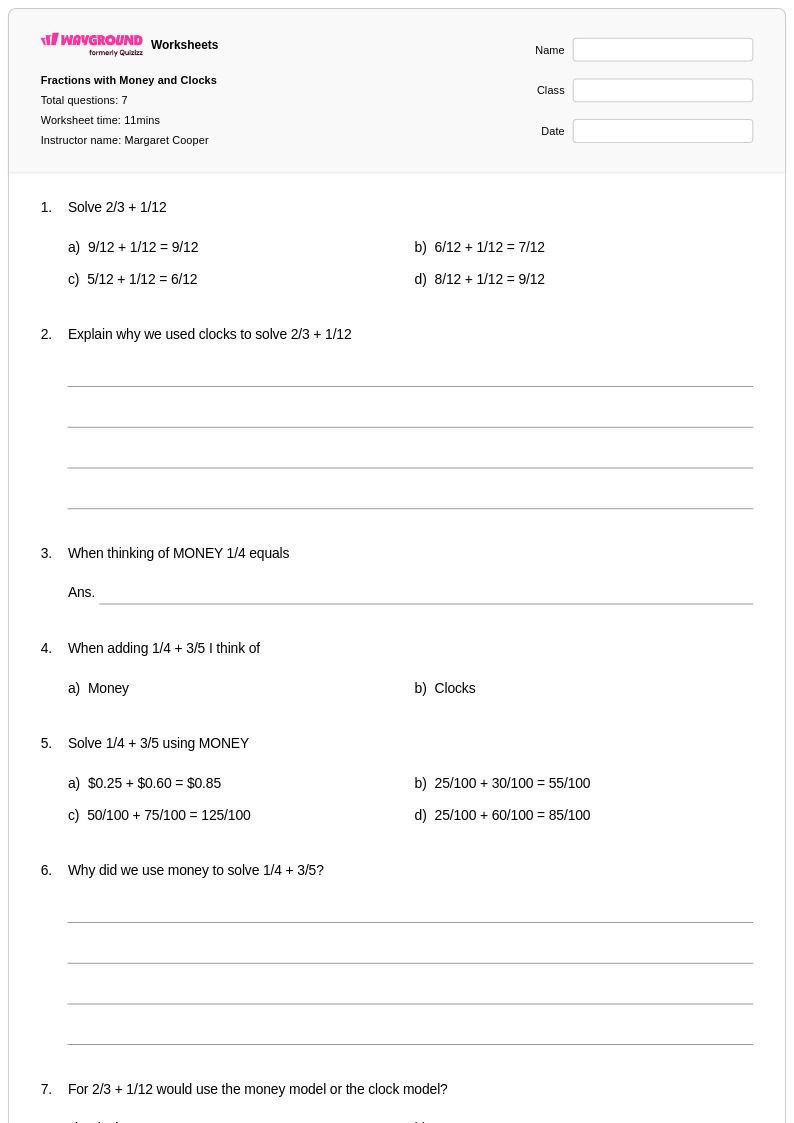
7 Q
4th - 5th
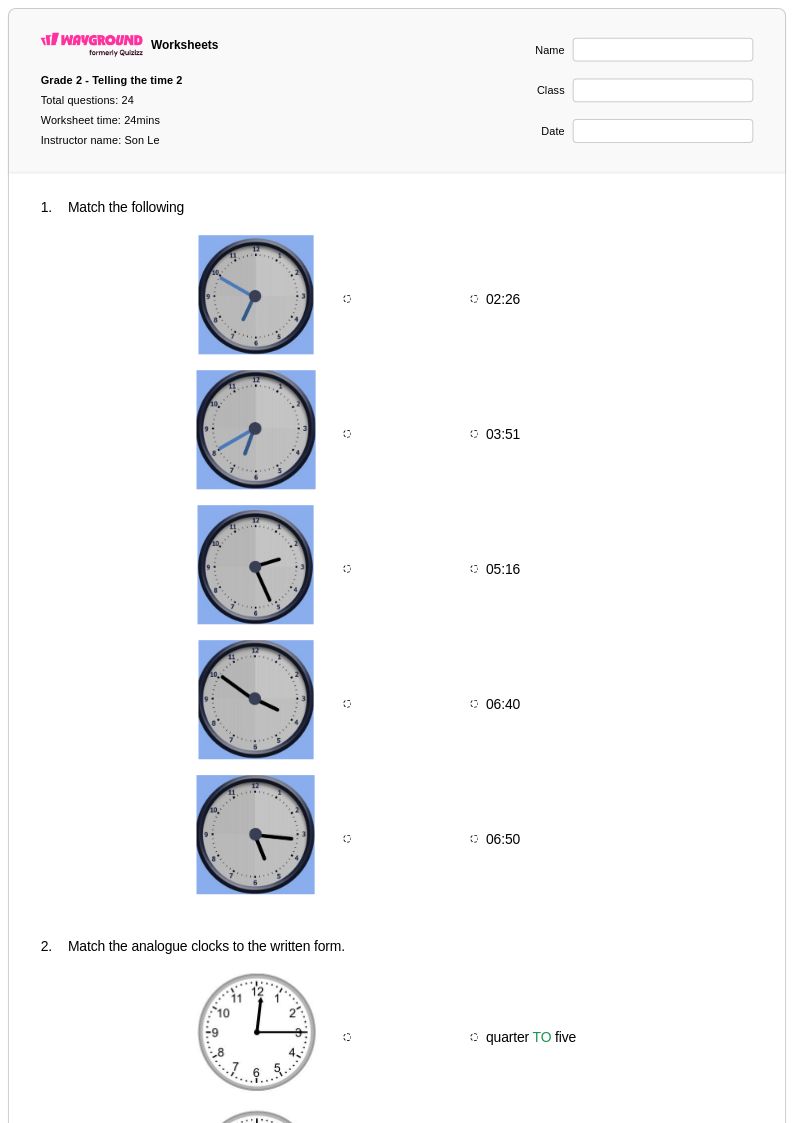
24 Q
1st - 5th
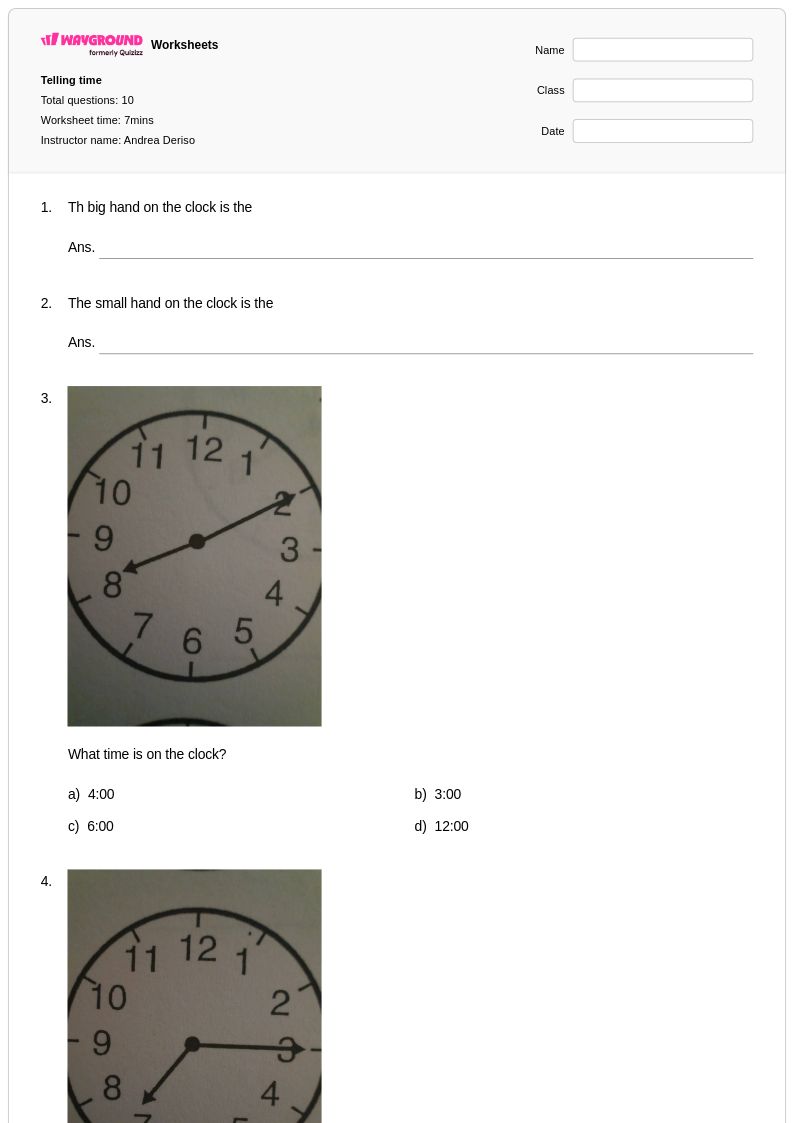
10 Q
5th - 6th
Explore Other Subject Worksheets for year 5
Explore printable Analogue Clocks worksheets for Year 5
Analogue clock worksheets for Year 5 students available through Wayground (formerly Quizizz) provide comprehensive practice in reading and interpreting traditional clock faces with hour and minute hands. These educational resources strengthen critical time-telling skills including identifying exact times to the minute, understanding the relationship between hour and minute hand positions, and recognizing time intervals and elapsed time concepts. The collection features diverse practice problems that challenge students to read various analogue clock configurations, from simple hour and half-hour displays to complex times involving minutes past and before the hour. Each worksheet includes a detailed answer key to support independent learning and self-assessment, with free printable pdf formats making these resources accessible for classroom use, homework assignments, and targeted skill reinforcement.
Wayground (formerly Quizizz) empowers educators with millions of teacher-created analogue clock worksheet resources that feature robust search and filtering capabilities, allowing instructors to quickly locate materials aligned with specific Year 5 mathematics standards and learning objectives. The platform's differentiation tools enable teachers to customize worksheets for varying skill levels within their classrooms, supporting both remediation for struggling students and enrichment opportunities for advanced learners. These analogue clock resources are available in both printable and digital formats, including downloadable pdf versions, providing flexibility for diverse instructional settings and learning preferences. Teachers can seamlessly integrate these worksheets into lesson planning, use them for targeted skill practice sessions, or deploy them as assessment tools to monitor student progress in time-telling proficiency and analogue clock interpretation.
FAQs
How do I teach Grade 5 students to read an analogue clock?
What exercises help Grade 5 students practice analogue clocks?
What mistakes do students make when reading analogue clocks?
How can I use these analogue clock worksheets in my classroom?
How do analogue clock skills fit into the Common Core math progression?
How can I differentiate analogue clock practice for a mixed-ability class?
What grade do students learn to read analogue clocks?