
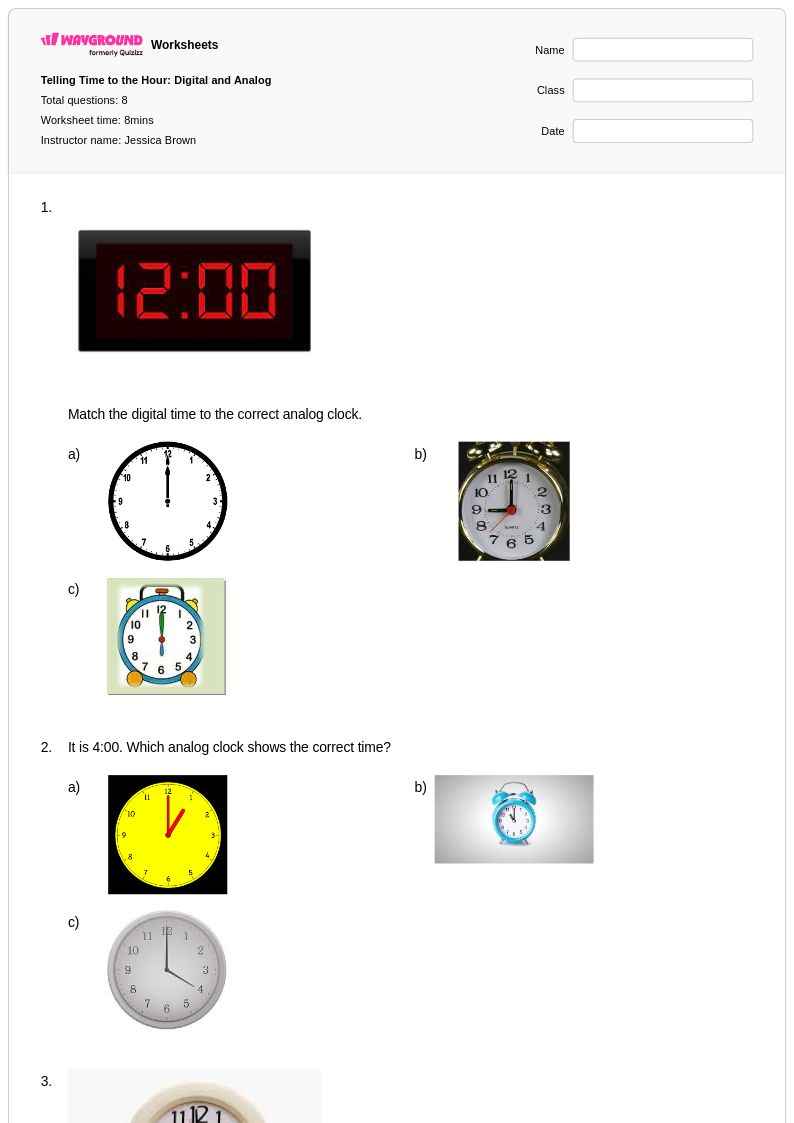
8 Q
1st
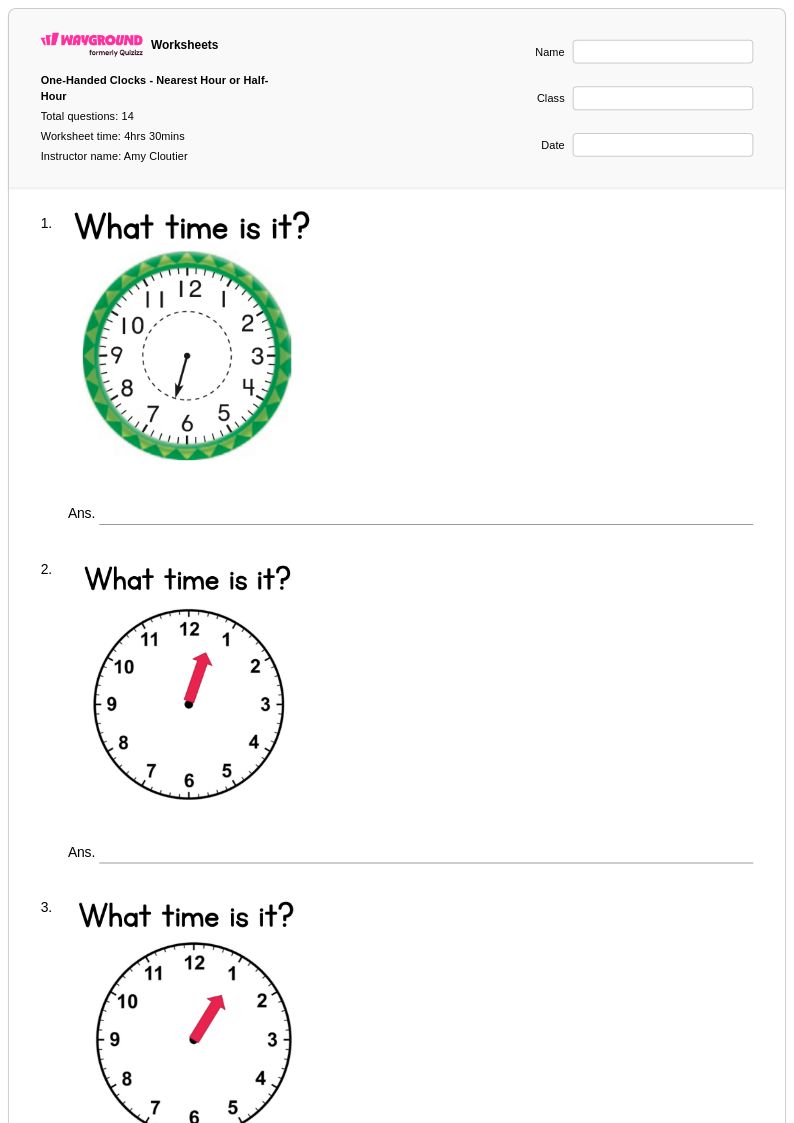
14 Q
1st
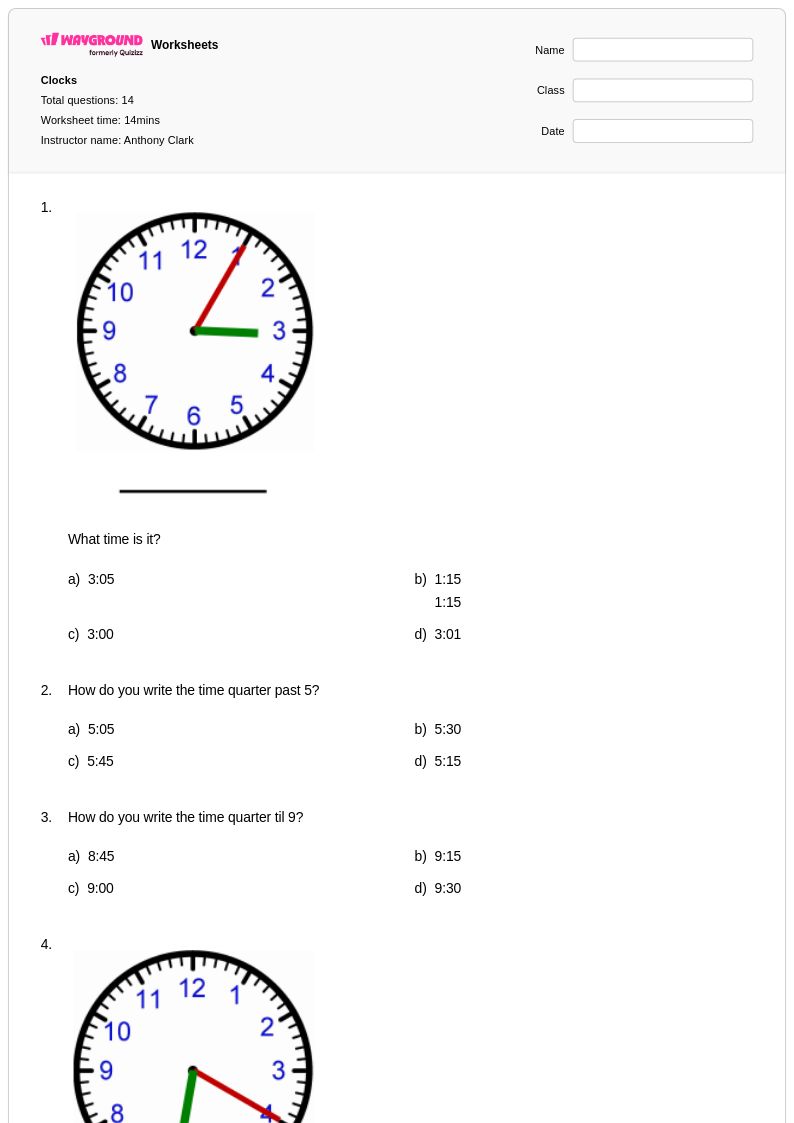
14 Q
1st - Uni
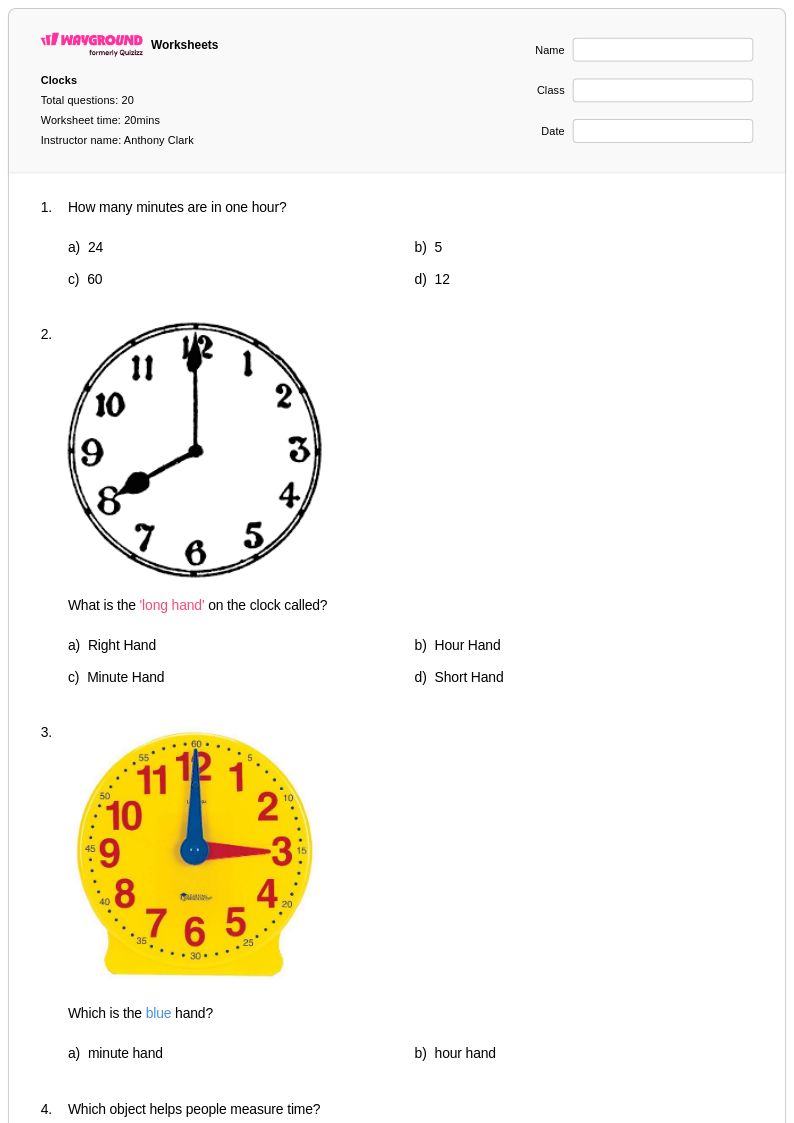
20 Q
1st - Uni
19 Q
1st
14 Q
1st - 2nd
10 Q
1st
10 Q
1st
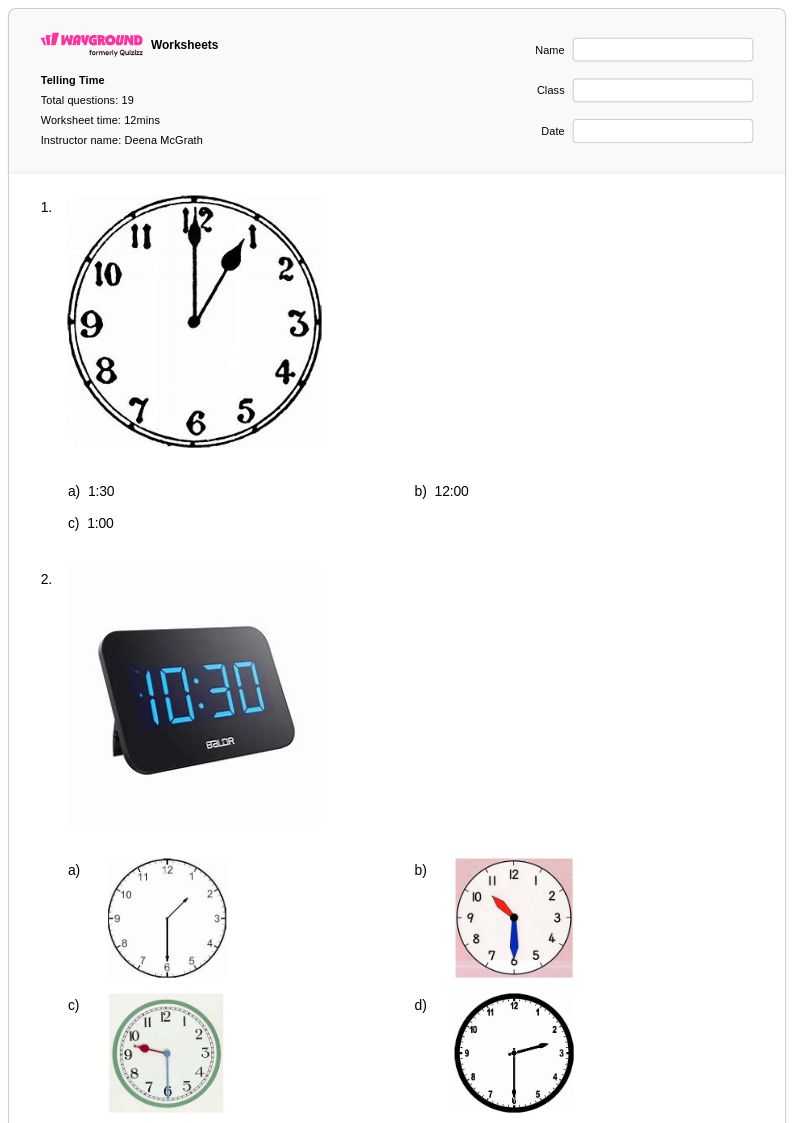
19 Q
1st
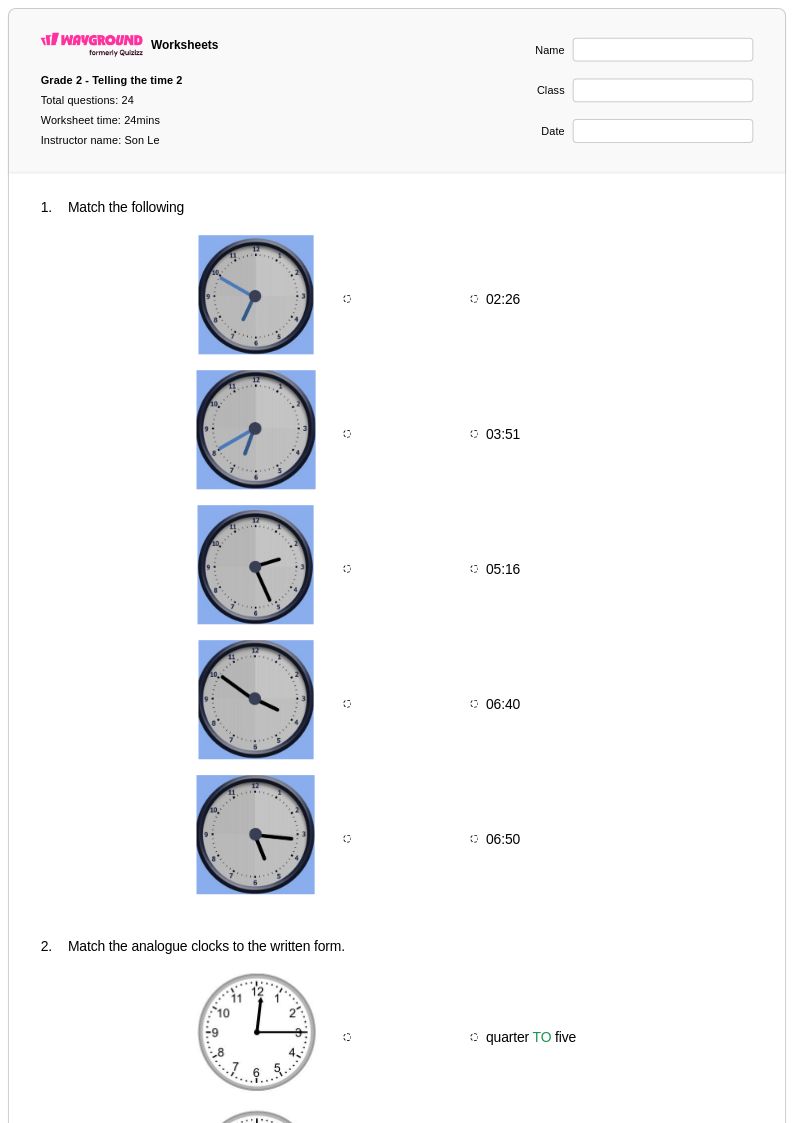
24 Q
1st - 5th
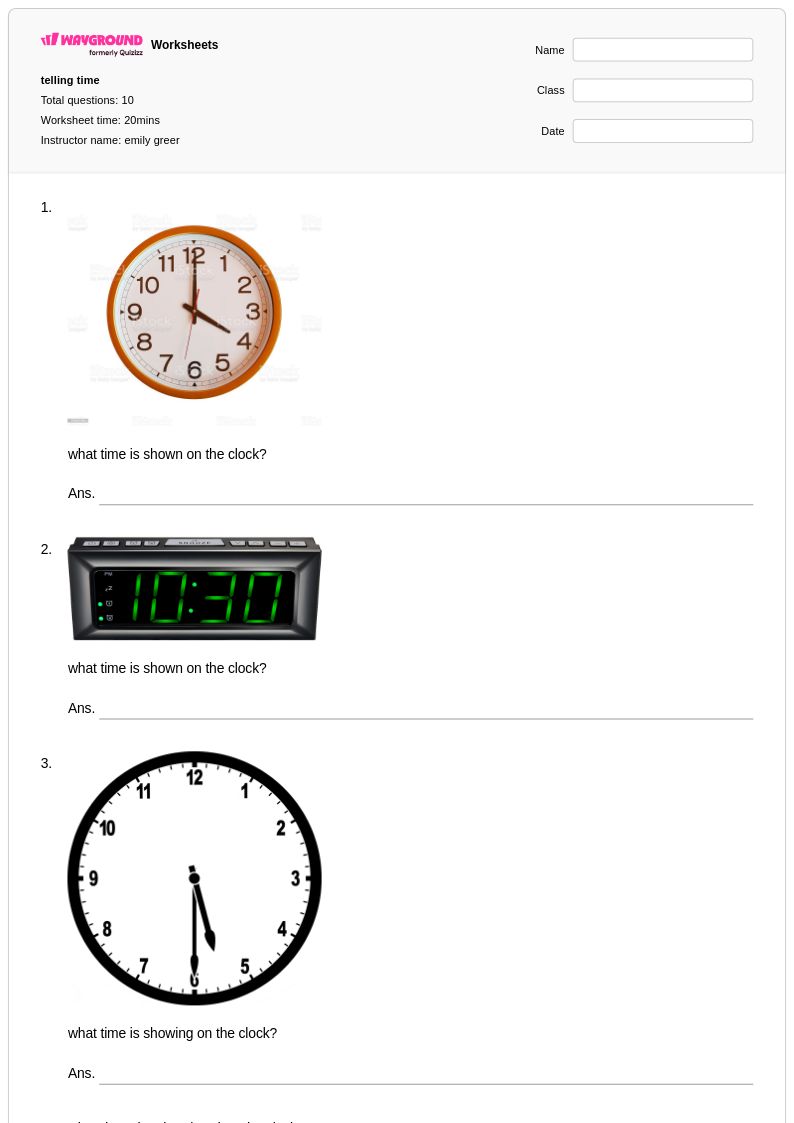
10 Q
1st
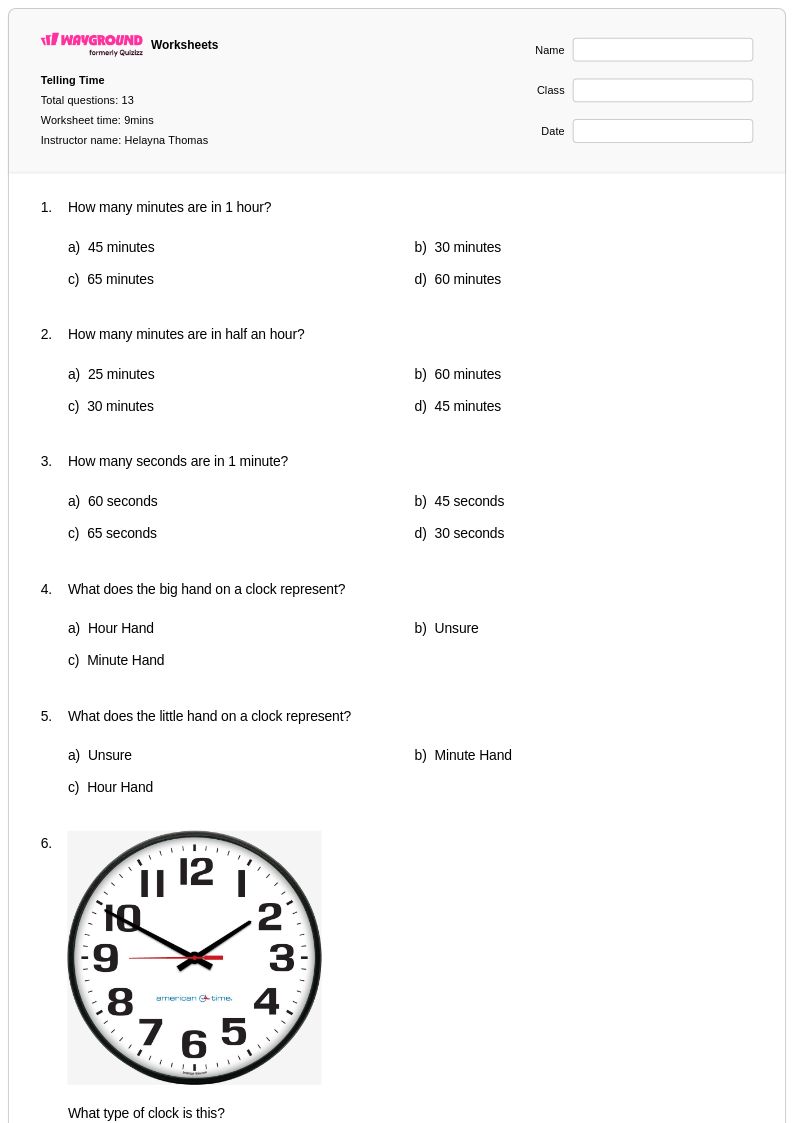
13 Q
1st
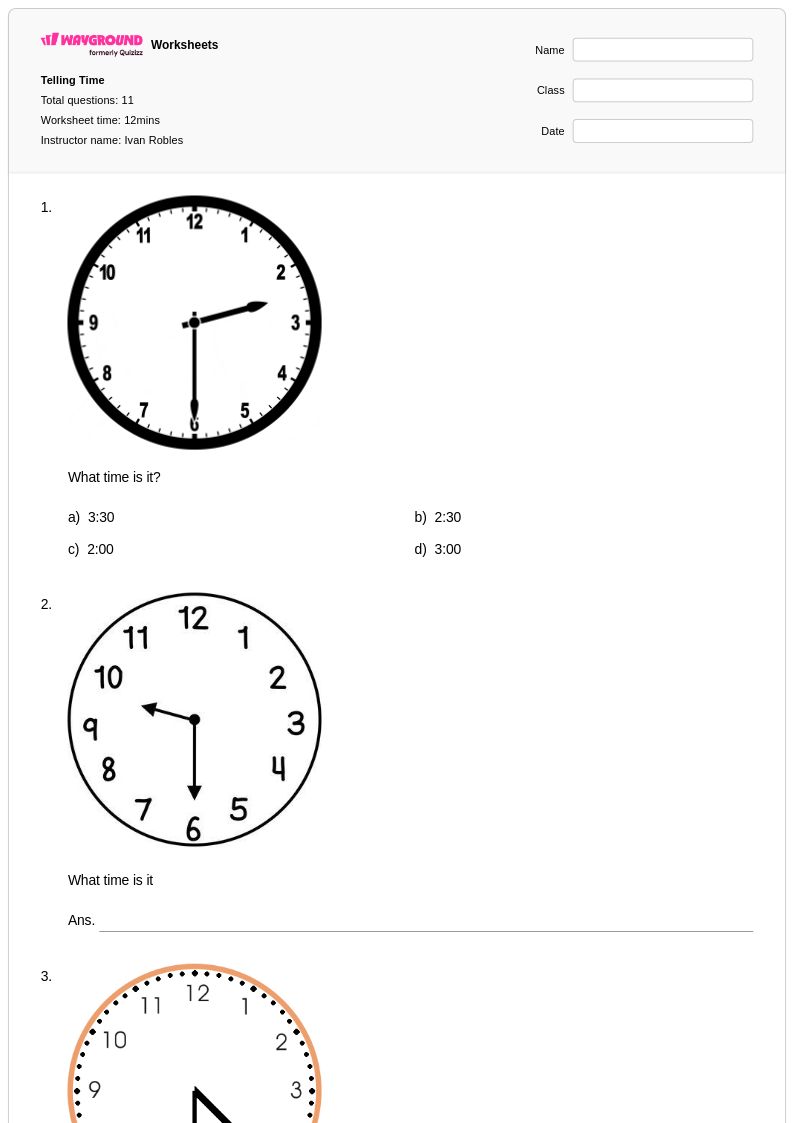
11 Q
1st
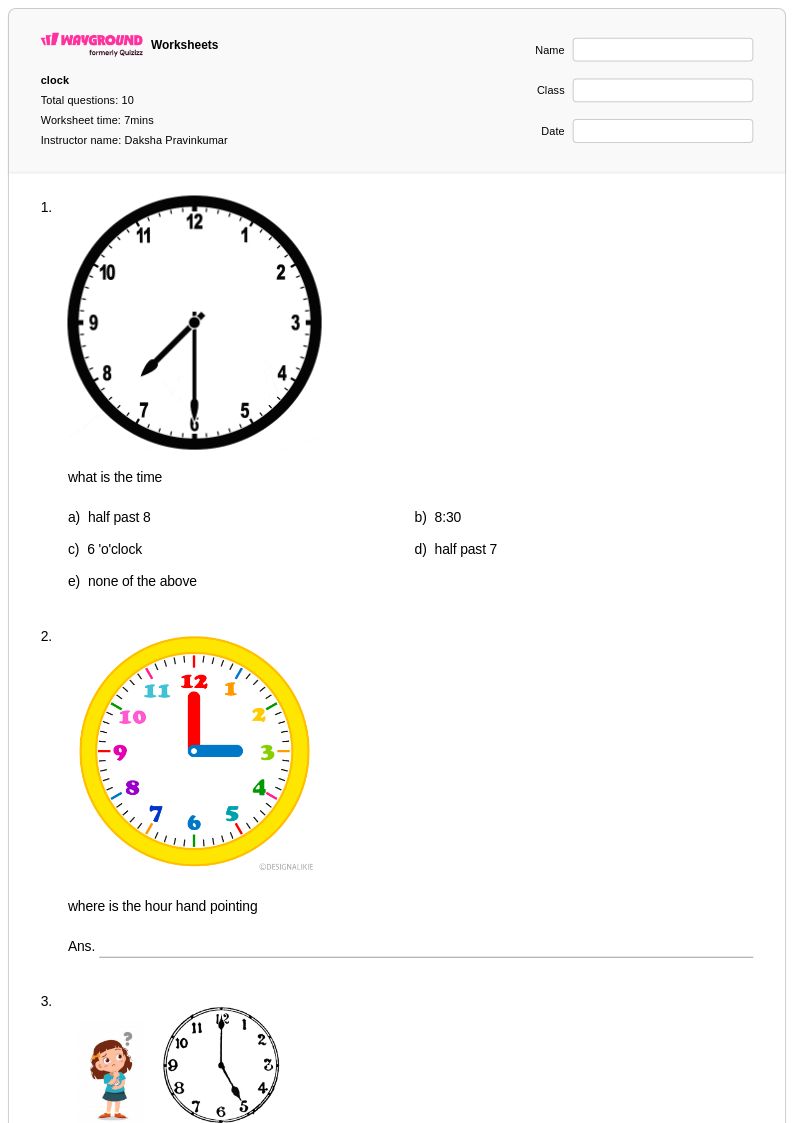
10 Q
1st - 3rd
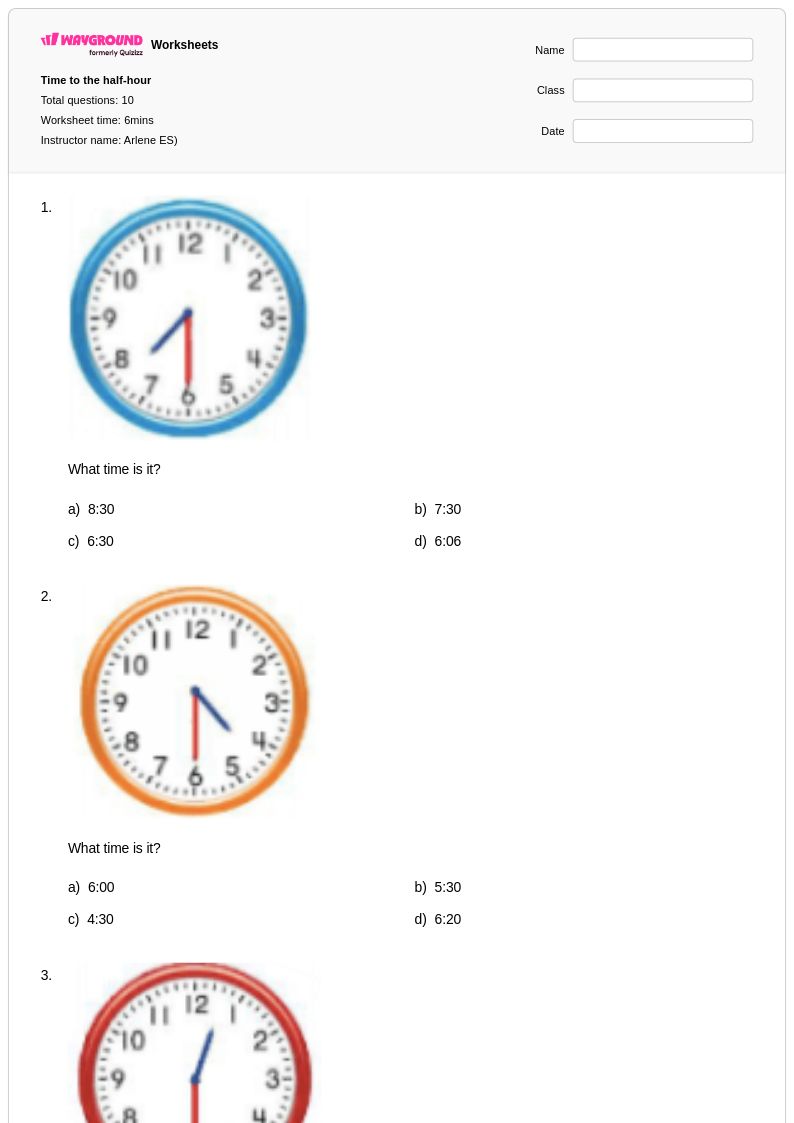
10 Q
1st
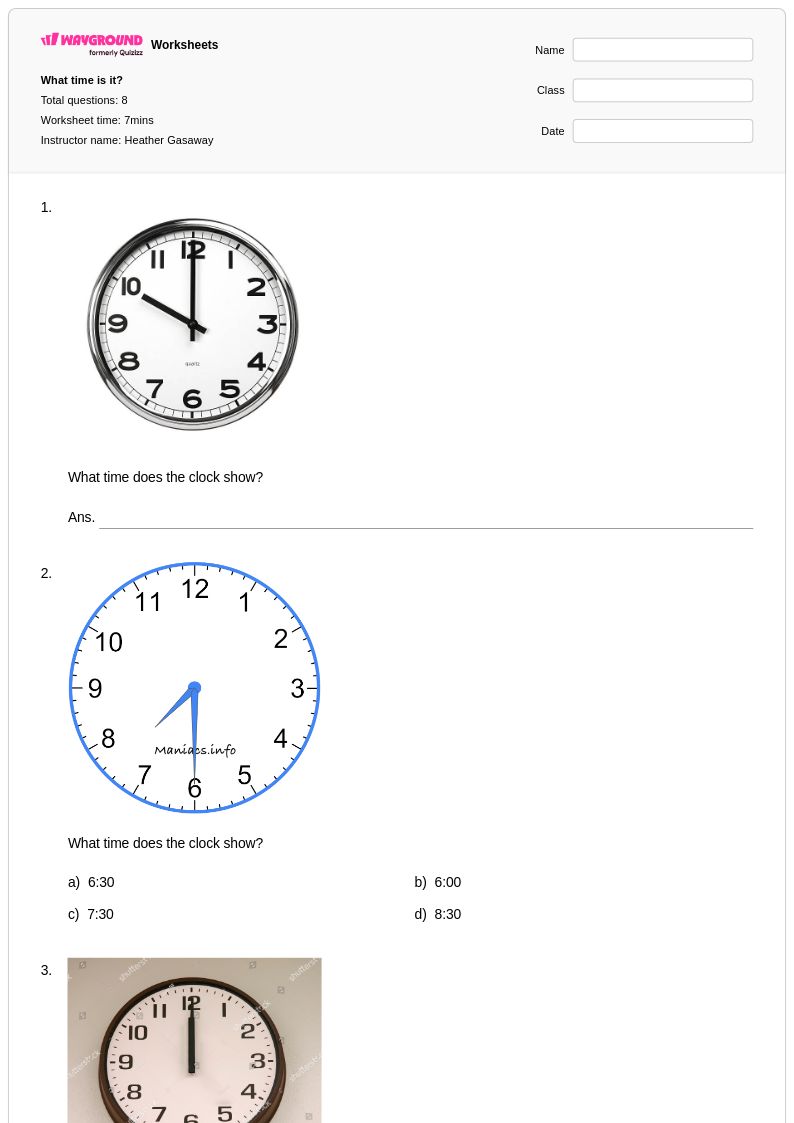
8 Q
1st
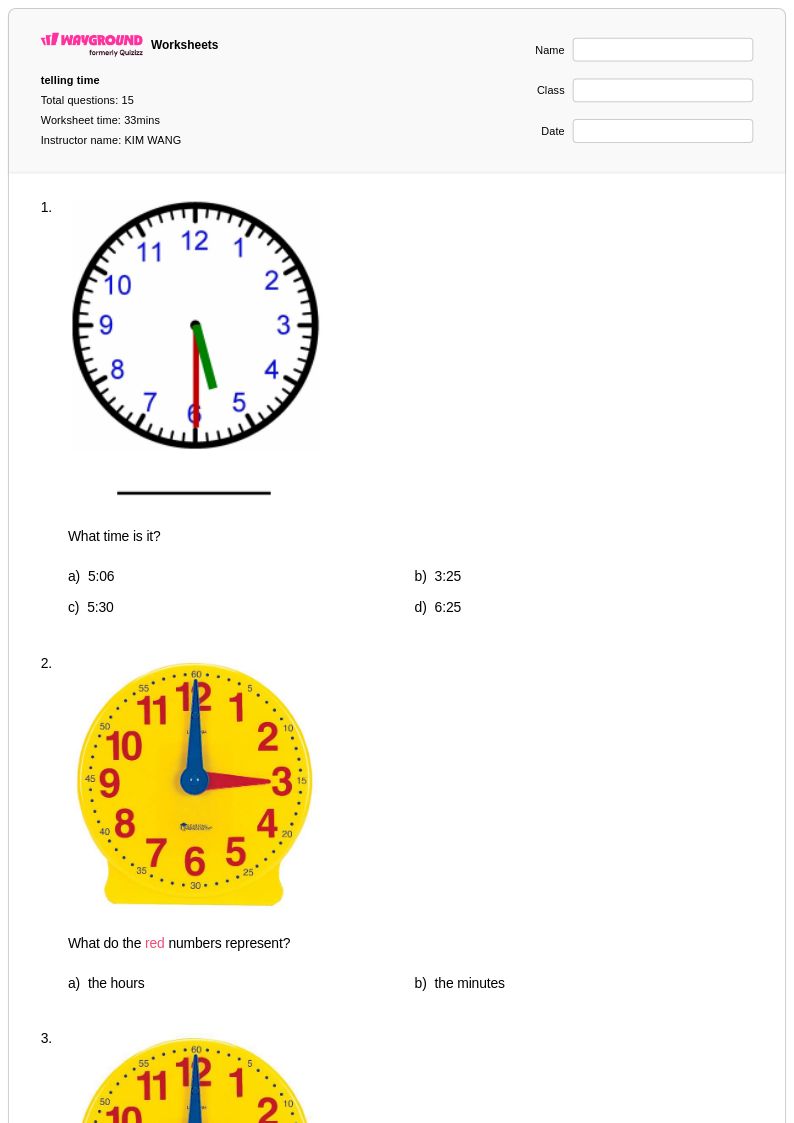
15 Q
KG - 1st
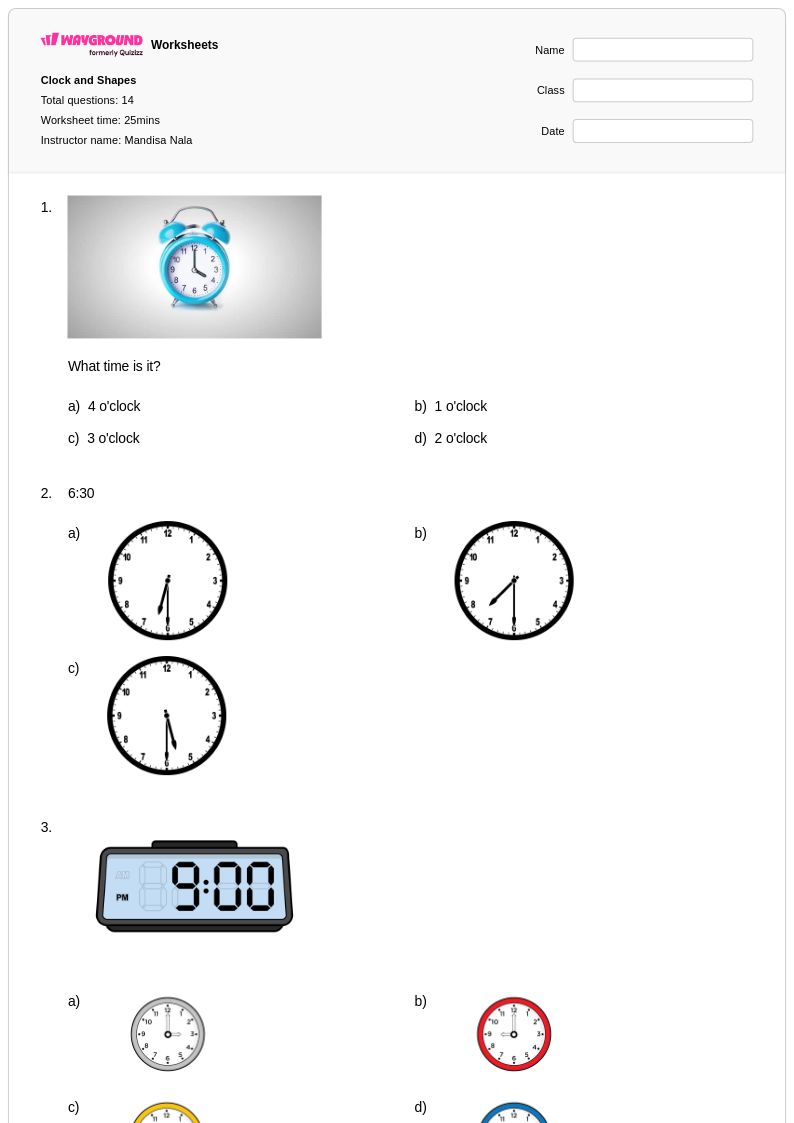
14 Q
1st
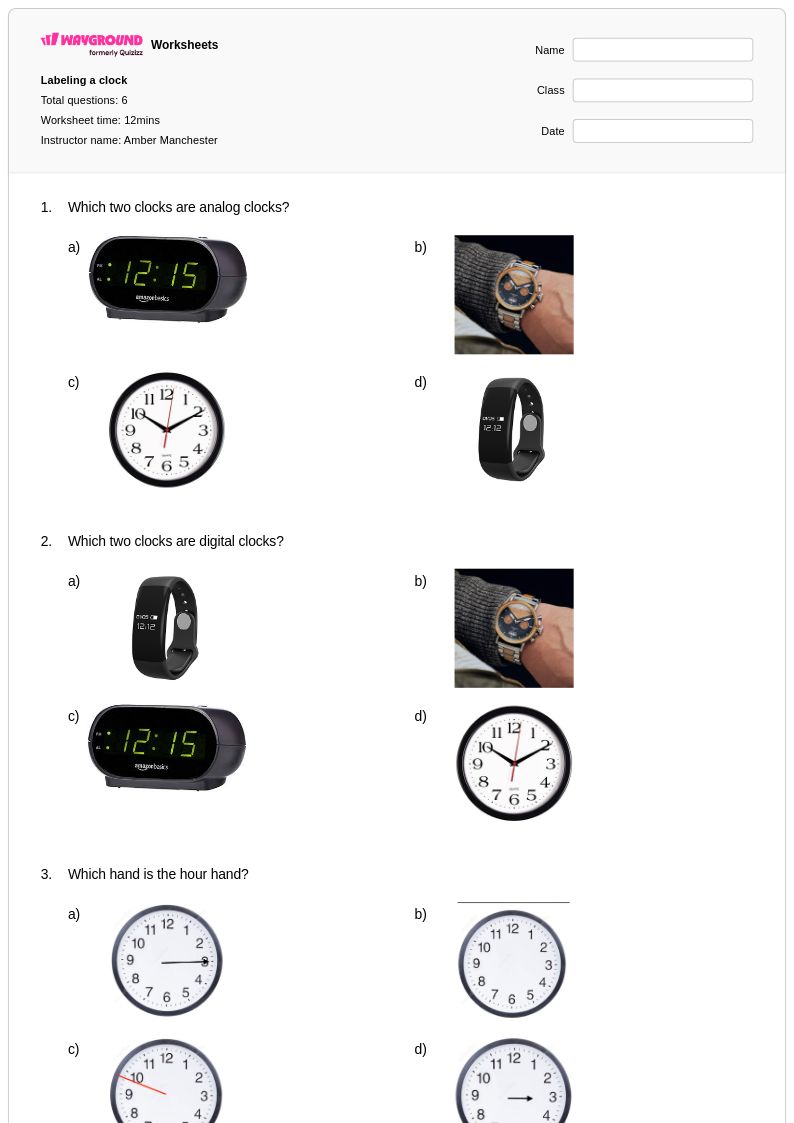
6 Q
1st - 3rd
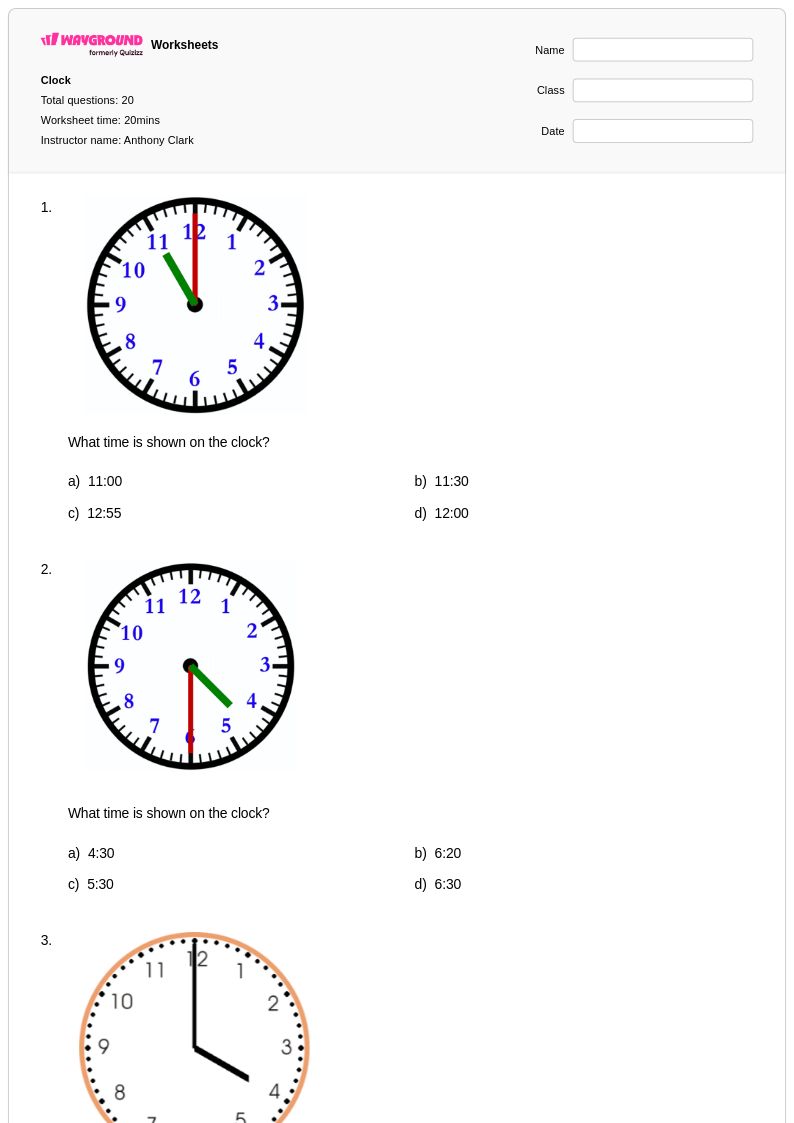
20 Q
1st - Uni
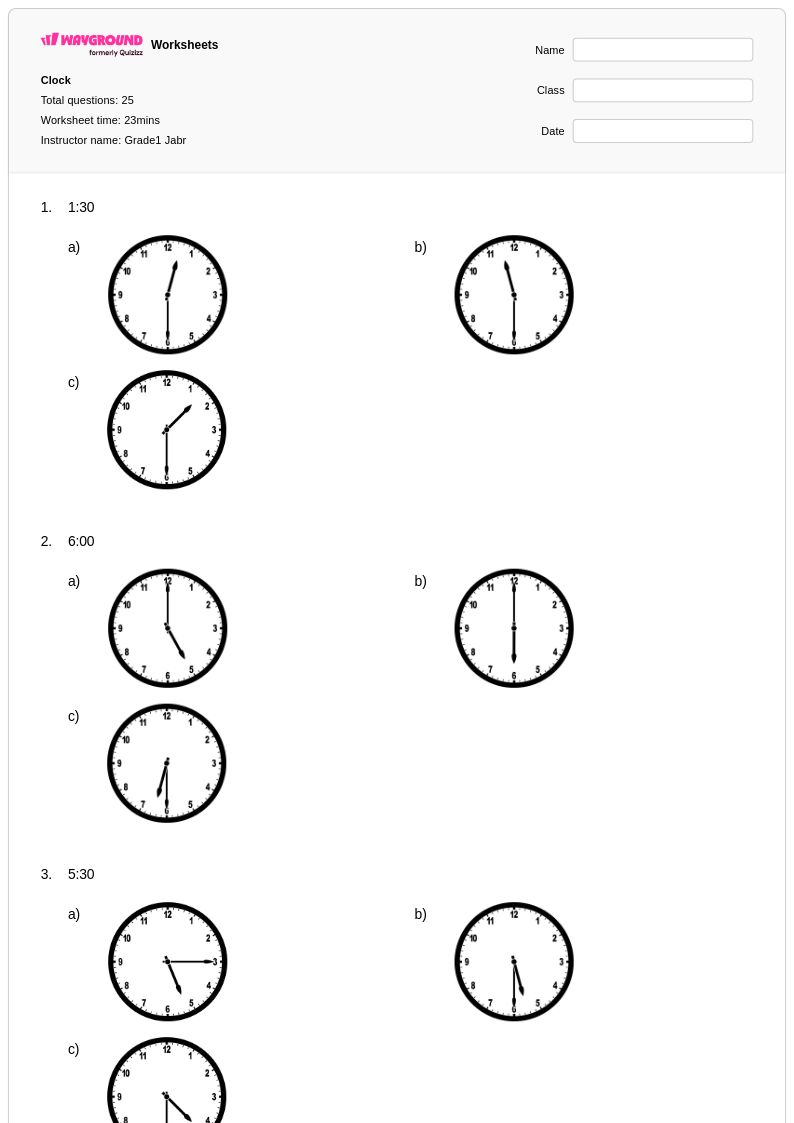
25 Q
1st
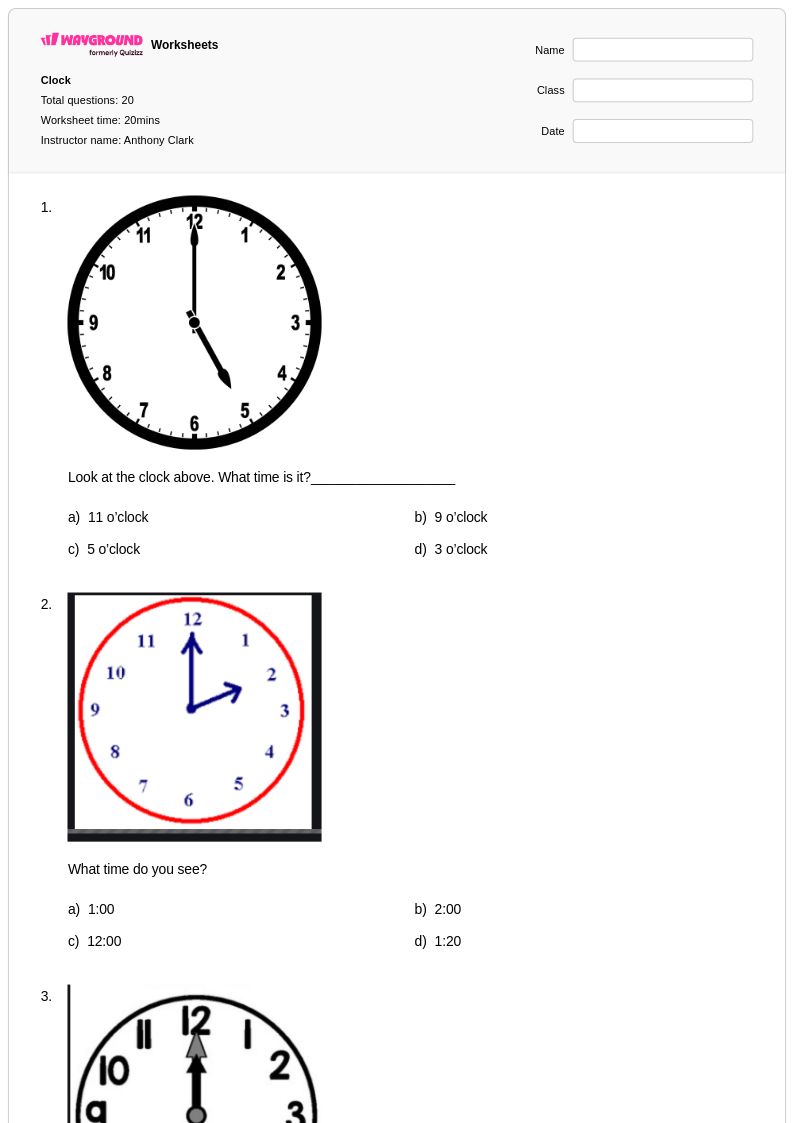
20 Q
1st - Uni
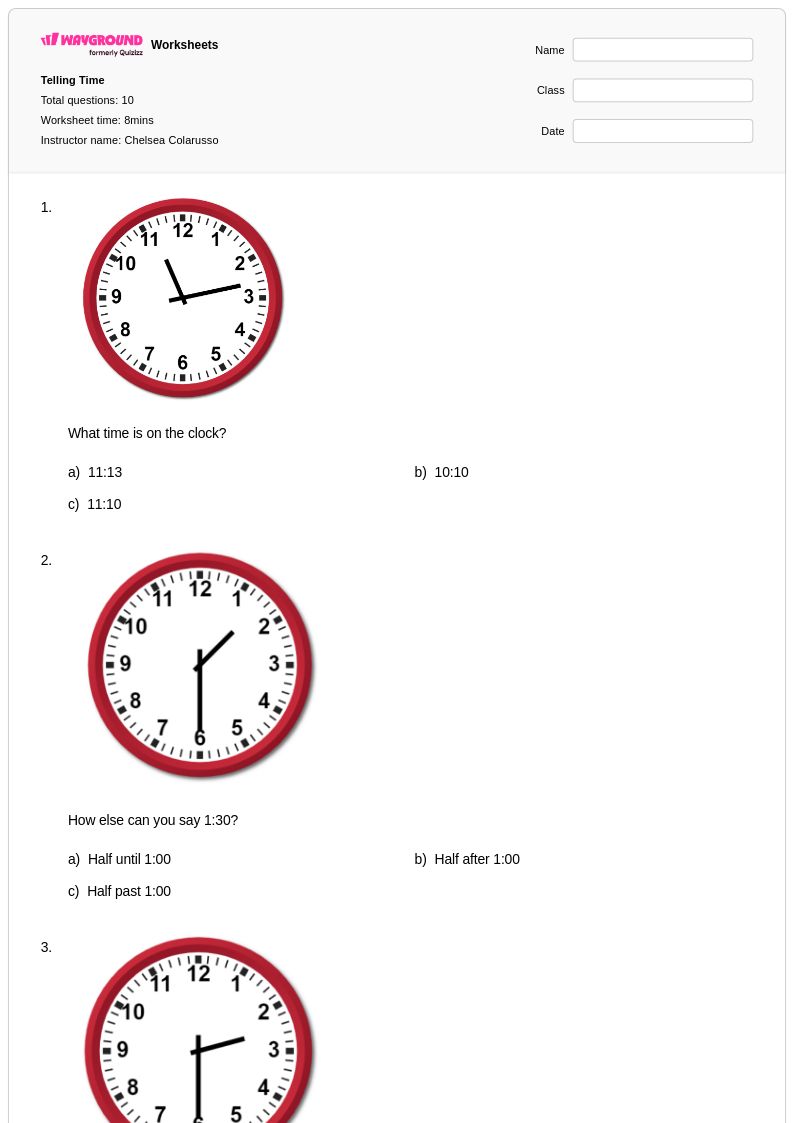
10 Q
KG - 2nd
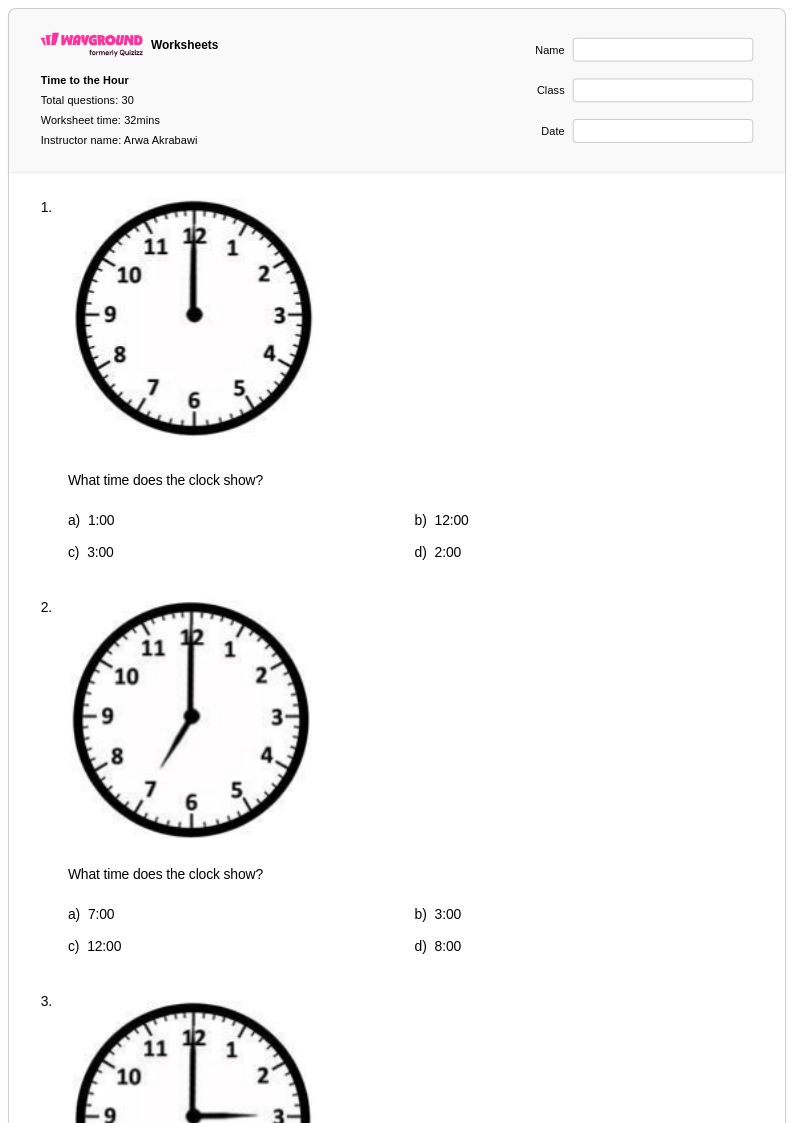
30 Q
1st
Explore Other Subject Worksheets for year 1
Explore printable Analogue Clocks worksheets for Year 1
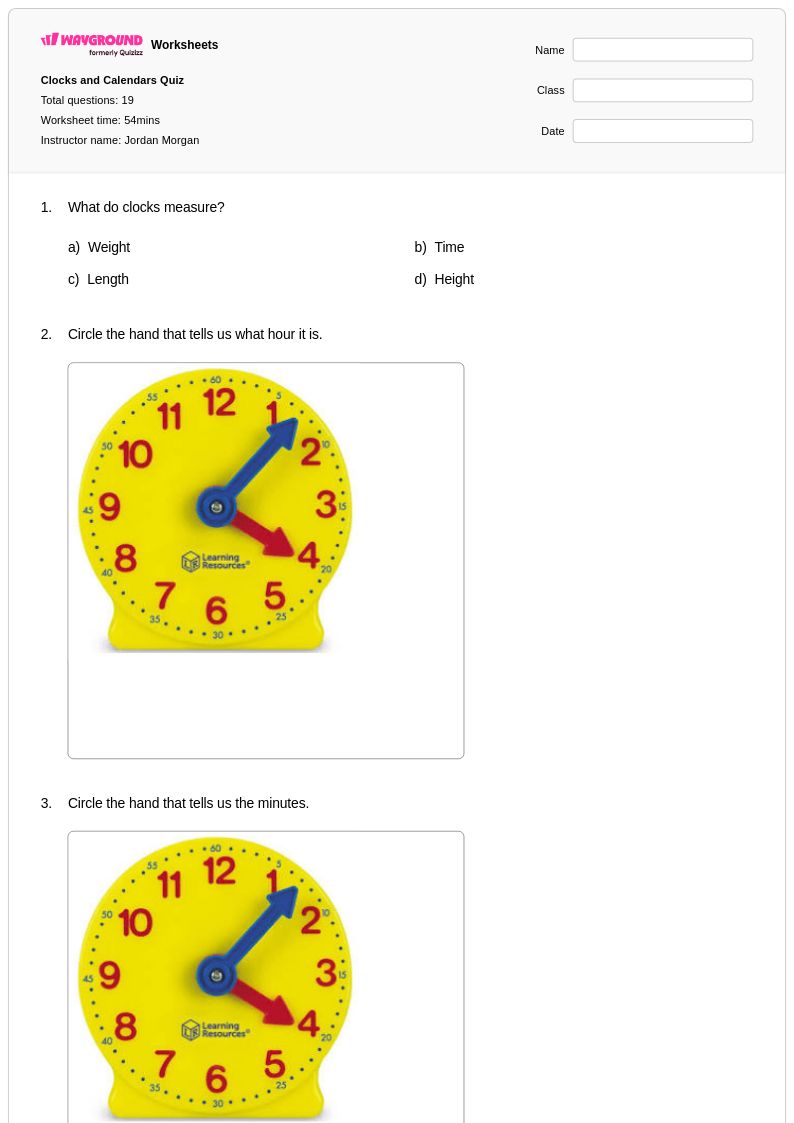
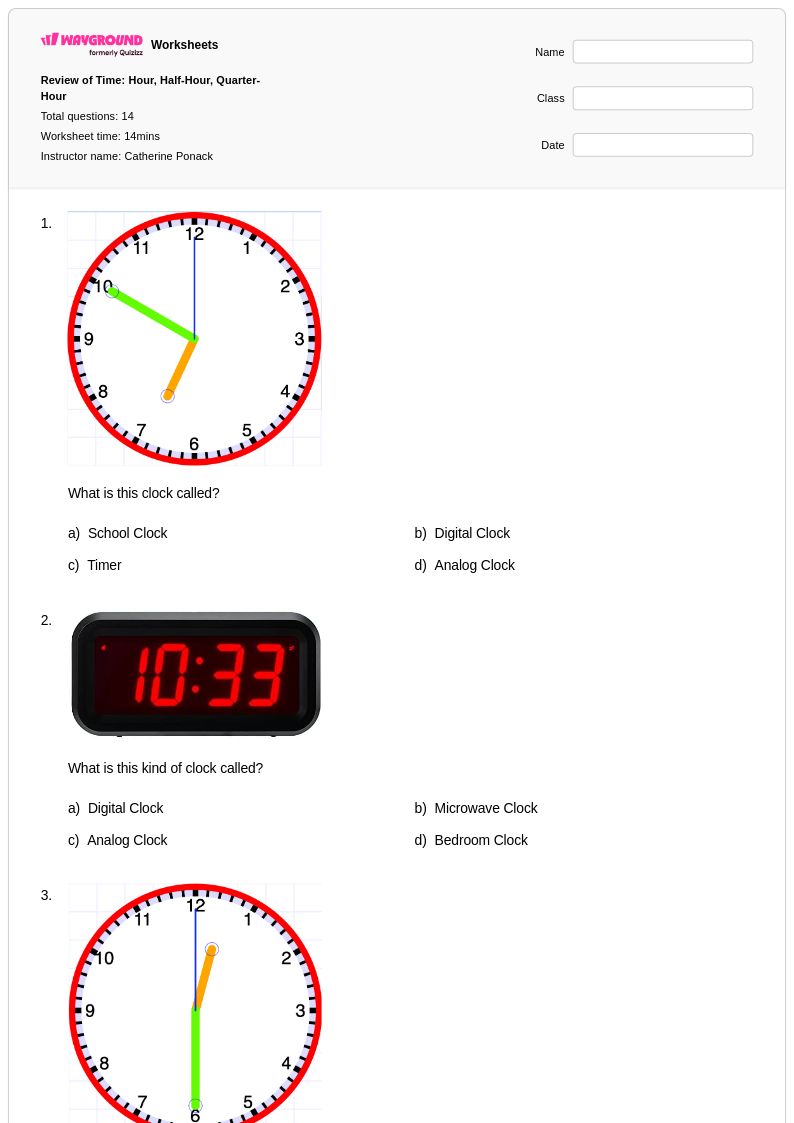
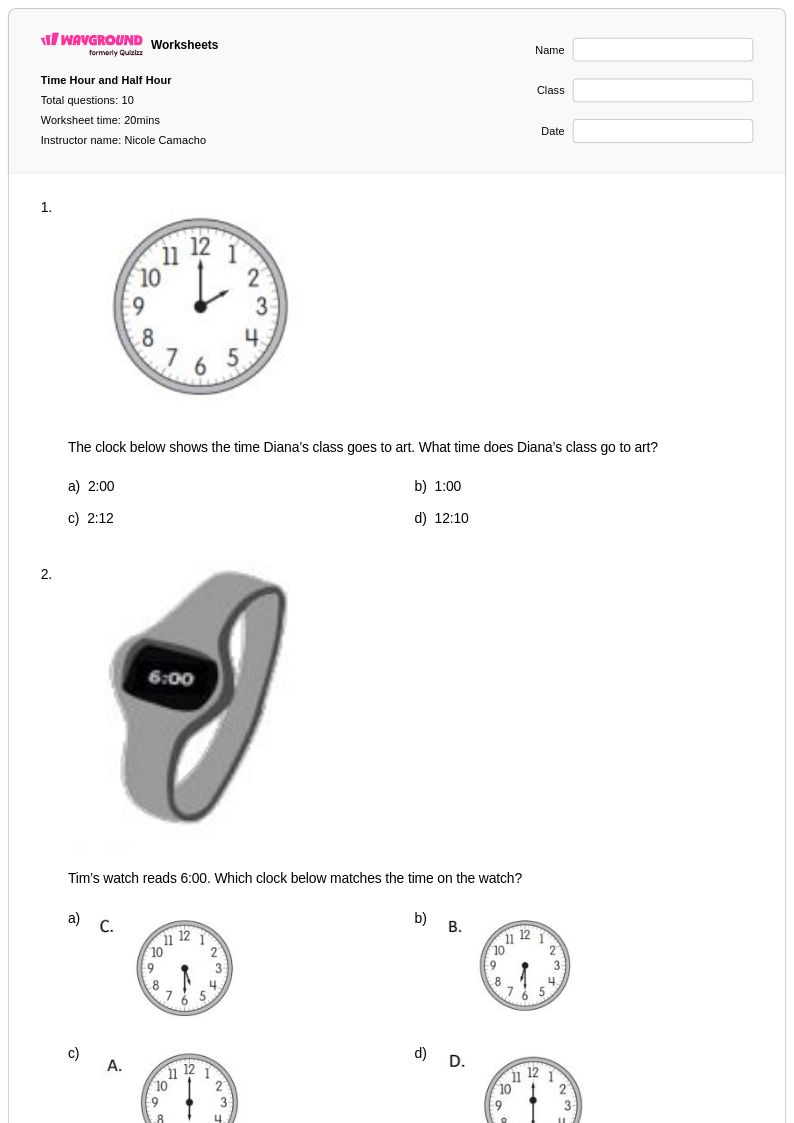
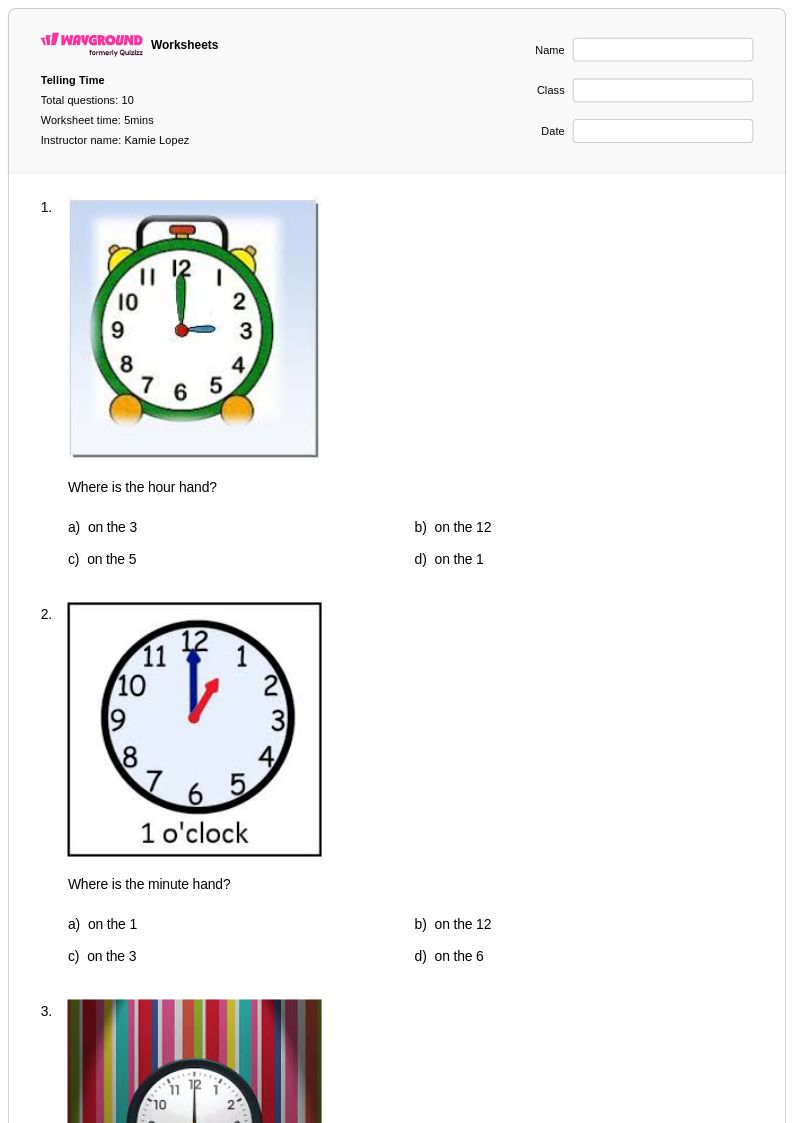
Analogue clocks present a fundamental challenge for Year 1 students as they begin developing essential time-telling skills that will serve them throughout their academic journey. Wayground's comprehensive collection of analogue clock worksheets provides young learners with structured practice opportunities to master reading clock faces, identifying hour and minute hands, and understanding basic time concepts. These carefully designed printables focus on building foundational skills such as recognizing numbers on a clock face, understanding the movement of clock hands, and connecting visual representations to time concepts. Each worksheet includes clear answer keys that enable both independent learning and guided instruction, while the free pdf format ensures accessibility for classroom use and home practice. The practice problems progress systematically from simple hour recognition to more complex time-reading exercises, supporting students as they develop confidence with this crucial mathematical concept.
Wayground's extensive platform, formerly known as Quizizz, empowers teachers with millions of educator-created resources specifically designed to support Year 1 analogue clock instruction across diverse learning environments. The platform's robust search and filtering capabilities allow educators to quickly locate worksheets that align with specific curriculum standards and match their students' developmental needs. Teachers can easily differentiate instruction by selecting from various difficulty levels and customizing materials to address individual learning gaps or provide enrichment opportunities. The flexible format options, including both printable and digital pdf versions, accommodate different classroom setups and teaching preferences while supporting seamless integration into lesson planning. These comprehensive tools enable educators to provide targeted remediation for struggling learners, offer additional skill practice for developing students, and create enriching challenges that deepen understanding of time concepts throughout their mathematics curriculum.
FAQs
How do I teach analogue clocks to first graders?
What exercises help Grade 1 students practice reading analogue clocks?
What mistakes do first graders make when telling time?
How can I assign these Grade 1 analogue clock worksheets?
Are Grade 1 analogue clock worksheets aligned with Common Core?
How can I support first graders who struggle with analogue clocks?
What analogue clock skills should Grade 1 students learn?