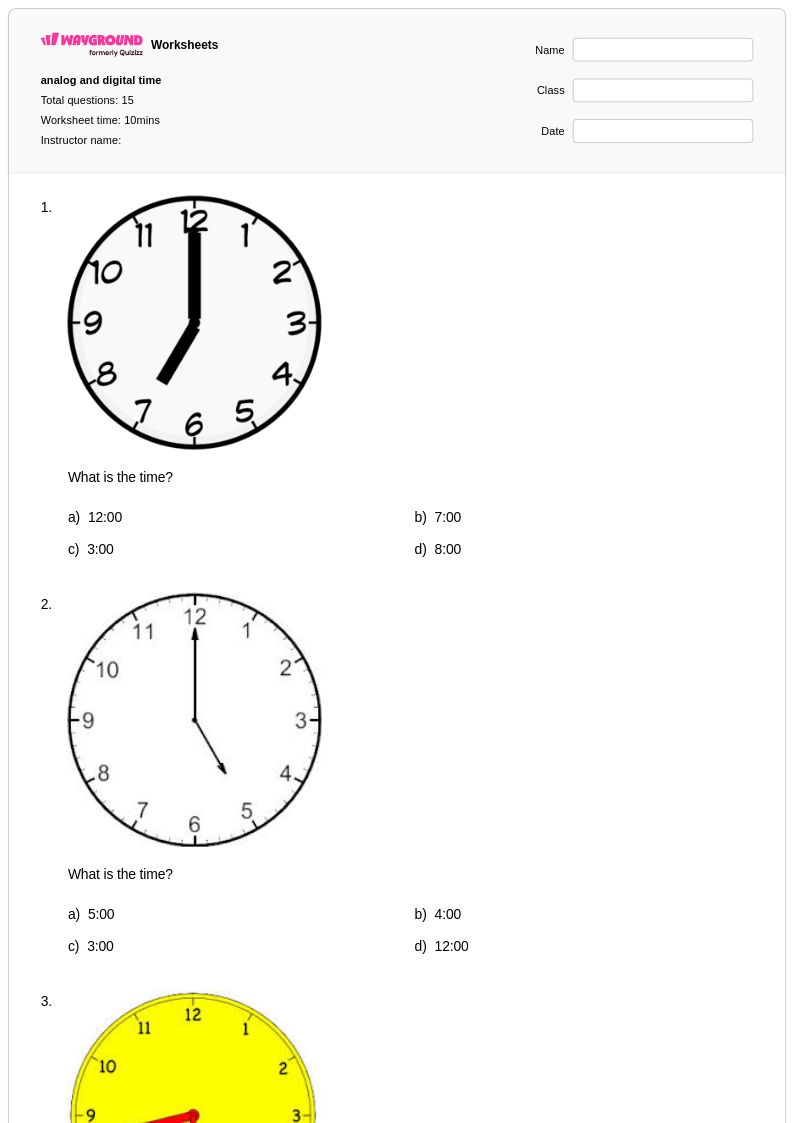
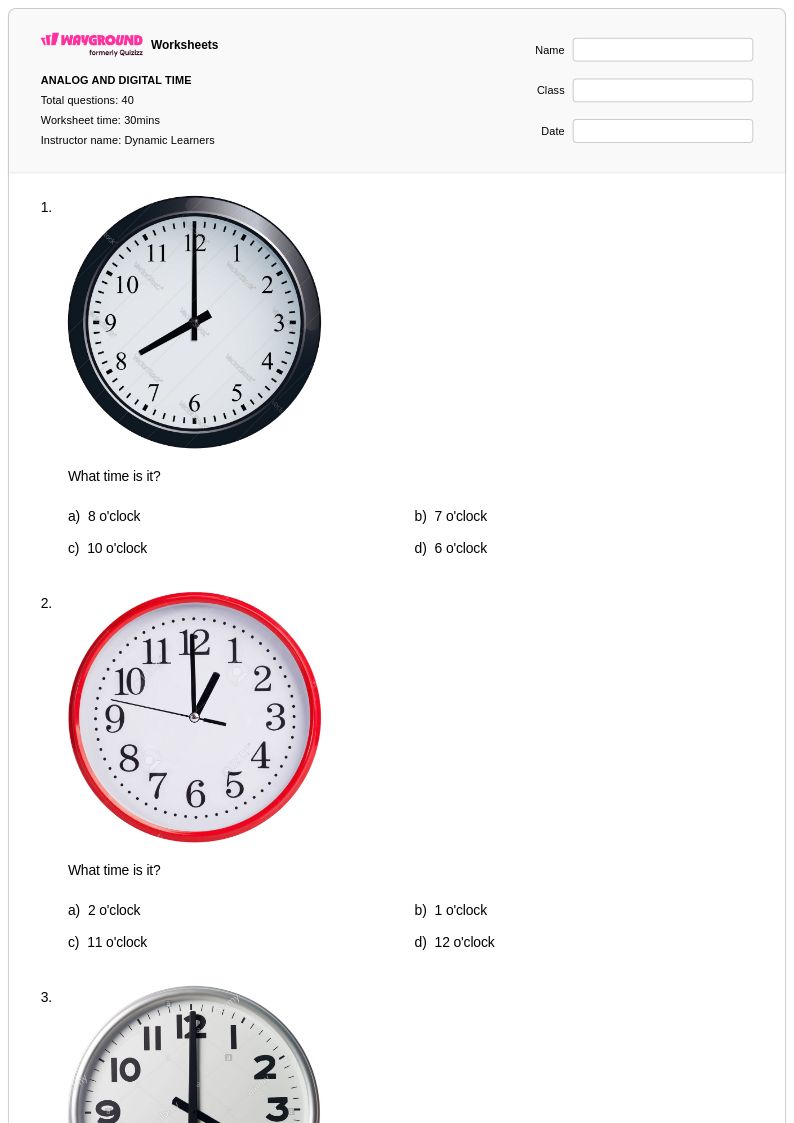
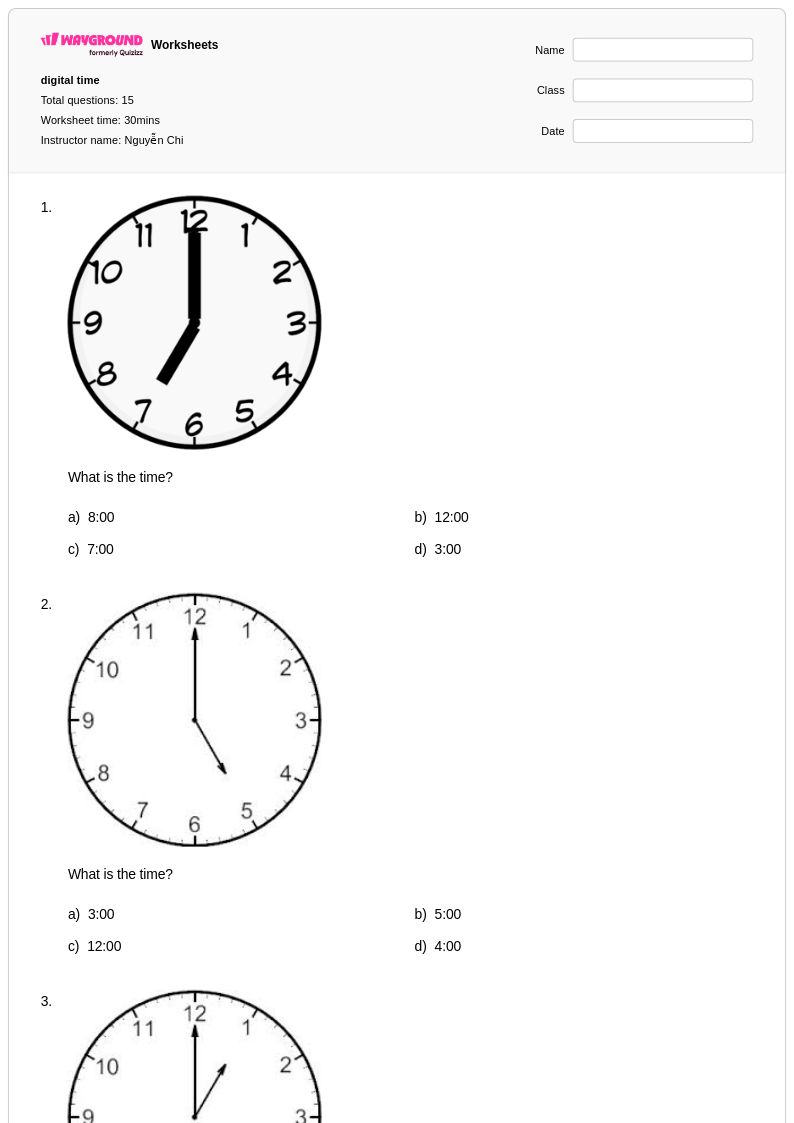
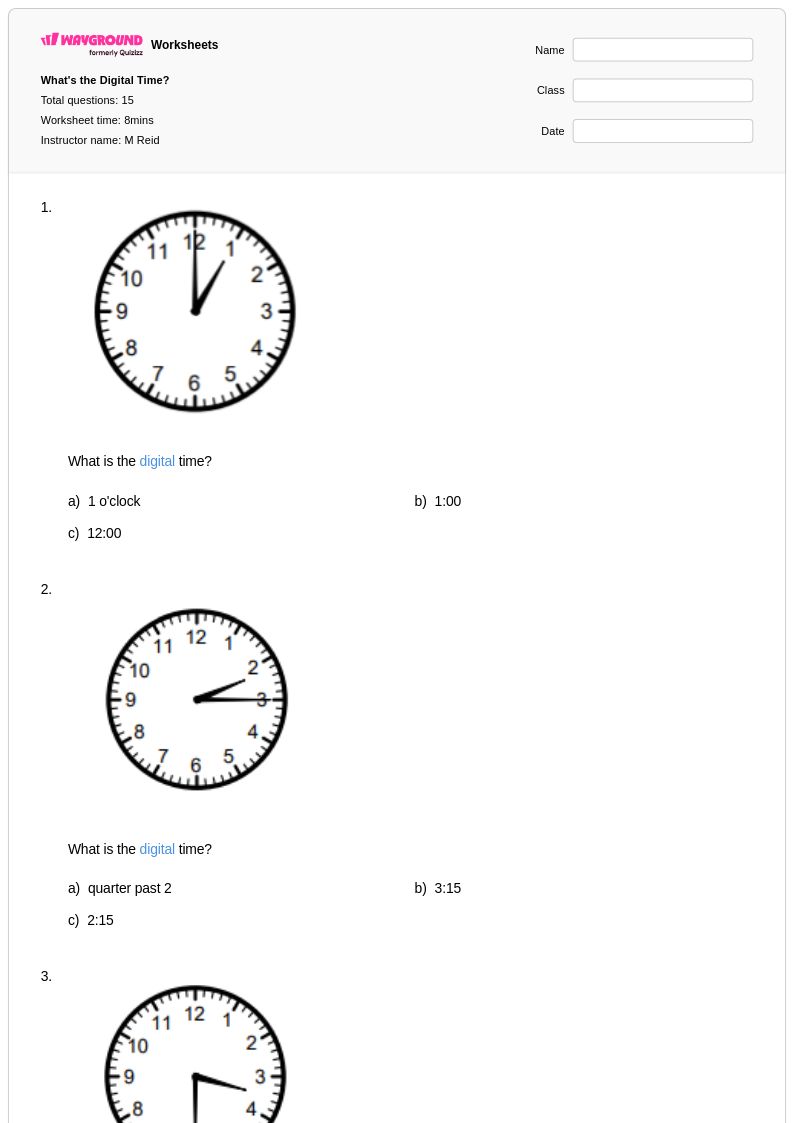
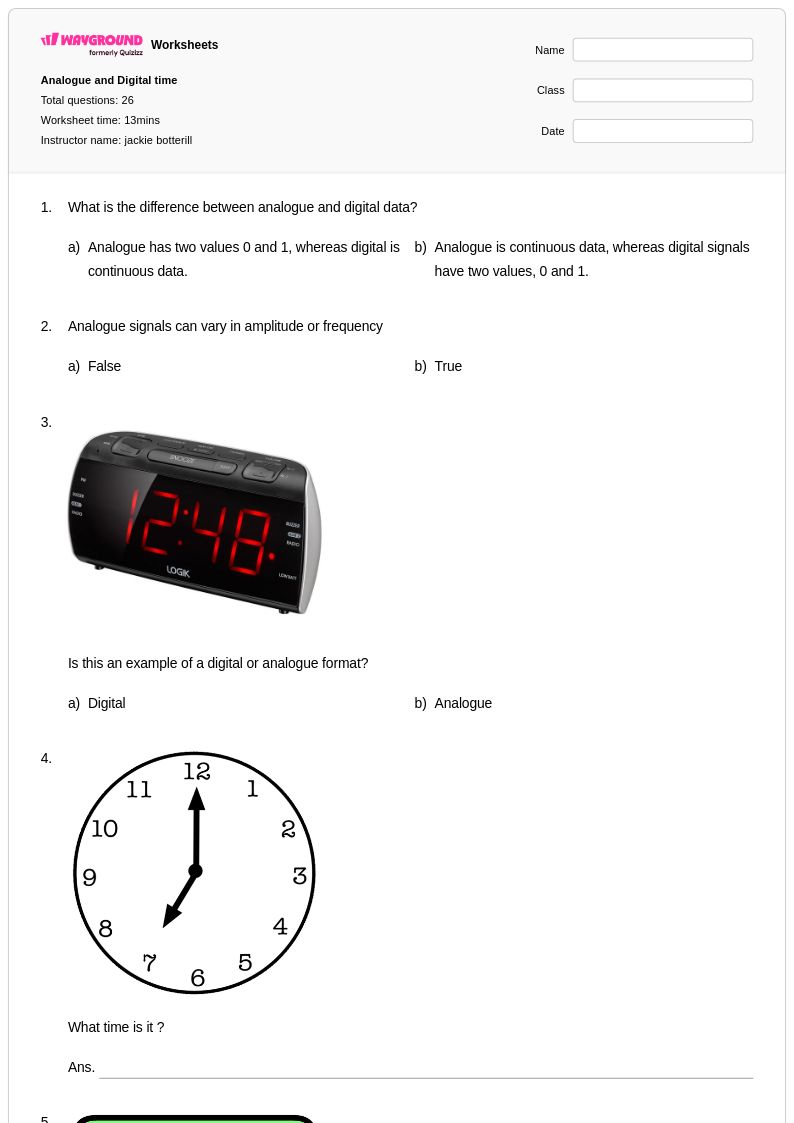
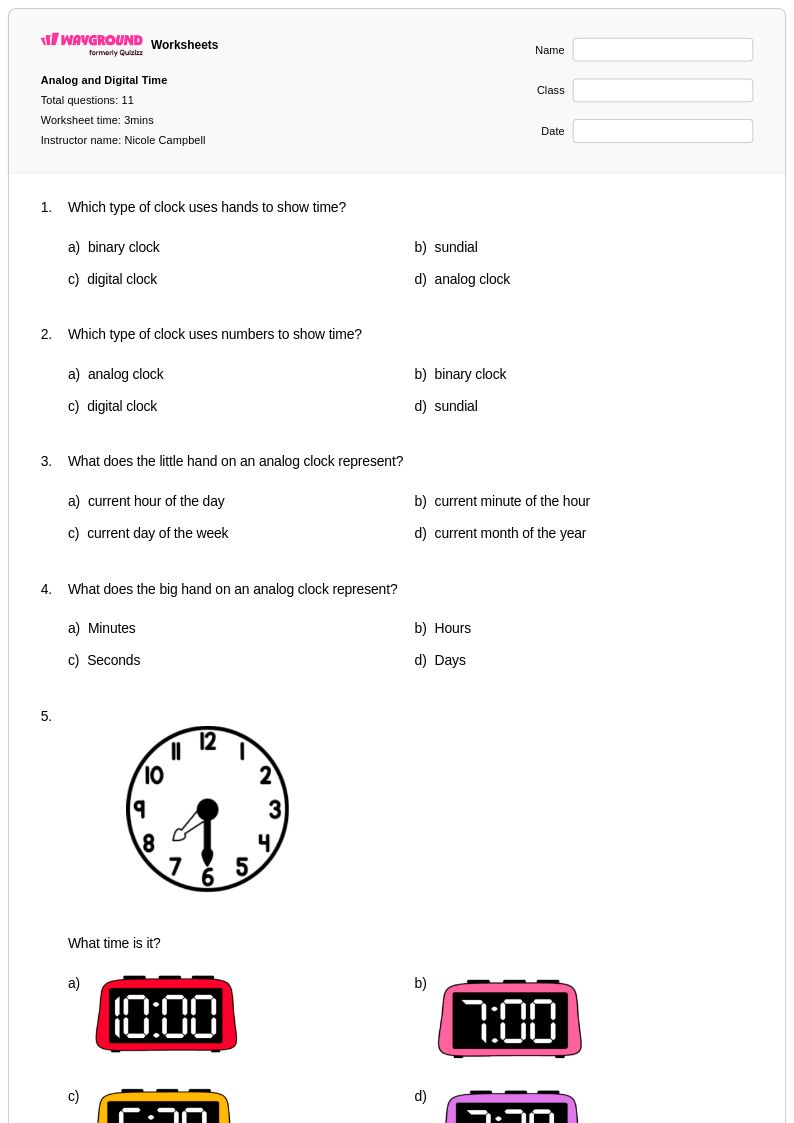
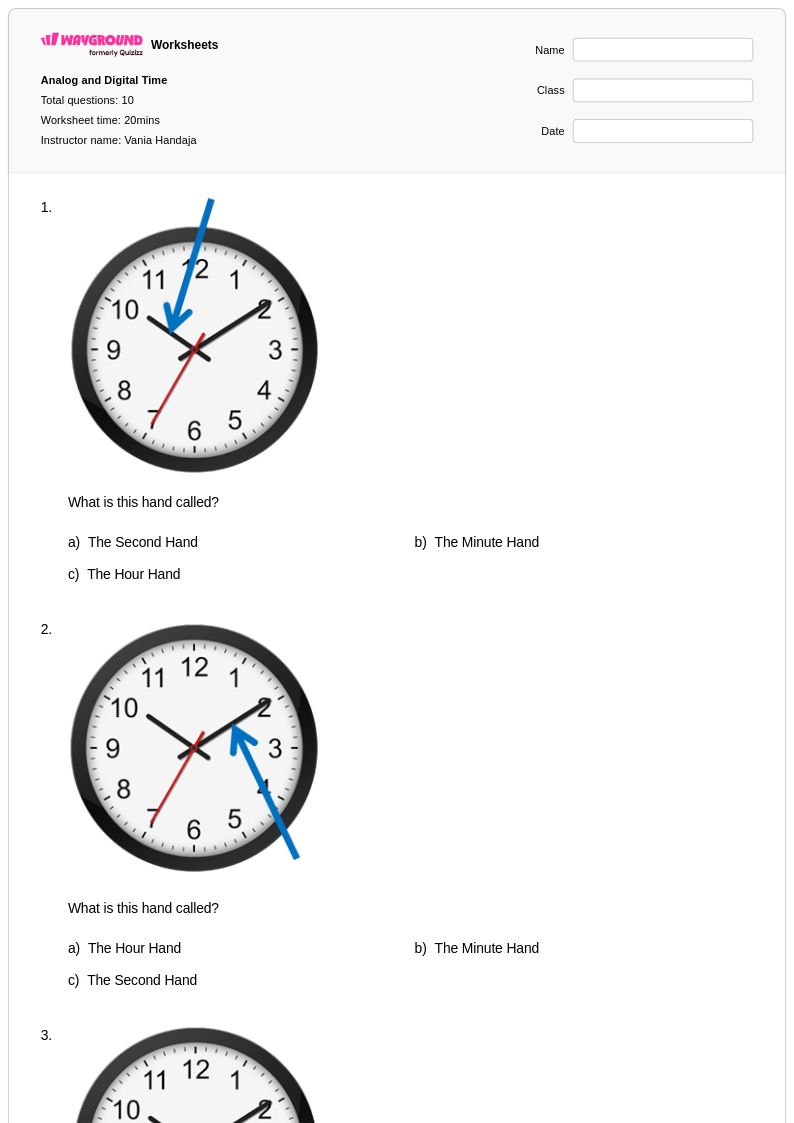
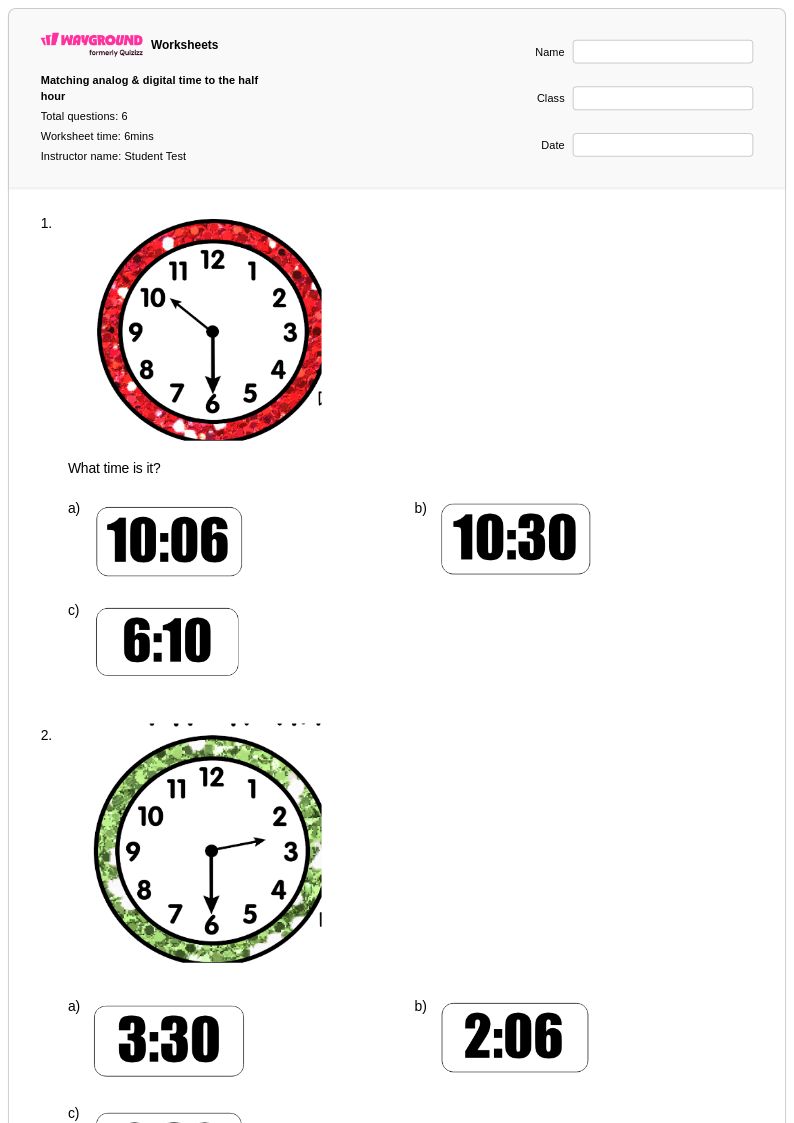
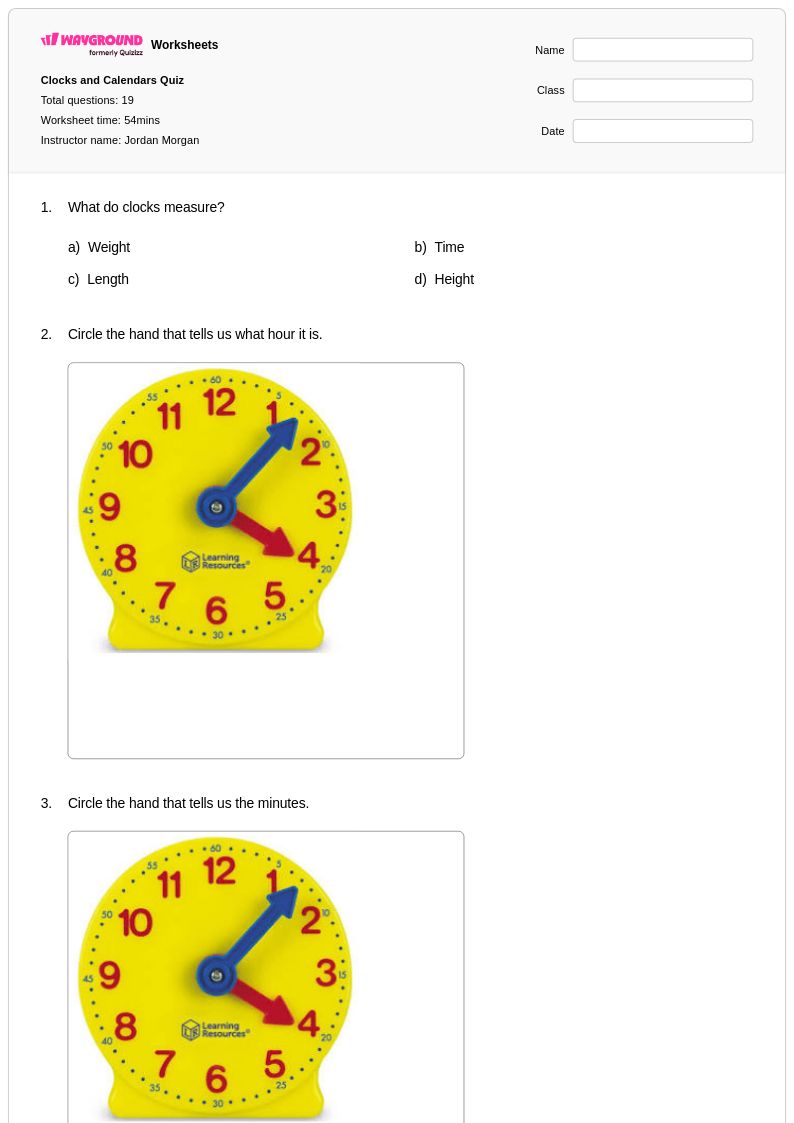
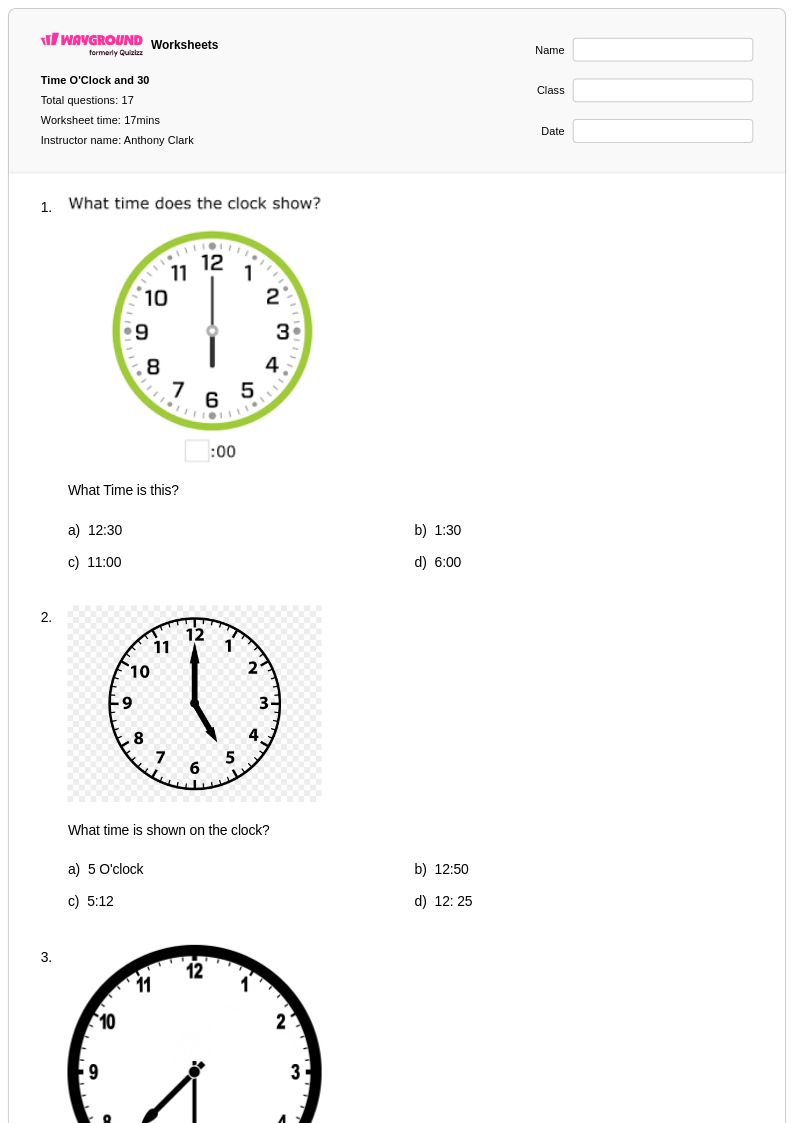
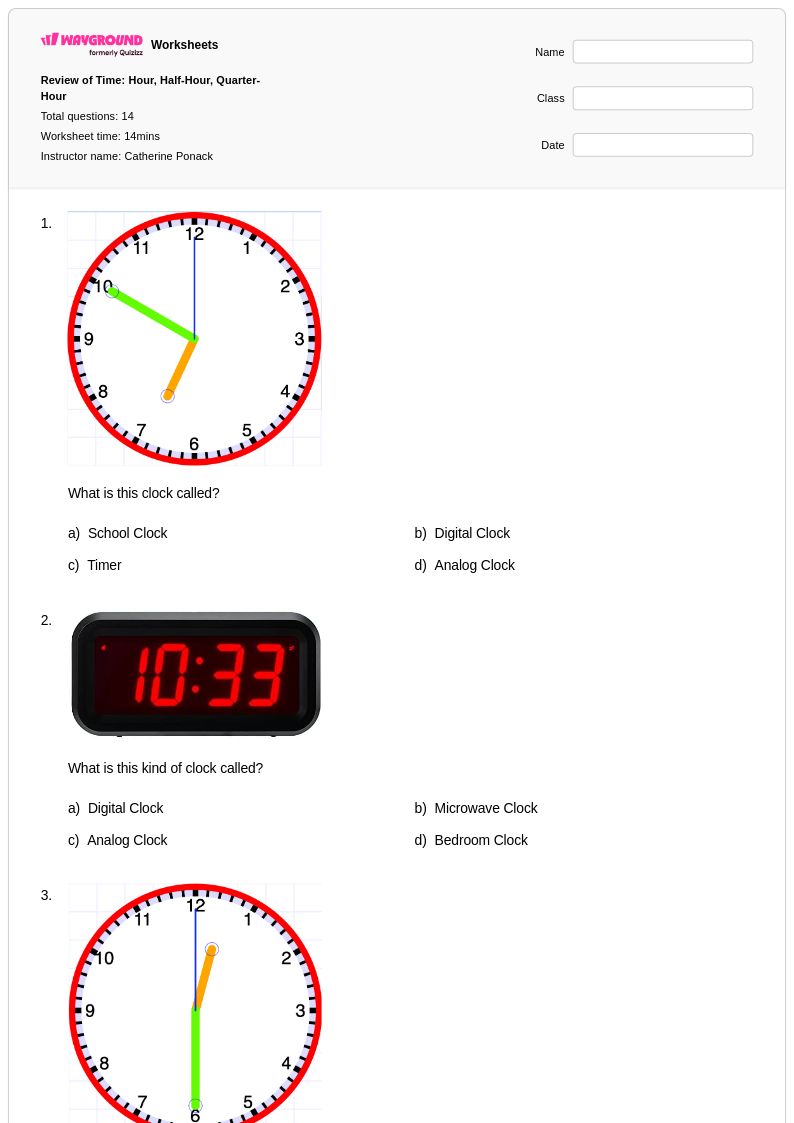
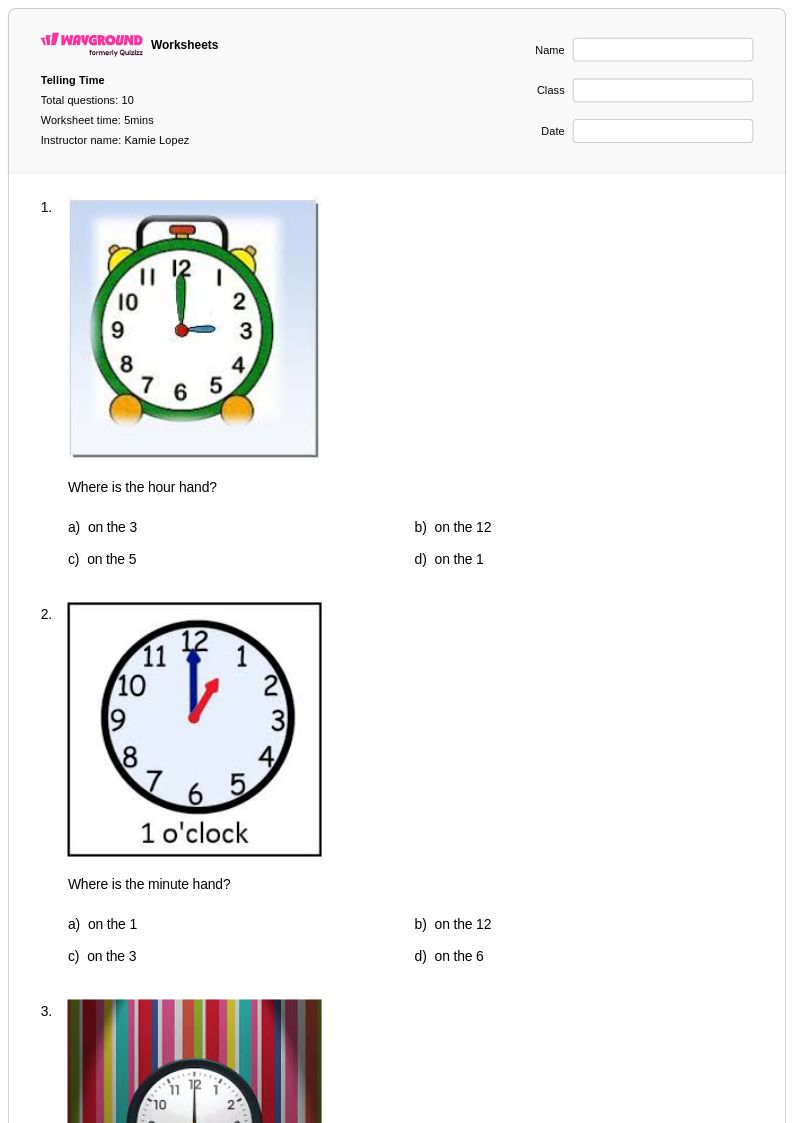
Year 1 digital time worksheets from Wayground help students practice reading clocks and telling time with engaging printables, free practice problems, and comprehensive answer keys in PDF format.
Explore printable Digital Time worksheets for Year 1
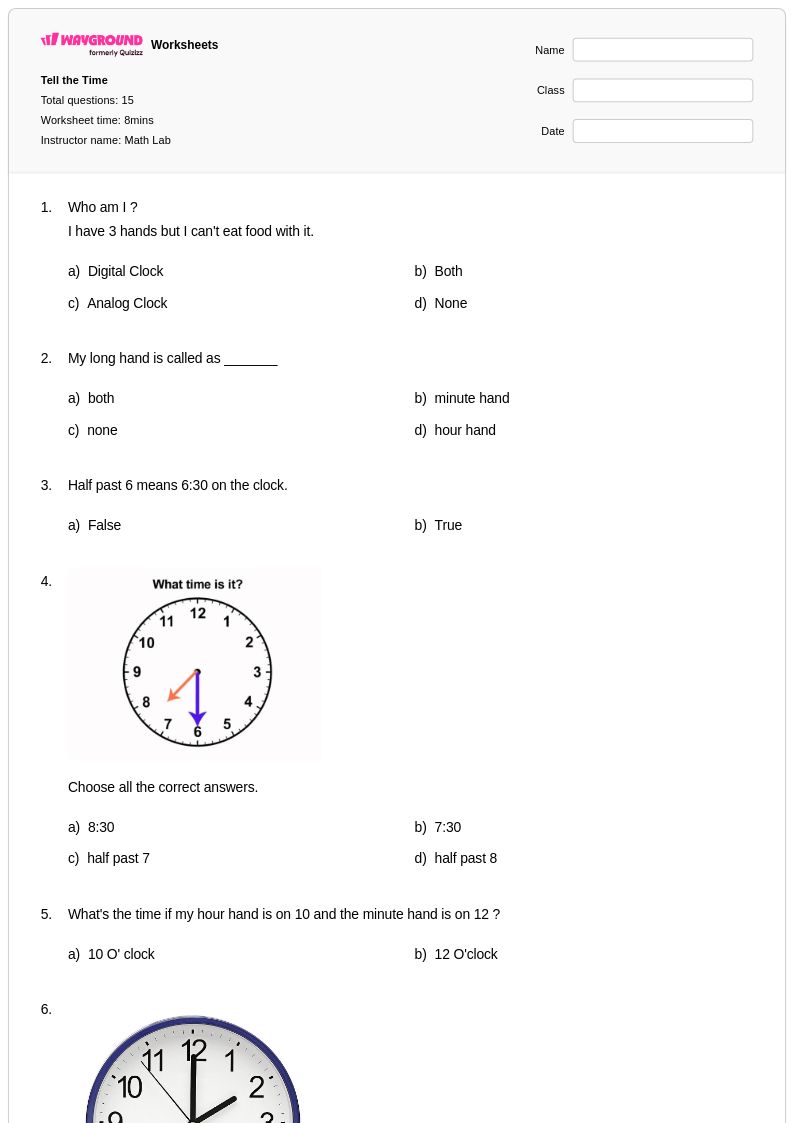
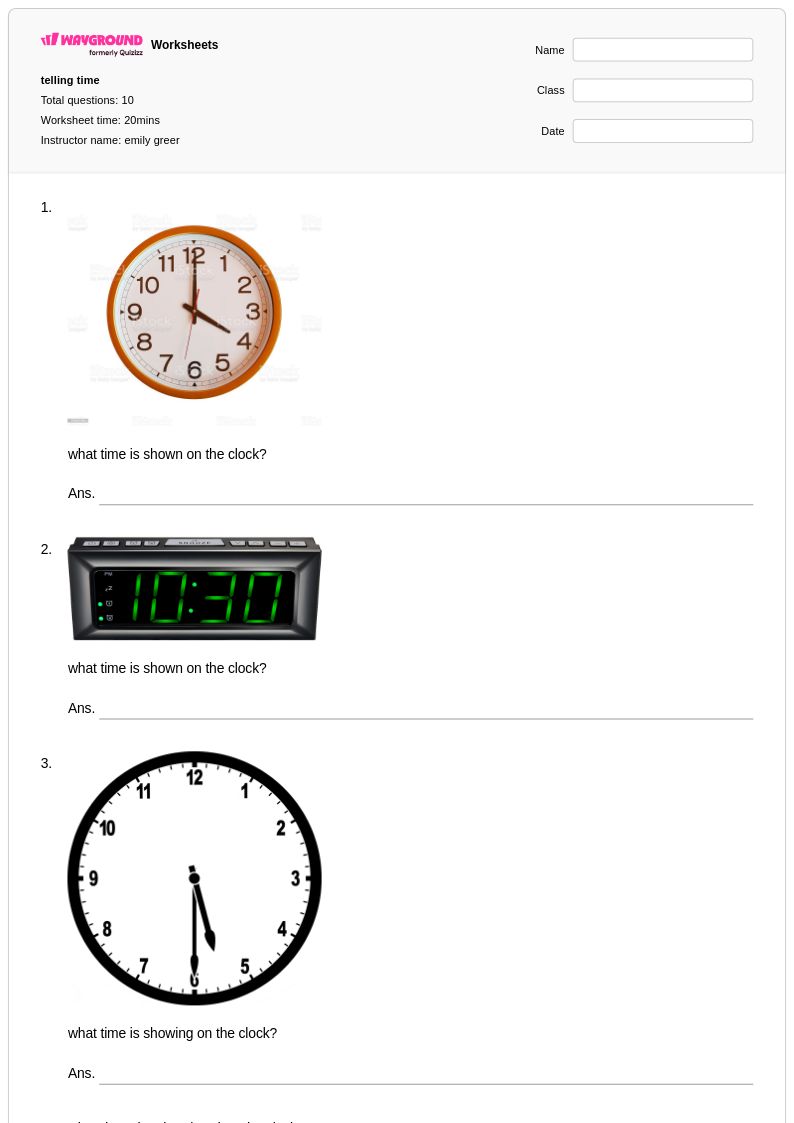
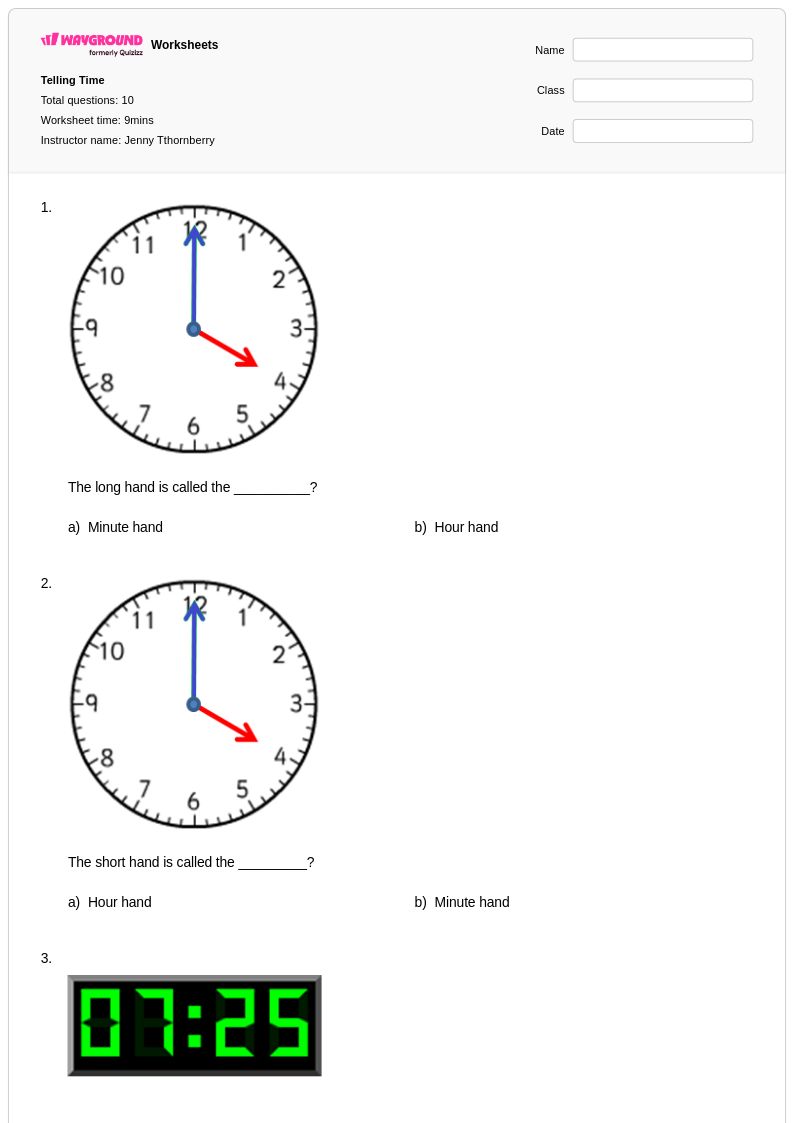
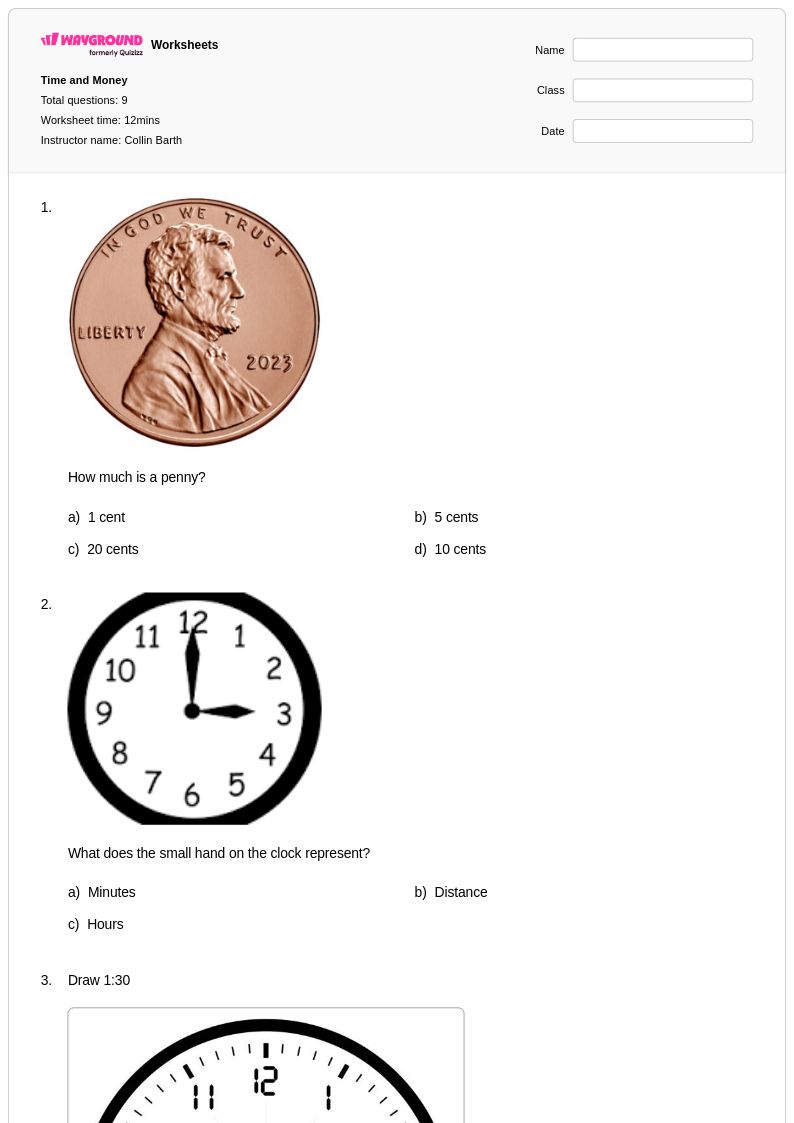
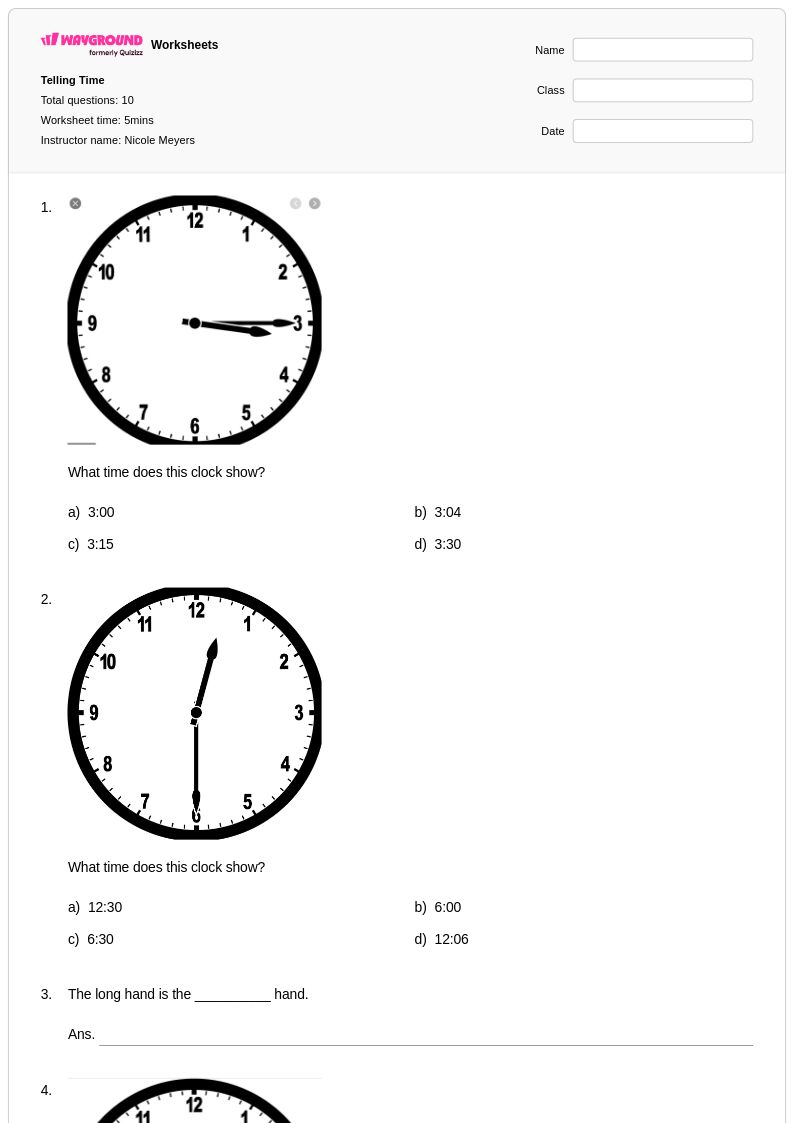
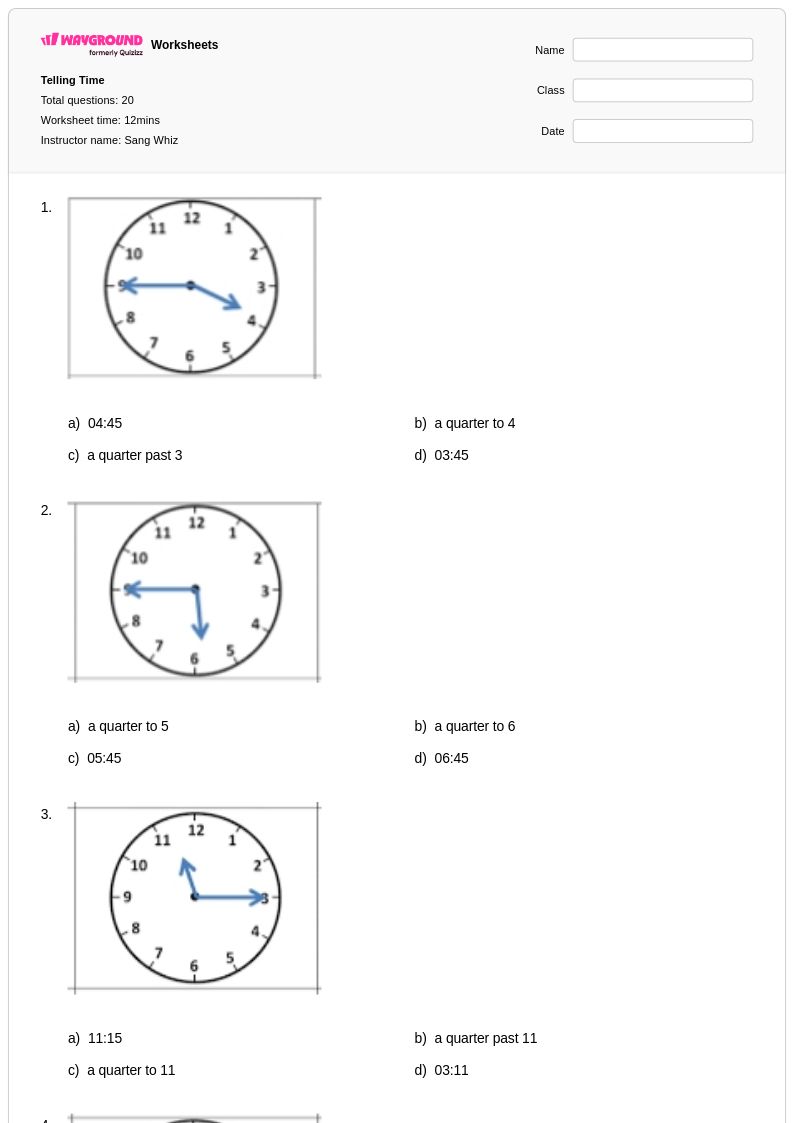
Digital time worksheets for Year 1 students available through Wayground (formerly Quizizz) provide foundational instruction in reading and interpreting time displayed on digital clocks and devices. These carefully designed practice problems help young learners develop essential time-telling skills by focusing on recognizing hours and minutes in digital format, understanding the relationship between analog and digital time representations, and building familiarity with common time expressions used in daily life. Each worksheet includes comprehensive answer keys that enable both independent practice and guided instruction, while the free printable format allows teachers to seamlessly integrate these resources into classroom activities, homework assignments, and assessment preparation.
Wayground (formerly Quizizz) empowers educators with access to millions of teacher-created digital time resources that support differentiated instruction for Year 1 mathematics. The platform's robust search and filtering capabilities allow teachers to quickly locate worksheets aligned with specific learning standards and tailored to individual student needs, whether for remediation of struggling learners or enrichment activities for advanced students. These versatile materials are available in both printable PDF formats and interactive digital versions, enabling flexible customization that accommodates diverse classroom environments and teaching styles. Teachers can efficiently plan comprehensive time instruction units, provide targeted skill practice opportunities, and ensure students develop confidence in reading digital clocks through systematic, progressive worksheet collections that build upon each concept methodically.
FAQs
How do I teach first graders to read digital time?
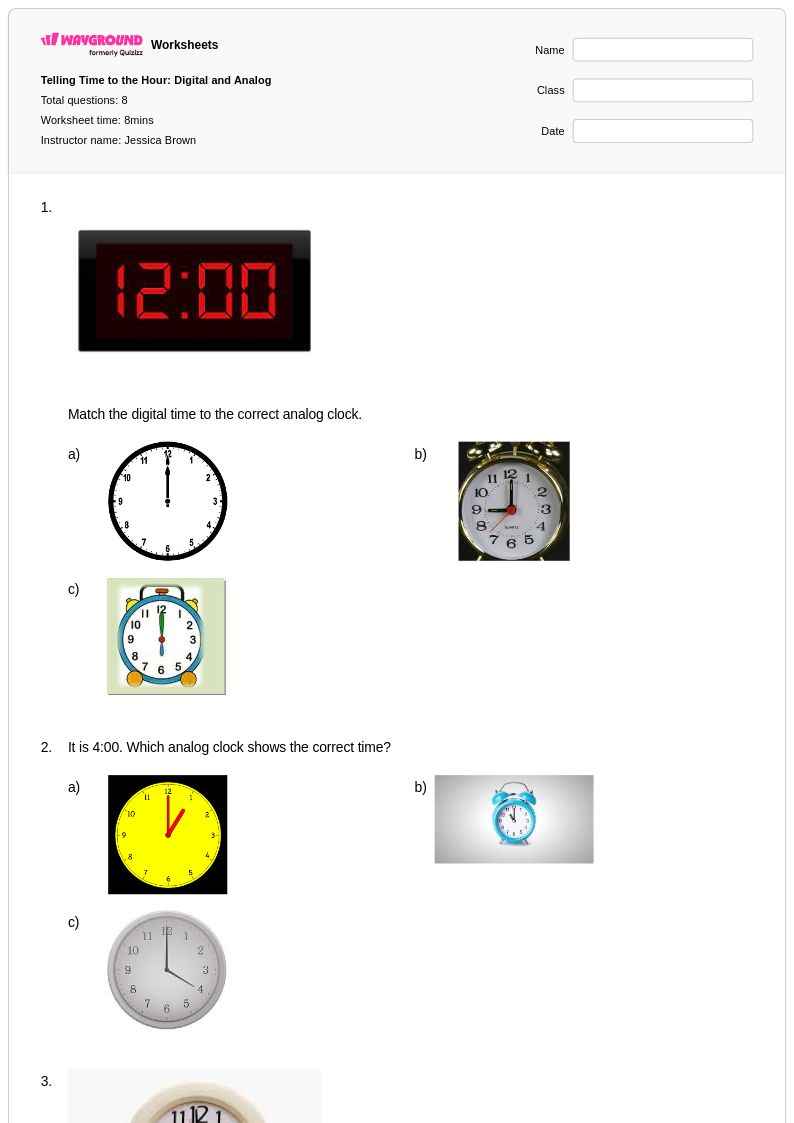
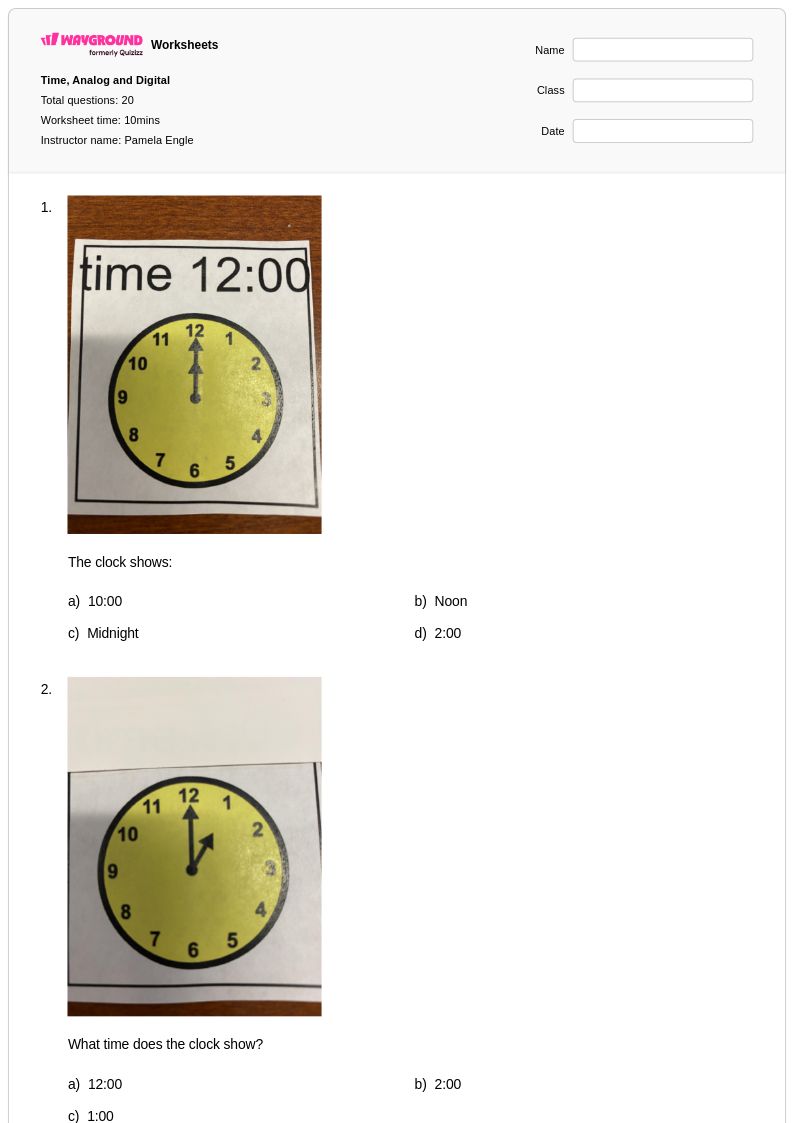
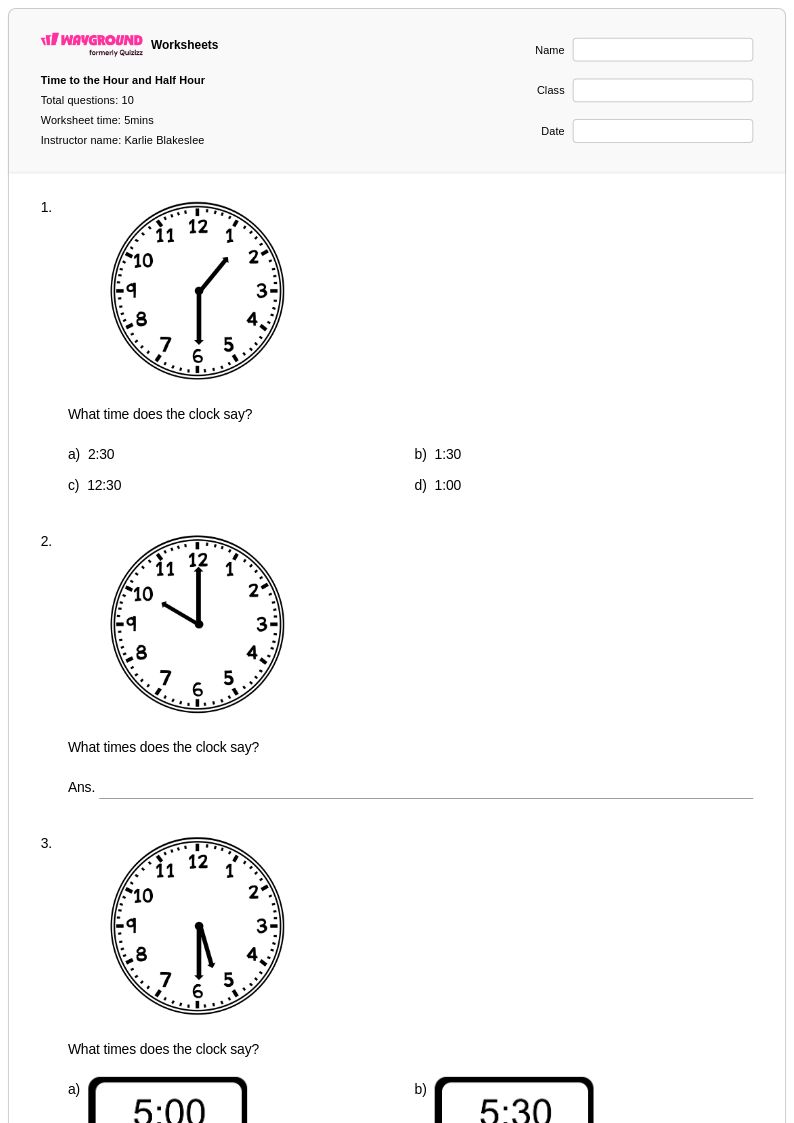
First graders are expected to read time to the hour and half-hour, so start there. Show students that :00 always means the top of the hour and :30 always means the half-hour, and practice matching digital displays to spoken phrases like "two o'clock" and "half past two." Once those two anchors are solid, connect digital and analog representations side by side — students who can read both formats develop a much stronger sense of what the numbers actually mean.
What exercises help first graders practice digital time?
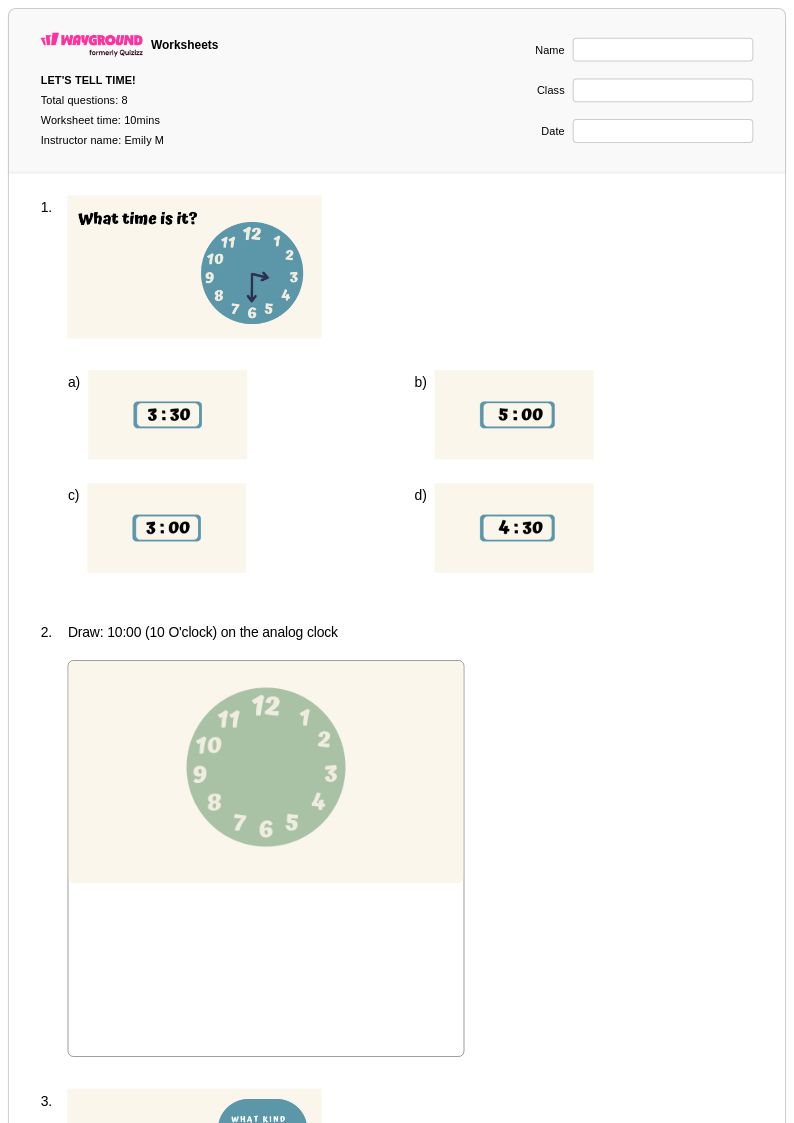
Three exercise types work well at this level: matching a digital display to a written time phrase, identifying whether a time shown is on the hour or half-hour, and drawing the matching analog clock for a given digital time. That last one is especially useful because it forces students to translate between formats rather than just recognize a pattern.
What errors do first graders commonly make with digital time?
The most frequent error is misreading :30 — students often say "one thirty" correctly but don't connect it to "half past one," which matters when problems use that phrasing. A second common gap is reversing the hour and minute values, reading 12:01 as "one twelve." Brief daily exposure to both digital and analog clocks together helps close both gaps faster than worksheet practice alone.
How do I use Wayground's Grade 1 digital time worksheets?
Every worksheet includes a complete answer key, so you can assign them as independent practice and check work quickly. For paper-based practice, download the printable PDF and use the Wayground for Teachers app to scan student submissions for grading. If your class is working on devices, the same worksheet runs as a digital quiz on Wayground — both formats cover the same problems.
Is reading digital time part of the Grade 1 Common Core math standards?
Yes. Common Core expects first graders to tell and write time in hours and half-hours using both analog and digital clocks. The digital format is explicitly included, not just analog — so worksheets that focus on reading digital displays directly address this standard. Second grade then extends this to five-minute intervals, so strong hour and half-hour recognition in first grade is the foundation students need.
How can I differentiate digital time practice for my first-grade class?
For students who need more support, Wayground's reduced answer choices option narrows the options displayed so students can focus on the time concept rather than managing a long list of choices. For students ready to move ahead, look for worksheets that introduce five-minute intervals early — Wayground's library includes Grade 2 materials you can pull in for enrichment without rebuilding anything from scratch.