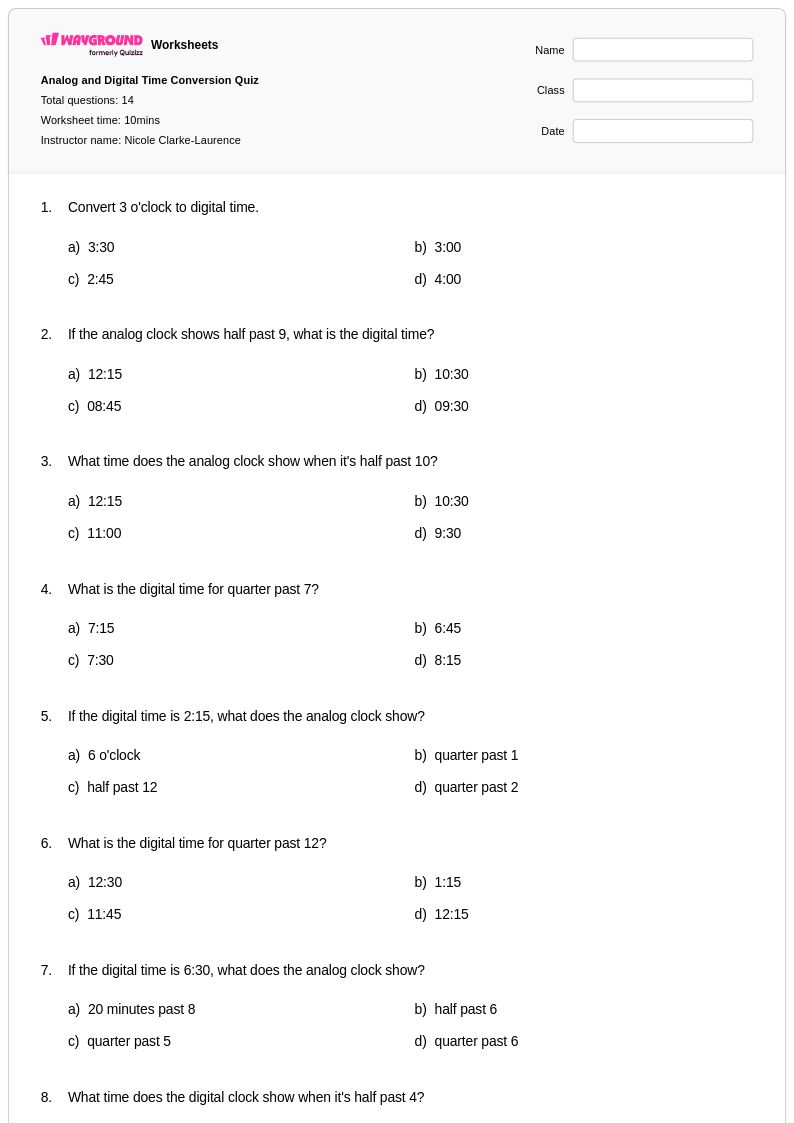
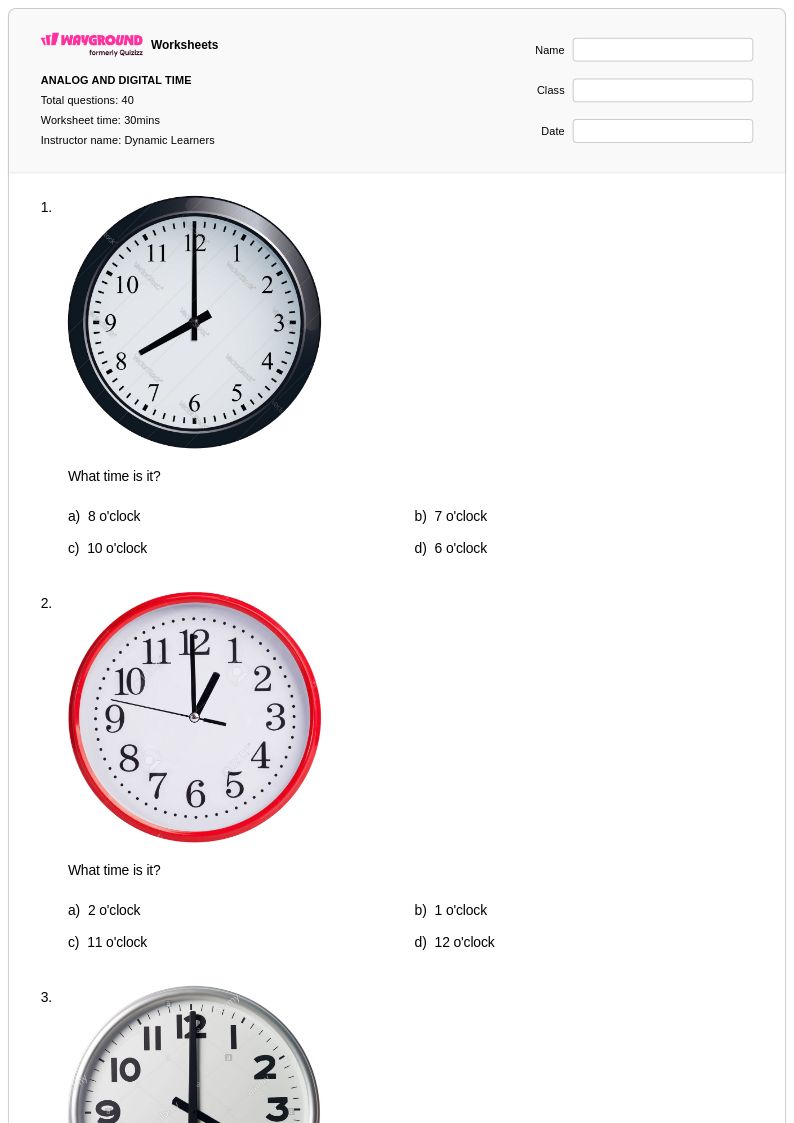
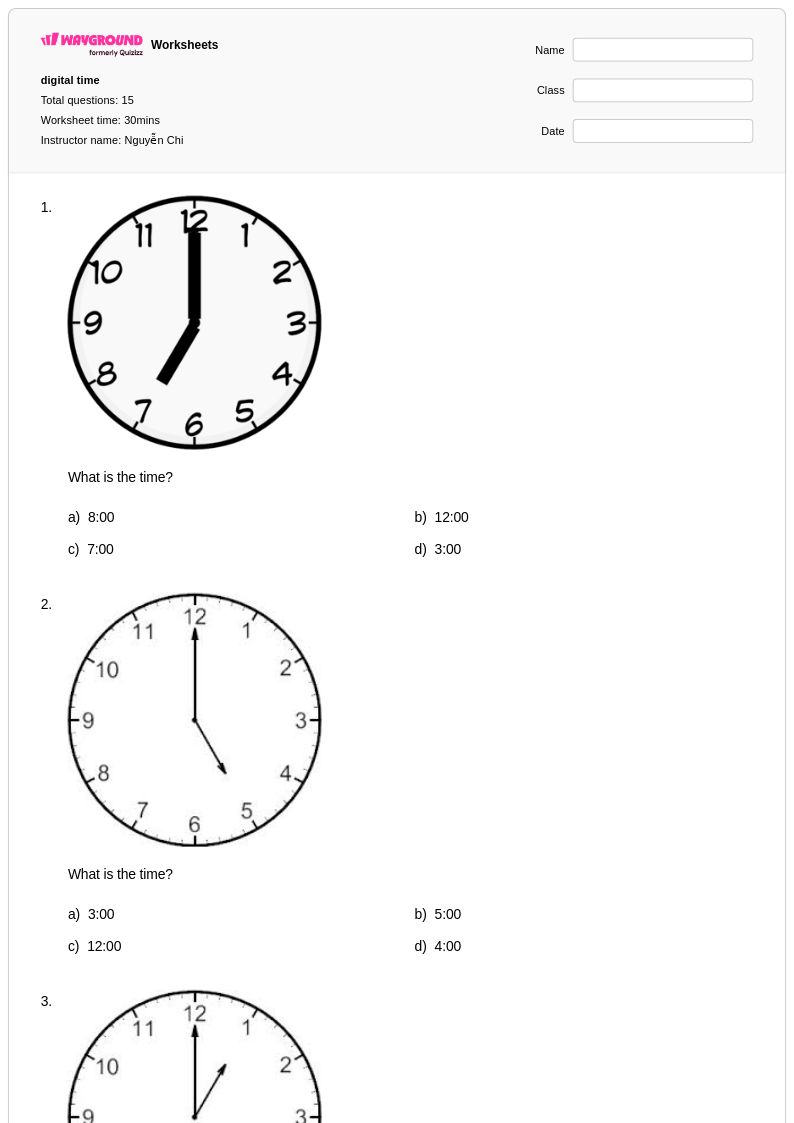
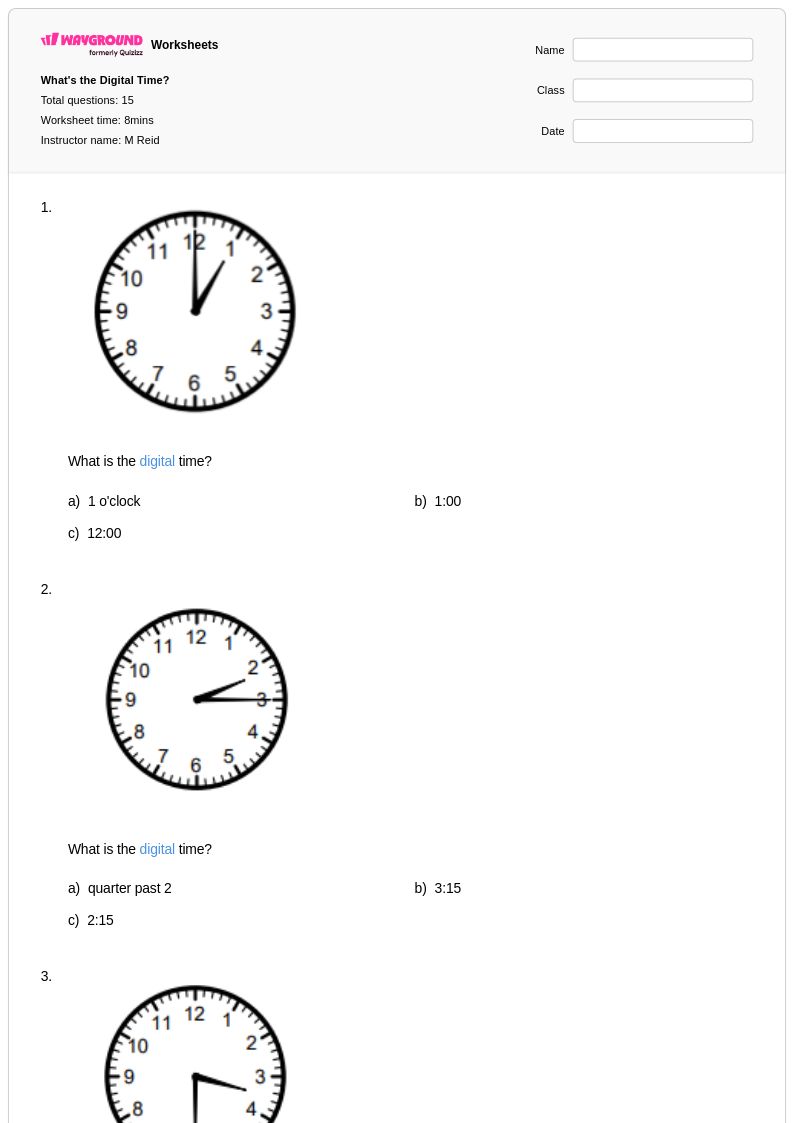
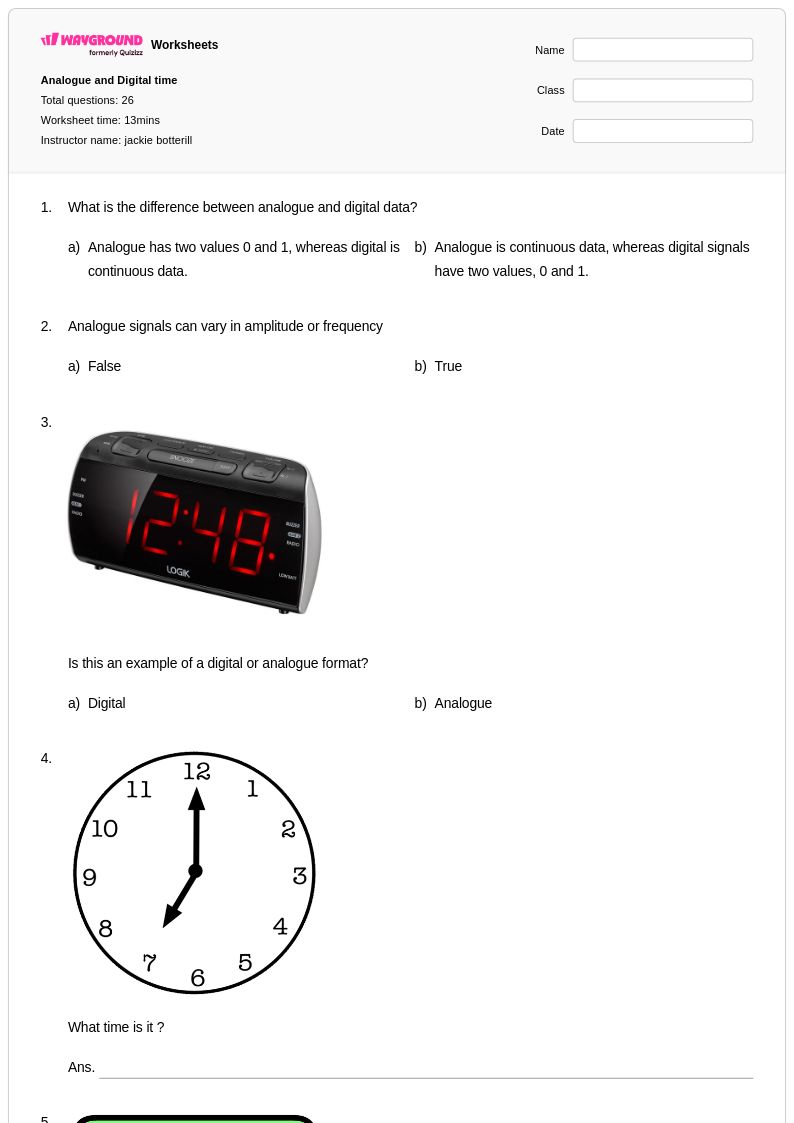
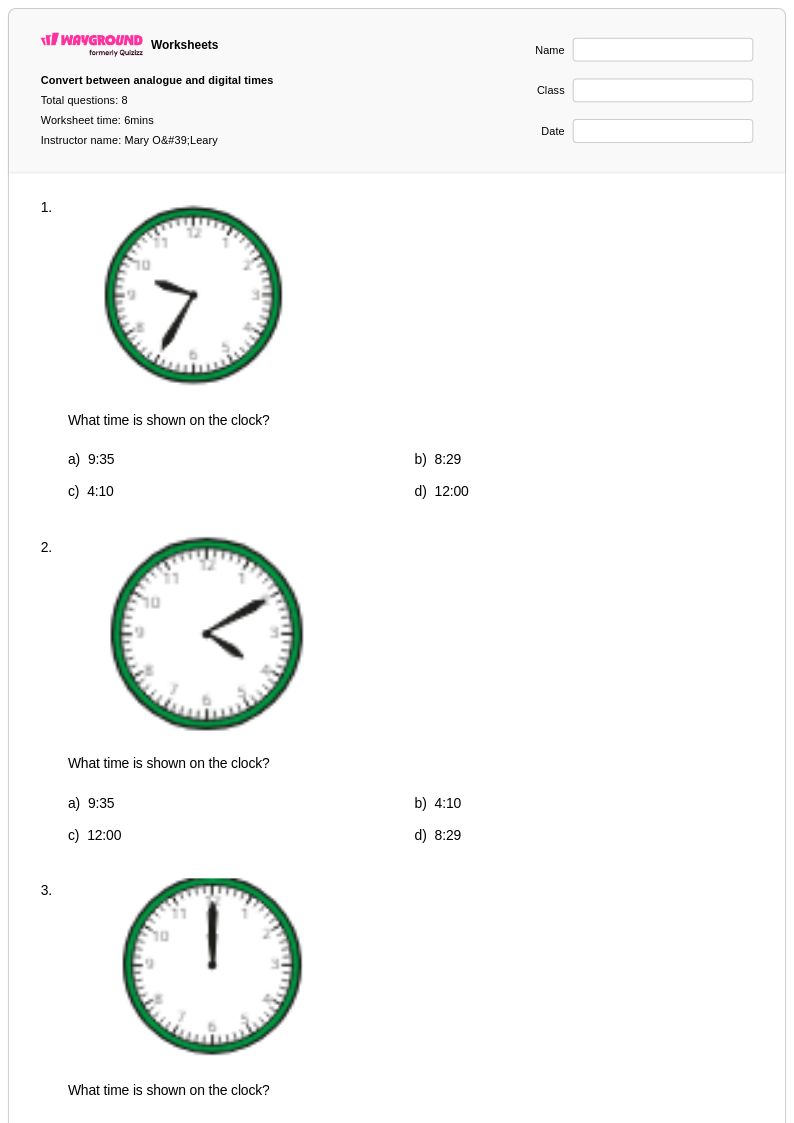
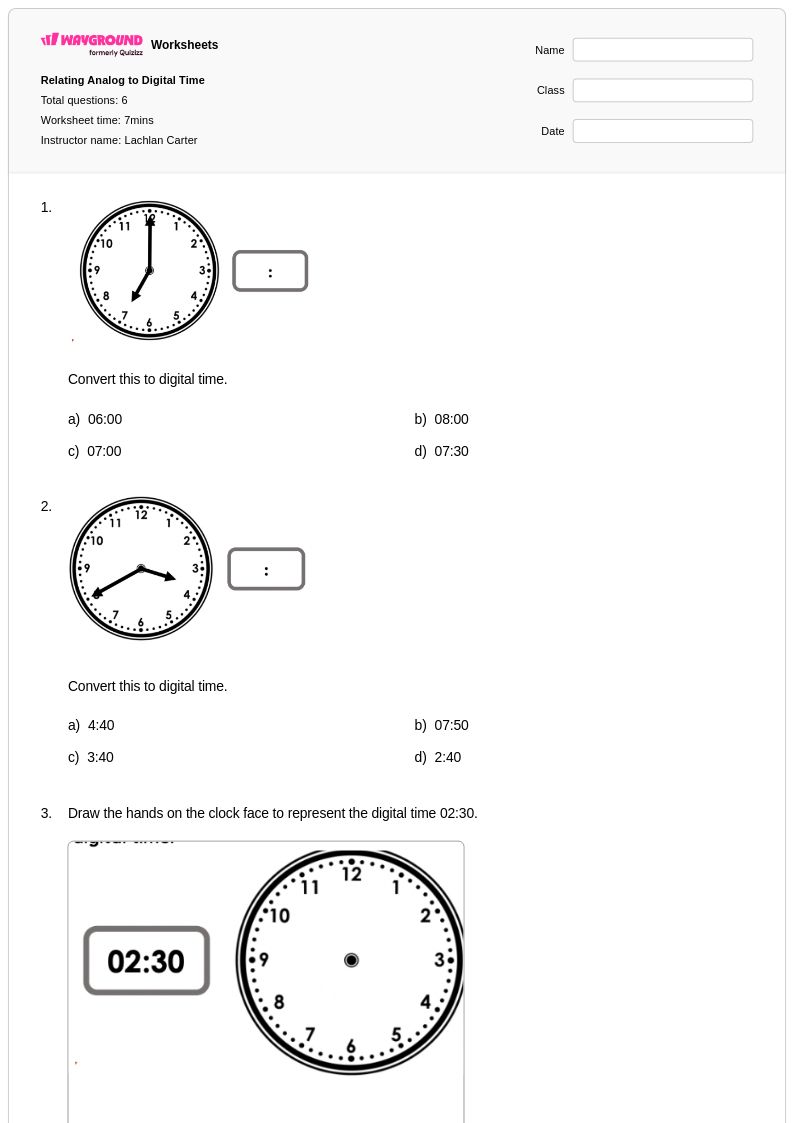
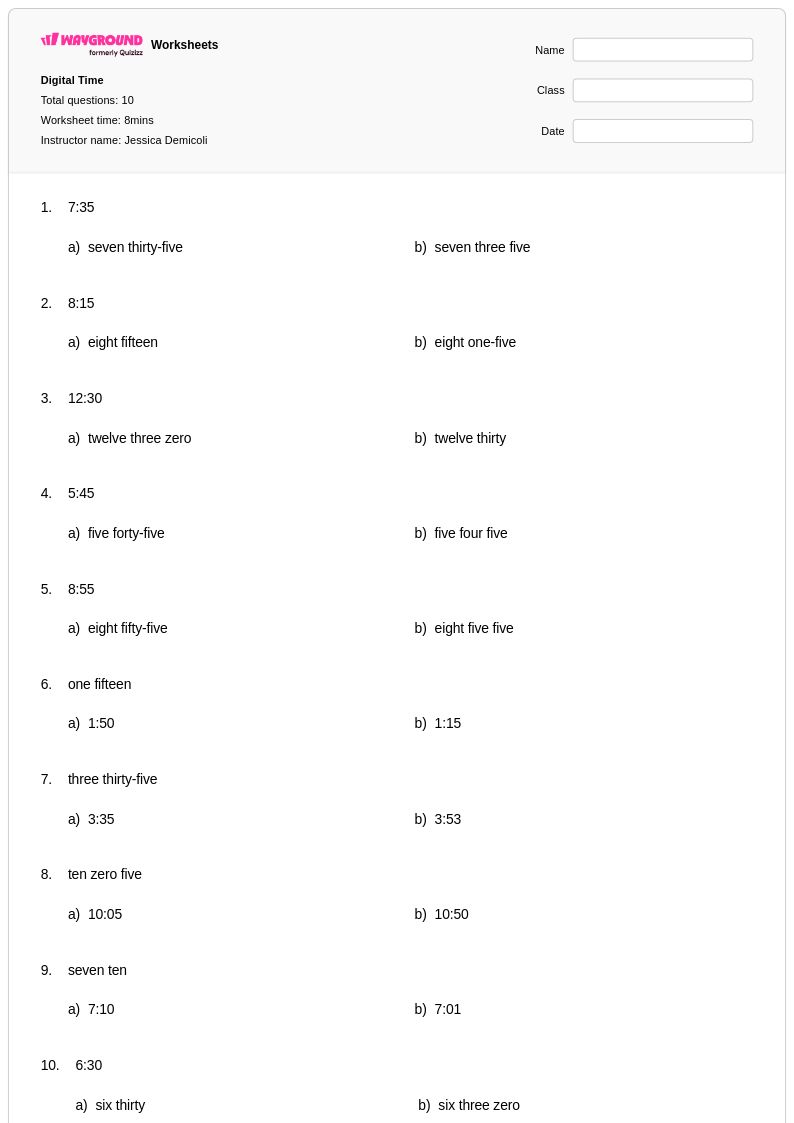
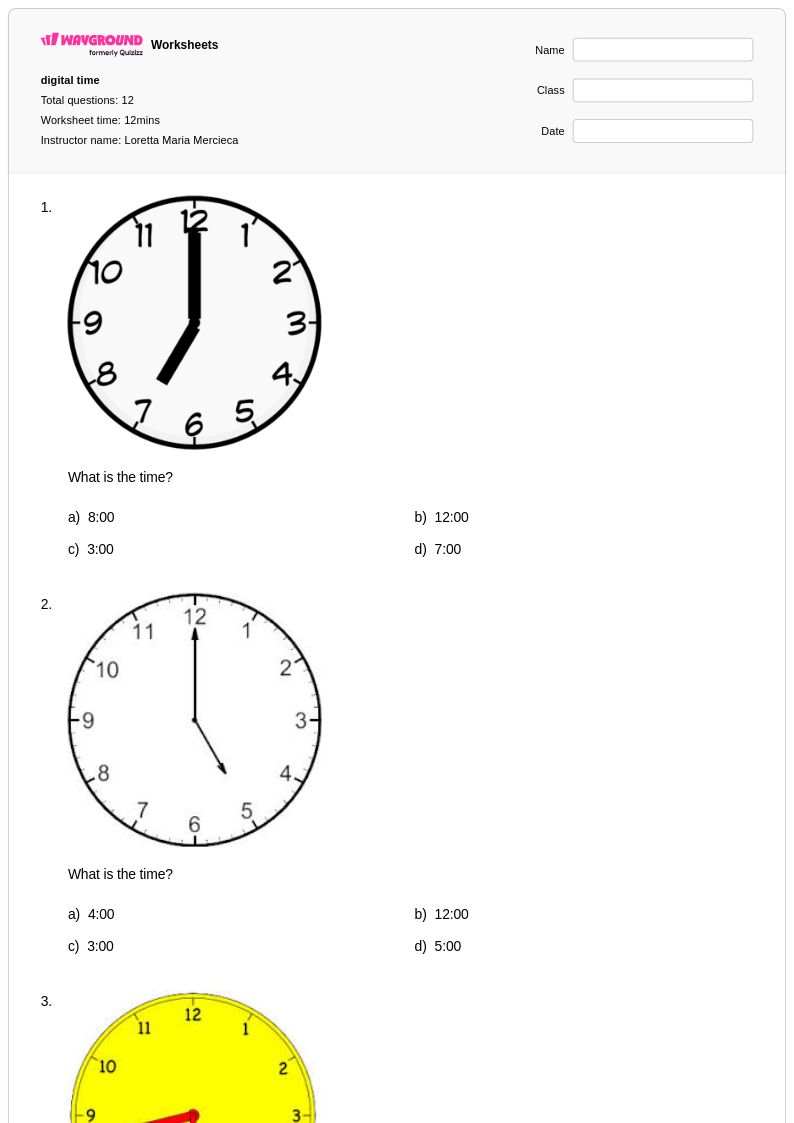
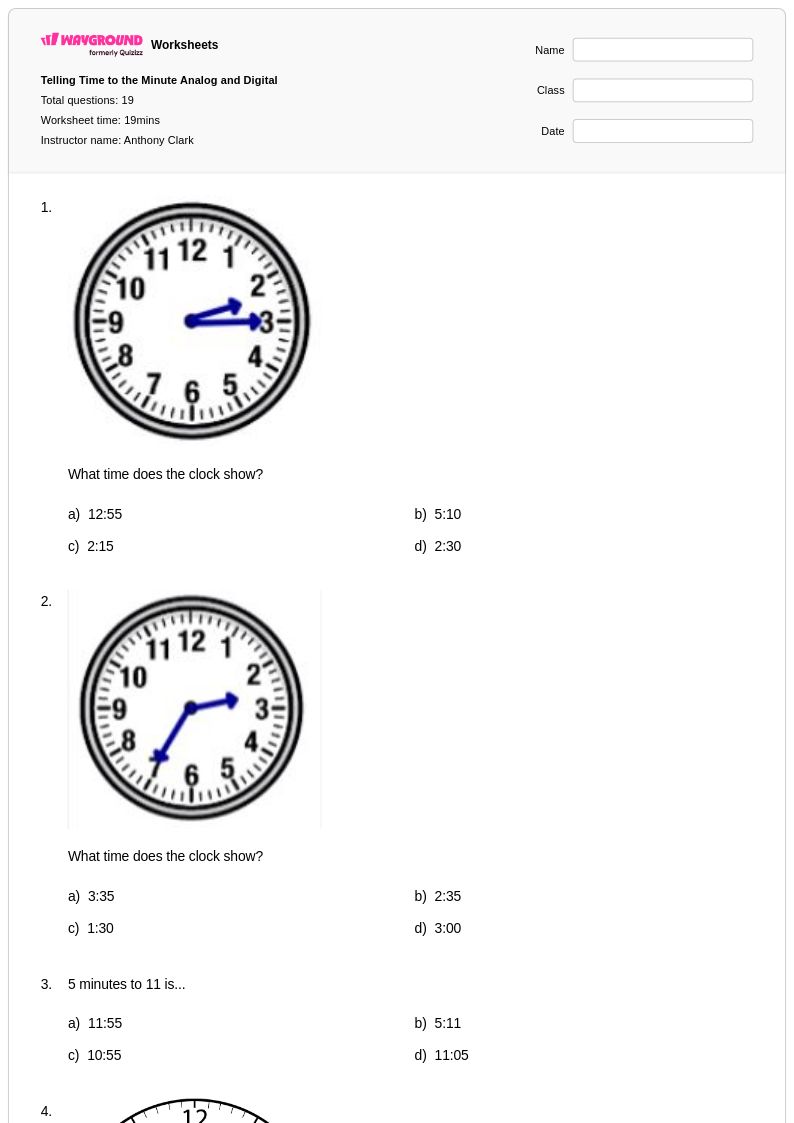
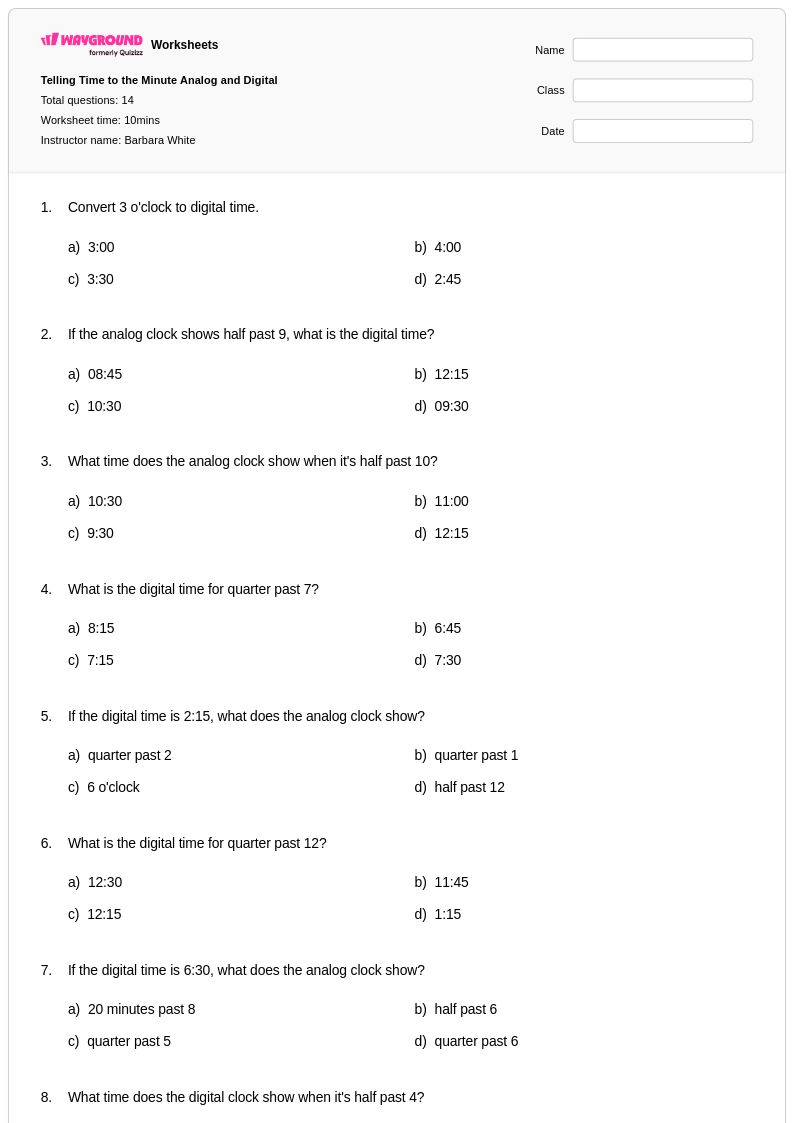
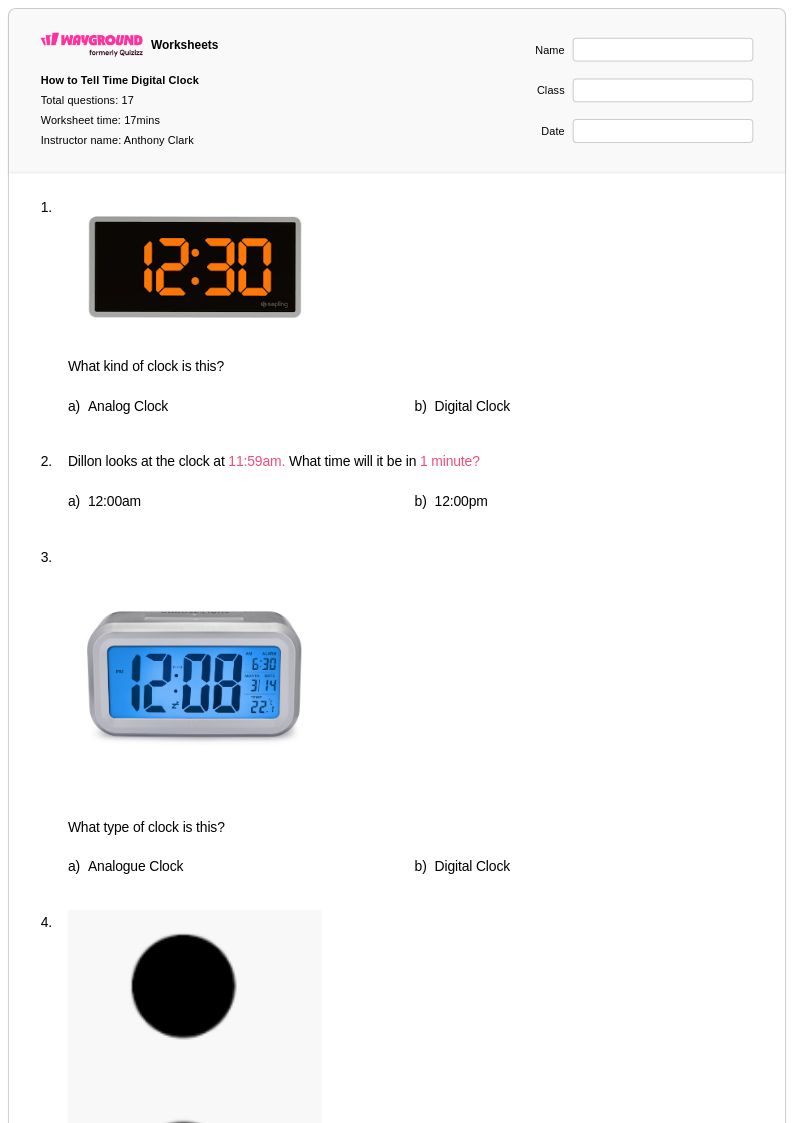
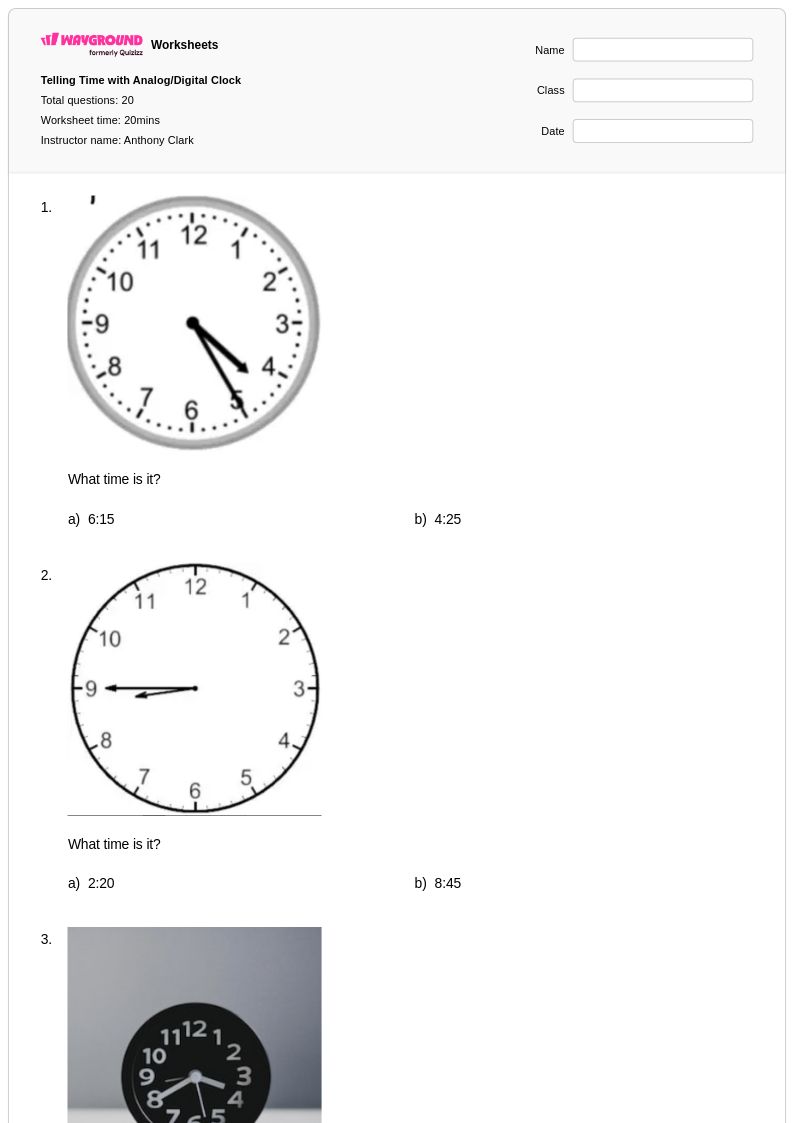
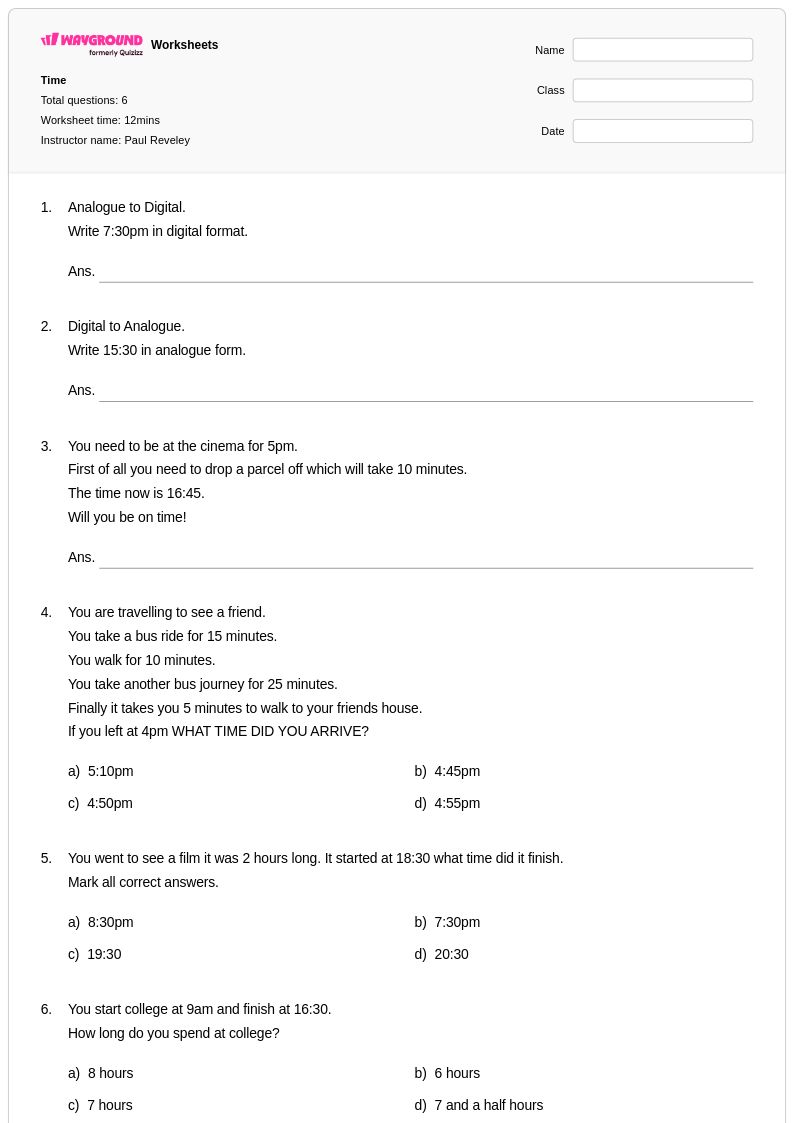
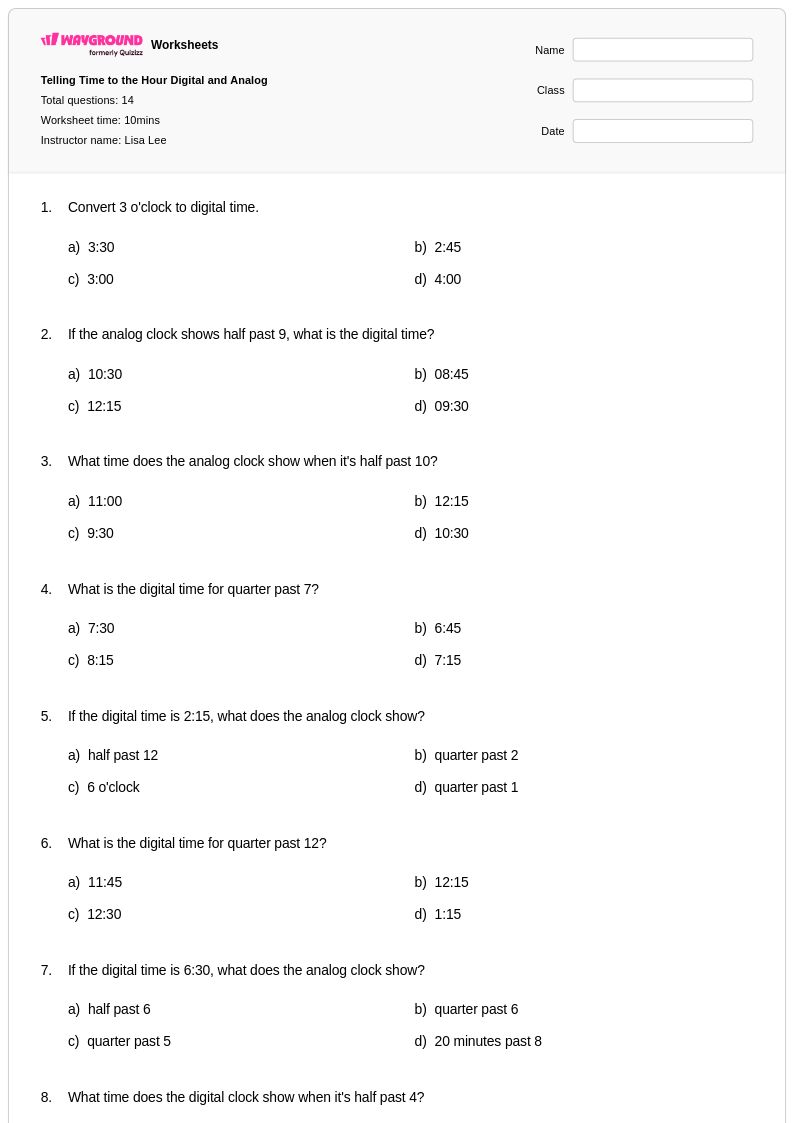
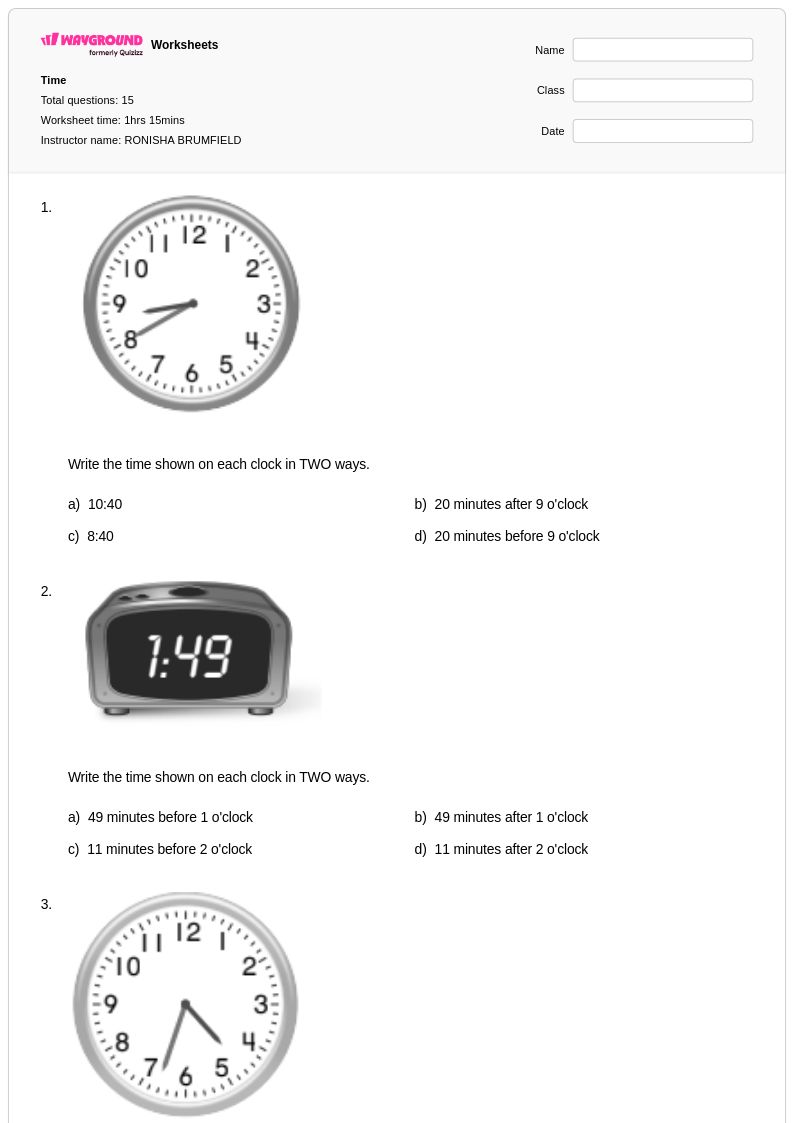
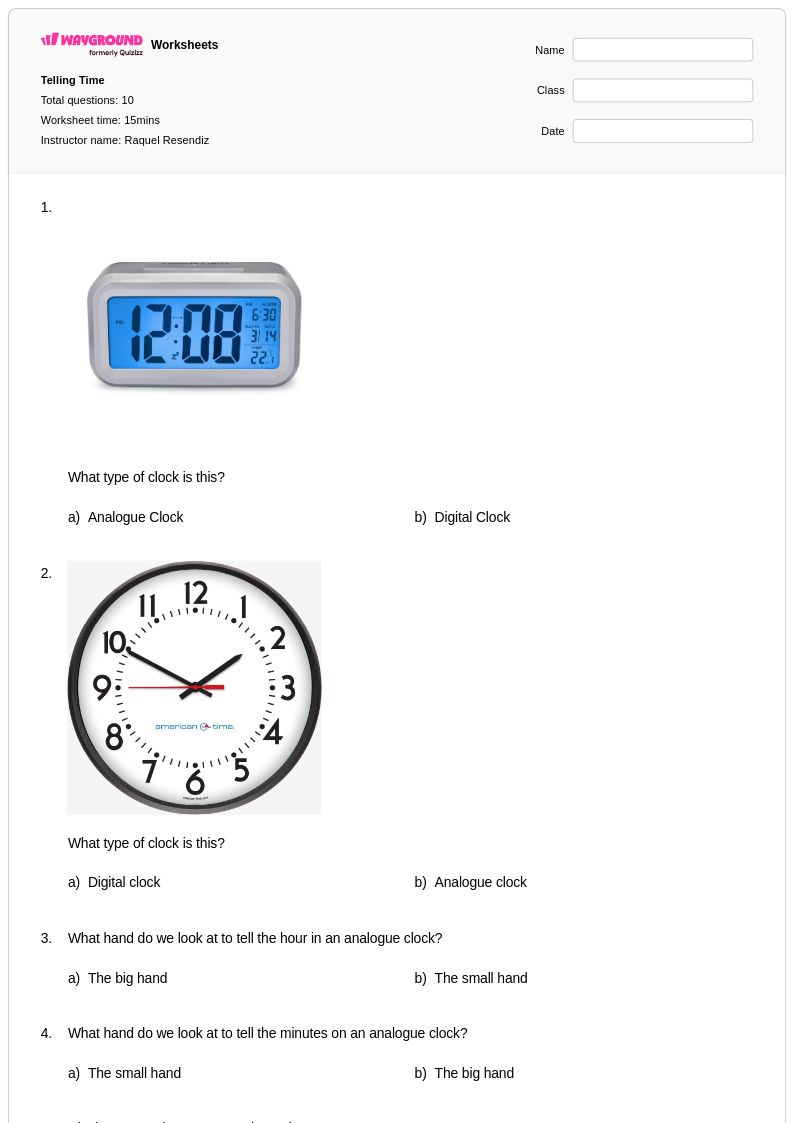
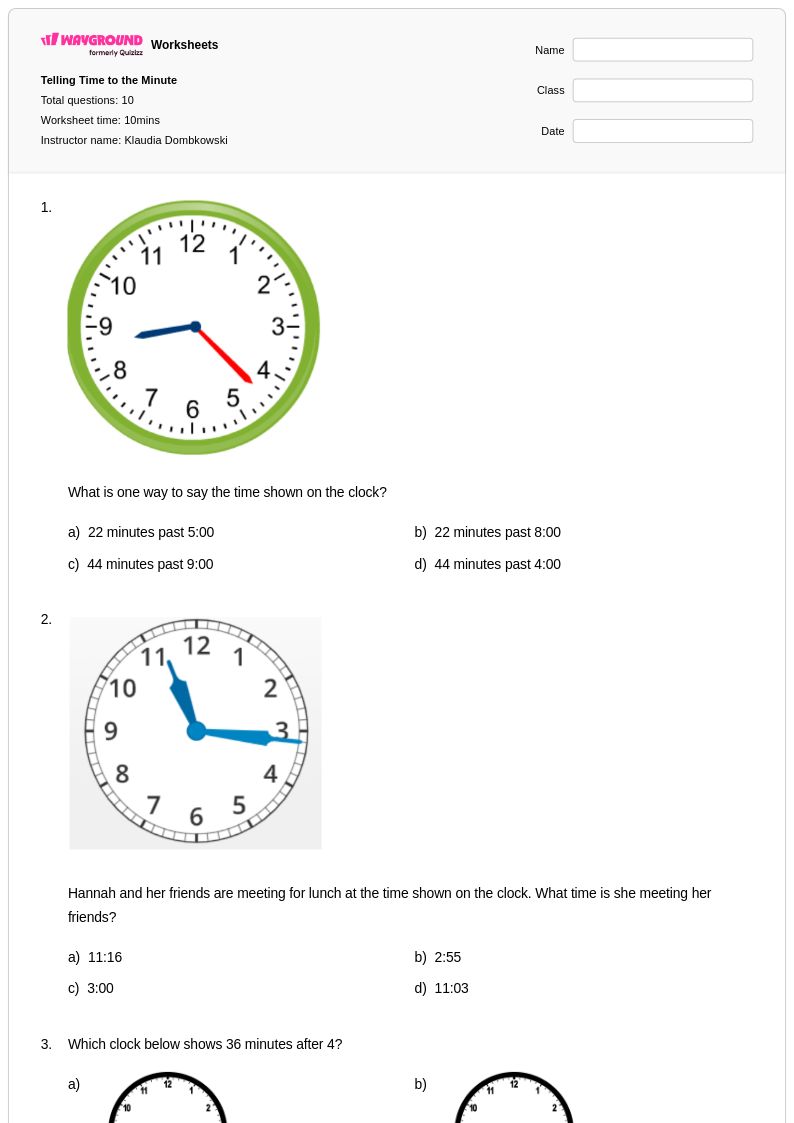
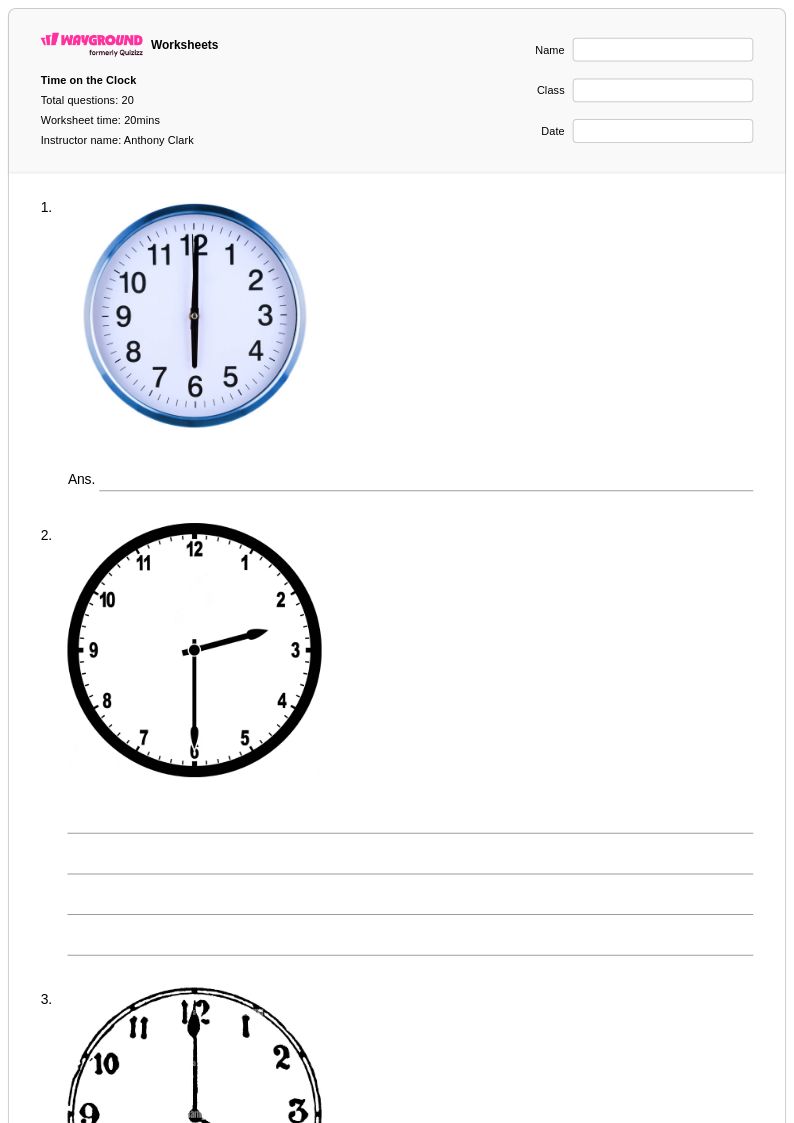
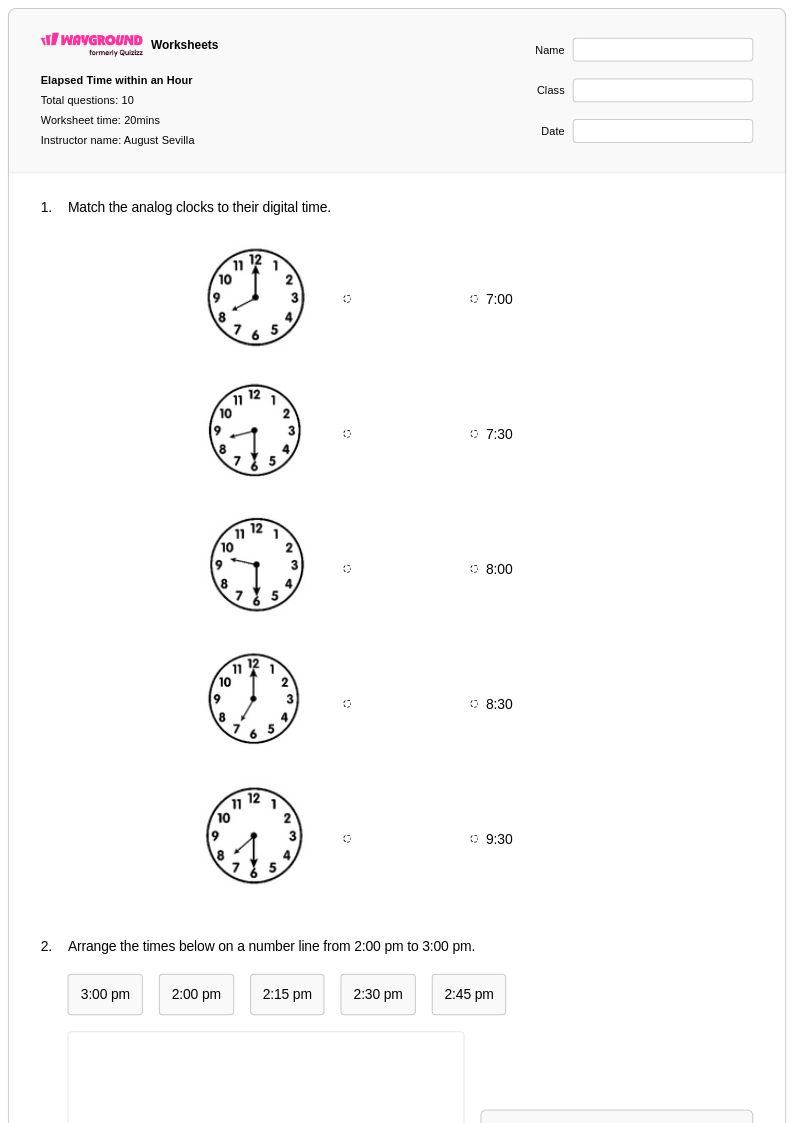
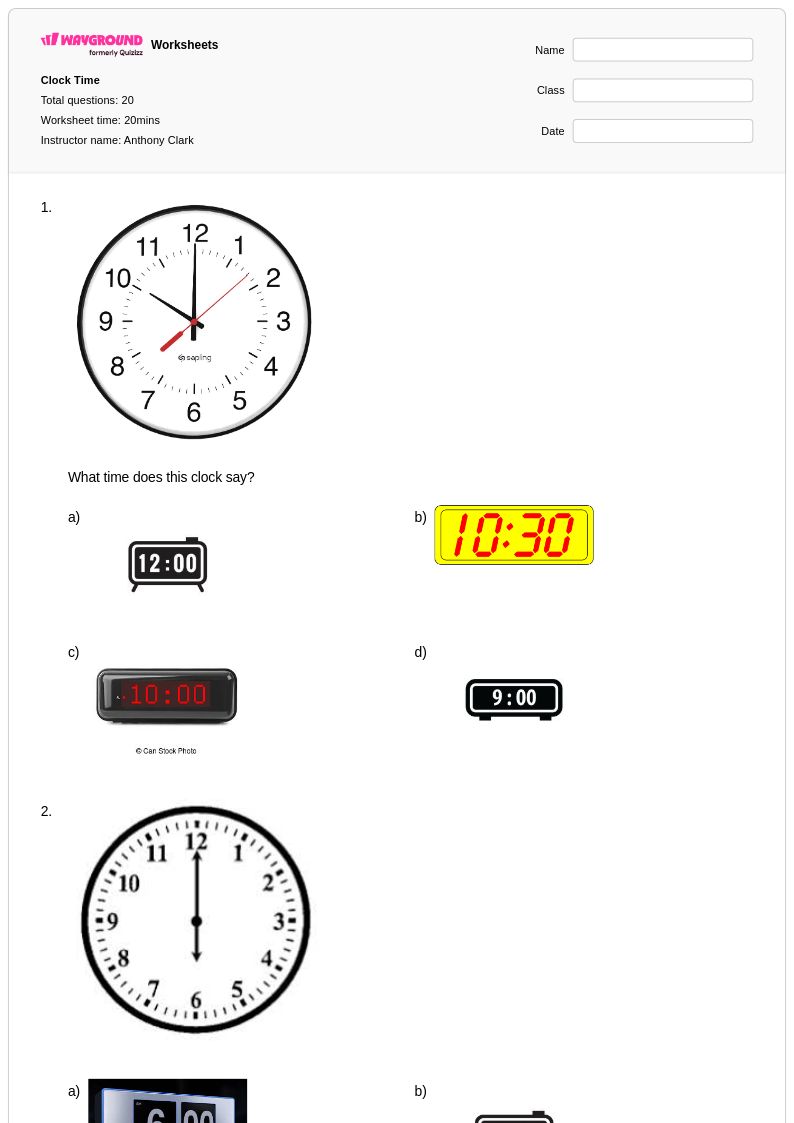
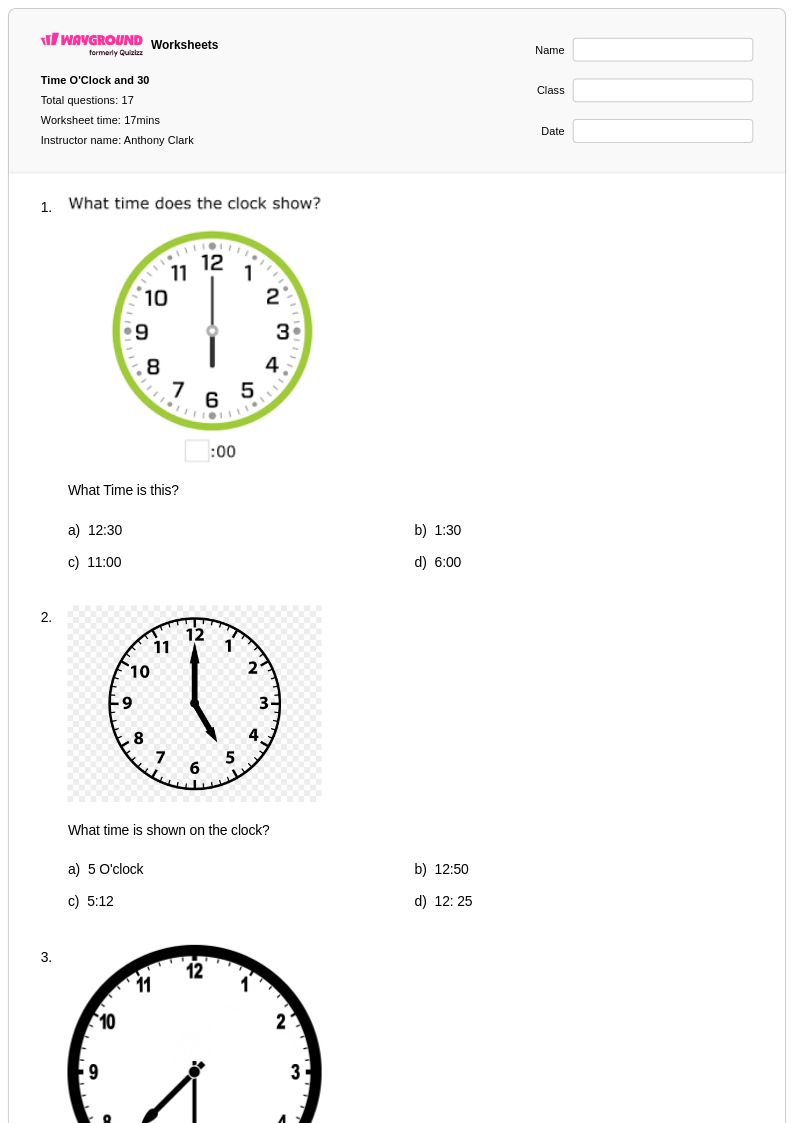
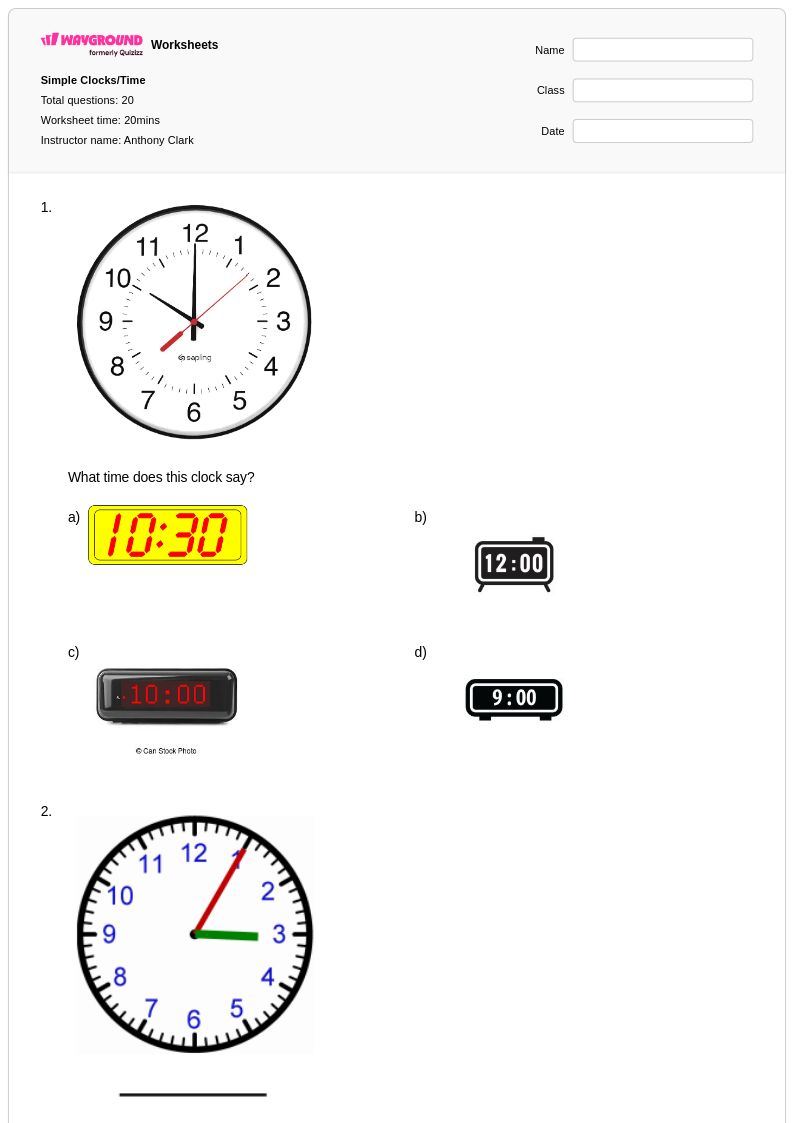
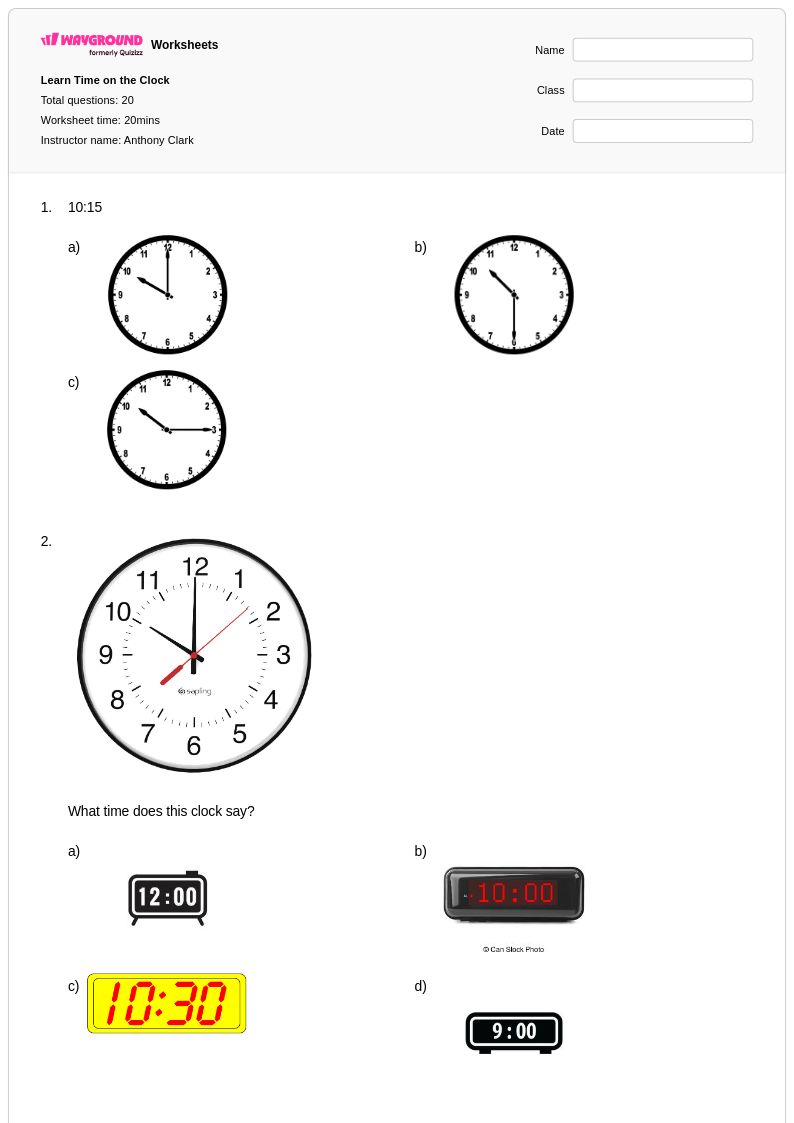
Free Year 3 digital time worksheets and printables help students master reading digital clocks through engaging practice problems, with PDF downloads and answer keys available for comprehensive time-telling skill development.
Explore printable Digital Time worksheets for Year 3
Digital time worksheets for Year 3 students through Wayground (formerly Quizizz) provide essential practice in reading and interpreting time displayed on digital clocks and devices. These comprehensive worksheets strengthen foundational time-telling skills by helping students understand the relationship between hours and minutes in digital format, convert between analog and digital time representations, and solve real-world problems involving elapsed time. The collection includes varied practice problems that progress from basic hour recognition to more complex scenarios involving time intervals and scheduling. Each worksheet comes with a complete answer key, making assessment and self-checking straightforward for both educators and students. Available as free printables in convenient PDF format, these resources support systematic skill development in this crucial mathematical concept.
Wayground (formerly Quizizz) empowers teachers with millions of teacher-created digital time resources that can be easily searched, filtered, and customized to meet diverse classroom needs. The platform's robust collection allows educators to differentiate instruction by selecting worksheets that align with specific learning standards and individual student proficiency levels. Teachers can modify existing materials or combine multiple resources to create targeted practice sets for remediation or enrichment activities. The flexible format options include both printable PDF versions for traditional paper-based learning and interactive digital formats that engage students through technology-enhanced practice. This comprehensive approach to resource management streamlines lesson planning while ensuring that educators have access to high-quality materials that support effective time concept instruction and skill mastery in Year 3 mathematics.
FAQs
How do I teach elapsed time to third graders using digital clocks?
The most reliable approach is the "jump strategy": from the start time, jump to the next whole hour, then count additional hours, then add remaining minutes. For example, from 2:40 to 4:15 — jump 20 minutes to 3:00, then 1 hour to 4:00, then 15 minutes to 4:15, totaling 1 hour 35 minutes. This keeps students from trying to subtract across the hour in one step, which is where most errors happen. A number line drawn with digital times marked on it makes the jumps visible.
What kinds of problems should third graders practice with digital time?
Grade 3 practice should go beyond reading a display and into application: calculating elapsed time between two digital times, finding an end time given a start time and duration, and interpreting simple schedules. Wayground's Grade 3 digital time worksheets include all three problem types, progressing from straightforward interval problems to multi-step scheduling scenarios.
What mistakes do third graders make with elapsed time?
The classic error is treating minutes like a base-10 column — subtracting 2:15 from 3:50 and getting 1:35 instead of 1:35... wait, that one works. The real trap is something like 3:10 minus 1:45, where students write 2:35 because they subtracted 1 from 3 and 10 from 45 without noticing the minutes don't work that way. They also frequently forget to account for AM/PM when a time interval crosses noon or midnight.
How do I use Wayground's Grade 3 digital time worksheets?
Every worksheet comes with a complete answer key, which makes them practical for self-checking stations or peer review. For paper practice, download the printable PDF — offline work is especially useful for elapsed-time problems where students benefit from writing out their jump-strategy steps without a device in front of them. If you want automatic scoring, run the same worksheet as a digital quiz on Wayground instead.
Is elapsed time part of the Common Core Grade 3 math standards?
Yes, and it's one of the more demanding third-grade expectations. Common Core asks students to tell and write time to the nearest minute and solve word problems involving addition and subtraction of time intervals in minutes. This builds directly on the five-minute reading from second grade — students who aren't fluent reading digital times to the minute will struggle with the elapsed-time problems before they even get to the arithmetic.
How can I differentiate digital time practice for third graders with different skill levels?
For students still shaky on reading digital time to the minute, start with Grade 2 worksheets from Wayground's library before moving to elapsed-time problems — the gap is usually there, not in the elapsed-time reasoning itself. For students who need accessibility support, Wayground's extended time accommodation is particularly relevant here: elapsed-time problems require multi-step thinking, and students who process more slowly often know the concept but run out of time before demonstrating it.