
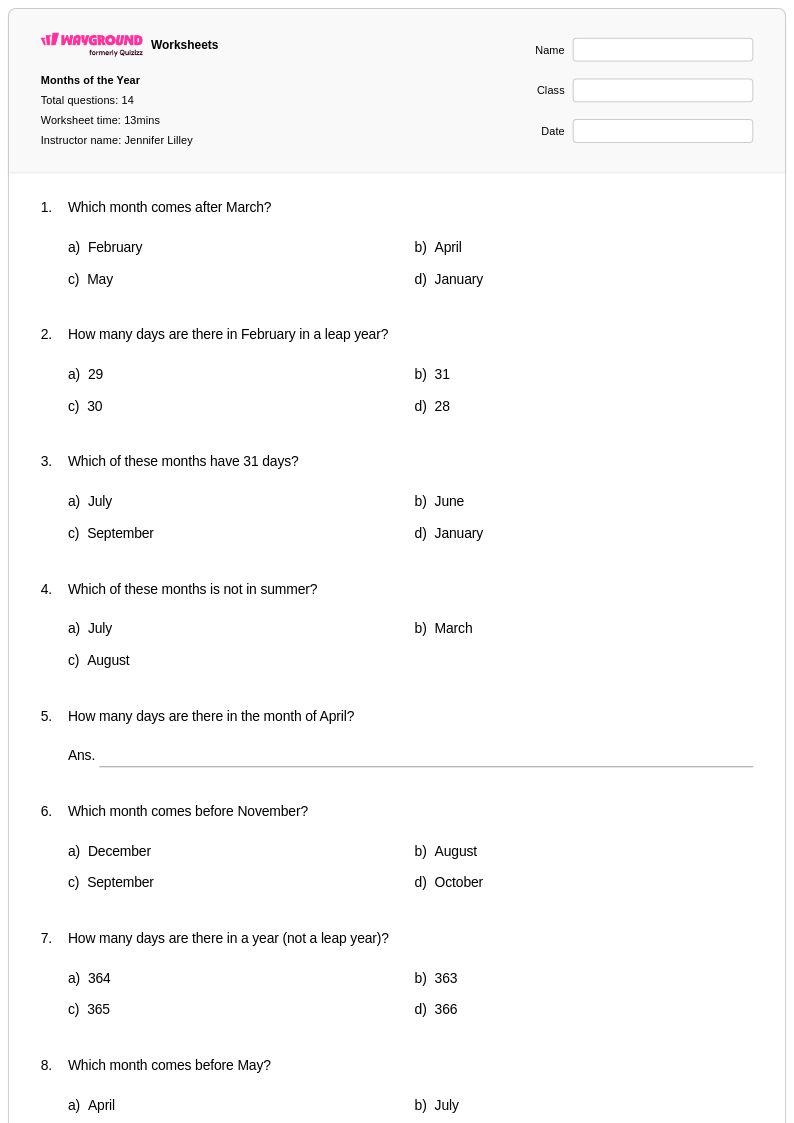
14Q
2nd - 5th
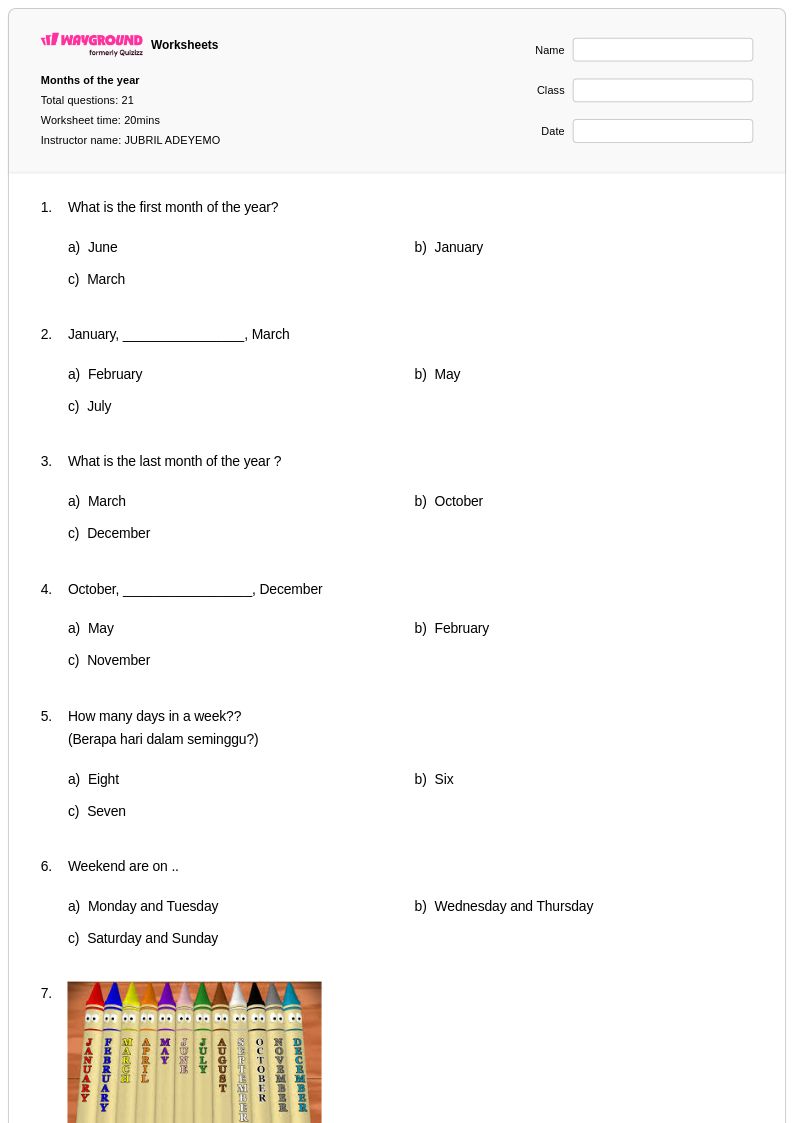
21Q
3rd
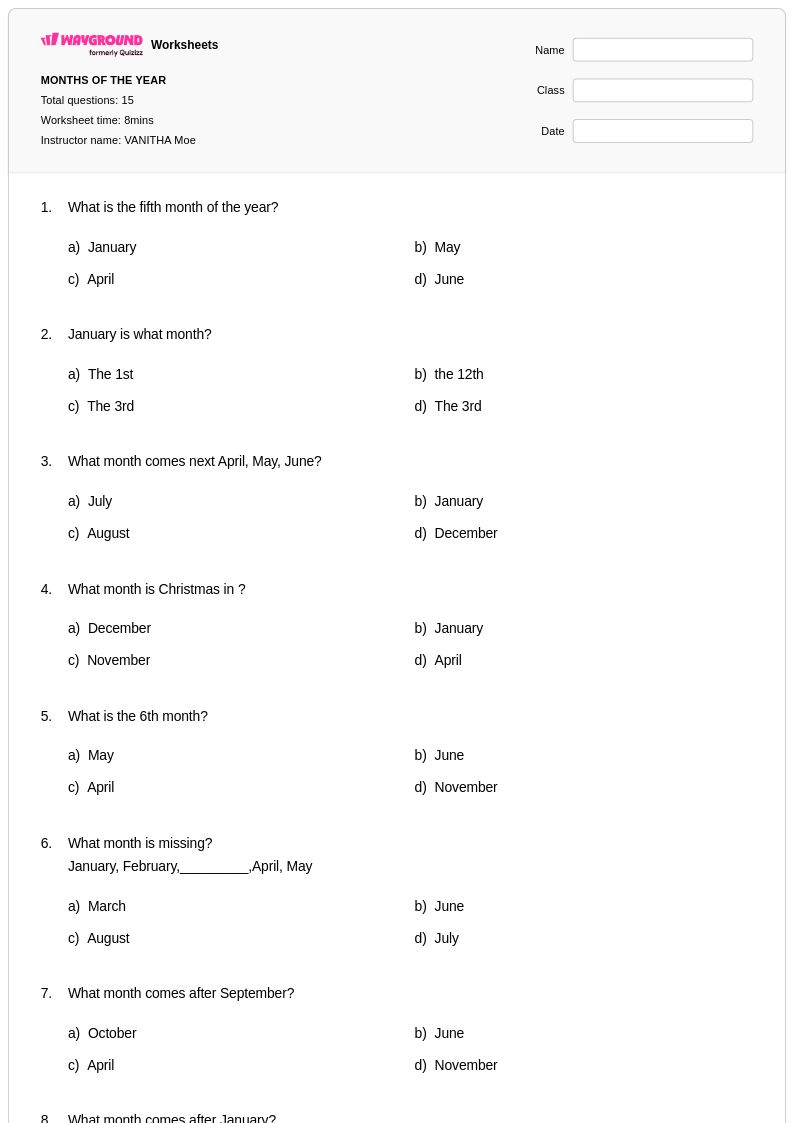
15Q
1st - Uni
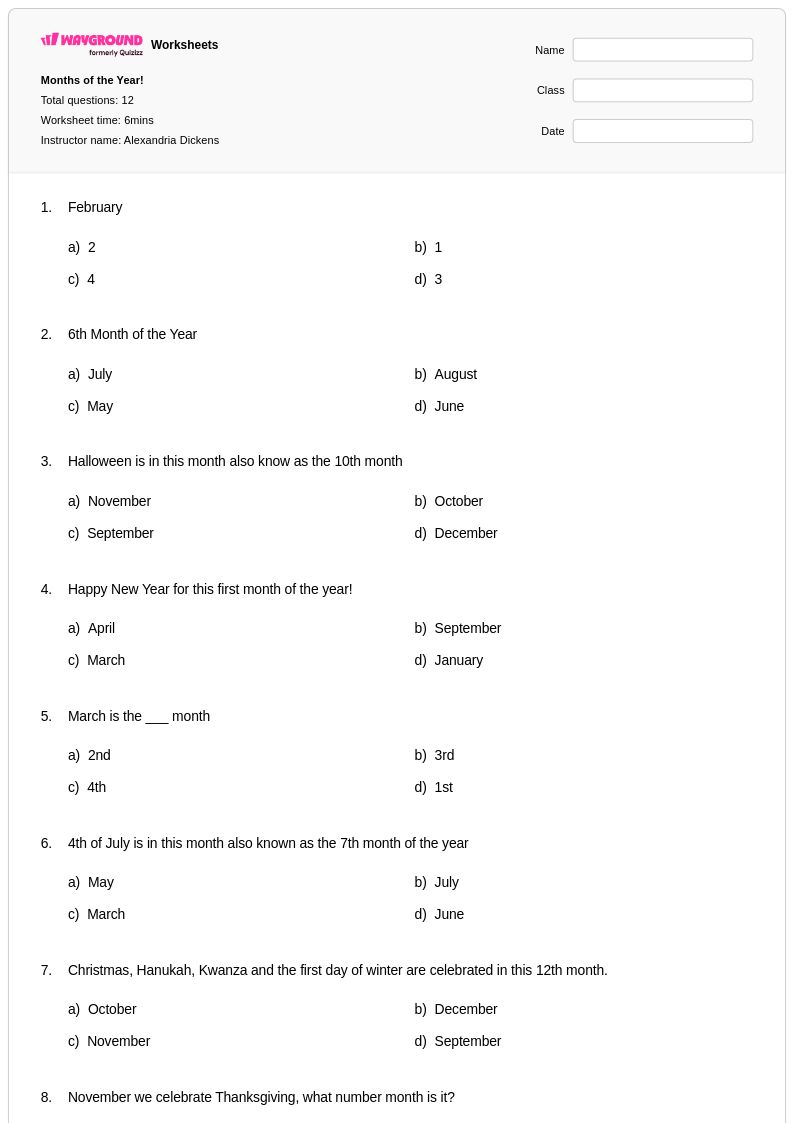
12Q
1st - 5th
7Q
KG - 3rd
7Q
2nd - 3rd
7Q
KG - 12th
9Q
3rd
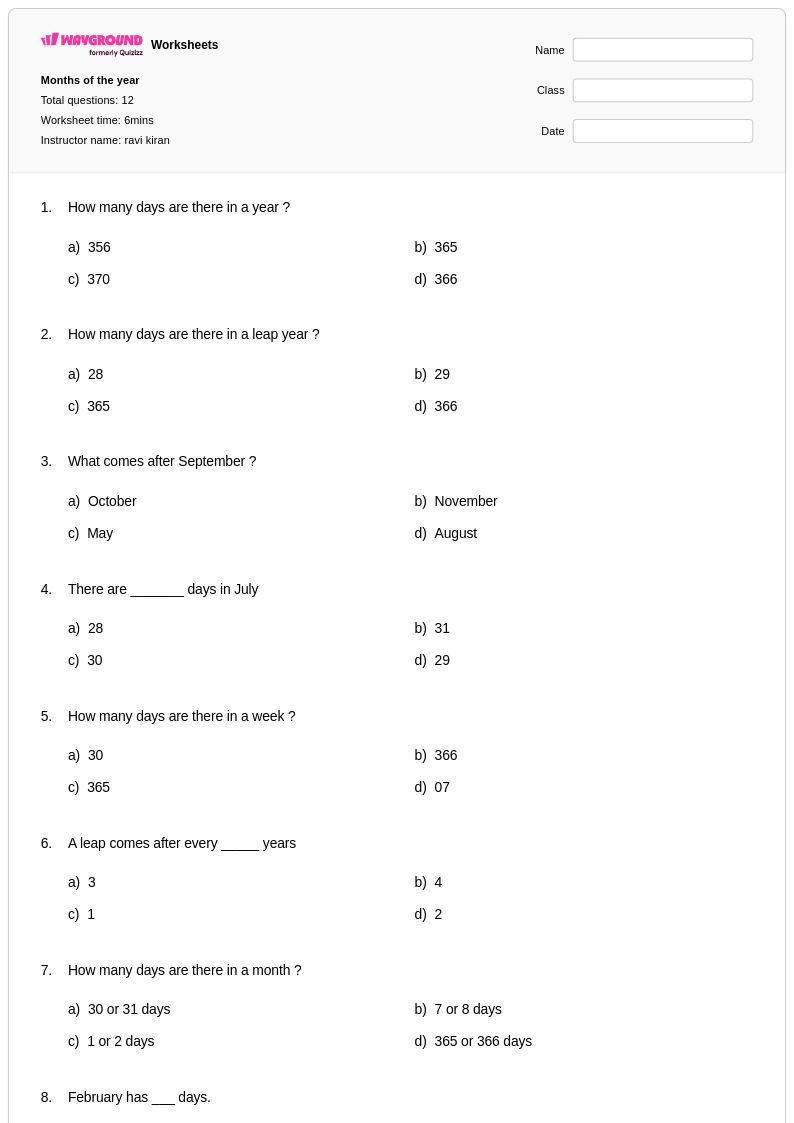
12Q
2nd - 3rd
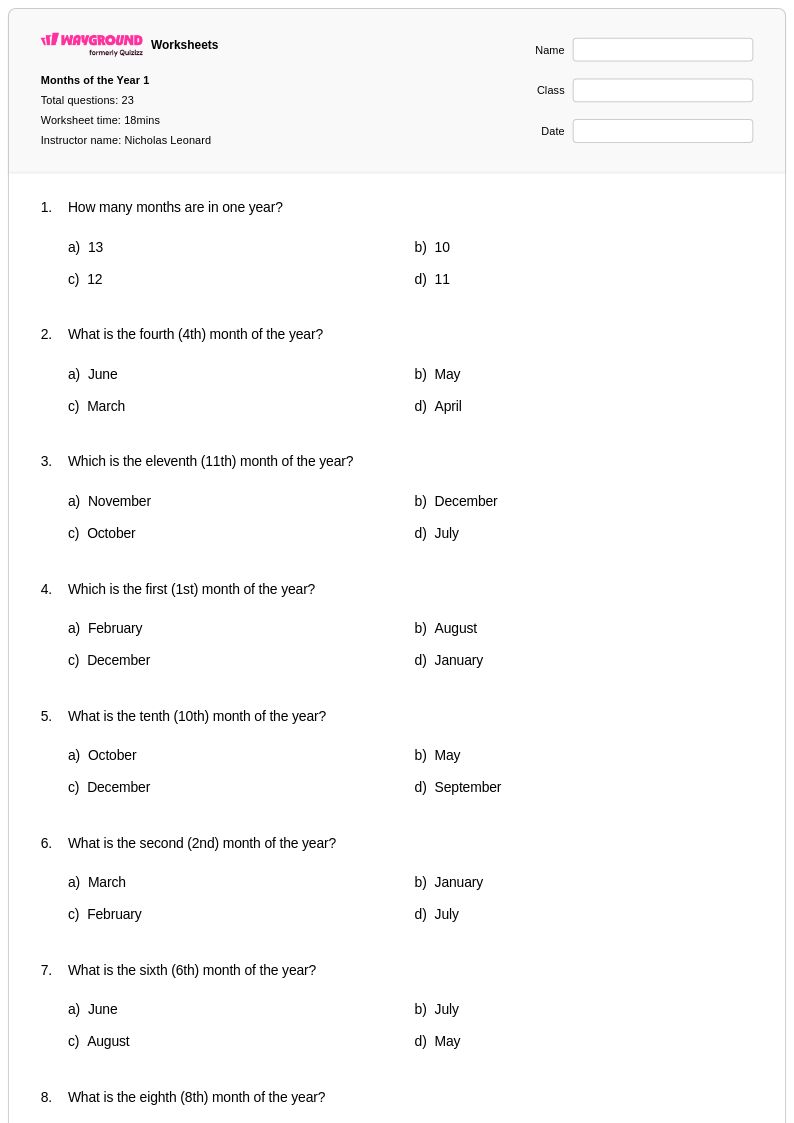
23Q
2nd - 7th
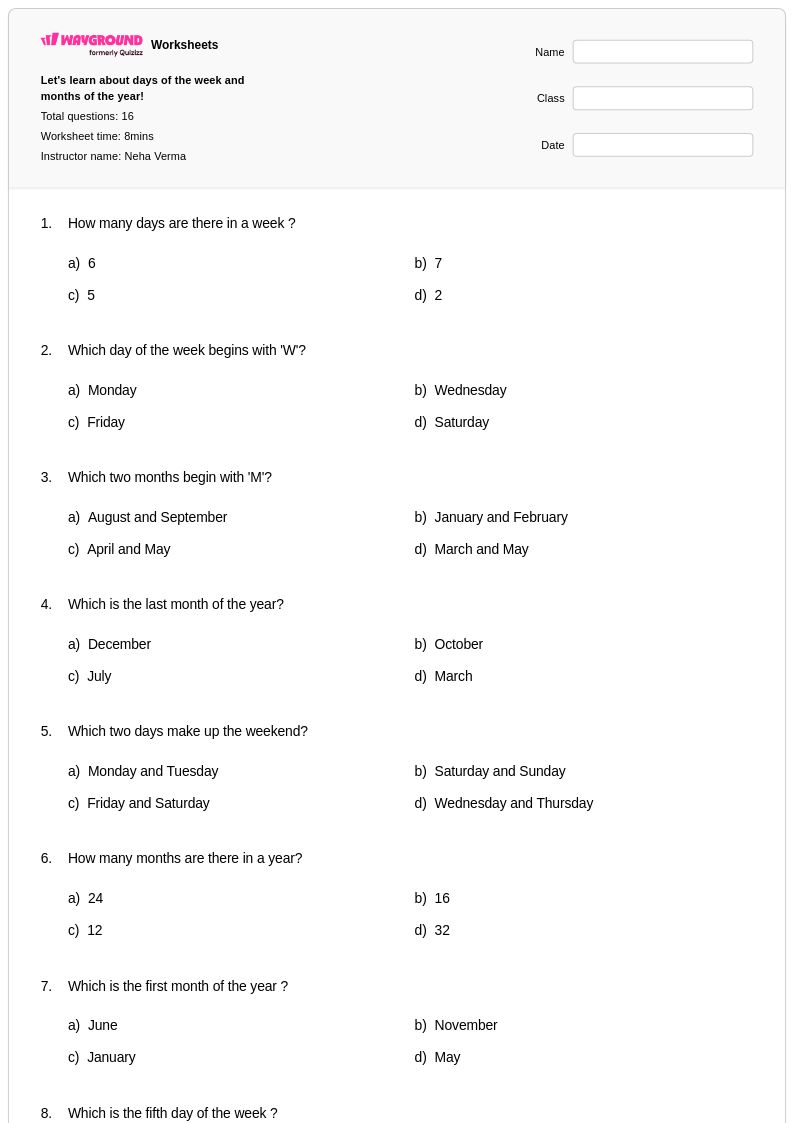
16Q
2nd - 3rd
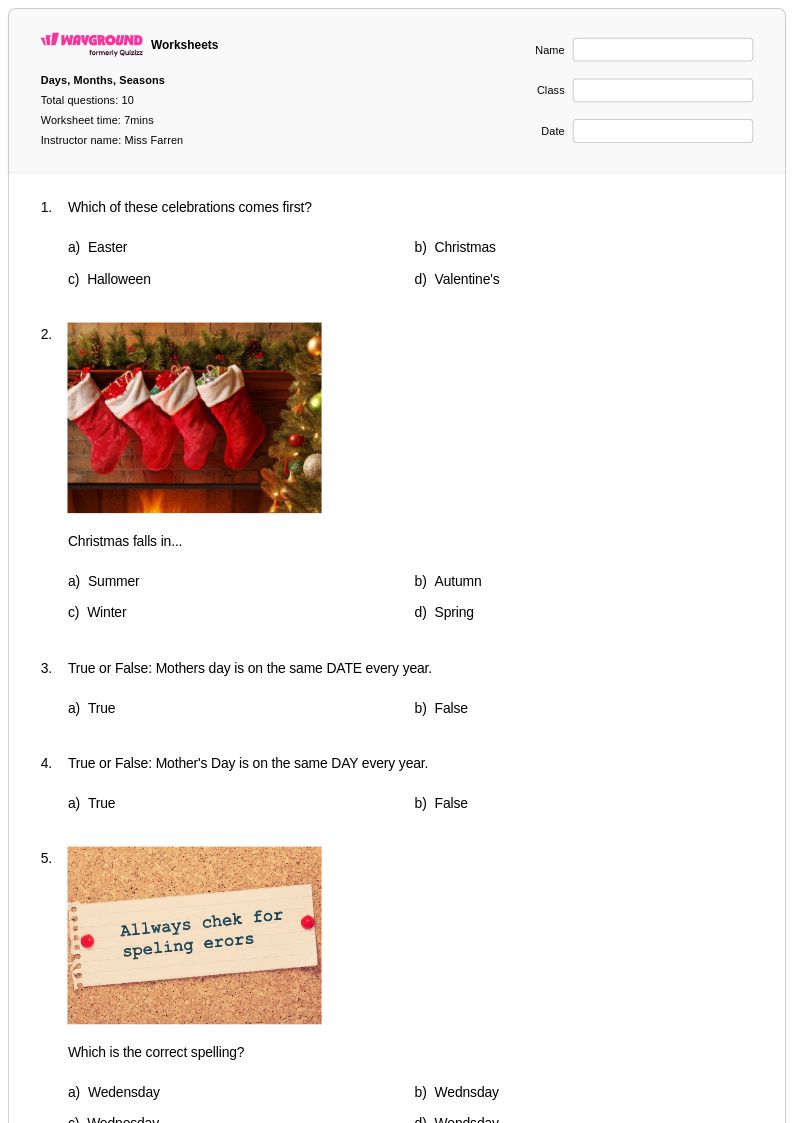
10Q
1st - 3rd
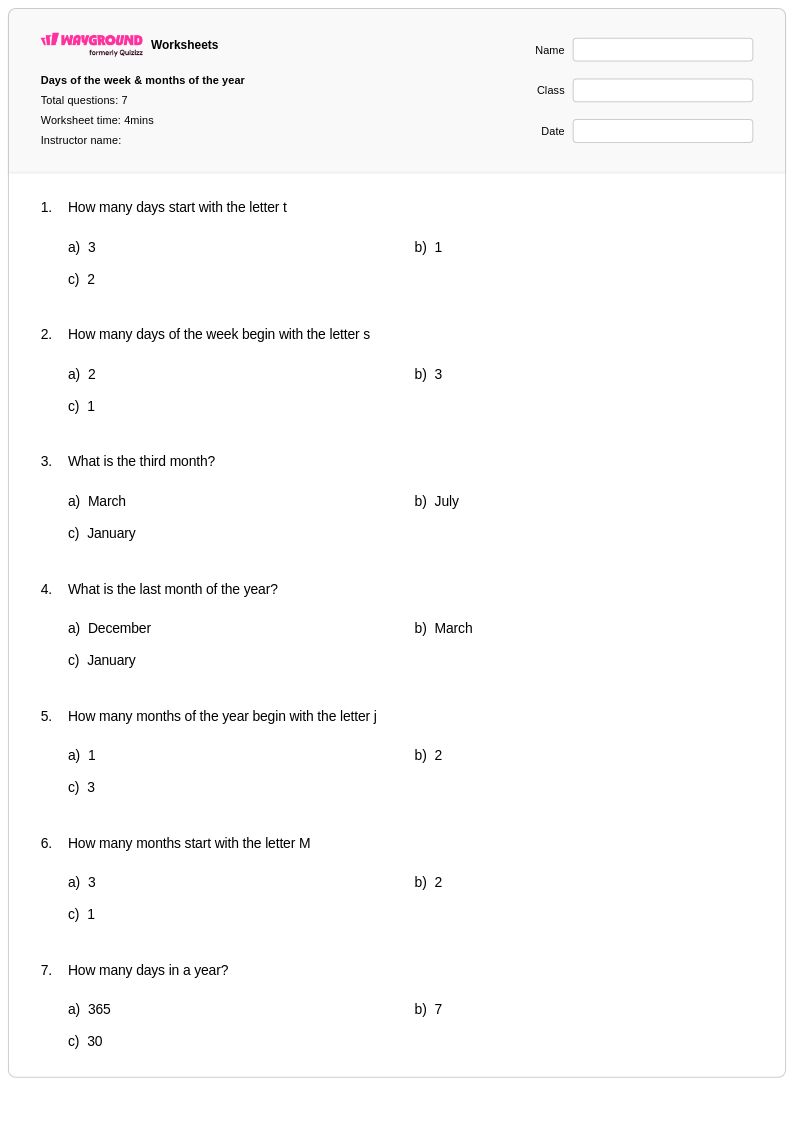
7Q
KG - 4th
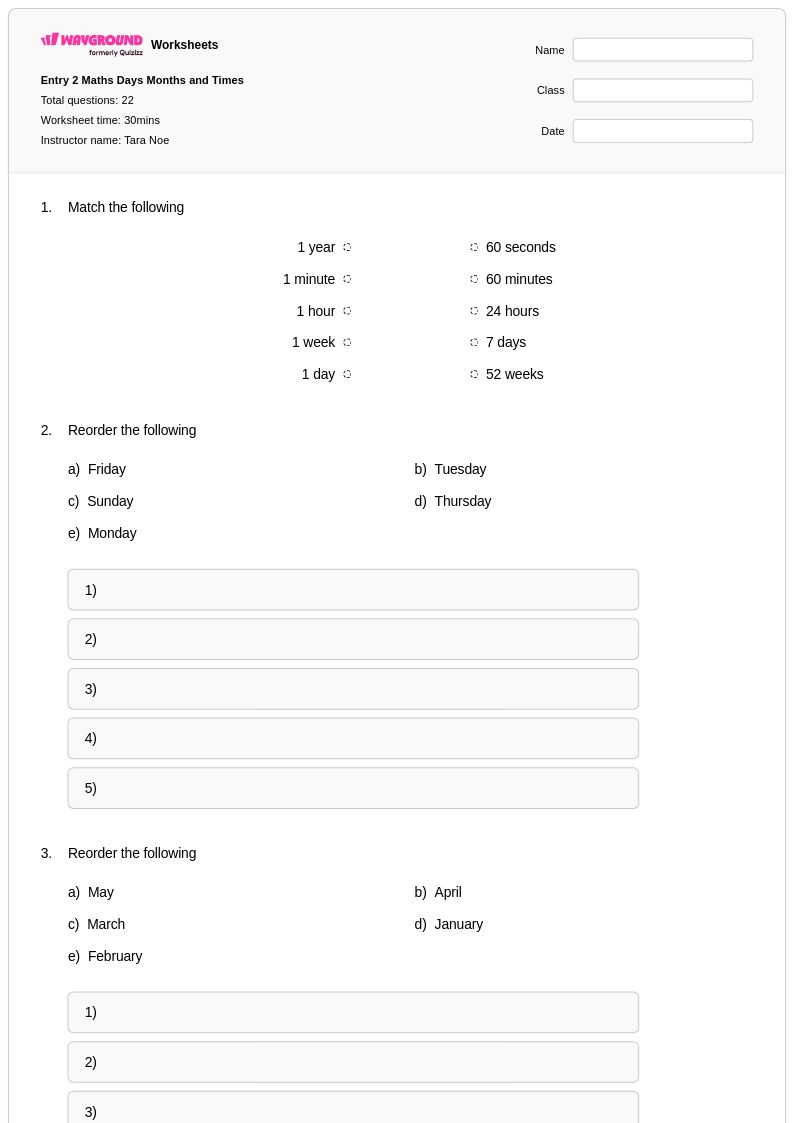
22Q
1st - 5th
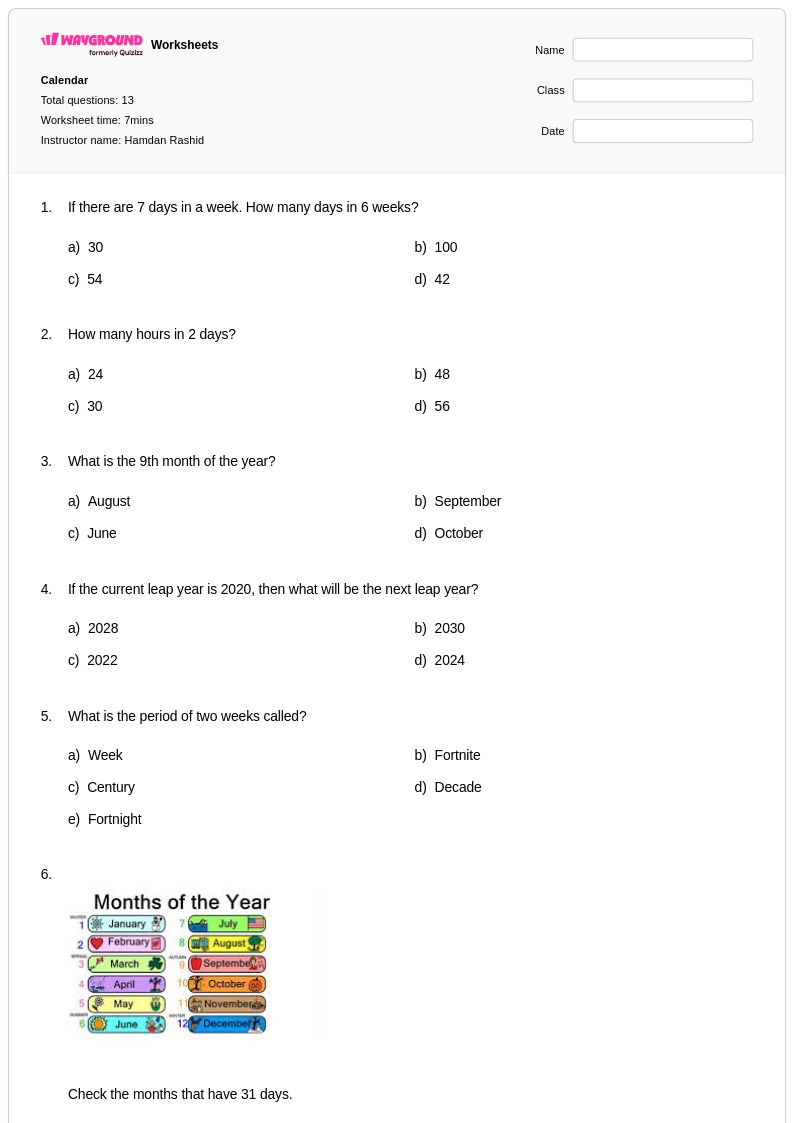
13Q
KG - 12th
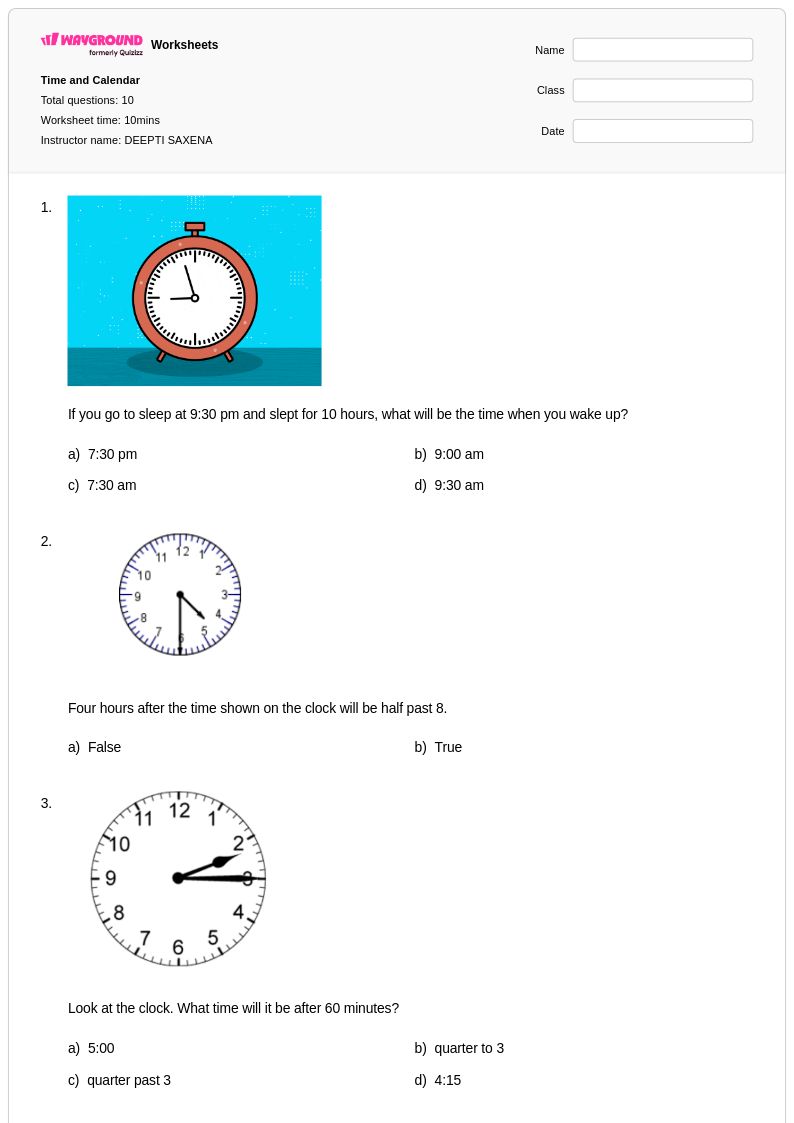
10Q
3rd - 4th
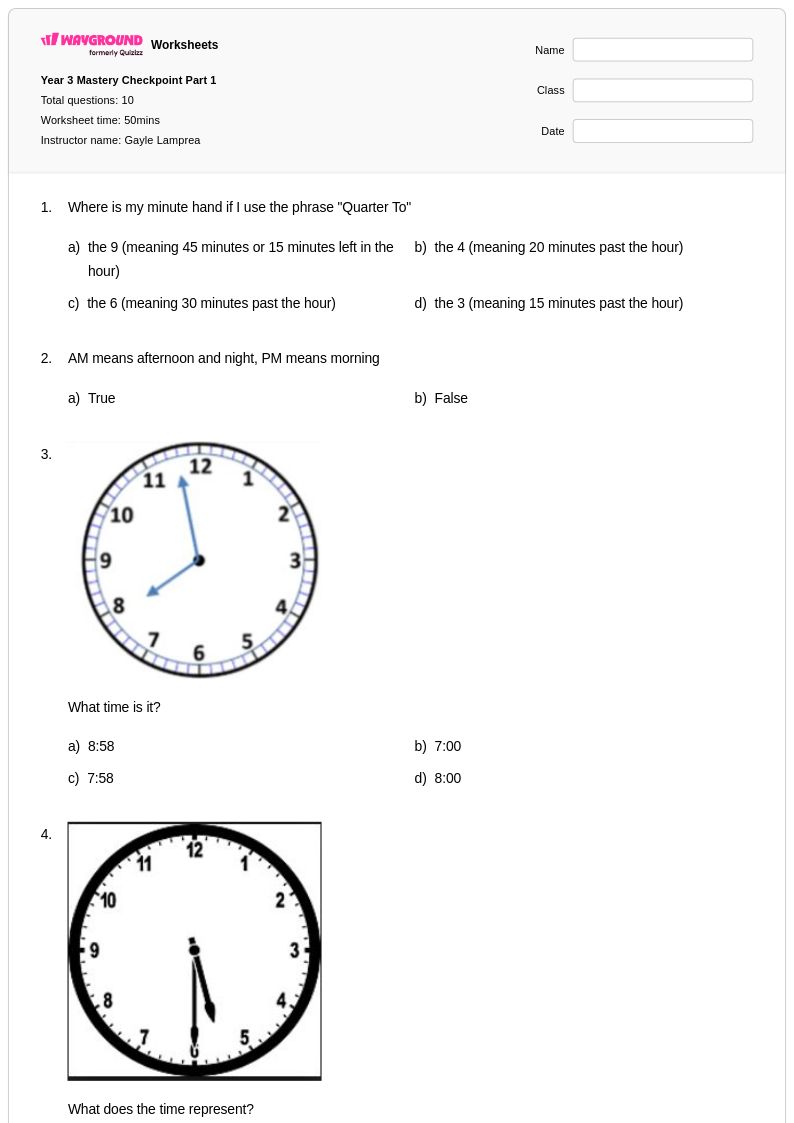
10Q
3rd
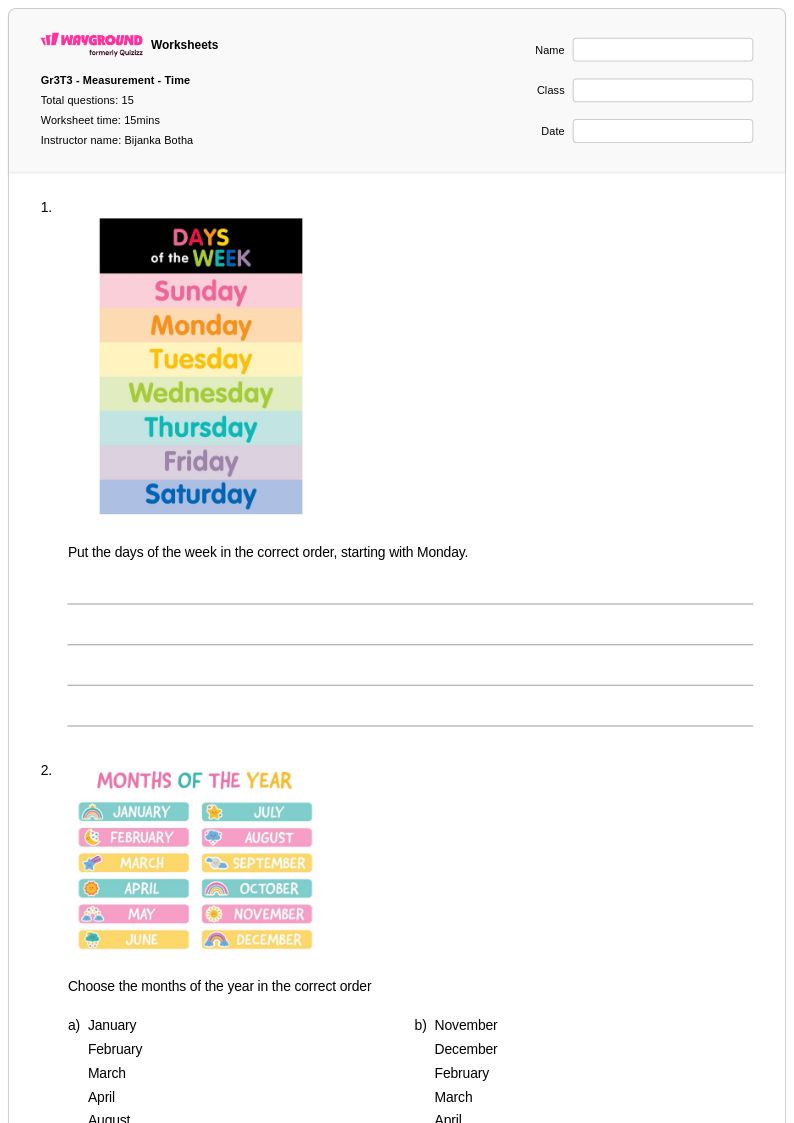
15Q
3rd - Uni
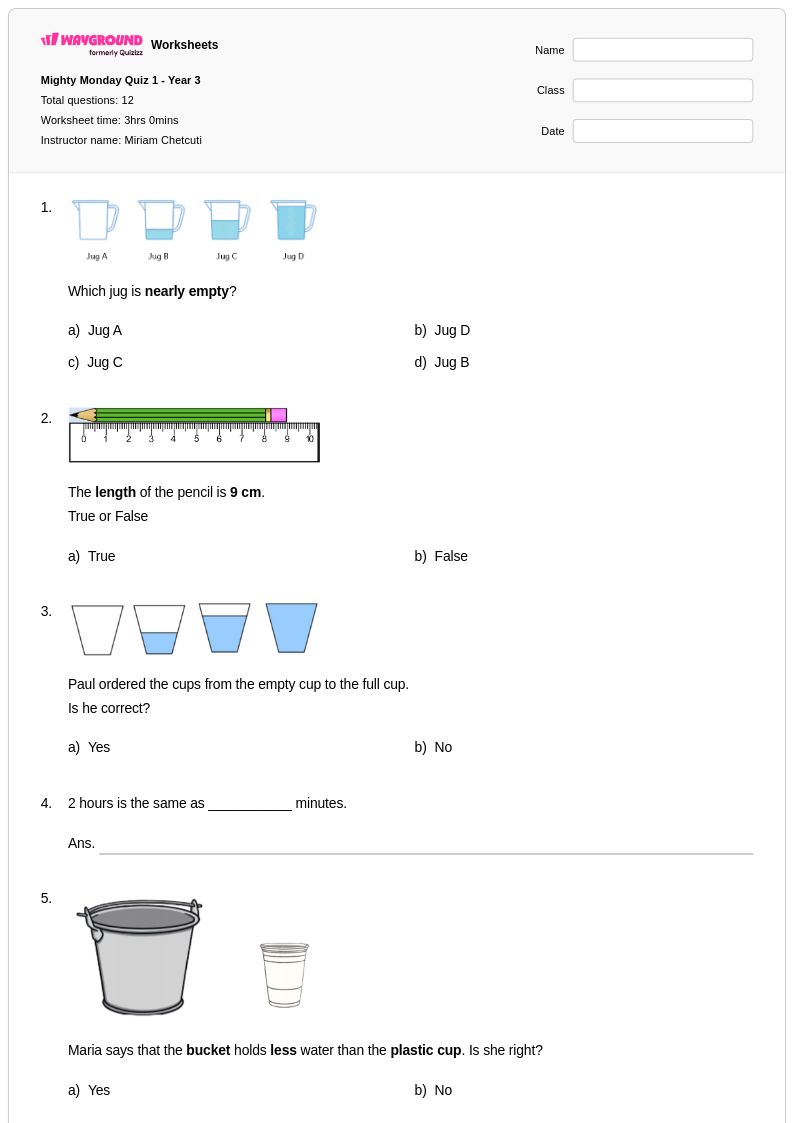
12Q
3rd
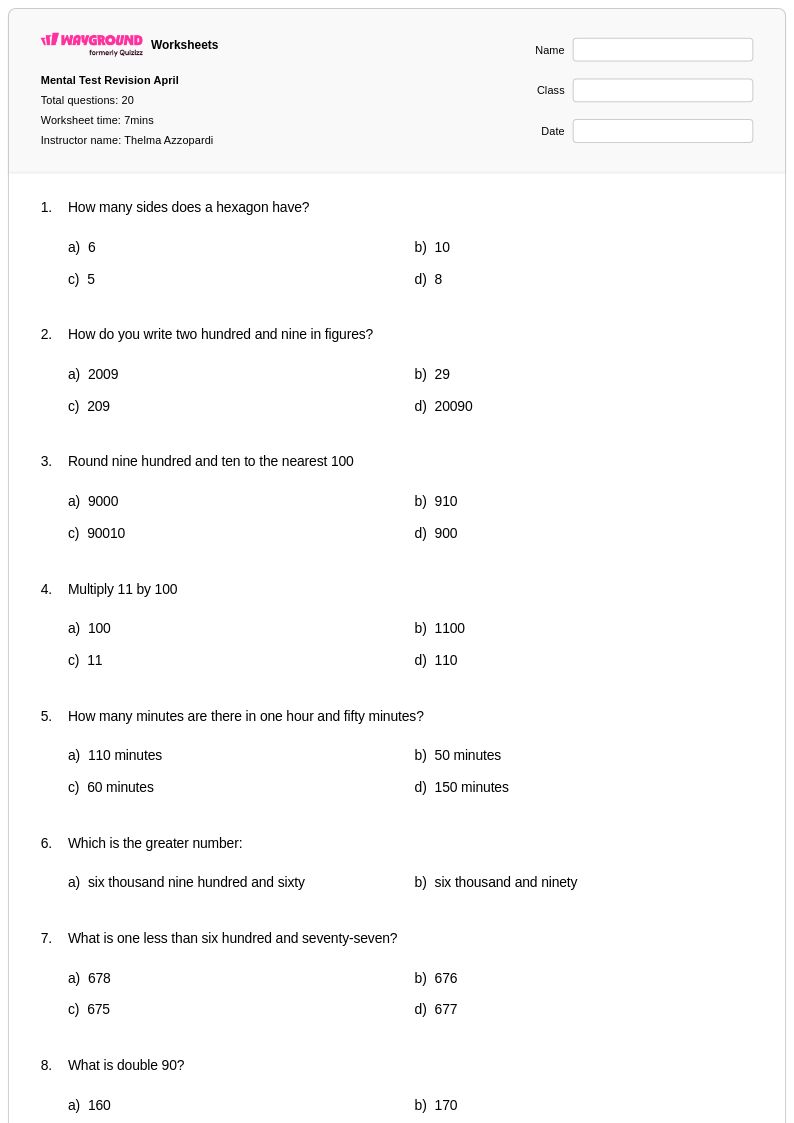
20Q
3rd - 5th
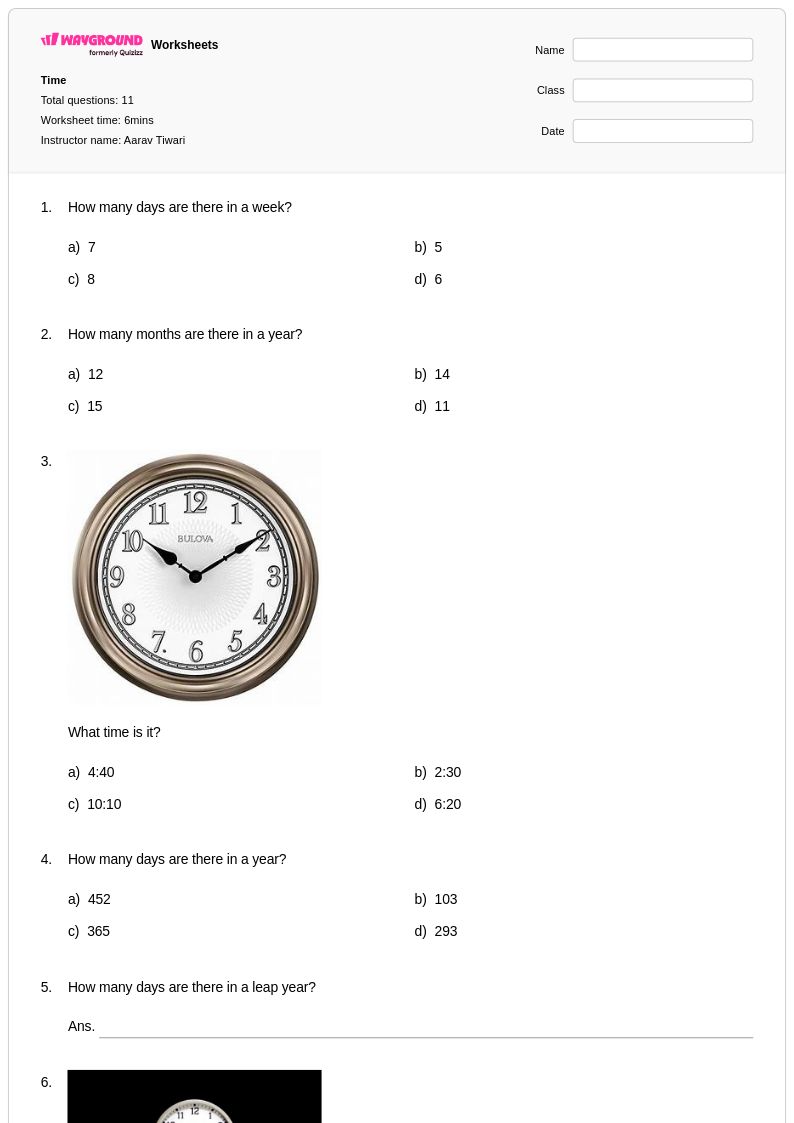
11Q
3rd - 4th
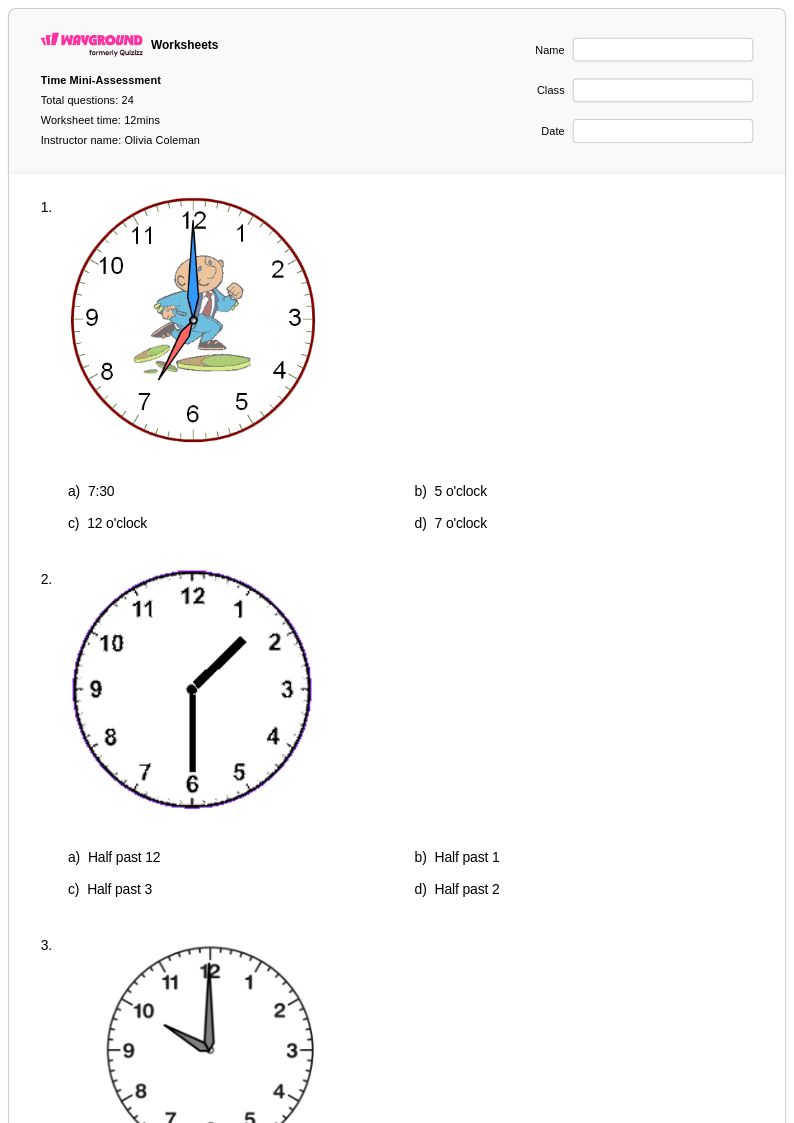
24Q
3rd
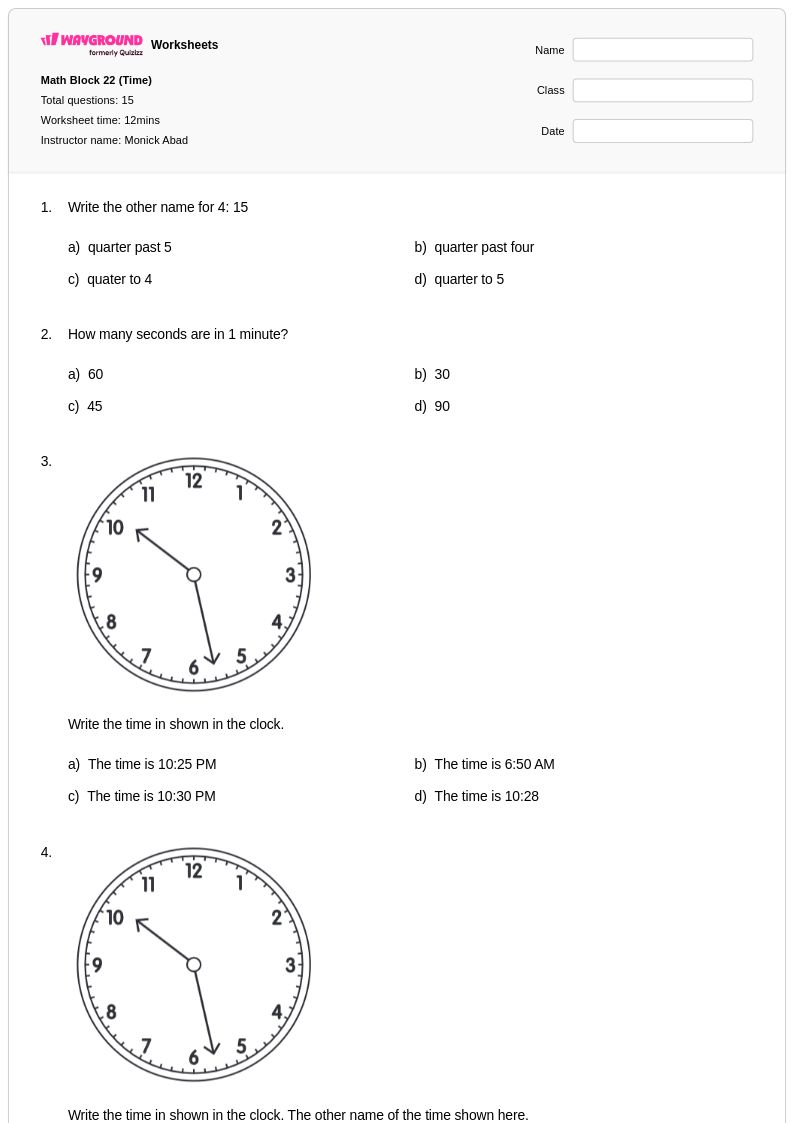
15Q
3rd
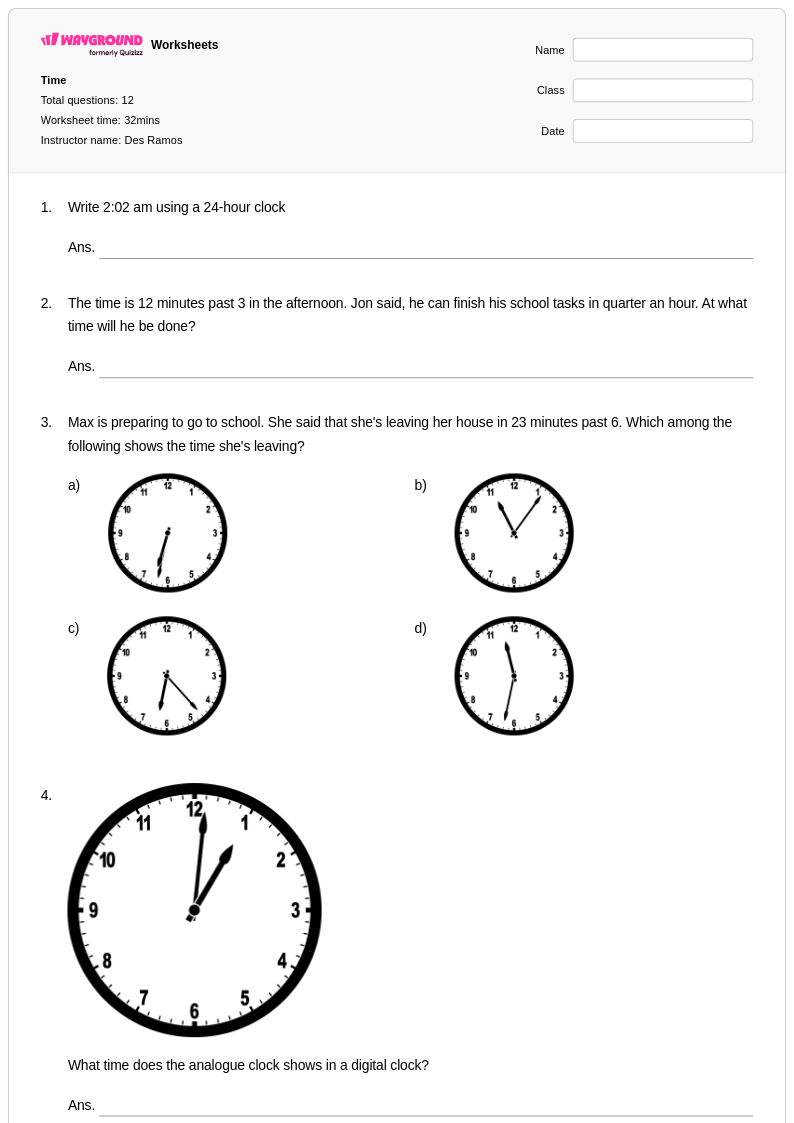
12Q
3rd
Explorar Months of the Year hojas de trabajo por grados
Explore otras hojas de trabajo de materias para year 3
Explore printable Months of the Year worksheets for Year 3
Months of the year worksheets for Year 3 students through Wayground (formerly Quizizz) provide essential practice for developing temporal awareness and calendar skills that form the foundation of time concepts in elementary mathematics. These comprehensive printables strengthen students' ability to identify, sequence, and understand the twelve months while building connections between written month names, numerical representations, and seasonal patterns. The carefully designed practice problems help third graders master month abbreviations, recognize the correct order of months throughout the year, and solve problems involving elapsed time between different months. Each worksheet collection includes detailed answer keys to support independent learning and comes in convenient PDF format for easy classroom distribution and home practice.
Wayground (formerly Quizizz) empowers teachers with access to millions of educator-created resources specifically designed for months of the year instruction at the Year 3 level. The platform's robust search and filtering capabilities allow educators to quickly locate worksheets that align with state mathematics standards for time concepts, while differentiation tools enable customization based on individual student needs and learning objectives. Teachers can seamlessly modify existing materials or combine multiple worksheet types to create comprehensive practice sets for skill development, remediation sessions, or enrichment activities. The availability of both printable and digital formats, including downloadable PDFs, provides flexibility for various classroom environments and learning modalities, making lesson planning more efficient while ensuring students receive targeted practice with month identification and sequencing skills.
FAQs
What should 3rd graders be able to do with the months of the year?
How can I challenge 3rd graders with this topic?
What are effective practice problems for 3rd graders?
What difficulties might 3rd graders still have with calendar concepts?
How can I use this 3rd grade worksheet in my classroom?
How does this topic support the 3rd grade math curriculum?