Year 3 elapsed time worksheets from Wayground help students master calculating time intervals through engaging printables, practice problems, and comprehensive answer keys for effective mathematics learning.
Explore printable Elapsed Time worksheets for Year 3
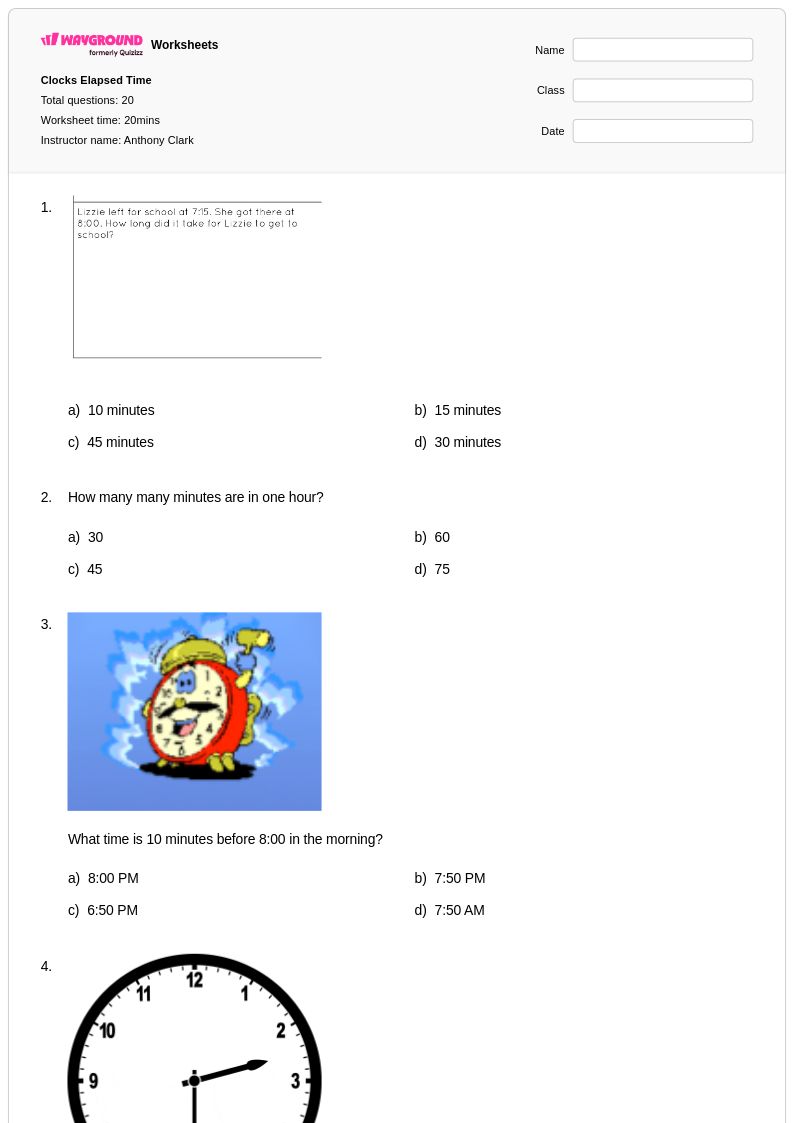
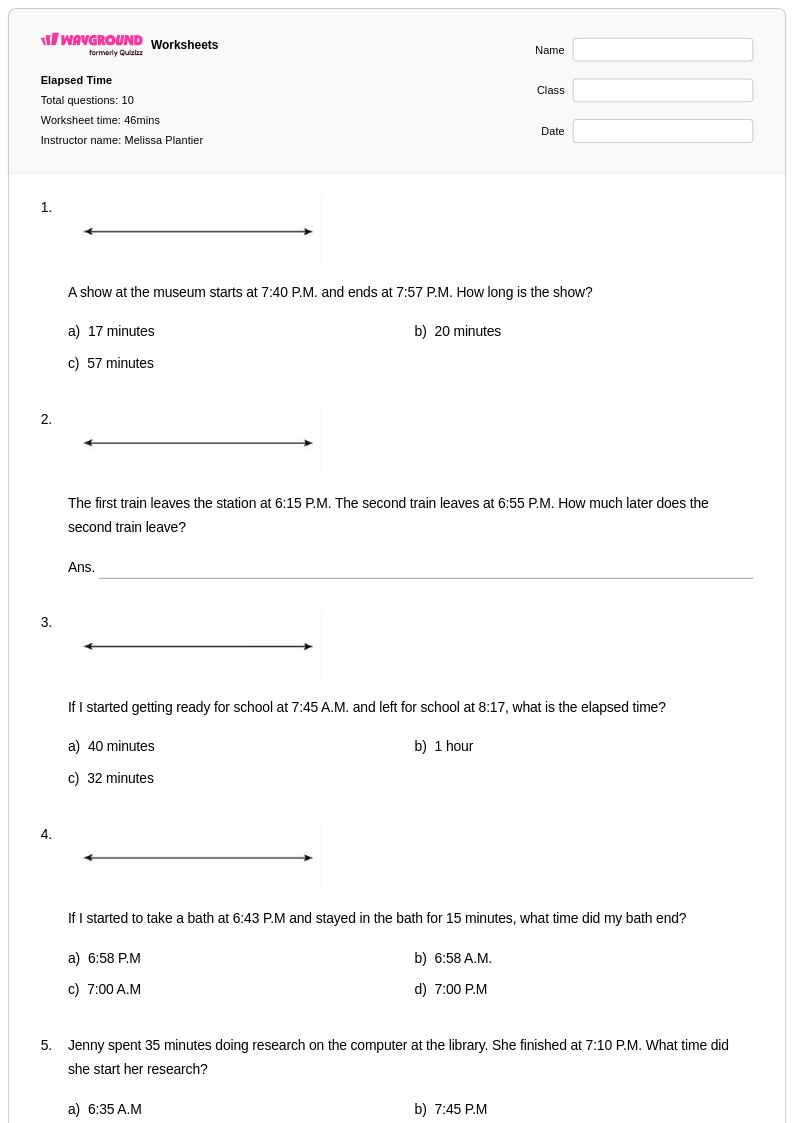
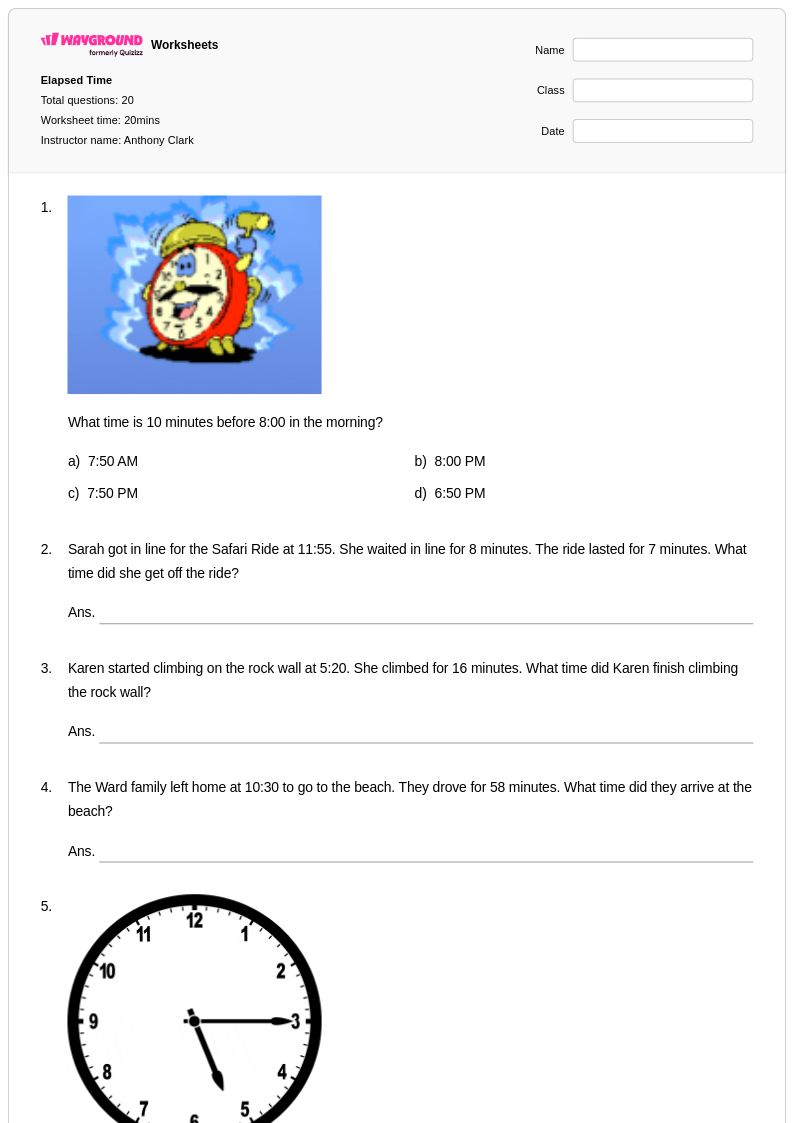
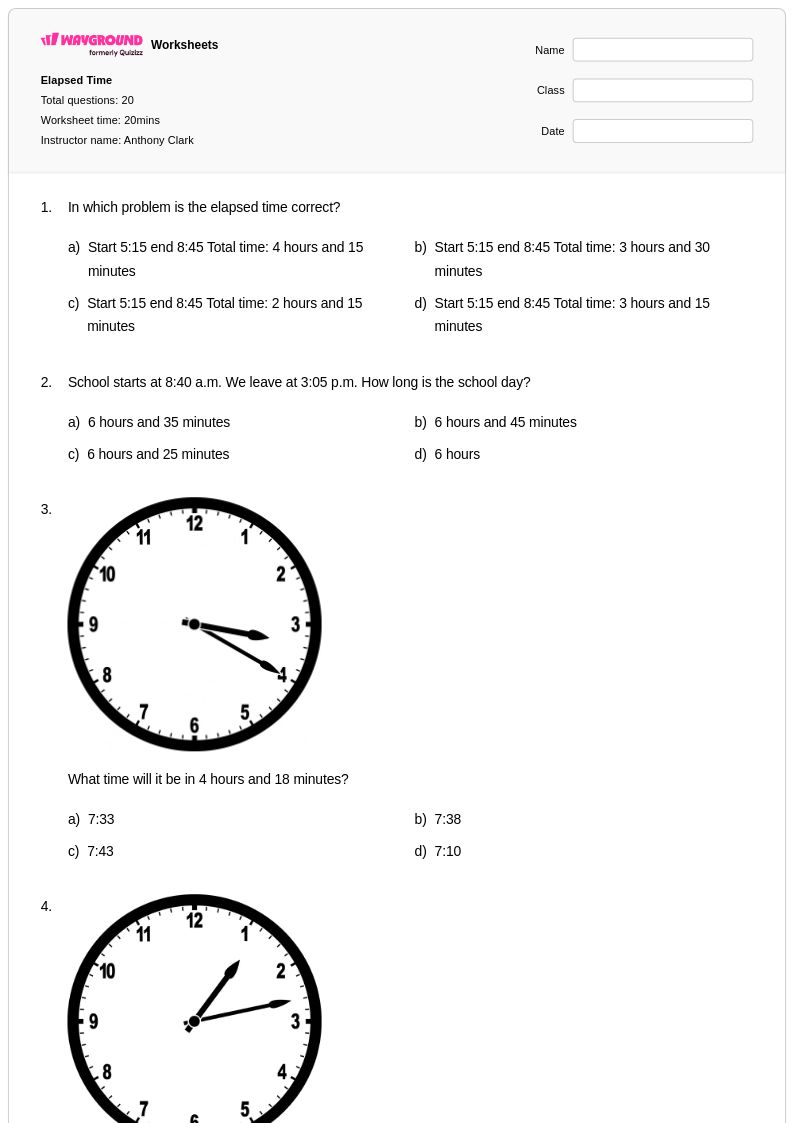
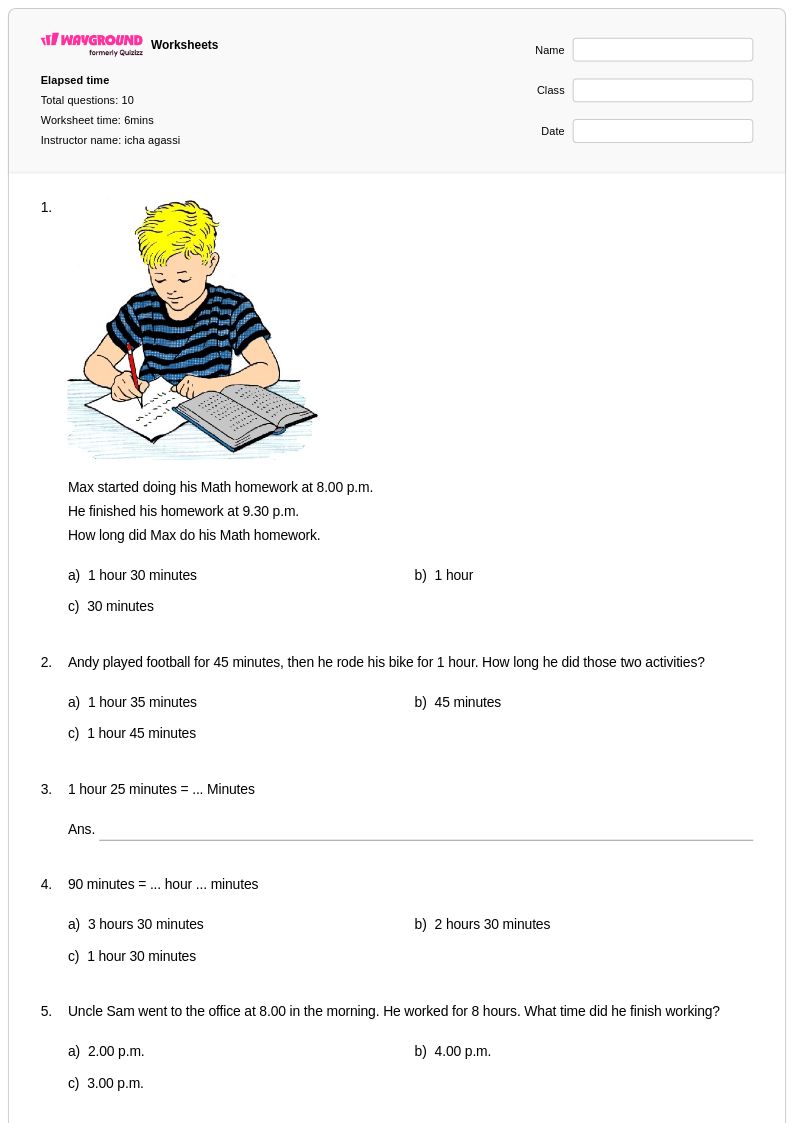
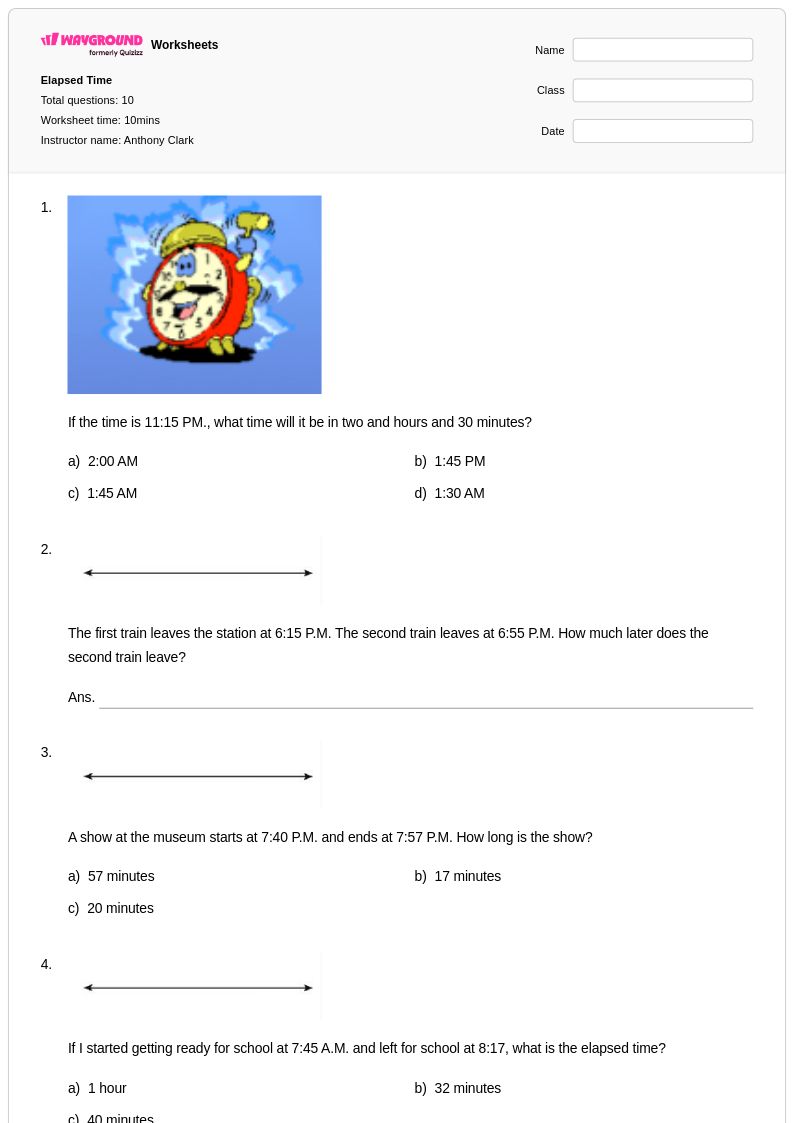
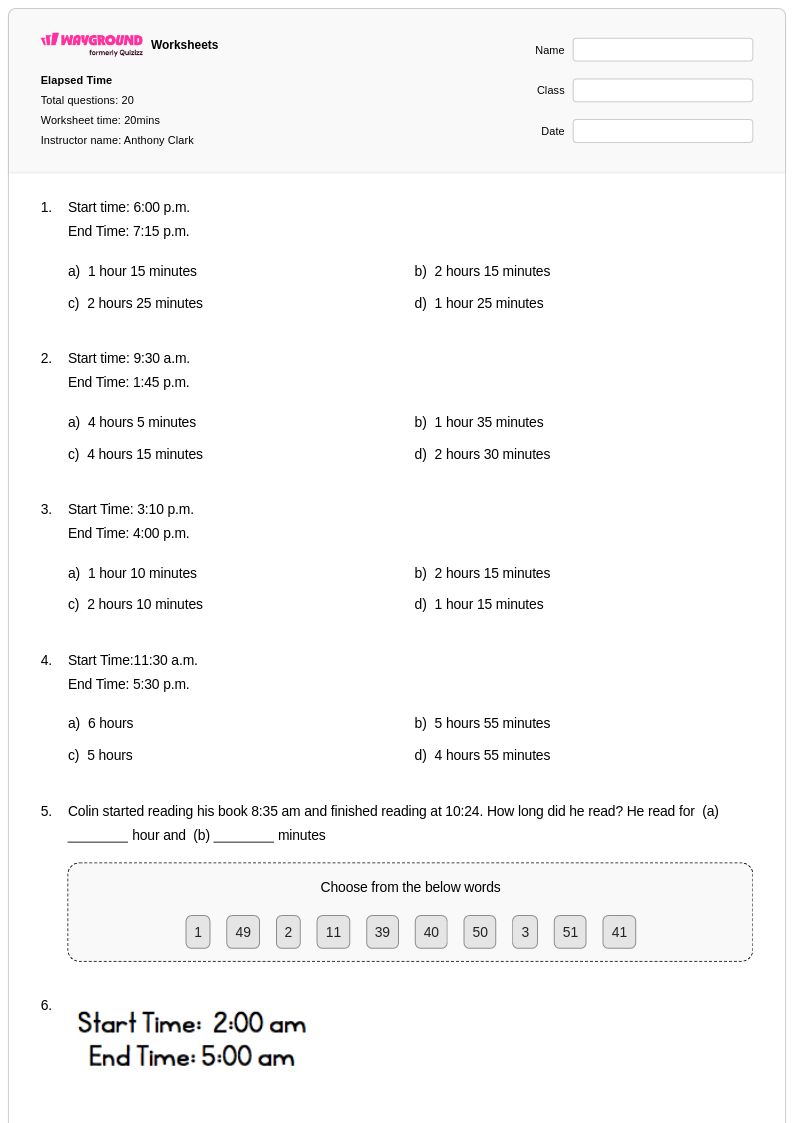
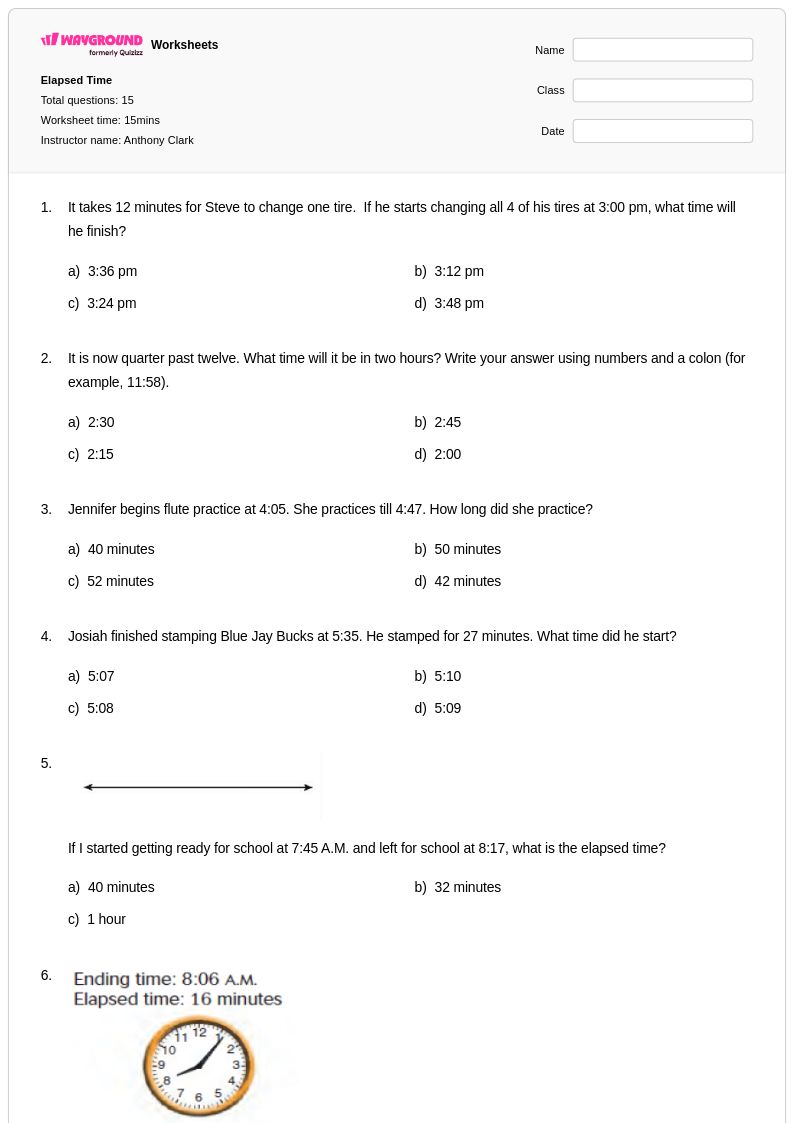
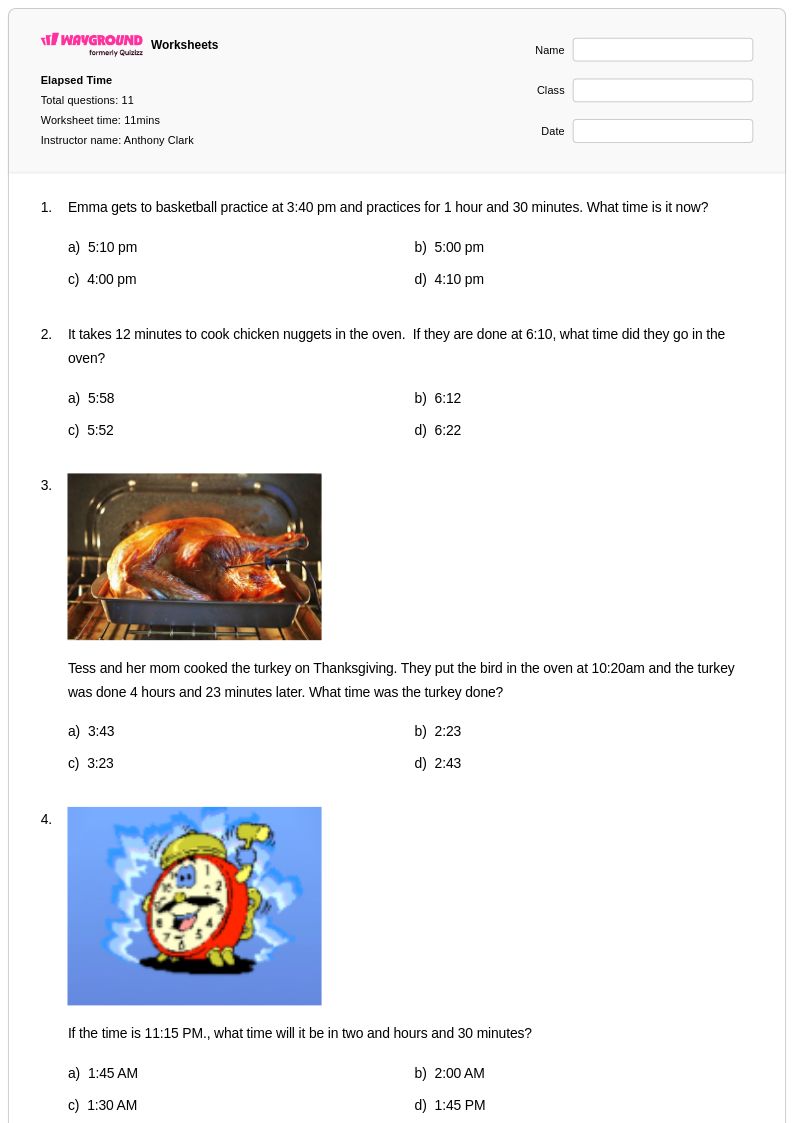
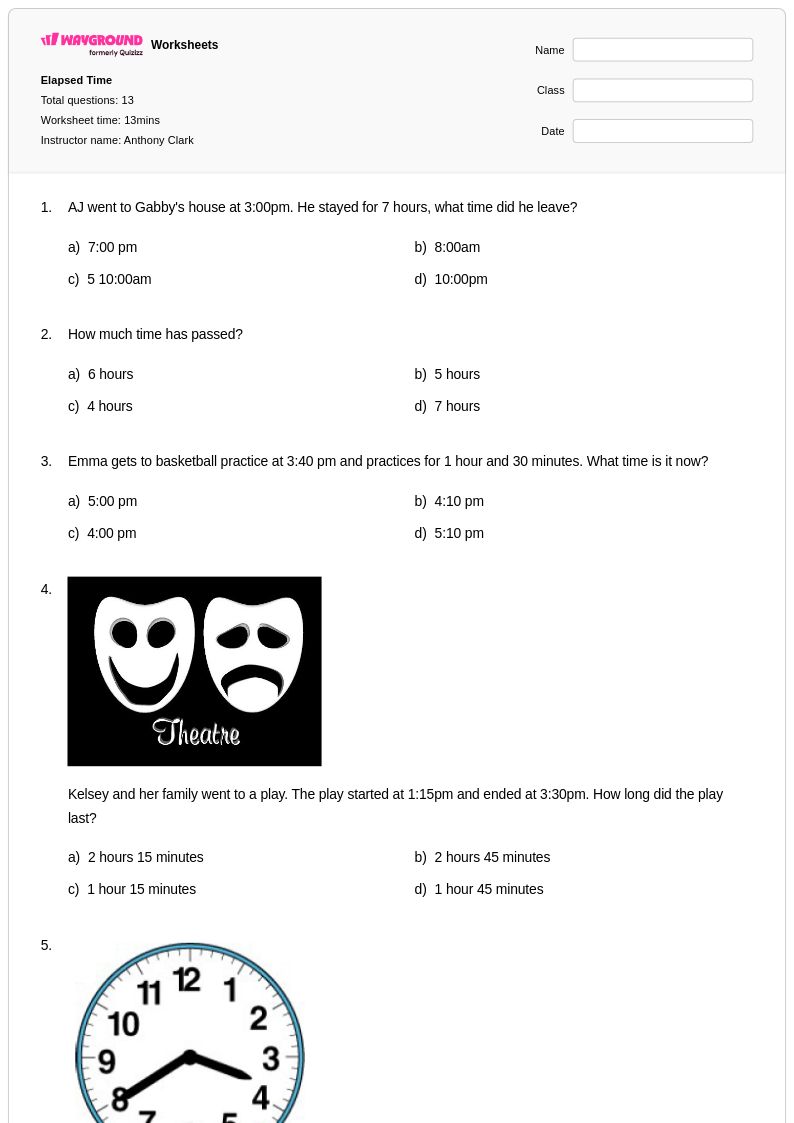
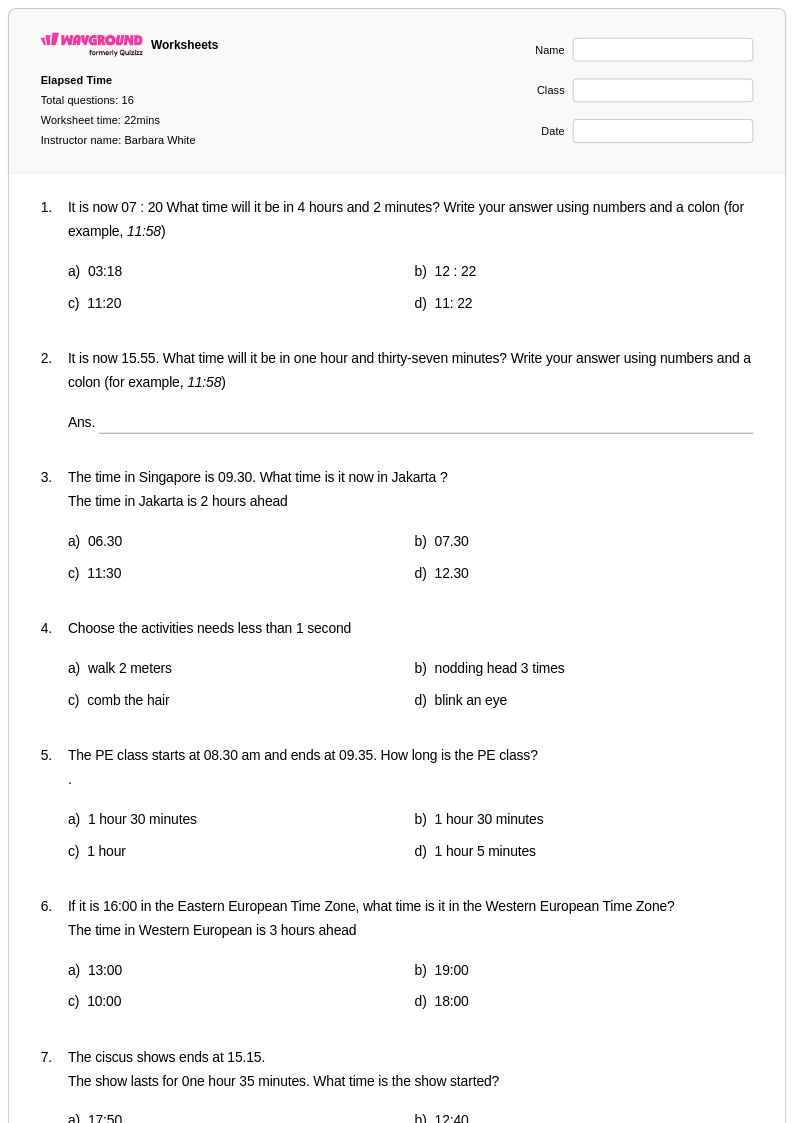
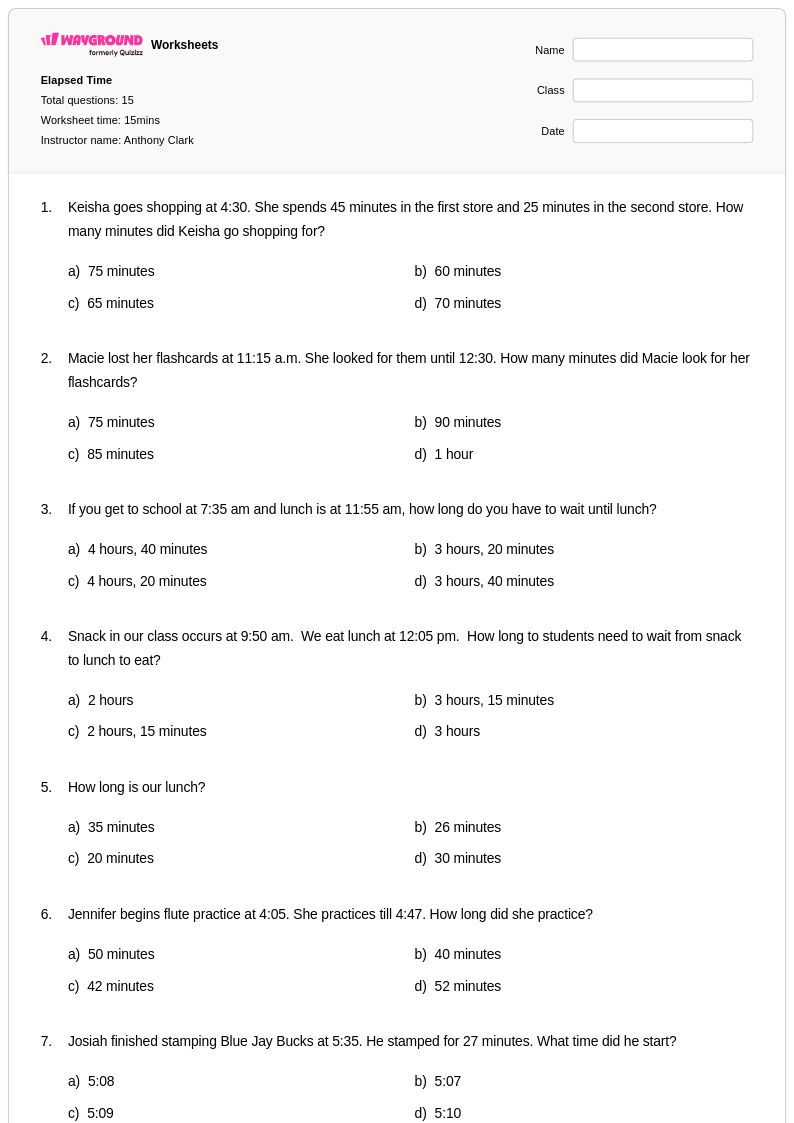
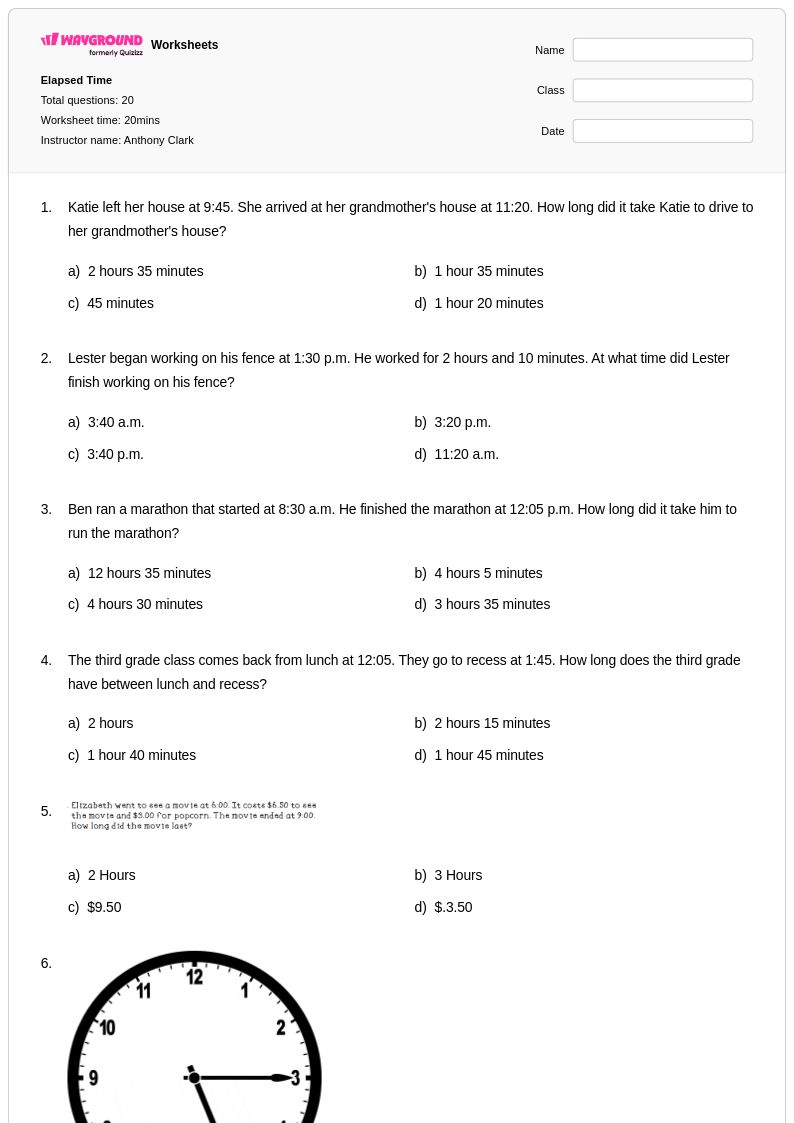
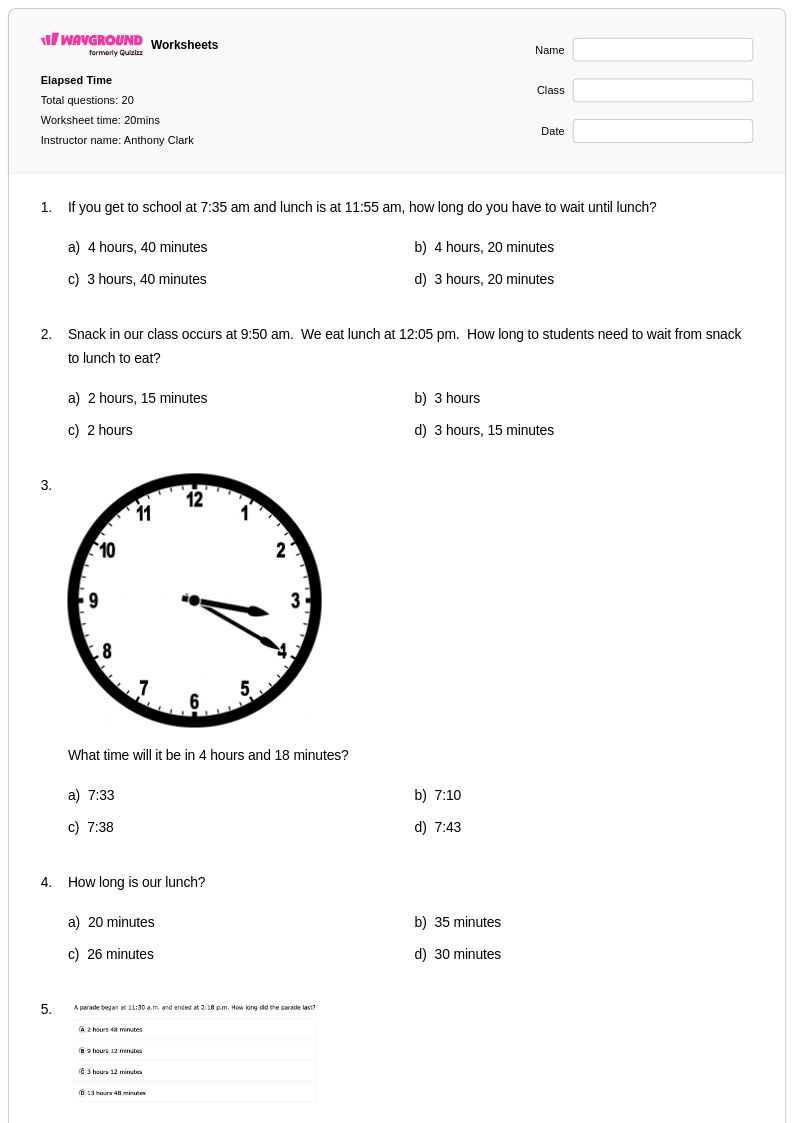
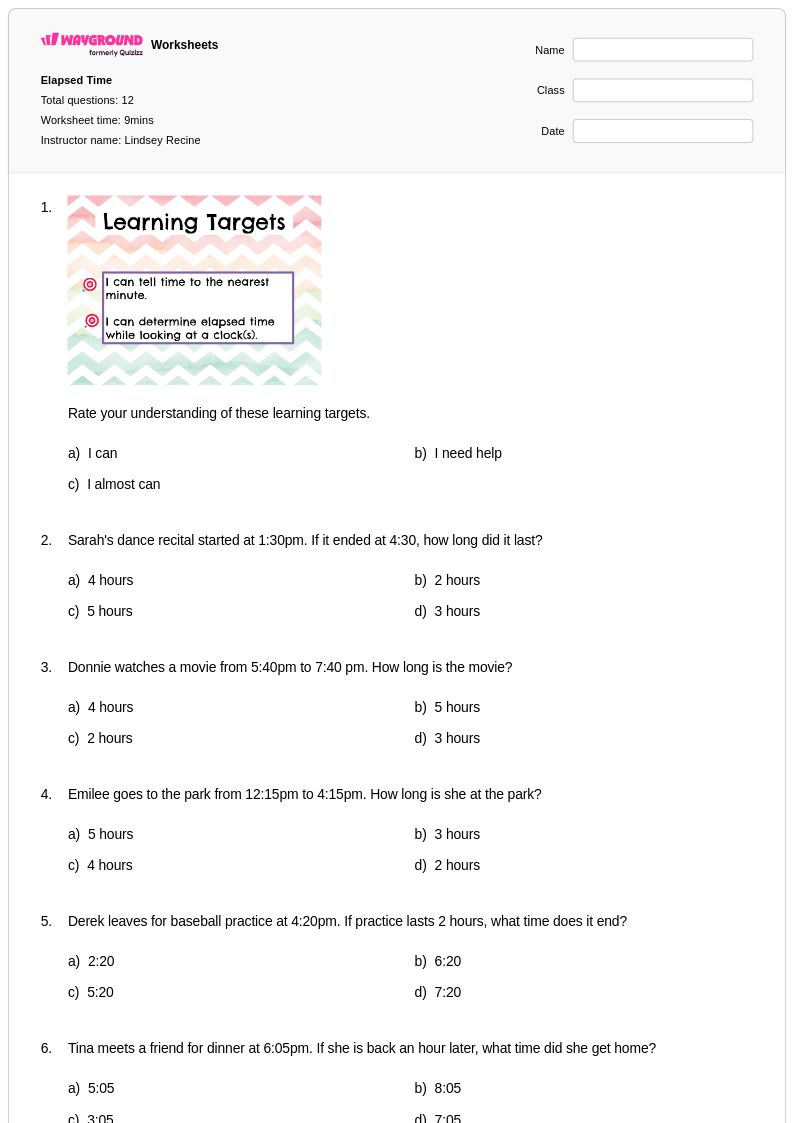
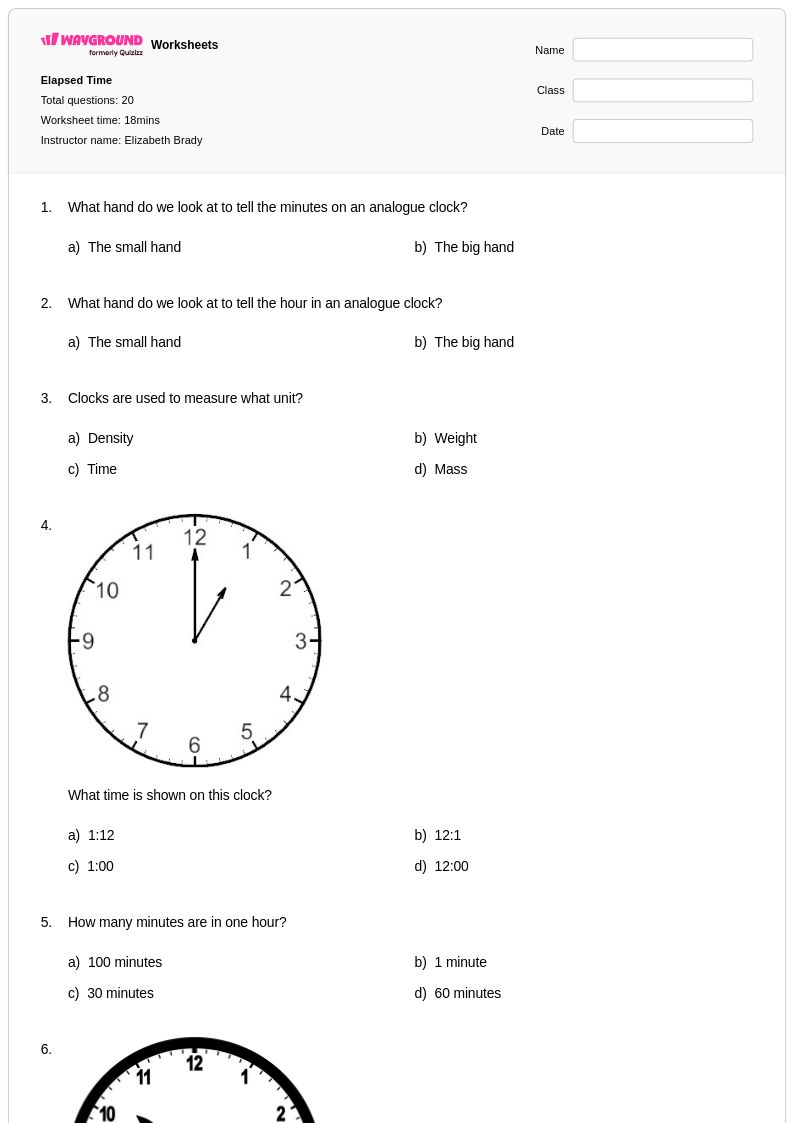
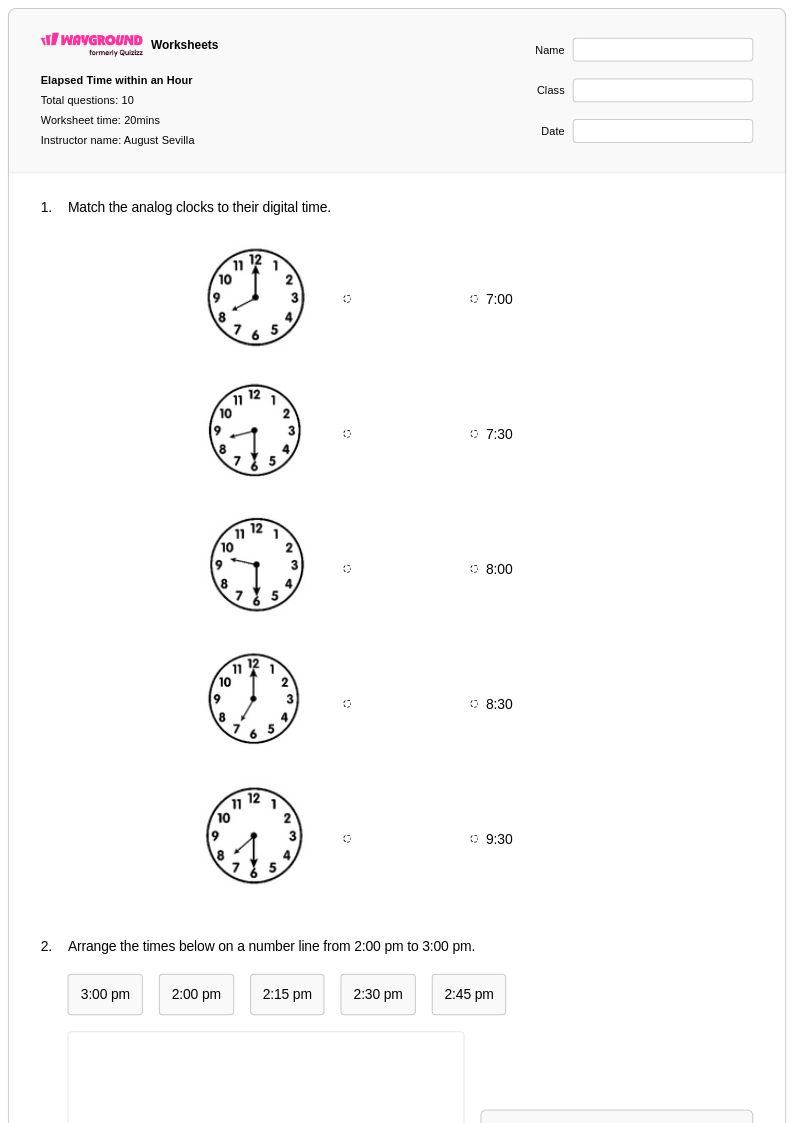
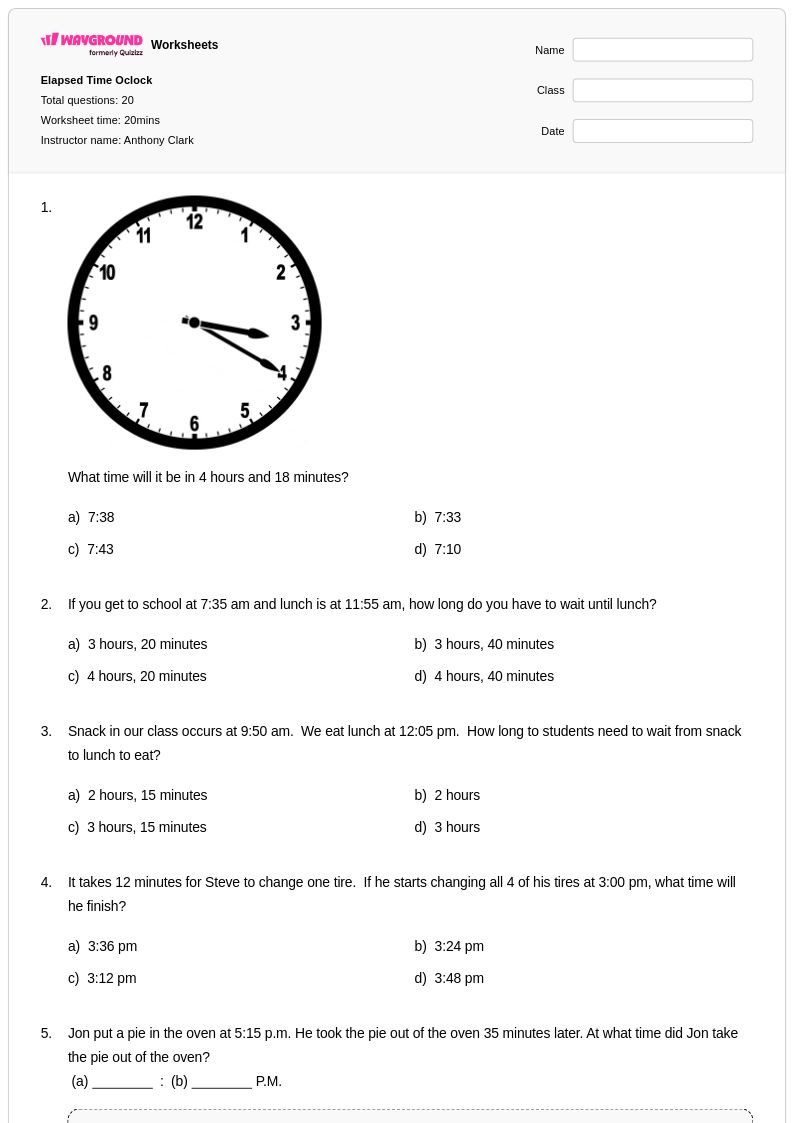
Elapsed time worksheets for Year 3 students available through Wayground (formerly Quizizz) provide comprehensive practice in calculating time intervals and duration between events. These educational resources focus on developing students' ability to determine how much time has passed between two given times, whether working with hours, minutes, or combinations of both. The worksheets strengthen essential mathematical reasoning skills by presenting real-world scenarios such as calculating movie lengths, determining travel time, or figuring out how long activities take to complete. Each worksheet collection includes detailed answer keys and is available as free printables in convenient PDF format, making them accessible for both classroom instruction and home practice. Students work through carefully structured practice problems that progress from simple hour-based calculations to more complex elapsed time scenarios involving minutes and mixed units.
Wayground (formerly Quizizz) supports educators with an extensive library of millions of teacher-created elapsed time resources that can be easily searched and filtered by specific Year 3 learning objectives and mathematical standards. The platform's robust differentiation tools allow teachers to customize worksheets based on individual student needs, offering both remediation support for struggling learners and enrichment opportunities for advanced students. These resources are available in both printable PDF formats for traditional paper-and-pencil work and digital formats for interactive online learning experiences. Teachers can efficiently plan their time instruction units by accessing standards-aligned materials that support systematic skill development, while the flexible customization options enable targeted practice sessions that address specific areas where students need additional support in mastering elapsed time concepts.
FAQs
How do I teach elapsed time to third graders?
Third grade is where elapsed time gets precise — students move from whole-hour intervals to problems involving any number of minutes. The most effective approach is the "T-chart" or open number line: write the start time, jump to the next whole hour, then continue jumping in convenient chunks (30 minutes, 15 minutes) until you reach the end time, and add up the jumps. This keeps the work transparent and avoids the clock-subtraction trap. Once students are solid on the strategy, introduce word problems with real contexts — movie lengths, travel times, practice schedules — so they see why the skill matters.
What do Grade 3 elapsed time worksheets practice?
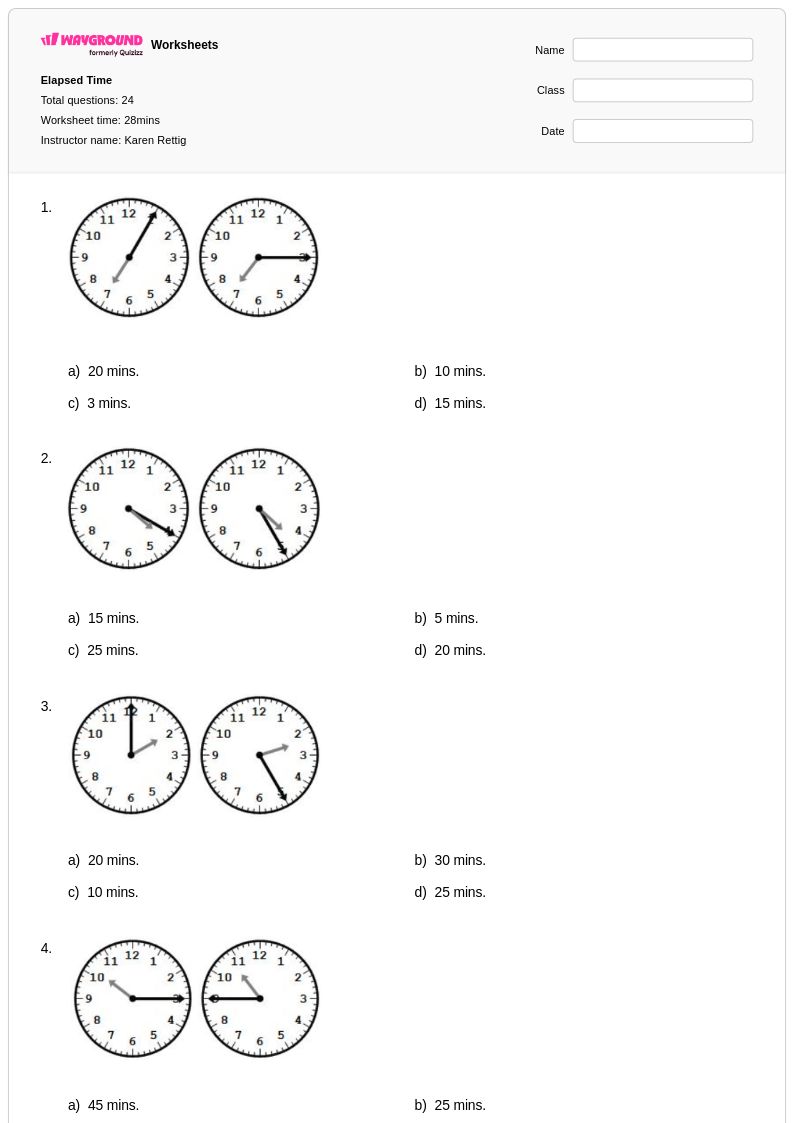
Problems range from straightforward hour-and-minute intervals to multi-step scenarios: calculating how long a movie runs, figuring out an arrival time given a departure and travel duration, or determining how much time is left before an event. Worksheets include both analog clock images and purely numerical time formats, and real-world contexts are used throughout so students practice applying the skill, not just executing a procedure.
What mistakes do third graders make with elapsed time?
The classic error is treating time like a base-10 number — subtracting 2:45 from 5:10 as 510 minus 245 and getting 265, then writing "2 hours 65 minutes." A second common mistake is forgetting to account for AM/PM transitions, especially in problems that cross noon. Students who haven't internalized that 60 minutes make an hour (not 100) will keep making regrouping errors until that fact is automatic.
How do I use these Grade 3 elapsed time worksheets?
Each worksheet includes a complete answer key. For independent or small-group practice, print the PDF — students can show their number line work directly on the page, which makes it easy to see where their reasoning breaks down. To assign digitally, host the worksheet as a Wayground quiz; you get per-student results without any manual grading. If you print, the Wayground for Teachers app lets you scan student submissions and grade them from your phone.
Is elapsed time a Common Core standard for third grade?
Yes — third grade is where Common Core places the core elapsed time standard. Students are expected to tell and write time to the nearest minute and solve word problems involving addition and subtraction of time intervals in minutes. This is a significant step up from second grade's five-minute precision, and it's the foundation for the multi-step time problems students encounter in fourth grade. These worksheets are built around exactly that progression: minute-level accuracy and word-problem application.
How can I differentiate elapsed time practice for my third grade class?
For students still shaky on clock reading, the Read Aloud accommodation removes the decoding load from word problems so they can focus on the elapsed time reasoning. For students who are ready for more challenge, the worksheet collection includes multi-step and real-world problems you can assign selectively. If you have students who find a standard worksheet layout hard to process, Wayground lets you generate an alternate version with a dyslexia-friendly font or larger text — same content, more accessible format.
What real-world problems work well for practicing elapsed time in third grade?
Problems that use schedules students recognize tend to land best: a school day schedule (when does math end if it starts at 9:15 and runs 45 minutes?), a sports practice timeline, or a simple cooking scenario. Movie and travel time problems also work well because the context makes the answer feel meaningful — students can check whether their answer is reasonable without needing a teacher to confirm it.