
15 Q
1st
8 Q
1st
10 Q
1st
14 Q
1st - 2nd
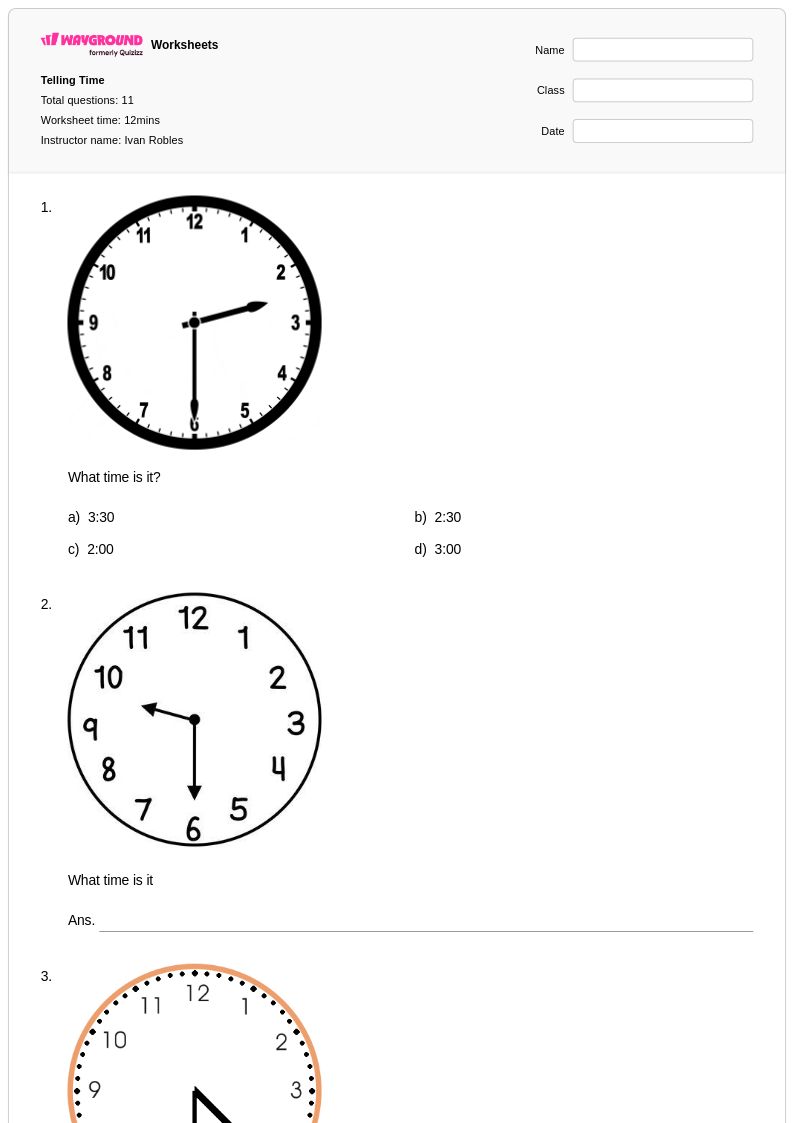
11 Q
1st
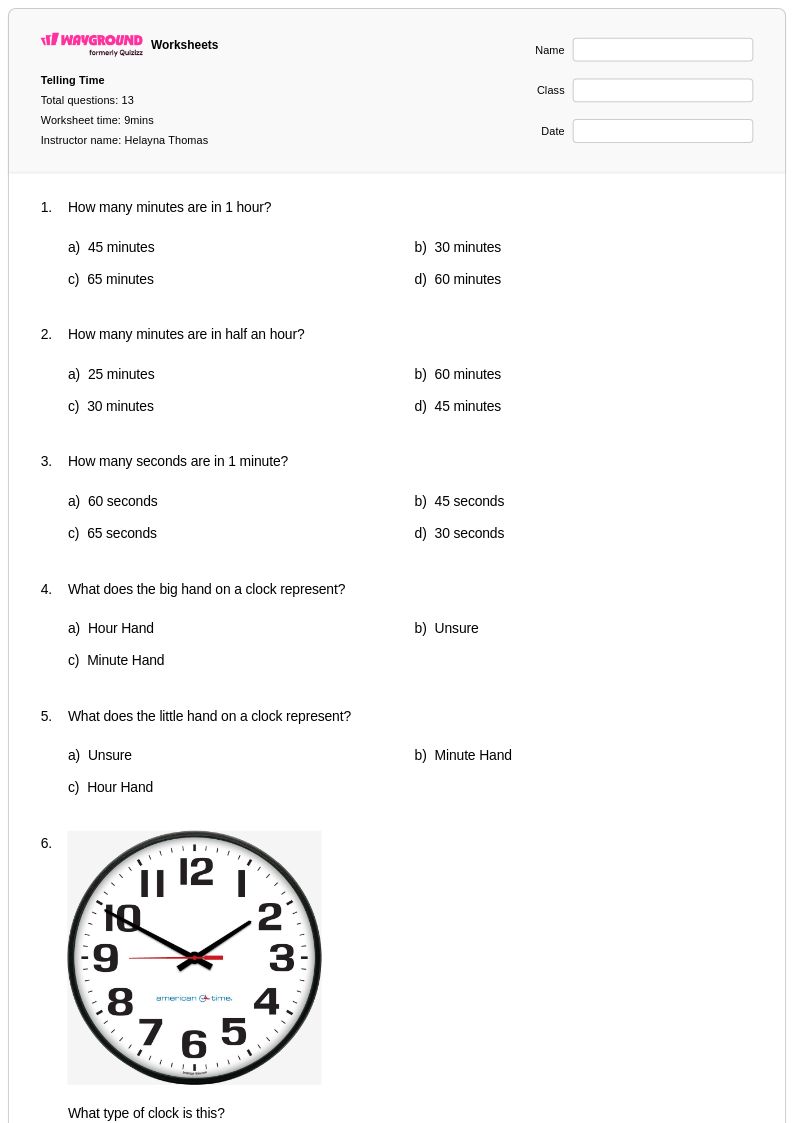
13 Q
1st
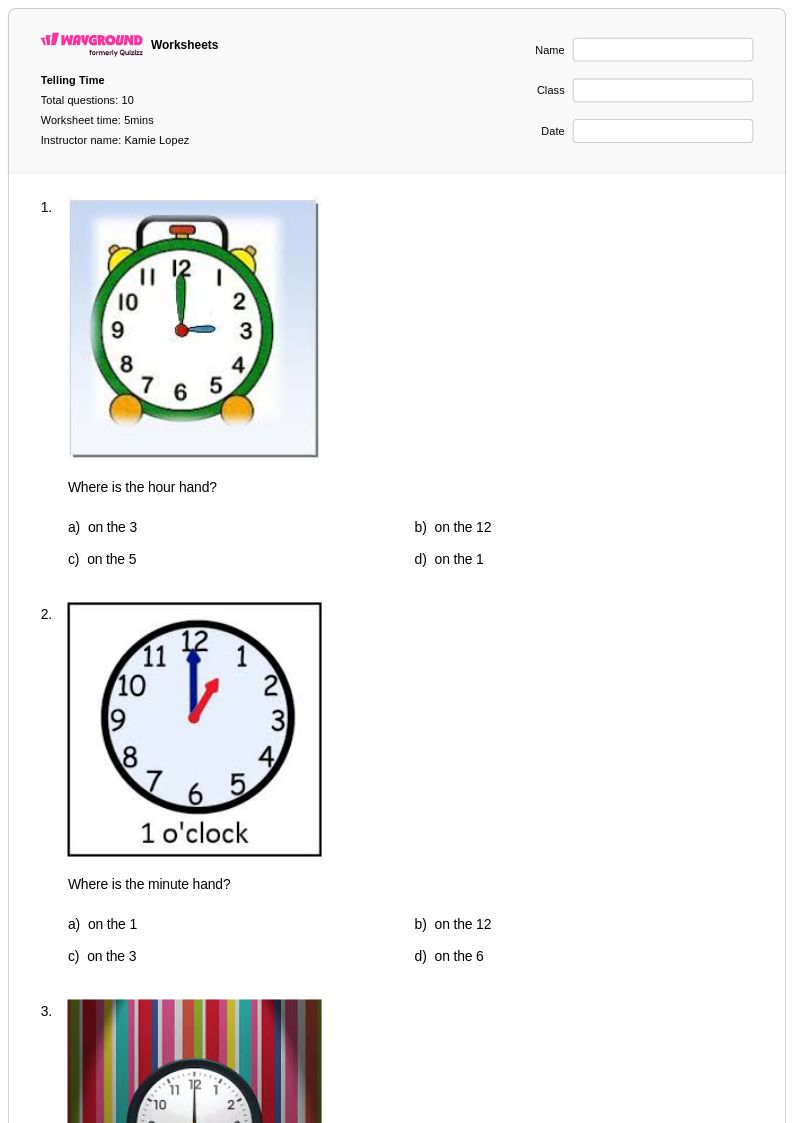
10 Q
1st
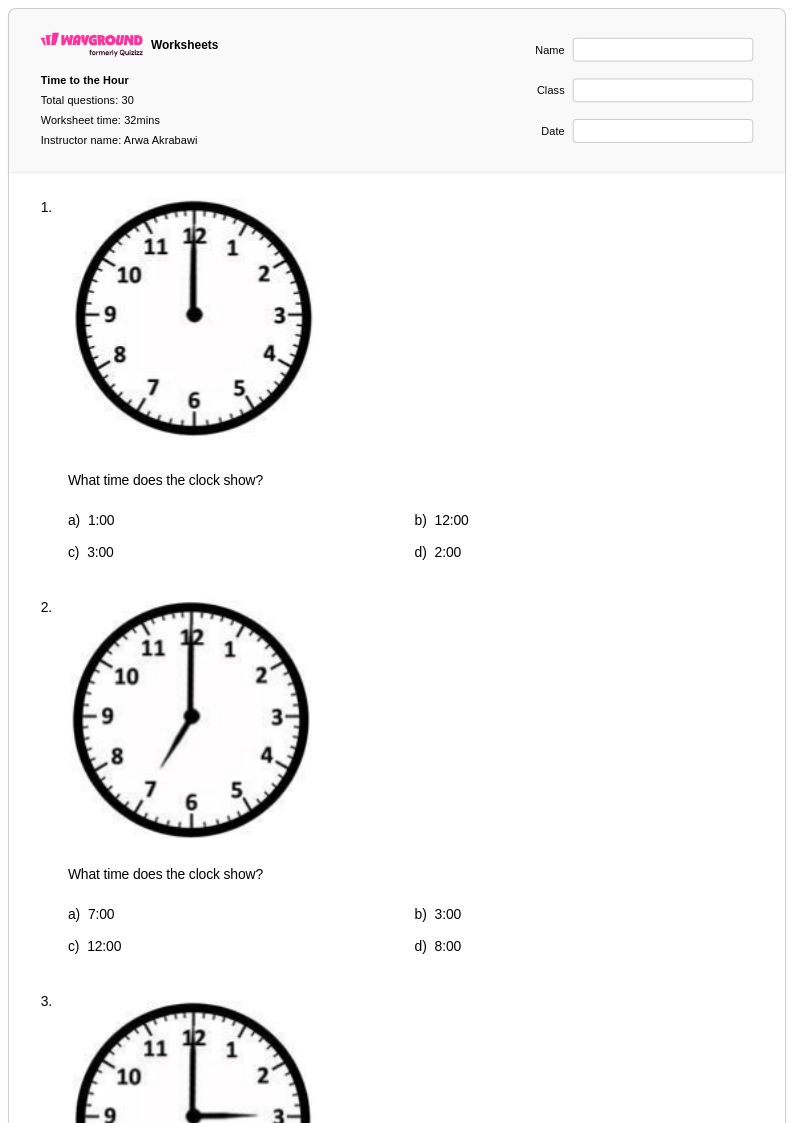
30 Q
1st
10 Q
1st
12 Q
1st - 3rd
10 Q
1st - 2nd
10 Q
1st
20 Q
1st - 2nd
20 Q
1st
10 Q
1st
11 Q
1st
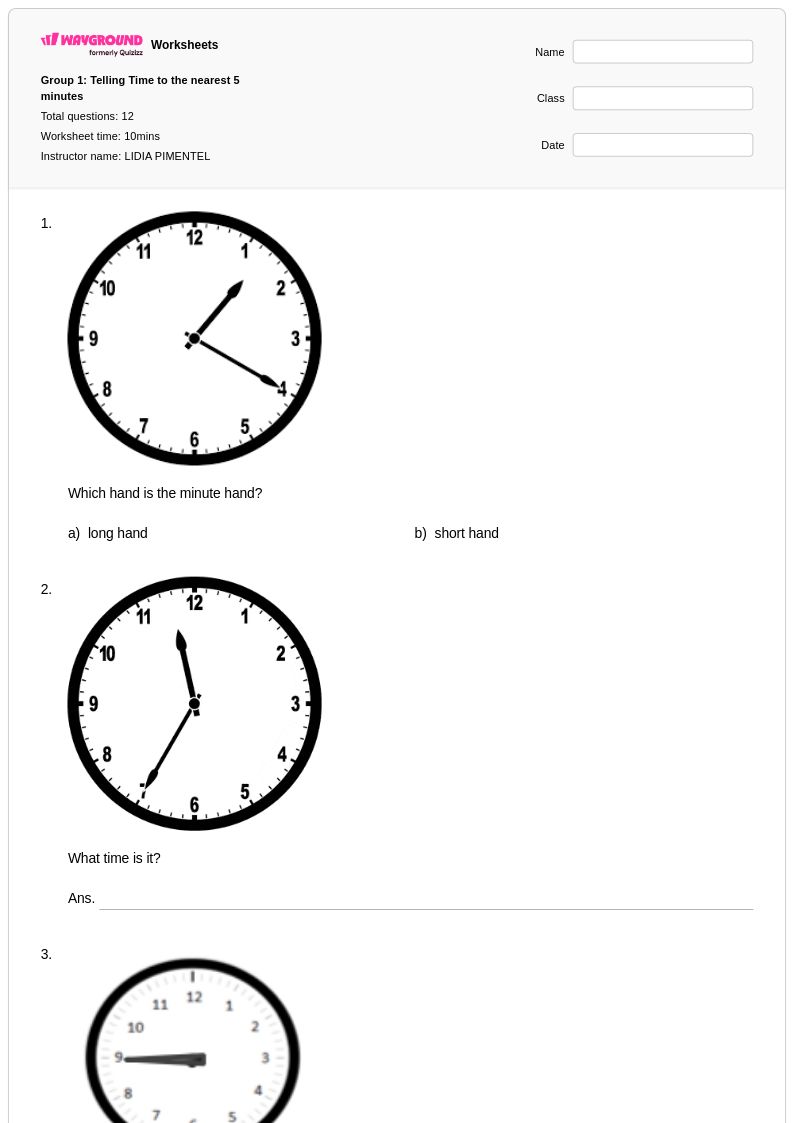
12 Q
1st - 3rd
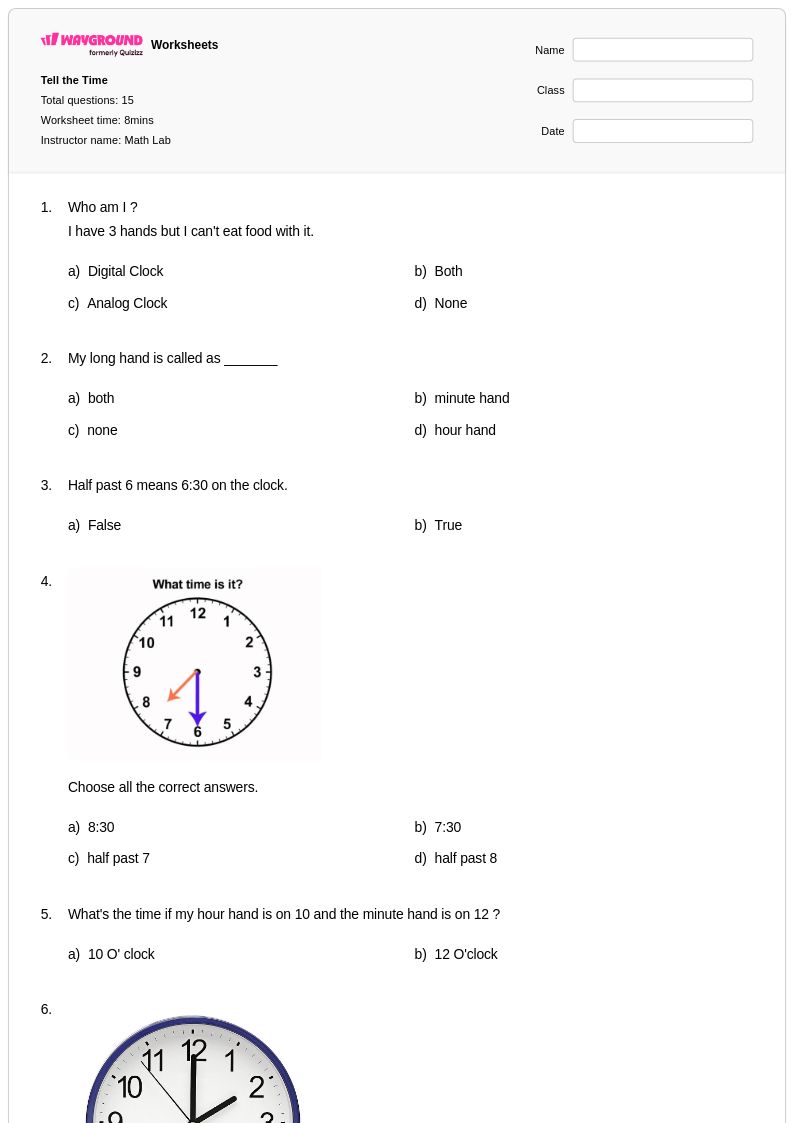
15 Q
1st
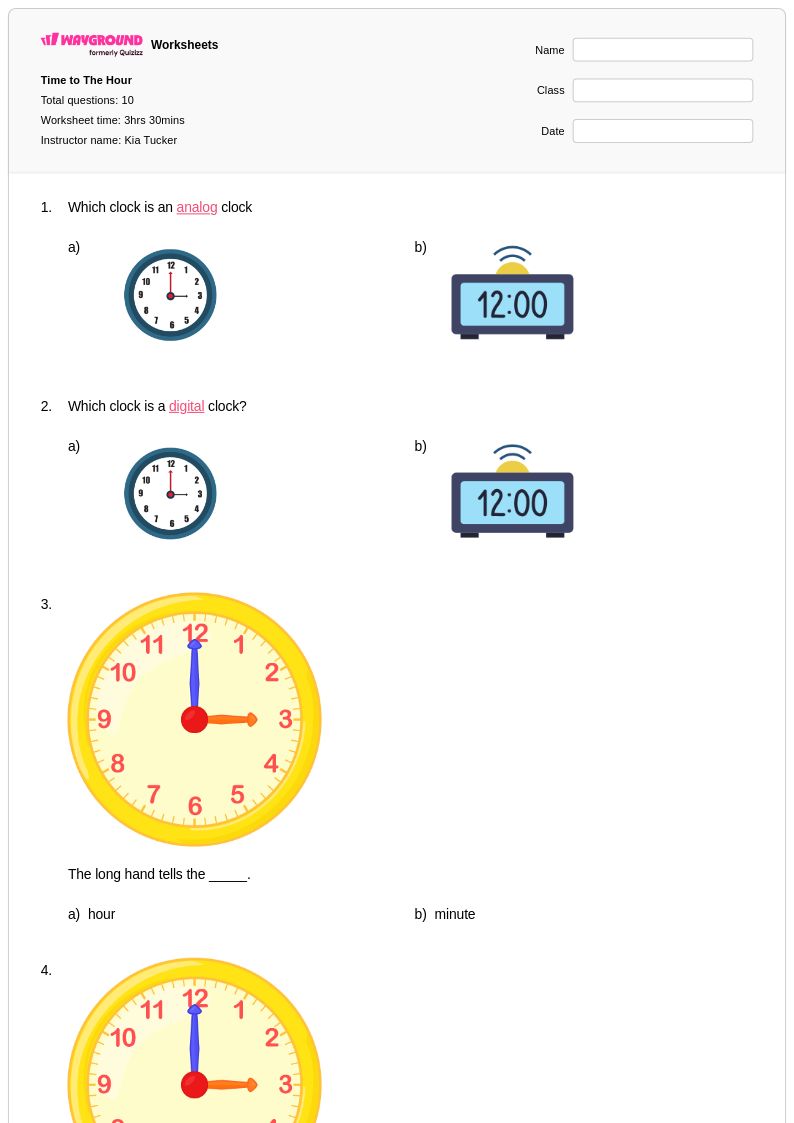
10 Q
1st - 3rd
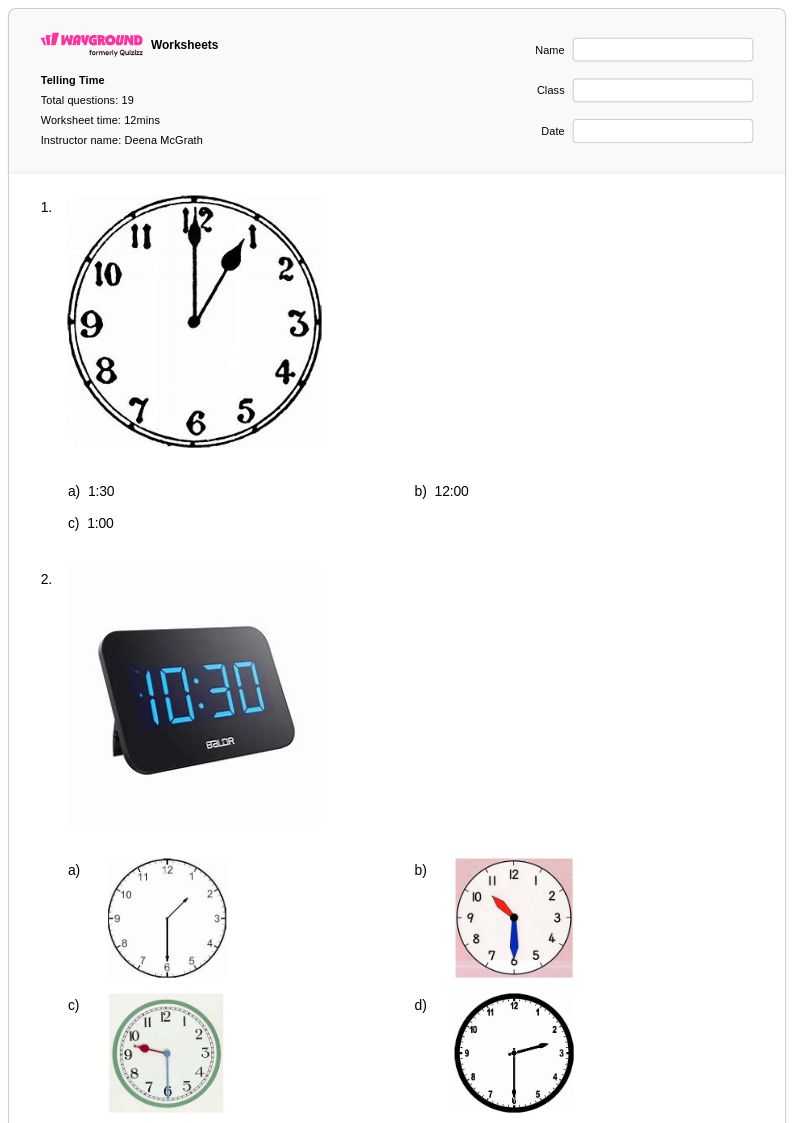
19 Q
1st
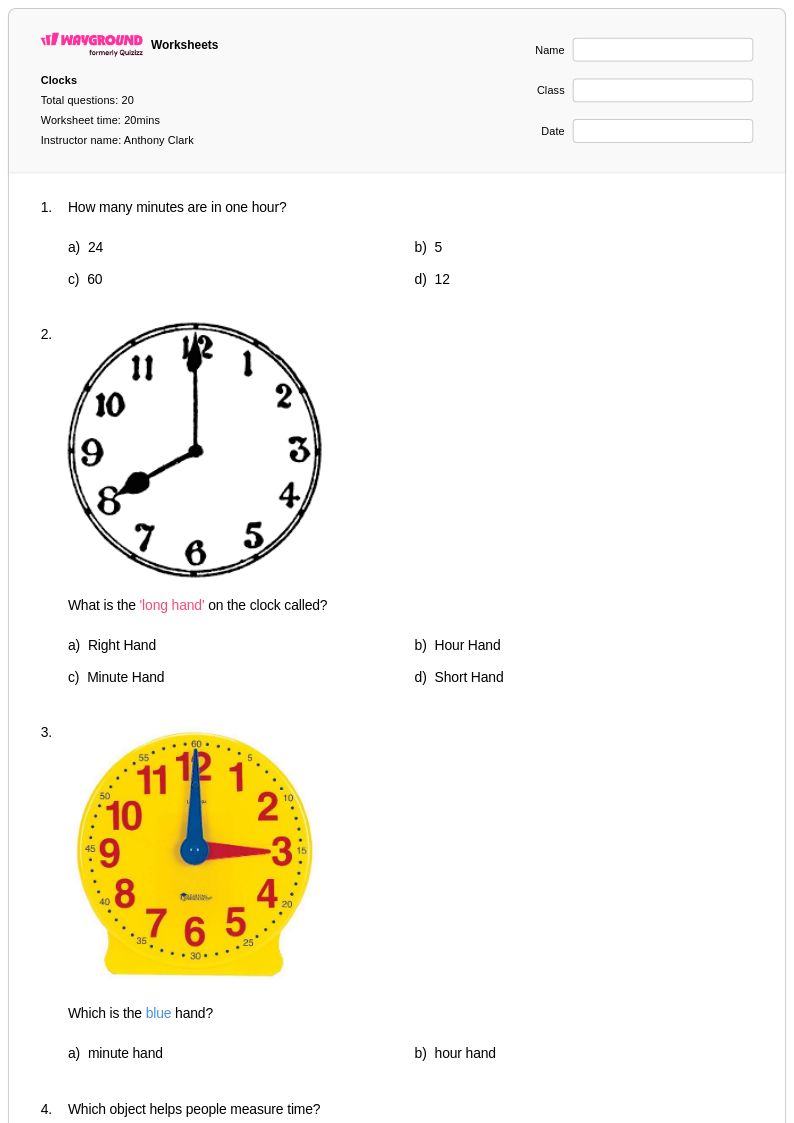
20 Q
1st - Uni
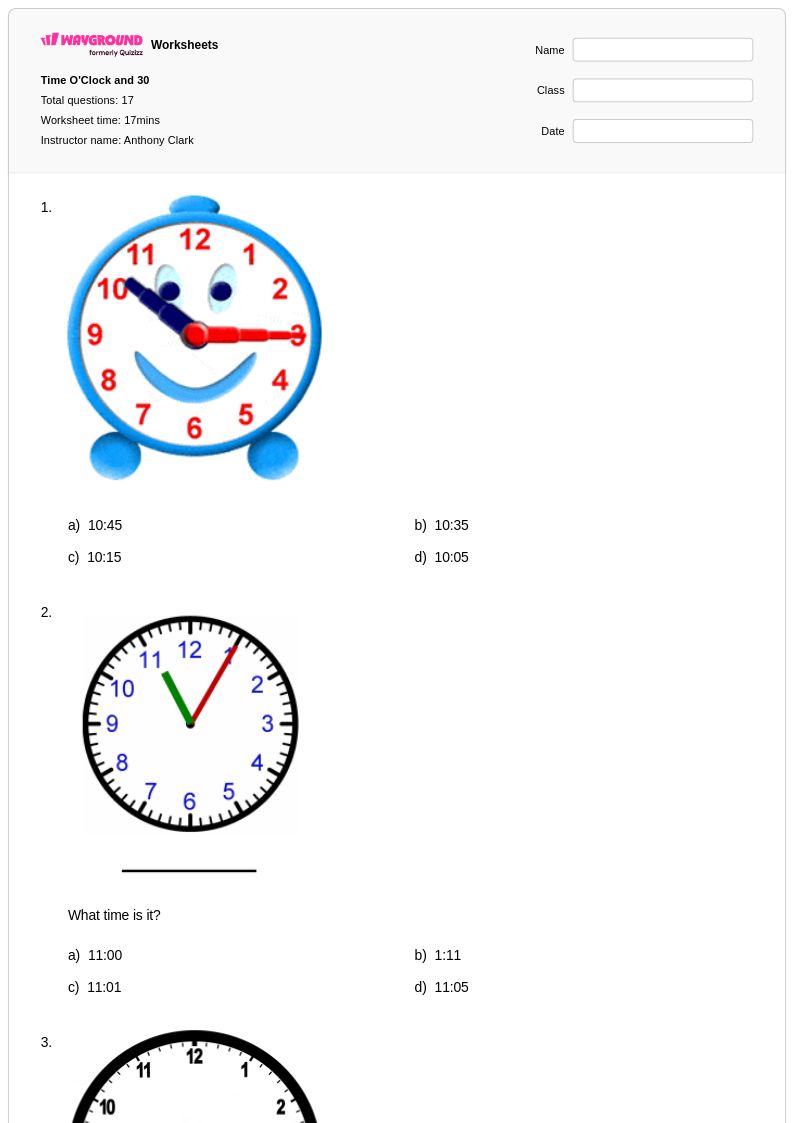
17 Q
1st - Uni
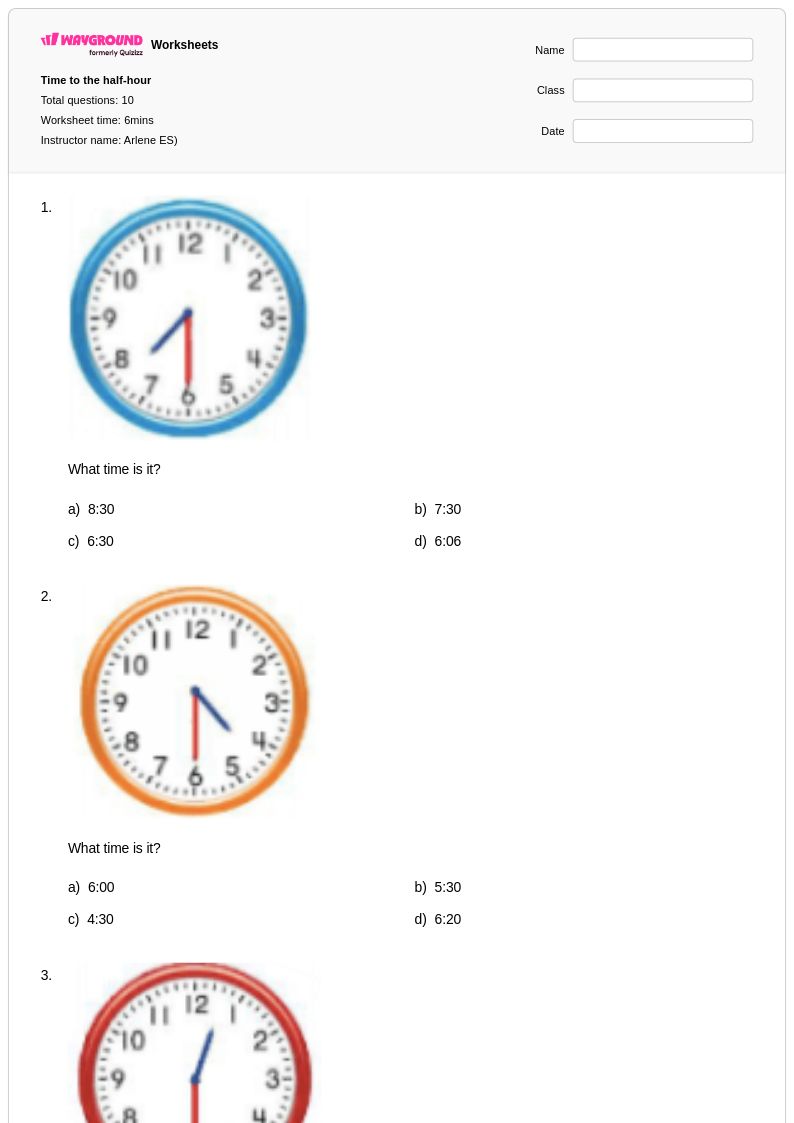
10 Q
1st
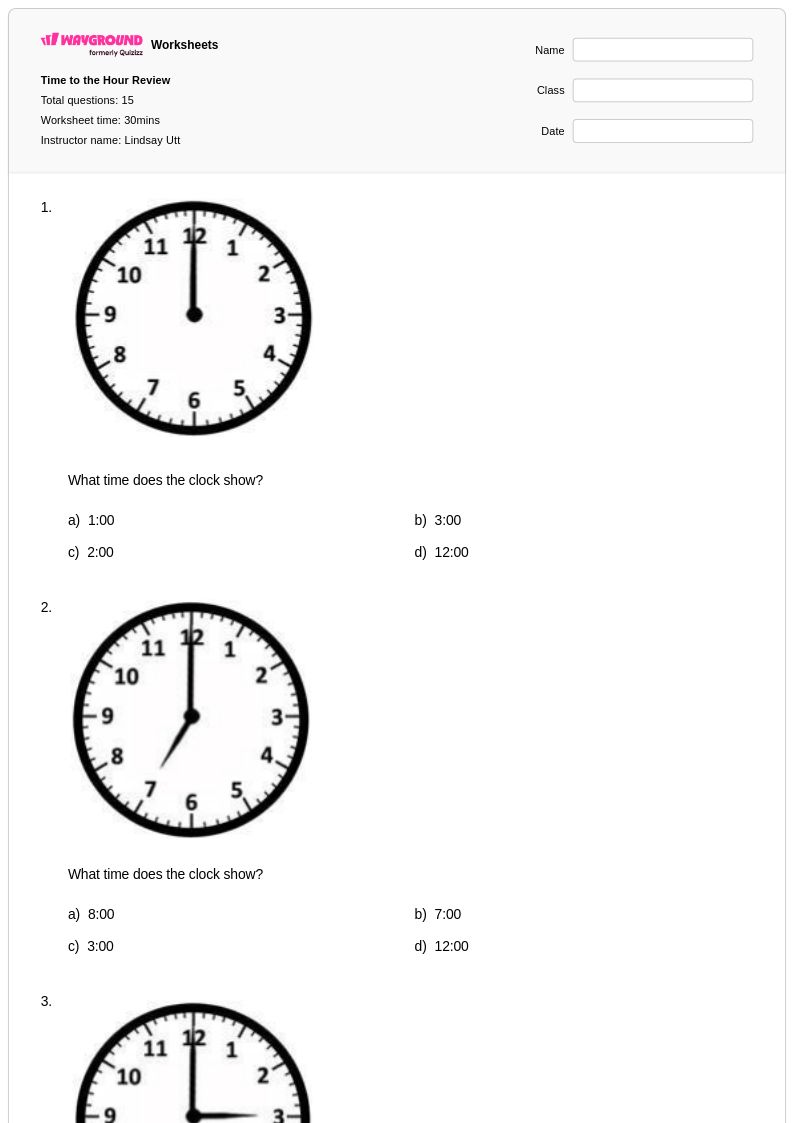
15 Q
1st
Explore Other Subject Worksheets for year 1
Explore printable Reading an Analog Clock worksheets for Year 1
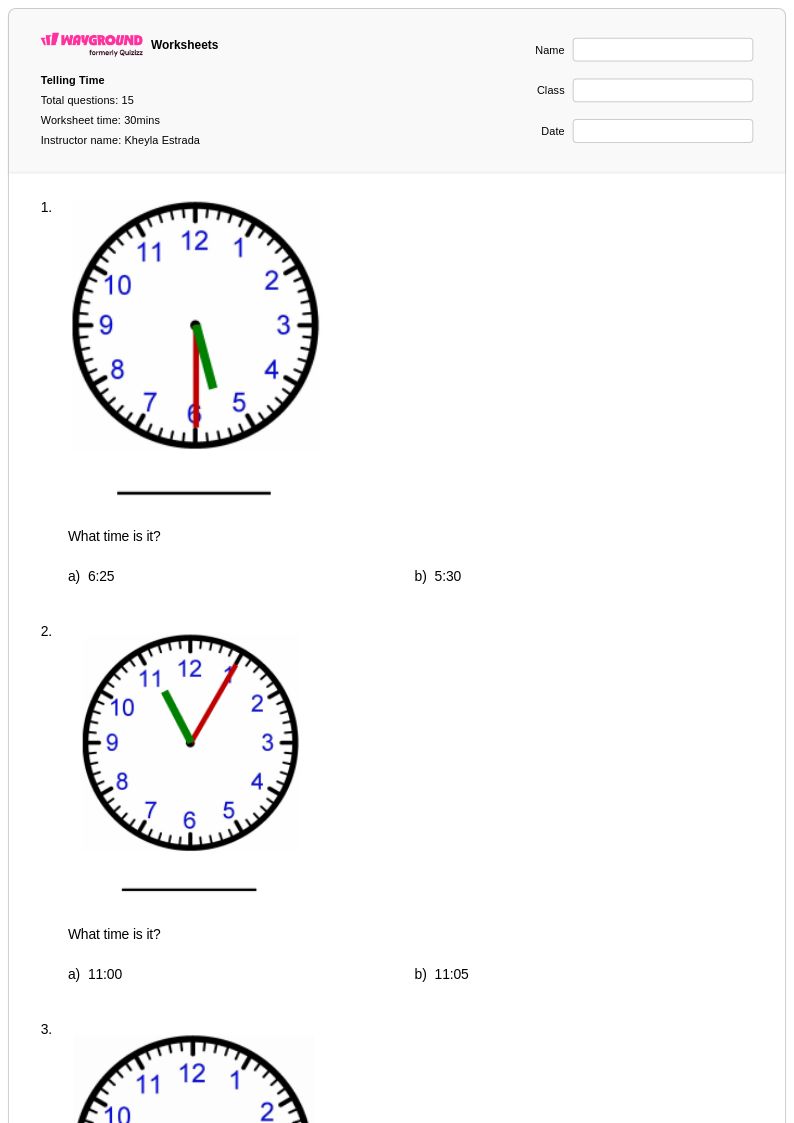
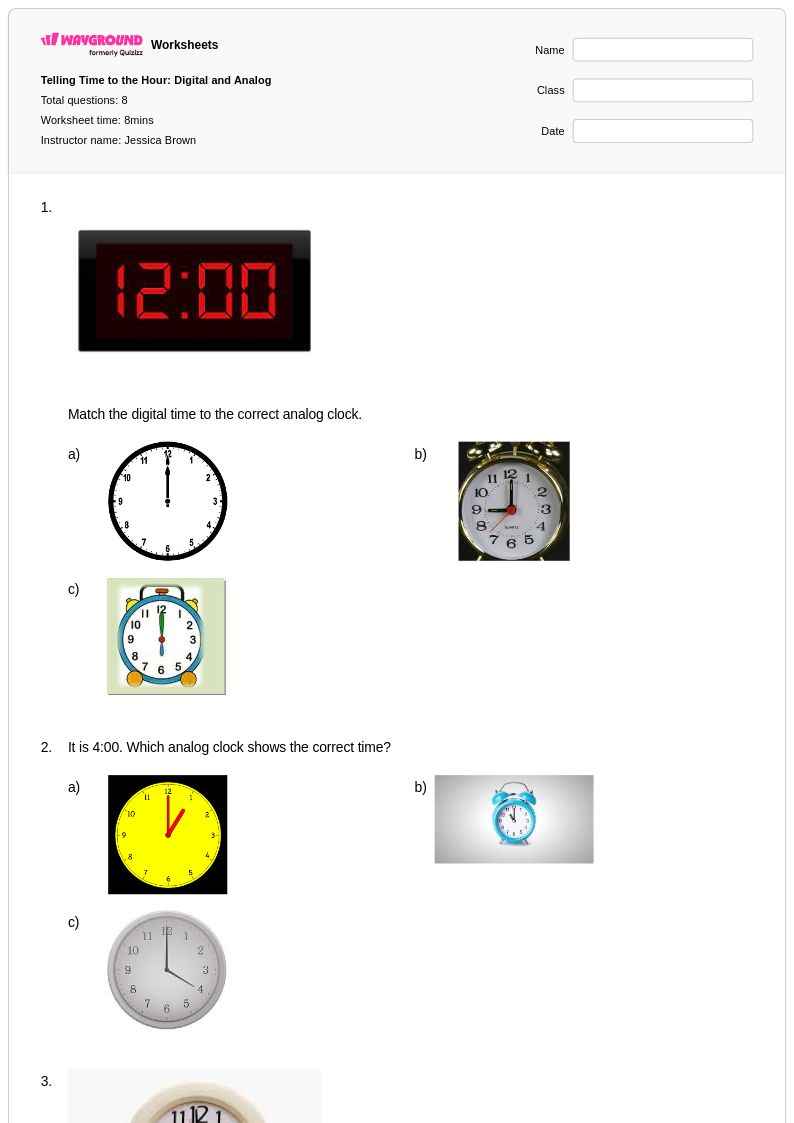
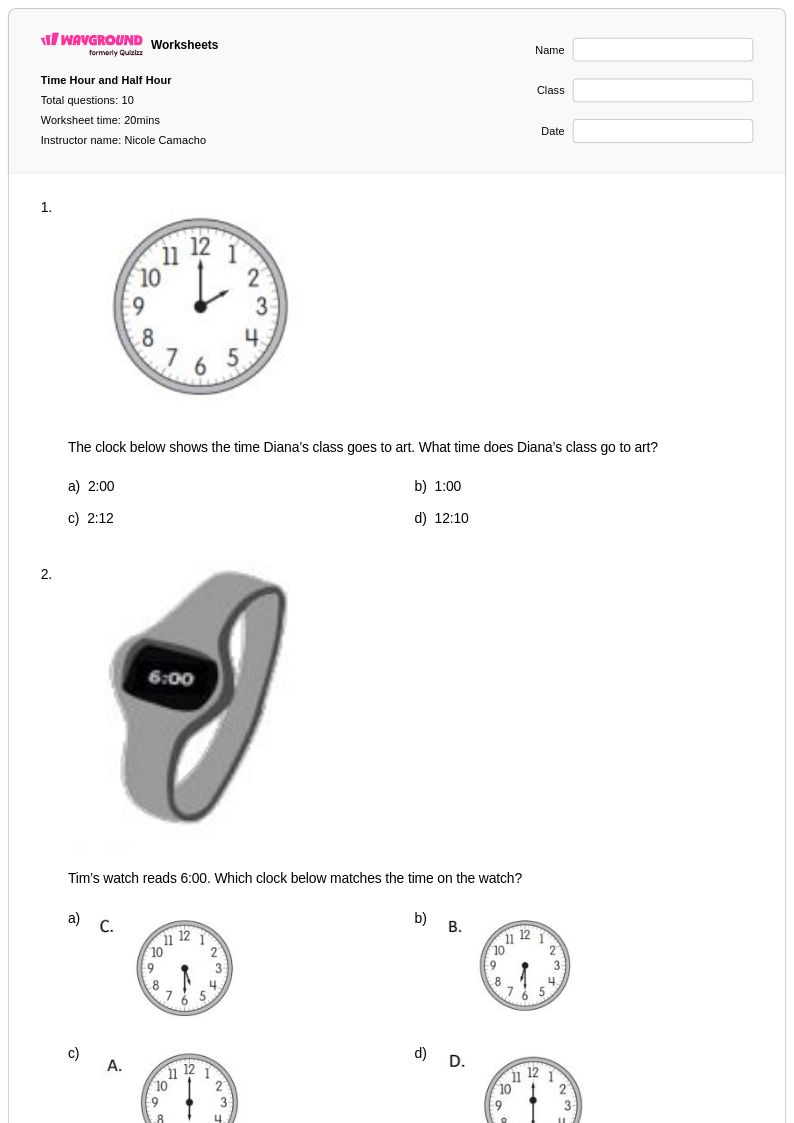
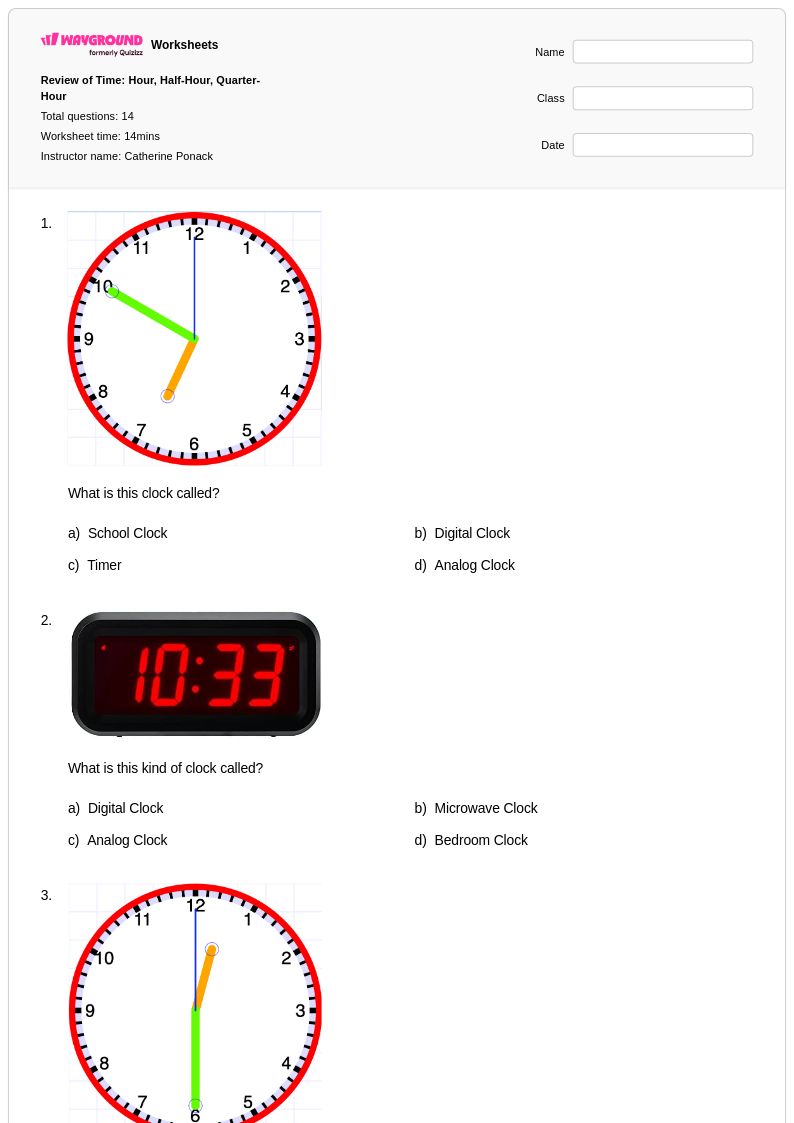
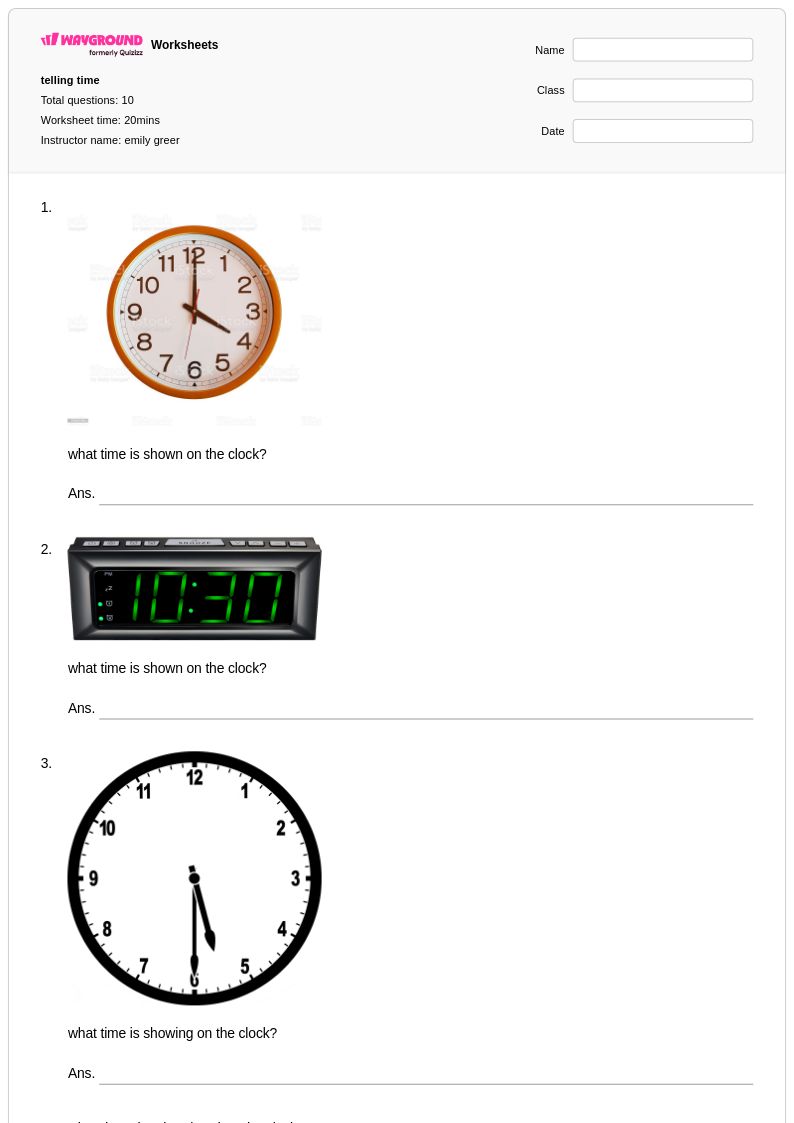
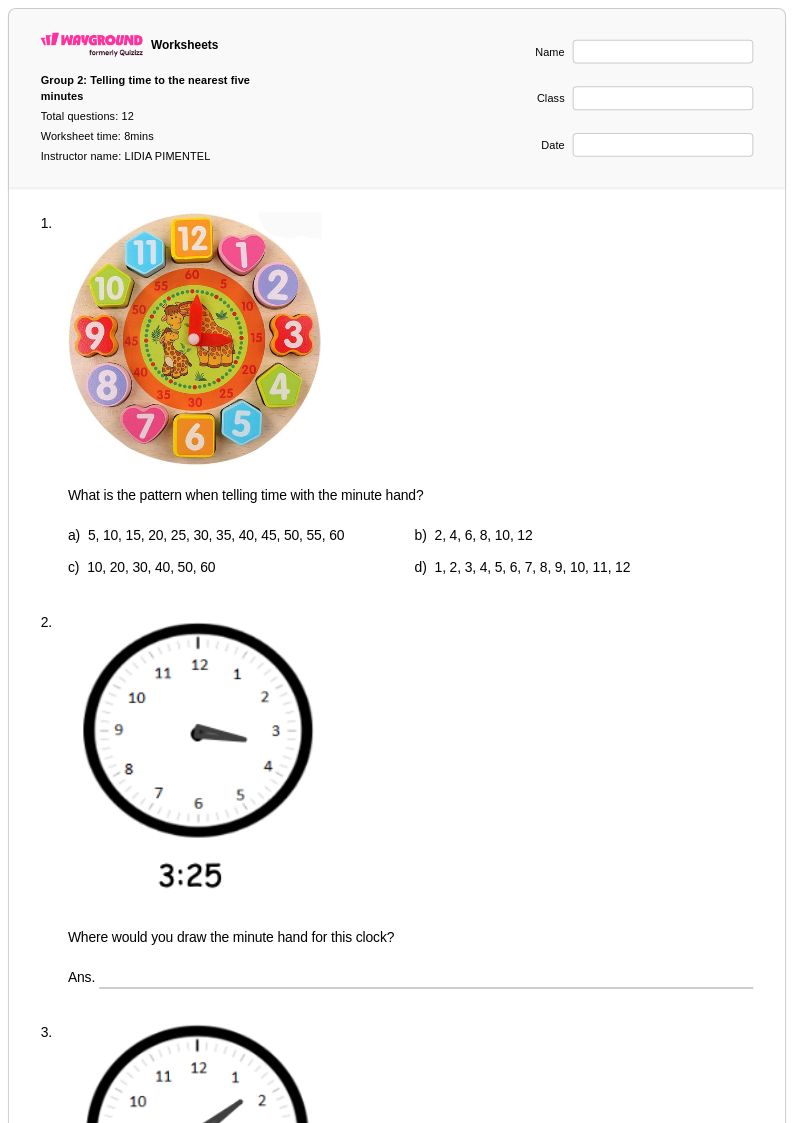
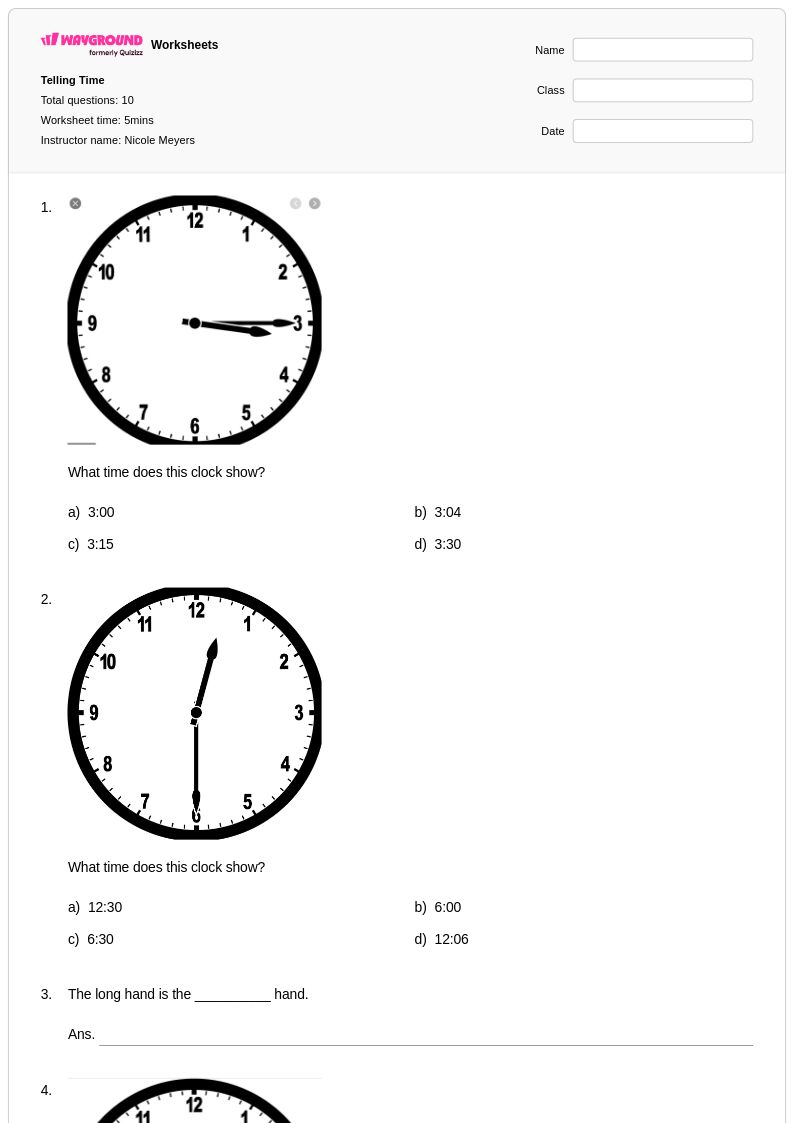
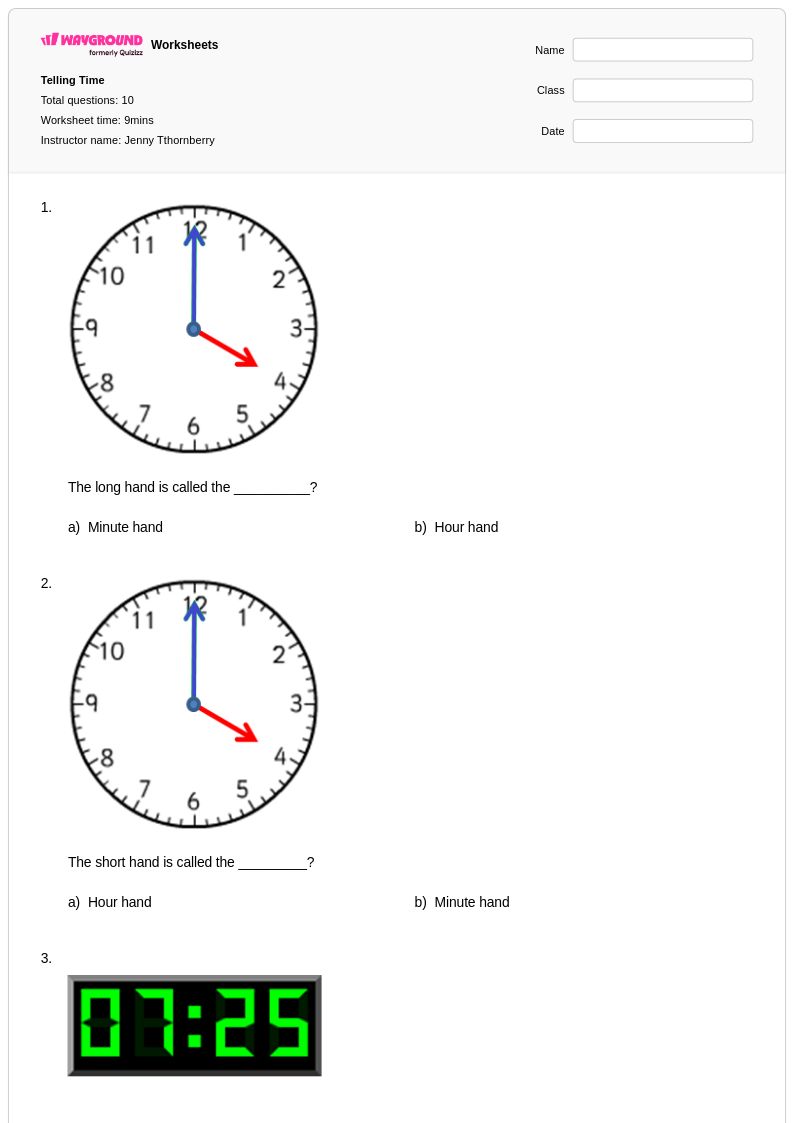
Reading an analog clock worksheets for Year 1 students available through Wayground (formerly Quizizz) provide foundational instruction in one of mathematics' most practical life skills. These comprehensive printables focus on helping young learners master the essential components of analog time-telling, including identifying hour and minute hands, understanding the relationship between numbers on the clock face and their corresponding time values, and developing the visual processing skills necessary to read time accurately. Each worksheet collection includes carefully structured practice problems that progress from basic hour recognition to more complex time-reading scenarios, complete with detailed answer keys that support both independent learning and guided instruction. These free resources emphasize hands-on learning through engaging visual exercises that make abstract time concepts concrete and accessible for first-grade mathematical development.
Wayground (formerly Quizizz) supports educators with millions of teacher-created analog clock reading resources that streamline lesson planning and enhance classroom instruction for Year 1 mathematics. The platform's robust search and filtering capabilities allow teachers to quickly locate worksheets aligned with specific learning standards and student needs, while built-in differentiation tools enable customization for varying skill levels within the same classroom. These analog clock worksheets are available in both printable pdf format for traditional paper-based learning and digital formats for interactive classroom experiences, providing the flexibility teachers need for diverse instructional approaches. Whether used for initial skill introduction, targeted remediation, or enrichment activities, these resources support comprehensive time-telling instruction that builds confidence and mathematical reasoning in young learners.
FAQs
What do first graders learn about telling time?
How do I teach telling time to the hour and half-hour?
What's a common mistake first graders make with half-hour times?
How do I assign this Grade 1 time-telling worksheet?
How does this worksheet build on kindergarten skills?
What types of problems are on this first-grade worksheet?