
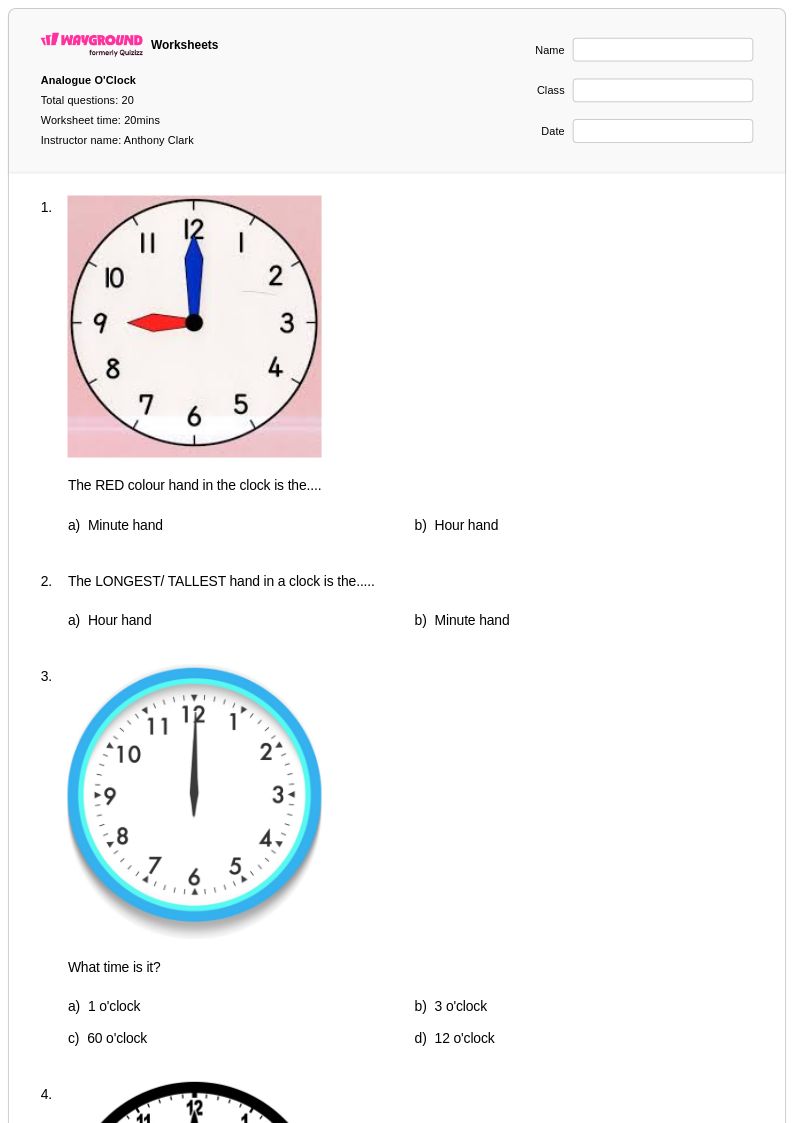
20 Q
3rd - Uni
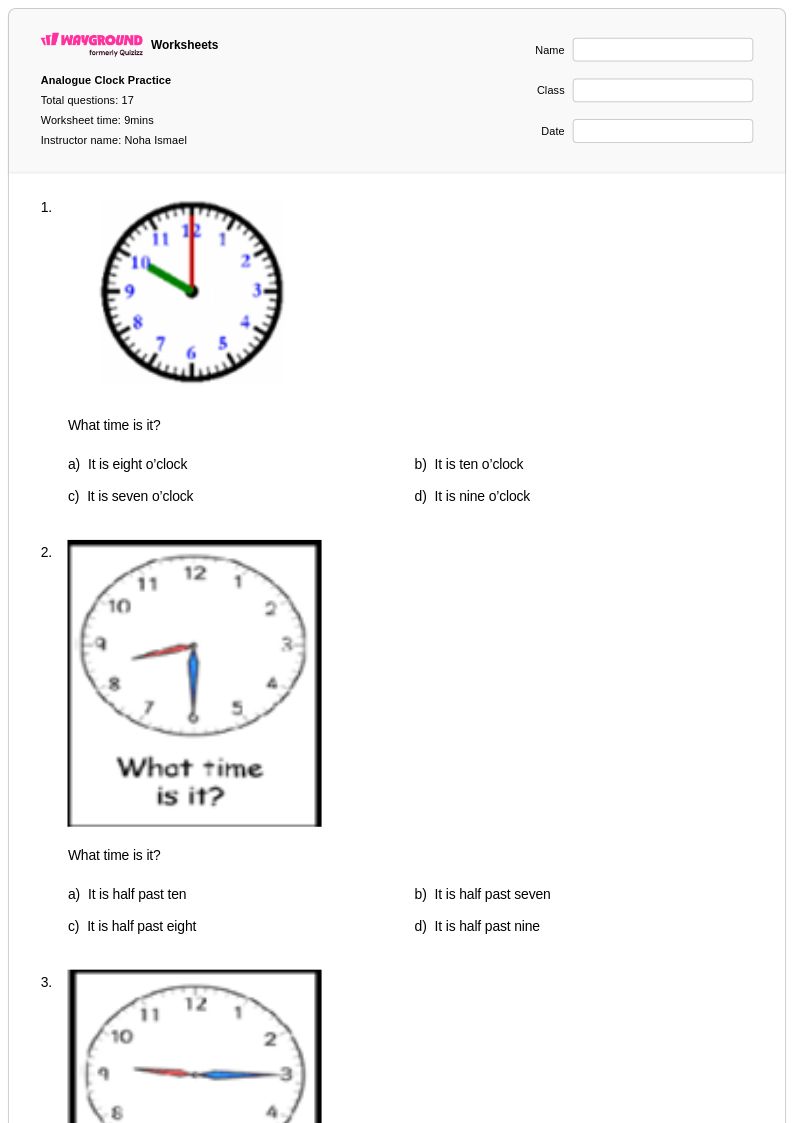
17 Q
2nd - 4th
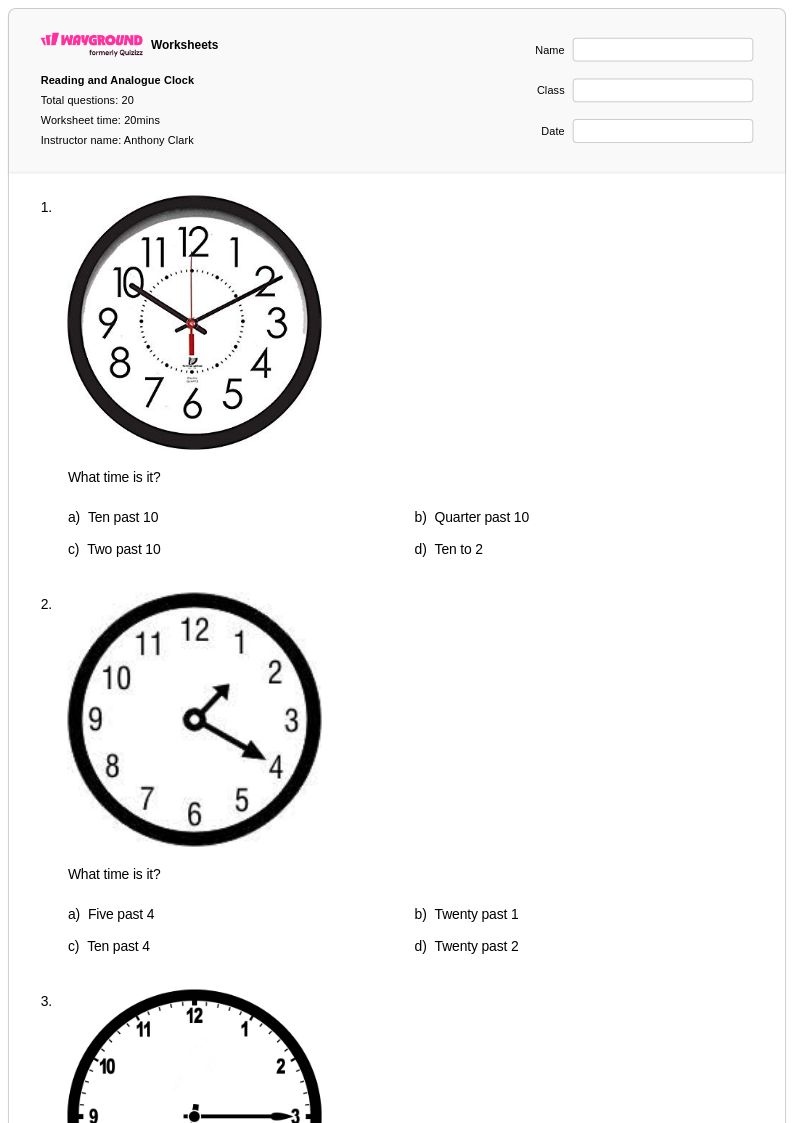
20 Q
2nd - Uni
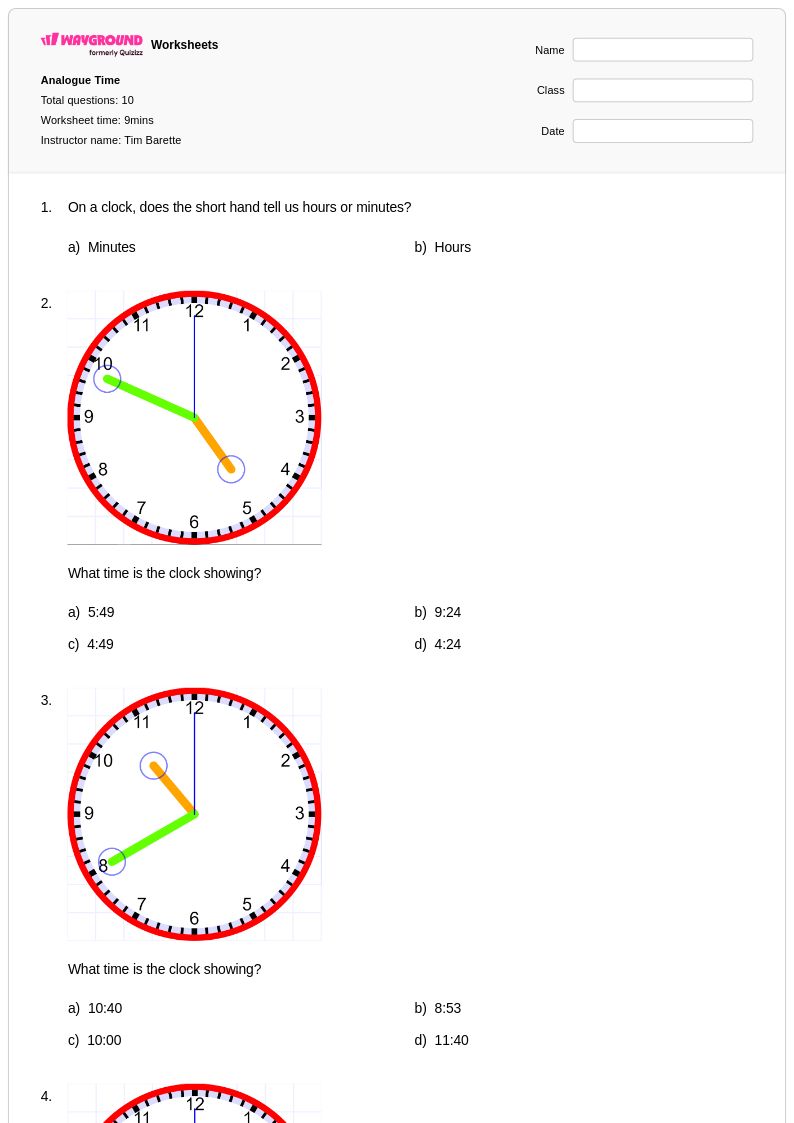
10 Q
3rd - 8th
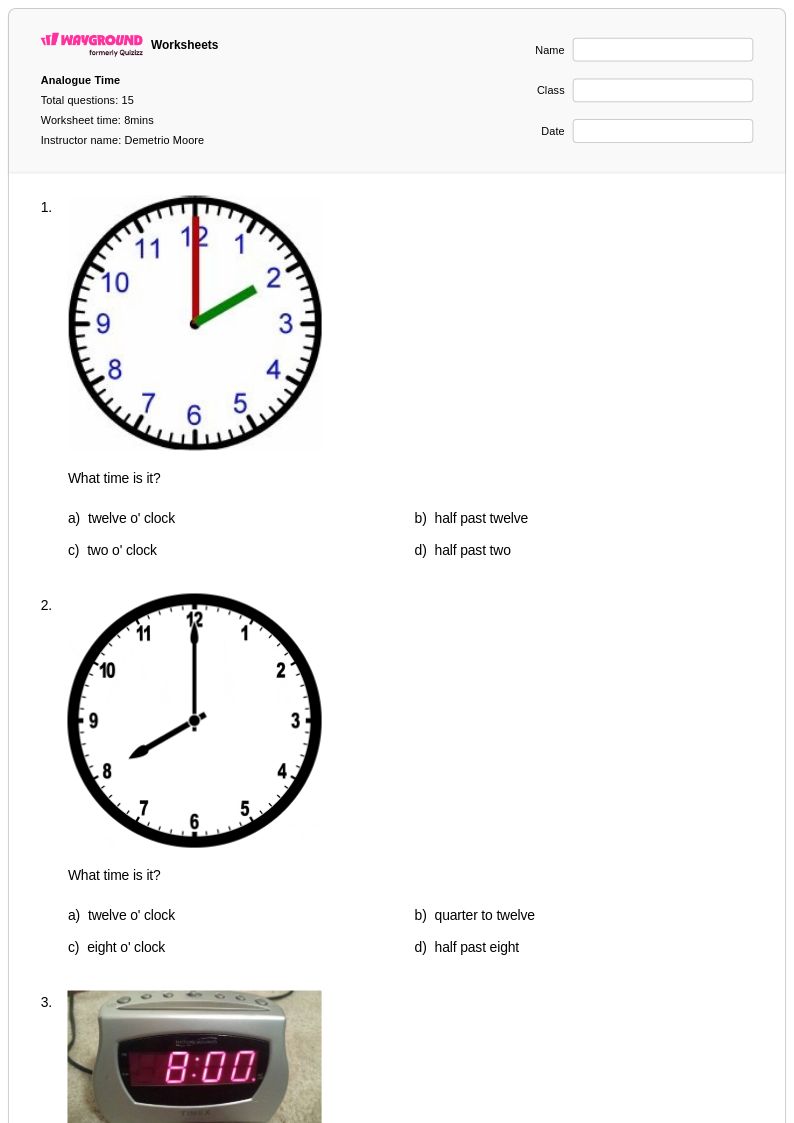
15 Q
2nd - 3rd
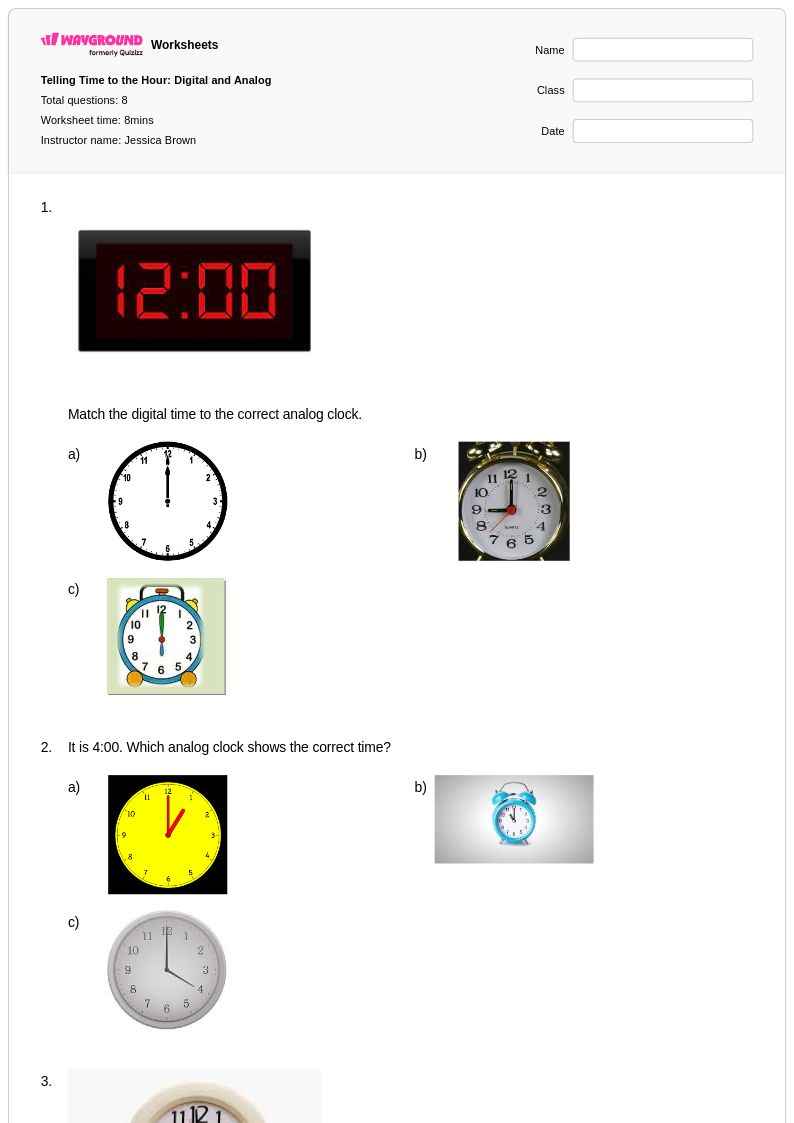
8 Q
1st
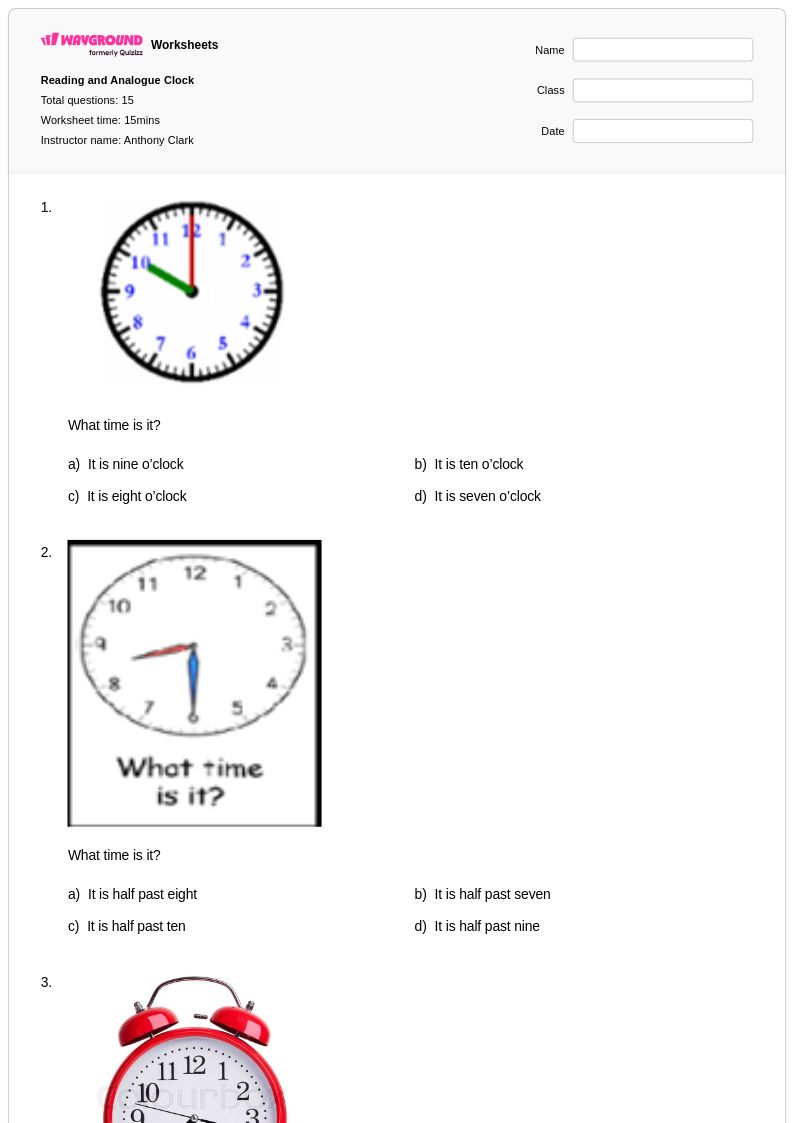
15 Q
2nd - Uni
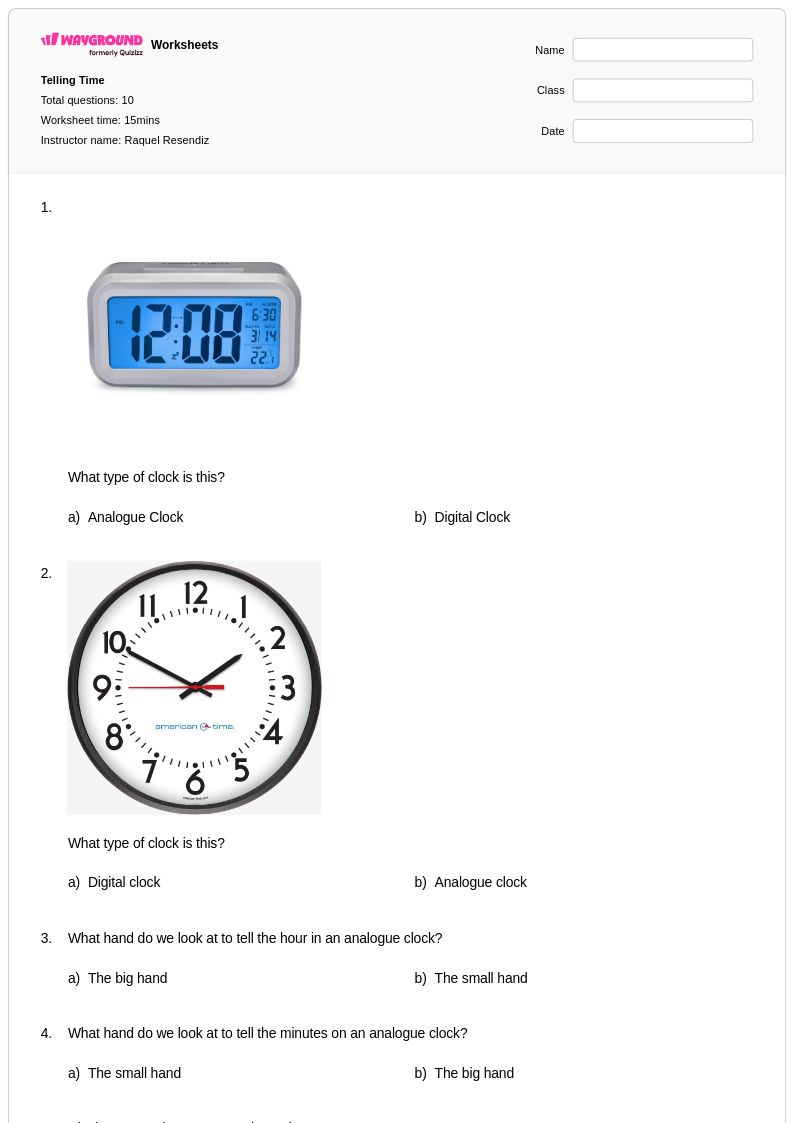
10 Q
2nd - 3rd
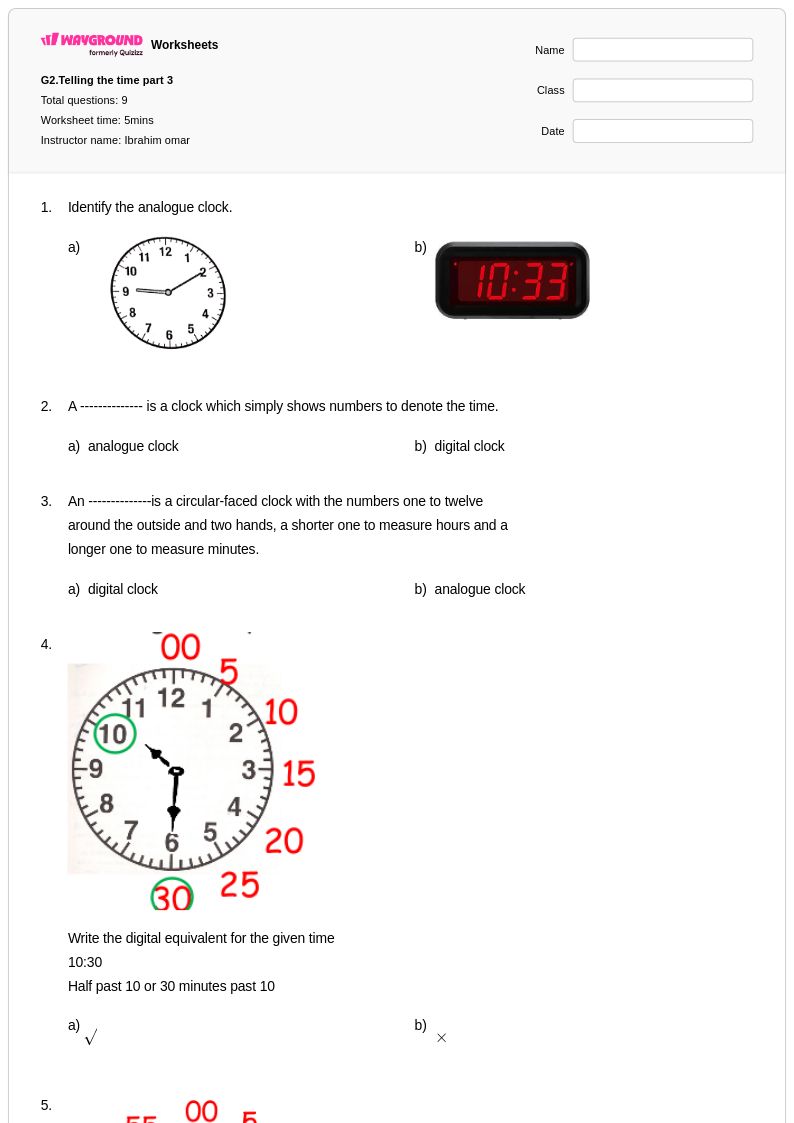
9 Q
2nd
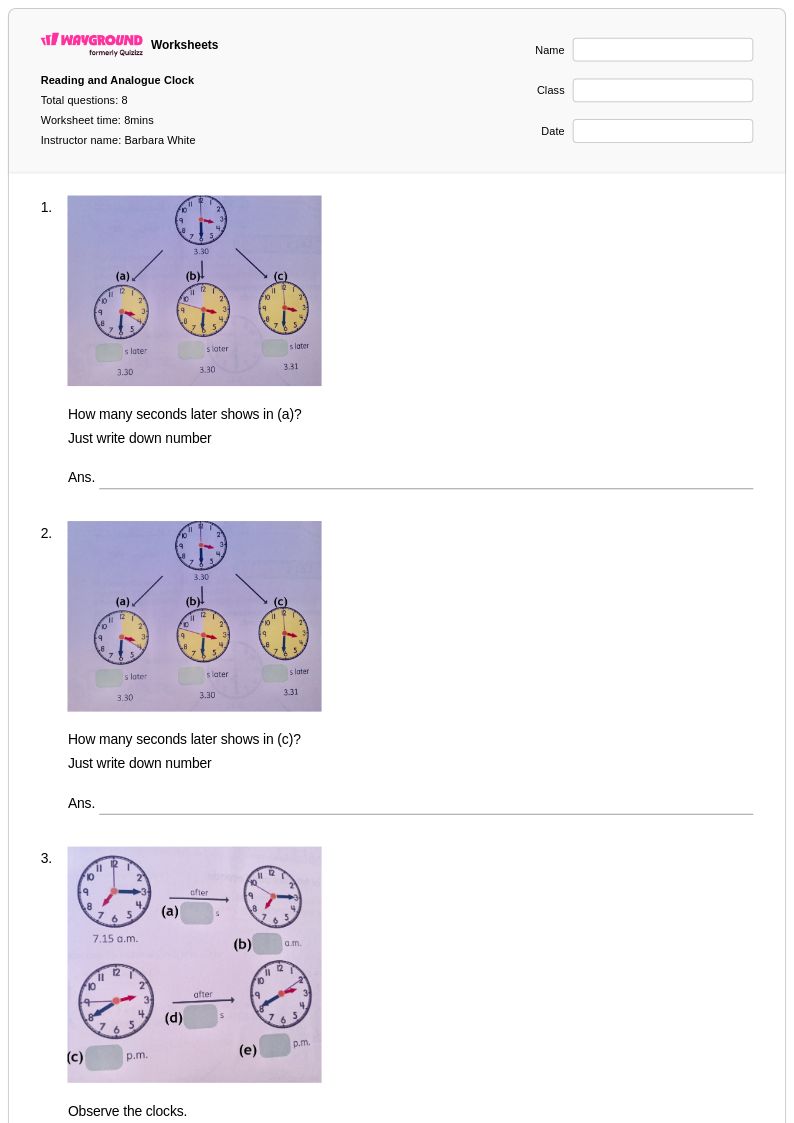
8 Q
4th
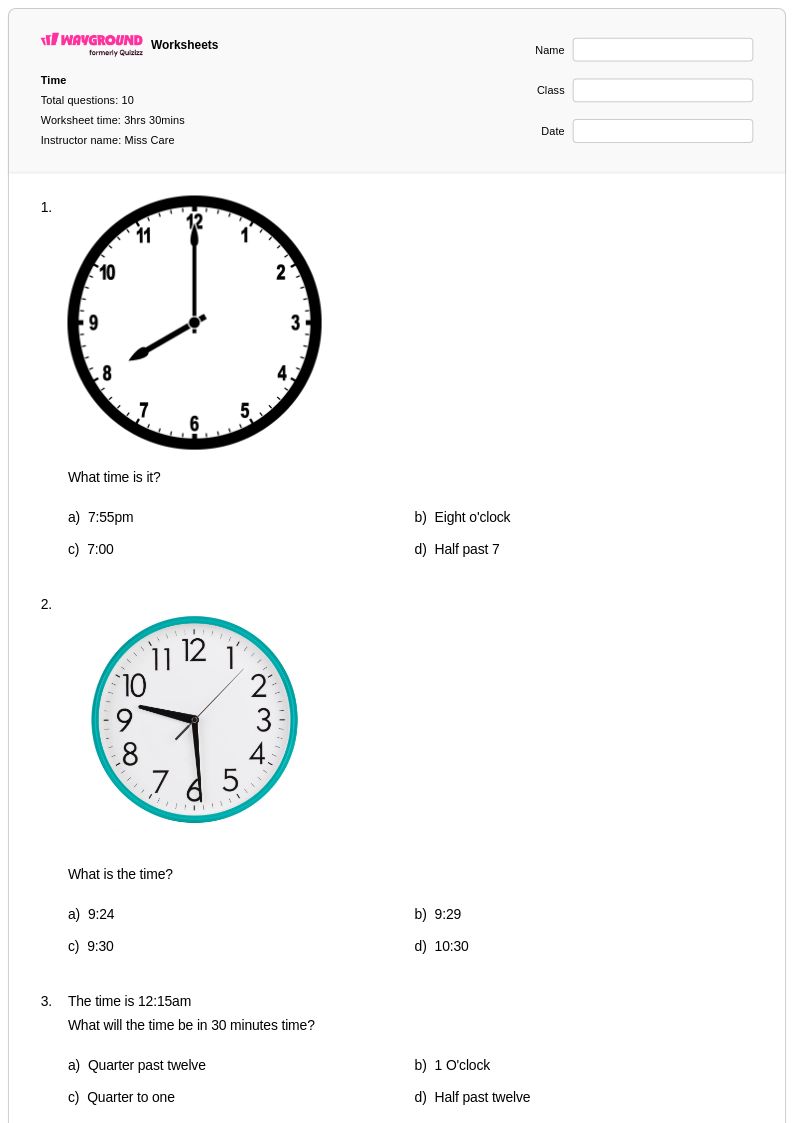
10 Q
4th
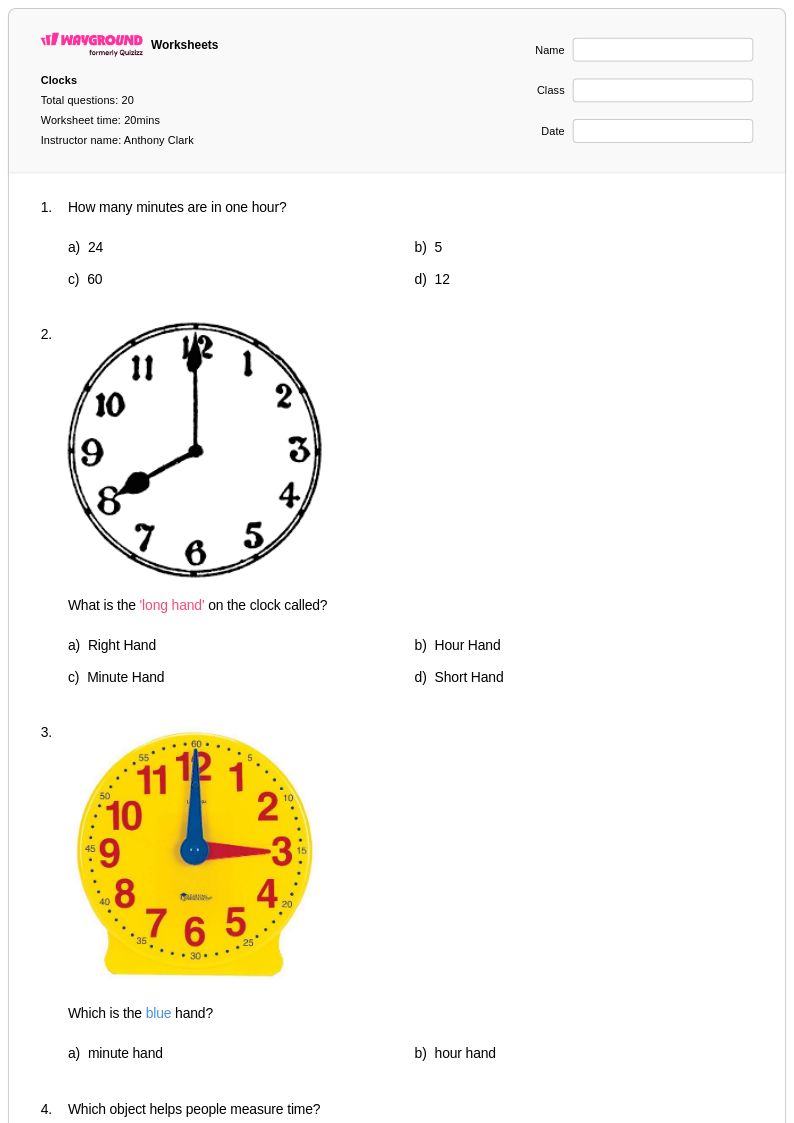
20 Q
1st - Uni
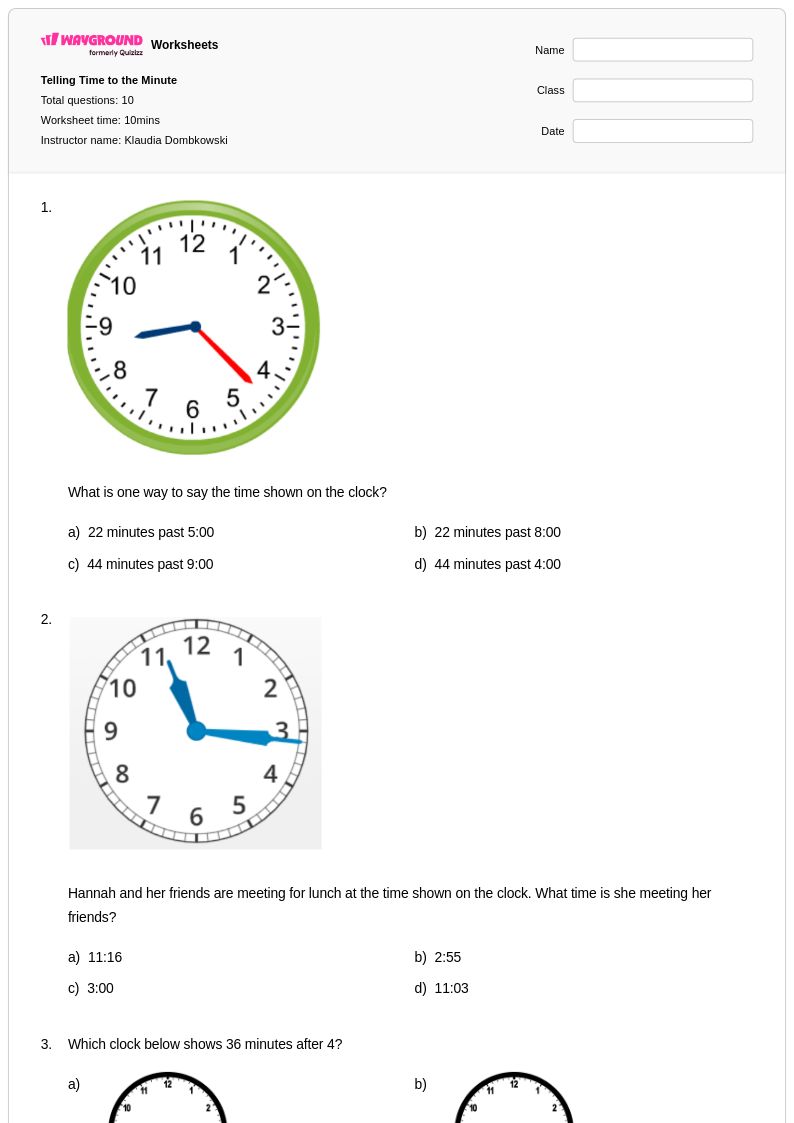
10 Q
3rd
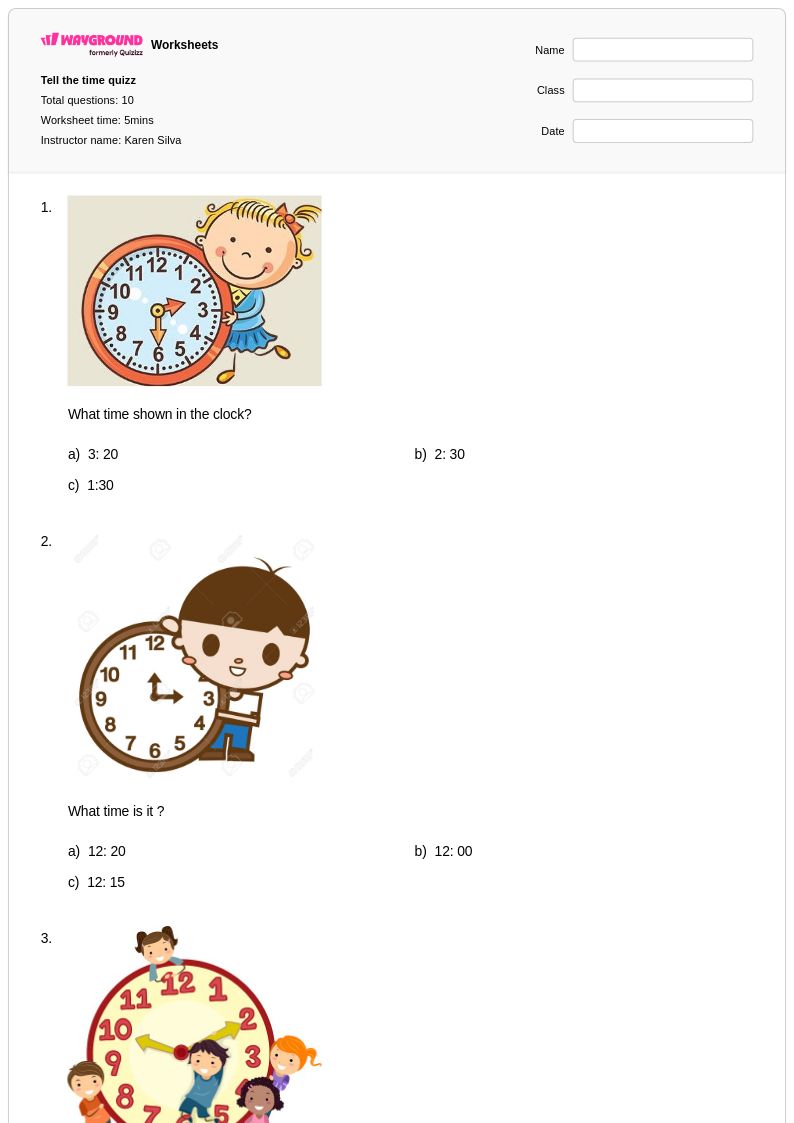
10 Q
2nd
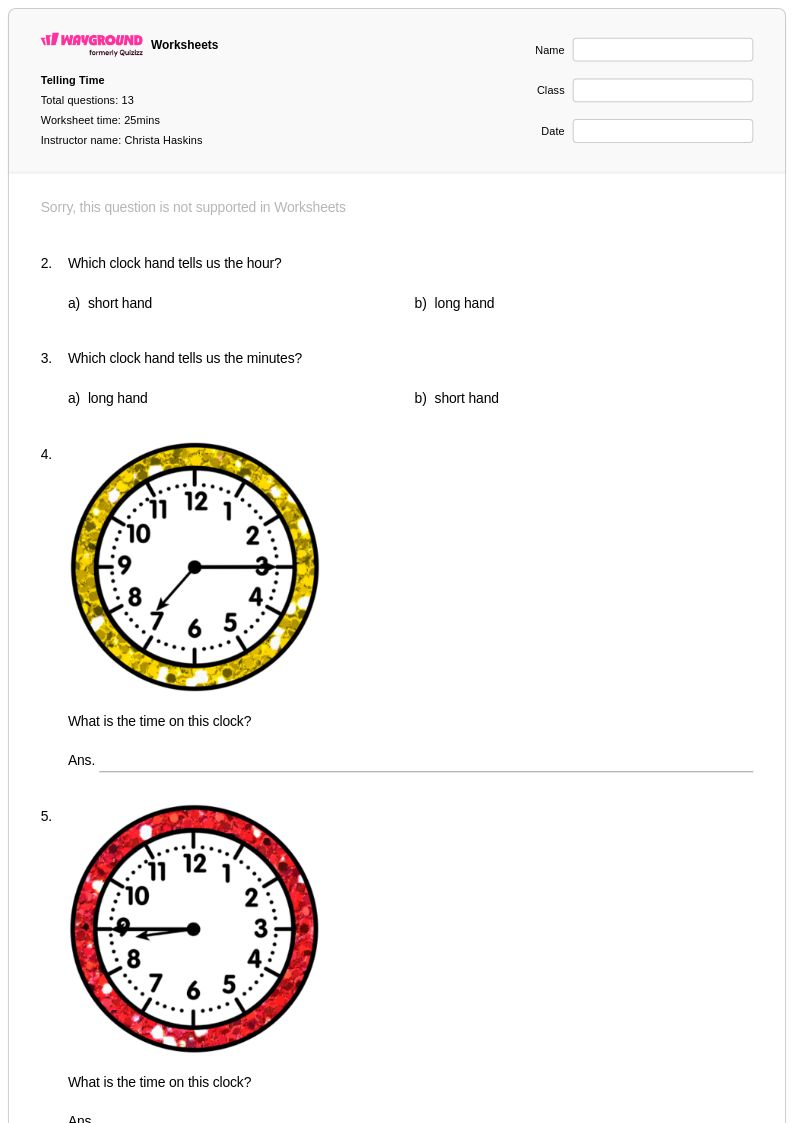
18 Q
3rd
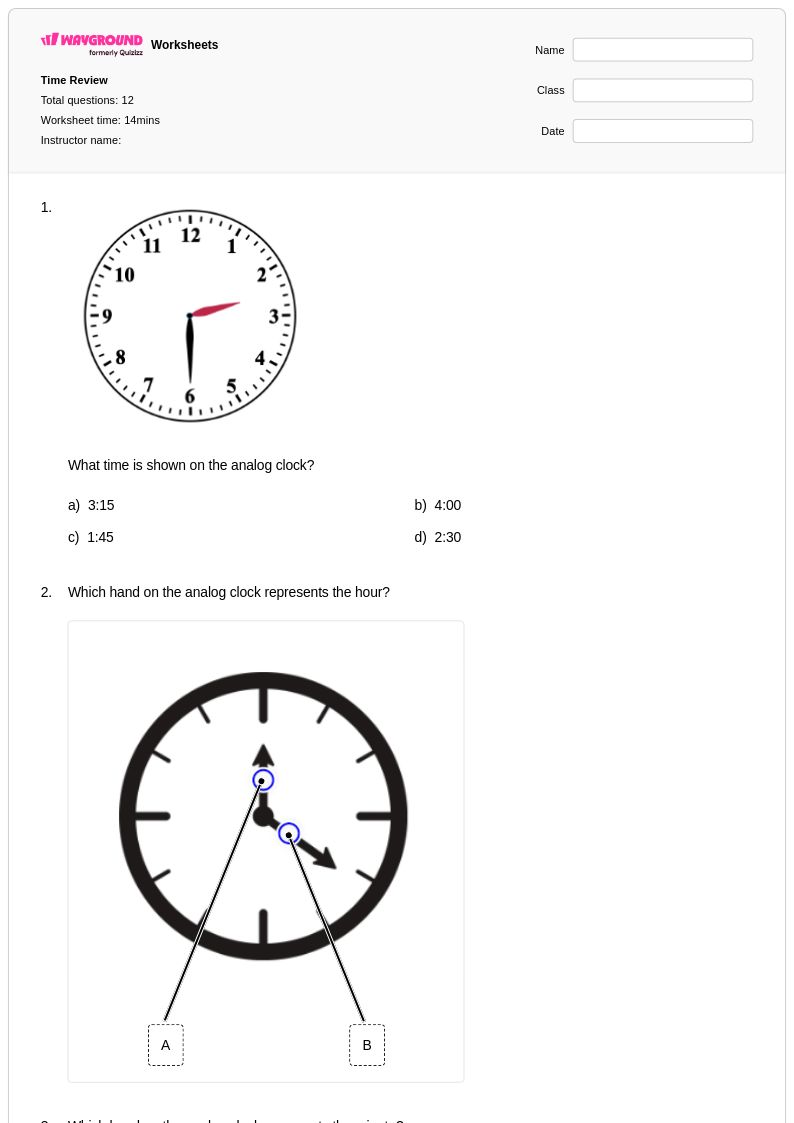
12 Q
2nd
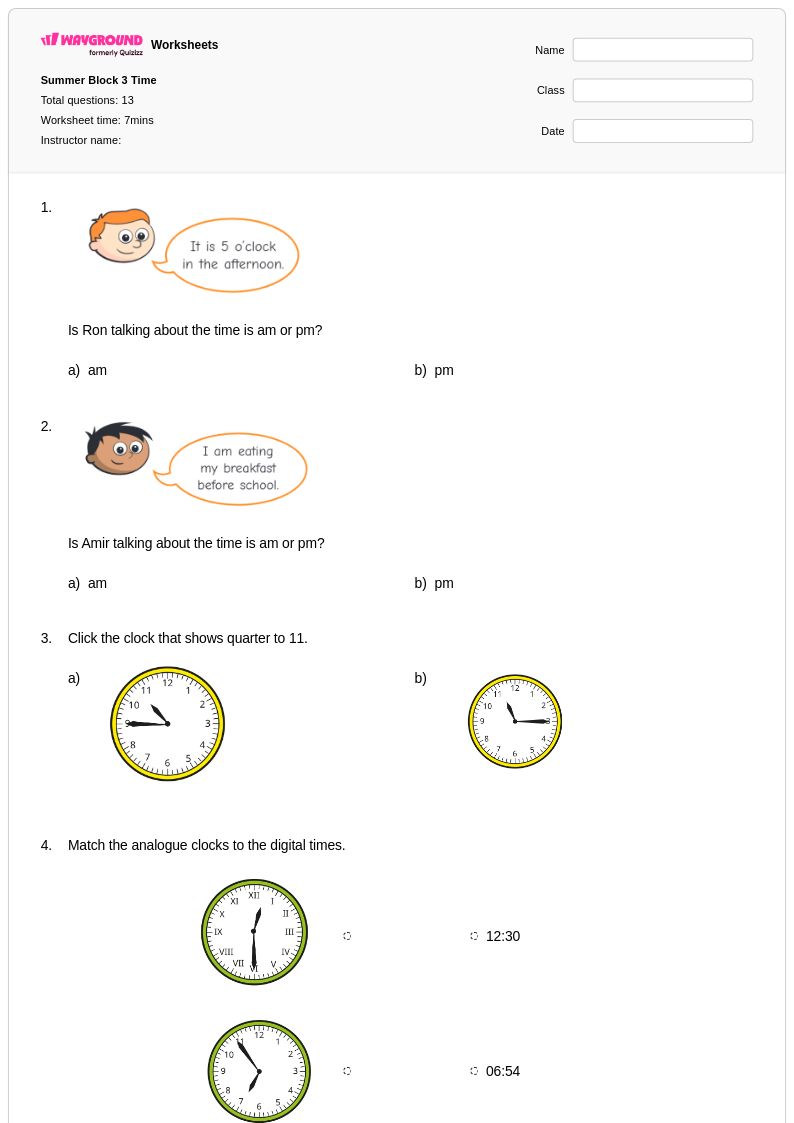
13 Q
3rd - Uni
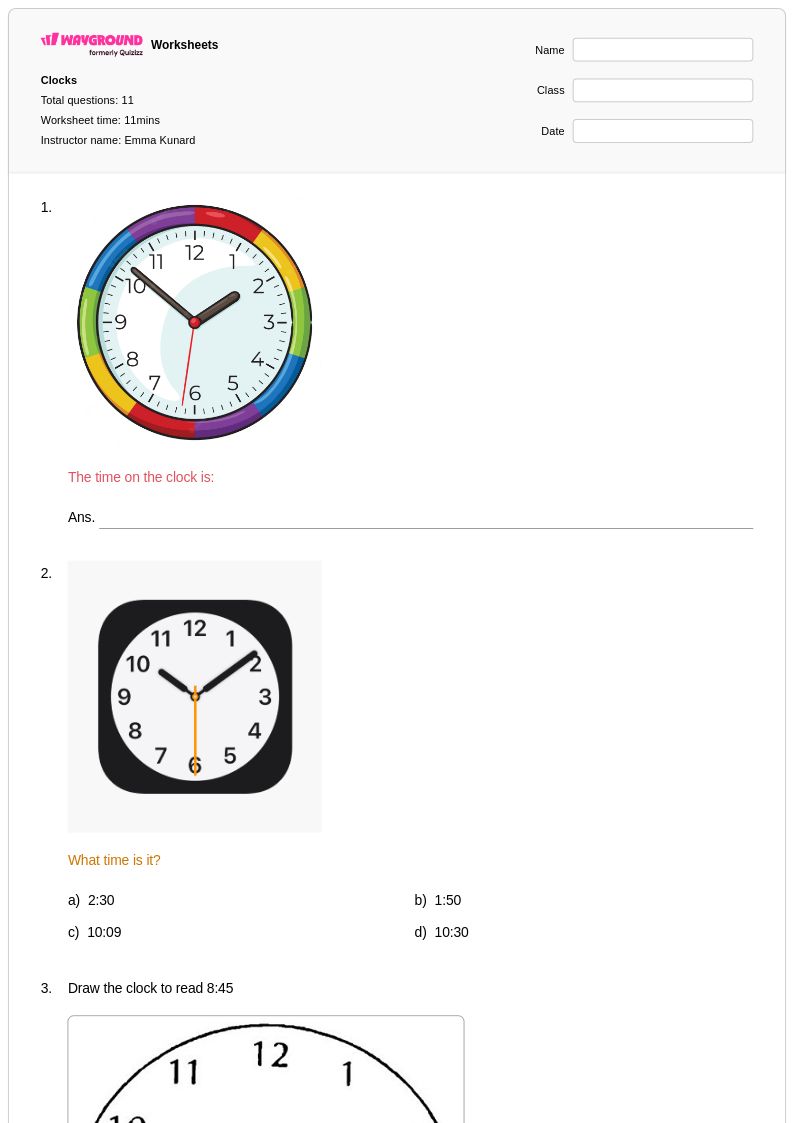
11 Q
KG - Uni
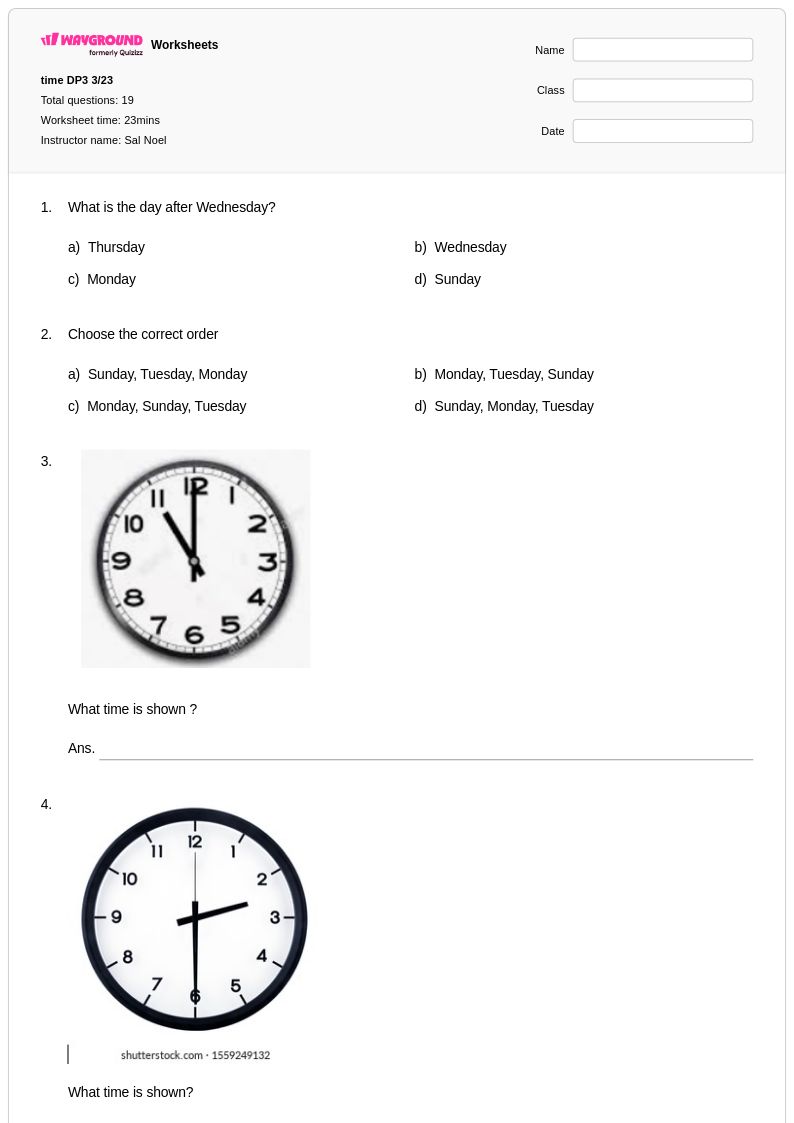
19 Q
KG
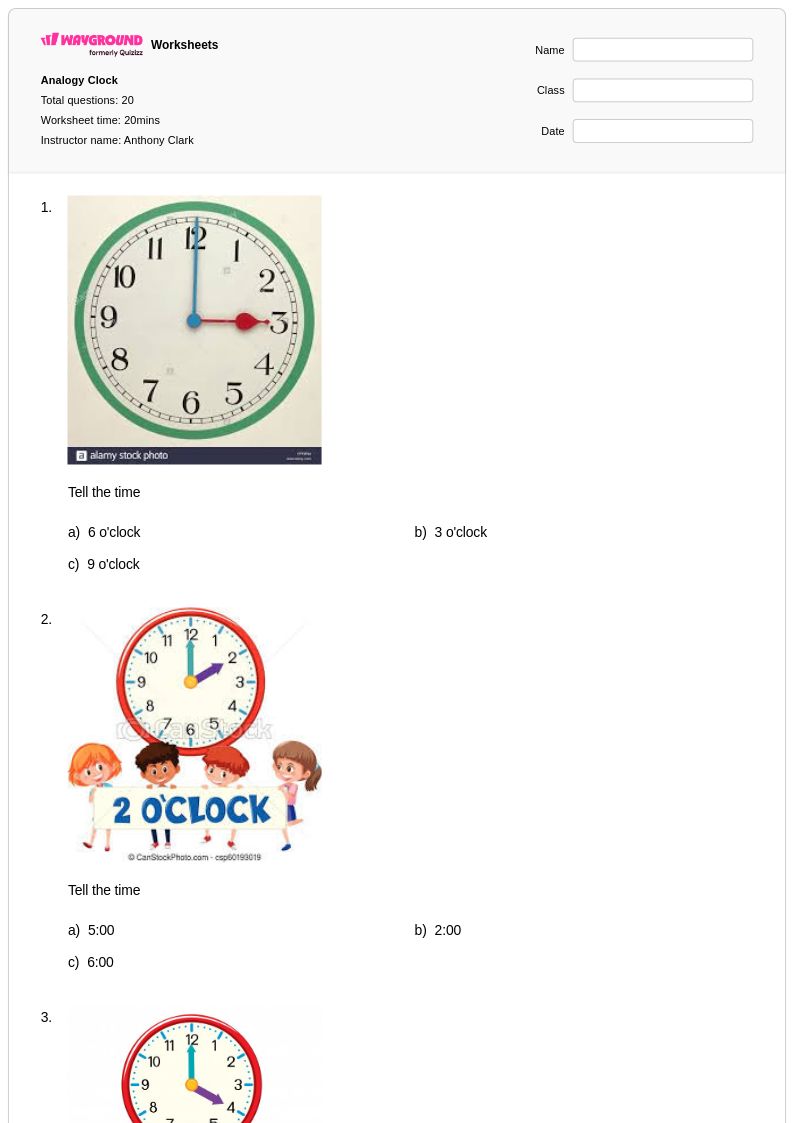
20 Q
2nd - Uni
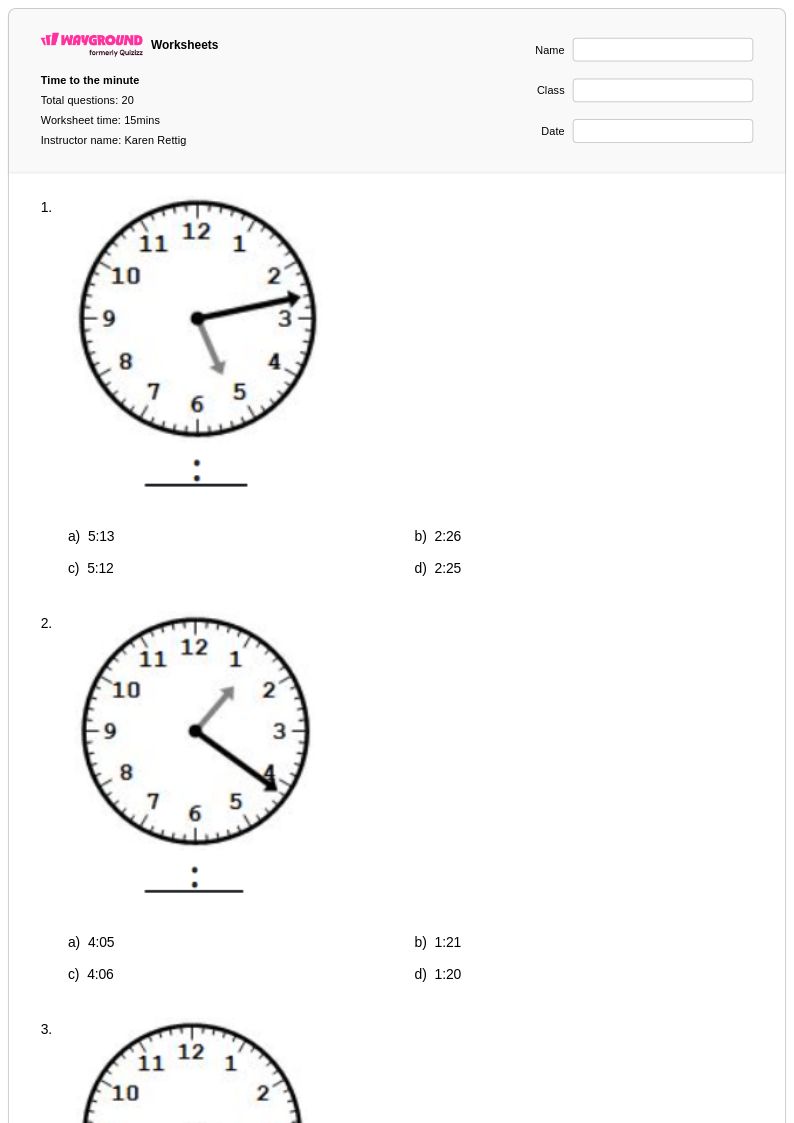
20 Q
2nd - 4th
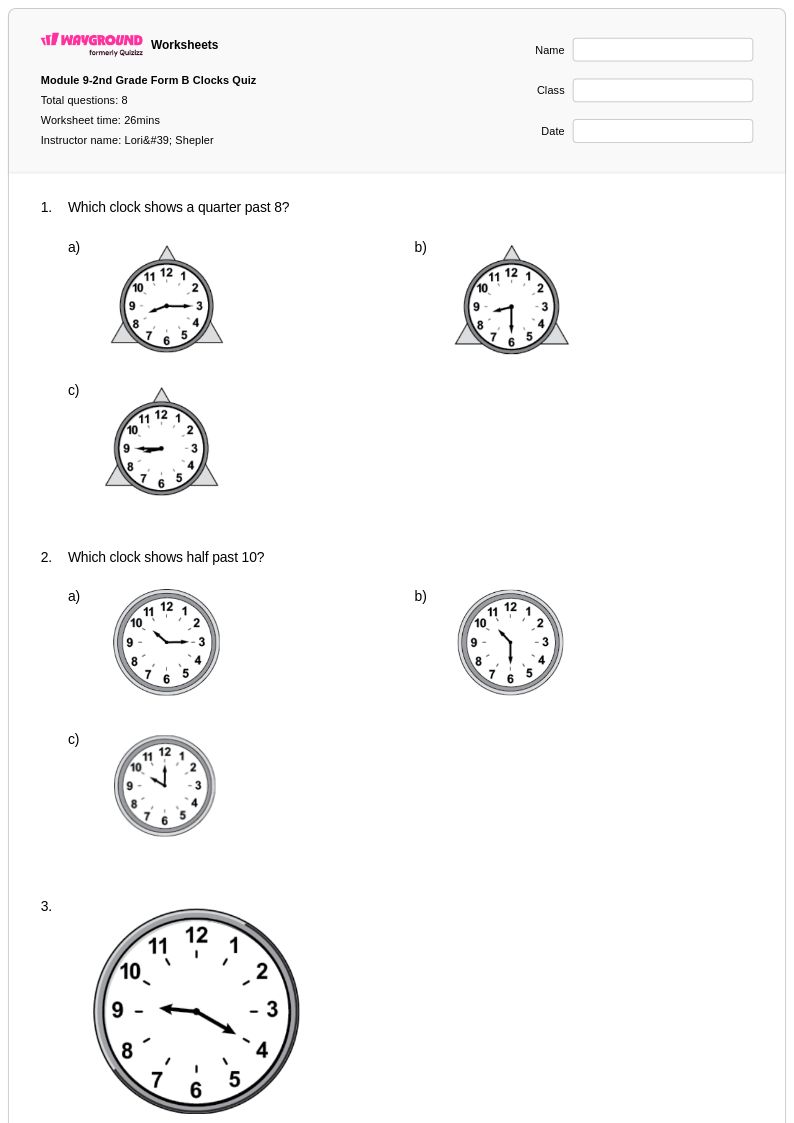
8 Q
2nd
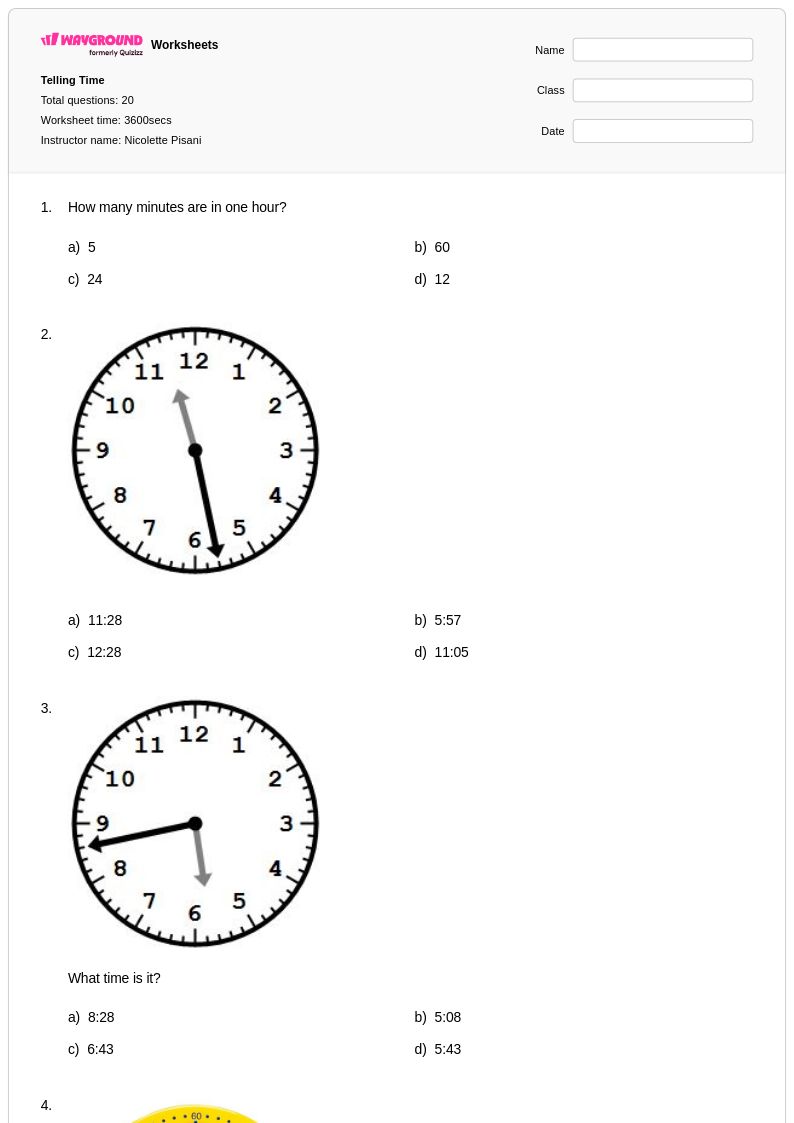
20 Q
3rd
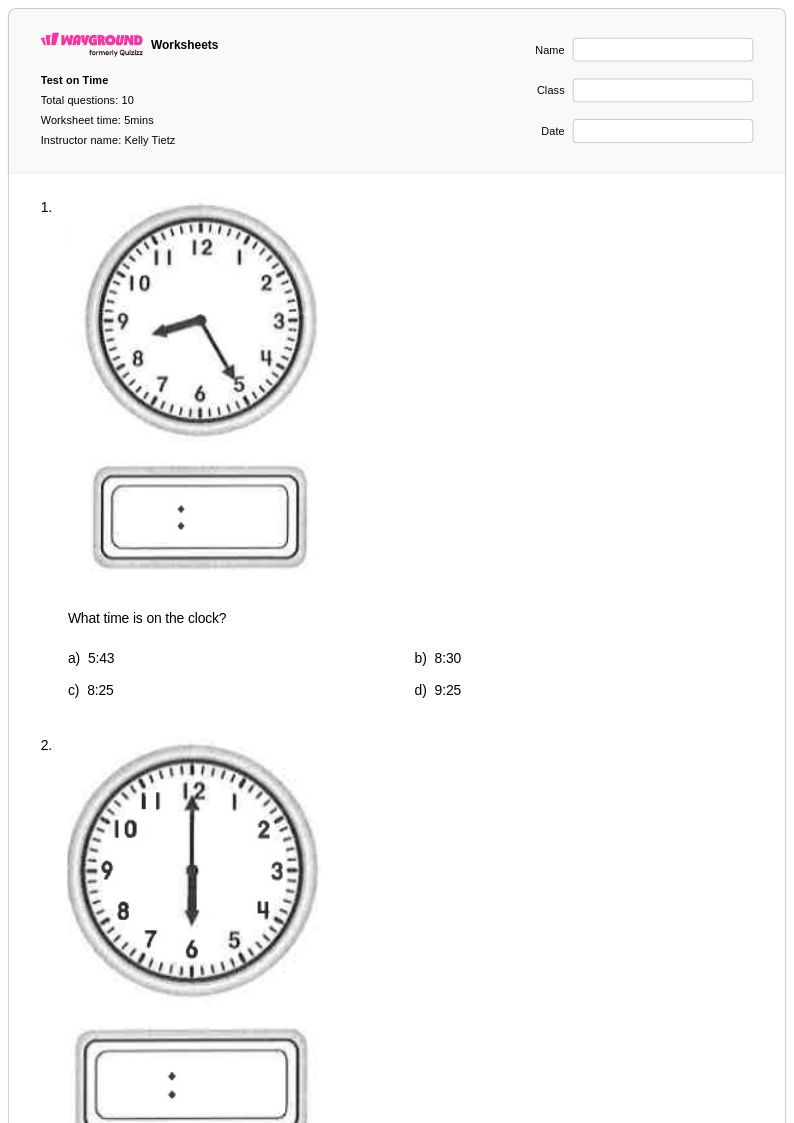
10 Q
2nd
Explore Worksheets by Subjects
Explore printable Analogue Clocks worksheets
Analogue clocks worksheets available through Wayground (formerly Quizizz) provide comprehensive instruction and practice for students learning to read traditional timepieces with hour and minute hands. These mathematics worksheets strengthen essential time-telling skills including identifying hour and minute hand positions, understanding clock face number placement, reading time to the hour, half-hour, quarter-hour, and minute intervals, and connecting digital and analogue time representations. The collection includes structured practice problems that progress from basic hour recognition to complex time calculations, with each worksheet featuring a complete answer key for immediate feedback and assessment. Students develop both visual recognition skills and mathematical reasoning as they work through free printables that reinforce the relationship between clock positions and numerical time values, building confidence in this fundamental life skill through repeated exposure to varied clock configurations.
Wayground (formerly Quizizz) supports mathematics educators with an extensive collection of teacher-created analogue clock resources drawn from millions of contributed worksheets and activities. The platform's robust search and filtering capabilities allow teachers to locate materials that align with specific curriculum standards and match their students' developmental needs, whether for initial instruction, skill remediation, or advanced practice. These differentiation tools enable educators to customize worksheets for individual learning levels while maintaining consistent focus on analogue clock mastery across diverse classroom settings. Available in both printable pdf format and interactive digital versions, these resources provide flexible options for lesson planning, homework assignments, assessment preparation, and targeted skill practice, ensuring that teachers can seamlessly integrate analogue clock instruction into their broader mathematics curriculum while accommodating various teaching preferences and classroom technology configurations.
FAQs
How do I teach students to read analogue clocks?
What exercises help students practice reading analogue clocks?
What mistakes do students commonly make when reading analogue clocks?
How can I use analogue clock worksheets from Wayground?
How do analogue clock skills progress under Common Core math?
How can I differentiate analogue clock practice for mixed-ability students?