
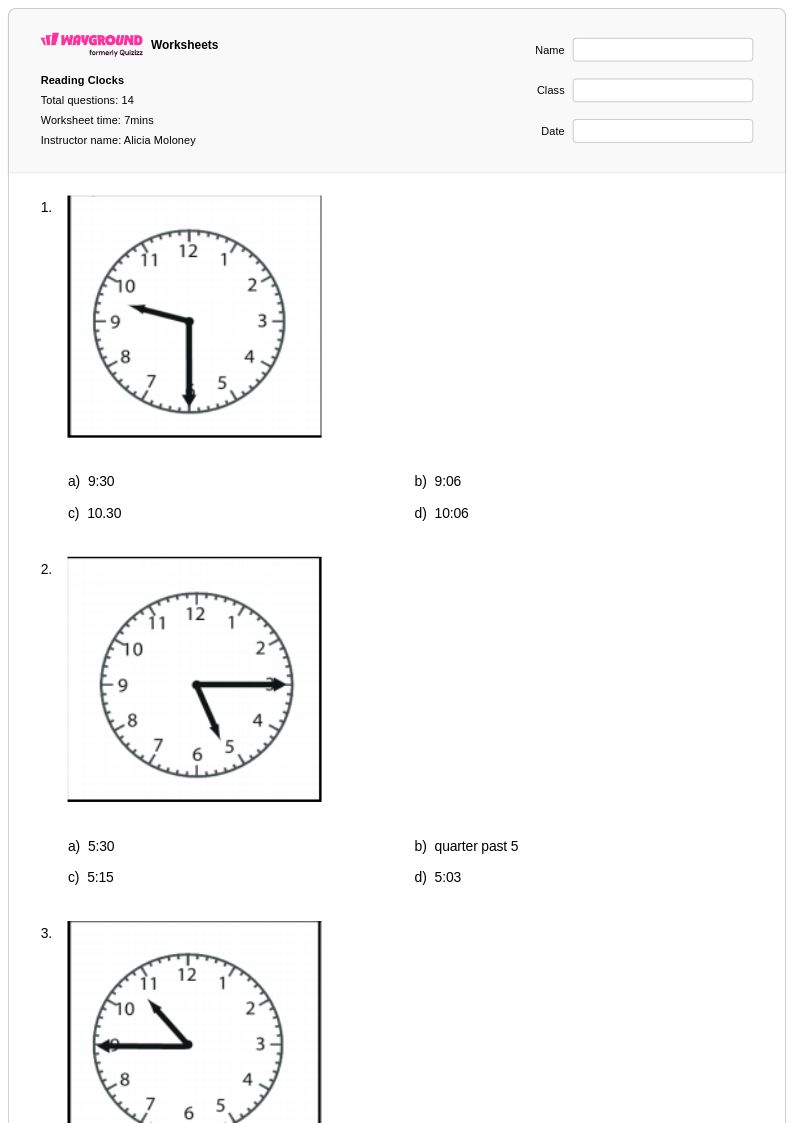
14 Q
4th - 6th
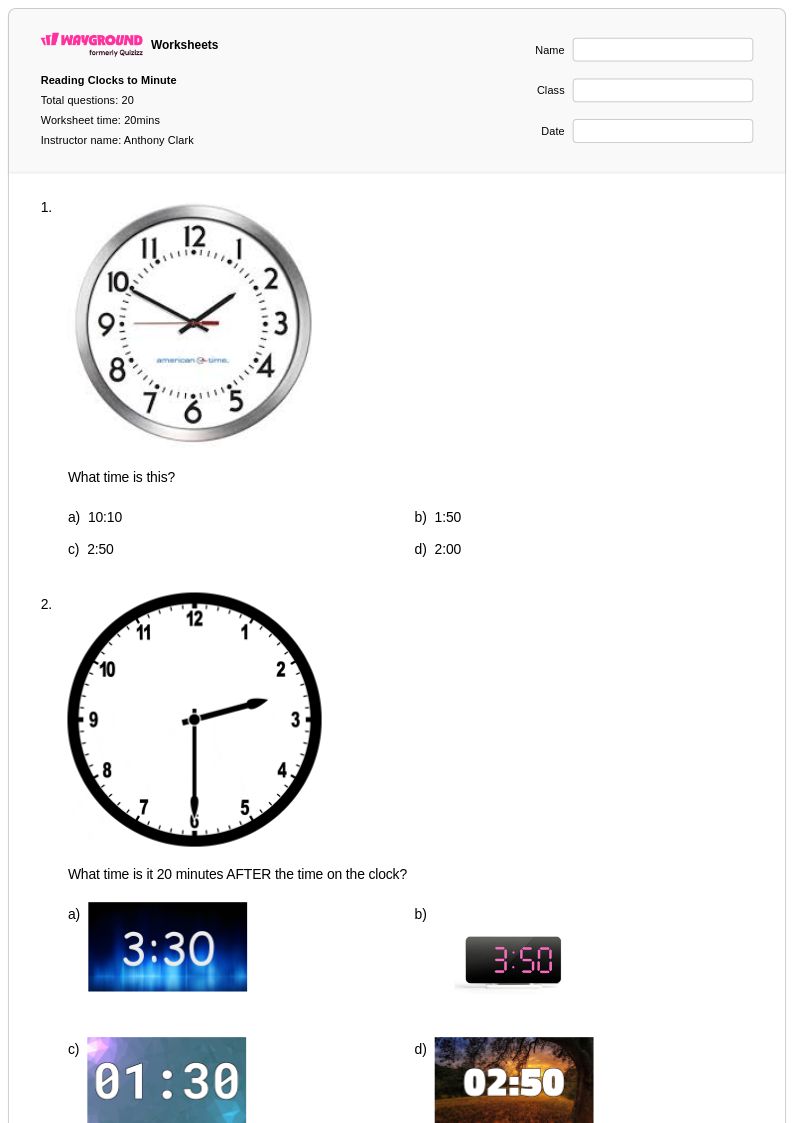
20 Q
3rd - Uni
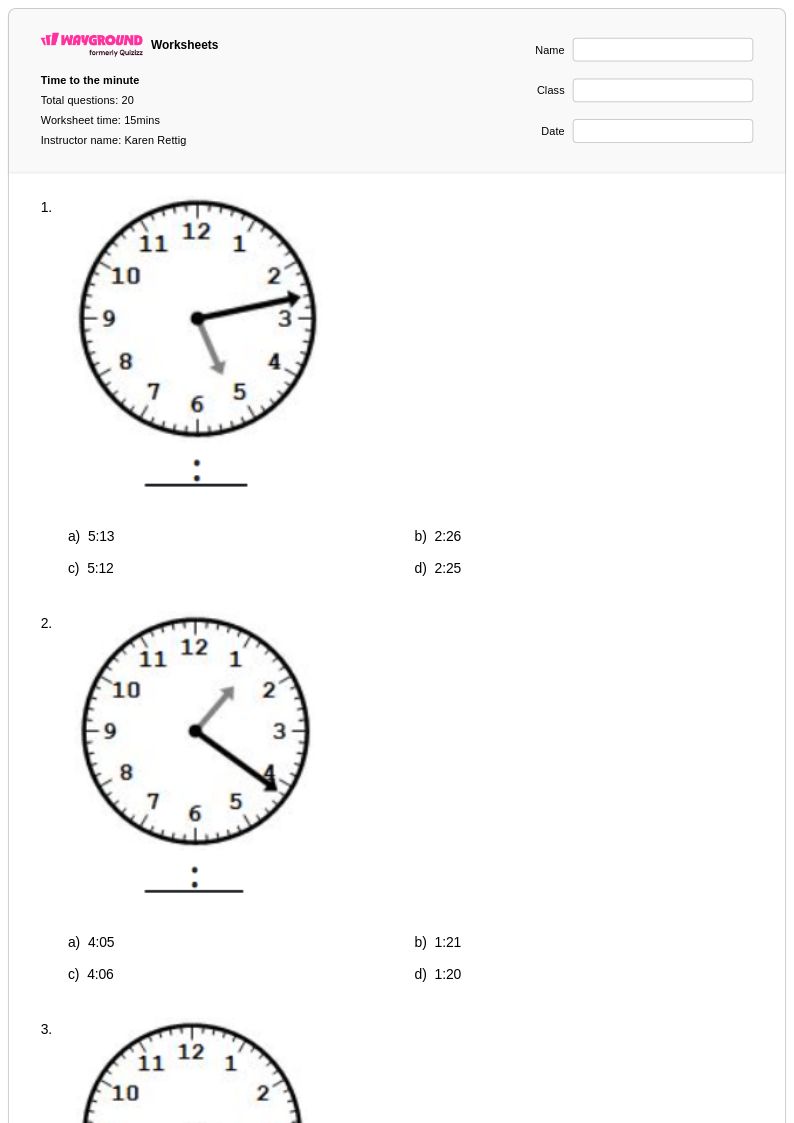
20 Q
2nd - 4th
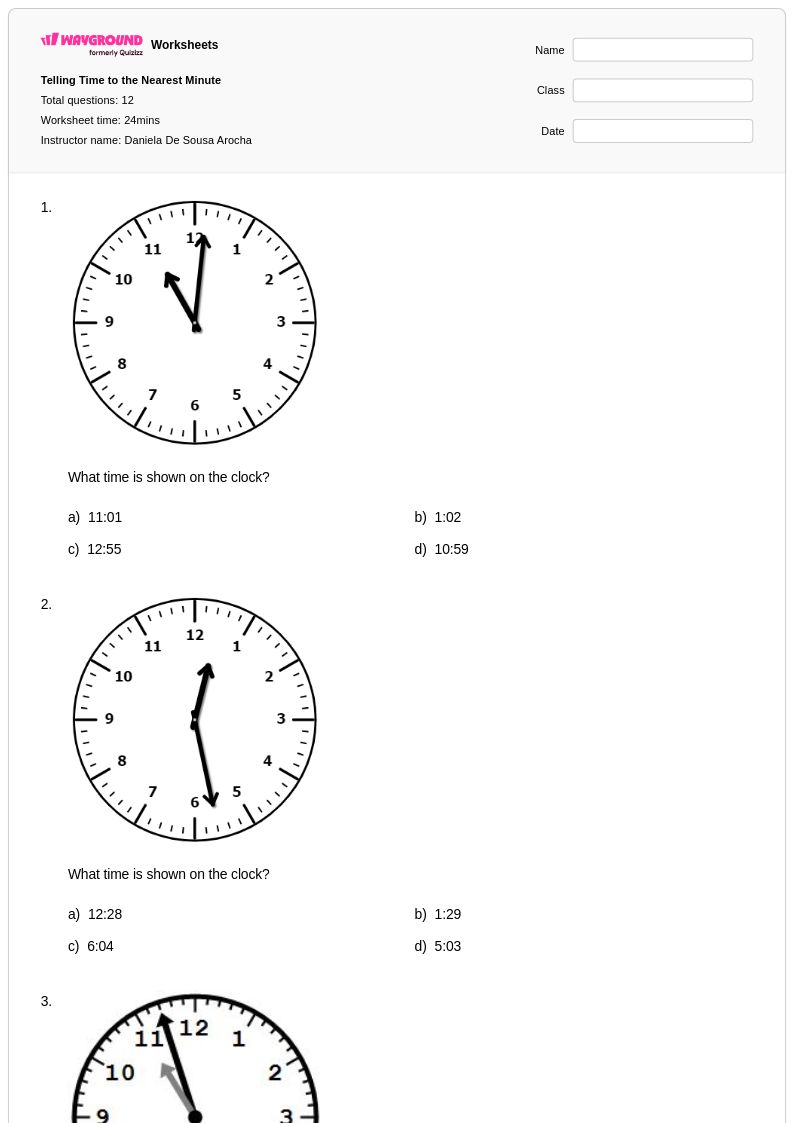
12 Q
3rd
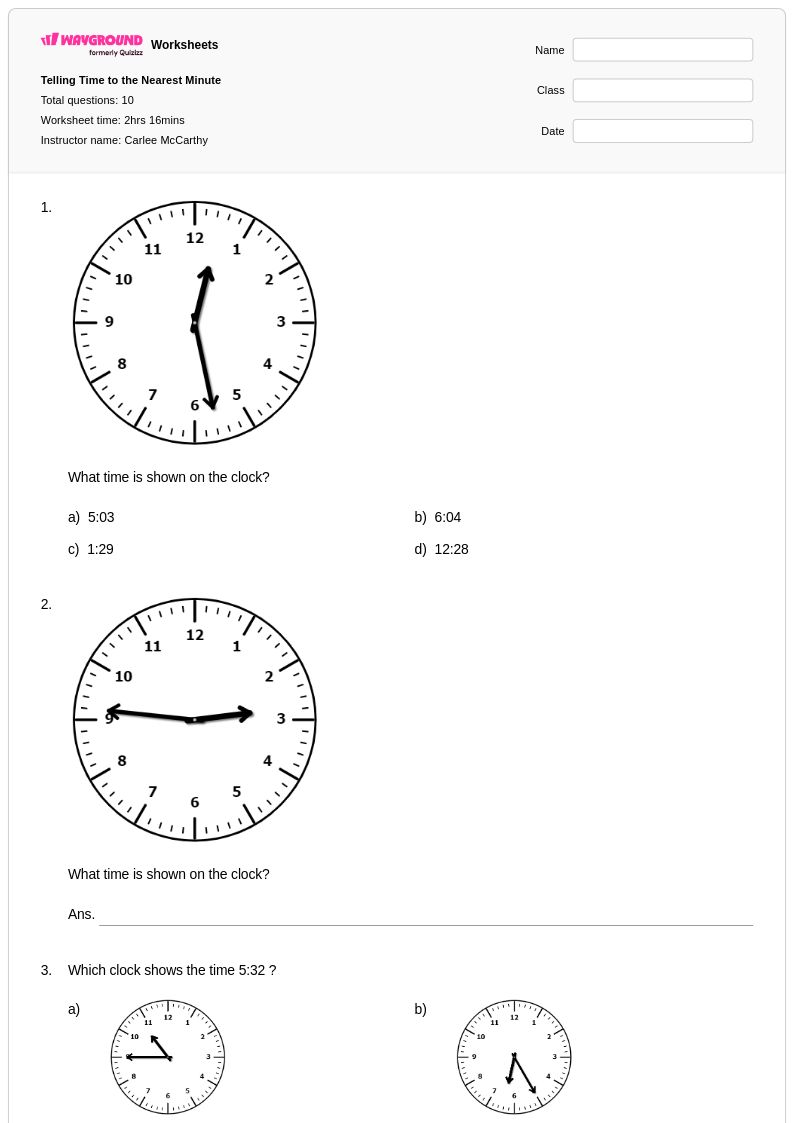
10 Q
3rd - 4th
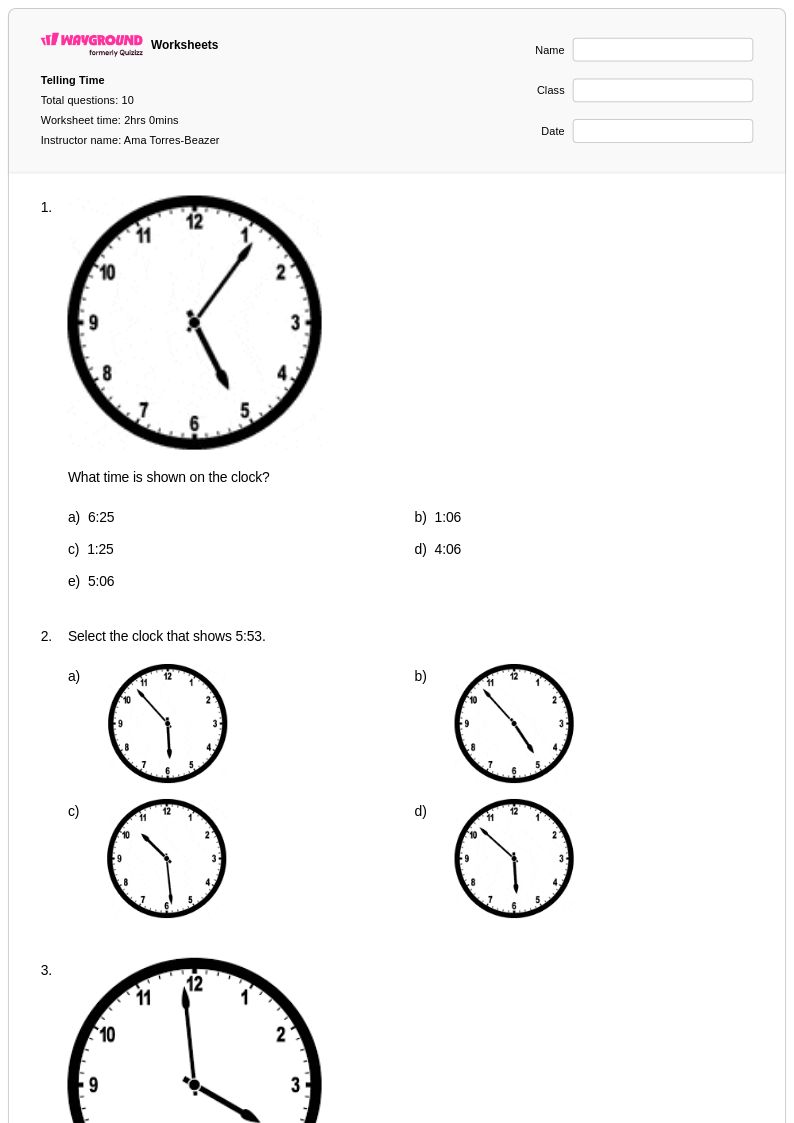
10 Q
3rd - 4th
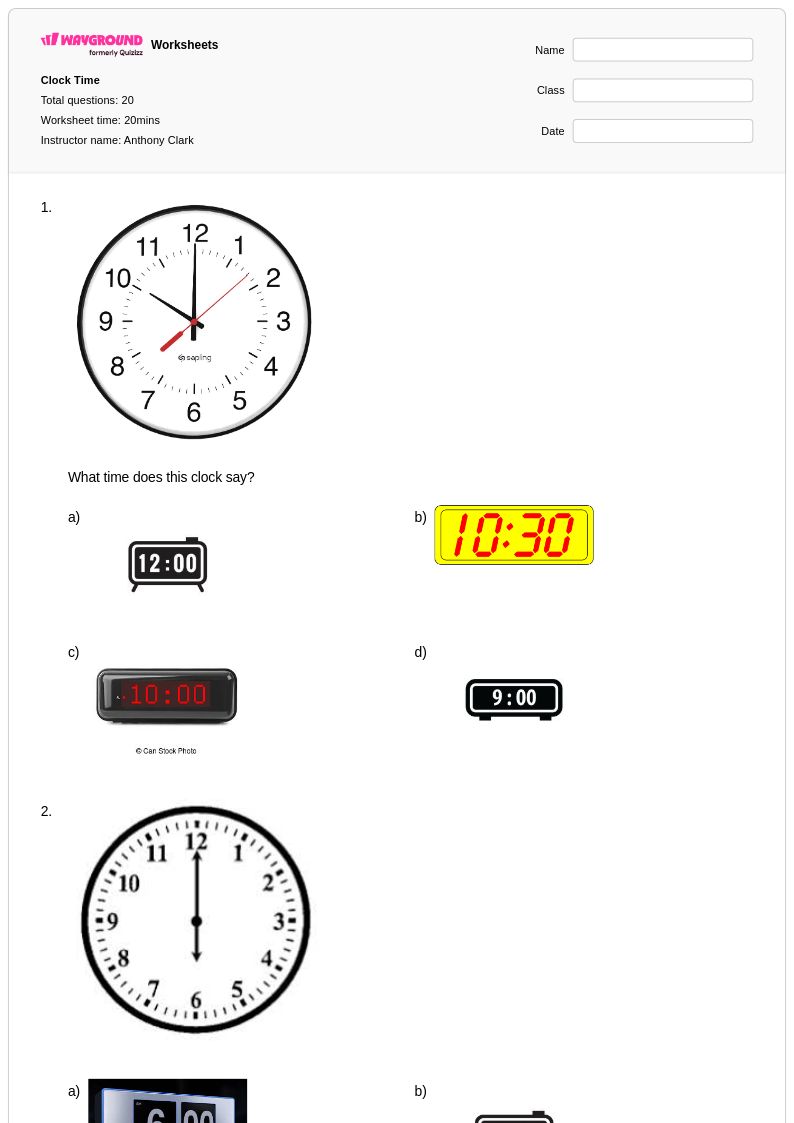
20 Q
2nd - Uni
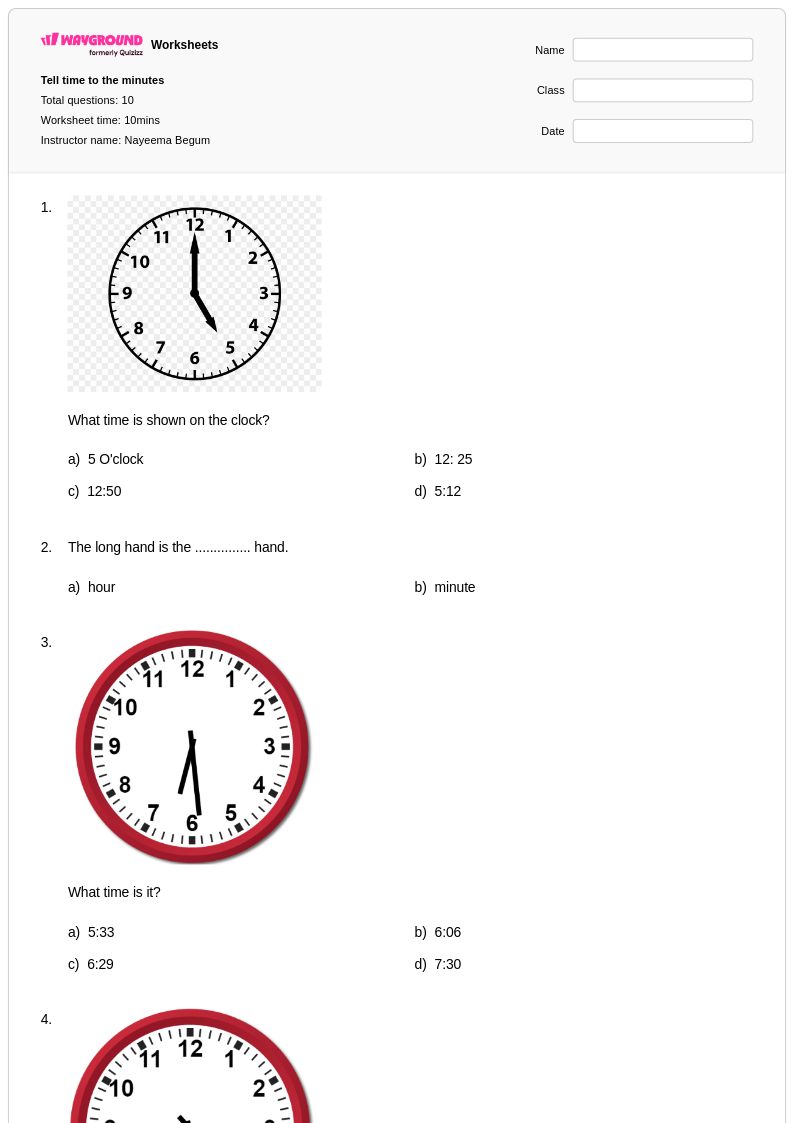
10 Q
3rd
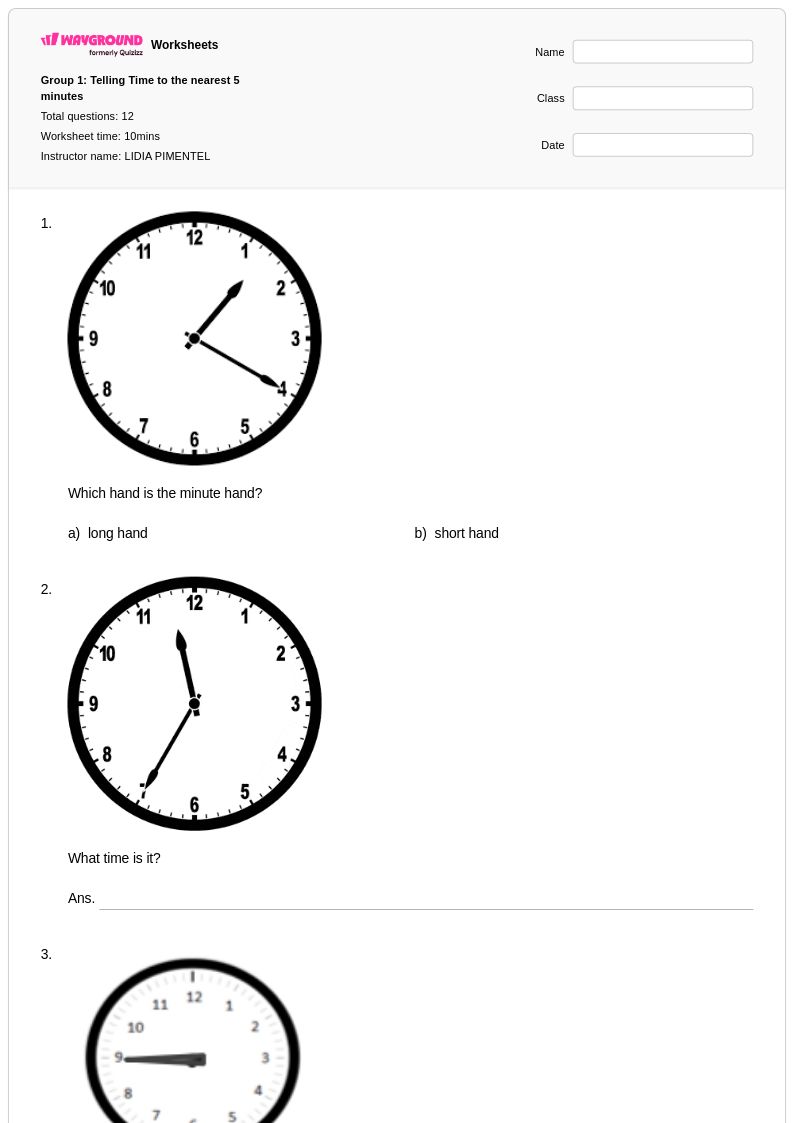
12 Q
1st - 3rd
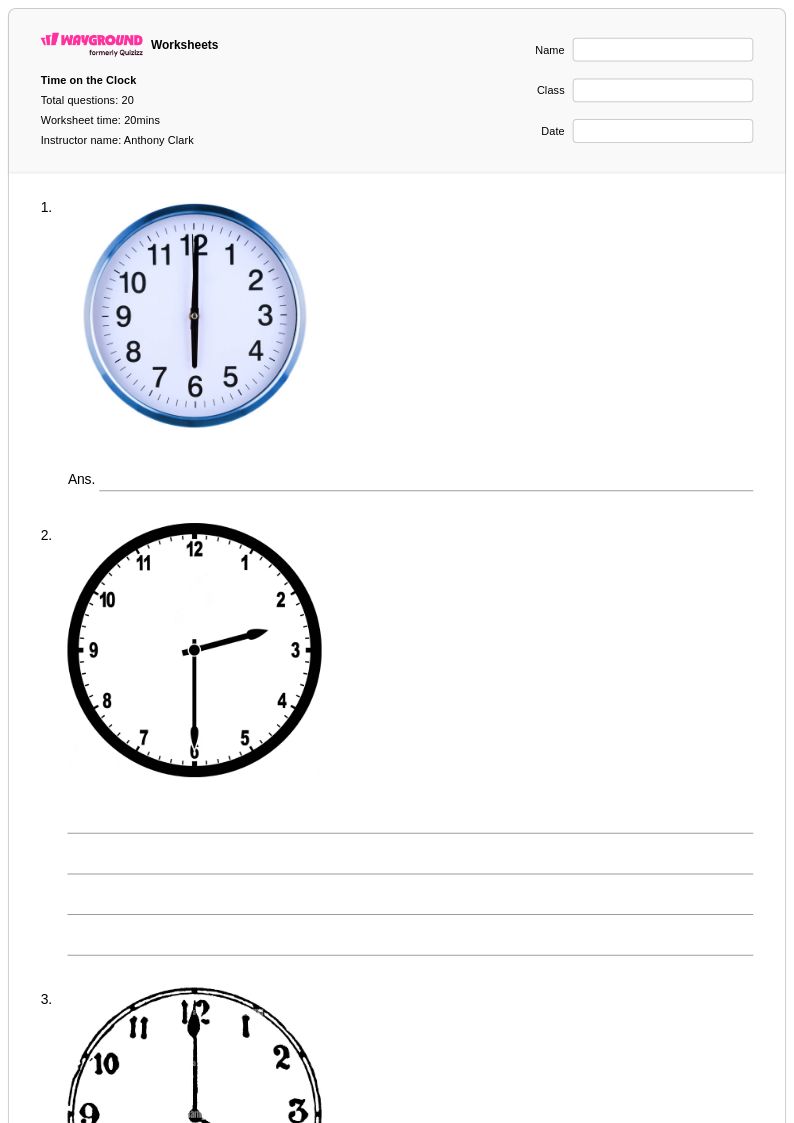
20 Q
3rd - Uni
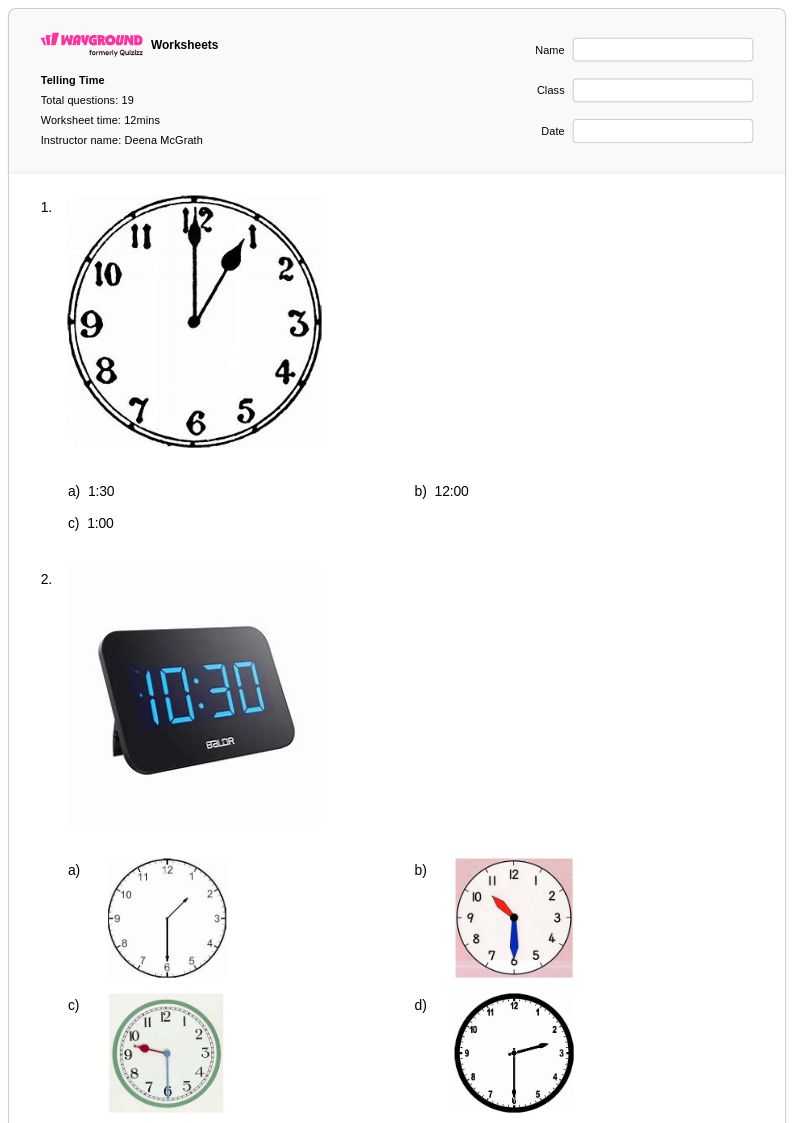
19 Q
1st
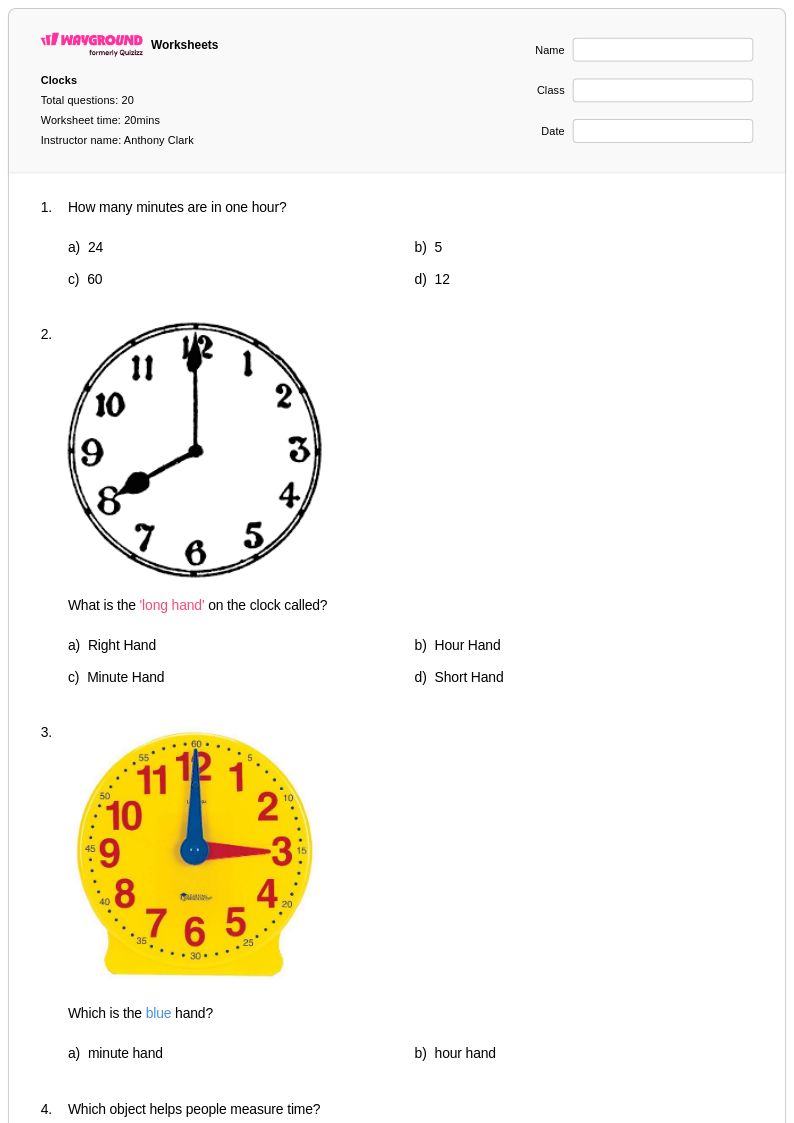
20 Q
1st - Uni
8 Q
1st
18 Q
3rd
10 Q
2nd
27 Q
2nd
10 Q
3rd
12 Q
5th
10 Q
3rd
20 Q
2nd - Uni
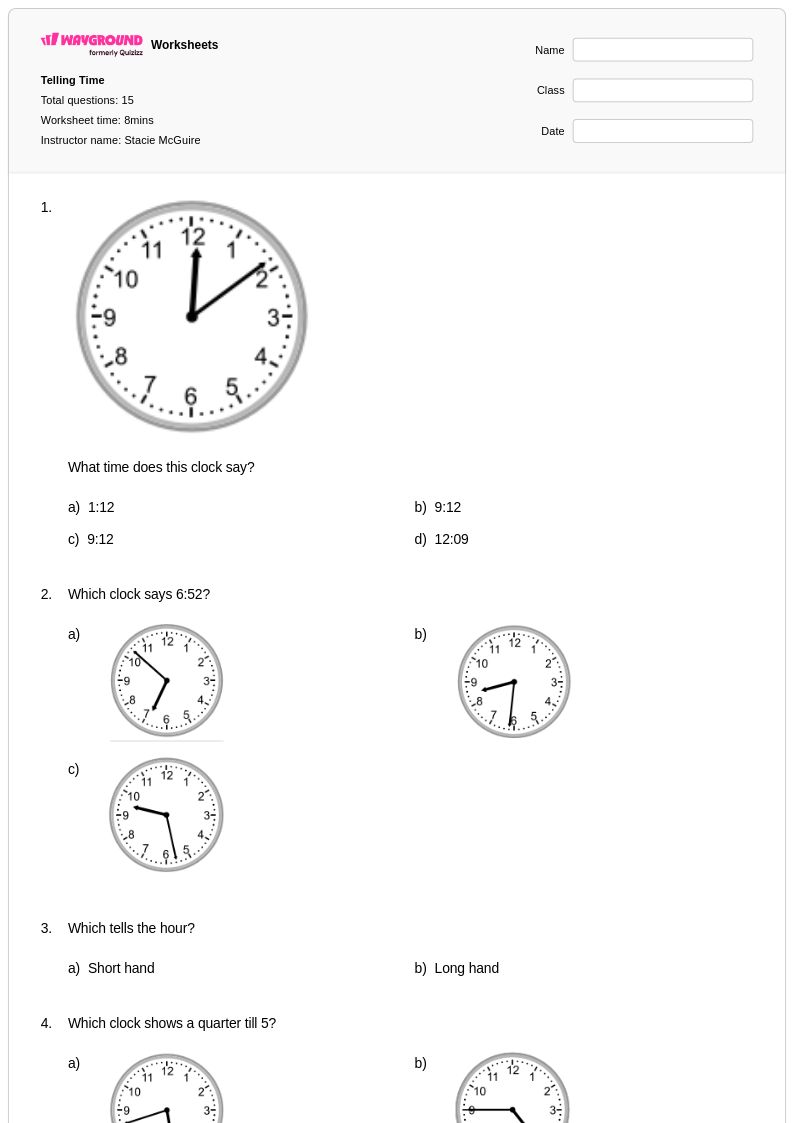
15 Q
3rd
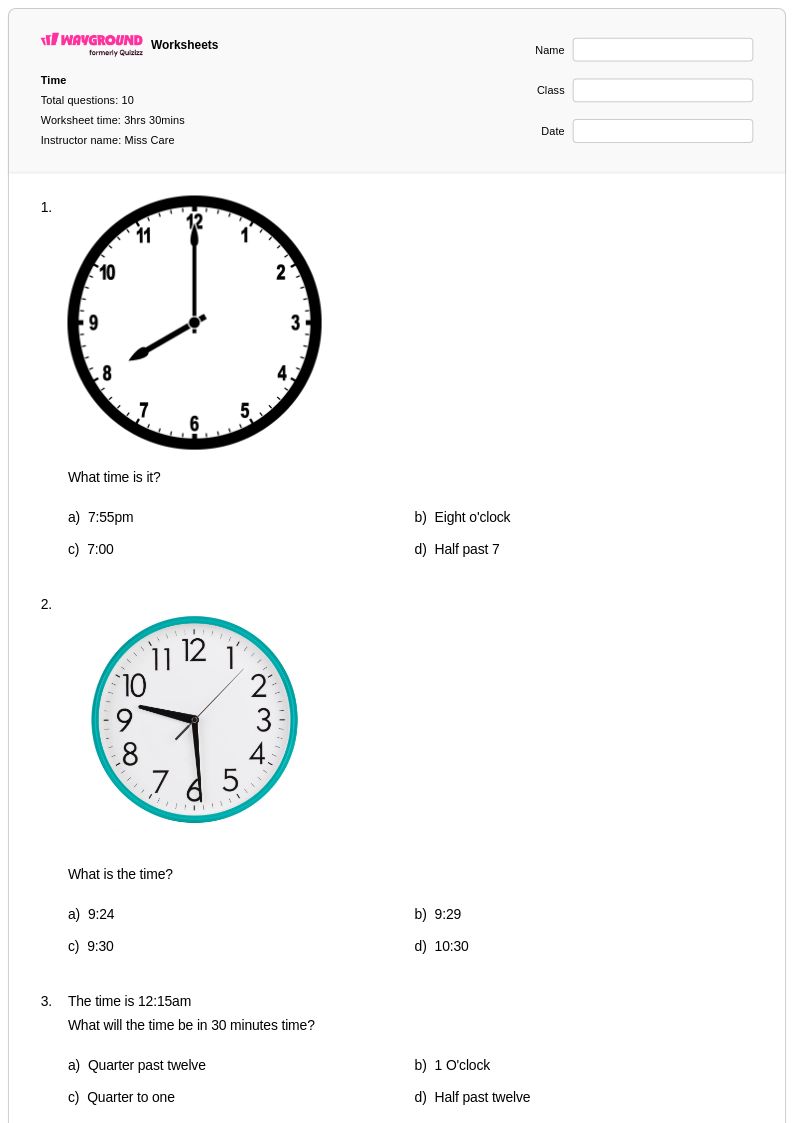
10 Q
4th
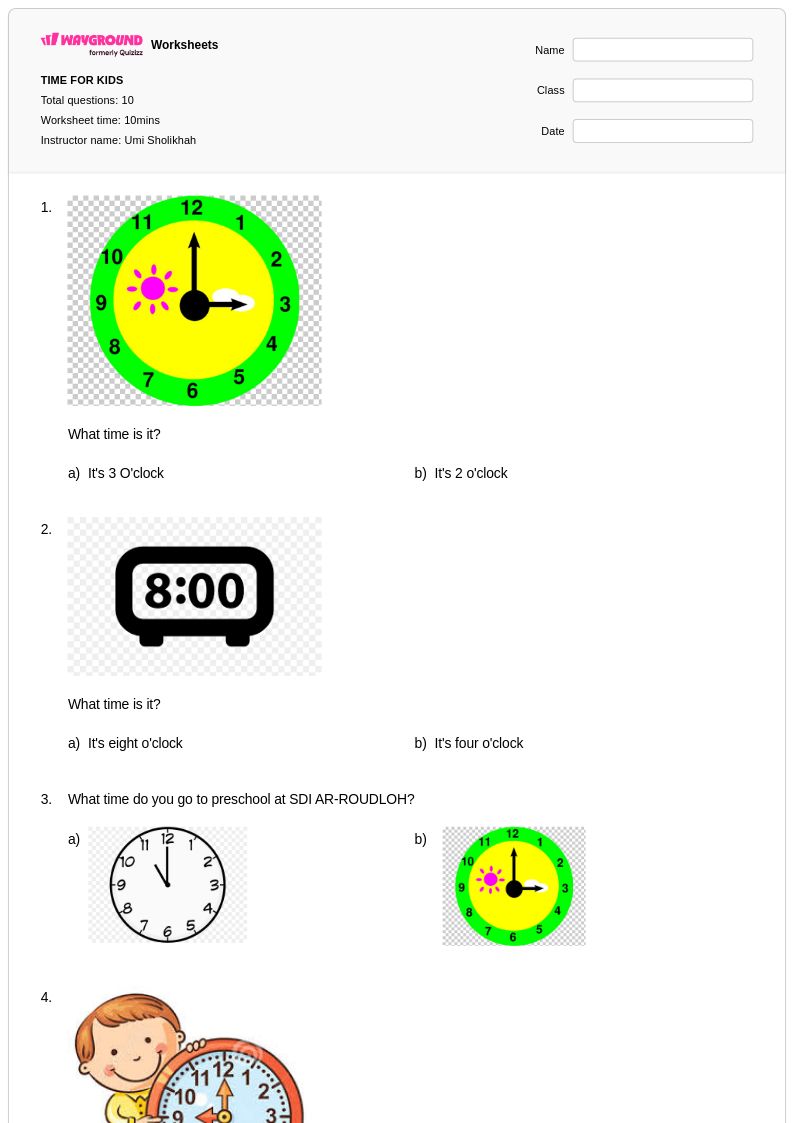
10 Q
KG
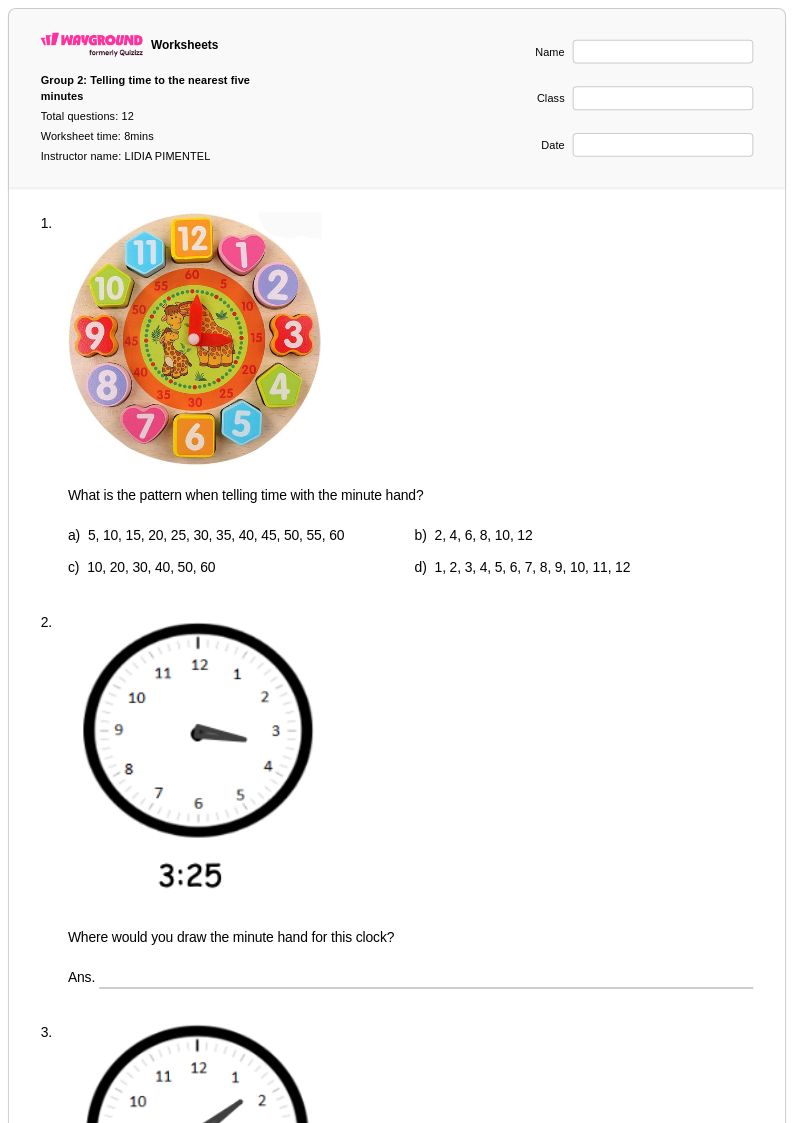
12 Q
1st - 3rd
Explore Worksheets by Subjects
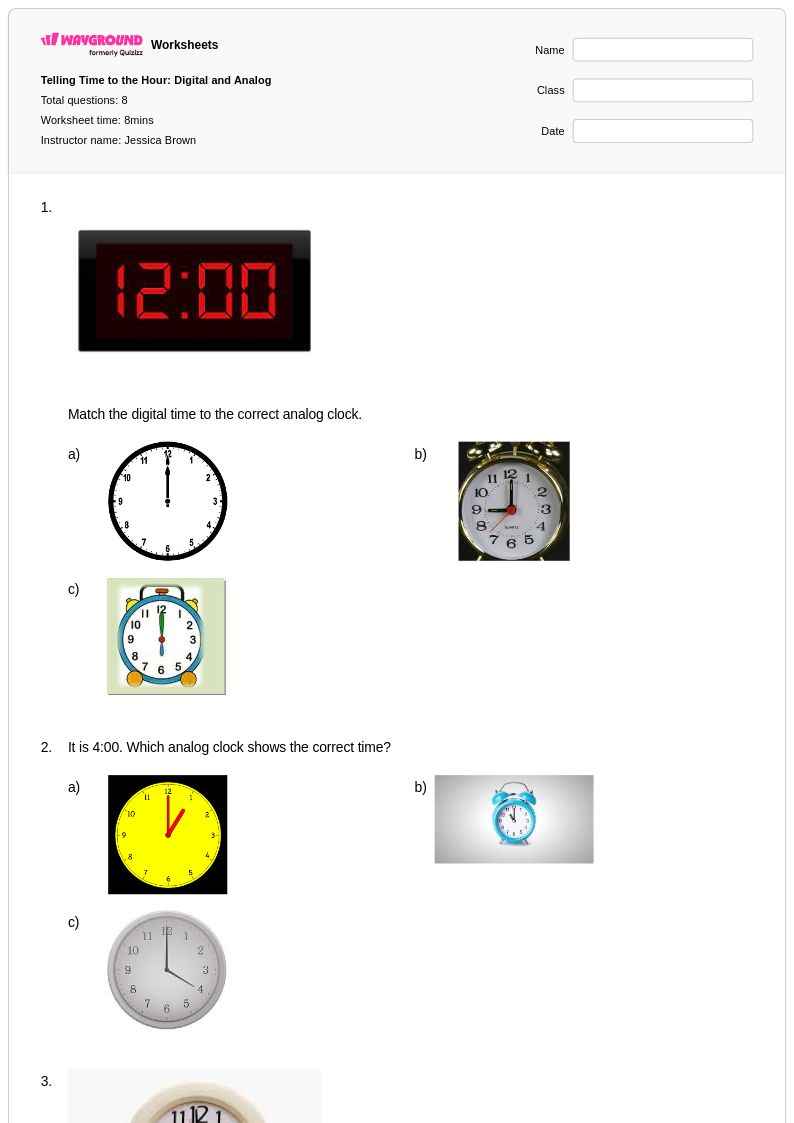
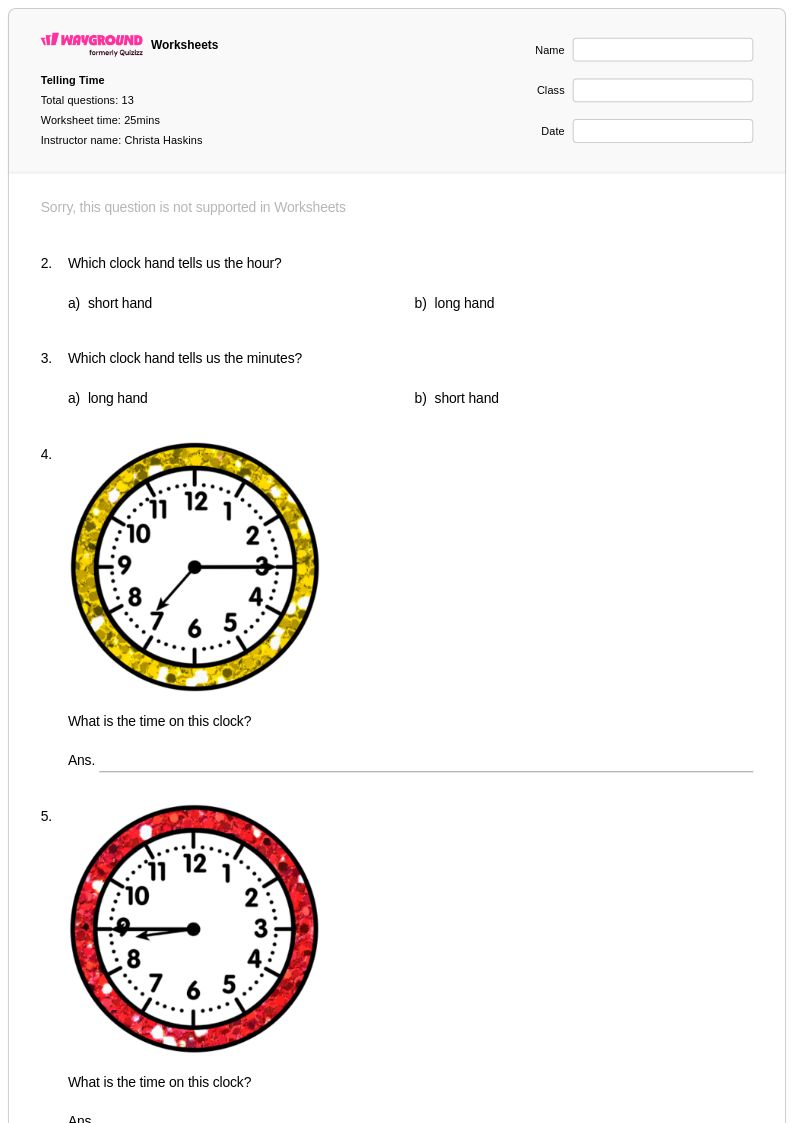
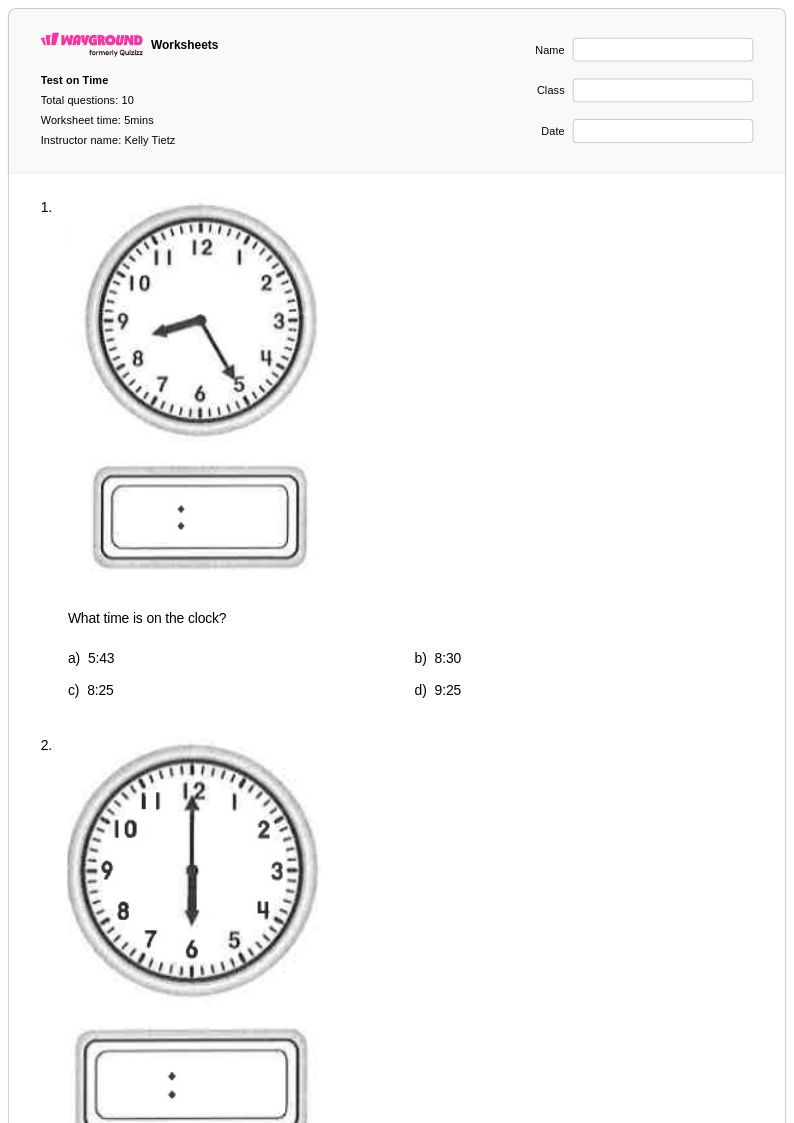
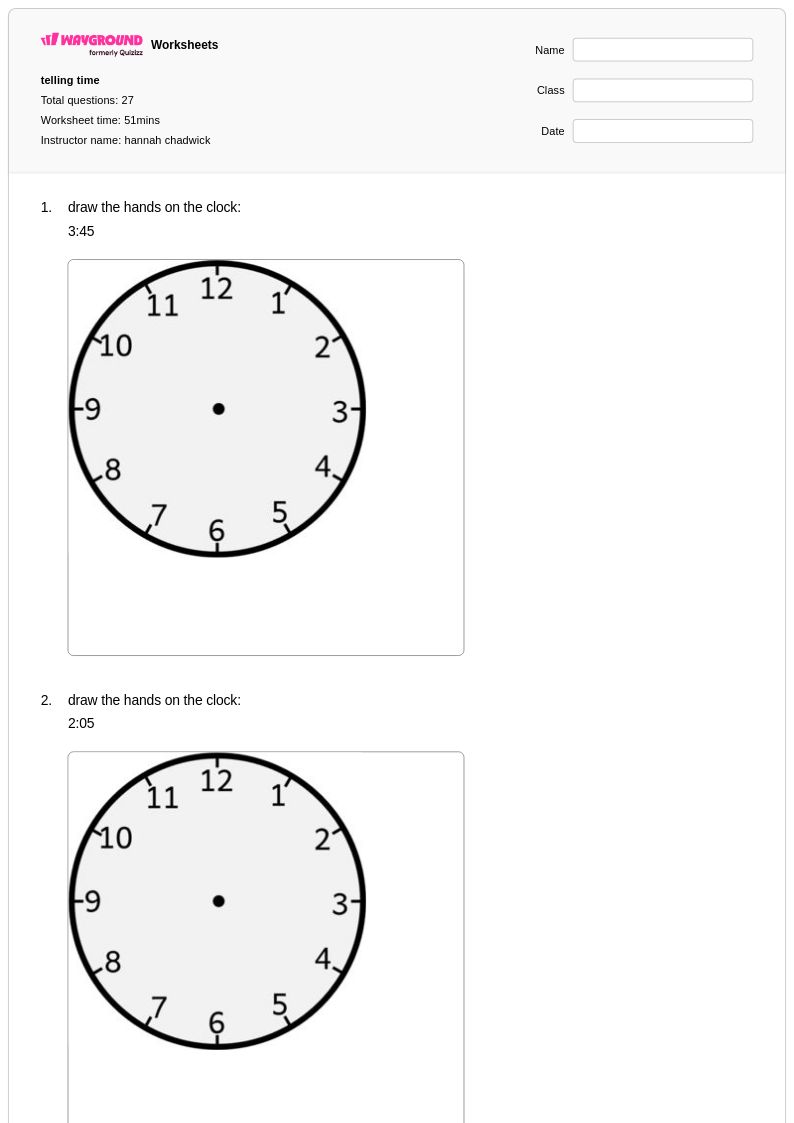
Explore printable Reading Clock Faces worksheets
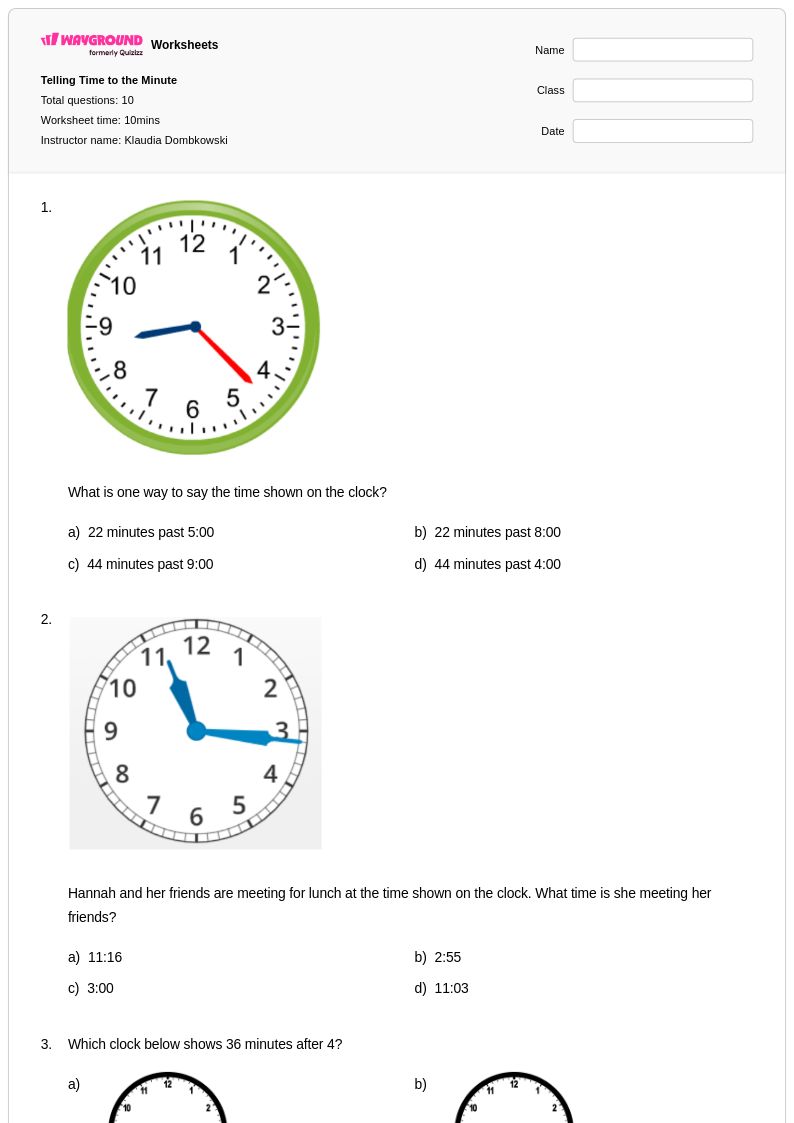
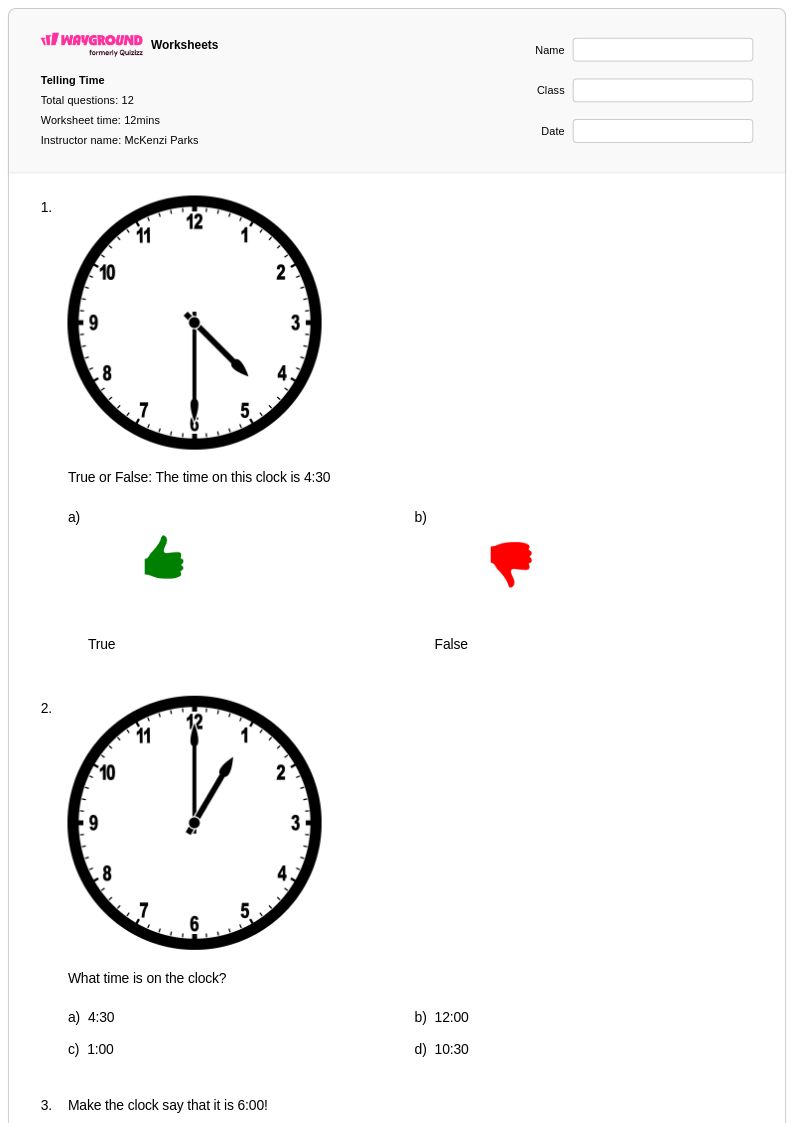
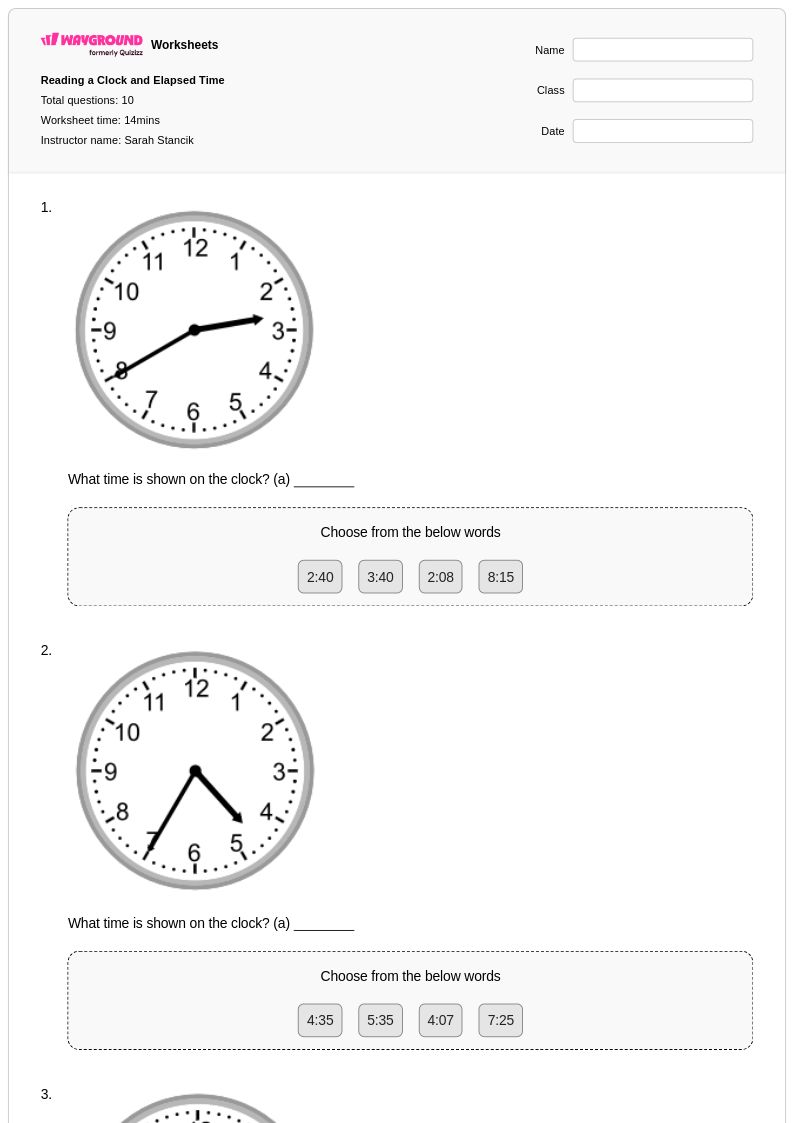
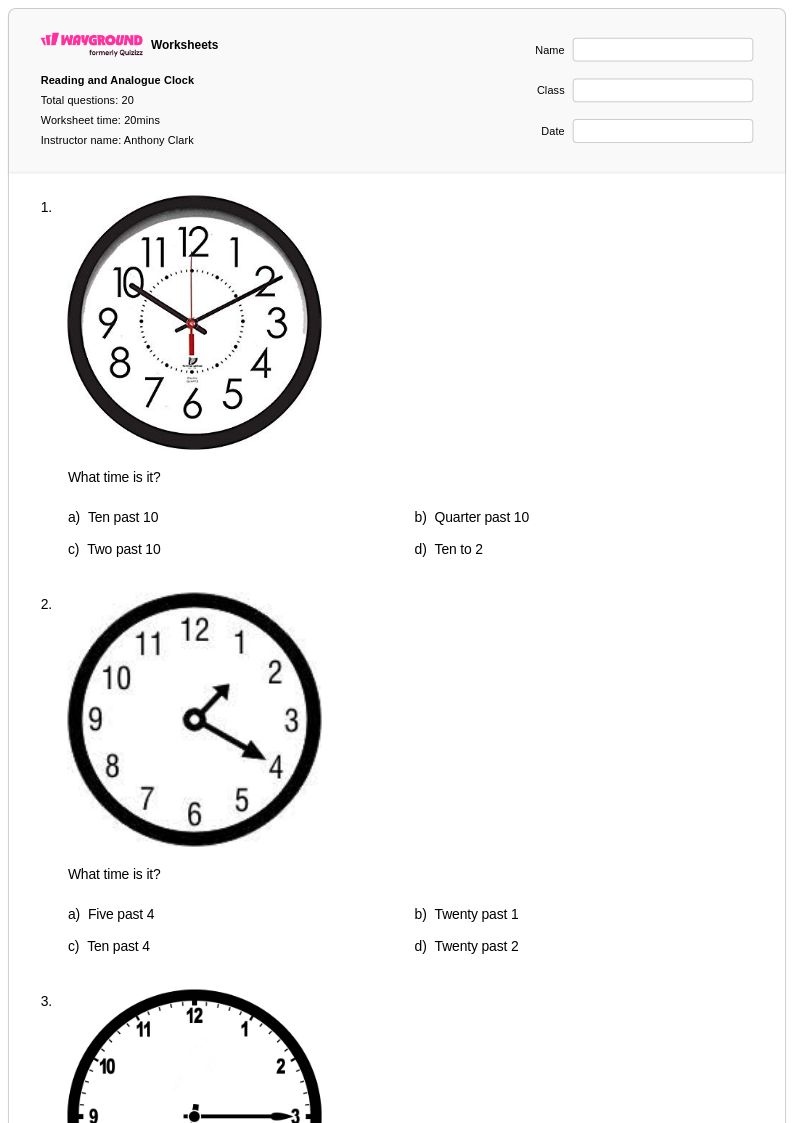
Reading clock faces represents a fundamental mathematics skill that bridges abstract number concepts with practical, real-world time management abilities. Wayground's comprehensive collection of reading clock faces worksheets provides educators with expertly designed practice problems that systematically develop students' ability to interpret analog clocks, understand hour and minute hand positions, and translate visual time representations into digital formats. These free printables feature carefully structured exercises that progress from basic hour recognition to complex time-telling scenarios involving quarter hours, half hours, and precise minute intervals. Each worksheet includes detailed answer keys that enable efficient assessment and self-checking, while the pdf format ensures consistent formatting across different devices and printing scenarios, making these resources ideal for both classroom instruction and independent practice sessions.
Wayground's extensive library draws from millions of teacher-created resources specifically focused on clock reading skills, offering educators unprecedented access to diverse worksheet collections that address varying skill levels and learning approaches. The platform's advanced search and filtering capabilities allow teachers to quickly locate materials that align with specific curriculum standards and differentiate instruction based on individual student needs. These digital and printable resources support flexible lesson planning by providing options for whole-group instruction, targeted remediation for struggling learners, and enrichment activities for advanced students. The customization tools enable educators to modify existing worksheets or combine elements from multiple resources, creating tailored practice opportunities that address specific gaps in time-telling proficiency while maintaining engagement through varied problem formats and visual presentations.
FAQs
How do I teach students to read an analog clock?
What exercises help students practice reading clock faces?
What are the most common mistakes students make when learning to tell time?
How can I use these clock-reading worksheets in my classroom?
How does learning to tell time fit into the math curriculum?
How can I differentiate time-telling practice for students at different levels?