
Recommended Topics for you
- Analyzing Character
- Analyzing Point of View
- Beginning, Middle, and End
- Character Change
- Characterization
- First and Third Person Point of View
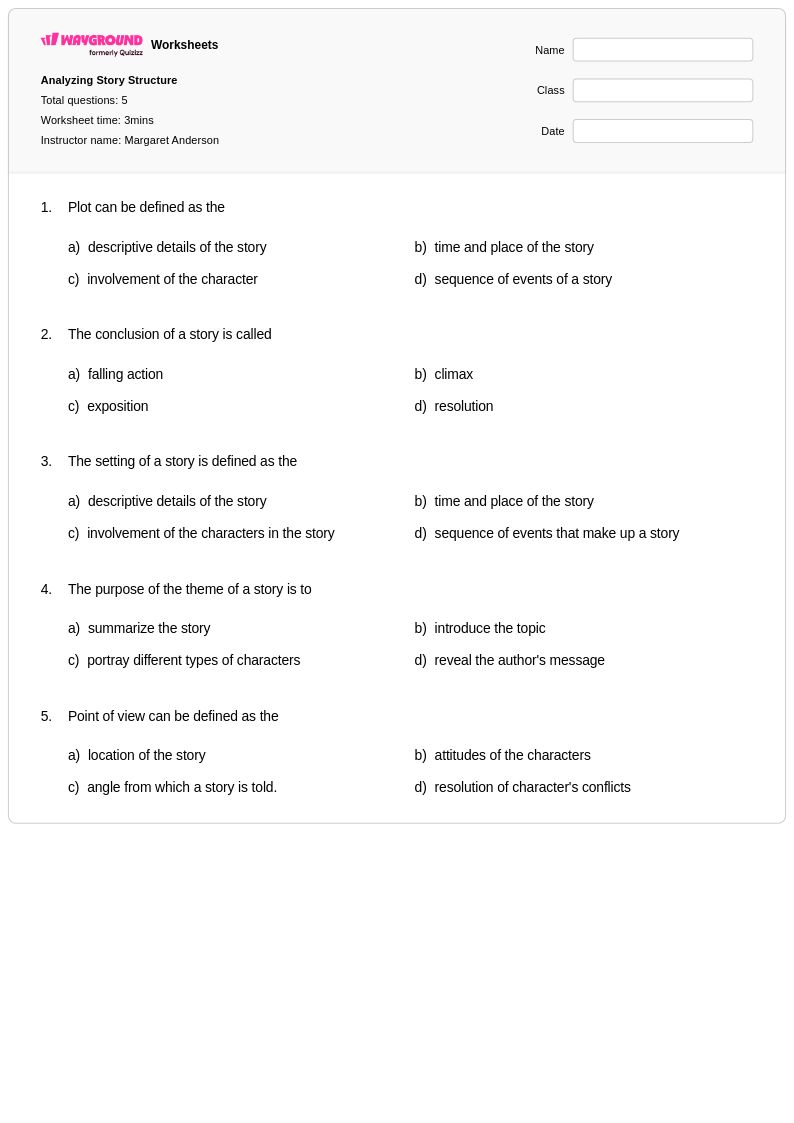
5 Q
5th
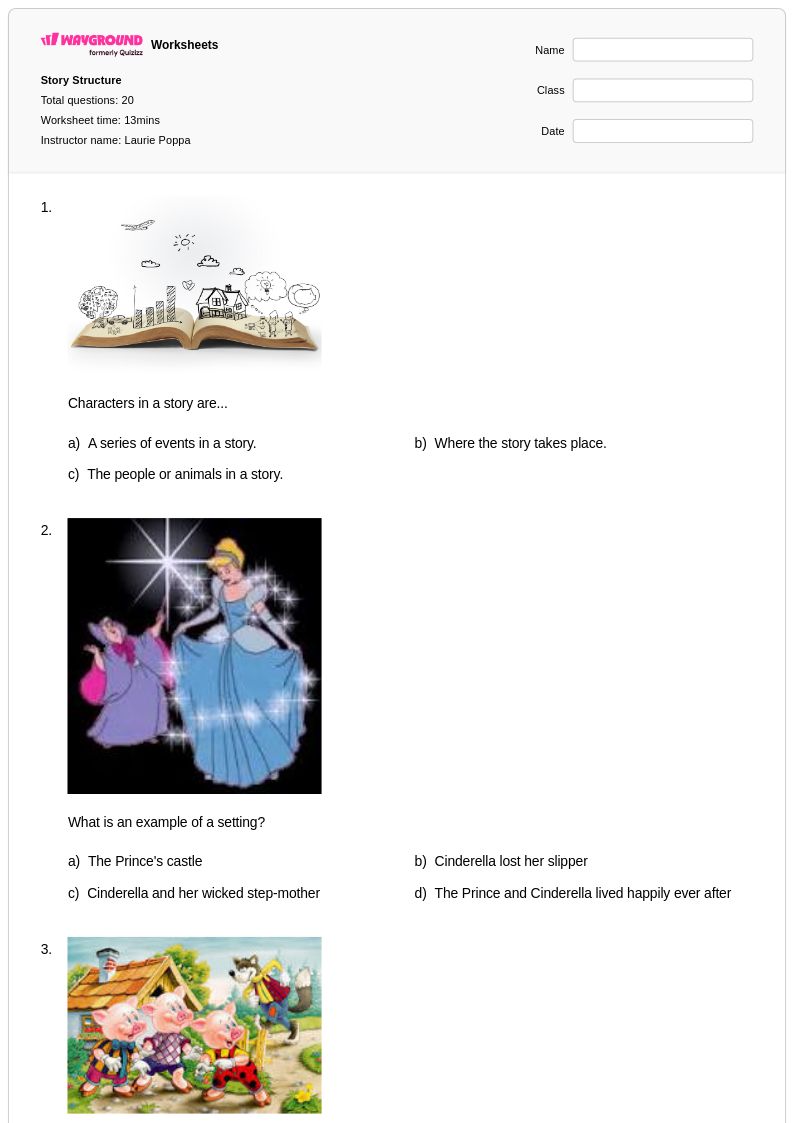
20 Q
2nd - 5th
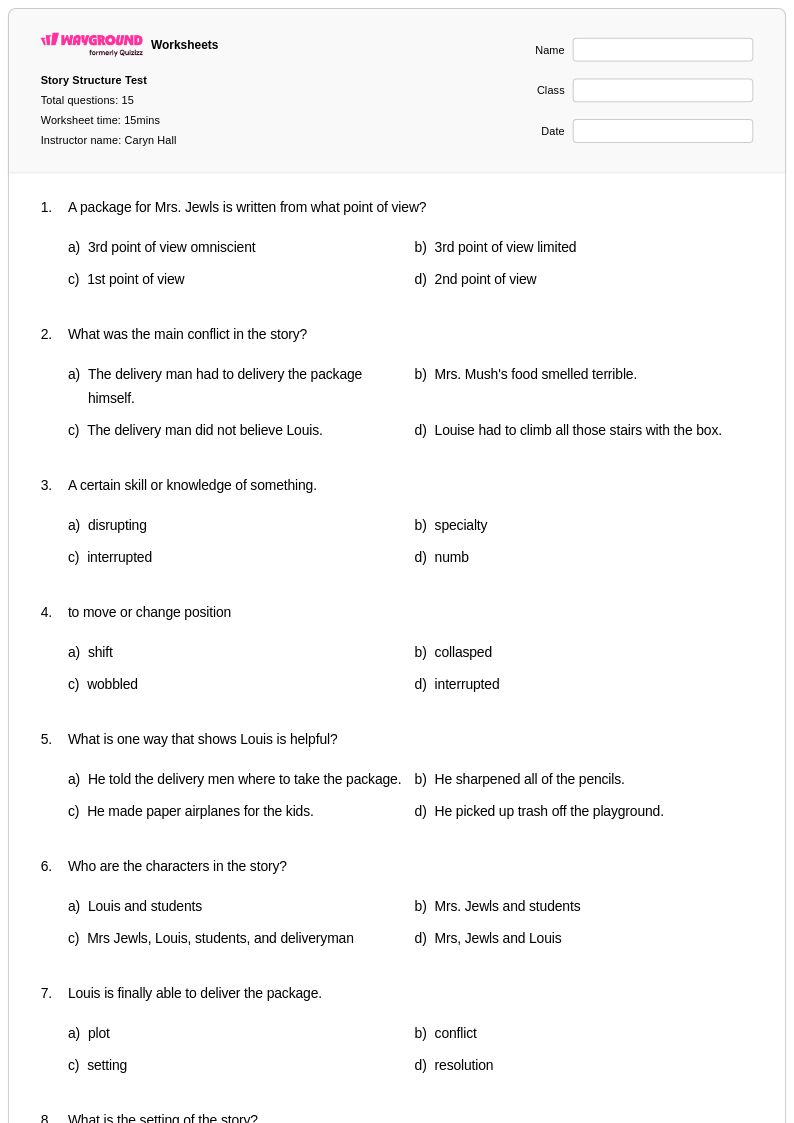
15 Q
5th
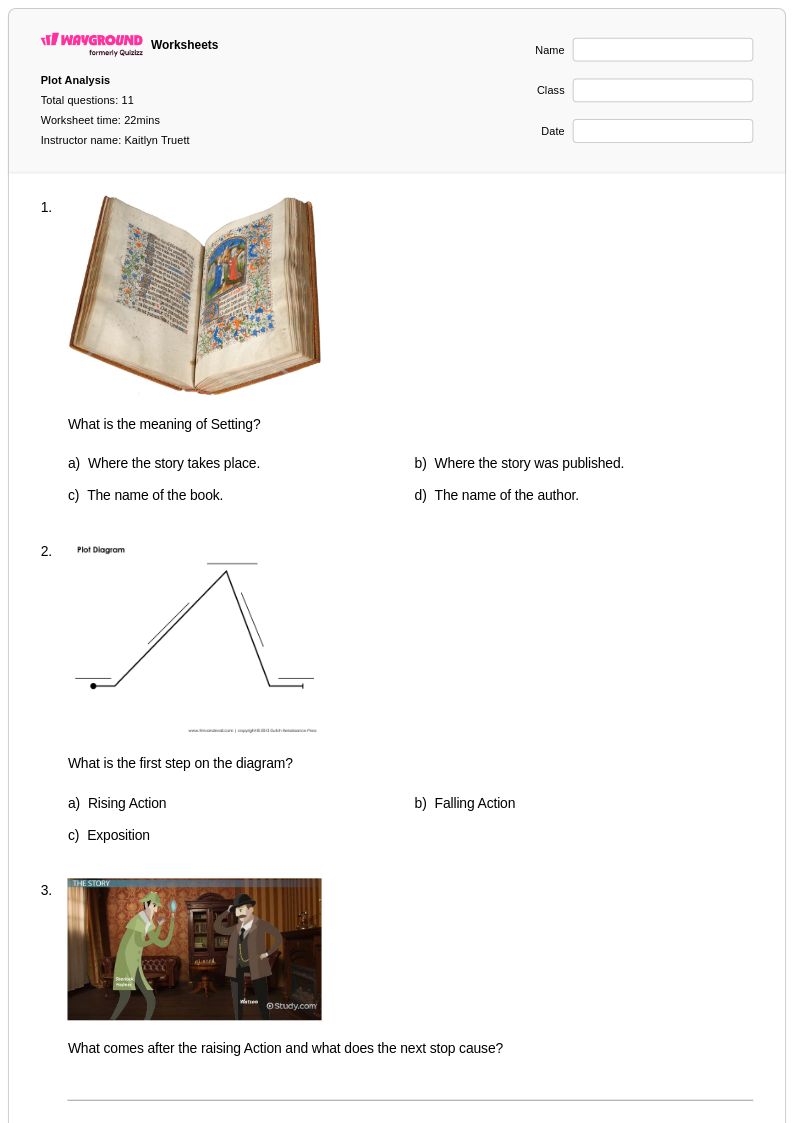
11 Q
1st - 5th
11 Q
5th
15 Q
5th
8 Q
5th
10 Q
3rd - 5th
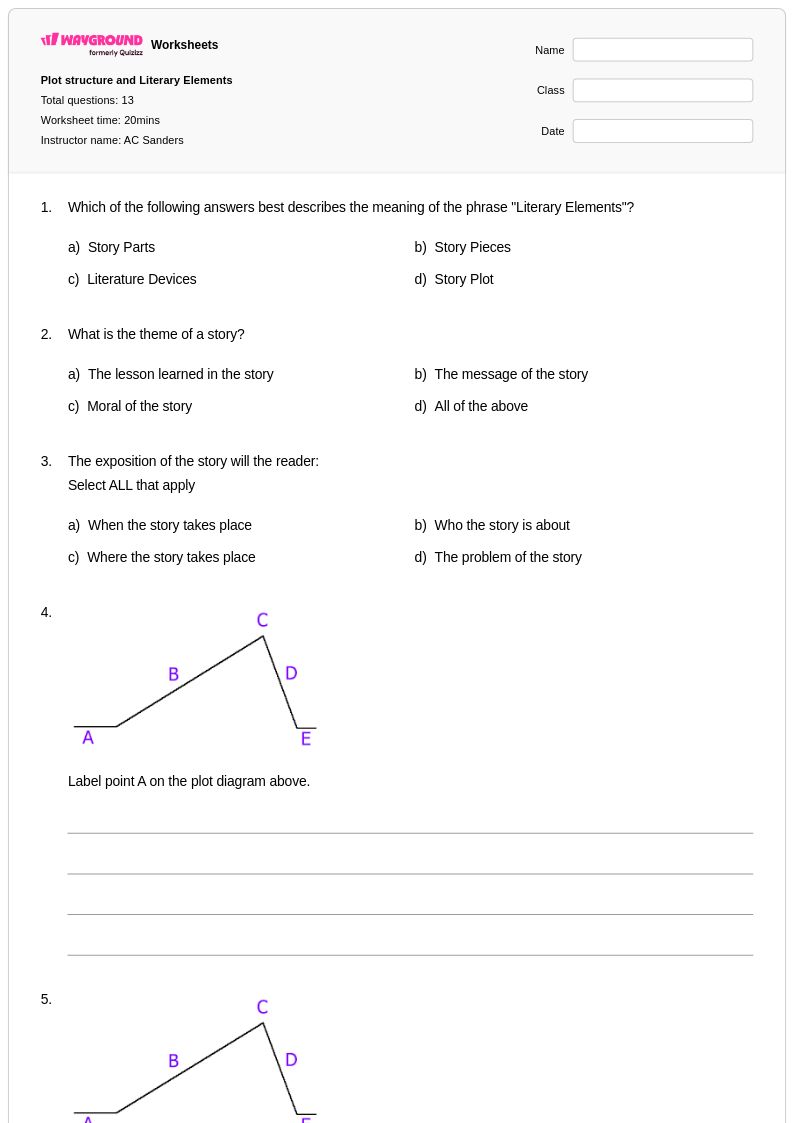
13 Q
3rd - 6th
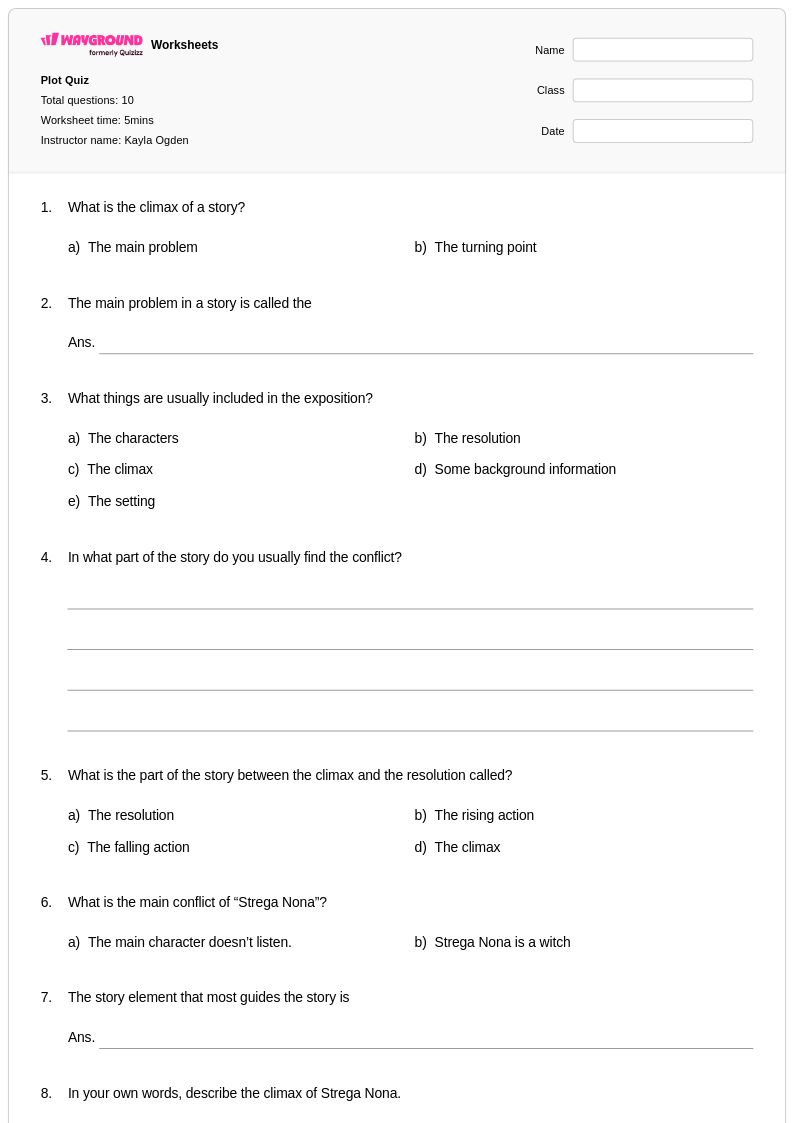
10 Q
5th
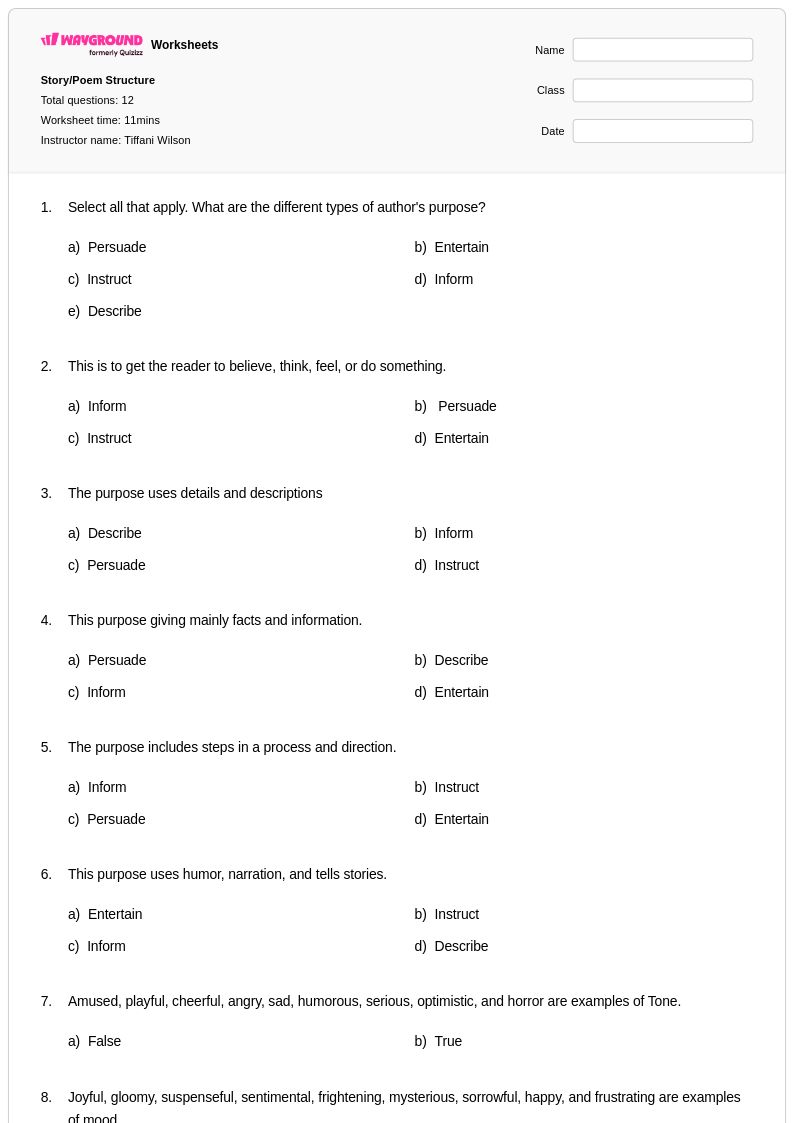
12 Q
4th - 5th
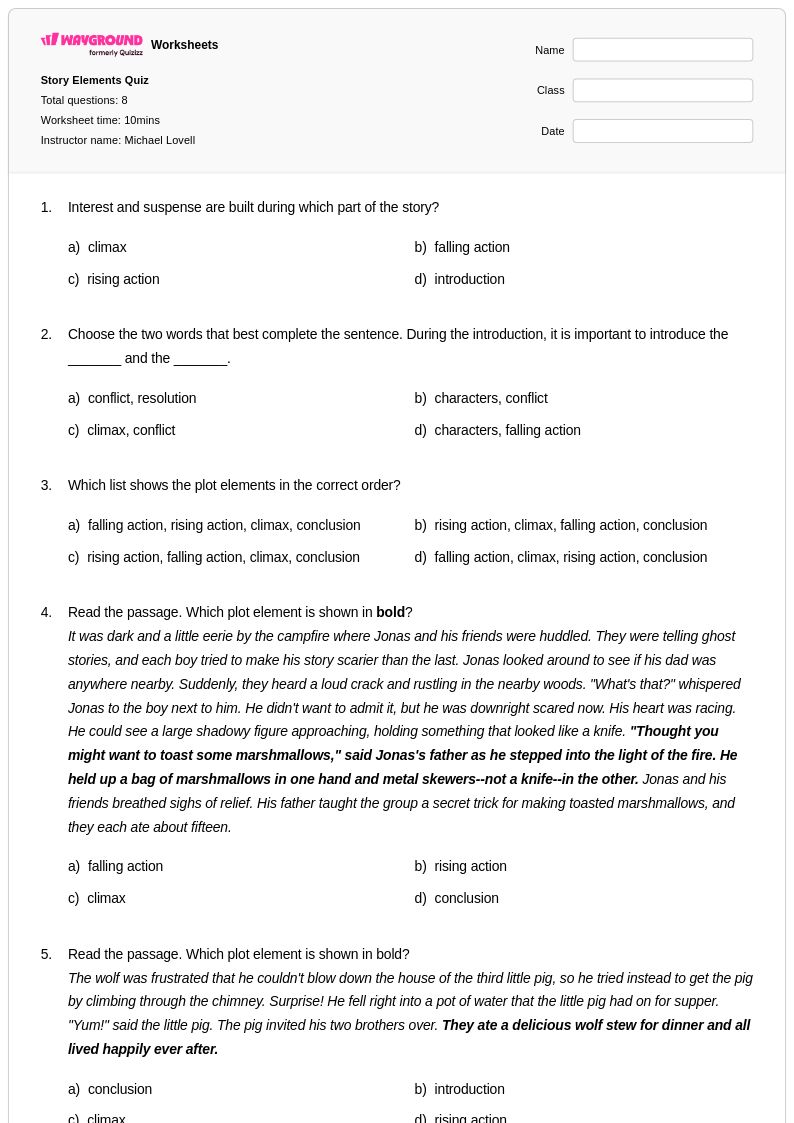
11 Q
5th
15 Q
4th - 6th
12 Q
4th - 5th
10 Q
3rd - 6th
21 Q
5th
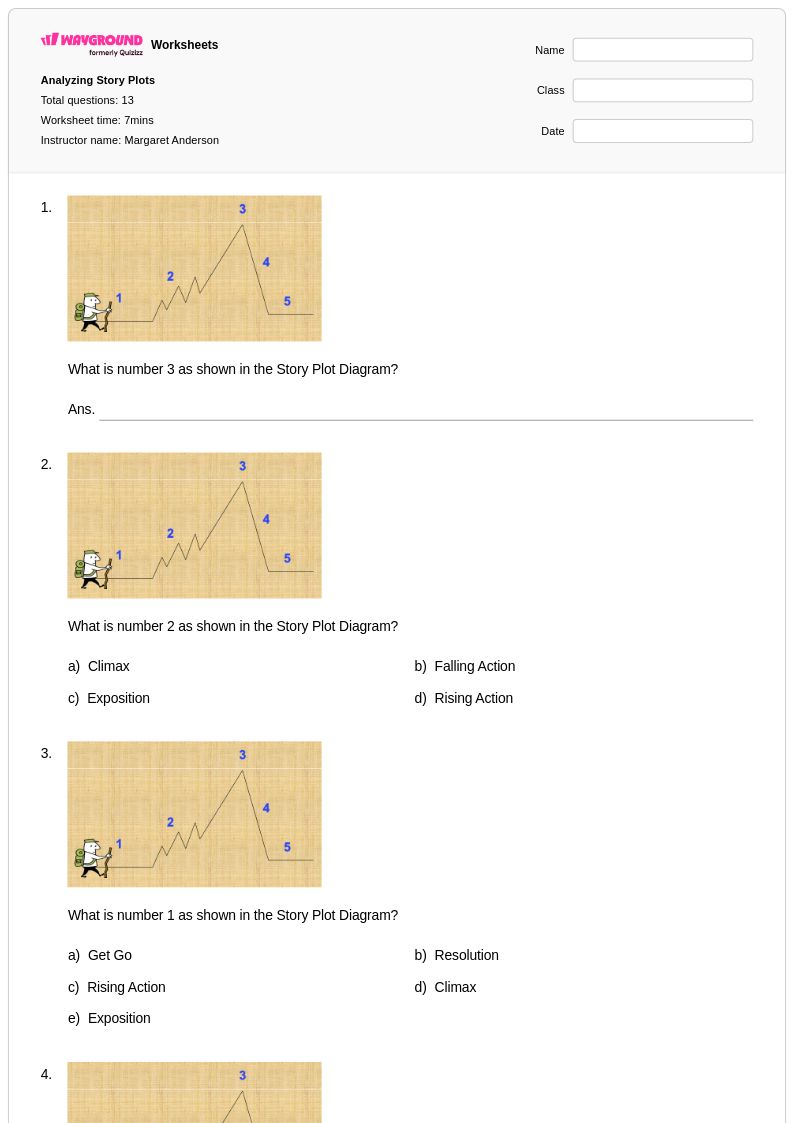
13 Q
5th - 12th
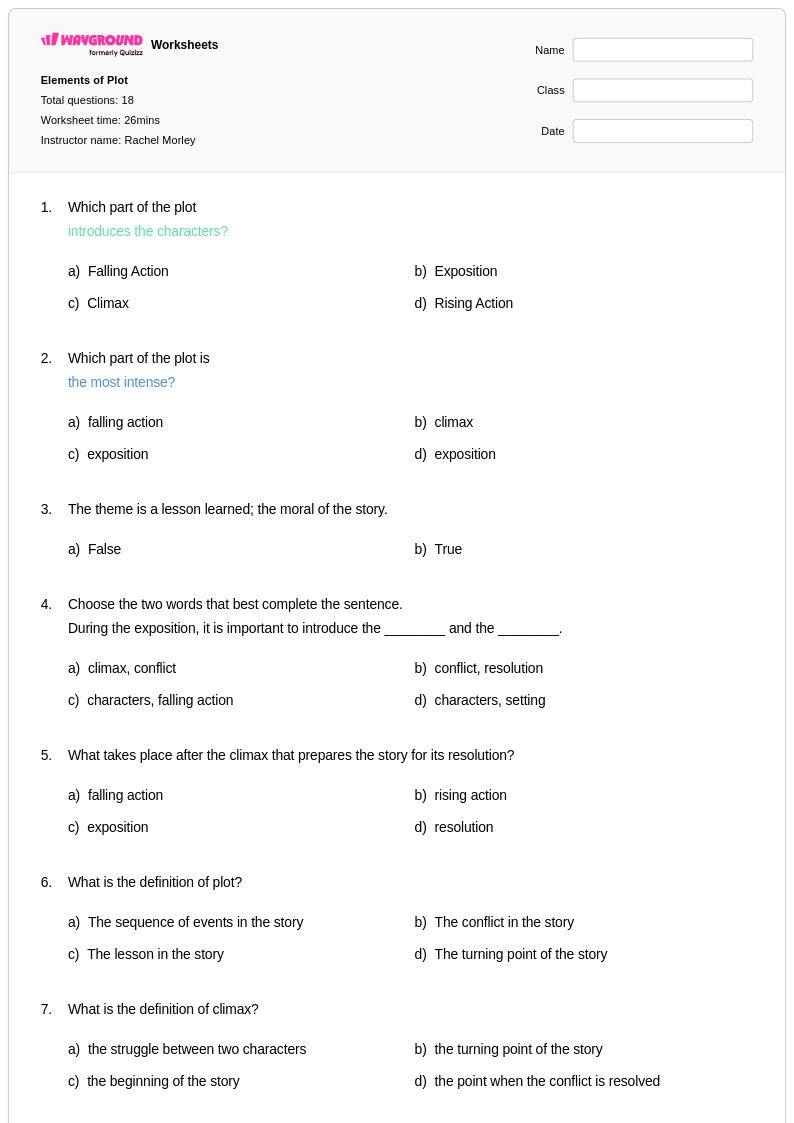
18 Q
5th
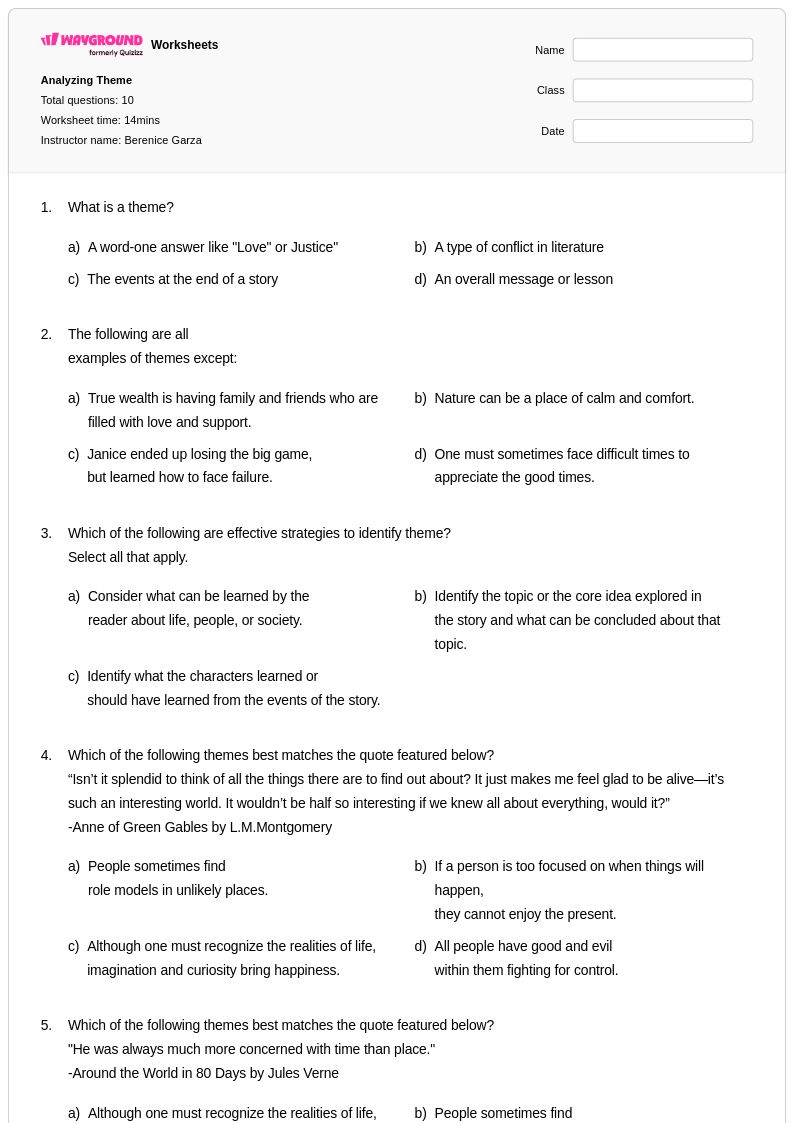
10 Q
5th
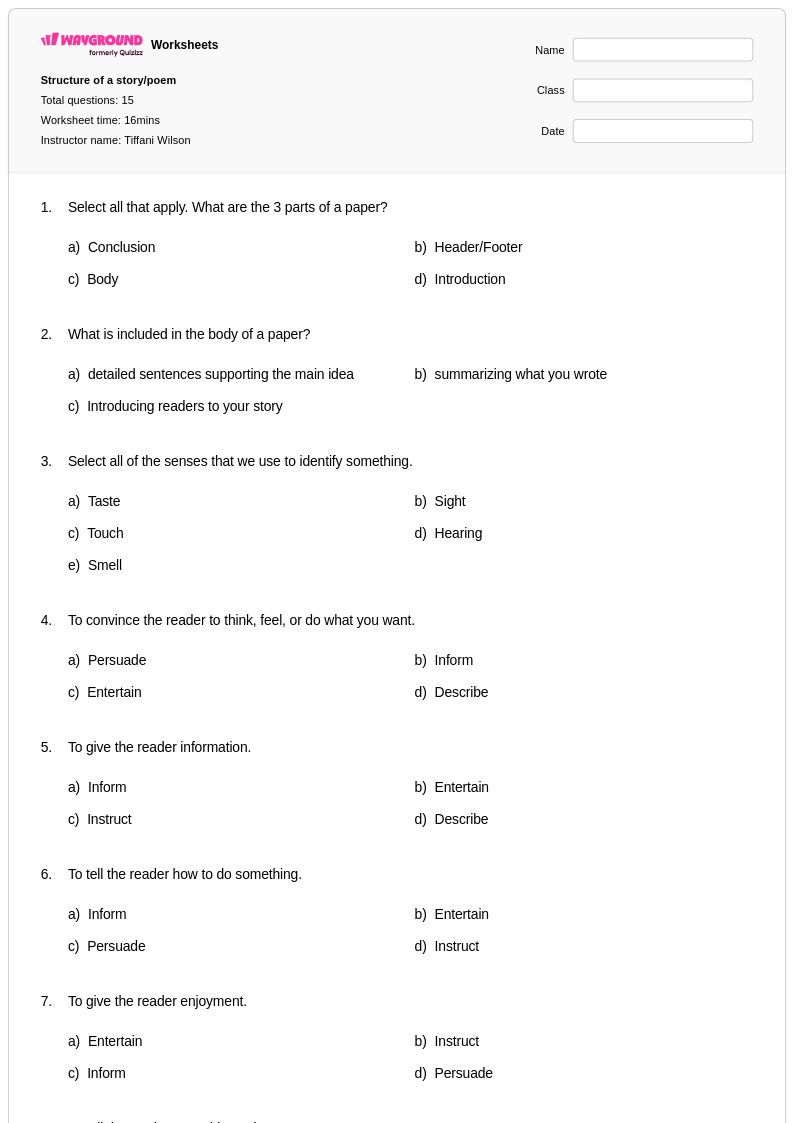
15 Q
4th - 5th

8 Q
4th - 8th
14 Q
1st - 5th
10 Q
5th
Explore Analyzing Story Structure Worksheets by Grades
Explore Analyzing Story Structure Worksheets for year 5 by Topic
Explore Other Subject Worksheets for year 5
Explore printable Analyzing Story Structure worksheets for Year 5
Analyzing story structure worksheets for Year 5 students available through Wayground (formerly Quizizz) provide comprehensive practice in identifying and understanding the fundamental elements that create compelling narratives. These carefully designed printables help fifth-grade students master essential skills including recognizing plot development, identifying story elements like exposition, rising action, climax, falling action, and resolution, and understanding how authors construct narrative arcs to engage readers. The practice problems systematically guide students through examining character development, setting establishment, conflict introduction and resolution, and theme emergence within various literary works. Each worksheet includes detailed answer keys that support both independent learning and guided instruction, while the free pdf format ensures accessibility for diverse classroom and home learning environments.
Wayground (formerly Quizizz) empowers educators with millions of teacher-created resources specifically focused on story structure analysis, featuring robust search and filtering capabilities that allow instructors to locate materials perfectly aligned with Year 5 reading comprehension standards and individual student needs. The platform's differentiation tools enable teachers to customize worksheets for varying skill levels, ensuring that struggling readers receive appropriate scaffolding while advanced students encounter suitable challenges in their literary analysis practice. These versatile resources are available in both printable and digital formats, including downloadable pdfs, supporting flexible lesson planning whether educators need quick remediation activities, enrichment exercises for accelerated learners, or systematic skill practice for whole-class instruction. The comprehensive collection streamlines curriculum planning by providing standards-aligned materials that develop critical thinking skills essential for literary analysis and reading comprehension success.
FAQs
How do I teach story structure to students who struggle to see how plot elements connect?
What exercises help students practice identifying plot structure in a text?
What are the most common mistakes students make when analyzing story structure?
How do I help students analyze character development as part of story structure?
How do I teach point of view in the context of story structure?
How do Wayground's story structure worksheets work, and what formats are they available in?