Free Printable Animal Hibernation Worksheets for Year 4
Explore Year 4 animal hibernation worksheets and free printables that help students discover how animals survive winter through engaging practice problems and comprehensive answer keys.
Explore printable Animal Hibernation worksheets for Year 4
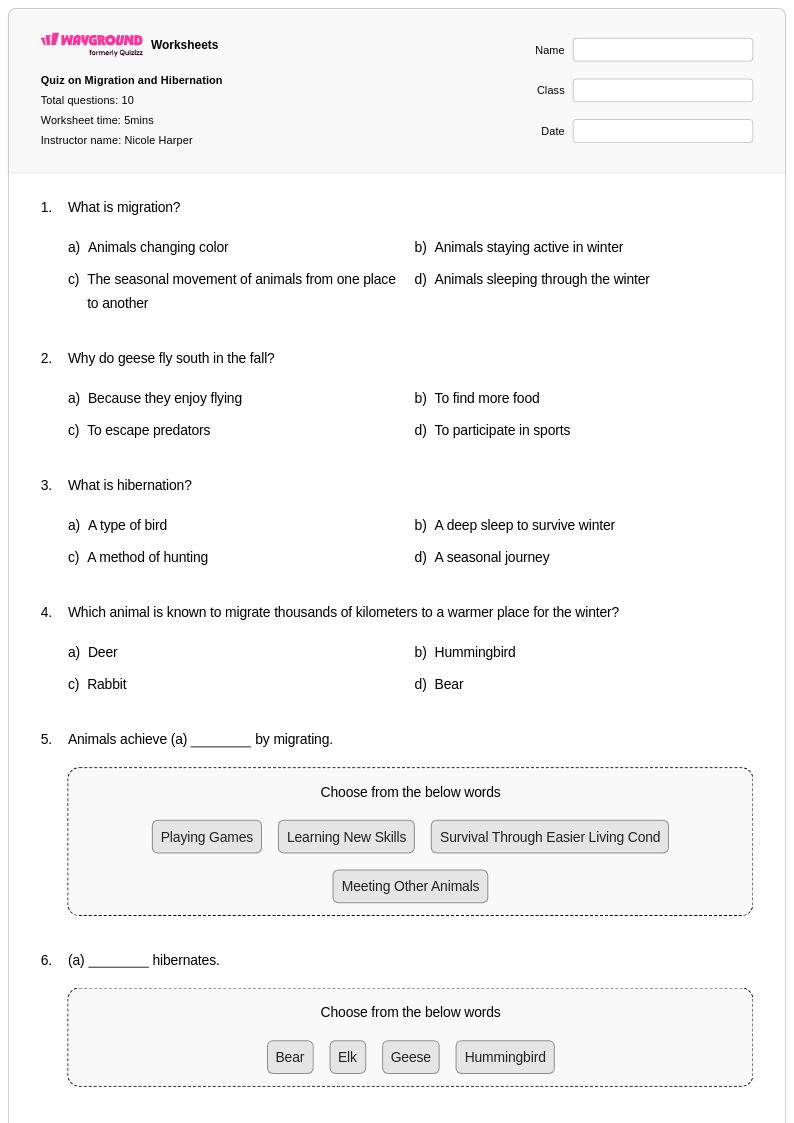
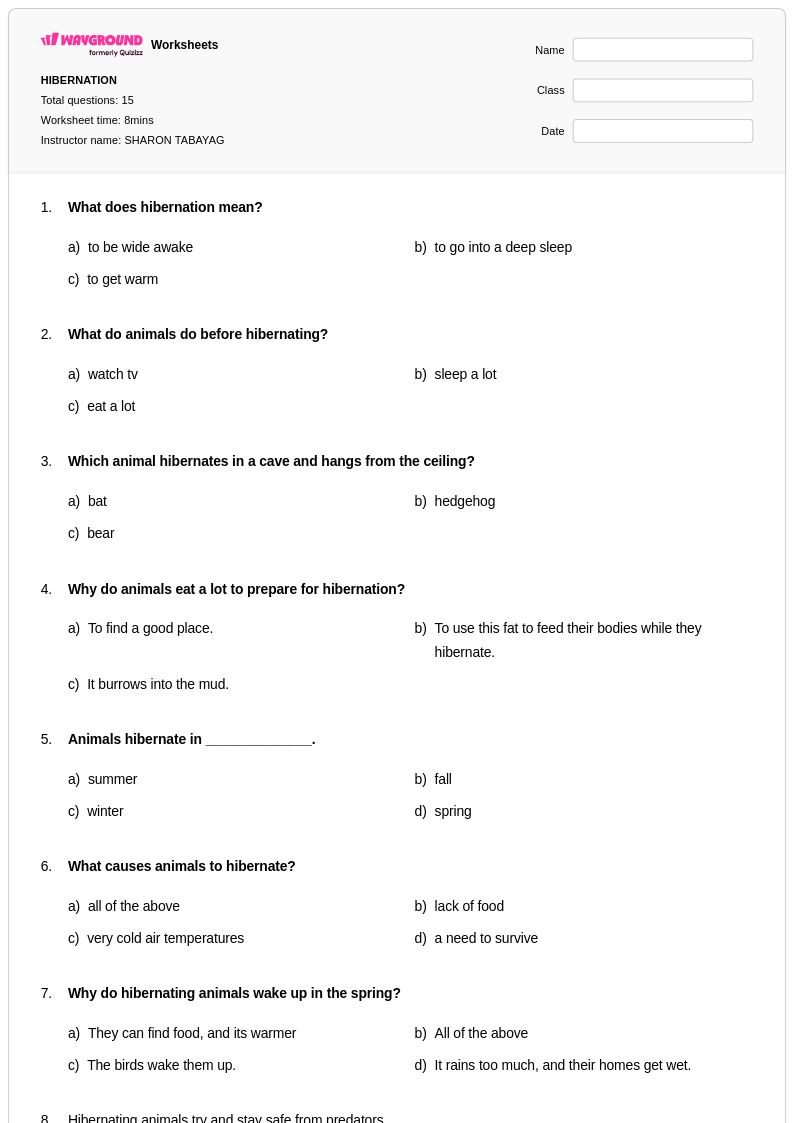
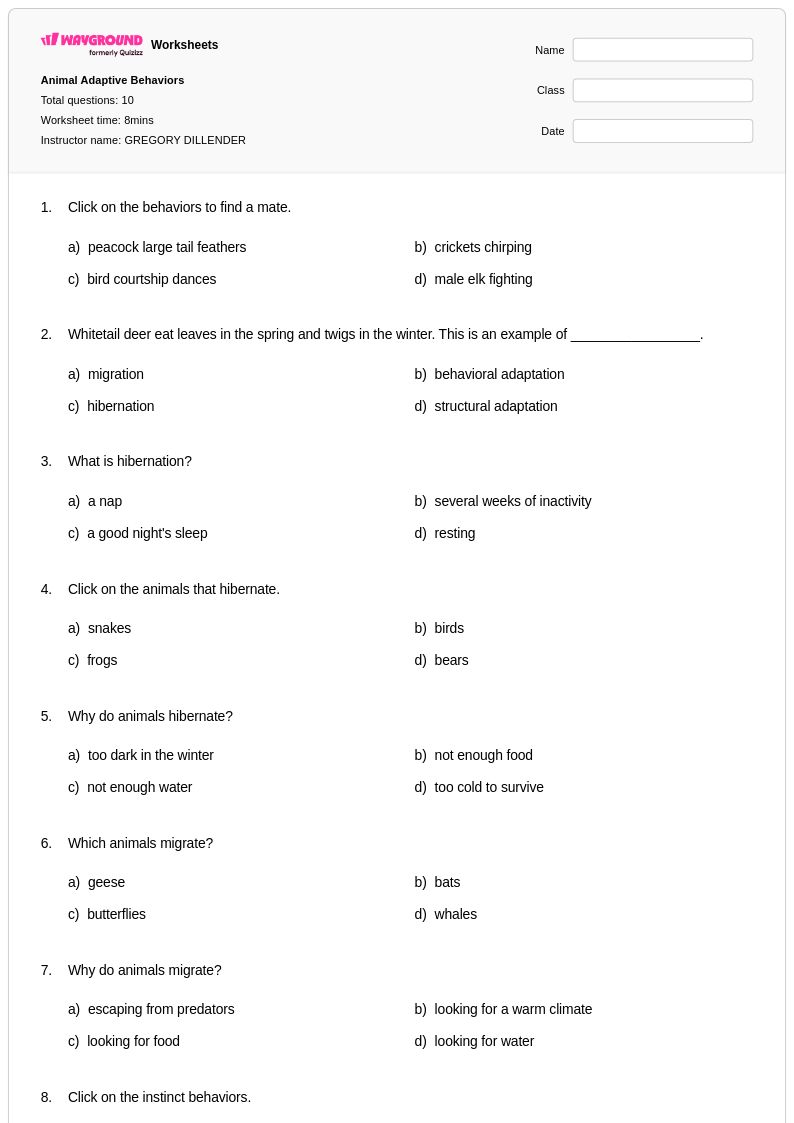
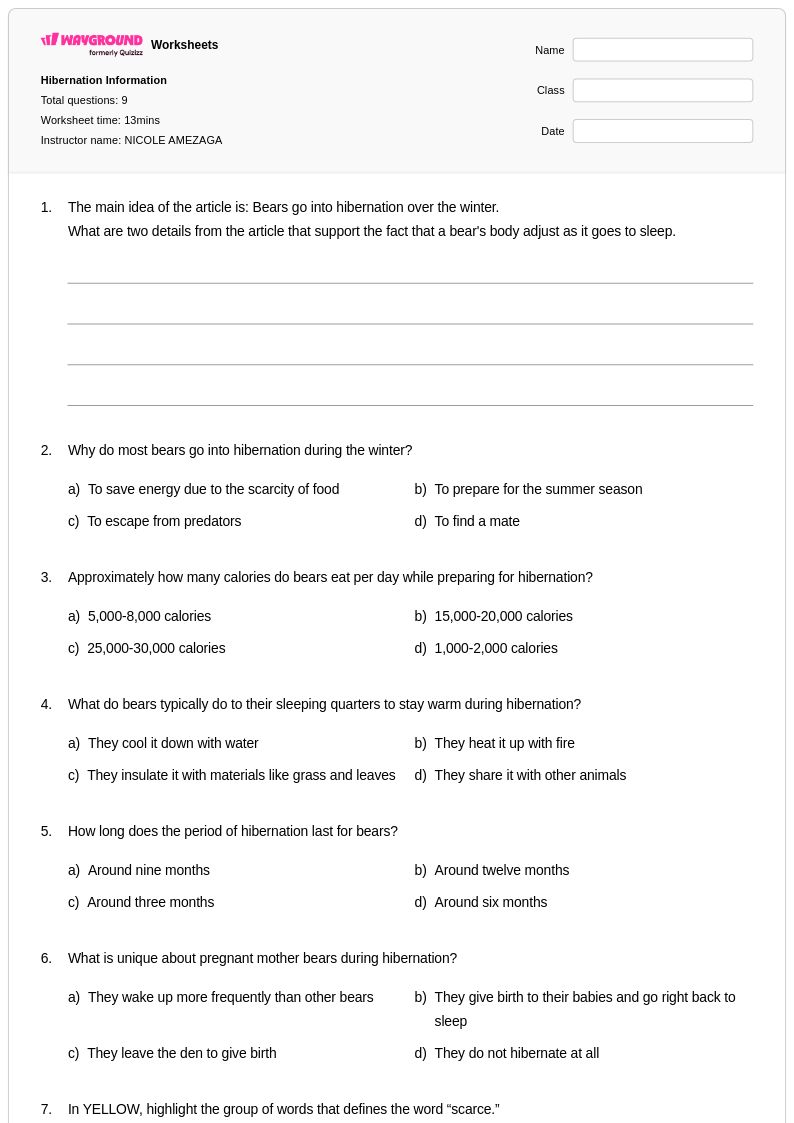
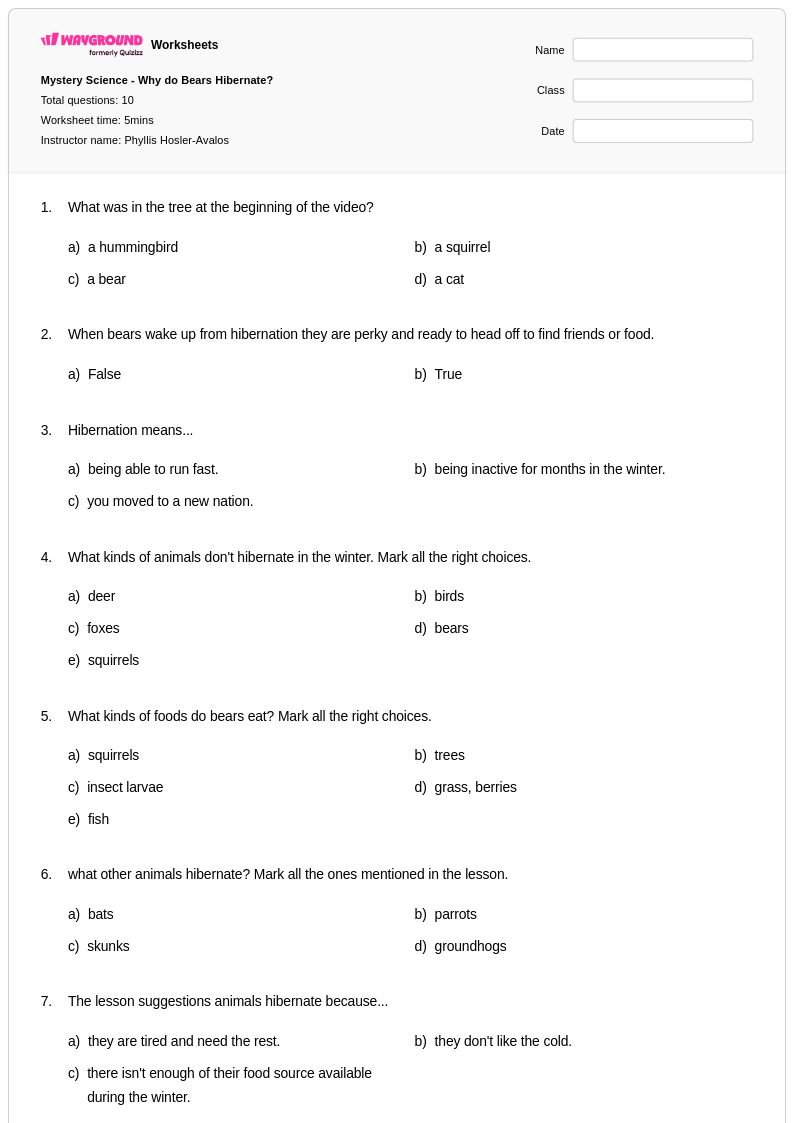
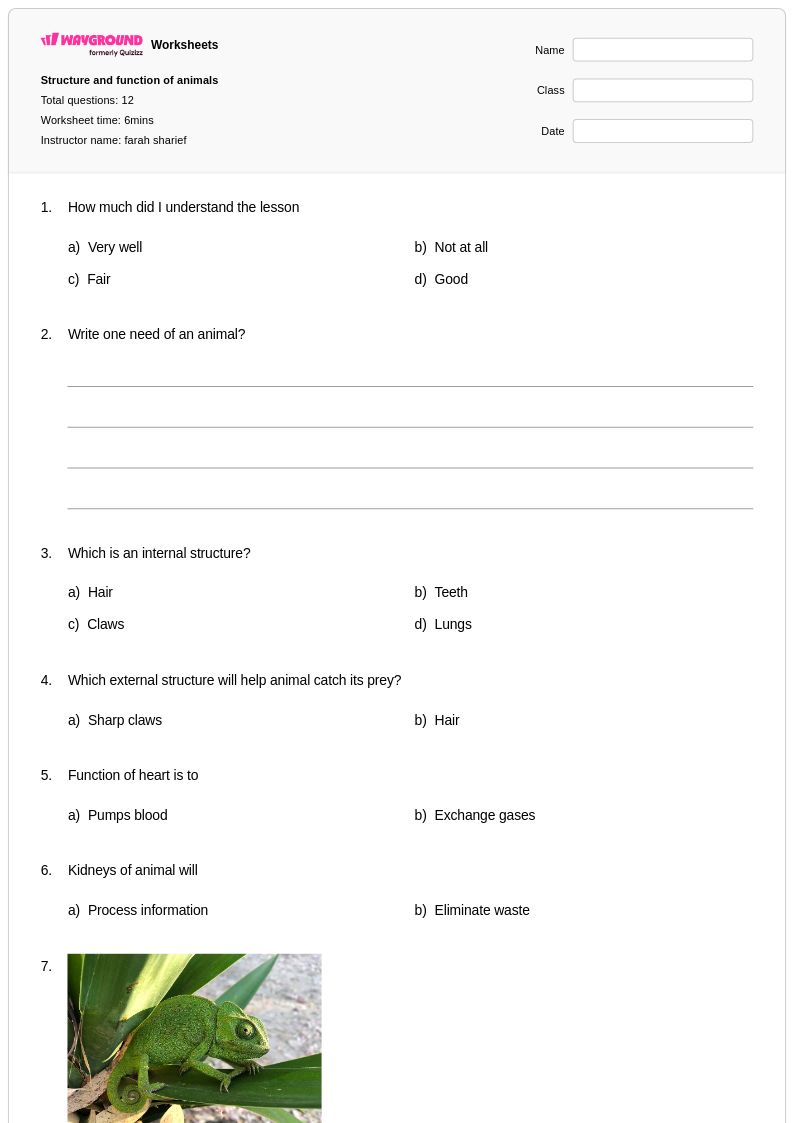
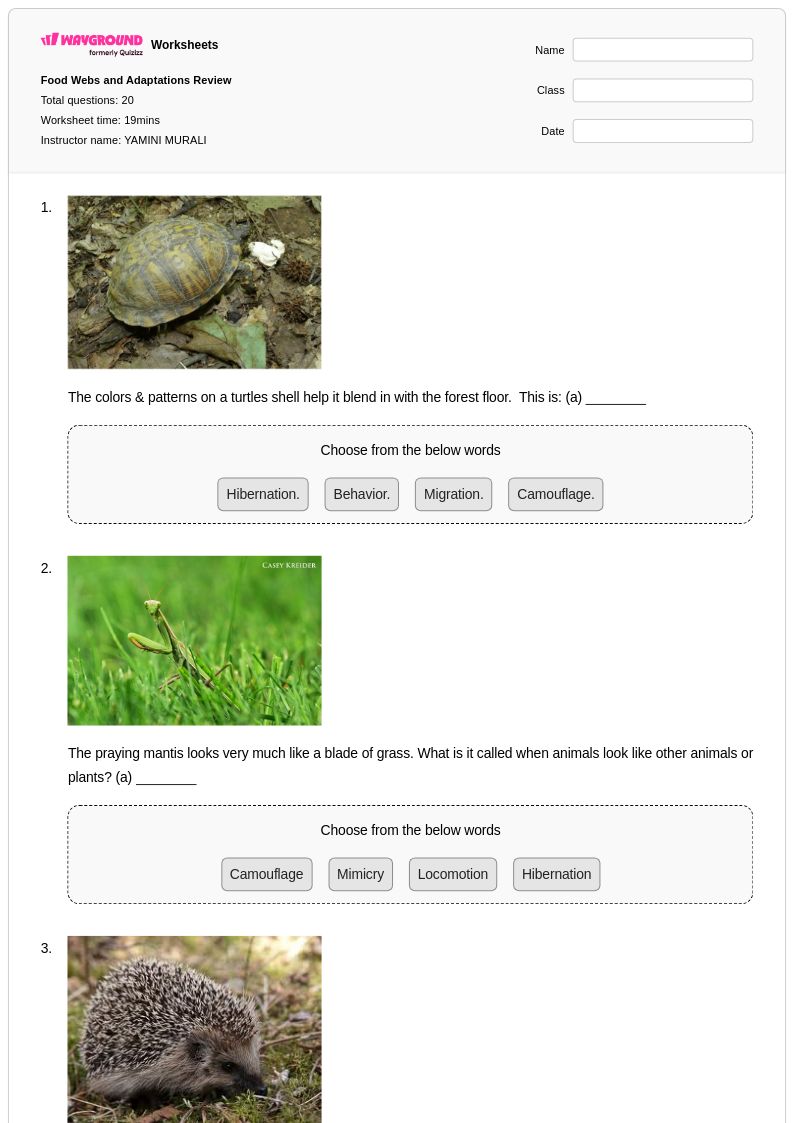
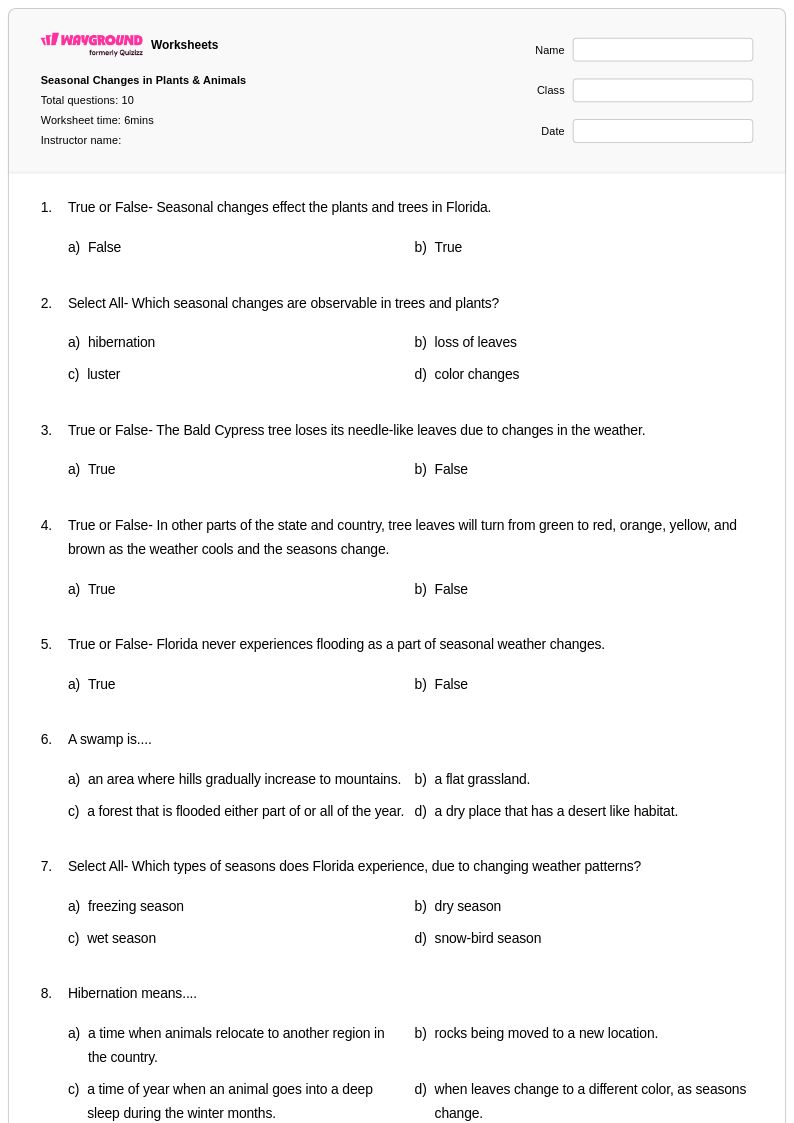
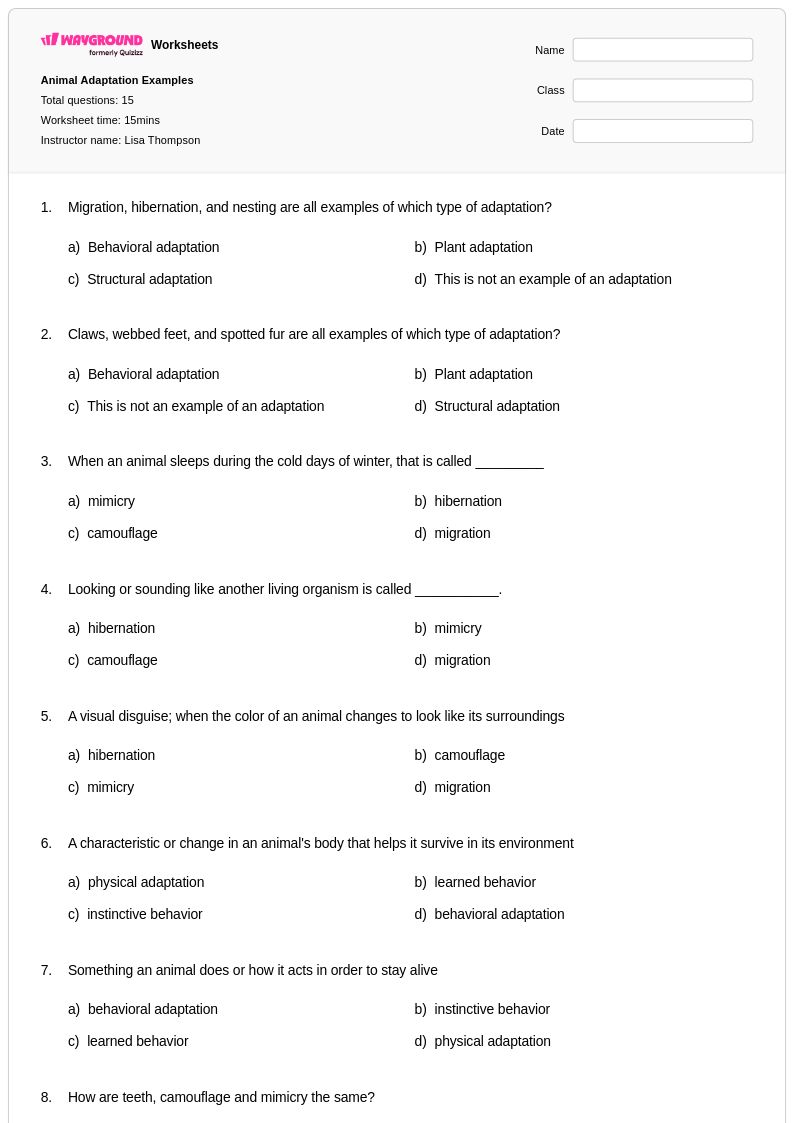
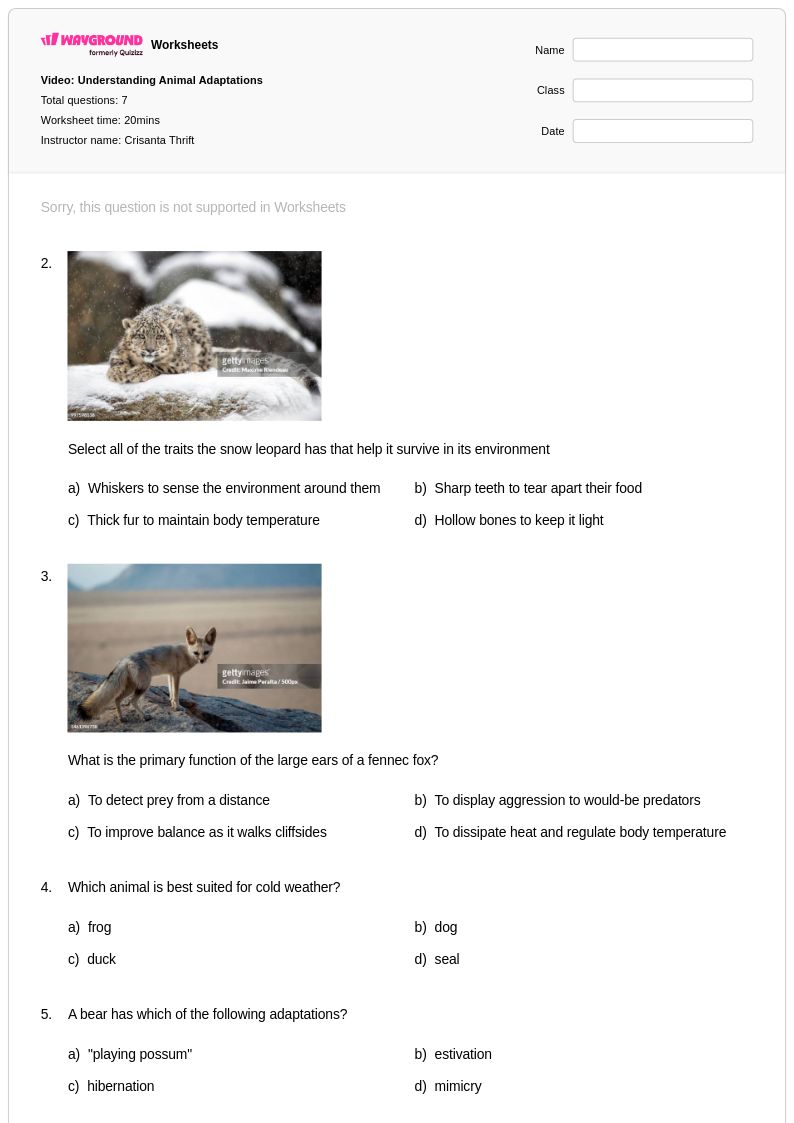
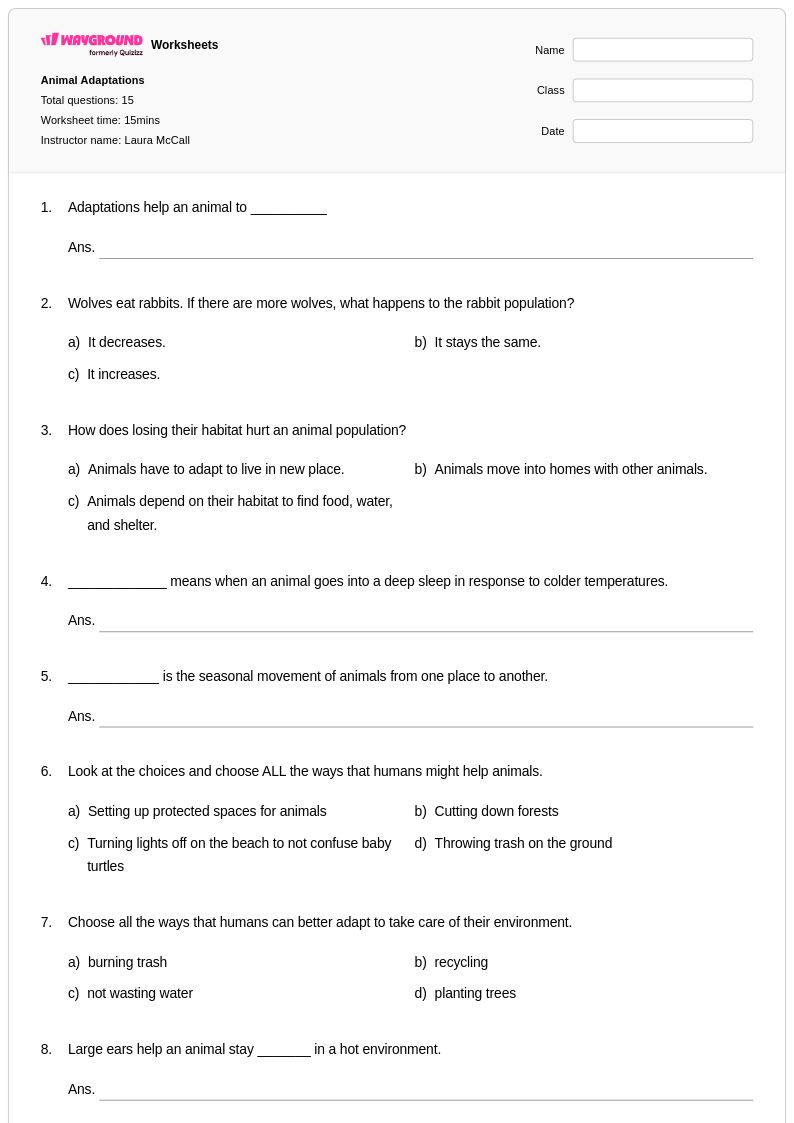
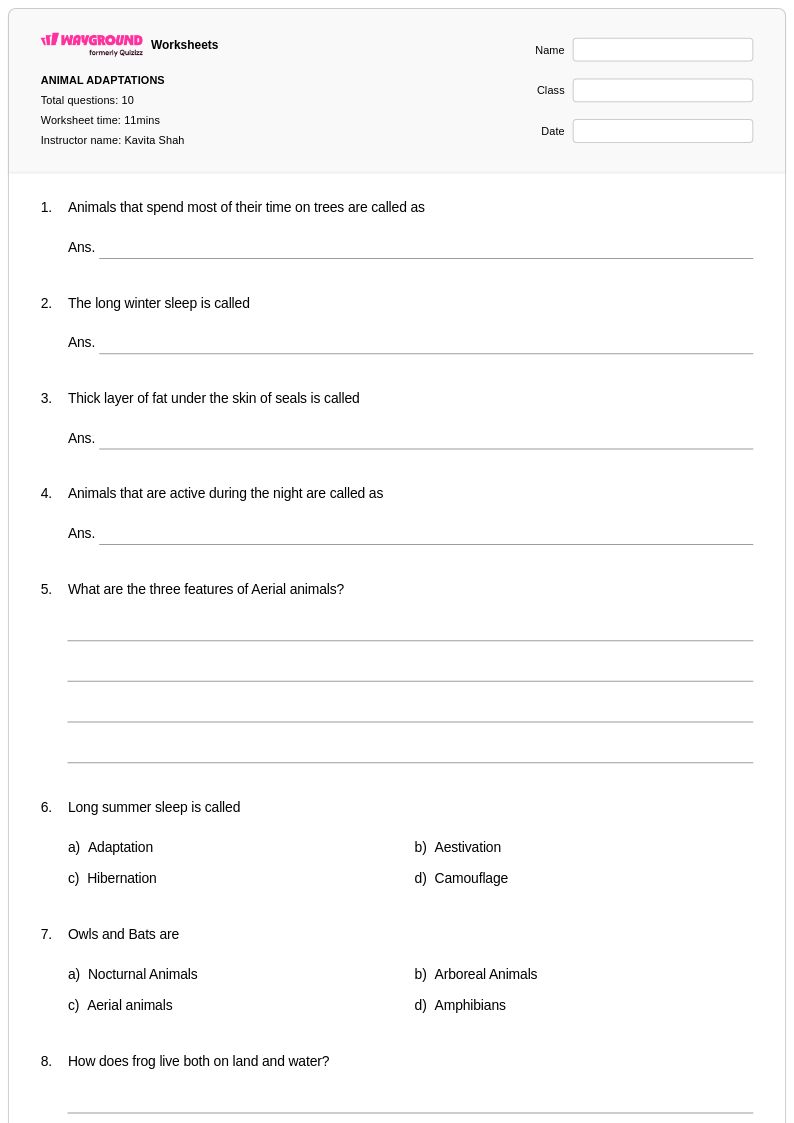
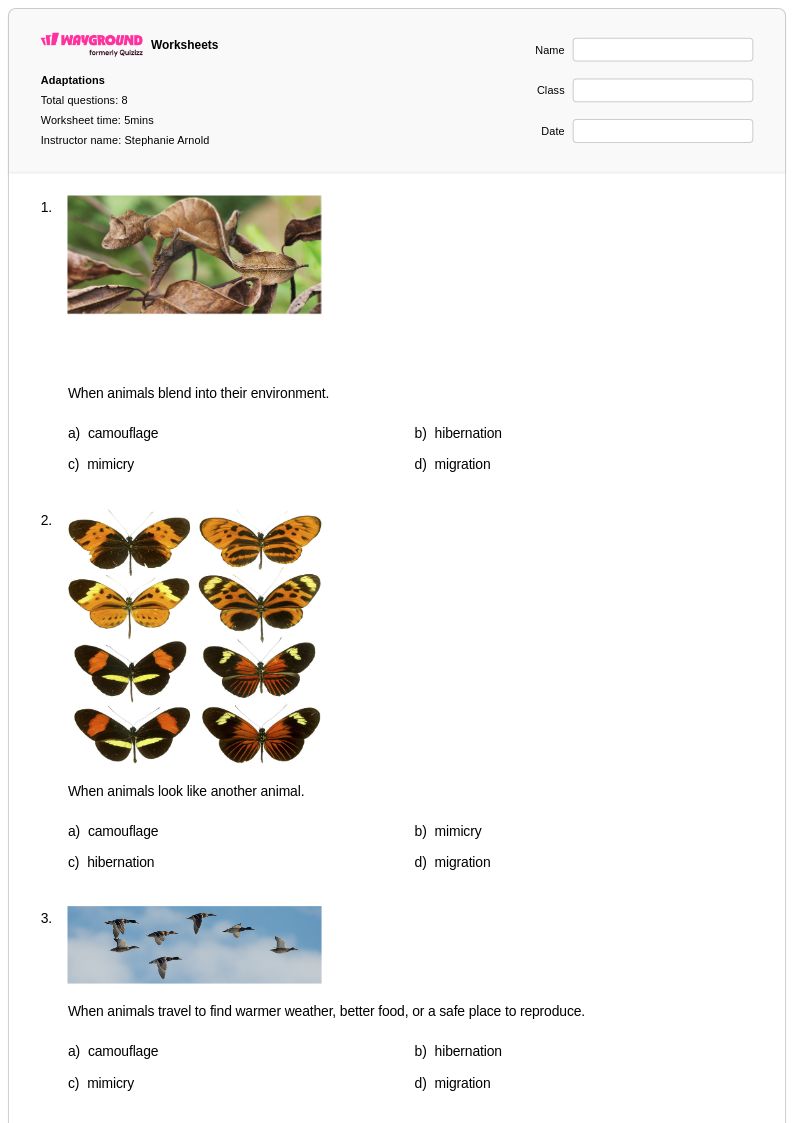
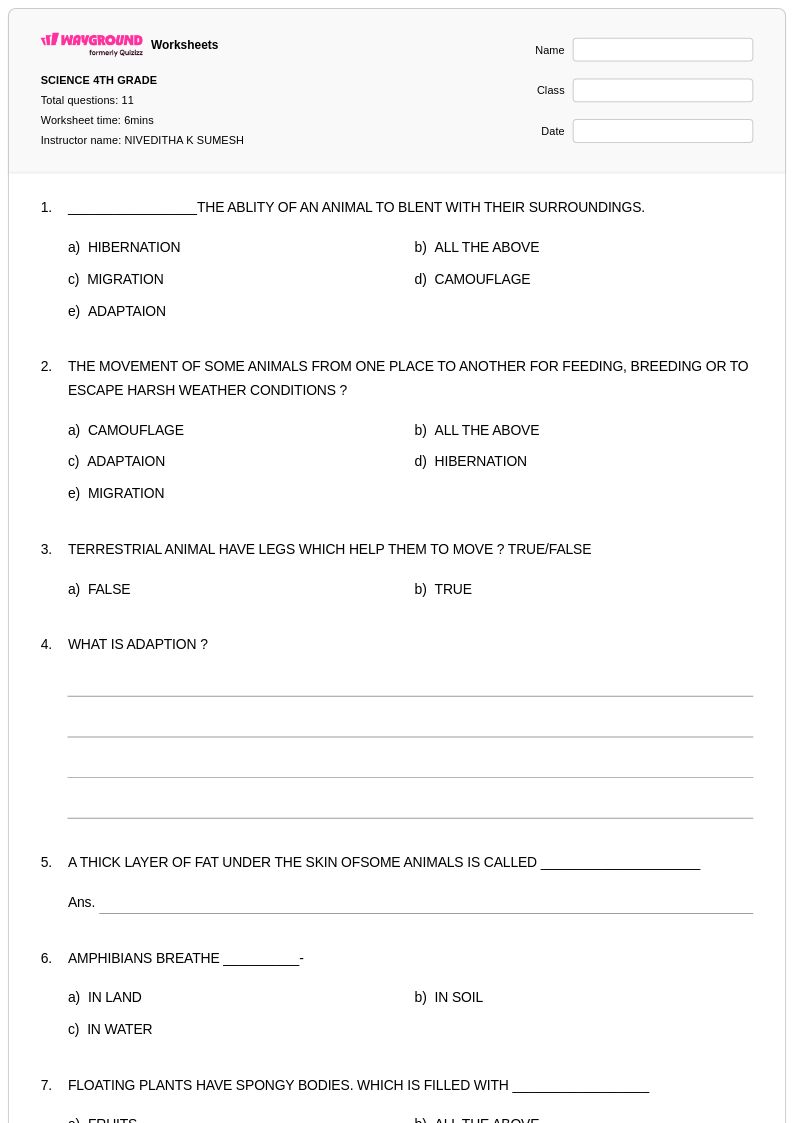
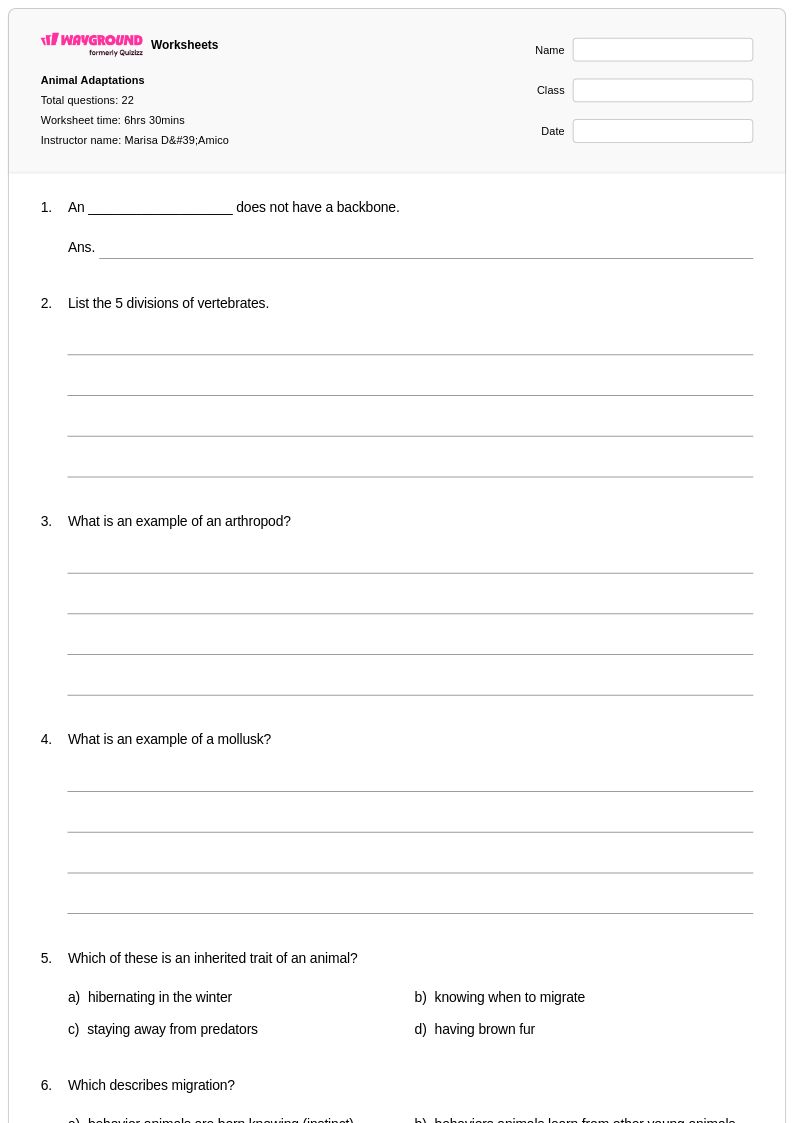
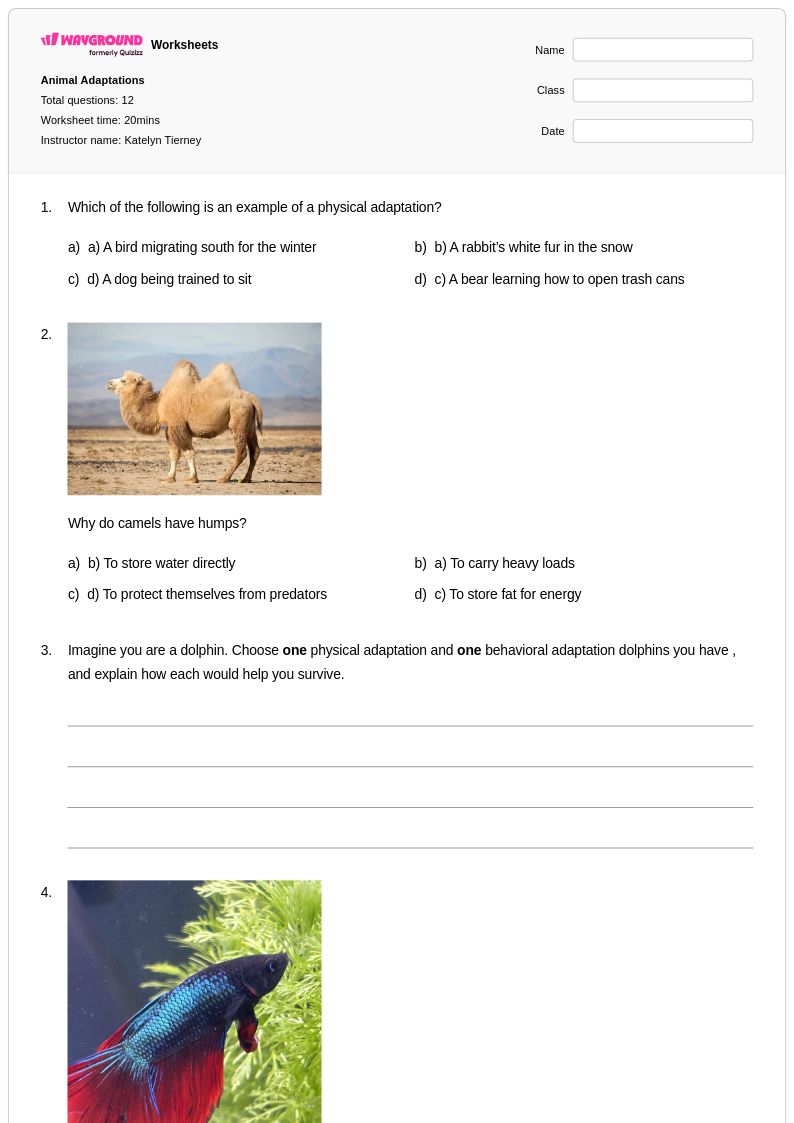
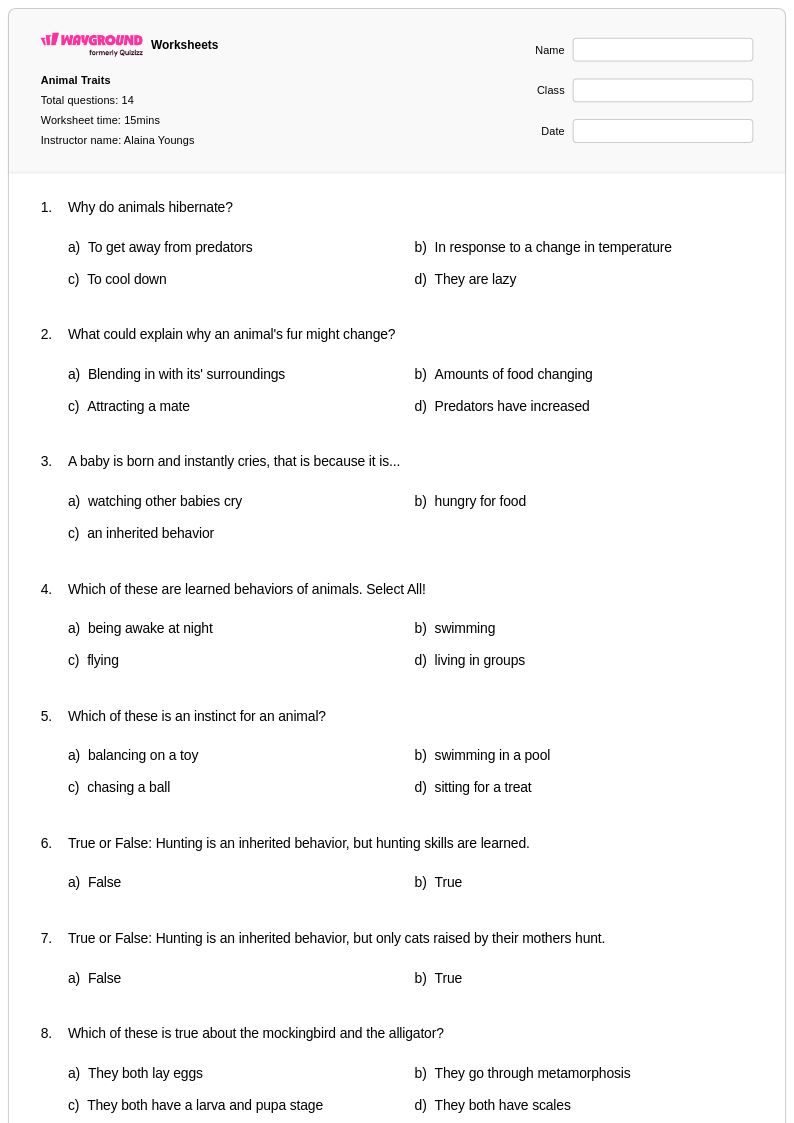
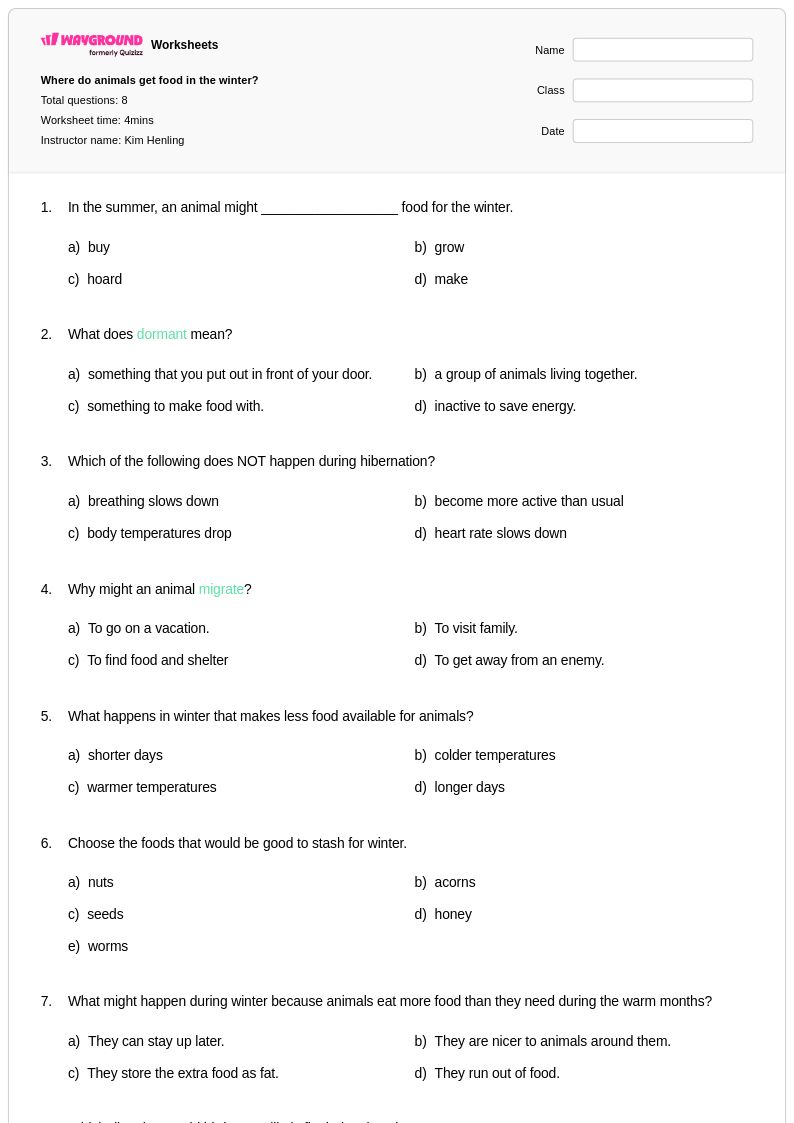
Animal hibernation worksheets for Year 4 students available through Wayground (formerly Quizizz) provide comprehensive exploration of how animals survive harsh winter conditions through extended periods of dormancy. These educational resources strengthen students' understanding of animal adaptations, seasonal behavioral changes, and the physiological processes that allow creatures like bears, groundhogs, and bats to conserve energy during food-scarce months. The worksheets feature practice problems that challenge students to identify hibernating animals, compare hibernation with migration patterns, and analyze the environmental triggers that prompt animals to enter their winter sleep. Each worksheet collection includes detailed answer keys and is available as free printables in convenient PDF format, enabling teachers to seamlessly integrate these materials into their life science curriculum while reinforcing critical thinking skills about animal survival strategies.
Wayground (formerly Quizizz) empowers educators with access to millions of teacher-created animal hibernation resources that support diverse classroom needs and learning objectives. The platform's robust search and filtering capabilities allow teachers to quickly locate grade-appropriate materials aligned with science standards, while differentiation tools enable customization for students with varying ability levels. These flexible worksheet collections are available in both printable and digital formats, including downloadable PDFs that facilitate easy classroom distribution and home learning assignments. Teachers utilize these comprehensive resources for lesson planning, targeted remediation for struggling learners, enrichment activities for advanced students, and ongoing skill practice that reinforces understanding of animal adaptations and seasonal survival mechanisms throughout the academic year.
FAQs
How do I teach animal hibernation to students?
Teaching animal hibernation is most effective when you connect the biology to concrete survival challenges animals face in winter. Start by distinguishing between true hibernation, torpor, and brumation, using species-specific examples like ground squirrels, hummingbirds, and reptiles to illustrate the differences. From there, guide students through the physiological mechanisms involved, including metabolic slowdown, body temperature regulation, and fat reserve management, so they understand hibernation as an active biological adaptation rather than simply 'sleeping through winter.'
What are the differences between hibernation, torpor, and brumation?
Hibernation refers to a prolonged state of deep dormancy in mammals, characterized by dramatically reduced metabolic rate, lowered body temperature, and minimal energy expenditure, seen in animals like bears and ground squirrels. Torpor is a shorter, lighter form of dormancy often used by smaller animals such as hummingbirds and bats, and can occur daily rather than seasonally. Brumation is the equivalent state in reptiles, where cold-blooded animals become dormant in response to cold temperatures but may still wake periodically to drink water.
What exercises help students practice their understanding of animal hibernation?
Effective practice exercises for animal hibernation include data analysis tasks where students compare metabolic rates or body temperatures across hibernating species, classification activities that sort animals by type of dormancy, and cause-and-effect diagrams that map environmental triggers to physiological responses. Worksheets that ask students to evaluate the evolutionary advantages of hibernation push higher-order thinking beyond simple recall. Practice problems that incorporate real biological data help students connect abstract concepts to measurable animal behaviors.
What misconceptions do students commonly have about animal hibernation?
The most common misconception is that all hibernating animals, including bears, enter the same deep state of dormancy. In reality, bears are considered light hibernators whose body temperature drops only slightly, while true hibernators like ground squirrels experience near-freezing body temperatures and are extremely difficult to rouse. Students also frequently confuse hibernation with sleep, when in fact hibernation involves fundamental physiological changes that ordinary sleep does not. Addressing these errors early through targeted practice and comparison activities prevents them from becoming entrenched.
How can I use animal hibernation worksheets in my classroom?
Animal hibernation worksheets on Wayground are available as printable PDFs for traditional classroom use and in digital formats for technology-integrated learning environments, giving you flexibility in how you assign and collect student work. You can also host them as a quiz directly on Wayground, which supports self-paced review and immediate feedback. The included answer keys make these worksheets well-suited for independent practice, station rotations, or homework assignments where students need to self-assess their understanding.
How do I differentiate animal hibernation instruction for students at different levels?
For students who need additional support, focus instruction on recognizing the basic triggers and characteristics of hibernation using familiar animals before introducing comparisons across dormancy types. Advanced students can engage with more complex analysis tasks, such as evaluating how climate change is affecting hibernation timing across species. On Wayground, teachers can apply individual accommodations including reduced answer choices to lower cognitive load for struggling learners, extended time for students who need it, and read-aloud support for those with reading challenges, all without other students being notified of the adjustments.