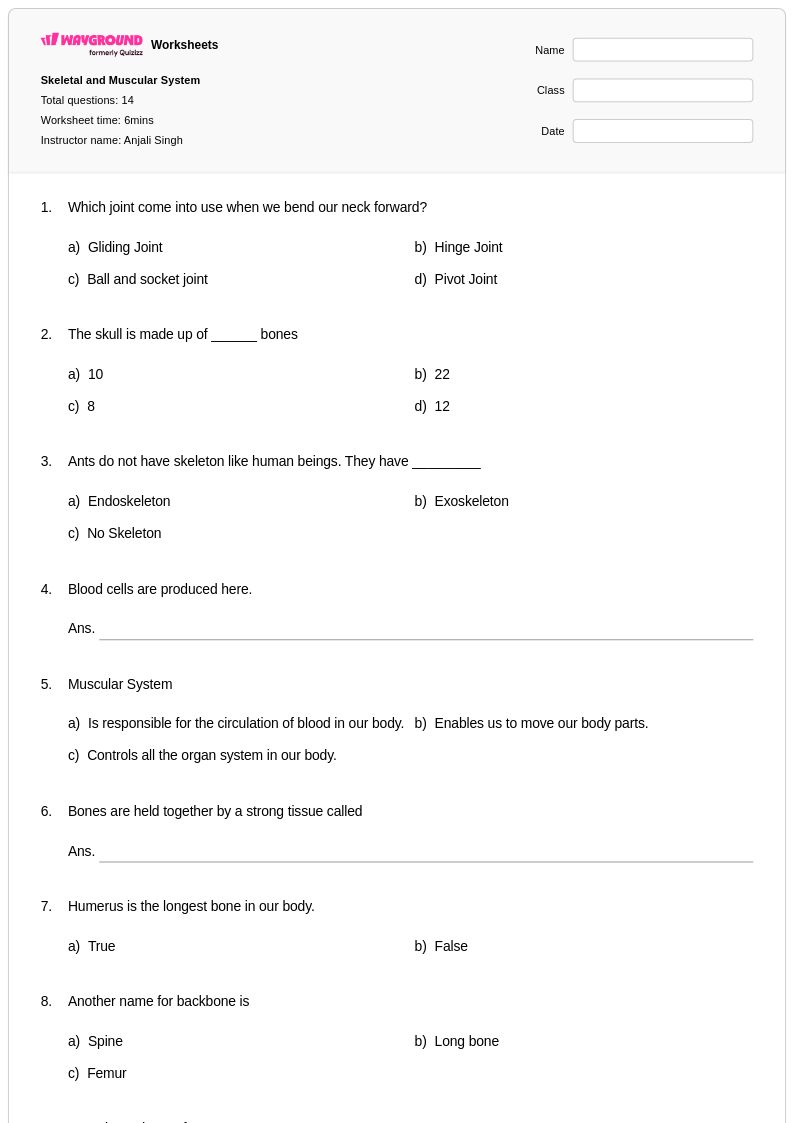
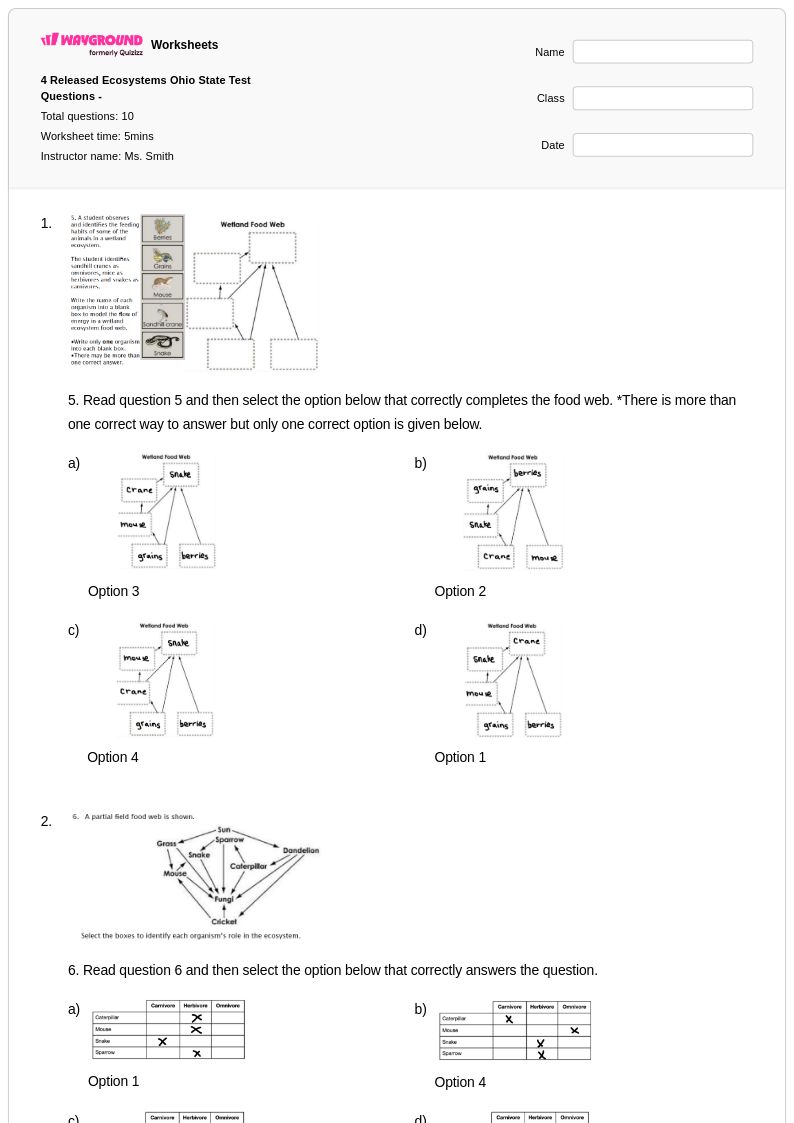
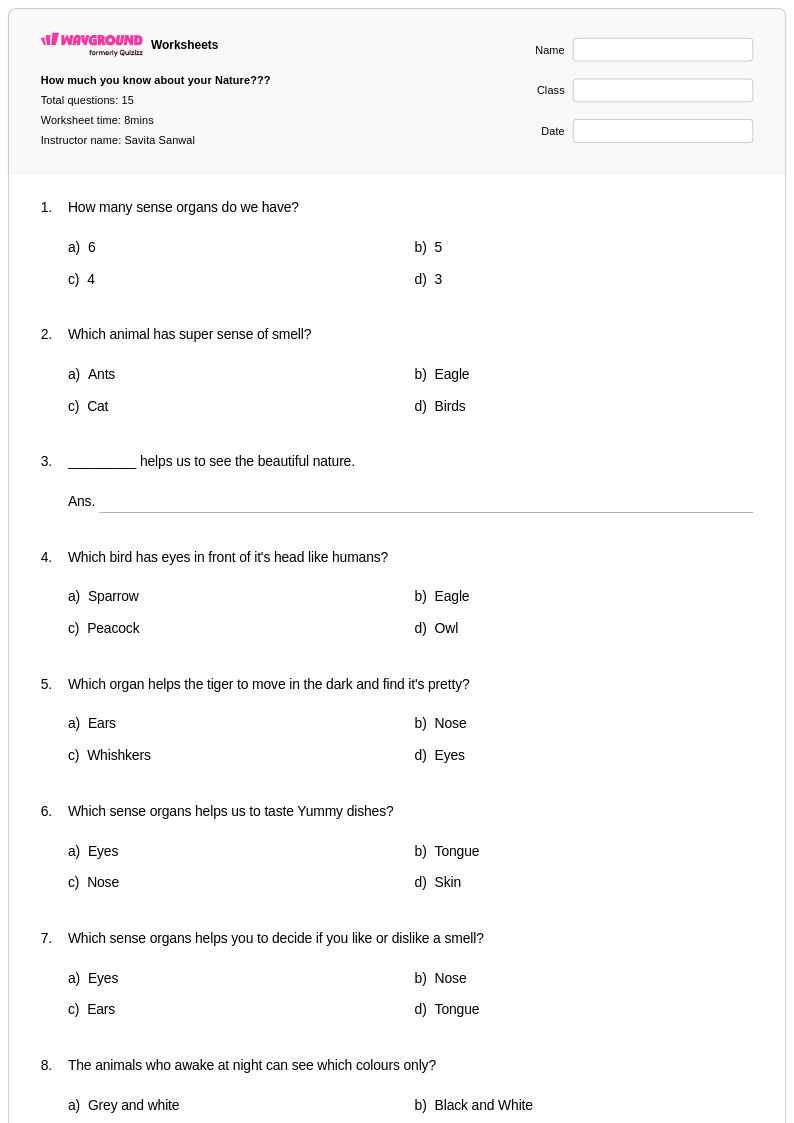
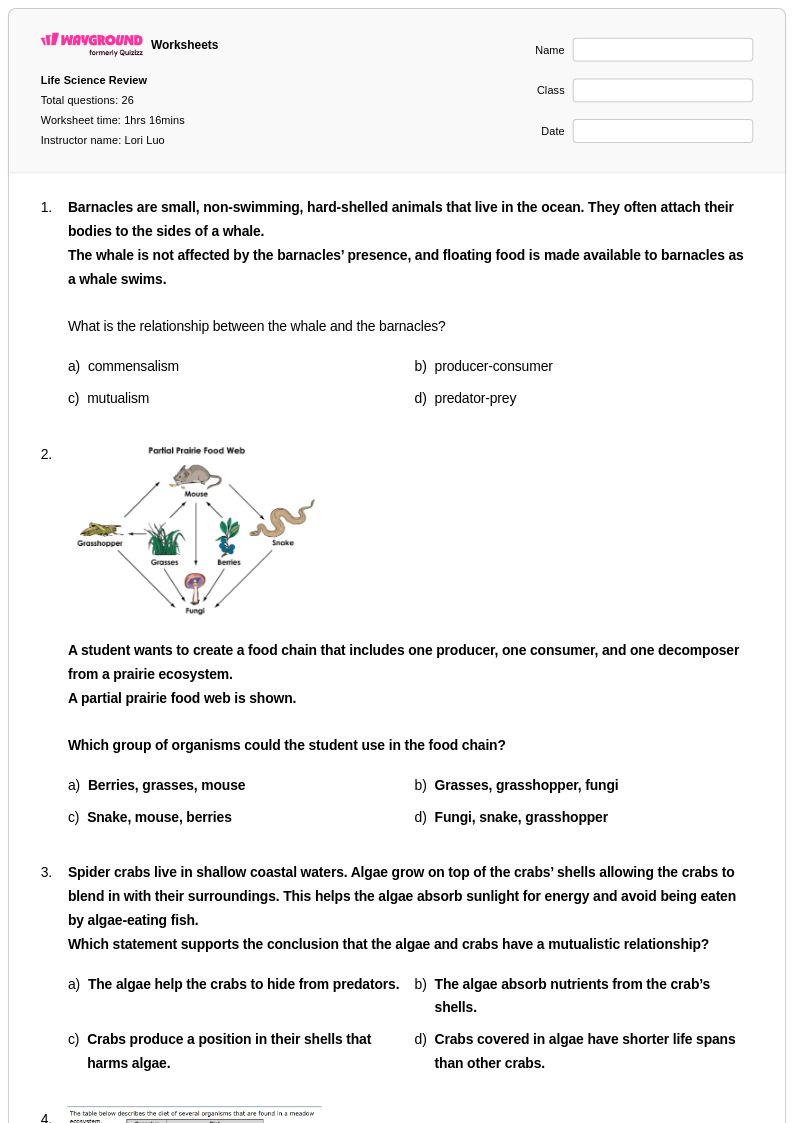
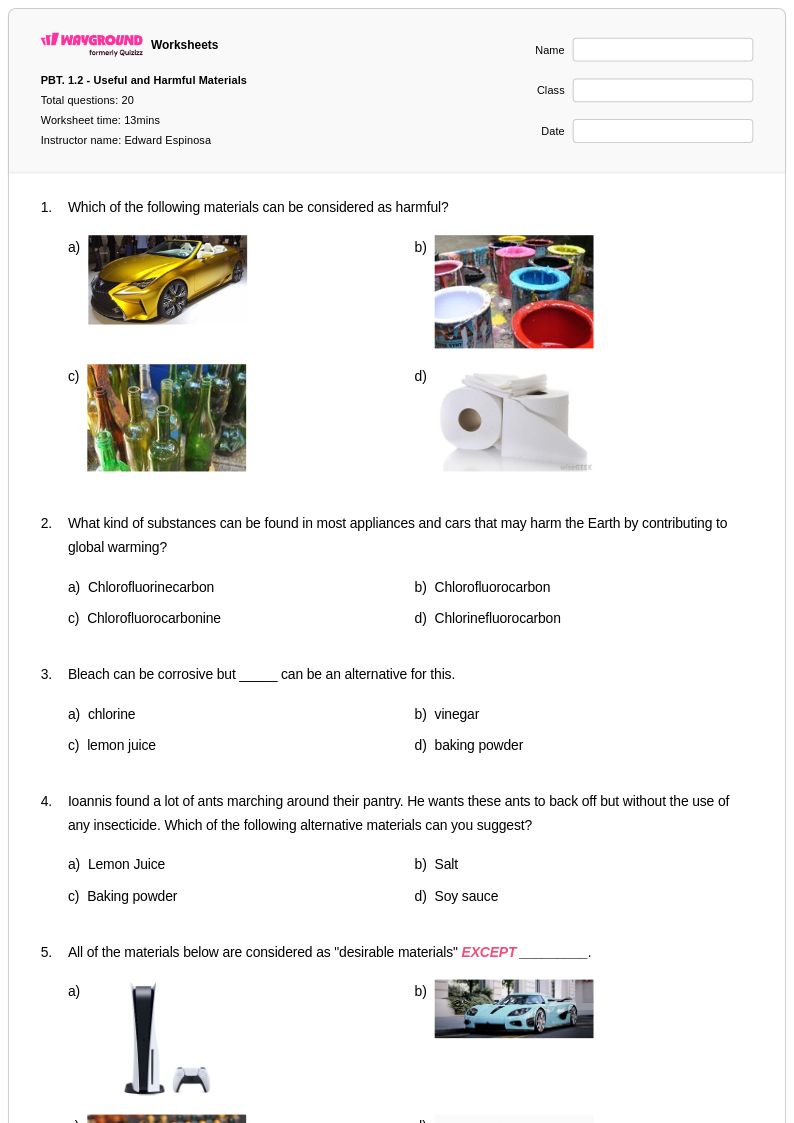
Explore Year 5 ant biology worksheets and free printables from Wayground that help students discover insect anatomy, colony behavior, and life cycles through engaging practice problems with answer keys.
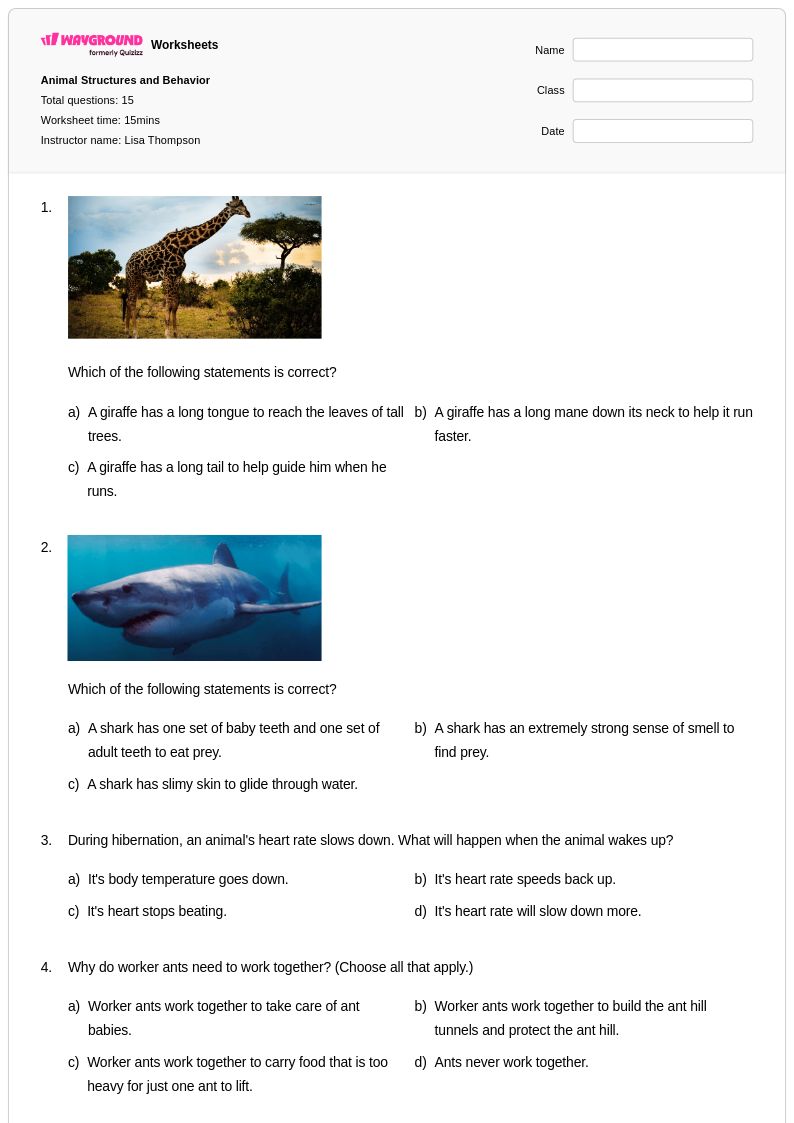
Ants serve as fascinating subjects for Year 5 biology worksheets available through Wayground (formerly Quizizz), offering students comprehensive exploration of these remarkable social insects and their complex behaviors. These educational materials strengthen essential scientific observation skills, classification abilities, and understanding of animal adaptations while students investigate ant anatomy, colony structures, communication methods, and ecological roles. The worksheet collection includes detailed practice problems covering ant life cycles, different species characteristics, and symbiotic relationships within ecosystems, with each resource providing complete answer keys and available as free printable pdf downloads. Students develop critical thinking skills as they analyze how ants demonstrate concepts like cooperation, specialization, and survival strategies, making these tiny creatures powerful tools for understanding broader biological principles.
Wayground (formerly Quizizz) empowers educators with millions of teacher-created ant biology resources that support differentiated instruction and flexible lesson planning for Year 5 classrooms. The platform's robust search and filtering capabilities allow teachers to quickly locate worksheets aligned with specific curriculum standards, whether focusing on insect anatomy, animal behavior, or ecosystem interactions. These customizable materials are available in both printable and digital pdf formats, enabling seamless integration into various teaching environments and learning preferences. Teachers can effectively use these comprehensive worksheet collections for targeted skill practice, remediation support for struggling learners, and enrichment opportunities for advanced students, ensuring that every fifth-grader can engage meaningfully with the fascinating world of ant biology while building foundational scientific literacy skills.
FAQs
How do I teach ant biology to elementary and middle school students?
Start by grounding students in ant anatomy before moving into colony structure and behavior. Use labeled diagrams of an ant's three body segments, six legs, and antennae as an entry point, then layer in how each body part supports specific roles within the colony. Connecting individual anatomy to social function helps students understand ants not just as organisms but as components of a highly organized system.
What topics should ant biology worksheets cover to align with science standards?
Strong ant biology worksheets typically address insect anatomy, caste systems, life cycle stages from egg to adult, communication methods such as pheromone signaling, and ecological roles including predation and soil aeration. These topics map onto NGSS life science standards related to organism structure and function, interdependent relationships in ecosystems, and inheritance and adaptation. Covering all five areas ensures students build a complete picture of ant biology rather than isolated facts.
What exercises help students practice understanding ant colony structure?
Worksheets that ask students to match ant castes such as queen, worker, drone, and soldier to their roles and anatomical differences are especially effective for reinforcing colony structure. Sequencing activities that place life cycle stages in order, alongside short-answer questions about how caste roles change as colonies grow, push students to apply knowledge rather than simply recall it. These practice formats build the analytical thinking required for more advanced ecology units.
What misconceptions do students commonly have about ants?
One of the most common misconceptions is that ants operate independently or randomly, when in fact their behavior is precisely coordinated through chemical communication and caste-determined roles. Students also frequently confuse drones with worker ants, not realizing drones are male and exist solely for reproduction. Another frequent error is assuming the queen controls the colony through direct commands rather than understanding that colony behavior is decentralized and self-organizing.
How can I use ant worksheets to support students with different learning needs?
Ant biology worksheets on Wayground can be hosted as digital quizzes, which allows teachers to apply individual accommodations such as extended time, read-aloud support for students who need audio access to questions, and reduced answer choices to lower cognitive load for struggling learners. These settings can be assigned per student without notifying the rest of the class, so differentiation stays seamless. For print-based classrooms, the same worksheets are available as downloadable PDFs, making them accessible across instructional formats.
How do I use Wayground's ant worksheets in my classroom?
Wayground's ant biology worksheets are available as printable PDFs for traditional classroom use and in digital formats for technology-integrated or hybrid environments, including the option to host them as a quiz directly on Wayground. Each worksheet includes a complete answer key, making them practical for independent student work, homework assignments, or guided practice. Teachers can use the digital format to track student responses and apply accommodations as needed, while the printable version works well for stations, assessments, or take-home review.

![Ecosystem [Support] - Printable Ants Worksheets Year 5 - Quizizz](https://quizizz-static.s3.amazonaws.com/_media/worksheets-new/665ea5fb4d094a3f8de089bc-ecosystem-support)