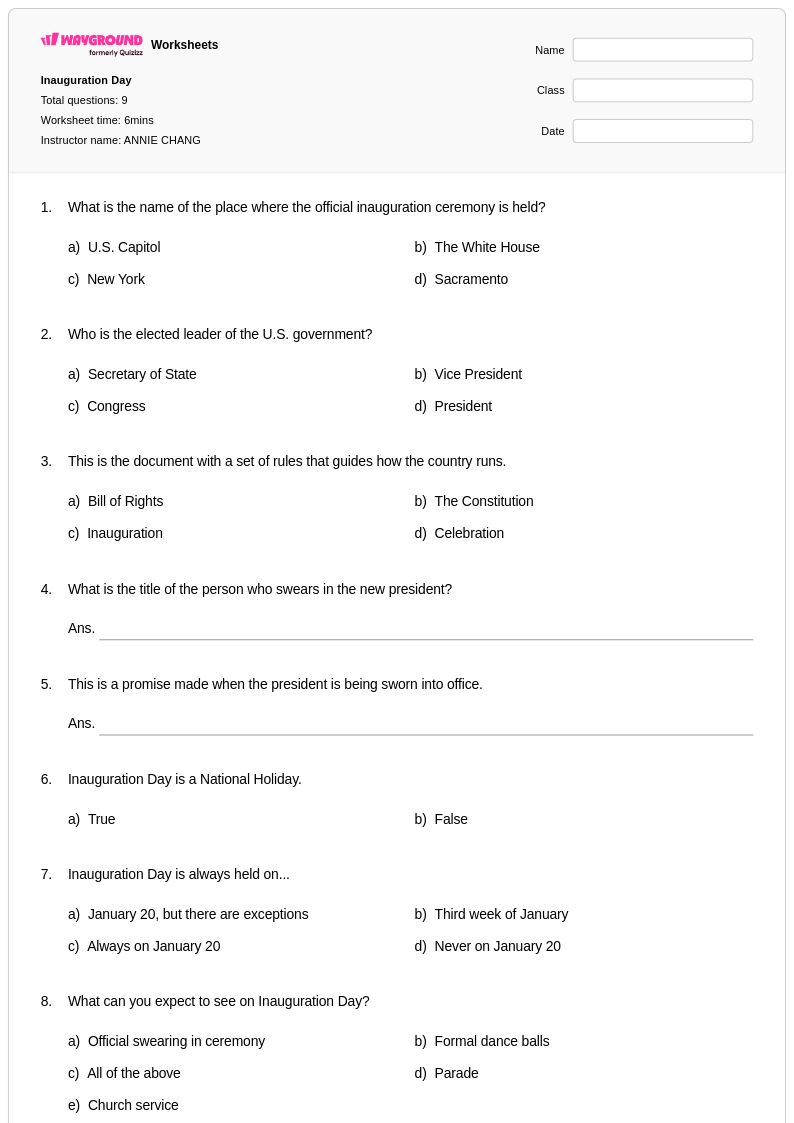
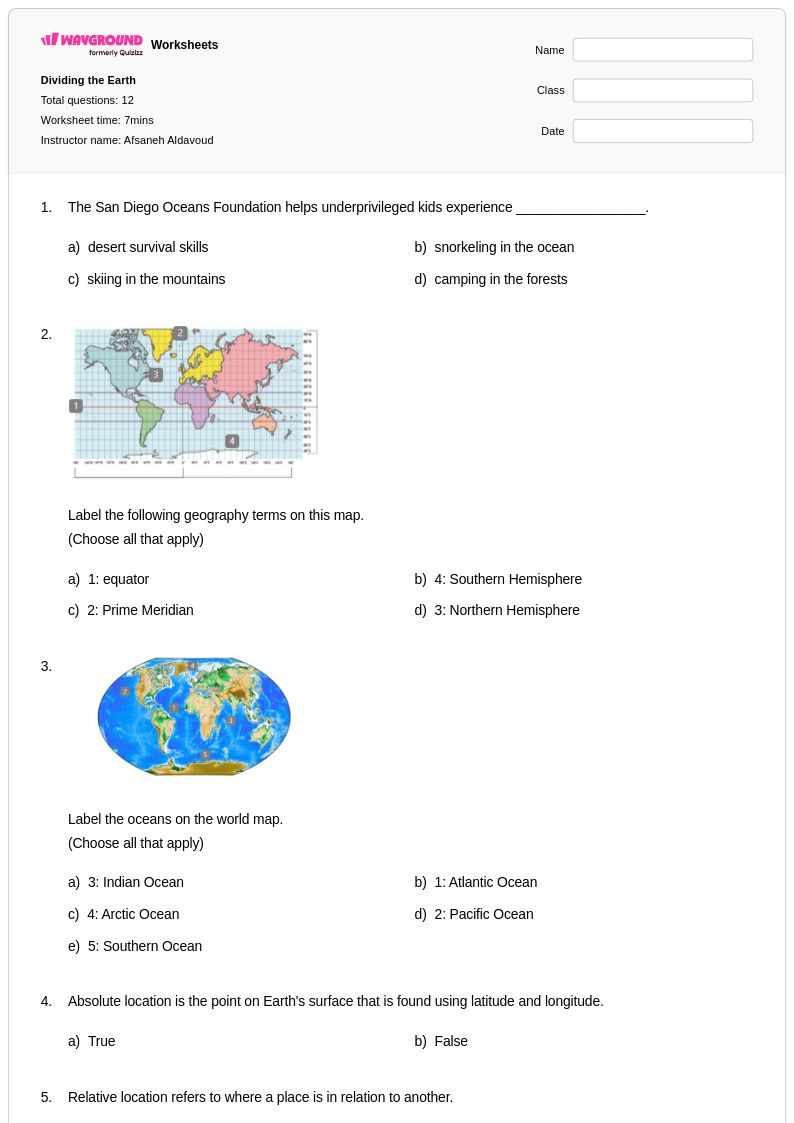
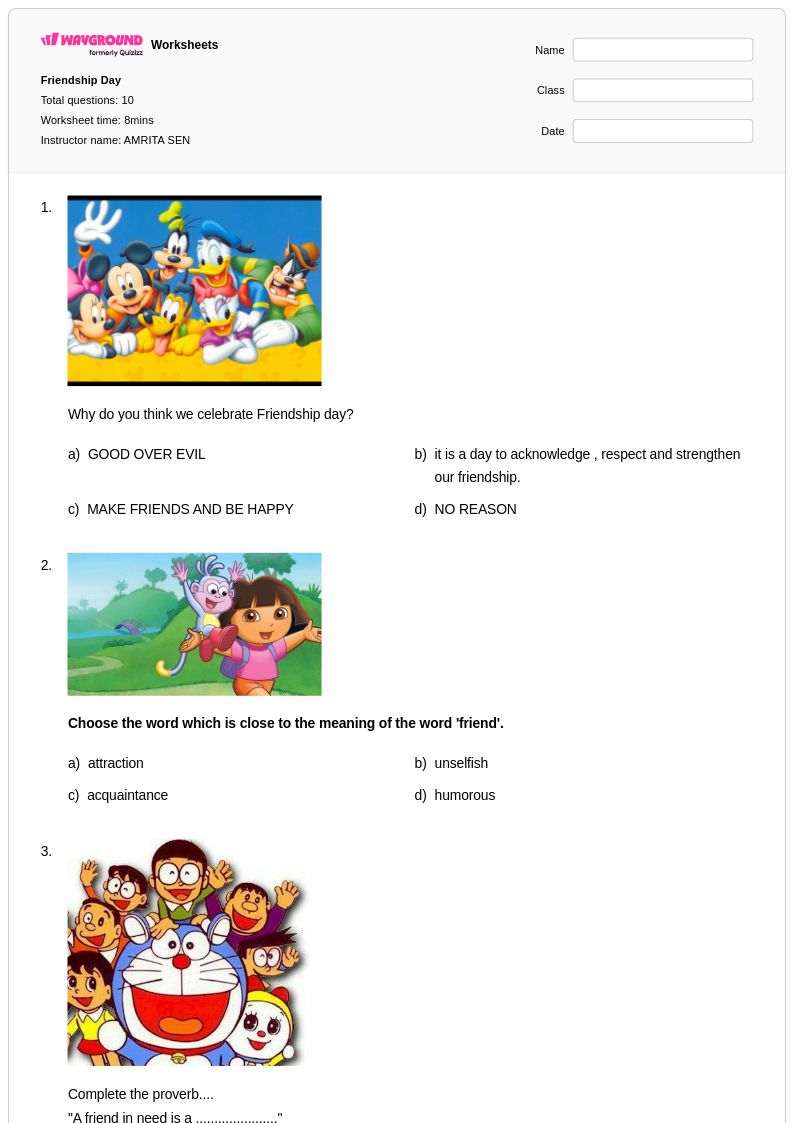
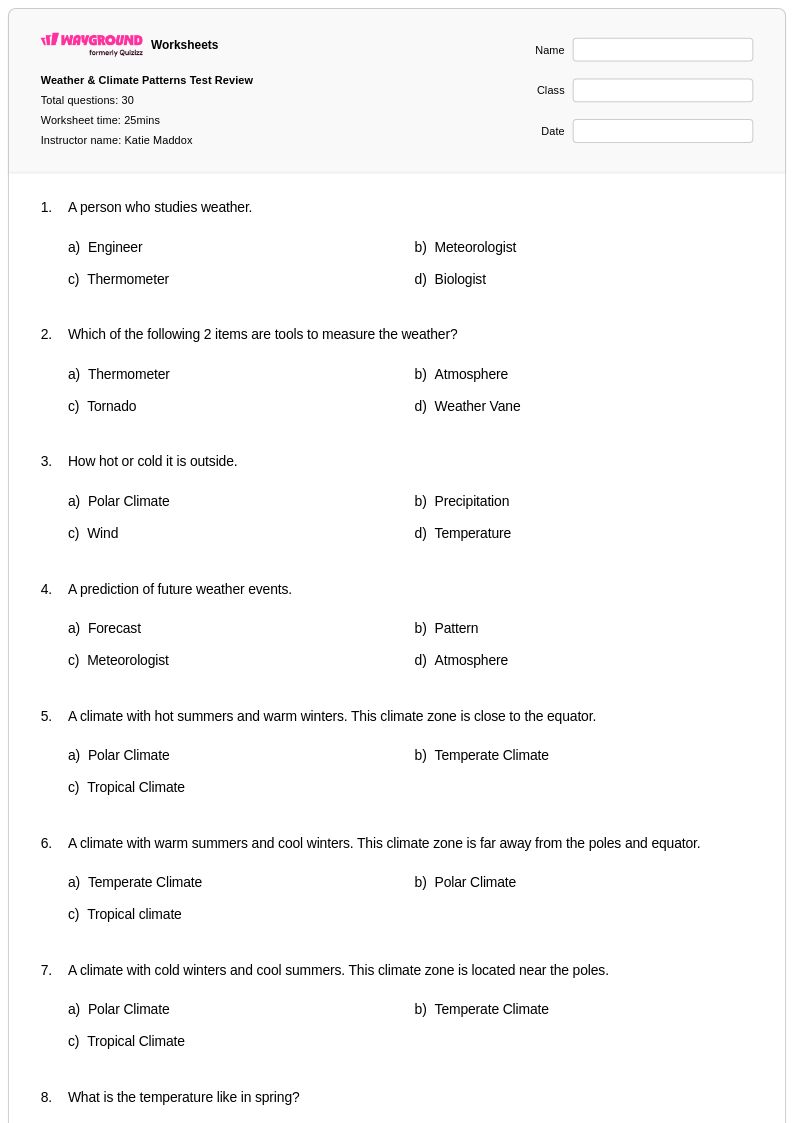
Discover free Arbor Day worksheets and printables that help students explore tree conservation, environmental stewardship, and community traditions through engaging practice problems and comprehensive answer keys.
Arbor Day worksheets available through Wayground (formerly Quizizz) provide students with comprehensive resources to explore the environmental, historical, and cultural significance of this important conservation holiday. These educational materials strengthen critical thinking skills by examining how communities across different cultures approach tree planting, environmental stewardship, and conservation awareness. Students engage with practice problems that analyze the founding of Arbor Day by J. Sterling Morton in 1872, compare global reforestation efforts, and investigate how various societies integrate tree preservation into their cultural traditions. The worksheets include detailed answer keys that support independent learning and feature free printables covering topics from forest ecology to community environmental action, all presented in accessible pdf formats that accommodate diverse learning styles and classroom needs.
Wayground (formerly Quizizz) supports educators with millions of teacher-created resources specifically focused on Arbor Day and environmental citizenship topics, featuring robust search and filtering capabilities that align with social studies standards for community and cultural education. Teachers can easily differentiate instruction using the platform's flexible customization tools, adapting worksheets to meet individual student needs while maintaining rigorous academic content about conservation history and cross-cultural environmental practices. The comprehensive collection is available in both printable and digital formats, including downloadable pdf versions that facilitate seamless integration into lesson planning for skill practice, remediation activities, and enrichment opportunities. This extensive resource library enables educators to create meaningful learning experiences that connect local Arbor Day celebrations to broader global conversations about environmental responsibility and cultural approaches to conservation.
FAQs
How do I teach Arbor Day in an engaging way?
Teaching Arbor Day effectively means grounding it in both its historical origins and its real-world relevance. Start with the founding of Arbor Day by J. Sterling Morton in 1872 in Nebraska, then connect that history to current reforestation efforts and community tree-planting traditions. Comparing how different cultures and countries observe conservation holidays helps students see environmental stewardship as a global, not just local, practice. Hands-on activities like analyzing why trees matter to ecosystems and communities deepen engagement beyond rote memorization.
What topics should Arbor Day worksheets cover?
Arbor Day worksheets should cover the historical founding of the holiday by J. Sterling Morton in 1872, the environmental importance of trees in forest ecology, and how communities across different cultures practice reforestation and conservation. Strong worksheets also prompt students to examine local and global tree-planting initiatives, helping them connect individual actions to broader environmental responsibility. This combination of history, science, and social studies content makes Arbor Day a rich cross-curricular topic.
What misconceptions do students commonly have about Arbor Day and tree conservation?
A common misconception is that Arbor Day is purely an American tradition, when in fact many countries have their own tree-planting holidays rooted in distinct cultural and environmental contexts. Students also often oversimplify conservation by thinking that planting one tree fully offsets deforestation, without understanding scale, ecosystem complexity, or species diversity. Addressing these gaps through comparative global examples and basic forest ecology helps students develop more accurate mental models of environmental stewardship.
How can I use Arbor Day worksheets in my classroom?
Arbor Day worksheets on Wayground are available as printable PDFs for traditional classroom use and in digital formats for technology-integrated or hybrid learning environments, and teachers can also host them as a quiz directly on Wayground. This flexibility makes them easy to deploy as a standalone lesson, a homework assignment, or a formative check after instruction. The included answer keys support independent student work and reduce prep time for teachers managing multiple classes.
How do I connect Arbor Day to social studies standards?
Arbor Day naturally aligns with social studies standards around community traditions, cultural practices, and environmental citizenship. Teachers can anchor lessons in how different societies approach conservation and what shared values drive community action around natural resources. Examining the historical and civic dimensions of Arbor Day, from Morton's grassroots advocacy to modern municipal tree programs, gives students concrete examples of how individuals and communities shape environmental policy.
How can I differentiate Arbor Day instruction for students at different levels?
For students who need additional support, simplifying reading passages about tree conservation and providing sentence frames for analysis questions can lower the barrier to entry without reducing rigor. Advanced students can be challenged to compare reforestation policies across multiple countries or evaluate the effectiveness of different conservation strategies. On Wayground, teachers can apply individual accommodations such as read-aloud support, reduced answer choices, or extended time to specific students, allowing the rest of the class to work through default settings without disruption.