
14 Q
7th - Uni
16 Q
7th - Uni
20 Q
7th - Uni
15 Q
7th - Uni
17 Q
9th - 12th
20 Q
7th - Uni
20 Q
7th - Uni
15 Q
7th - Uni
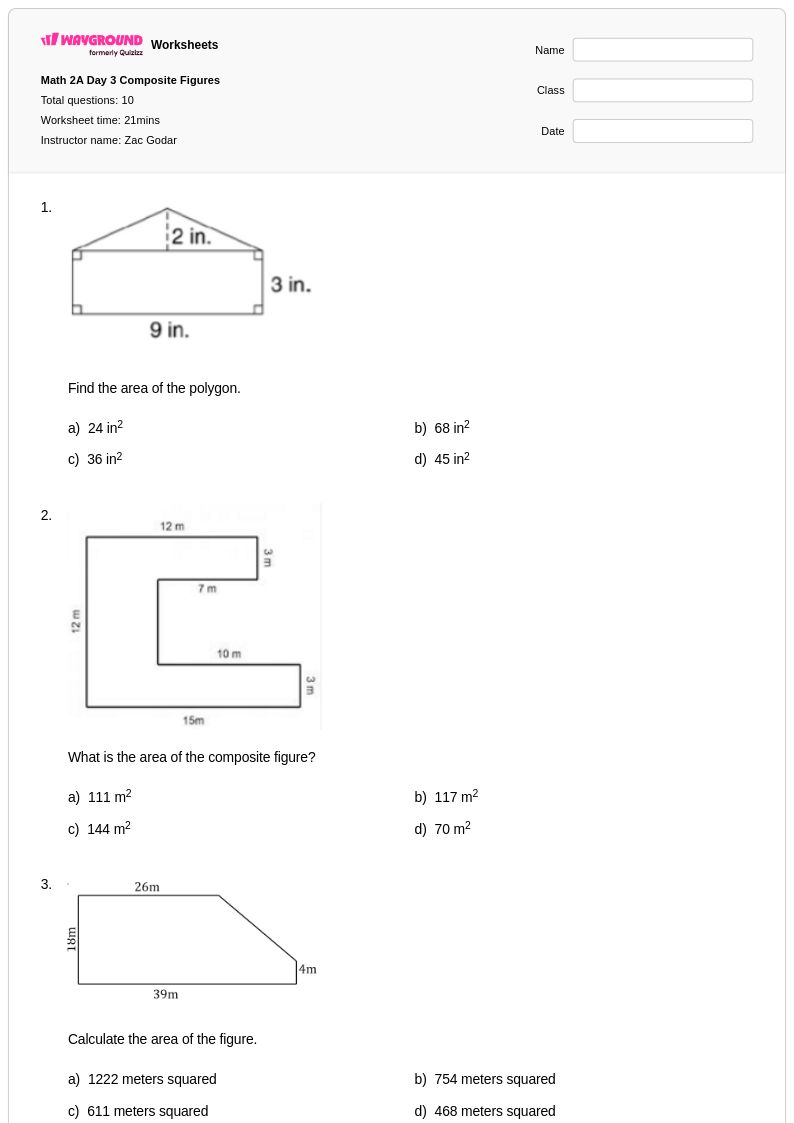
10 Q
9th - 12th
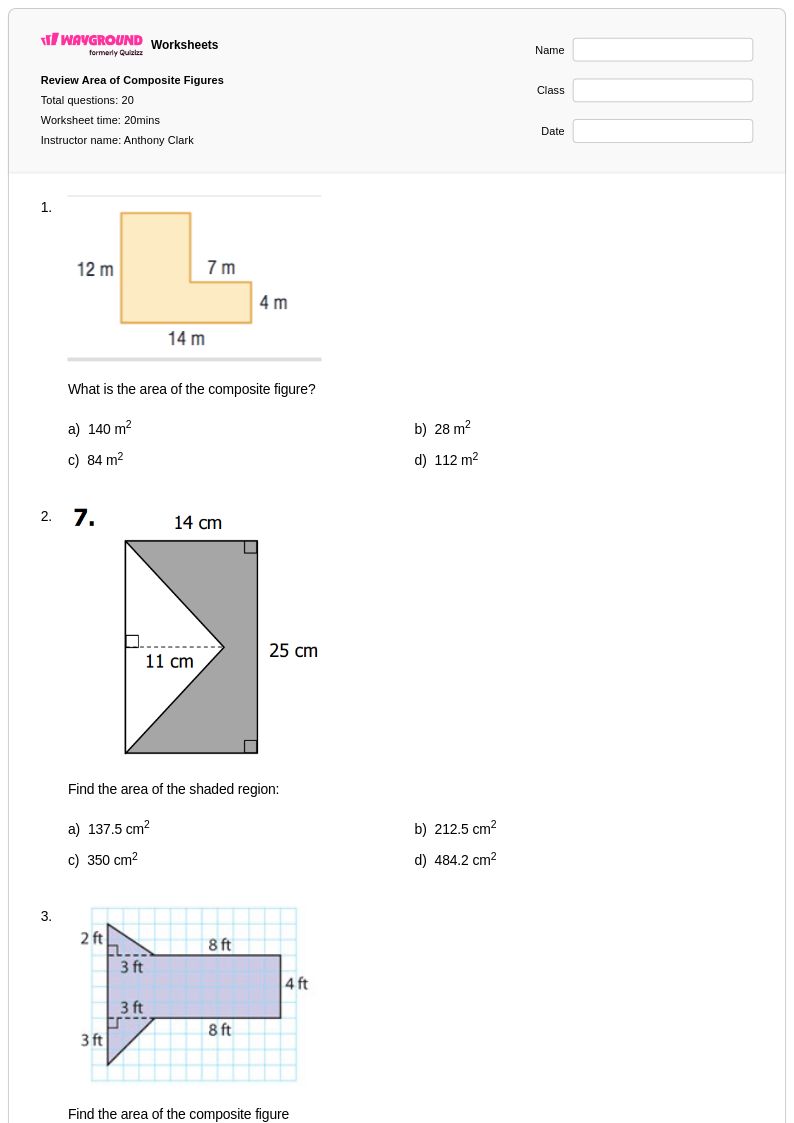
20 Q
7th - Uni
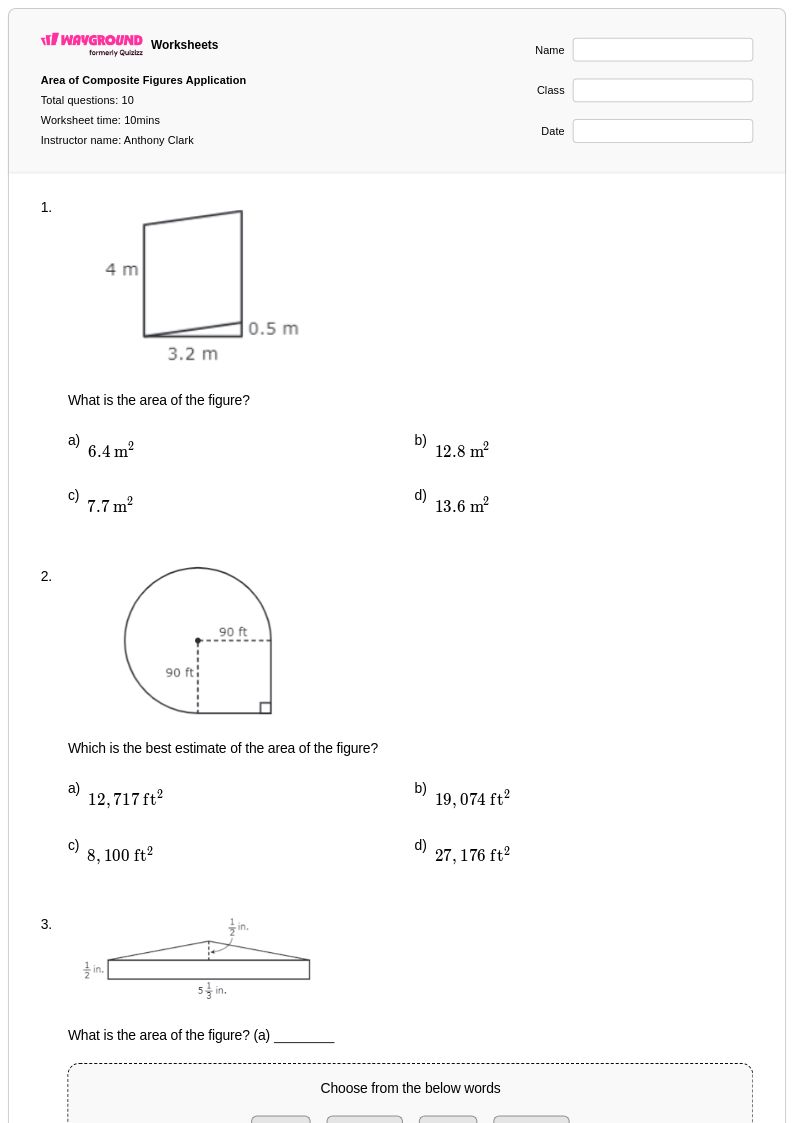
10 Q
7th - Uni
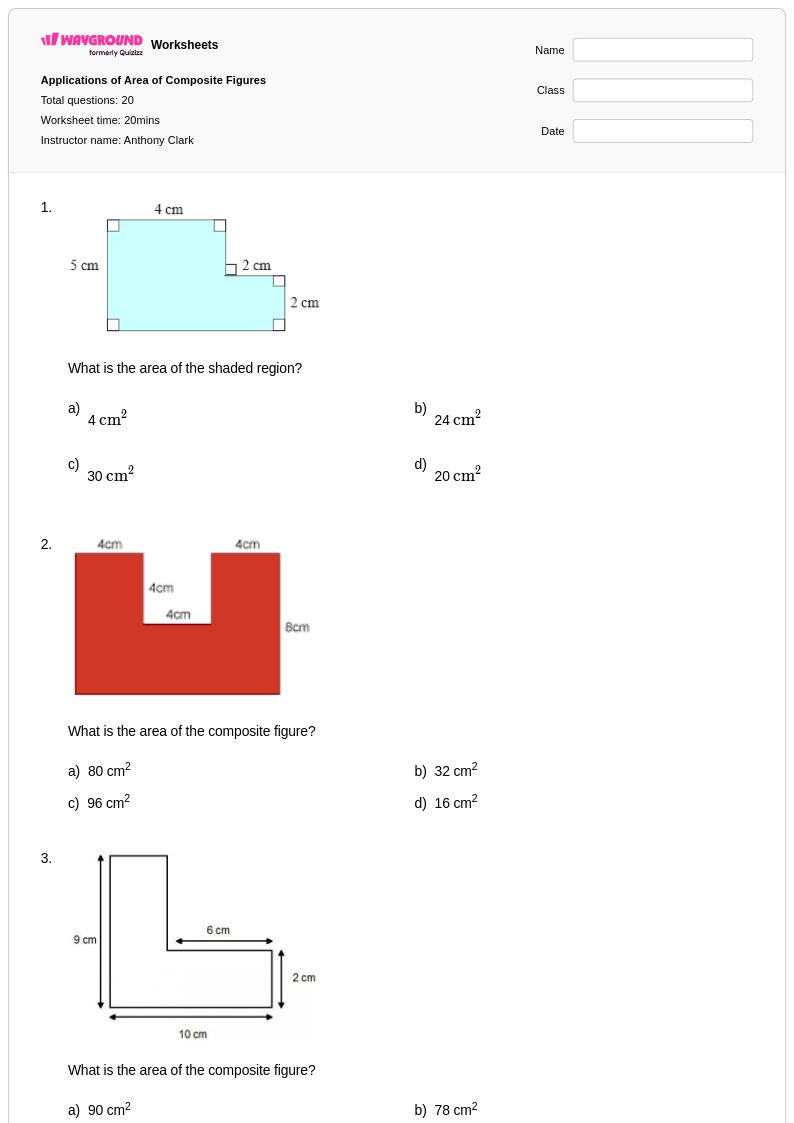
20 Q
7th - Uni
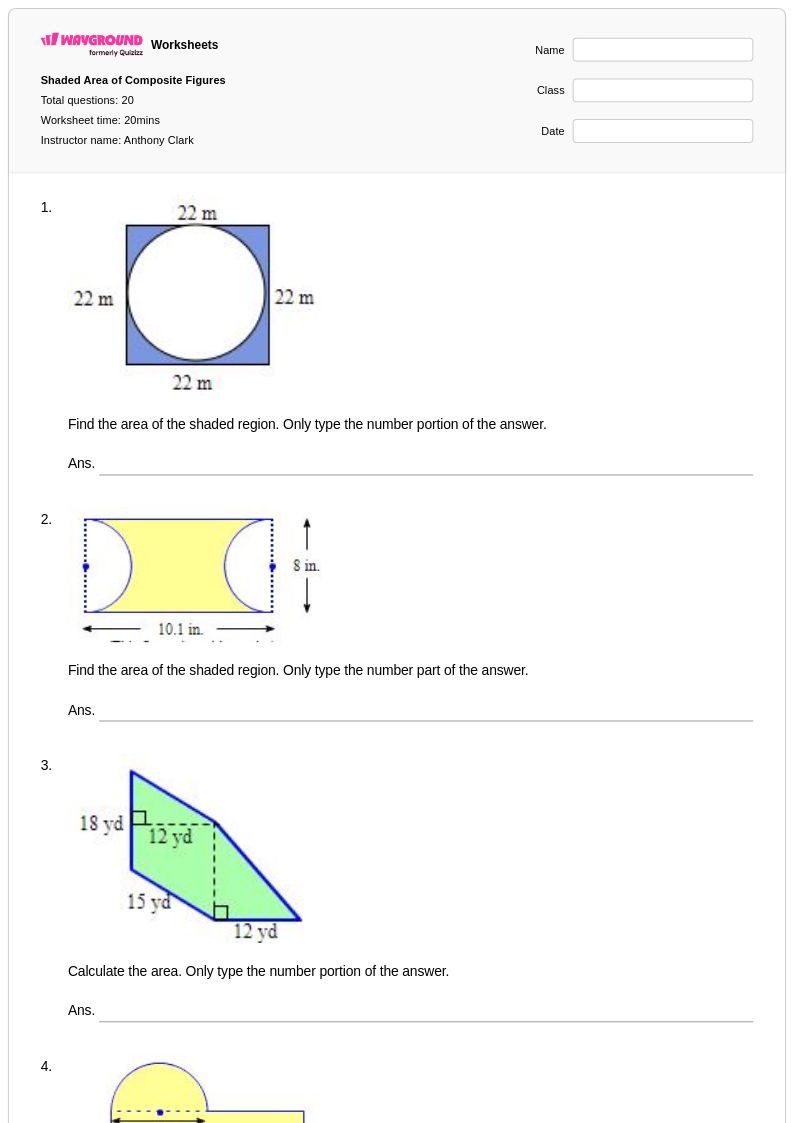
20 Q
7th - Uni
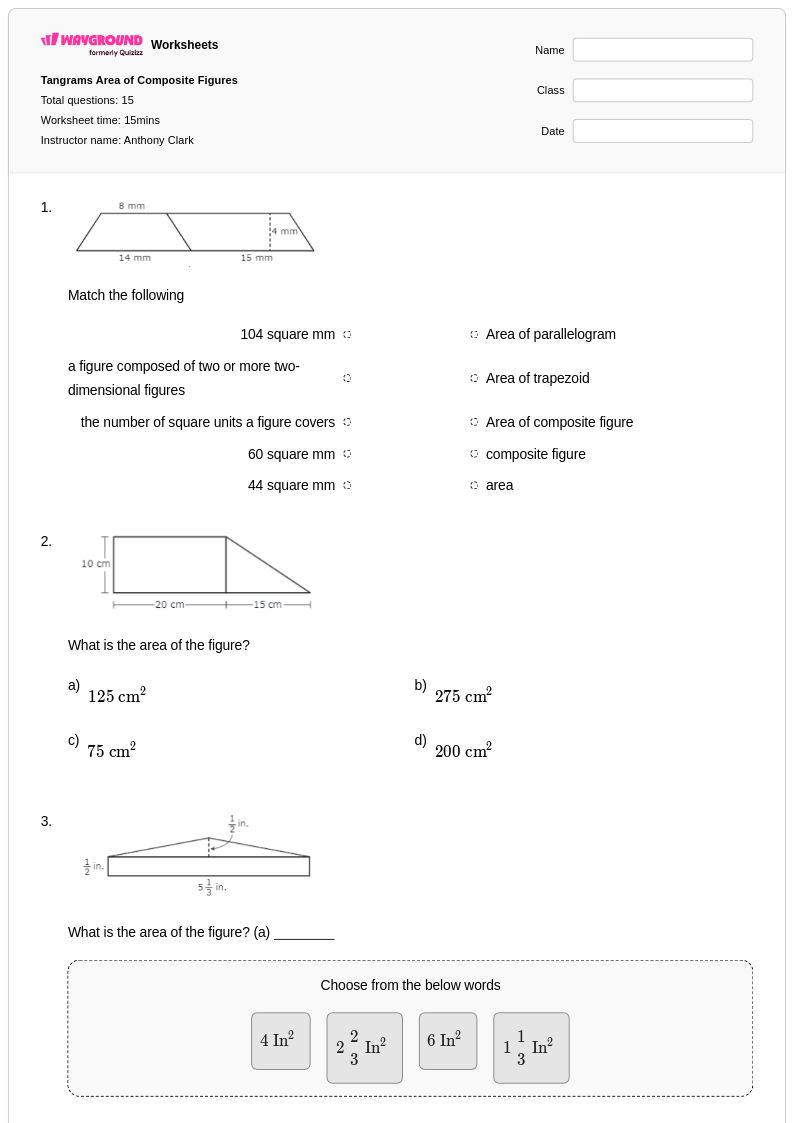
15 Q
7th - Uni
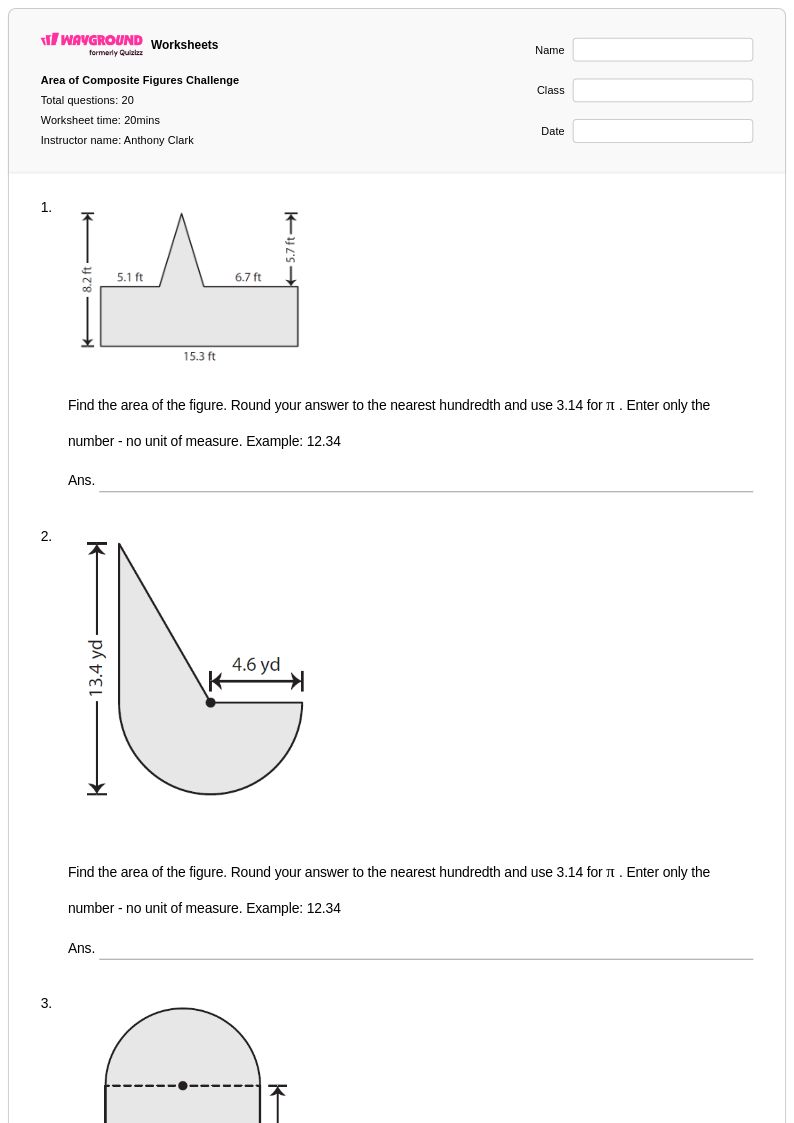
20 Q
7th - Uni
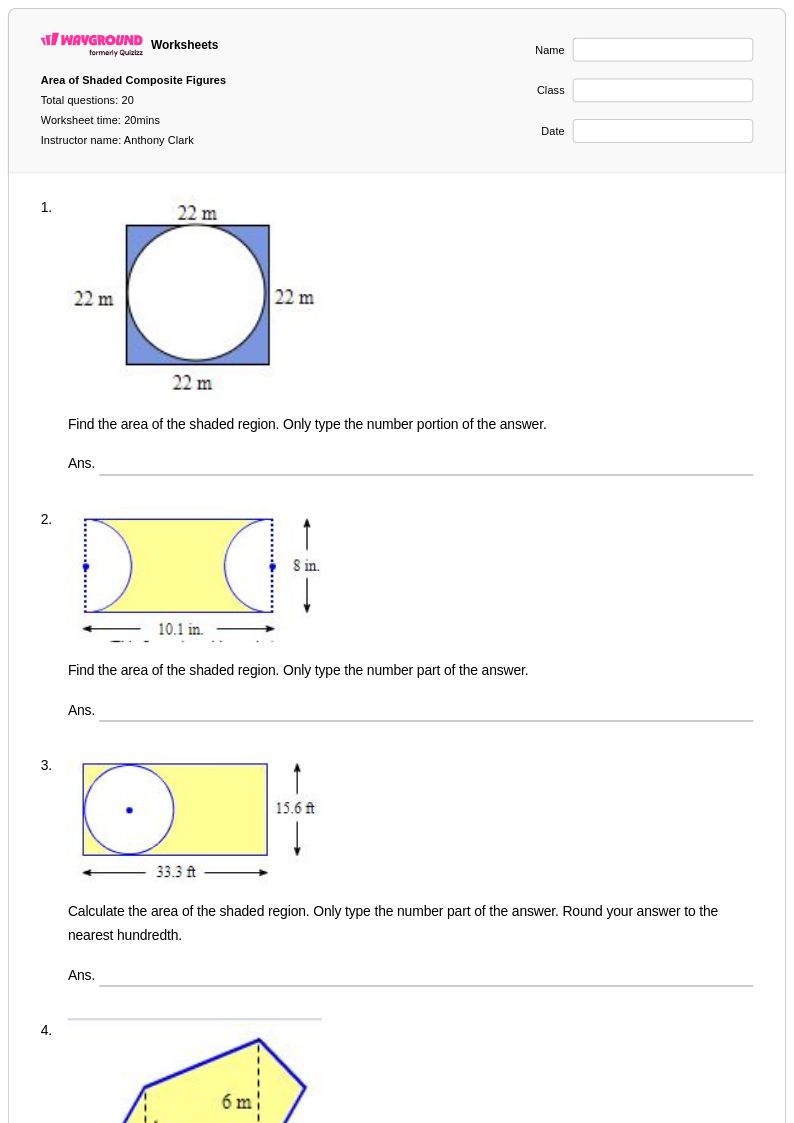
20 Q
7th - Uni
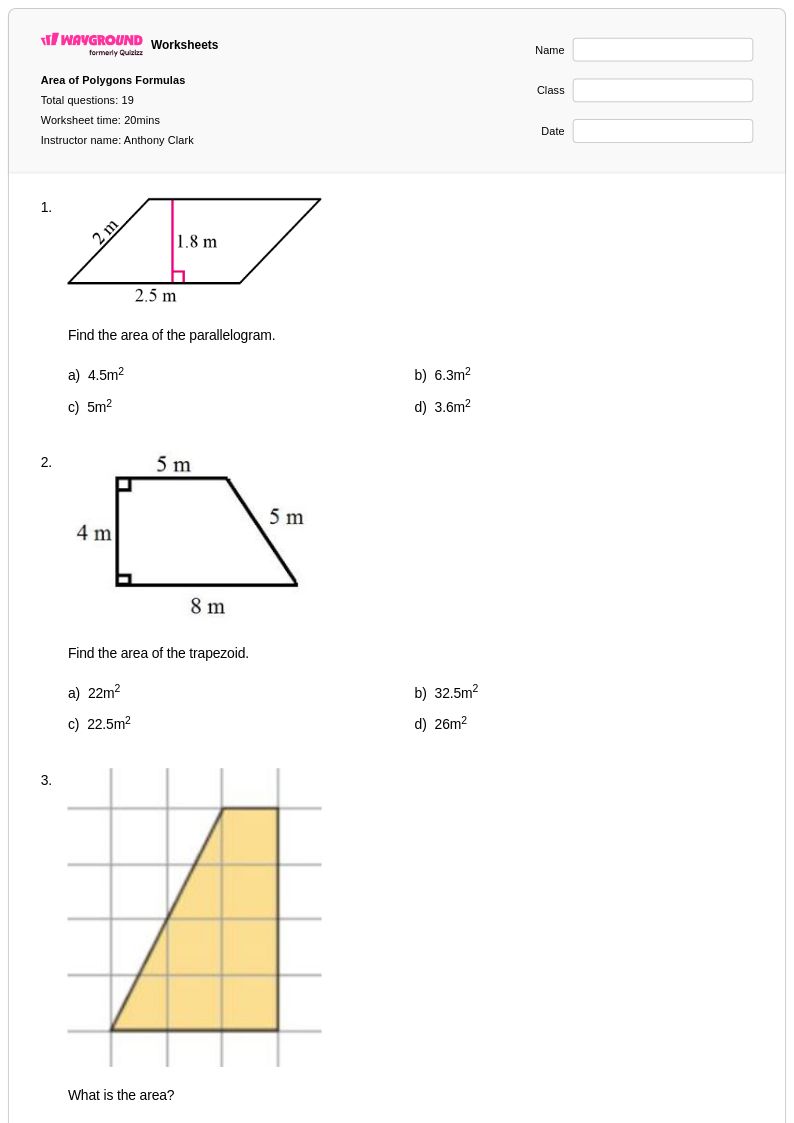
20 Q
6th - Uni
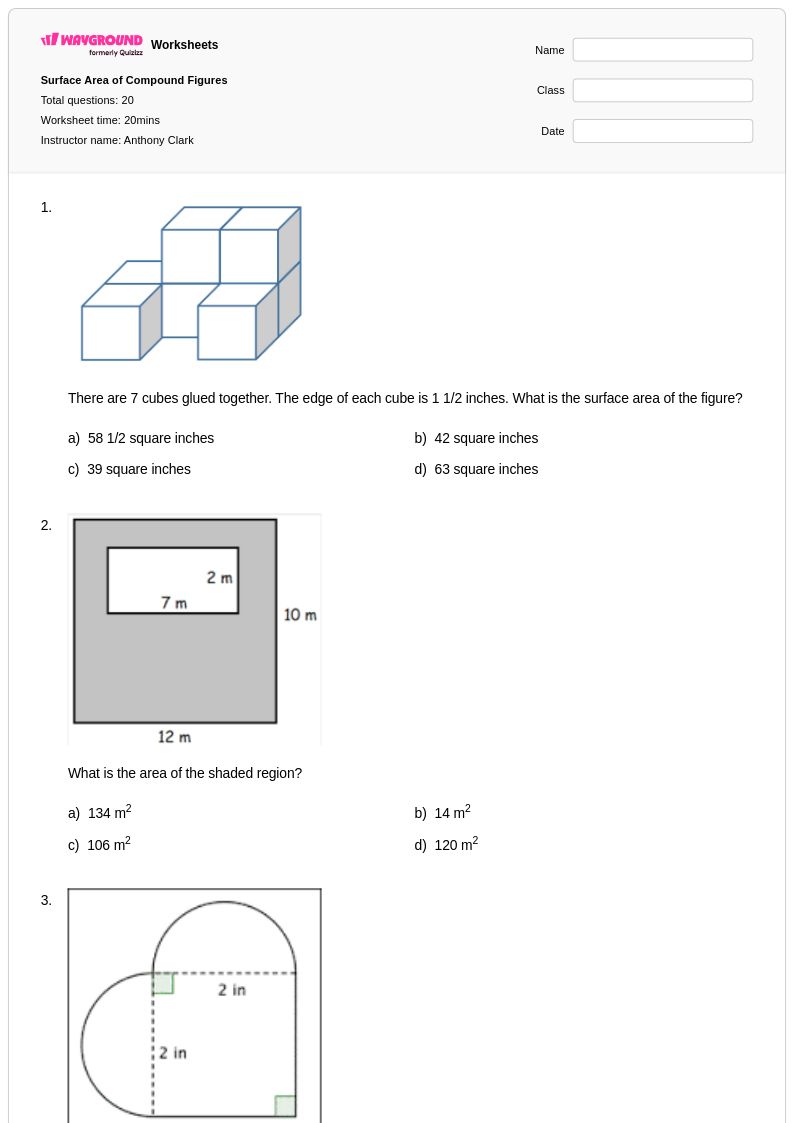
20 Q
7th - Uni
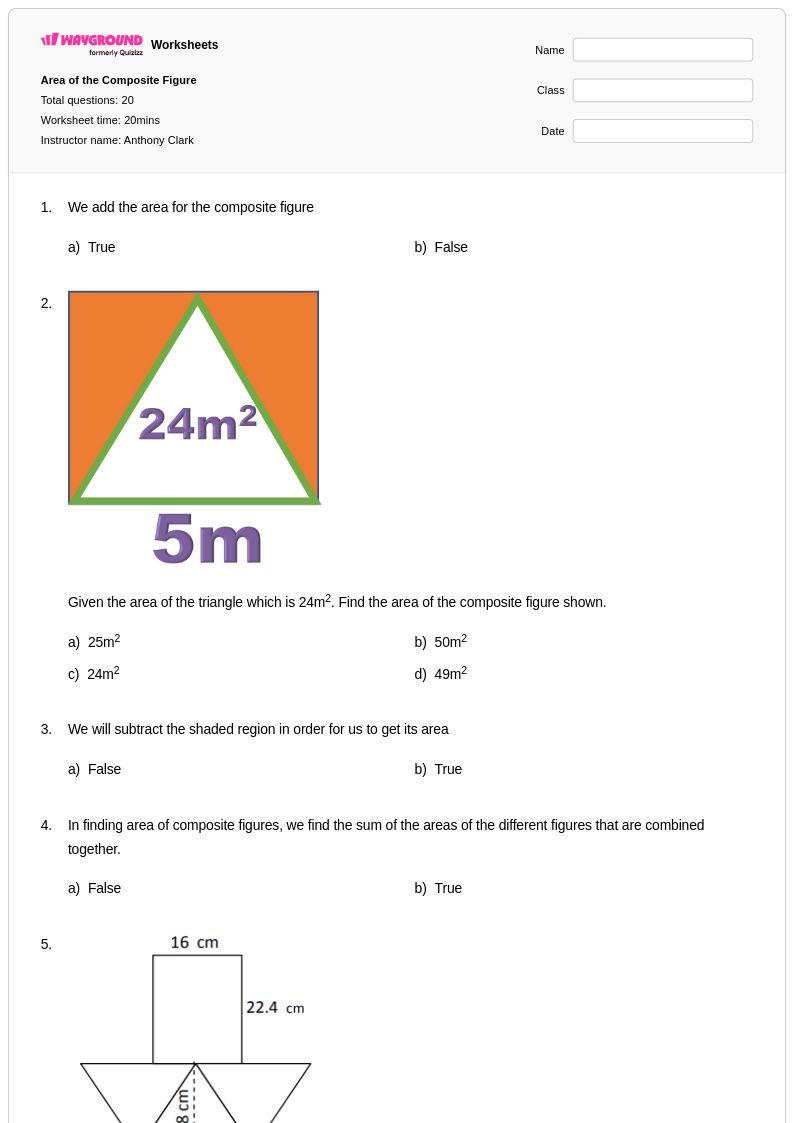
20 Q
7th - Uni
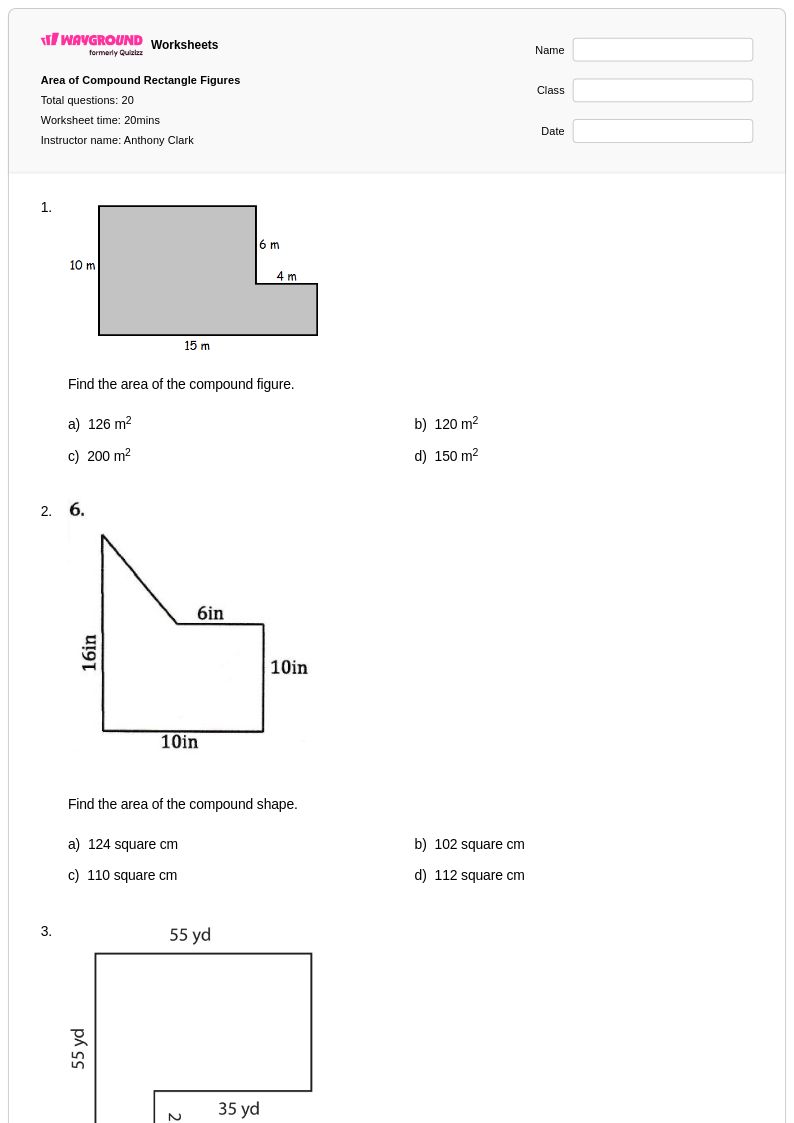
20 Q
6th - Uni
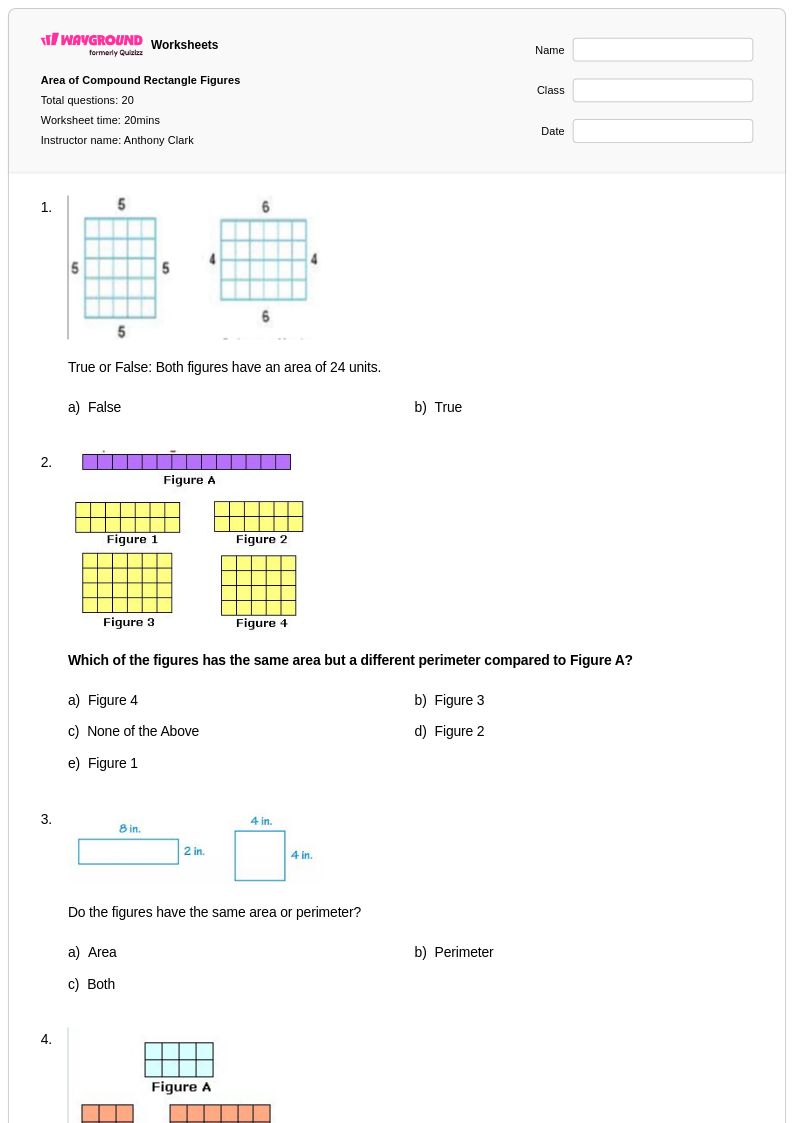
20 Q
6th - Uni
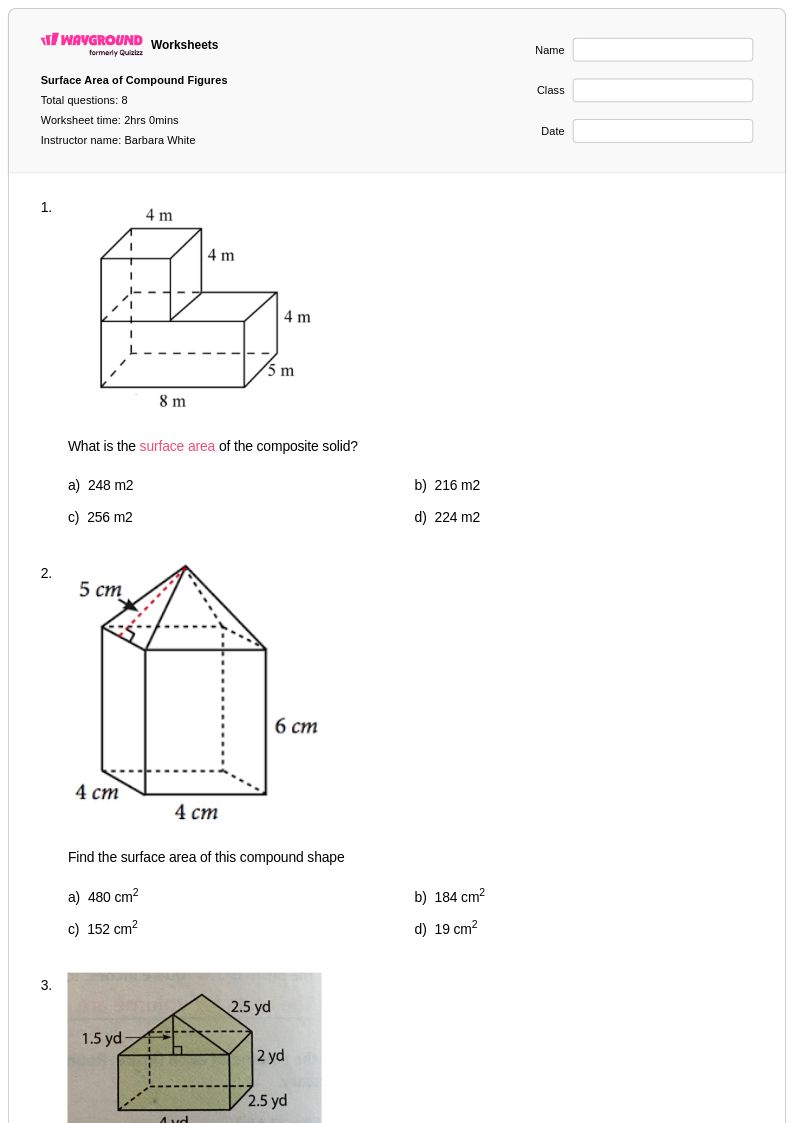
8 Q
1st - 12th
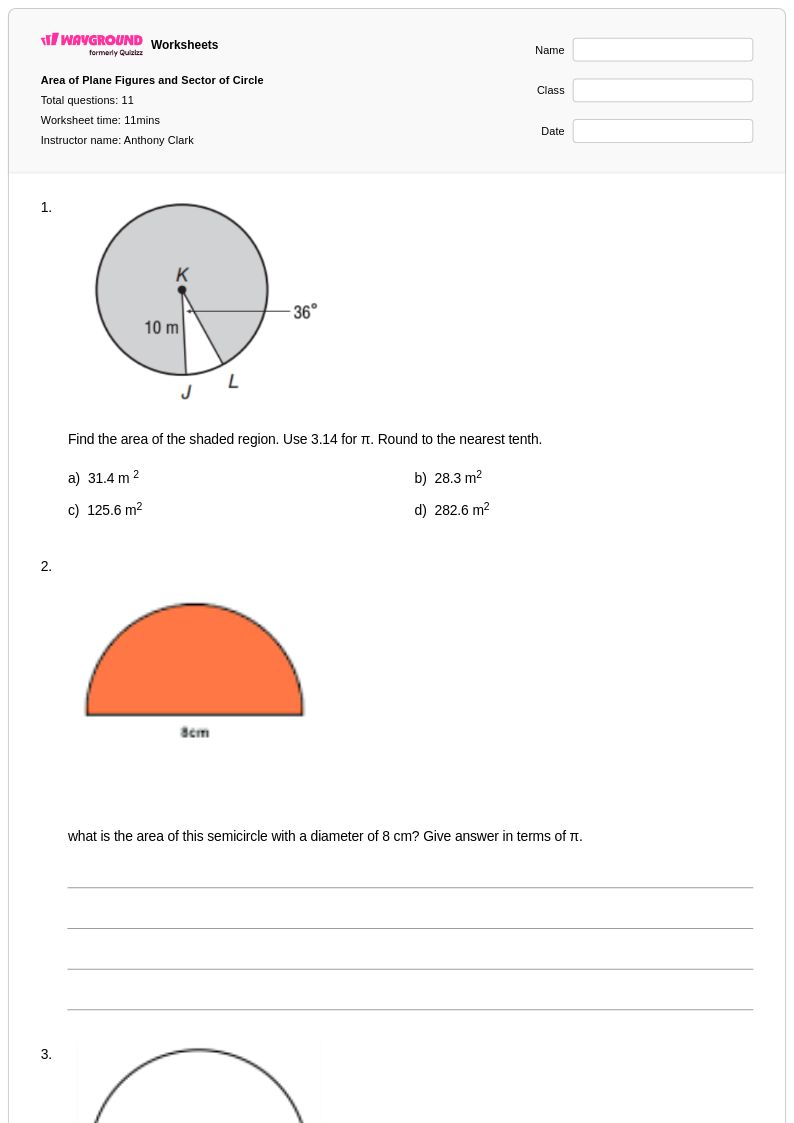
11 Q
9th - Uni
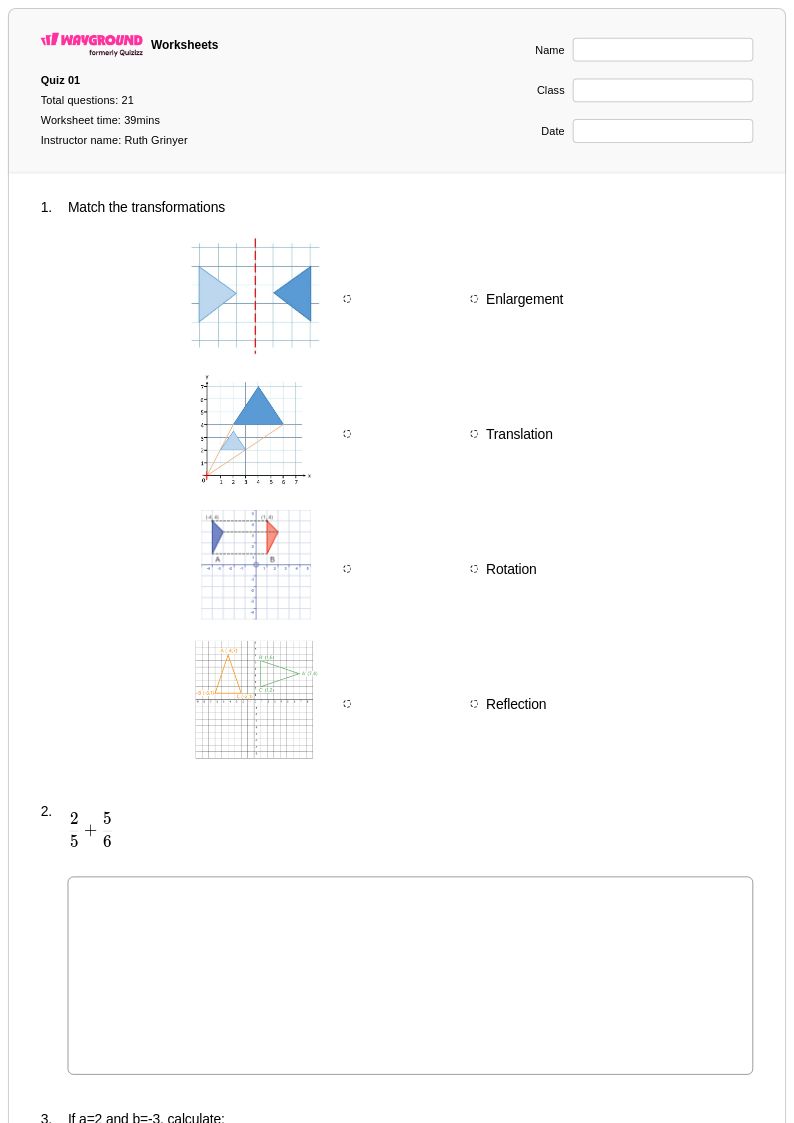
21 Q
9th - Uni
Explore Other Subject Worksheets for year 12
Explore printable Area of Compound Figures worksheets for Year 12
Area of compound figures worksheets for Year 12 students through Wayground (formerly Quizizz) provide comprehensive practice with complex geometric problems that require decomposition and synthesis skills. These advanced mathematics worksheets challenge students to calculate areas of irregular shapes by breaking them into familiar components such as rectangles, triangles, circles, and trapezoids, then combining or subtracting these areas strategically. The printable resources include detailed answer keys that show step-by-step solutions, helping students understand the logical approach to tackling multi-part area calculations. Free practice problems range from architectural floor plans and landscaping scenarios to abstract composite figures, ensuring students can apply area formulas in both real-world contexts and purely mathematical settings while developing spatial reasoning and algebraic manipulation skills essential for advanced geometry and calculus preparation.
Wayground (formerly Quizizz) empowers educators with millions of teacher-created area of compound figures resources that streamline lesson planning and support differentiated instruction for Year 12 mathematics courses. The platform's robust search and filtering capabilities allow teachers to quickly locate worksheets aligned with specific curriculum standards, while customization tools enable modification of difficulty levels and problem types to meet diverse student needs. Available in both digital and pdf formats, these worksheet collections facilitate seamless integration into classroom instruction, homework assignments, and assessment preparation. Teachers can efficiently identify resources for remediation when students struggle with basic area formulas, provide enrichment challenges involving complex composite shapes, and deliver targeted skill practice that bridges the gap between foundational geometry concepts and the advanced mathematical reasoning required for success in higher-level mathematics courses.
FAQs
How do I teach area of compound figures to Grade 12 students?
What are good practice problems for area of compound figures in Grade 12?
What mistakes should I look for when assessing compound-area problems?
How do I assign Wayground’s area of compound figures worksheets?
How does area of compound figures connect to Common Core high school math?
How can I support different learners with a compound-figures worksheet?
Why practice area of compound figures in Grade 12?