
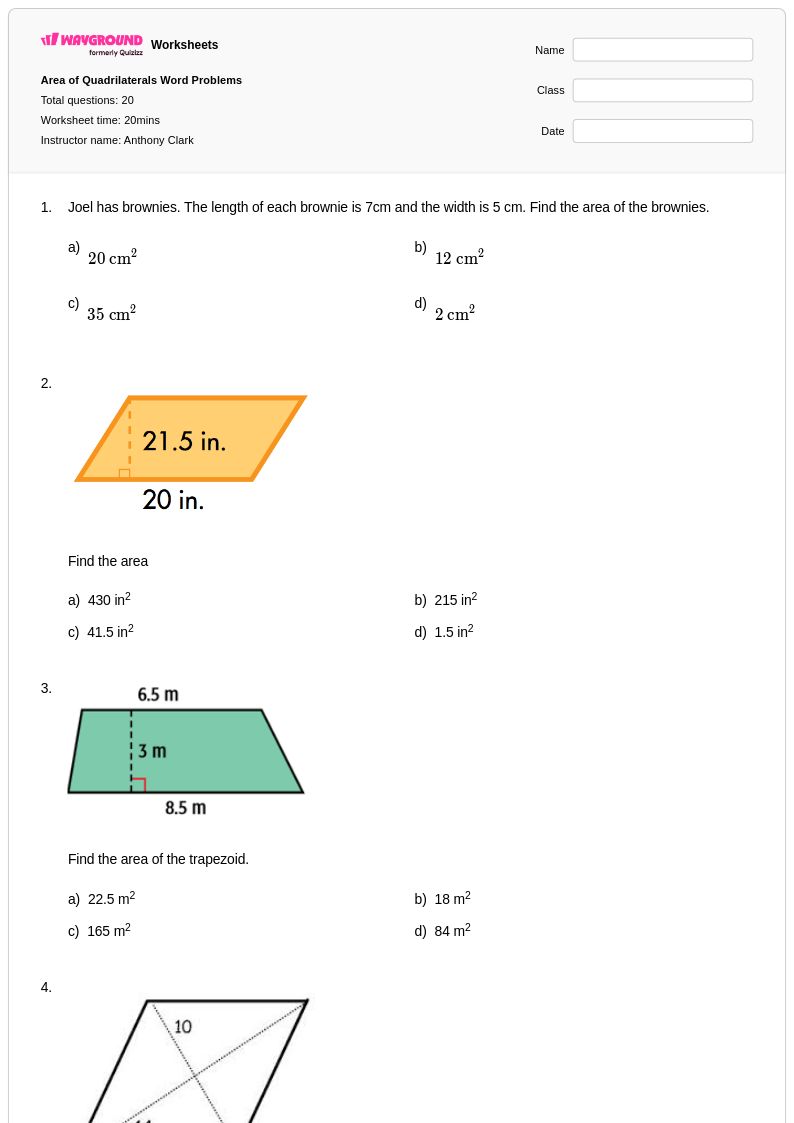
20 Q
6th - Uni
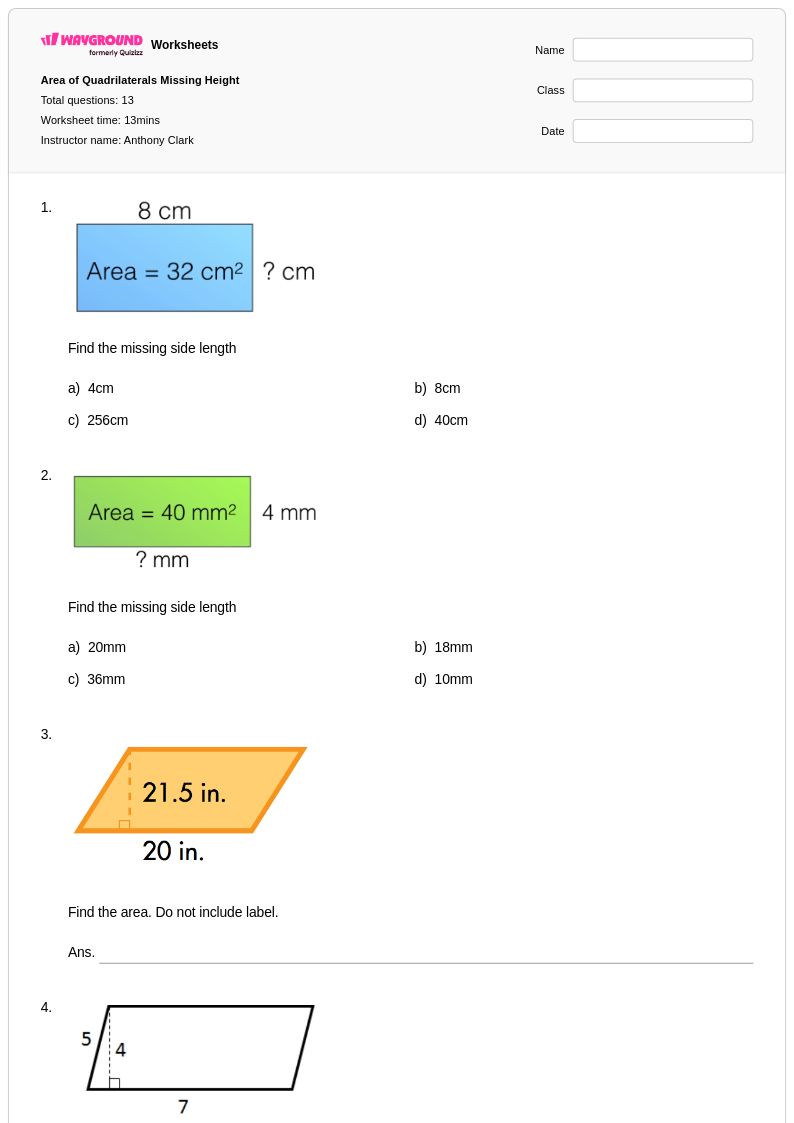
13 Q
6th - Uni
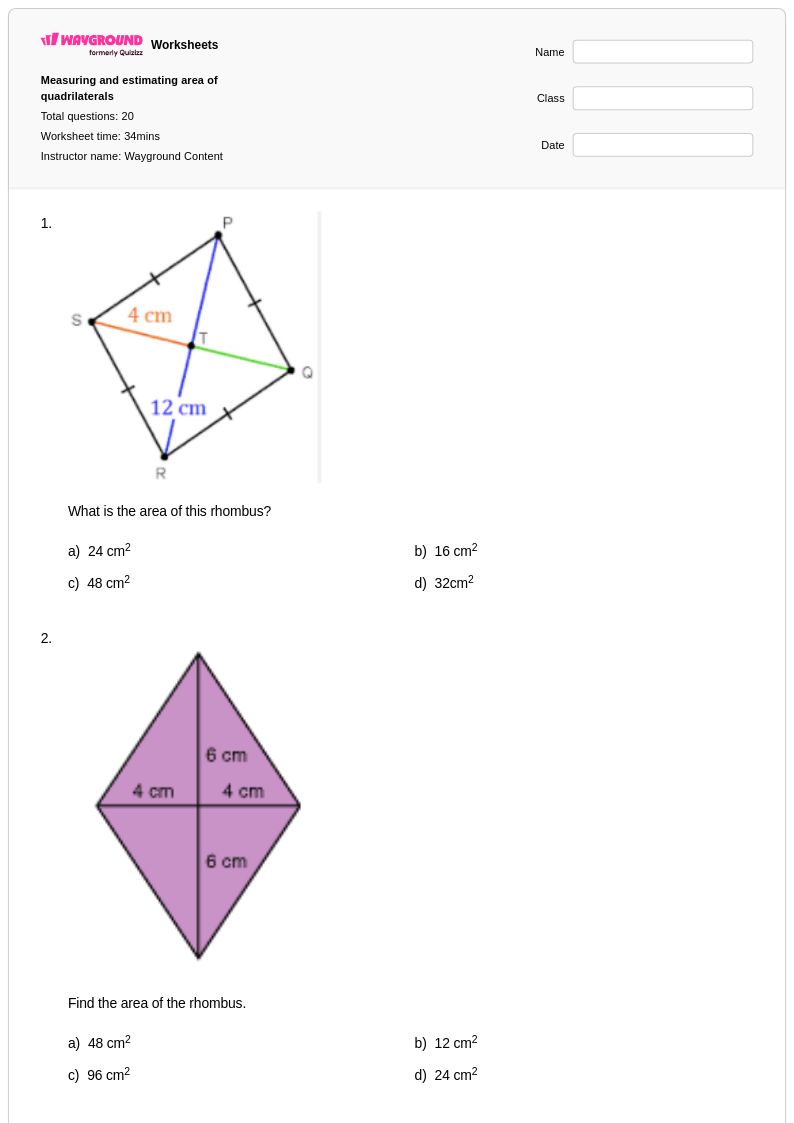
20 Q
6th
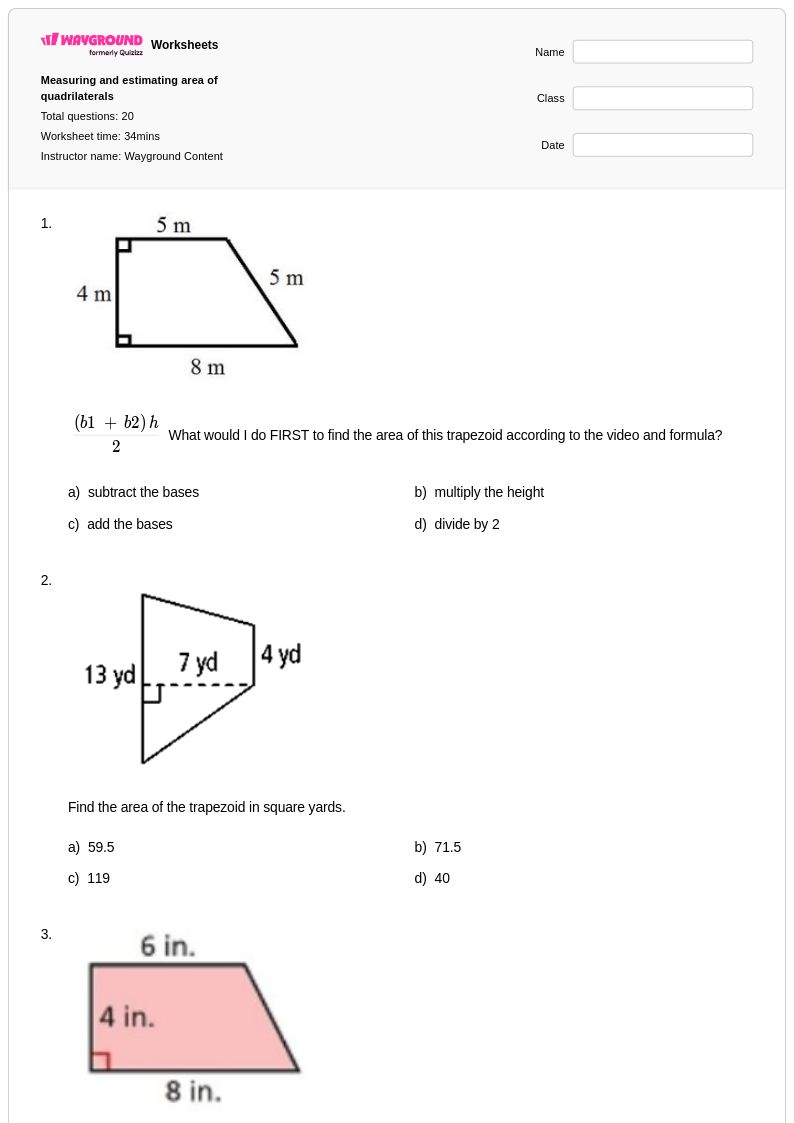
20 Q
6th
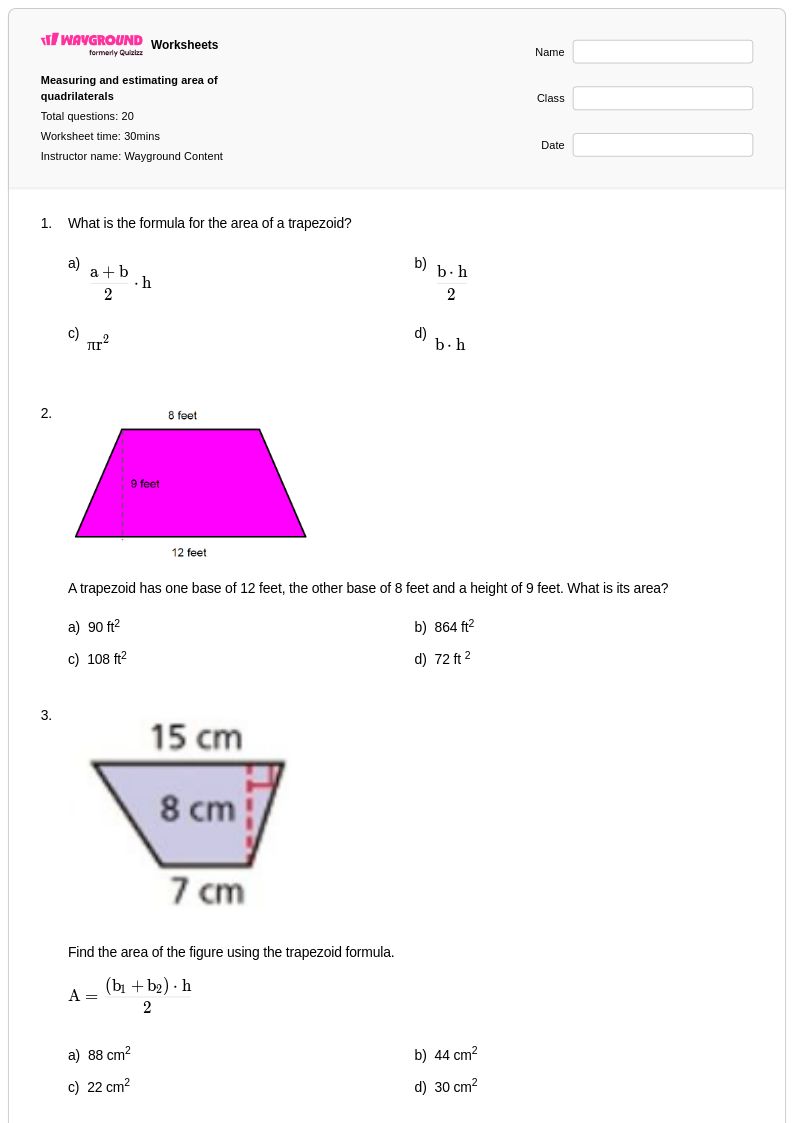
20 Q
6th
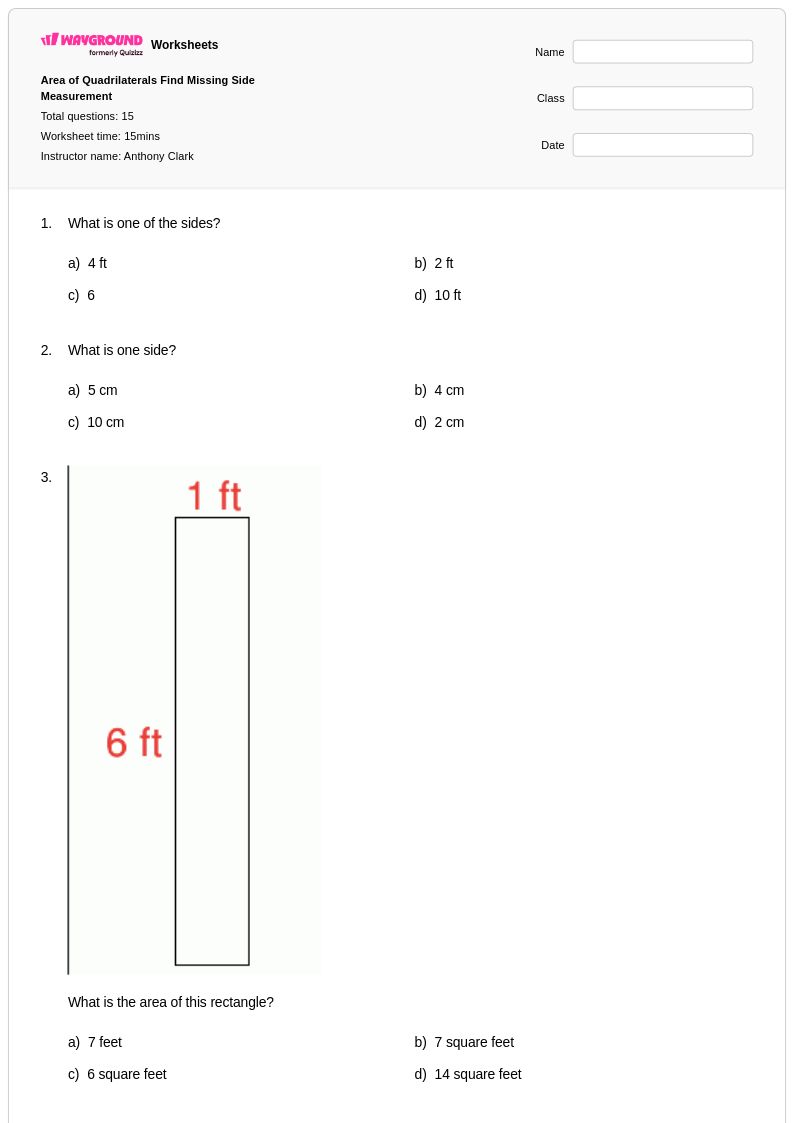
15 Q
4th - Uni
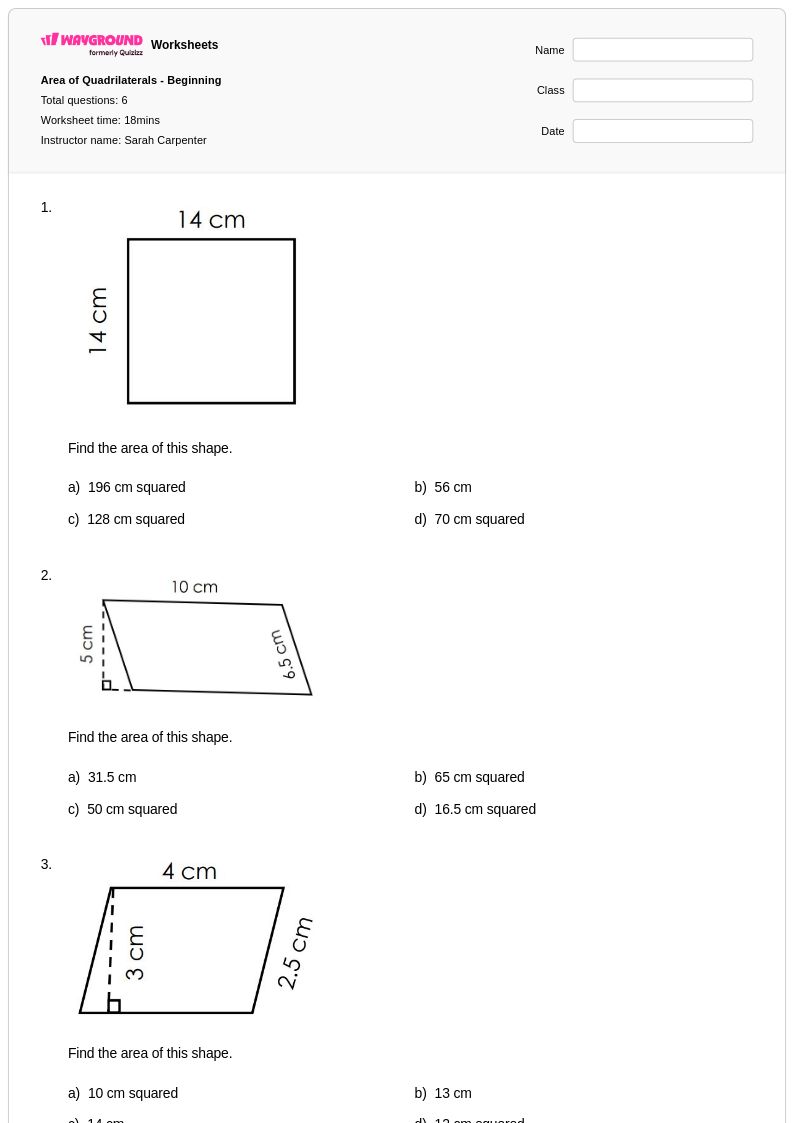
6 Q
6th
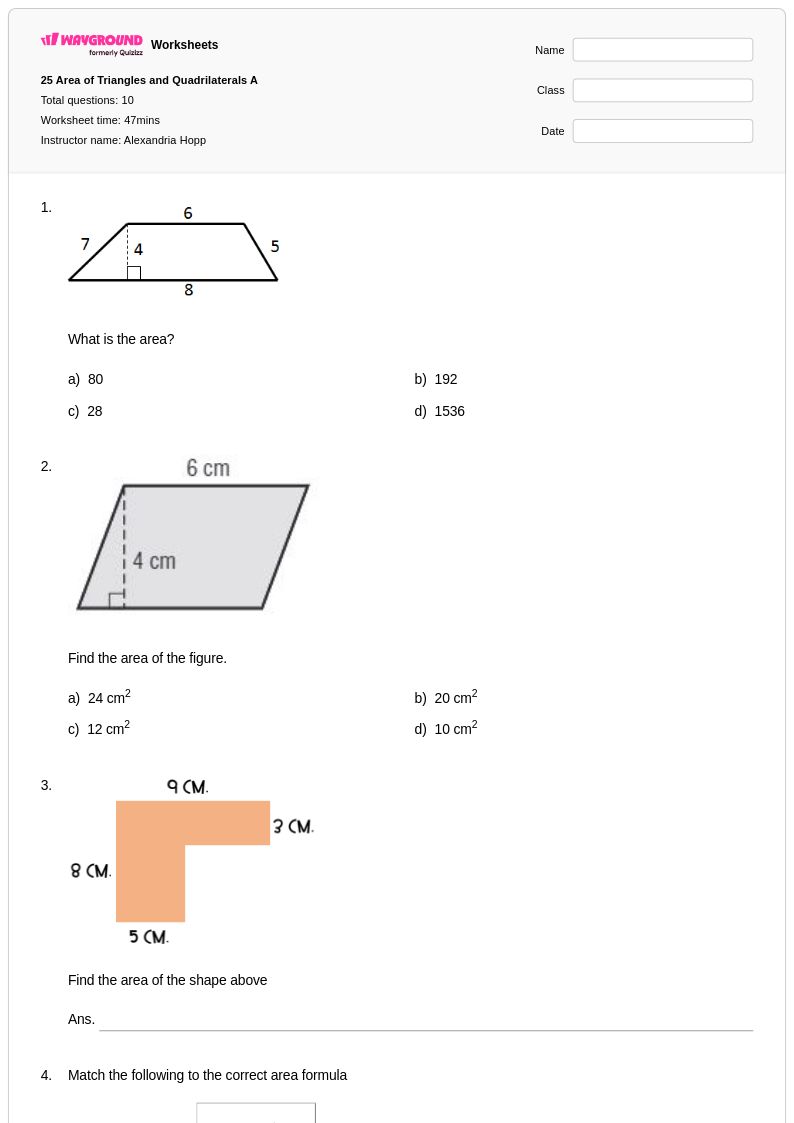
10 Q
6th
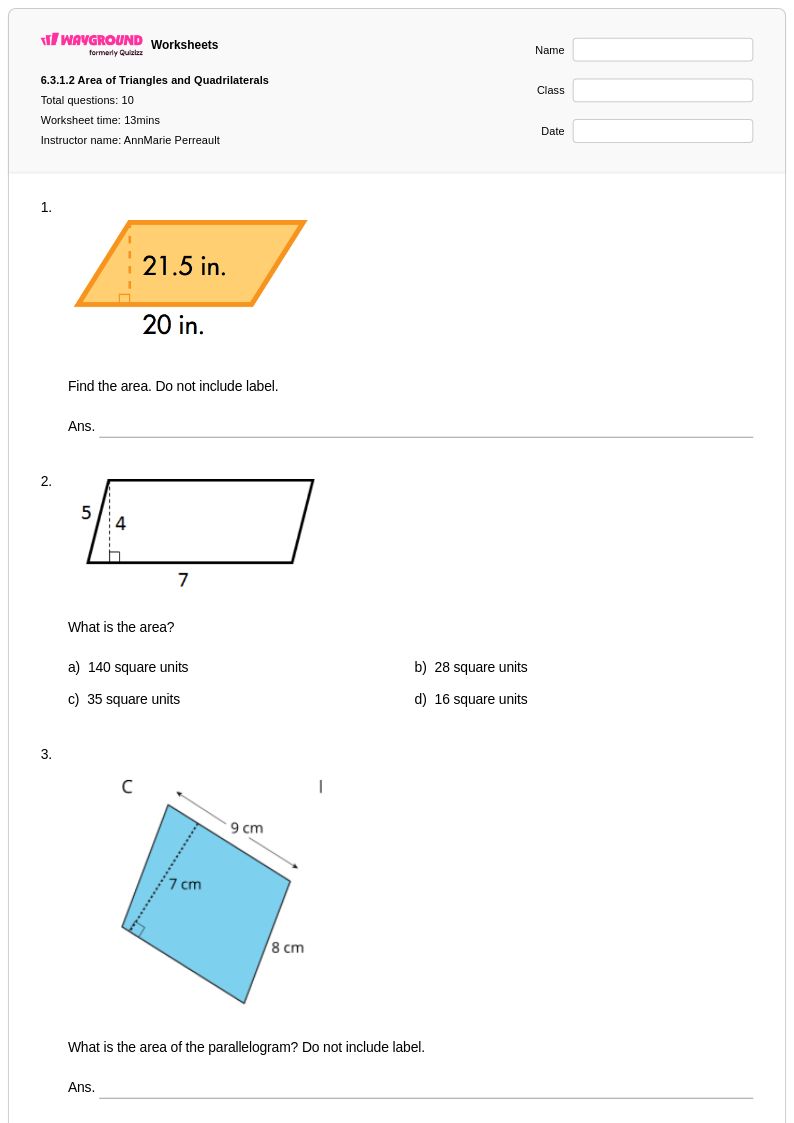
10 Q
6th
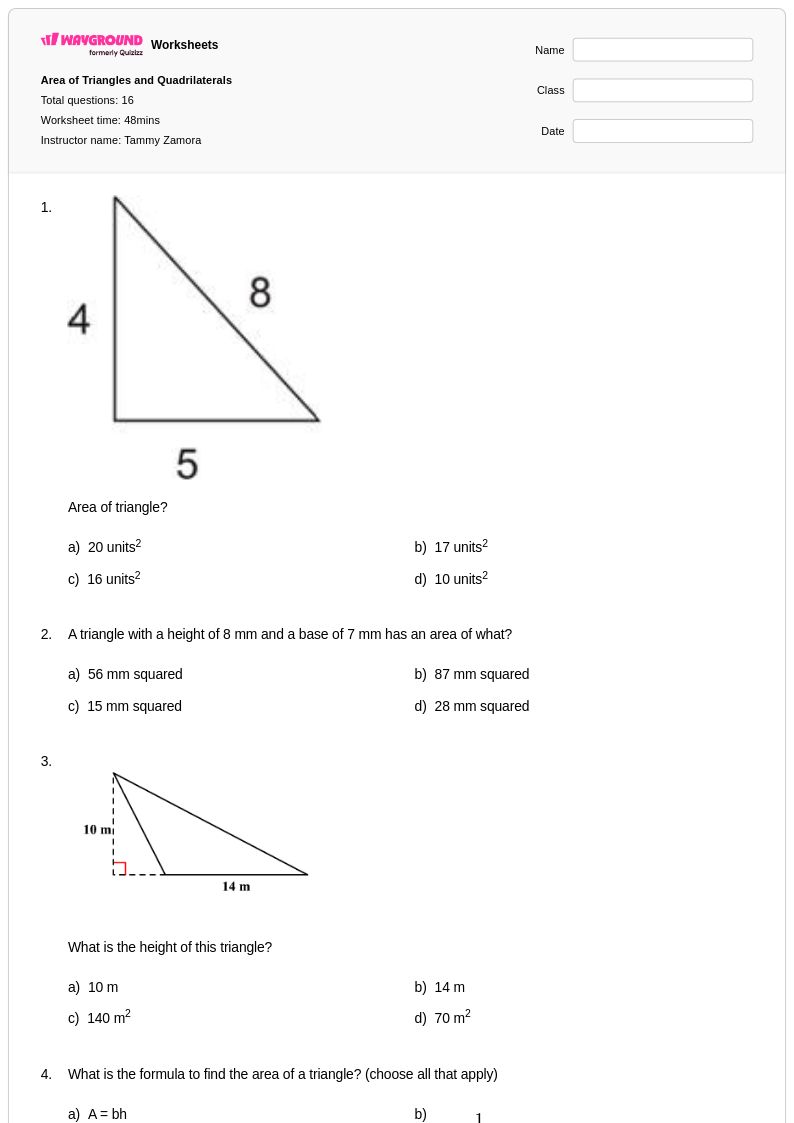
16 Q
6th
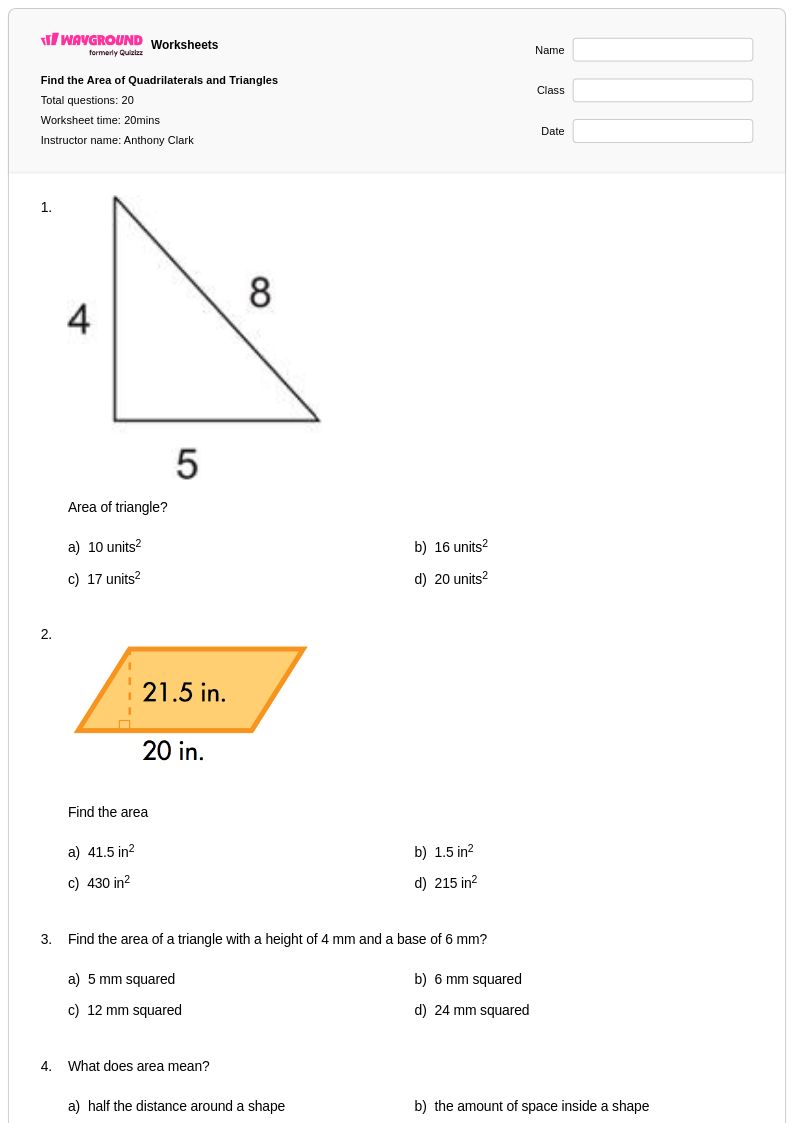
20 Q
6th - Uni
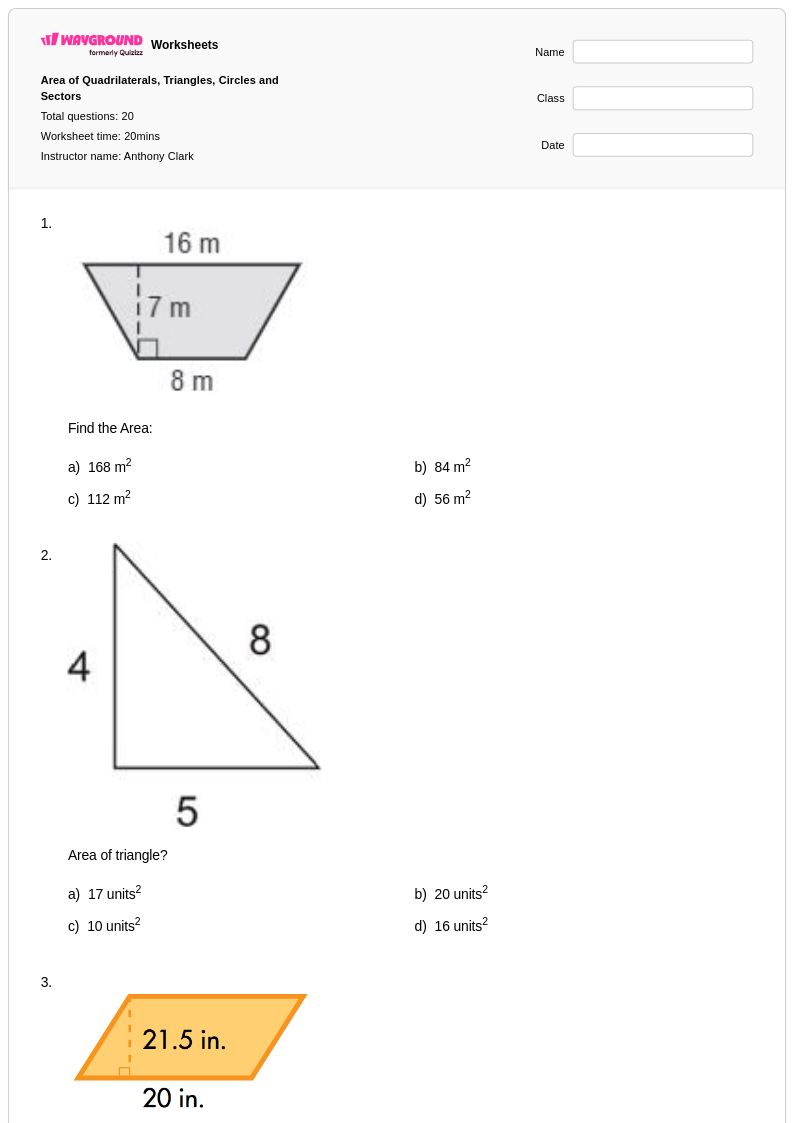
20 Q
6th - Uni
10 Q
6th - Uni
18 Q
6th
20 Q
6th
20 Q
6th
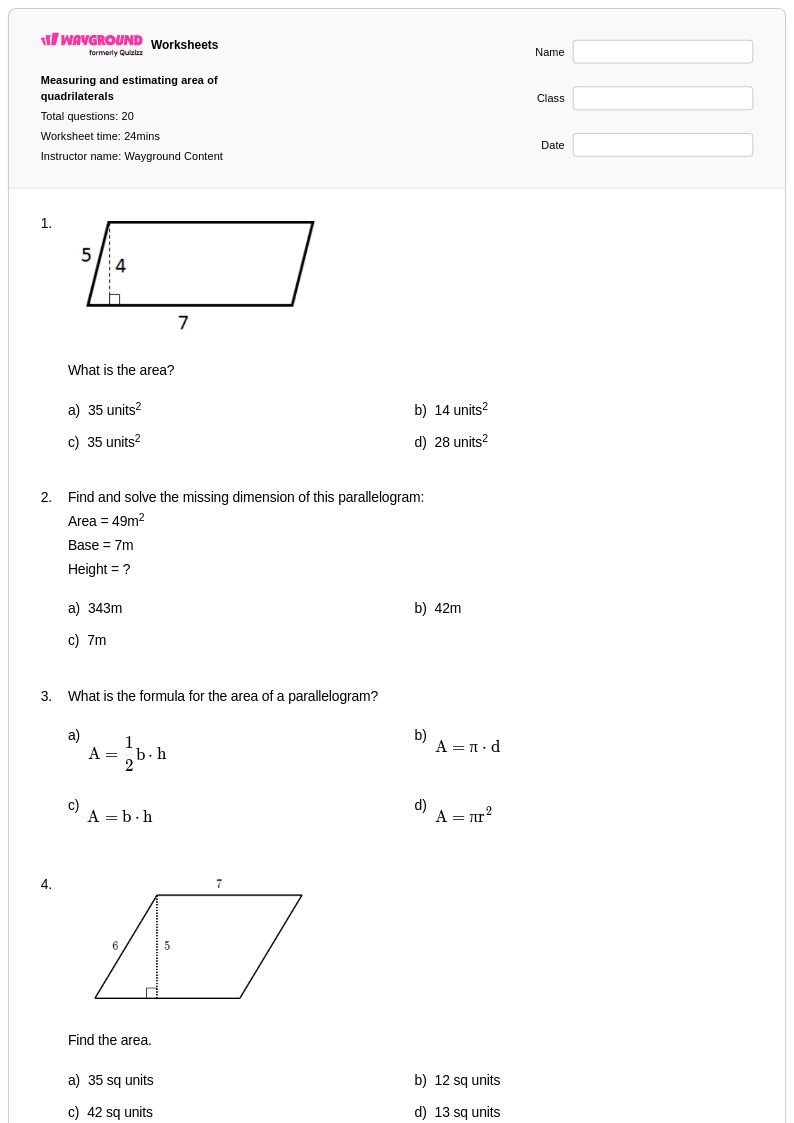
20 Q
6th
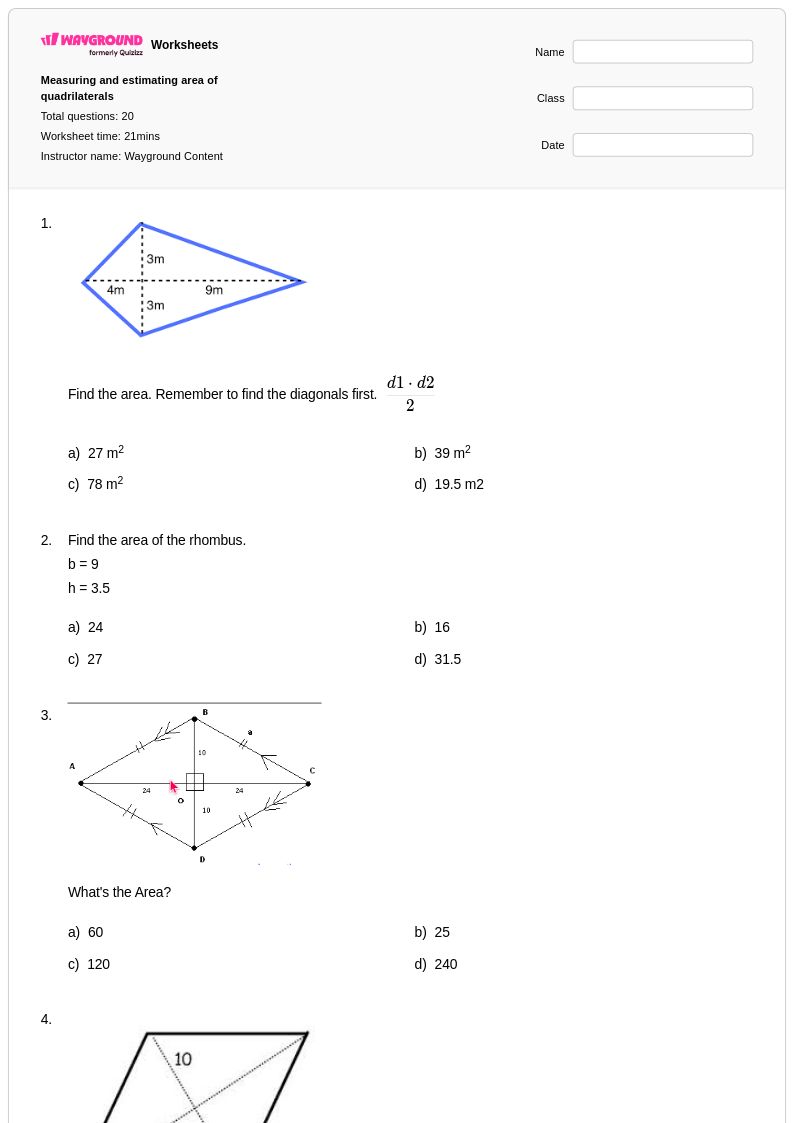
20 Q
6th
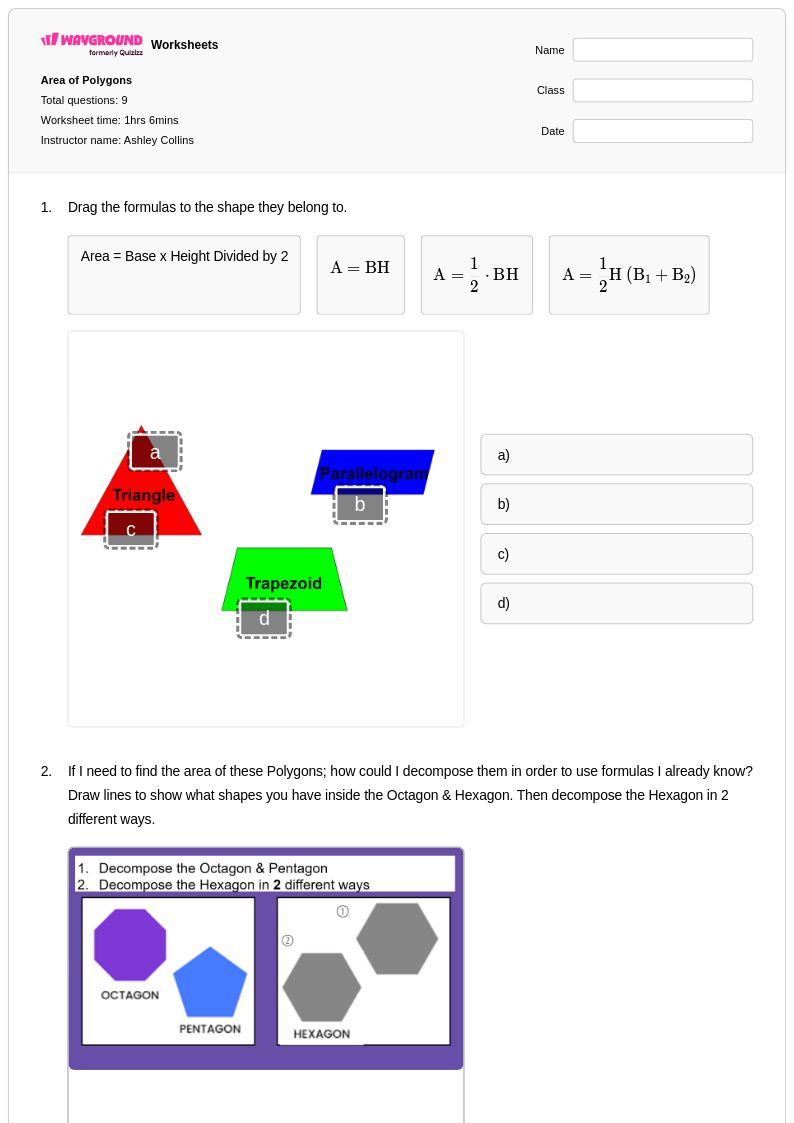
16 Q
6th
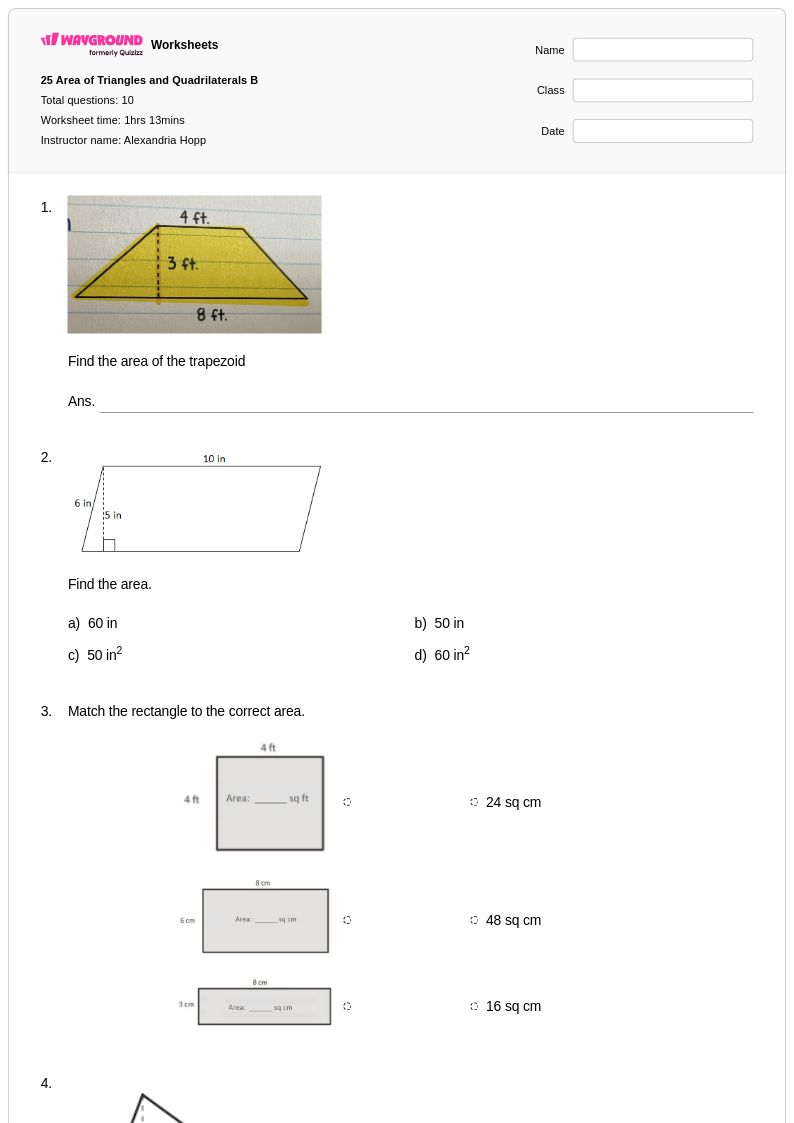
10 Q
6th
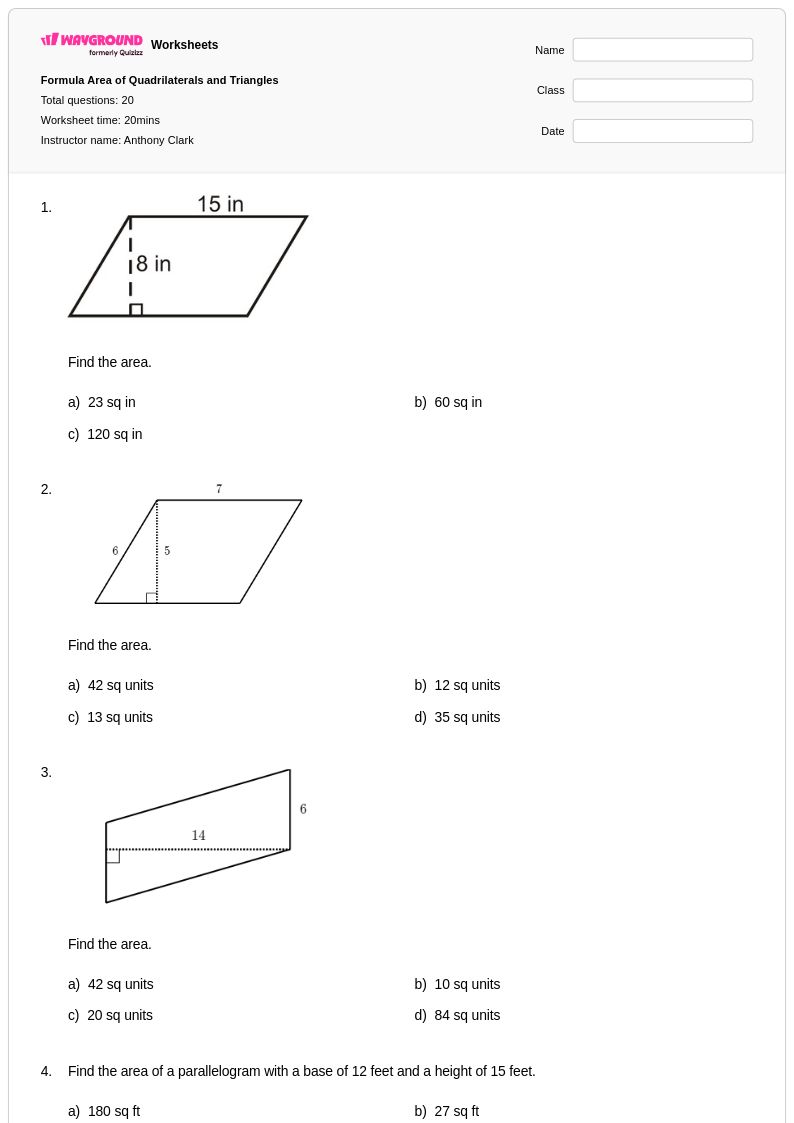
20 Q
6th - Uni
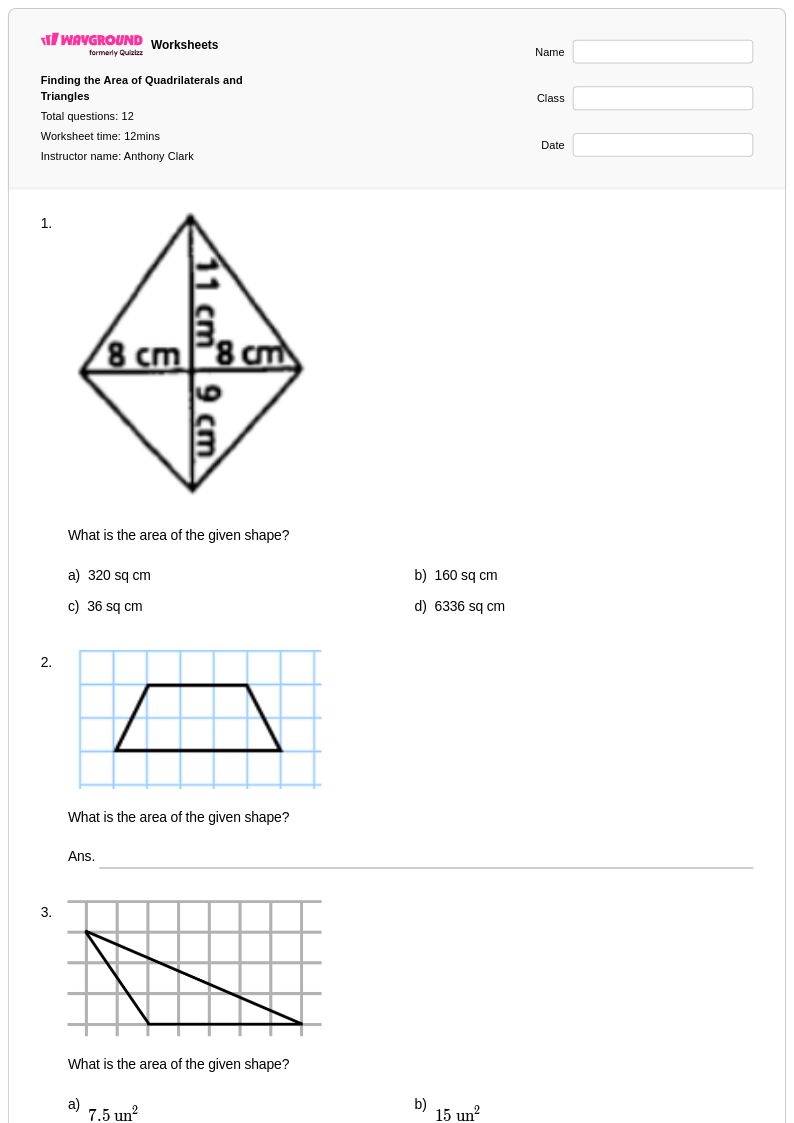
12 Q
6th - Uni
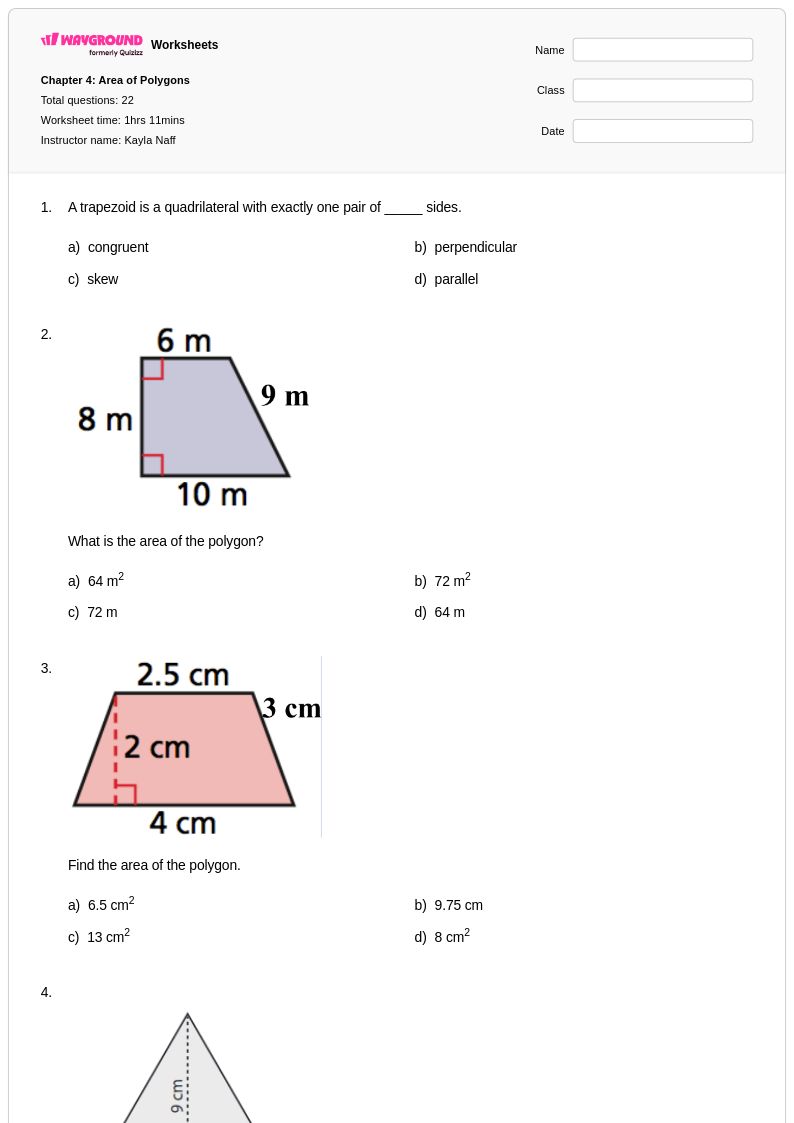
22 Q
6th
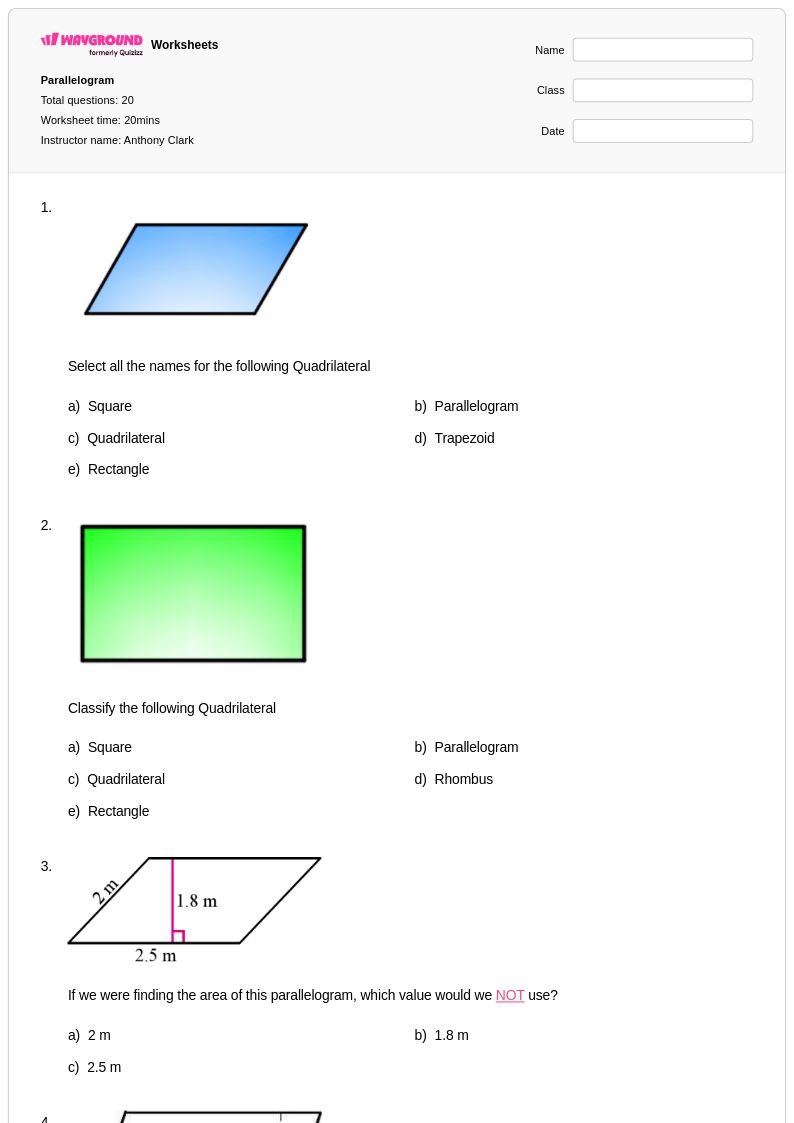
20 Q
6th - Uni
Explore Other Subject Worksheets for year 6
Explore printable Area of Quadrilaterals worksheets for Year 6
Area of quadrilaterals worksheets for Year 6 students available through Wayground (formerly Quizizz) provide comprehensive practice with calculating the area of parallelograms, rectangles, squares, rhombuses, and trapezoids. These carefully designed practice problems strengthen students' understanding of geometric formulas while developing their ability to identify the appropriate measurements needed for each quadrilateral type. The worksheets systematically guide students through the application of base times height for parallelograms, length times width for rectangles, and the trapezoid formula involving parallel sides and height. Each printable resource includes detailed answer keys that support independent learning and self-assessment, with free pdf formats ensuring easy classroom distribution and home practice opportunities.
Wayground (formerly Quizizz) empowers teachers with an extensive collection of millions of teacher-created area of quadrilaterals resources that streamline lesson planning and differentiated instruction. The platform's robust search and filtering capabilities allow educators to quickly locate worksheets aligned with specific mathematical standards and tailored to varying skill levels within their Year 6 classrooms. Teachers can customize existing materials or create new practice sets that address individual student needs, whether for remediation of foundational concepts or enrichment of advanced problem-solving skills. The flexible availability of both printable and digital formats, including downloadable pdfs, enables seamless integration into diverse learning environments while supporting targeted skill practice that builds geometric reasoning and computational fluency.
FAQs
What is the best way to teach area of quadrilaterals in Grade 6?
What practice problems build fluency with quadrilateral area formulas?
What common misconceptions appear in Grade 6 quadrilateral area work?
How do I use these Grade 6 area worksheets in class?
How does area of quadrilaterals align with the Grade 6 Common Core progression?
How can I differentiate quadrilateral area practice in a Grade 6 class?
Is area of parallelograms and trapezoids a Grade 6 skill?