Free Printable Finding Quadrant of an Angle Worksheets for Year 6
Master finding quadrant of an angle with Wayground's Year 6 geometry worksheets, featuring comprehensive practice problems, printable PDFs, and detailed answer keys to strengthen students' coordinate plane skills.
Explore printable Finding Quadrant of an Angle worksheets for Year 6
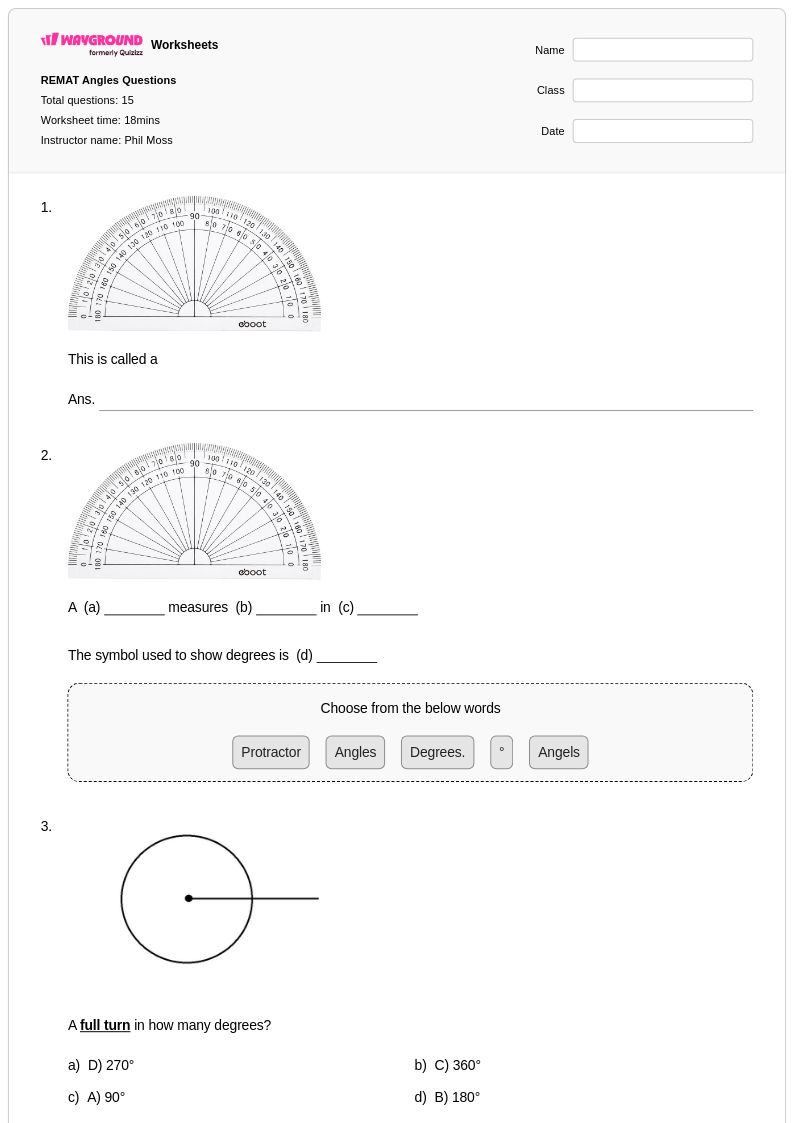
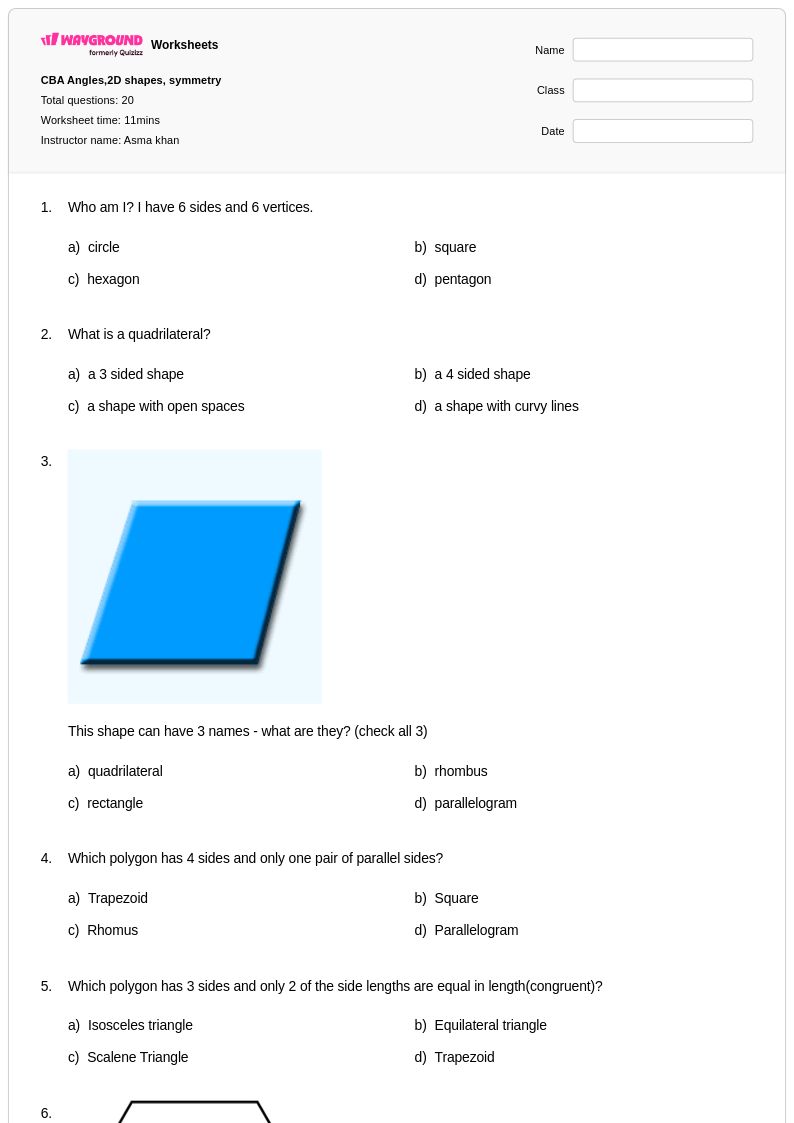
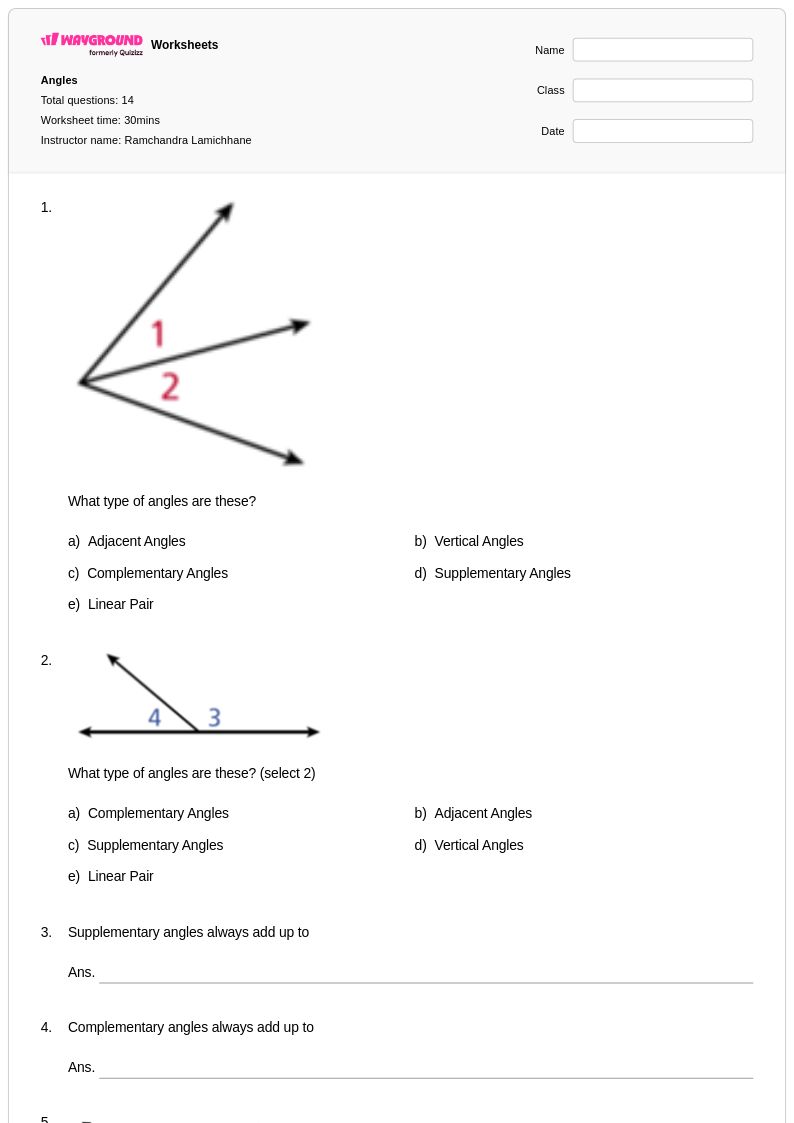
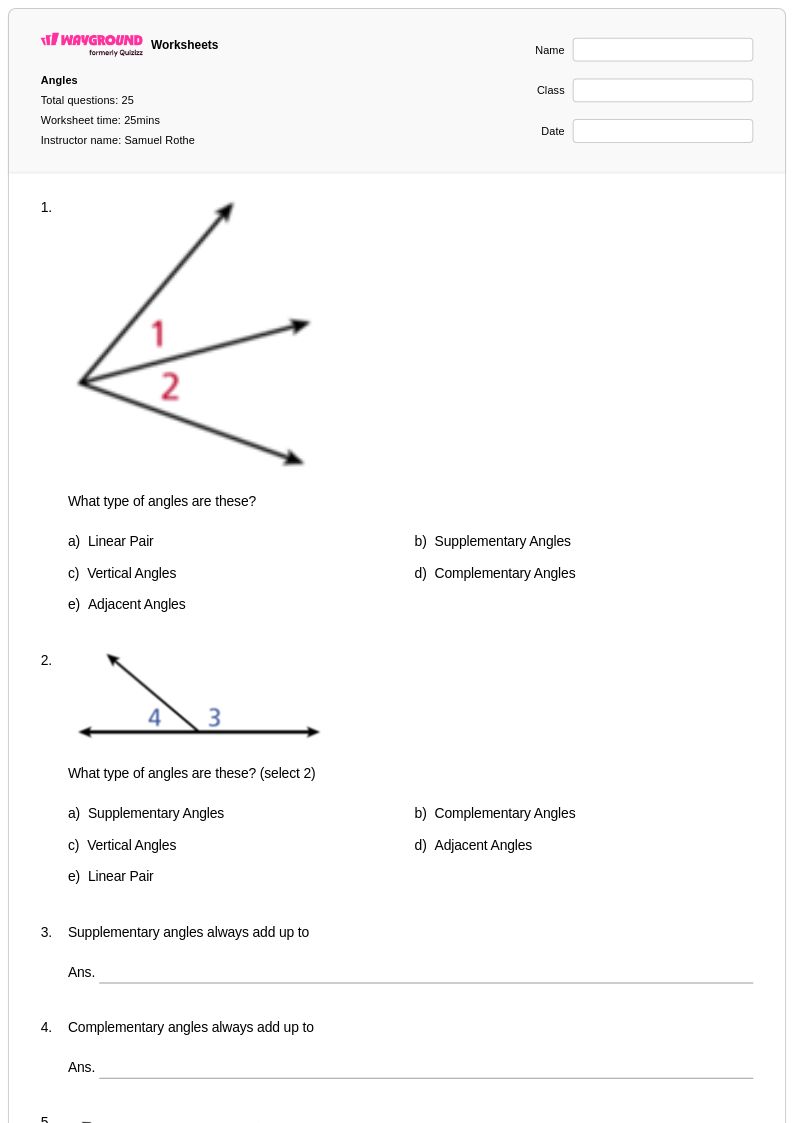
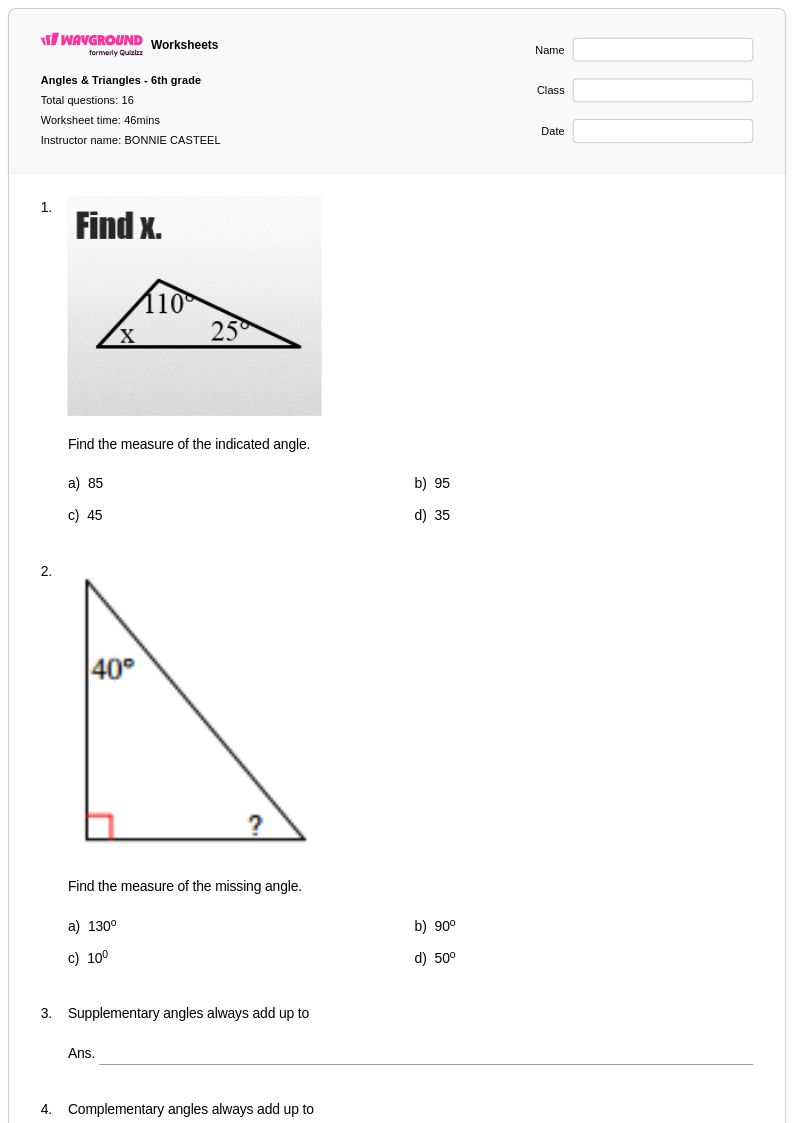
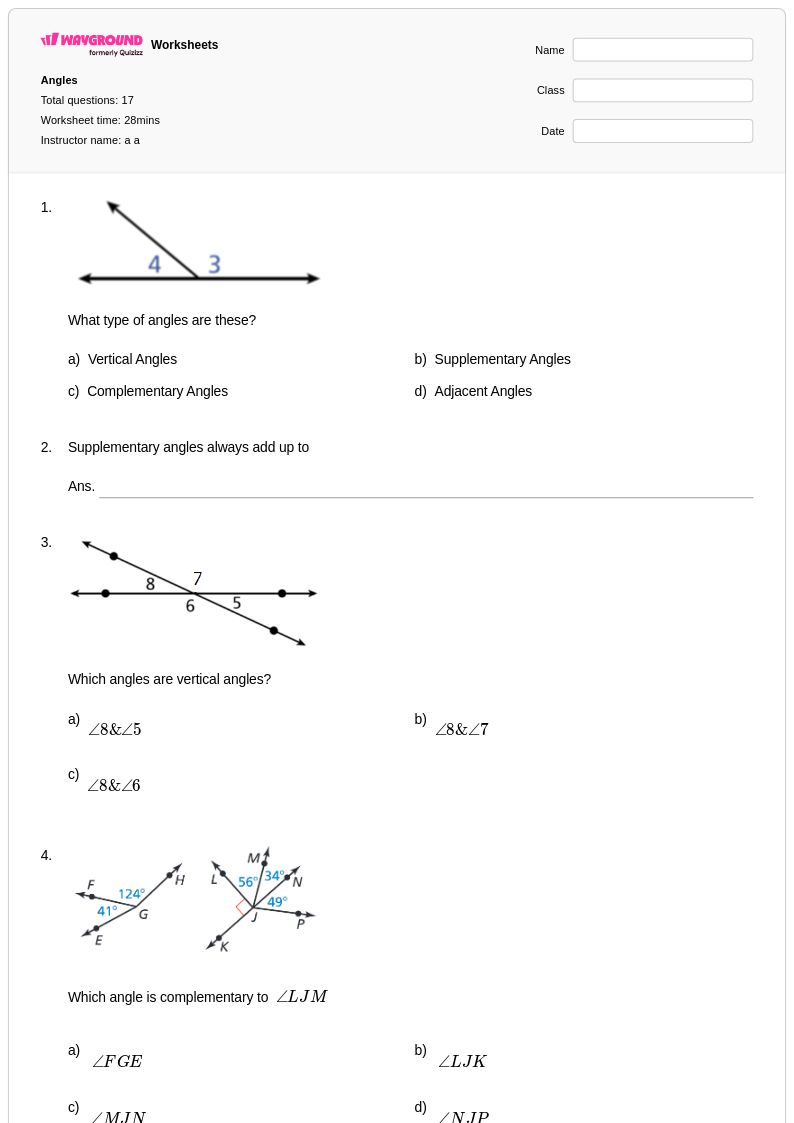
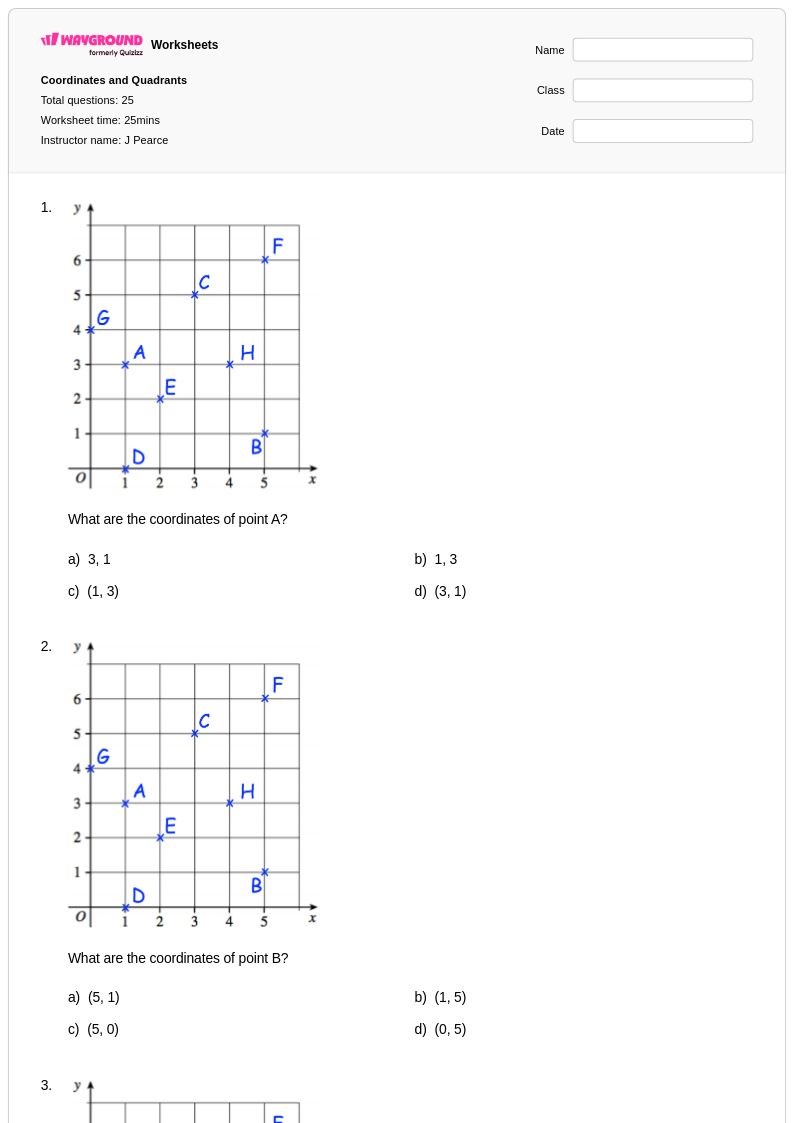
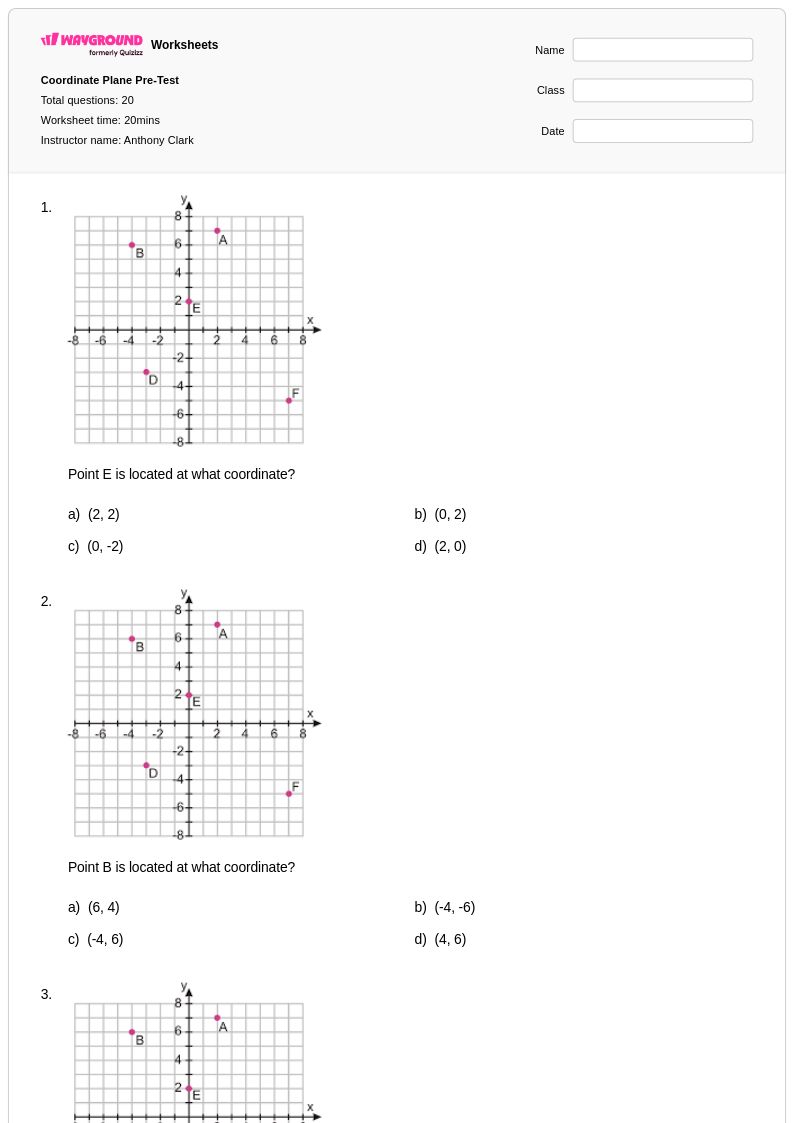
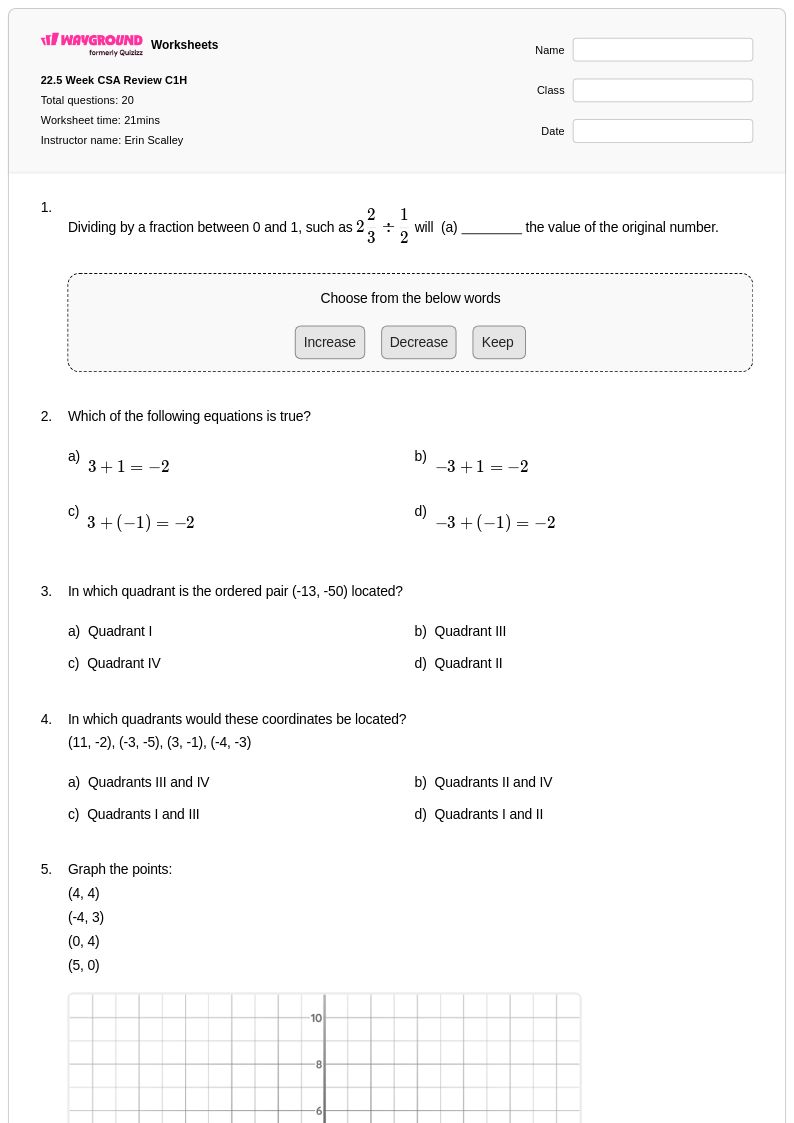
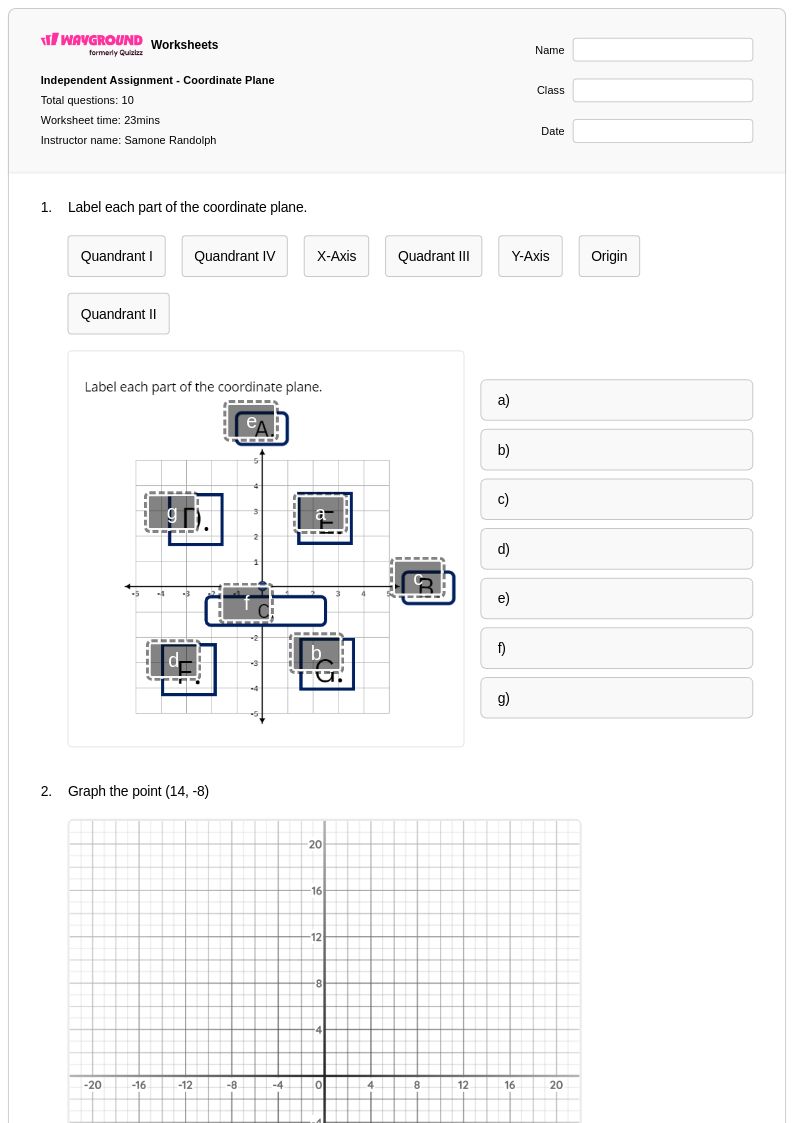
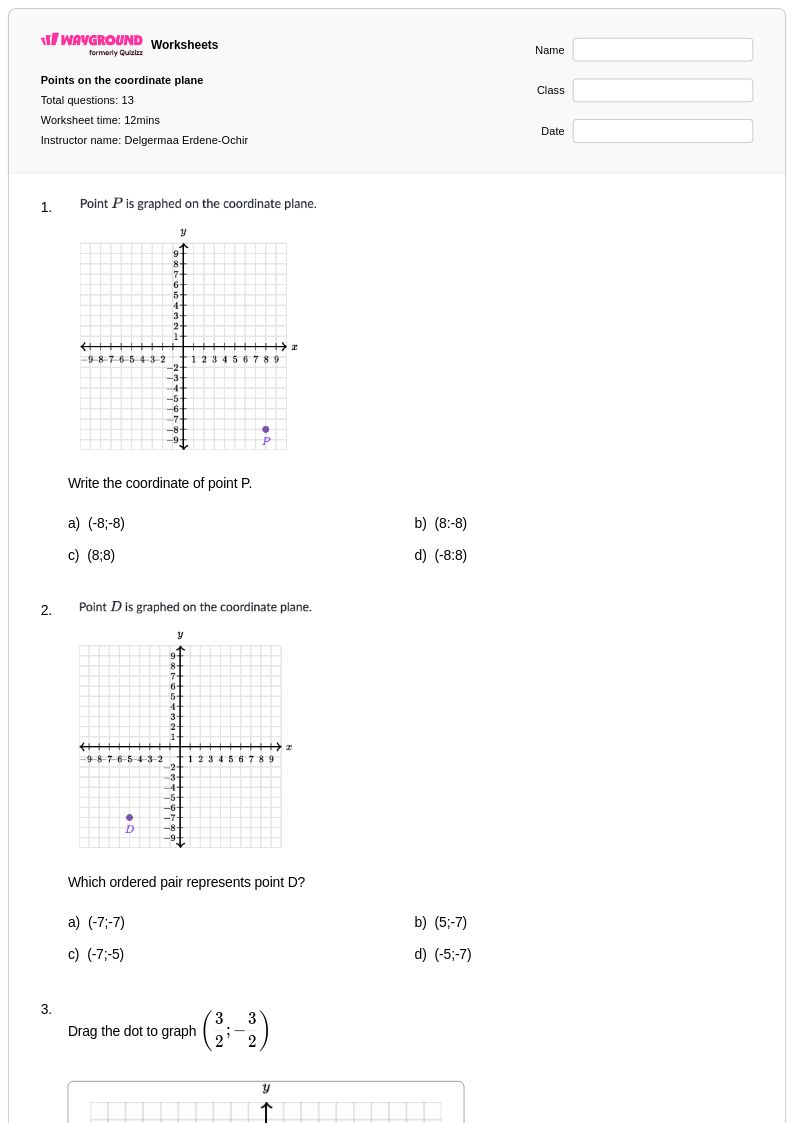
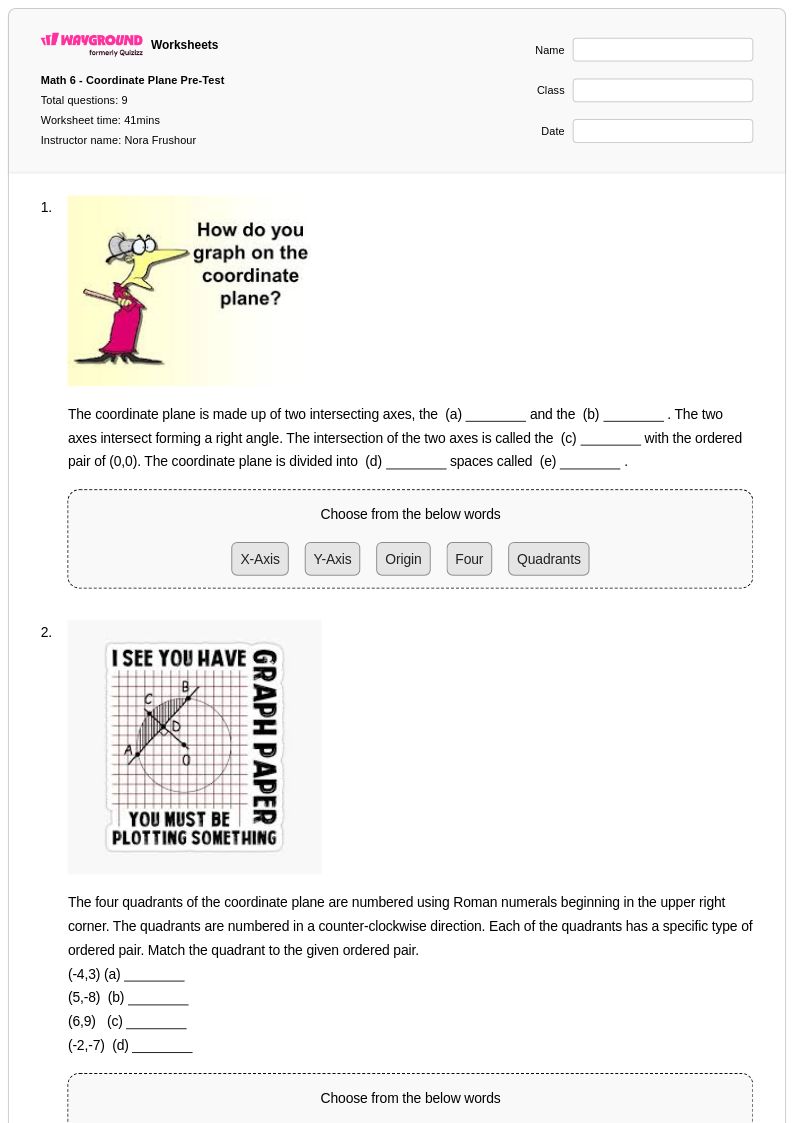
Finding quadrant of an angle worksheets available through Wayground (formerly Quizizz) provide Year 6 students with essential practice in coordinate plane geometry and angular measurement concepts. These comprehensive worksheets strengthen students' ability to identify which quadrant contains the terminal side of an angle when plotted in standard position, reinforcing their understanding of the coordinate system's four regions and positive versus negative angle rotations. Each worksheet collection includes detailed answer keys that help students verify their work and understand common misconceptions, while the free printable format ensures accessible practice both in classroom settings and at home. The practice problems progress systematically from basic quadrant identification to more complex scenarios involving coterminal angles and reflex angles, building mathematical confidence through repetitive skill application.
Wayground (formerly Quizizz) empowers educators with millions of teacher-created resources specifically designed for geometry instruction, featuring robust search and filtering capabilities that allow quick location of quadrant identification materials aligned with Year 6 mathematical standards. Teachers can easily differentiate instruction by selecting from various difficulty levels within the worksheet collections, customizing problems to match individual student needs for remediation or enrichment purposes. The platform's flexible format options include both printable pdf versions for traditional paper-based practice and digital formats for interactive learning experiences, supporting diverse classroom environments and teaching preferences. These comprehensive tools streamline lesson planning by providing ready-to-use materials that reinforce coordinate plane concepts while offering the adaptability necessary for effective skill practice across different learning styles and academic abilities.
FAQs
What grade level is finding the quadrant of an angle?
Quadrant identification in the coordinate plane begins in Grade 5–6, when students first learn to plot points in all four quadrants. At Grade 6, the focus is on understanding the coordinate system and recognizing which quadrant a point or angle falls in based on the signs of its coordinates. Work with angles in standard position, negative angles, and radians comes later, typically in Grade 8 through high school precalculus.
How do I introduce finding the quadrant of an angle to Grade 6 students?
At Grade 6, anchor the lesson in what students already know: plotting points. Have them label the four quadrants and identify the sign pattern for x and y in each one (both positive in QI, x negative in QII, and so on). Then shift from points to angles — show that an angle in standard position has its terminal side landing in one of those same regions. Keep early problems to positive angles between 0° and 360° before introducing negative rotations or coterminal angles.
What practice problems are appropriate for Grade 6 students learning angle quadrants?
Start with angles that land clearly inside a quadrant — 45°, 120°, 200°, 310° — before introducing boundary cases like 90° or 180° that fall on an axis. These worksheets progress from basic quadrant identification to slightly more complex scenarios involving reflex angles, which is the right sequence for sixth graders building this skill for the first time. Hold off on coterminal angles and radian measure until students are confident with degree-based problems.
What misconceptions do Grade 6 students have about the coordinate plane and quadrants?
The most common one: students assume all angles are in Quadrant I because they've mostly worked with positive numbers. They need explicit instruction that the coordinate plane has four regions and that angle measure determines which one the terminal side enters. A second frequent error is confusing the quadrant number with the angle measure — students sometimes think "Quadrant II" means the angle is between 90° and 180° without understanding why that's true geometrically.
How do I use these Grade 6 worksheets in my class?
These worksheets are available as printable PDFs — a good fit for Grade 6 classrooms that use paper-based practice to keep students focused during math time. Every worksheet includes a complete answer key, so students can check their own work after finishing. If you want to assign it digitally, you can host the same worksheet as an online quiz through Wayground and review results before the next lesson.
Is finding the quadrant of an angle aligned to Common Core standards for Grade 6?
Yes. Common Core's Grade 6 geometry work centers on the full coordinate plane — students are expected to draw polygons, find distances, and reason about the signs of coordinates in all four quadrants. Identifying which quadrant an angle's terminal side falls in is a direct application of that coordinate plane understanding. It also sets up the signed-number reasoning students will need in Grade 7 and the angle-in-standard-position work that appears in high school geometry and precalculus.