Free Printable Finding Quadrant of an Angle Worksheets for Year 7
Year 7 students can master finding quadrant of an angle with Wayground's free printable geometry worksheets, featuring comprehensive practice problems and answer keys in convenient PDF format.
Explore printable Finding Quadrant of an Angle worksheets for Year 7
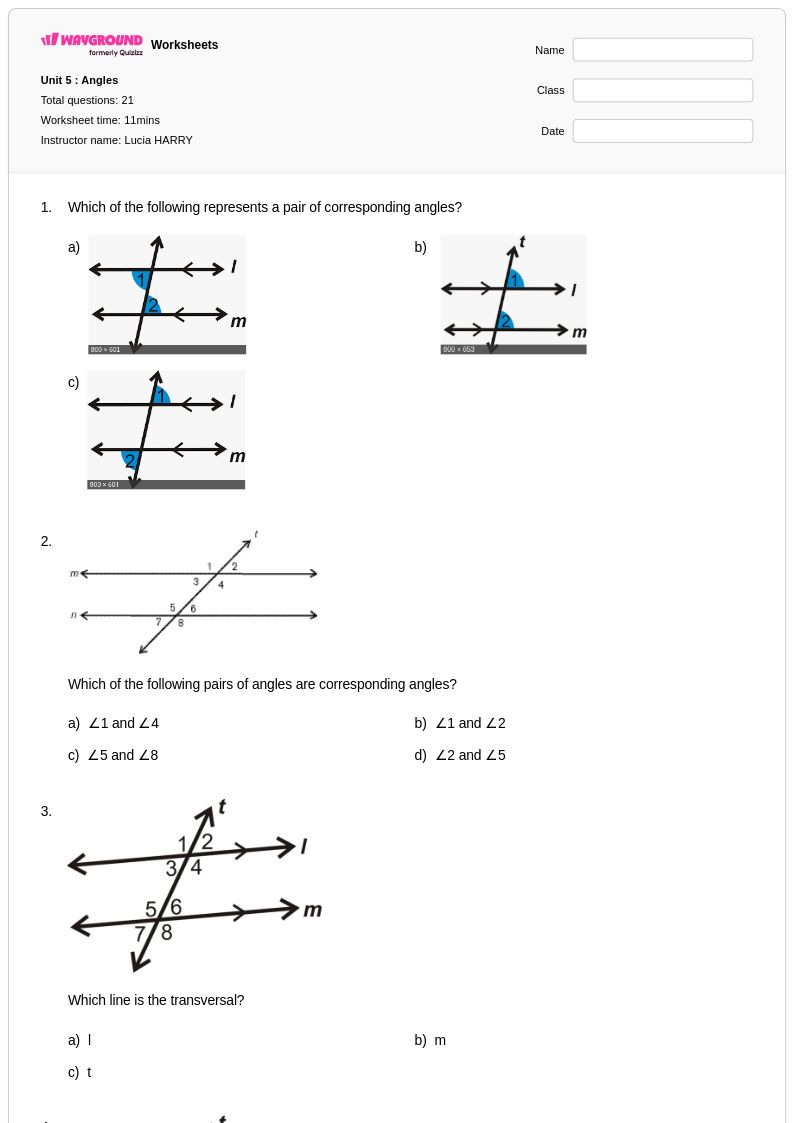
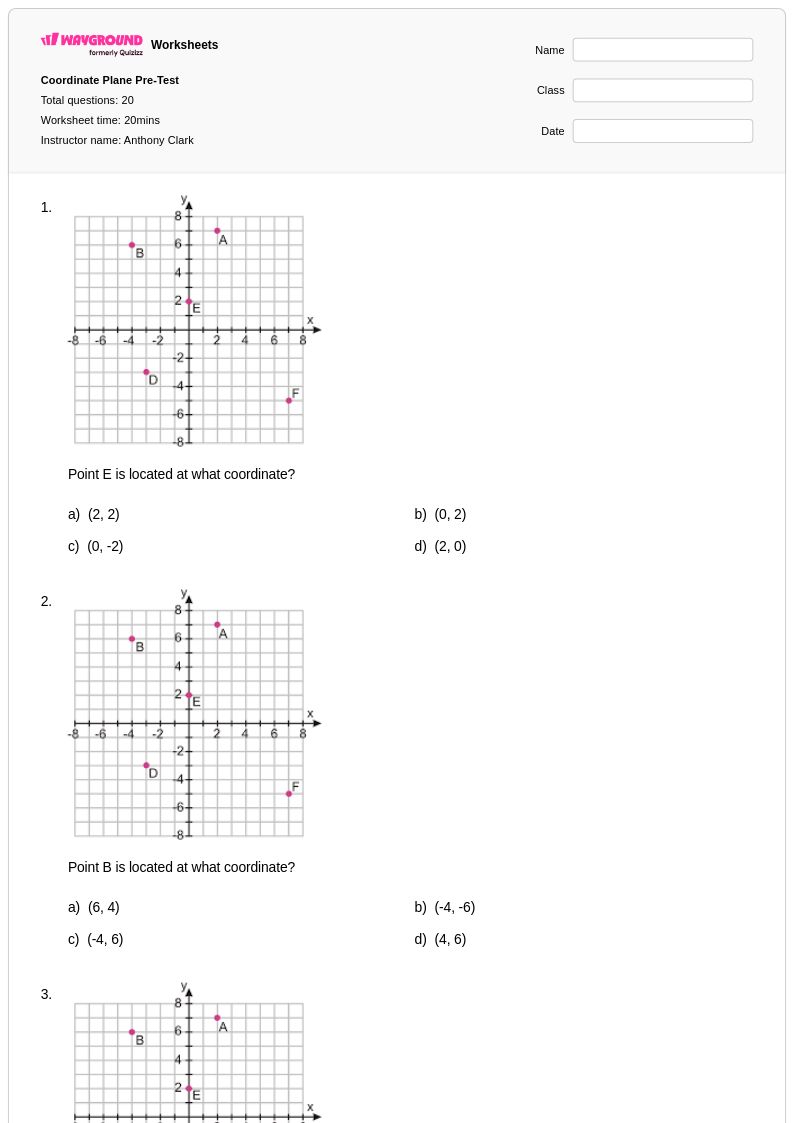
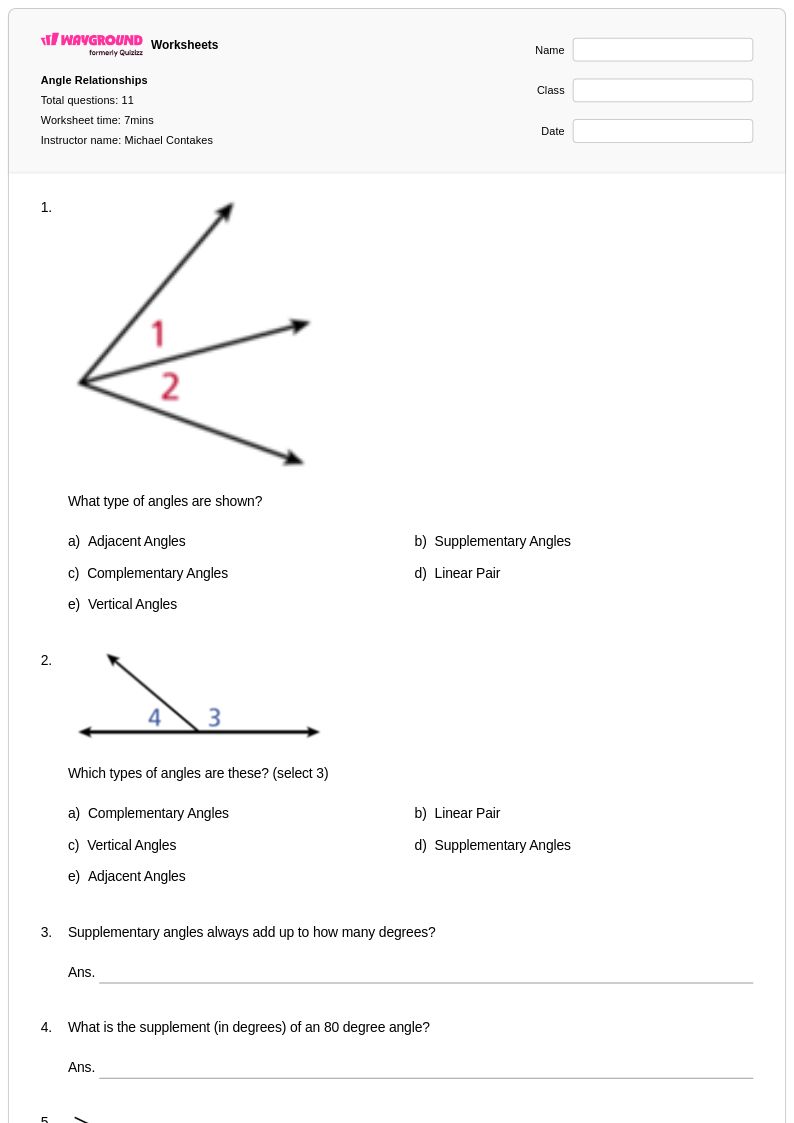
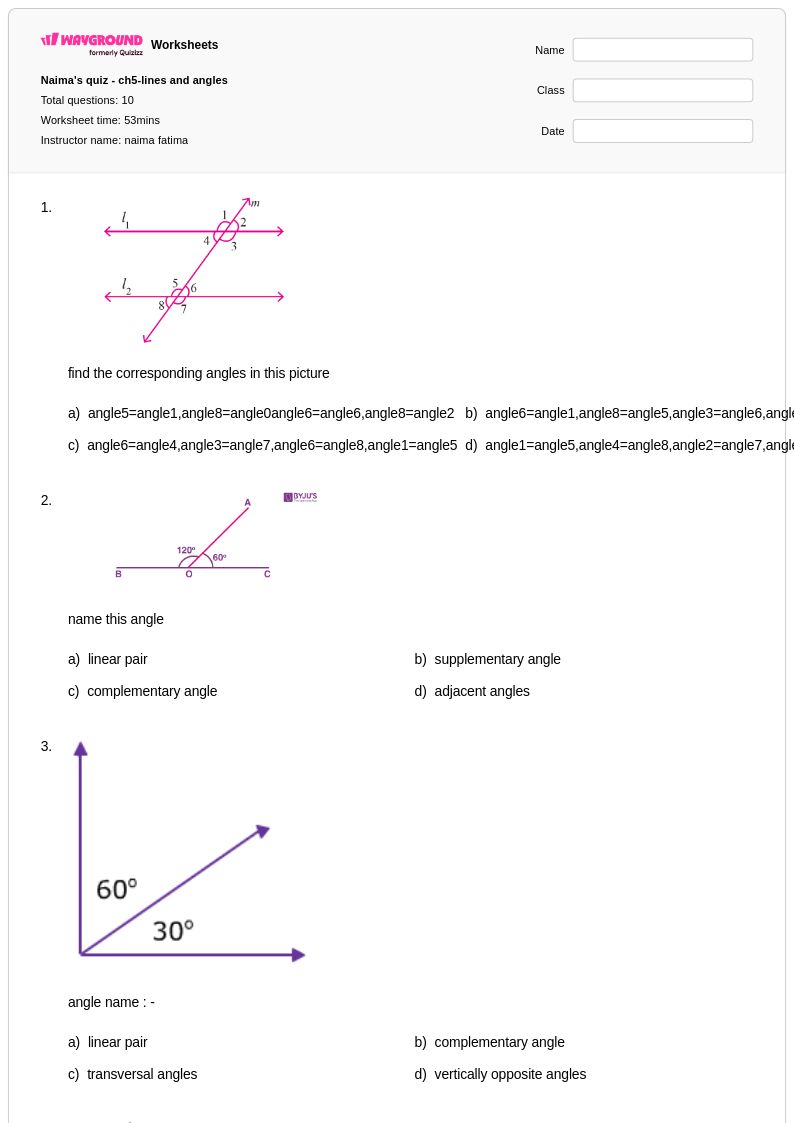
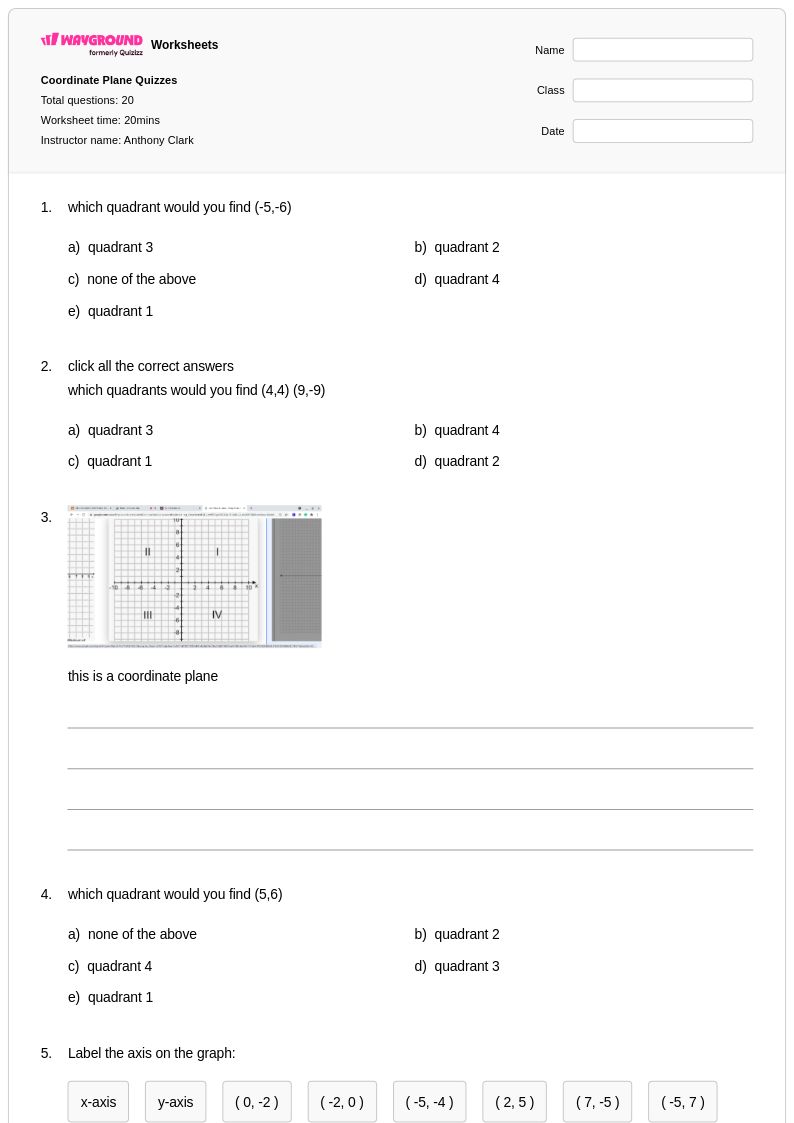
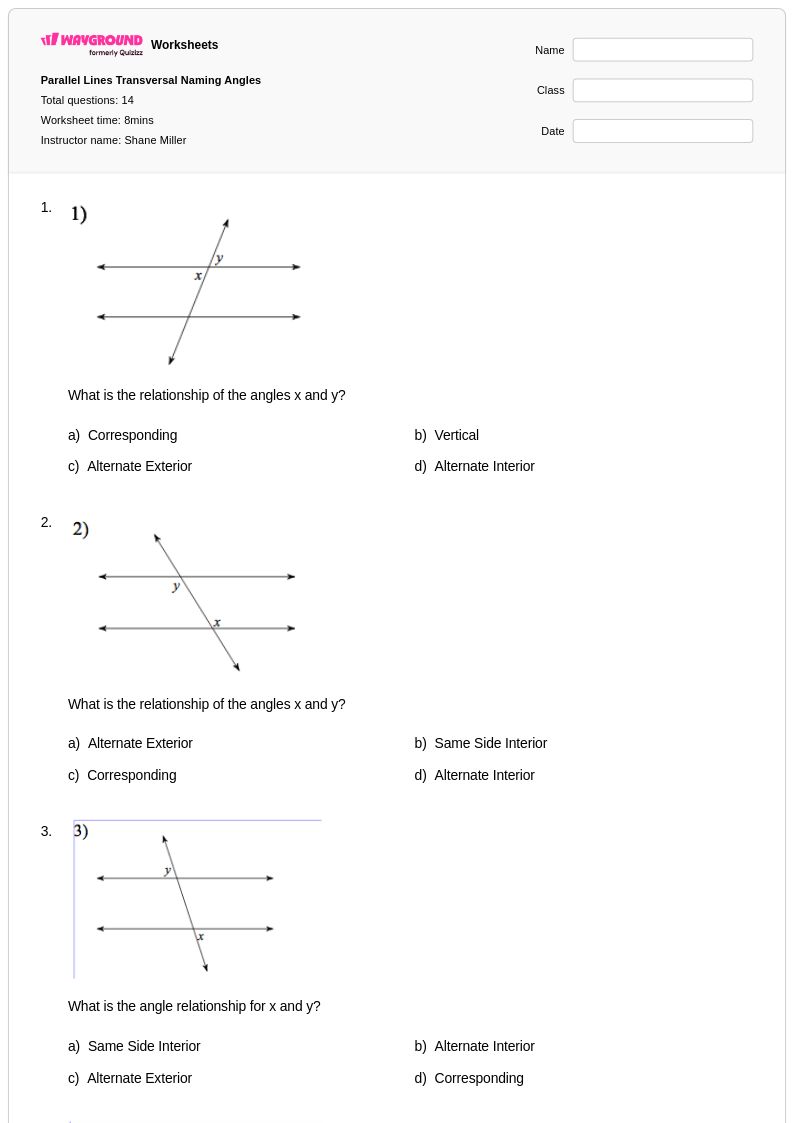
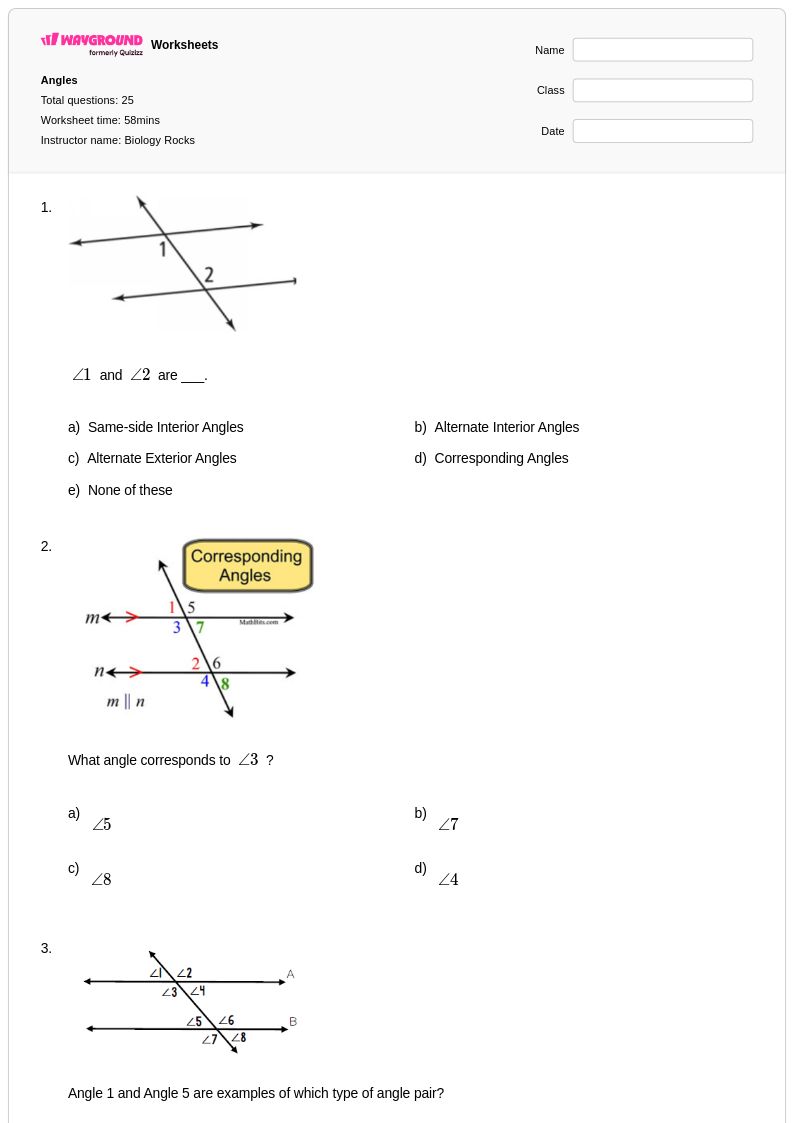
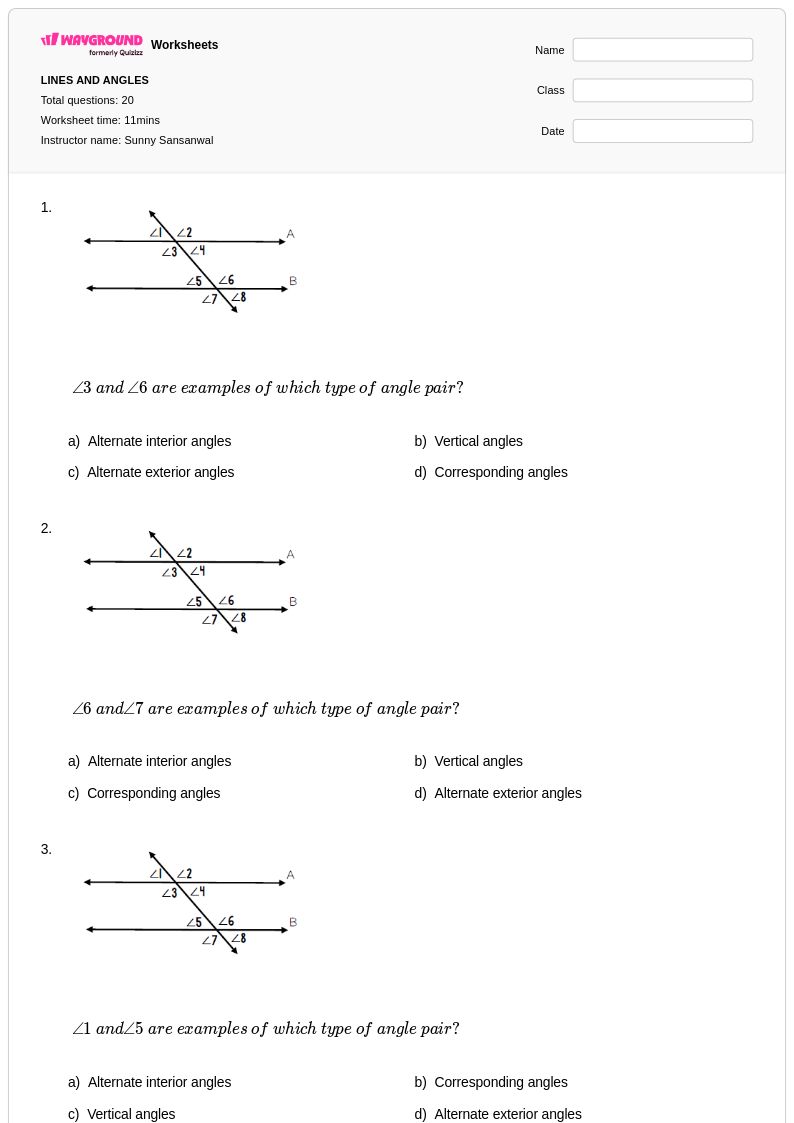
Finding quadrant of an angle worksheets for Year 7 mathematics provide essential practice for students developing their understanding of coordinate plane geometry and angle measurement. These comprehensive worksheets available through Wayground (formerly Quizizz) focus on helping seventh-grade students master the critical skill of determining which quadrant contains the terminal side of an angle in standard position. The practice problems systematically guide students through identifying positive and negative angle measurements, understanding degree and radian measures, and applying the coordinate system to locate angles accurately. Each worksheet collection includes detailed answer keys and is available as free printables in pdf format, enabling students to work through problems involving angles of various measures while building confidence in their geometric reasoning abilities.
Wayground (formerly Quizizz) empowers teachers with an extensive library of millions of teacher-created resources specifically designed for angle quadrant identification and broader coordinate geometry instruction. The platform's robust search and filtering capabilities allow educators to quickly locate worksheets that align with specific learning standards and match their students' skill levels, while built-in differentiation tools enable seamless customization for diverse learning needs. Teachers can access these materials in both printable pdf formats for traditional classroom use and digital formats for interactive learning experiences, making lesson planning more efficient and flexible. These comprehensive worksheet collections serve as valuable tools for initial skill instruction, targeted remediation for struggling learners, enrichment activities for advanced students, and ongoing practice to reinforce mastery of quadrant identification concepts throughout the academic year.
FAQs
How do I teach finding the quadrant of an angle to Grade 7 students?
Grade 7 students have already plotted points in all four quadrants, so connect the new concept to that prior knowledge: the quadrant an angle lands in depends on where its terminal side points, and that location follows the same sign rules they already know for coordinates. Introduce standard position explicitly — initial side on the positive x-axis, rotation counterclockwise for positive angles — and have students sketch several angles before moving to purely numerical identification. Once they can visualize the rotation, the quadrant determination becomes a reasoning step rather than a memorization task.
What practice problems work best for Grade 7 students identifying angle quadrants?
At Grade 7, the right progression is: positive angles 0°–360° first, then negative angles (clockwise rotation), then angles greater than 360° that require finding a coterminal angle. These worksheets follow that sequence, which prevents students from hitting the harder cases before the basic rotation model is solid. Degree measure is the priority at this level — radian practice can wait until students are comfortable with the degree-based version.
What errors do Grade 7 students make when identifying angle quadrants?
The two most persistent errors at this level: treating negative angles as if they rotate counterclockwise (they don't — negative means clockwise), and failing to reduce angles greater than 360° before placing them. A student who sees 400° and tries to place it directly will almost always get it wrong. Building the habit of subtracting 360° first — and checking whether the result is still greater than 360° — fixes the second error. For negative angles, a quick sketch almost always catches the first one.
How do I use these Grade 7 worksheets in my classroom?
You can assign them as a digital quiz on Wayground so students get immediate feedback, or print the PDFs for paper-based practice — both formats contain the same problems. Either way, the answer key is included, which makes these practical for independent work or homework. If you print them, the Wayground for Teachers app lets you scan student submissions to grade them without sorting through a stack of papers by hand.
How does quadrant identification fit into the Grade 7 math curriculum under Common Core?
Common Core's Grade 7 work with geometry and rational numbers reinforces students' understanding of signed values on a number line and in the coordinate plane — the conceptual foundation for quadrant identification. Knowing that a 150° angle lands in Quadrant II because its terminal side has a negative x-component and positive y-component is exactly the kind of signed-number reasoning Grade 7 builds toward. This skill then carries directly into Grade 8 transformations and high school work with angles in standard position and the unit circle.
Can I use these worksheets for students who are struggling with coordinate plane concepts?
Yes. For students who are still uncertain about the coordinate plane itself, Wayground's Read Aloud accommodation reads question text aloud, which helps students who get tripped up by vocabulary like "terminal side" or "standard position" while they're still learning the language. You can also generate a version of the worksheet with a larger font and wider spacing, giving students more room to sketch the angle before answering — that visual step is often what struggling learners need most.