
20 Q
7th
40 Q
6th - 8th
5 Q
7th
35 Q
7th - 8th
16 Q
7th
12 Q
7th
12 Q
7th
12 Q
7th
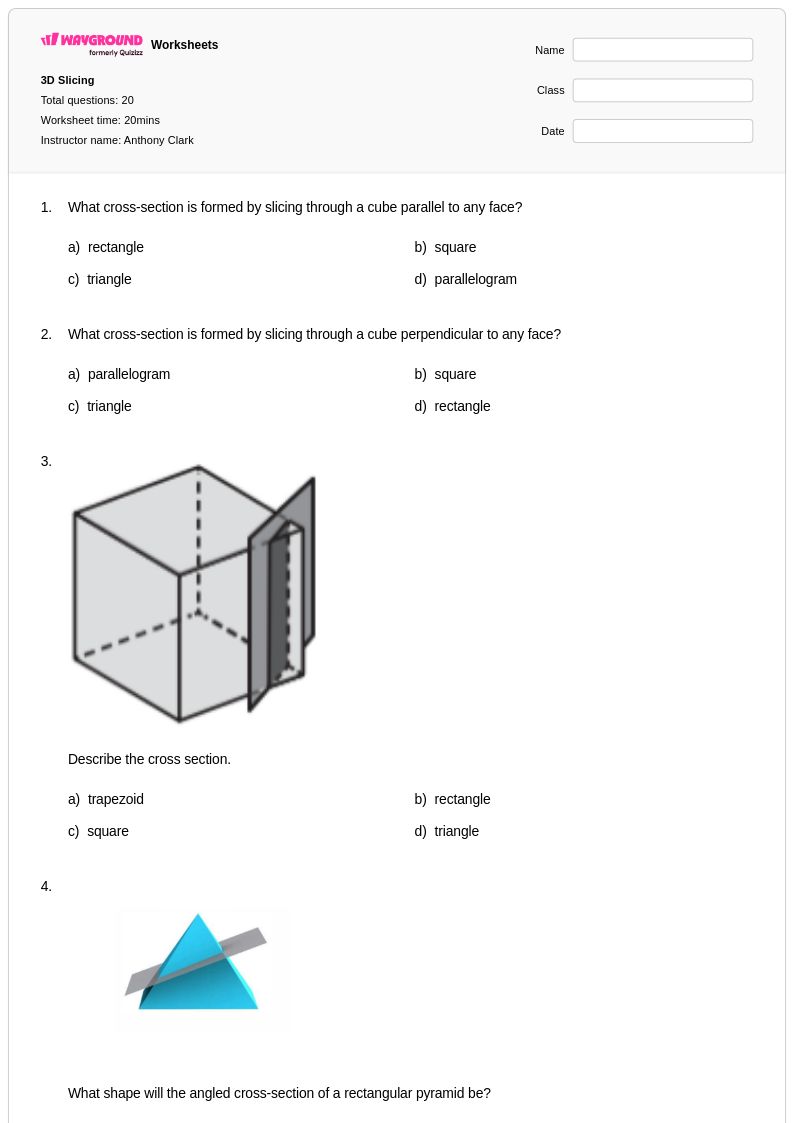
20 Q
7th - Uni
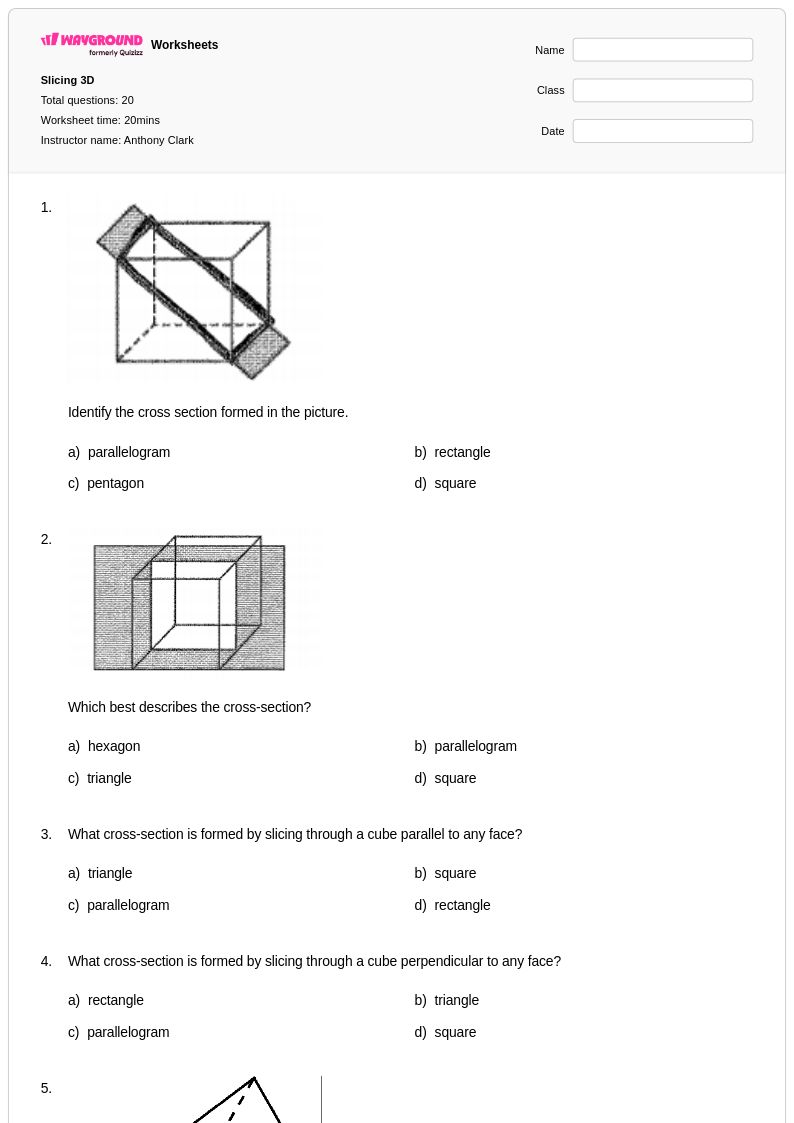
20 Q
7th - Uni
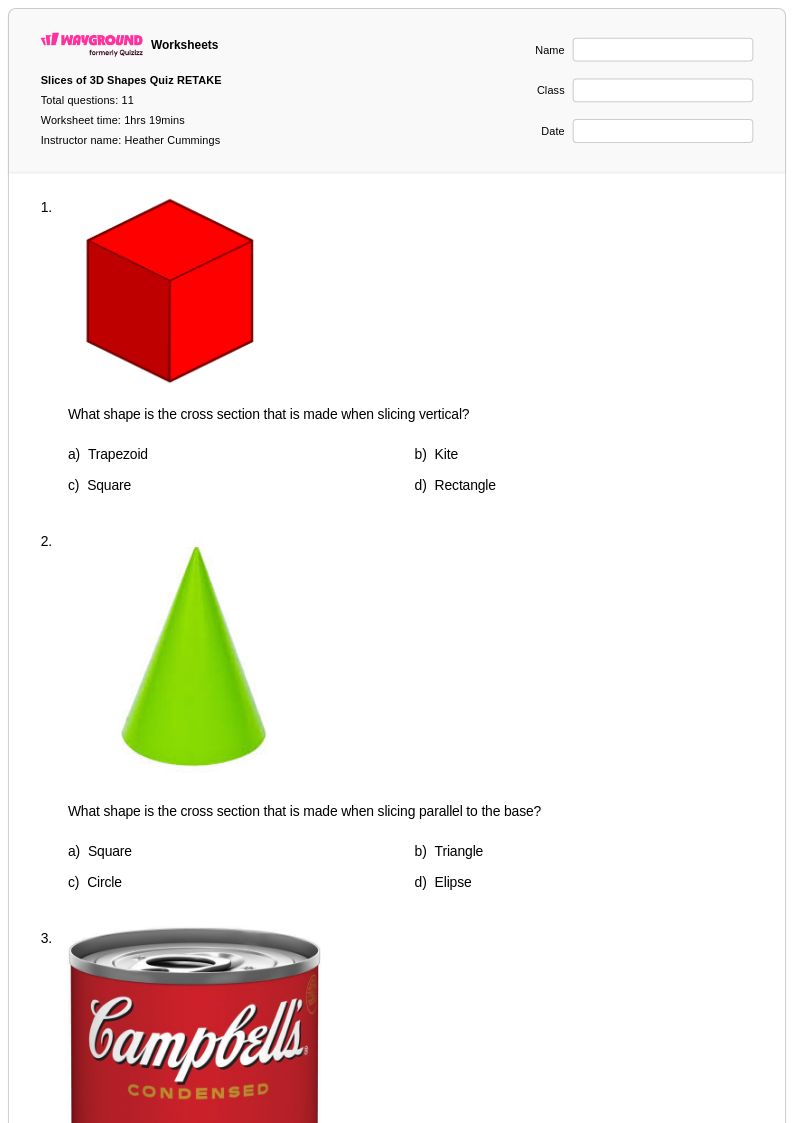
11 Q
7th
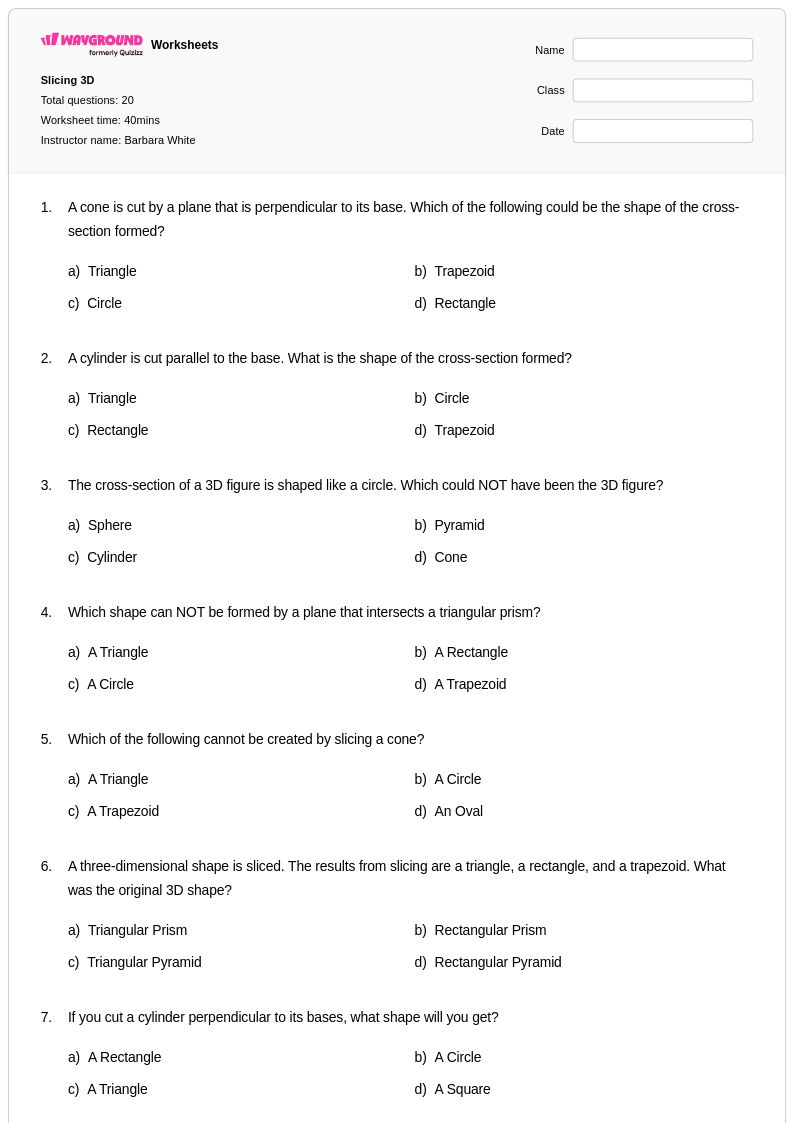
20 Q
7th
8 Q
7th
12 Q
7th
20 Q
7th - Uni
19 Q
6th - 7th
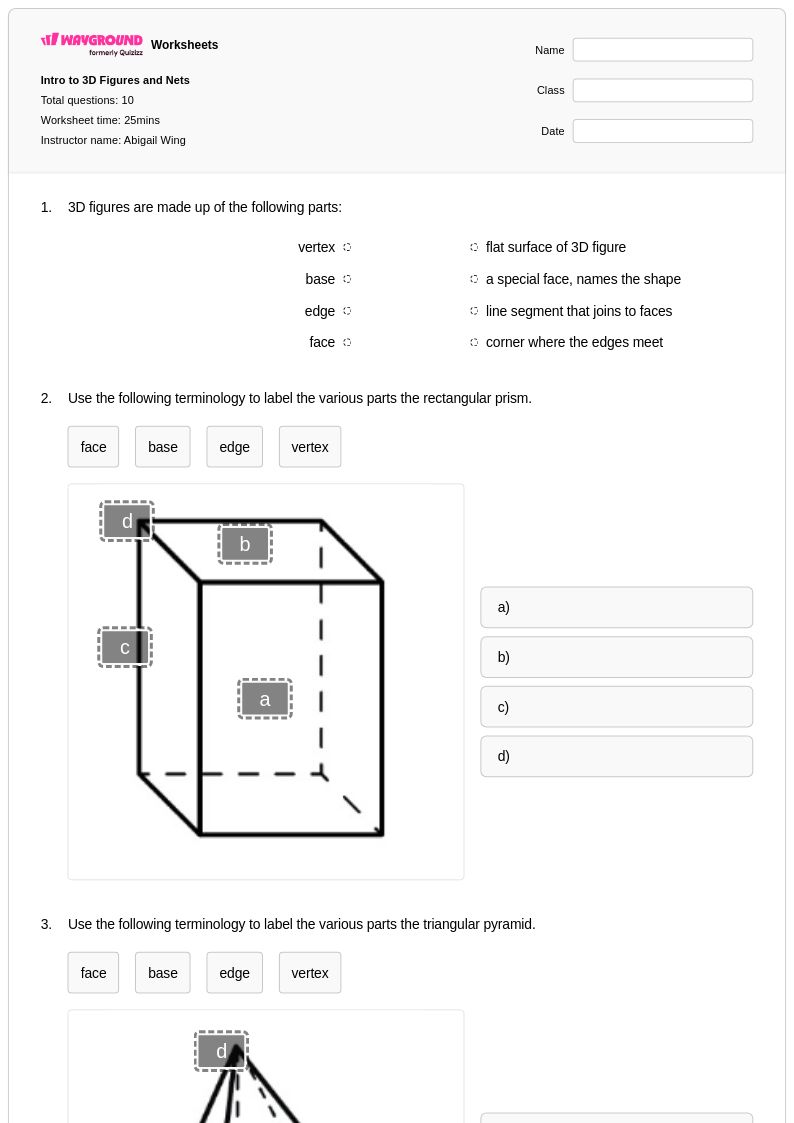
10 Q
7th
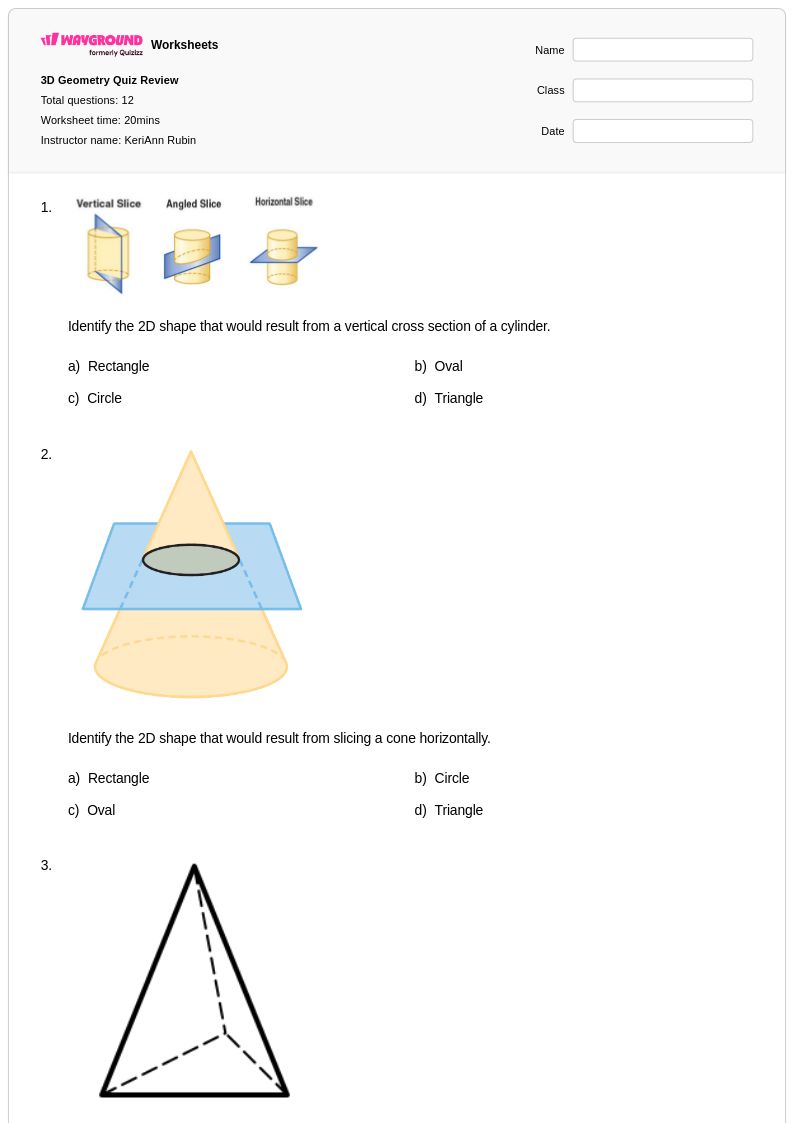
12 Q
7th
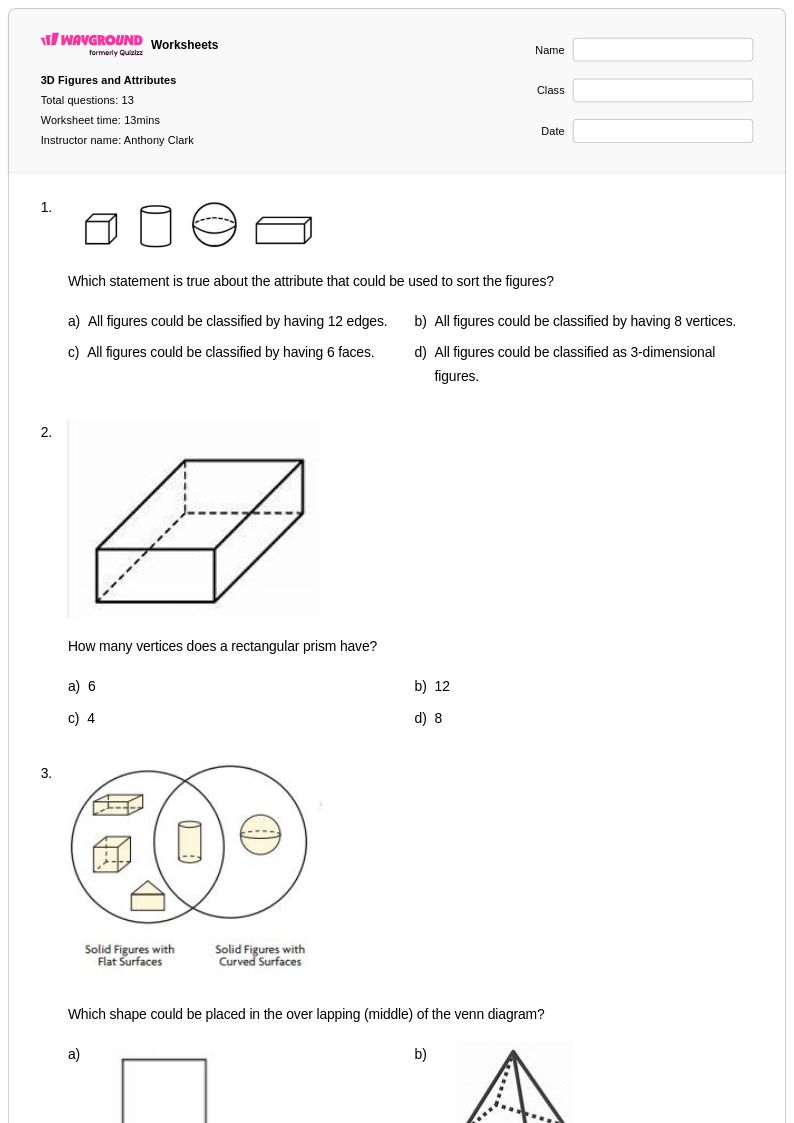
13 Q
3rd - Uni
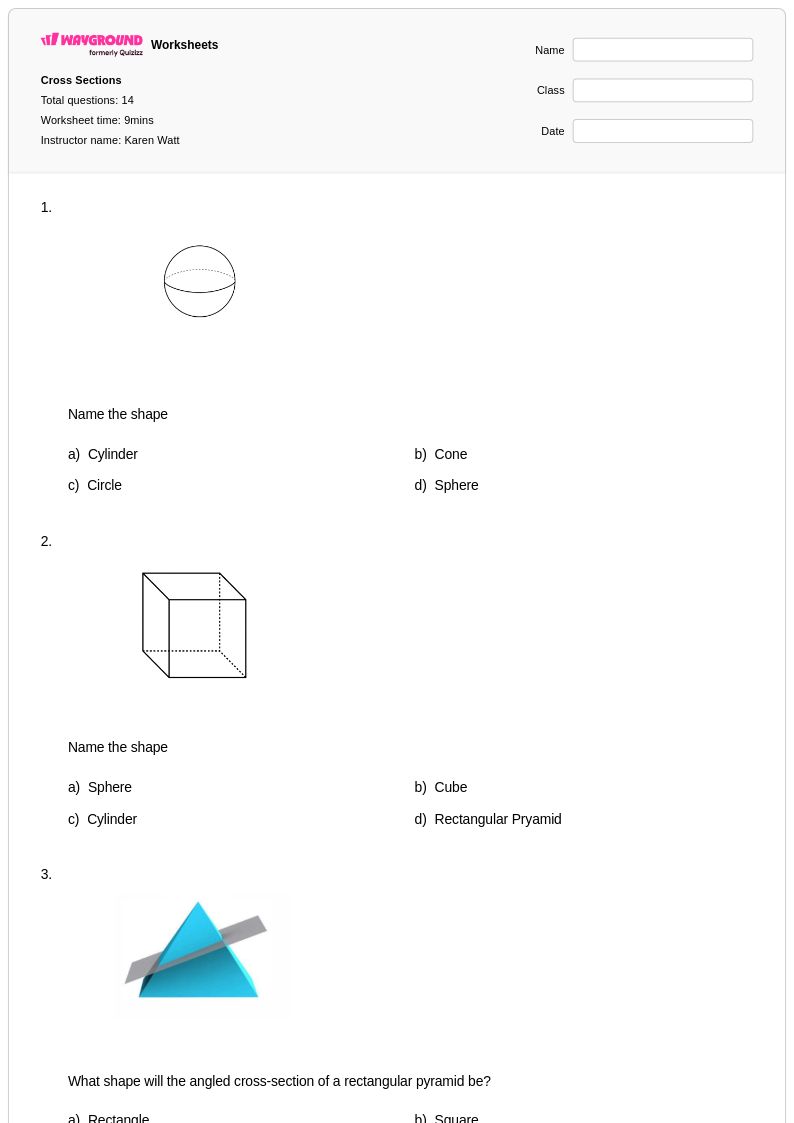
14 Q
7th
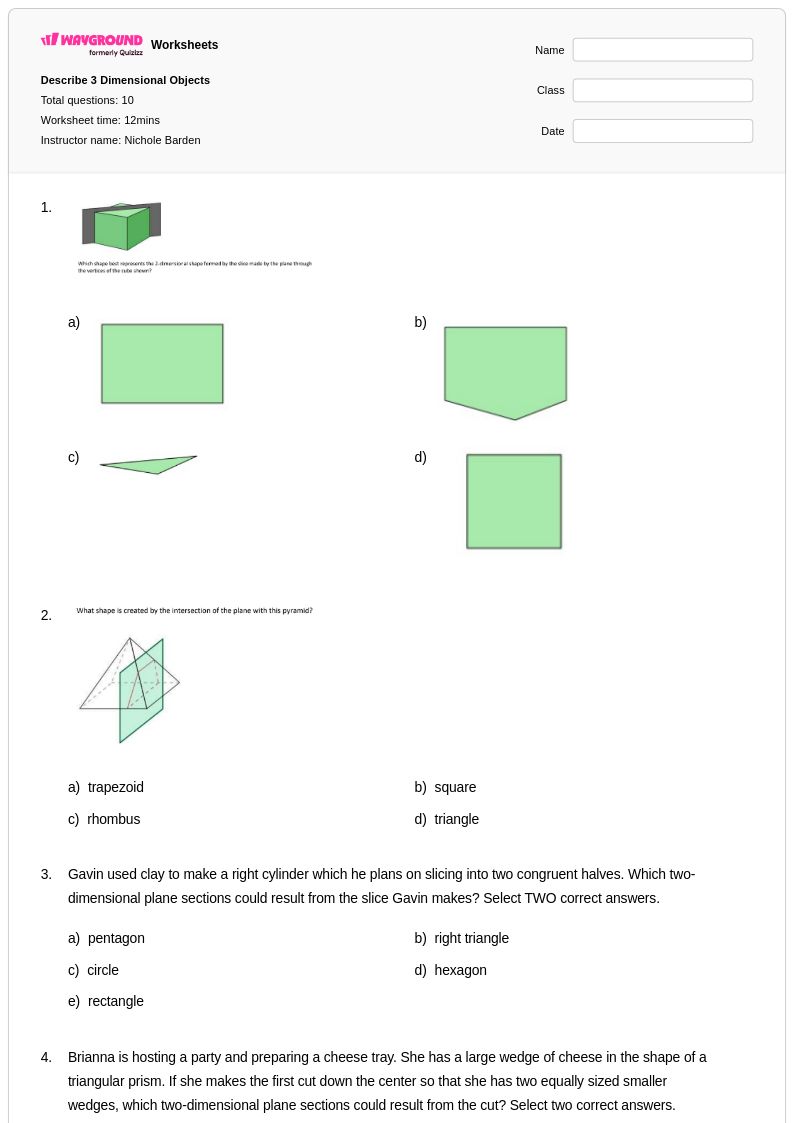
10 Q
6th - 8th
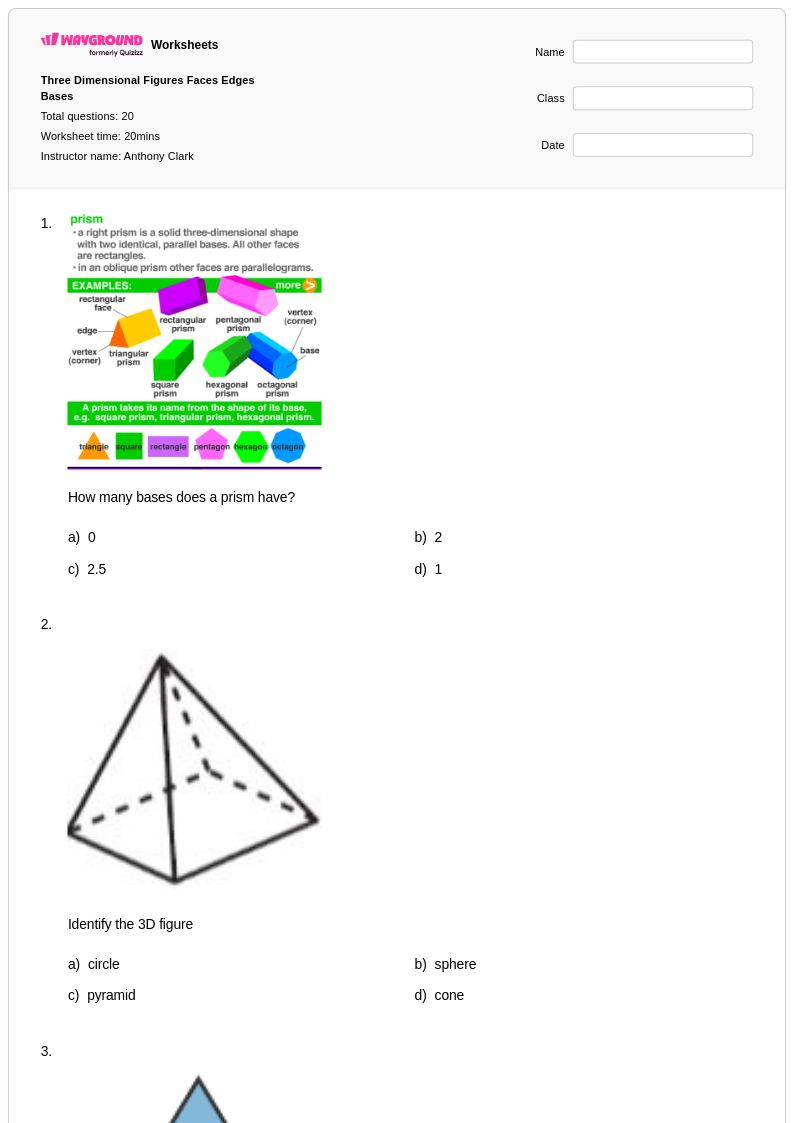
20 Q
5th - Uni
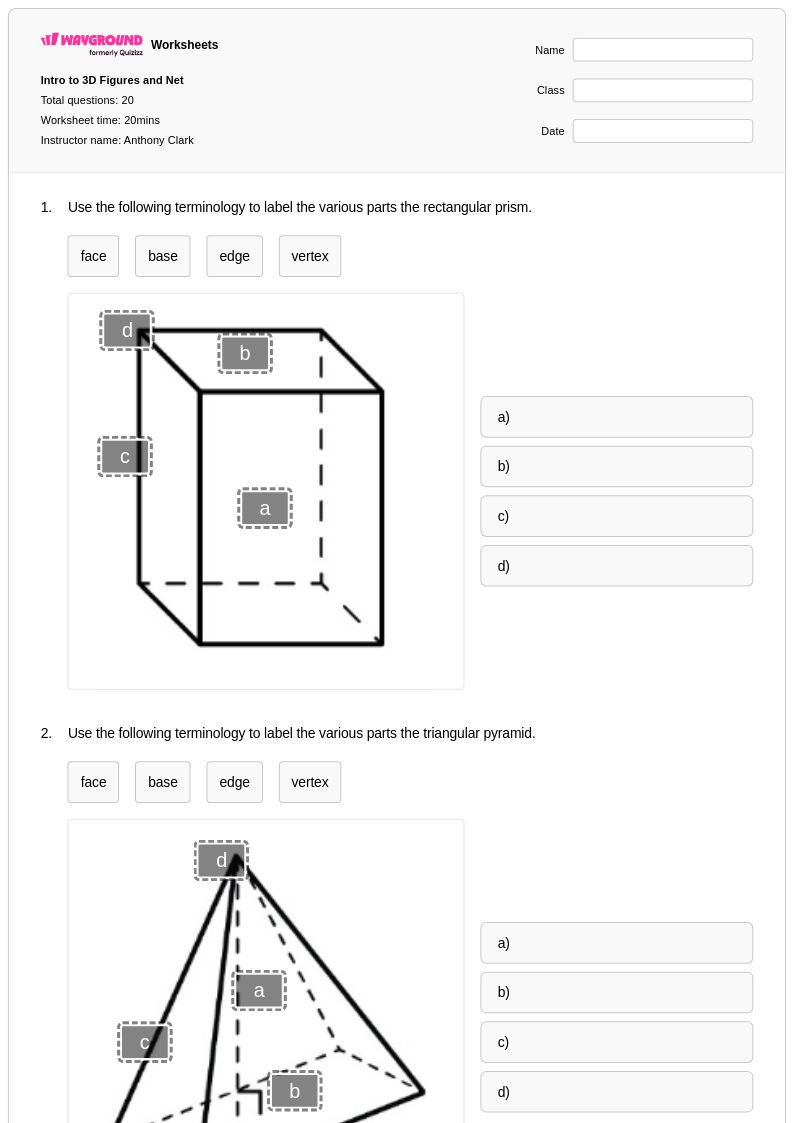
20 Q
7th - Uni
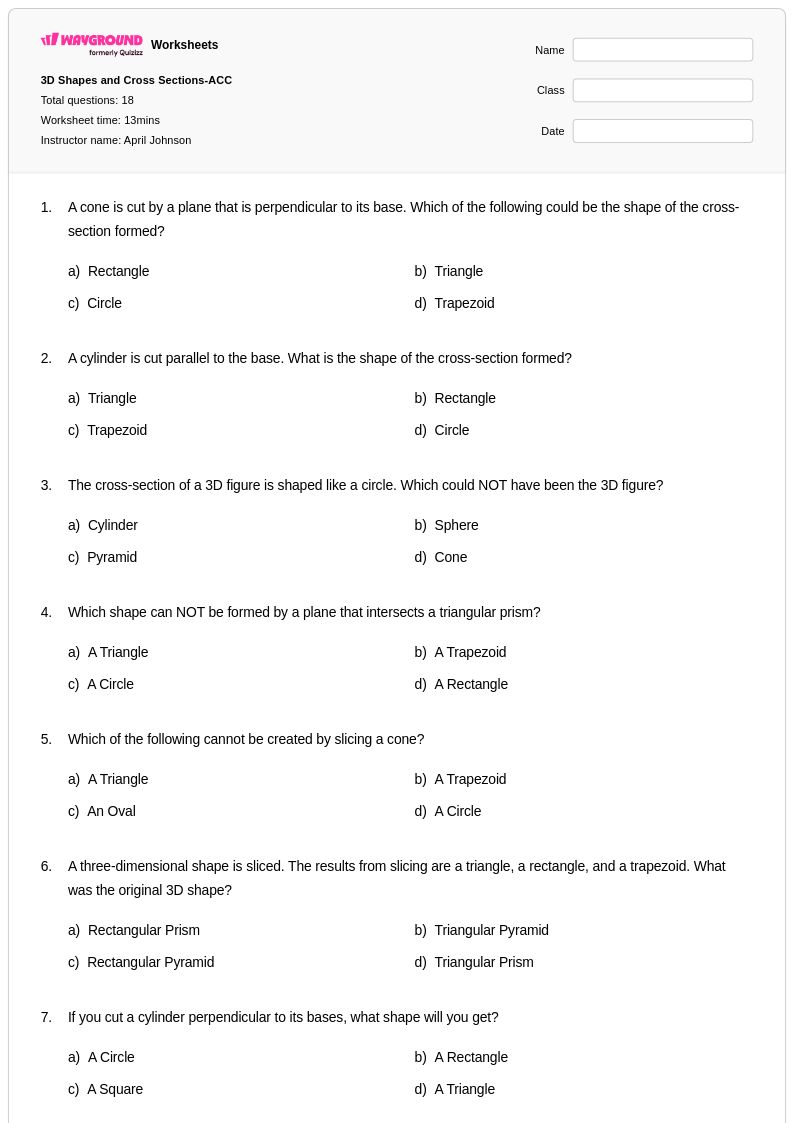
18 Q
7th
Explore Other Subject Worksheets for year 7
Explore printable Slicing 3d Figures worksheets for Year 7
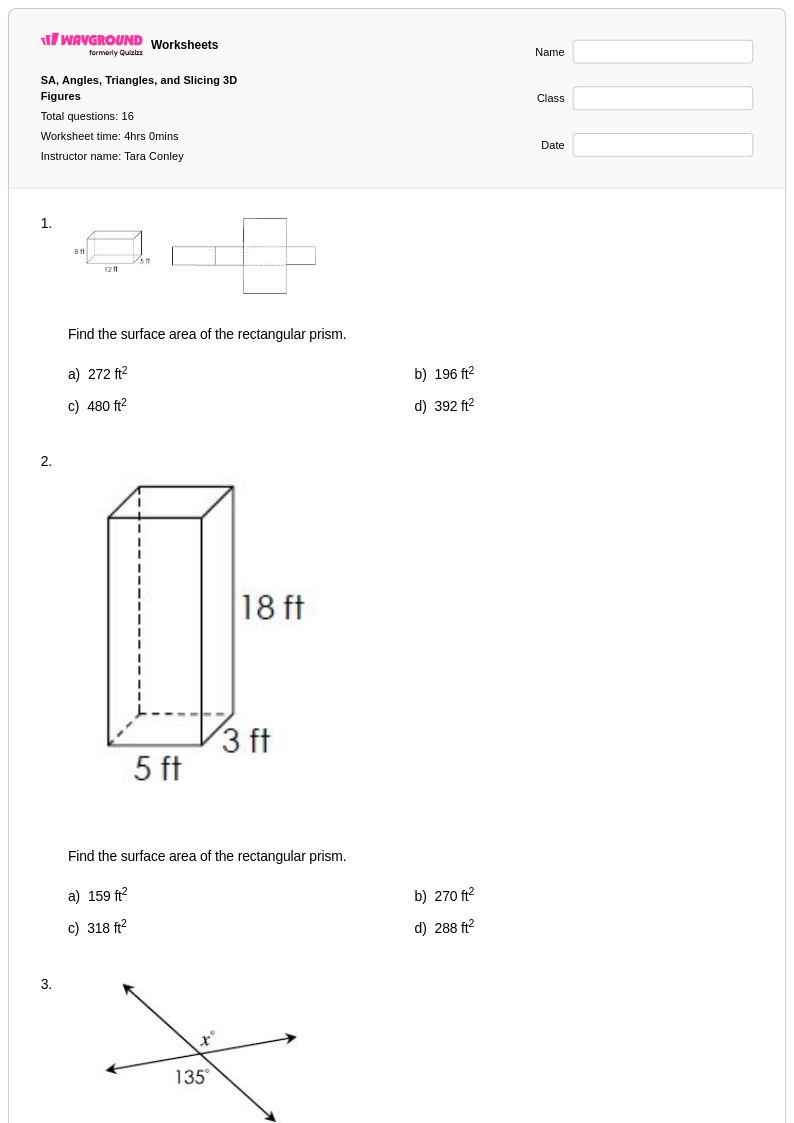
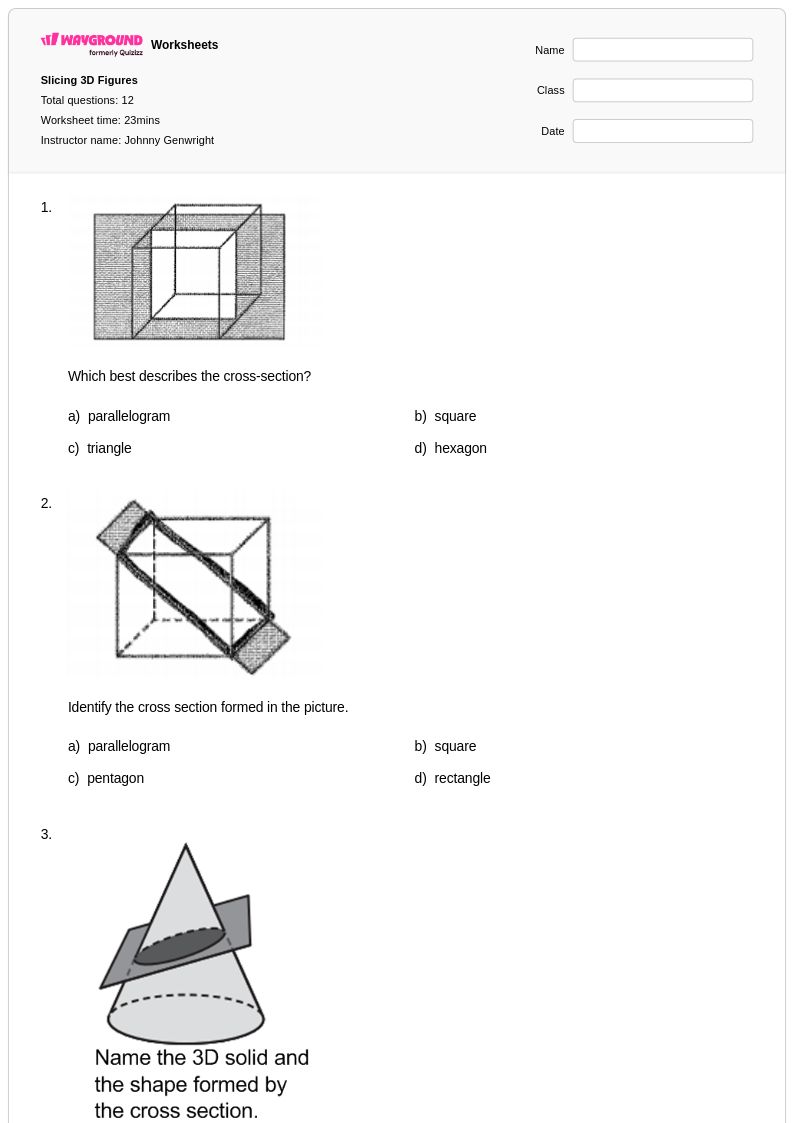
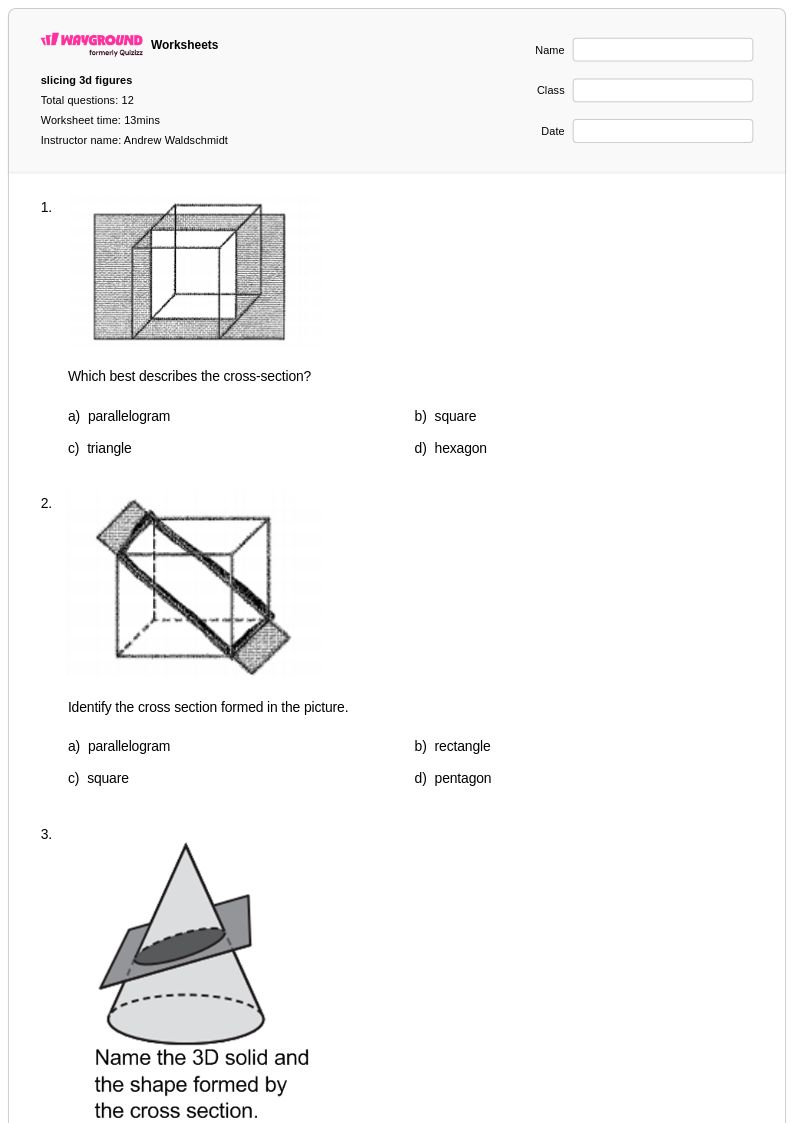
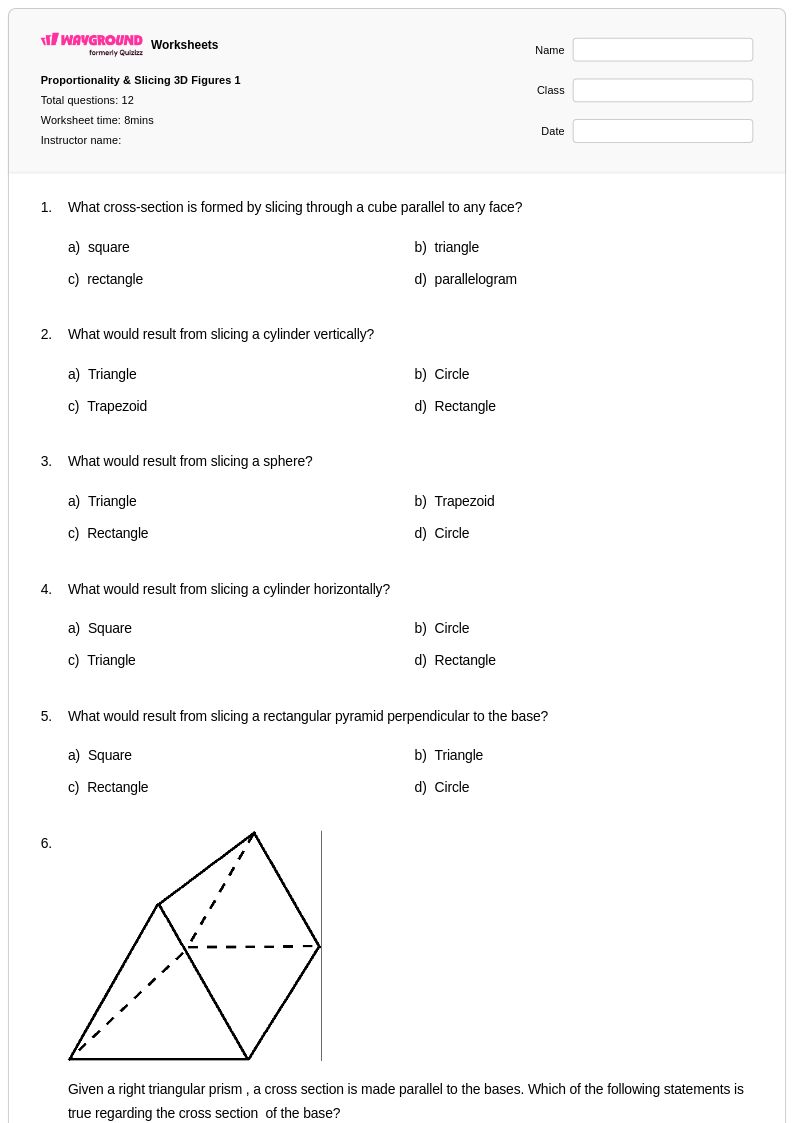
Slicing 3D figures represents a critical spatial reasoning concept for Year 7 mathematics students, requiring them to visualize and understand how two-dimensional cross-sections are created when planes intersect three-dimensional objects. Wayground's comprehensive collection of slicing 3D figures worksheets provides students with extensive practice problems that develop their ability to predict, sketch, and identify the shapes formed when pyramids, prisms, cylinders, cones, and spheres are cut by various planes. These printable resources systematically build students' geometric visualization skills through progressive exercises that move from basic horizontal and vertical slices to more complex diagonal cuts, with each worksheet including a detailed answer key to support both independent study and classroom instruction. The free pdf format ensures accessibility while maintaining high-quality diagrams essential for this visual mathematics topic.
Wayground, formerly Quizizz, empowers educators with millions of teacher-created resources specifically designed to support geometry instruction at the Year 7 level, featuring robust search and filtering capabilities that allow teachers to quickly locate worksheets aligned with specific learning standards and student needs. The platform's differentiation tools enable instructors to customize slicing 3D figures worksheets for various skill levels, providing opportunities for both remediation and enrichment while maintaining engagement across diverse learning styles. Teachers can seamlessly integrate these resources into their lesson planning through flexible digital and printable formats, utilizing the materials for formative assessment, homework assignments, or targeted skill practice sessions that reinforce students' understanding of cross-sectional geometry. The extensive collection ensures that educators have access to varied problem types and visual representations, supporting comprehensive instruction in this fundamental spatial reasoning concept.
FAQs
Is slicing 3D figures a 7th-grade math topic?
How does this topic align with 7th-grade Common Core standards?
How can I teach 7th graders to sketch cross-sections?
What types of problems help 7th graders master 3D slicing?
What's a common challenge for 7th graders with diagonal slices?
How do I assign and grade this 7th-grade worksheet?