
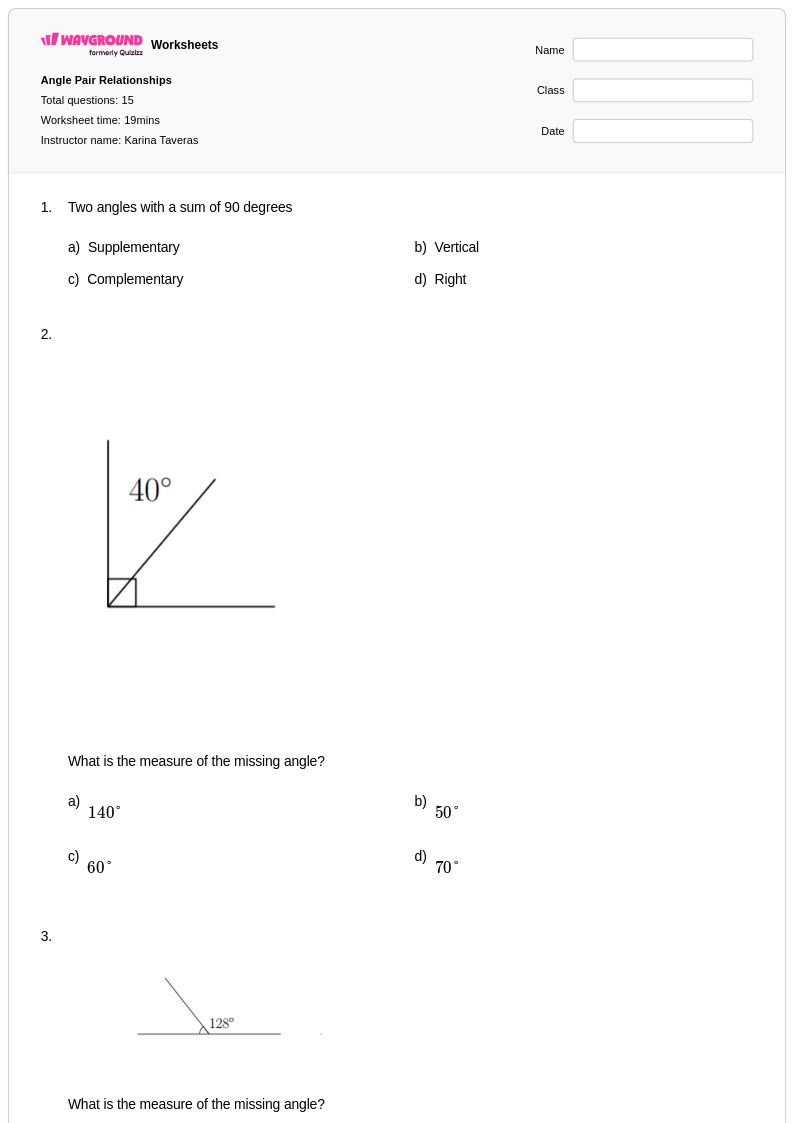
15 Q
7th - 8th
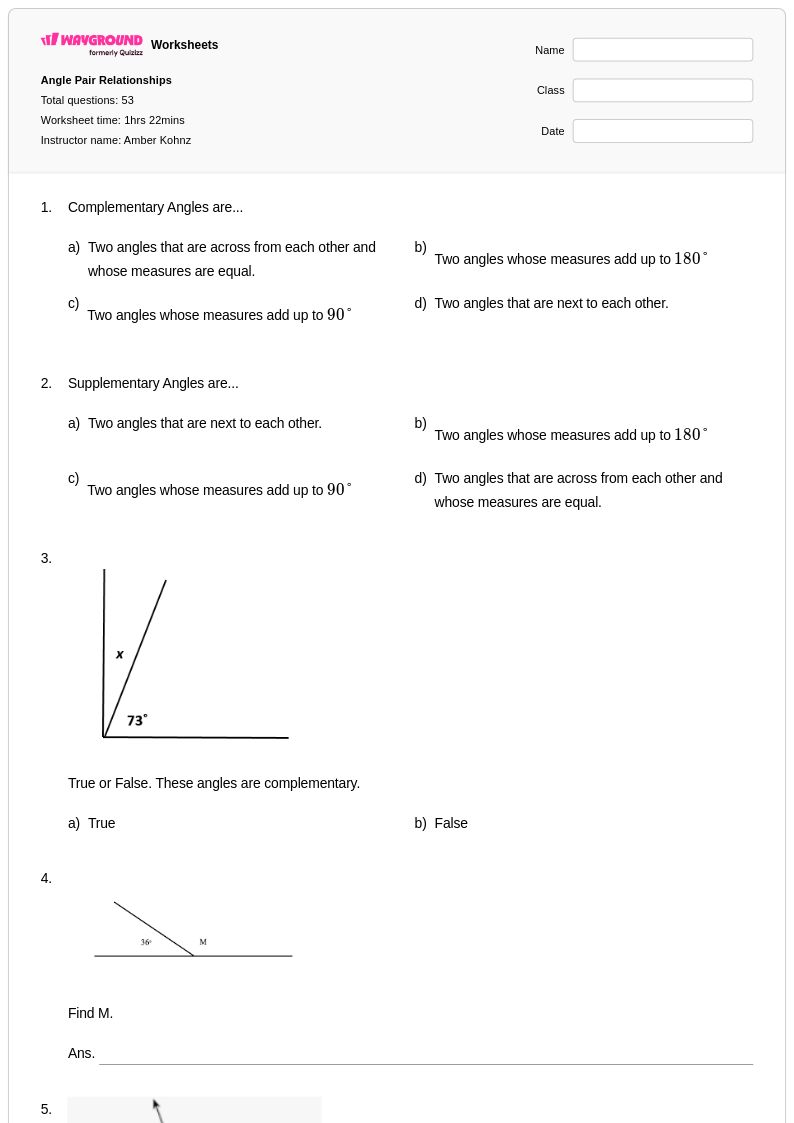
53 Q
7th
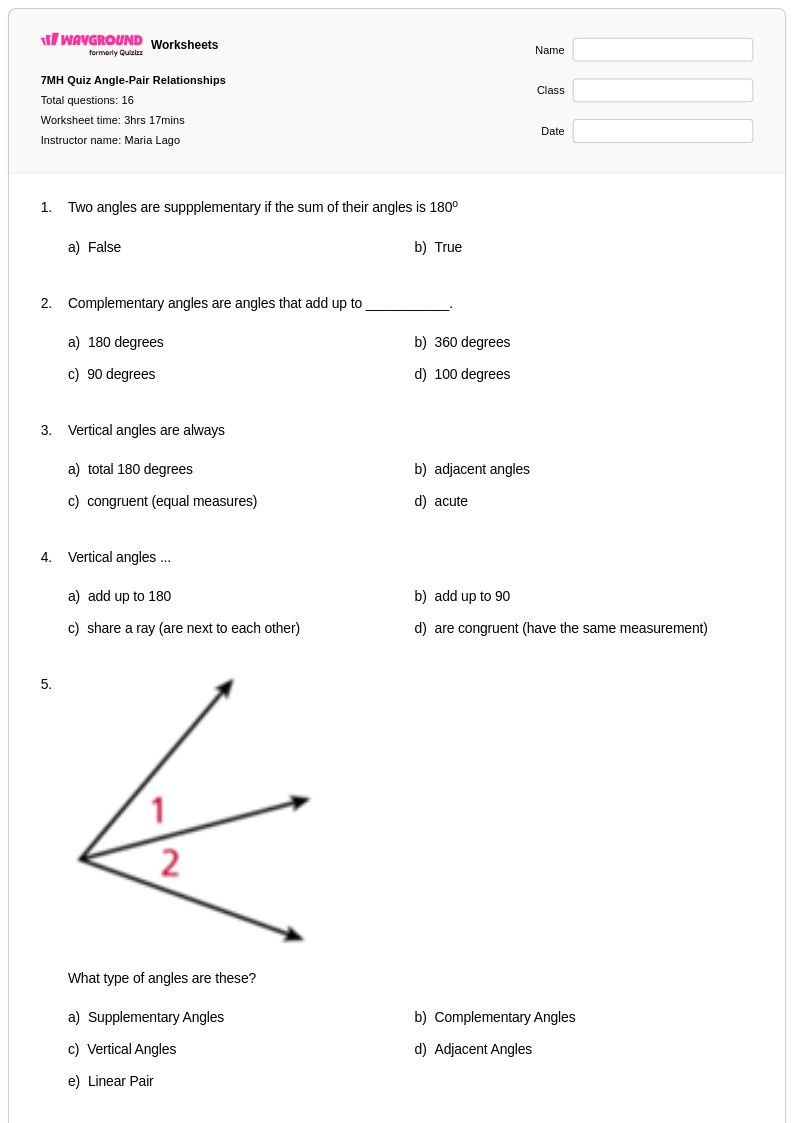
16 Q
7th
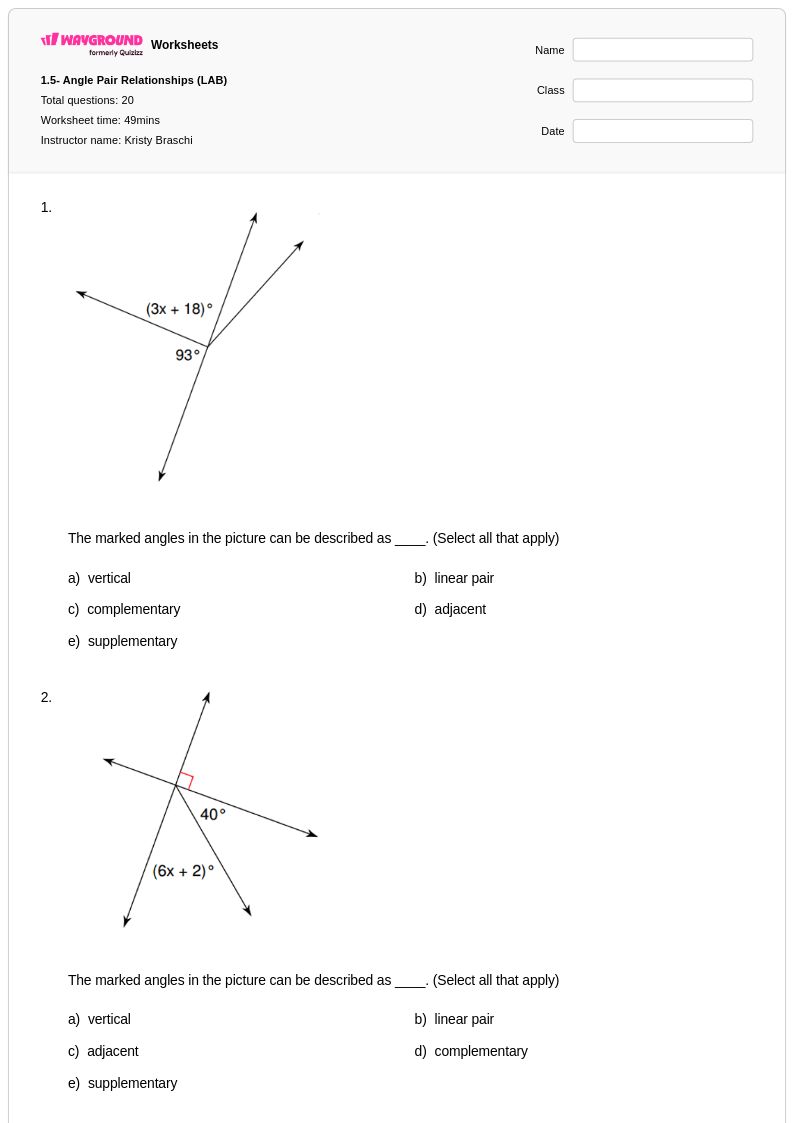
20 Q
7th - 10th
26 Q
6th - 8th
16 Q
7th
20 Q
6th - 8th
15 Q
7th
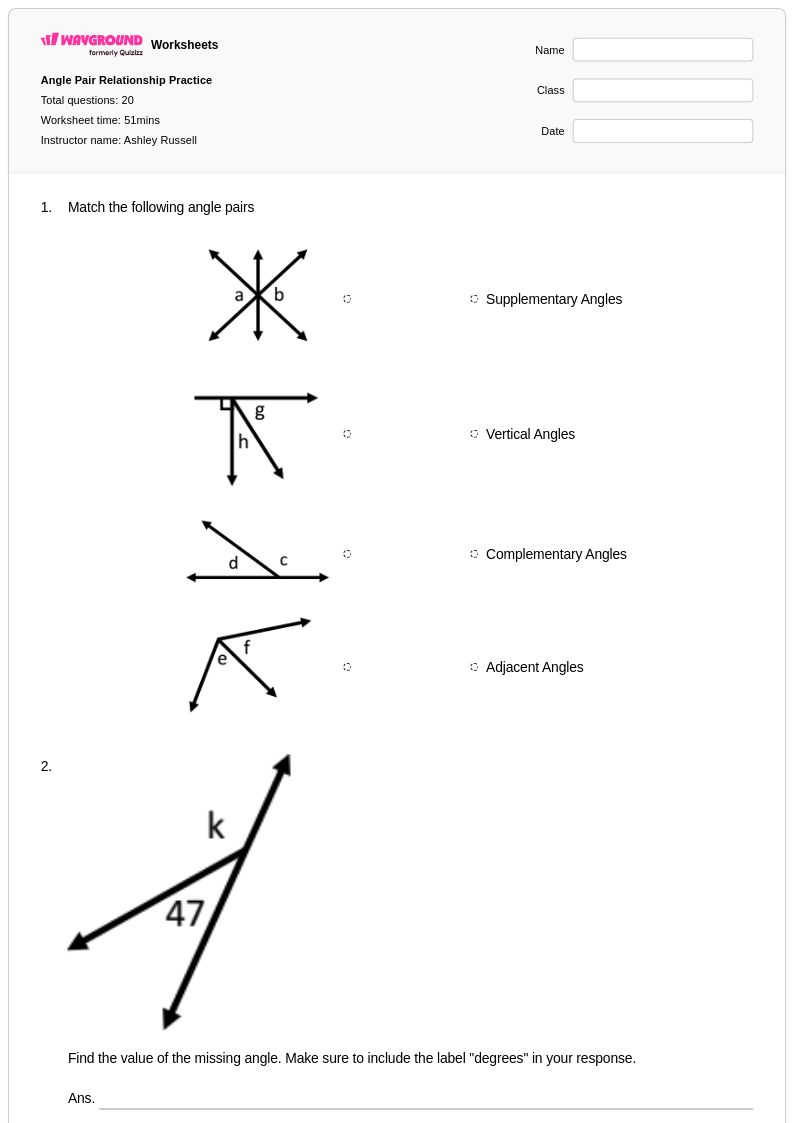
20 Q
7th
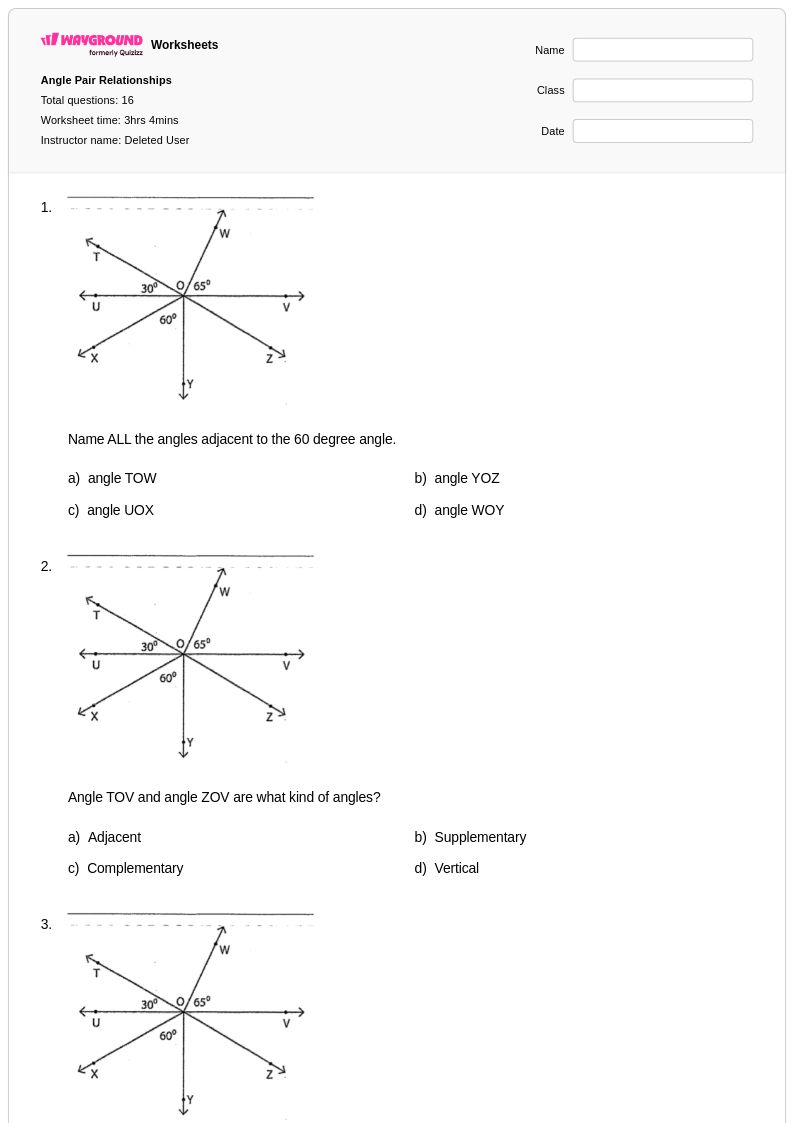
16 Q
6th - 7th
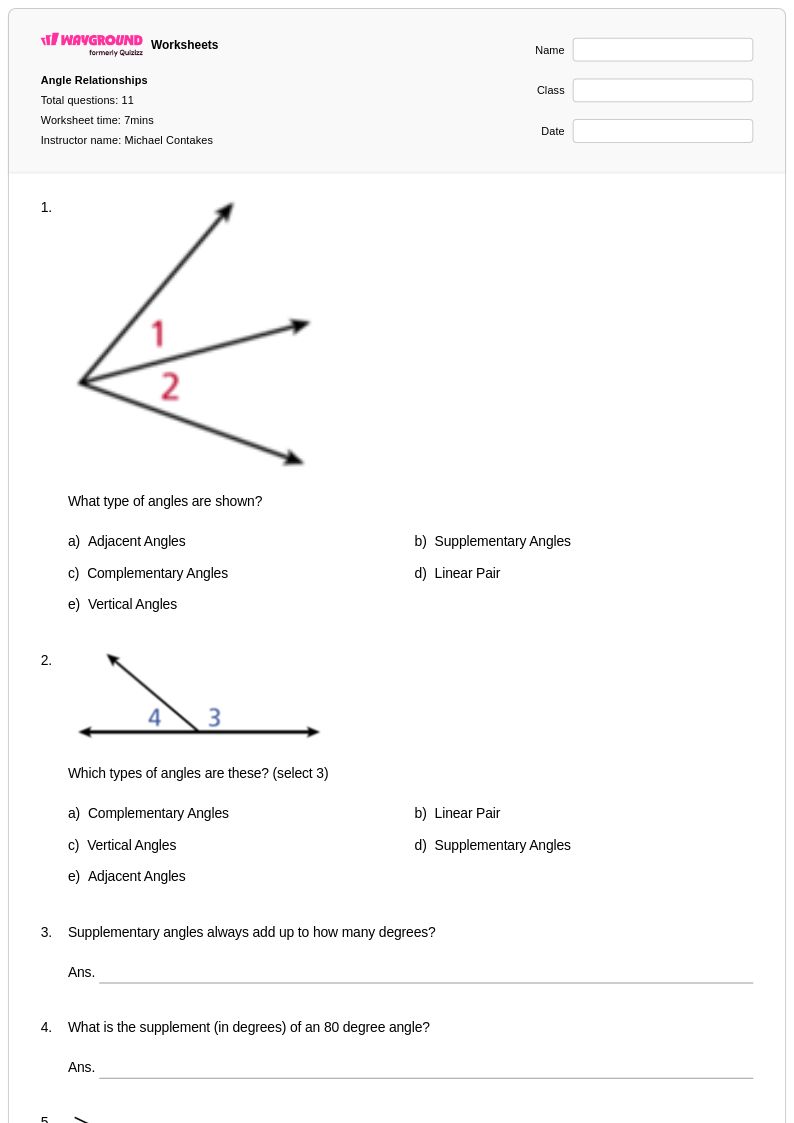
11 Q
7th - 8th
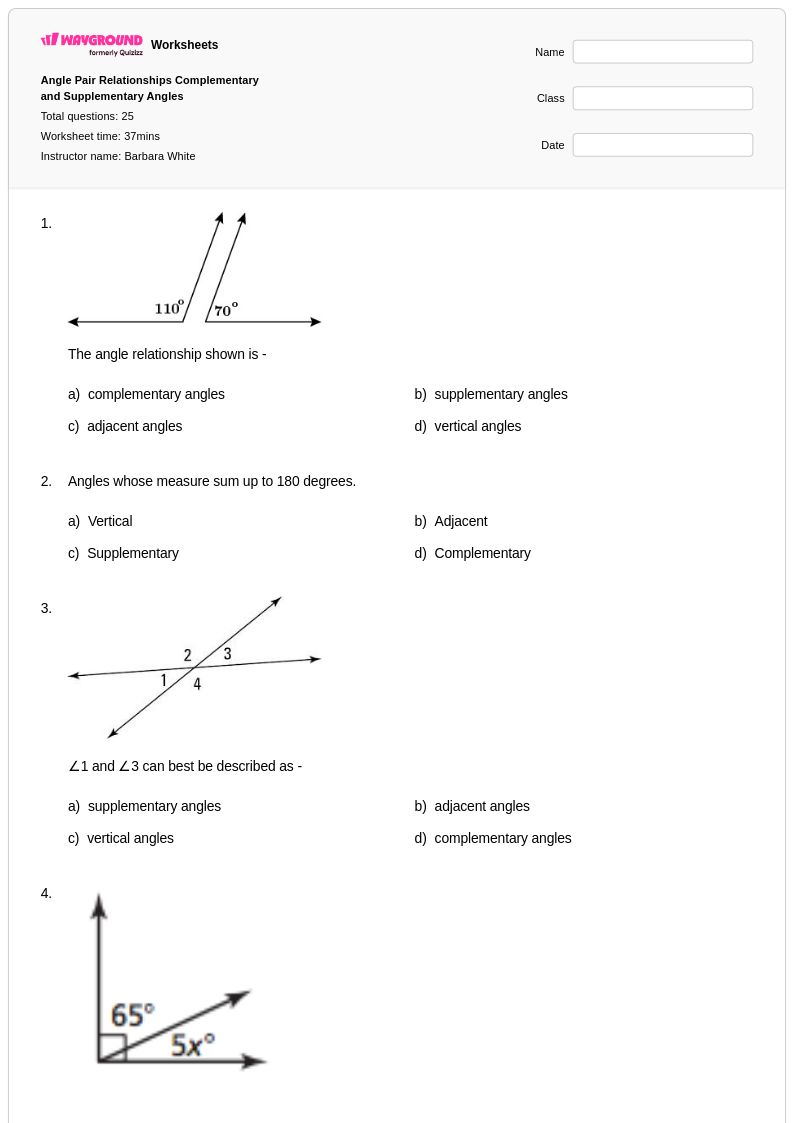
25 Q
6th - 12th
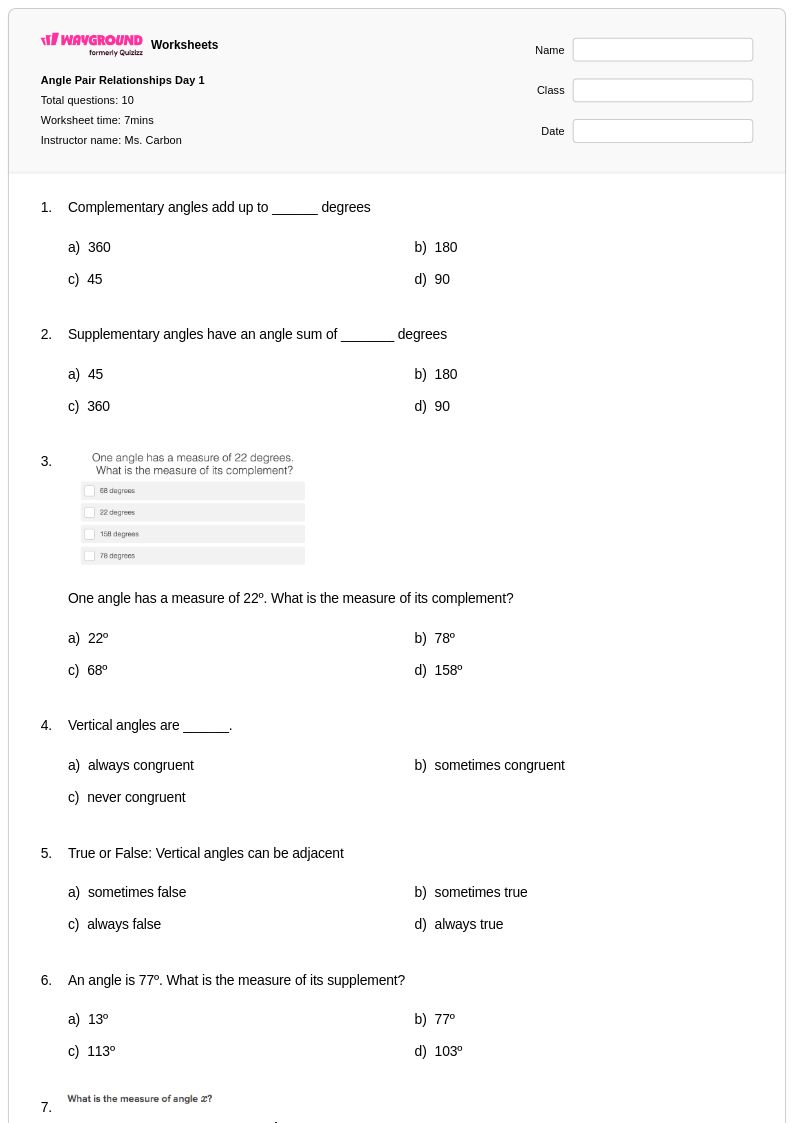
10 Q
7th - 8th
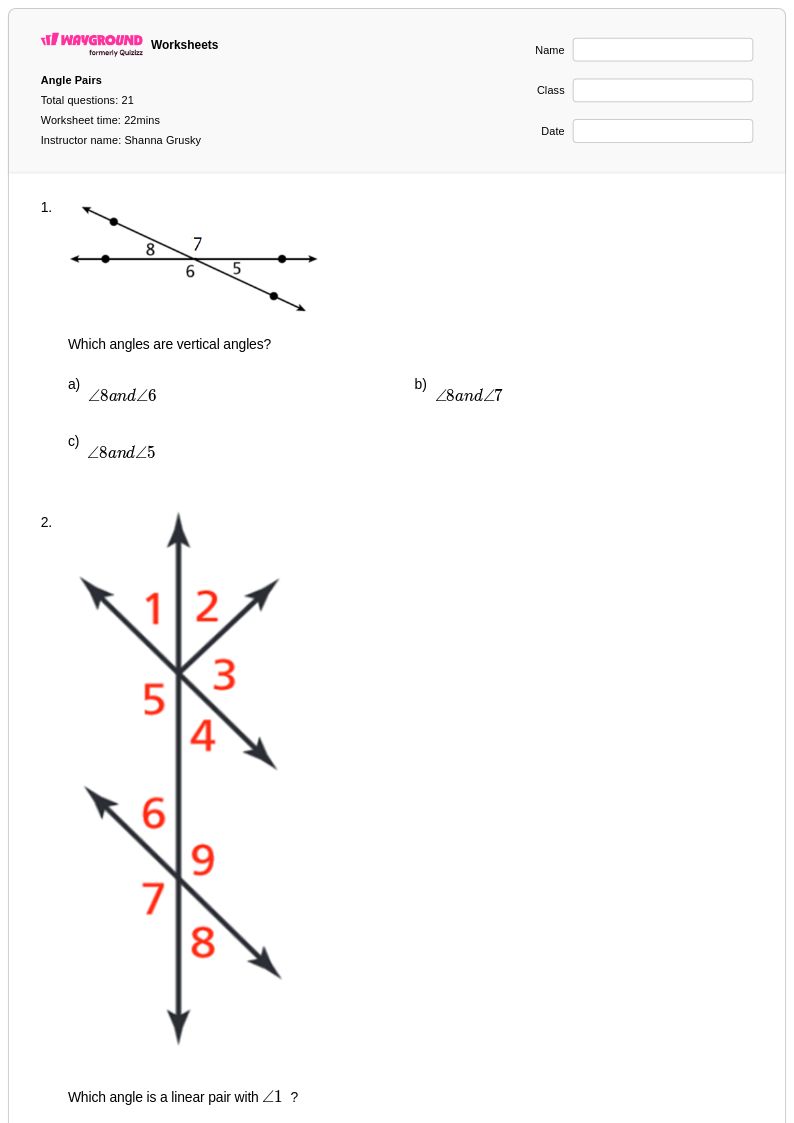
21 Q
7th
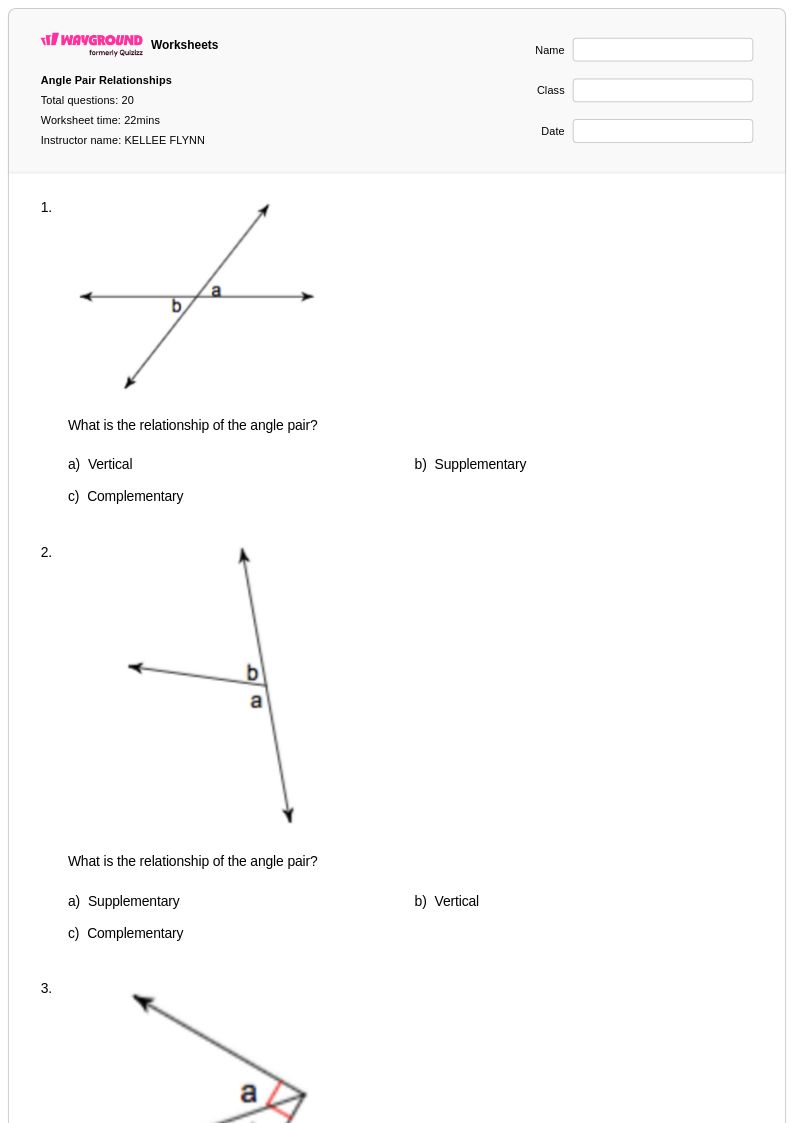
20 Q
7th
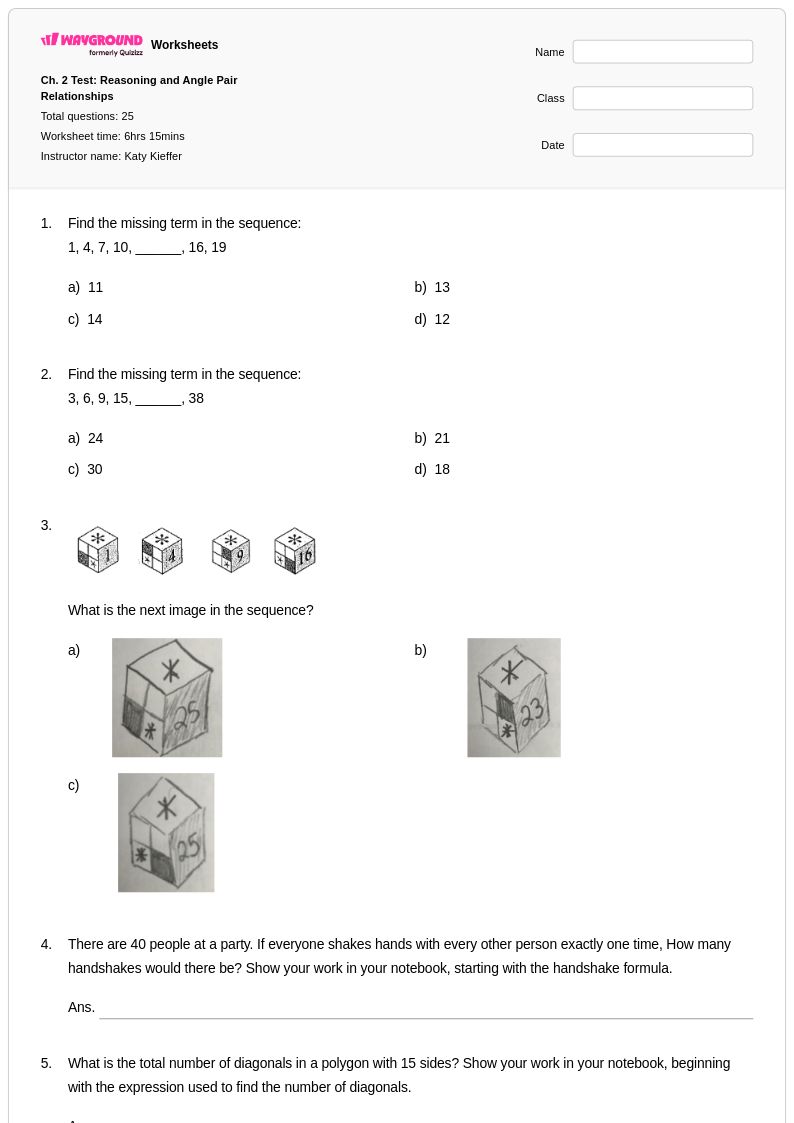
25 Q
7th - 10th
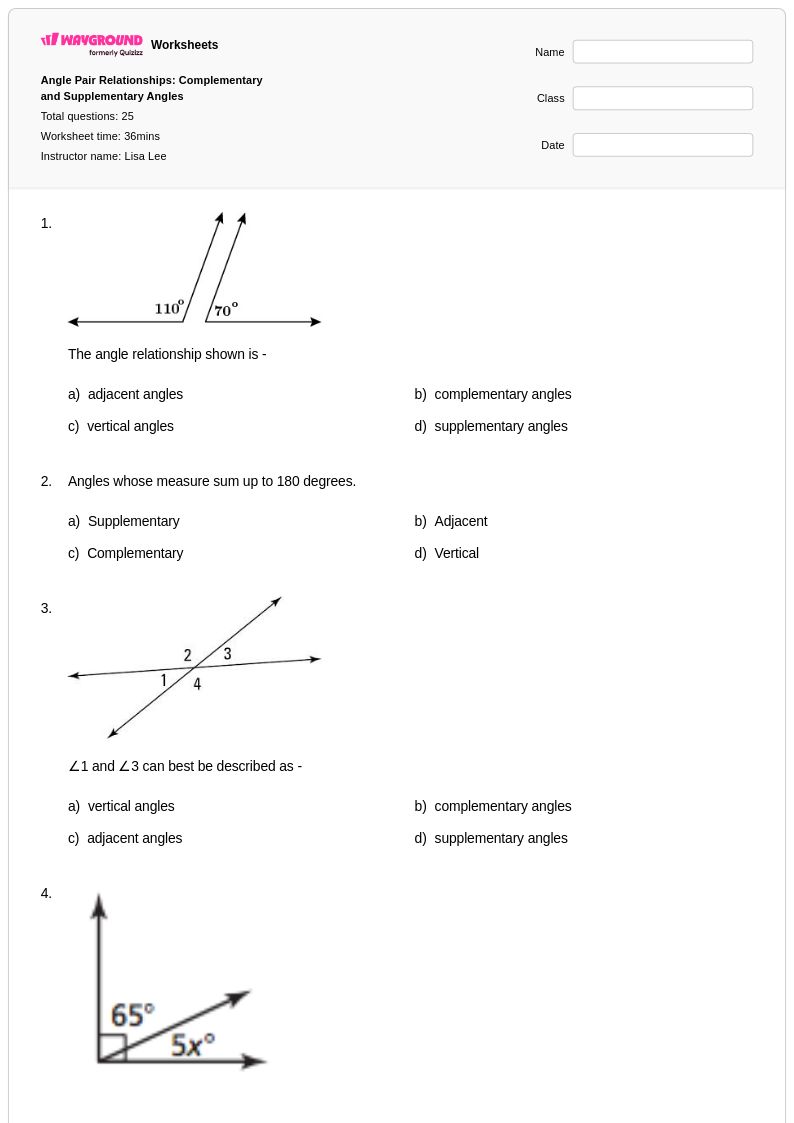
25 Q
6th - 12th
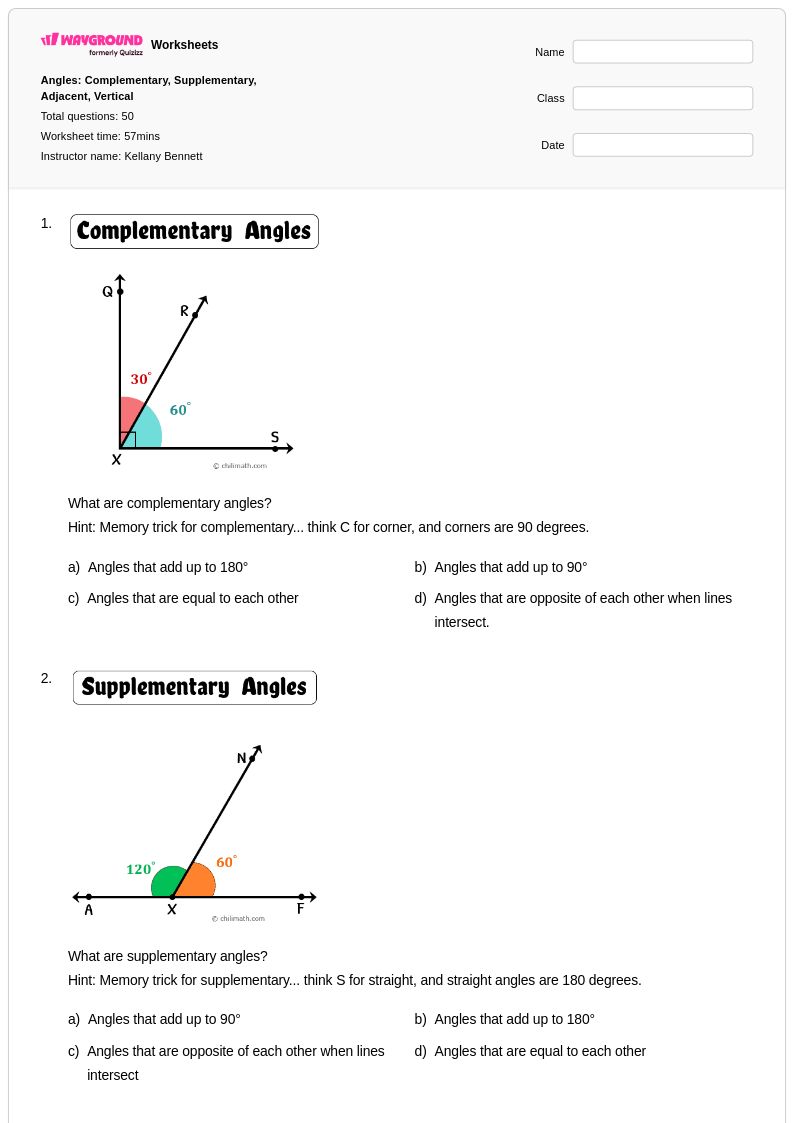
50 Q
7th
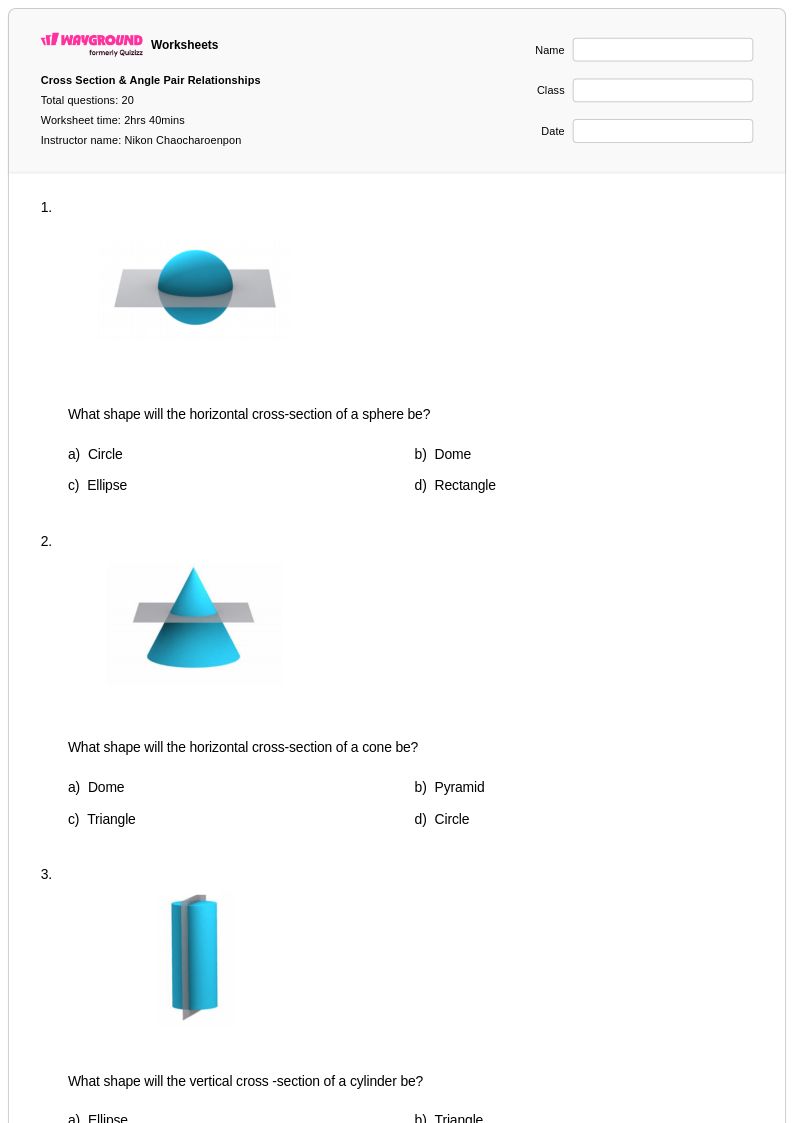
20 Q
7th
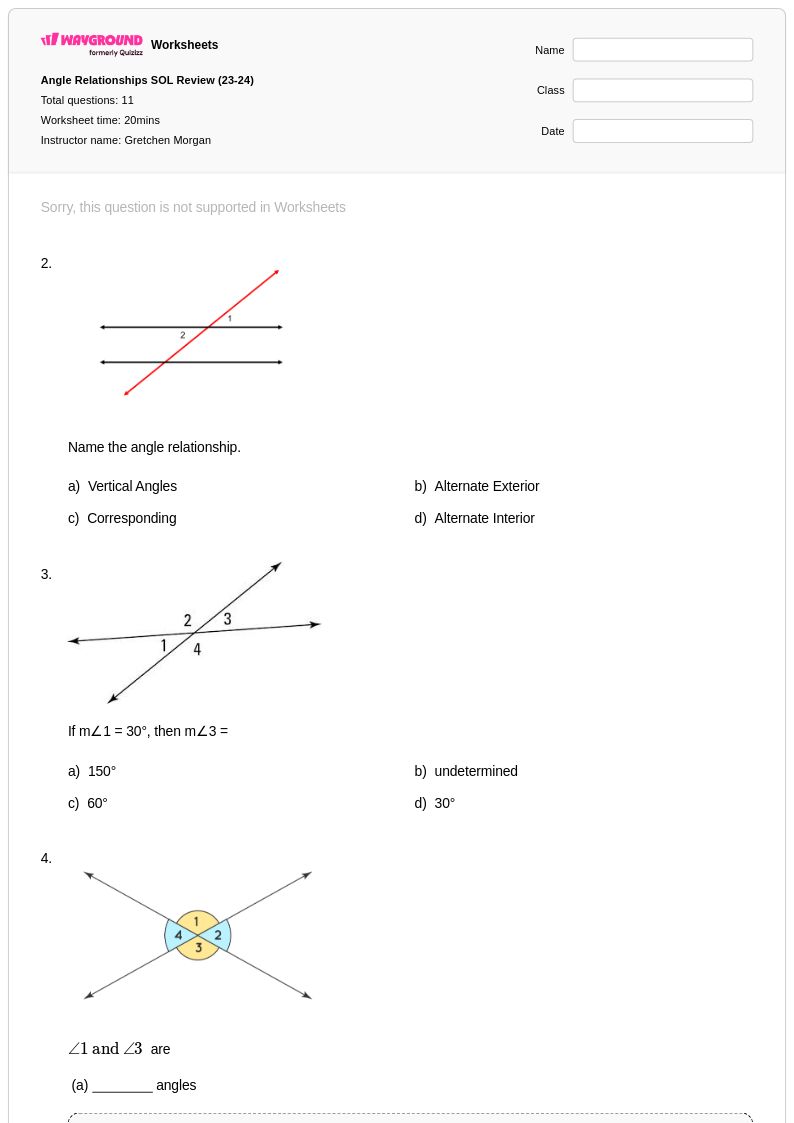
21 Q
6th - 8th
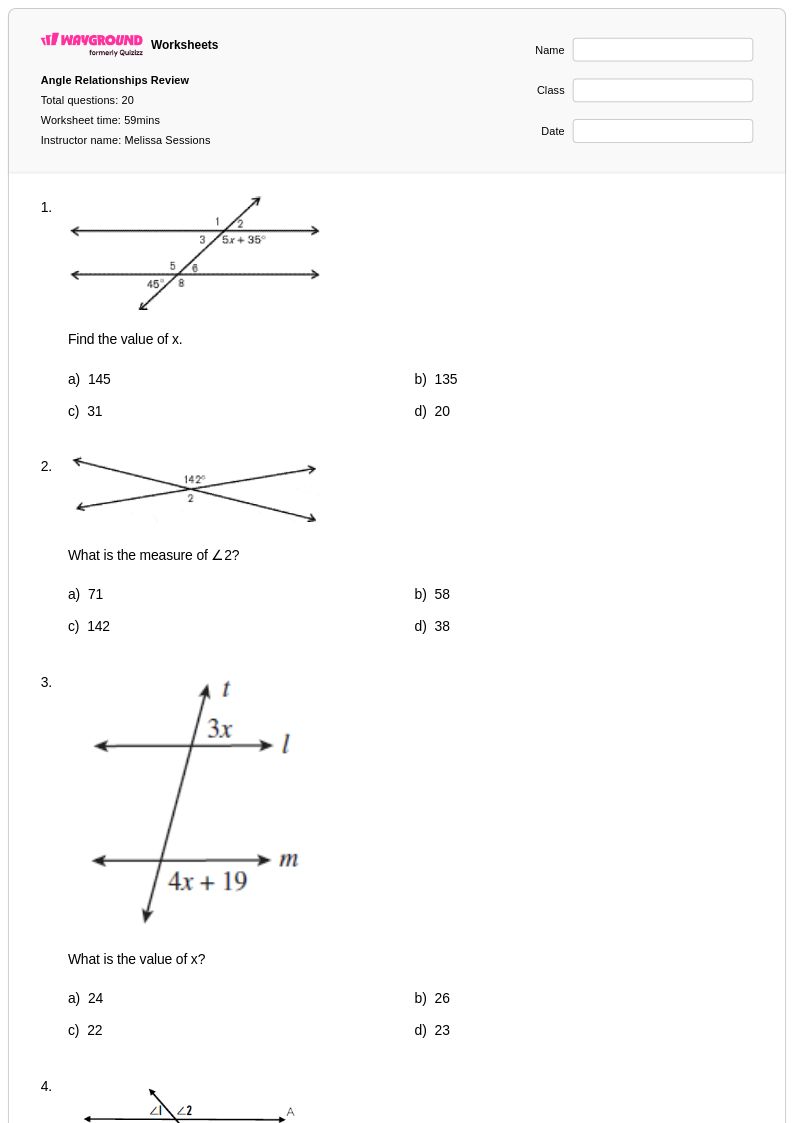
20 Q
6th - 8th
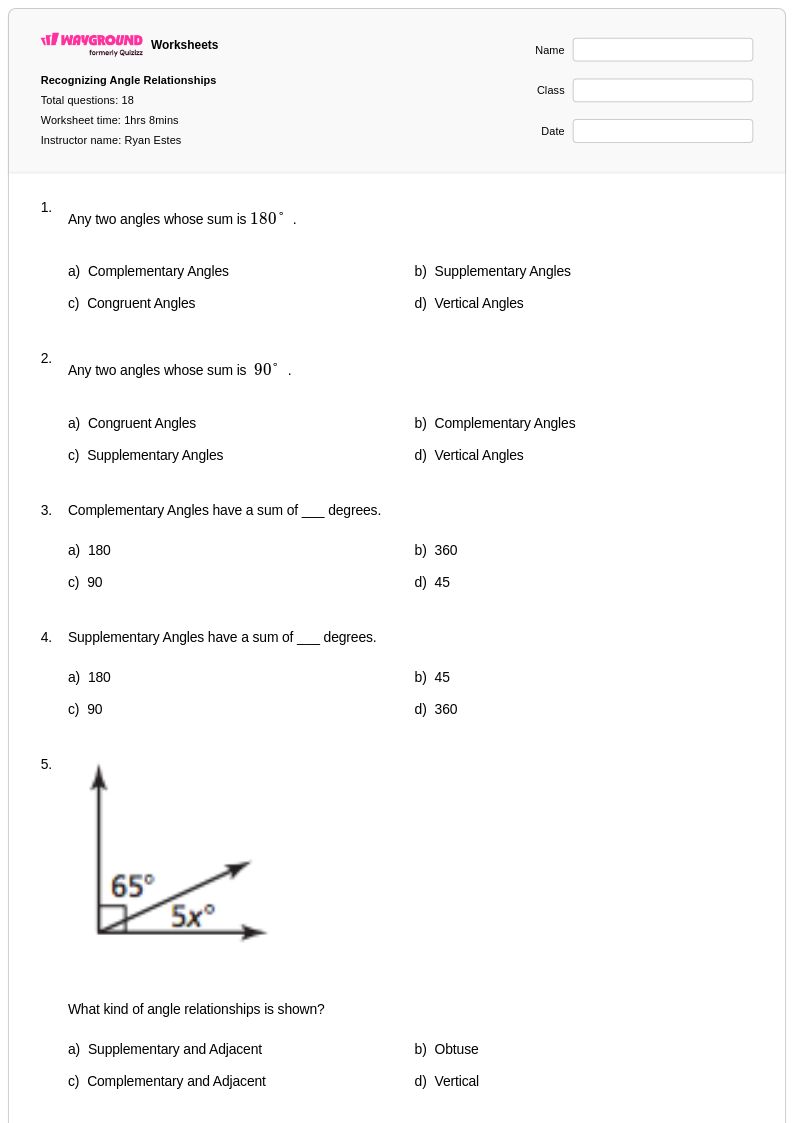
18 Q
6th - 8th
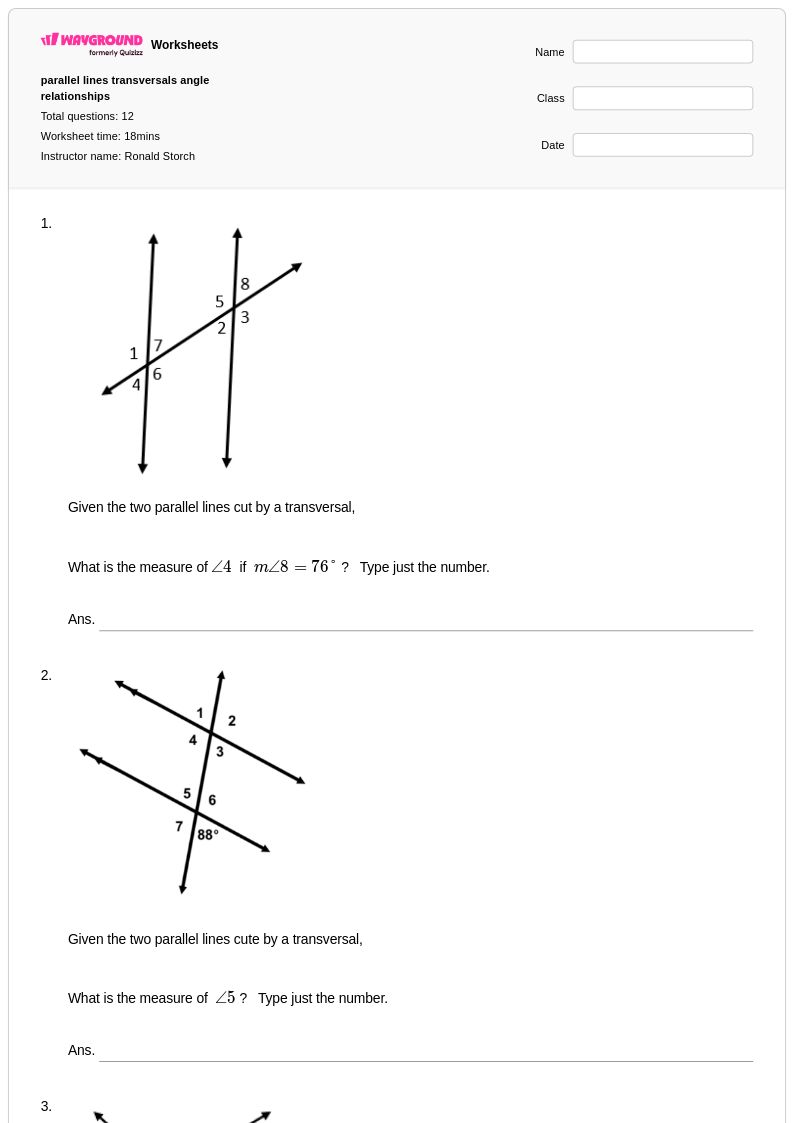
12 Q
7th
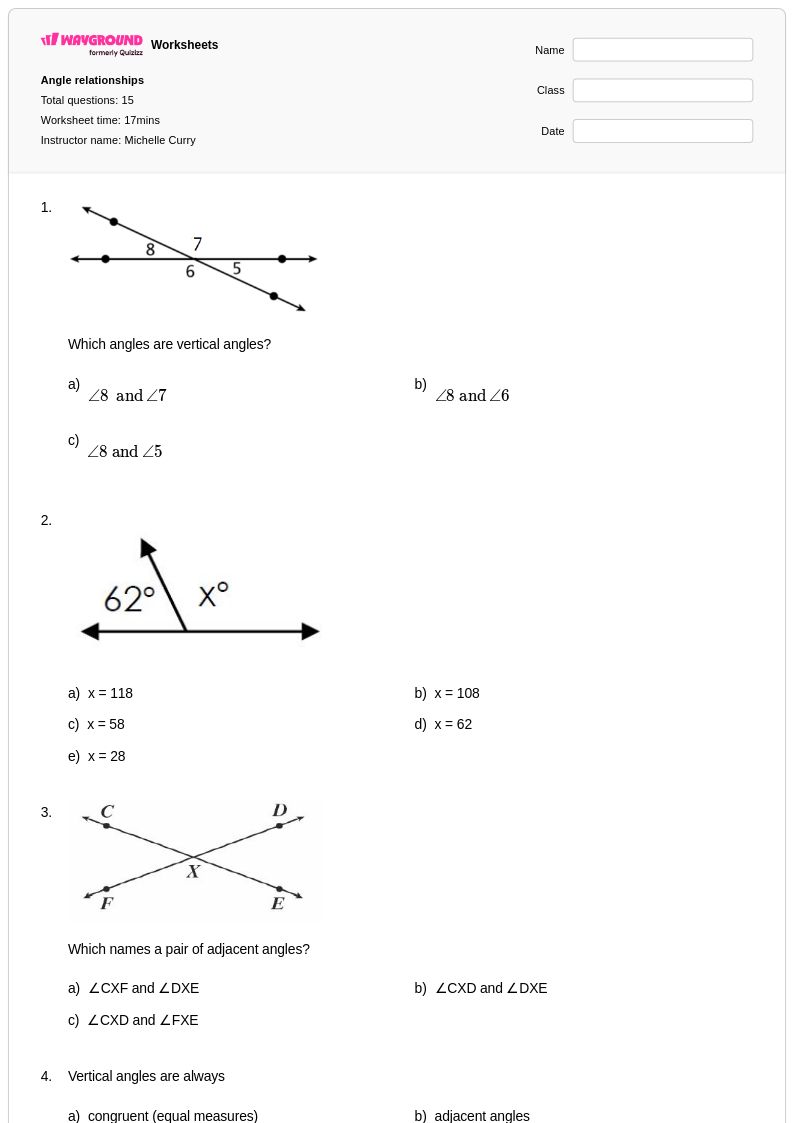
15 Q
7th
Explore Other Subject Worksheets for year 7
Explore printable Angle Pair Relationships worksheets for Year 7
Angle pair relationships form a critical foundation in Year 7 geometry, requiring students to identify, classify, and calculate measures of complementary, supplementary, vertical, and adjacent angles. Wayground's comprehensive collection of angle pair relationships worksheets provides seventh-grade students with systematic practice problems that develop spatial reasoning and algebraic thinking skills essential for advanced geometric concepts. These free printable resources include detailed answer keys and cover fundamental angle relationships through progressively challenging exercises, helping students master the connections between angle measures in various geometric configurations. Each worksheet targets specific skills such as finding missing angle measures, identifying angle pair types, and applying angle relationship properties to solve real-world problems.
Wayground, formerly Quizizz, empowers educators with millions of teacher-created angle pair relationships resources specifically designed for Year 7 mathematics instruction. The platform's robust search and filtering capabilities allow teachers to quickly locate worksheets aligned with curriculum standards, while differentiation tools enable customization based on individual student needs and learning objectives. These versatile materials are available in both digital and printable PDF formats, supporting flexible classroom implementation for direct instruction, independent practice, homework assignments, and assessment preparation. Teachers can seamlessly integrate these resources into their lesson planning for targeted skill remediation, advanced enrichment opportunities, and ongoing practice that reinforces students' understanding of how angles interact within geometric figures and coordinate plane contexts.
FAQs
How should I teach angle pair relationships in Grade 7?
What are good practice activities for seventh-grade angle relationships?
What errors should I look for when assessing angle pair relationships?
How do I assign a Grade 7 angle pair relationships worksheet?
Are Grade 7 angle pair relationships aligned with Common Core?
How can I support mixed-ability students with an angle relationships worksheet?
What grade level is appropriate for angle pair relationships?