Free Printable Finding Missing Lengths Worksheets for Year 7
Year 7 students can master finding missing lengths in geometry with Wayground's comprehensive collection of free worksheets, featuring step-by-step practice problems, printable PDFs, and detailed answer keys.
Explore printable Finding Missing Lengths worksheets for Year 7
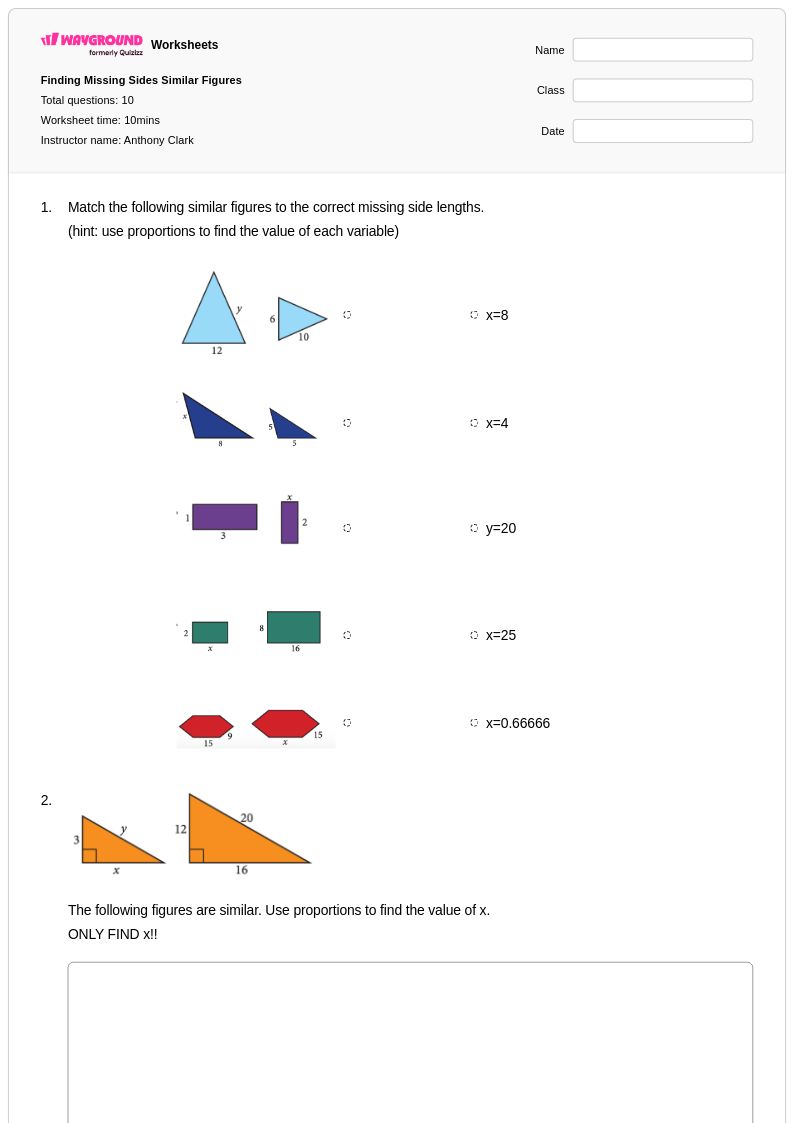
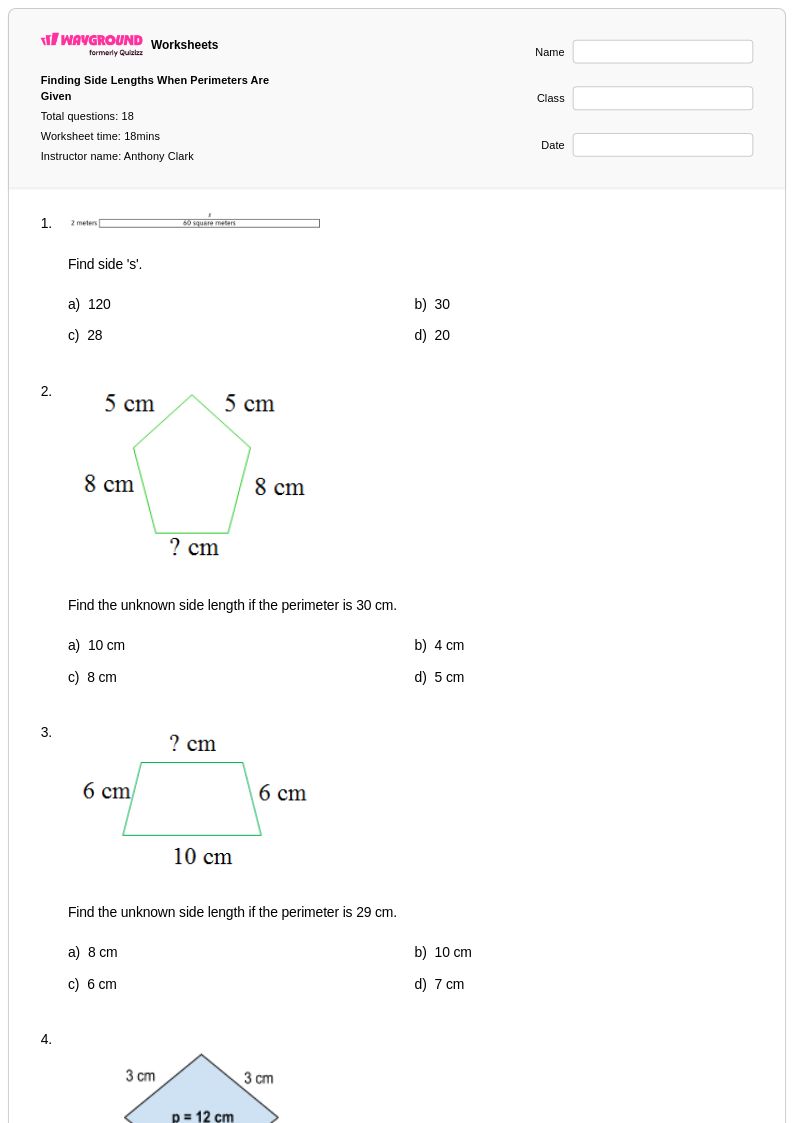
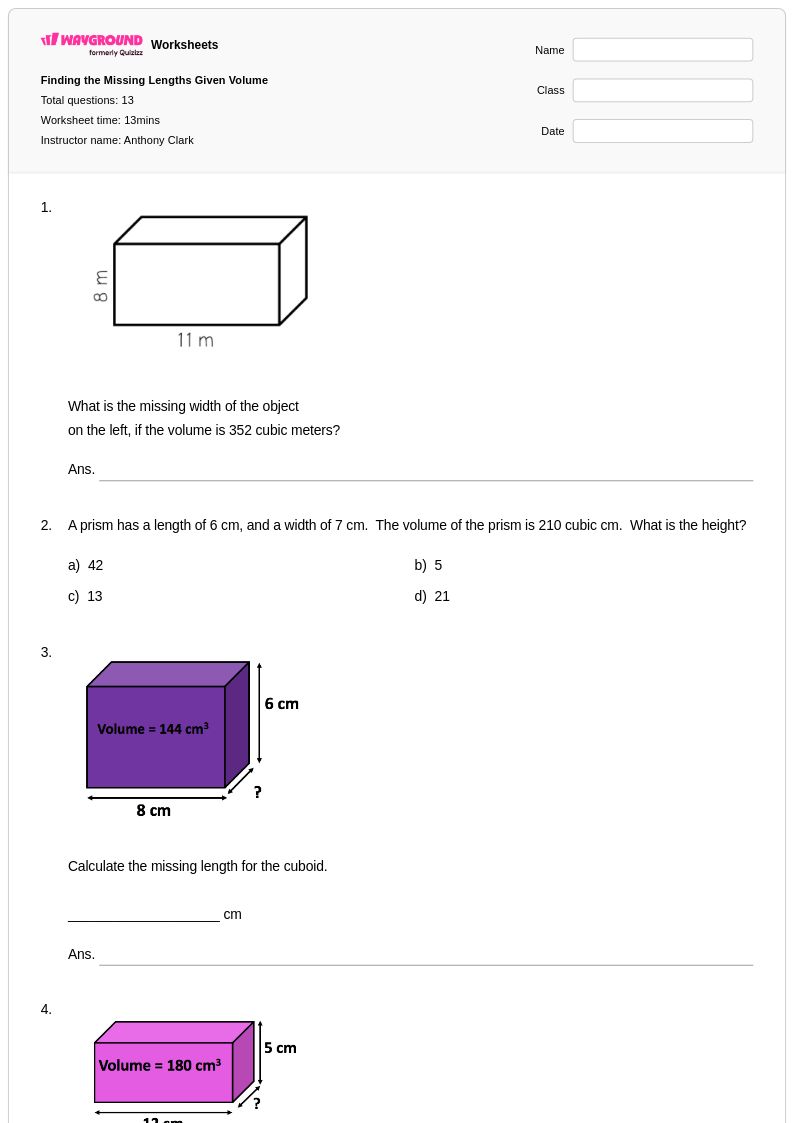
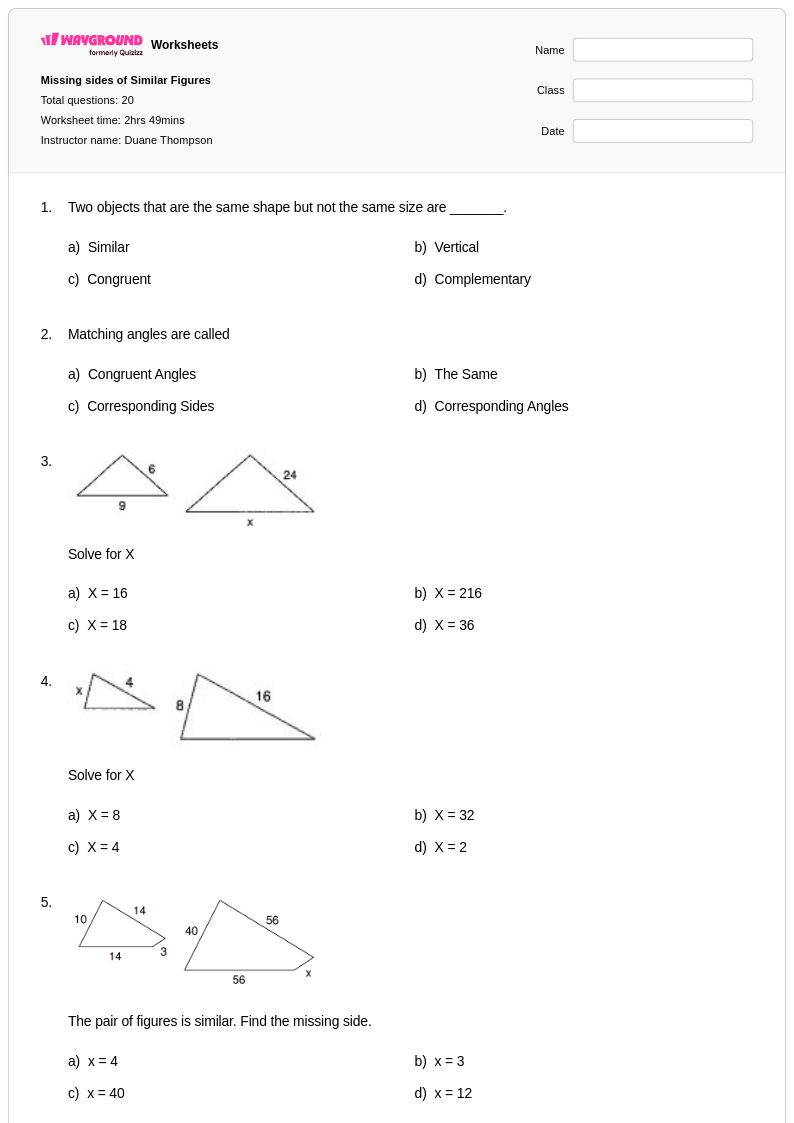
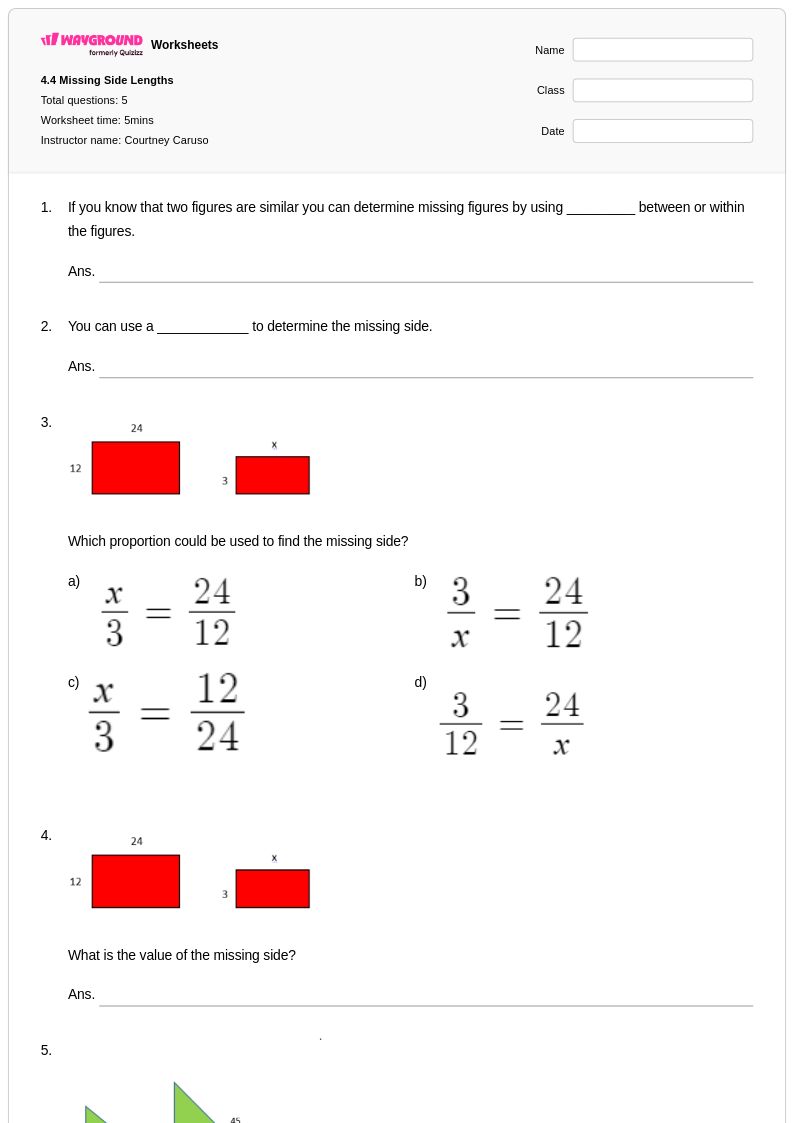
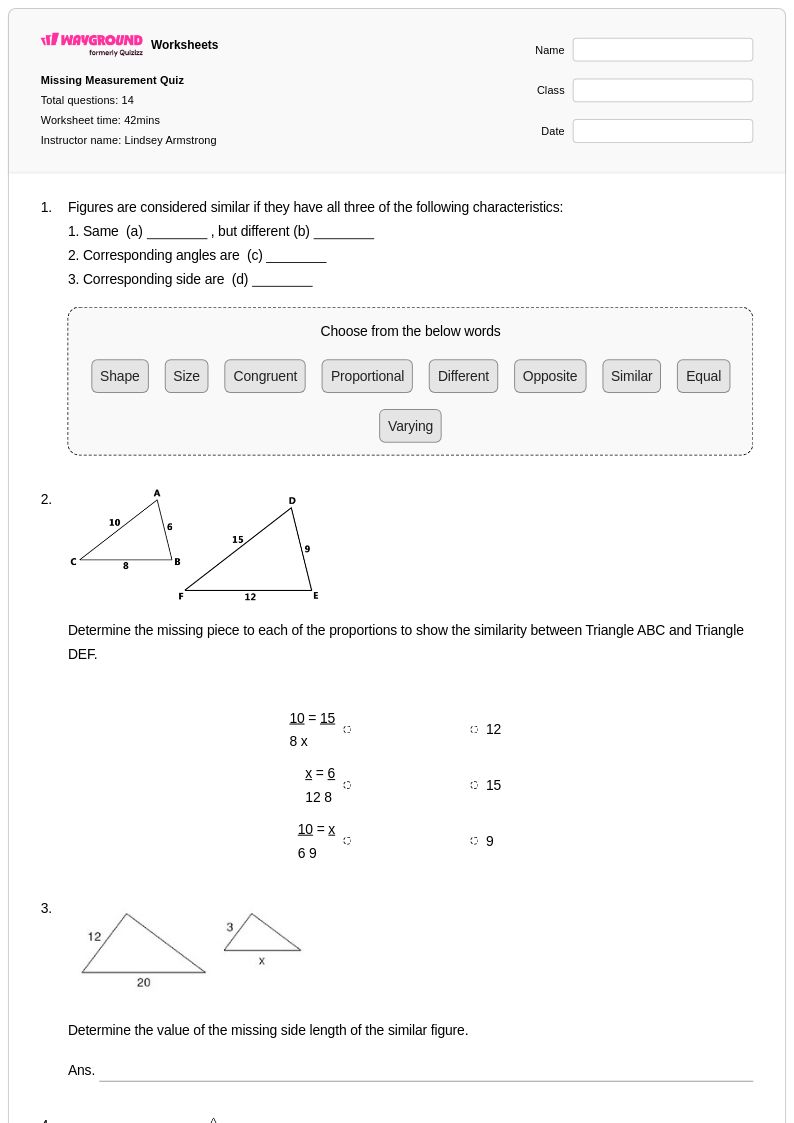
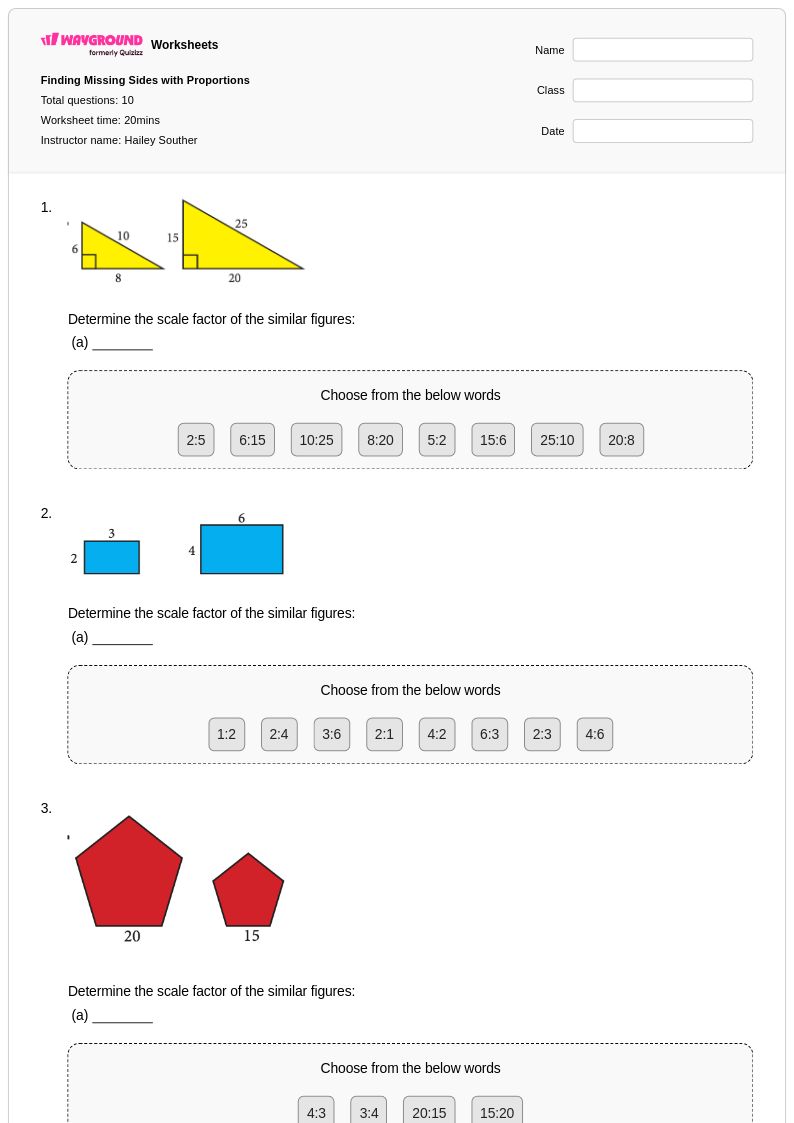
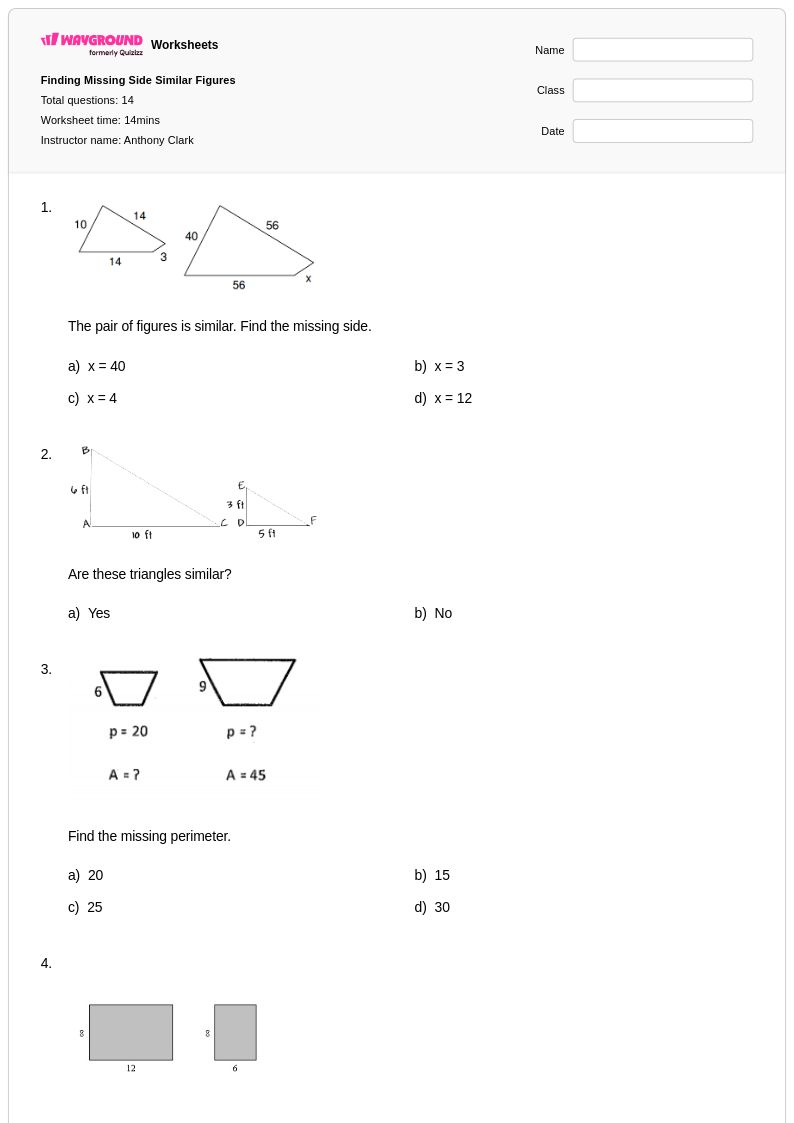
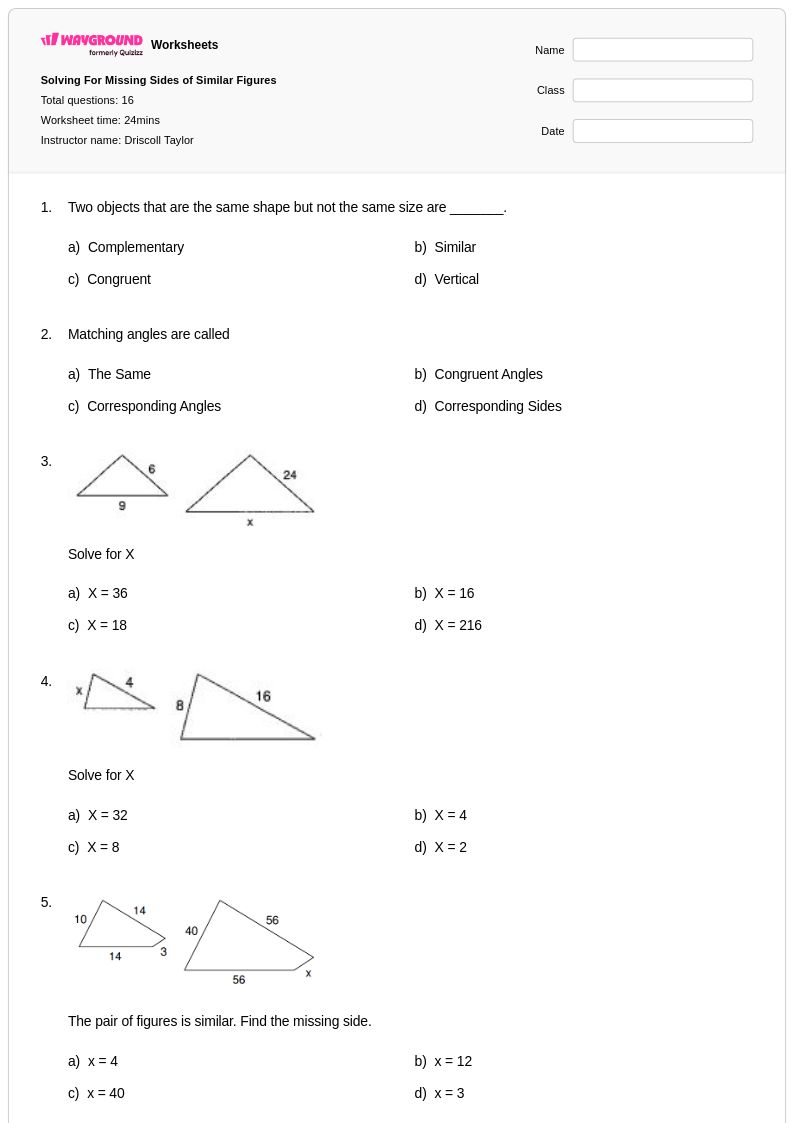
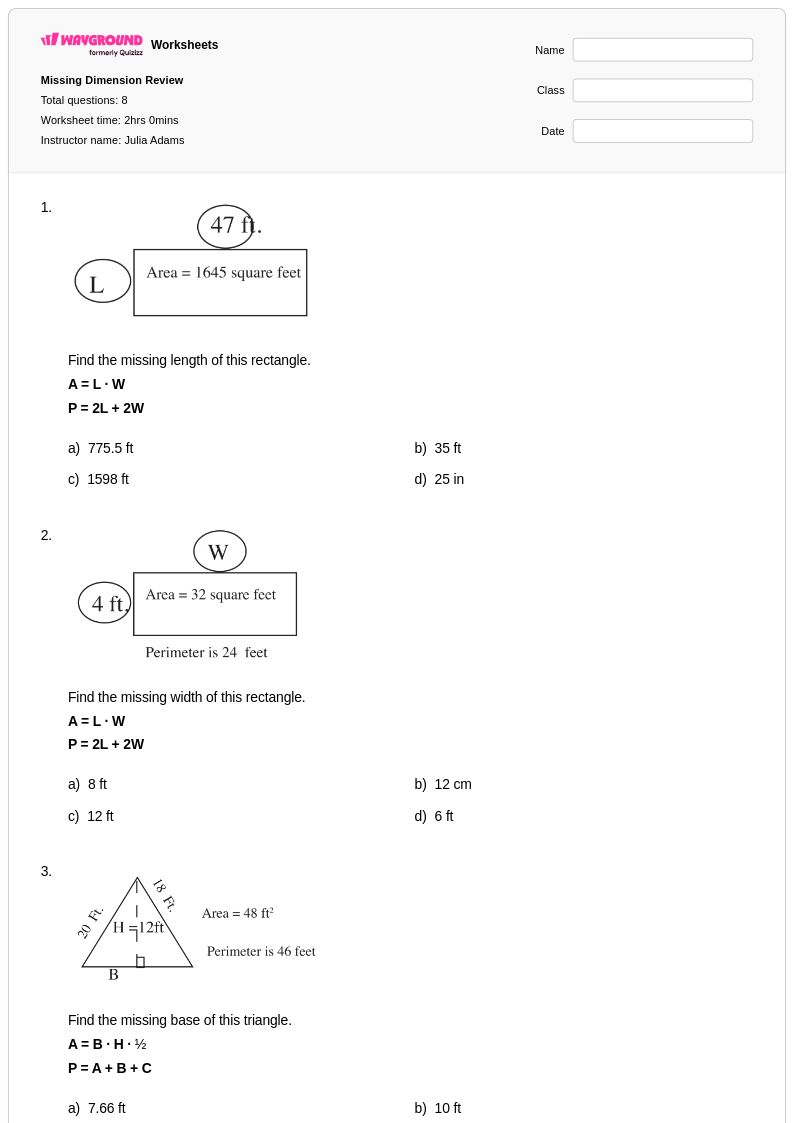
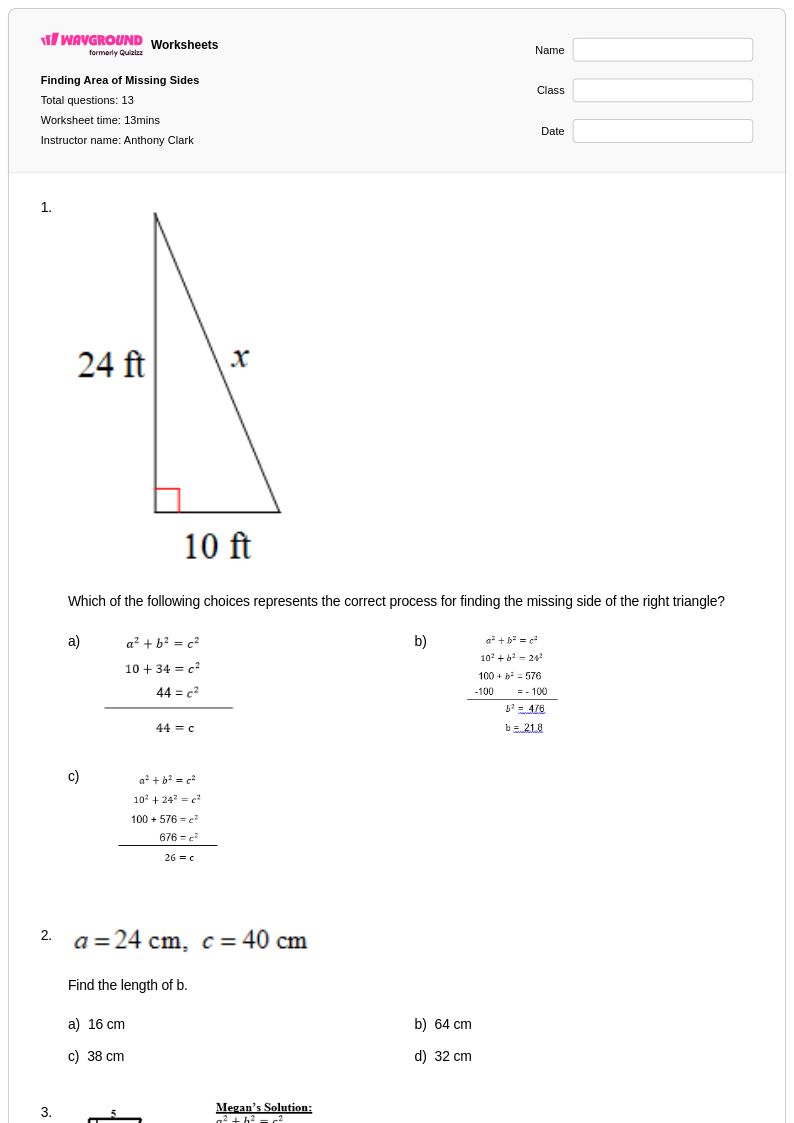
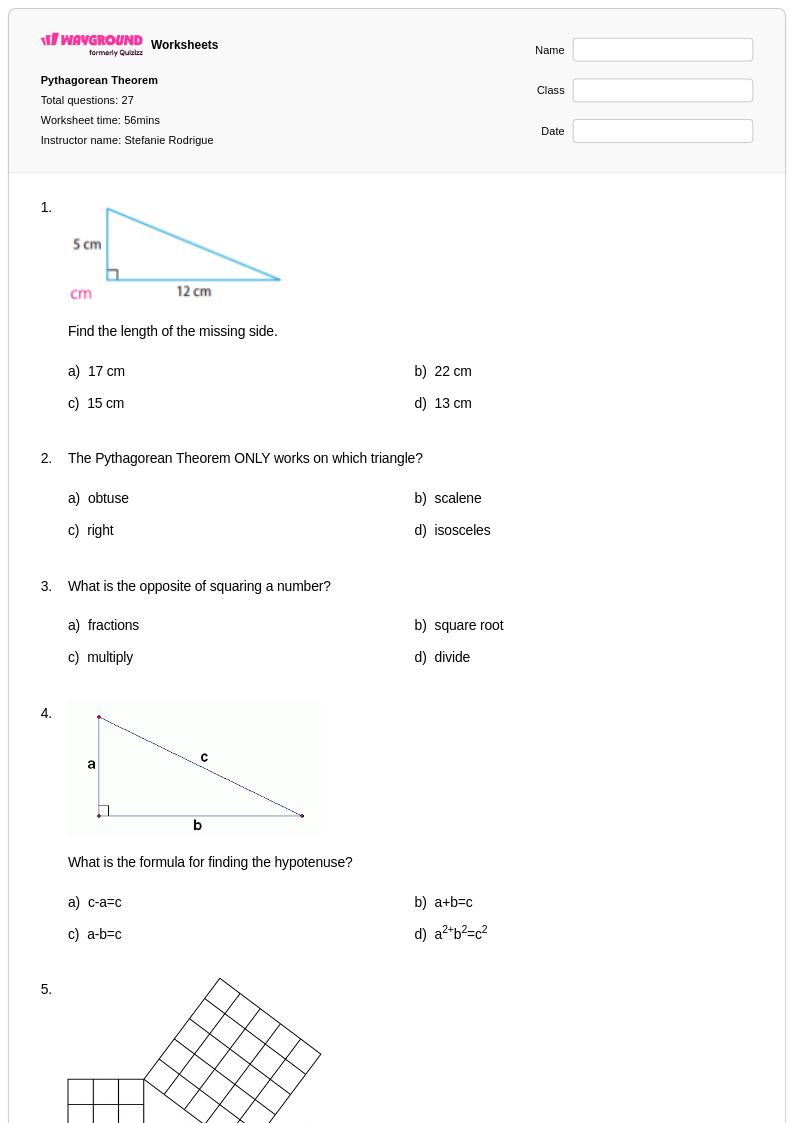
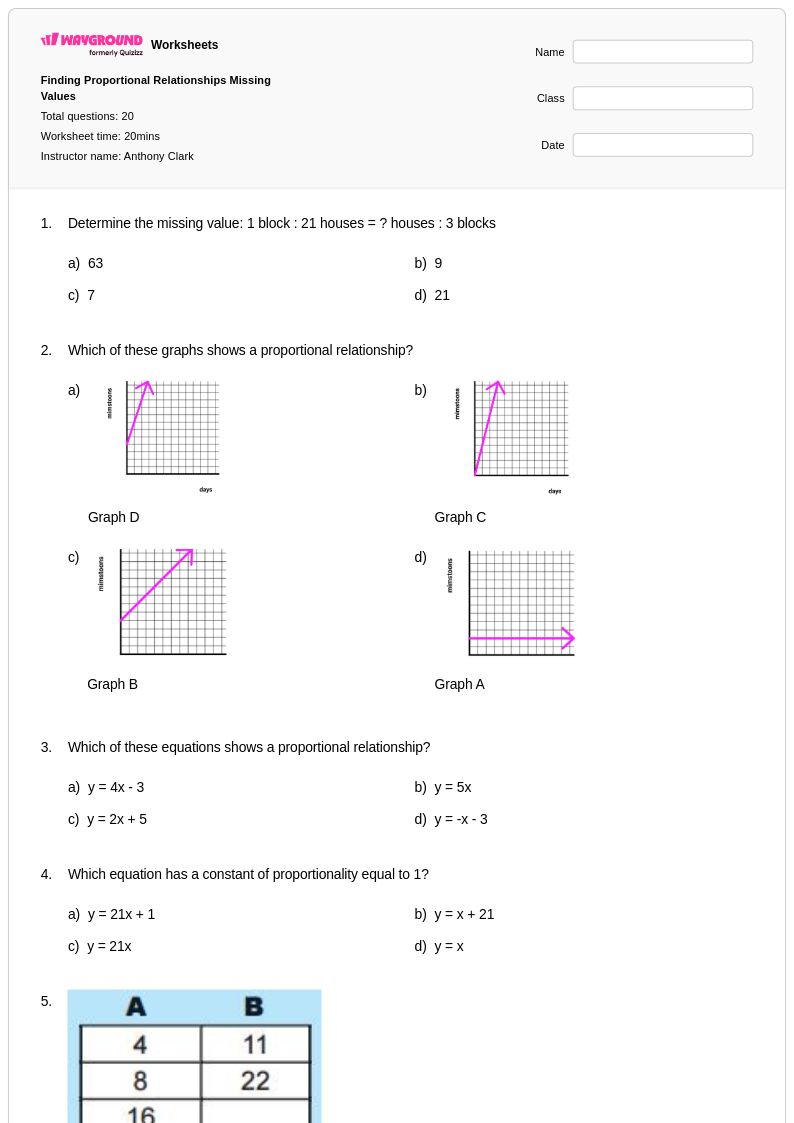
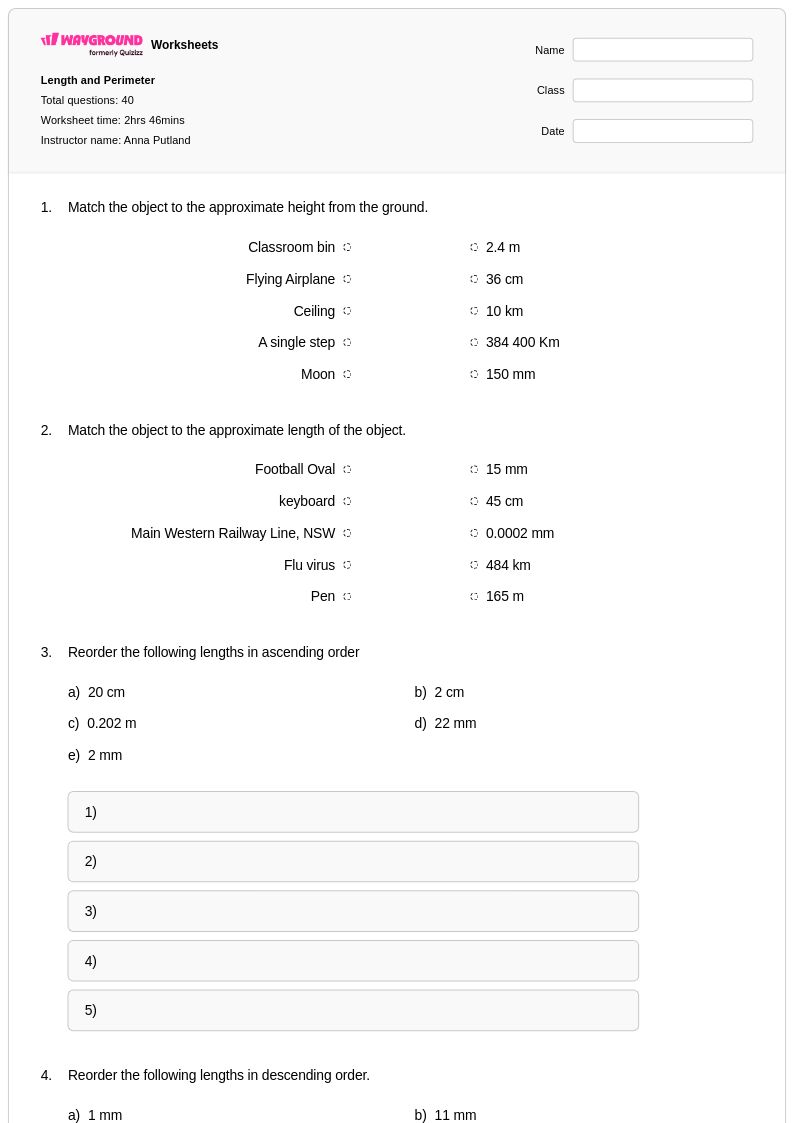
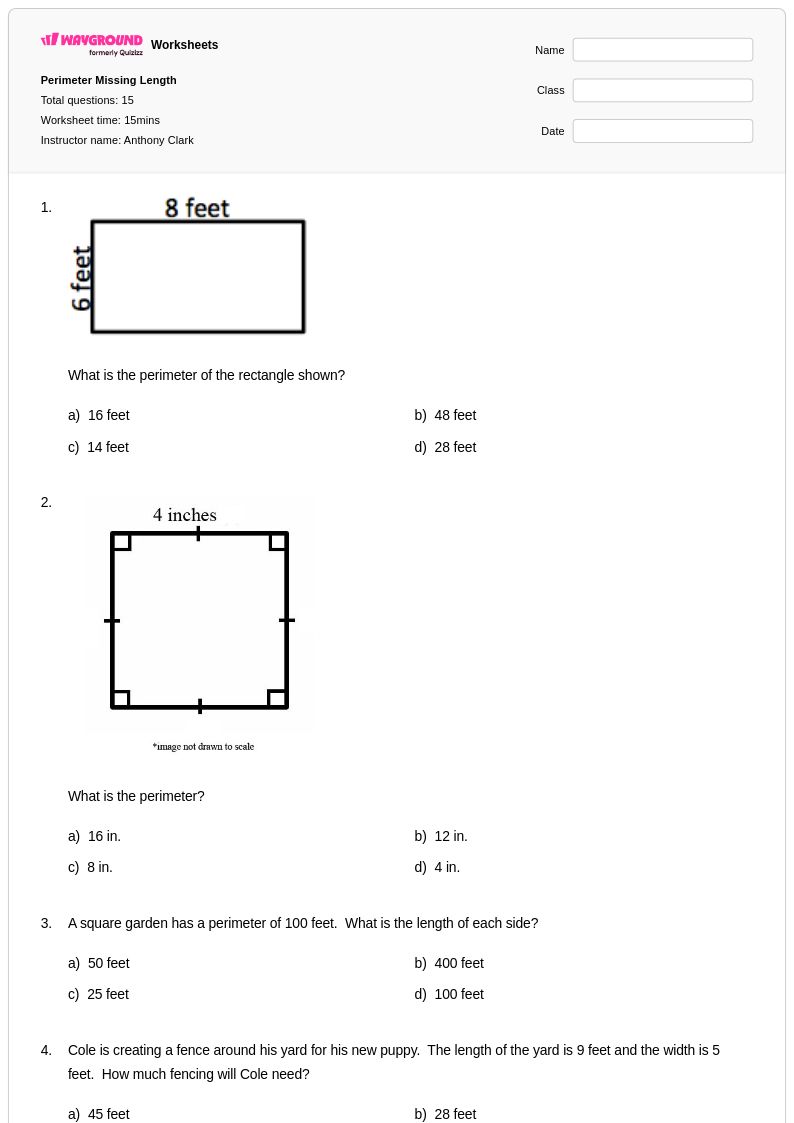
Finding missing lengths worksheets for Year 7 geometry provide students with essential practice in applying measurement principles, proportional reasoning, and geometric relationships to solve real-world problems. These comprehensive worksheets available through Wayground help seventh-grade students master fundamental skills including using the Pythagorean theorem, working with similar figures, calculating perimeters and missing sides in polygons, and applying scale factor concepts. Each worksheet features carefully structured practice problems that progress from basic identification exercises to complex multi-step calculations, ensuring students develop both computational fluency and conceptual understanding. The collection includes detailed answer keys and printable pdf formats that make it easy for educators to assign meaningful homework, conduct formative assessments, and provide targeted skill practice that aligns with grade-level expectations.
Wayground supports mathematics teachers with millions of teacher-created resources specifically designed for Year 7 geometry instruction, offering robust search and filtering capabilities that help educators quickly locate worksheets focused on finding missing lengths. The platform's standards alignment ensures that all geometry worksheets meet curriculum requirements while providing differentiation tools that allow teachers to customize difficulty levels and problem types based on individual student needs. Teachers can access these resources in both printable and digital pdf formats, making lesson planning more efficient and enabling flexible implementation across various instructional settings. Whether used for initial skill introduction, remediation support, or enrichment challenges, these finding missing lengths worksheets provide the structured practice opportunities that help students build confidence and proficiency in geometric problem-solving while preparing them for more advanced mathematical concepts.
FAQs
How do I teach finding missing lengths in 7th grade geometry?
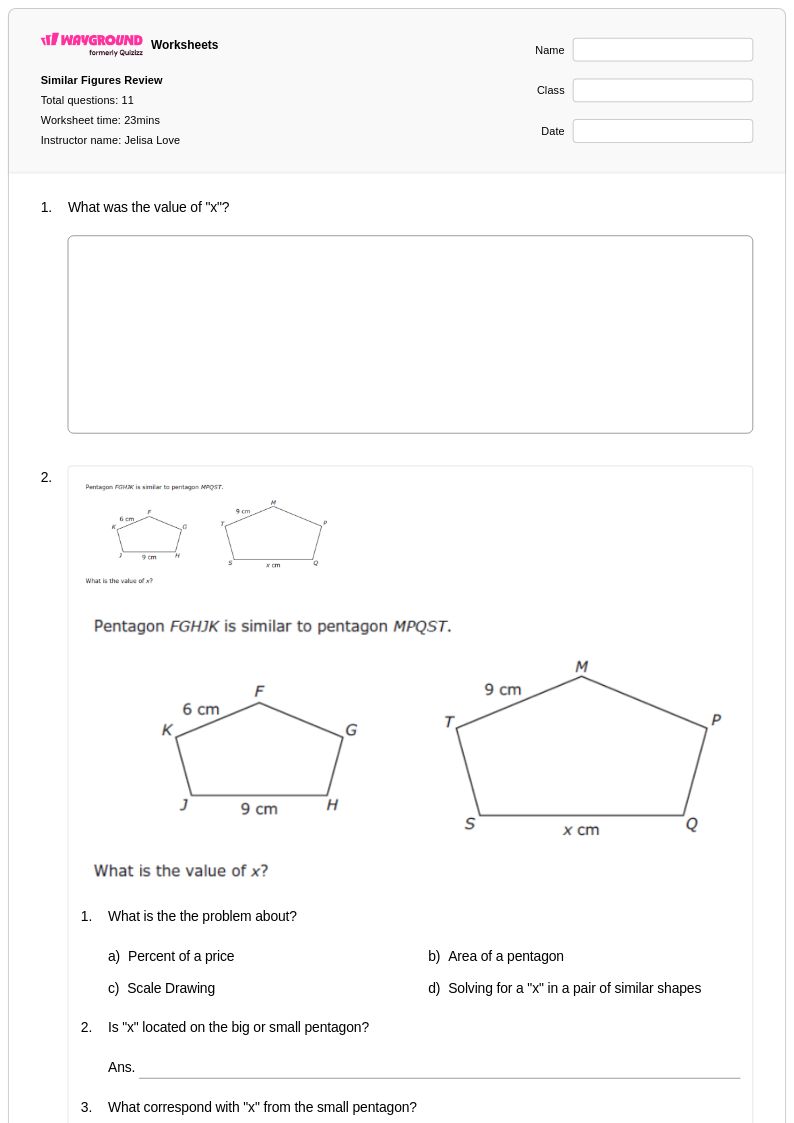
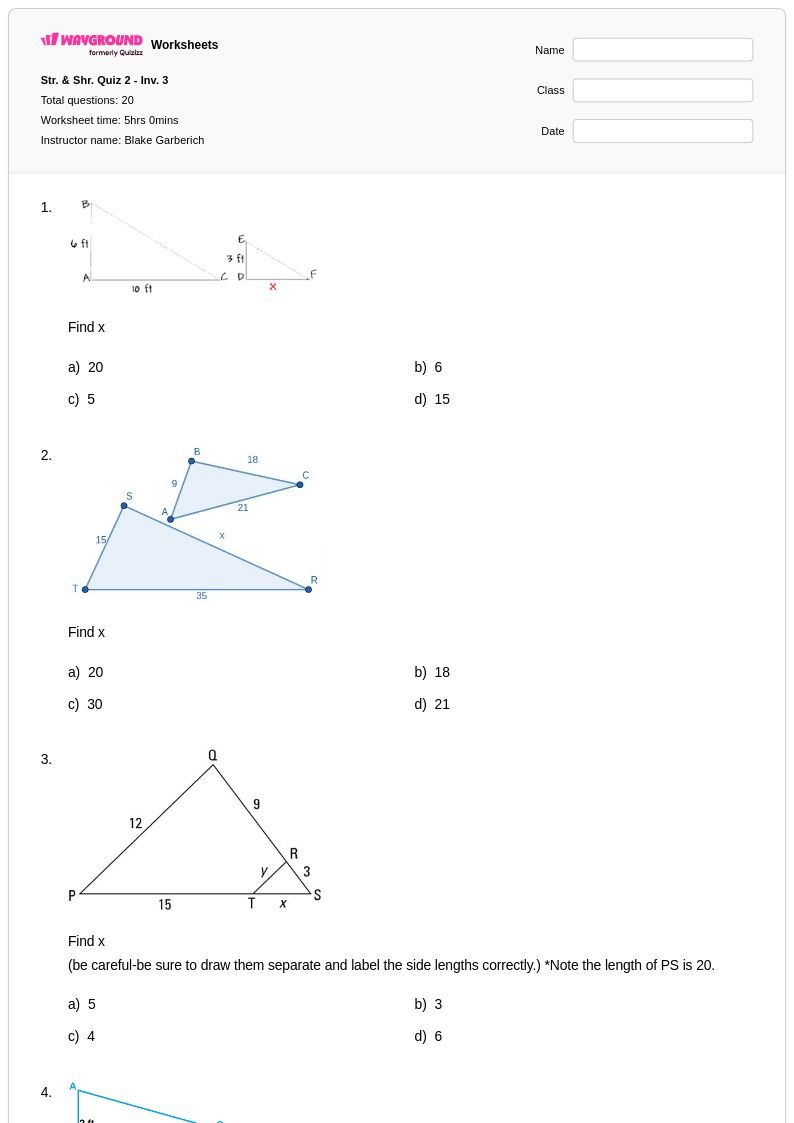
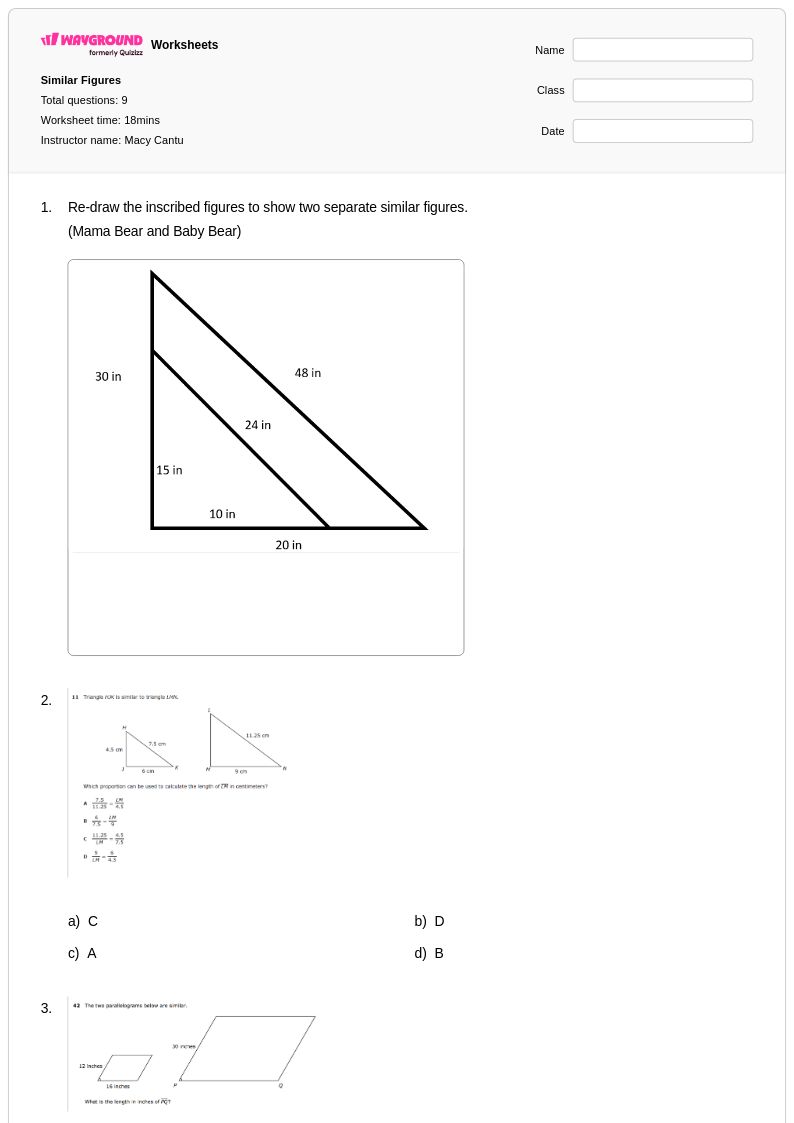
Grade 7 is where similar figures and scale factors become the primary tools, so the key instructional move is teaching students to identify corresponding sides before setting up any proportion. A common classroom approach: give students two similar triangles with different orientations and ask them to match sides by angle, not by position. Once they can do that reliably, the proportion setup follows naturally. The Pythagorean theorem can be introduced here as a special case for right triangles.
What exercises help 7th graders practice finding missing lengths?
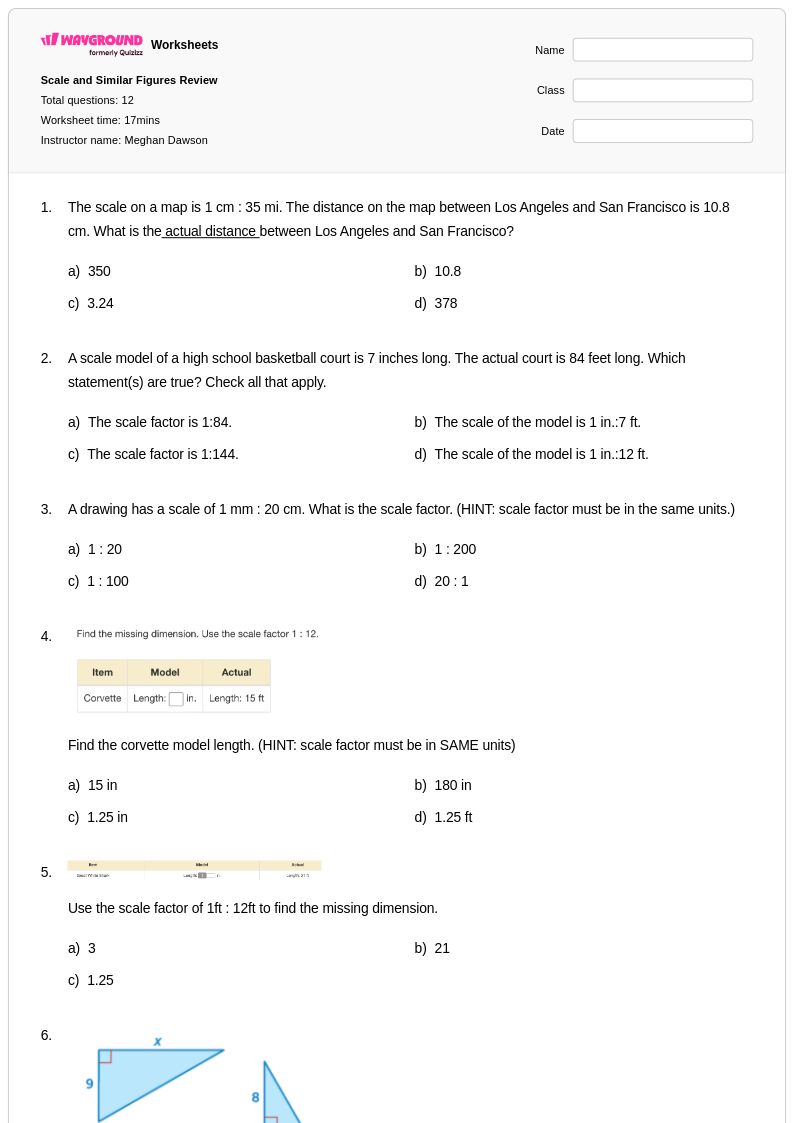
Problems involving similar figures with scale factors are the core practice at this grade. Mix in polygon perimeter problems where one or two sides are missing, and include at least some problems where the figure is embedded in a real-world context — scale drawings, maps, or blueprints work well. Wayground's Grade 7 worksheets progress from basic identification to multi-step calculations, which mirrors how the skill is typically assessed.
What mistakes do 7th graders commonly make when finding missing lengths?
The most persistent error is setting up a proportion with non-corresponding sides — students match sides by position in the diagram rather than by the angles that define them. A related mistake is inverting the ratio: writing the small triangle's side over the large triangle's side in one fraction, then flipping it in the other. Both errors produce an answer that looks plausible but is wrong, so requiring students to label corresponding sides before writing any proportion catches most of them.
How do I use Wayground's Grade 7 finding missing lengths worksheets?
These worksheets are available as printable PDFs and as digital quizzes you can host directly on Wayground. Every worksheet includes a complete answer key, so they work well for self-paced practice or homework. For schools managing screen time, the PDF version gives students the same rigorous practice on paper — and if you're grading printed submissions, the Wayground for Teachers app lets you scan and grade student work without re-entering answers manually.
How does finding missing lengths fit into the Common Core progression at Grade 7?
Common Core builds proportional reasoning heavily in Grade 7, and similar figures are one of the main geometric applications of that work. Students are expected to use scale factors to find missing side lengths in similar figures — a direct extension of the ratio and proportion work they do in the number strand. This sets them up for Grade 8, where the Pythagorean theorem becomes the primary tool and proportional reasoning shifts toward trigonometric foundations.
How can I differentiate finding missing lengths practice for my 7th grade class?
For students who struggle with the visual complexity of similar-figure problems, Wayground's worksheet-level tools let you increase font size or apply wider spacing to reduce clutter on the page. For English language learners working through proportion word problems, you can generate a translated version of the same worksheet. These adjustments don't change the math — they remove layout and language barriers so students can focus on the geometric reasoning.