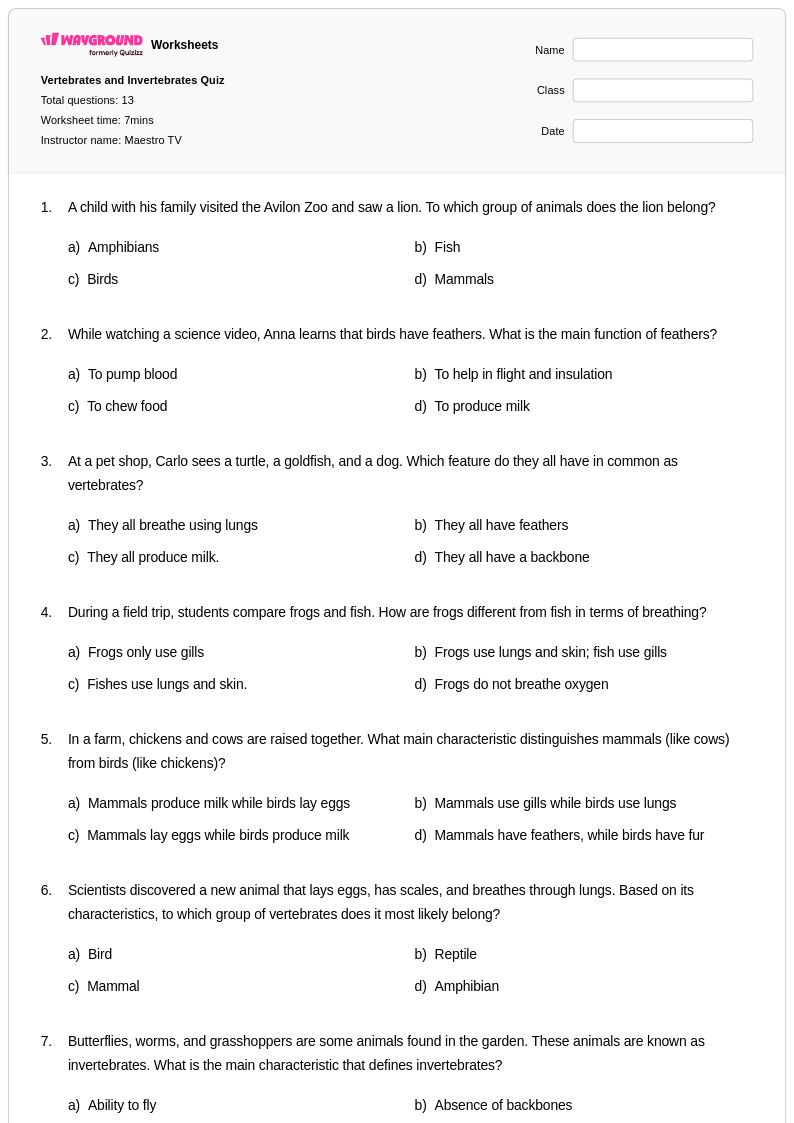
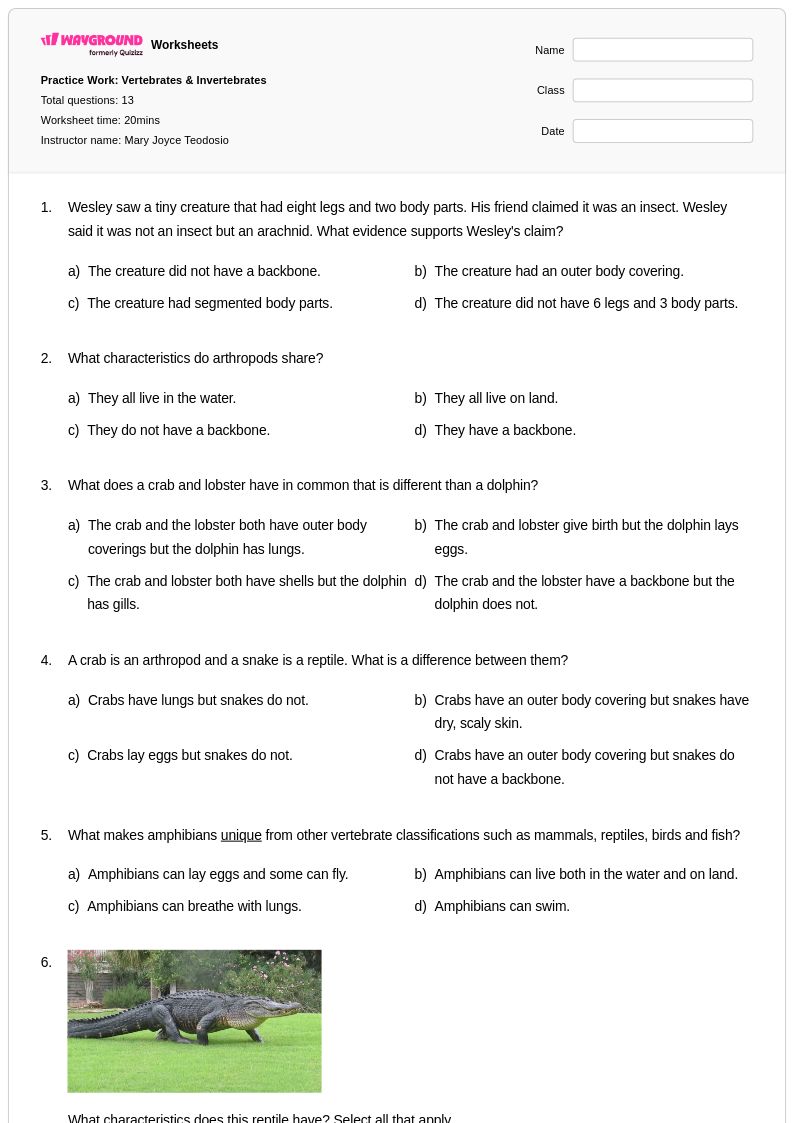
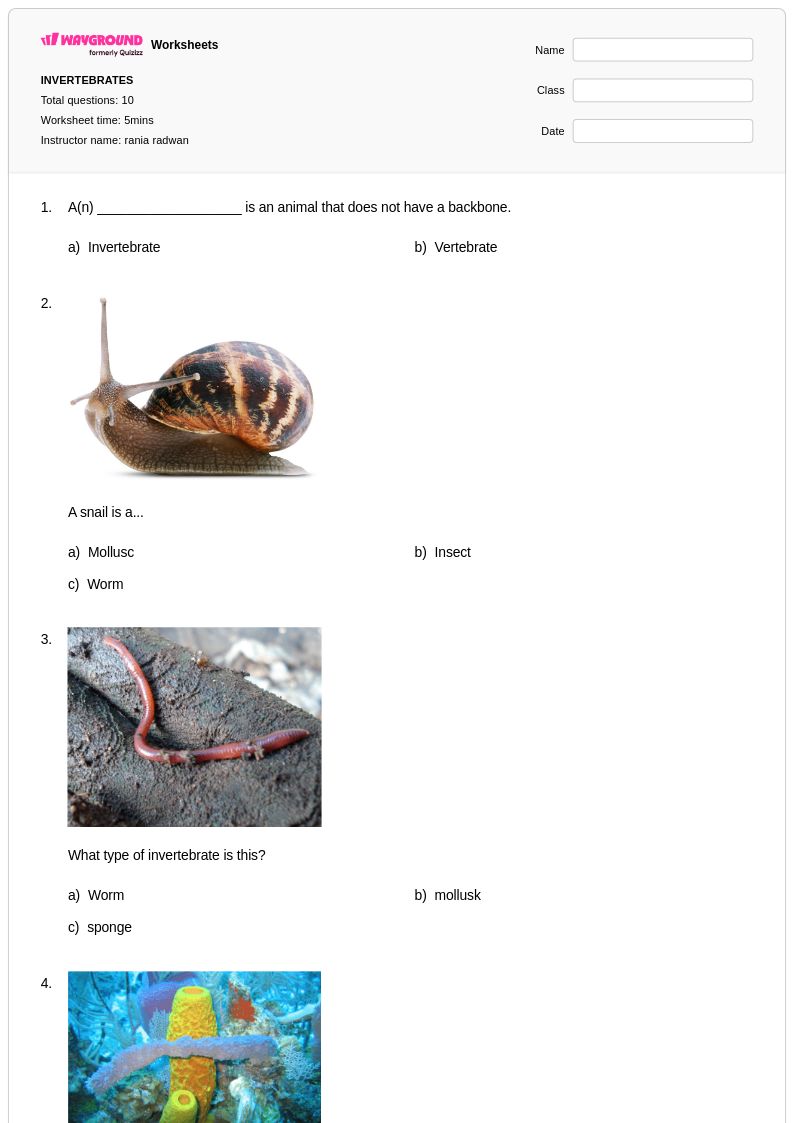
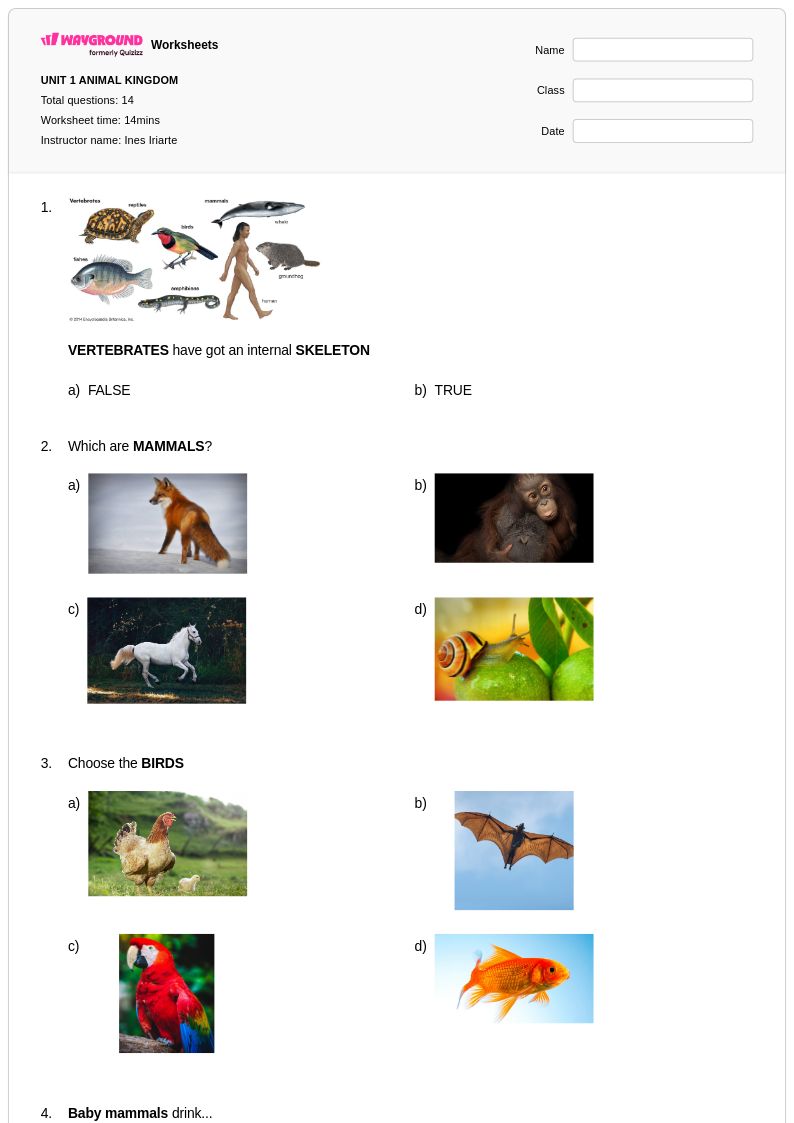
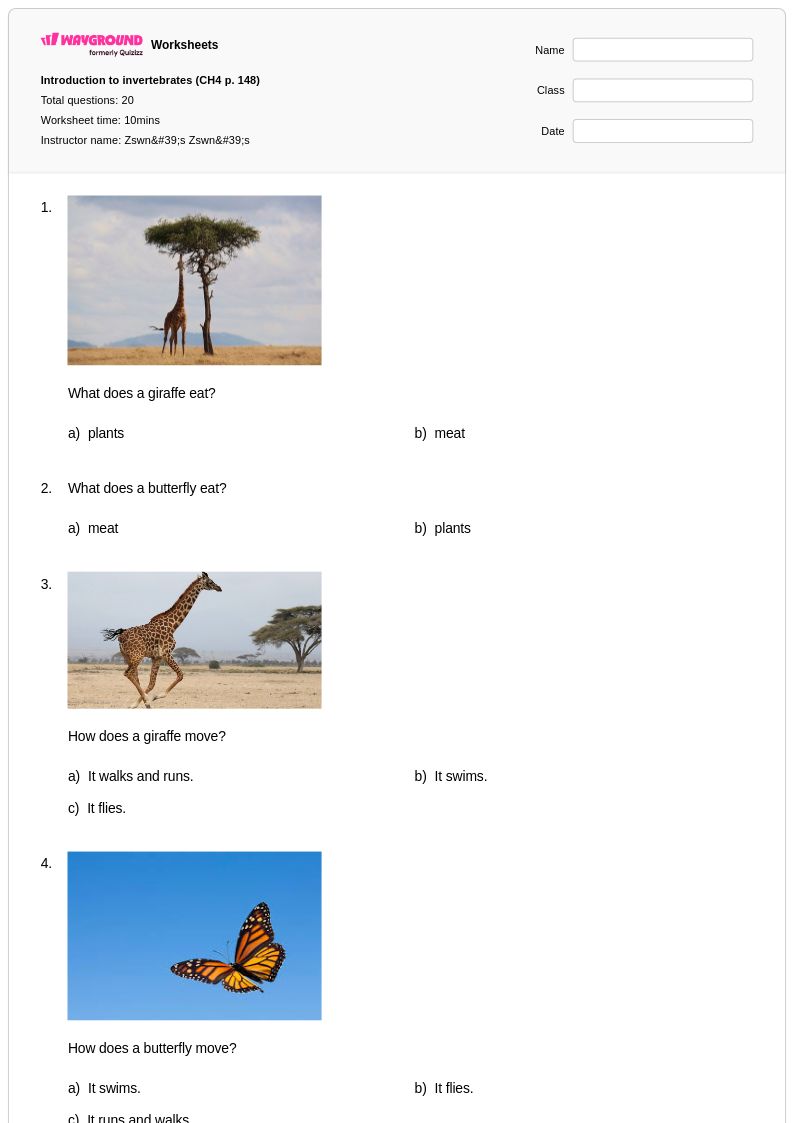
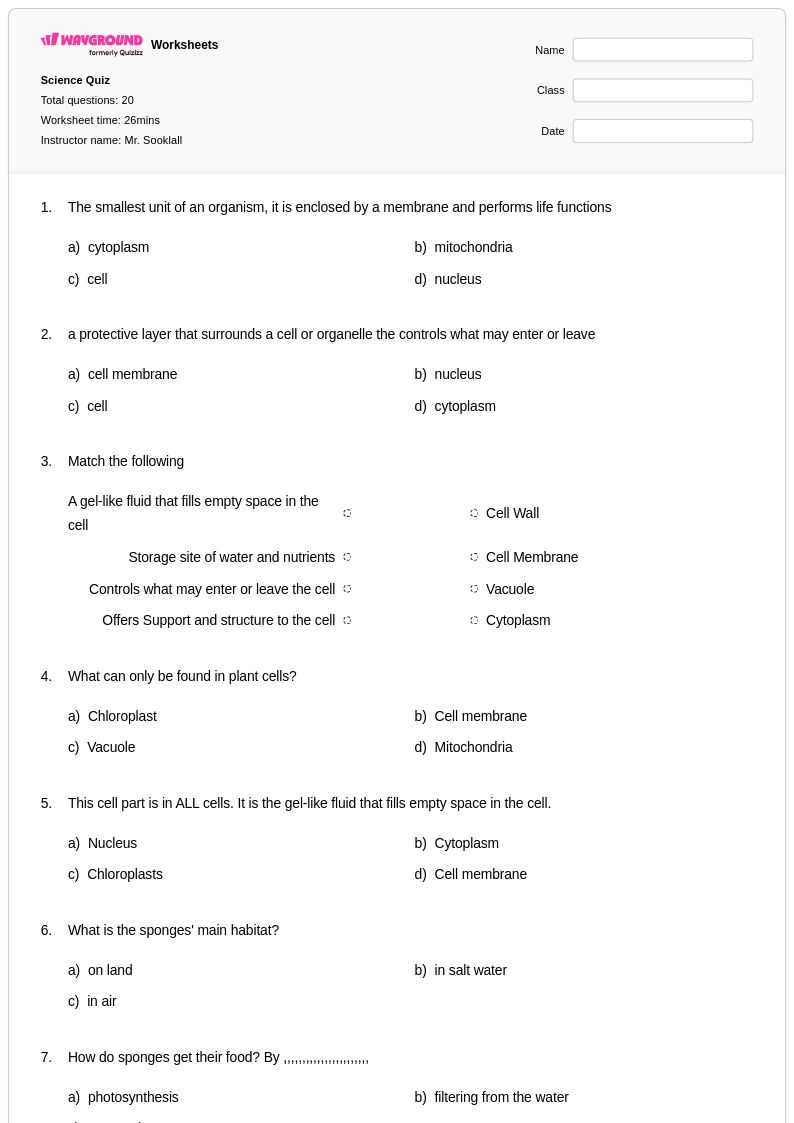
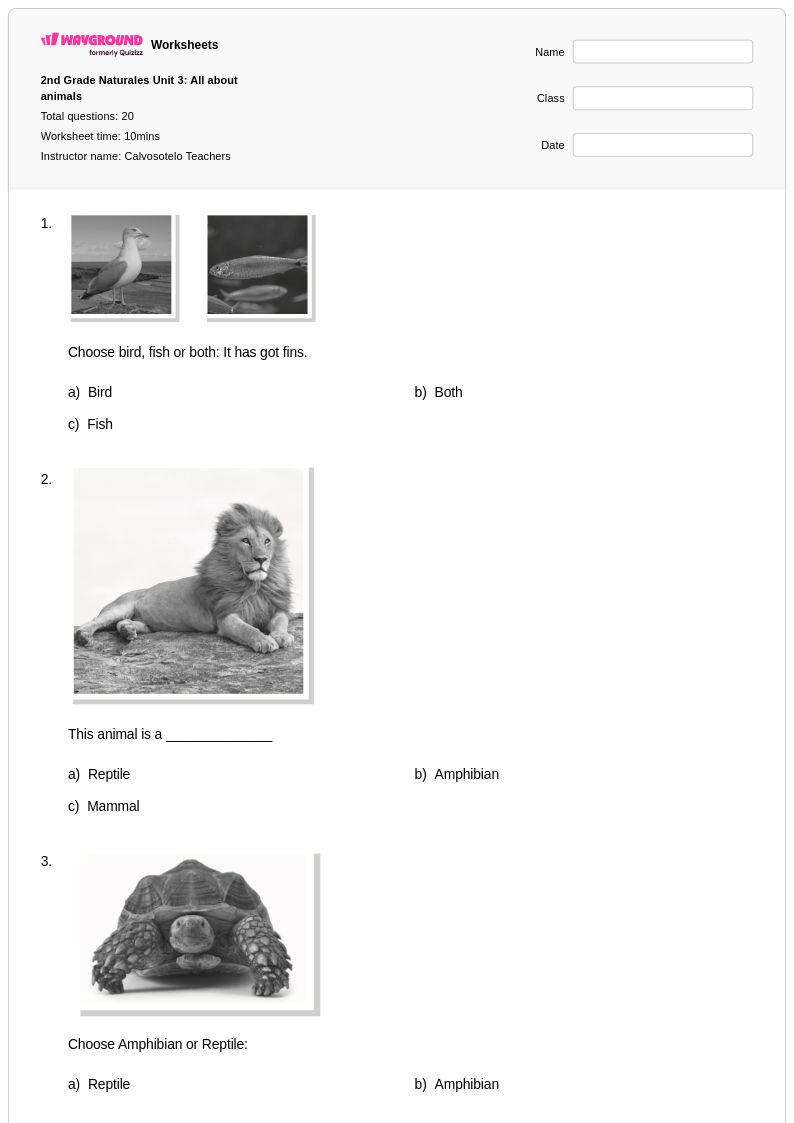
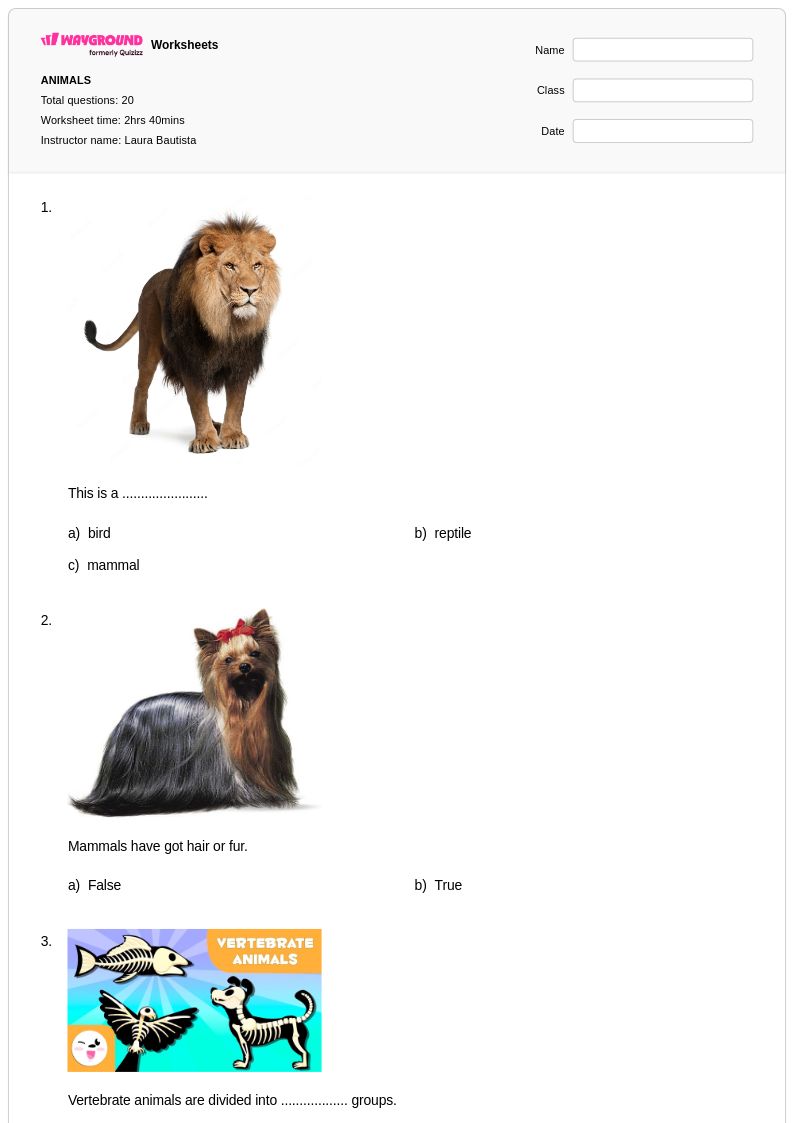
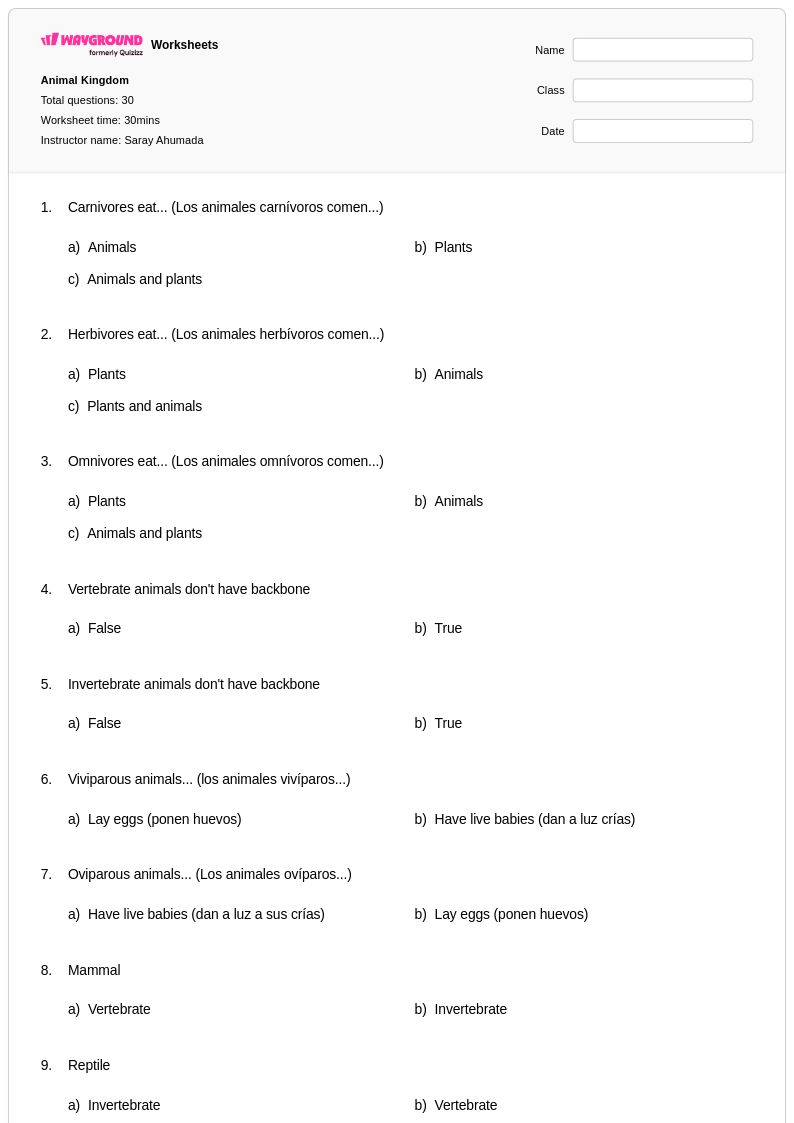
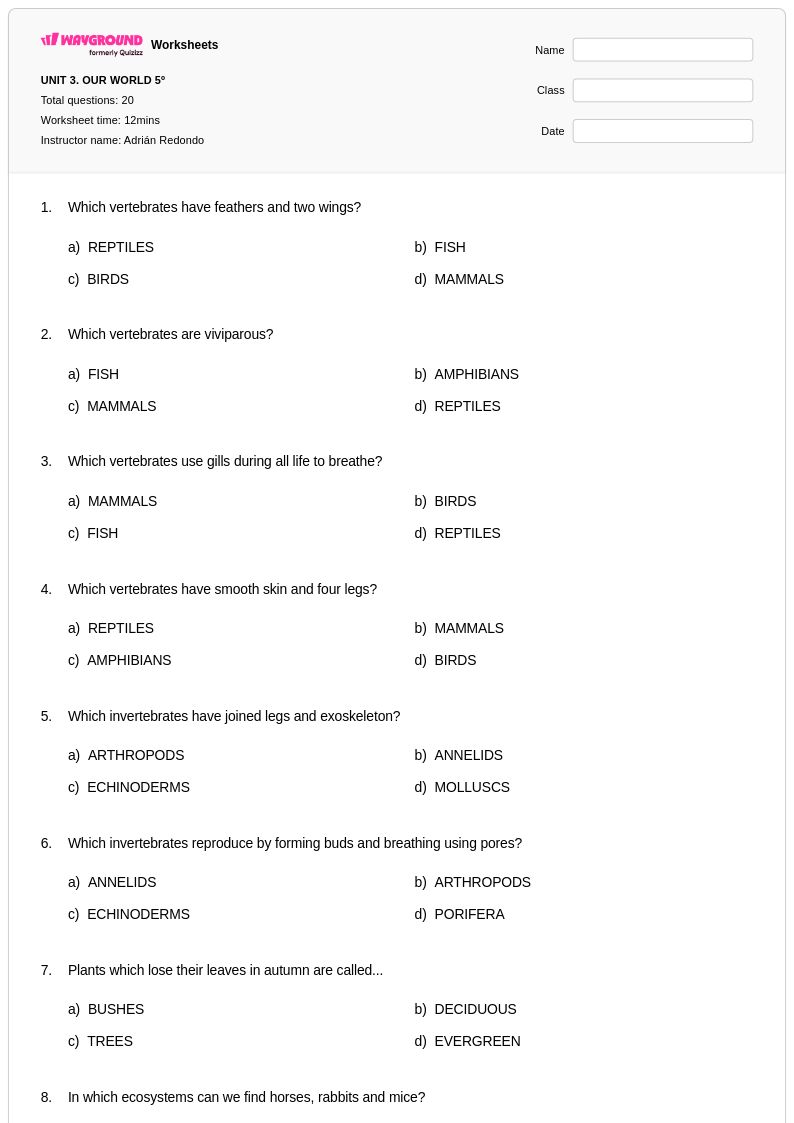
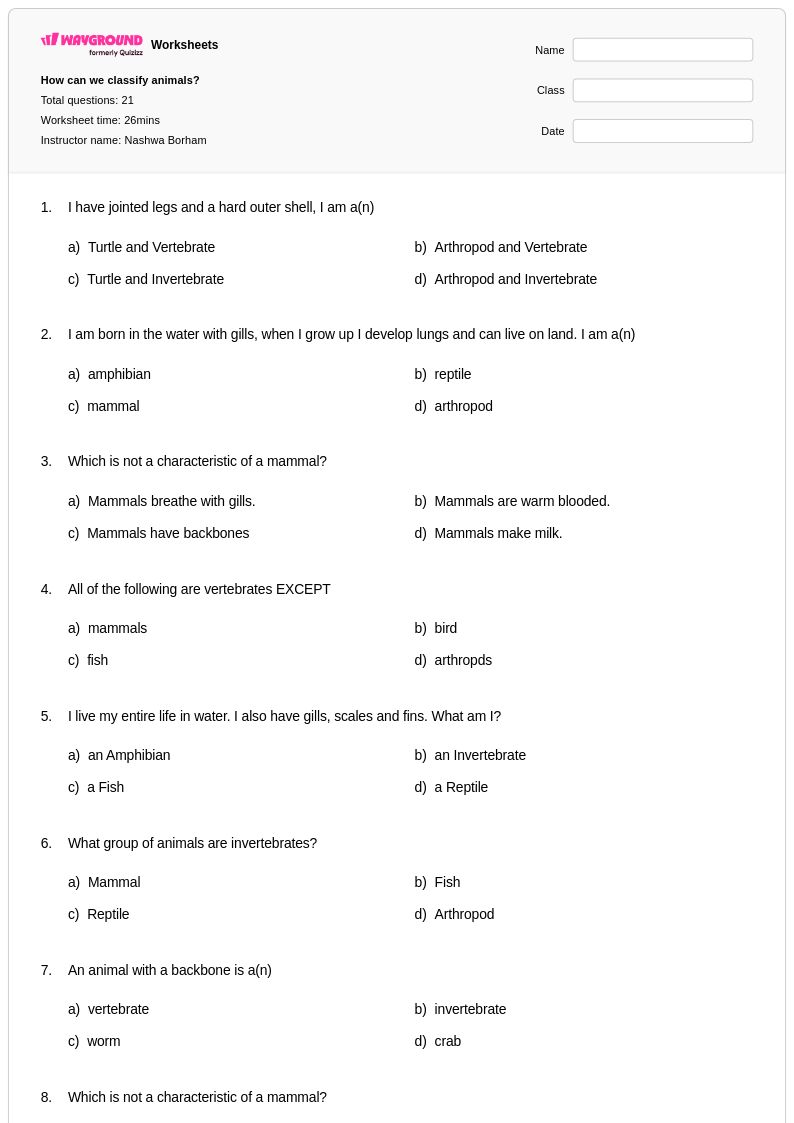
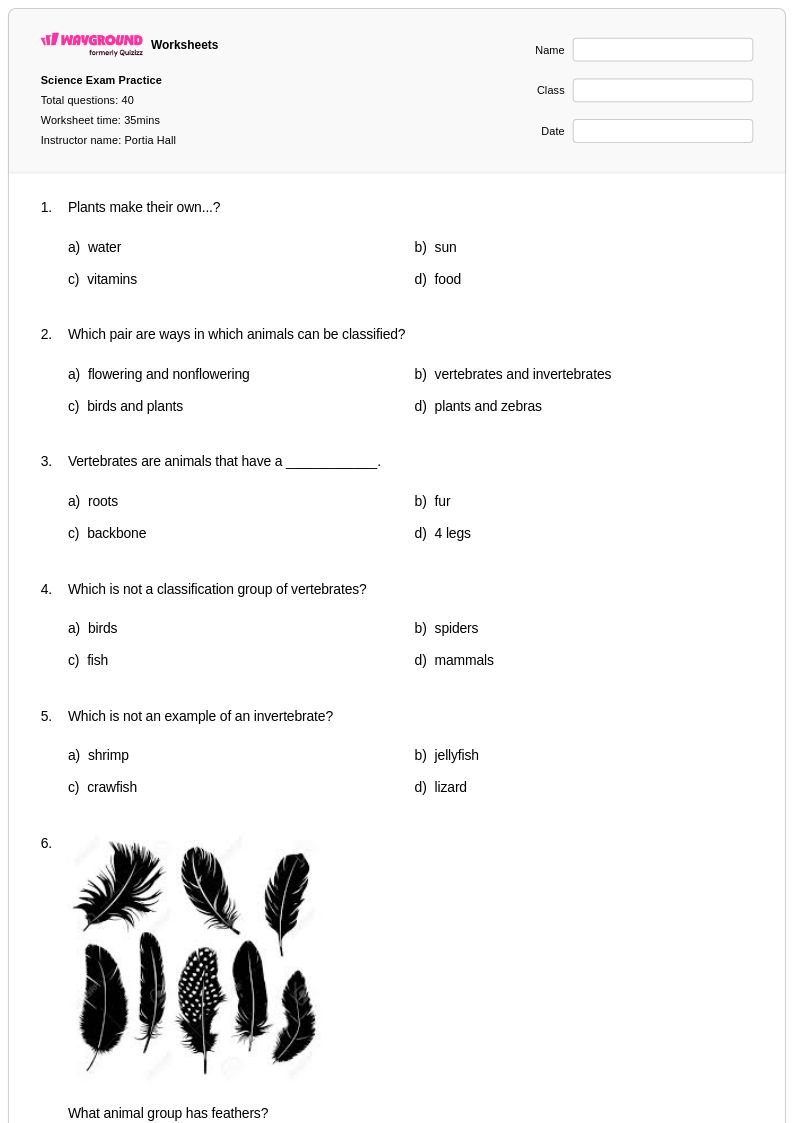
Year 2 arthropod worksheets from Wayground help young students explore insects, spiders, and crustaceans through engaging printables, practice problems, and free PDF activities with answer keys.
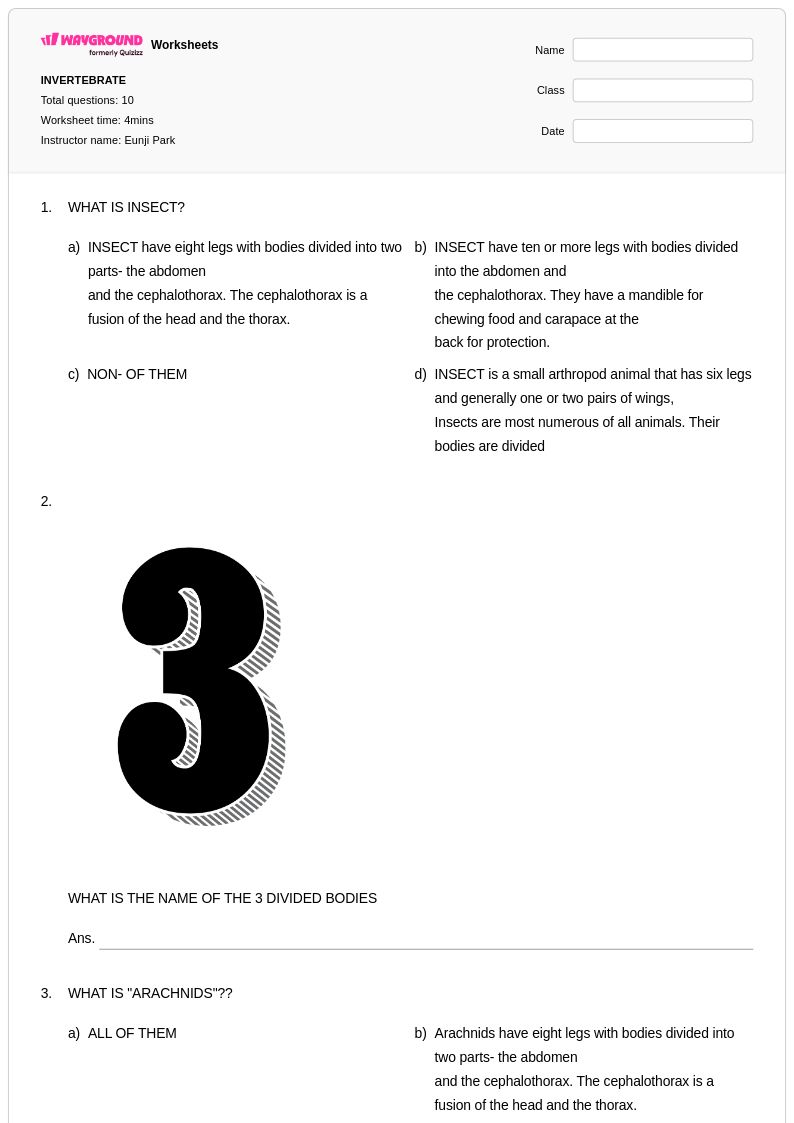
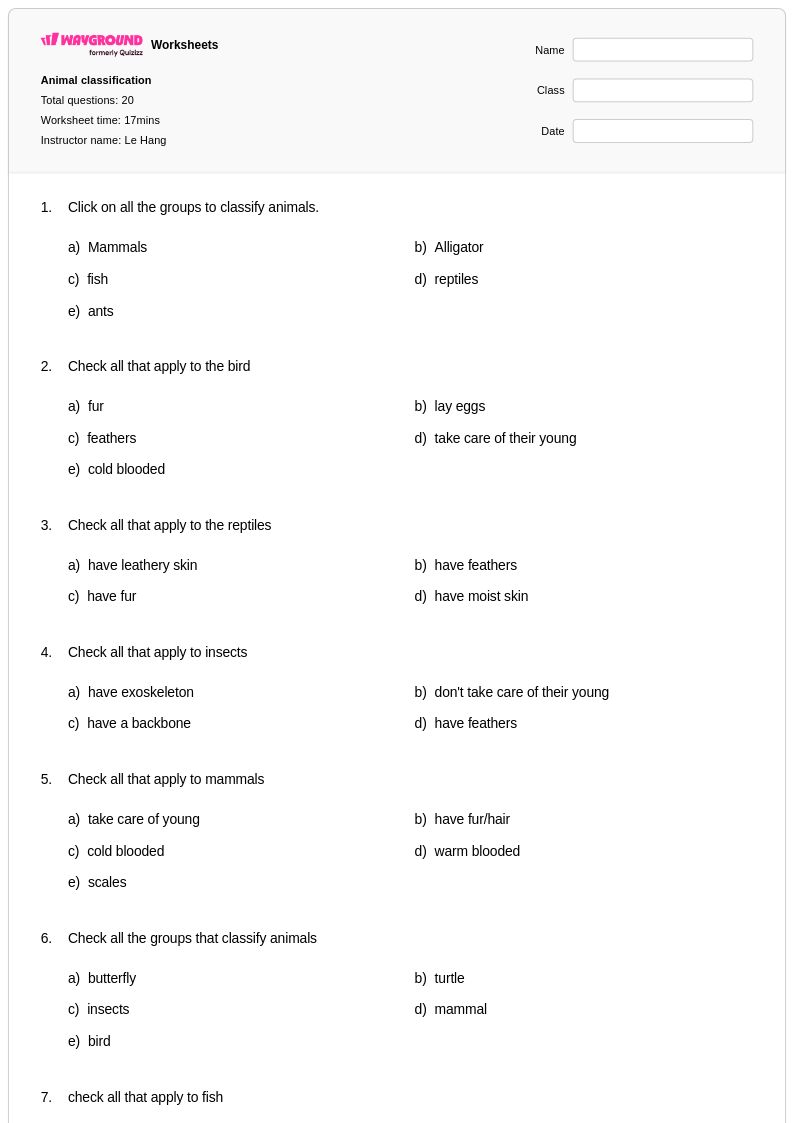
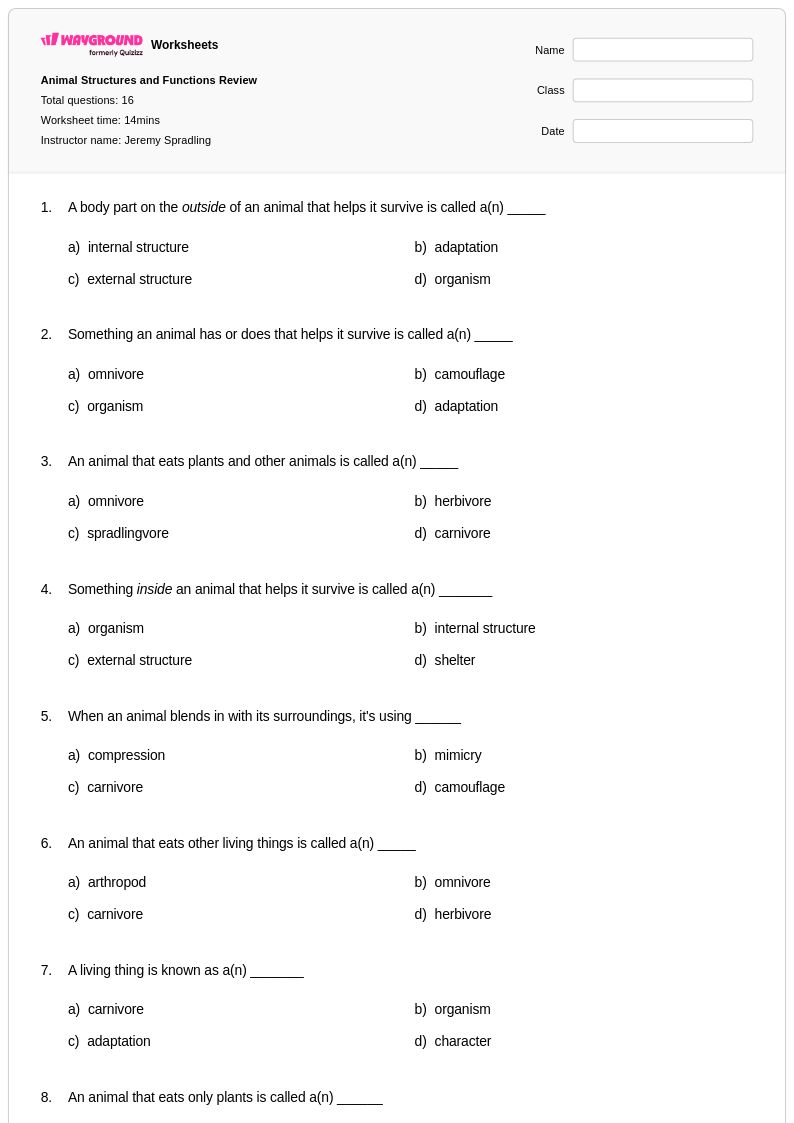
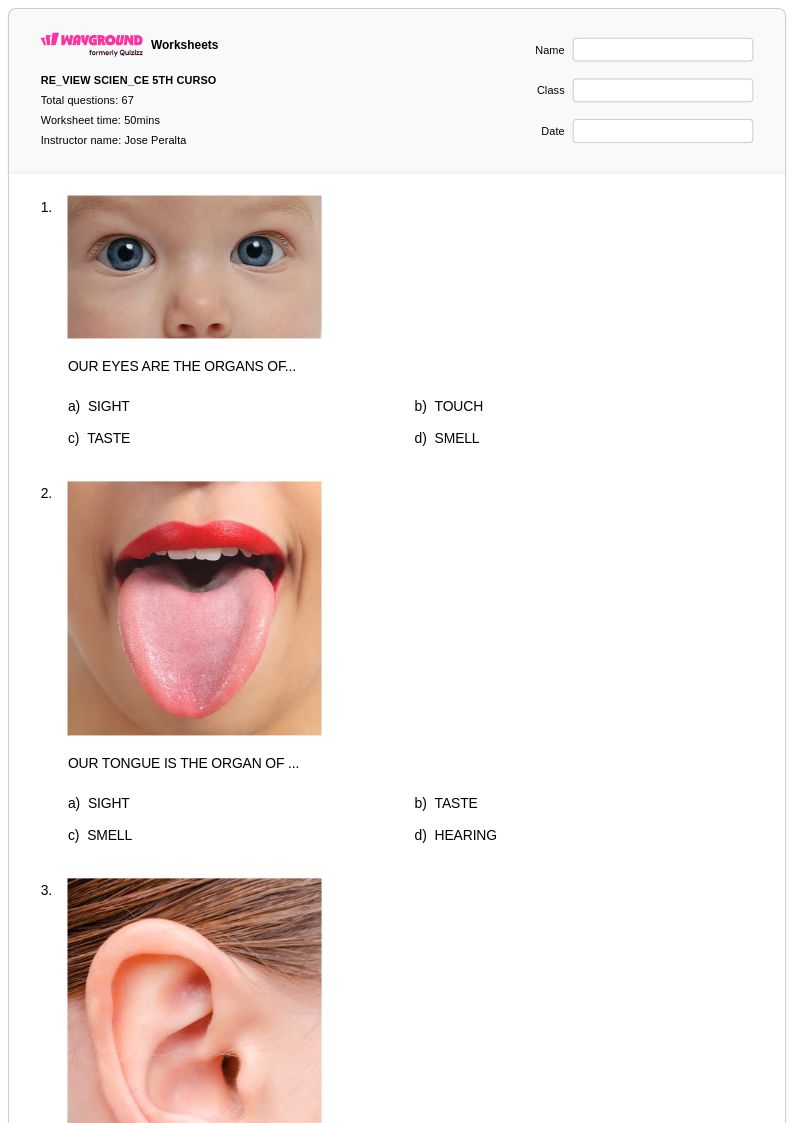
Arthropod worksheets for Year 2 students available through Wayground (formerly Quizizz) provide young learners with engaging, age-appropriate resources to explore the fascinating world of insects, spiders, and crustaceans. These carefully designed worksheets strengthen essential scientific observation skills while introducing students to arthropod characteristics such as segmented bodies, jointed legs, and exoskeletons through colorful illustrations and simple identification activities. Each worksheet collection includes comprehensive answer keys to support both independent learning and teacher-guided instruction, with free printables that feature practice problems ranging from basic arthropod sorting exercises to simple habitat matching activities that build foundational biology knowledge at the elementary level.
Wayground's extensive library contains millions of teacher-created arthropod resources specifically aligned with Year 2 science standards, offering educators powerful search and filtering capabilities to locate materials perfectly suited to their classroom needs. The platform's differentiation tools enable teachers to customize worksheets for diverse learning levels, while flexible formatting options provide both printable pdf versions for traditional classroom use and digital alternatives for technology-integrated lessons. These comprehensive features streamline lesson planning while supporting targeted remediation for struggling students, enrichment opportunities for advanced learners, and consistent skill practice that reinforces arthropod concepts through varied activities including classification exercises, life cycle studies, and basic scientific drawing tasks.
FAQs
How do I teach arthropods to my science students?
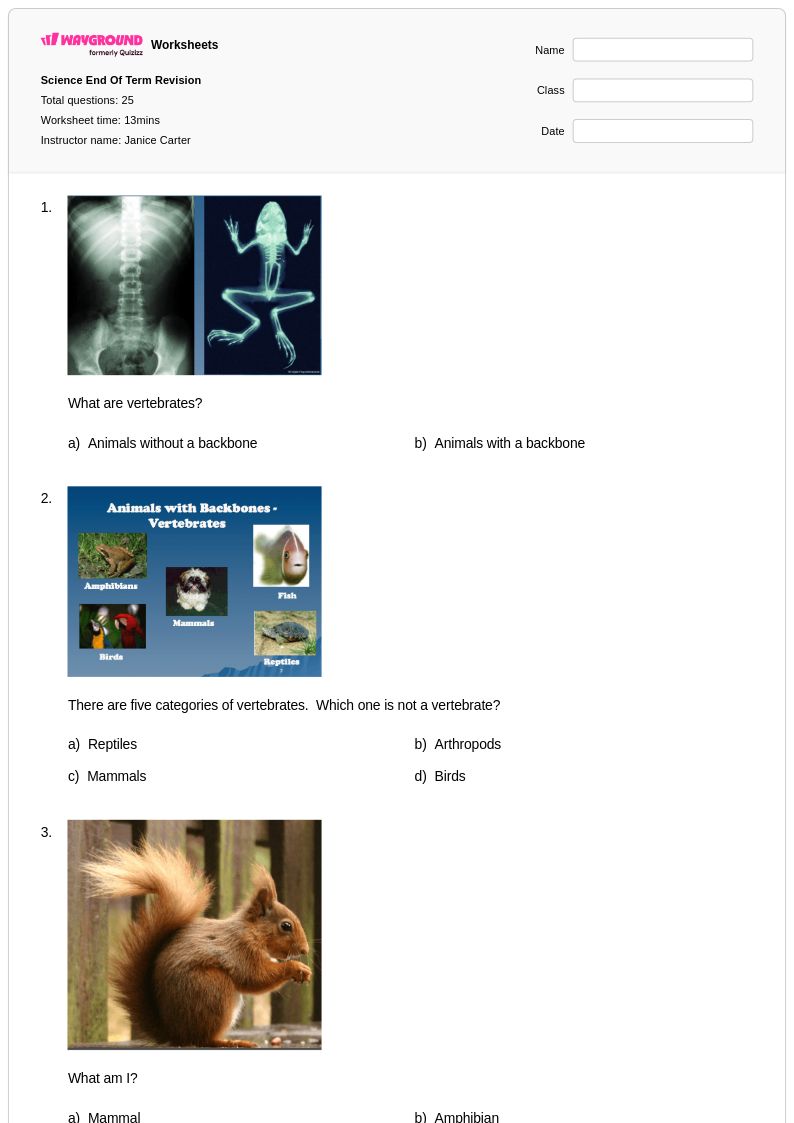
Start by anchoring instruction in the defining characteristics of arthropods: an exoskeleton, segmented body, and jointed appendages. From there, organize lessons around the four major groups — insects, arachnids, crustaceans, and myriapods — using comparative charts to highlight structural differences. Connecting arthropod anatomy to function (e.g., how appendages relate to feeding or locomotion) builds deeper conceptual understanding than memorization alone.
What are common mistakes students make when classifying arthropods?
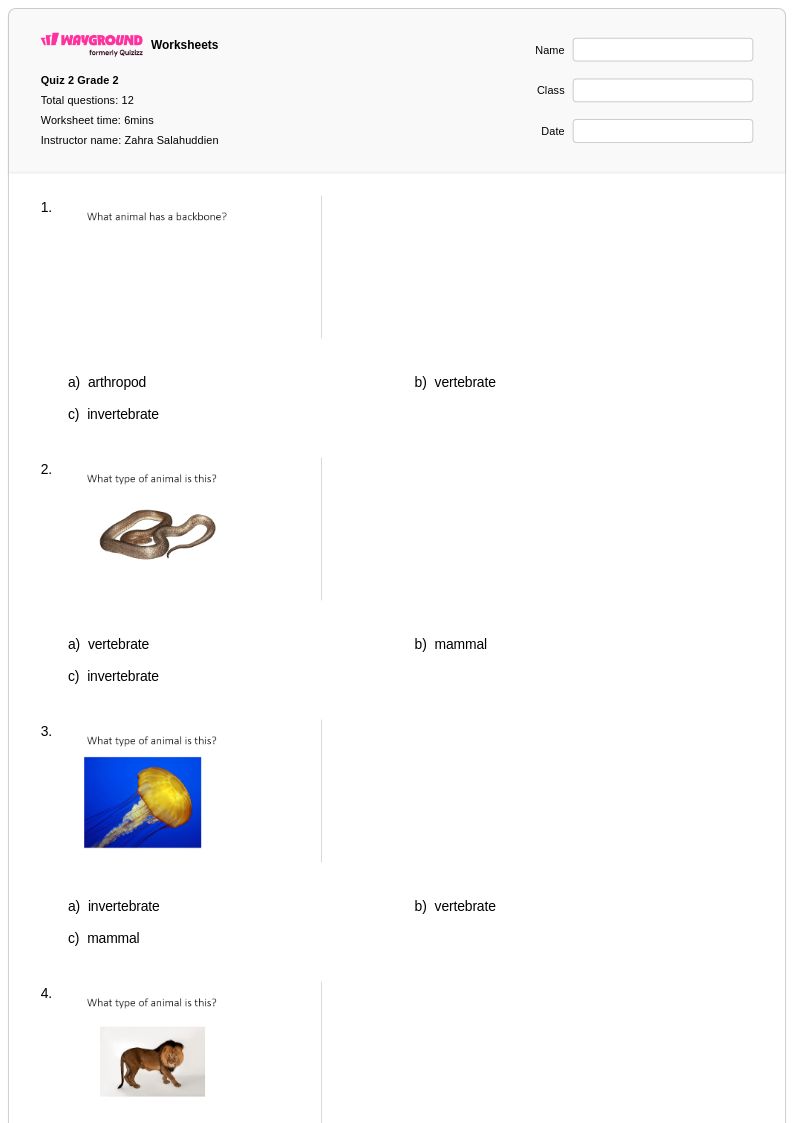
The most frequent error is conflating insects and arachnids — students often assume all small, land-dwelling arthropods are insects, missing the key distinction that arachnids have eight legs and two body segments while insects have six legs and three. Students also struggle with crustaceans, which they may not immediately recognize as arthropods since many are aquatic. Targeting these misconceptions with classification exercises that require justification forces students to apply criteria rather than guess.
What exercises help students practice identifying arthropod characteristics?
Labeling diagrams of arthropod body segments and appendages is one of the most effective practice formats because it requires students to apply anatomical vocabulary in context. Comparison tables that ask students to contrast two or more arthropod groups across shared traits — such as number of legs, body regions, and habitat — reinforce classification logic. Adding short-answer justification prompts prevents students from guessing without reasoning.
How can I help students understand arthropod metamorphosis?
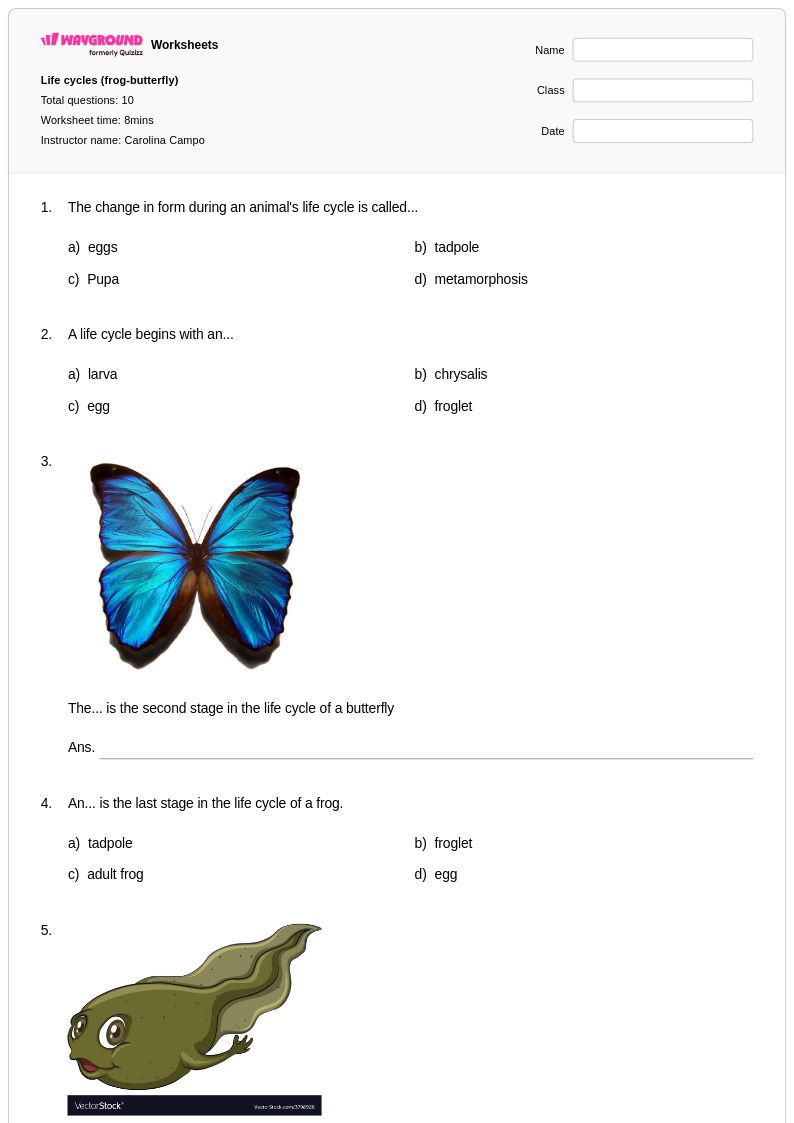
Distinguishing complete metamorphosis (egg, larva, pupa, adult) from incomplete metamorphosis (egg, nymph, adult) is a common point of confusion, so sequencing activities work particularly well here. Have students arrange life cycle stages in order and explain the role of each stage functionally. Connecting specific arthropod examples — such as butterflies for complete and grasshoppers for incomplete — gives students concrete anchors for an otherwise abstract process.
How do I use Wayground's arthropod worksheets in my classroom?
Wayground's arthropod worksheets are available as free printable PDFs for traditional classroom use and in digital formats for technology-integrated environments, including the option to host them as a quiz directly on Wayground. Teachers can use them to introduce new concepts, assign targeted skill practice, or build assessment materials aligned to specific learning objectives. Each worksheet includes a detailed answer key, reducing prep time and making it straightforward to provide immediate feedback.
How can I differentiate arthropod instruction for students at different levels?
For struggling learners, reduce the number of arthropod groups covered at once and provide labeled reference diagrams during practice. For advanced students, push beyond classification into ecological relationships — how arthropods interact with ecosystems as decomposers, pollinators, or prey. On Wayground, teachers can apply built-in accommodations such as read aloud support, reduced answer choices, and extended time on a per-student basis, allowing the same worksheet to serve a range of learners without creating separate versions.