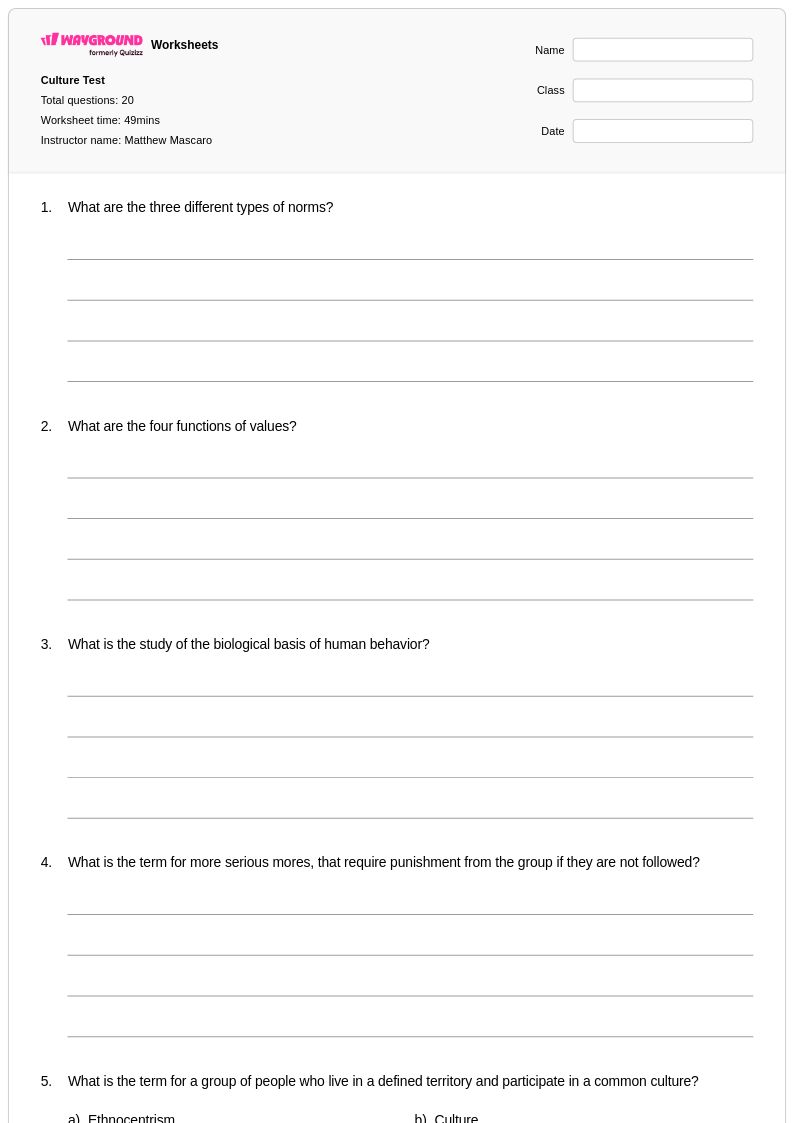
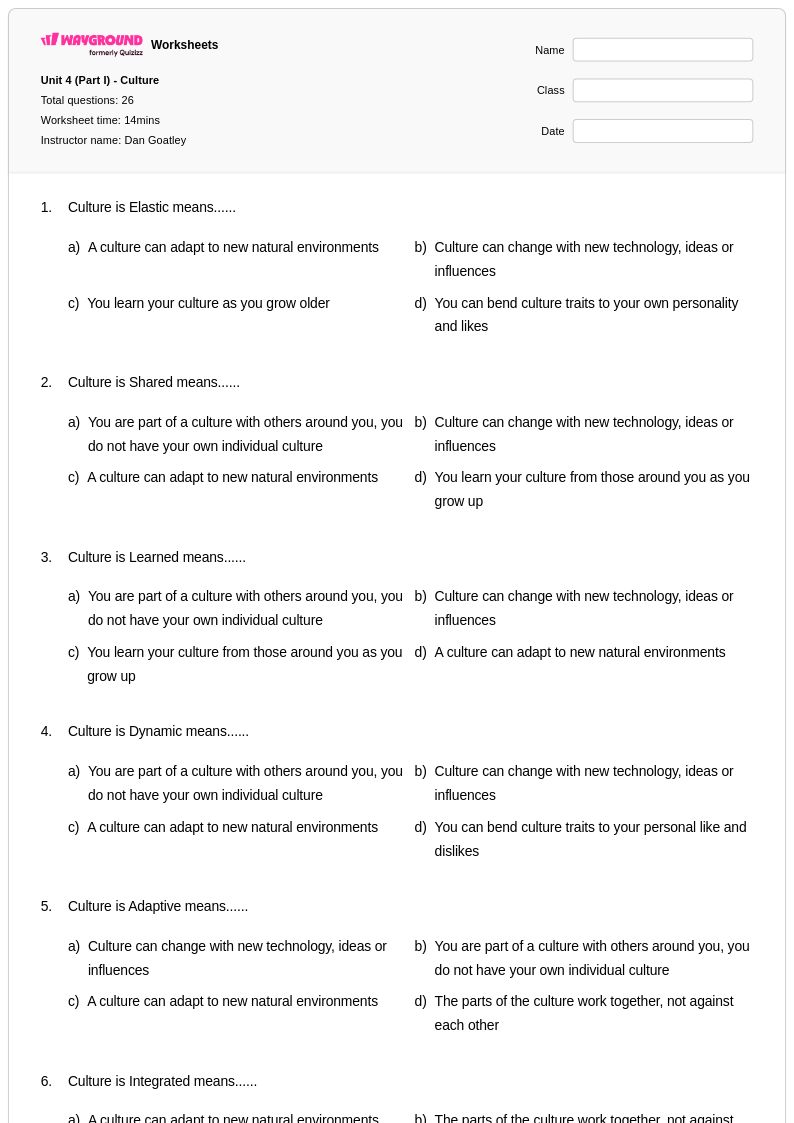
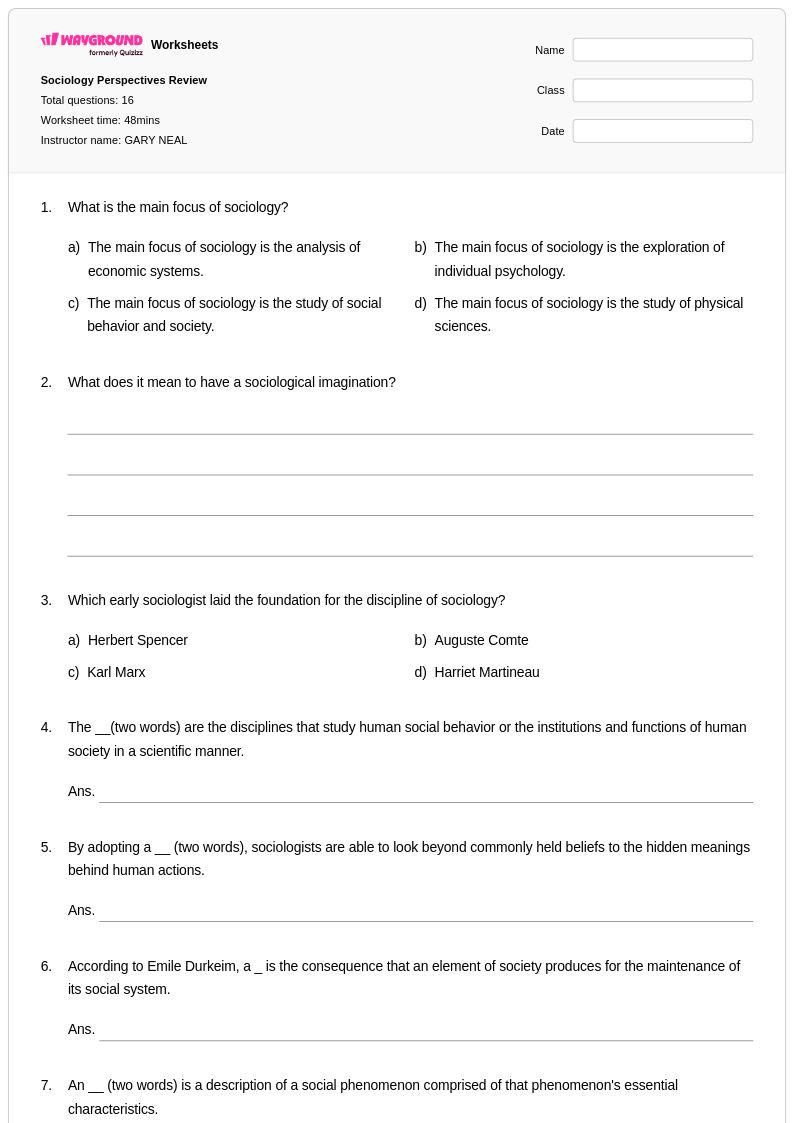
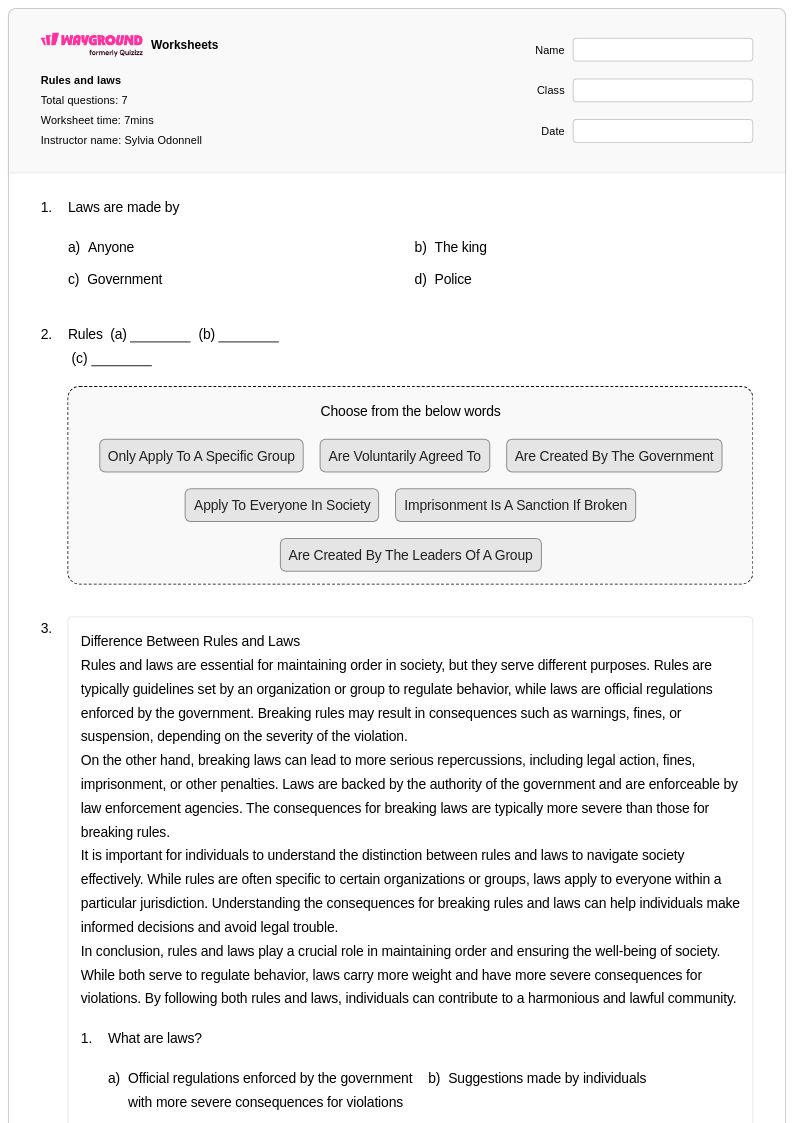
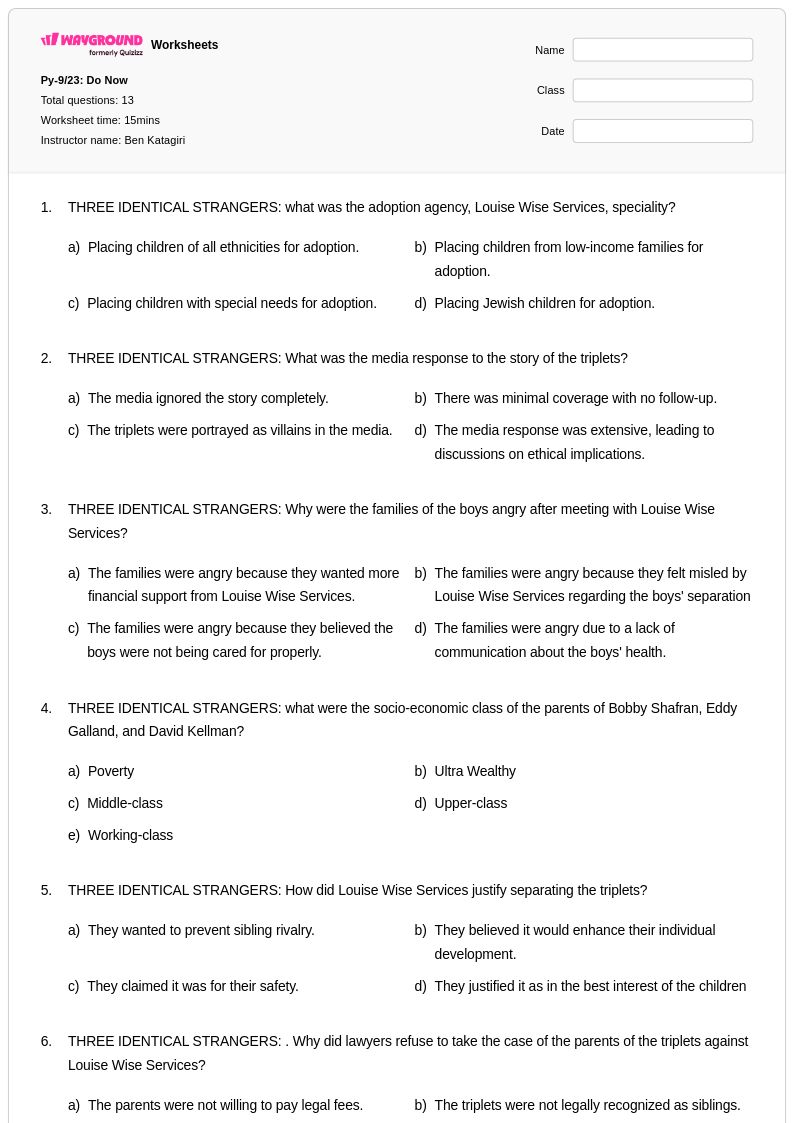
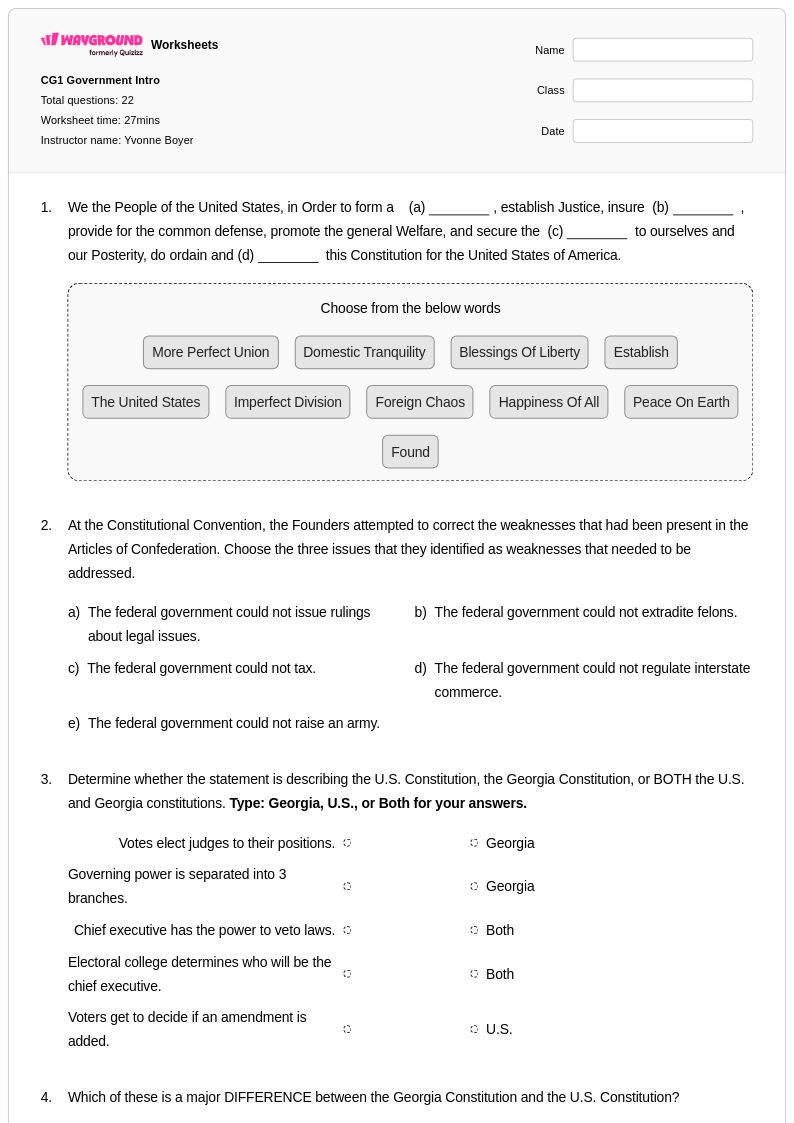
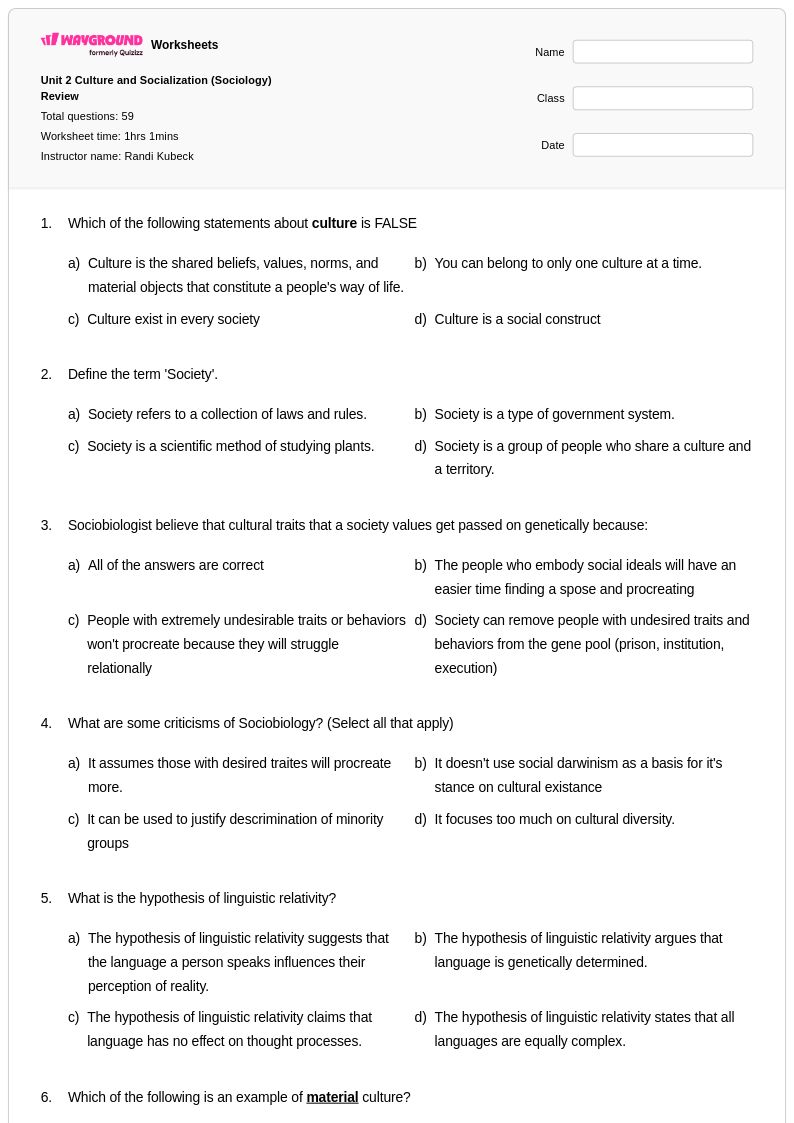
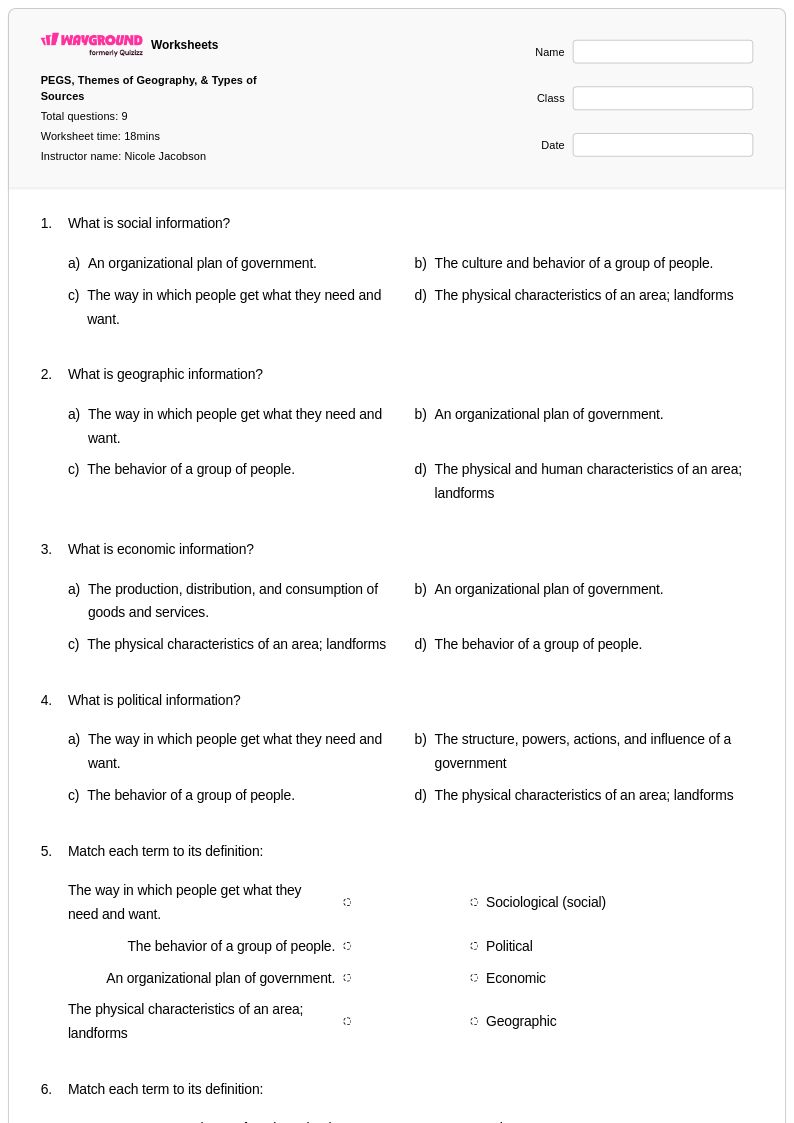
Explore Wayground's free Year 9 behavior worksheets and printables that help students develop essential social skills through engaging practice problems and comprehensive answer keys in convenient PDF format.
Year 9 behavior worksheets available through Wayground (formerly Quizizz) provide comprehensive resources for developing essential social and emotional competencies in high school students. These expertly crafted materials focus on critical behavioral concepts including self-regulation, conflict resolution, peer interaction dynamics, and responsible decision-making within academic and social contexts. The worksheets strengthen students' ability to analyze behavioral consequences, practice appropriate responses to challenging situations, and develop empathy through scenario-based exercises and reflective activities. Each resource includes detailed answer keys and practice problems that guide students through real-world behavioral challenges, with free printables available in convenient pdf format for immediate classroom implementation.
Wayground (formerly Quizizz) empowers educators with access to millions of teacher-created behavior worksheets specifically designed for Year 9 social studies curricula. The platform's robust search and filtering capabilities enable teachers to quickly locate resources aligned with state and national social-emotional learning standards, while differentiation tools allow for seamless customization based on individual student needs and learning styles. These versatile materials are available in both printable pdf and interactive digital formats, supporting diverse classroom environments and teaching preferences. Teachers utilize these comprehensive worksheet collections for targeted skill practice, behavioral intervention planning, remediation support for struggling students, and enrichment opportunities that challenge advanced learners to explore complex social dynamics and ethical decision-making scenarios.
FAQs
How do I teach positive behavior and social skills in the classroom?
Effective behavior instruction combines explicit teaching of expectations with consistent, structured practice in realistic scenarios. Teachers should model target behaviors, use role-play to practice conflict resolution and empathy, and debrief situations where students made poor choices. Research-based approaches focus on helping students understand the consequences of their actions rather than simply correcting surface-level conduct. Building in regular reflection time allows students to internalize social-emotional skills over time.
What worksheets help students practice self-regulation and conflict resolution?
Scenario-based worksheets are among the most effective tools for practicing self-regulation and conflict resolution because they ask students to respond to realistic situations rather than abstract definitions. These exercises help students identify emotional triggers, evaluate possible responses, and choose appropriate actions. Worksheets that walk through a conflict step by step, asking students to name feelings and propose solutions, build the decision-making skills needed for real-world interactions.
What mistakes do students commonly make when learning about appropriate social behavior?
A common misconception is that students believe behavior expectations are arbitrary or unfair rather than connected to real outcomes for themselves and others. Students also frequently struggle to distinguish between intent and impact, assuming that good intentions excuse harmful behavior. Another error pattern is applying learned responses only in structured settings and failing to generalize those skills to unstructured situations like lunch or recess, which is why scenario-based practice across varied contexts is critical.
How can I differentiate behavior worksheets for students with different social-emotional needs?
Differentiation in behavior instruction often means adjusting the complexity of scenarios, the number of response choices, or the level of scaffolding provided. On Wayground, teachers can apply student-level accommodations including reduced answer choices to lower cognitive load for students who need it, and Read Aloud to support students who struggle with written text. Extended time settings can also be assigned to individual students without disrupting the rest of the class, making it practical to support diverse learners within the same lesson.
How do I use Wayground's behavior worksheets in my classroom?
Wayground's behavior worksheets are available as printable PDFs for traditional classroom use and in digital formats for technology-integrated environments, including the option to host them as a live quiz on the Wayground platform. Printable versions work well for individual reflection exercises or take-home practice, while digital formats support whole-class discussions and immediate feedback. Each worksheet includes a complete answer key, so teachers can assess student responses accurately and provide meaningful feedback without additional preparation.
How do behavior worksheets support social-emotional learning (SEL) goals?
Behavior worksheets aligned with SEL goals give students structured opportunities to practice the specific competencies outlined in frameworks like CASEL, including self-awareness, responsible decision-making, and relationship skills. Scenario-based problems are particularly effective because they require students to apply abstract concepts to concrete situations, which is how social-emotional learning transfers to real behavior. Consistent worksheet practice also helps teachers identify which students need additional support before behavioral challenges escalate.