Free Printable Biomolecules Worksheets for Year 12
Explore Wayground's comprehensive Year 12 biomolecules worksheets featuring free printables and practice problems with answer keys to help students master proteins, carbohydrates, lipids, and nucleic acids through engaging PDF activities.
Explore printable Biomolecules worksheets for Year 12
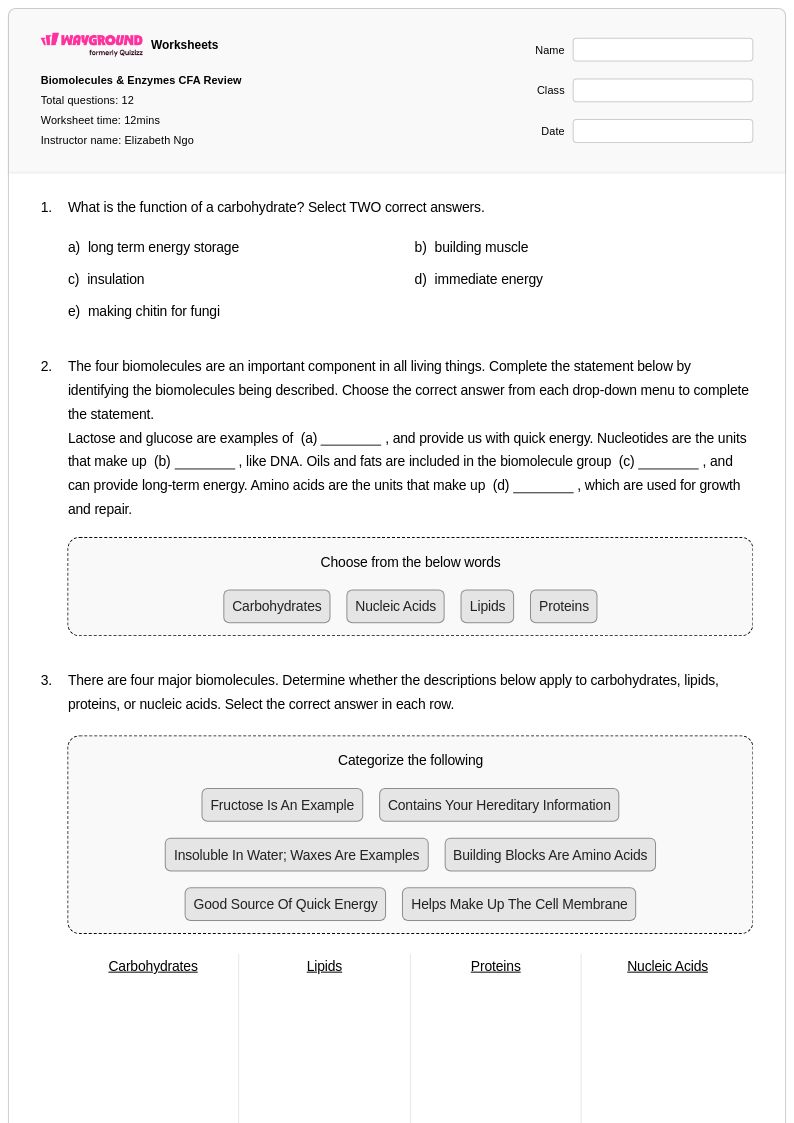
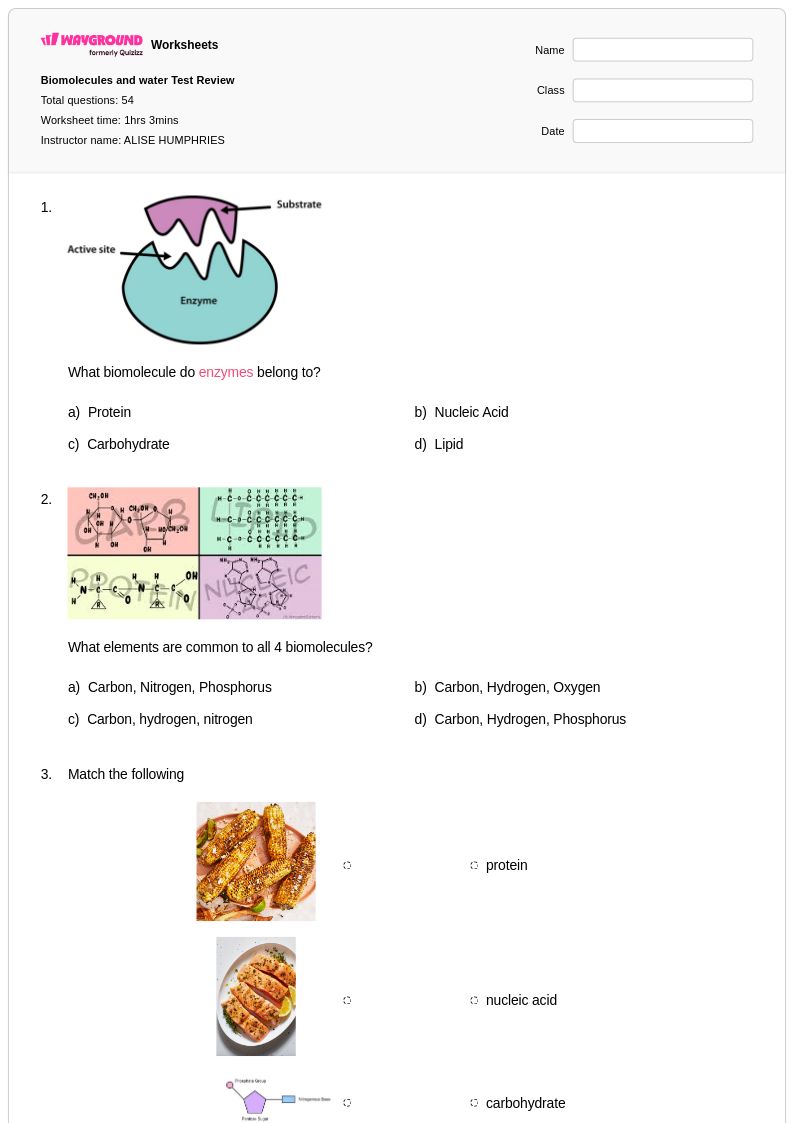
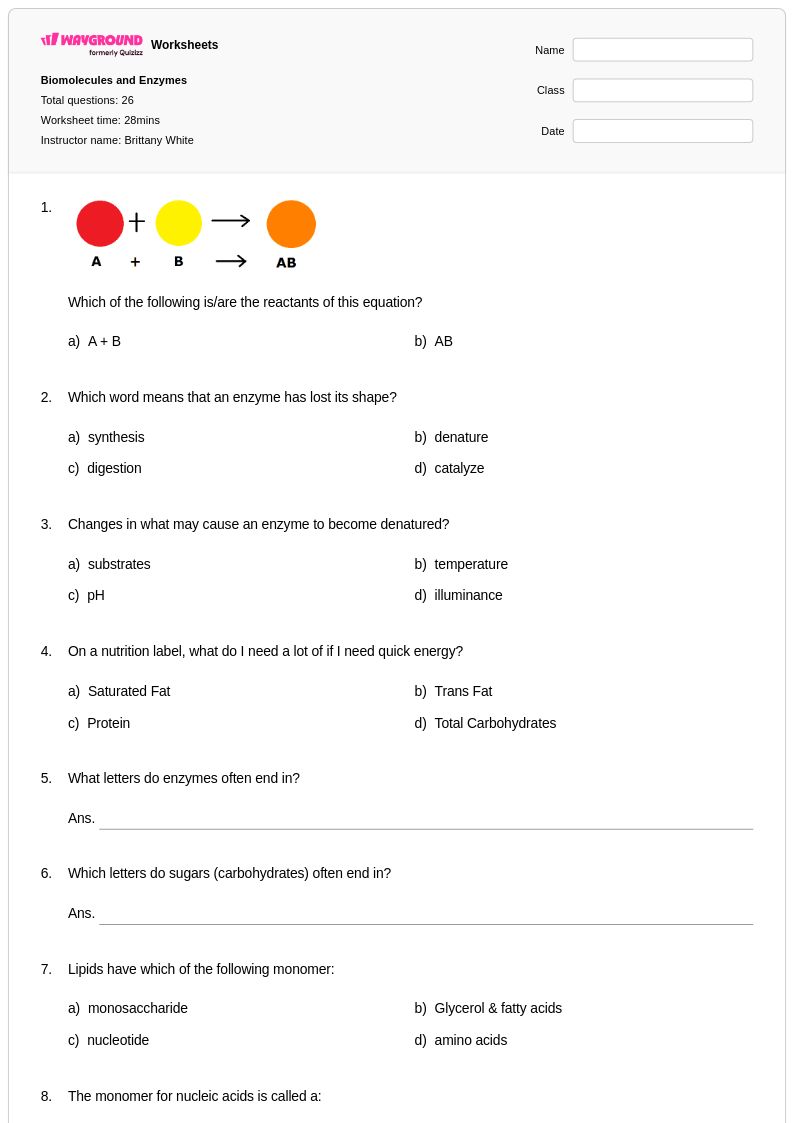
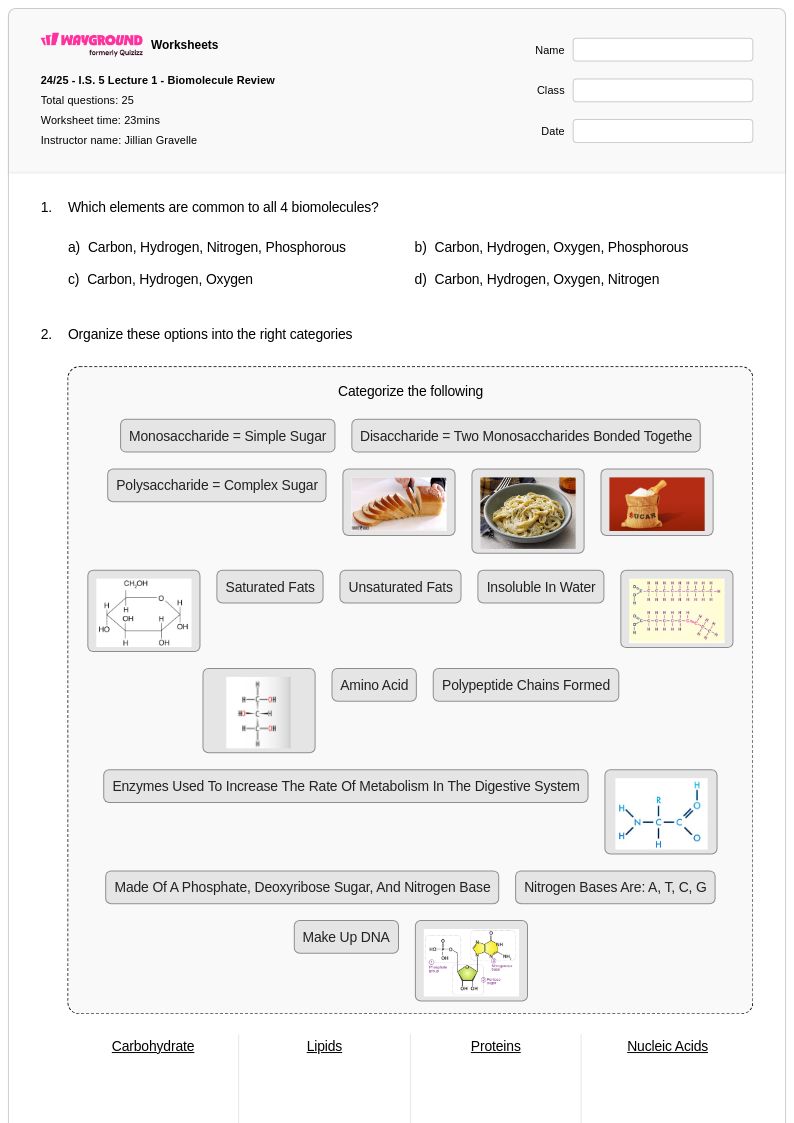
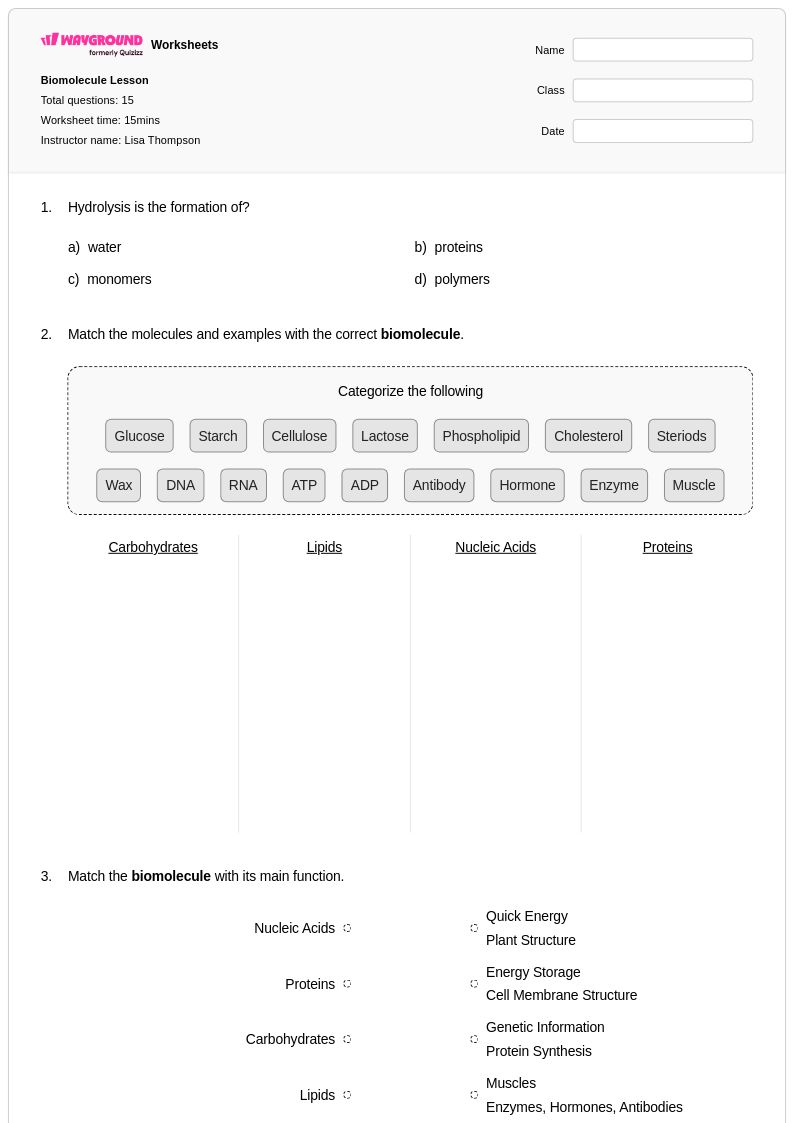
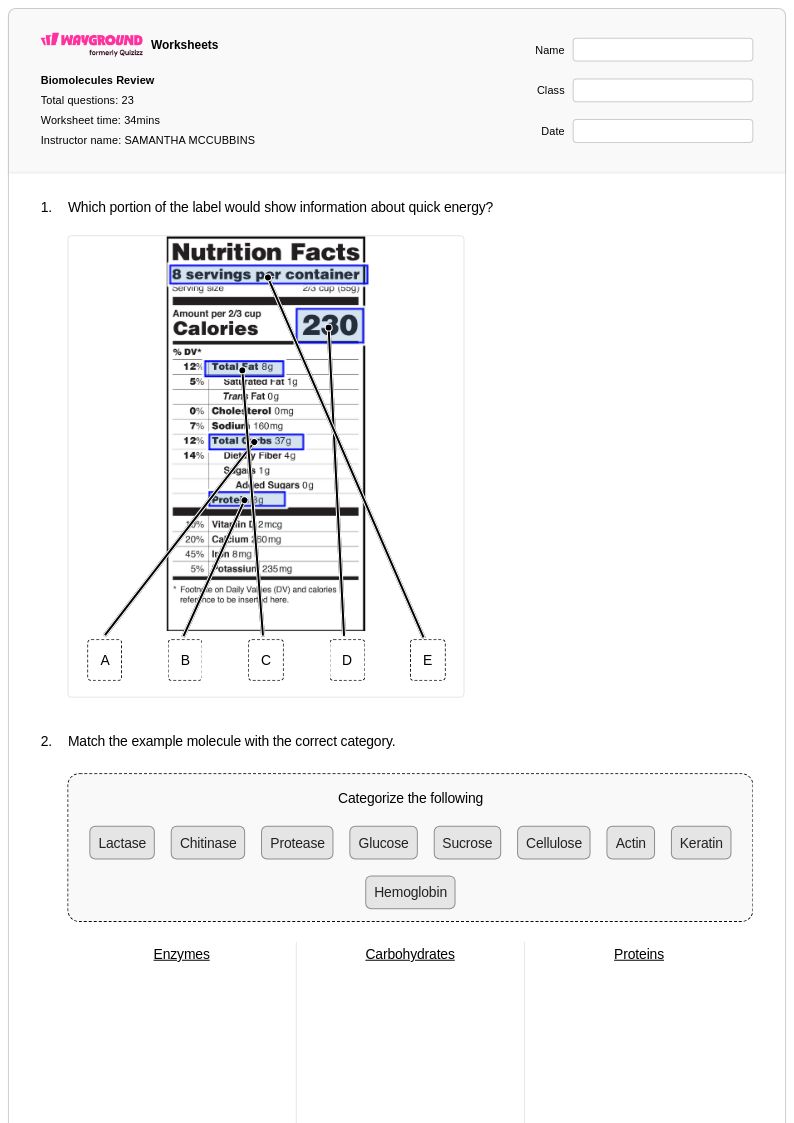
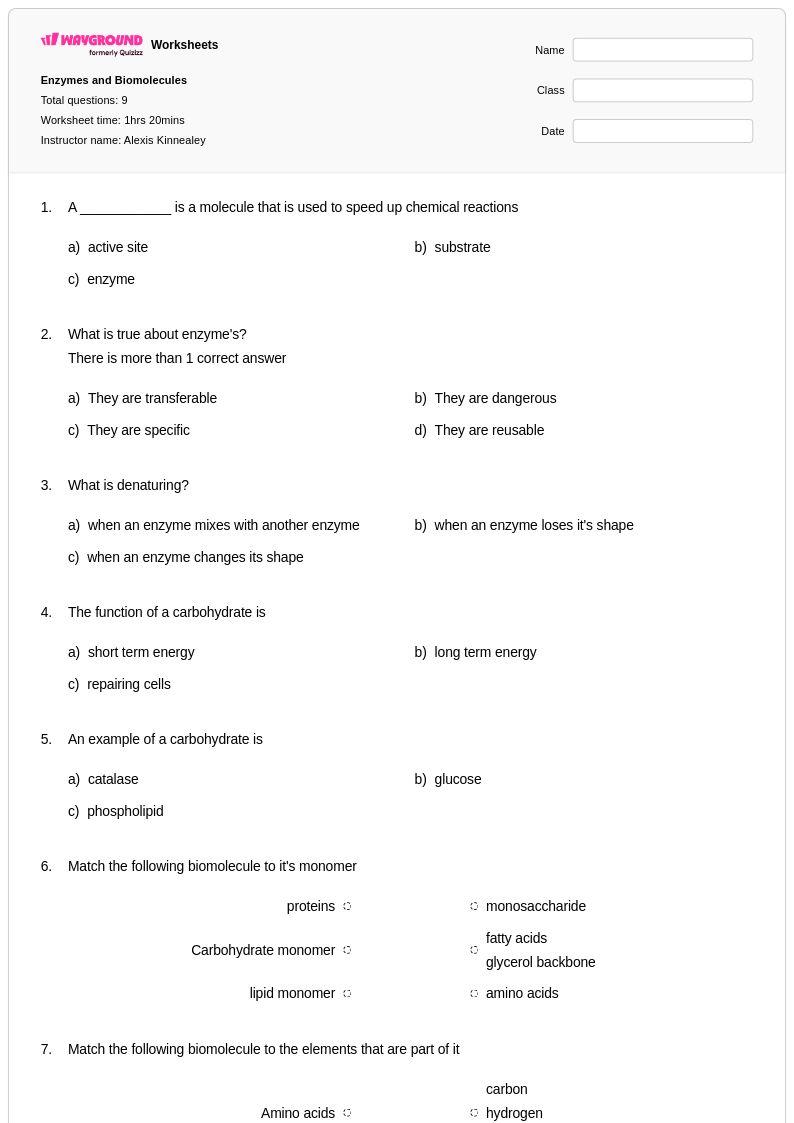
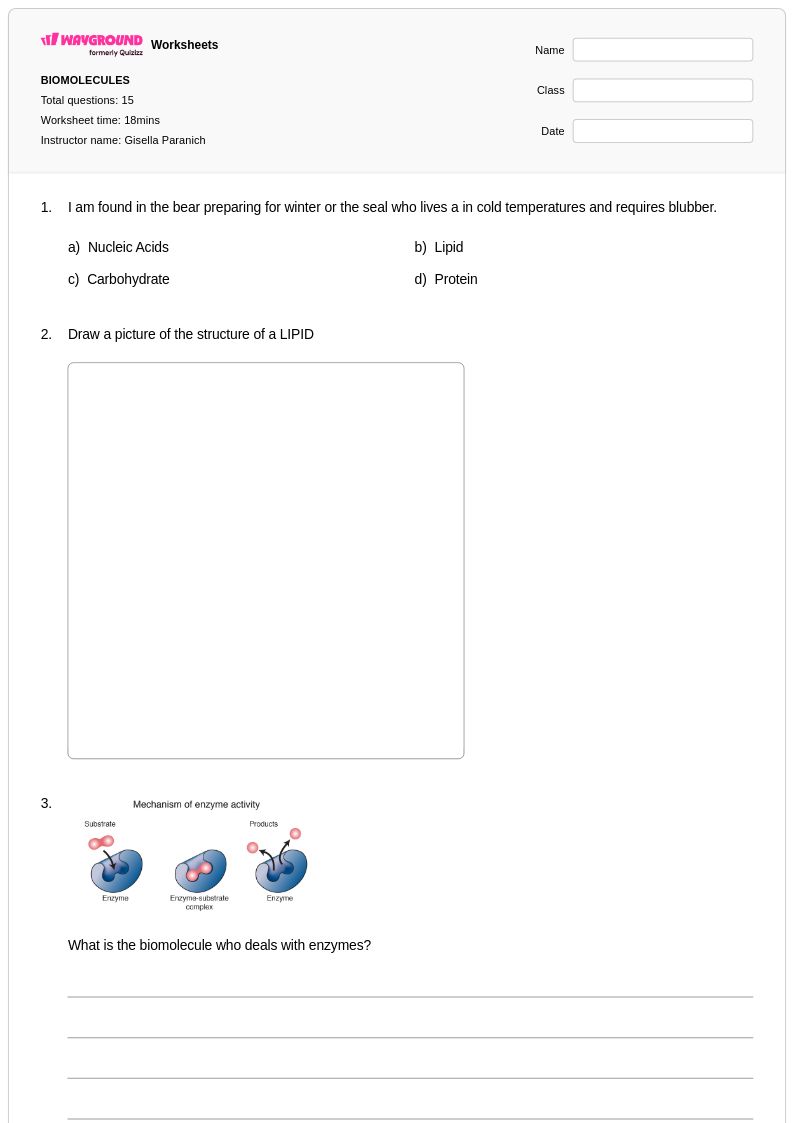
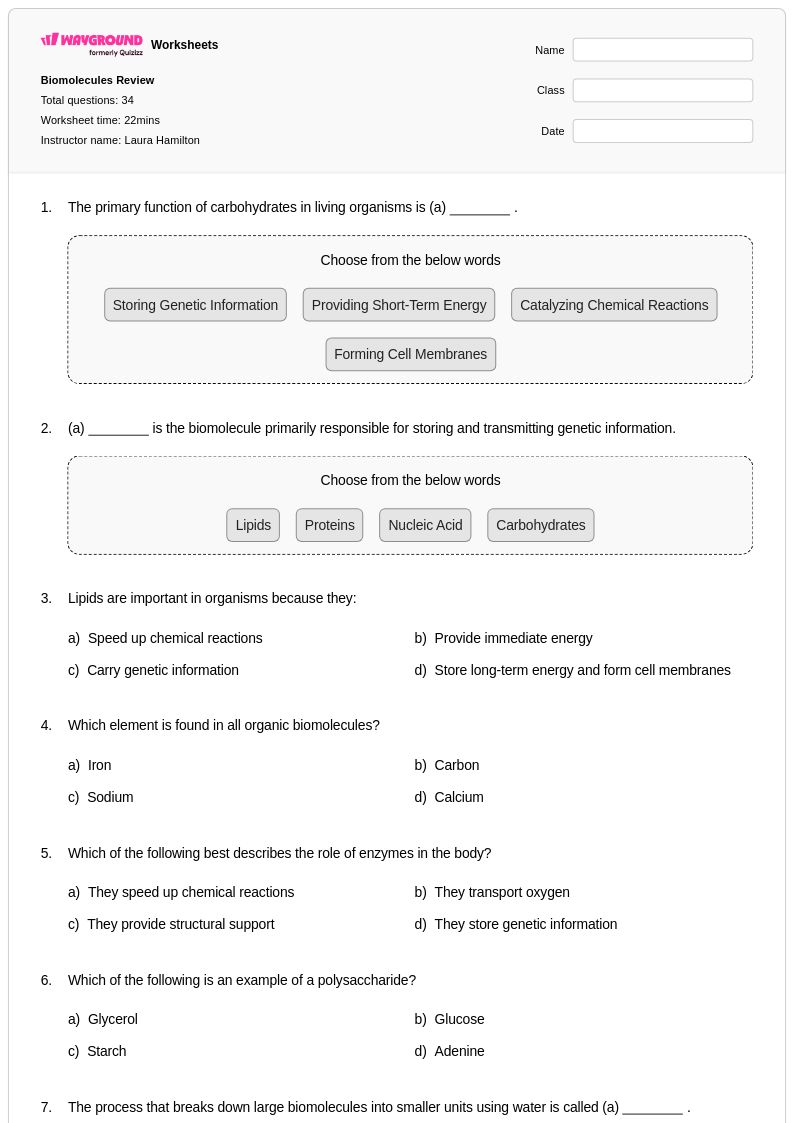
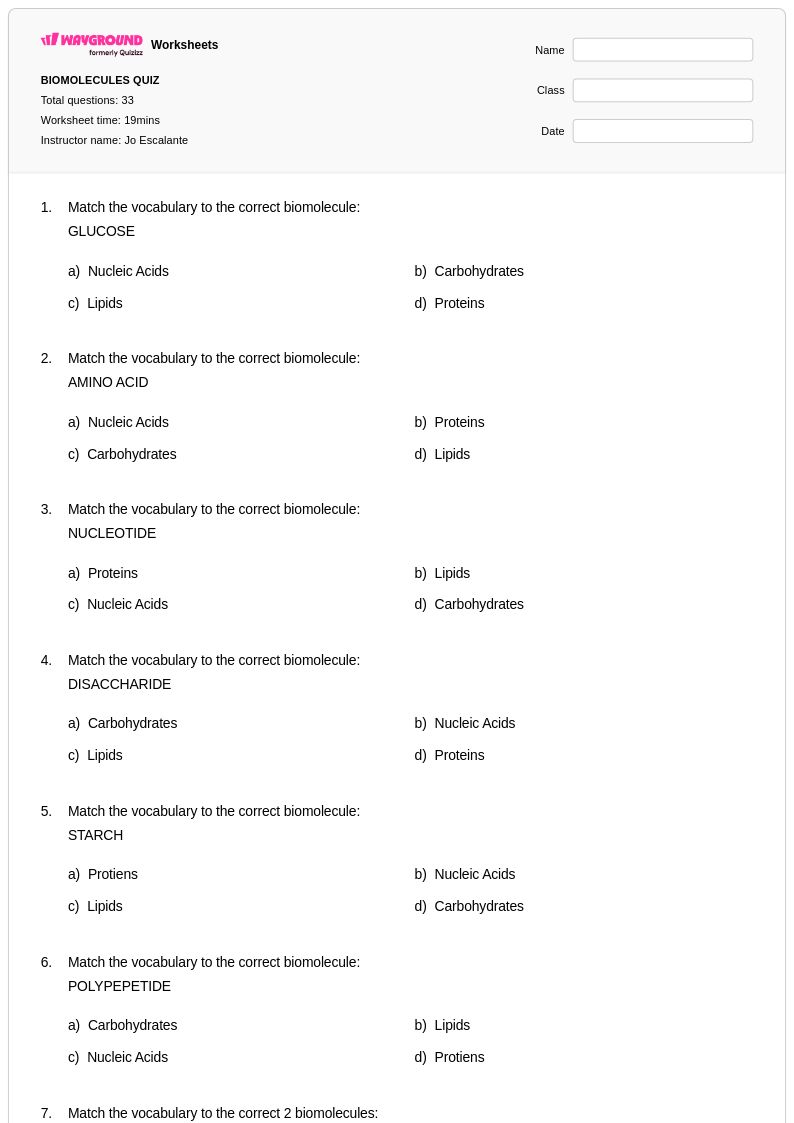
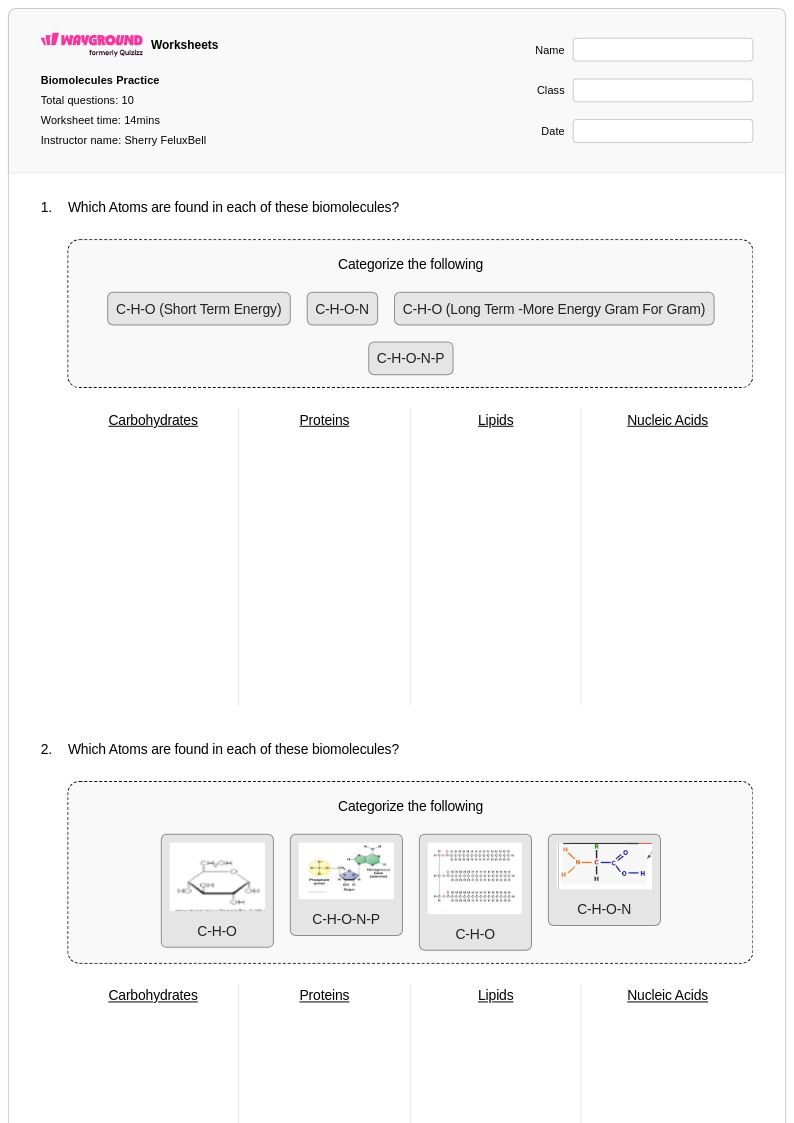
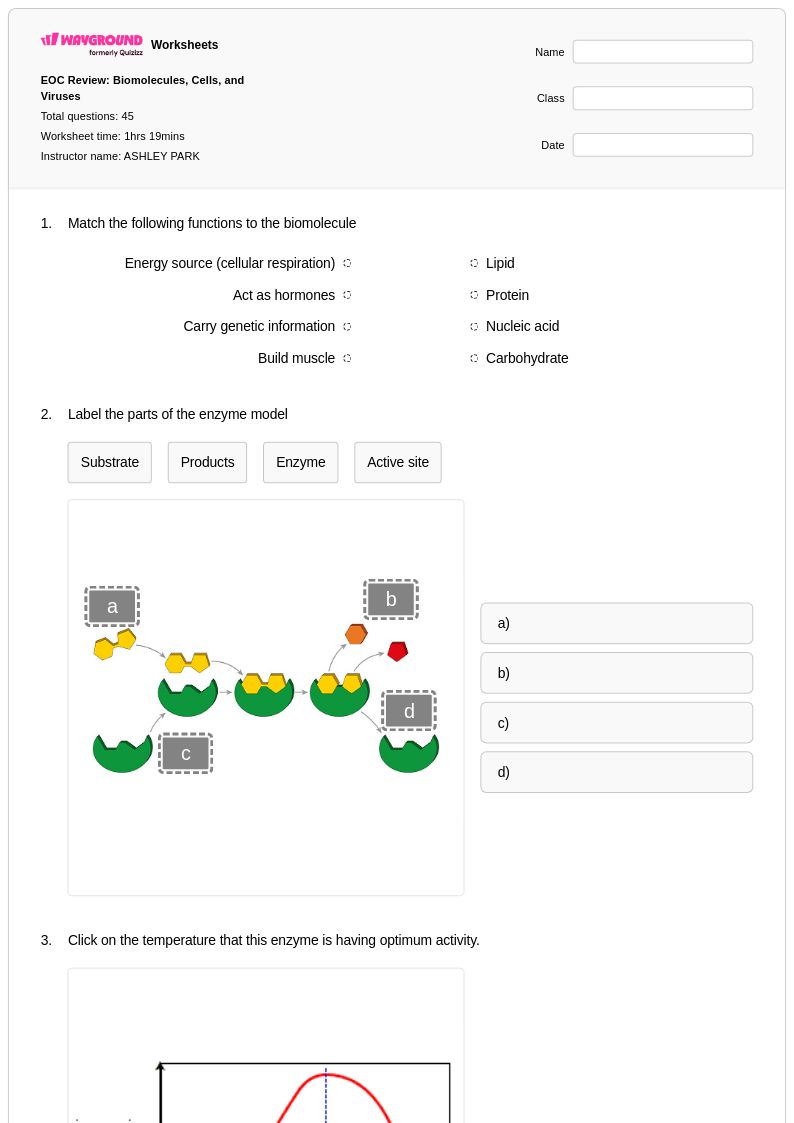
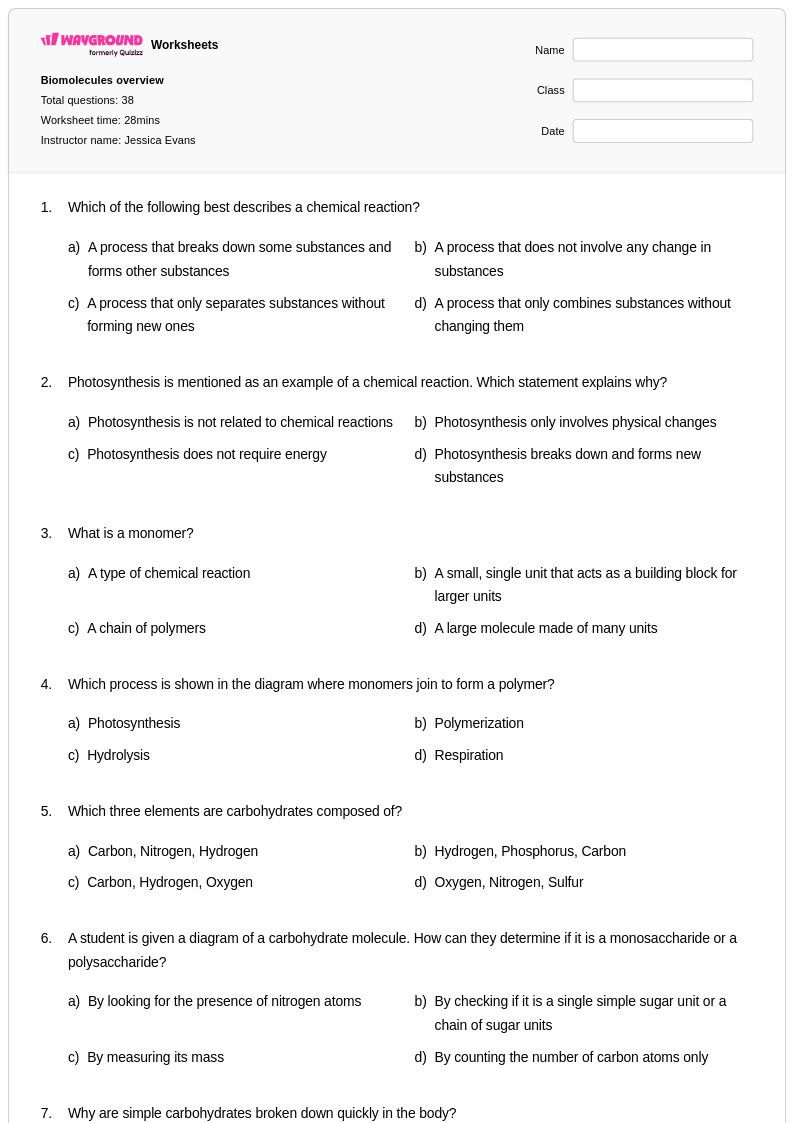
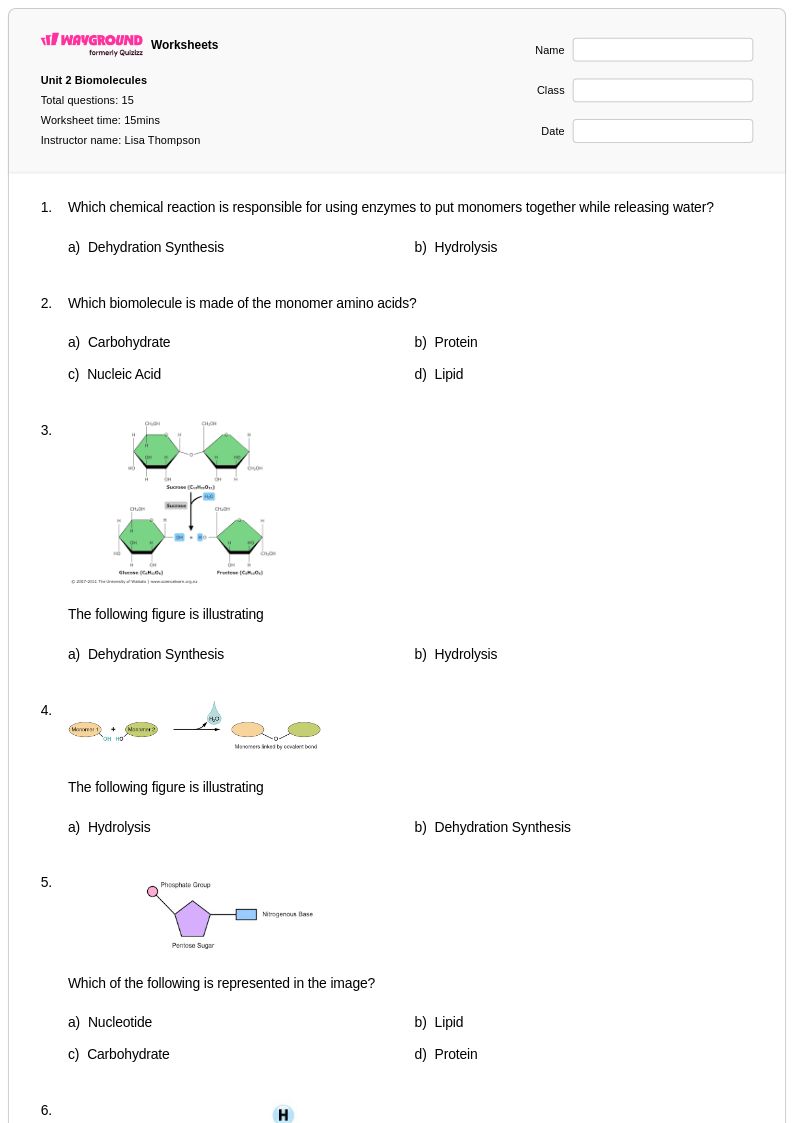
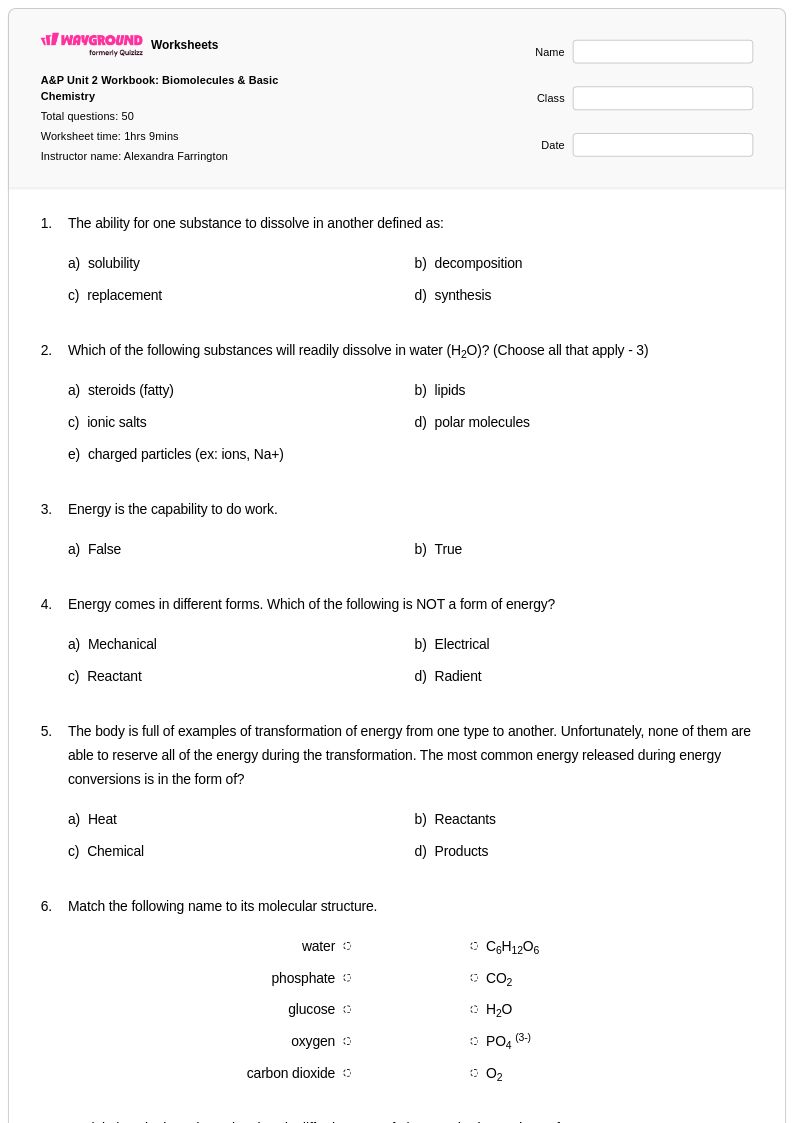
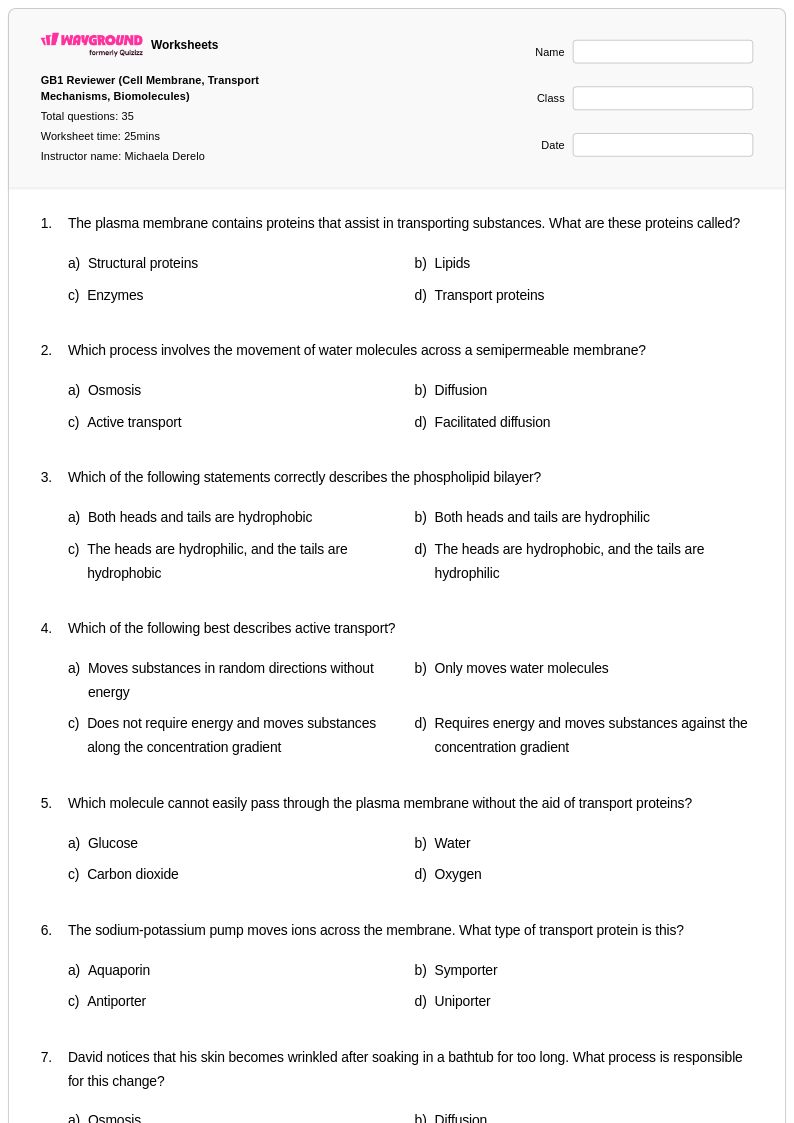
Year 12 biomolecules worksheets available through Wayground (formerly Quizizz) provide comprehensive coverage of the four major classes of biological macromolecules: carbohydrates, lipids, proteins, and nucleic acids. These expertly designed resources strengthen students' understanding of molecular structure, function, and biochemical processes essential for advanced biology coursework. Students engage with practice problems that explore enzyme kinetics, protein folding mechanisms, nucleotide sequences, and metabolic pathways, while detailed answer keys support self-assessment and mastery learning. The collection includes free printables in convenient pdf format that cover complex topics such as dehydration synthesis, hydrolysis reactions, and the relationship between molecular structure and biological function, ensuring students develop the analytical skills necessary for college-level biochemistry.
Wayground (formerly Quizizz) empowers educators with millions of teacher-created biomolecules resources that feature robust search and filtering capabilities, enabling quick access to materials aligned with specific learning standards and curriculum requirements. The platform's differentiation tools allow teachers to customize worksheets for diverse learning needs, while flexible formatting options provide both printable and digital versions including downloadable pdf files for seamless classroom integration. These comprehensive collections support strategic lesson planning by offering materials suitable for initial concept introduction, targeted skill practice, remediation for struggling learners, and enrichment opportunities for advanced students, ultimately helping teachers create engaging learning experiences that build deep conceptual understanding of biochemical principles and molecular interactions.
FAQs
How do I teach biomolecules to high school biology students?
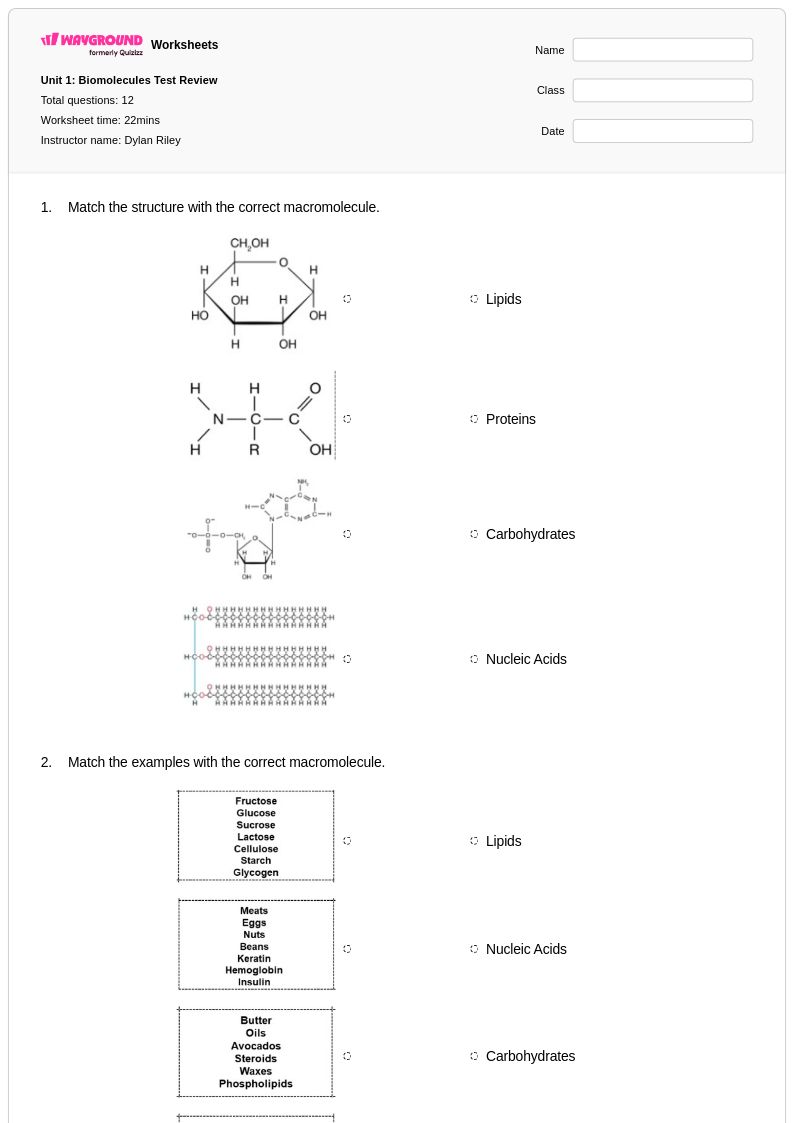
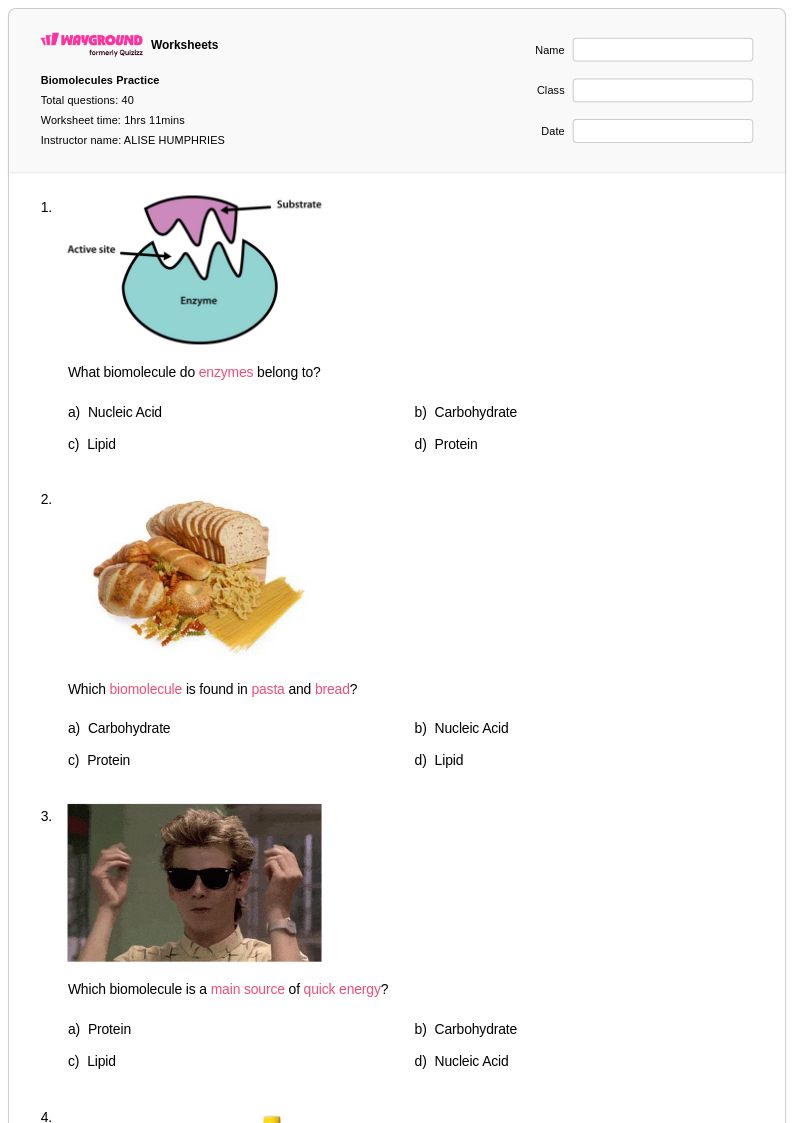
Teaching biomolecules effectively means organizing instruction around the four major macromolecule classes: carbohydrates, lipids, proteins, and nucleic acids. Start by grounding students in monomer-polymer relationships before moving to structure-function connections, such as how amino acid sequence determines protein shape and how that shape determines biological role. Using visual models alongside practice problems that ask students to identify functional groups and chemical bonds helps build conceptual depth alongside vocabulary recall.
What exercises help students practice identifying the four major biomolecules?
Effective practice exercises for biomolecules include tasks that ask students to match monomers to their macromolecule class, identify functional groups from structural diagrams, and explain how molecular structure relates to biological function. Problems that move between simple examples, such as glucose and fatty acids, and complex ones, such as protein folding and DNA base pairing, build the layered understanding students need for assessments. Worksheets that combine identification with short-answer explanation are especially useful because they require students to retrieve and apply knowledge rather than recognize it passively.
What mistakes do students commonly make when learning about biomolecules?
One of the most common errors is confusing the monomer units across macromolecule classes, particularly conflating nucleotides with amino acids or treating all lipids as polymers when most are not. Students also frequently struggle to connect molecular structure to function, for example, understanding why the phospholipid bilayer is selectively permeable requires understanding hydrophobic and hydrophilic regions specifically. Another persistent misconception is treating dehydration synthesis and hydrolysis as isolated vocabulary terms rather than as complementary, reversible reactions central to all macromolecule assembly and breakdown.
How do I differentiate biomolecules instruction for students with different learning needs?
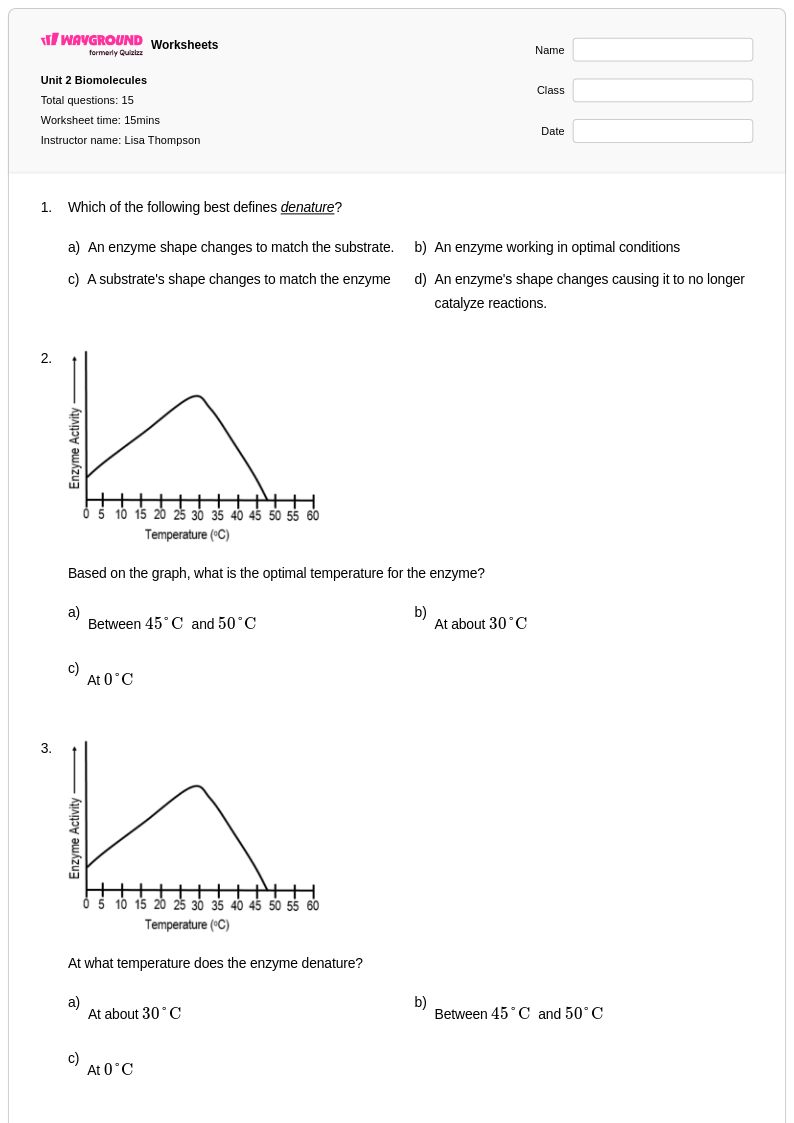
Differentiation for biomolecules can include reducing the complexity of structural diagrams for struggling learners while requiring advanced students to analyze enzyme kinetics or metabolic pathway connections. On Wayground, teachers can apply individual accommodations such as read aloud support for students who benefit from audio delivery of question content, reduced answer choices to lower cognitive load for selected students, and extended time settings configurable per student. These accommodations are saved and reusable across sessions, so setup is a one-time task that carries forward into future biomolecules practice activities.
How do I use Wayground's biomolecules worksheets in my classroom?
Wayground's biomolecules worksheets are available as both printable PDFs and in digital formats, giving teachers flexibility to use them for traditional paper-based instruction or technology-integrated learning. In digital mode, teachers can host worksheets as a live quiz directly on Wayground, which allows for real-time monitoring of student responses. The worksheets include detailed answer keys, making them practical for independent study, homework, or in-class review without requiring additional teacher preparation.
How do I assess whether students understand the relationship between molecular structure and biological function?
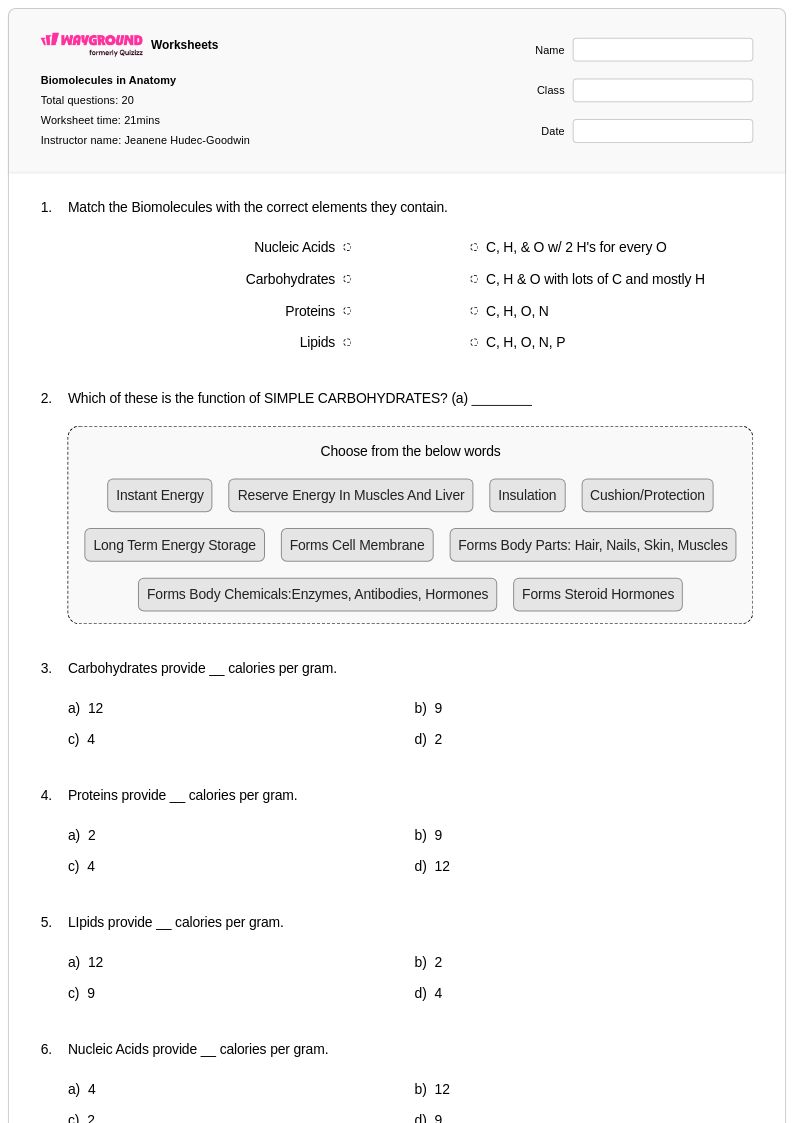
The most revealing assessment tasks require students to explain why a molecule's structure enables its function rather than simply name or label it. For example, asking students to explain why a triglyceride stores more energy per gram than a carbohydrate, or why a change in one amino acid can denature a protein, tests applied understanding rather than recall. Common assessment gaps appear when students can identify a molecule from a diagram but cannot articulate the functional consequence of its structural features.