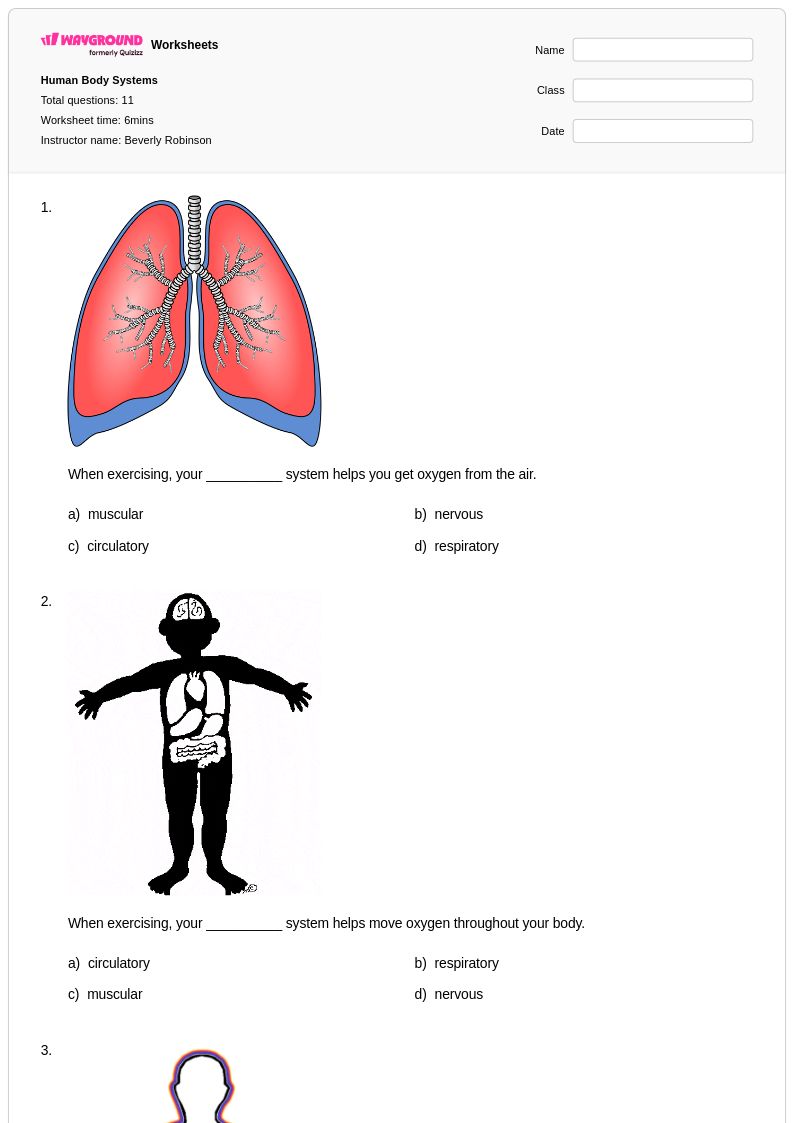
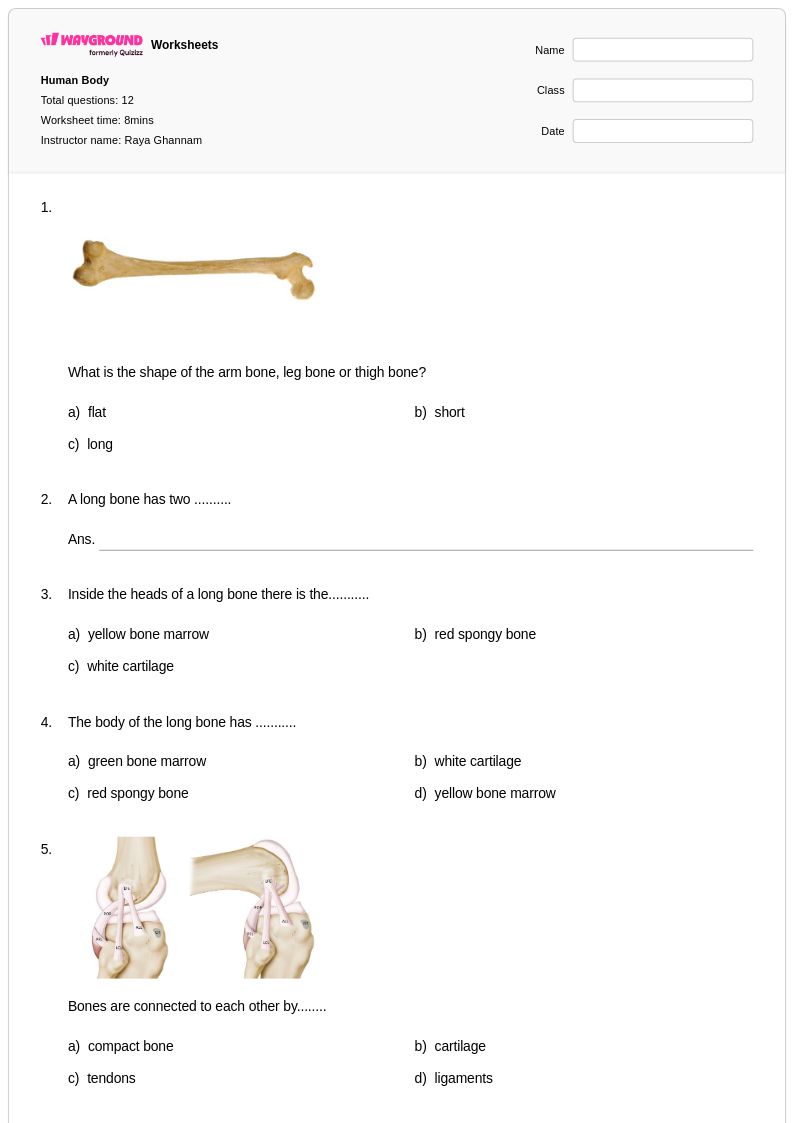
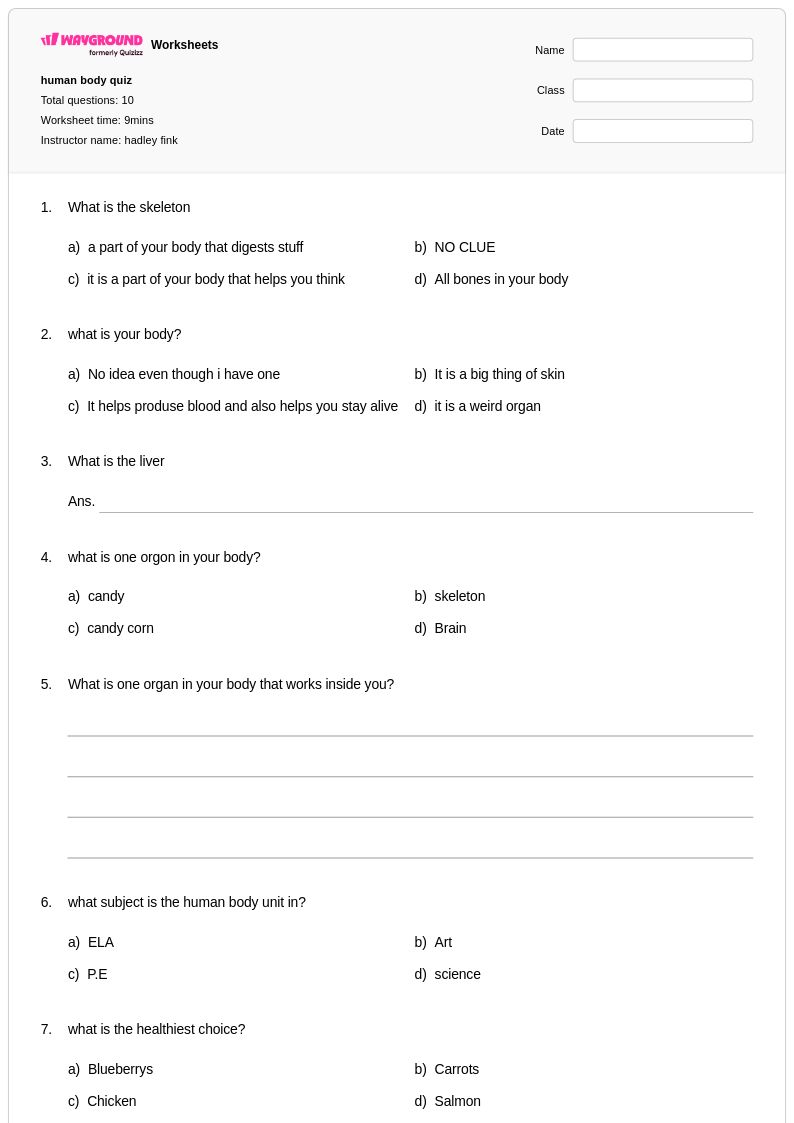
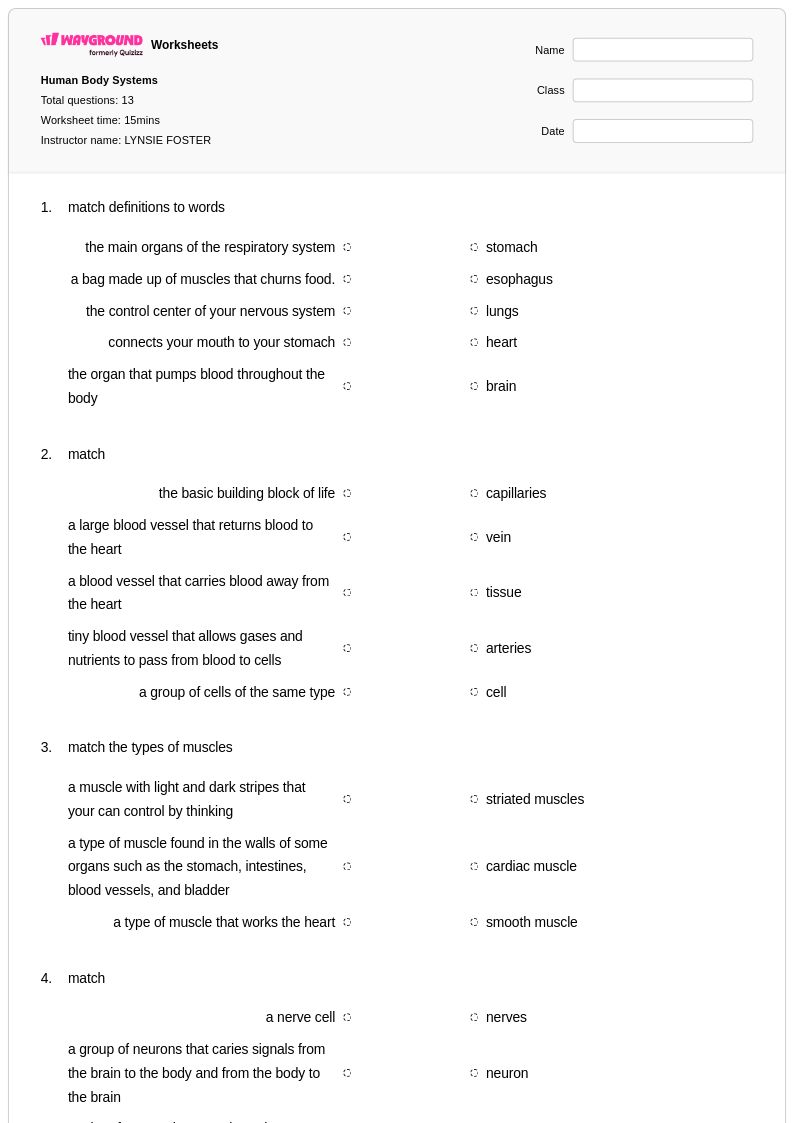
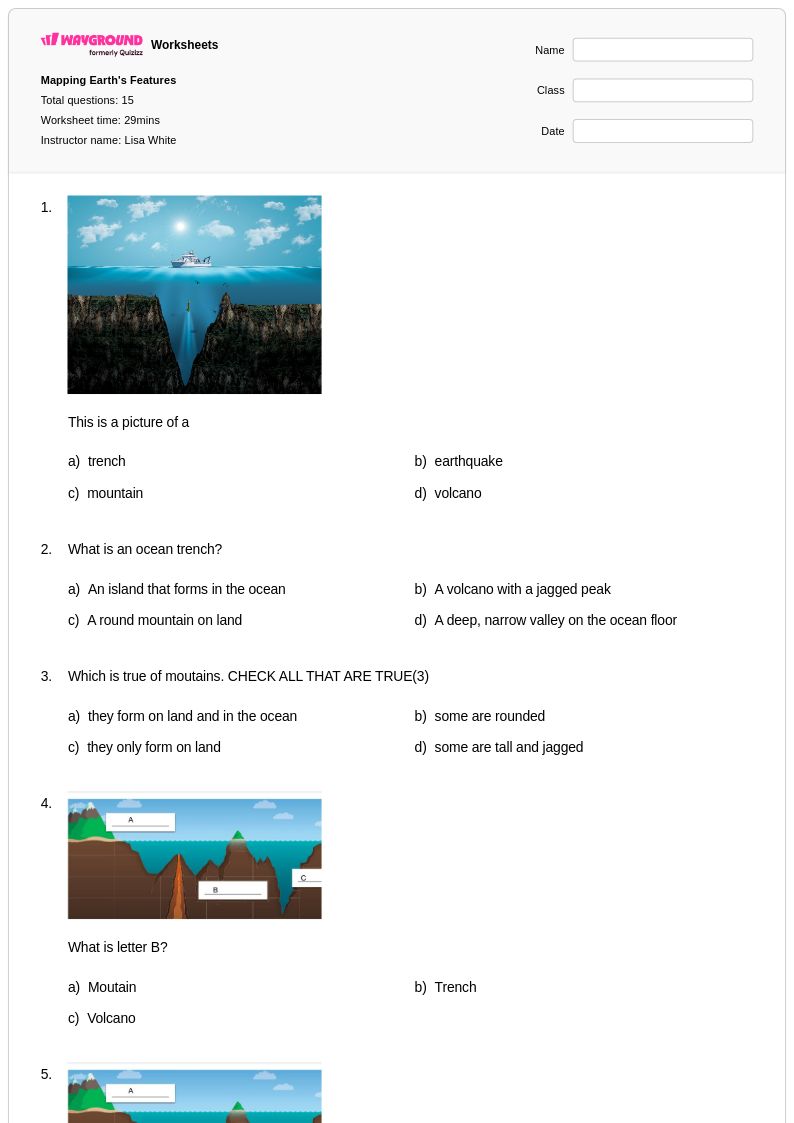
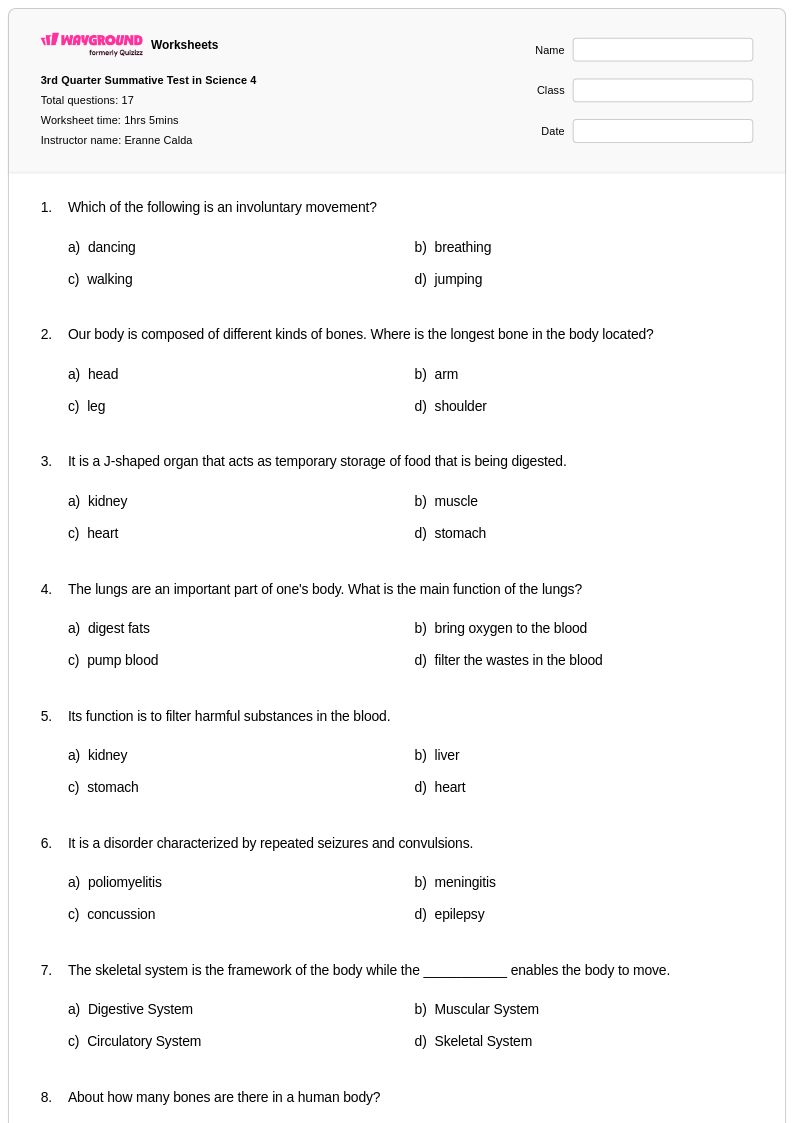
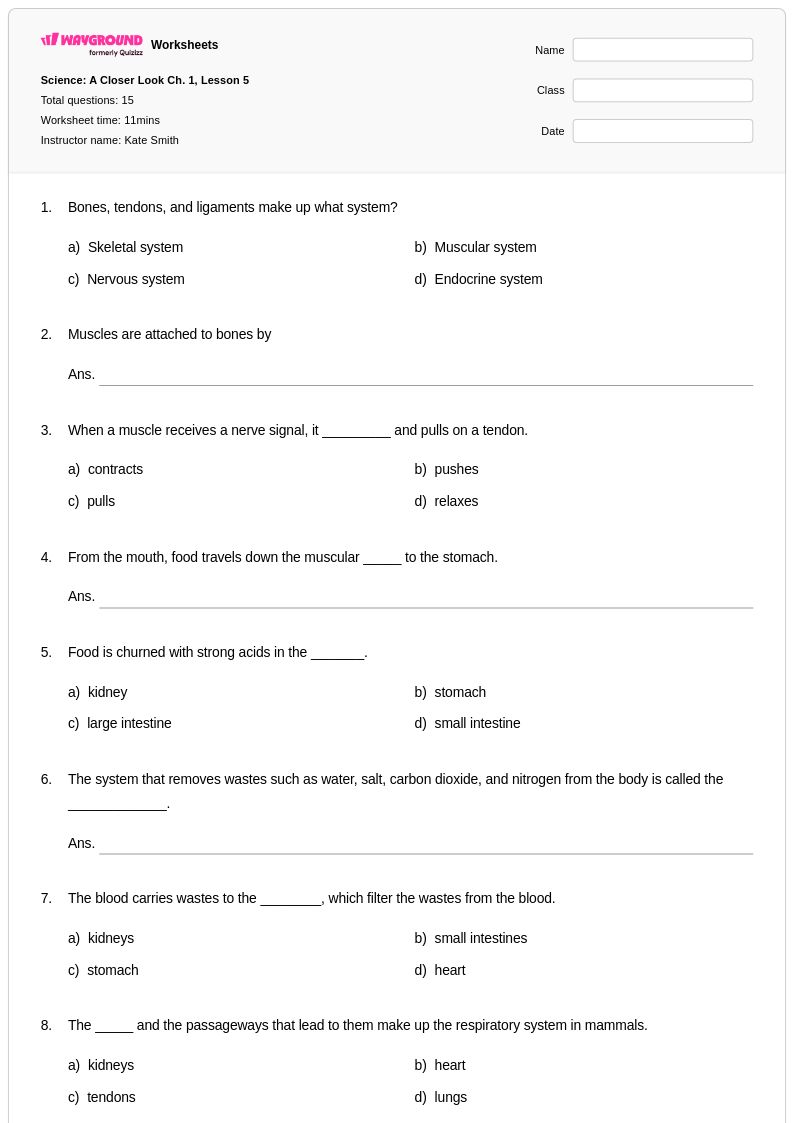
Explore Wayground's free Year 4 body mapping worksheets and printables that help students learn about human anatomy through engaging practice problems, complete with answer keys and downloadable PDFs.
Explore printable Body Mapping worksheets for Year 4
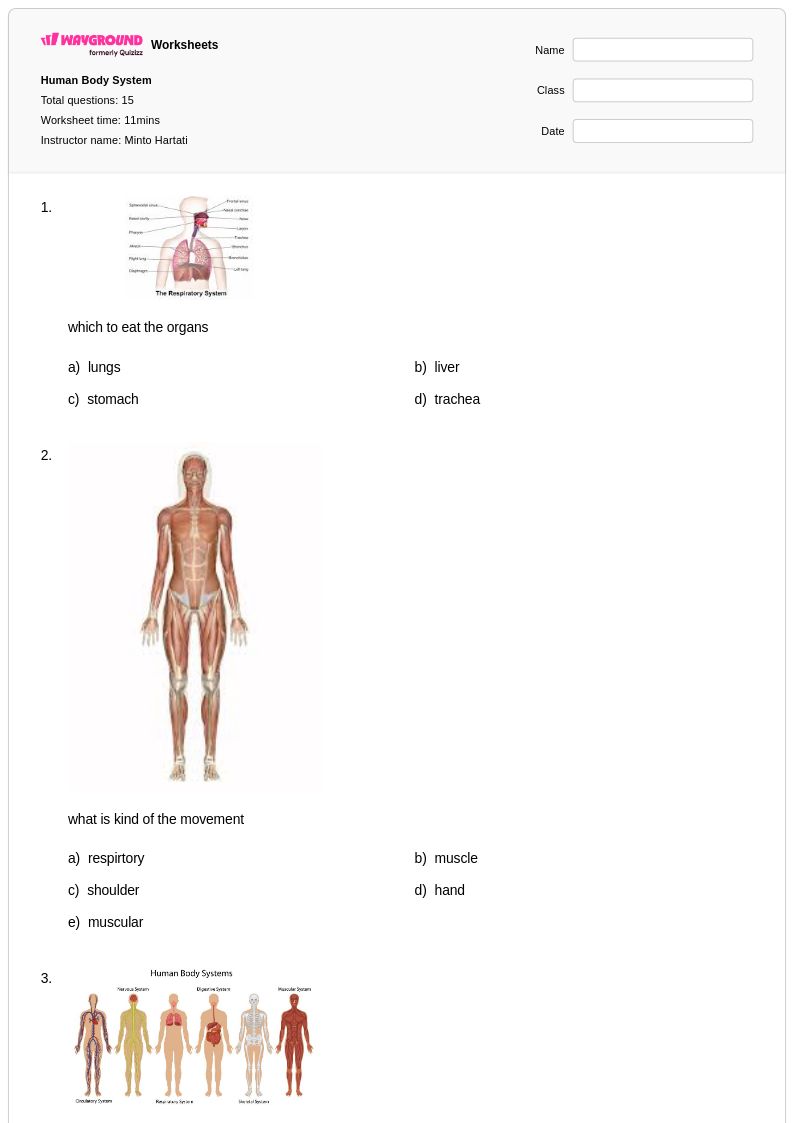
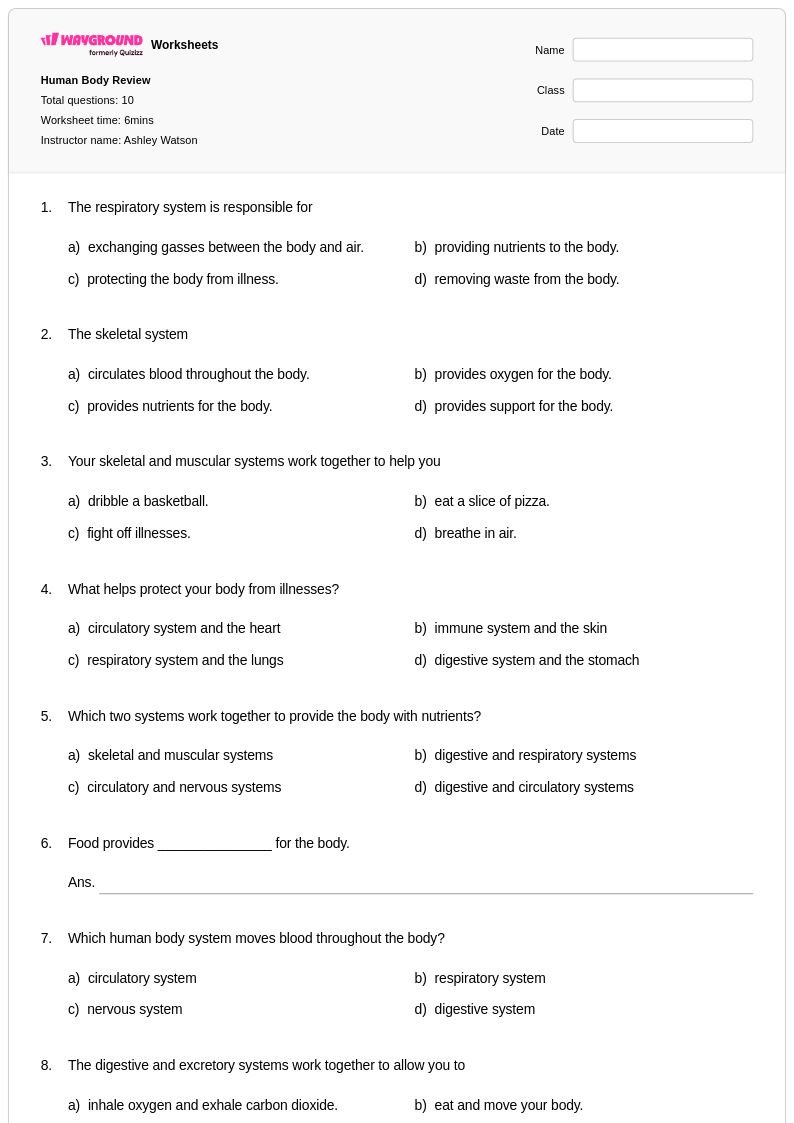
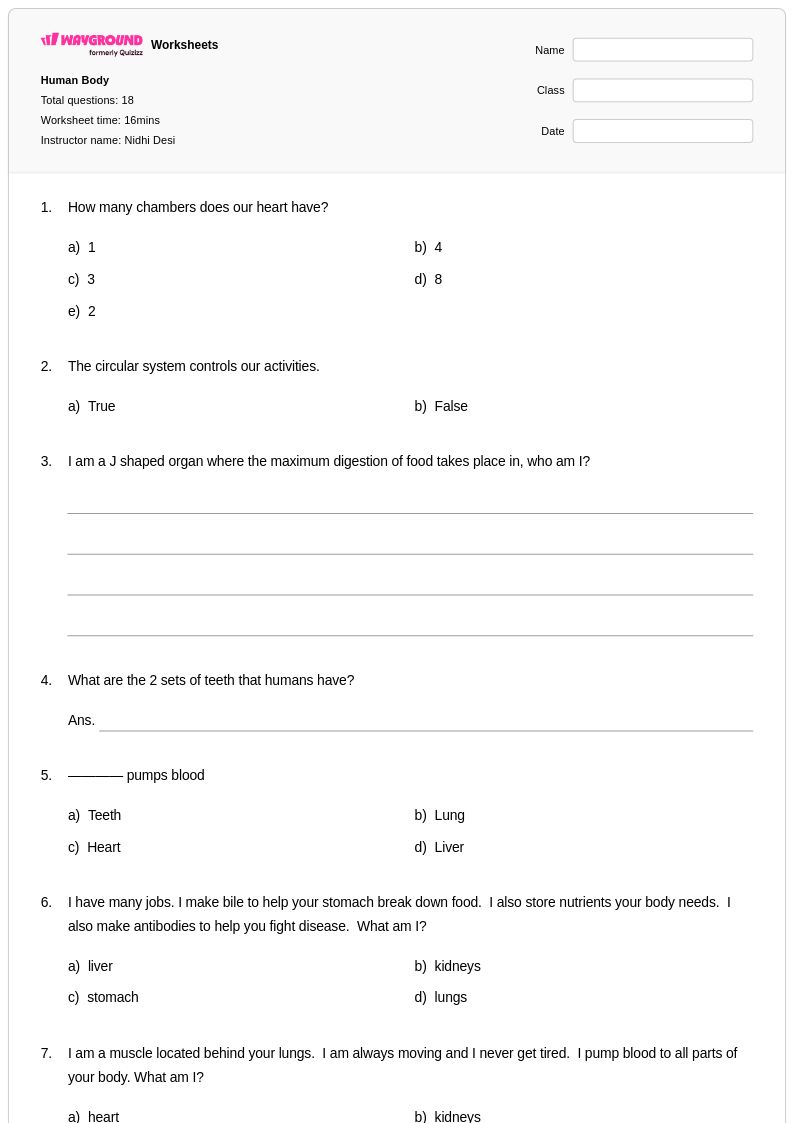
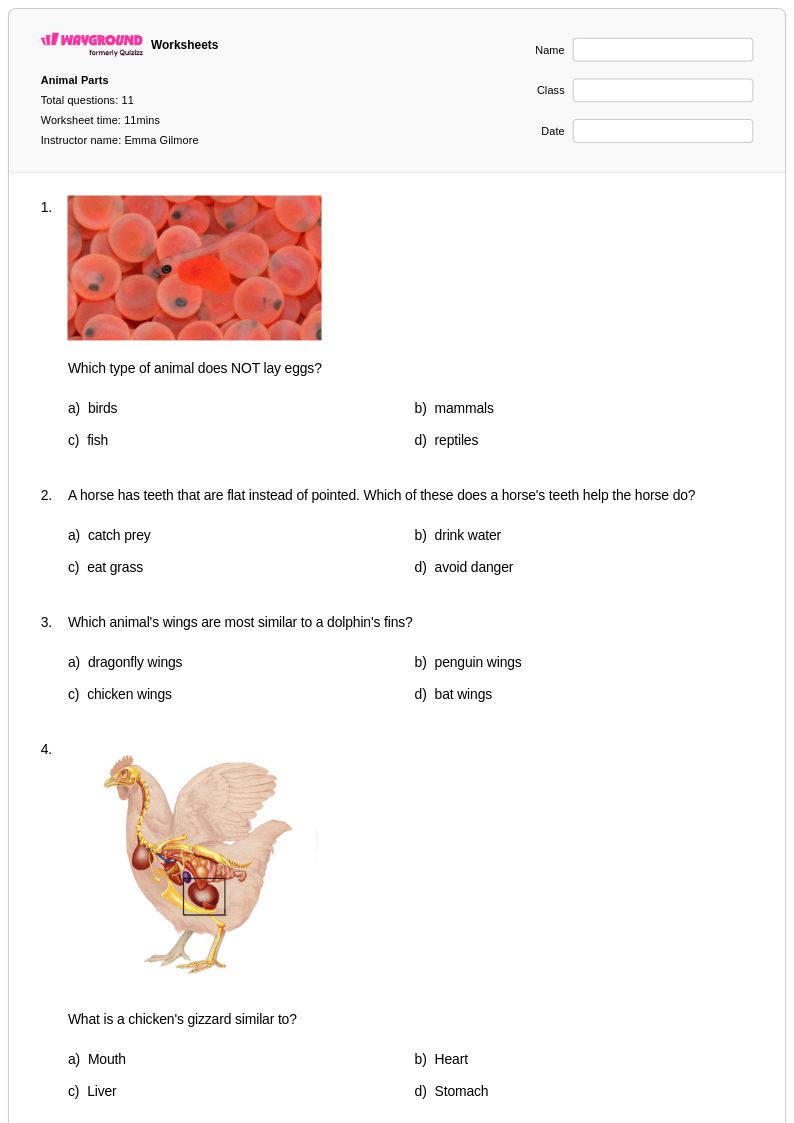
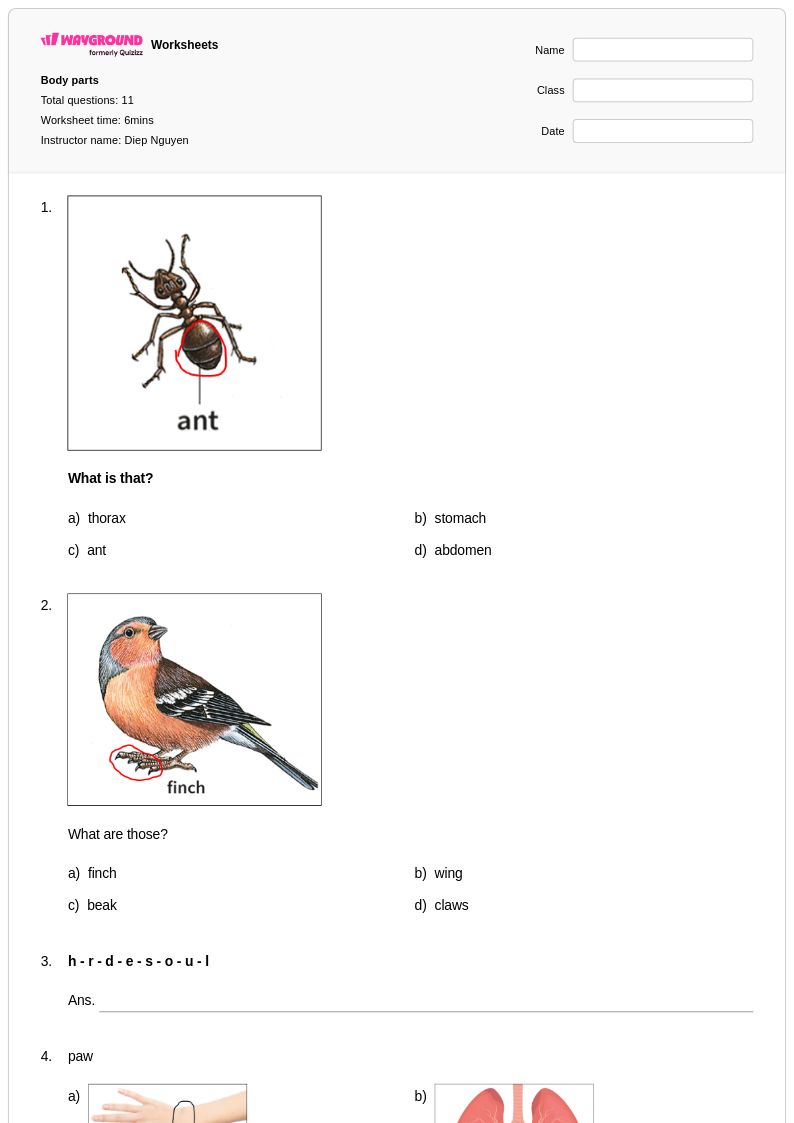
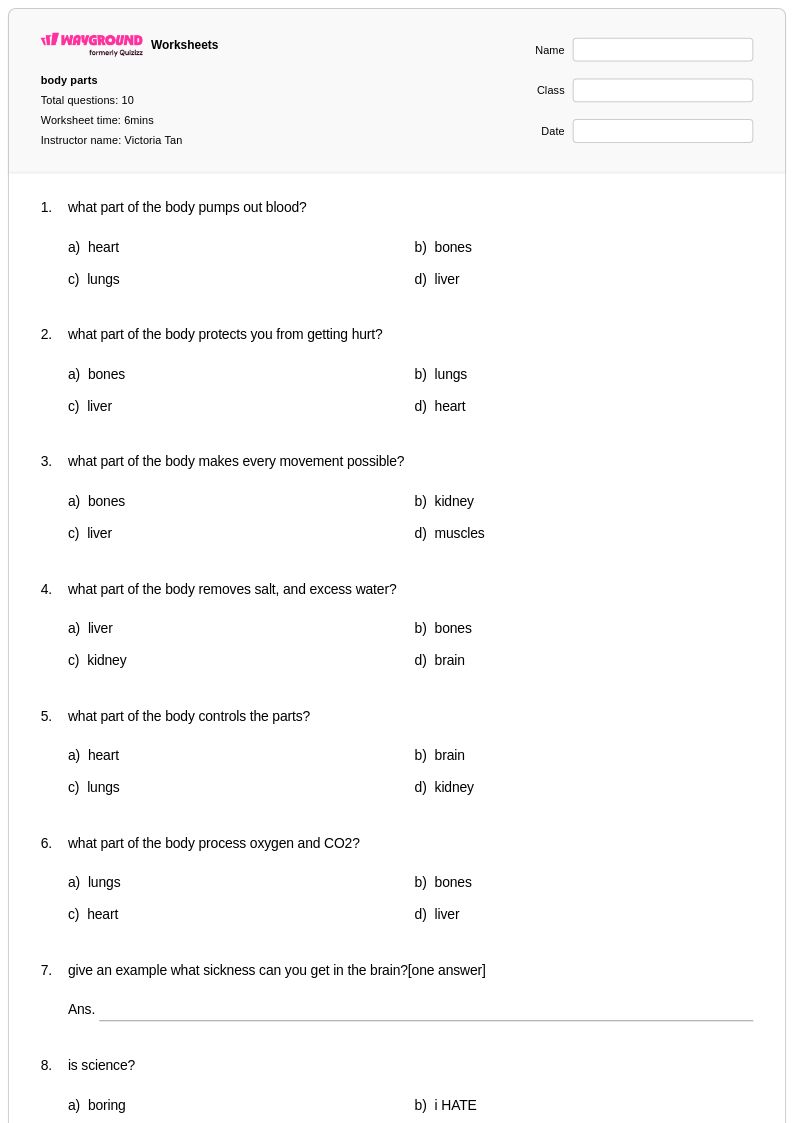
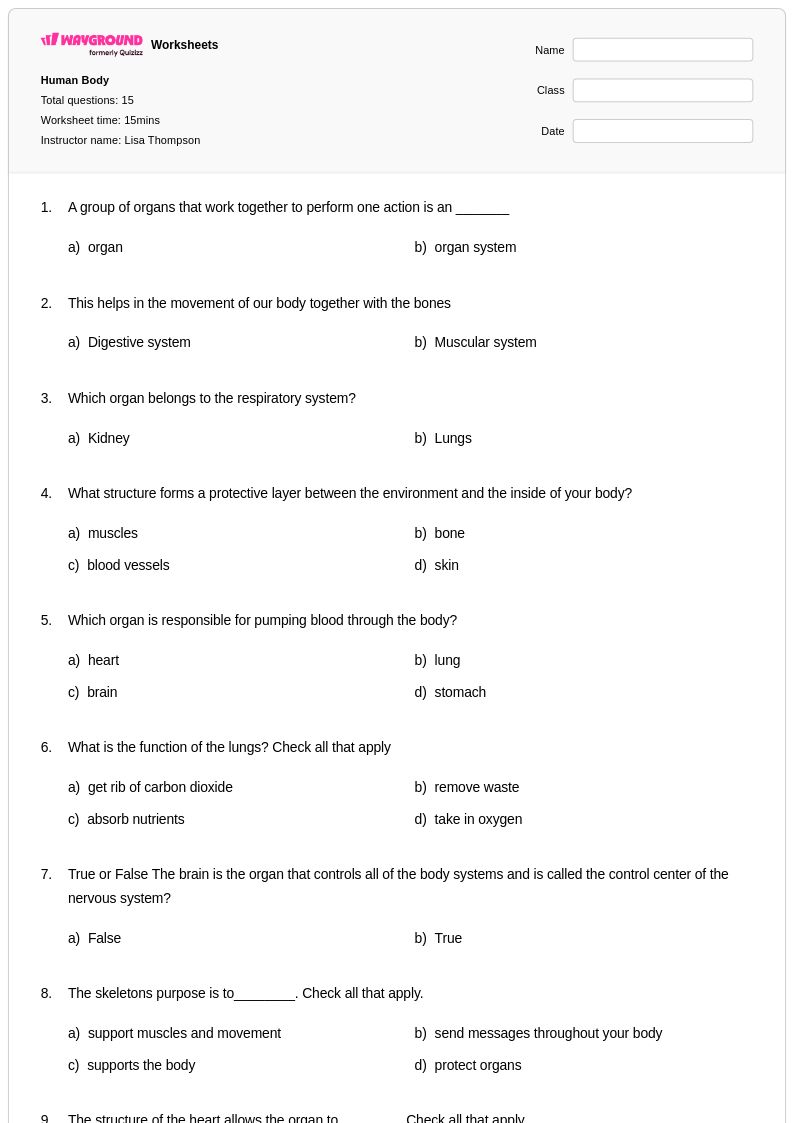
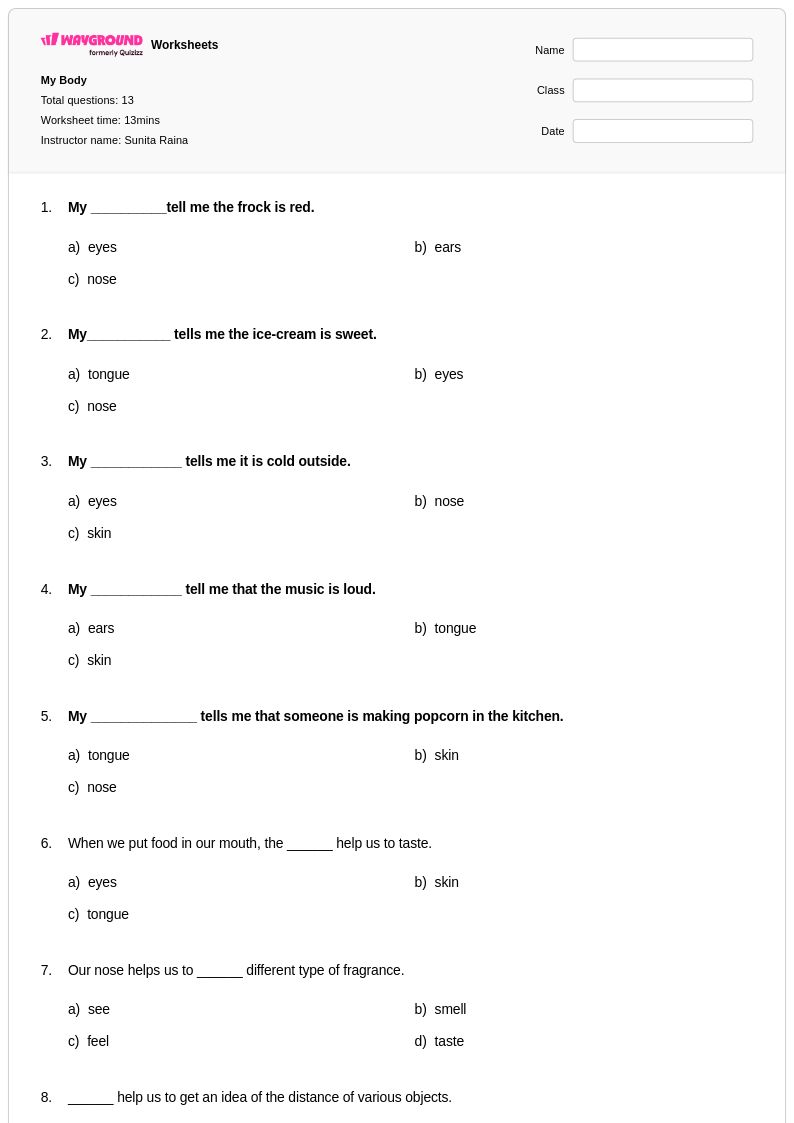
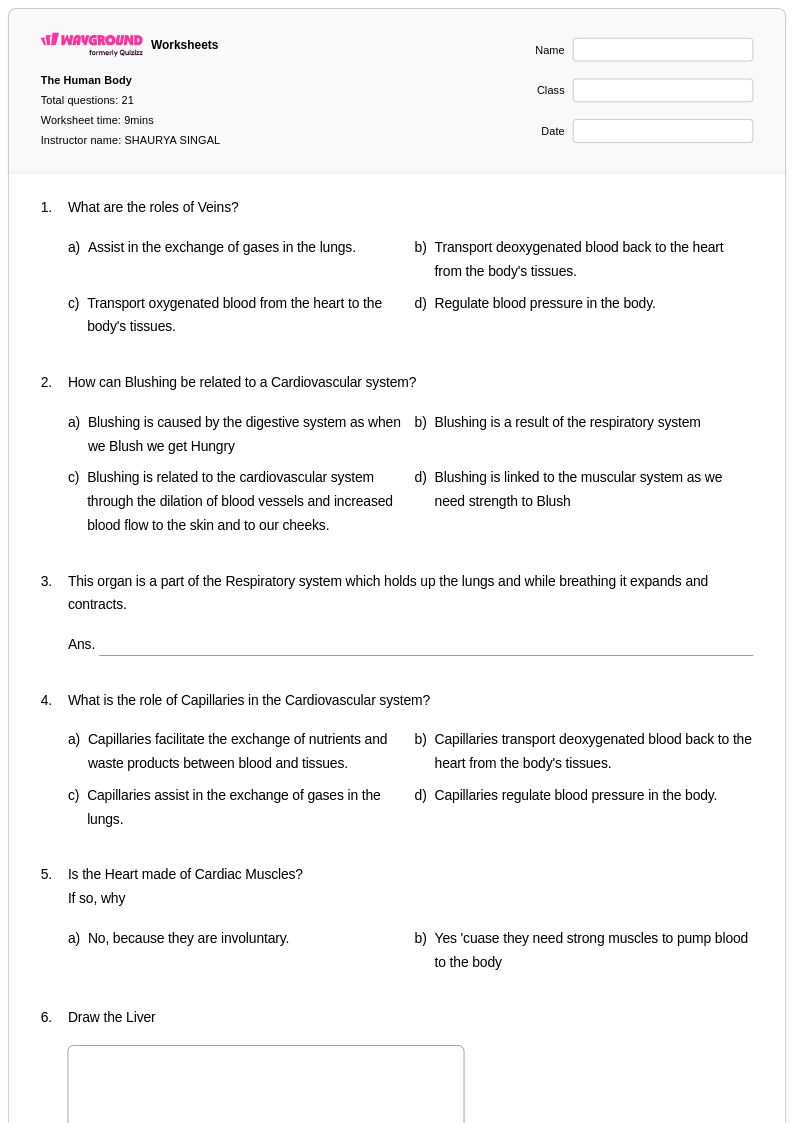
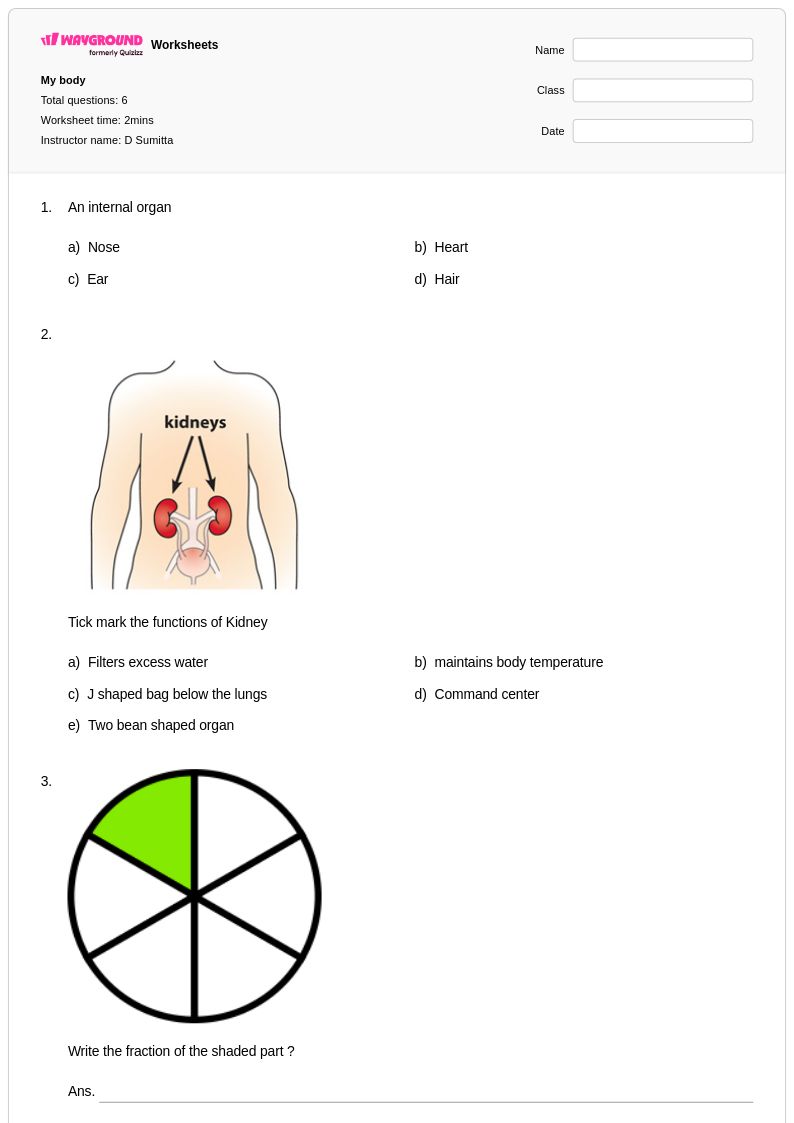
Body mapping worksheets for Year 4 students available through Wayground (formerly Quizizz) provide comprehensive resources for young learners to explore human anatomy and develop fundamental scientific observation skills. These educational materials guide fourth-grade students through the systematic identification and labeling of major body systems, organs, and external body parts, strengthening their ability to understand how the human body functions as an interconnected system. The collection includes free printables that feature detailed diagrams, practice problems requiring students to match organs to their functions, and activities that encourage critical thinking about body structure and organization. Each worksheet comes with an answer key to support accurate learning assessment, and the pdf format ensures easy access for both classroom instruction and independent study, helping students build essential vocabulary and conceptual understanding in life science.
Wayground (formerly Quizizz) empowers educators with an extensive library of millions of teacher-created body mapping resources specifically designed to meet Year 4 science learning objectives and standards alignment requirements. The platform's advanced search and filtering capabilities allow teachers to quickly locate worksheets that match their specific curriculum needs, whether focusing on skeletal systems, digestive processes, or basic anatomy identification. These differentiation tools enable instructors to customize content difficulty levels for diverse learners, supporting both remediation for struggling students and enrichment opportunities for advanced learners. The flexible format options, including printable worksheets and digital versions, streamline lesson planning while providing multiple pathways for skill practice, making it simple for educators to integrate body mapping activities into their comprehensive science instruction and ongoing assessment strategies.
FAQs
How do I teach body mapping to students who struggle with spatial reasoning?
Start with large, simplified diagrams that isolate one body system at a time before asking students to integrate multiple systems. Anchor each lesson in a familiar reference point — such as the heart's position relative to the sternum — and build outward from there. Repeated labeling practice with immediate feedback helps students develop the spatial memory needed to place organs accurately without a reference image.
What exercises help students practice human anatomy and body mapping?
Labeling blank anatomical diagrams, tracing physiological pathways (such as blood flow or nerve signals), and matching organs to their functions are the most effective practice formats for body mapping. Sequencing exercises — where students arrange organs in the correct anatomical order within a system — add an additional layer of challenge. Worksheets that progress from single-organ identification to full system integration give students a structured path from foundational to applied understanding.
What mistakes do students commonly make when labeling body diagrams?
The most frequent errors involve confusing left and right orientation, since anatomical diagrams use the subject's perspective rather than the viewer's. Students also tend to misplace organs that share a body cavity, such as placing the pancreas too far from the stomach, or conflating organs with similar names like the adrenal and renal structures. Addressing laterality and spatial relationships explicitly — rather than assuming students will infer them — reduces these errors significantly.
How can I differentiate body mapping instruction for students at different skill levels?
For foundational learners, use word banks and partially completed diagrams to reduce cognitive load while still requiring active engagement with anatomical vocabulary. Advanced students benefit from open-ended mapping tasks that ask them to trace multi-system interactions, such as how the respiratory and circulatory systems coordinate during exercise. On Wayground, teachers can also apply student-level accommodations such as read aloud support, reduced answer choices, and extended time to meet individual learner needs without disrupting the rest of the class.
How do I use Wayground's body mapping worksheets in my classroom?
Wayground's body mapping worksheets are available as printable PDFs for traditional classroom use and in digital formats for technology-integrated environments, including the option to host them as a live quiz on Wayground. Teachers can filter resources by system, complexity level, or standard alignment to quickly find materials that match their current unit. Answer keys are included, which makes these worksheets practical for independent practice, homework, or formative assessment without additional grading prep.
How do I help students understand the difference between body systems and individual organs?
Students often treat organs as isolated units rather than components of interconnected systems. Use body mapping activities that require students to group organs by system before labeling individual structures, reinforcing the organizational hierarchy from cell to organ to system. Following up with system interconnection exercises — where students draw or trace relationships between systems — builds the analytical thinking needed for more complex anatomy assessments.