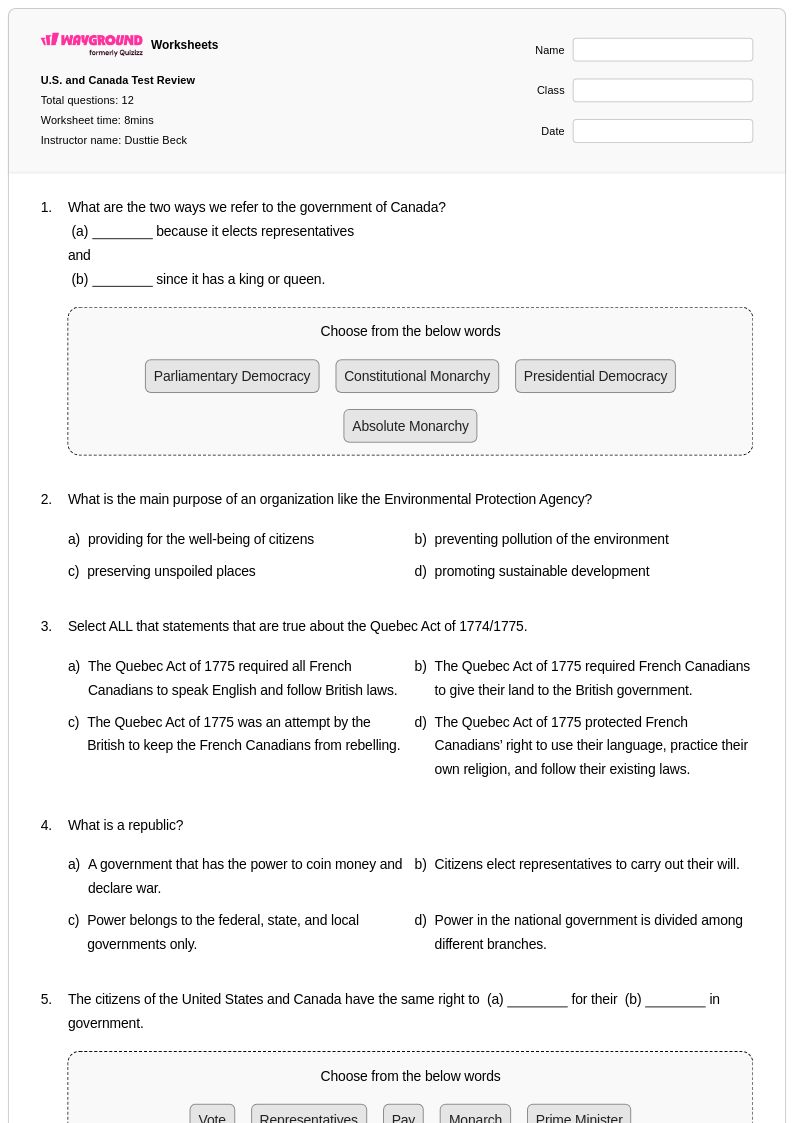
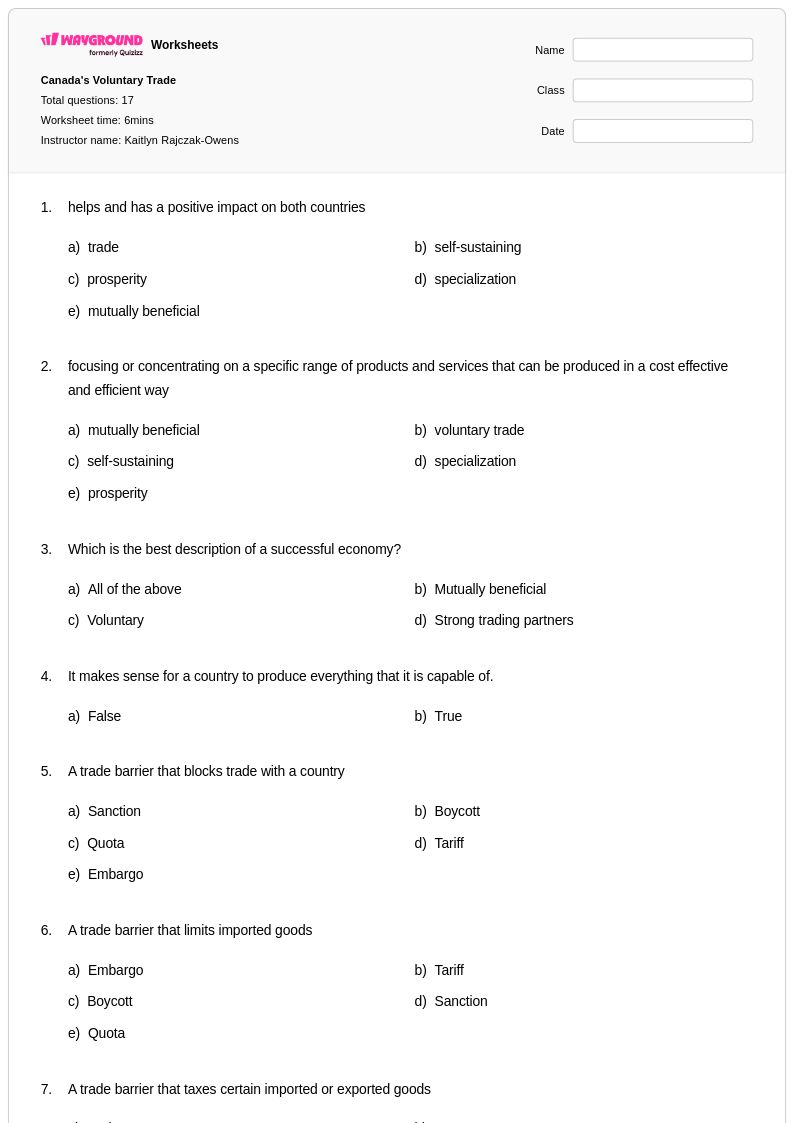
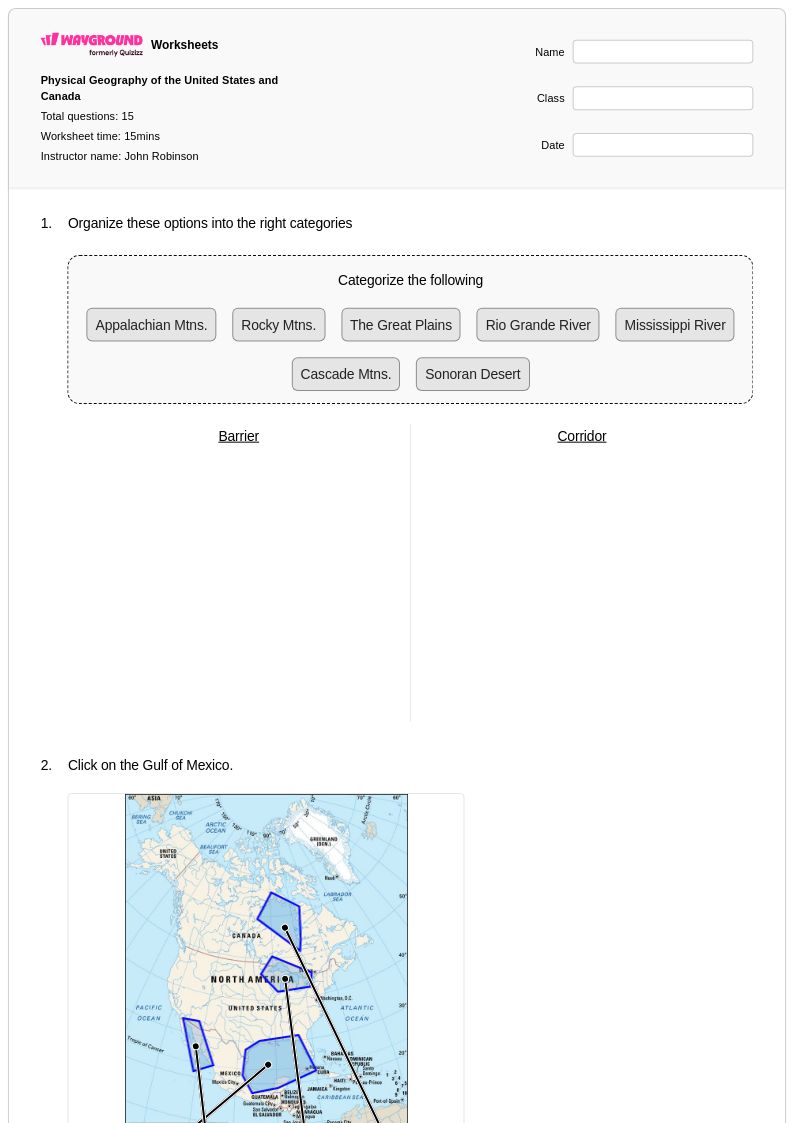
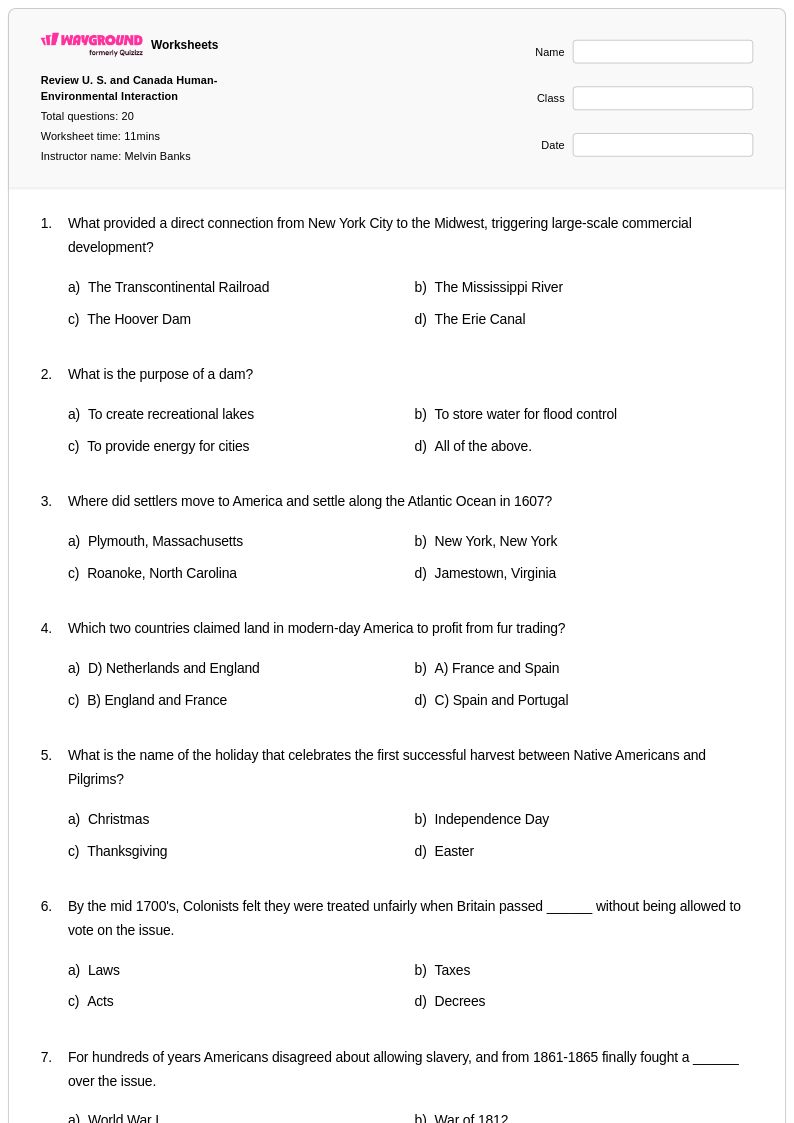
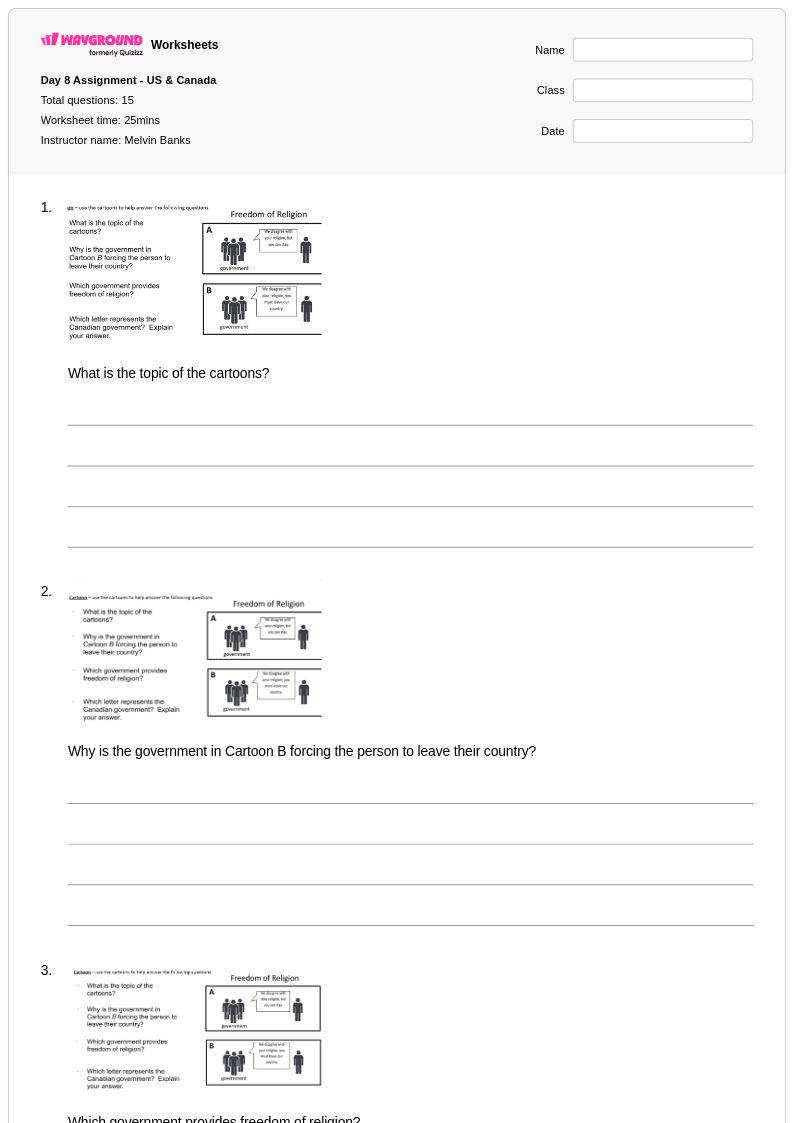
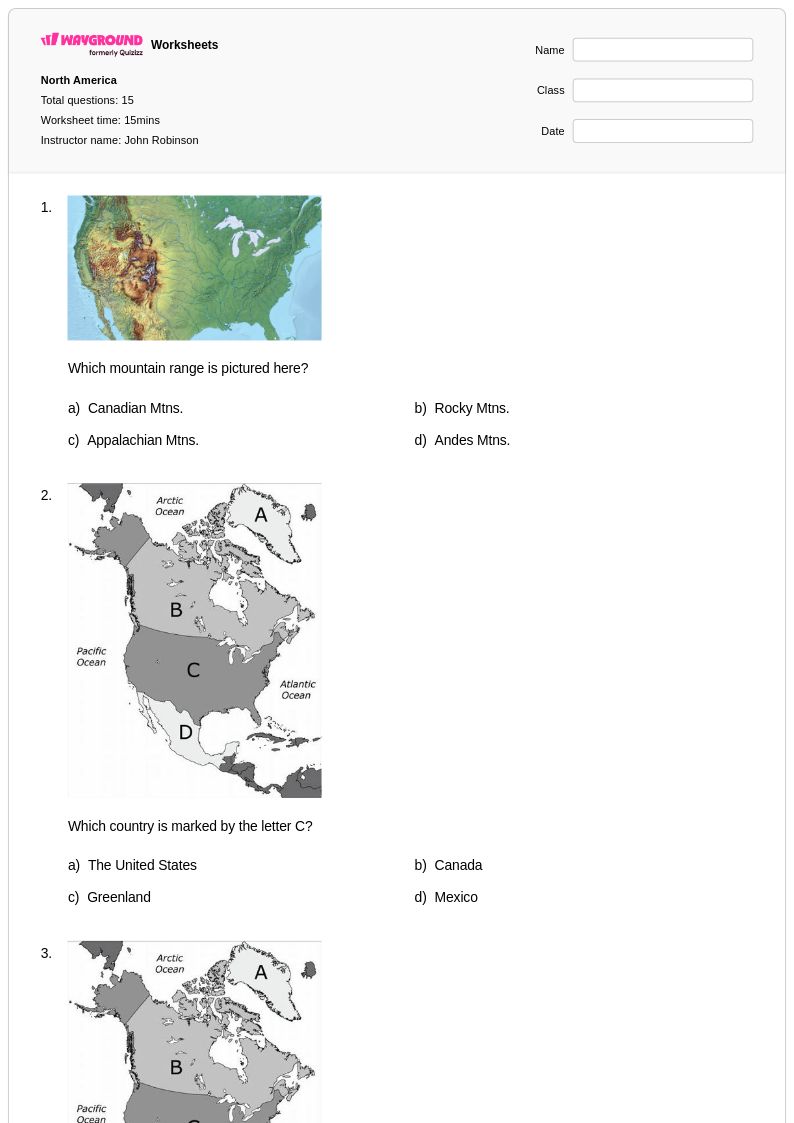
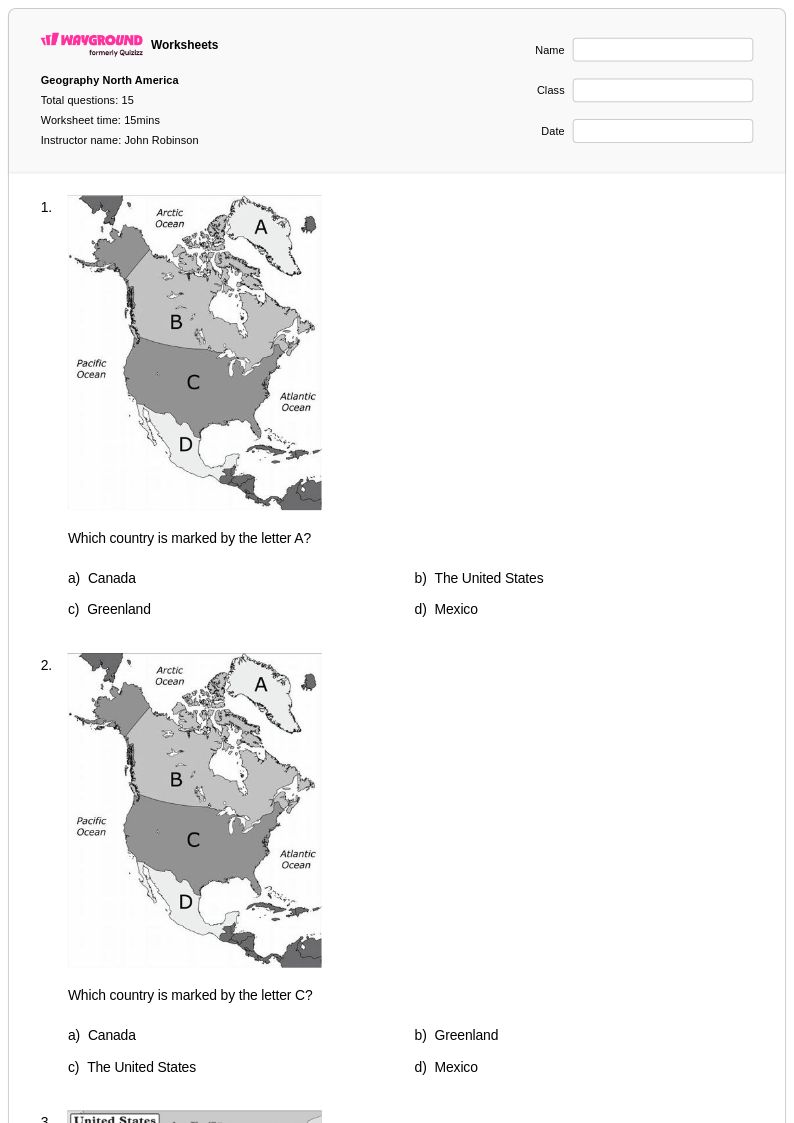
Explore Wayground's comprehensive collection of free Canada geography worksheets and printables designed to help Year 7 students master Canadian provinces, territories, physical features, and regional characteristics through engaging practice problems with complete answer keys.
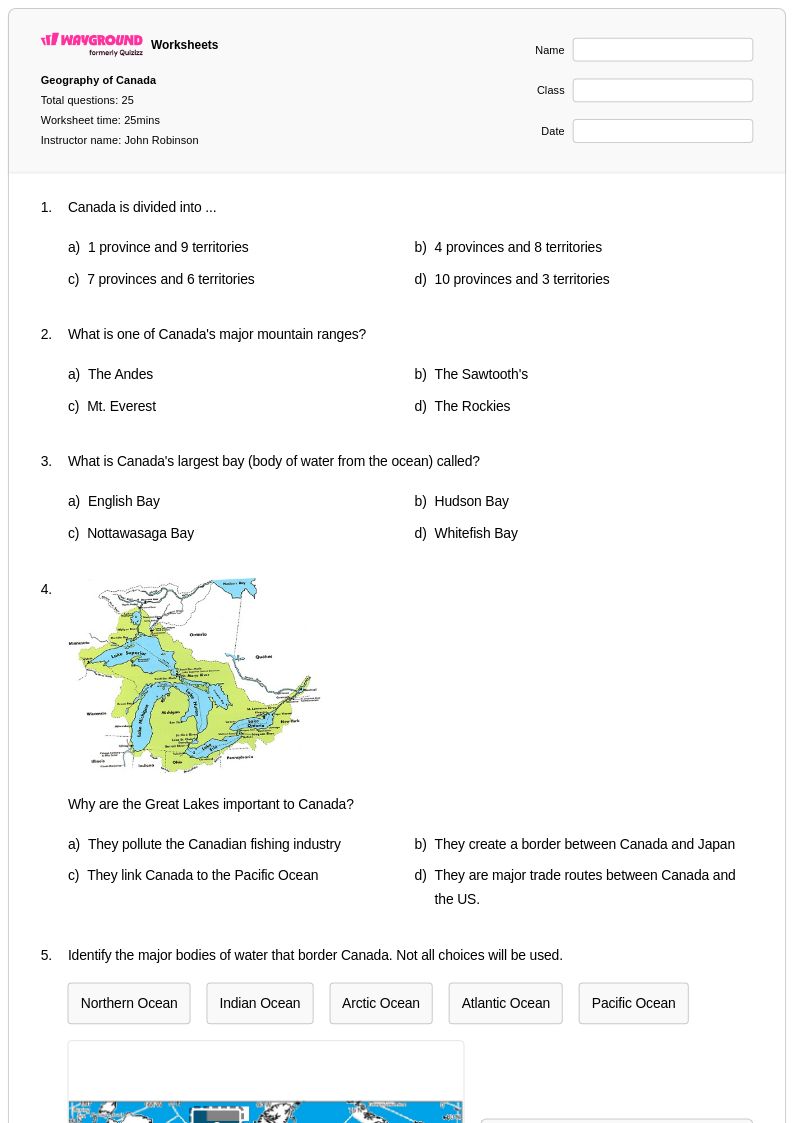
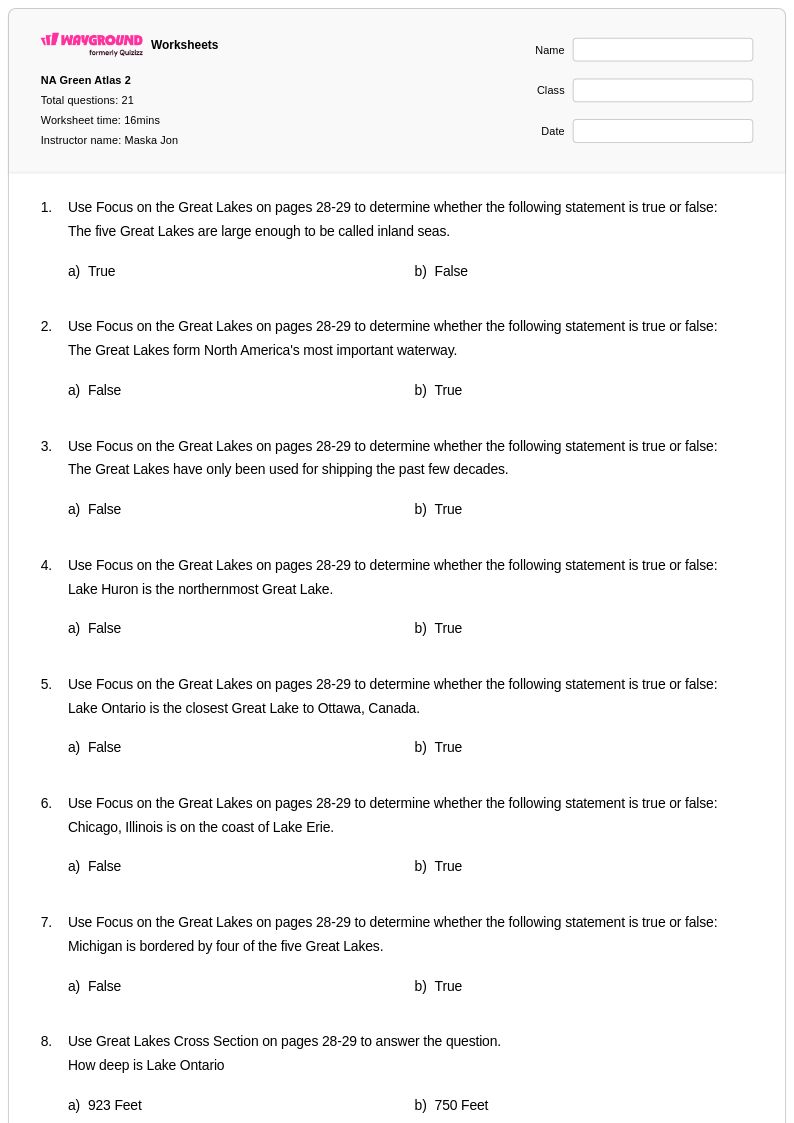
Canada geography worksheets for Year 7 students available through Wayground (formerly Quizizz) provide comprehensive coverage of the diverse physical and human geography that defines our northern neighbor. These educational resources strengthen students' understanding of Canada's vast territorial expanse, from the Atlantic to the Pacific to the Arctic oceans, while developing critical map reading skills and spatial analysis abilities. Students engage with practice problems that explore Canada's provinces and territories, major landforms including the Canadian Shield and Rocky Mountains, climate patterns, natural resources, and population distribution. Each worksheet collection includes detailed answer keys to support independent learning and comes in convenient pdf format as free printables that teachers can easily integrate into their lesson plans.
Wayground (formerly Quizizz) empowers educators with access to millions of teacher-created resources specifically designed for Year 7 Canada geography instruction, featuring robust search and filtering capabilities that allow teachers to quickly locate materials aligned with curriculum standards and learning objectives. The platform's differentiation tools enable instructors to customize worksheets for diverse learning needs, while flexible formatting options provide both printable and digital pdf versions to accommodate various classroom environments. These comprehensive worksheet collections support effective lesson planning by offering ready-made materials for skill practice, targeted remediation for students struggling with geographic concepts, and enrichment opportunities for advanced learners ready to explore more complex aspects of Canadian geography and its connections to global systems.
FAQs
How do I teach Canadian geography to elementary and middle school students?
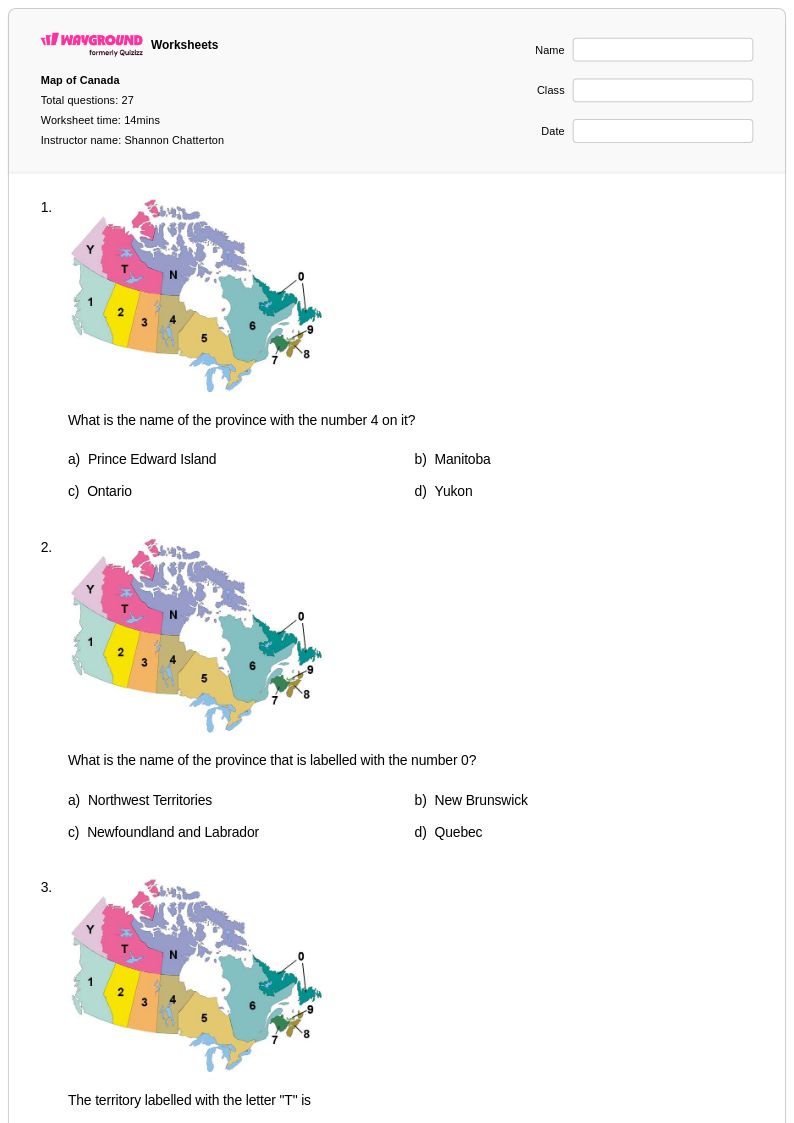
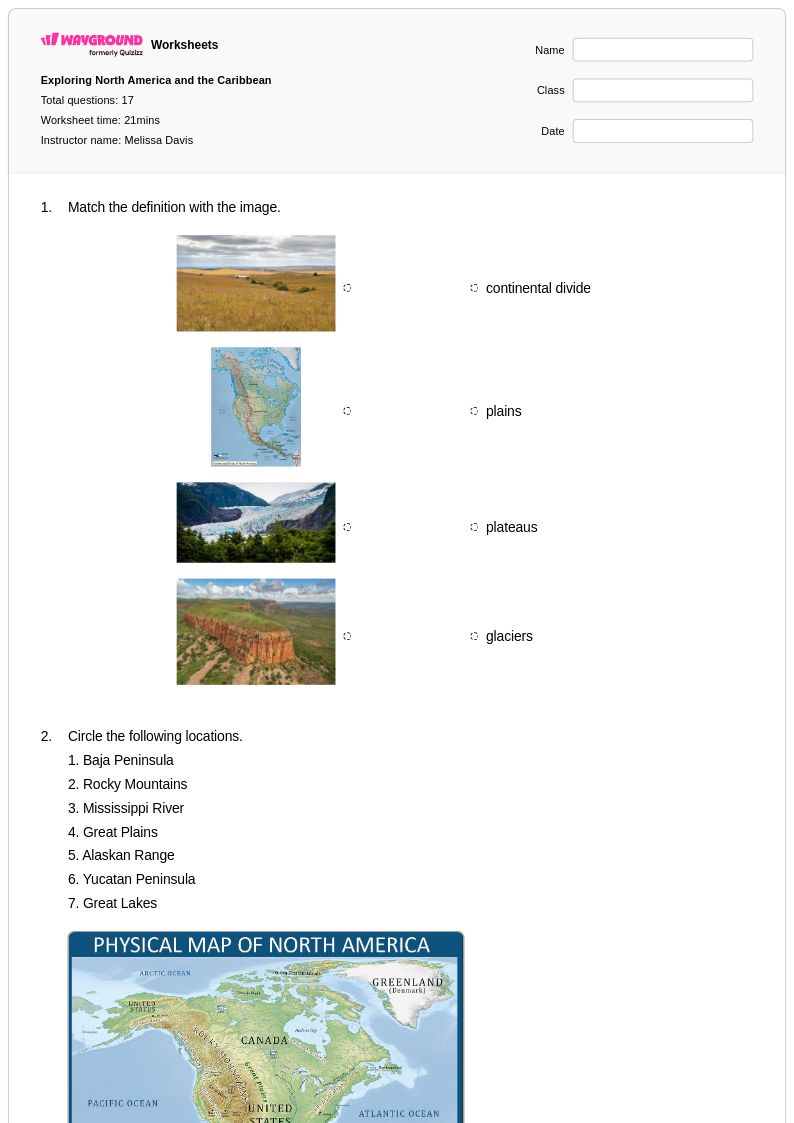
Start by grounding students in Canada's physical regions before introducing political boundaries. Use labeled maps to help students locate the ten provinces, three territories, and major physical features like the Rocky Mountains, Canadian Shield, and Great Lakes system. Connecting physical geography to cultural regions, such as Quebec's francophone identity or Indigenous peoples' traditional territories, gives students a more integrated understanding of the country rather than isolated facts.
What exercises help students practice identifying Canadian provinces and capitals?
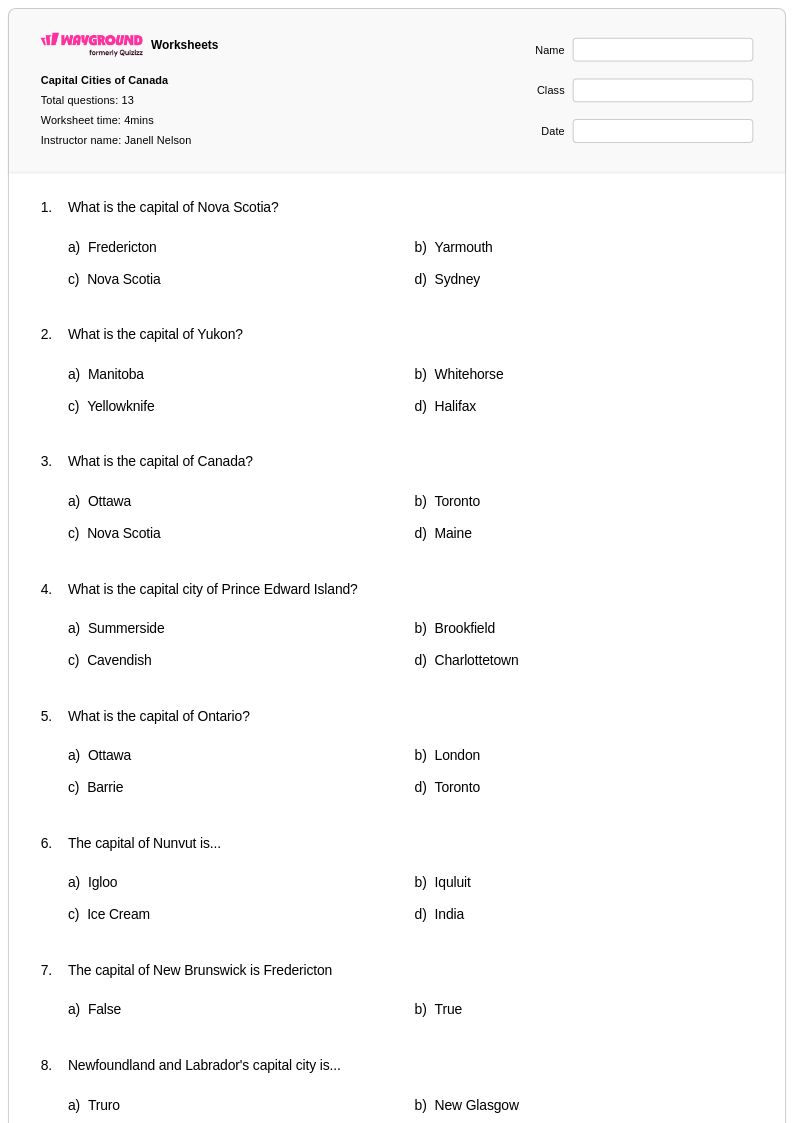
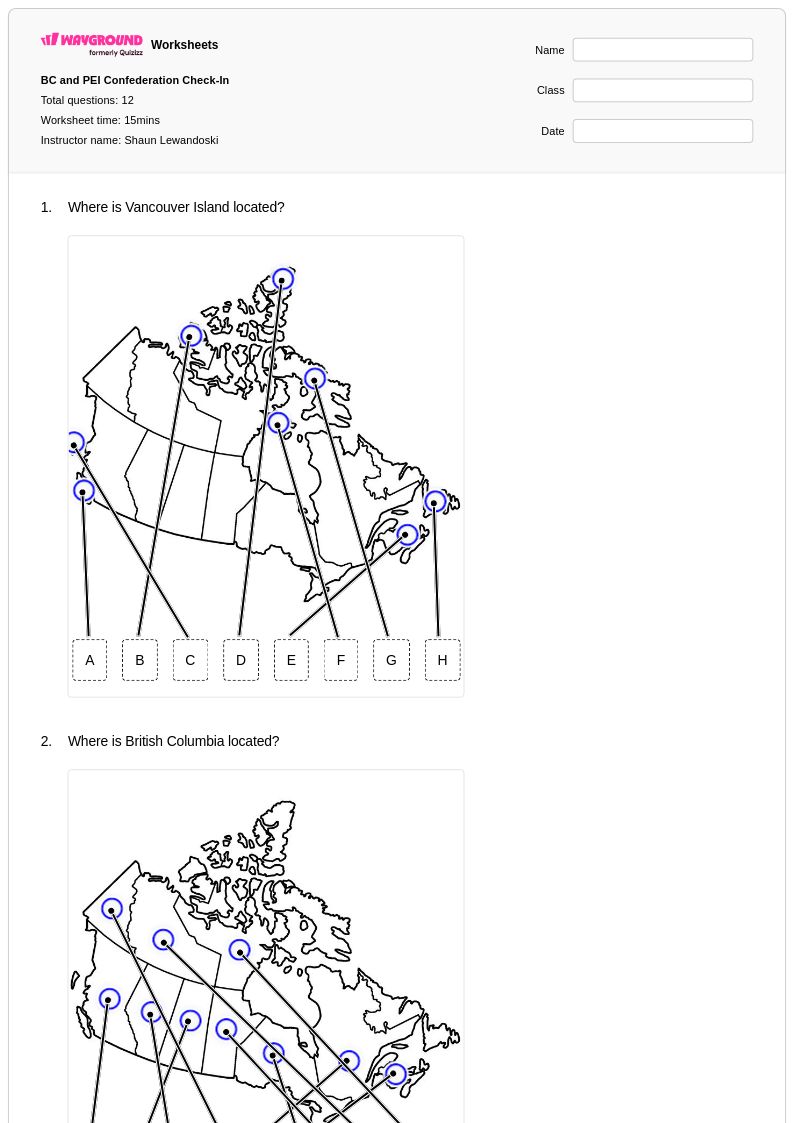
Blank map labeling, matching activities, and fill-in-the-blank exercises are among the most effective formats for practicing provinces and capitals because they require active recall rather than passive recognition. Repeating these exercises across multiple formats, such as moving from labeled reference maps to fully blank maps, helps students build retention over time. Practice problems that ask students to connect provinces to their capitals, regional geography, or cultural characteristics add depth beyond simple memorization.
What common mistakes do students make when learning about Canada's provinces and territories?
Students frequently confuse the provinces with the territories, not understanding that territories are governed differently from provinces under Canada's federal system. Another common error is misplacing western provinces, particularly conflating Alberta and British Columbia, or assuming all provinces border the ocean. Students also regularly underestimate Canada's geographic scale, which leads to misconceptions about the relationship between provinces and major landmarks like the Rockies or Great Lakes.
How do I use Canada worksheets to support a social studies unit on North America?
Canada worksheets work well as a focused sub-unit within a broader North America curriculum, helping students compare Canada's physical geography, government structure, and cultural regions to those of the United States and Mexico. Worksheets that cover Canada's parliamentary system, Indigenous heritage, and bilingual culture prompt higher-order thinking about how geography shapes national identity. Using a mix of map-based and text-based worksheets gives students multiple entry points into the content.
How do Wayground's Canada worksheets accommodate students with different learning needs?
Wayground's digital Canada worksheets support a range of accommodations that teachers can assign at the individual student level. Options include Read Aloud for students who need audio support, reduced answer choices to lower cognitive load for struggling learners, and extended time for students who need it. These settings are saved per student and carry over across future sessions, so teachers don't need to reconfigure them each time.
How can I use Wayground's Canada worksheets in both print and digital classroom settings?
Wayground's Canada worksheets are available as printable PDFs for traditional classroom use and in digital formats for technology-integrated environments, including the option to host them as a quiz directly on Wayground. This flexibility means the same content can be used for paper-based independent work, projected whole-class instruction, or assigned as a self-paced digital activity. Teachers can also use the answer keys included with each worksheet to streamline grading in either format.