Free Printable Career Clusters Worksheets for Year 9
Year 9 career clusters worksheets help students explore various professional pathways through engaging printables, practice problems, and comprehensive answer keys available as free PDF downloads from Wayground.
Explore printable Career Clusters worksheets for Year 9
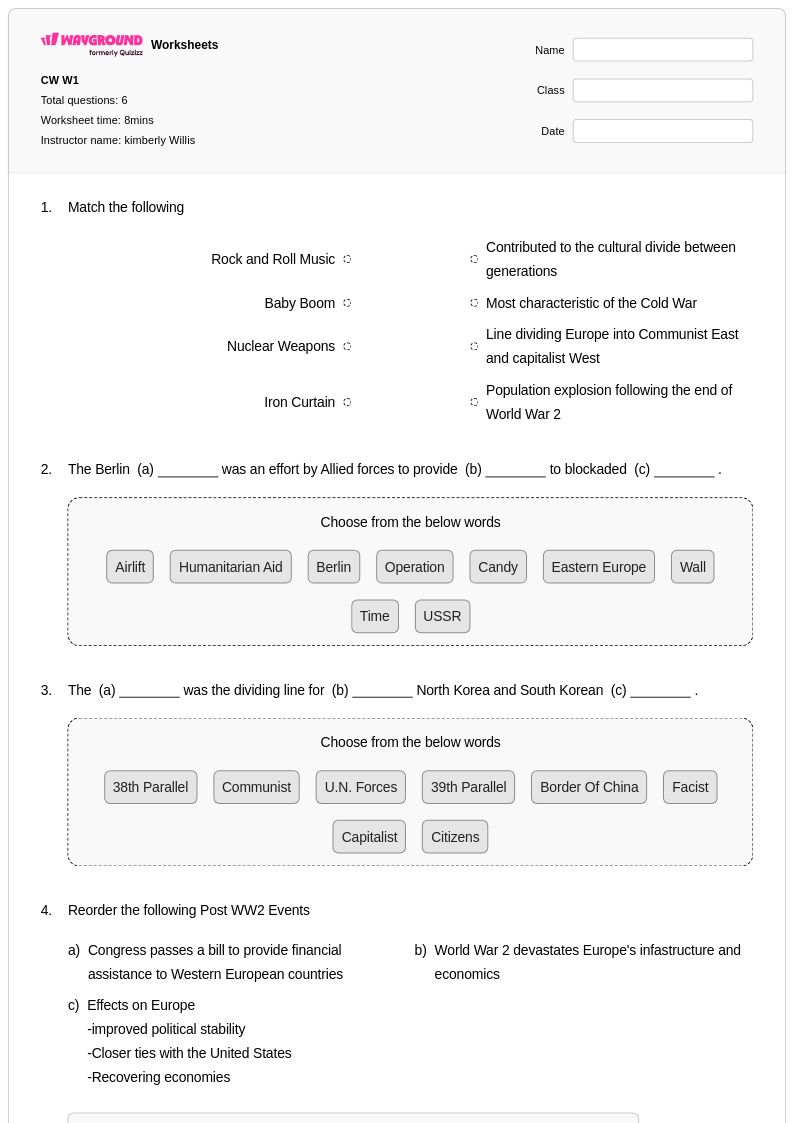
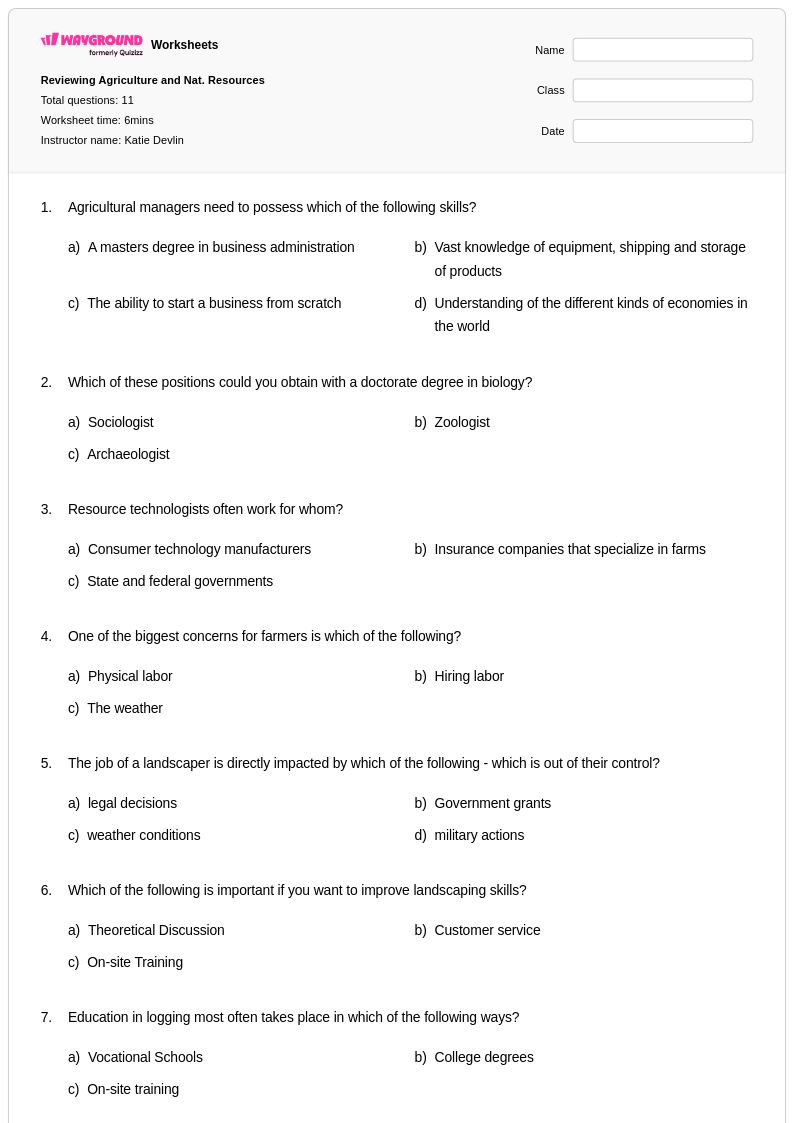
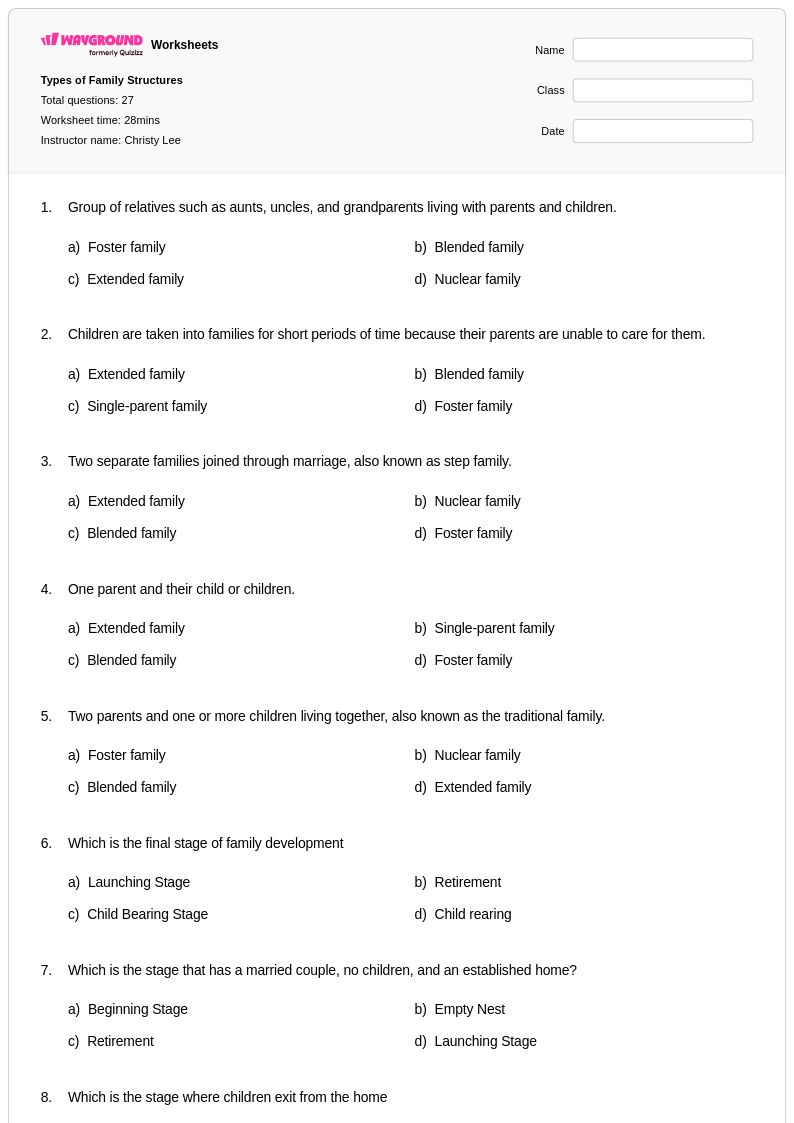
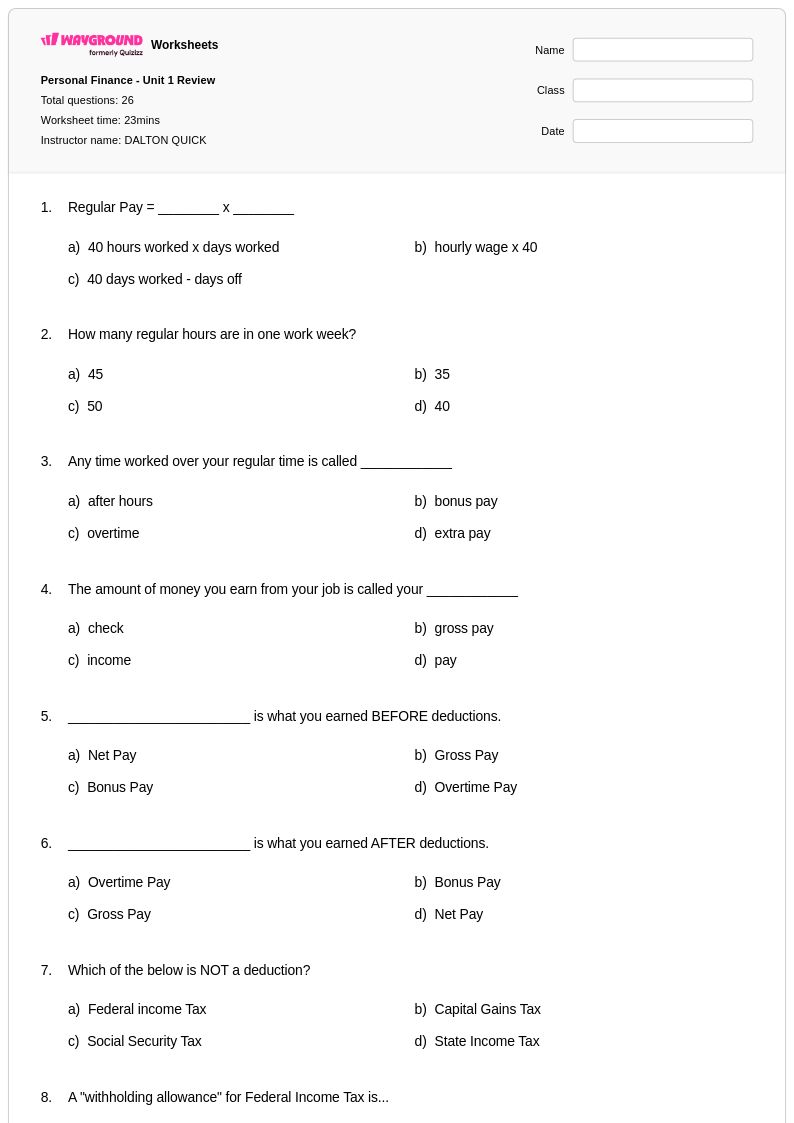
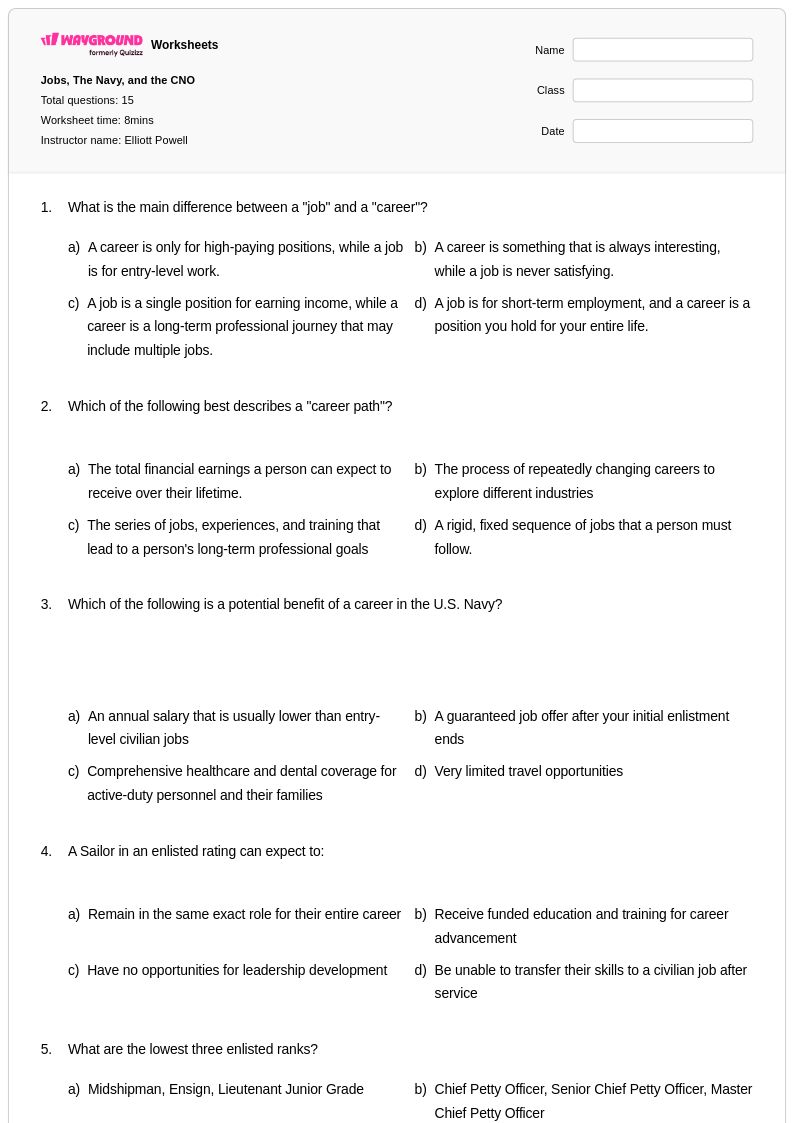
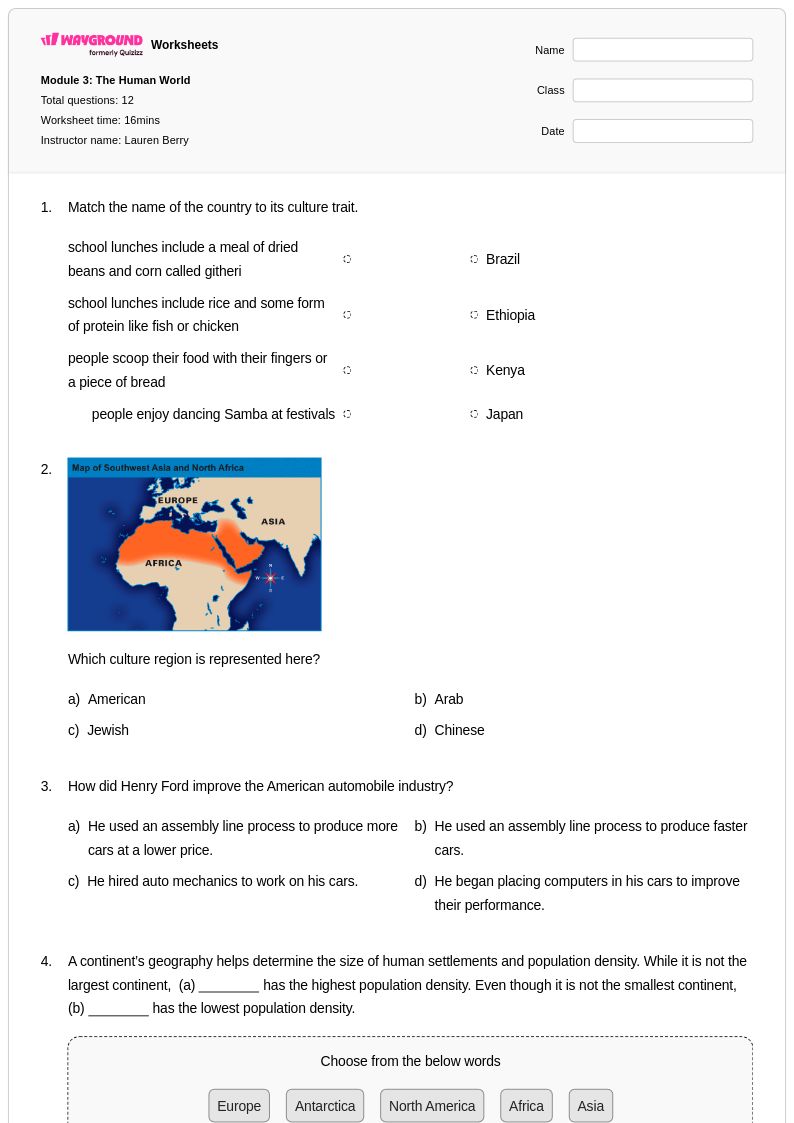
Career clusters worksheets for Year 9 students available through Wayground (formerly Quizizz) provide comprehensive exploration of the sixteen nationally recognized career pathways that organize occupations and industries around common knowledge and skills. These educational resources strengthen critical thinking about career planning, help students identify personal interests and aptitudes, and develop understanding of the education and training requirements across different professional fields. The worksheets include practice problems that guide students through self-assessment activities, career matching exercises, and research-based investigations into specific industries such as healthcare, manufacturing, information technology, and business management. Each printable resource comes with a detailed answer key and focuses on building essential decision-making skills while introducing students to the concept of career laddering and the interconnected nature of modern workplace clusters. These free materials serve as valuable tools for developing college and career readiness by encouraging students to think strategically about their future educational and professional choices.
Wayground (formerly Quizizz) supports social studies educators with an extensive collection of millions of teacher-created career cluster resources specifically designed for Year 9 learners. The platform's robust search and filtering capabilities enable teachers to quickly locate materials aligned with state standards for career exploration and workforce development, while differentiation tools allow for customization based on individual student needs and learning styles. Teachers can access these worksheets in both printable PDF format and interactive digital versions, making them suitable for traditional classroom instruction, remote learning environments, or hybrid educational models. The flexible customization features enable educators to modify content for remediation support, enrichment activities, or targeted skill practice, while the comprehensive nature of the resource library supports effective lesson planning throughout the academic year. This systematic approach to career cluster education helps teachers create meaningful learning experiences that connect academic content with real-world application and future planning.
FAQs
How do I teach career clusters to students?
Teaching career clusters works best when students can connect their personal interests and strengths to real-world occupational pathways. Start by introducing the sixteen nationally recognized career clusters, then guide students through self-assessment activities that help them identify their values, aptitudes, and academic interests. From there, structured exploration activities such as industry research projects and career pathway mapping give students concrete context for understanding how school subjects connect to professional fields.
What activities help students practice identifying career clusters?
Effective practice activities include career sorting exercises where students match occupations to their correct cluster, skill assessment worksheets that connect personal strengths to specific pathways, and industry research tasks that require students to investigate fields like healthcare, information technology, or manufacturing. These exercises build familiarity with the sixteen clusters while developing the self-awareness students need to make informed decisions about their academic and career trajectories.
What misconceptions do students commonly have about career clusters?
A common misconception is that a career cluster locks students into a single job rather than representing a broad family of related occupations sharing common knowledge and skills. Students also tend to dismiss entire clusters based on limited exposure, for example, assuming manufacturing only means factory labor without recognizing roles in engineering, quality control, or production management. Worksheets that require students to research specific careers within each cluster help correct these surface-level assumptions.
How can career clusters worksheets support students with different learning needs?
Career clusters worksheets on Wayground can be paired with built-in accommodation tools to support diverse learners. Teachers can enable Read Aloud for students who benefit from audio support, adjust font sizes through Reading Mode, or reduce answer choices to lower cognitive load for students who need it. These settings can be applied individually so that targeted students receive support while the rest of the class works through the same material without disruption.
How do I use Wayground's career clusters worksheets in my classroom?
Wayground's career clusters worksheets are available as printable PDFs for traditional classroom use and in digital formats for technology-integrated environments, making them flexible for in-class instruction, advisory periods, homework, or career guidance lessons. Teachers can also host the worksheets as a quiz directly on Wayground, allowing them to track student responses and assess understanding in real time. Each worksheet includes a complete answer key, so grading and feedback are built into the resource.
At what grade level should students start learning about career clusters?
Career clusters concepts are typically introduced in middle school and reinforced through high school as part of career readiness, advisory, or social studies programs. However, foundational exposure to workplace roles and professional pathways can begin as early as upper elementary grades through age-appropriate exploration activities. The key is matching the depth of content to student readiness, moving from broad awareness of career families in earlier grades to specific pathway planning in high school.