Discover free Catholic Virtues worksheets and printables from Wayground that help students explore moral character development through engaging practice problems and comprehensive answer keys.
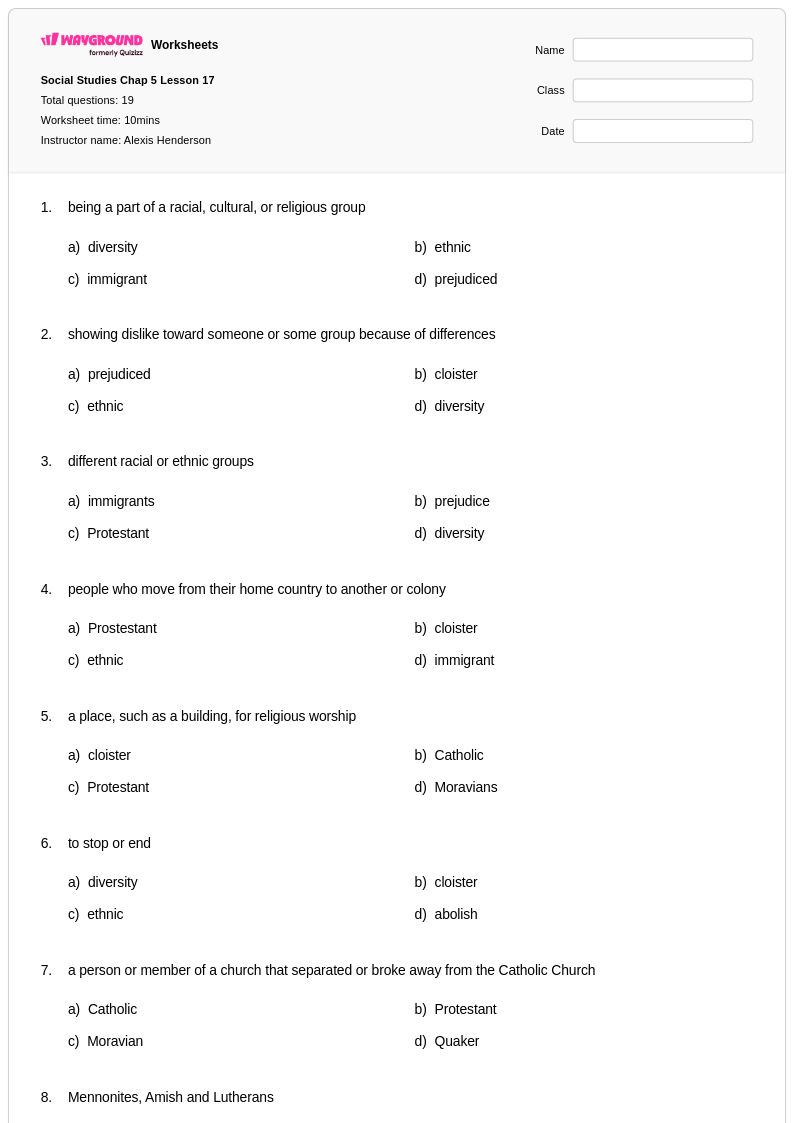
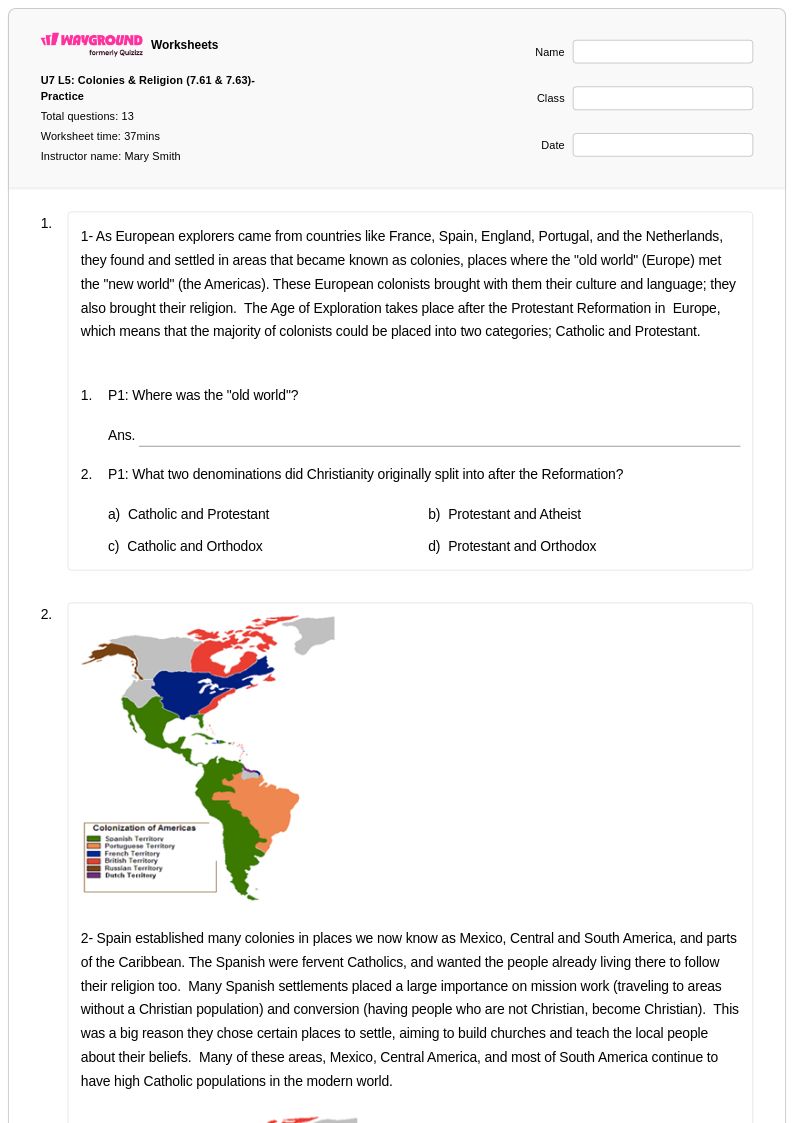
Catholic virtues worksheets available through Wayground (formerly Quizizz) provide comprehensive resources for developing students' understanding of fundamental moral principles rooted in Catholic teaching. These educational materials focus on core virtues such as prudence, justice, fortitude, temperance, faith, hope, and charity, helping students explore how these timeless values apply to their daily lives and social interactions. Each worksheet collection includes structured practice problems that encourage critical thinking about ethical decision-making, character development, and moral reasoning. Teachers can access complete answer keys and free printable pdf formats that make implementation seamless, whether used for individual reflection, small group discussions, or whole-class instruction on virtue-based living.
Wayground (formerly Quizizz) empowers educators with millions of teacher-created resources specifically designed to support Catholic virtues instruction across diverse learning environments. The platform's robust search and filtering capabilities enable teachers to quickly locate materials that align with their curriculum standards and differentiate instruction based on individual student needs. These versatile worksheet collections are available in both printable and digital formats, including downloadable pdfs that facilitate flexible classroom planning and remote learning scenarios. Teachers can customize content to support remediation for students who need additional practice with moral reasoning concepts, provide enrichment opportunities for advanced learners exploring complex ethical scenarios, and implement ongoing skill practice that reinforces virtue development throughout the academic year.
FAQs
How do I teach Catholic virtues to students in a classroom setting?
Teaching Catholic virtues is most effective when you connect abstract moral principles to concrete, age-appropriate scenarios students encounter in daily life. Start by introducing the four cardinal virtues (prudence, justice, fortitude, and temperance) and the three theological virtues (faith, hope, and charity) as a framework, then use reflection activities, case studies, and guided discussion to help students internalize how each virtue shapes decision-making and character. Structured worksheets that prompt critical thinking about ethical dilemmas can anchor lesson discussions and give students a consistent vocabulary for moral reasoning.
What kinds of practice exercises help students understand Catholic virtues?
Effective practice for Catholic virtues goes beyond memorizing definitions — students benefit most from exercises that ask them to apply each virtue to real-life situations. Scenario-based worksheets, virtue journaling prompts, and character analysis activities encourage students to reason through ethical choices using the language of the virtues. Practice problems that revisit the same virtues across different contexts help reinforce retention and show students how prudence, justice, or charity might look different in various social settings.
What misconceptions do students commonly have about Catholic virtues?
A common misconception is that virtues are simply rules to follow rather than habits of character that are gradually developed through practice and intention. Students also frequently conflate the cardinal and theological virtues, or assume virtues like fortitude mean only physical bravery rather than moral courage in the face of peer pressure or difficult choices. Clarifying that virtues are interconnected and mutually reinforcing — not isolated traits — helps students build a more accurate and usable moral framework.
How can I differentiate Catholic virtues instruction for students with different learning needs?
Differentiation in Catholic virtues instruction can include offering simplified scenario prompts for students who need more support and more nuanced ethical dilemmas for advanced learners exploring complex moral questions. When using Wayground's digital format, teachers can apply individual accommodations such as Read Aloud for students who benefit from audio support, reduced answer choices to lower cognitive load, or extended time settings to ensure all students can engage meaningfully with reflection-based content. These settings can be assigned per student without disrupting the rest of the class.
How do I use Catholic virtues worksheets from Wayground in my classroom?
Wayground's Catholic virtues worksheets are available as printable PDFs for traditional classroom use and in digital formats for technology-integrated or remote learning environments, giving teachers flexibility in how they deploy the materials. Each worksheet includes a complete answer key, making them suitable for individual reflection, small group discussion, or whole-class instruction. Teachers can also host worksheets as a live quiz on Wayground, adding an interactive layer to virtue-based lessons that encourages real-time student engagement.
How do Catholic virtues fit into a broader character education or religion curriculum?
Catholic virtues serve as the moral backbone of Catholic religious education and integrate naturally into broader character education programs by providing a structured, theologically grounded framework for ethical development. The seven core virtues — prudence, justice, fortitude, temperance, faith, hope, and charity — map directly onto social-emotional learning goals such as responsible decision-making, empathy, and self-regulation, making them relevant across both religious and character-based curricula. Virtue instruction works best when woven throughout the academic year rather than taught as a standalone unit, allowing students to revisit and deepen their understanding over time.