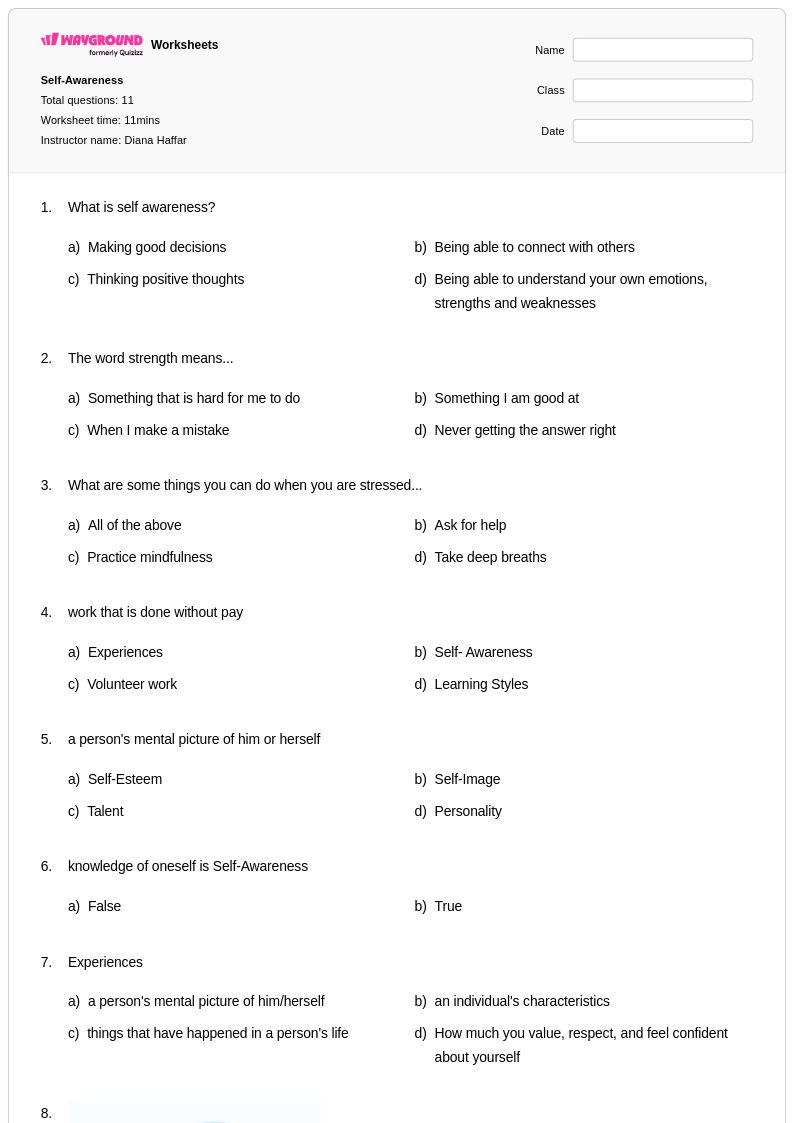
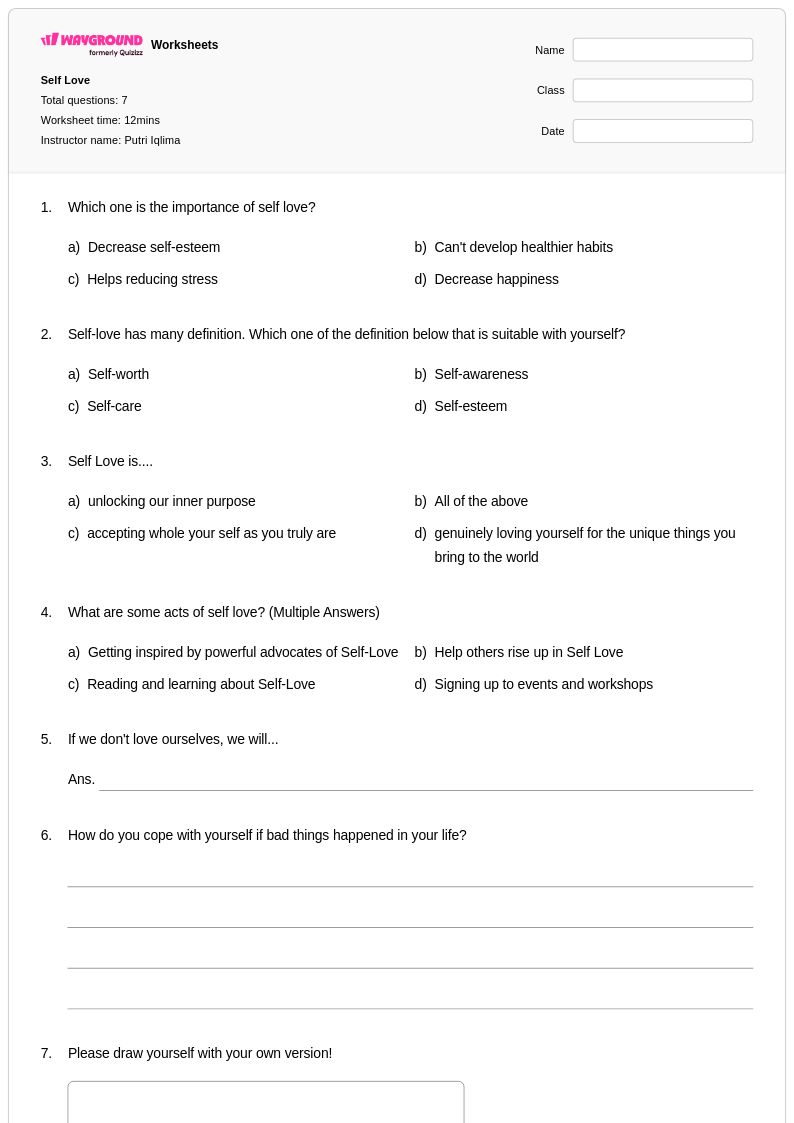
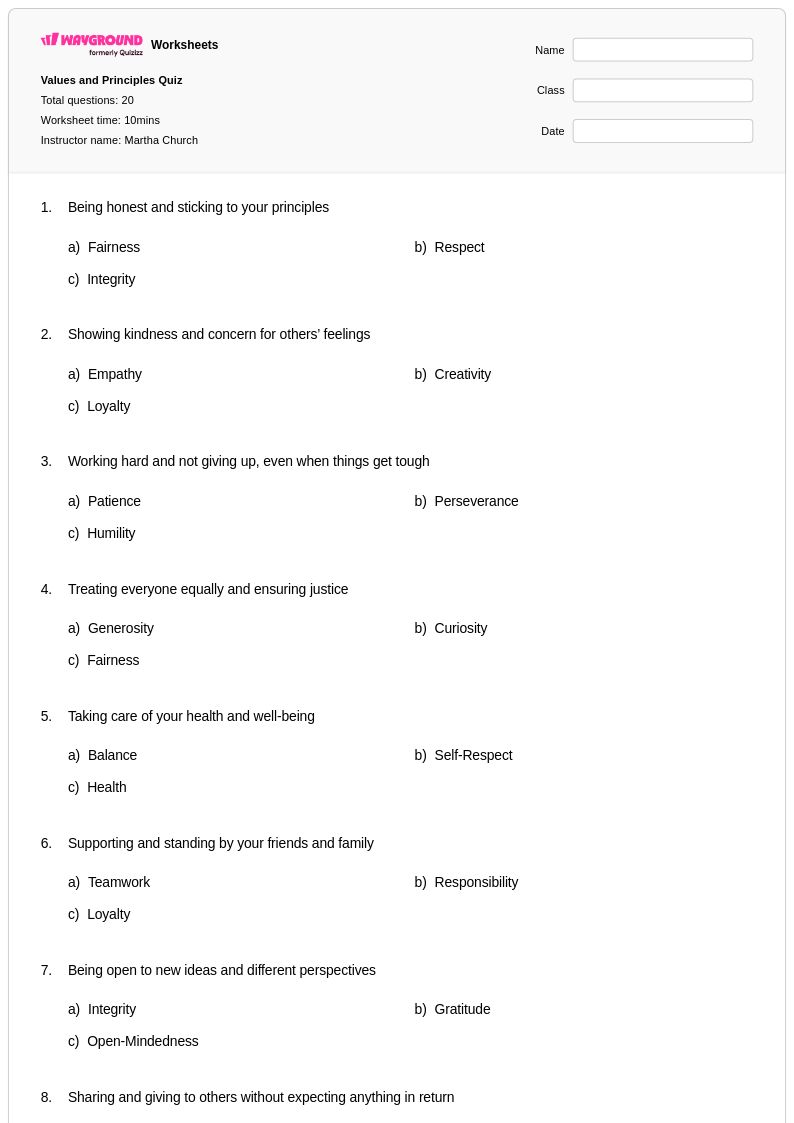
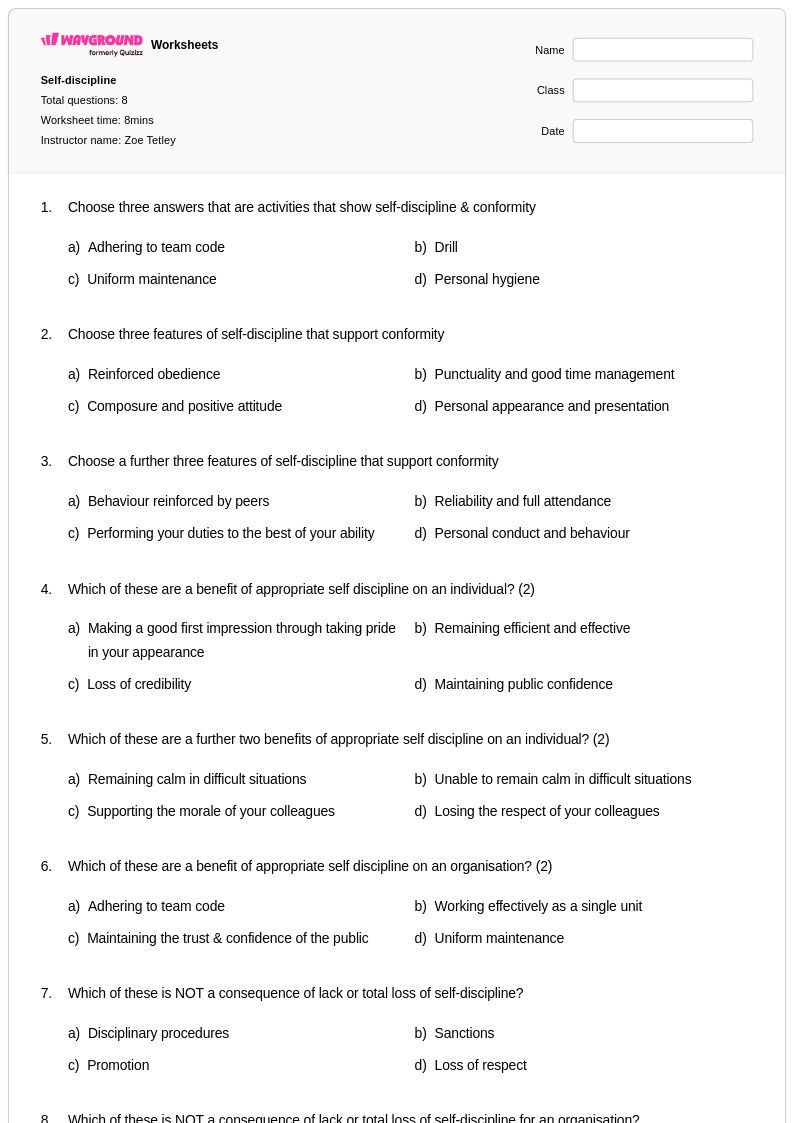
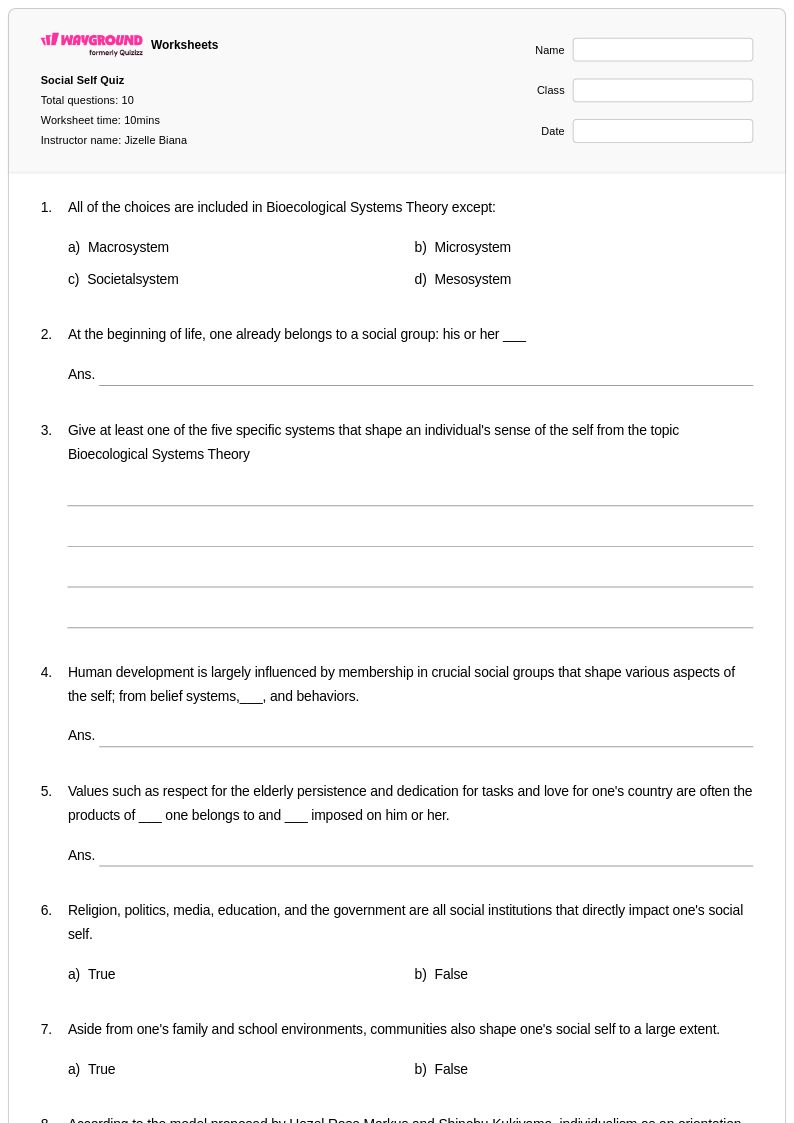
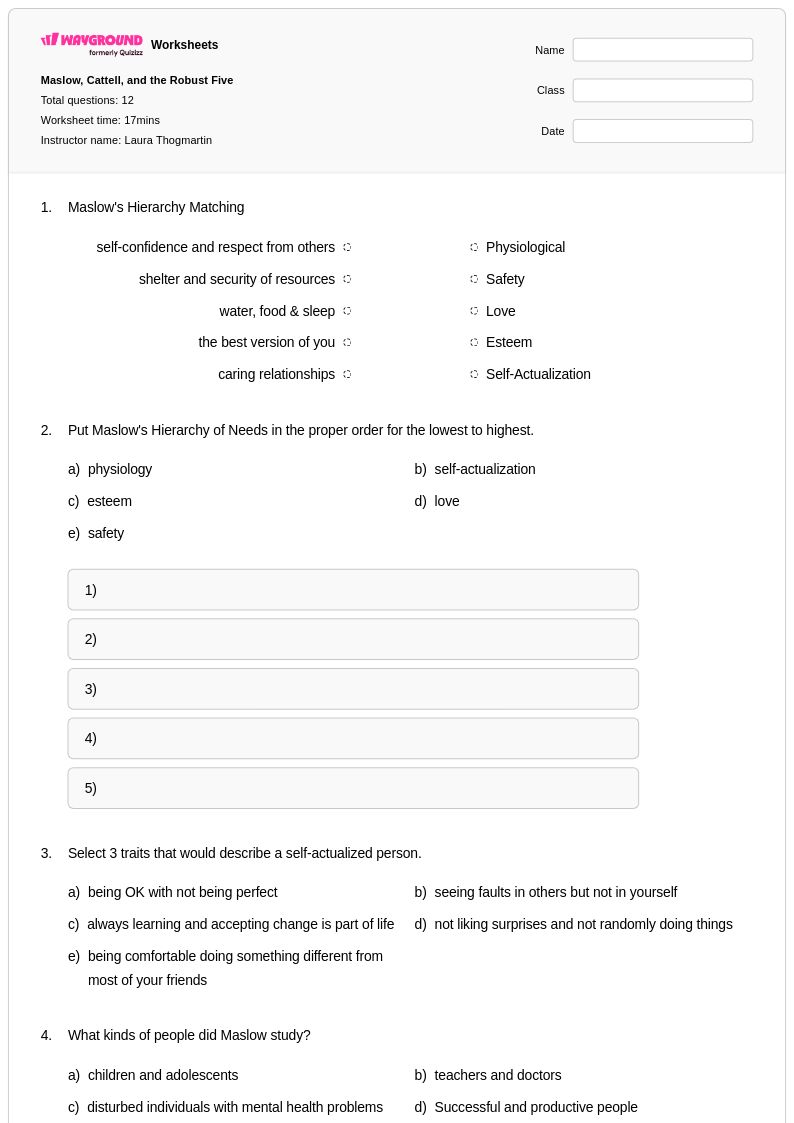
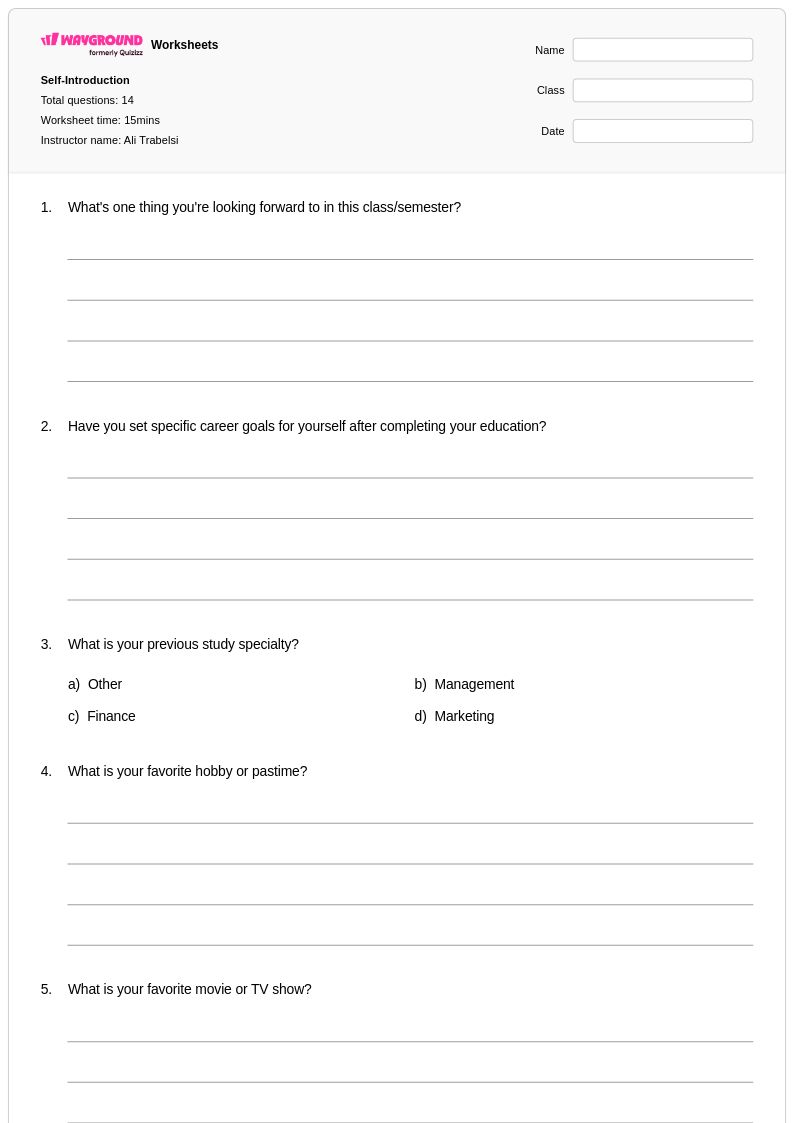
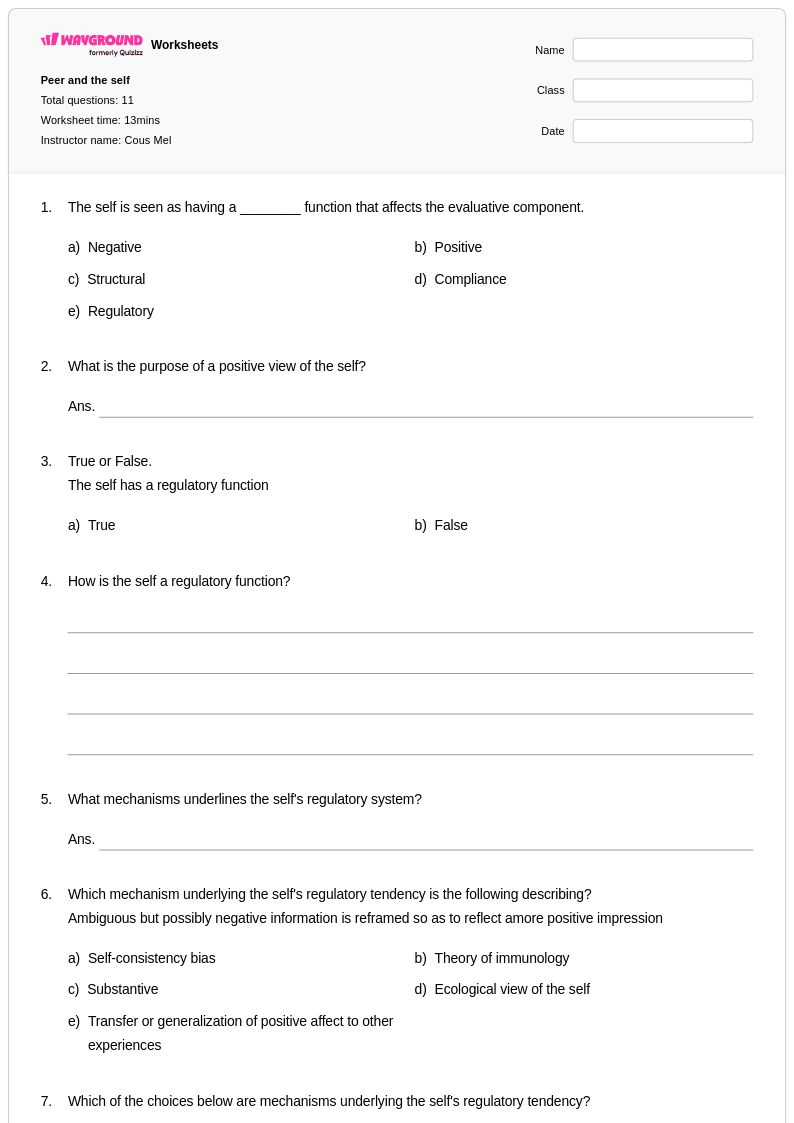
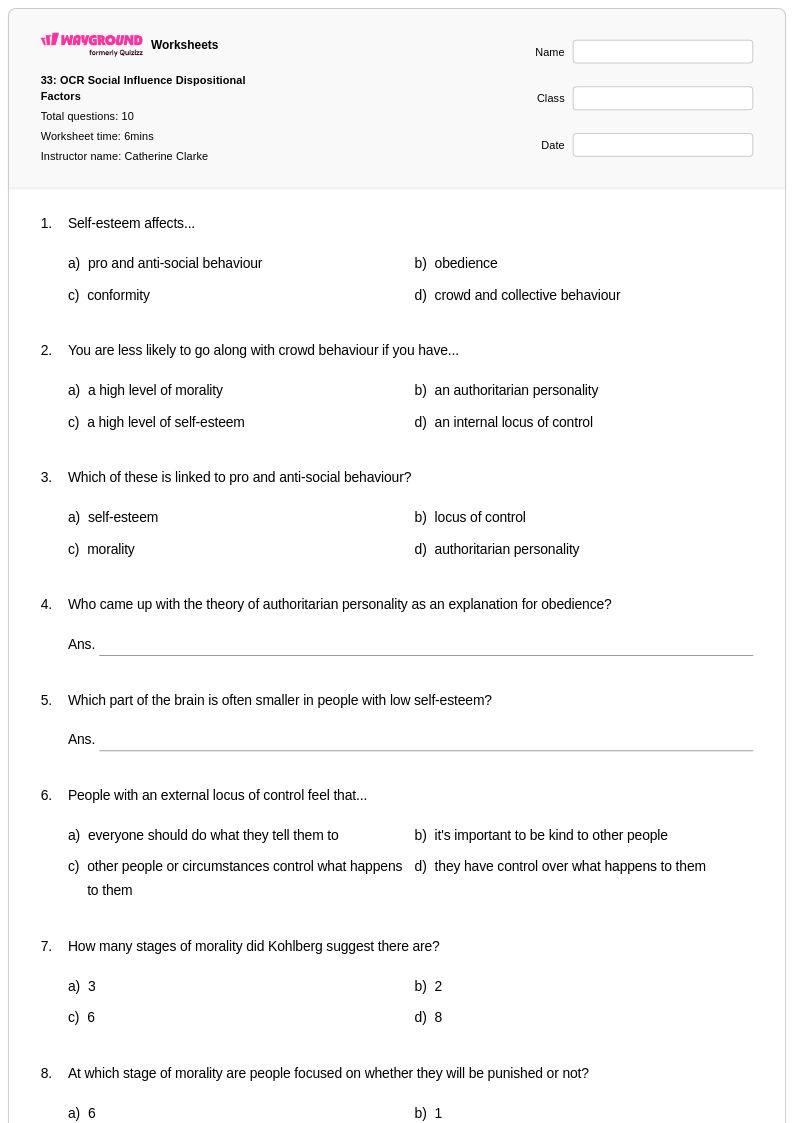
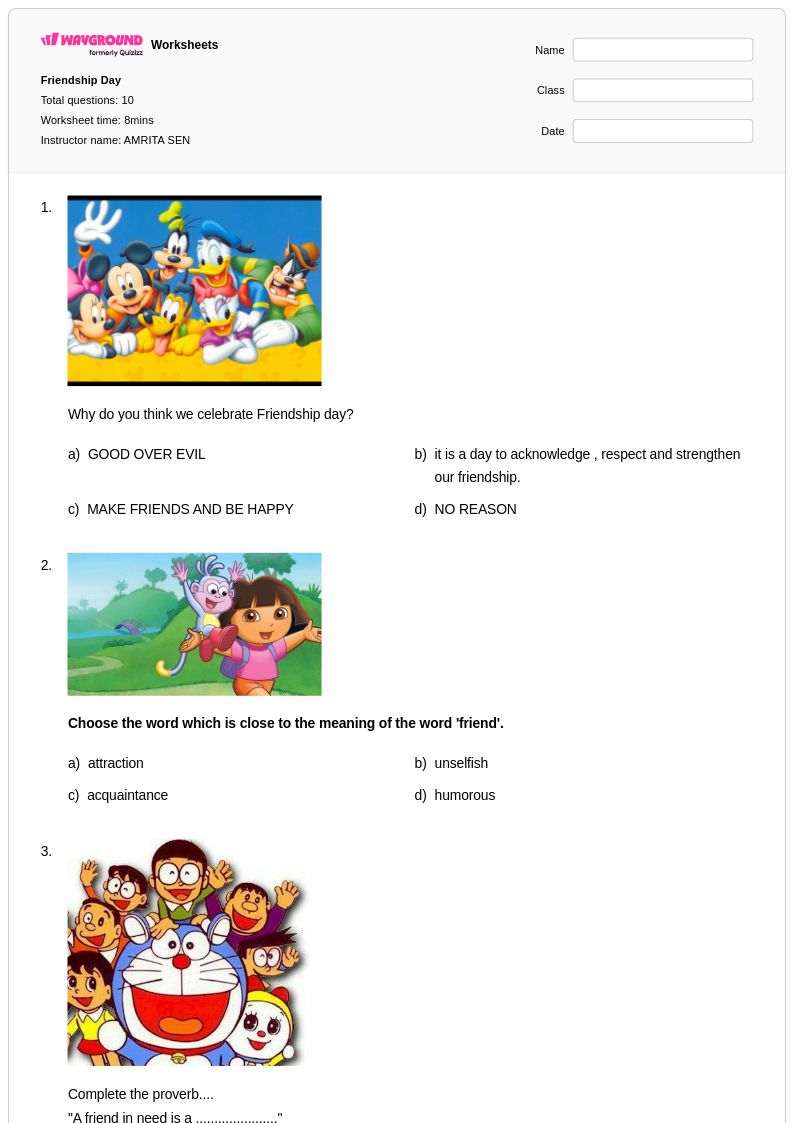
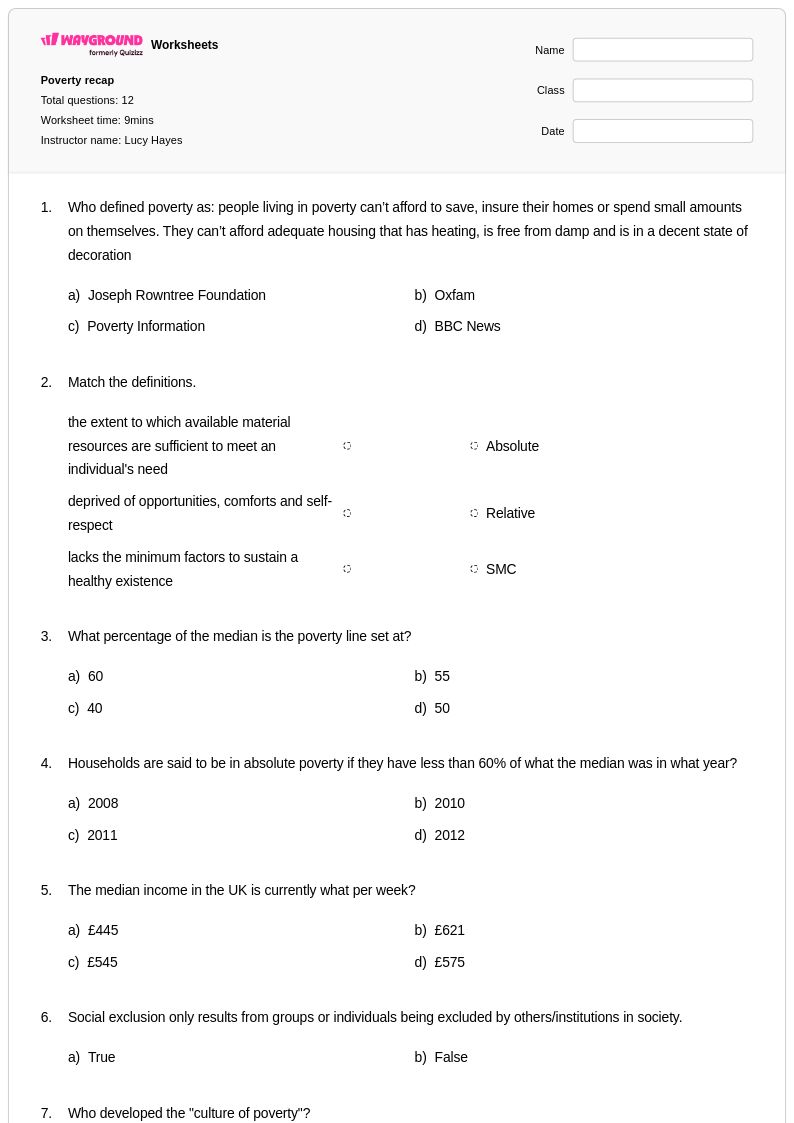
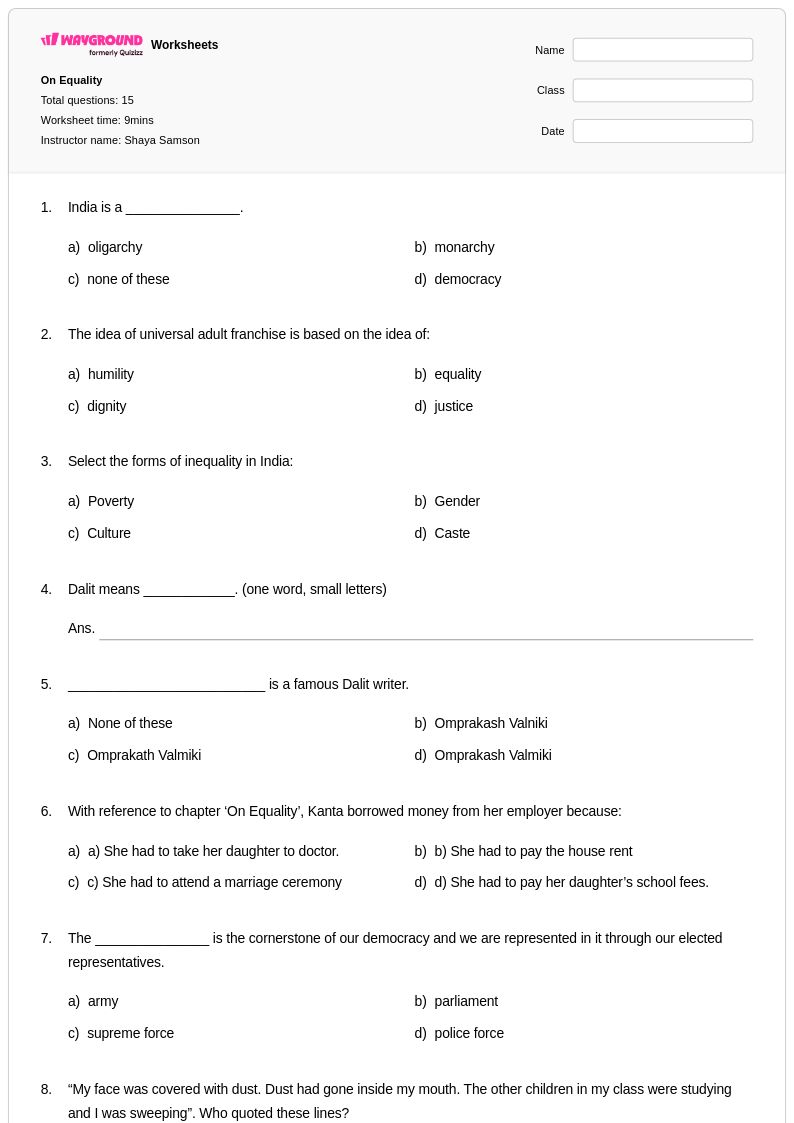
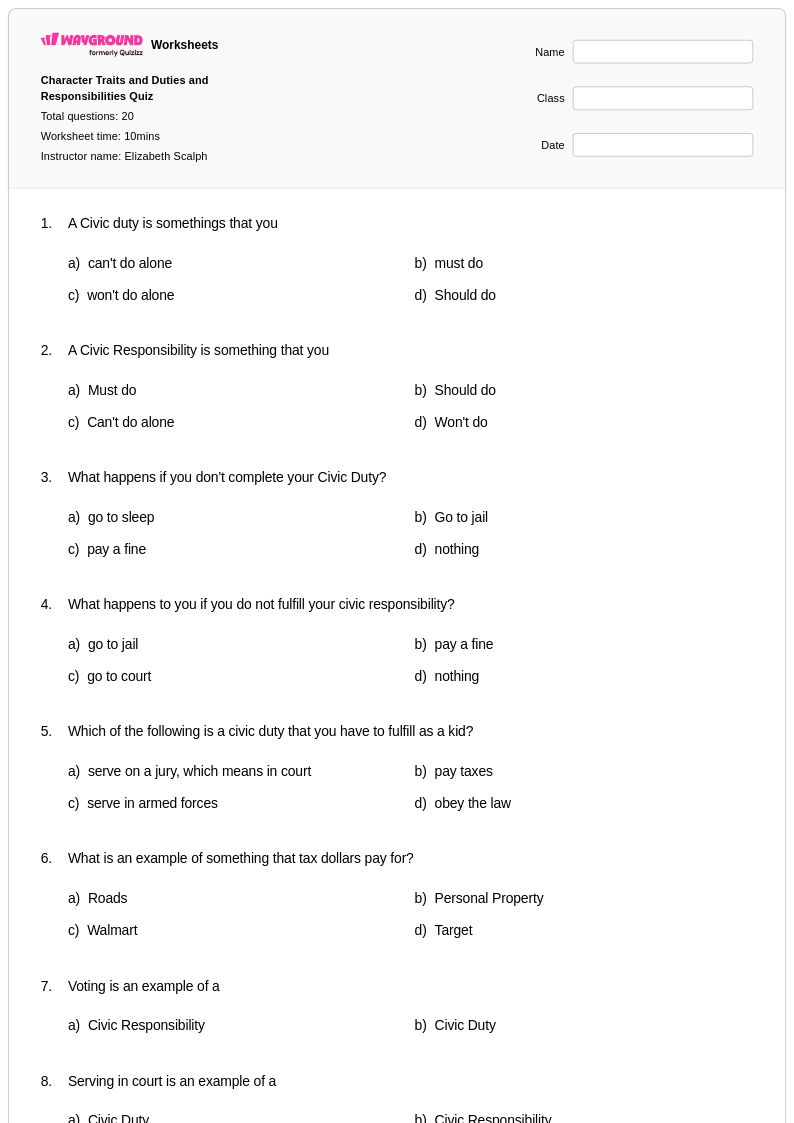
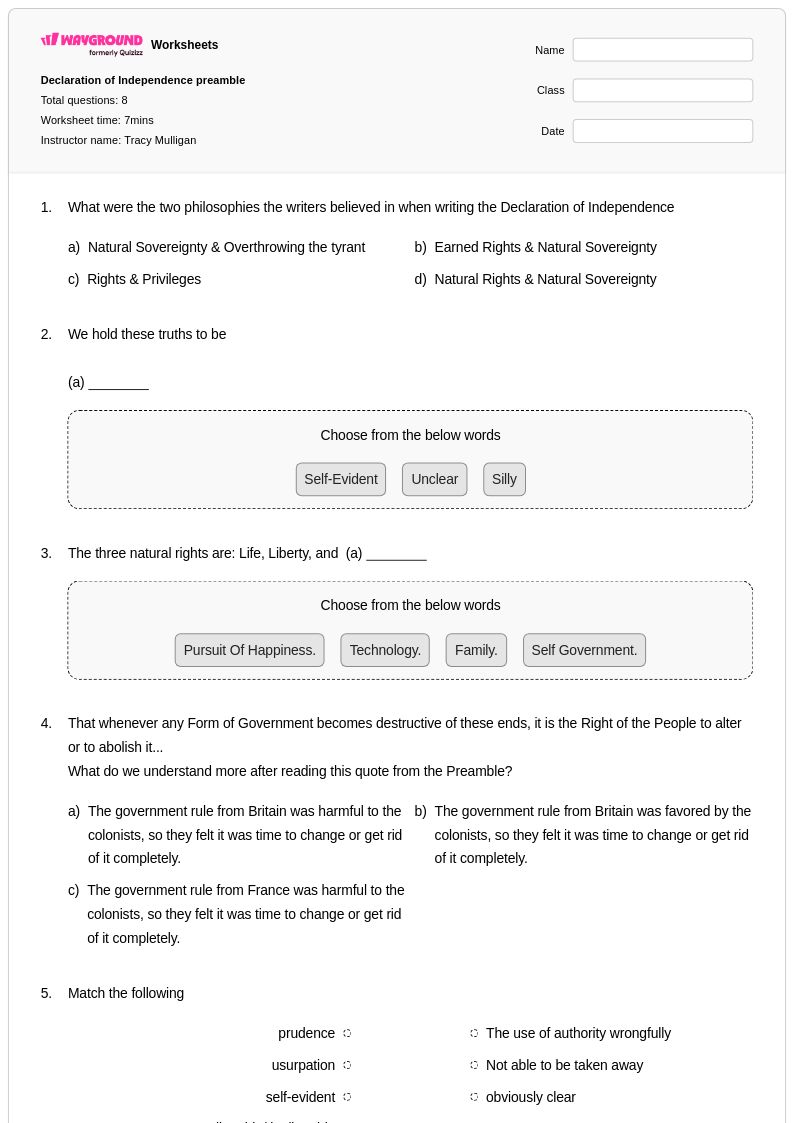
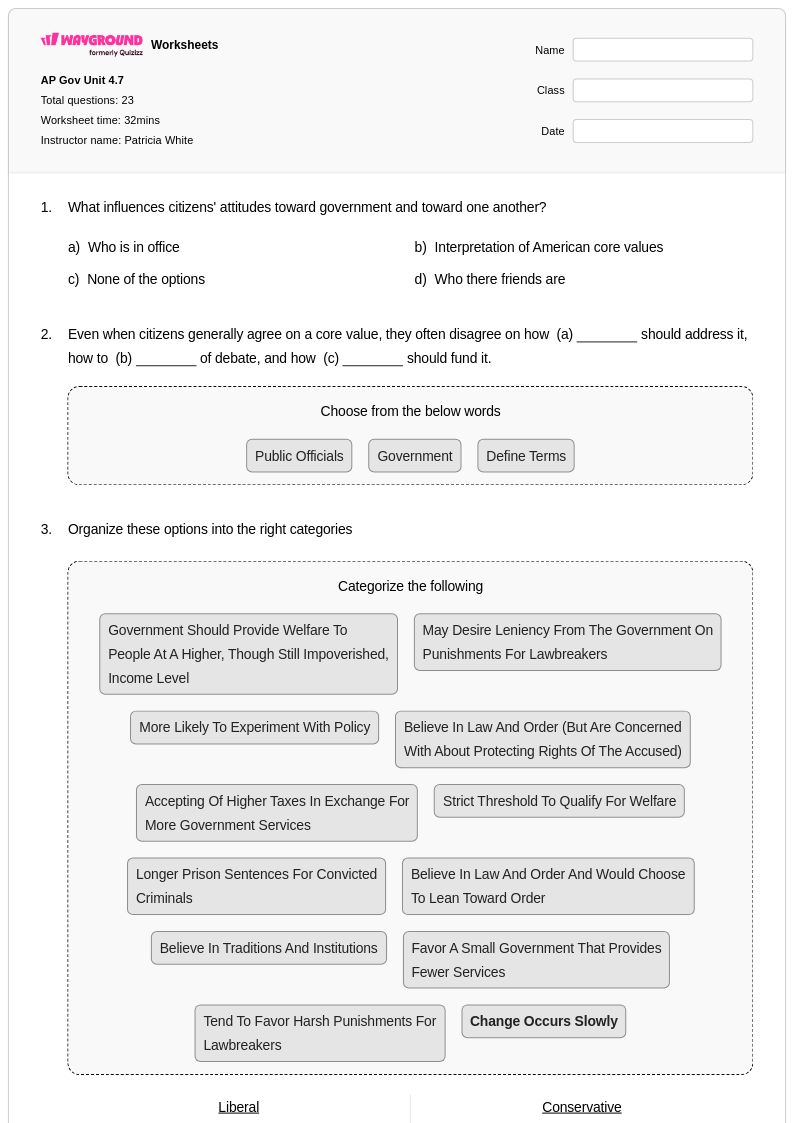
Free printable self respect worksheets and practice problems help students develop healthy self-esteem and personal boundaries through engaging social studies activities with comprehensive answer keys available.
Self-respect worksheets available through Wayground (formerly Quizizz) provide educators with comprehensive resources to help students develop a strong sense of personal worth and positive self-regard. These thoughtfully designed social studies materials focus on building essential life skills that enable learners to recognize their inherent value, set healthy boundaries, and make decisions that align with their personal values and well-being. The worksheets strengthen critical thinking abilities as students explore concepts of dignity, personal integrity, and self-advocacy through engaging practice problems and reflective exercises. Each resource includes detailed answer keys to support accurate assessment, and the collection offers both free and premium printables in convenient PDF format that can be easily integrated into classroom instruction or assigned as independent practice.
Wayground (formerly Quizizz) empowers teachers with access to millions of educator-created self-respect resources that streamline lesson planning and support diverse learning needs. The platform's robust search and filtering capabilities allow instructors to quickly locate age-appropriate materials that align with social studies standards and complement existing curriculum goals. Teachers can customize worksheets to accommodate different skill levels, ensuring effective differentiation for remediation and enrichment purposes. The flexible digital and printable formats, including downloadable PDFs, enable seamless implementation across various teaching environments, whether for whole-class instruction, small group activities, or individual skill practice sessions. This comprehensive collection supports educators in fostering students' emotional intelligence and personal development while meeting diverse instructional objectives.
FAQs
How do I teach self-respect to students in a classroom setting?
Teaching self-respect works best when students are guided to recognize their own values, strengths, and personal boundaries through structured reflection. Start by introducing concepts like dignity, personal integrity, and self-advocacy using real-life scenarios students can relate to. Reflective exercises that prompt students to identify what they value about themselves and how they want to be treated by others build the foundation for lasting self-regard. Pairing discussion with written activities helps students internalize these ideas rather than simply recite them.
What kinds of activities help students practice self-respect skills?
Practice activities that ask students to set personal boundaries, evaluate decision-making scenarios, and reflect on their own values are most effective for building self-respect. Worksheets with structured prompts — such as identifying situations where they upheld or compromised their values — give students concrete practice with abstract concepts. Reflective writing and scenario-based problems also help students connect self-respect to everyday social interactions and choices.
What misconceptions do students commonly have about self-respect?
A common misconception is that self-respect means prioritizing oneself over others at all times, which students may confuse with selfishness or arrogance. In reality, self-respect involves recognizing one's own worth while also treating others with dignity. Students also sometimes conflate self-respect with self-esteem, not realizing that self-respect is more specifically tied to acting in alignment with one's values and maintaining personal boundaries. Addressing these distinctions directly in instruction helps prevent these errors from taking hold.
How can I differentiate self-respect worksheets for students with different learning needs?
Wayground supports student-level accommodations that can be applied individually without notifying the rest of the class. Teachers can enable Read Aloud for students who need questions read to them, reduce answer choices to lower cognitive load for struggling learners, and adjust font sizes or themes using Reading Mode for accessibility. Extended time can also be configured per student, which is especially useful for reflective writing tasks where processing time varies. These settings are saved and reusable across future sessions, making differentiation sustainable rather than a one-time setup.
How do I use Wayground's self-respect worksheets in my classroom?
Wayground's self-respect worksheets are available as printable PDFs for traditional classroom use and in digital formats for technology-integrated environments, accommodating a range of teaching preferences and student needs. Teachers can assign them as independent practice, use them for small group discussion activities, or host them as a live quiz directly on Wayground. Each worksheet includes a comprehensive answer key, making it easy to assess student understanding efficiently. The flexible format means these materials work equally well for in-person, hybrid, or remote instruction.
How does teaching self-respect connect to broader social-emotional learning goals?
Self-respect is a foundational social-emotional learning (SEL) skill because it underpins students' ability to form healthy relationships, resist negative peer pressure, and make value-aligned decisions. When students understand their own worth and can articulate their boundaries, they are better equipped to navigate conflict, advocate for themselves, and engage respectfully with others. Integrating self-respect instruction into social studies or advisory periods connects personal development to the broader curriculum goal of preparing students to participate constructively in communities.