
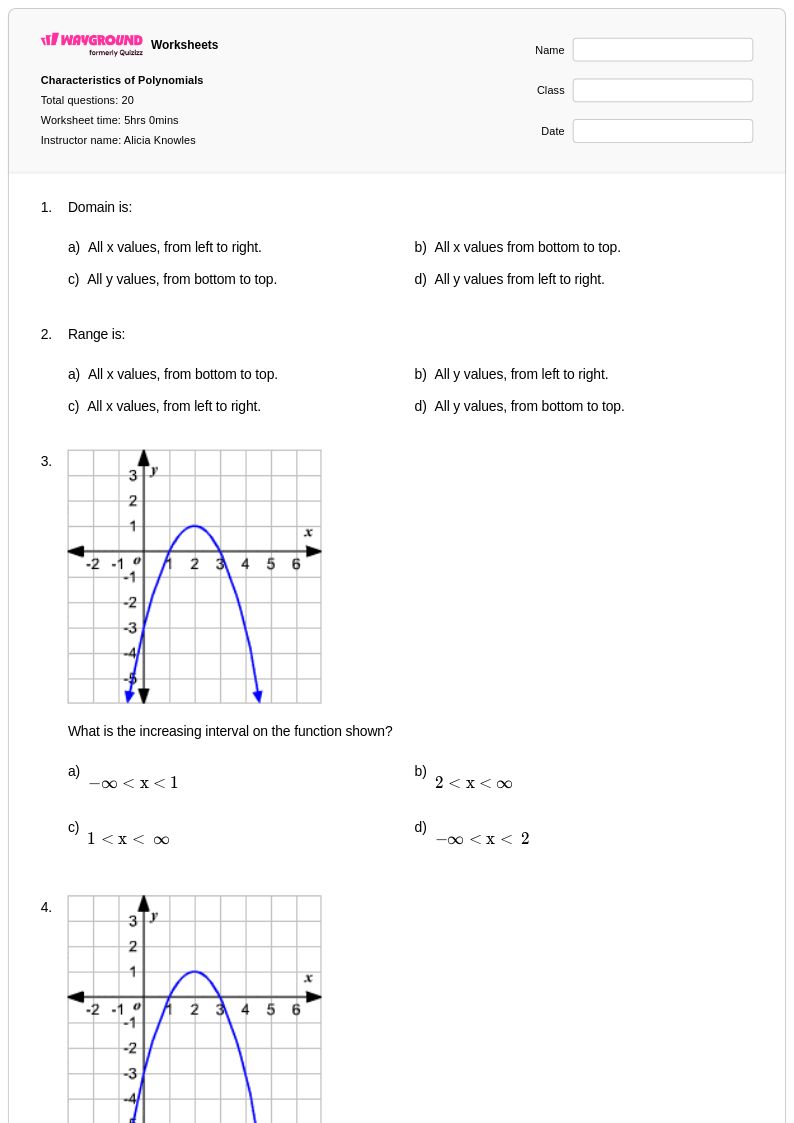
20 Q
11th
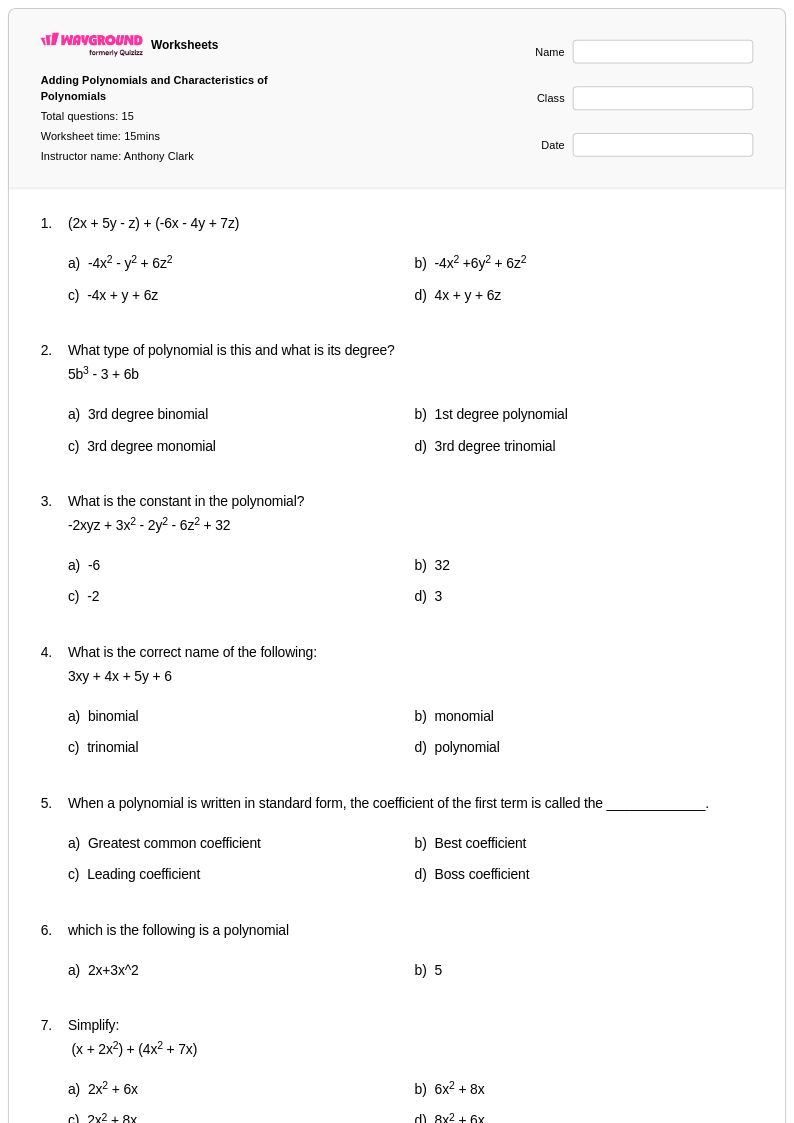
15 Q
9th - Uni
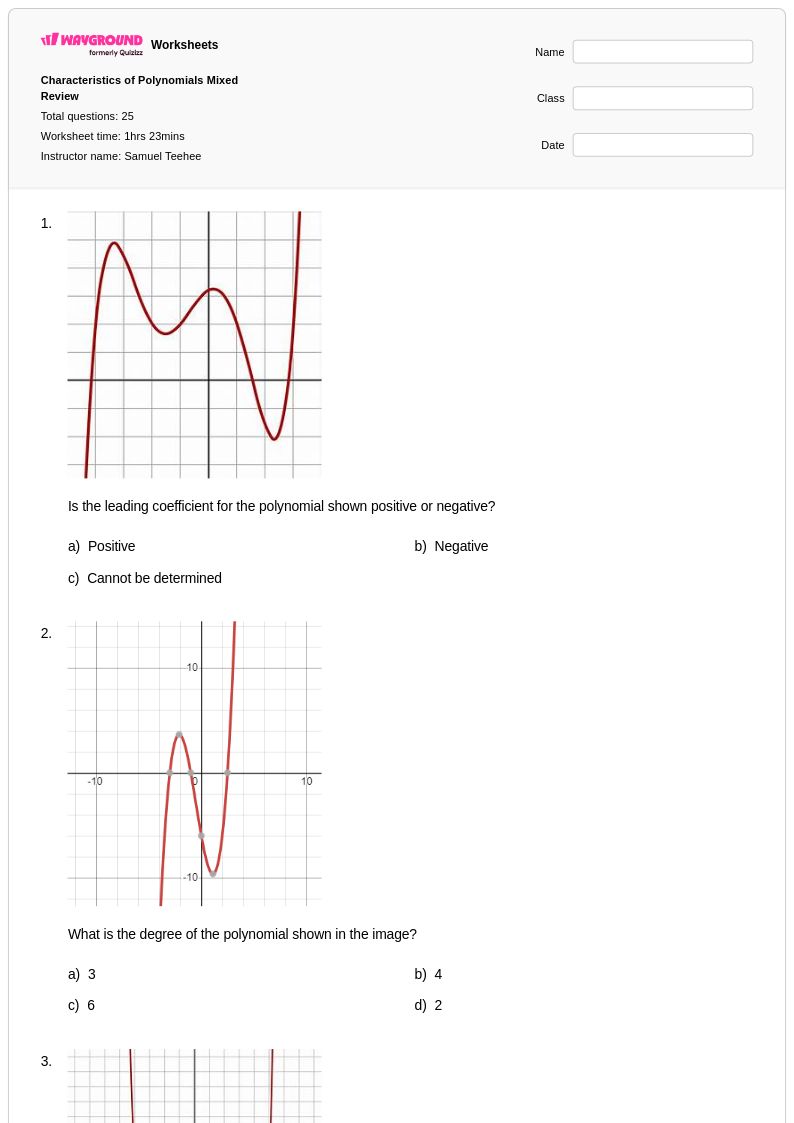
25 Q
11th
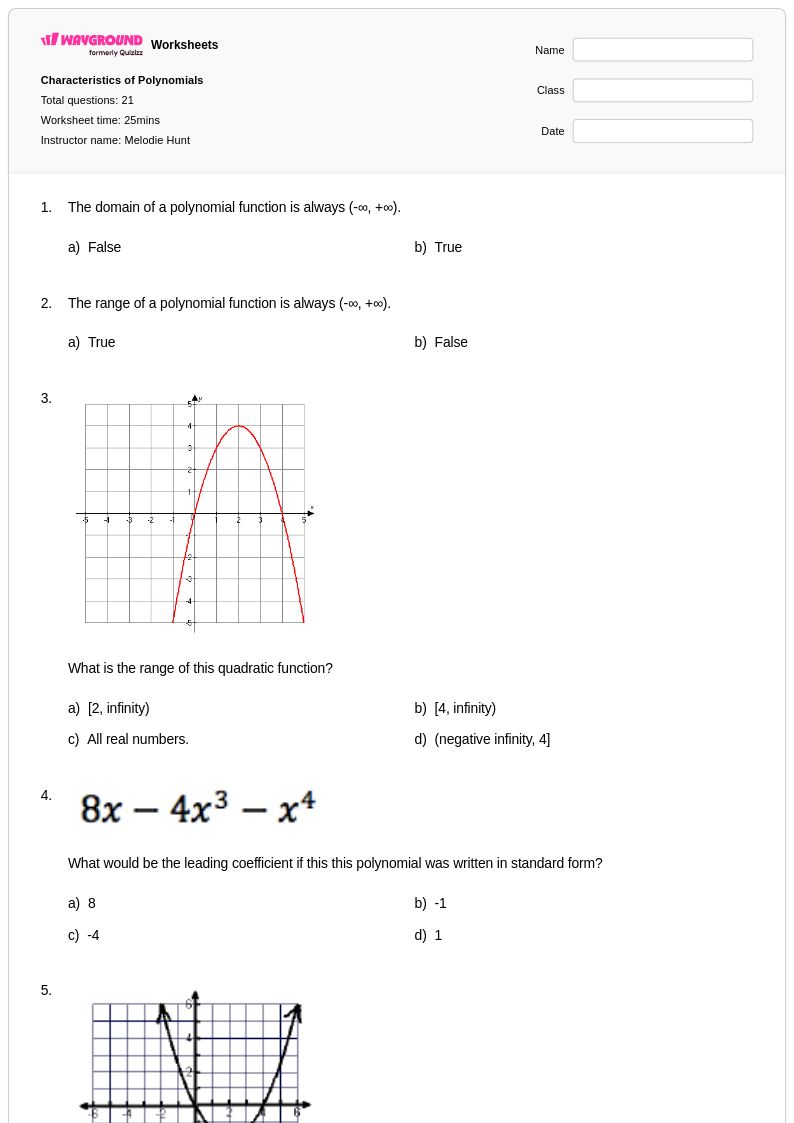
21 Q
9th - 12th
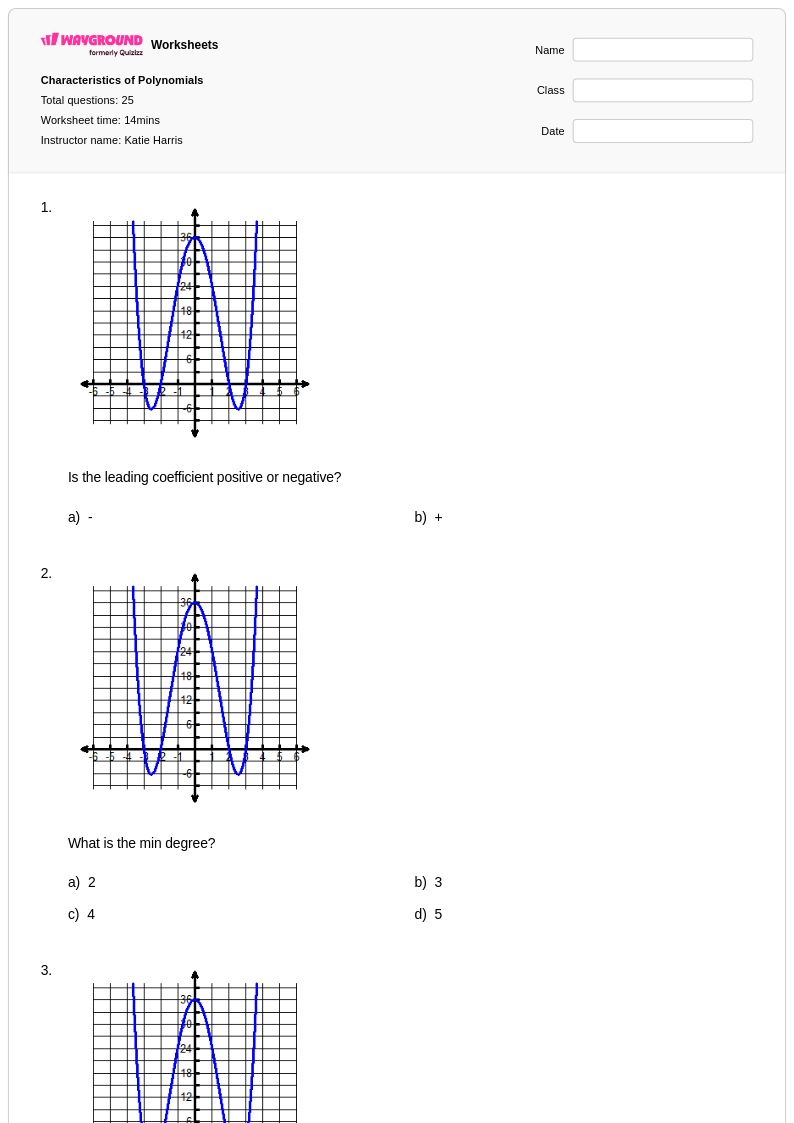
25 Q
9th - 12th
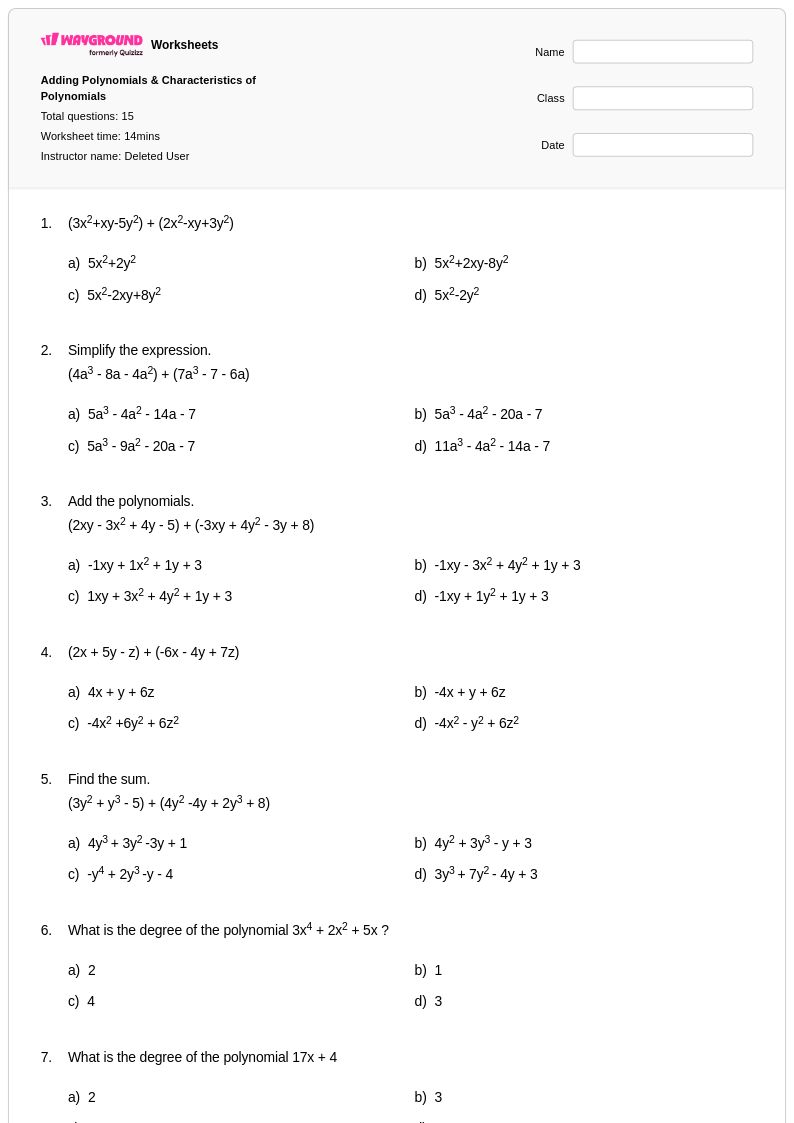
15 Q
9th - 12th
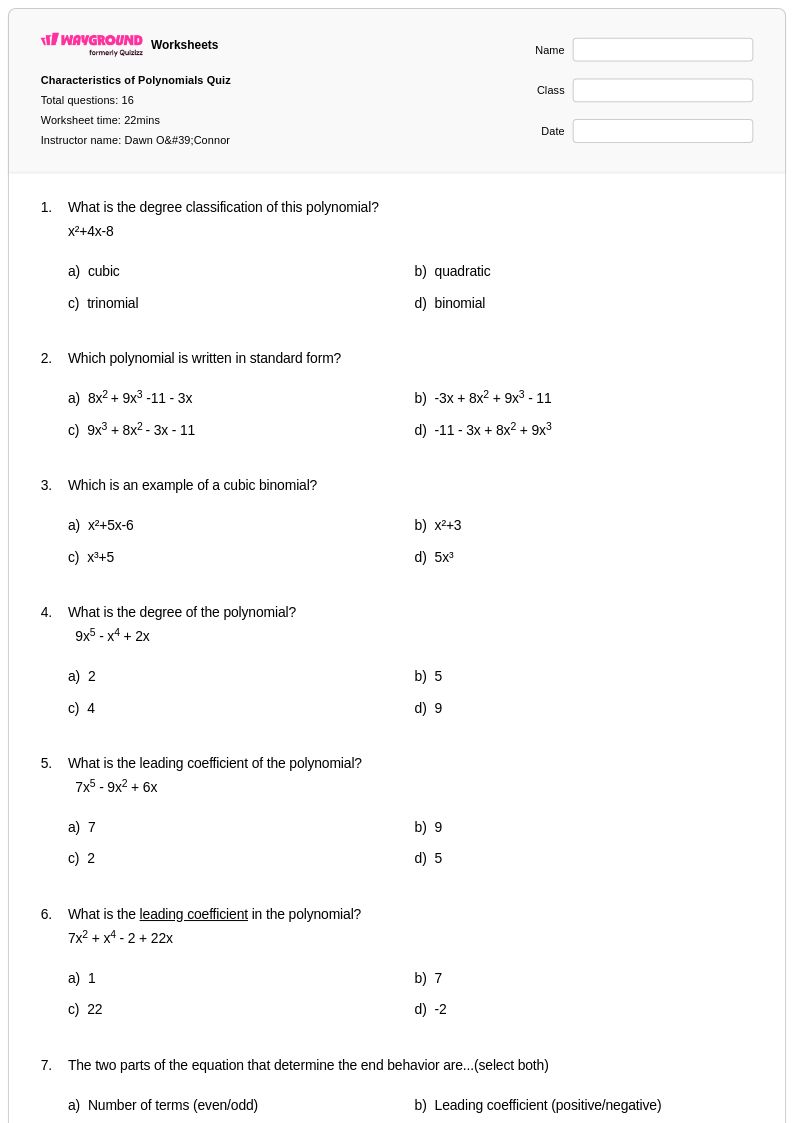
16 Q
9th - 12th
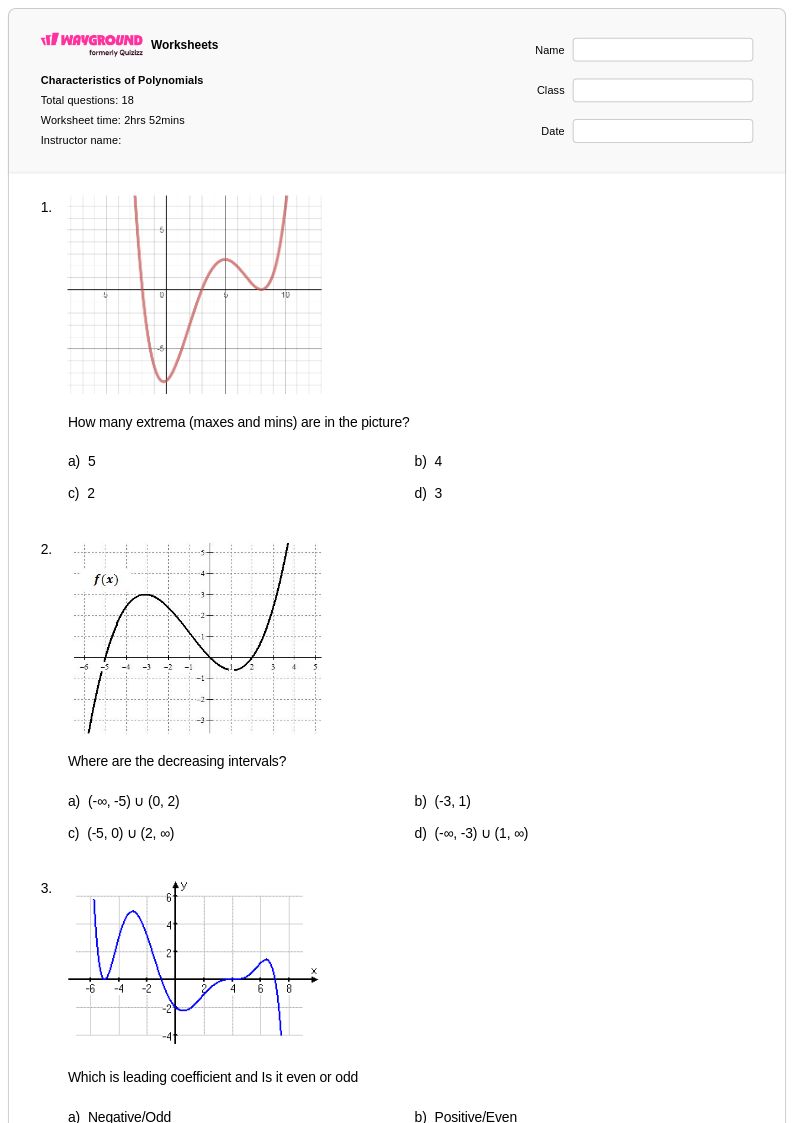
18 Q
9th - 12th
18 Q
9th - 12th
26 Q
11th
13 Q
11th
40 Q
9th - 11th
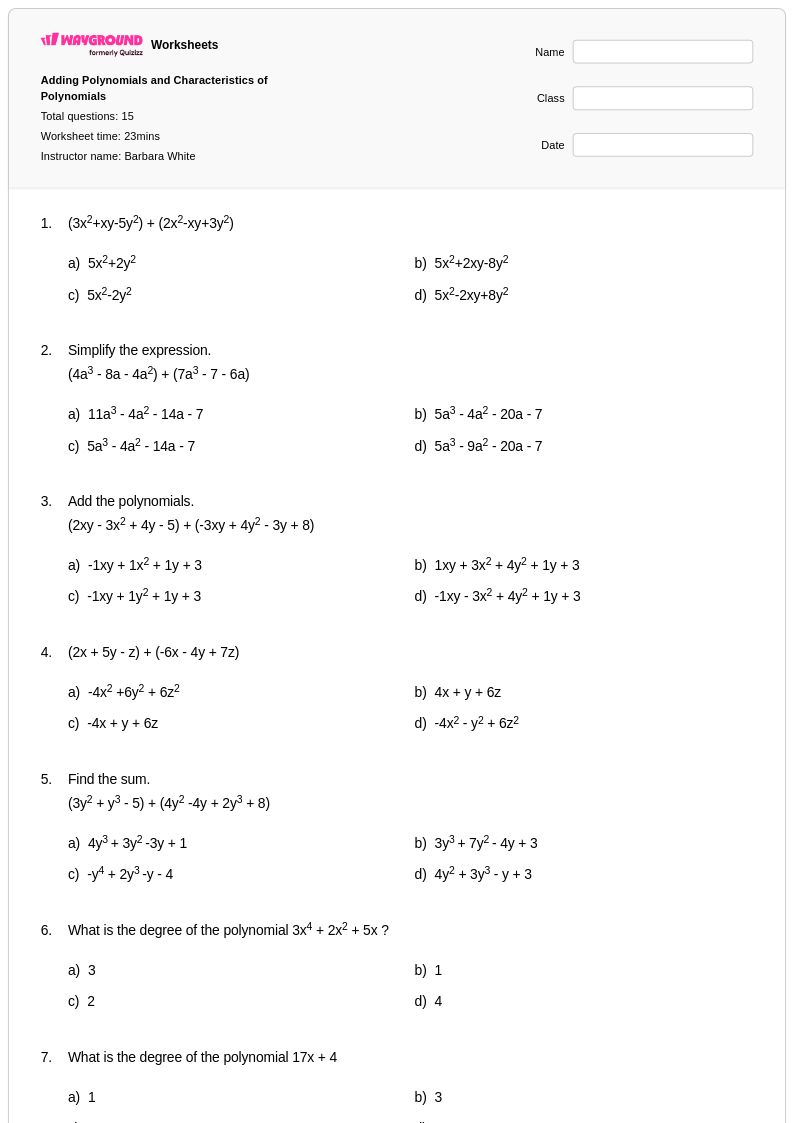
15 Q
9th - 12th
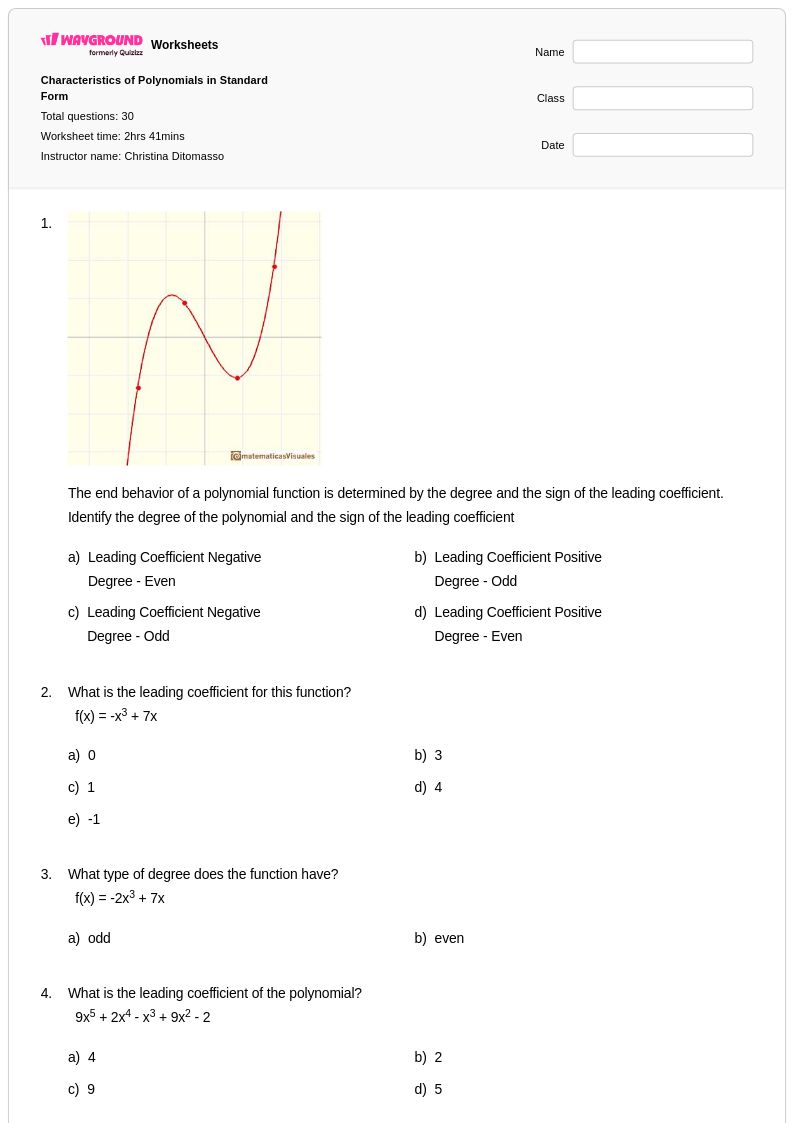
30 Q
9th - 12th
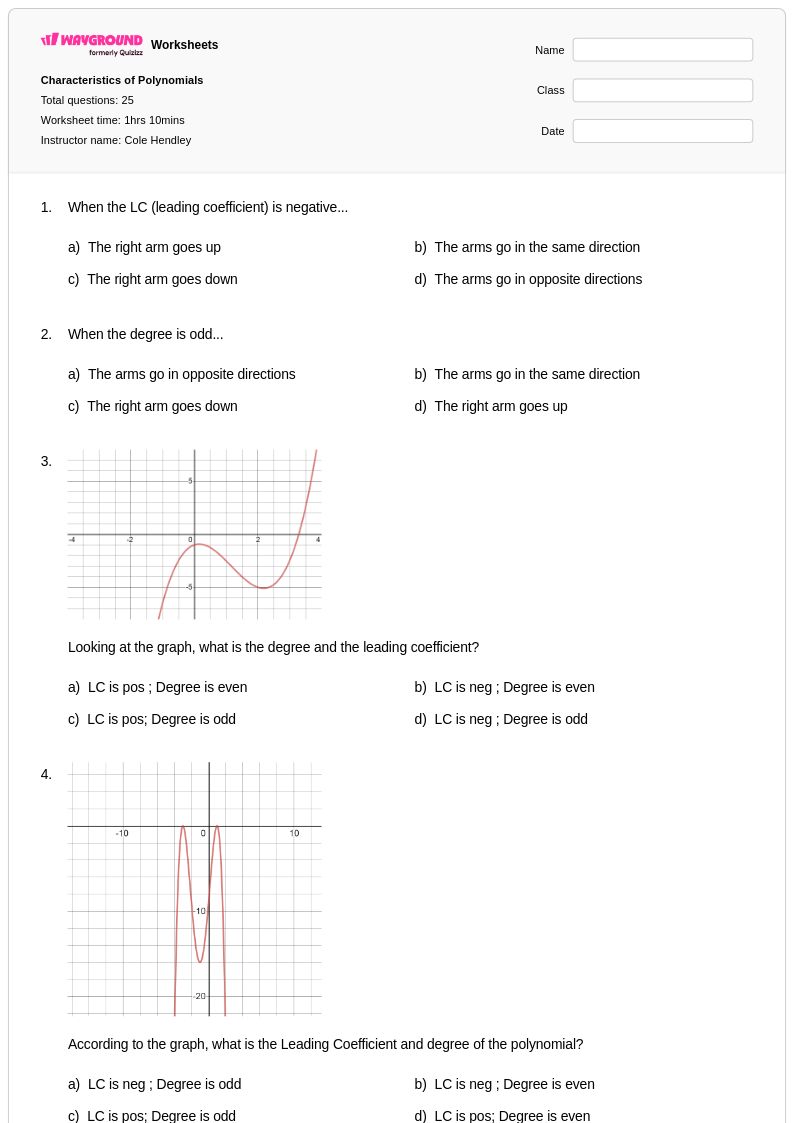
25 Q
11th
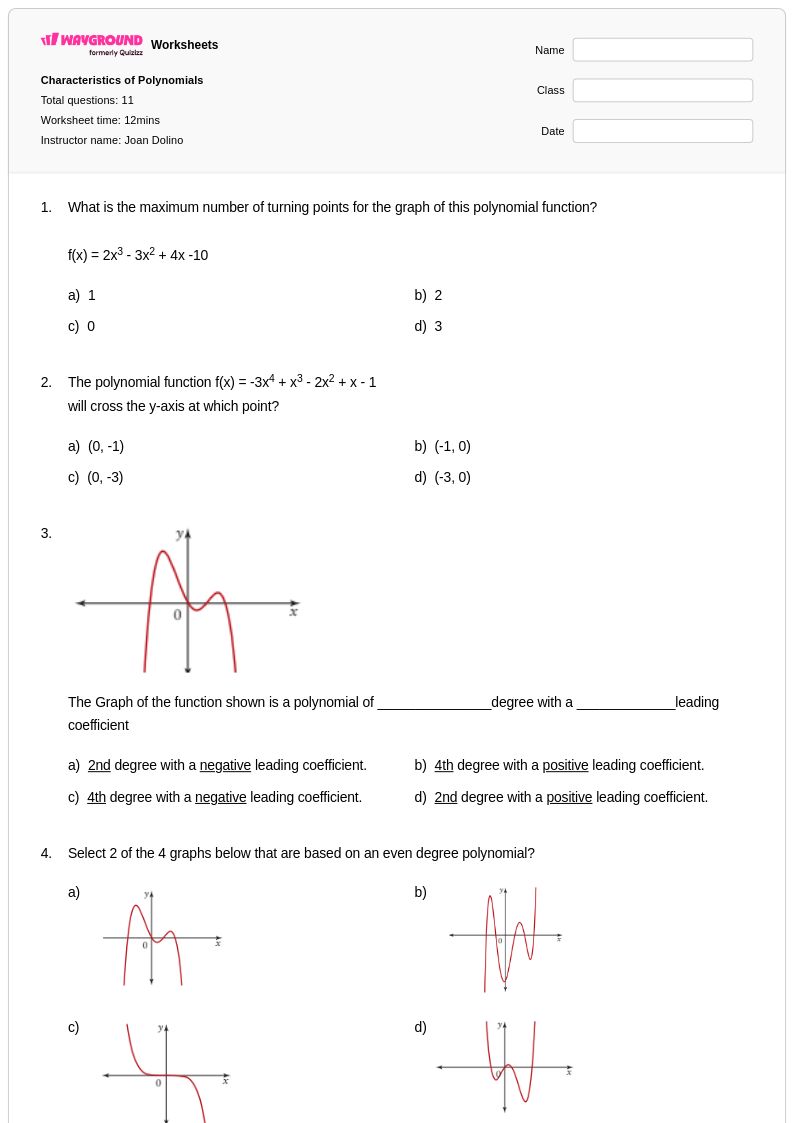
11 Q
9th - 12th
17 Q
9th - Uni
26 Q
9th - 12th
7 Q
10th - 12th
20 Q
10th - 12th
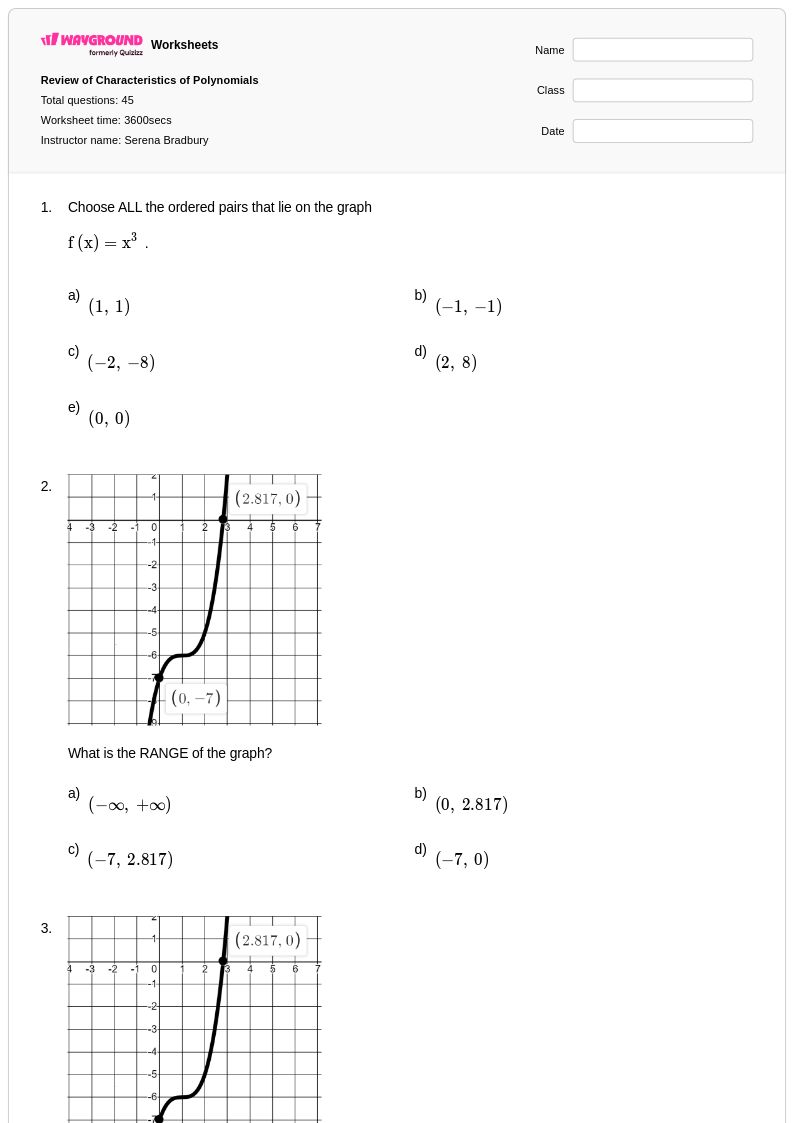
45 Q
10th - 11th
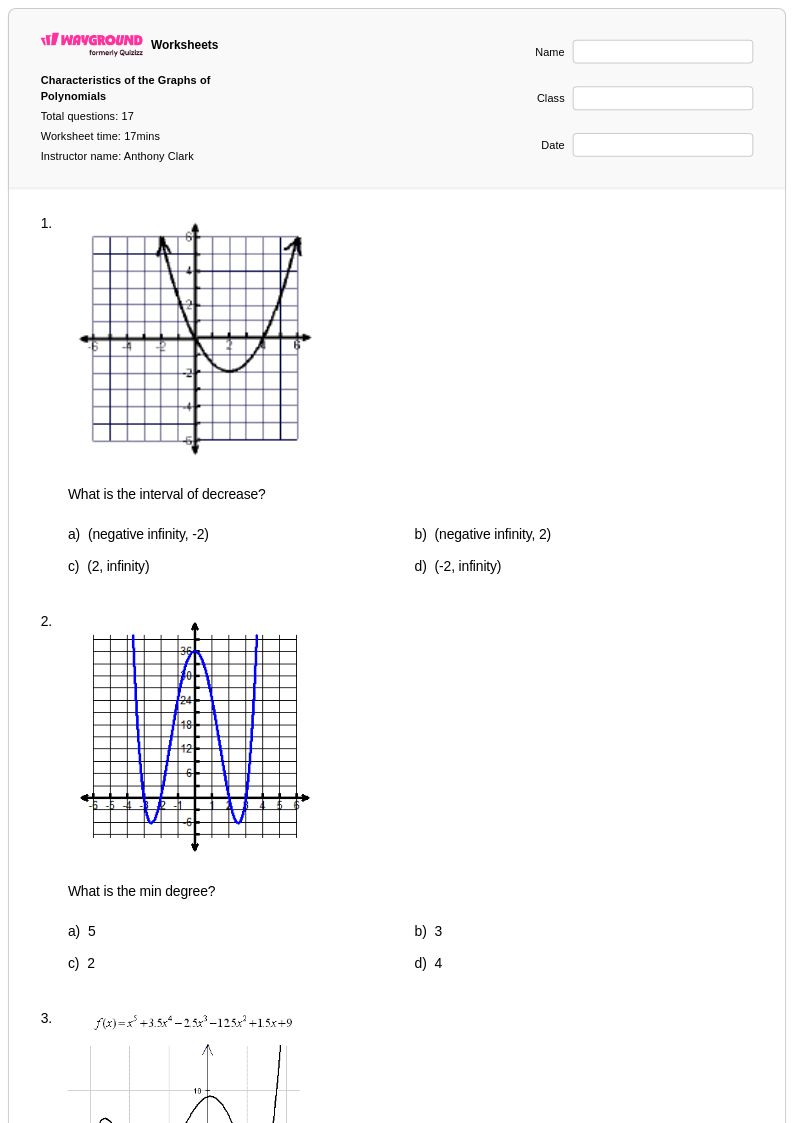
17 Q
11th - Uni
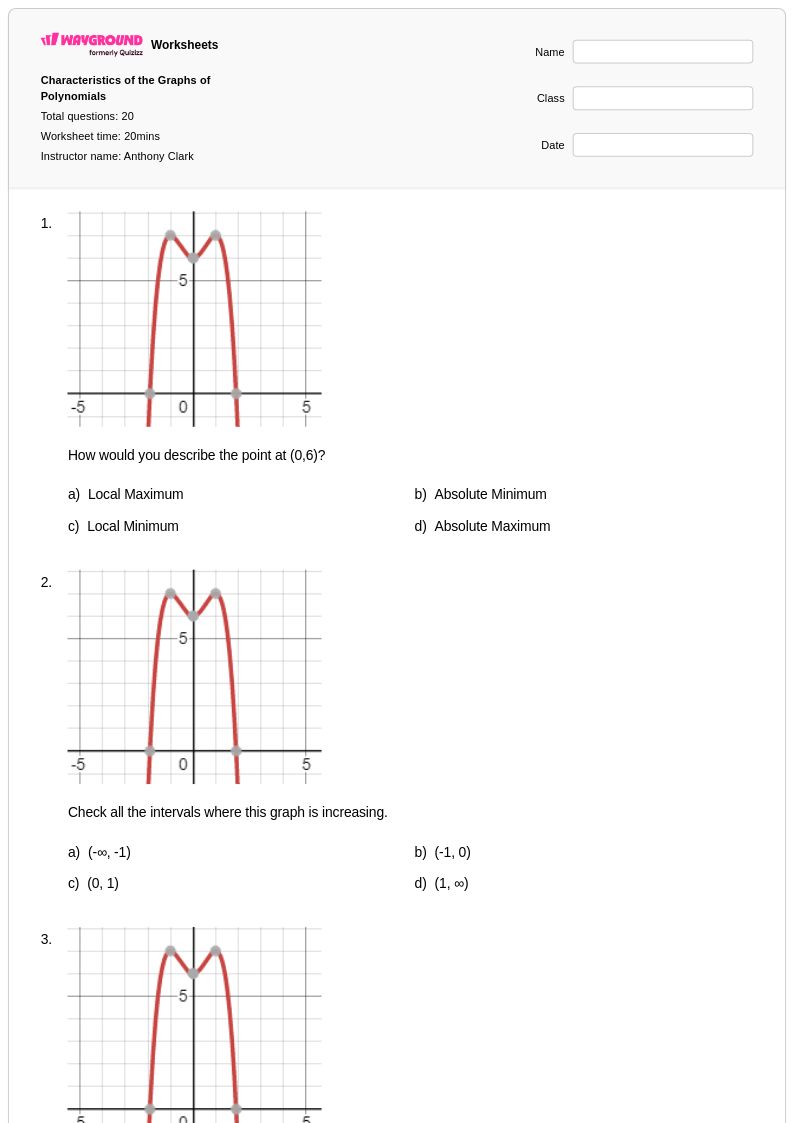
20 Q
11th - Uni
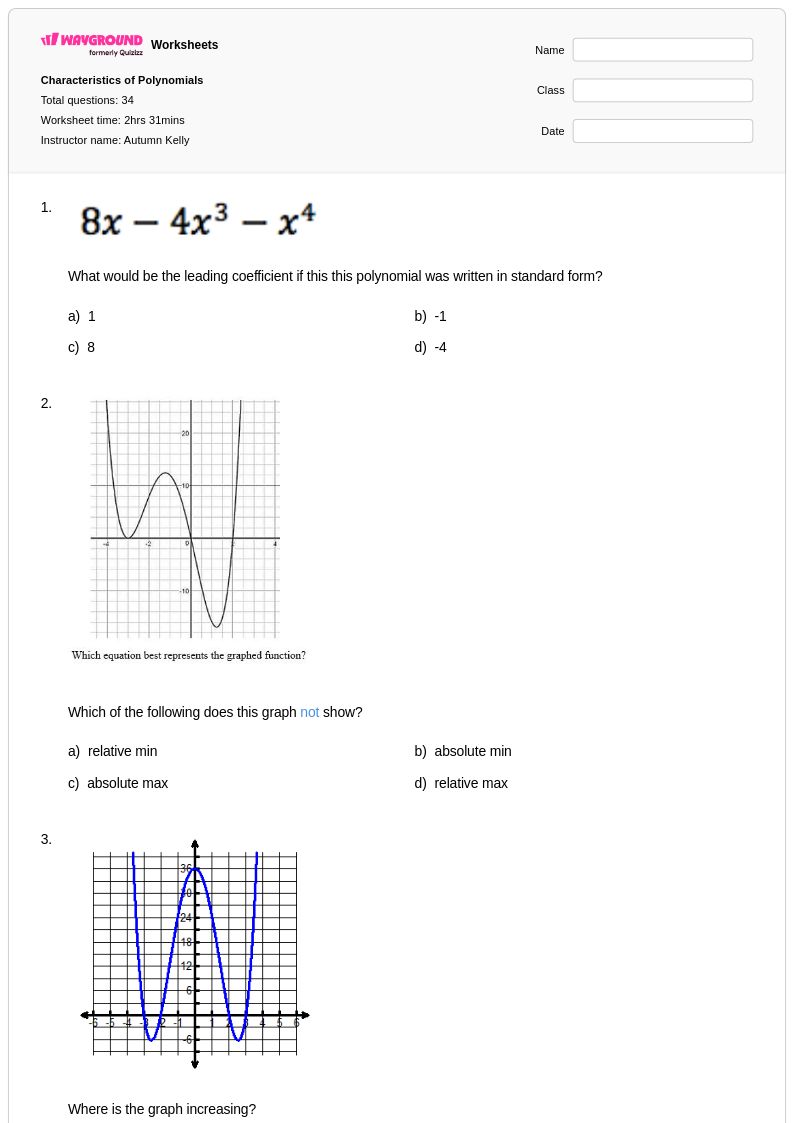
34 Q
9th - 12th
Explore Other Subject Worksheets for year 11
Explore printable Characteristics of Polynomials worksheets for Year 11
Characteristics of polynomials worksheets for Year 11 students available through Wayground provide comprehensive practice with identifying and analyzing the fundamental properties that define polynomial functions. These educational resources focus on developing students' ability to determine degree, leading coefficient, end behavior, zeros, multiplicity, and turning points of polynomial expressions and graphs. The worksheets strengthen critical algebraic reasoning skills by guiding students through systematic analysis of polynomial behavior, including how coefficients influence graph shape and position. Each worksheet collection includes detailed answer keys and is available as free printable pdf resources, offering extensive practice problems that progress from basic identification tasks to complex application scenarios involving real-world polynomial modeling.
Wayground's extensive library supports mathematics educators with millions of teacher-created polynomial characteristics worksheets that can be easily located through robust search and filtering capabilities aligned with Year 11 algebra standards. Teachers can differentiate instruction by selecting from various difficulty levels and problem types, customizing worksheets to meet individual student needs for remediation or enrichment activities. The platform's flexible format options allow educators to distribute materials as printable pdf worksheets for traditional classroom use or deploy them digitally for interactive learning experiences. These comprehensive resources streamline lesson planning by providing ready-to-use materials that systematically build student understanding of polynomial behavior, enabling teachers to focus instructional time on guided practice and conceptual development rather than resource creation.
FAQs
How do I teach polynomial characteristics in Grade 11?
What exercises help Grade 11 students practice polynomial behavior?
What mistakes do students make with zeros and multiplicity?
How can I use a Wayground Grade 11 polynomial worksheet?
How does Grade 11 polynomial analysis align with Common Core math?
How can I support mixed-ability learners with polynomial graph analysis?
What polynomial skills are typically taught in Grade 11?