Free Printable Exponential Decay Worksheets for Year 11
Year 11 exponential decay worksheets from Wayground offer free printable PDFs with practice problems and answer keys to help students master decreasing exponential functions and real-world decay applications.
Explore printable Exponential Decay worksheets for Year 11
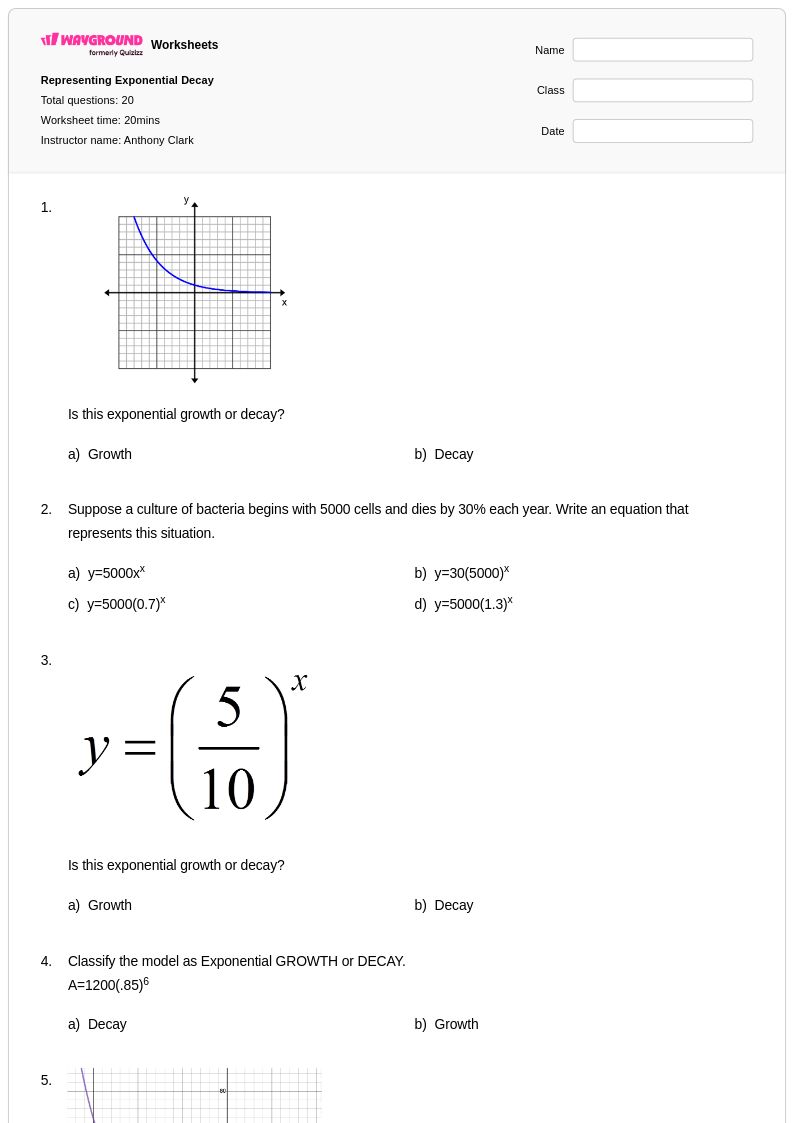
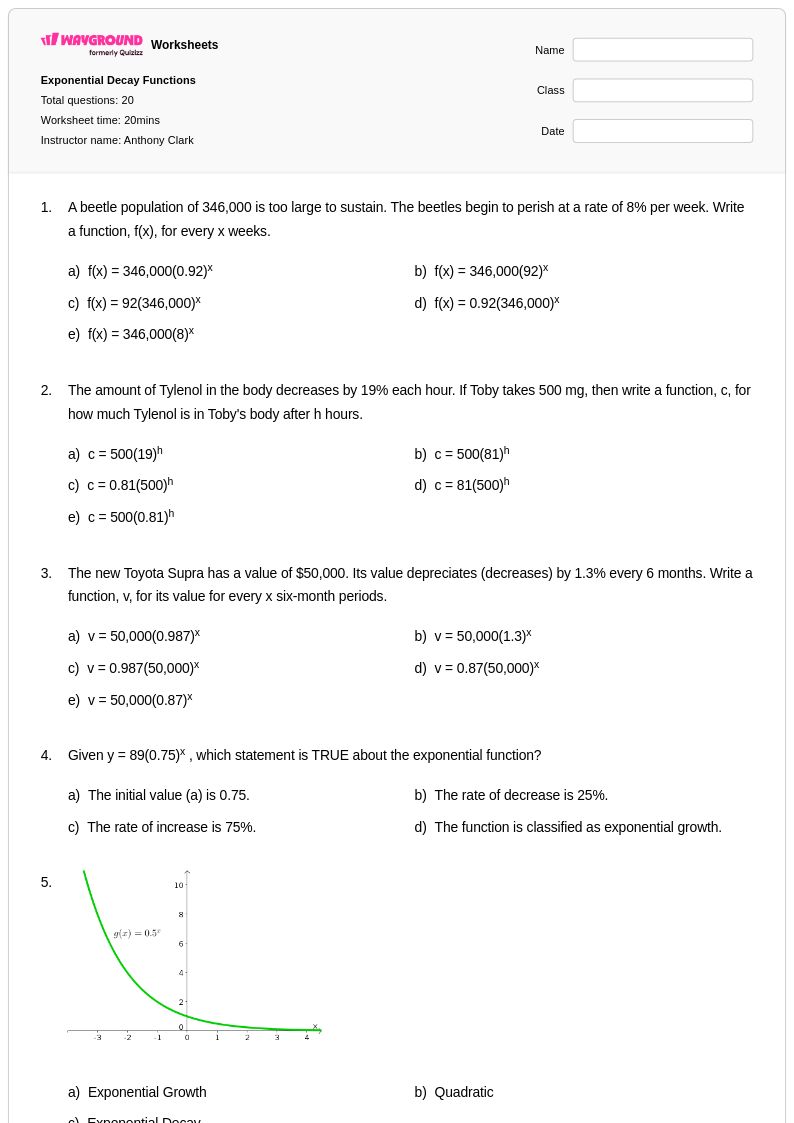
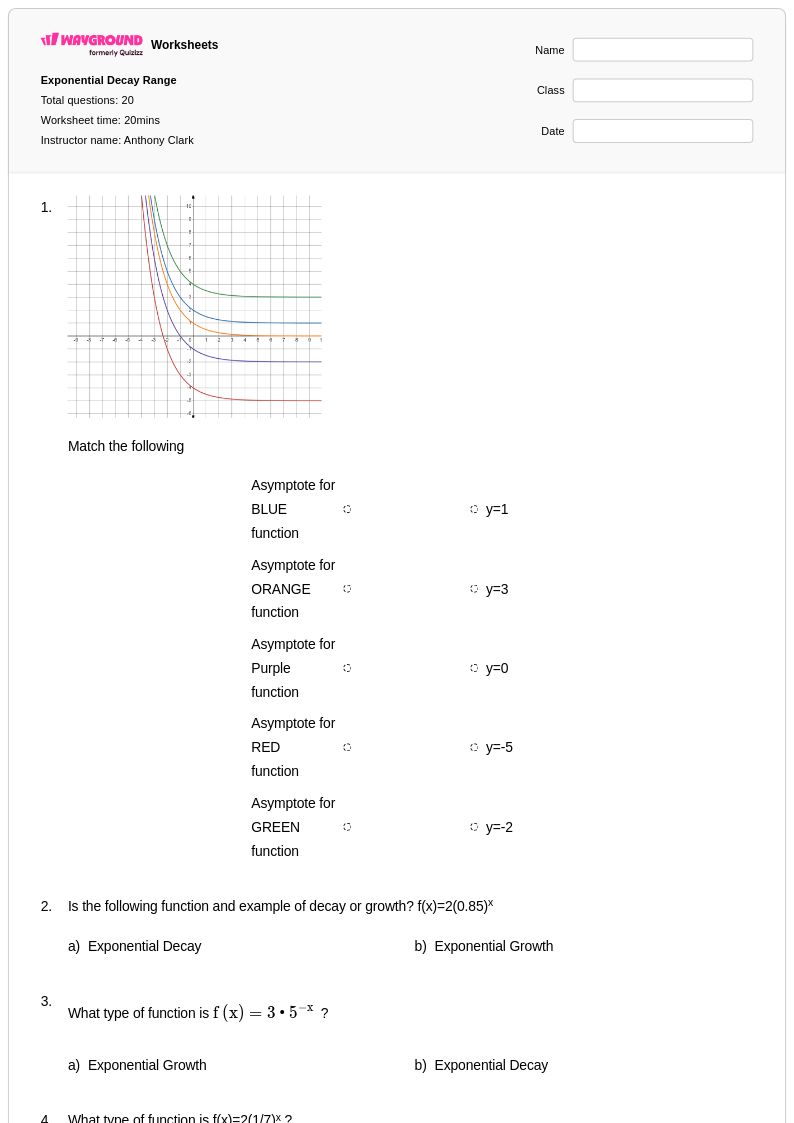
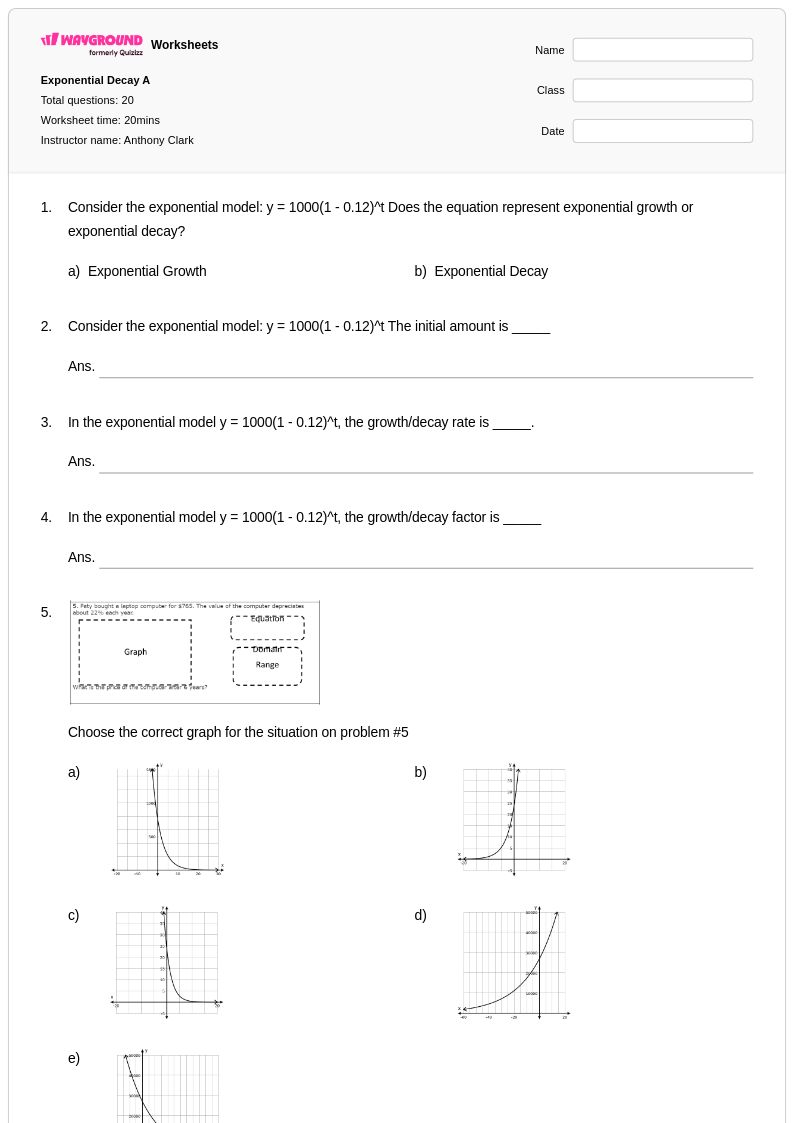
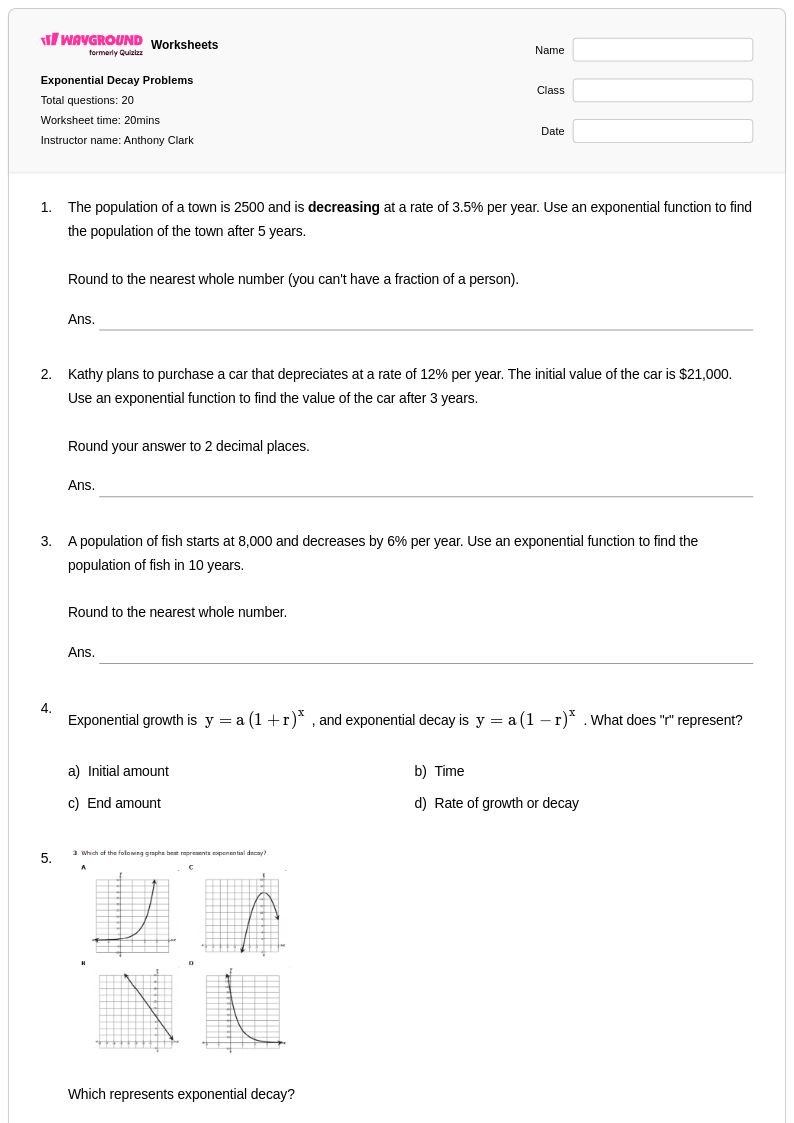
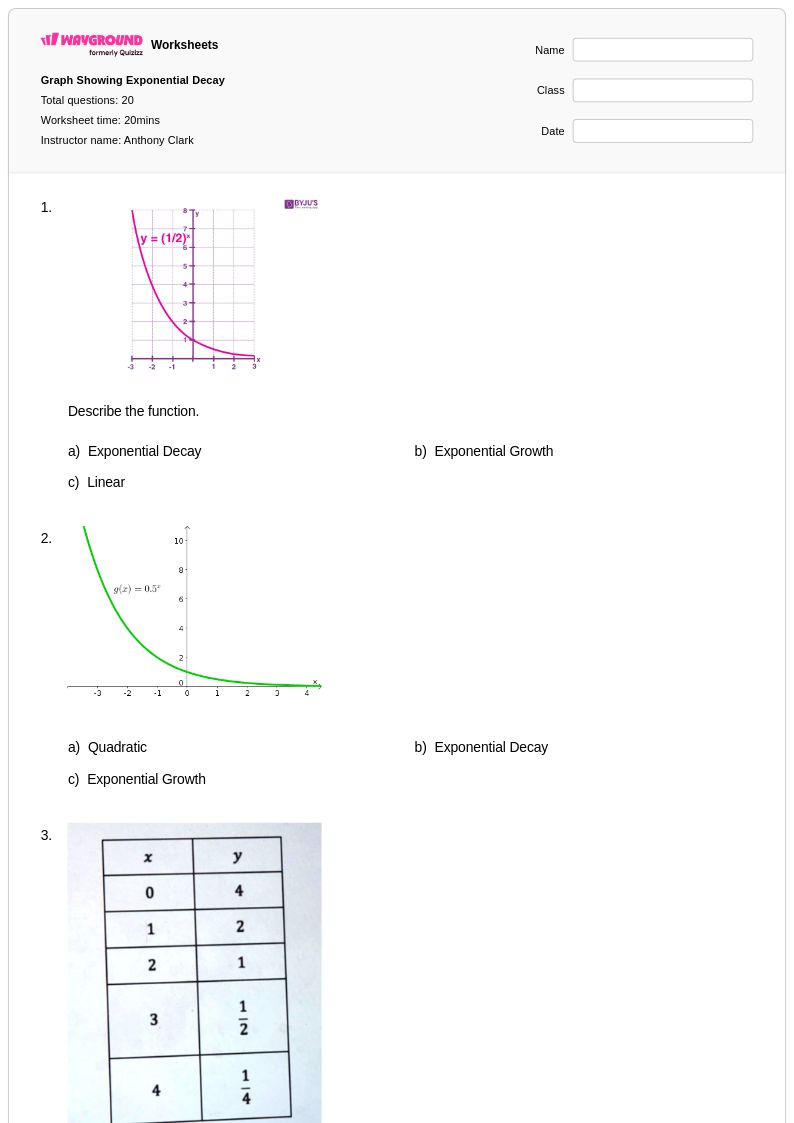
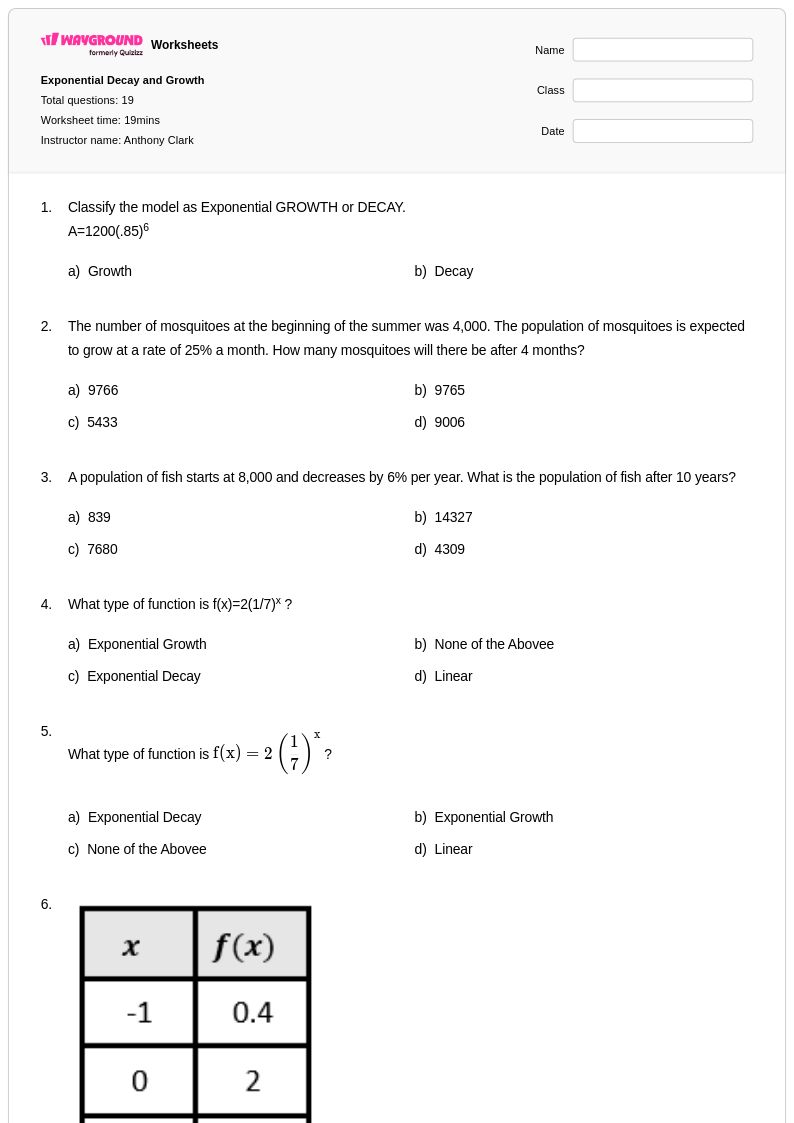
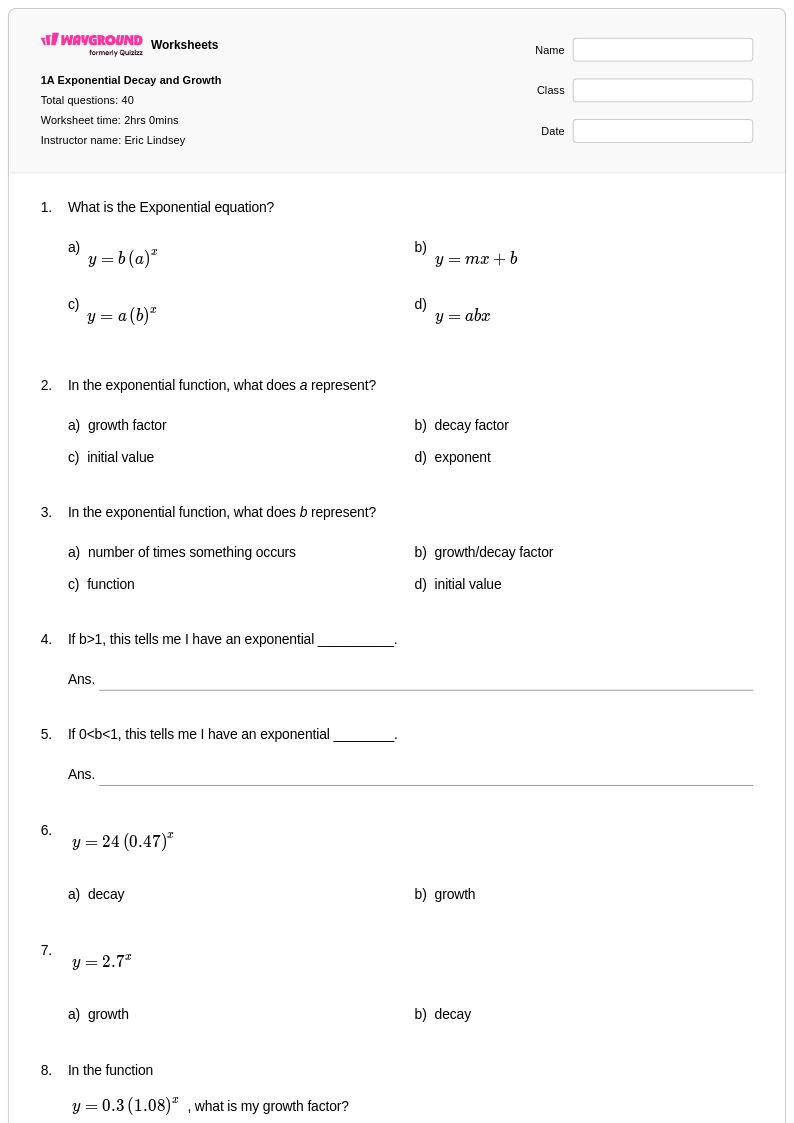
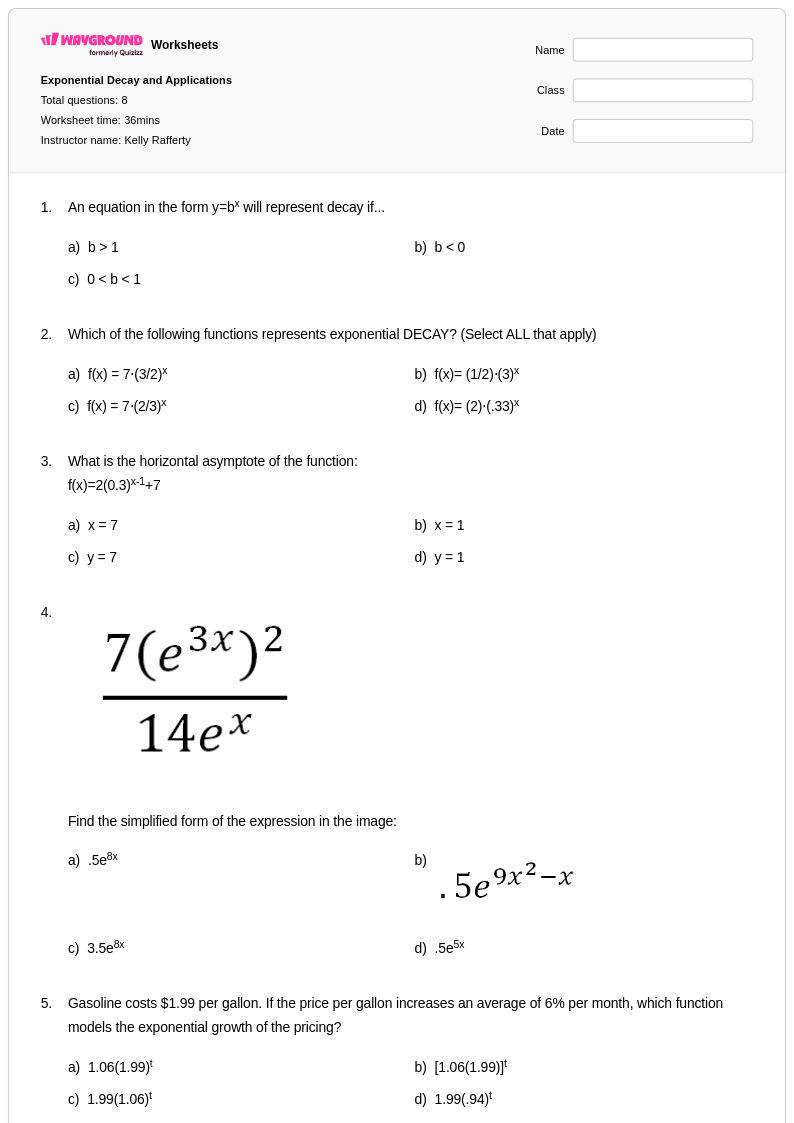
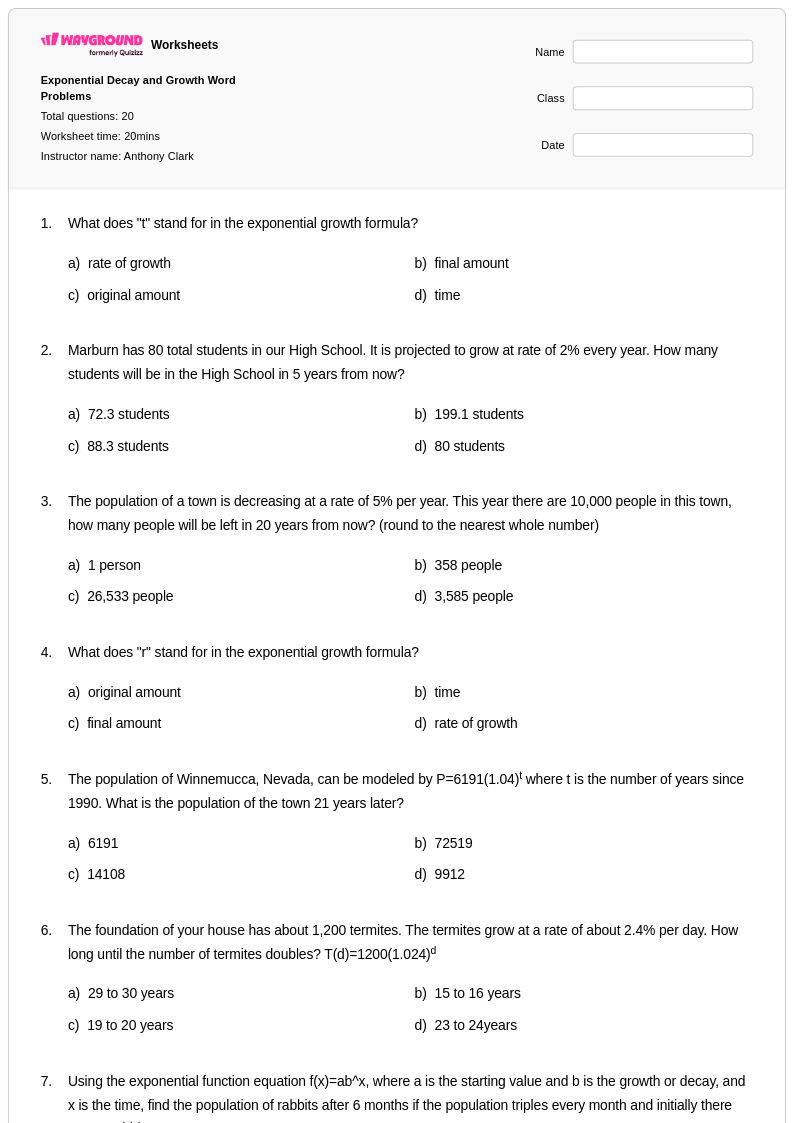
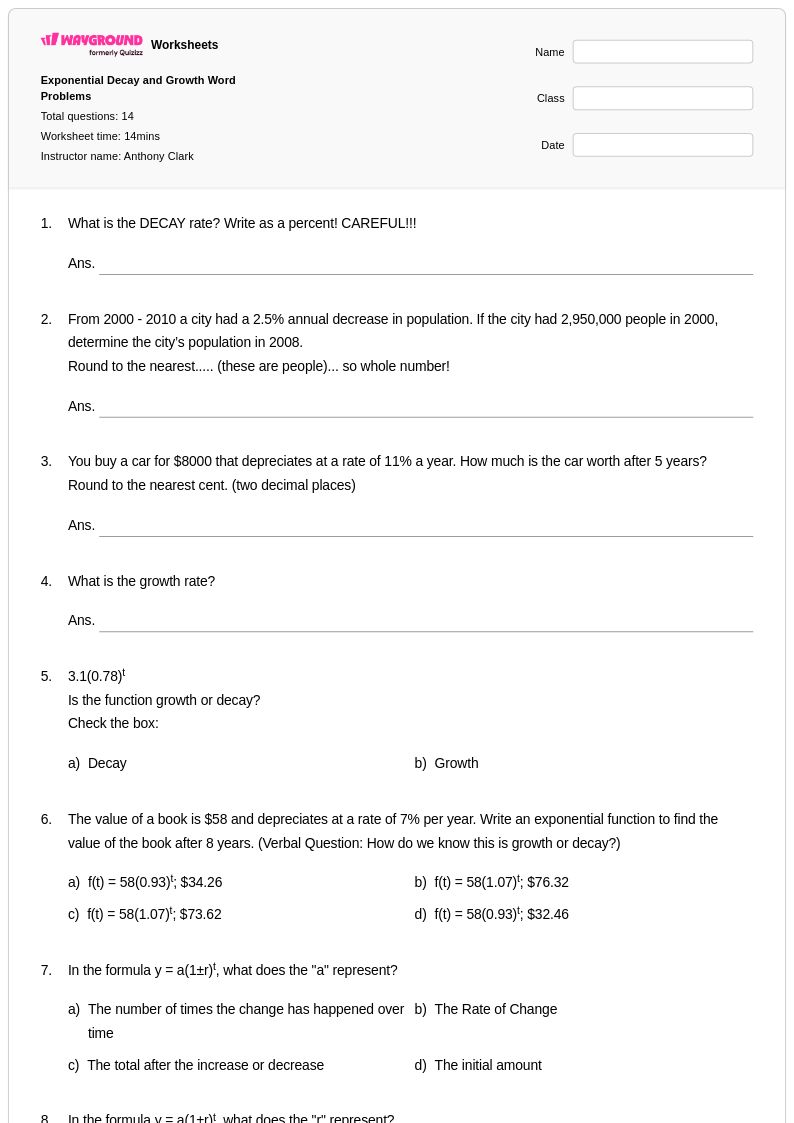
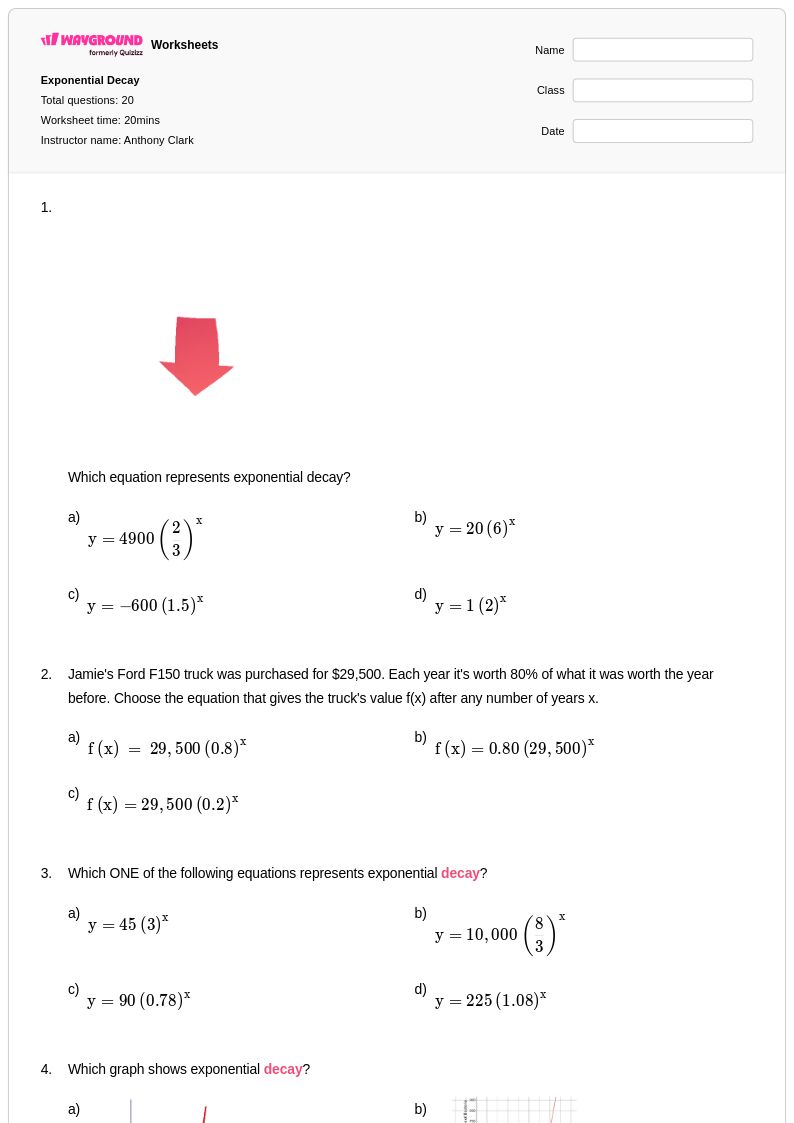
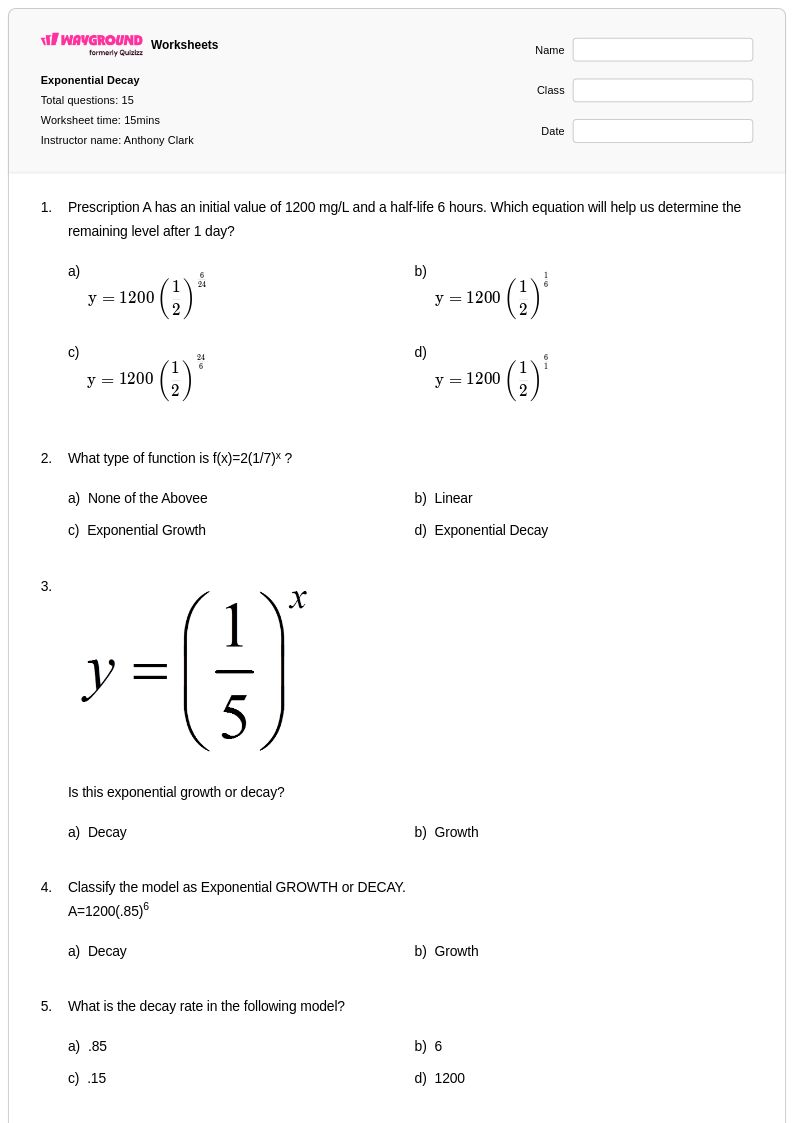
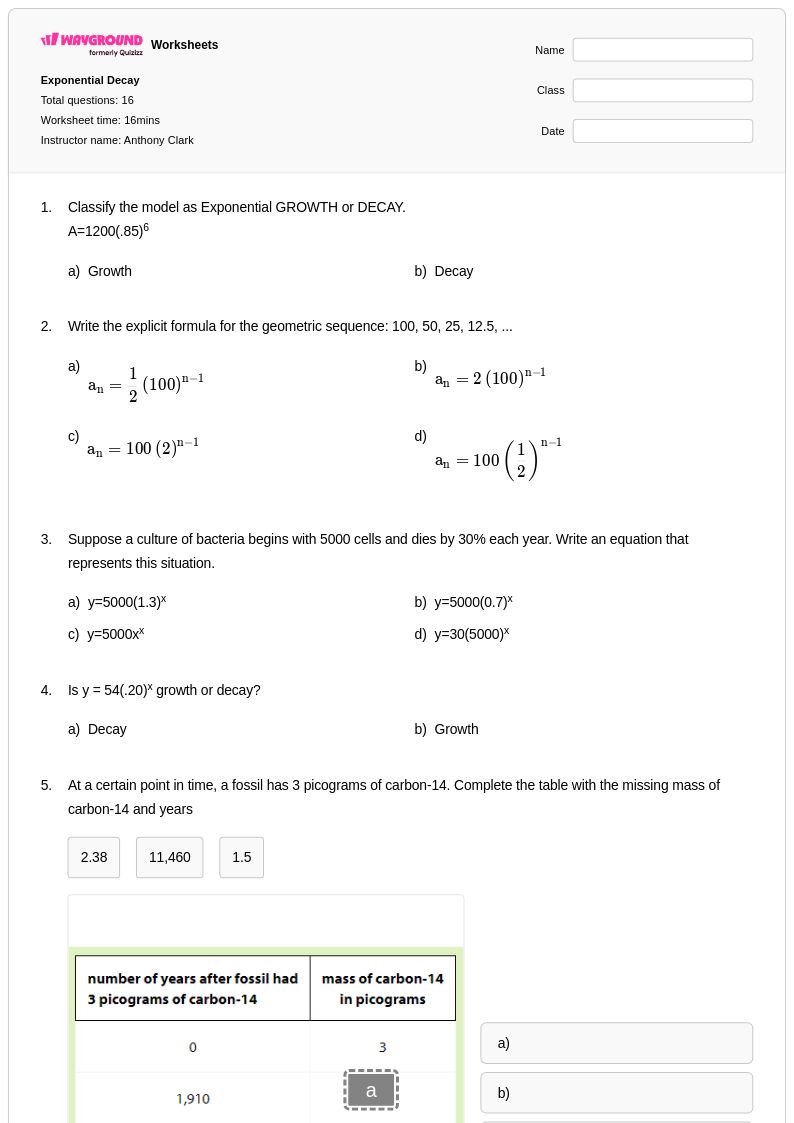
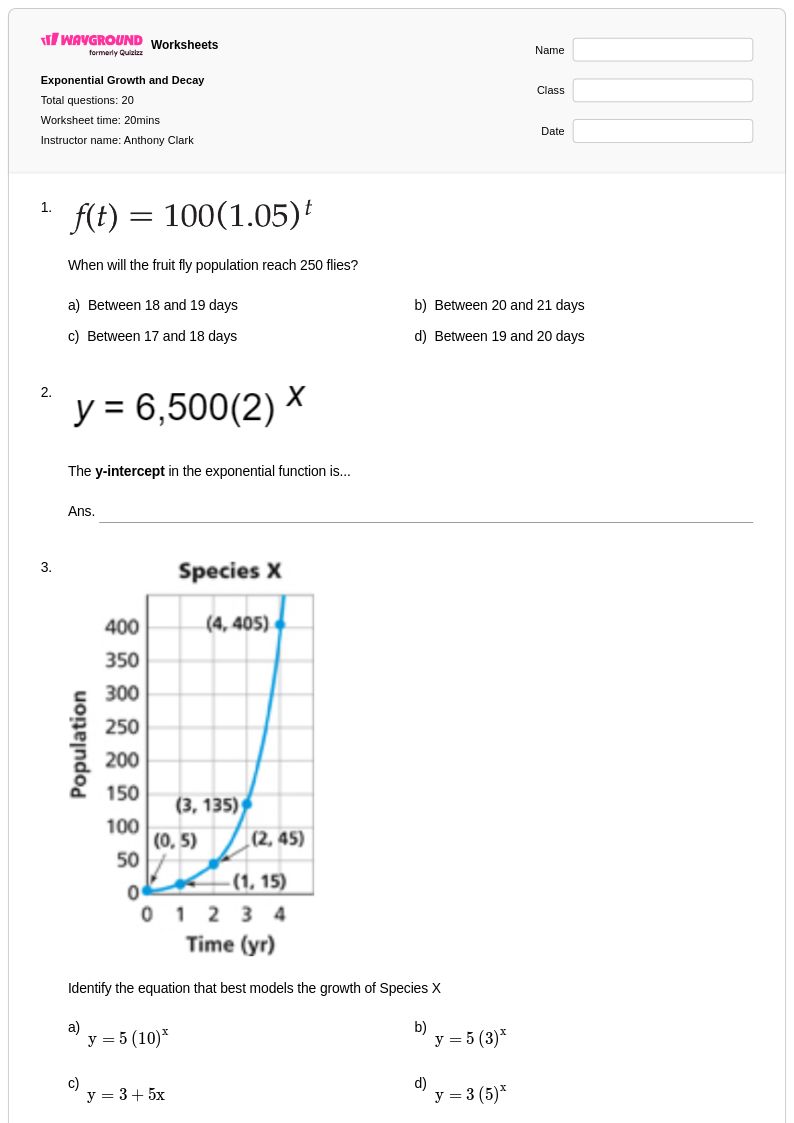
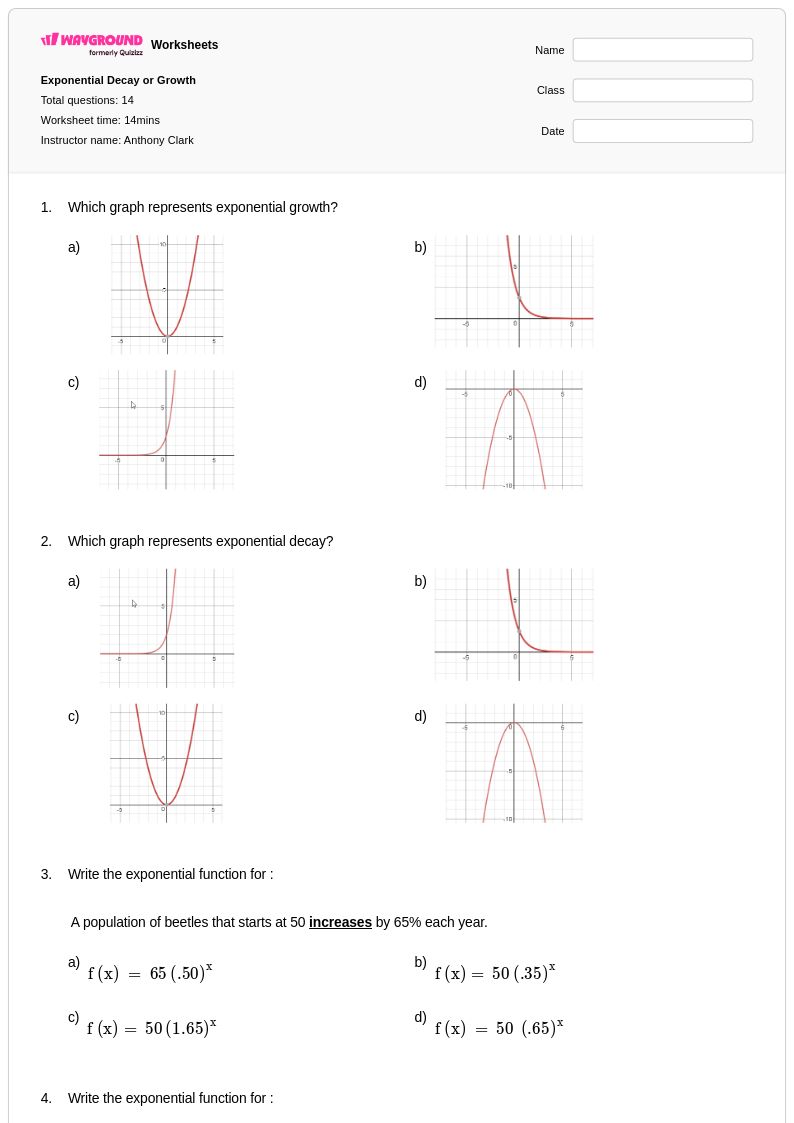
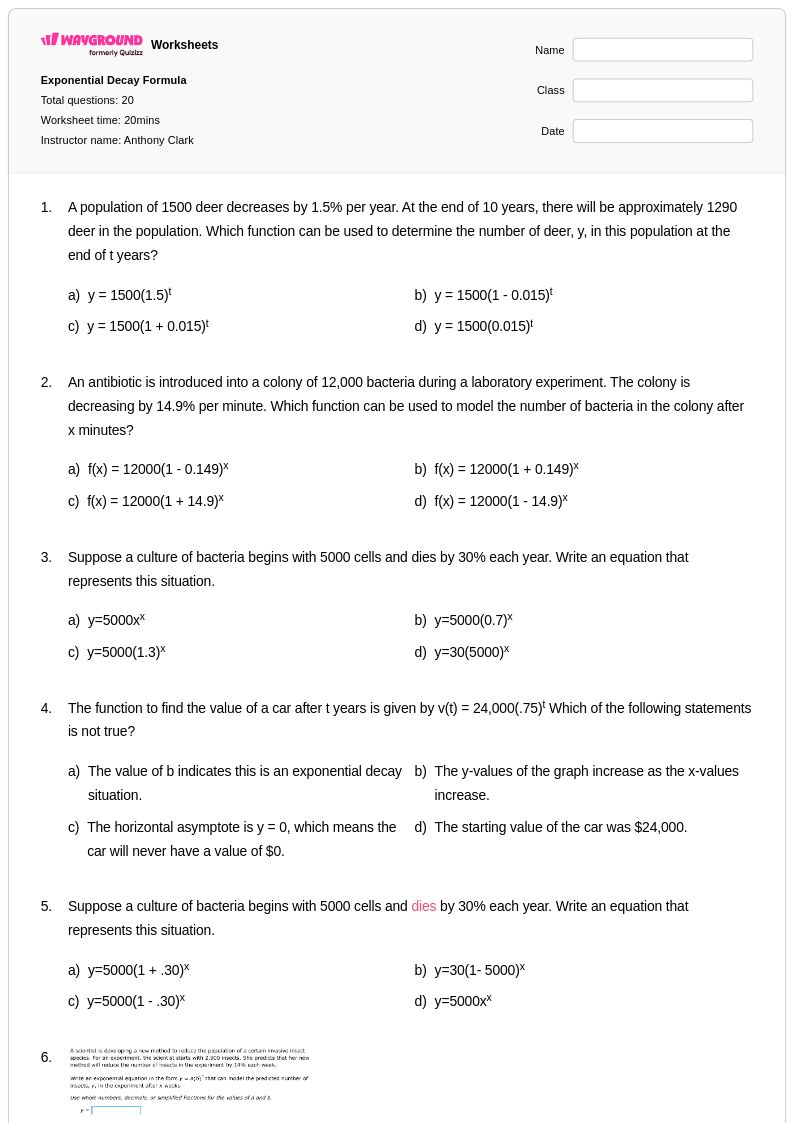
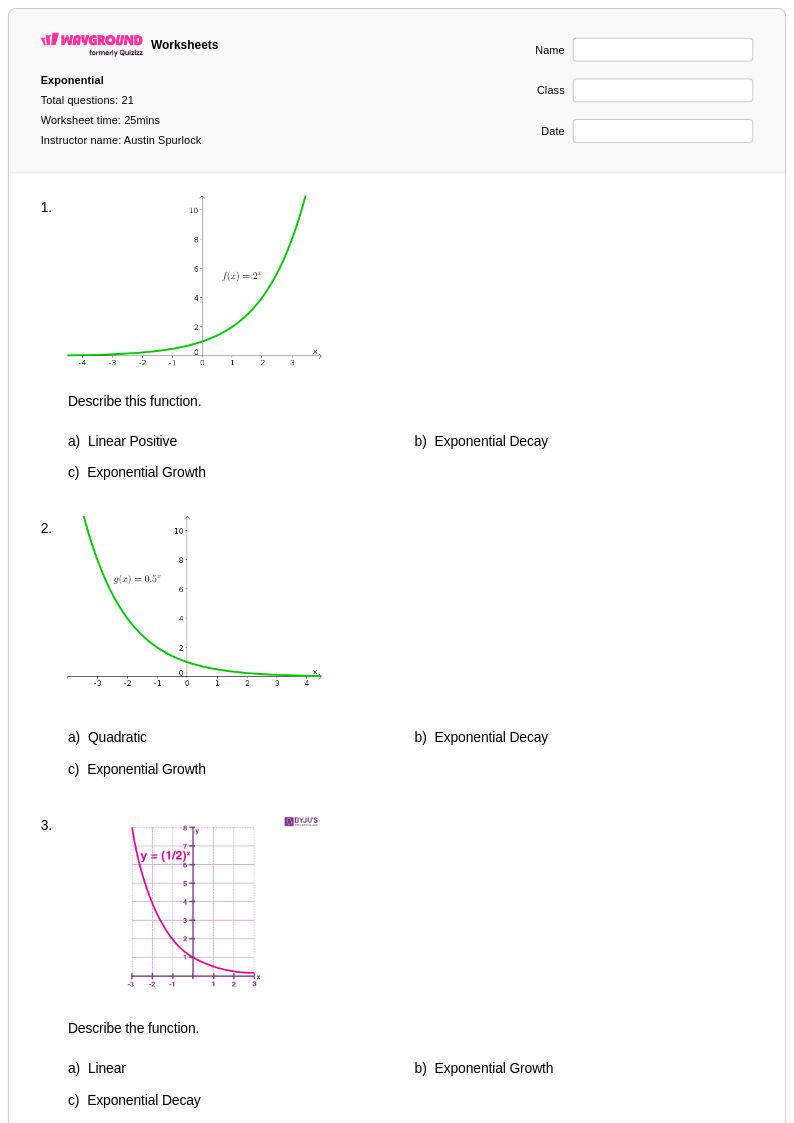
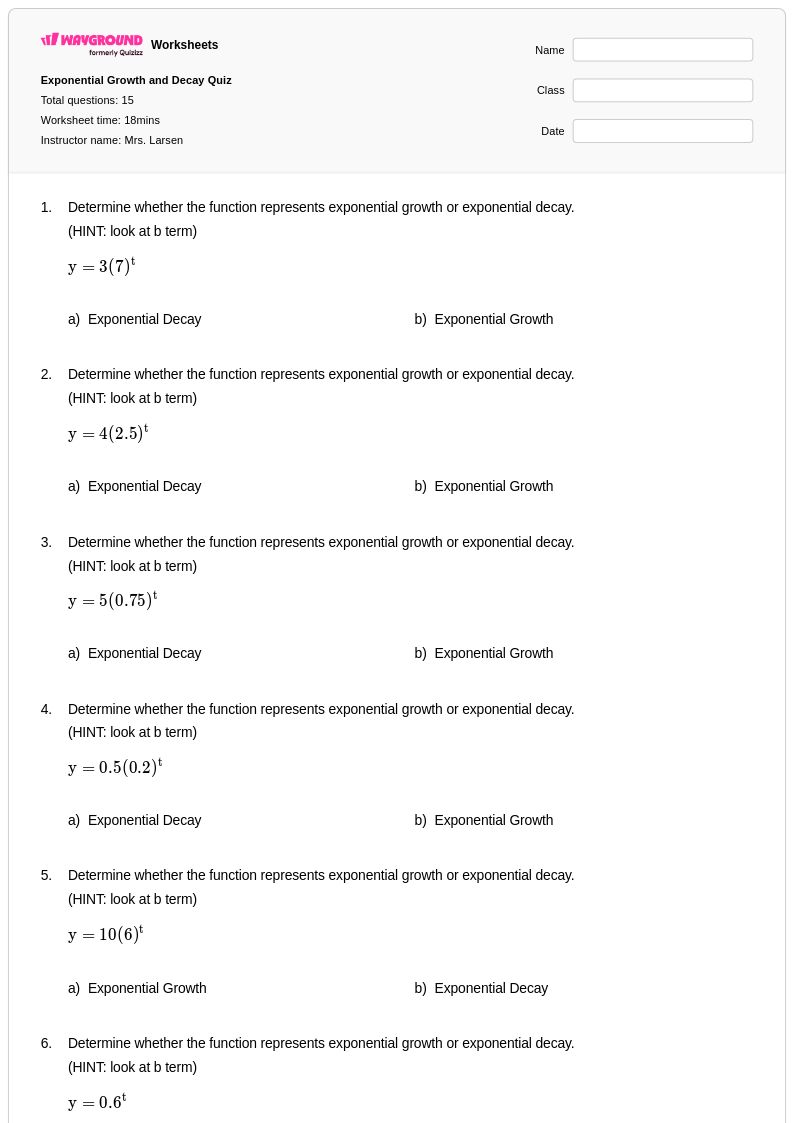
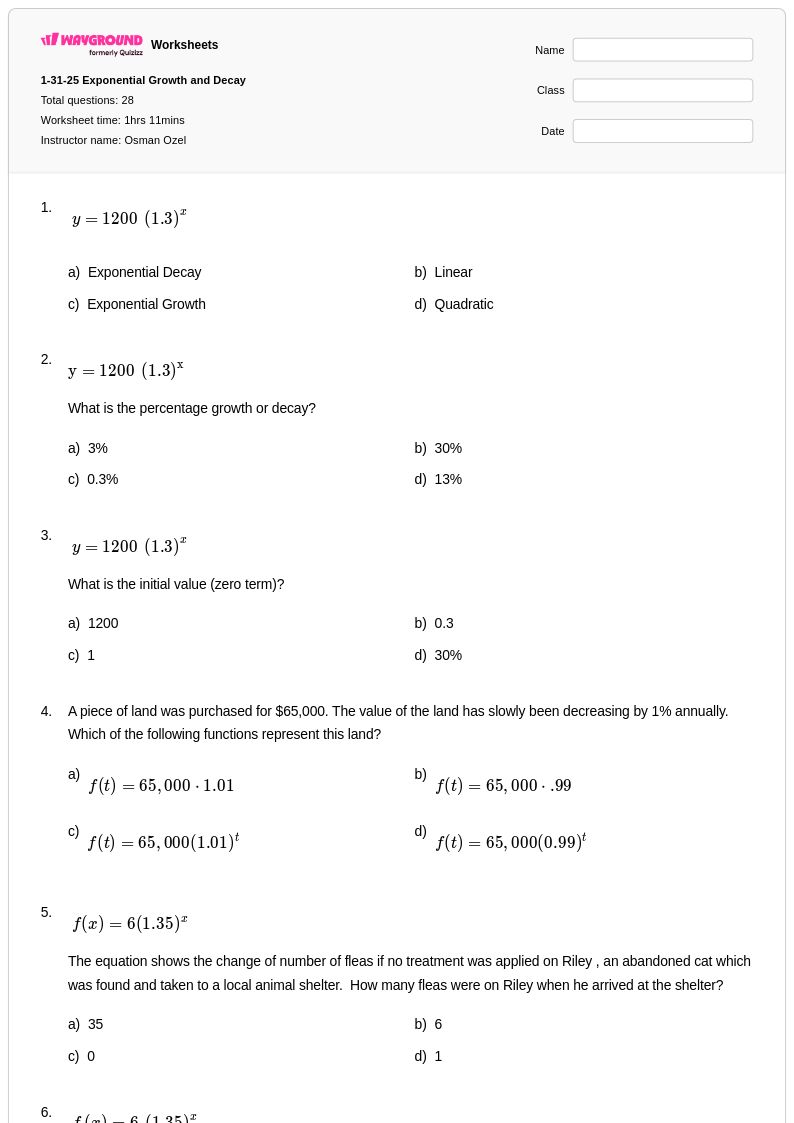
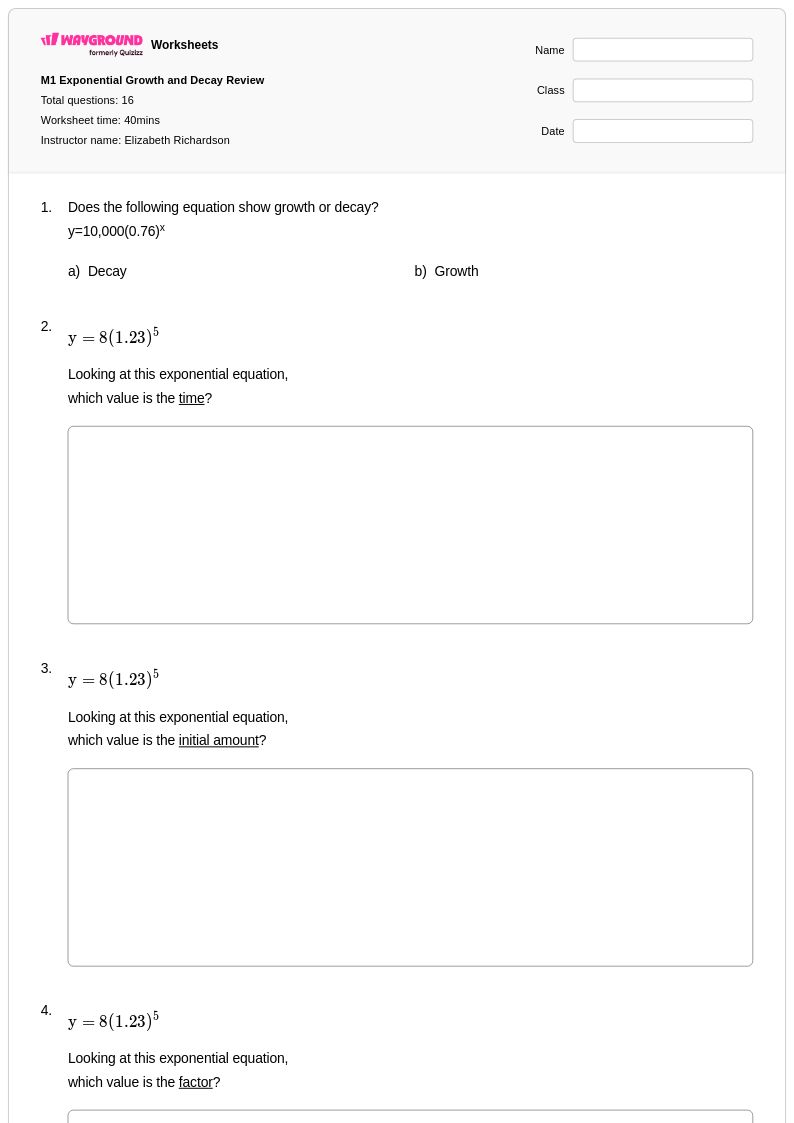
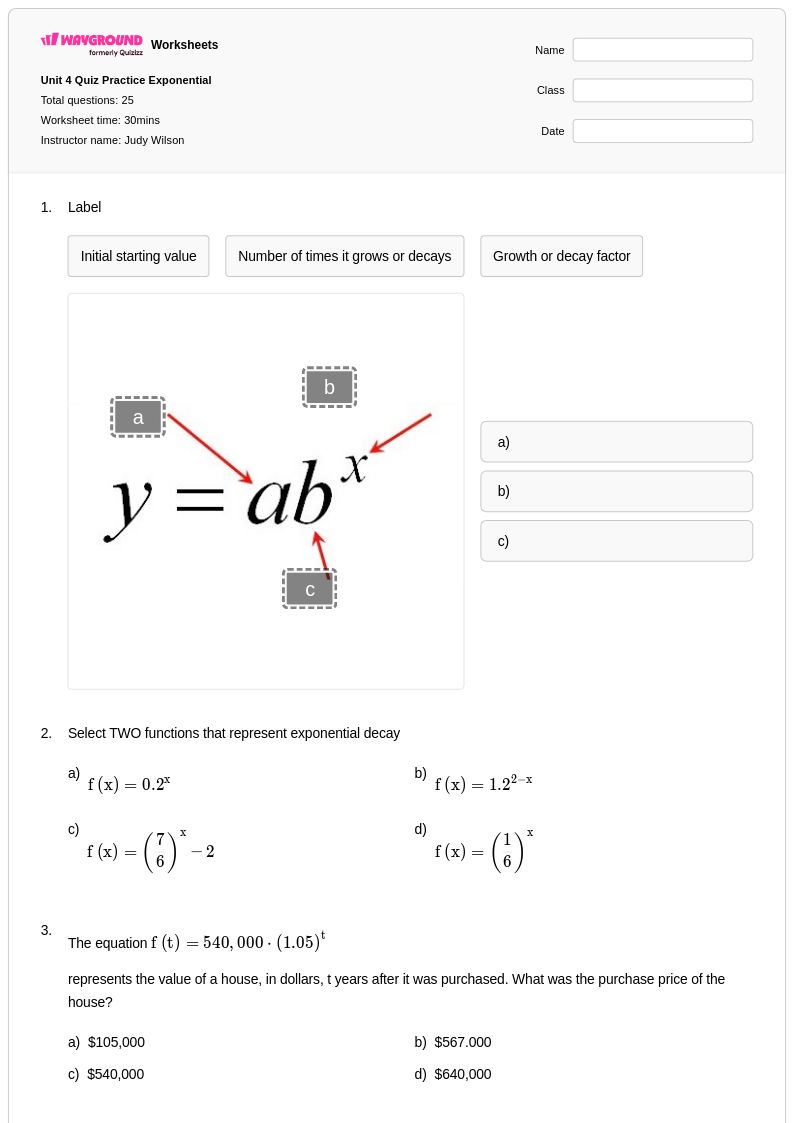
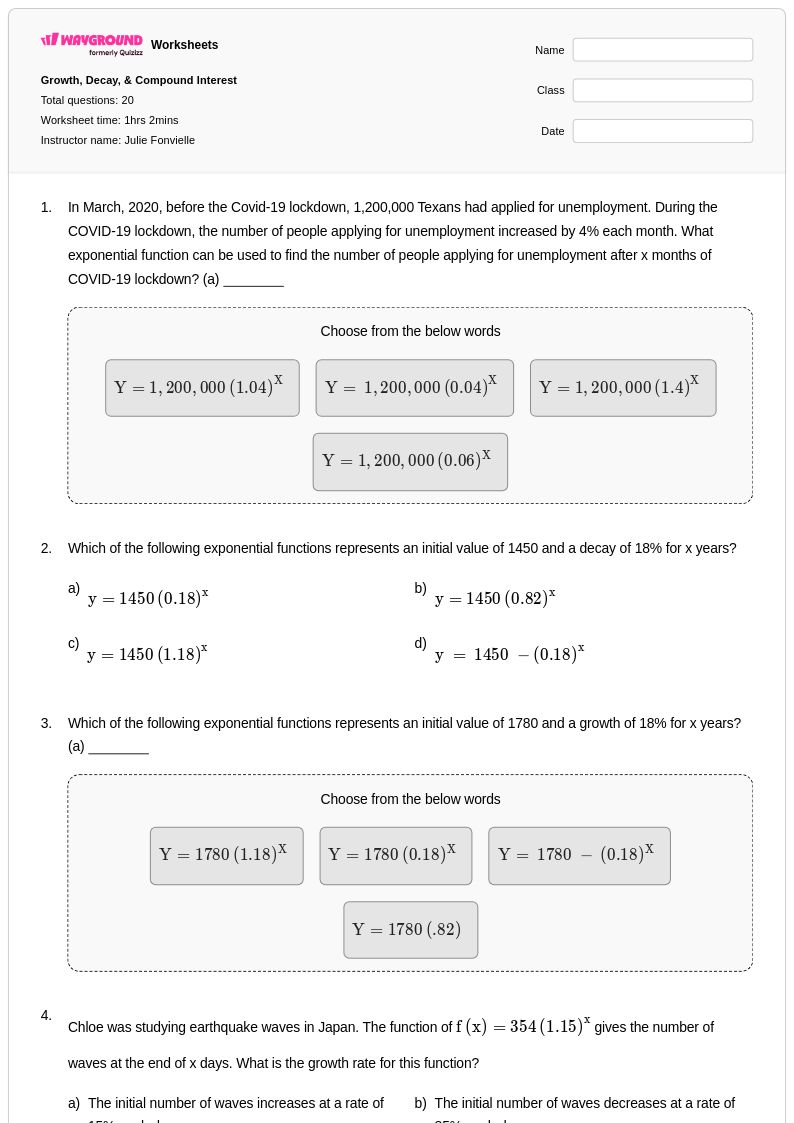
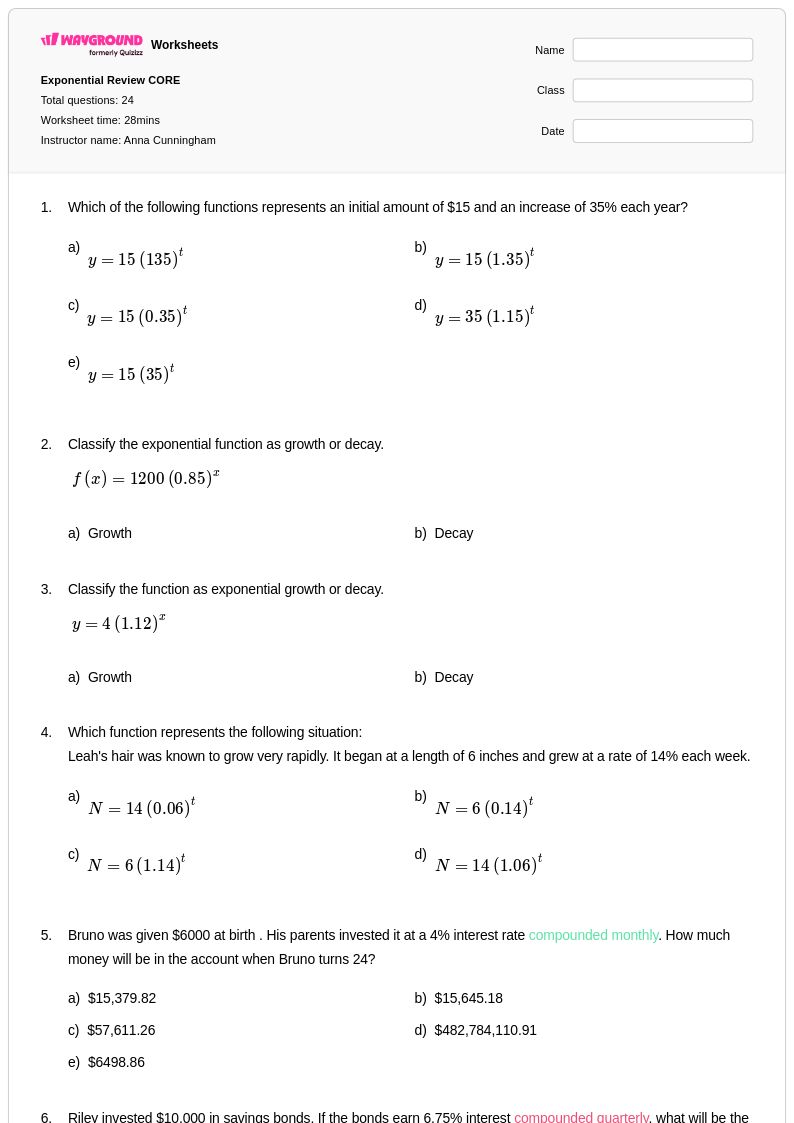
Exponential decay worksheets for Year 11 mathematics provide students with essential practice in understanding how quantities decrease at rates proportional to their current values. These comprehensive worksheet collections available through Wayground (formerly Quizizz) help students master the fundamental concepts of exponential decay functions, including half-life calculations, compound interest depreciation, and radioactive decay models. Students work through carefully structured practice problems that build proficiency in identifying decay factors, writing exponential decay equations, graphing decay functions, and solving real-world applications involving population decline, medication concentration, and asset depreciation. Each worksheet comes with detailed answer keys that support independent learning and self-assessment, while the free printable format ensures accessibility for both classroom instruction and home practice.
Wayground (formerly Quizizz) empowers educators with millions of teacher-created exponential decay resources specifically designed for Year 11 algebra instruction. The platform's robust search and filtering capabilities allow teachers to quickly locate worksheets that align with specific curriculum standards and match their students' skill levels. Advanced differentiation tools enable instructors to customize problem difficulty, modify question types, and adjust complexity to meet diverse learning needs within the classroom. These versatile worksheet collections are available in both printable PDF format and interactive digital versions, providing flexibility for traditional paper-based activities or technology-enhanced learning environments. Teachers utilize these resources for targeted skill practice, remediation support for struggling learners, enrichment opportunities for advanced students, and comprehensive lesson planning that addresses the mathematical reasoning and problem-solving skills essential for success with exponential decay concepts.
FAQs
How do I teach exponential decay in 11th grade?
Grade 11 is where exponential decay connects to logarithms, so instruction should make that link explicit. Students at this level should be solving for t algebraically using natural or common logarithms, not just substituting known values. Medication concentration and radioactive decay are the richest contexts because they require students to interpret what a specific time value means in the real situation, not just compute it. If students are also covering continuous decay (using e), connect it to the discrete model they already know — same behavior, different base.
What exercises help 11th graders practice exponential decay?
The most valuable practice at Grade 11 involves solving for the exponent — finding when a quantity reaches a given threshold — because that's where logarithms become necessary. Half-life problems where students must find the time to reach 10% of the original amount are a good benchmark. Graphing exercises that ask students to identify the equation from a curve (rather than graph a given equation) push interpretive skills that are often underpracticed.
What mistakes do 11th graders make with exponential decay?
The most common error at this level is logarithm application: students know they need to take a log but apply it to only one side of the equation, or forget to divide by the coefficient before taking the log. A subtler mistake is confusing the half-life formula with the general decay equation — students memorize one form and misapply it when the problem uses a different decay rate. Both errors are procedural, which means targeted practice with the solving steps (not just the setup) is what fixes them.
How do I use Wayground's Grade 11 exponential decay worksheets?
For a class working through logarithmic solving for the first time, the digital quiz format on Wayground is useful because you can see exactly which step is breaking down across the class. Print the PDF when you want students to show full algebraic work — logarithm problems in particular benefit from paper, where students can write each step without the interface getting in the way. The included answer key lets students verify their process, not just their final answer.
How does exponential decay fit into the 11th grade Common Core progression?
By Grade 11, Common Core expects students to use logarithms to solve exponential equations — which means decay problems at this level should require students to isolate the exponent algebraically, not just evaluate the function at given inputs. This is the stage where the connection between exponential and logarithmic functions becomes explicit: students who understand decay deeply can move fluidly between the two forms. The progression from Grade 9 pattern recognition to Grade 11 algebraic solving is what makes decay a thread across multiple years of high school math.
How can I differentiate exponential decay practice for my Grade 11 class?
Students who are solid on the concept but slow on logarithm mechanics benefit from scaffolded problems that show the first algebraic step — taking the log of both sides — so they can focus on completing the solve rather than getting stuck at the entry point. For students with reading difficulties, Wayground's read-aloud accommodation helps with the dense word problems that characterize Grade 11 decay applications. Students ready for extension can work with continuous decay models using e, which the same worksheet library covers.
What real-world applications of exponential decay work best for 11th graders?
Medication concentration is the most instructionally rich context at this level because it requires students to solve for time (when does the drug drop below a therapeutic threshold?) rather than just evaluate the function. Radioactive decay with non-round half-lives forces genuine logarithm use. Carbon dating is worth including once — it's memorable, the numbers are large enough to make estimation impossible, and it shows students that the math they're learning has real scientific applications.