Free Printable Factorisation by Grouping Worksheets for Year 11
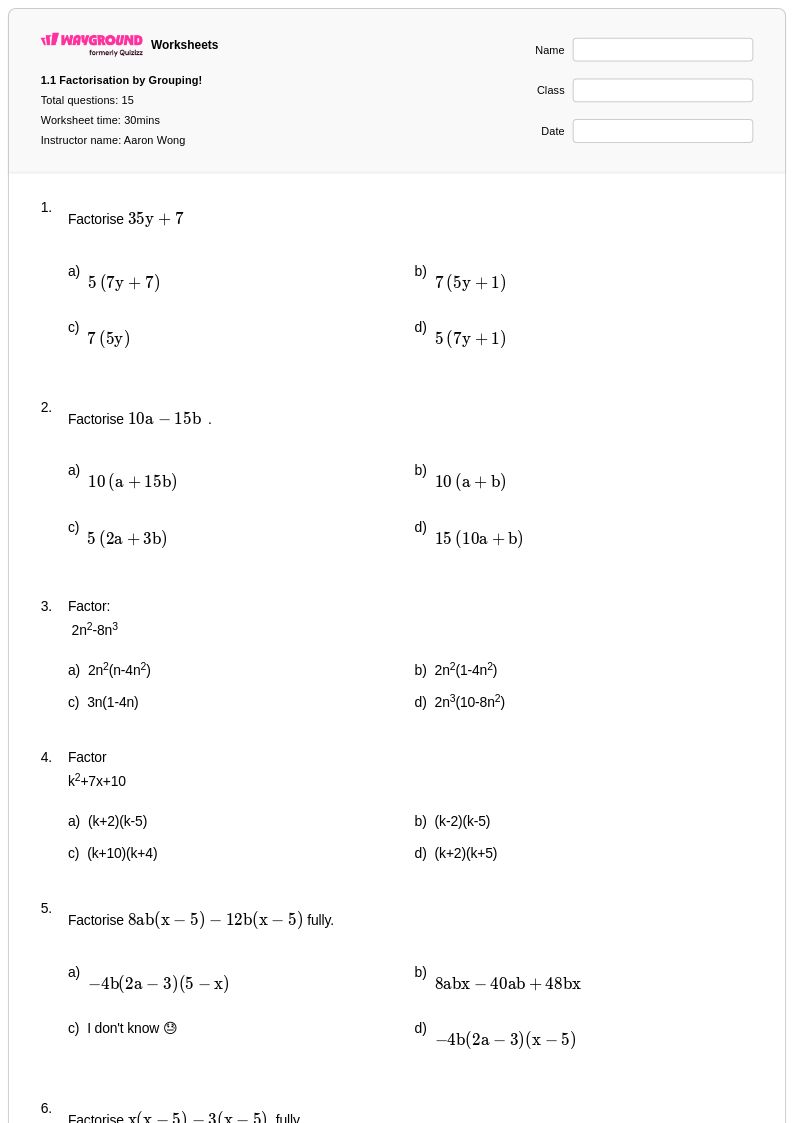
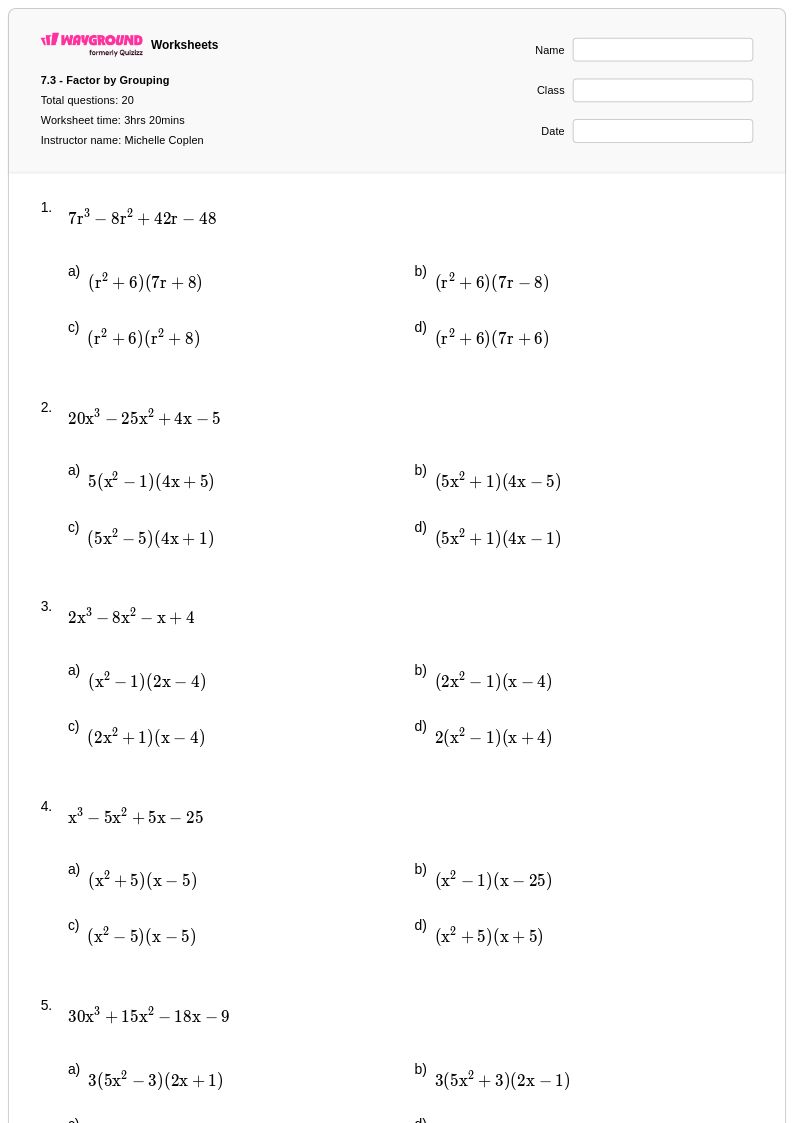
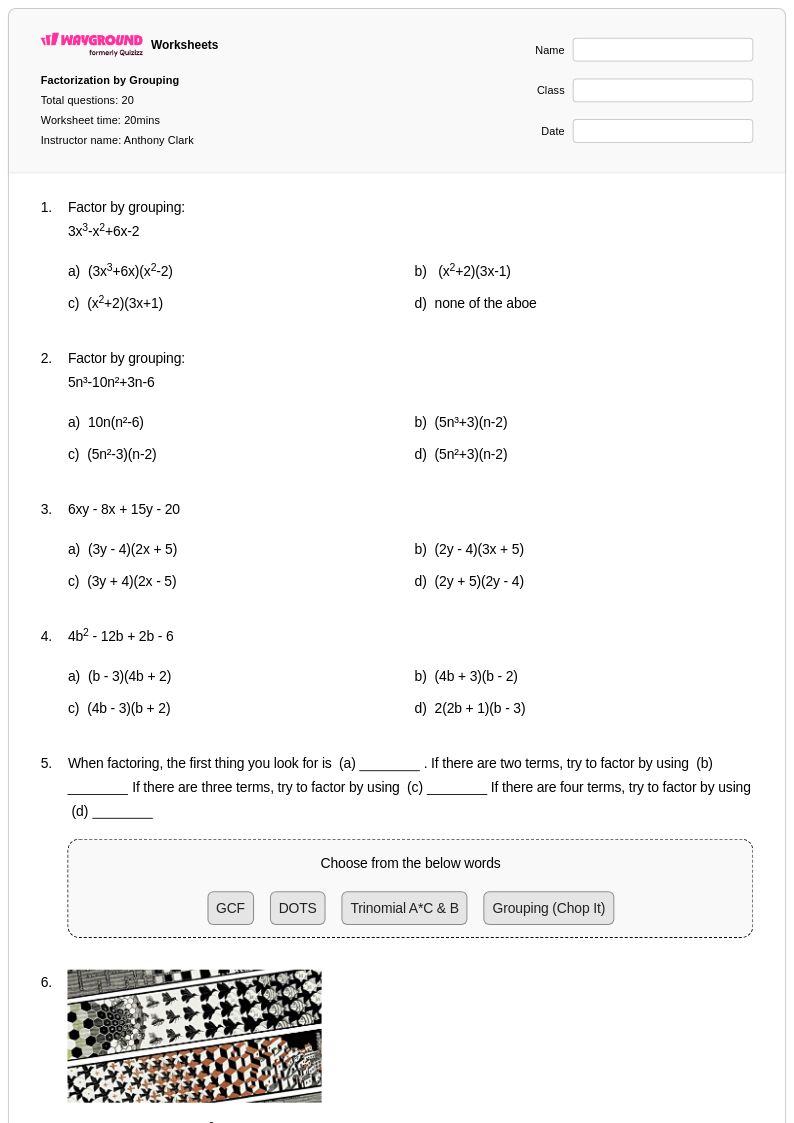
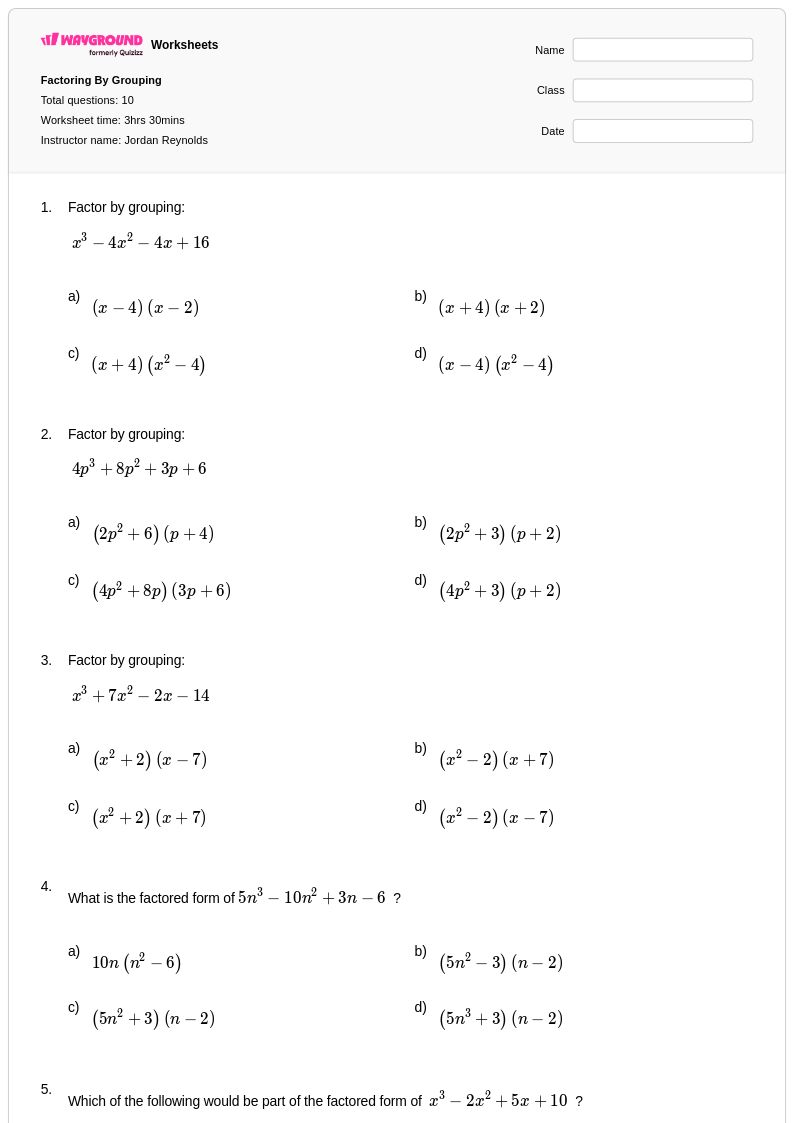
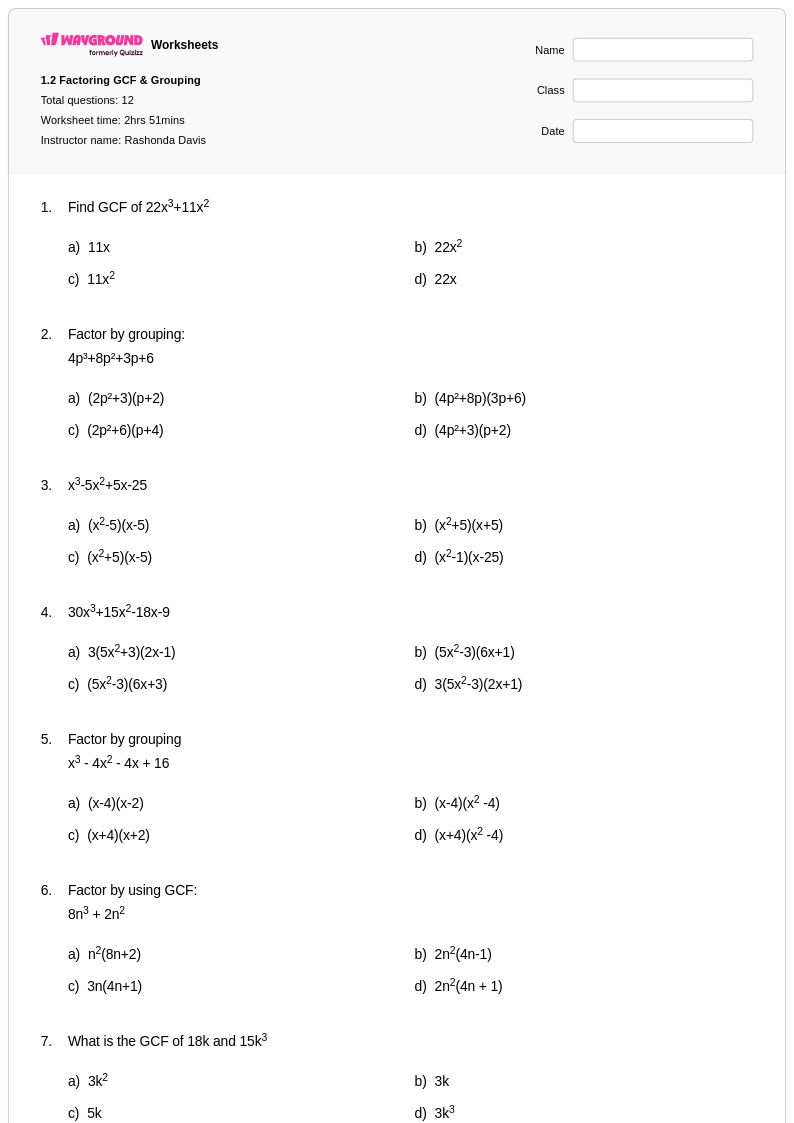
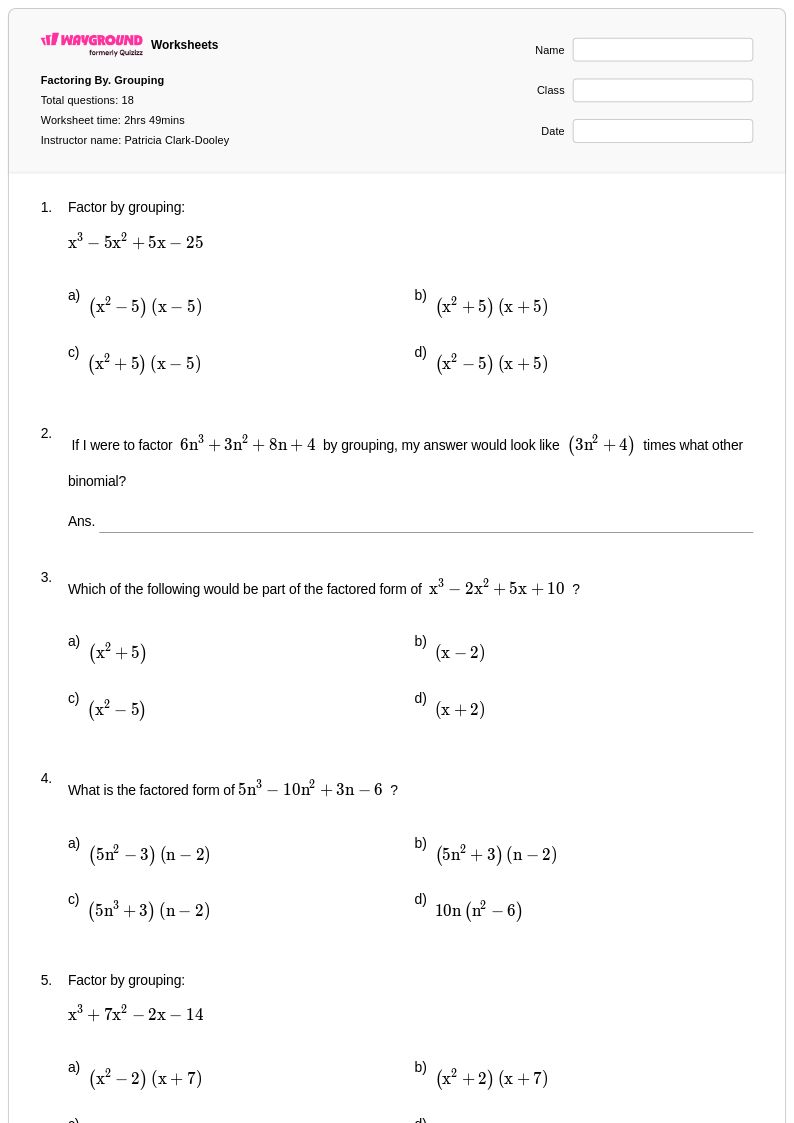
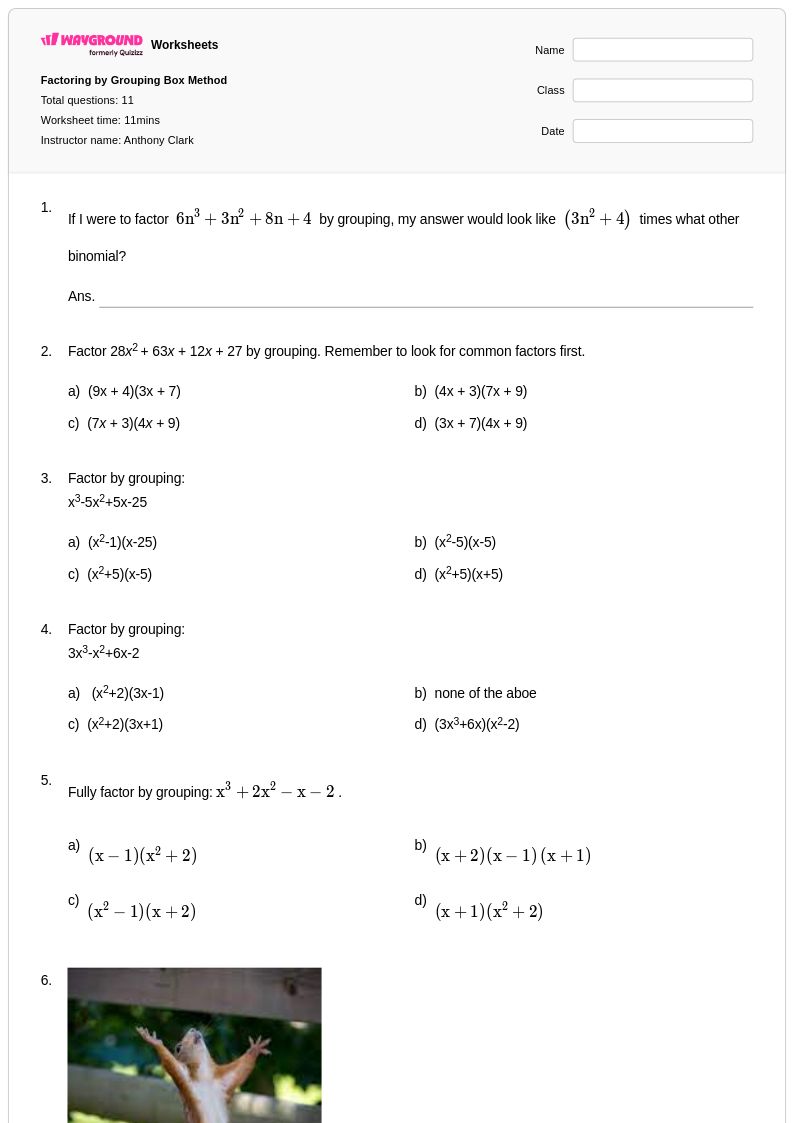
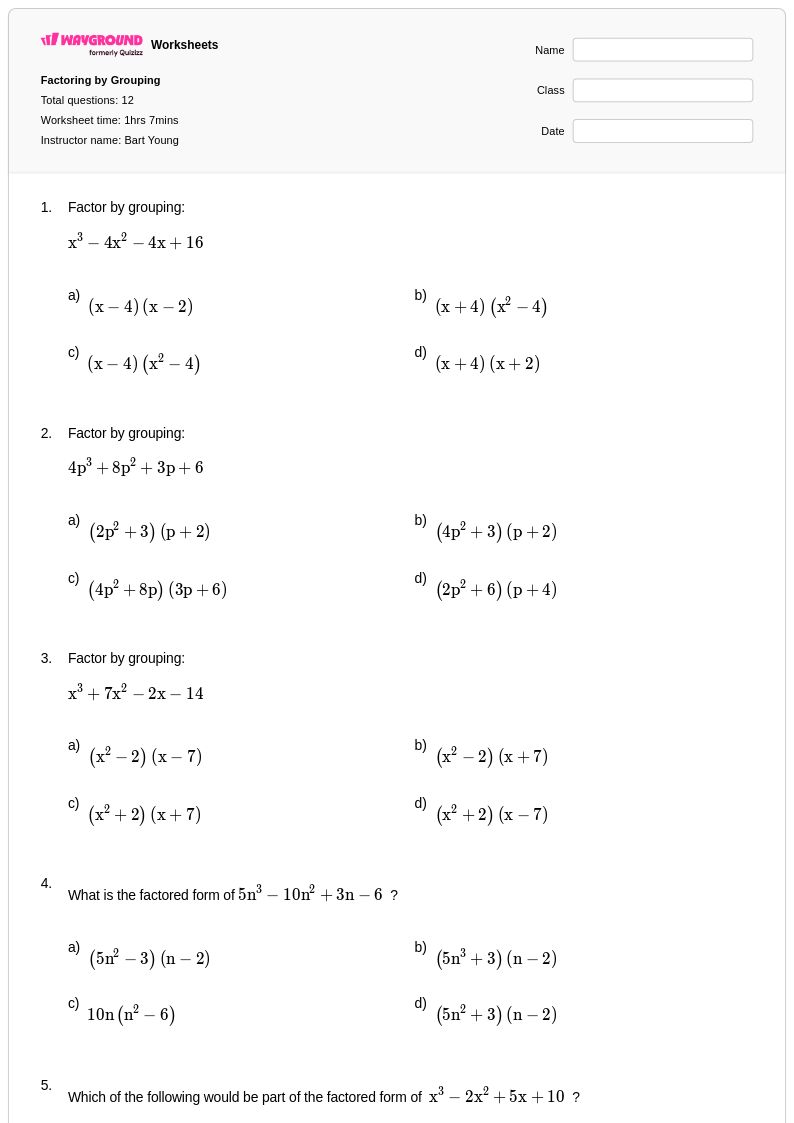
Master Year 11 factorisation by grouping with Wayground's comprehensive collection of free worksheets, featuring printable PDFs with practice problems and complete answer keys to strengthen algebraic problem-solving skills.
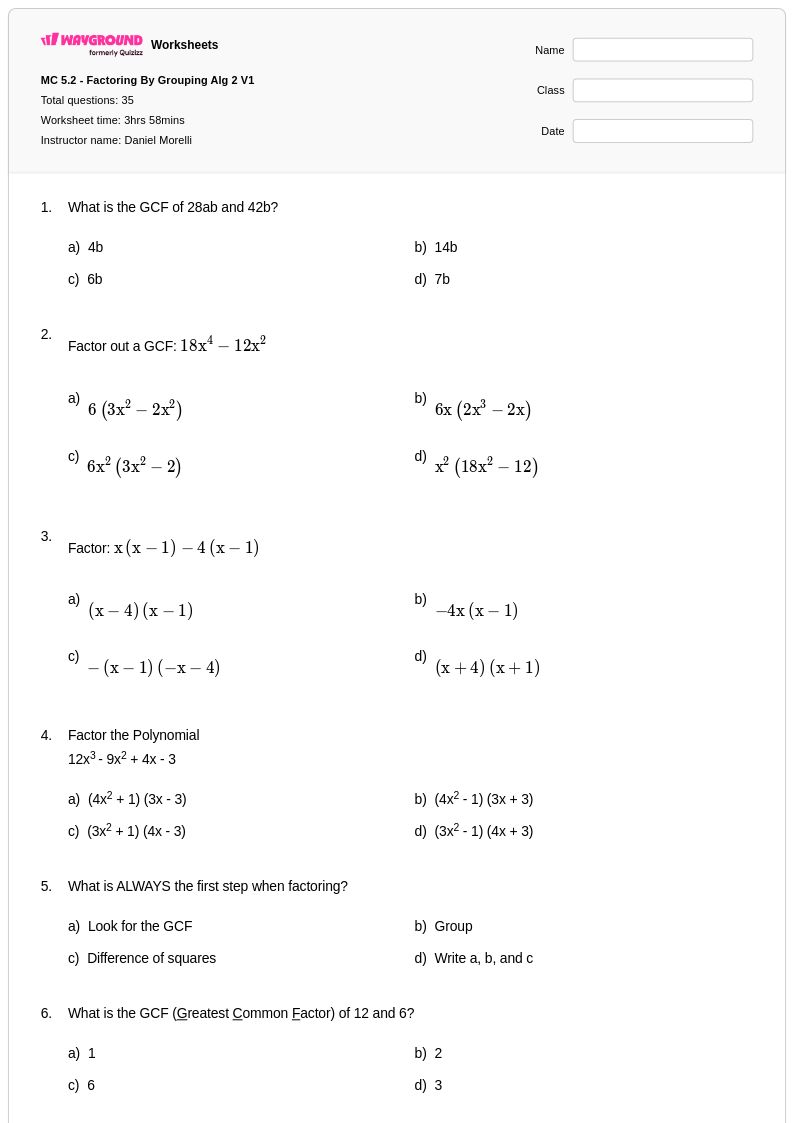
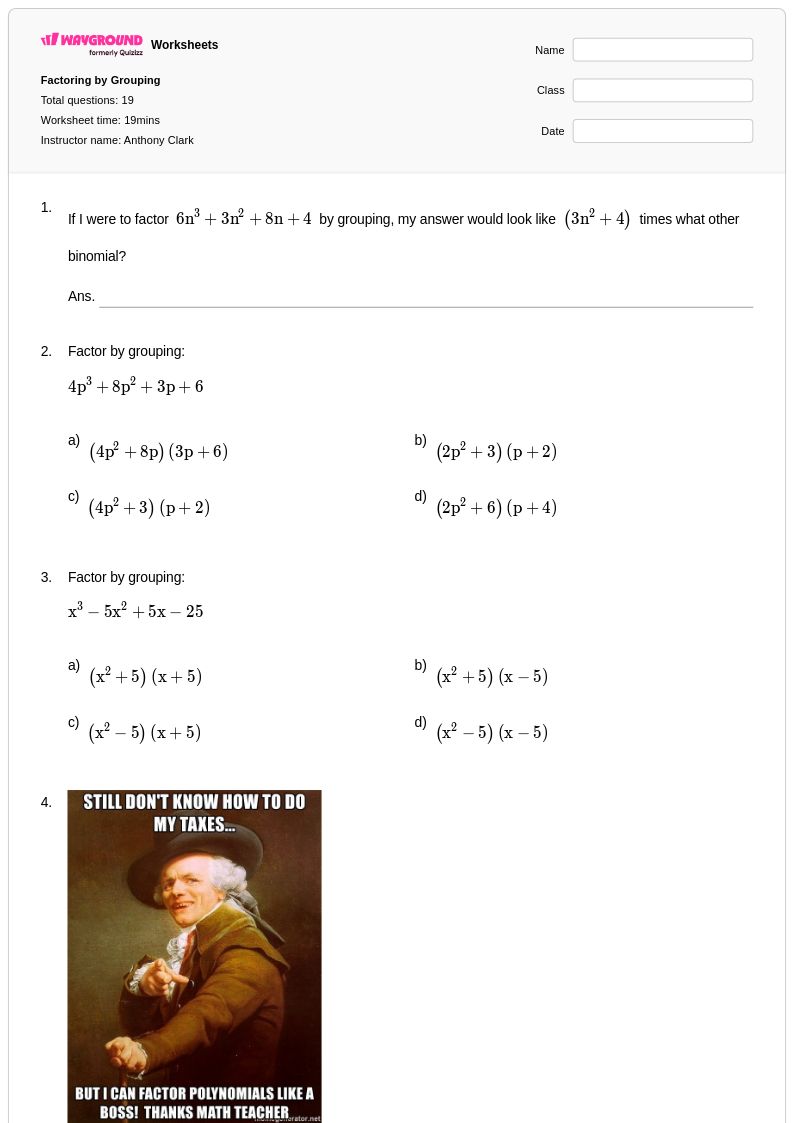
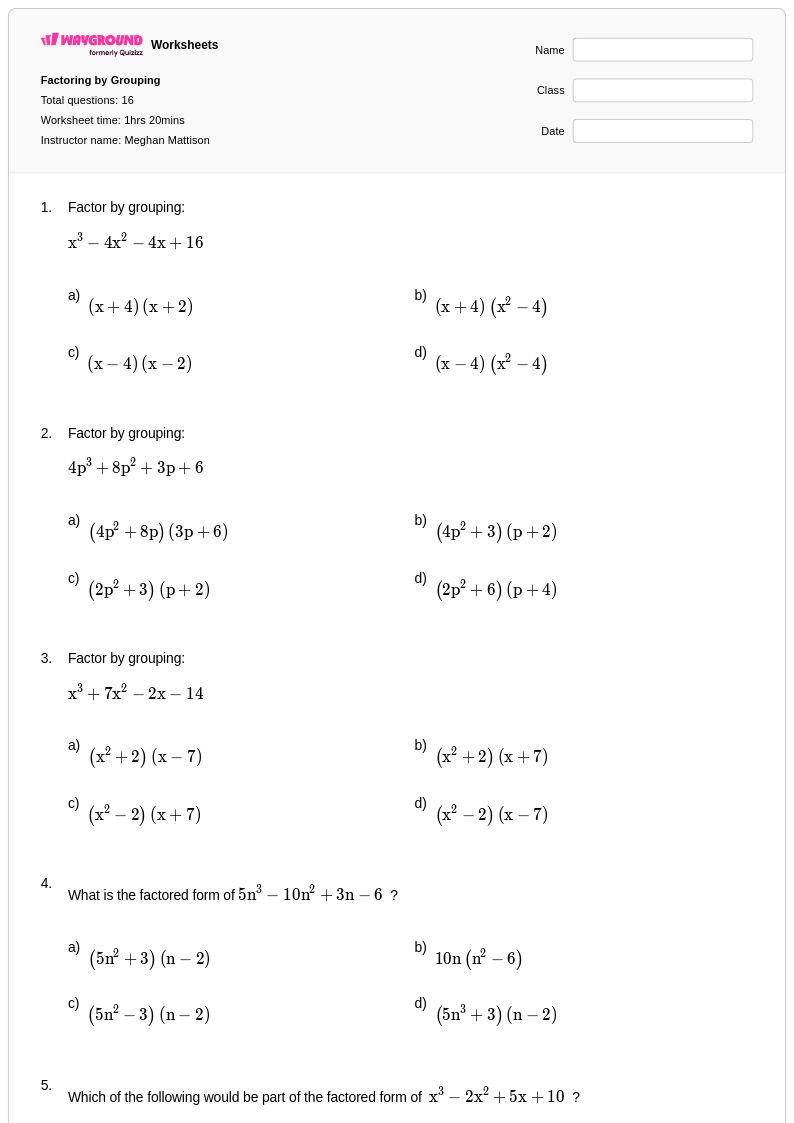
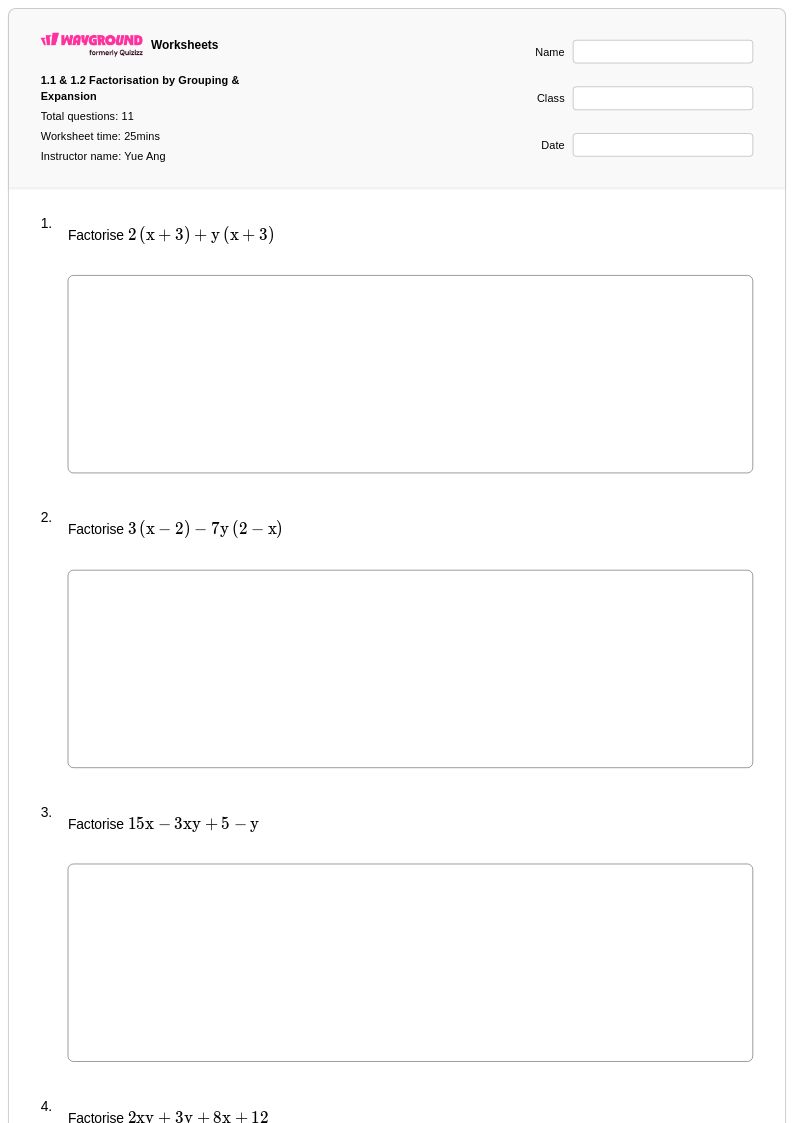
Explore printable Factorisation by Grouping worksheets for Year 11
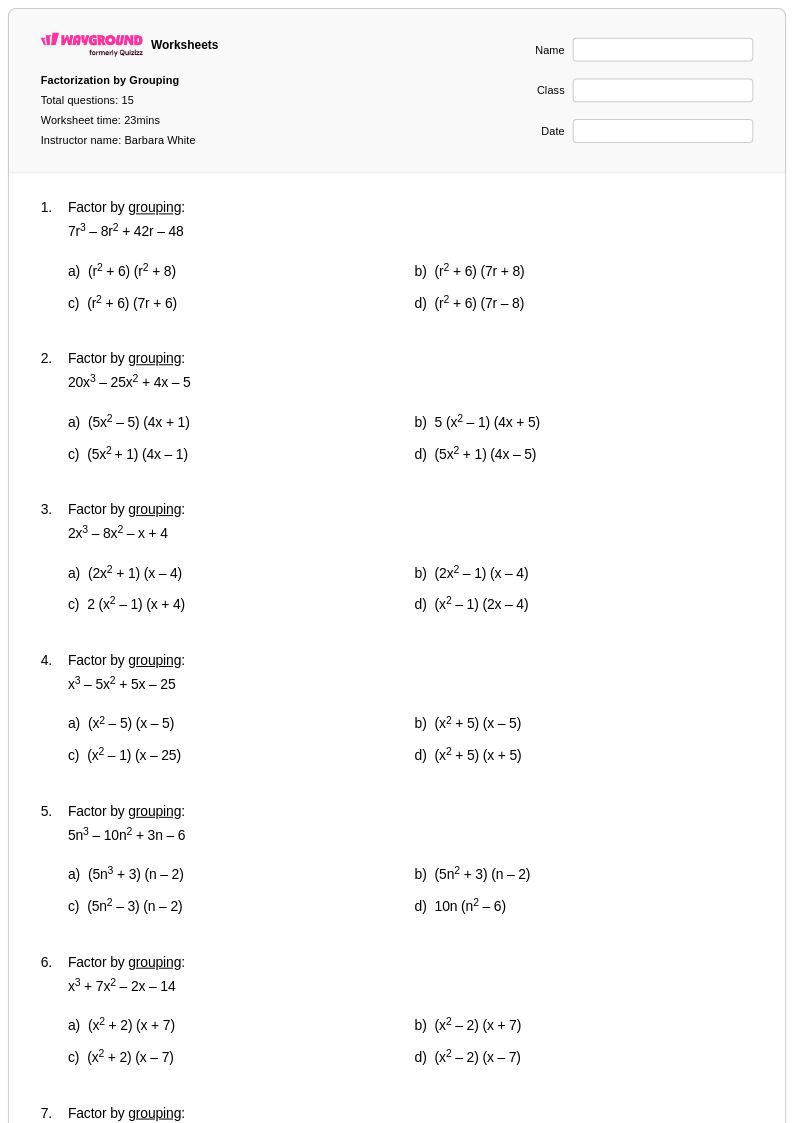
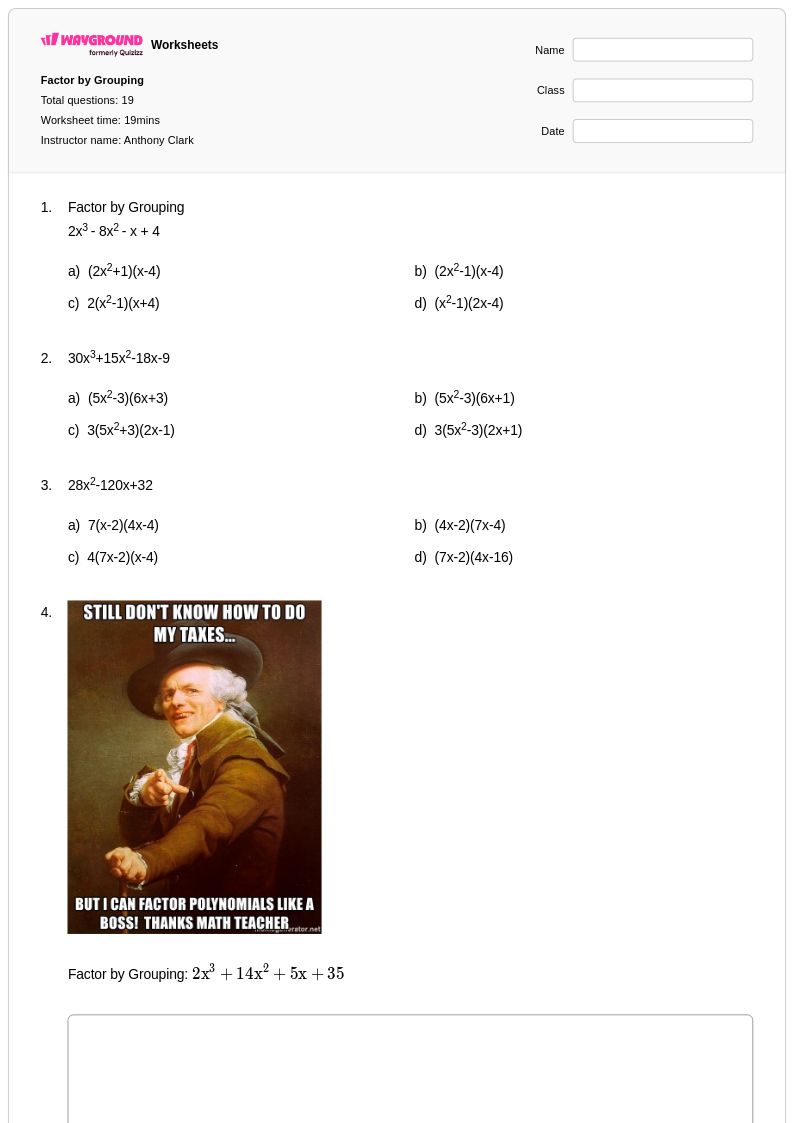
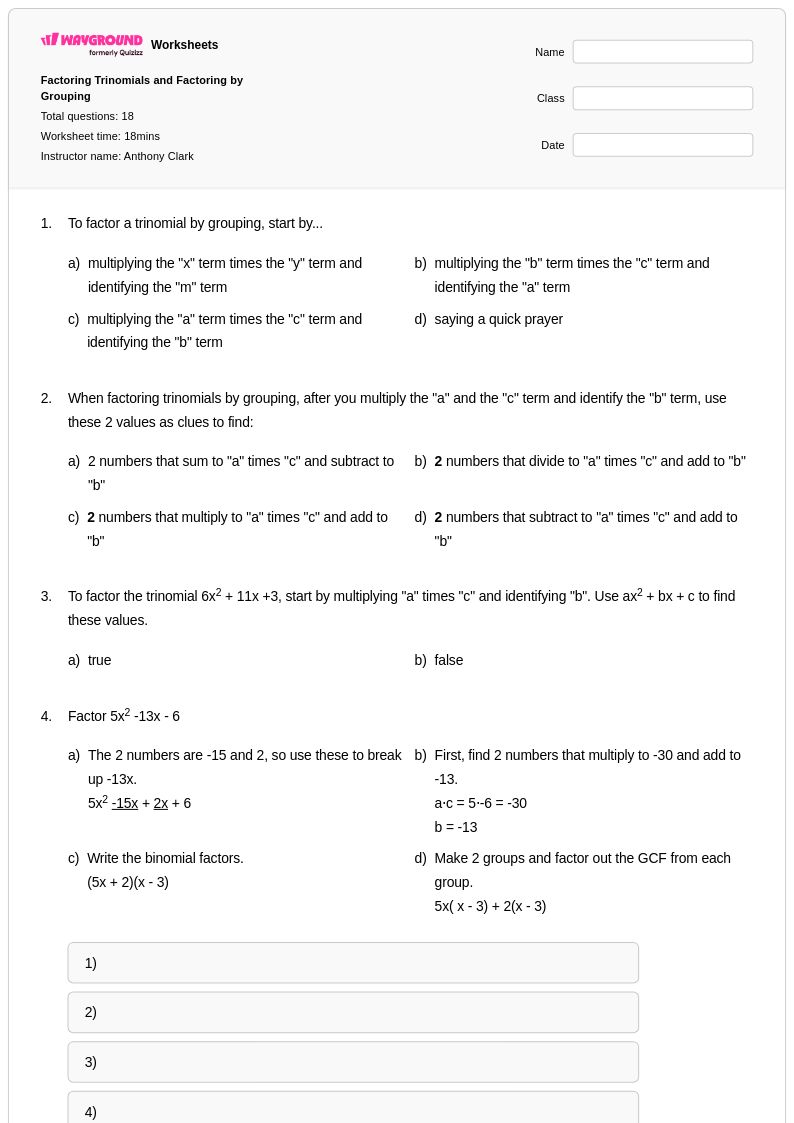
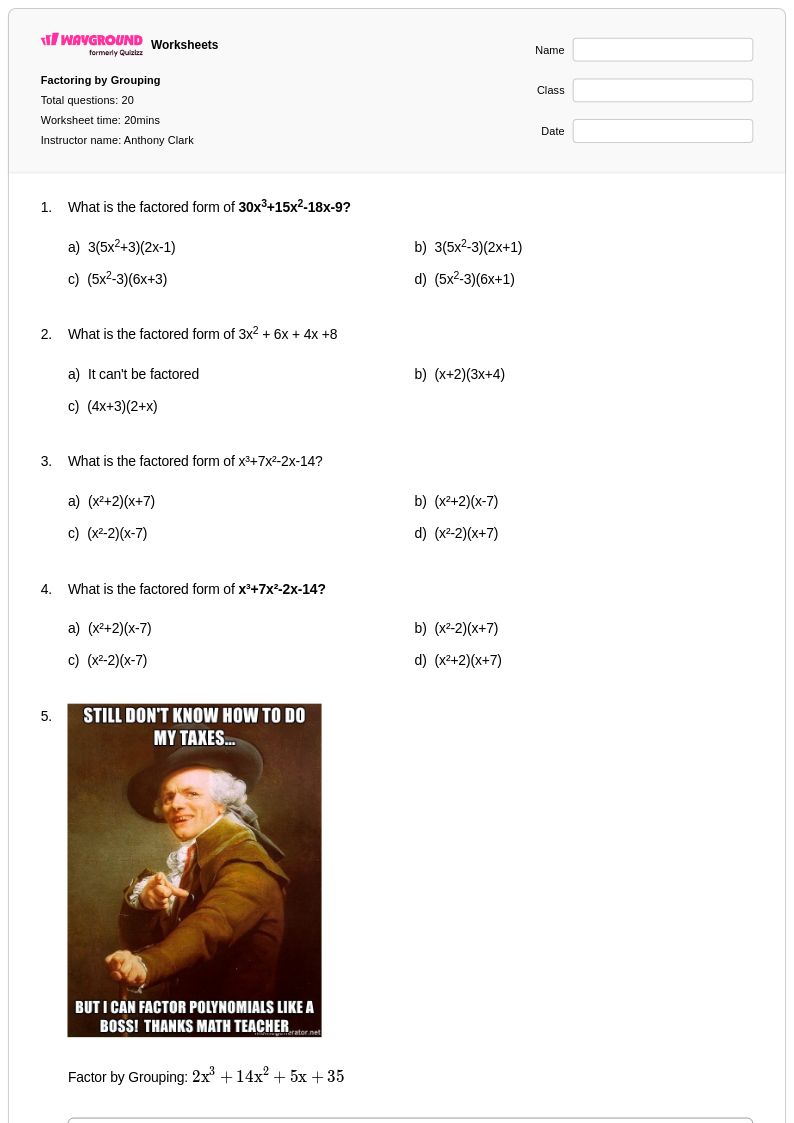
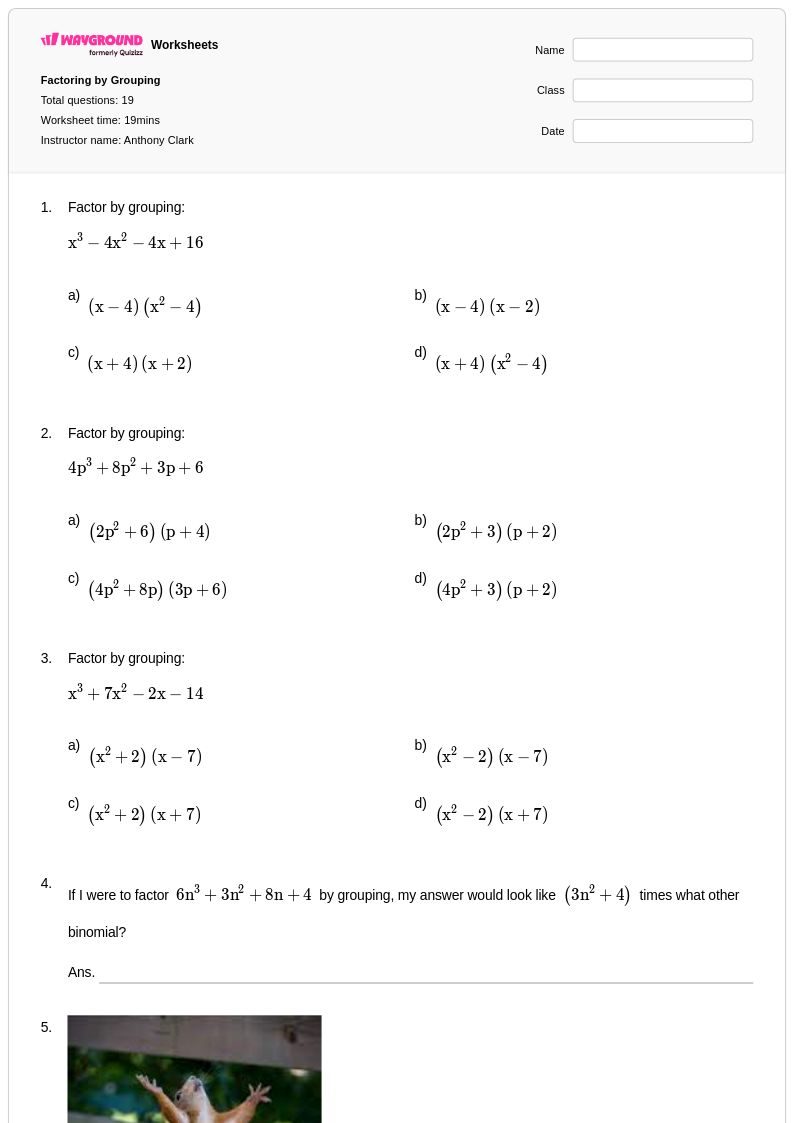
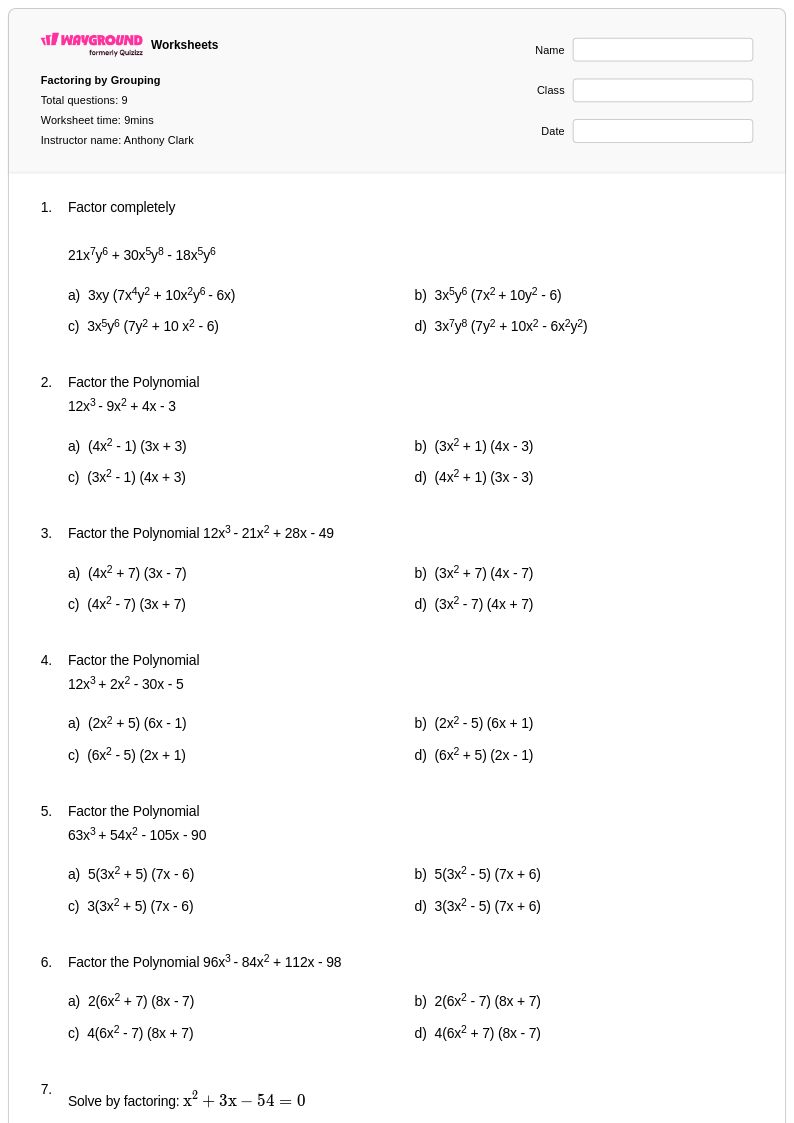
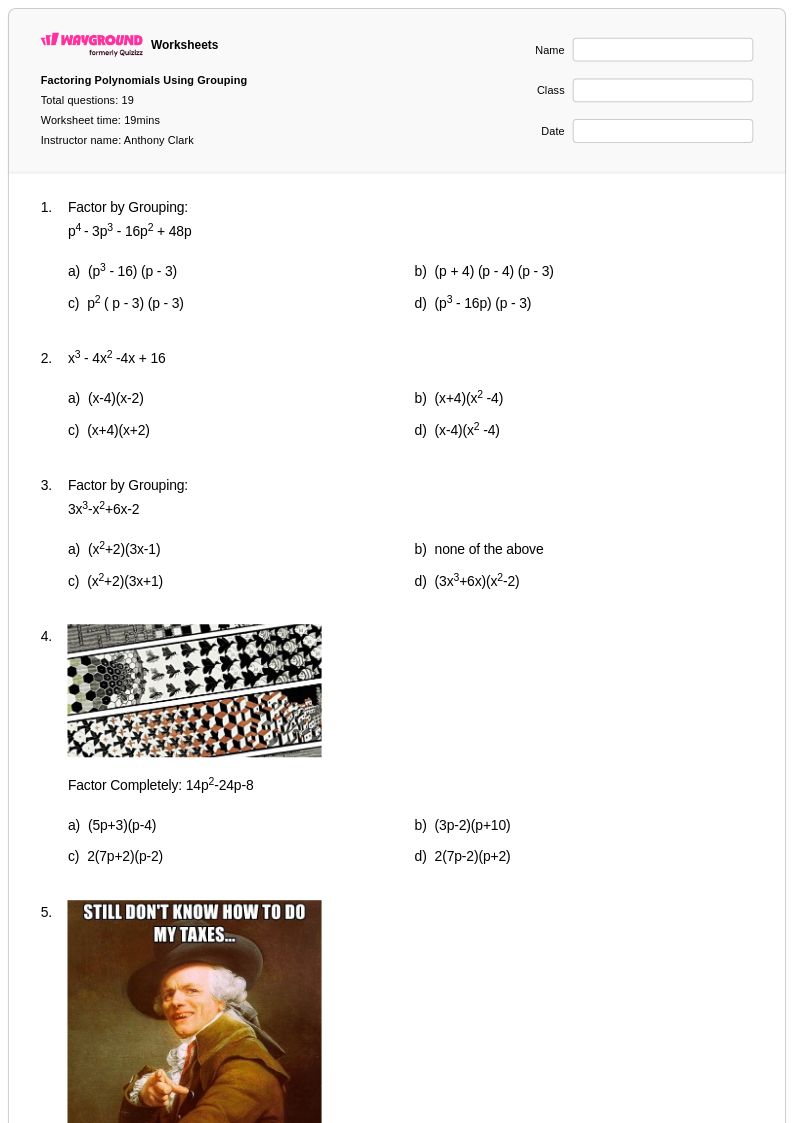
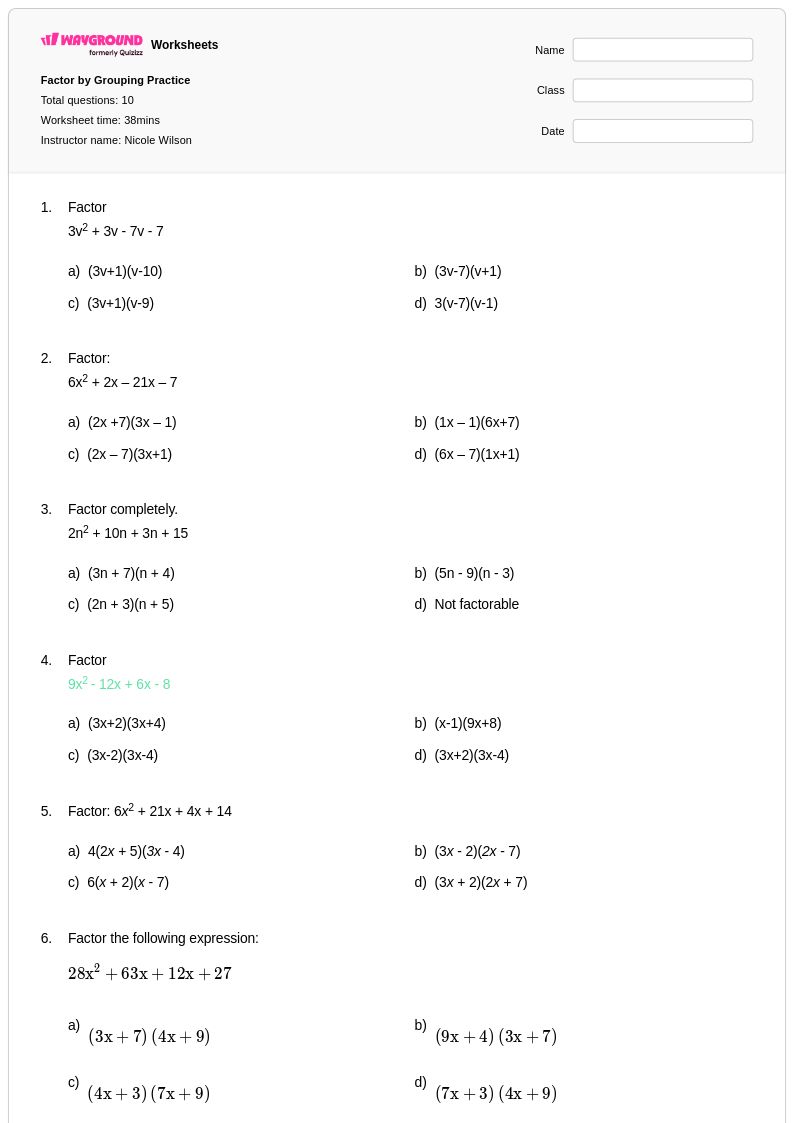
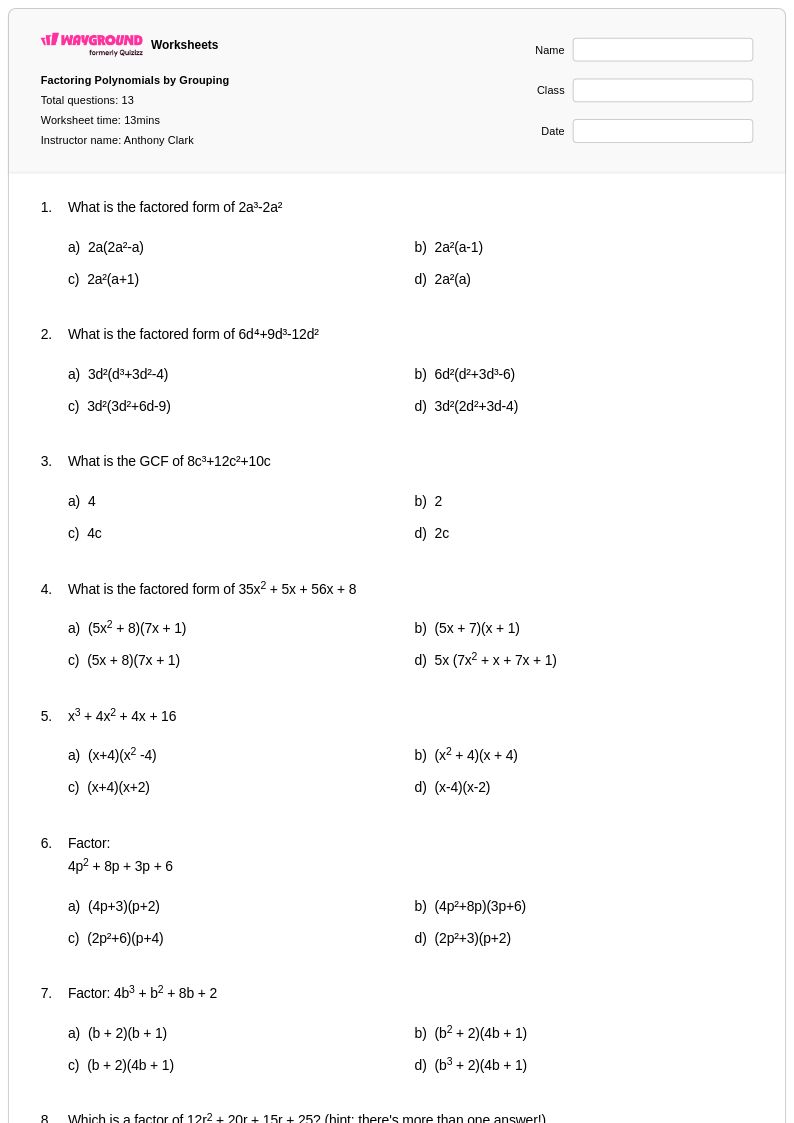
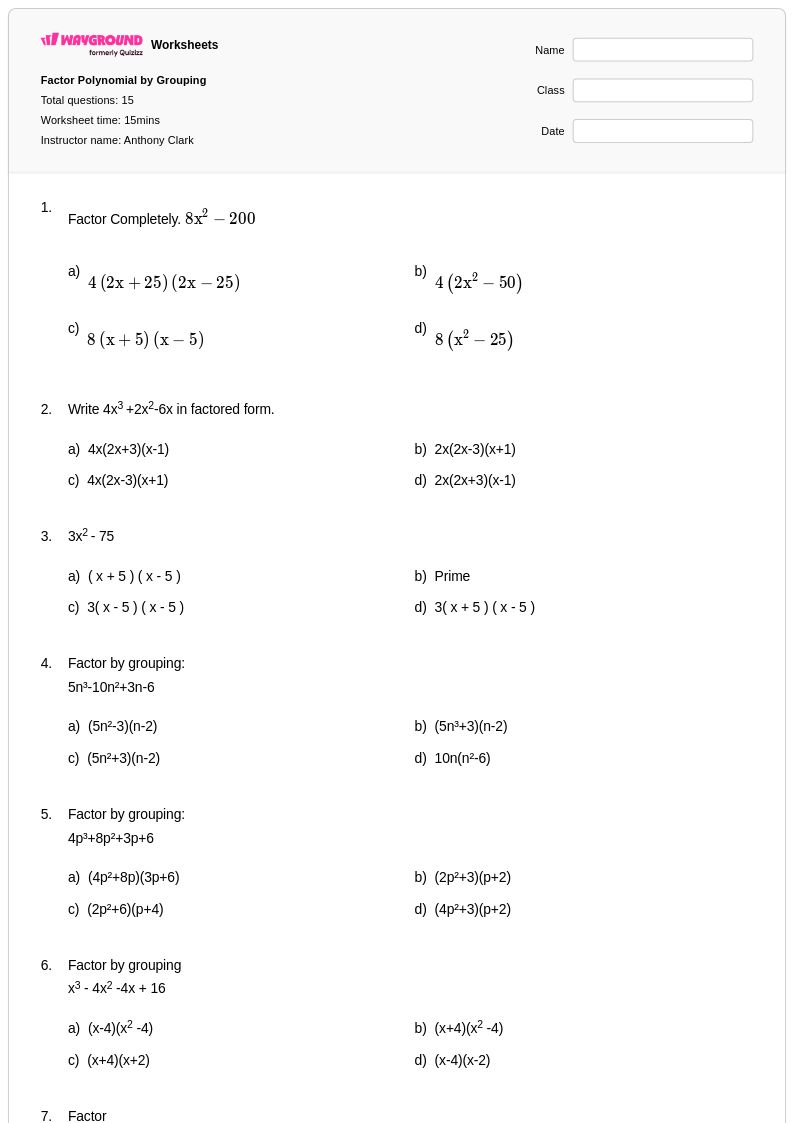
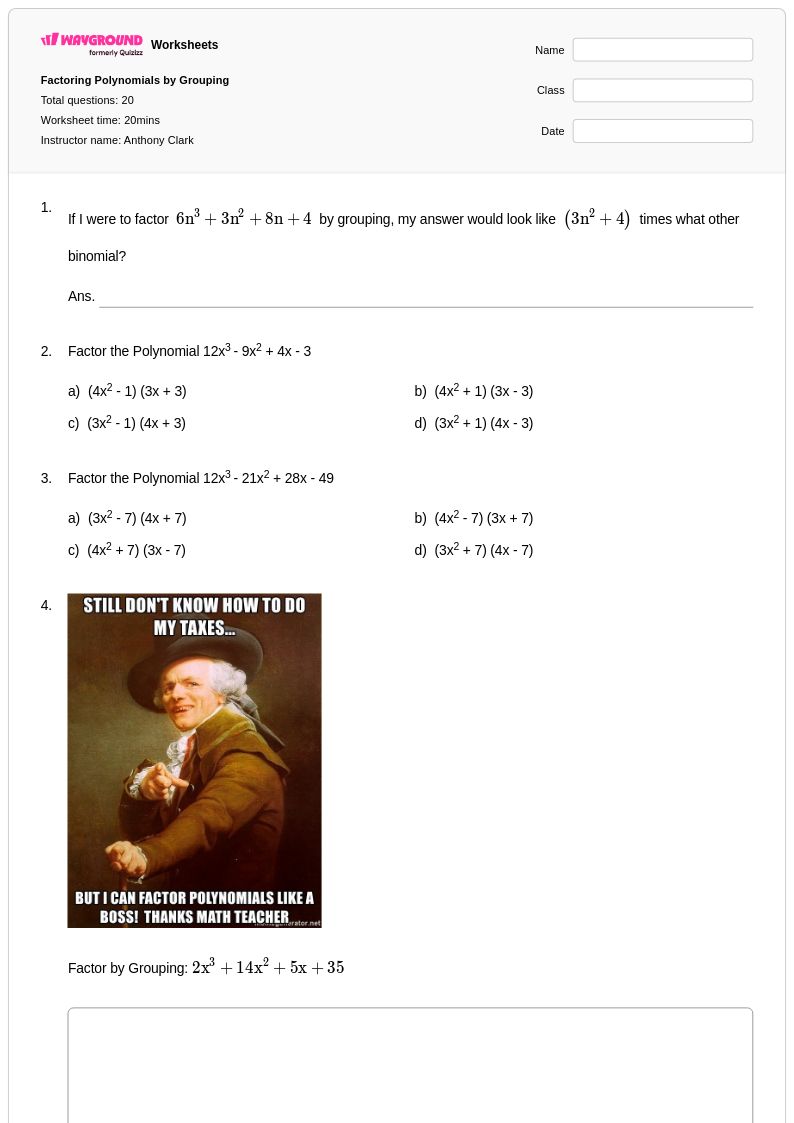
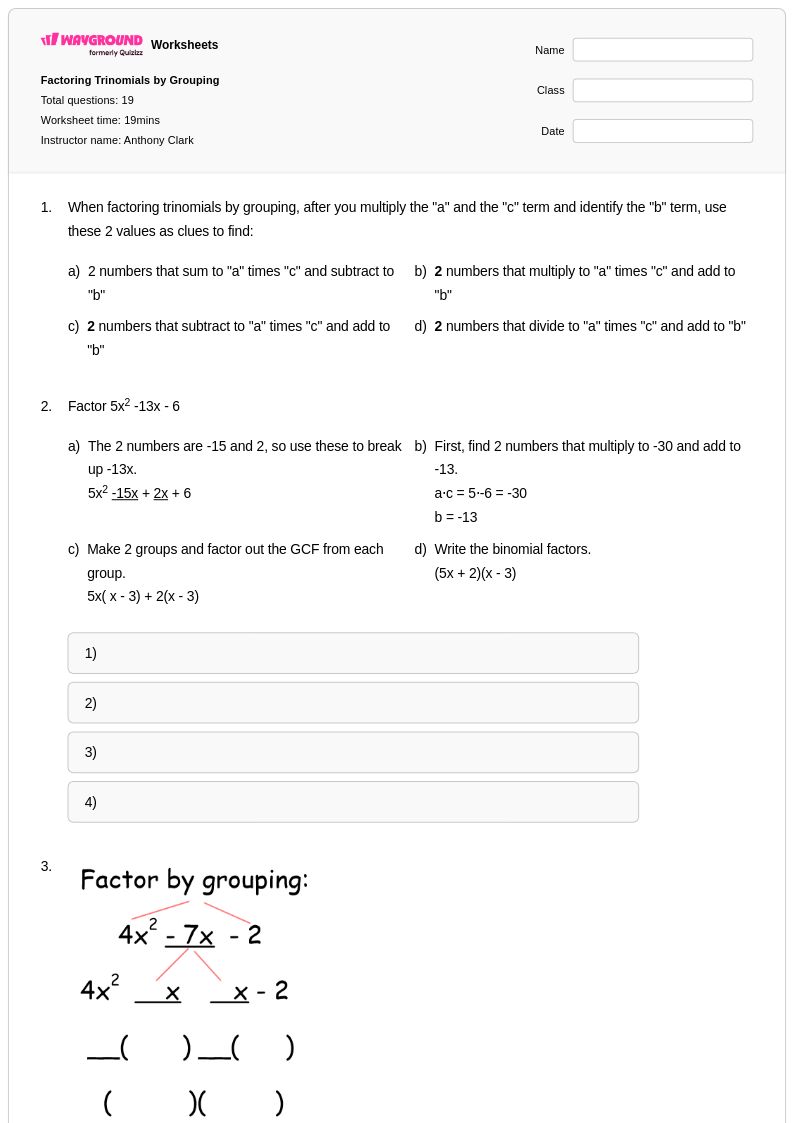
Factorization by grouping represents a fundamental algebraic technique that Year 11 students must master to advance their mathematical problem-solving capabilities. Wayground's comprehensive collection of factorization by grouping worksheets provides structured practice opportunities that guide students through the systematic process of rearranging polynomial terms into groups that share common factors. These carefully designed practice problems strengthen students' ability to recognize patterns, extract greatest common factors from grouped terms, and ultimately express complex polynomials in their factored form. Each worksheet includes detailed answer keys that allow students to verify their solutions and understand the step-by-step reasoning behind successful factorization strategies. The free printable resources cover various polynomial structures, from four-term expressions to more complex algebraic forms, ensuring students develop confidence with this essential algebraic skill through repeated practice with diverse problem types.
Wayground's extensive library of millions of teacher-created resources empowers educators to deliver targeted instruction in factorization by grouping through carefully curated worksheet collections. The platform's advanced search and filtering capabilities enable teachers to quickly locate materials that align with specific curriculum standards and match their students' current skill levels. These differentiation tools prove invaluable for addressing diverse learning needs within Year 11 classrooms, allowing educators to provide appropriate challenge levels for both struggling learners requiring additional scaffolding and advanced students ready for enrichment activities. The flexible customization options and availability of resources in both printable pdf format and interactive digital versions support varied instructional approaches, whether teachers need materials for individual practice, collaborative work sessions, or homework assignments. This comprehensive support system streamlines lesson planning while providing educators with reliable tools for ongoing skill assessment, targeted remediation, and systematic reinforcement of factorization concepts.
FAQs
How do I teach factorisation by grouping to Grade 11 students?
At Grade 11, students should already have the basic two-step grouping method from earlier algebra courses, so instruction at this level is less about introducing the technique and more about extending it. Focus on cases that require strategic term rearrangement, expressions with polynomial GCFs rather than monomial ones, and multi-step problems where grouping is one stage in a longer factorisation. It's also worth explicitly connecting grouping to other factoring methods students know — for instance, showing how splitting the middle term of a trinomial is really a setup for grouping — so students see the technique as part of a coherent toolkit rather than an isolated procedure.
What exercises help Grade 11 students practice factorisation by grouping?
At this level, the most valuable practice problems are ones that require a decision before the method can be applied: should terms be reordered? Is there a GCF to pull out of the entire polynomial first? Does the expression factor by grouping at all, or is a different method more appropriate? Mixing factorable and non-factorable-by-grouping expressions in the same set builds that judgment. Wayground's Grade 11 worksheets cover a range of polynomial structures, and the included answer keys let students check not just their final answer but the intermediate steps.
What mistakes do Grade 11 students commonly make with factorisation by grouping?
By Grade 11, the basic sign errors and incomplete factoring that trip up younger students should be mostly resolved. The errors that persist at this level tend to be strategic: students apply grouping to an expression that would factor more cleanly by a different method, or they miss a GCF across the entire polynomial before attempting to group. A subtler mistake is assuming that if the first grouping attempt fails, the expression is prime — when in fact trying a different pairing of terms would work. Building the habit of asking 'is there another way to group this?' before concluding an expression is unfactorable is the key correction at this stage.
How do I use Wayground's Grade 11 factorisation by grouping worksheets?
Assign them as a digital quiz on Wayground for immediate, self-paced practice, or print the PDF for a paper-based session — both formats include a complete answer key. If you go the printable route, the Wayground for Teachers app lets you scan student submissions for grading, which is useful when you're reviewing a set of algebra assignments and want to move quickly. The digital format works well for homework or independent review, since students get answer-key access to self-check without waiting.
How does factorisation by grouping fit into the Grade 11 algebra curriculum?
In the Common Core high school algebra progression, factorisation by grouping is a technique students are expected to have in hand before they reach the more advanced polynomial work of Grade 11 — things like polynomial long division, the factor theorem, and solving higher-degree equations. At Grade 11, grouping often appears not as a standalone topic but as a step within a larger factorisation: for example, factoring a cubic by first pulling out a GCF and then applying grouping to the remaining expression. Students who aren't fluent with grouping at this stage tend to stall on those multi-step problems, which is why targeted practice remains valuable even in the upper secondary years.
How can I support diverse learners in Grade 11 with factorisation by grouping practice?
For students who struggle with the multi-step nature of the method, Wayground lets you create a version of the worksheet with wider line spacing and a larger font, which reduces the visual clutter of working through polynomial expressions on the page. A dyslexia-friendly font option is also available if needed. For digital sessions, the Read Aloud accommodation is worth enabling for students who process written instructions better when heard — polynomial notation can be dense to parse visually. These settings apply per student, so the rest of the class works from the standard version without any disruption.