Free Printable Factorisation by Grouping Worksheets for Year 9
Master Year 9 factorisation by grouping with Wayground's comprehensive collection of free worksheets, printables, and practice problems featuring step-by-step solutions and complete answer keys.
Explore printable Factorisation by Grouping worksheets for Year 9
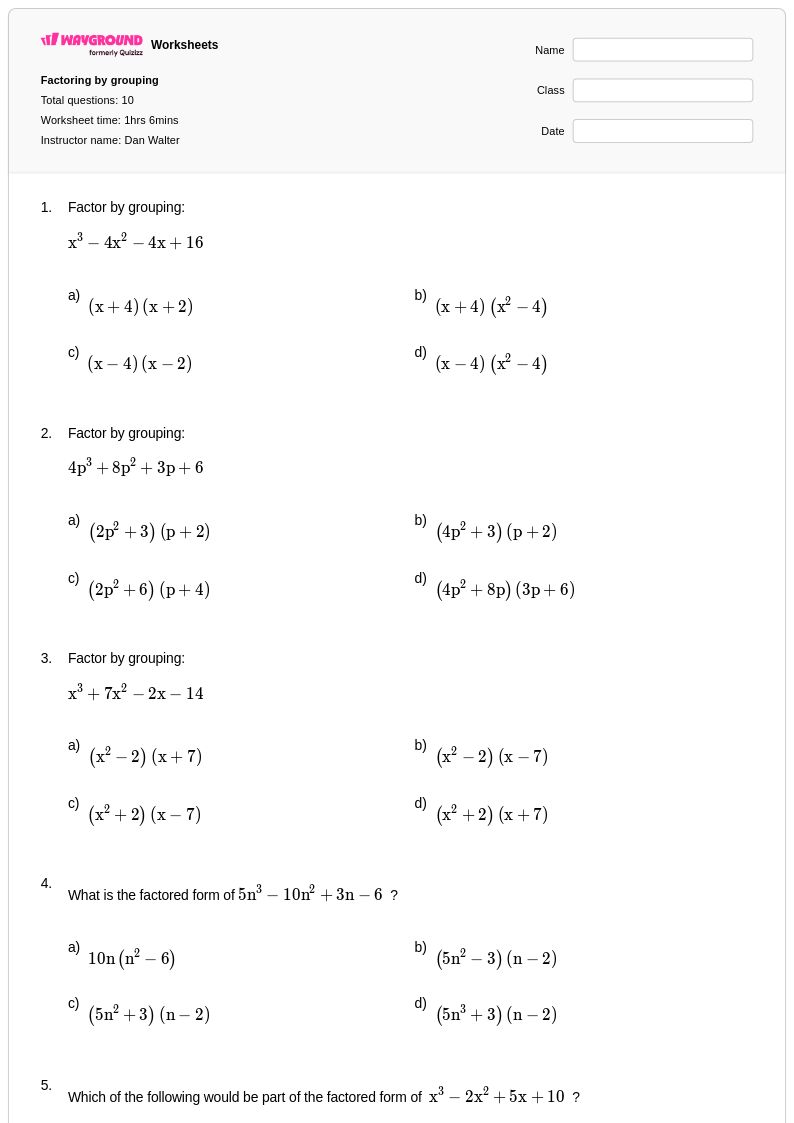
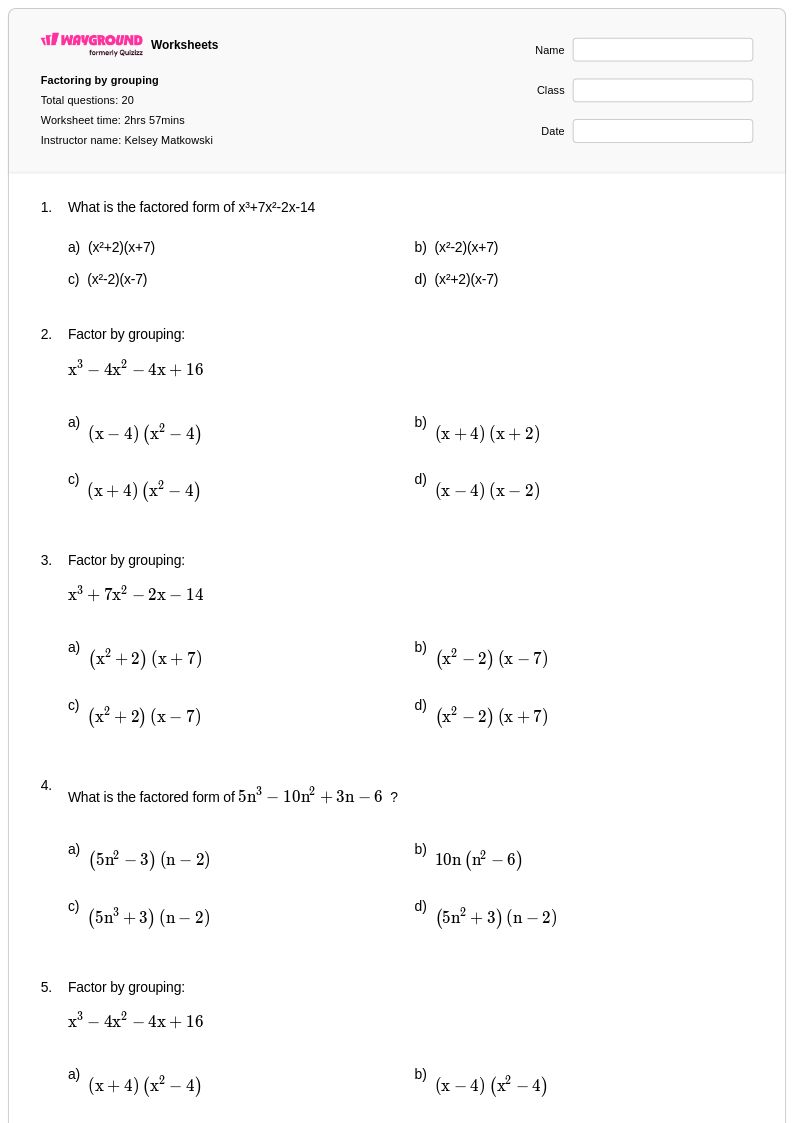
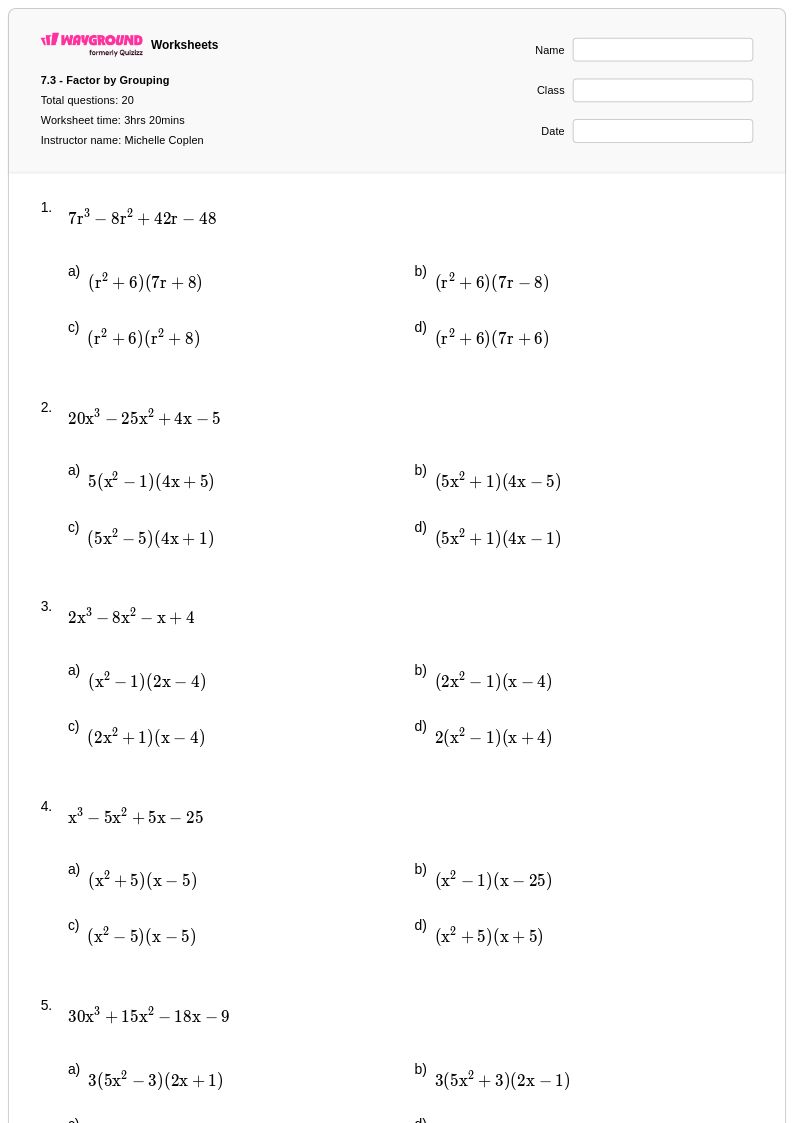
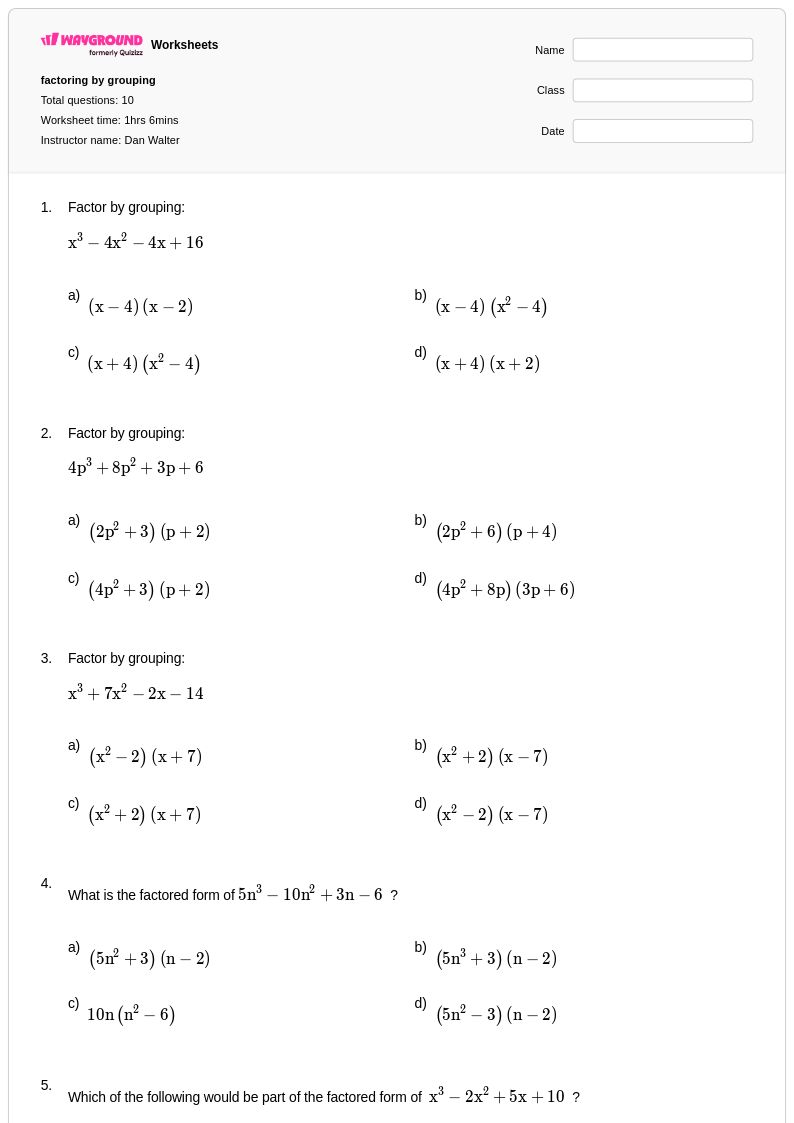
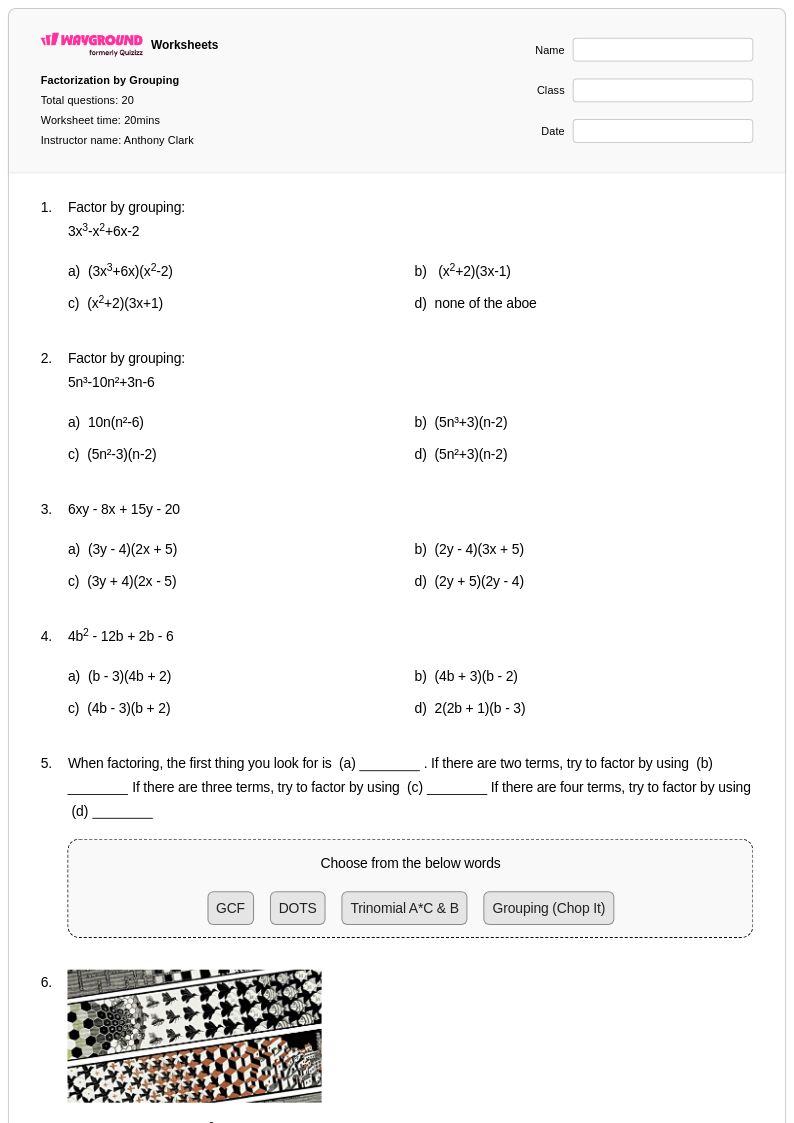
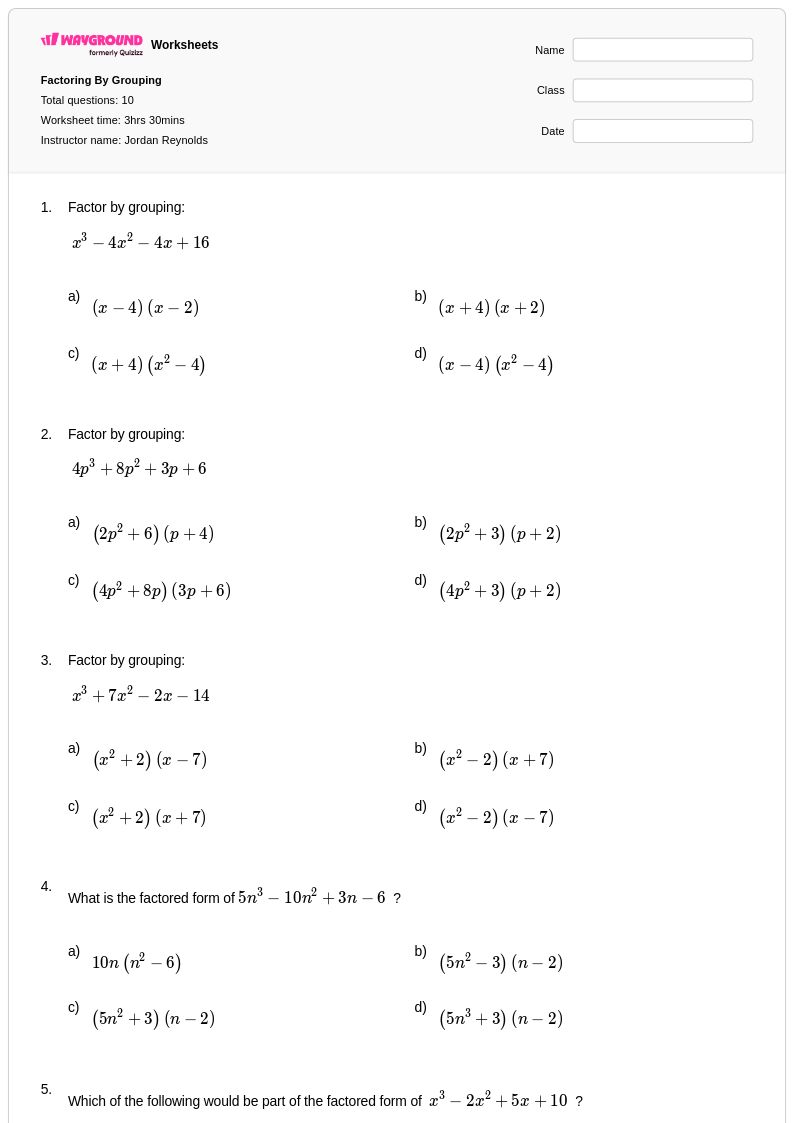
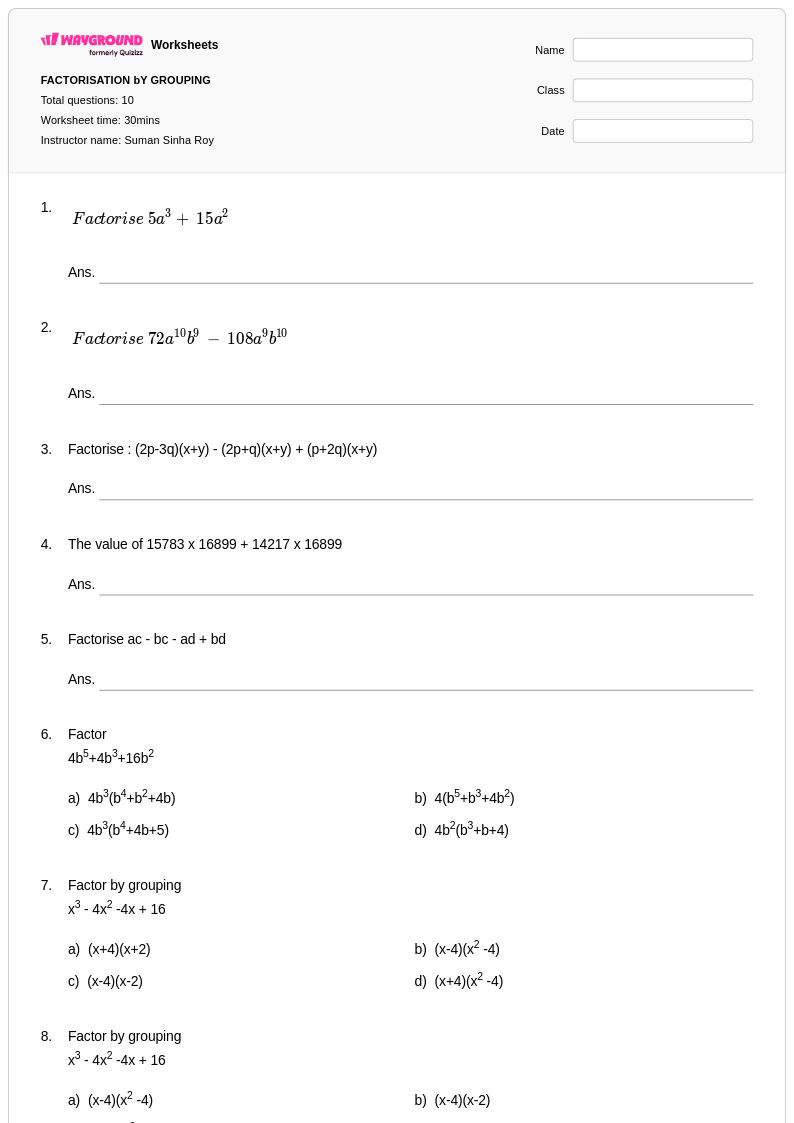
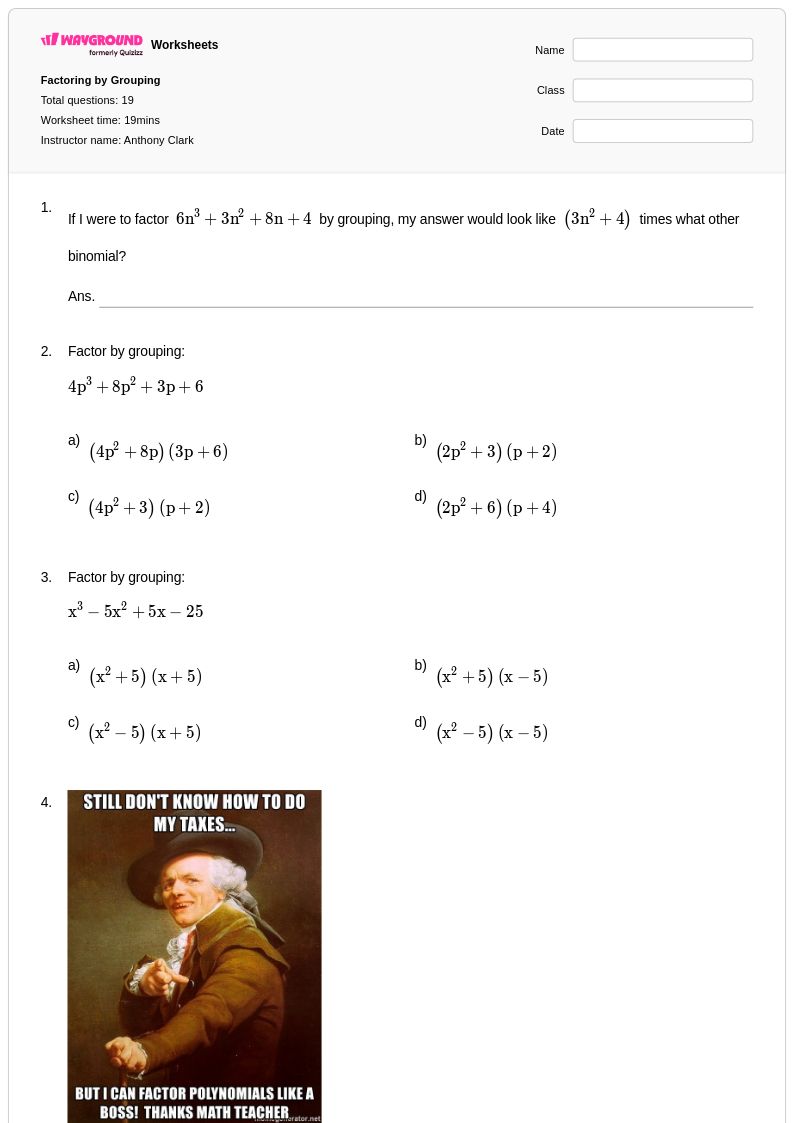
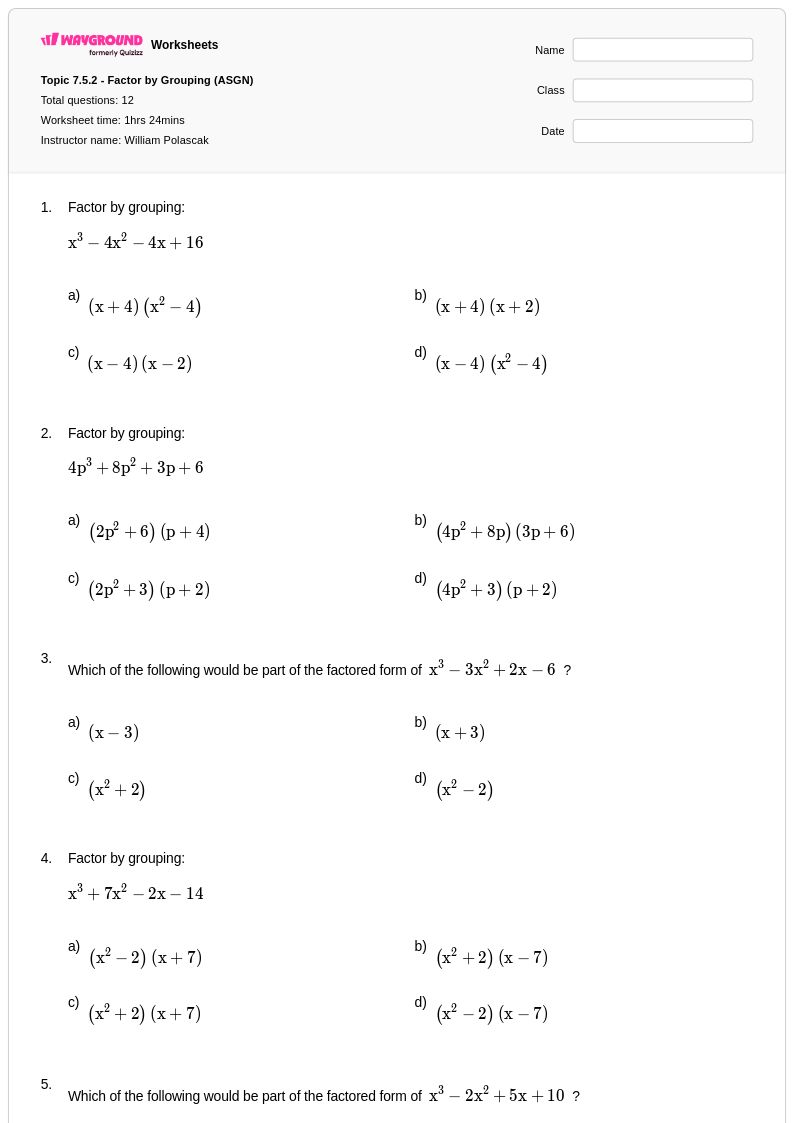
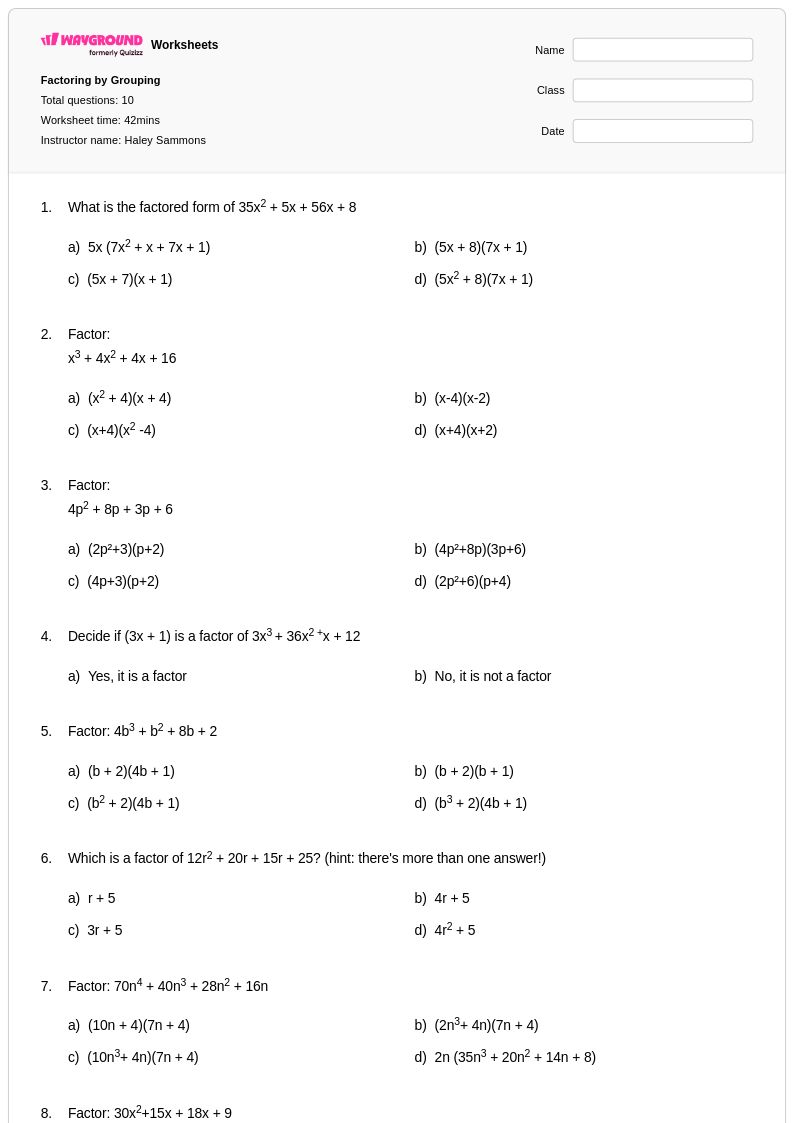
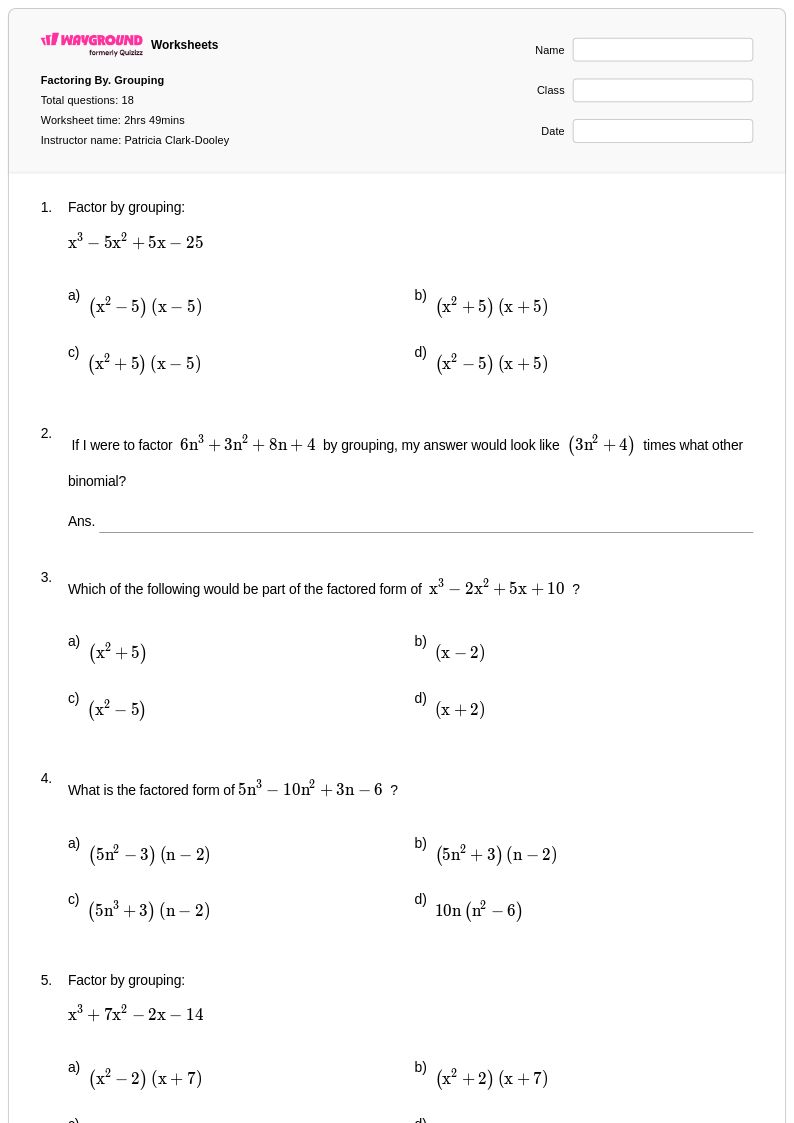
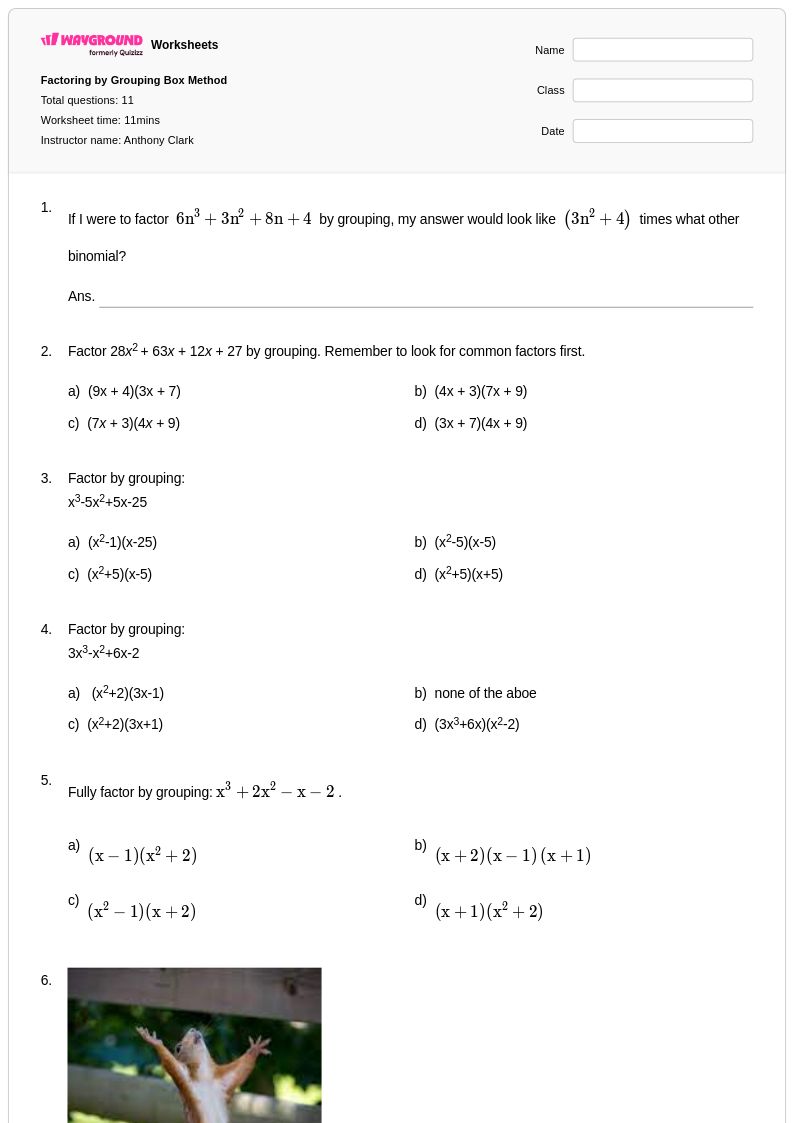
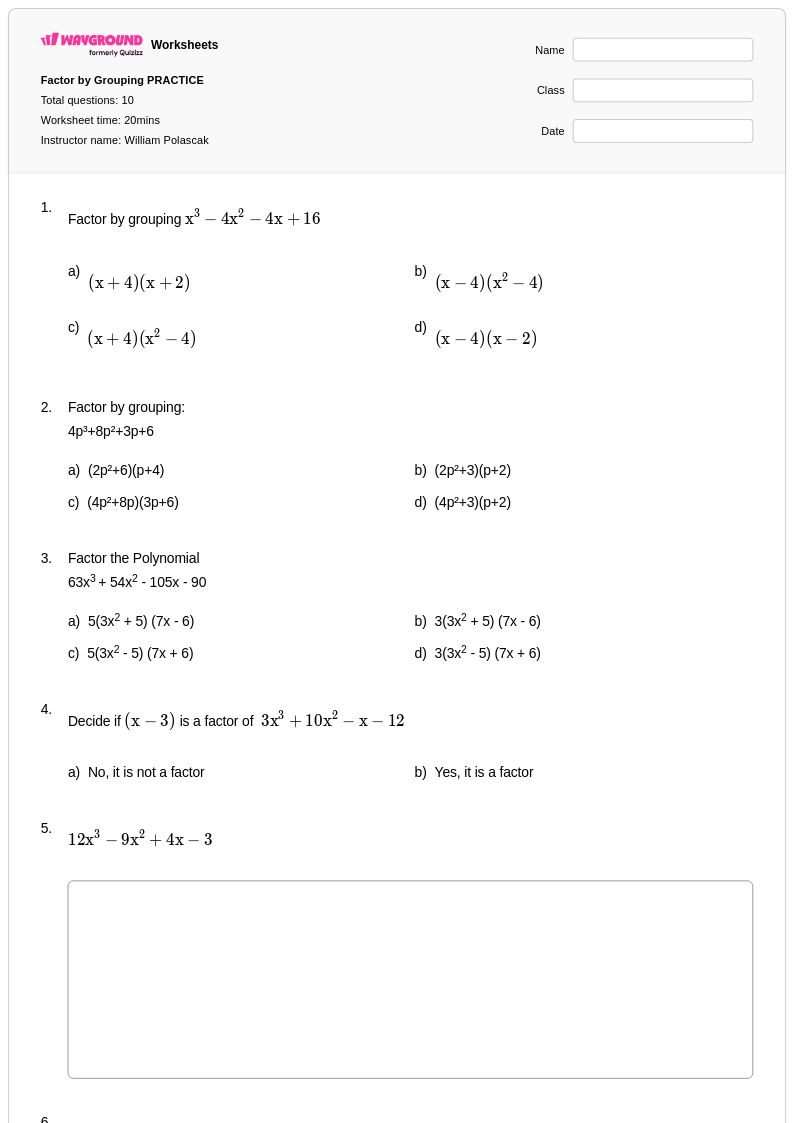
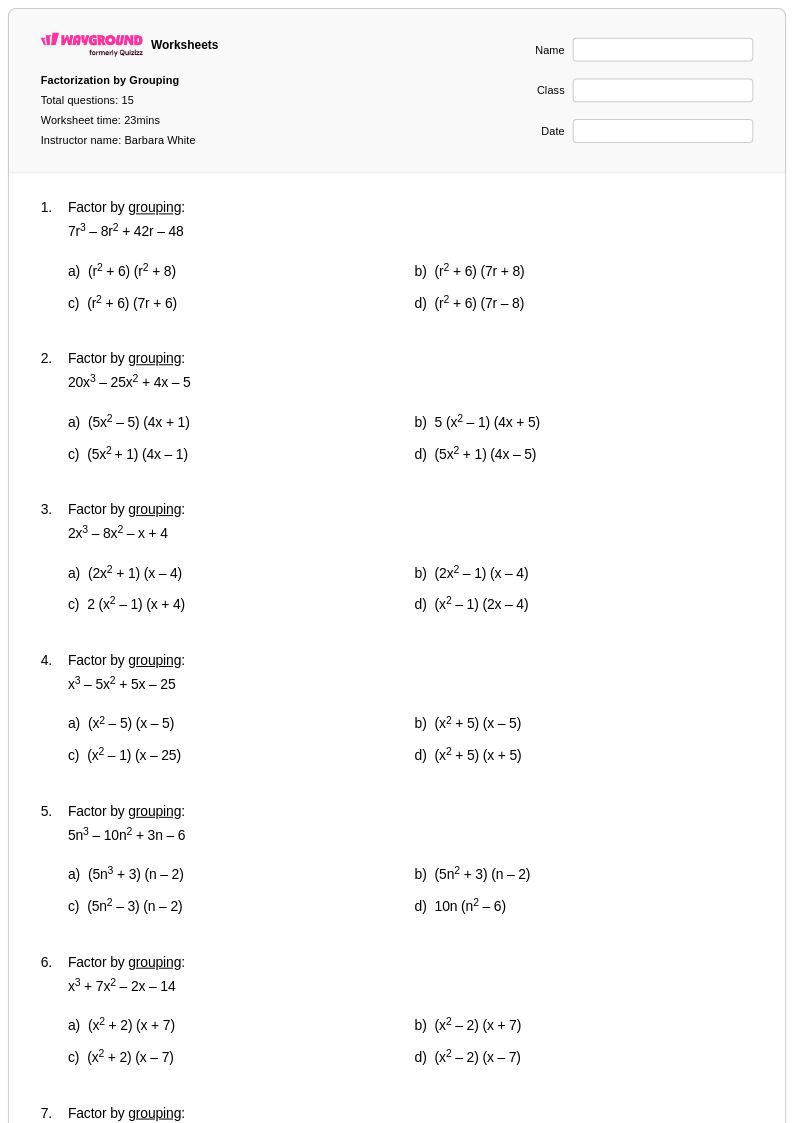
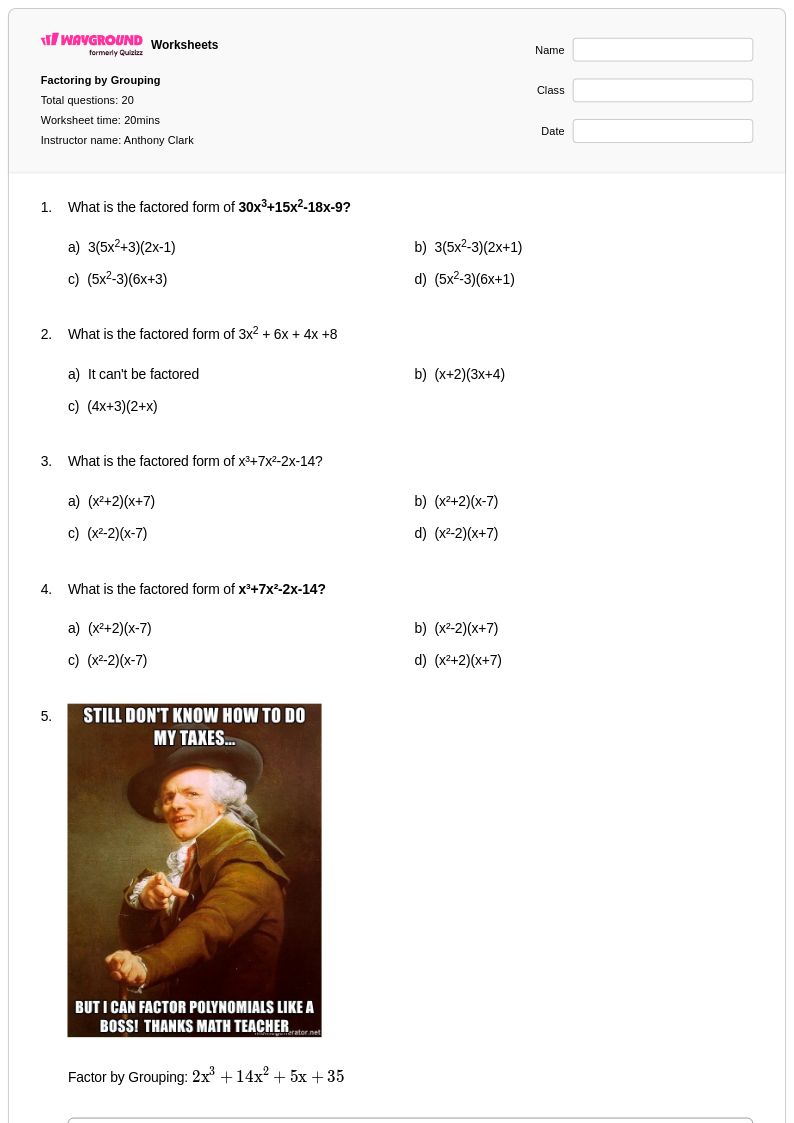
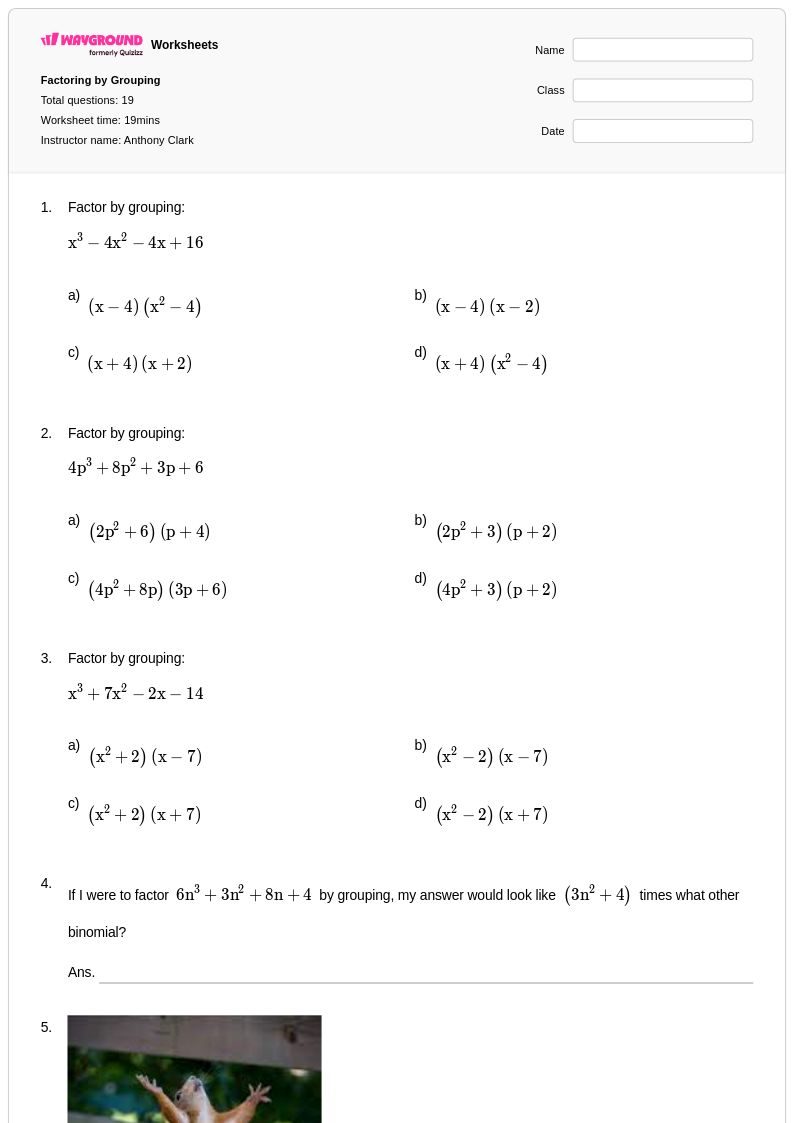
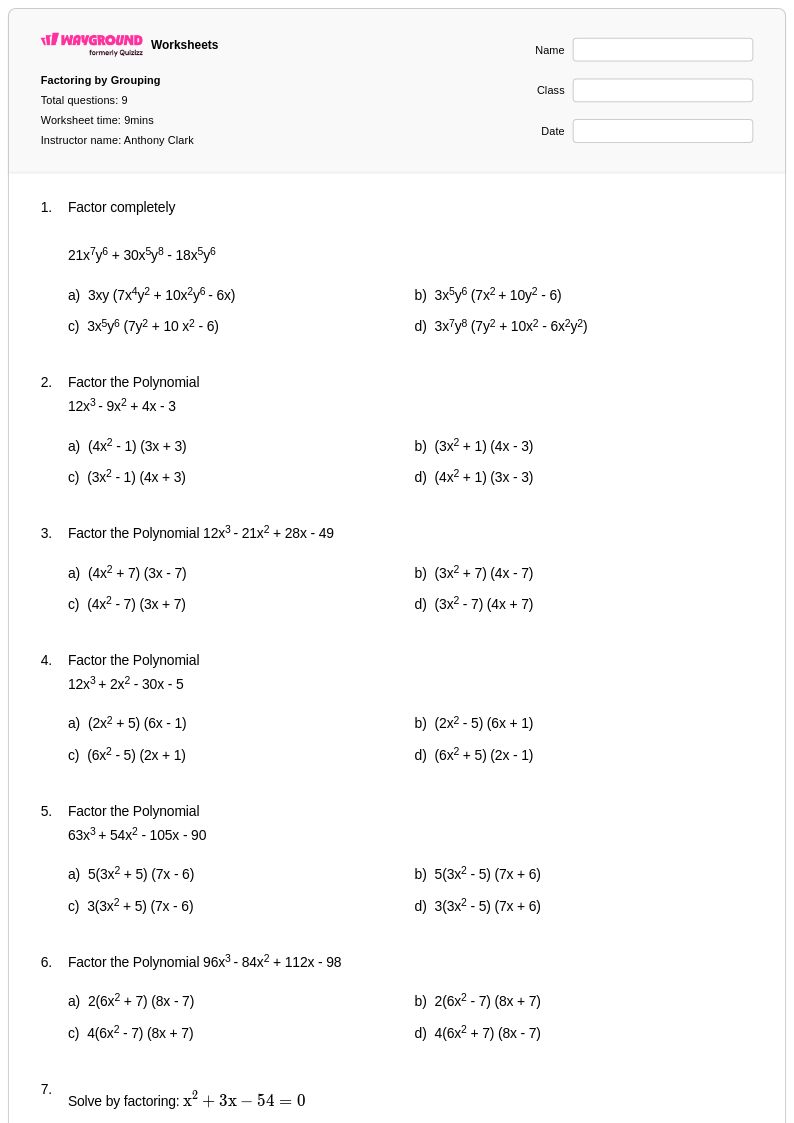
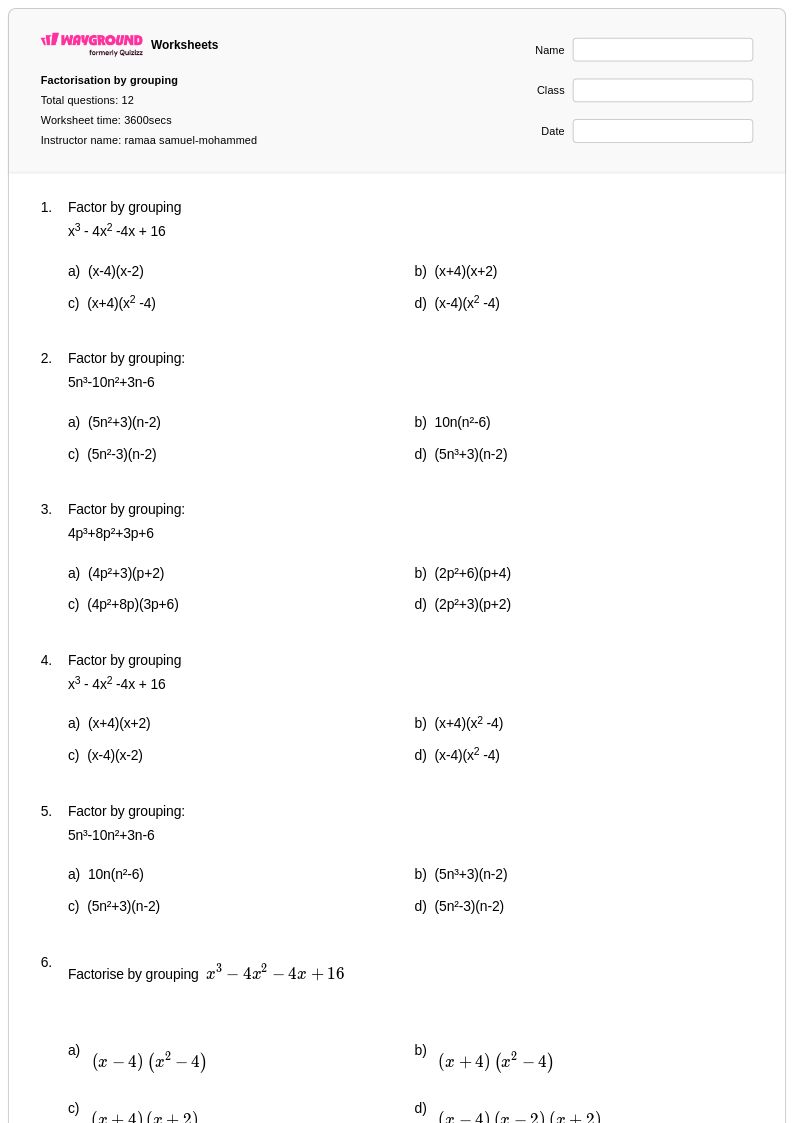
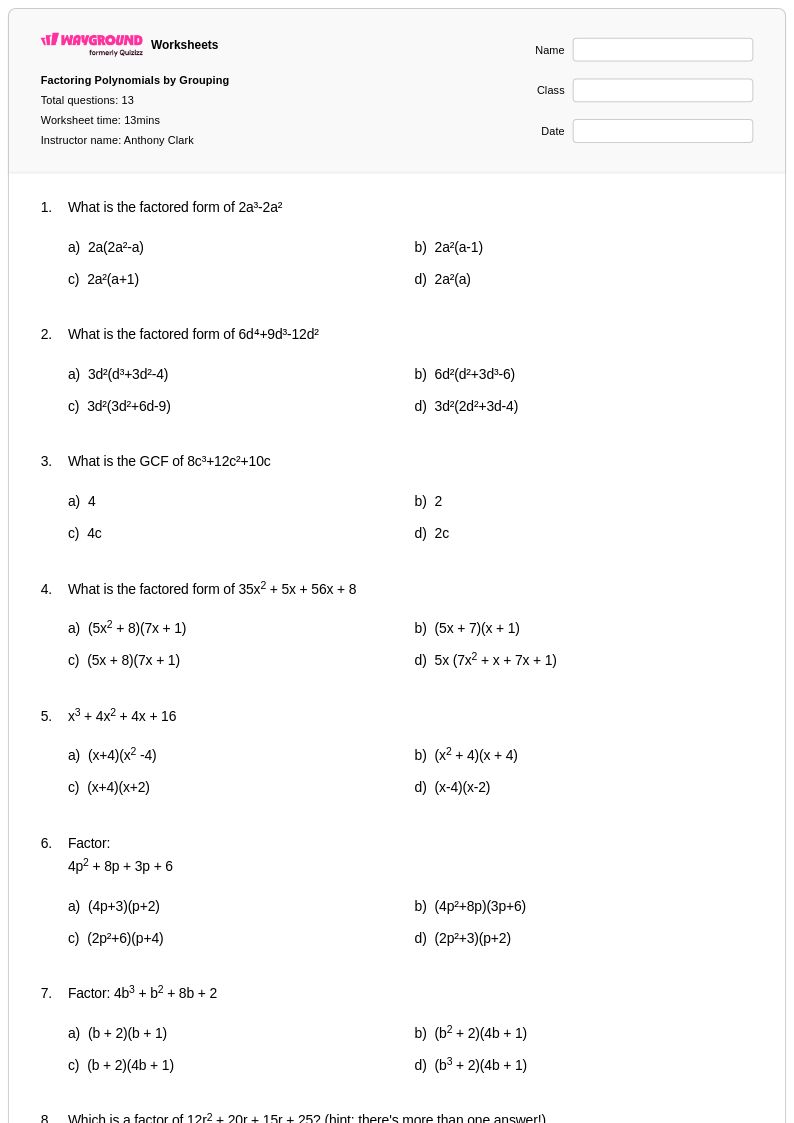
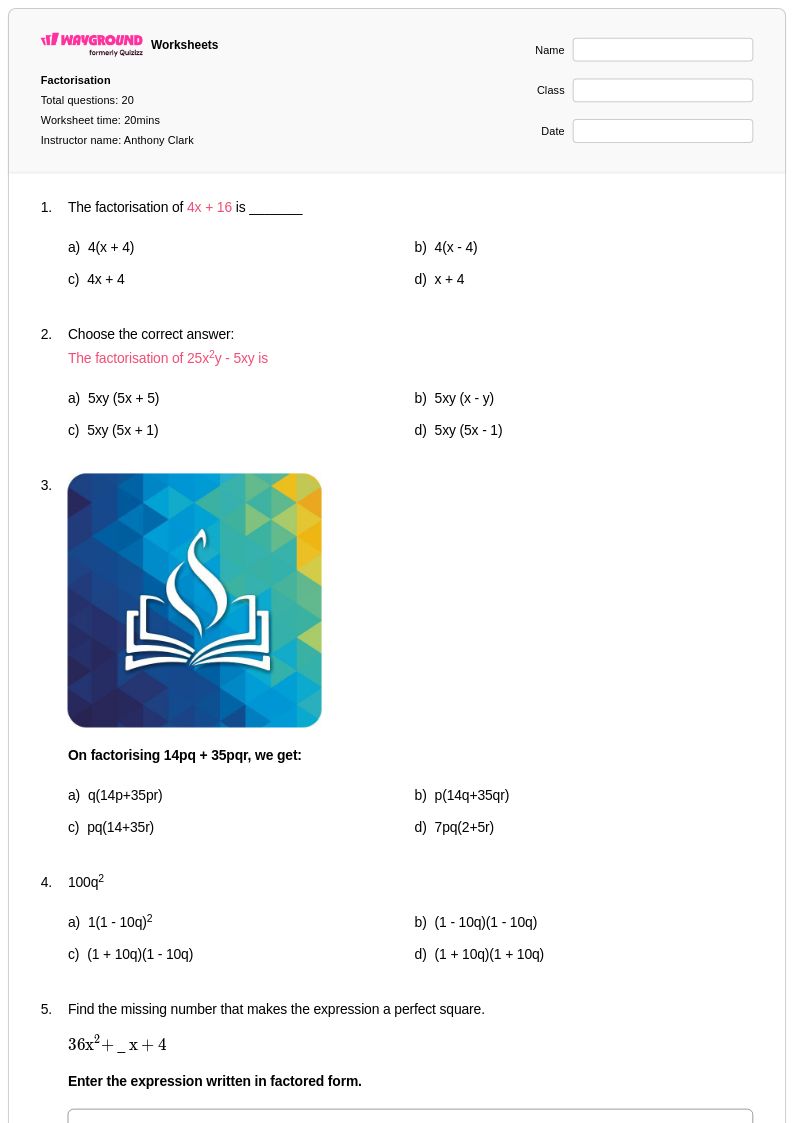
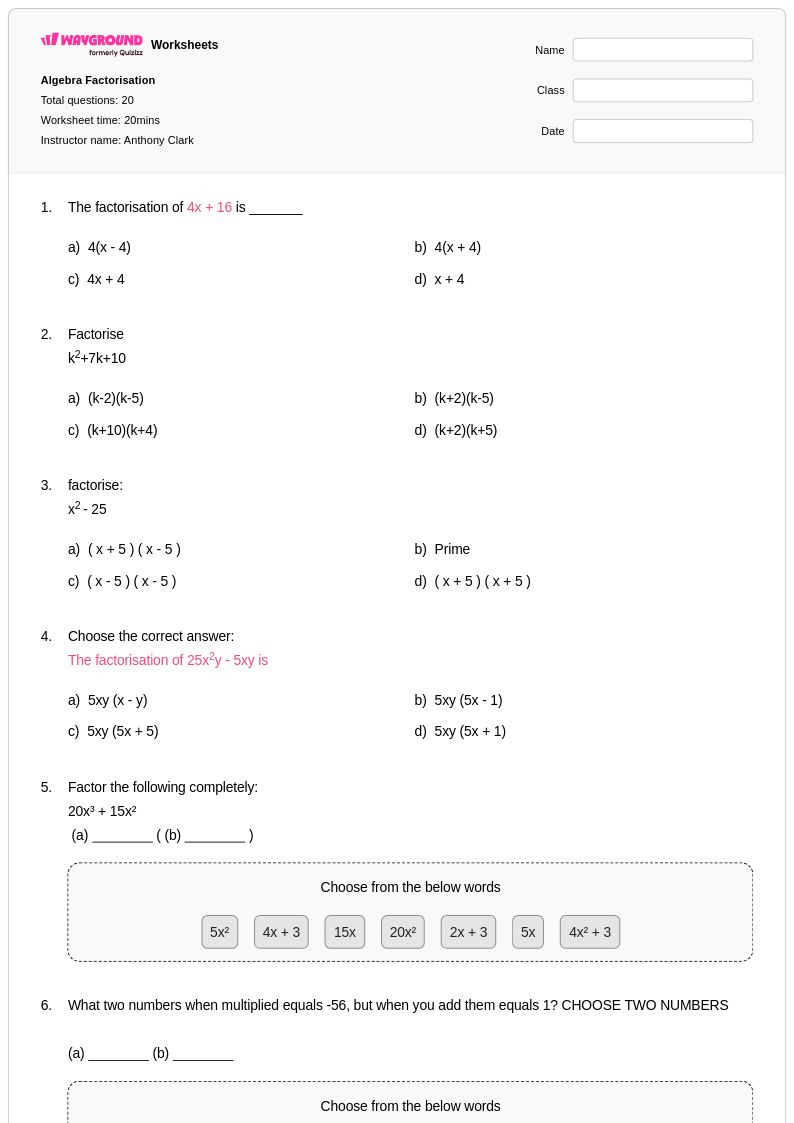
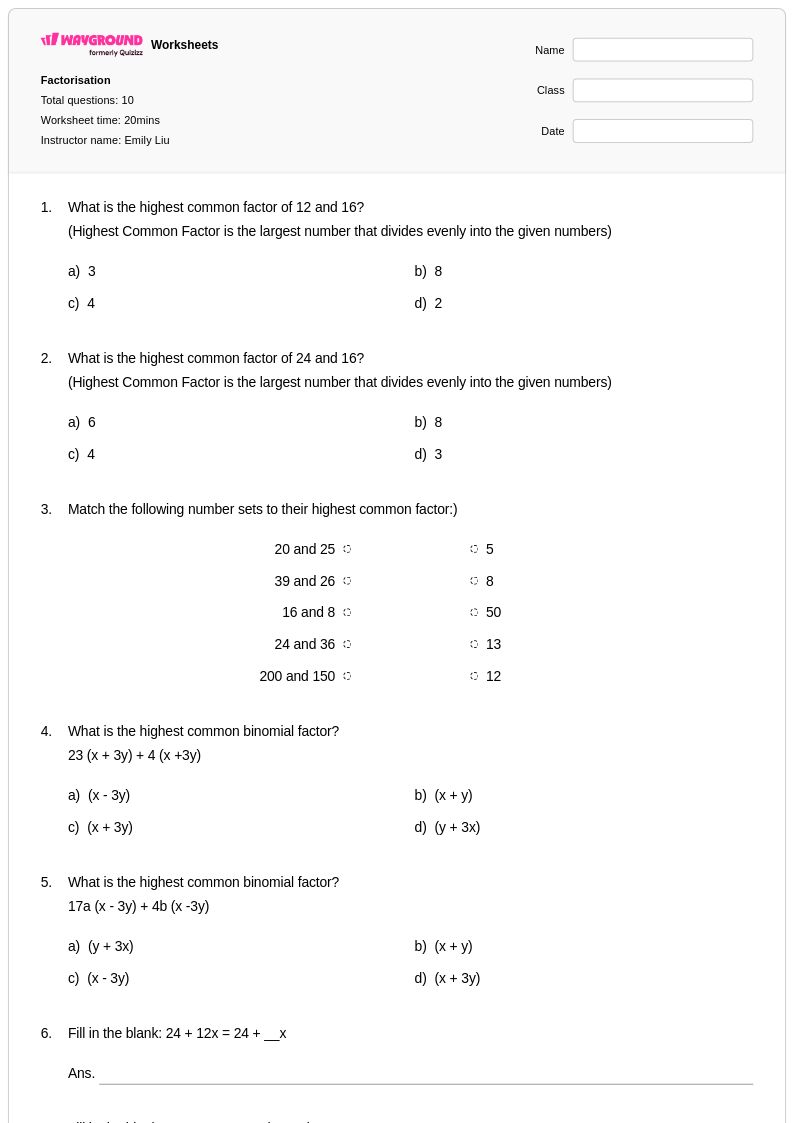
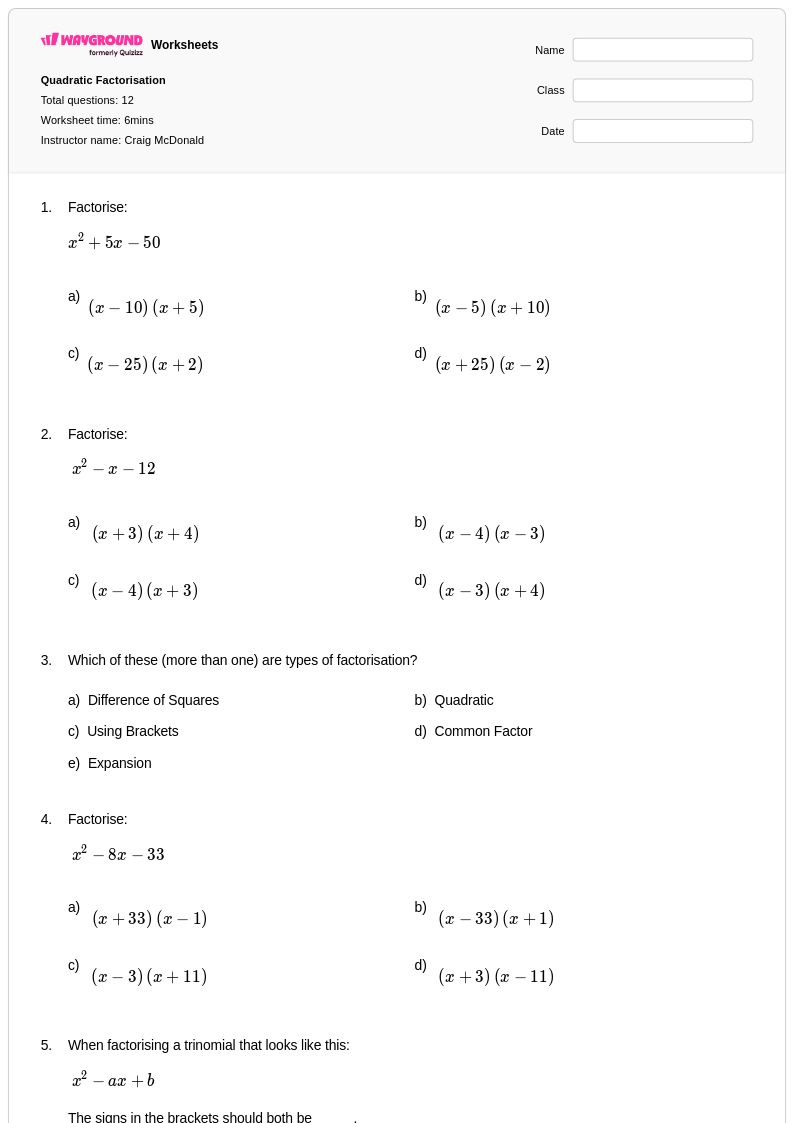
Factorization by grouping represents a fundamental algebraic technique that Year 9 students must master to advance their mathematical problem-solving capabilities. Wayground's comprehensive collection of factorization by grouping worksheets provides students with systematic practice in recognizing patterns within polynomial expressions and applying strategic grouping methods to factor complex algebraic terms. These carefully structured worksheets strengthen critical thinking skills by teaching students to identify common factors within grouped terms, manipulate algebraic expressions efficiently, and develop the foundational knowledge necessary for advanced polynomial operations. Each worksheet includes detailed answer keys that enable students to verify their solutions and understand the step-by-step factorization process, while the free printable format allows for flexible use in classroom settings and independent study sessions. The practice problems progress logically from basic two-term groupings to more challenging four-term polynomial expressions, ensuring students develop confidence and competency in this essential algebraic skill.
Wayground's extensive library of millions of teacher-created resources empowers educators to deliver targeted instruction in factorization by grouping through carefully curated worksheet collections that align with Year 9 mathematics standards. The platform's robust search and filtering capabilities allow teachers to quickly locate worksheets that match their specific curriculum requirements and student ability levels, while built-in differentiation tools enable customization for diverse learning needs within the classroom. These factorization worksheets are available in both printable PDF formats for traditional paper-based learning and digital formats for technology-enhanced instruction, providing maximum flexibility for lesson planning and implementation. Teachers can effectively utilize these resources for initial skill introduction, targeted remediation for struggling students, enrichment activities for advanced learners, and ongoing practice to reinforce algebraic concepts, making factorization by grouping an accessible and well-supported component of the Year 9 mathematics curriculum.
FAQs
How do I teach factorisation by grouping to Grade 9 students?
Grade 9 students typically arrive knowing how to factor out a GCF from a simple expression, and grouping builds directly on that. The key is framing it as a two-stage GCF problem: factor a GCF from the first pair of terms, factor a GCF from the second pair, then treat the matching binomial as a new common factor to pull out. Use a concrete example like 3x² + 6x + 4x + 8 and work through it step by step before asking students to try one independently. The moment that tends to produce the most confusion is when the second group requires factoring out a negative — address that explicitly rather than hoping students notice it on their own.
What exercises help Grade 9 students practice factorisation by grouping?
Begin with four-term polynomials where the pairs are already arranged and the GCFs are simple integers — this lets students focus on the method without getting tangled in arithmetic. Once the two-step logic is secure, introduce problems that require reordering terms before grouping works. A particularly useful exercise at this level is having students verify their answer by expanding the factored form back out: if they get the original polynomial, the factoring is correct. Wayground's Grade 9 worksheets are structured to move through this progression, with a complete answer key included so students can self-check at each stage.
What mistakes do Grade 9 students commonly make with factorisation by grouping?
The most common error is sign mismanagement in the second group. When the second pair has a negative leading term, students need to factor out a negative GCF to make the binomials match — most will instead factor out a positive and end up with binomials that differ by a sign. The second frequent mistake is stopping after the first round of factoring, leaving the answer as two separate terms rather than completing the final step of factoring out the common binomial. Catching both errors early, ideally by having students write out every step rather than skipping to the answer, prevents them from becoming ingrained habits.
How do I use Wayground's Grade 9 factorisation by grouping worksheets?
The worksheets are available as printable PDFs and as digital quizzes you can host directly on Wayground. For a paper-based lesson, print and distribute — the Wayground for Teachers app lets you scan student submissions for grading, which saves time when you're working through a stack of algebra homework. Every worksheet includes a complete answer key, so it works equally well for guided practice in class or independent work at home.
What grade level is factorisation by grouping typically taught?
Factorisation by grouping is most commonly introduced in Grade 9, where students are building their core algebra toolkit. At that stage they've already worked with GCF factoring and basic polynomial operations, which are the two prerequisites the method relies on. Some curricula revisit and extend it in Grade 10 as students encounter more complex polynomial expressions.
Is factorisation by grouping part of the Grade 9 Common Core curriculum?
Common Core's high school algebra strand introduces polynomial structure and factoring in the early secondary years, with factorisation by grouping appearing as students learn to see polynomials as having internal structure that can be exploited. At the Grade 9 level, the progression moves from factoring out a simple GCF to recognising that a four-term polynomial can be split into two pairs — each with its own GCF — that then share a common binomial factor. Mastering this step is what allows students to later factor trinomials by splitting the middle term, which is the next technique in the Common Core algebra sequence.