Free Printable Factorisation by Grouping Worksheets for Year 12
Master Year 12 factorisation by grouping with Wayground's comprehensive collection of free worksheets, printables, and practice problems complete with answer keys to strengthen algebraic problem-solving skills.
Explore printable Factorisation by Grouping worksheets for Year 12
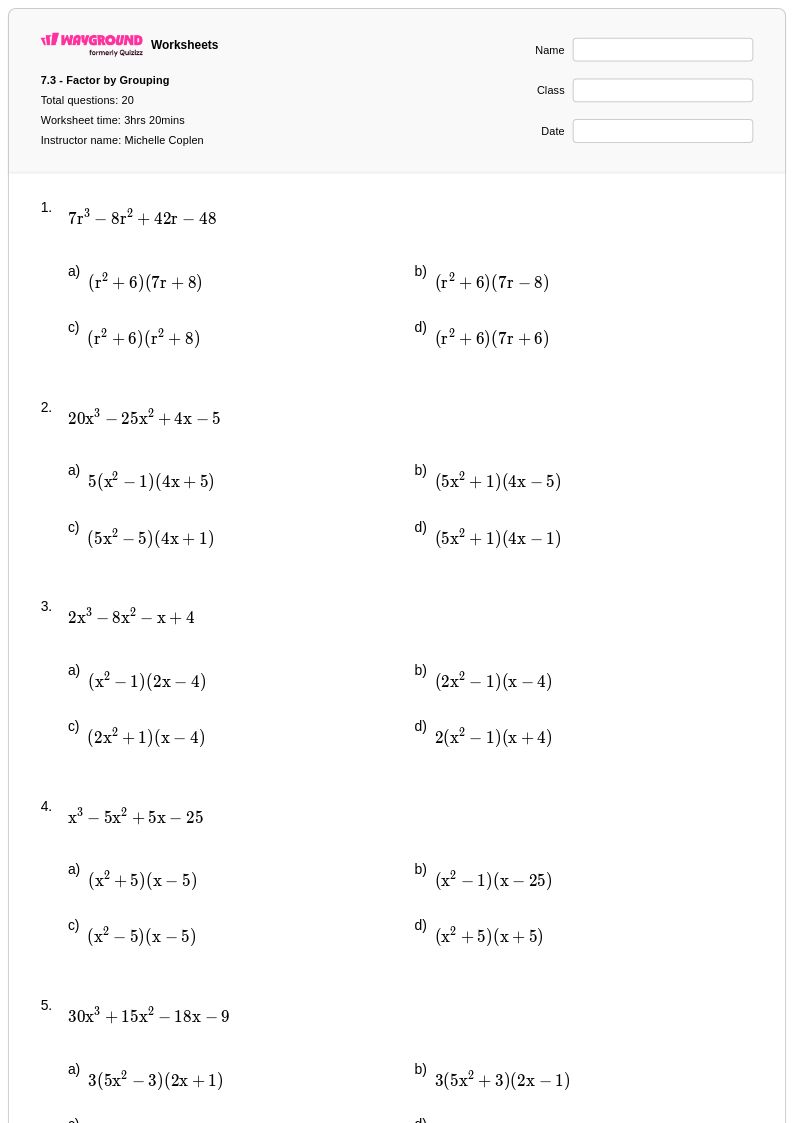
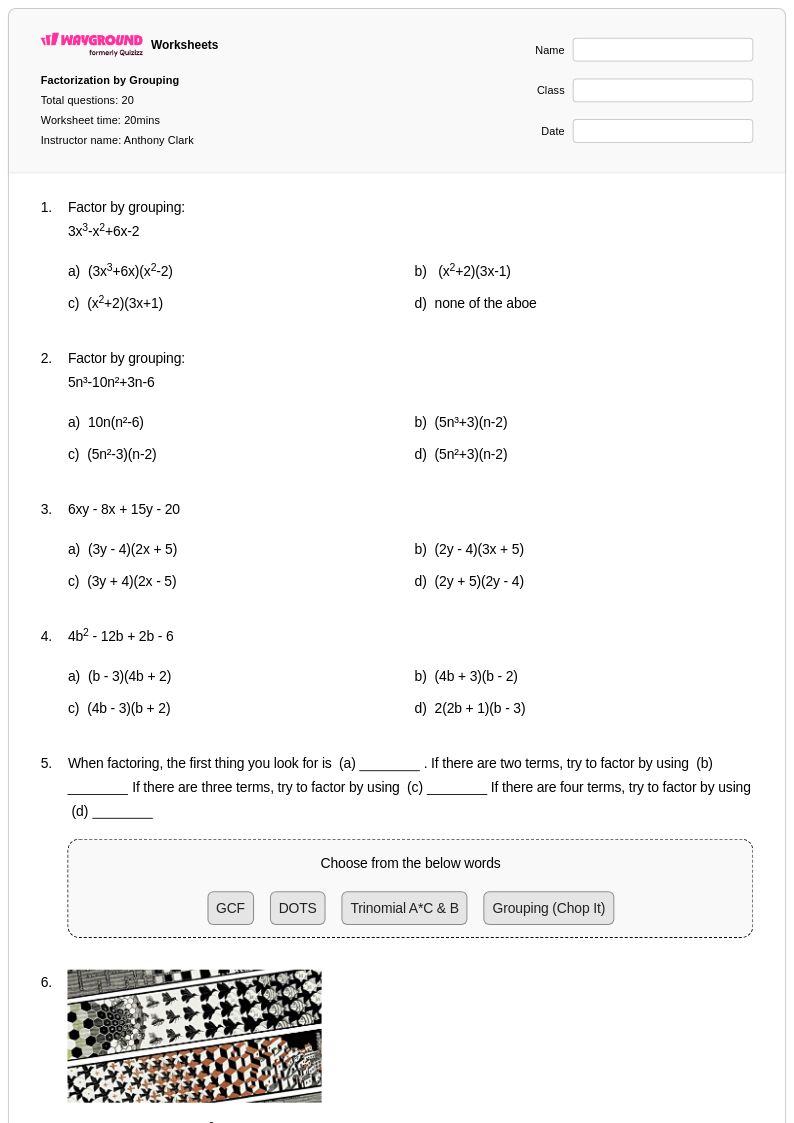
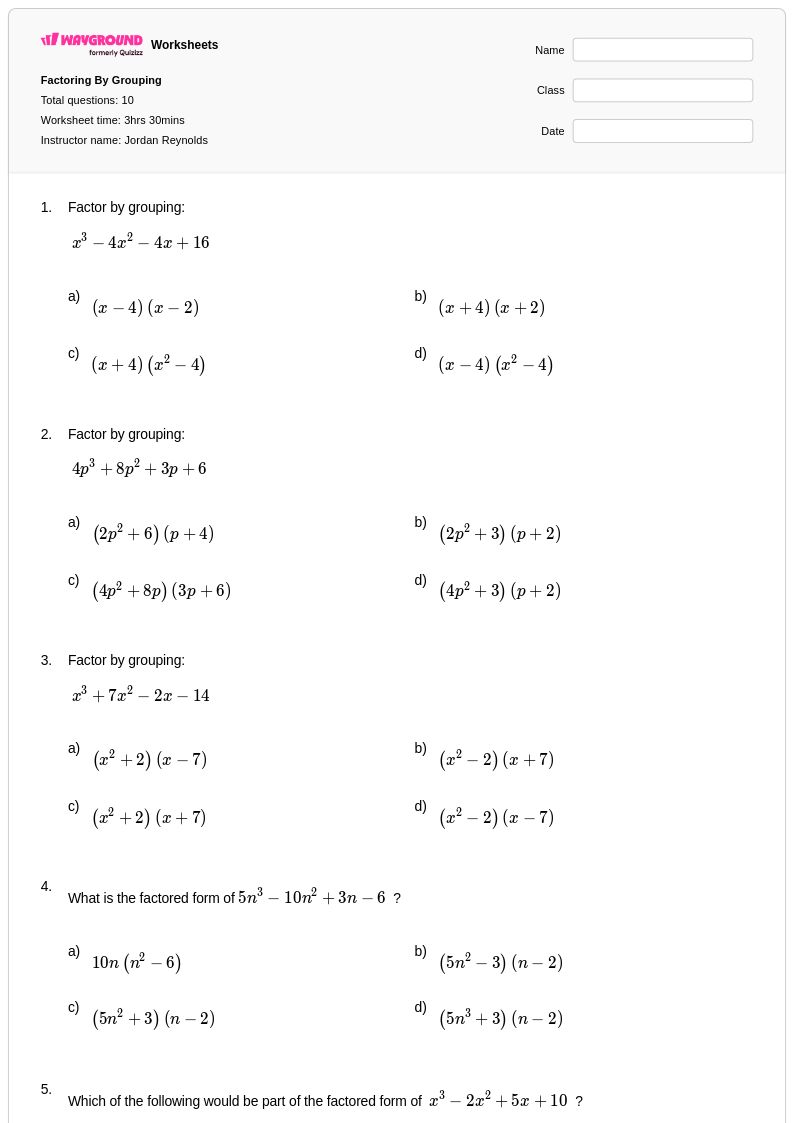
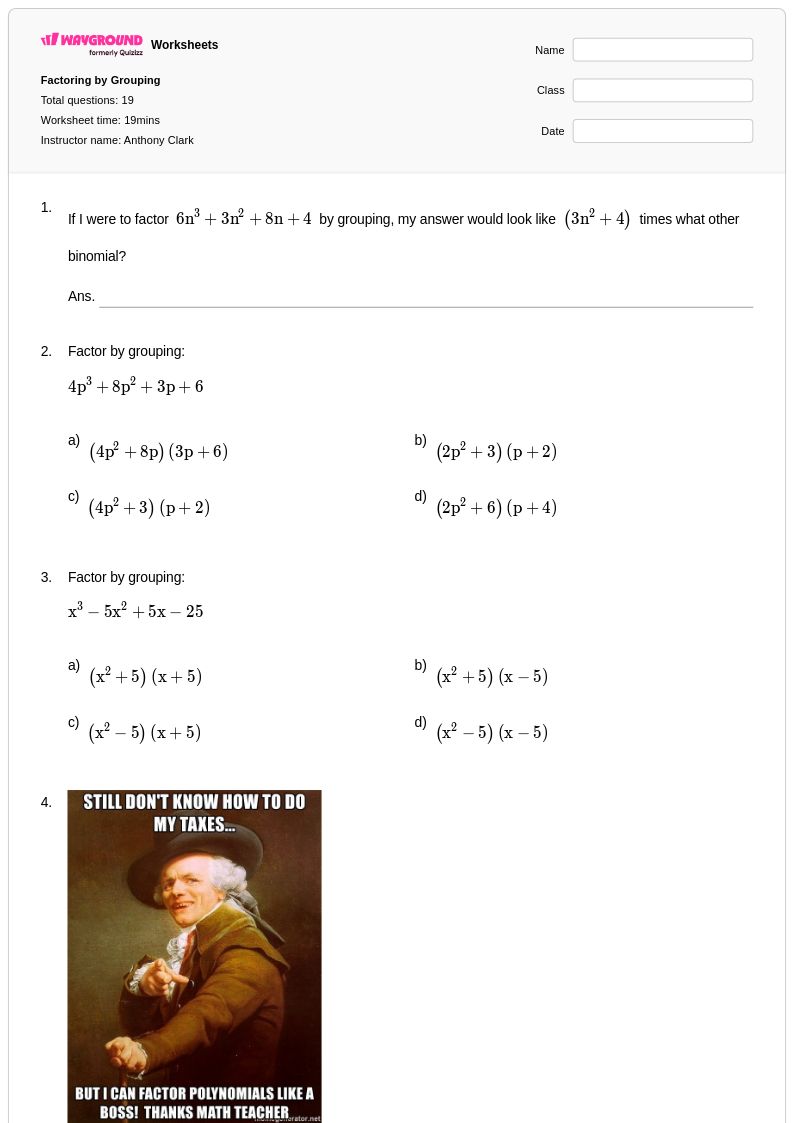
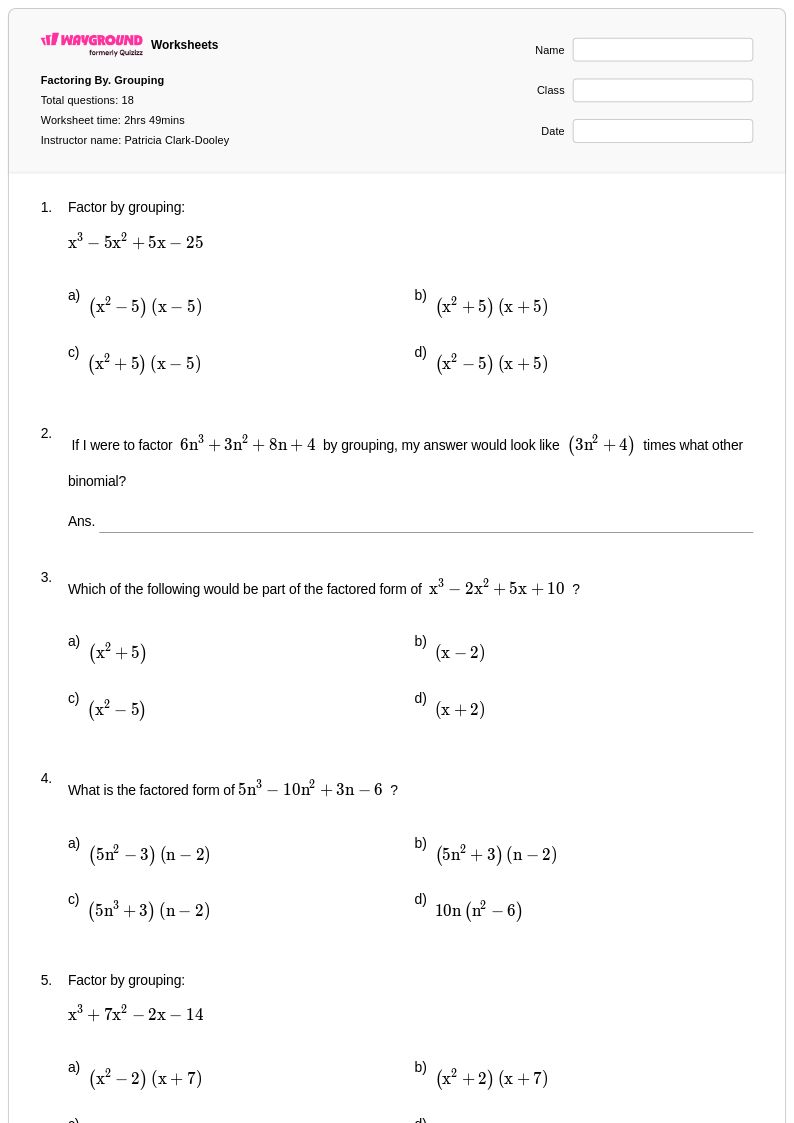
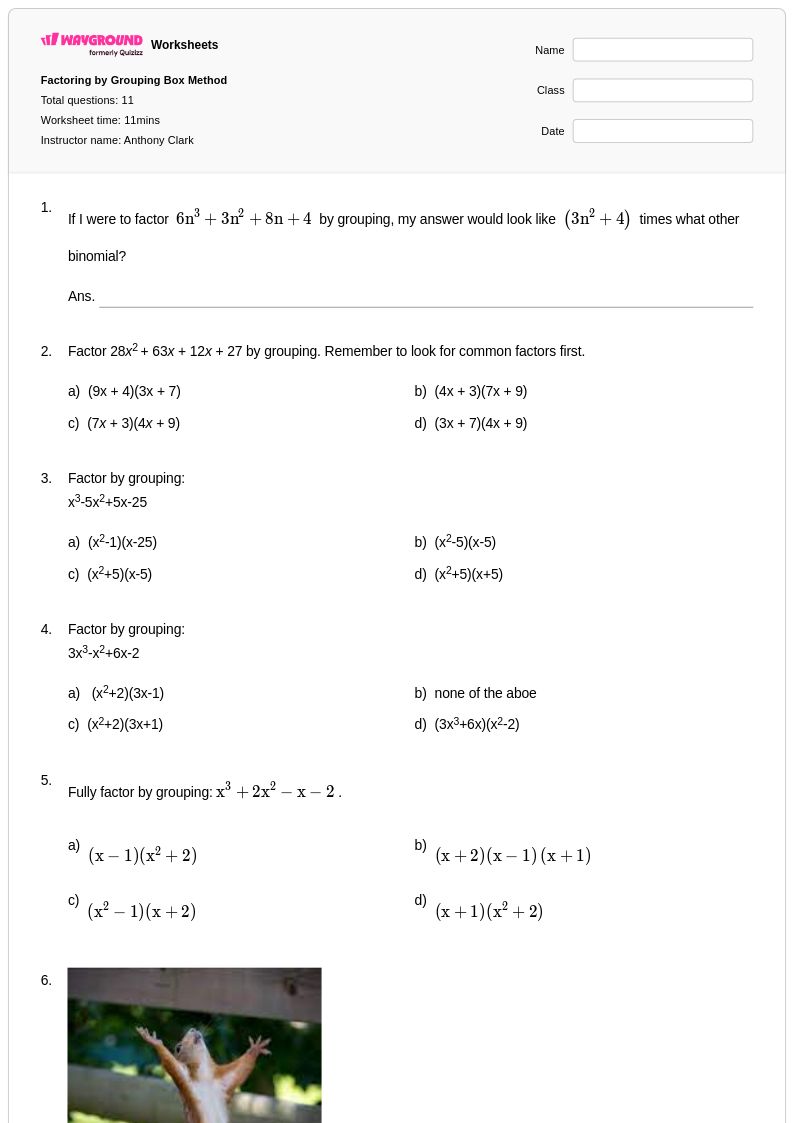
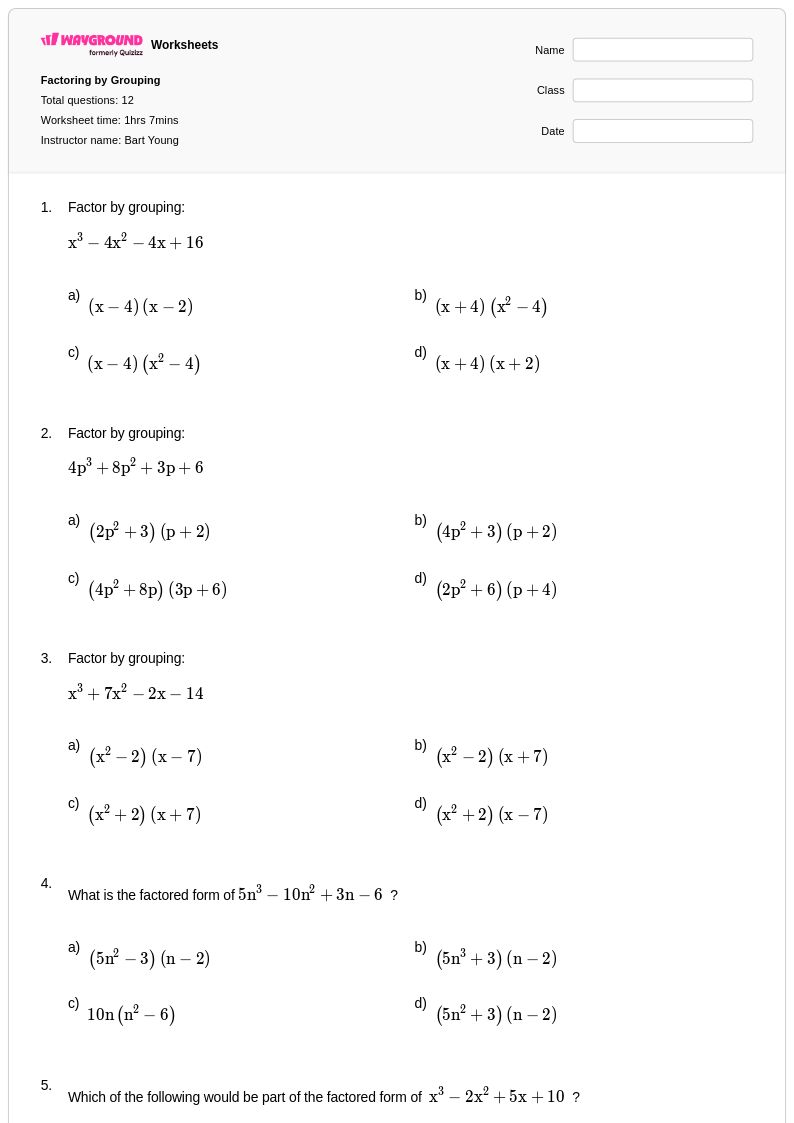
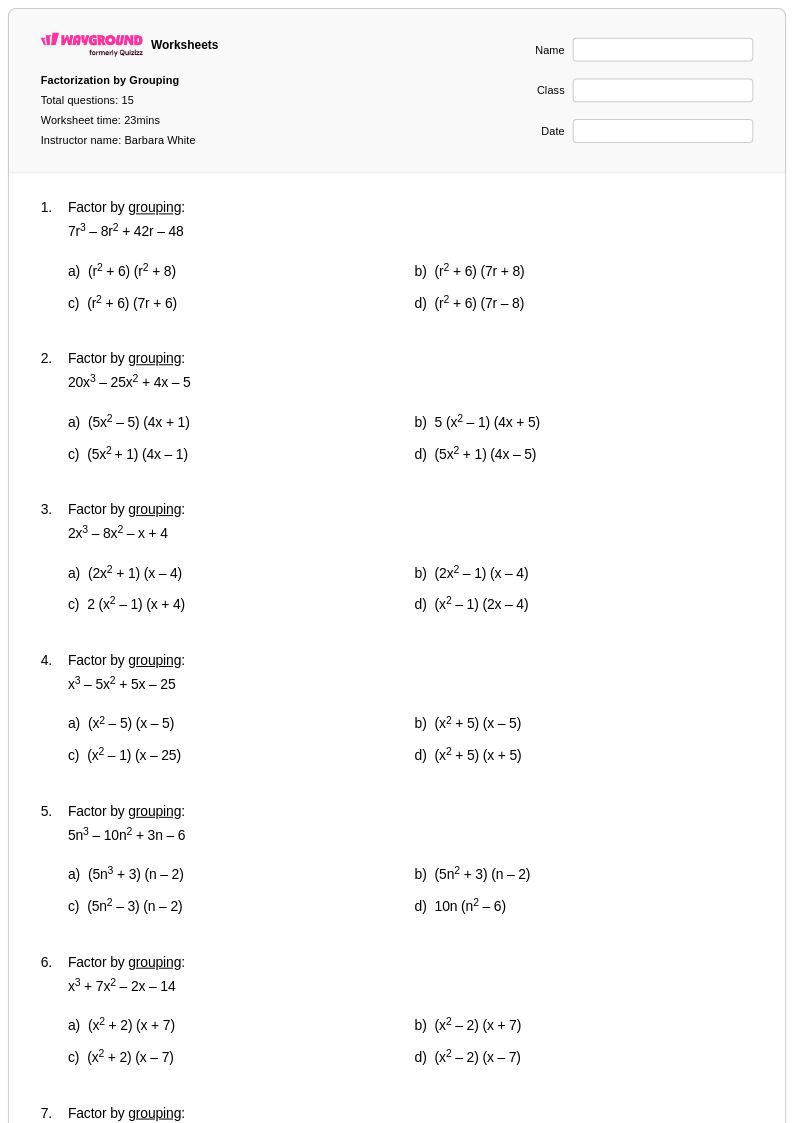
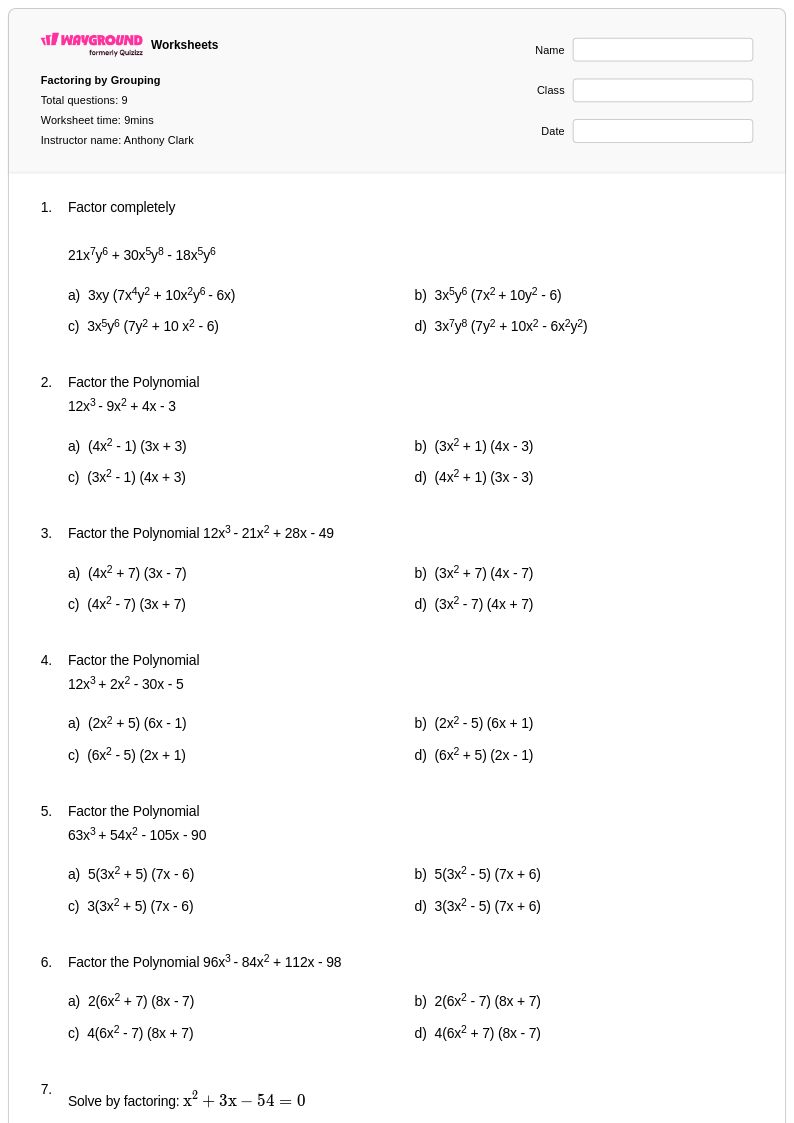
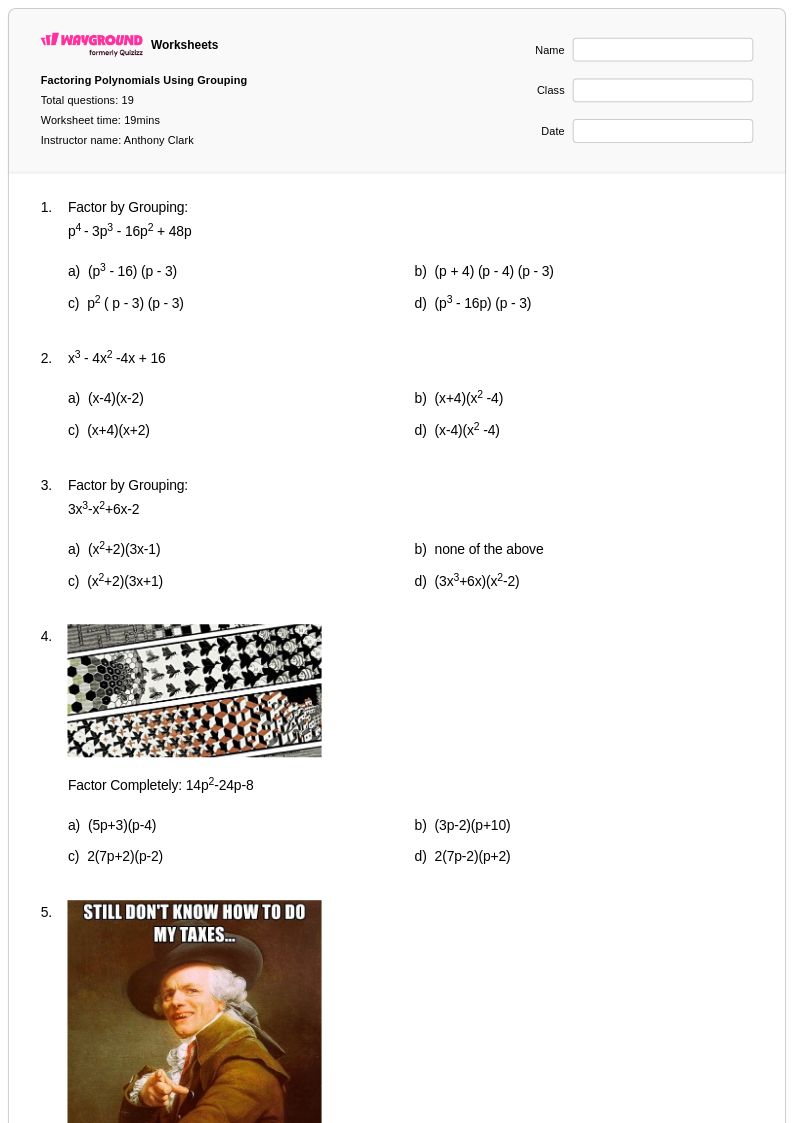
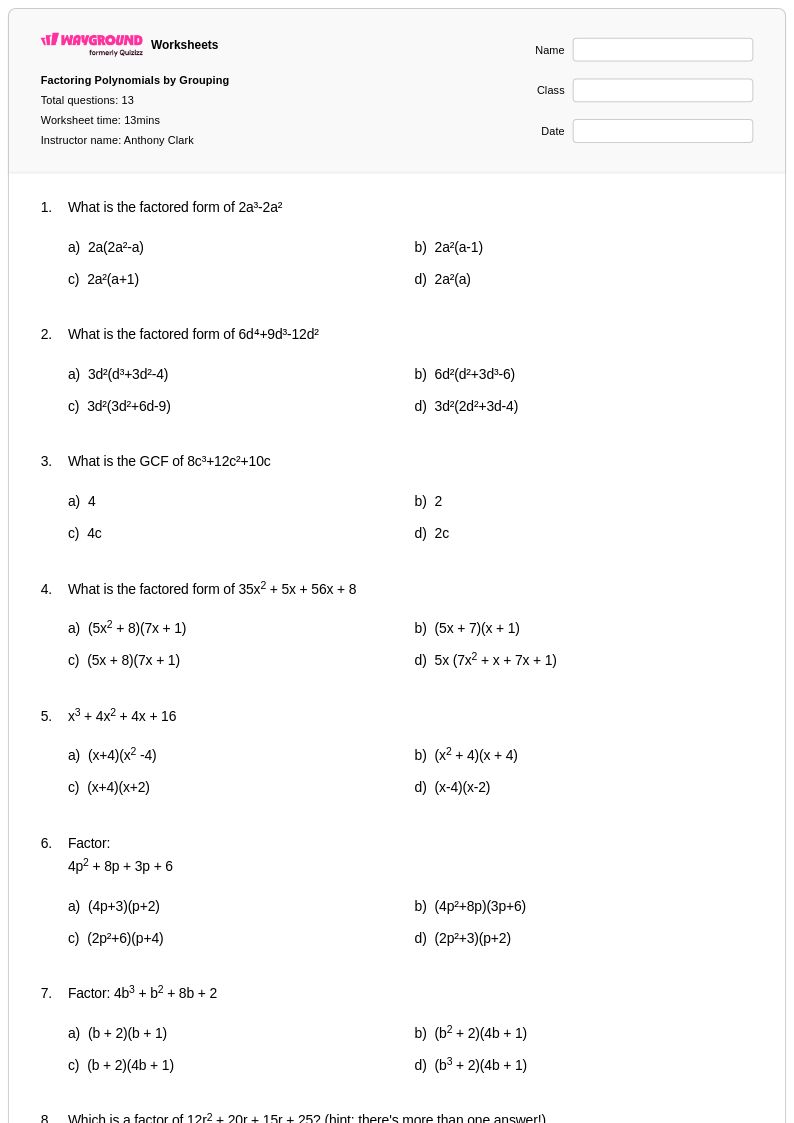
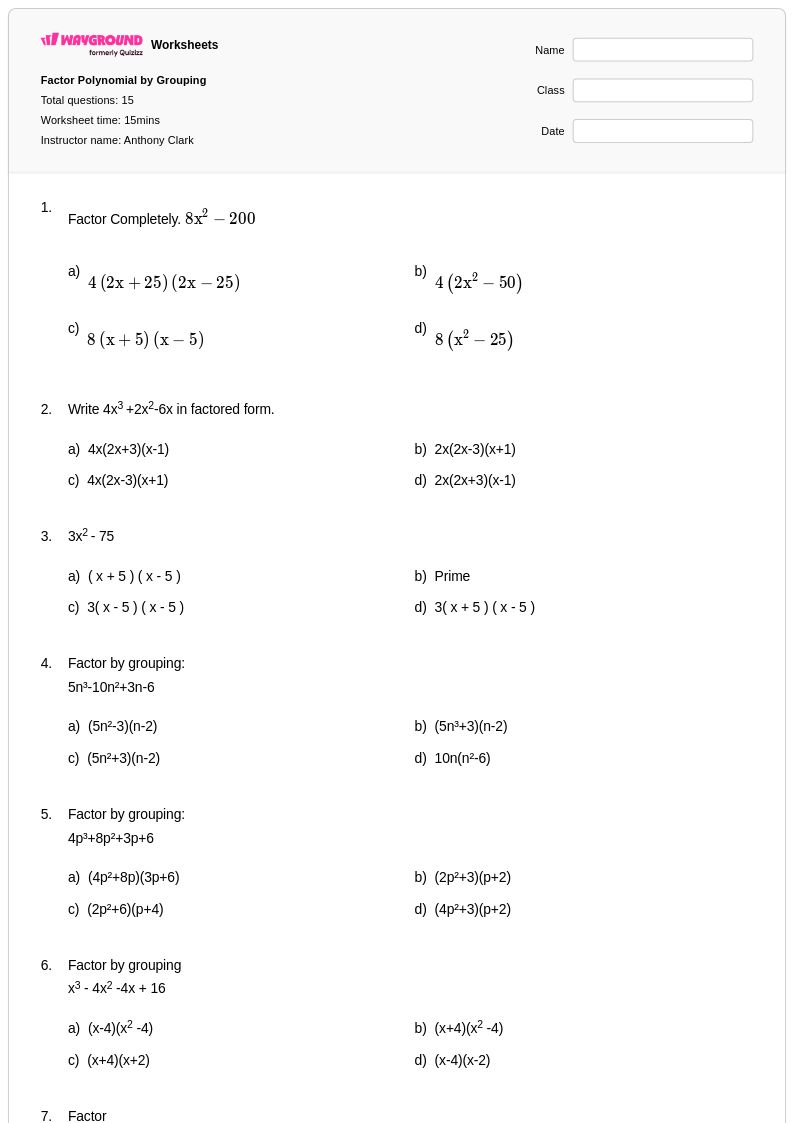
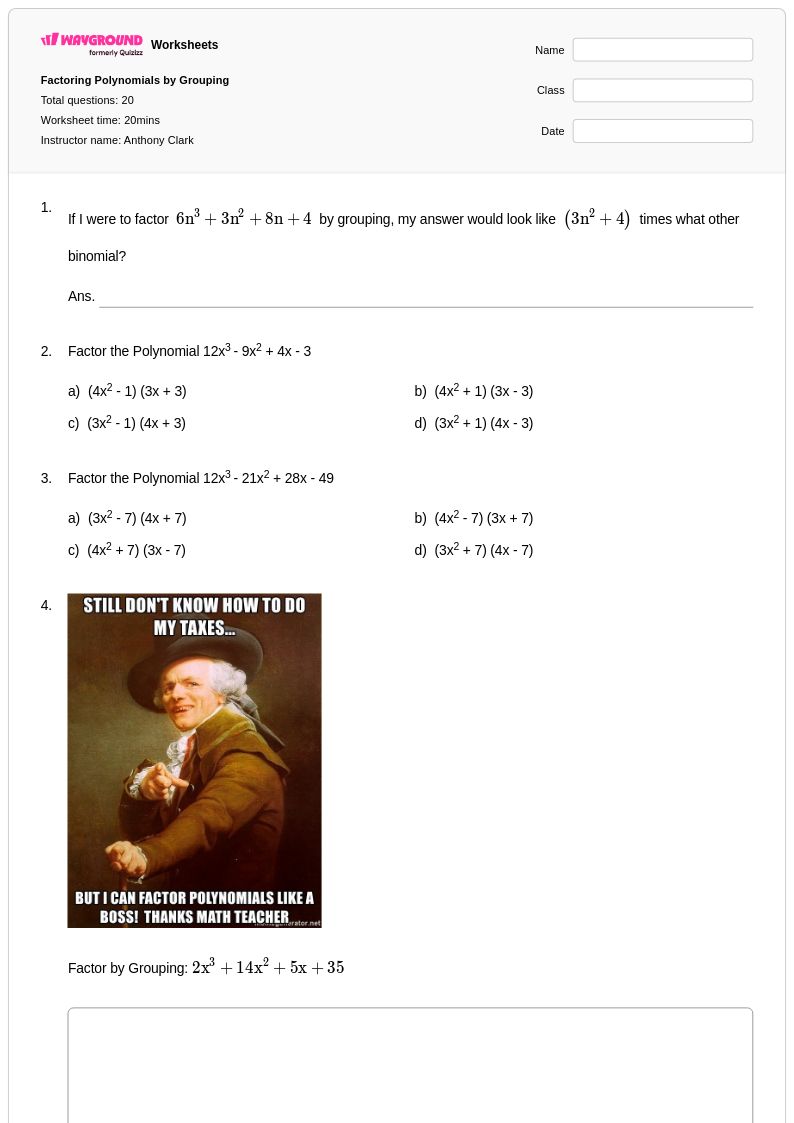
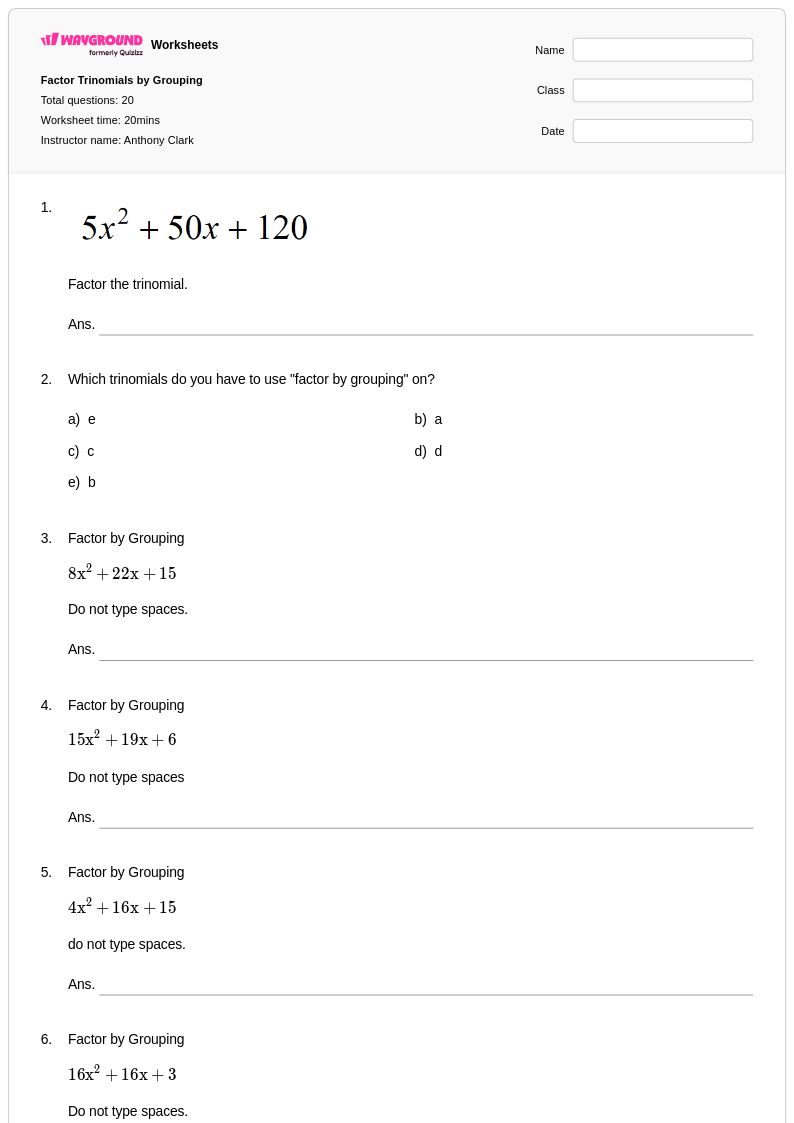
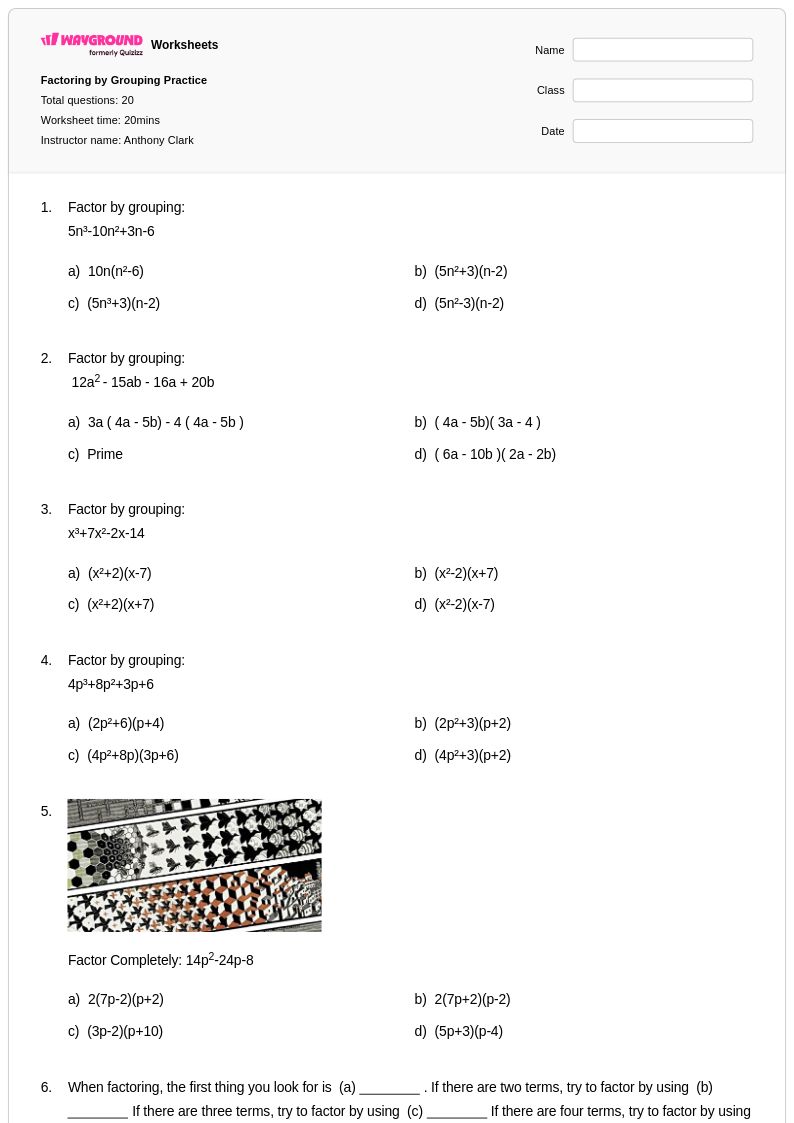
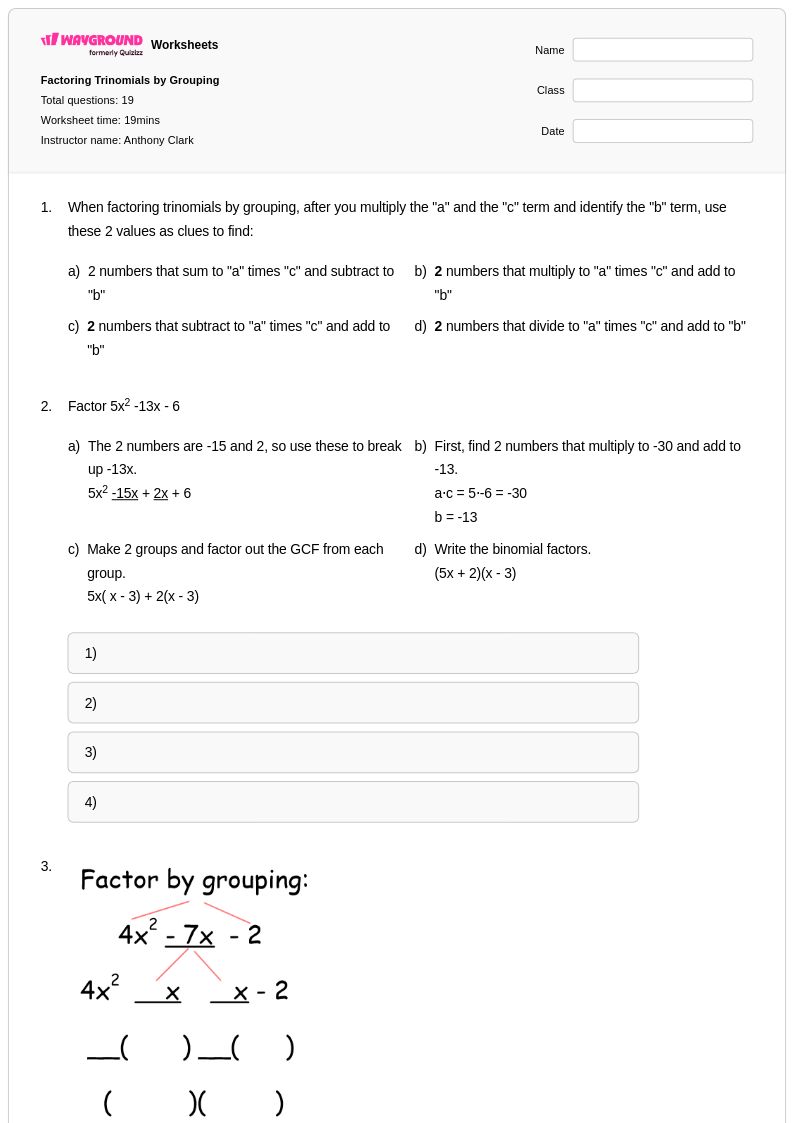
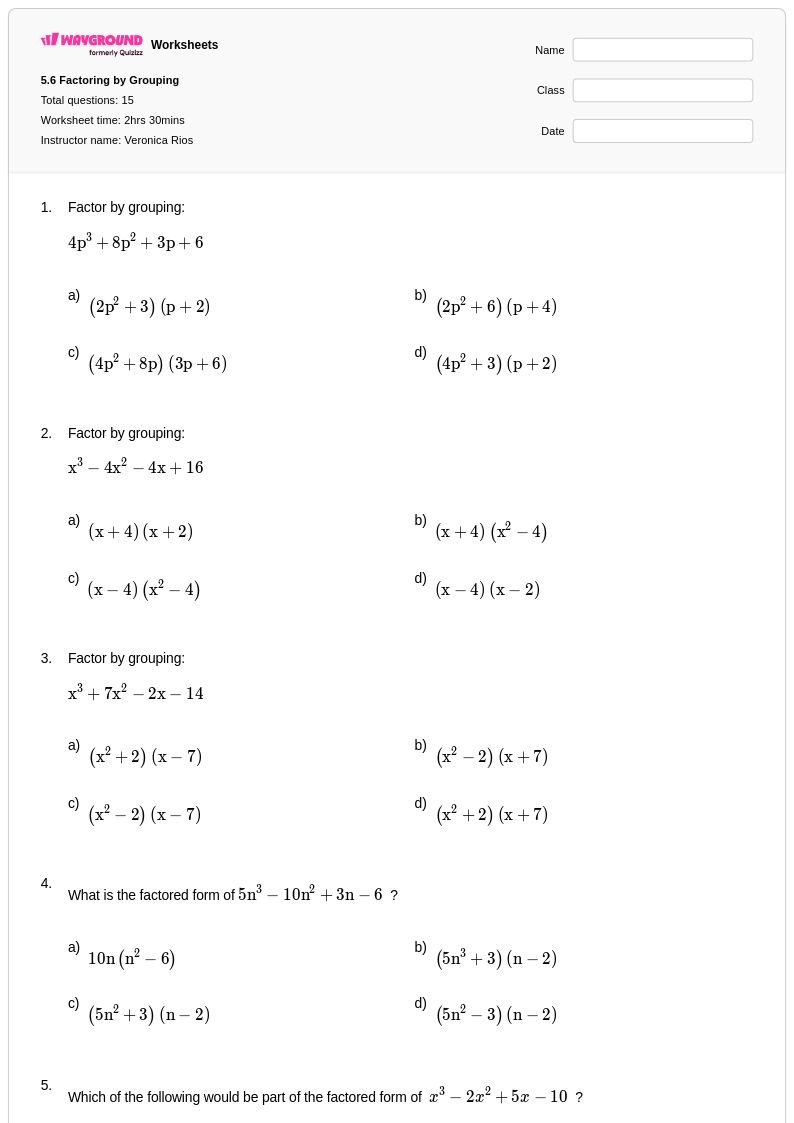
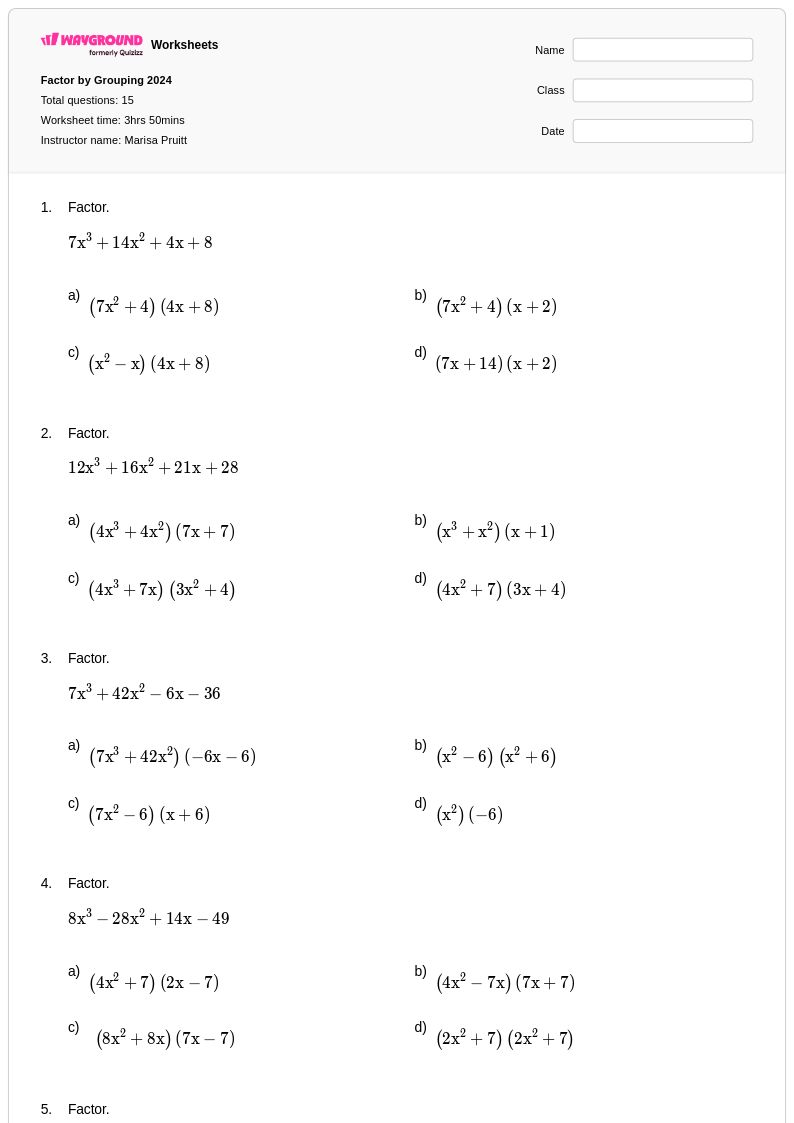
Factorisation by grouping represents a crucial algebraic technique that Year 12 mathematics students must master as they advance toward more complex polynomial operations and higher-level mathematical concepts. Wayground's comprehensive collection of factorisation by grouping worksheets provides students with systematic practice in recognizing patterns within polynomial expressions that contain four or more terms, teaching them to strategically group terms to reveal common factors that lead to complete factorisation. These carefully structured practice problems strengthen students' ability to identify when grouping is the most effective factorisation method, develop their skills in rearranging terms optimally, and build confidence in applying the distributive property in reverse. Each worksheet includes detailed answer keys that allow students to verify their solutions and understand the step-by-step reasoning behind successful factorisation strategies, while the free printable pdf format ensures accessibility for both classroom instruction and independent study sessions.
Wayground's extensive library of millions of teacher-created resources empowers educators to deliver targeted instruction in factorisation by grouping through a robust platform that streamlines lesson planning and student assessment. The platform's advanced search and filtering capabilities enable teachers to quickly locate worksheets that align with specific curriculum standards and match their students' current skill levels, while built-in differentiation tools allow for seamless customization of practice problems to address varying learning needs within the same classroom. Teachers can efficiently distribute these resources in both digital and printable pdf formats, making them ideal for traditional classroom settings, homework assignments, and remote learning environments. This flexibility supports comprehensive instructional approaches that include initial skill introduction, targeted remediation for struggling students, enrichment opportunities for advanced learners, and ongoing practice sessions that reinforce mastery of this fundamental algebraic technique throughout the academic year.
FAQs
How do I teach factorisation by grouping to Grade 12 students?
By Grade 12, the goal isn't to introduce grouping from scratch — it's to make sure students can deploy it fluently within more complex problems. That means teaching them to recognise when grouping is the right tool (typically when a polynomial has four or more terms and no single GCF across all of them), and when it isn't. Instruction at this level should emphasise strategic flexibility: trying different pairings when the first grouping doesn't yield matching binomials, and combining grouping with other techniques — factoring out a GCF first, or using grouping as a step inside a longer factorisation of a higher-degree polynomial.
What exercises help Grade 12 students practice factorisation by grouping?
The most useful practice at this level involves polynomials where grouping is one step in a multi-stage factorisation, not the whole problem. For example: a six-term polynomial that first requires a GCF extraction, then grouping, then recognising a difference of squares in the result. Problems that mix factorable and non-factorable expressions are also valuable — Grade 12 students need to be comfortable concluding that an expression is prime, not just applying the method mechanically. Wayground's worksheets include a complete answer key, so students can trace back through their steps when their answer doesn't match.
What mistakes do Grade 12 students still make with factorisation by grouping?
The most common issue at this level isn't a procedural error — it's a strategic one. Students often default to grouping the first two terms together and the last two together without checking whether a different pairing would work better, and when that default fails they conclude the polynomial is unfactorable. A second persistent issue is incomplete factorisation: students correctly apply grouping but don't check whether the resulting factors can be factored further, which matters more at Grade 12 where expressions are more complex. A quick habit to instil: always ask whether each factor in the final answer is fully reduced.
How do I use Wayground's Grade 12 factorisation by grouping worksheets?
Download the printable PDF for paper-based practice — useful for exam prep sessions where you want students working without devices — or host the worksheet as a digital quiz on Wayground for self-paced independent review. Every worksheet includes a complete answer key. If you're assigning the printed version, the Wayground for Teachers app lets you scan student submissions for grading, which keeps the workflow efficient even when you're working through a large set of pre-exam practice sheets.
How does factorisation by grouping connect to Grade 12 mathematics topics?
At Grade 12, factorisation by grouping is rarely a standalone topic — it's a tool that appears inside larger problems. In the Common Core progression, students at this level are working with polynomial functions, rational expressions, and solving higher-degree equations, all of which may require grouping as one step in the process. For instance, factoring a quartic polynomial to find its roots often involves grouping after an initial GCF extraction. Students who aren't fluent with grouping tend to hit a wall at exactly these multi-step problems, which is why consolidating the skill before final exams or college-level coursework is worth the time.
How can I differentiate factorisation by grouping practice for my Grade 12 class?
For students who need scaffolding, Wayground lets you generate an alternate version of the worksheet with larger font and wider spacing, which helps when polynomial expressions are long and visually dense. For students who are ready for more challenge, the same worksheet can serve as a baseline while you assign extension problems involving higher-degree polynomials or expressions that require combining grouping with other factoring techniques. In digital sessions, the Extended time accommodation is straightforward to apply per student for those who need more processing time on multi-step problems — it doesn't affect the rest of the class.