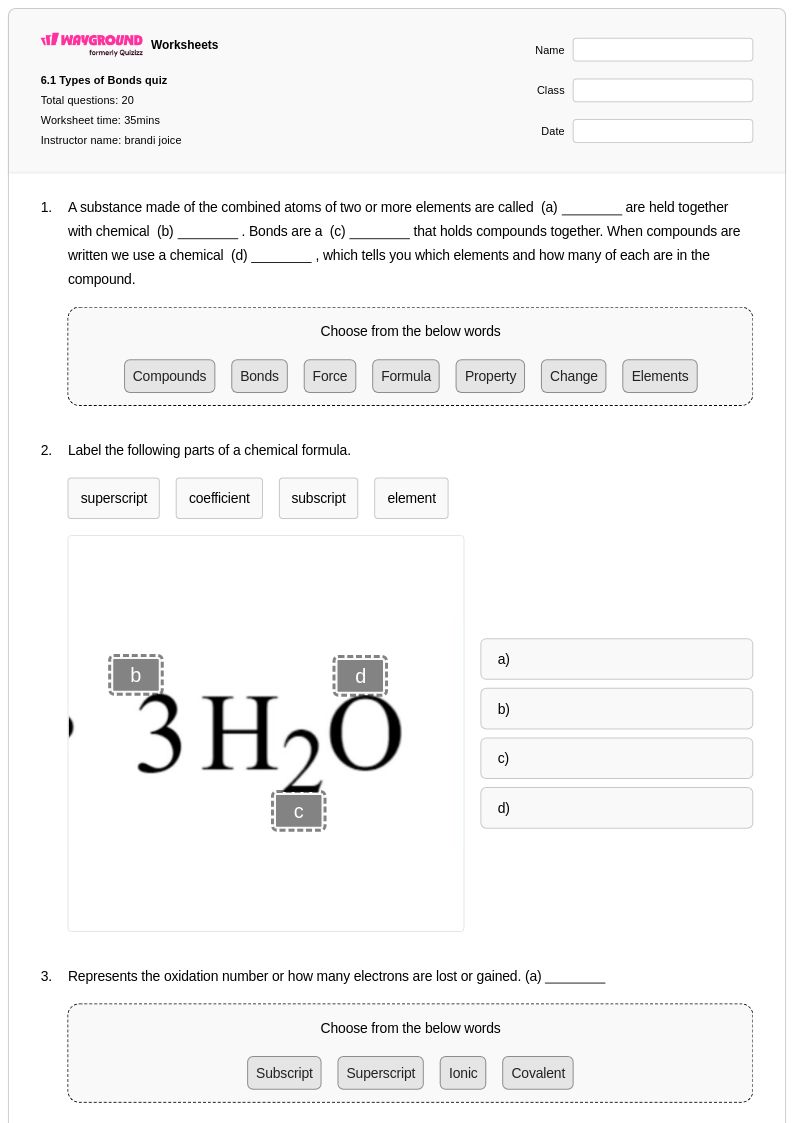
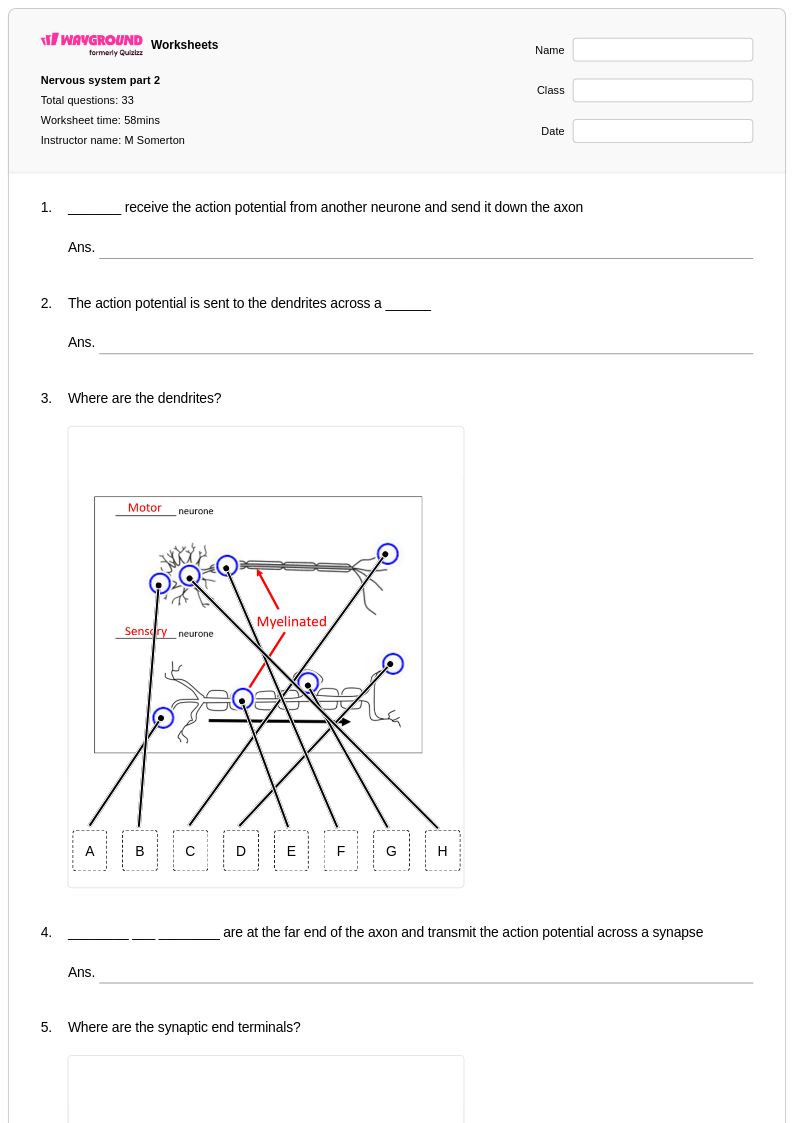
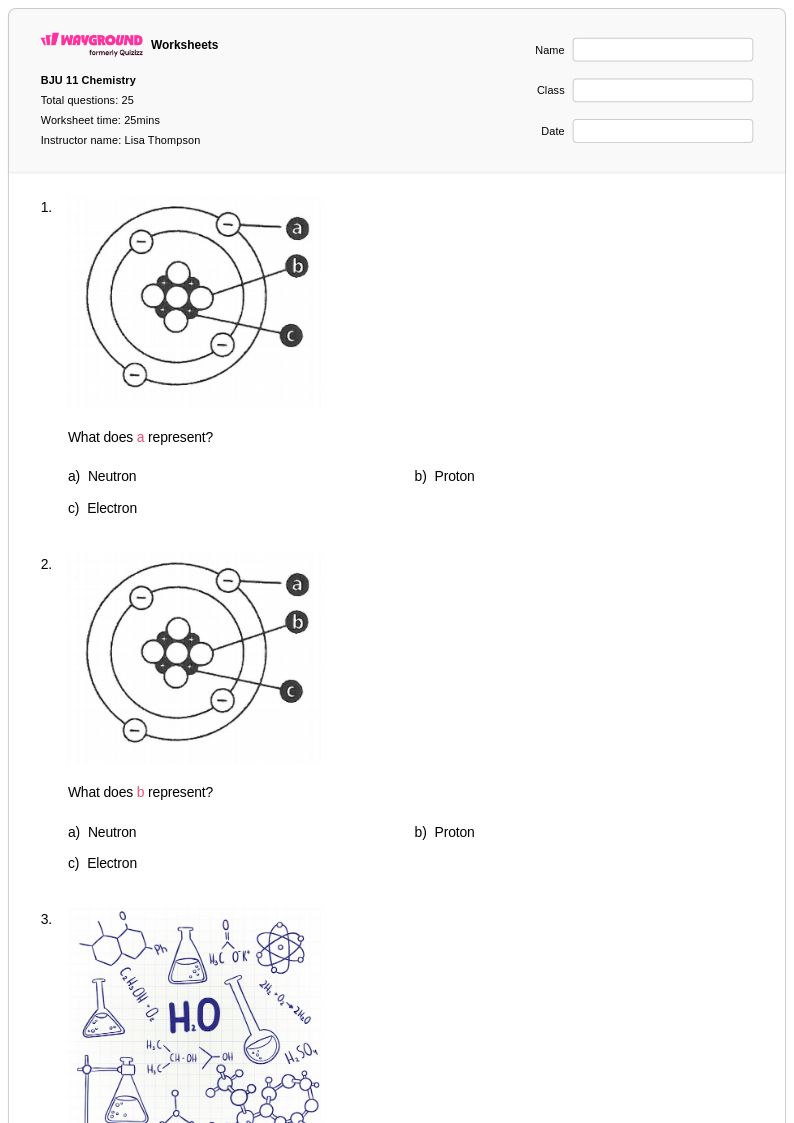
Explore Year 12 charge physics worksheets and printables through Wayground that help students master electric charge concepts with comprehensive practice problems, free PDF downloads, and detailed answer keys.
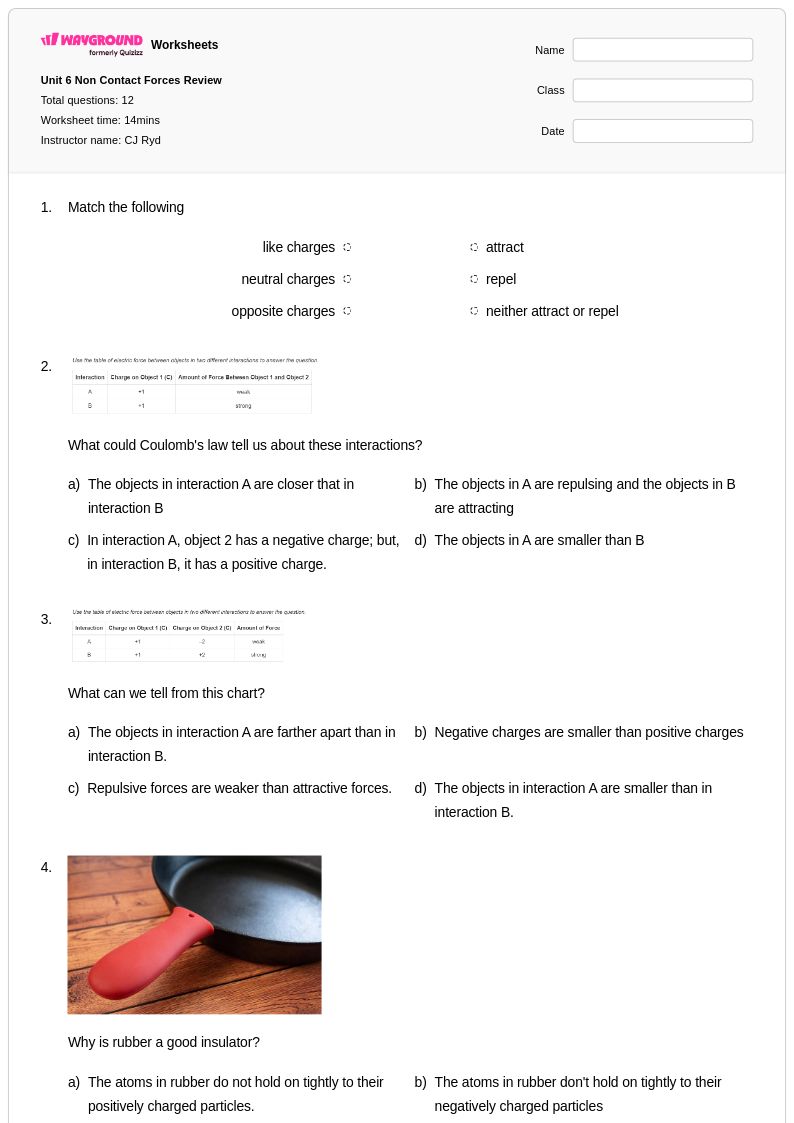
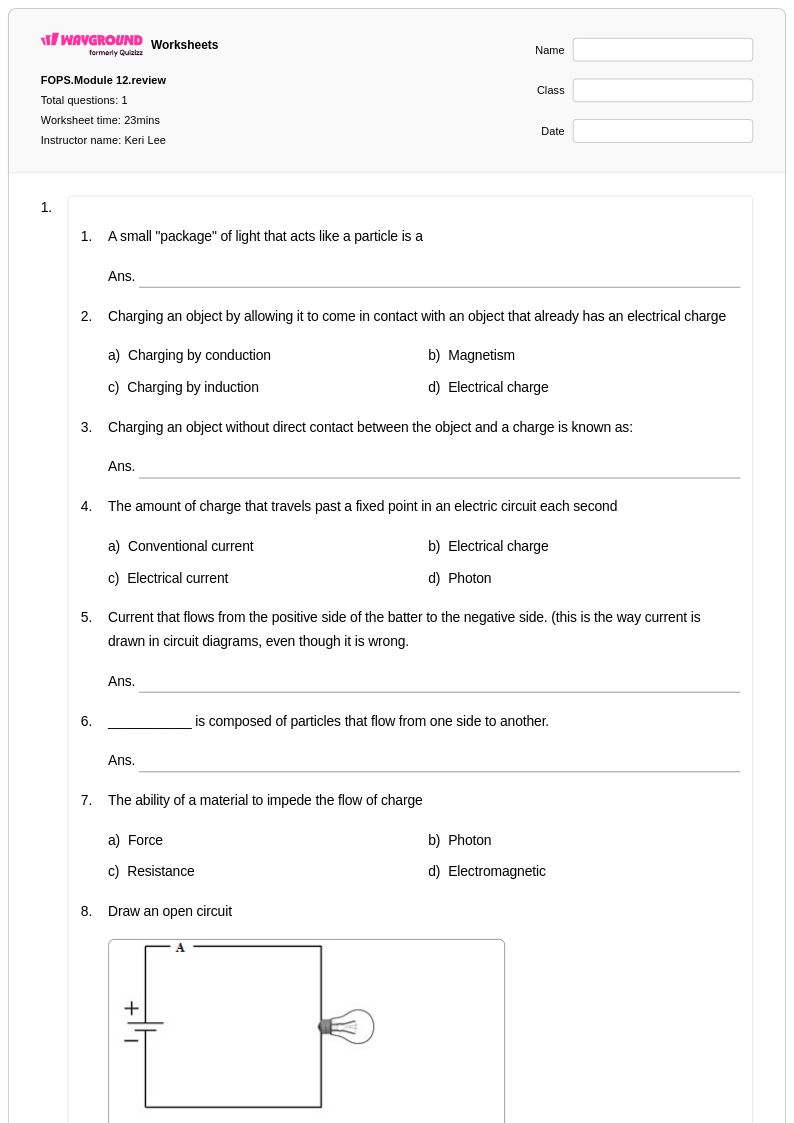
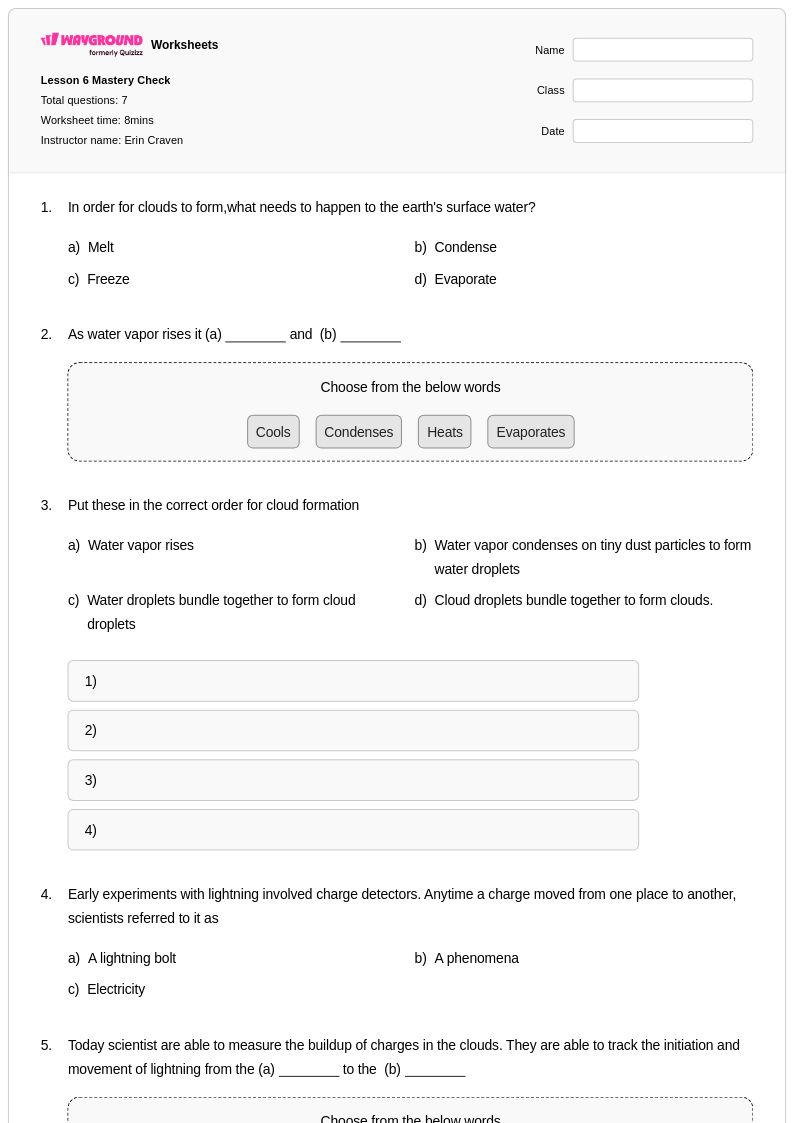
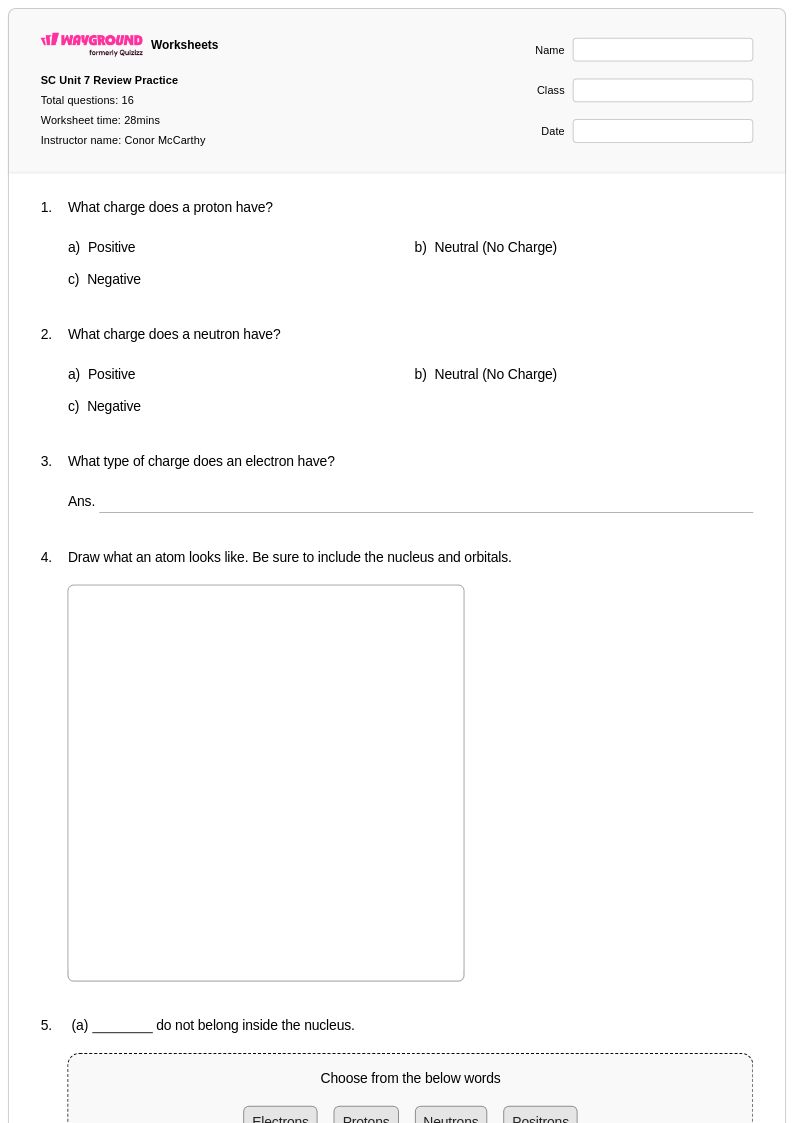
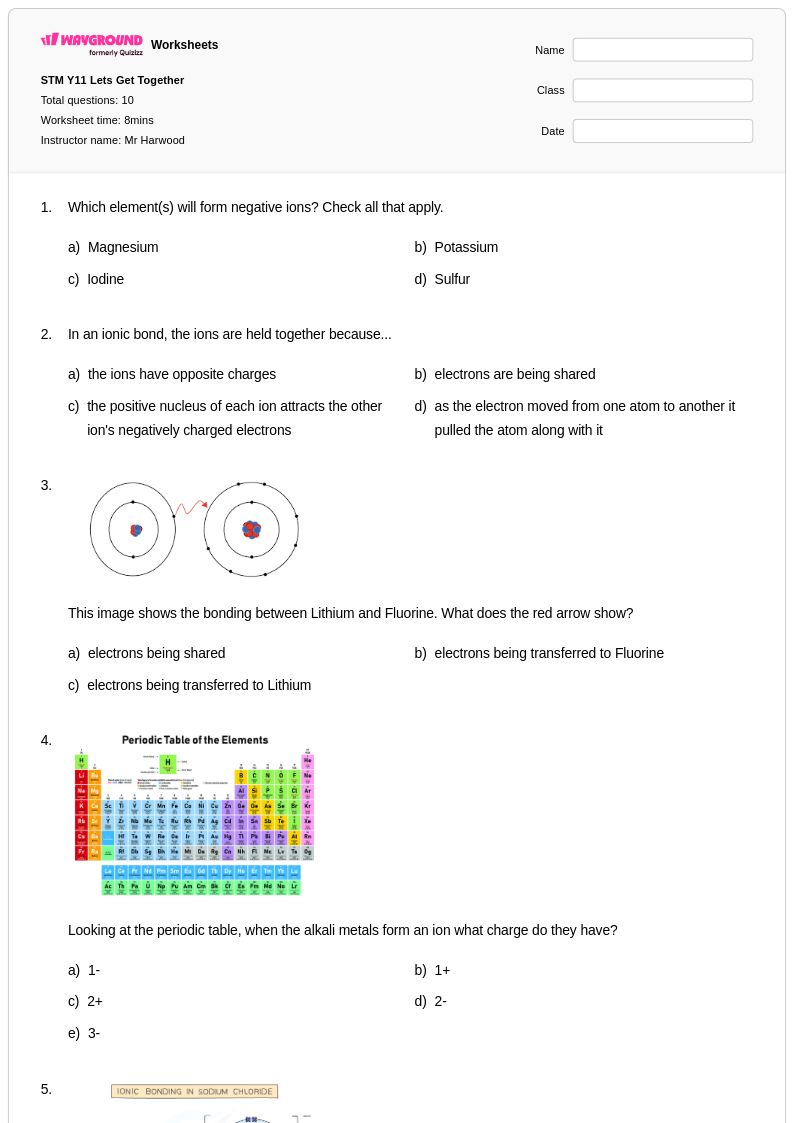
Year 12 charge worksheets available through Wayground (formerly Quizizz) provide comprehensive coverage of electrostatic principles that form the foundation of advanced physics study. These expertly crafted resources guide students through essential concepts including Coulomb's law, electric field calculations, potential difference, and charge distribution in conductors and insulators. The worksheets strengthen critical problem-solving skills through systematic practice problems that range from fundamental charge interactions to complex scenarios involving multiple point charges and electric field mapping. Each resource includes detailed answer keys that support independent learning and self-assessment, while the free printables in convenient pdf format ensure accessibility for both classroom instruction and independent study sessions.
Wayground (formerly Quizizz) empowers educators with millions of teacher-created resources specifically designed for Year 12 charge concepts, featuring robust search and filtering capabilities that allow quick identification of materials aligned with specific learning standards and curriculum requirements. The platform's differentiation tools enable teachers to customize worksheets based on individual student needs, providing multiple difficulty levels and varied problem types to support both remediation for struggling learners and enrichment opportunities for advanced students. Available in both printable and digital formats including downloadable pdfs, these resources streamline lesson planning while offering the flexibility to adapt instruction for diverse learning environments. Teachers can efficiently organize skill practice sessions, create targeted review materials, and develop comprehensive assessment tools that accurately measure student mastery of electrostatic charge principles.
FAQs
How do I teach electric charge concepts to students who have no prior physics background?
Start with the observable phenomena of static electricity before introducing the formal definition of charge as a fundamental property of matter. Use hands-on demos like rubbing a balloon against hair or using a Van de Graaff generator to make charge tangible before moving into Coulomb's law and electric field calculations. Building from macroscopic observations to mathematical relationships helps students develop conceptual grounding before tackling quantitative problems.
What worksheet exercises best help students practice Coulomb's law and electric force calculations?
Practice problems that systematically vary one variable at a time — distance, charge magnitude, or the number of charges — are most effective for building fluency with Coulomb's law. Students benefit from problems that require them to calculate force magnitude, determine the direction of the force, and compare scenarios where charge or distance is doubled or halved. Progressing from single two-charge systems to multi-charge configurations reinforces both the formula and the principle of superposition.
What mistakes do students commonly make when learning about electric charge?
The most frequent misconception is confusing the sign of a charge with the magnitude of a force — students often assume negative charges exert weaker forces than positive ones. Another common error is forgetting that Coulomb's law gives the magnitude of the force and that direction must be determined separately using the nature of the charges involved. Students also frequently conflate electric field strength with electric force, failing to recognize that field is a property of space independent of the test charge placed in it.
How do I help students understand charge conservation in circuit and electrostatics problems?
Emphasize early that charge is neither created nor destroyed — any redistribution of charge in a system must be accounted for. Use worked examples of charging by induction and conduction to show how electrons move without the total charge of an isolated system changing. Pairing conservation problems with questions that ask students to track charge before and after contact or induction reinforces this principle more effectively than definition-only instruction.
How can I use Wayground's charge worksheets in my physics class?
Wayground's charge worksheets are available as printable PDFs for traditional classroom distribution and in digital formats for technology-integrated environments, accommodating a range of instructional setups. Teachers can also host worksheets directly as a quiz on Wayground, enabling real-time student responses and streamlined grading. The included answer keys support both in-class instruction and independent student review, making these resources practical for homework, lab reinforcement, or unit assessments.
How can I differentiate charge worksheets for students at different skill levels?
For students who are struggling, reduce the cognitive load by starting with conceptual questions about charge behavior before introducing formulas, and consider using Wayground's reduced answer choices accommodation to limit options for students who need additional support. Advanced learners can be challenged with multi-charge field problems, charge distribution scenarios, and applications in electromagnetic theory. Wayground also supports read-aloud and extended time settings on a per-student basis, which is particularly useful in inclusive physics classrooms.