Free Printable Chicken Life Cycle Worksheets for Year 5
Year 5 students can explore the fascinating chicken life cycle with our free printable worksheets and practice problems, featuring detailed diagrams, interactive activities, and comprehensive answer keys to master this essential life science concept.
Explore printable Chicken Life Cycle worksheets for Year 5
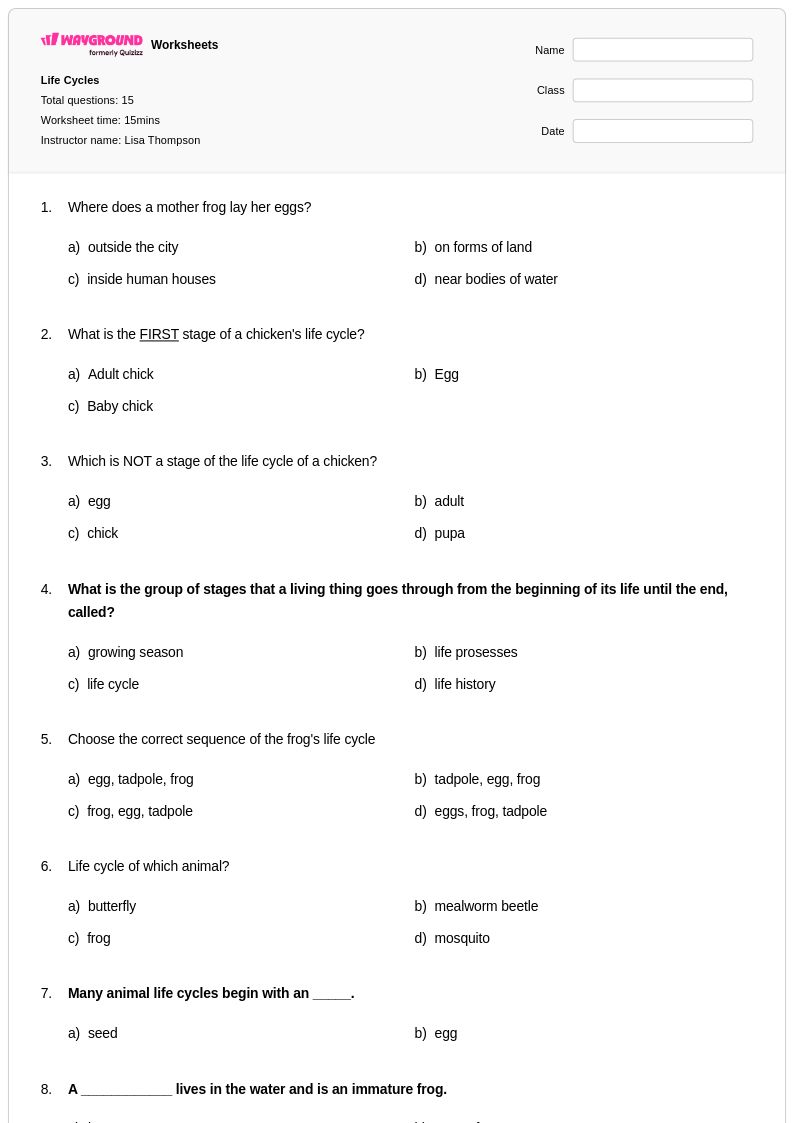
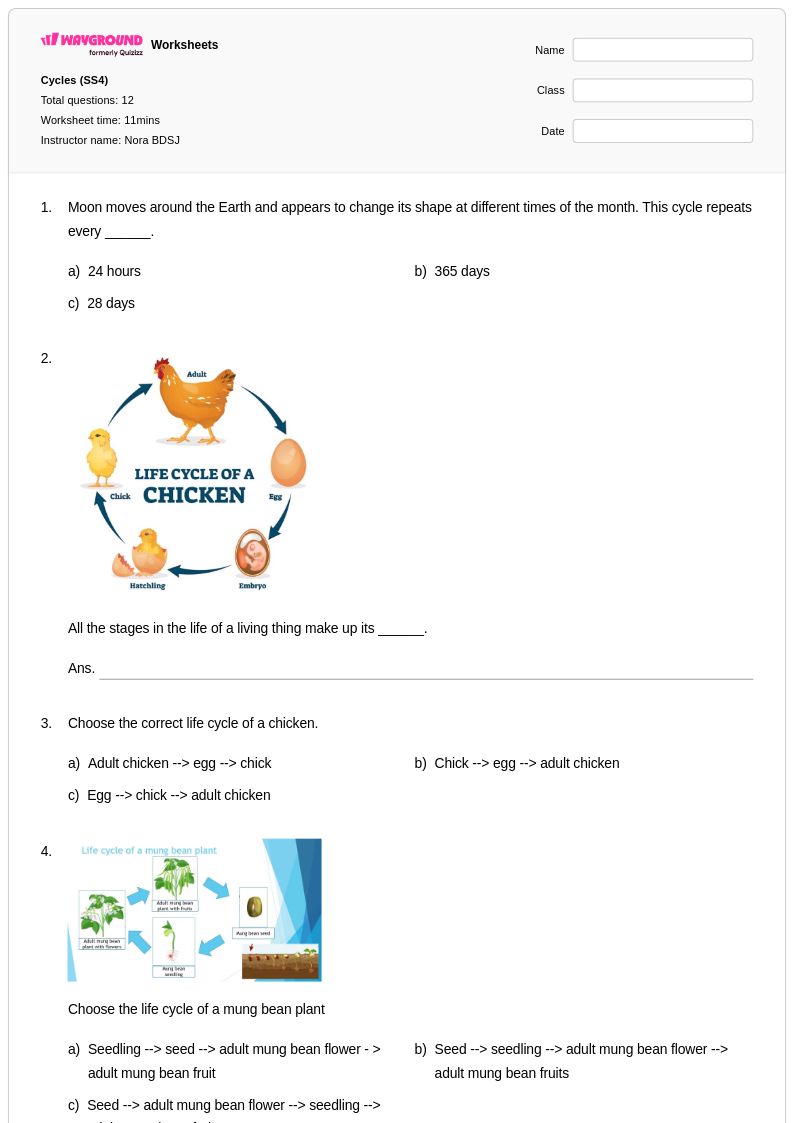
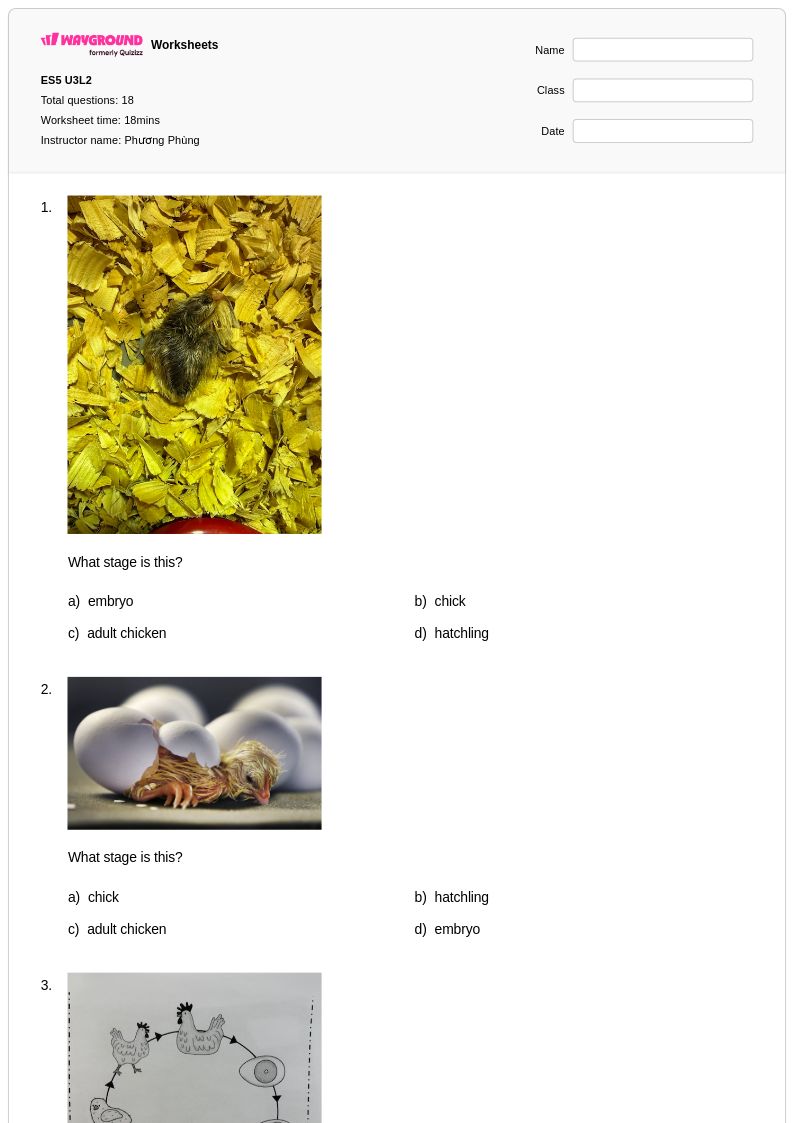
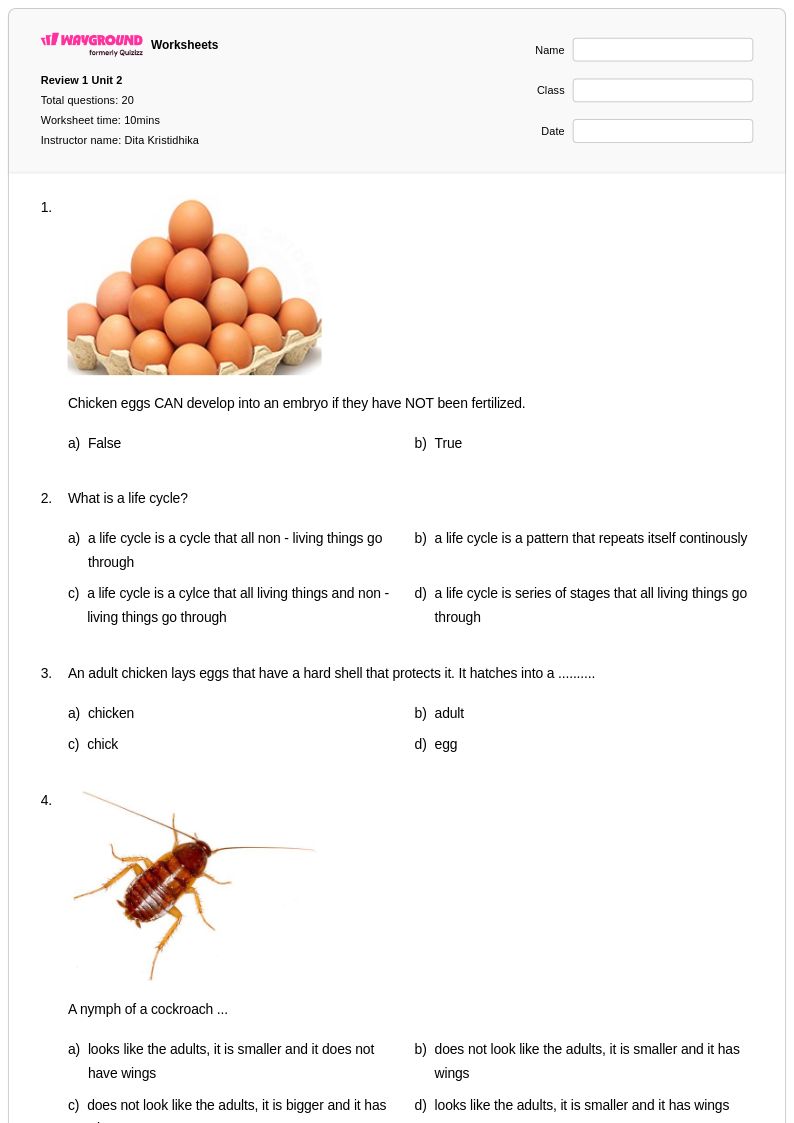
Year 5 chicken life cycle worksheets available through Wayground (formerly Quizizz) provide students with comprehensive practice exploring the fascinating transformation from egg to adult chicken. These science worksheets strengthen critical observation skills, sequencing abilities, and understanding of biological development as students examine each stage of the chicken's metamorphosis. Students work through practice problems that challenge them to identify developmental characteristics, compare different life cycle stages, and analyze the timeline of chicken growth from fertilized egg through hatching, chick development, and sexual maturity. Each worksheet includes detailed answer keys to support independent learning and comes in convenient pdf format, making these free printables easily accessible for classroom use, homework assignments, or science center activities.
Wayground (formerly Quizizz) empowers teachers with millions of educator-created life science resources specifically designed to meet Year 5 learning objectives for animal life cycles and biological processes. The platform's robust search and filtering capabilities allow teachers to quickly locate chicken life cycle materials that align with state science standards and match their students' specific learning needs. Teachers benefit from flexible customization tools that enable them to modify existing worksheets for differentiation, creating appropriate challenges for advanced learners while providing additional support for students requiring remediation. These resources are available in both printable pdf formats for traditional classroom use and digital formats for interactive learning, giving educators the versatility needed for effective lesson planning, targeted skill practice, and enrichment activities that deepen students' understanding of life science concepts.
FAQs
How do I teach the chicken life cycle to elementary students?
Start by introducing the four stages in order: egg, chick, young chicken, and adult hen or rooster. Use labeled diagrams and sequencing activities to help students visualize how each stage transitions into the next. Connecting the chicken life cycle to students' prior knowledge of other animals' life cycles reinforces the broader concept of biological development and helps students recognize patterns in nature.
What activities help students practice the stages of the chicken life cycle?
Sequencing activities are especially effective, asking students to arrange the four stages in the correct order and explain what happens at each point. Diagram labeling tasks reinforce scientific vocabulary such as embryo, hatch, and molt, while fill-in-the-blank practice problems check retention of key facts. Combining these formats gives students multiple entry points into the material and builds both conceptual understanding and vocabulary.
What misconceptions do students commonly have about the chicken life cycle?
A common misconception is that all eggs hatch into chicks, when in fact an egg must be fertilized to develop into a chick. Students also frequently confuse the chick stage with a generic 'baby bird' rather than understanding it as a distinct phase with specific developmental characteristics. Some students assume the life cycle ends at the hen stage, not recognizing that roosters represent the adult male phase of the same cycle.
How do chicken life cycle worksheets connect to life science standards?
Chicken life cycle worksheets address life science standards related to animal reproduction, biological development, and the characteristics of living organisms. They help students understand that organisms go through predictable stages of growth and change, which is a foundational concept in K-5 science curricula. These worksheets also build scientific observation and description skills by asking students to identify and compare traits at each developmental stage.
How can I use Wayground's chicken life cycle worksheets in my classroom?
Wayground's chicken life cycle worksheets are available as printable PDFs for traditional classroom use and in digital formats for technology-integrated learning environments, making them flexible for whole-class instruction, small group work, or independent practice. Teachers can also host the worksheets as a quiz directly on Wayground, which streamlines assigning, collecting, and reviewing student responses. Wayground's platform also supports individual student accommodations such as read aloud, extended time, and reduced answer choices, which can be configured per student without notifying the rest of the class.