Free Printable Metamorphosis Worksheets for Year 5
Explore Wayground's free Year 5 metamorphosis worksheets and printables that help students understand life cycles, transformation stages, and biological changes through engaging practice problems with complete answer keys.
Explore printable Metamorphosis worksheets for Year 5
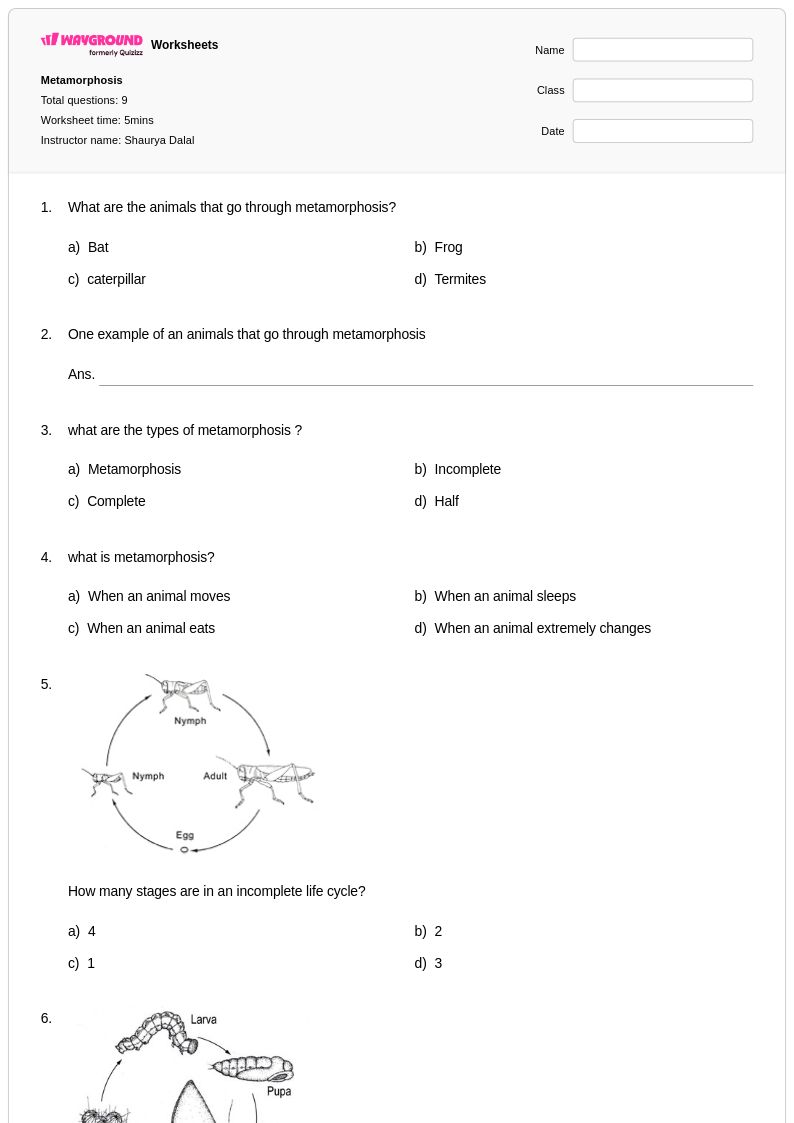
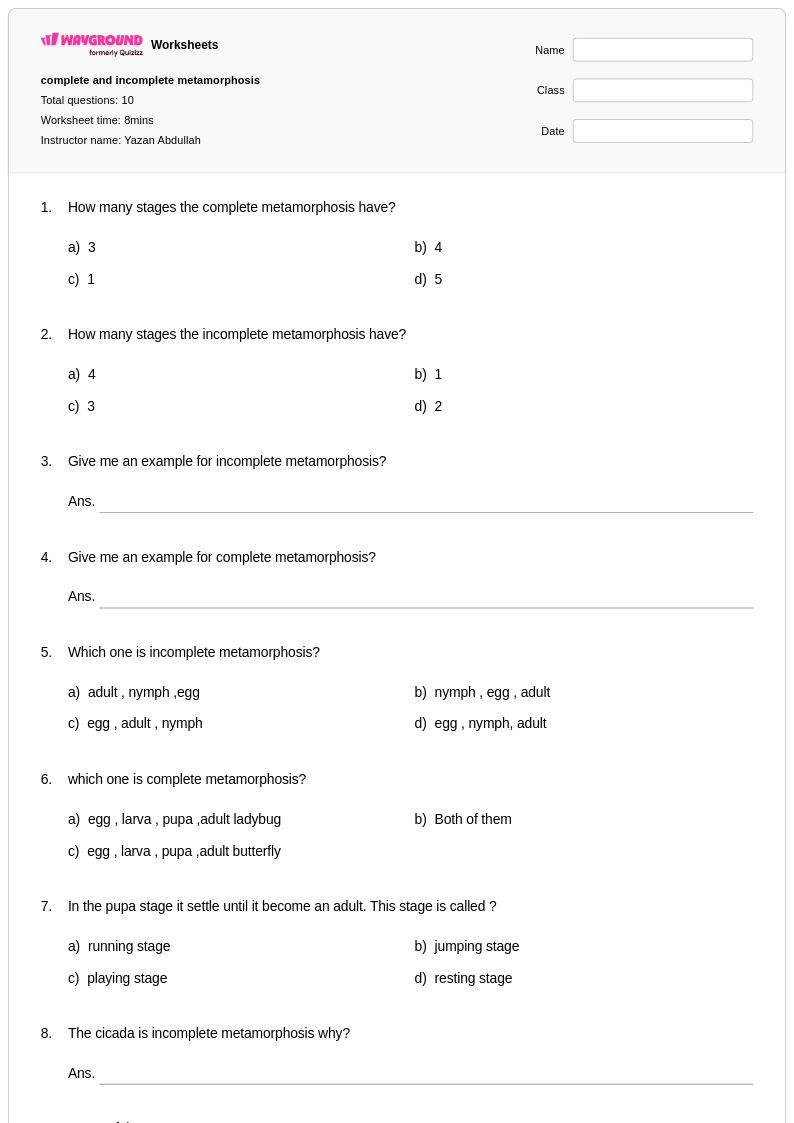
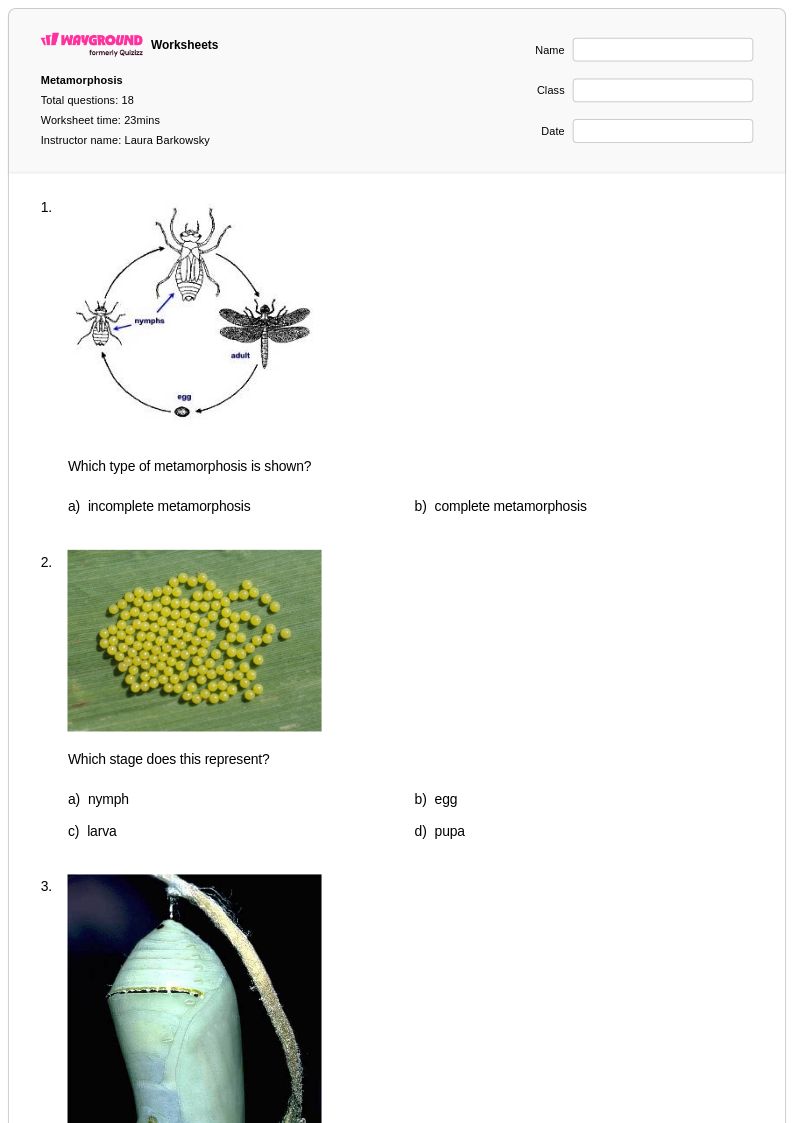
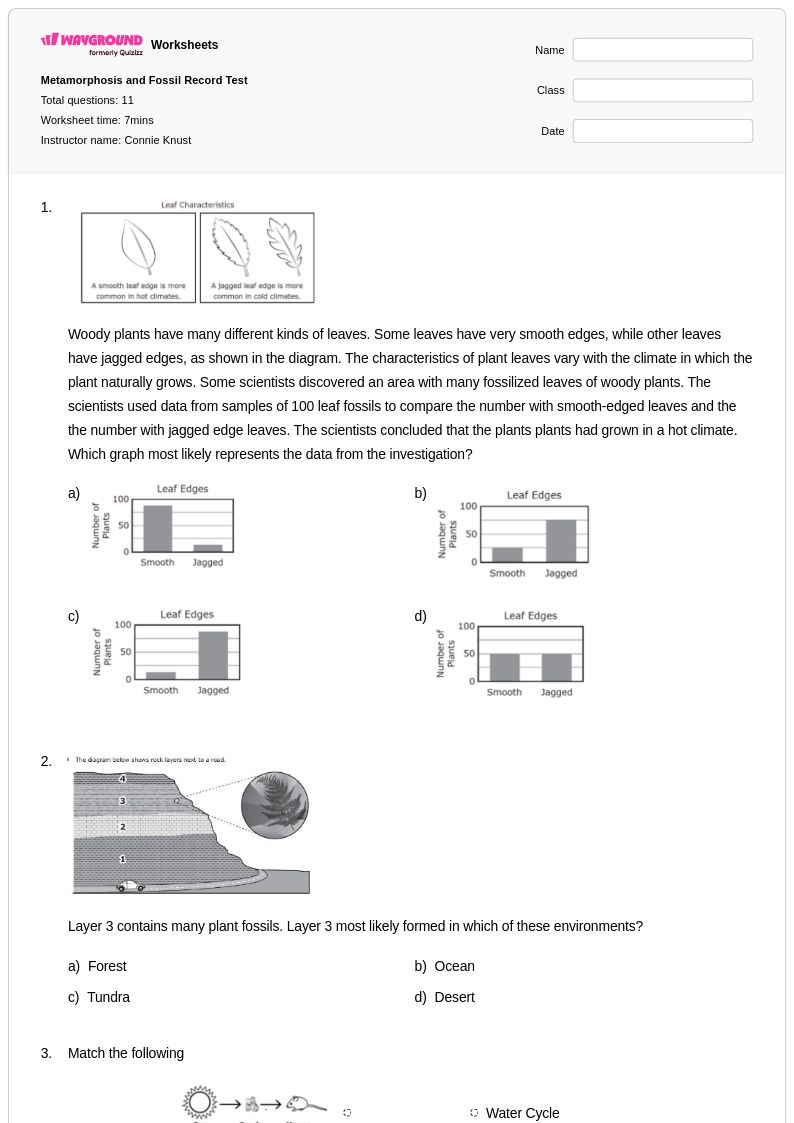
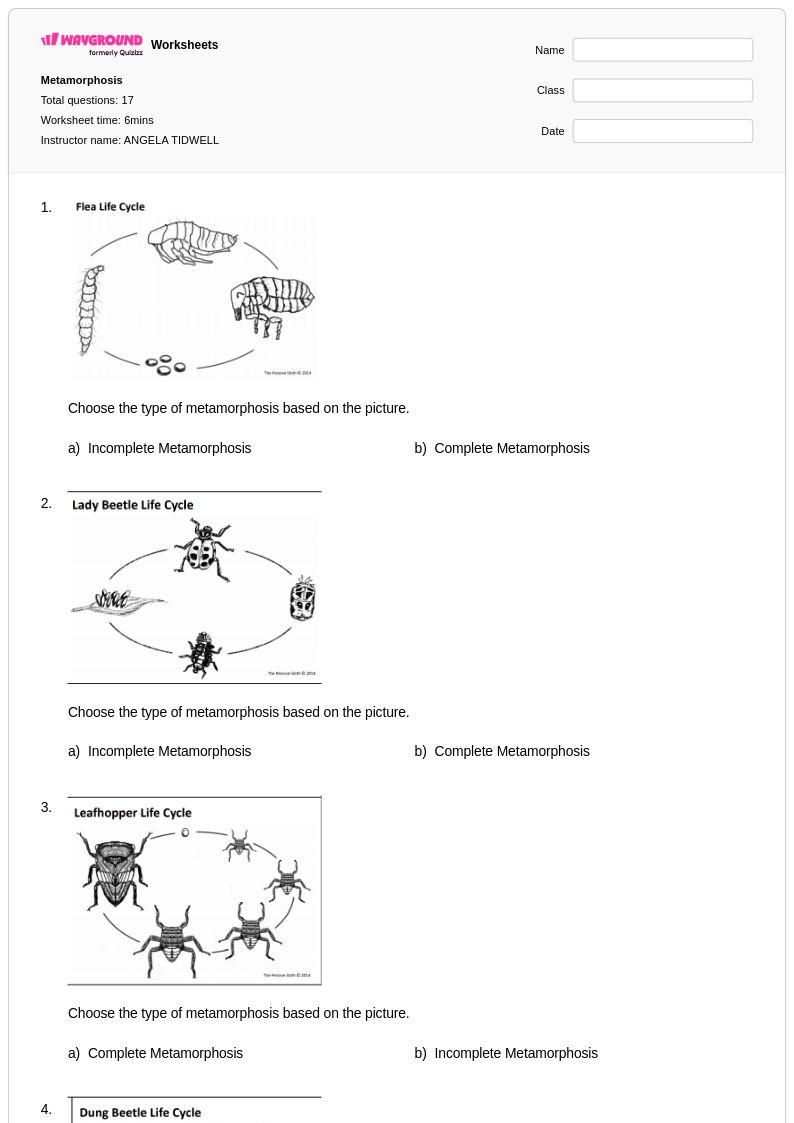
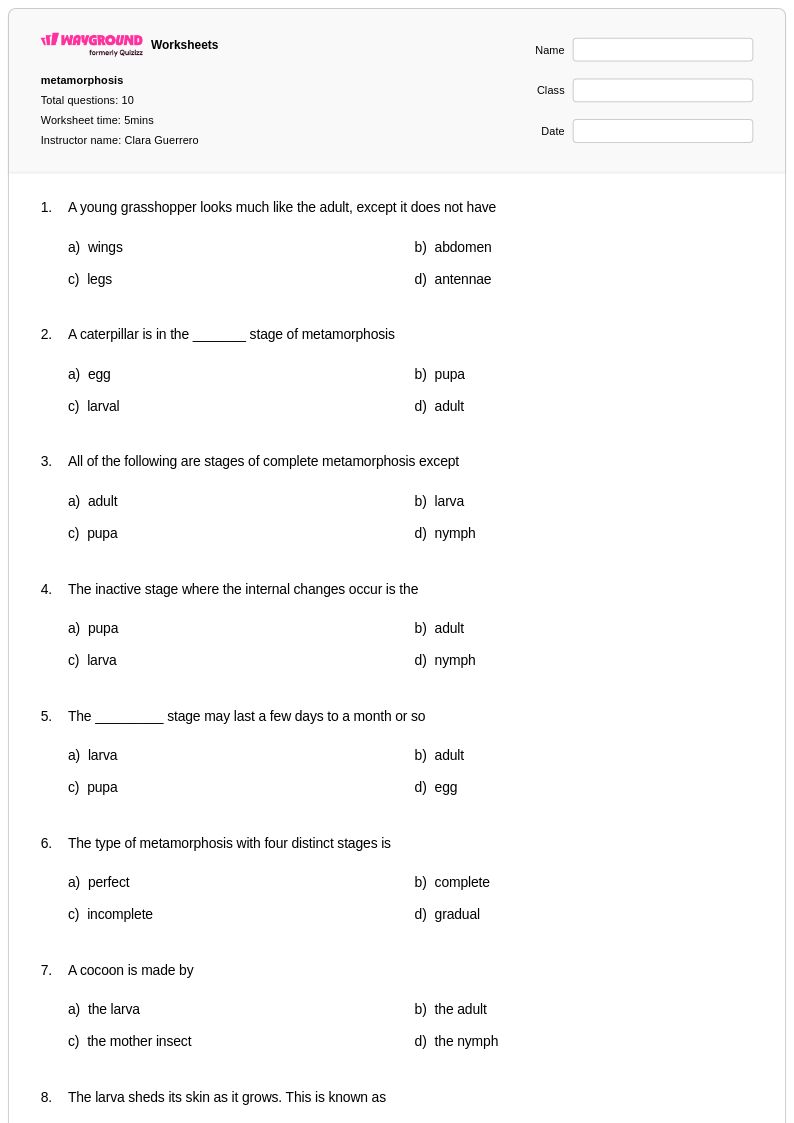
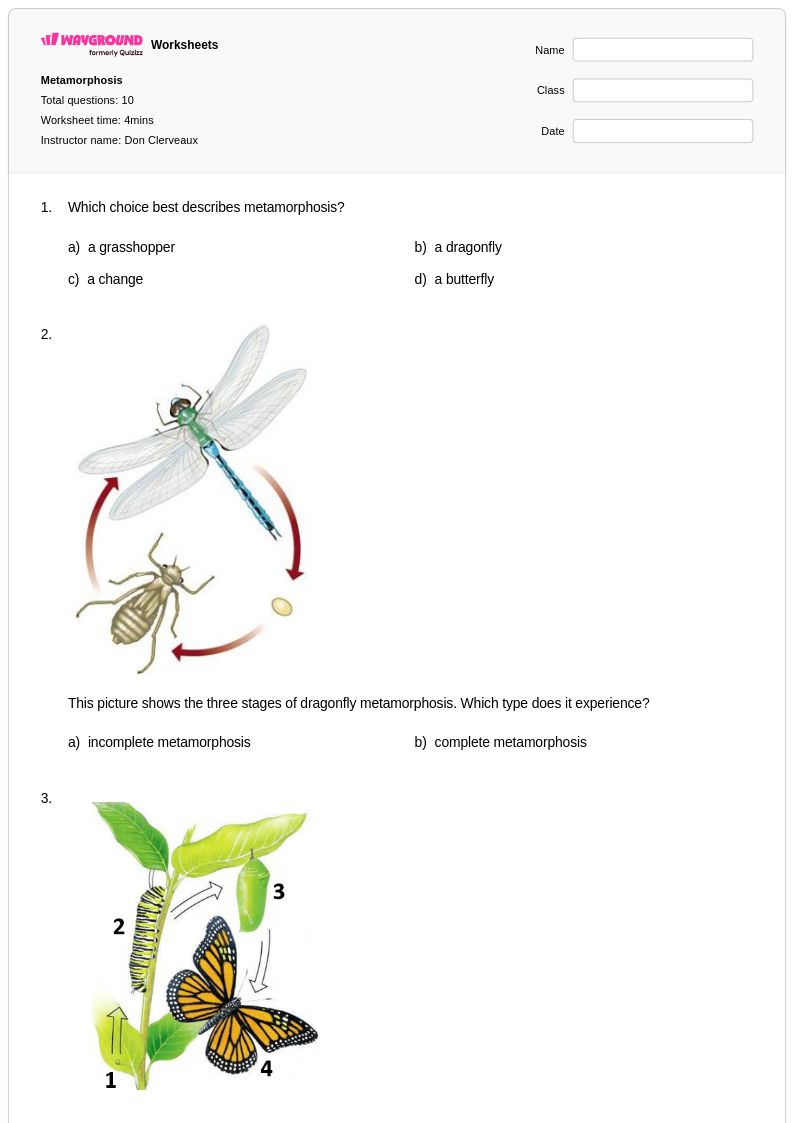
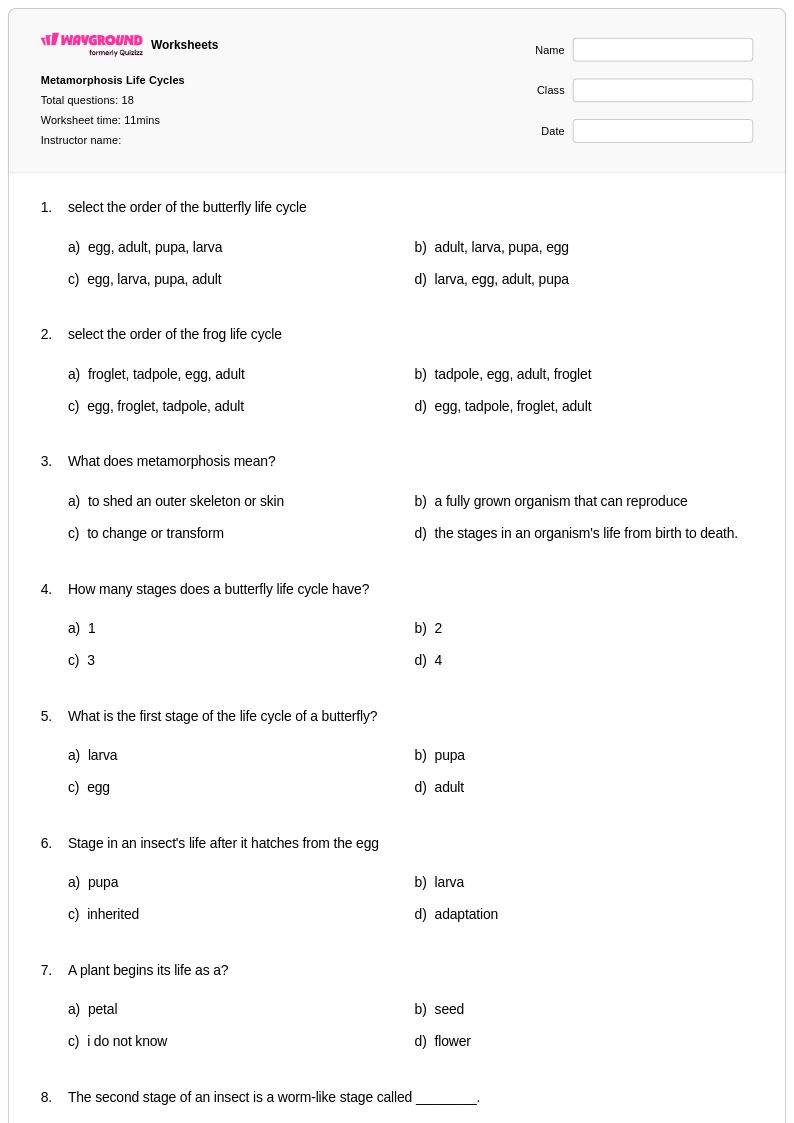
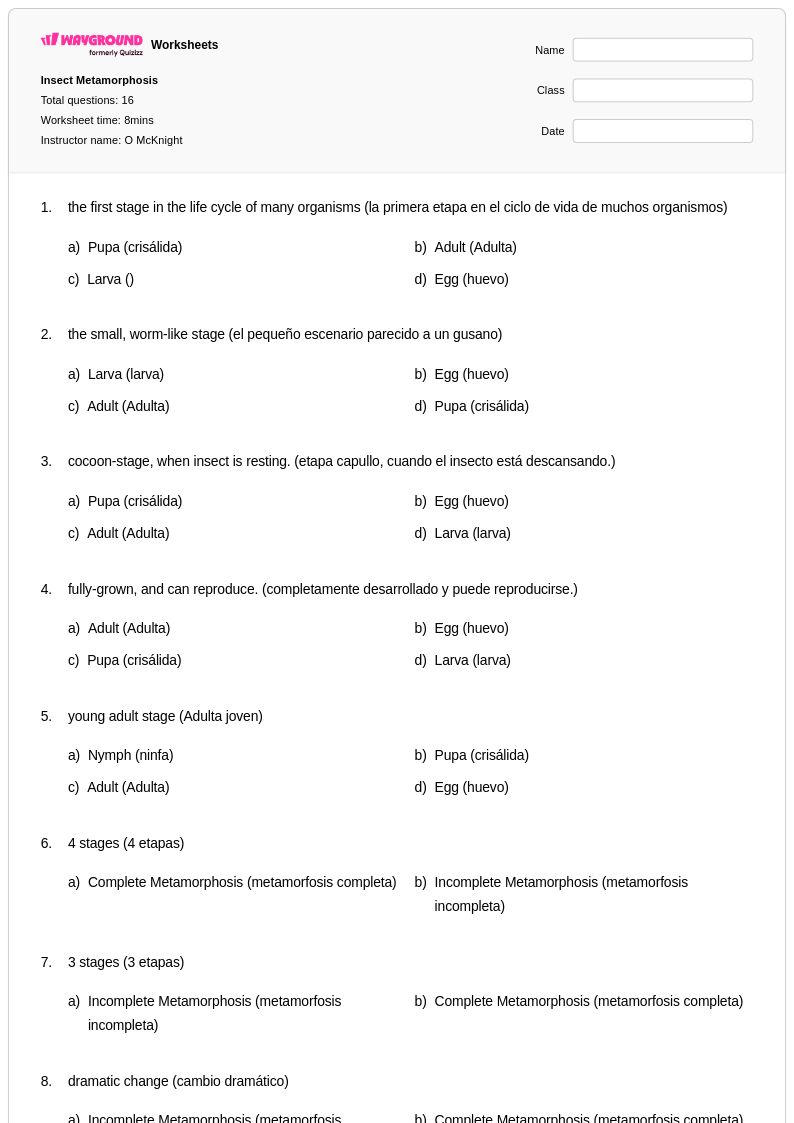
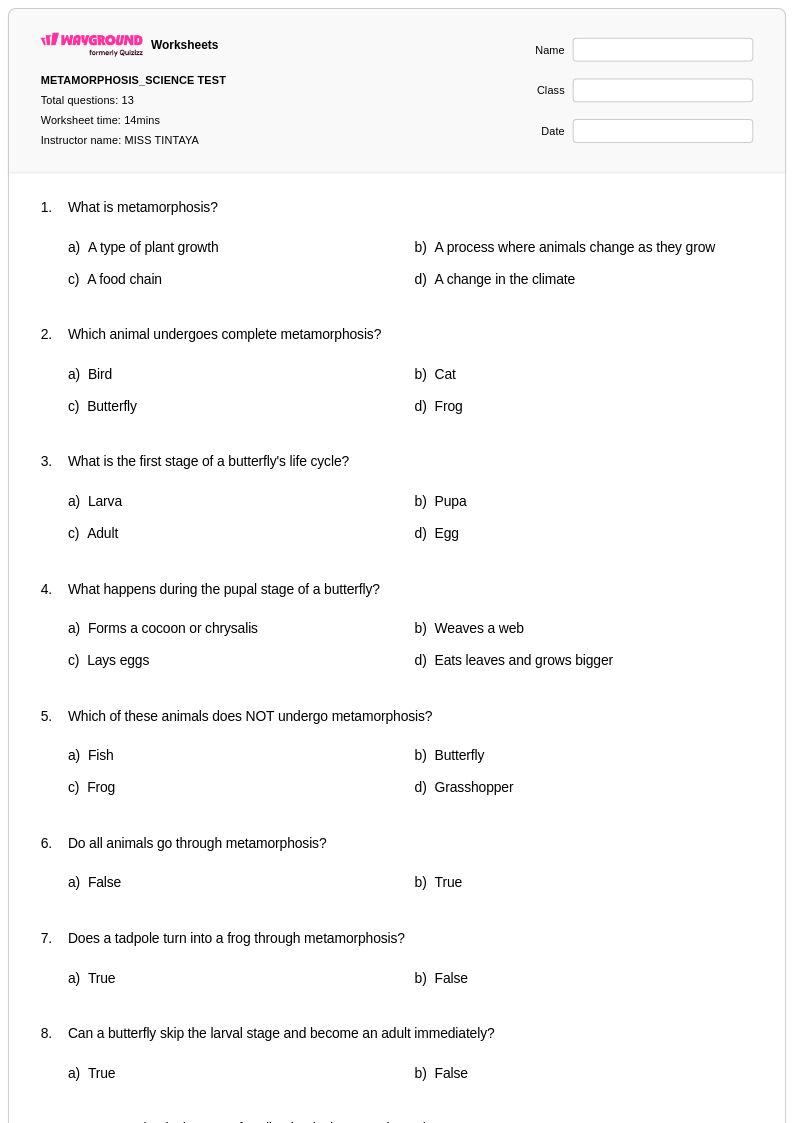
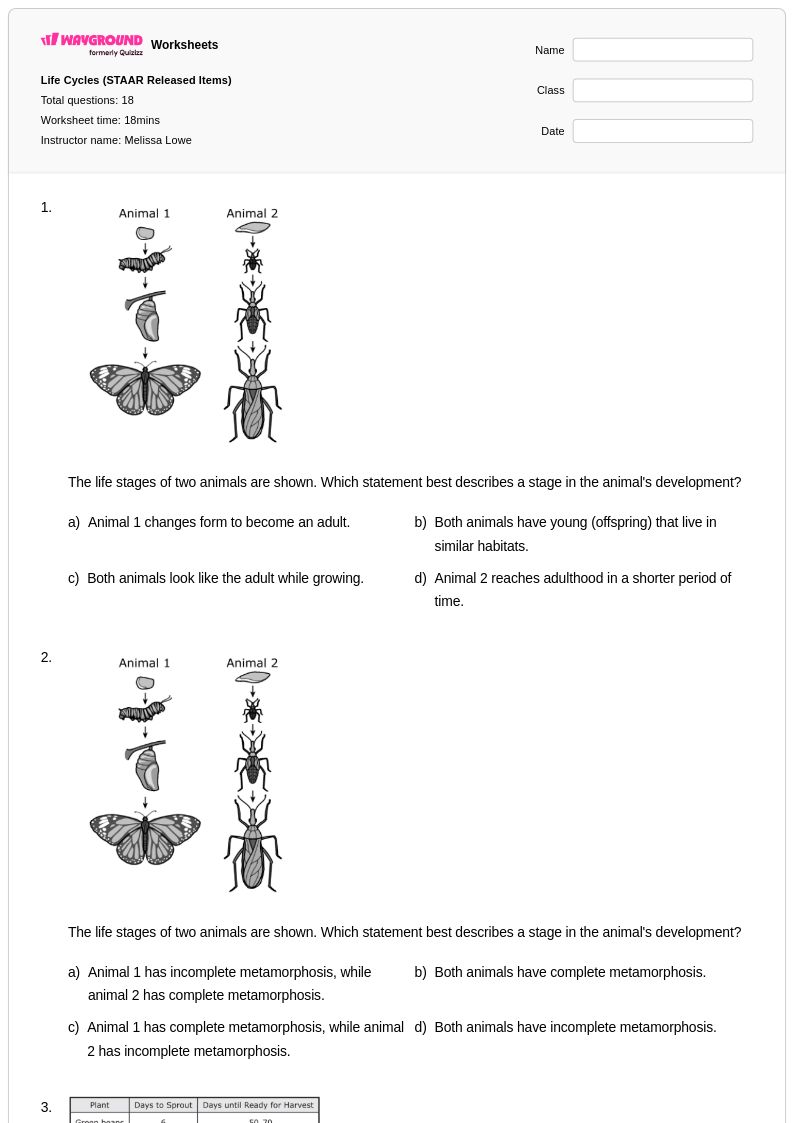
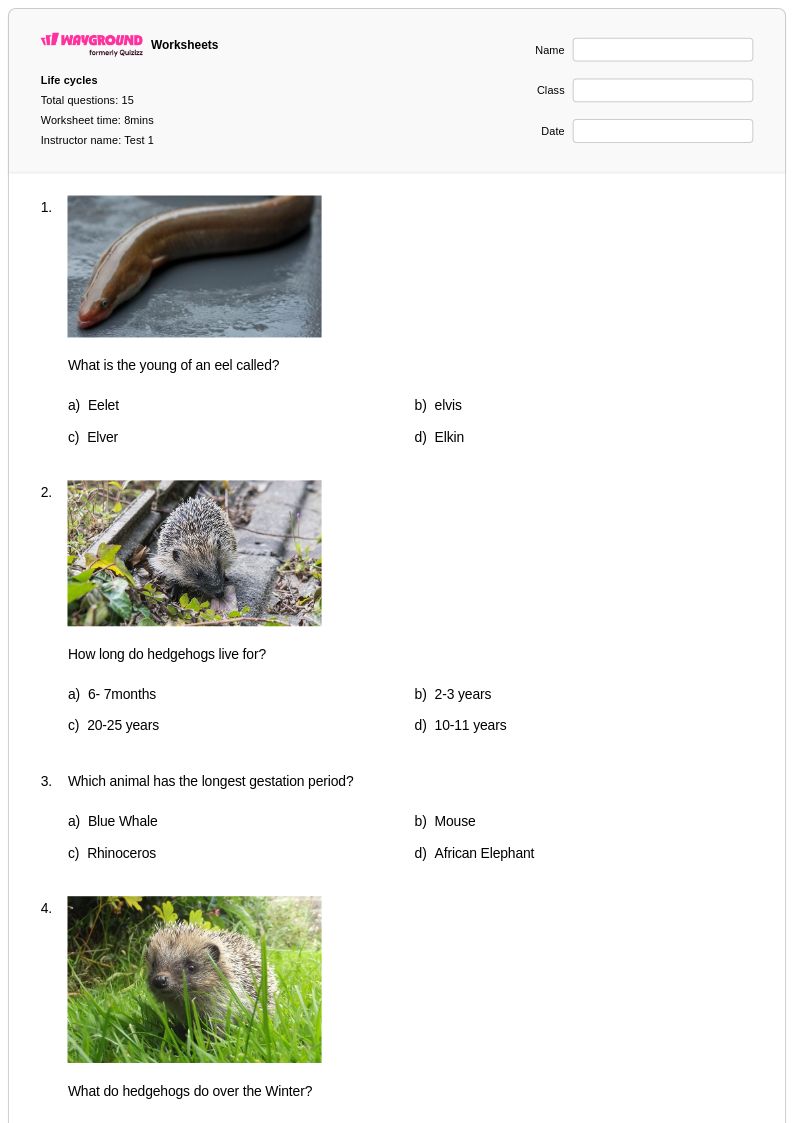
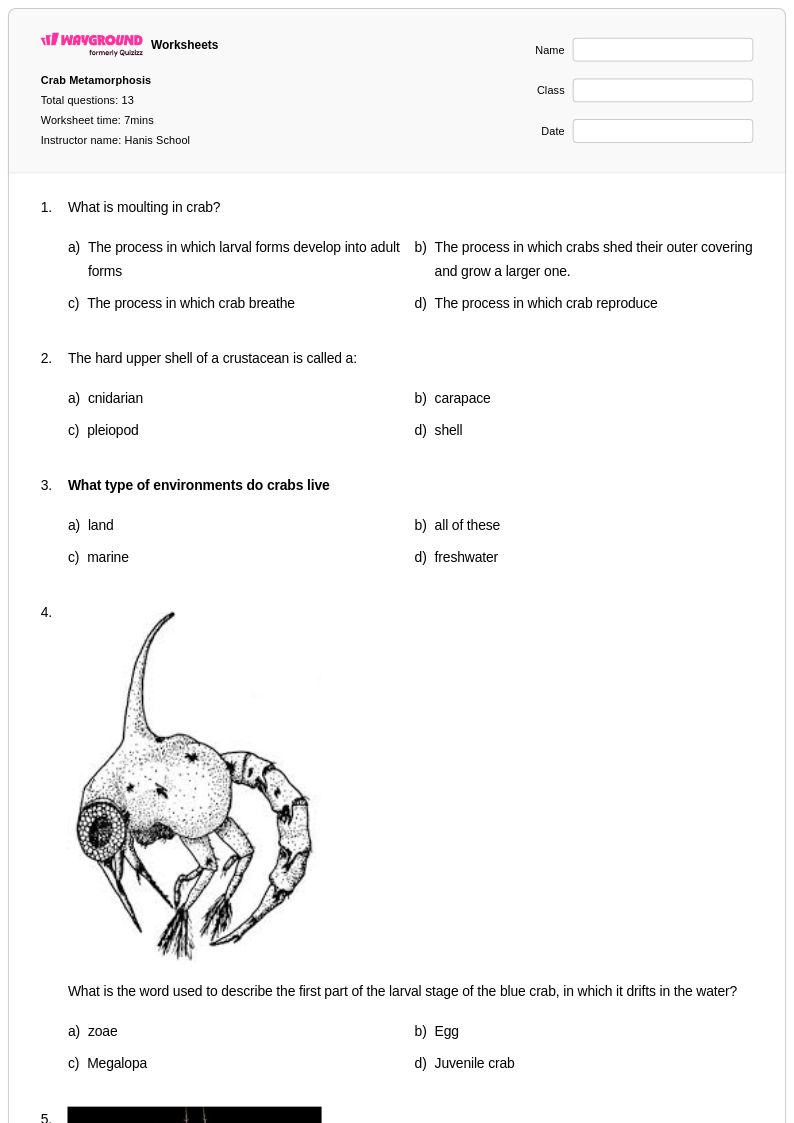
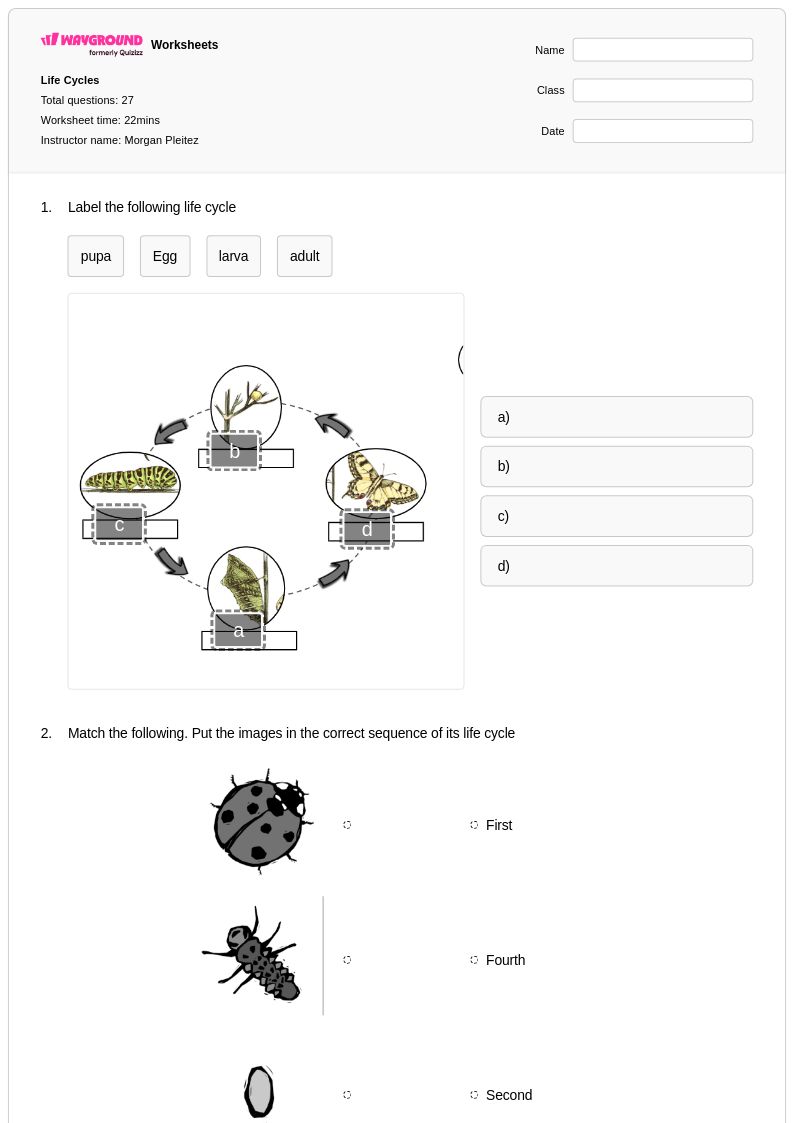
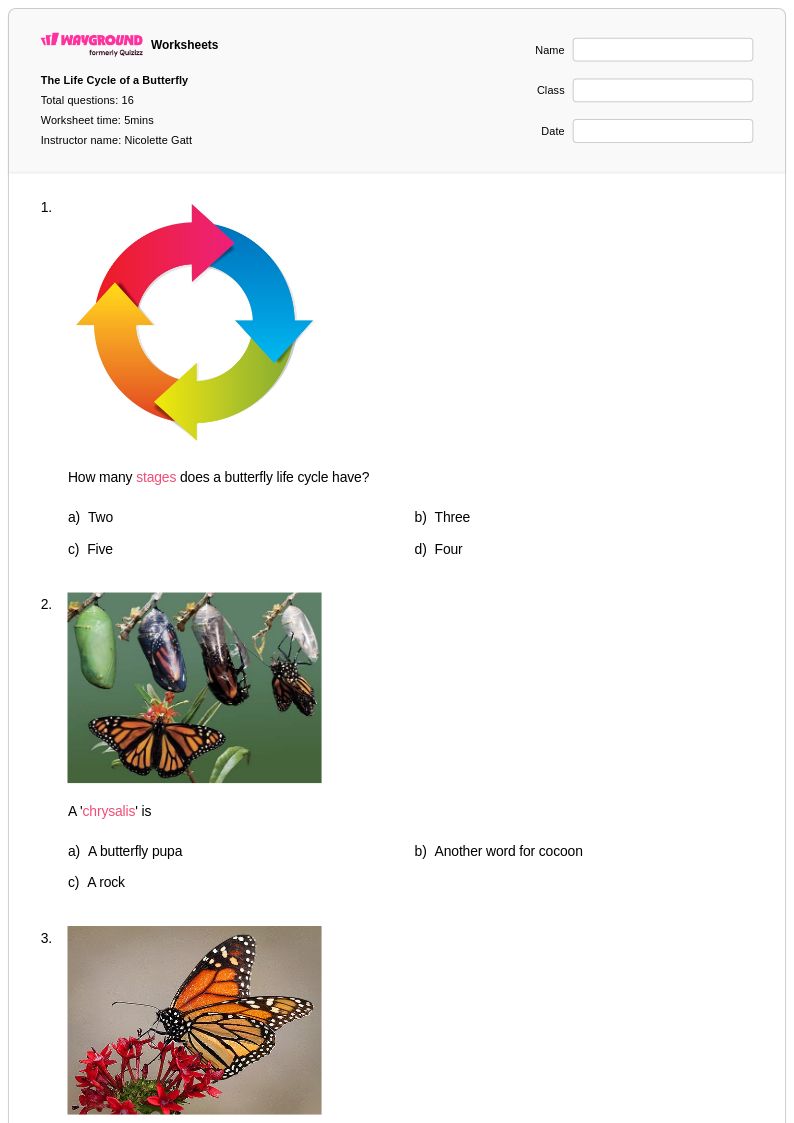
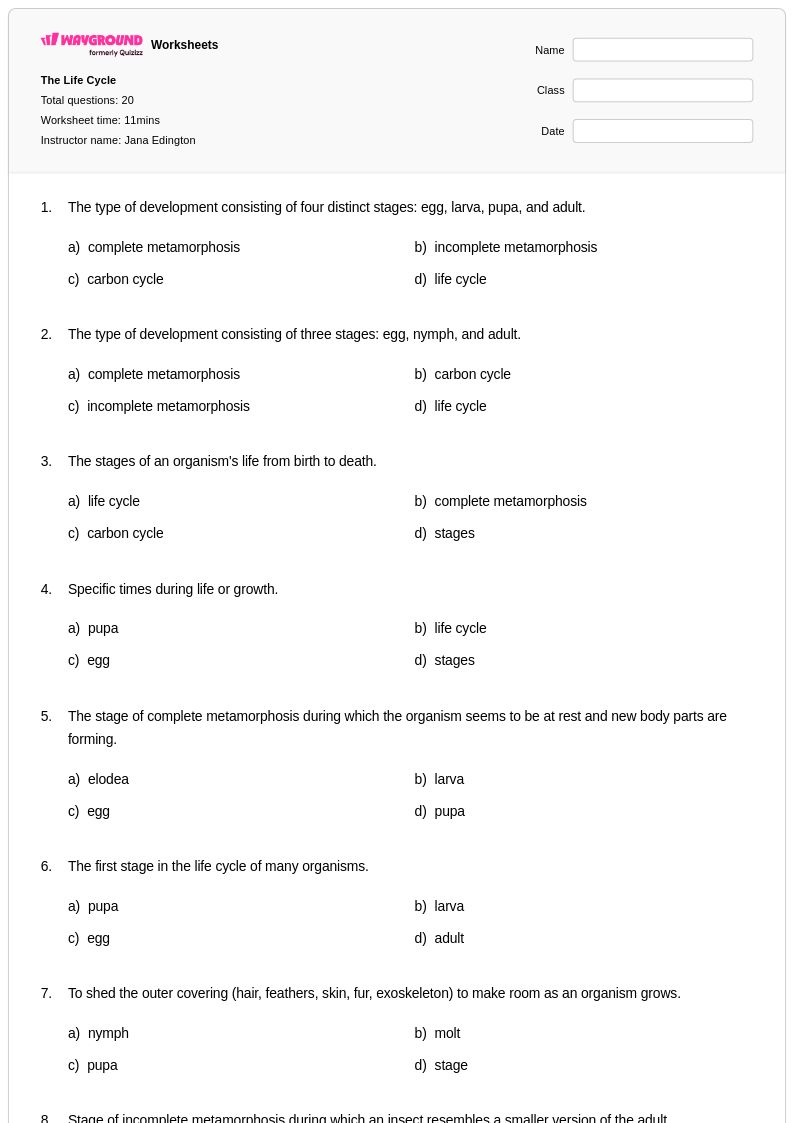
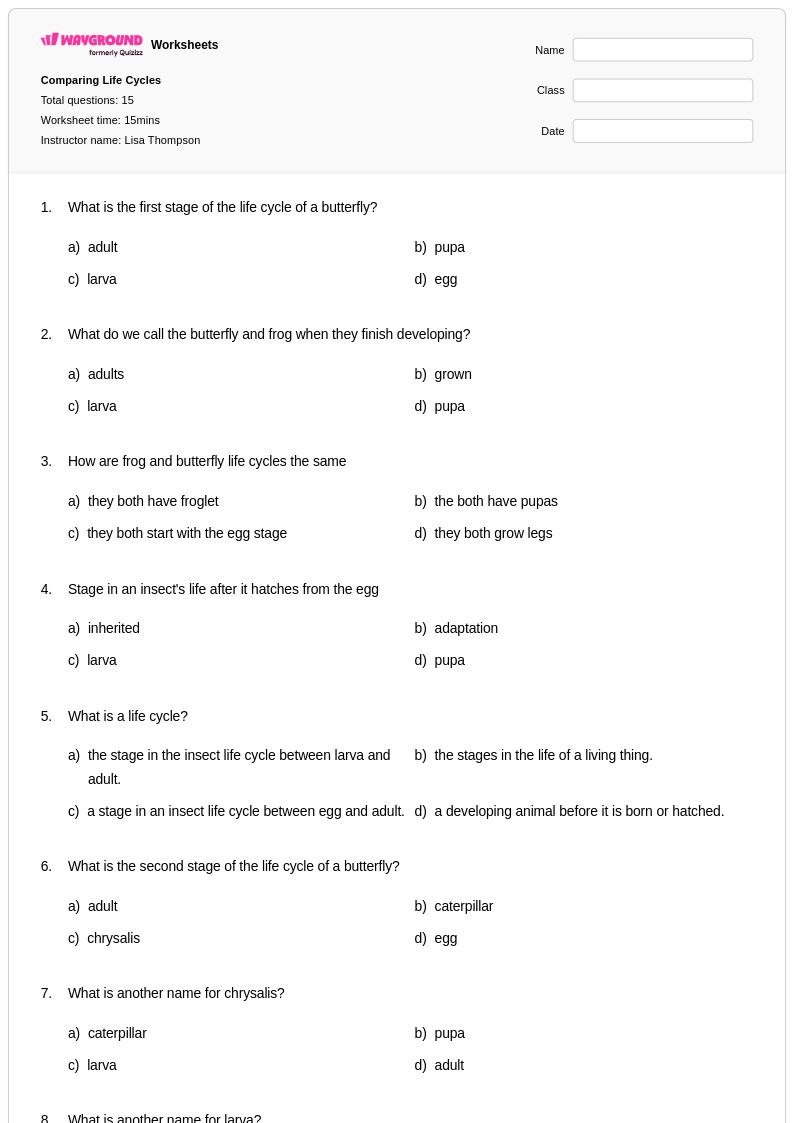
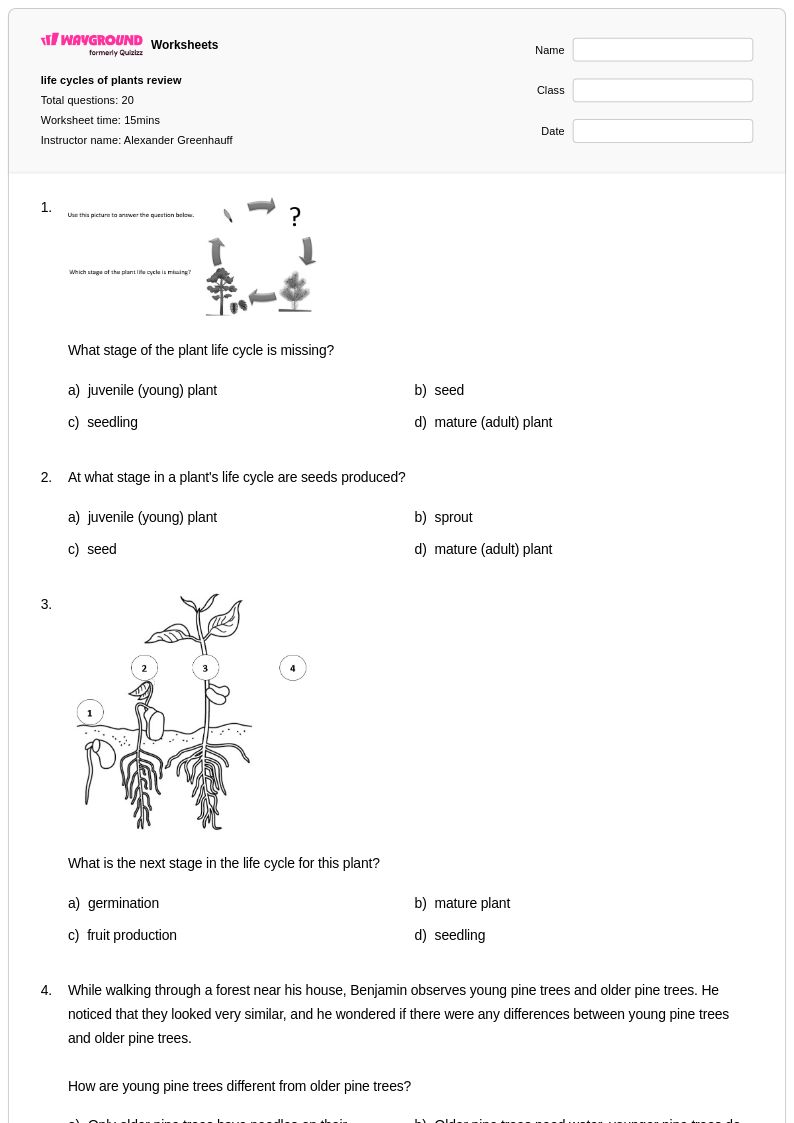
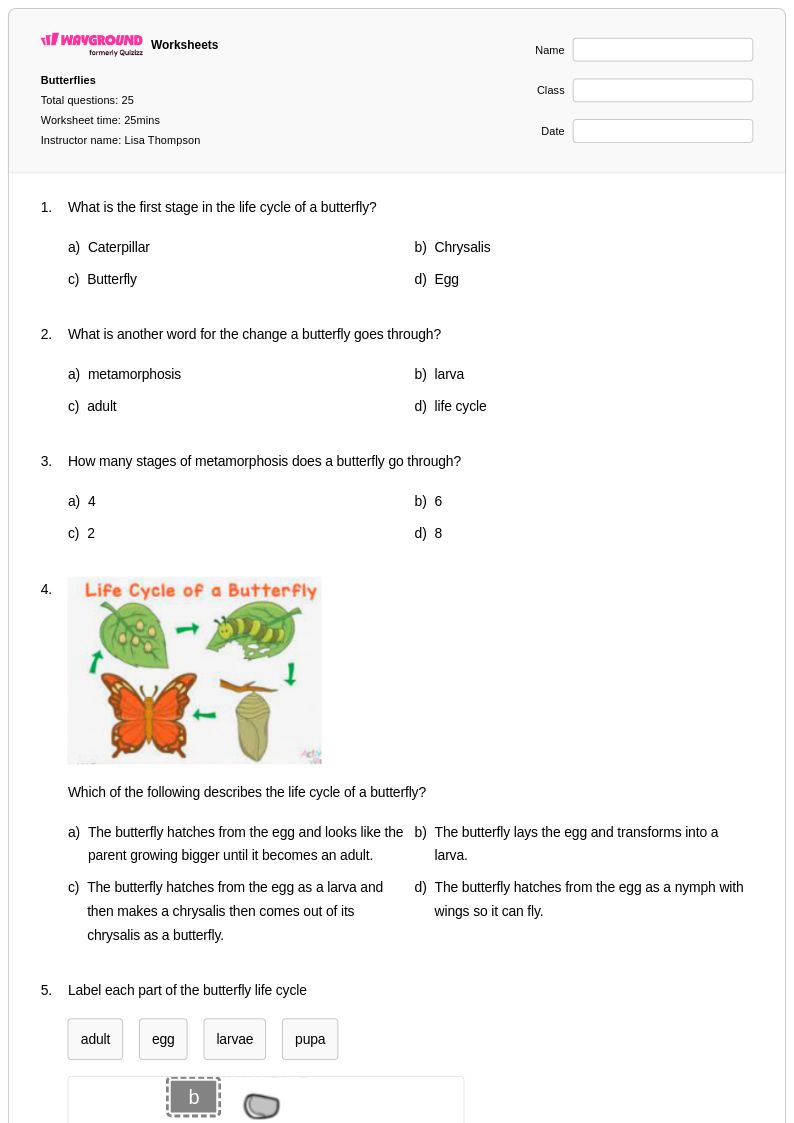
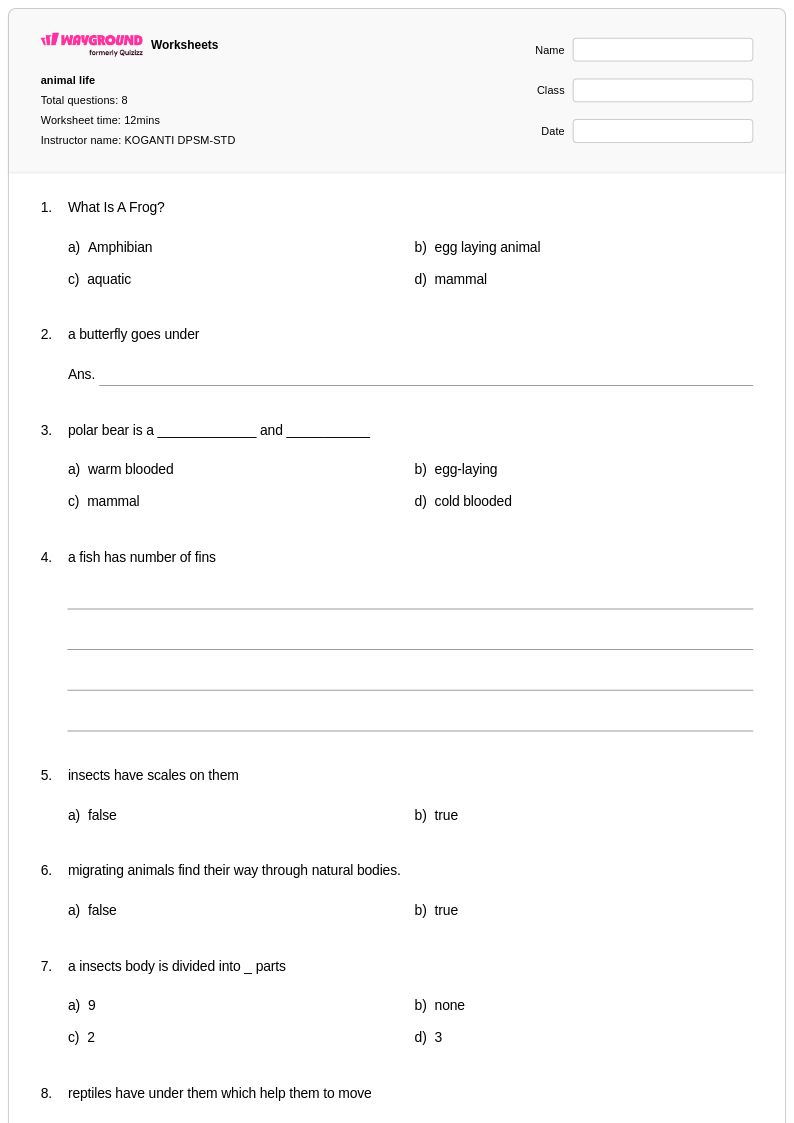
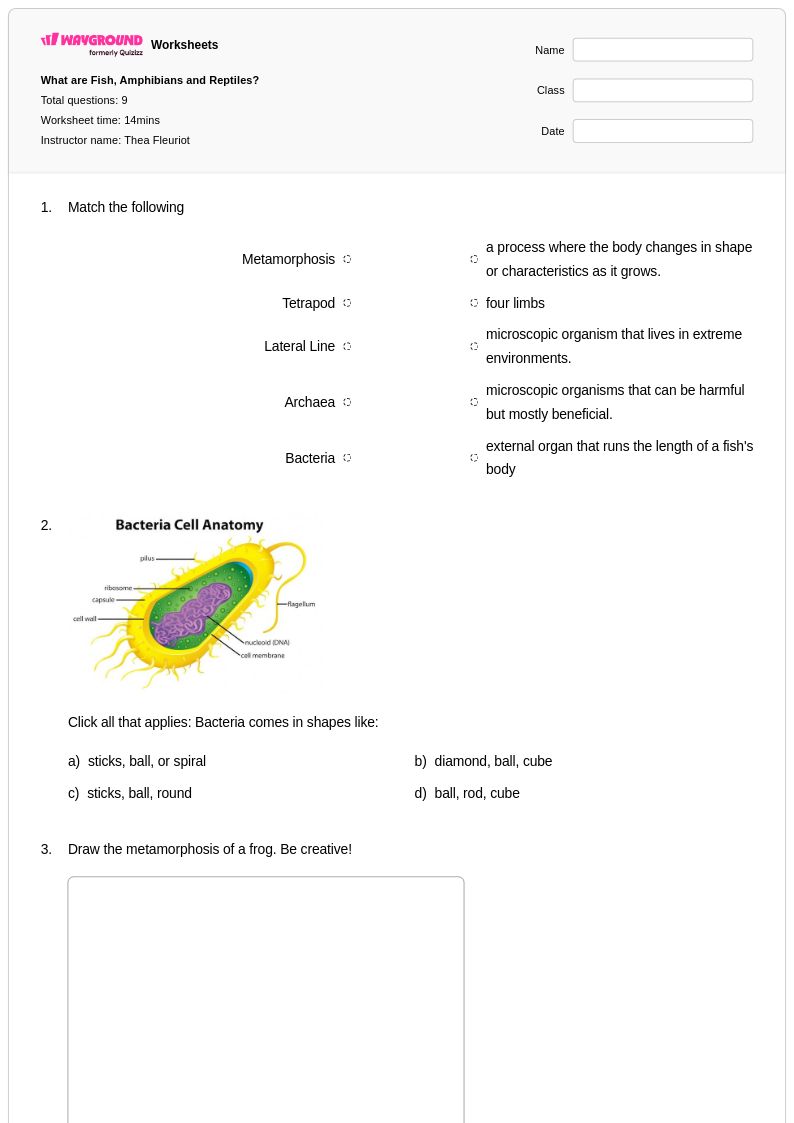
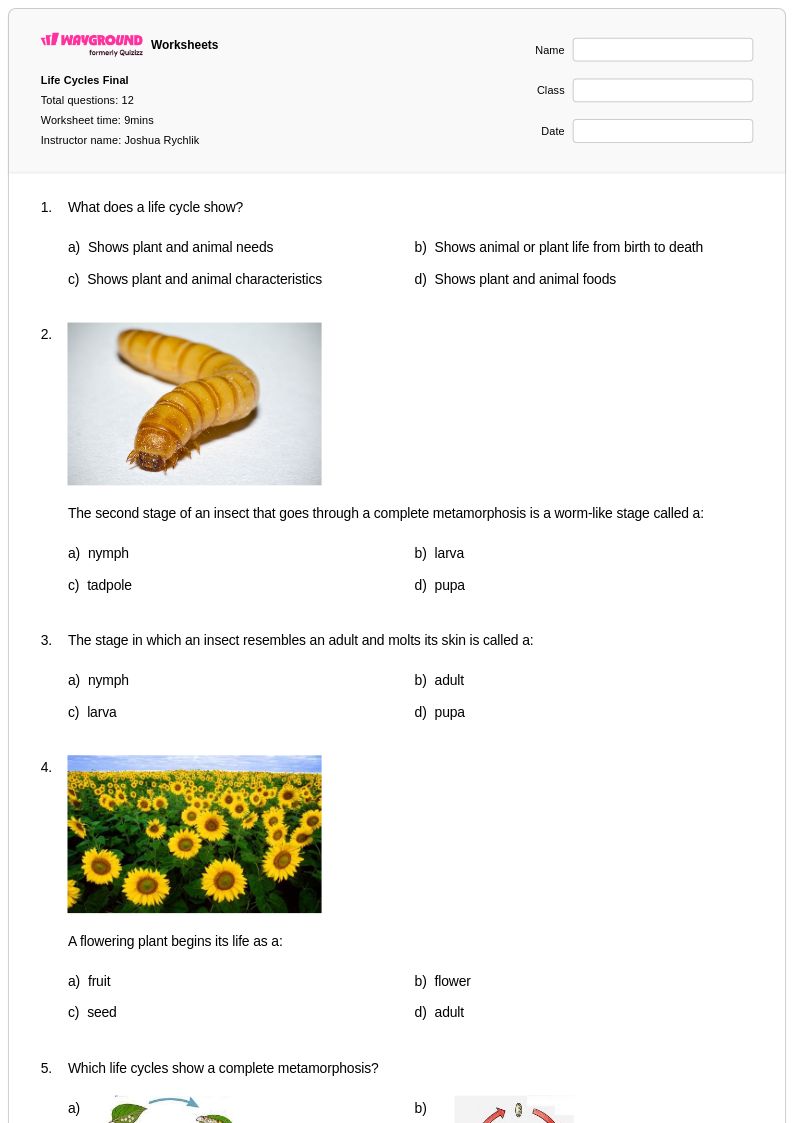
Metamorphosis worksheets for Year 5 students through Wayground (formerly Quizizz) provide comprehensive resources that explore the fascinating transformation processes occurring in various life forms, particularly insects and amphibians. These educational materials strengthen critical scientific observation skills, analytical thinking, and understanding of biological life cycles through carefully designed practice problems that guide students through the stages of complete and incomplete metamorphosis. Students engage with detailed diagrams, sequencing activities, and comparative exercises that reinforce their comprehension of how organisms like butterflies, frogs, and beetles undergo dramatic physical changes throughout their development. The collection includes printable worksheets with accompanying answer keys, allowing educators to assess student understanding while providing immediate feedback on complex biological concepts that form the foundation of life science education.
Wayground (formerly Quizizz) supports educators with an extensive library of millions of teacher-created metamorphosis resources that can be easily accessed through robust search and filtering capabilities designed to match specific Year 5 learning objectives and standards alignment requirements. Teachers benefit from sophisticated differentiation tools that allow customization of worksheet difficulty levels, enabling them to address diverse learning needs within their classrooms through both remediation support for struggling students and enrichment opportunities for advanced learners. The platform's flexible format options include both digital interactive experiences and traditional pdf printables, empowering educators to seamlessly integrate metamorphosis skill practice into various instructional settings while maintaining comprehensive lesson planning efficiency. These adaptable resources prove invaluable for reinforcing scientific vocabulary, supporting hands-on inquiry experiences, and ensuring students develop deep conceptual understanding of biological transformation processes.
FAQs
How do I teach complete vs. incomplete metamorphosis to elementary students?
Start by anchoring the lesson in familiar examples: butterflies and moths for complete metamorphosis (egg, larva, pupa, adult) and grasshoppers or dragonflies for incomplete metamorphosis (egg, nymph, adult). Use visual sequencing activities where students physically order the stages before connecting terminology to each phase. Comparing the two types side by side helps students recognize that incomplete metamorphosis skips the pupal stage, which is the distinction they most often confuse.
What activities help students practice identifying the stages of metamorphosis?
Sequencing exercises are among the most effective practice formats for metamorphosis, requiring students to arrange labeled images or descriptions of developmental stages in the correct order. Worksheets that ask students to compare complete and incomplete metamorphosis across two or more species reinforce the concept more deeply than single-organism activities. Adding a short written explanation alongside each stage pushes students beyond memorization toward genuine conceptual understanding.
What misconceptions do students commonly have about metamorphosis?
A frequent misconception is that all insects undergo the same type of metamorphosis, when in fact complete and incomplete metamorphosis are distinct processes with different numbers of stages. Students also often believe the pupal stage is dormant or inactive, when significant internal reorganization is occurring throughout. Another common error is conflating metamorphosis with simple growth, rather than understanding it as a fundamental biological transformation involving structural change.
How can I use metamorphosis worksheets to support struggling science learners?
For students who struggle with sequencing or vocabulary, worksheets with visual supports such as labeled diagrams alongside fill-in-the-blank prompts reduce cognitive load while still building content knowledge. On Wayground, teachers can enable the Read Aloud accommodation so questions and content are read to students who need it, and the Reduced Answer Choices setting can simplify multiple-choice questions for students who feel overwhelmed by options. These accommodations can be assigned to individual students without other students being notified, keeping the experience seamless for the whole class.
How do I use Wayground's metamorphosis worksheets in my classroom?
Wayground's metamorphosis worksheets are available as printable PDFs for traditional classroom use and in digital formats for technology-integrated learning environments, so they work whether students are at desks or on devices. Teachers can also host the worksheets as a live or assigned quiz directly on Wayground, allowing for real-time feedback and automatic grading. The included answer keys support both independent student practice and teacher-led review sessions.
How do metamorphosis worksheets help students develop scientific observation skills?
Metamorphosis worksheets build scientific observation skills by asking students to identify and describe the physical characteristics of each developmental stage rather than simply naming them. Activities that require students to compare stages across species, such as noting how a caterpillar's larval body differs from a dragonfly nymph, develop the habit of precise, evidence-based description. This kind of structured observation practice directly supports broader life science inquiry skills.