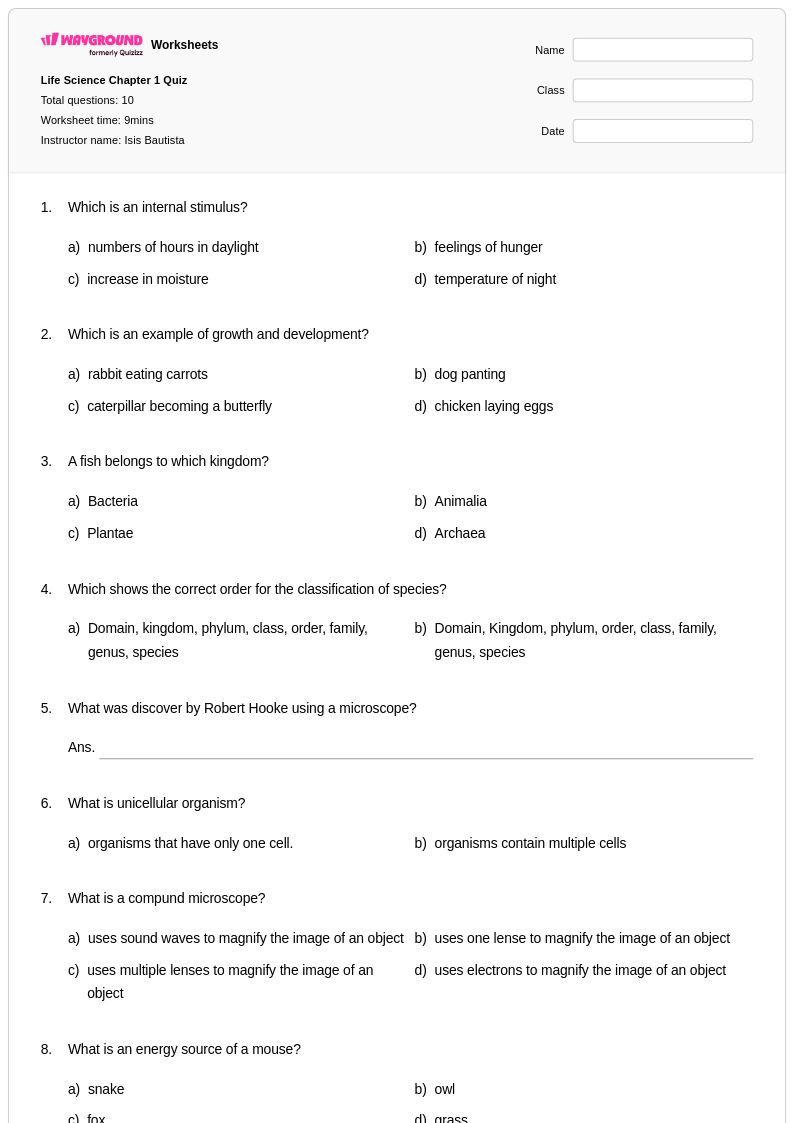
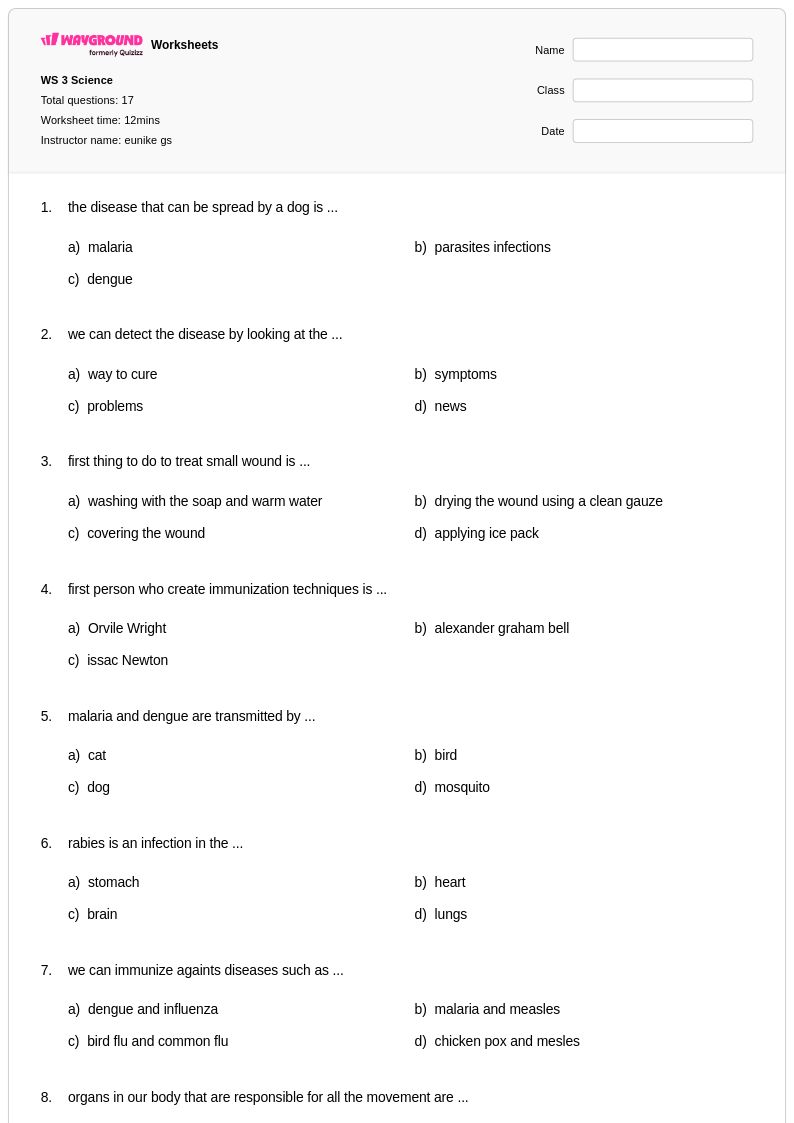
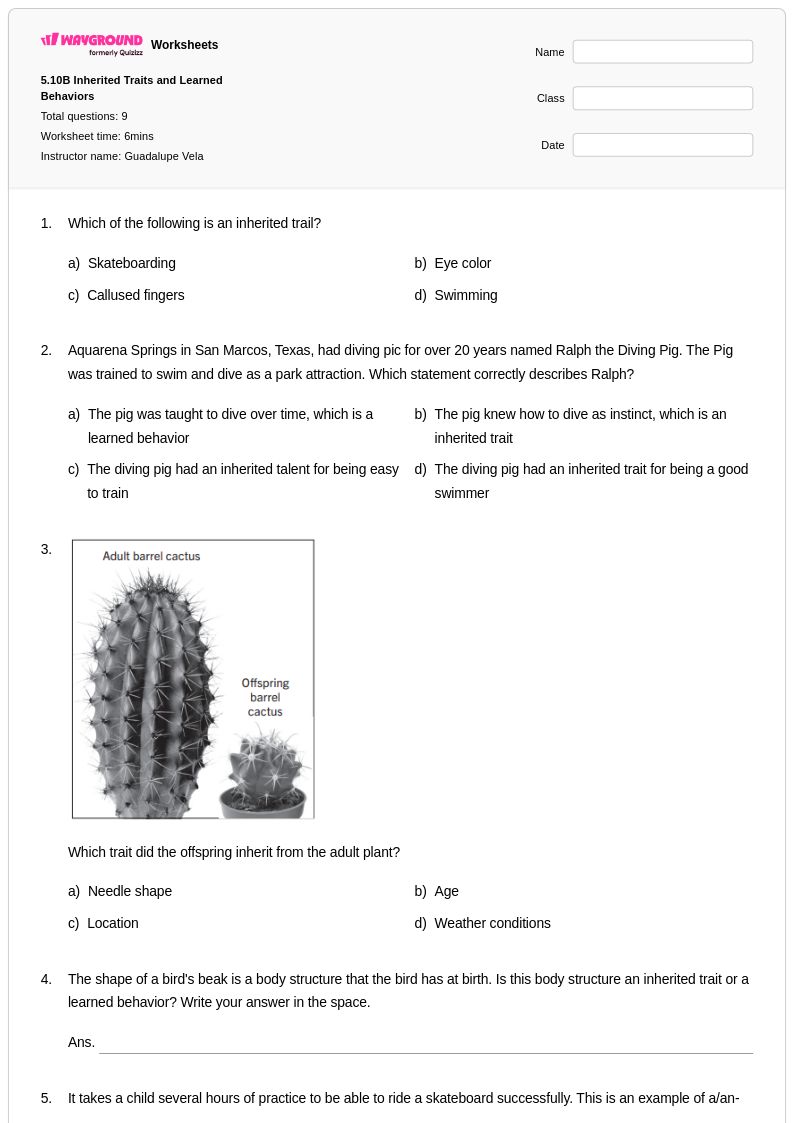
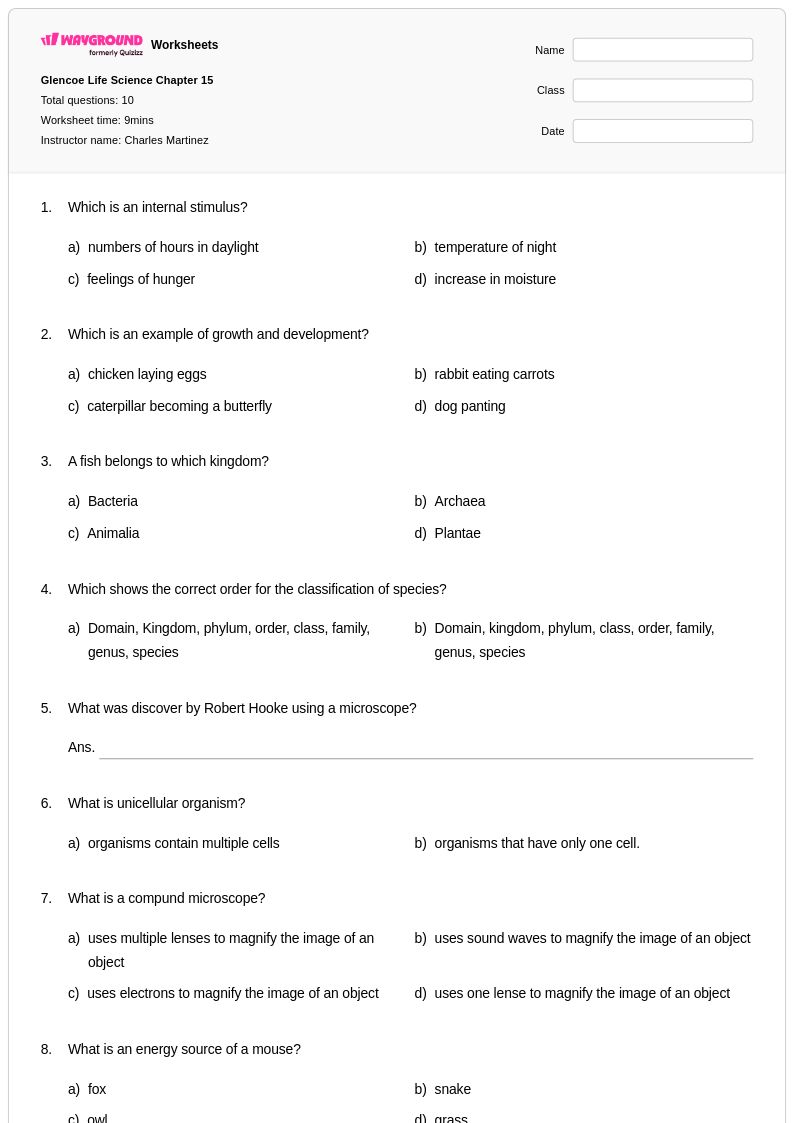
Explore Year 5 chicken life science worksheets from Wayground that help students learn about poultry biology, life cycles, and anatomy through engaging printables, practice problems, and comprehensive answer keys.
Year 5 chicken-focused life science worksheets available through Wayground (formerly Quizizz) provide students with comprehensive exploration of avian biology, anatomy, and life cycles through engaging educational activities. These expertly designed resources strengthen critical scientific observation skills, biological classification understanding, and life cycle analysis as students examine chicken embryonic development, anatomical structures, and behavioral adaptations. The collection includes detailed practice problems covering topics from egg formation and incubation processes to skeletal and digestive system identification, with each worksheet featuring complete answer keys and available as free printable pdf resources that support both classroom instruction and independent study.
Wayground (formerly Quizizz) empowers educators with access to millions of teacher-created chicken life science resources, featuring advanced search and filtering capabilities that align with grade-level science standards and learning objectives. The platform's differentiation tools enable teachers to customize worksheet difficulty levels and content focus areas, accommodating diverse learning needs while maintaining academic rigor appropriate for fifth-grade students. These flexible resources are available in both printable and digital formats, including downloadable pdf versions, making them invaluable for lesson planning, targeted remediation of specific biological concepts, enrichment activities for advanced learners, and systematic skill practice that builds foundational understanding of animal biology and scientific inquiry methods.
FAQs
How do I teach chicken biology and life cycles to students?
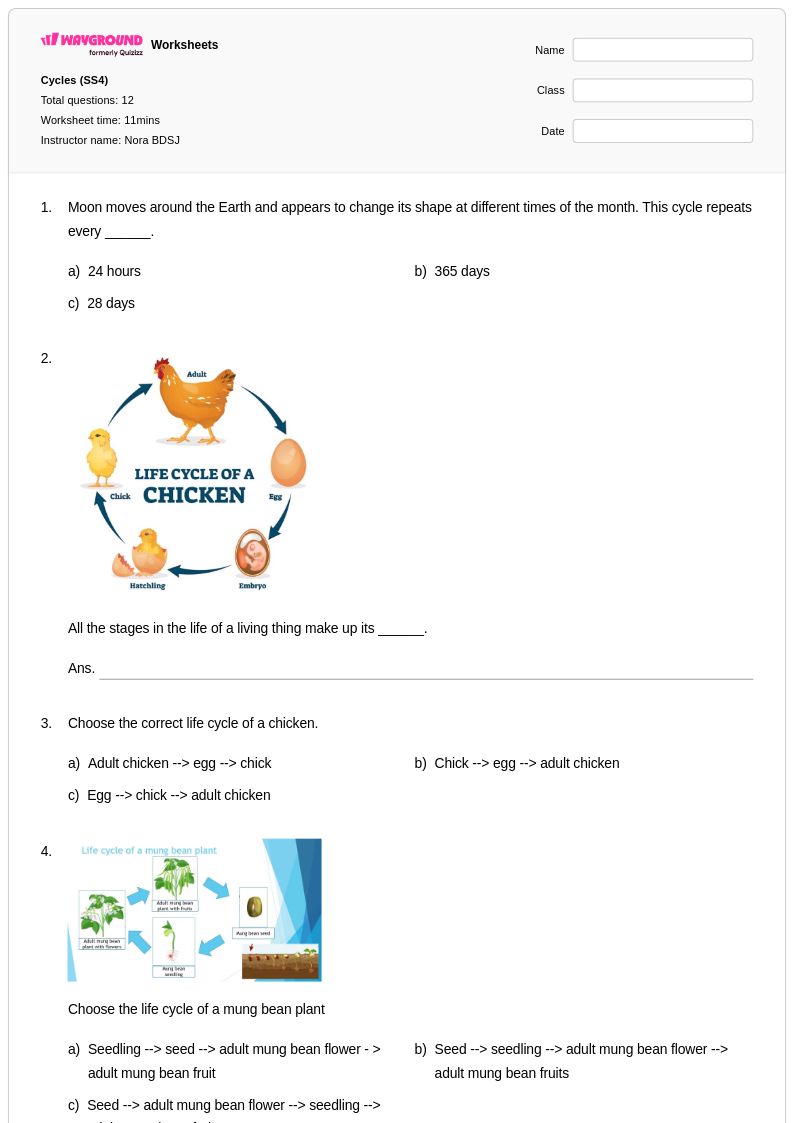
Teaching chicken biology works best when students can connect abstract concepts to observable stages. Start with the life cycle from egg to chick, then move into anatomy, digestive processes, and reproductive systems. Using labeled diagrams alongside real-world examples, such as egg dissection or incubation observations, reinforces scientific vocabulary and helps students visualize internal structures they cannot see directly.
What exercises help students practice chicken anatomy and development?
Effective practice exercises for chicken biology include labeling skeletal and muscular diagrams, sequencing embryonic development stages, and completing fill-in-the-blank passages on digestive and reproductive processes. Worksheets that combine diagram annotation with short-answer questions push students beyond rote memorization and build biological reasoning skills by asking them to explain how systems function together.
What common mistakes do students make when learning about chicken development and anatomy?
Students frequently confuse the stages of embryonic development, particularly the timing and physical characteristics of each stage. Another common error is misidentifying the roles of specific organs in the digestive system, such as conflating the crop and the gizzard. Students also tend to oversimplify the reproductive cycle, often omitting the role of fertilization and focusing only on the visible egg stage.
How can I use chicken worksheets to support different learners in my classroom?
Chicken biology worksheets can be differentiated by adjusting the complexity of diagram labels, the scaffolding level of written prompts, and the number of answer choices provided for multiple-choice questions. On Wayground, teachers can apply student-level accommodations such as read aloud support, reduced answer choices, and extended time, which are especially helpful for students who need additional processing support without singling them out in front of peers.
How do I use Wayground's chicken worksheets in my classroom?
Wayground's chicken worksheets are available as both printable PDFs and in digital formats, making them suitable for traditional classroom settings, remote learning, and blended instruction. Teachers can assign them as independent practice, guided group activities, or hosted quizzes directly on the Wayground platform. Each worksheet includes a complete answer key, so they can also be used effectively for self-paced or independent learning without requiring constant teacher oversight.
How does studying chickens fit into a broader life science curriculum?
Chickens are one of the most studied organisms in K-12 life science because they provide accessible, concrete examples of vertebrate anatomy, embryonic development, and biological systems. Studying chickens supports standards-aligned learning objectives in biology, including life cycles, body systems, and organism behavior. Their familiarity as farm animals also makes abstract concepts more relatable, which strengthens student engagement and concept retention.