
Recommended Topics for you
15 Q
9th - Uni
15 Q
9th - Uni
20 Q
8th - Uni
22 Q
5th - Uni
12 Q
5th - Uni
37 Q
11th - 12th
15 Q
7th - Uni
25 Q
5th - Uni
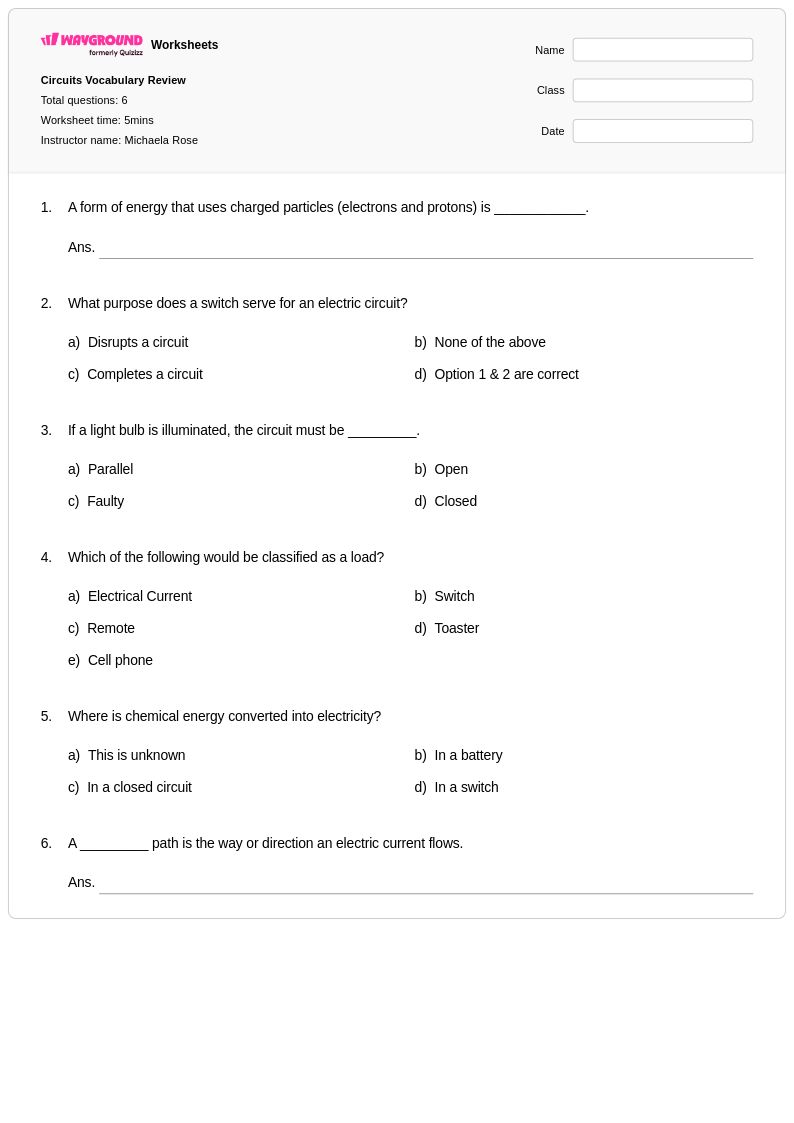
6 Q
8th - 11th
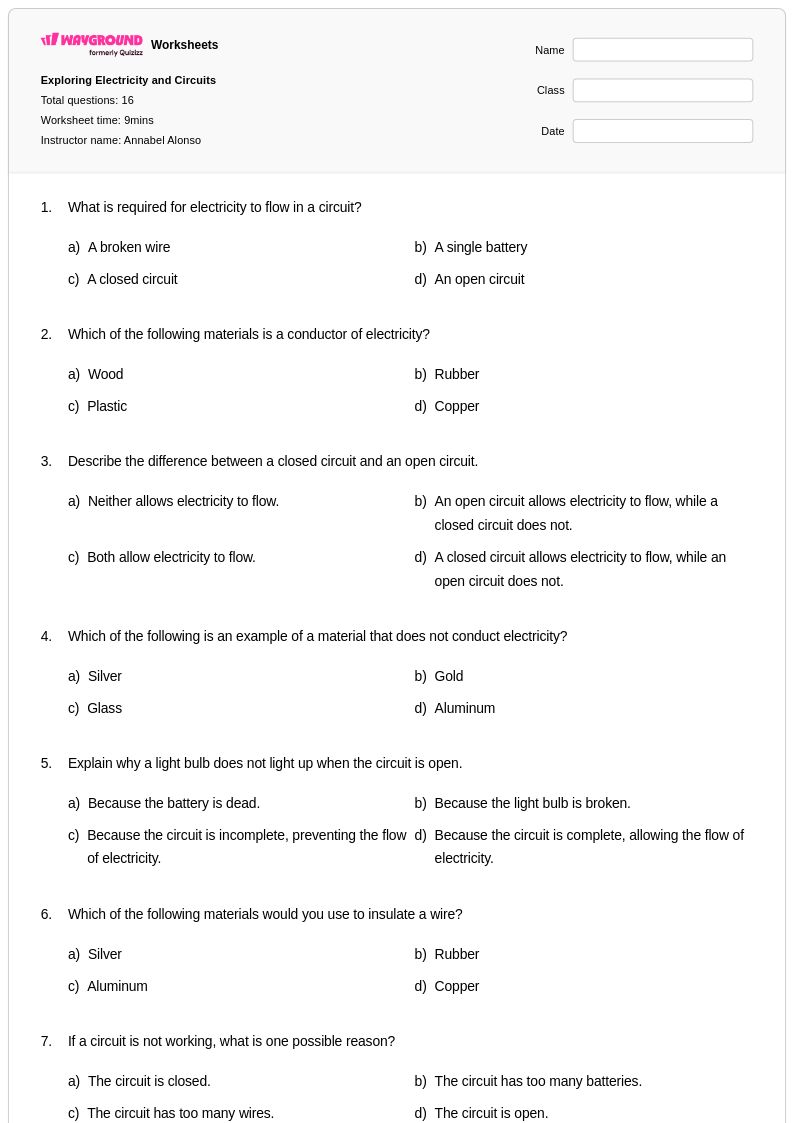
16 Q
5th - Uni
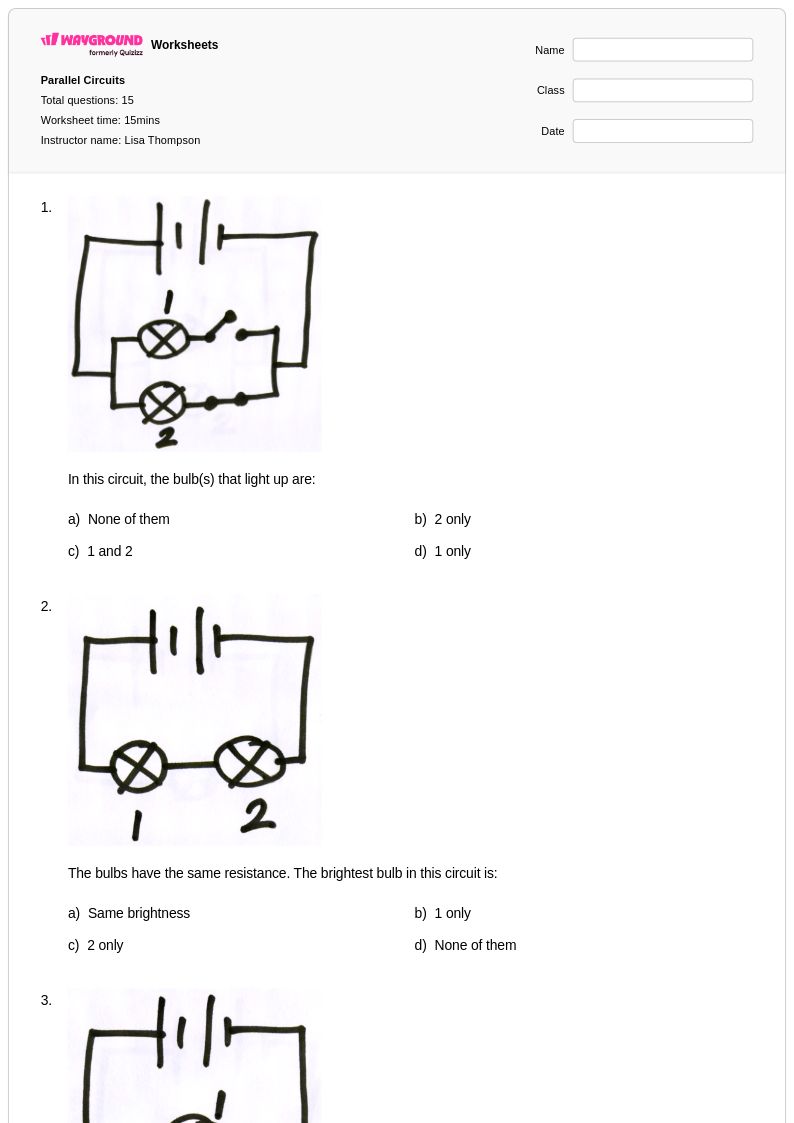
15 Q
9th - Uni
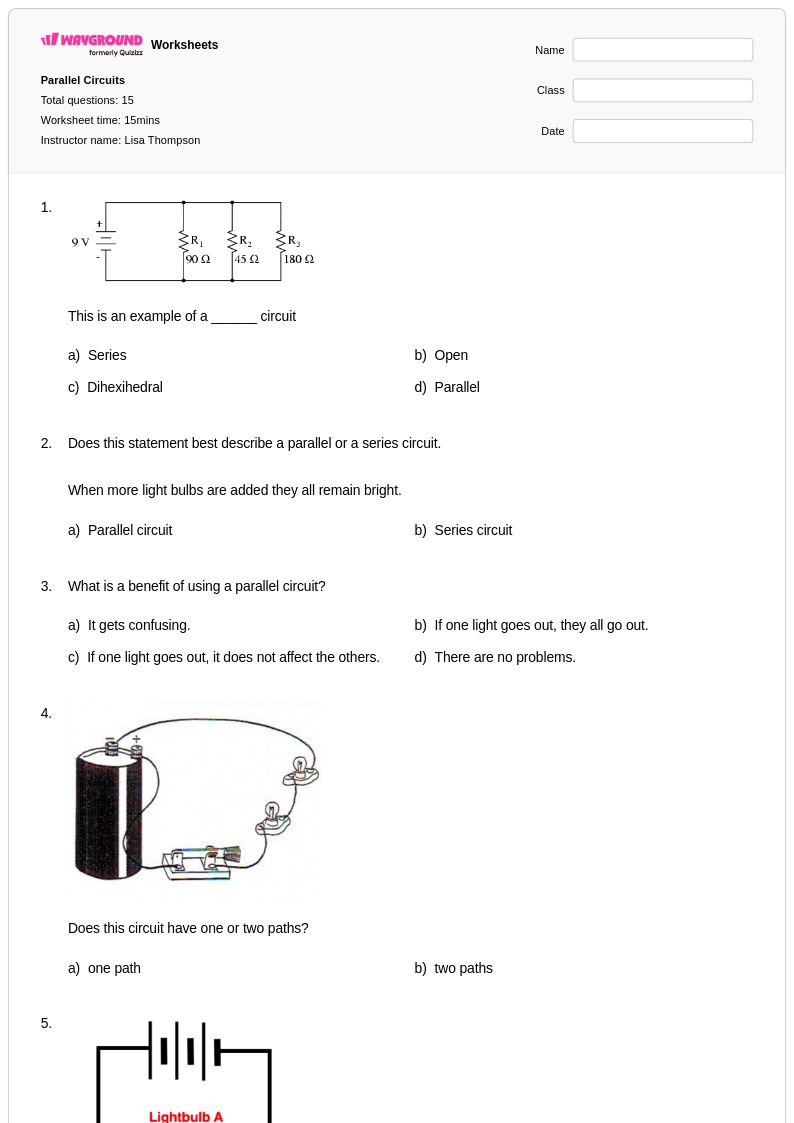
15 Q
9th - Uni
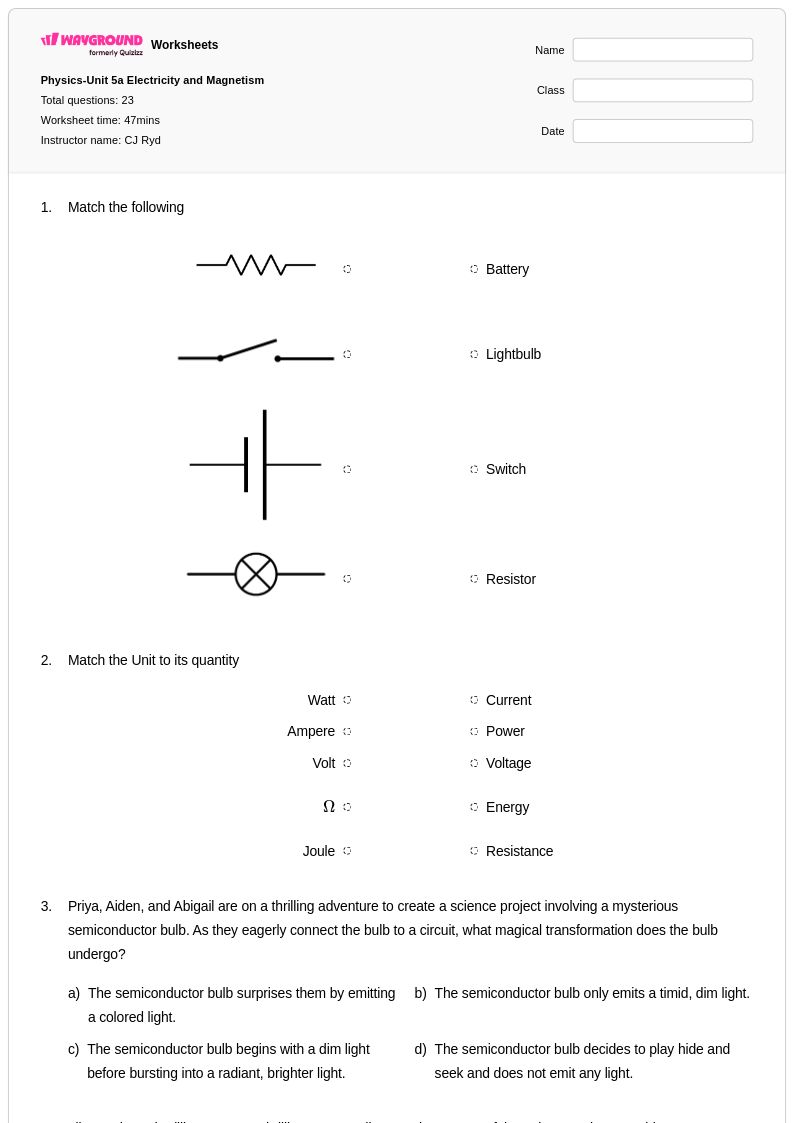
23 Q
9th - 12th
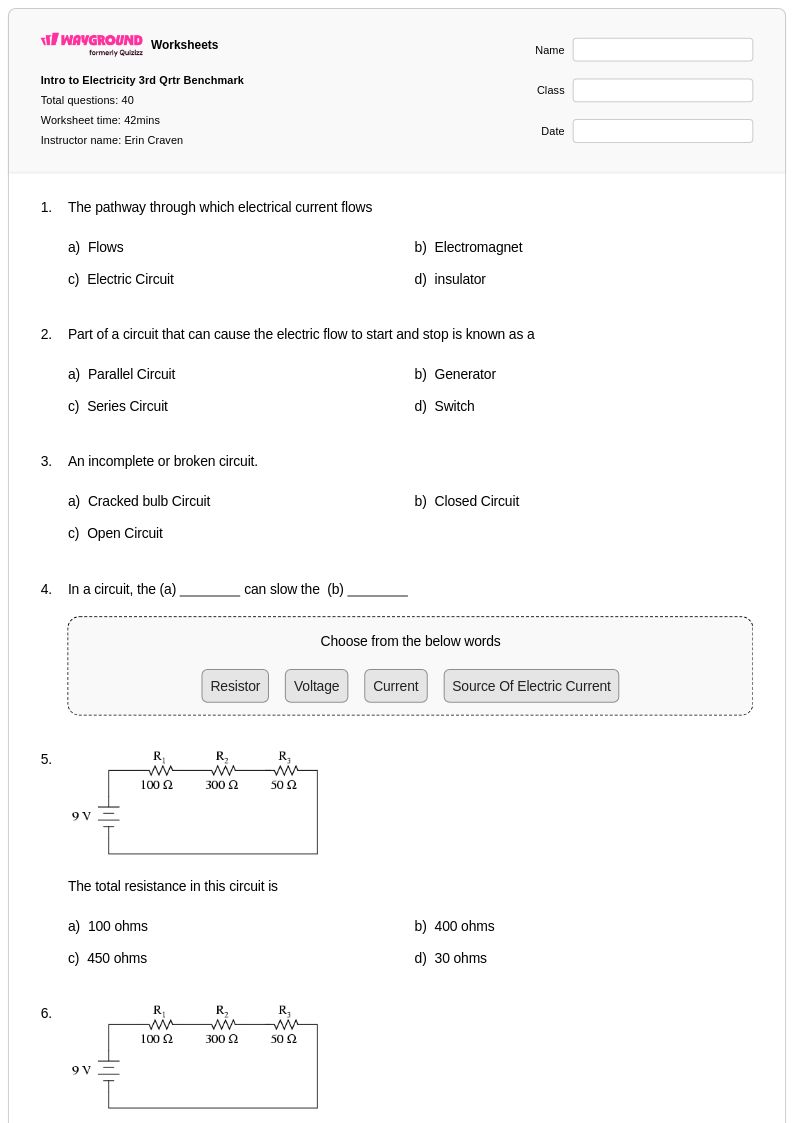
40 Q
9th - 12th
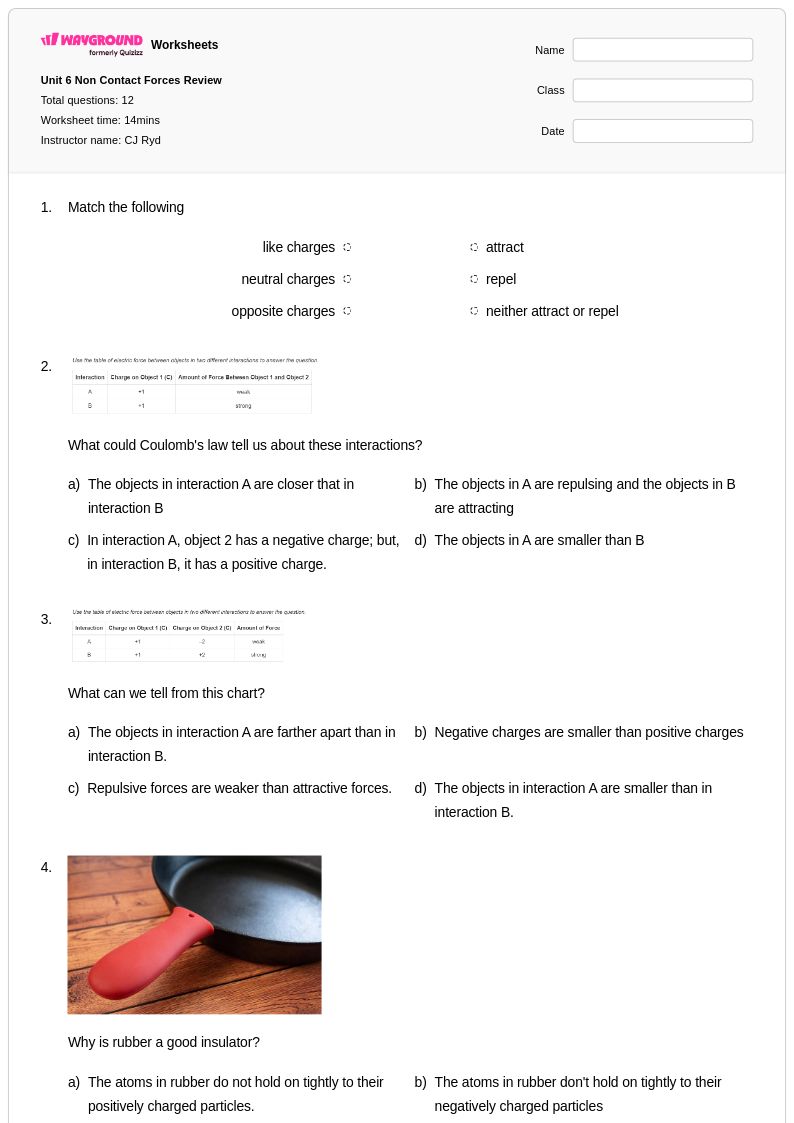
12 Q
9th - 12th
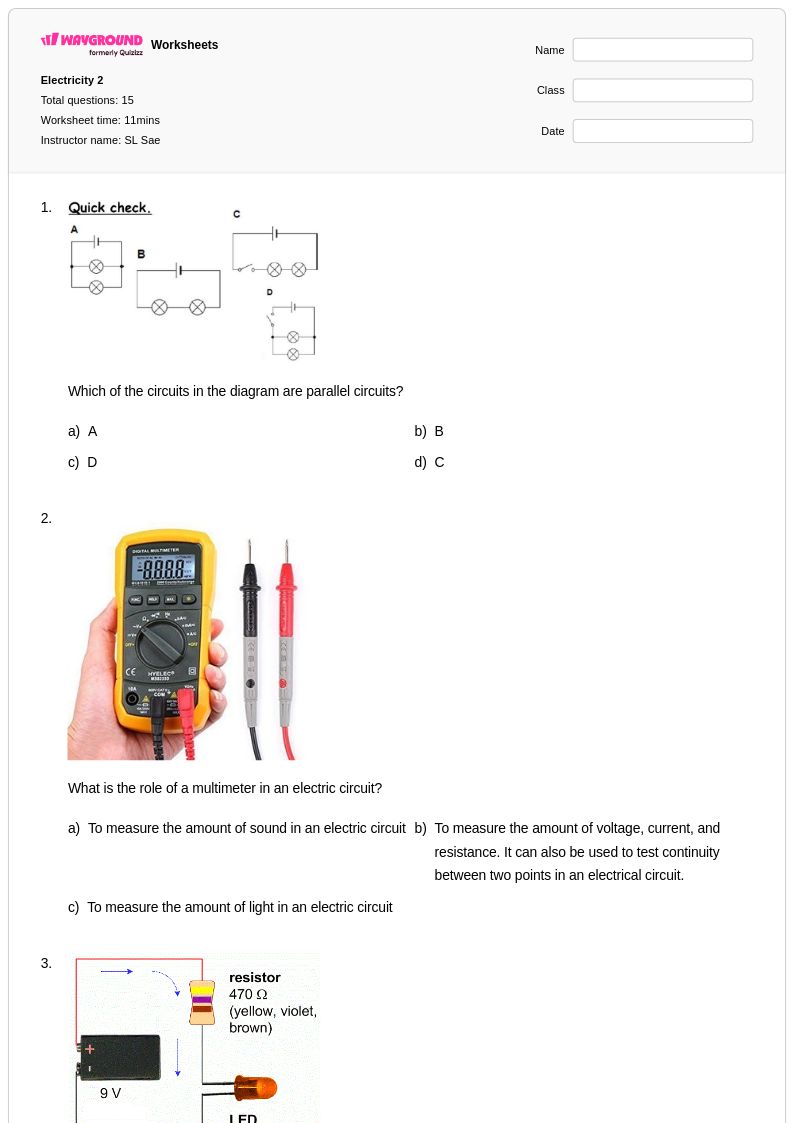
15 Q
9th - 12th
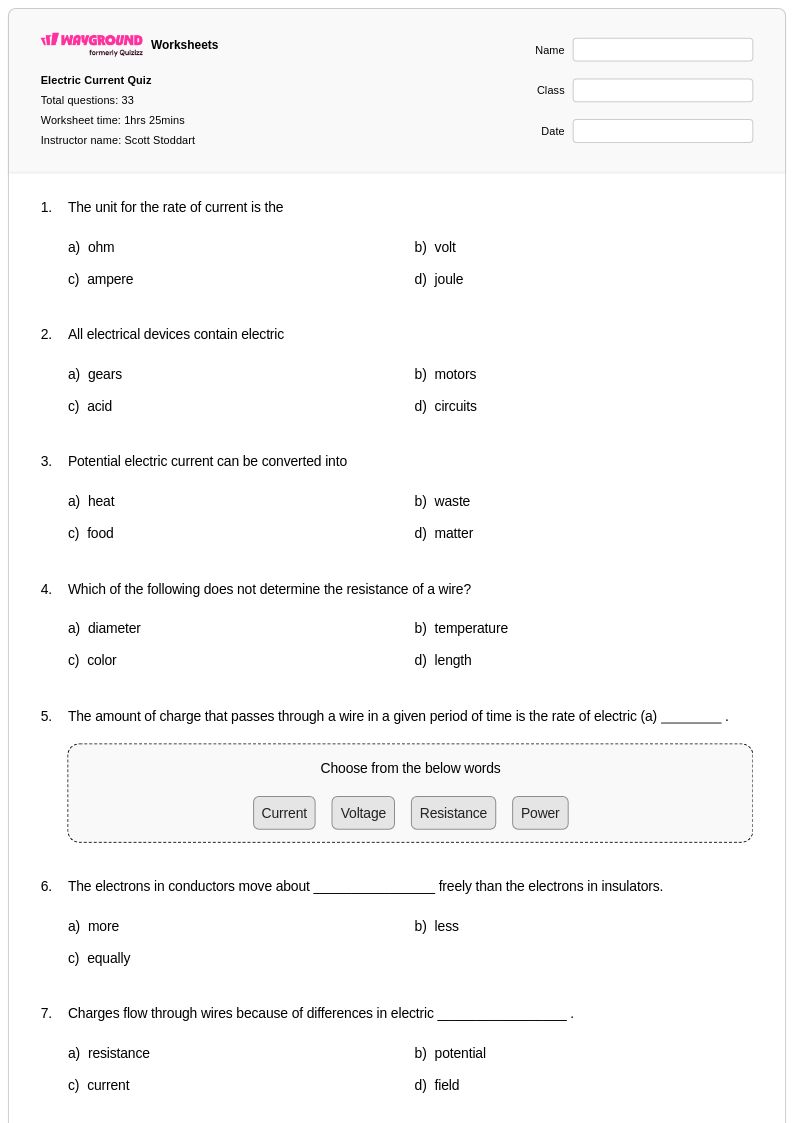
33 Q
8th - Uni
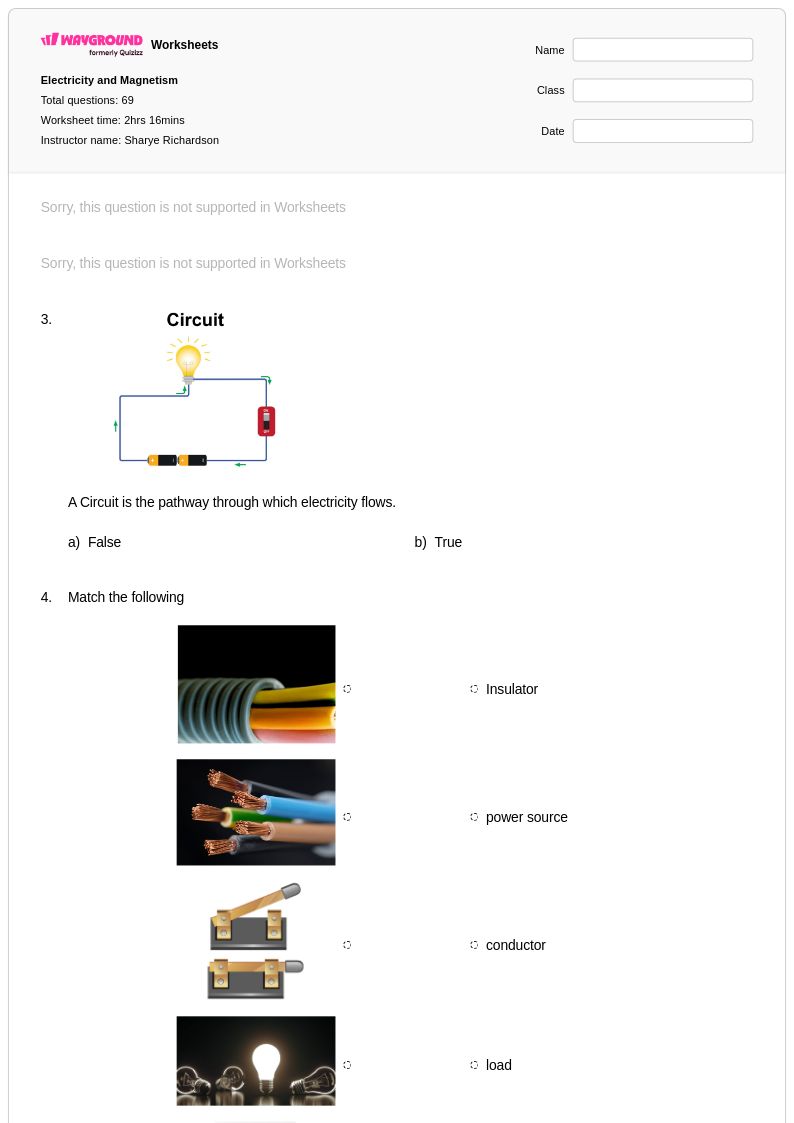
94 Q
9th - 12th
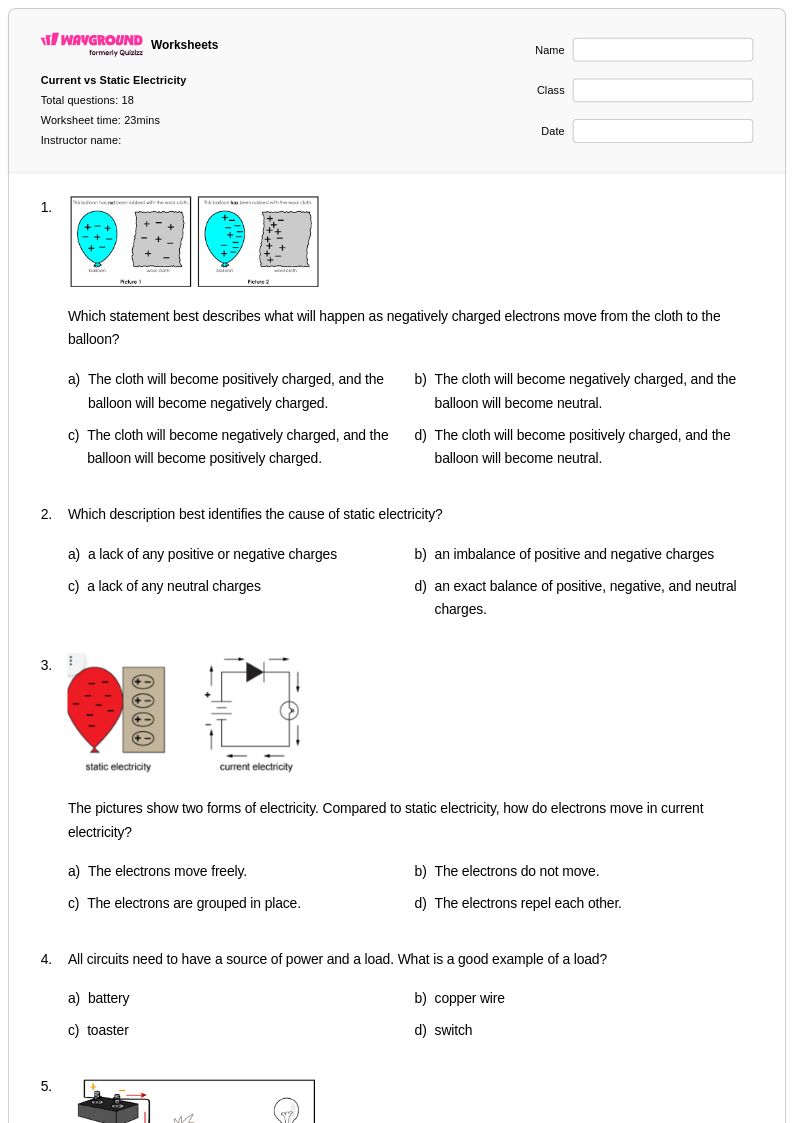
18 Q
9th - 12th
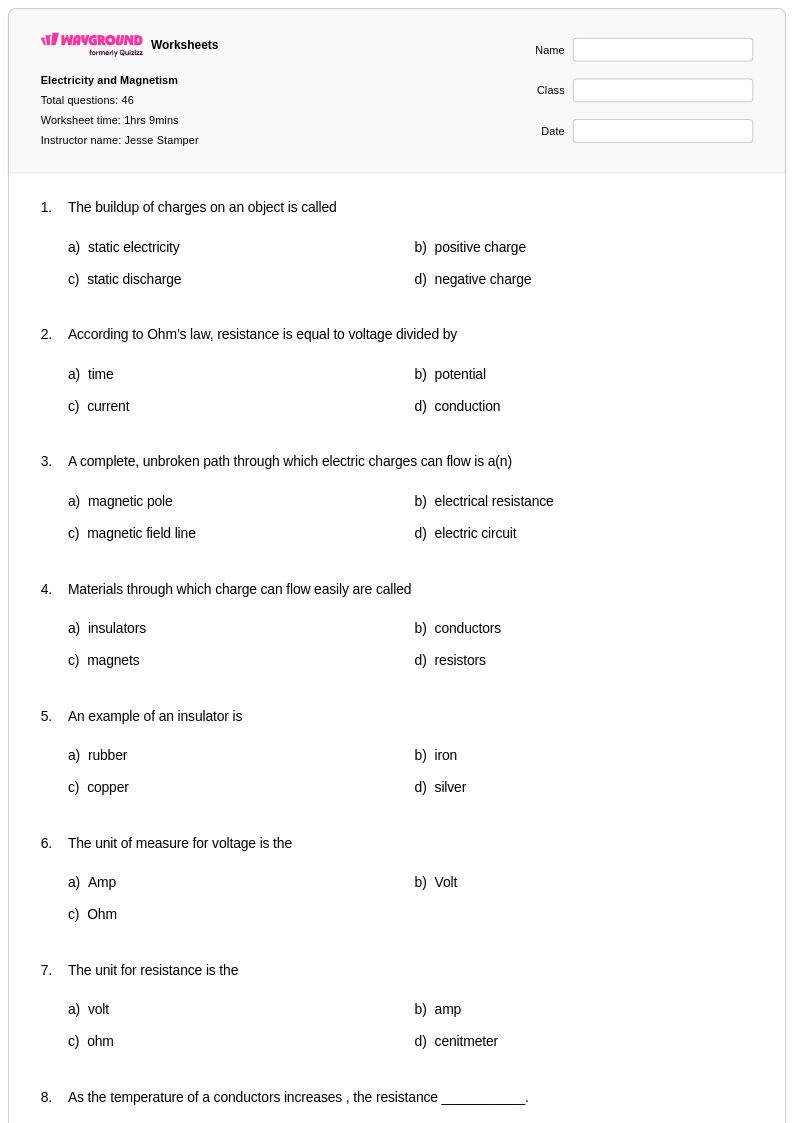
75 Q
9th - 12th
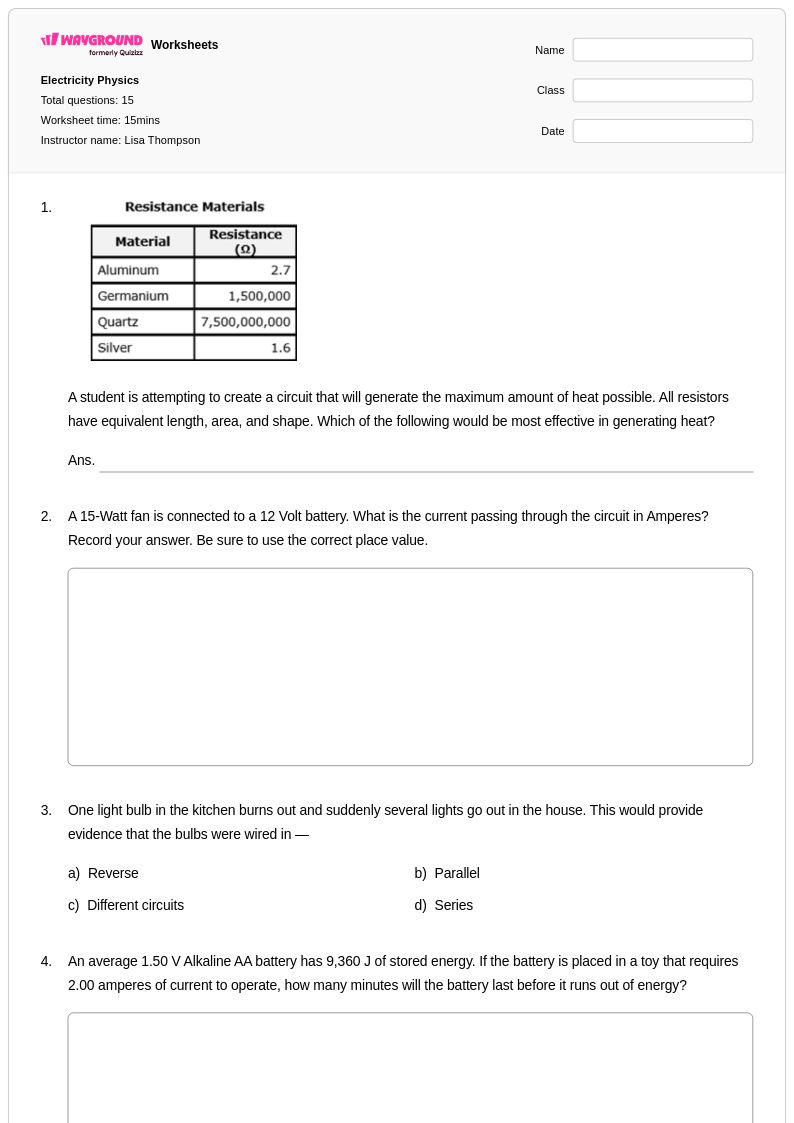
15 Q
11th - Uni
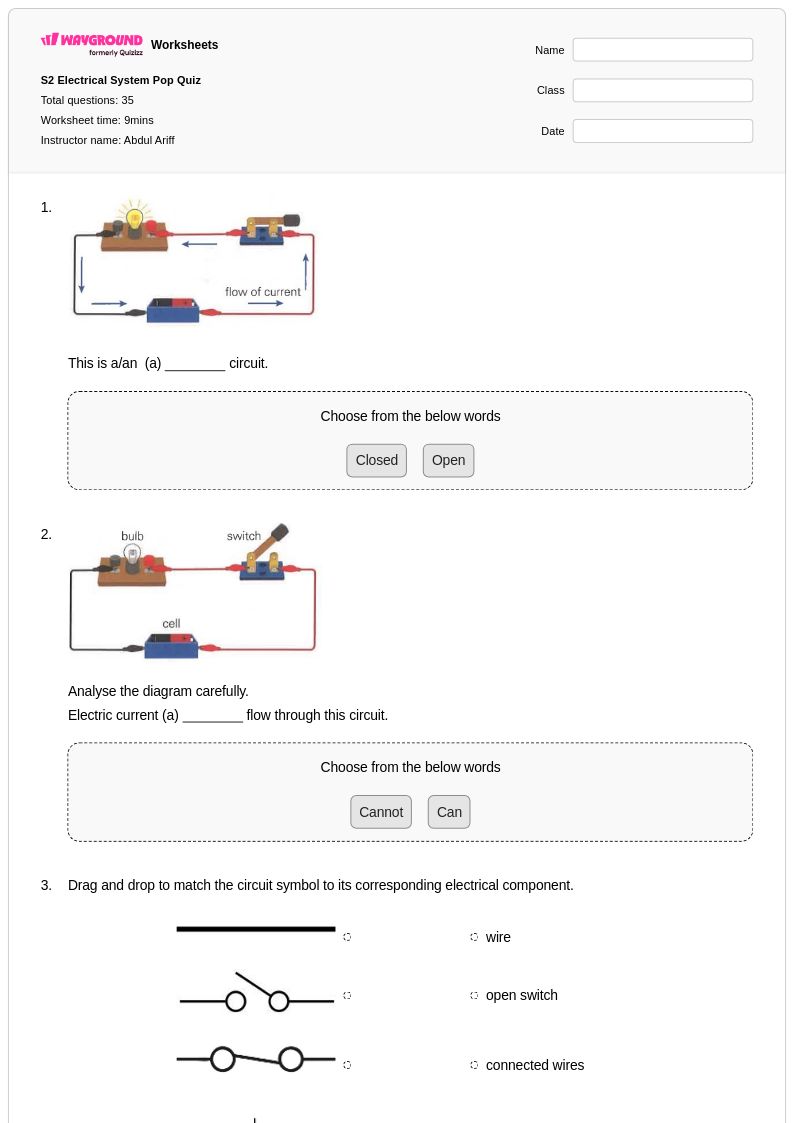
13 Q
9th - 12th
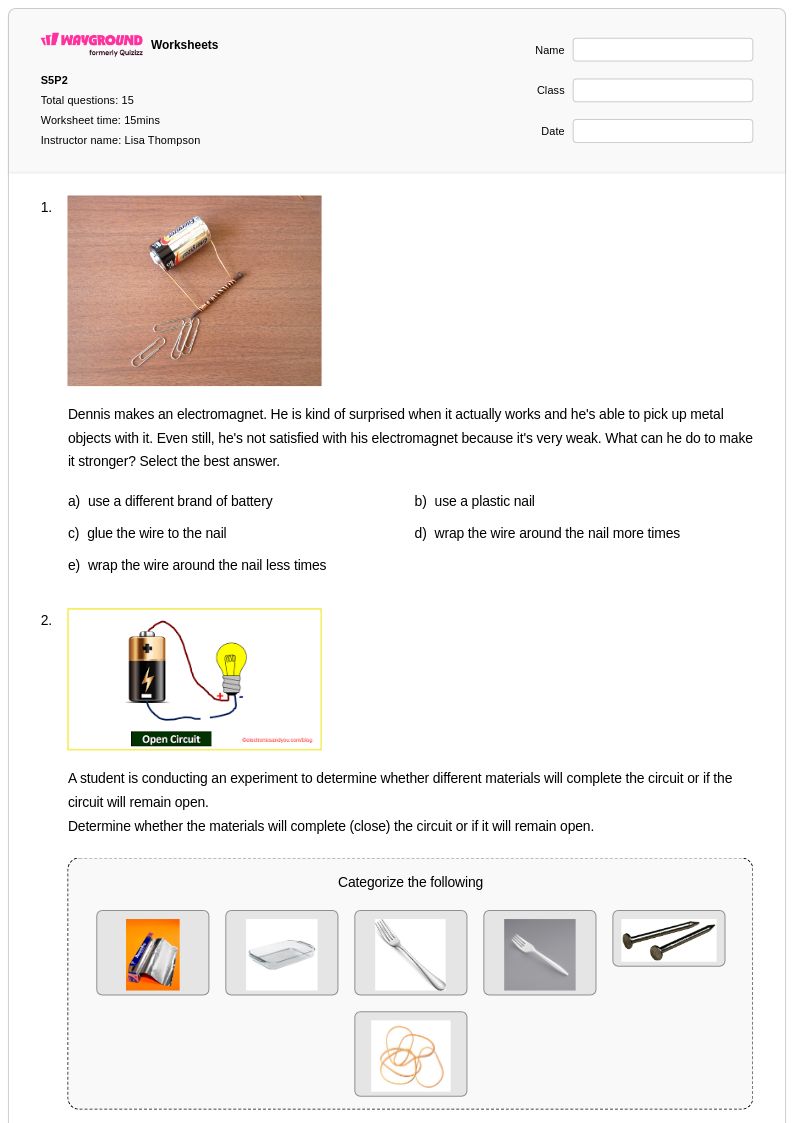
15 Q
5th - Uni
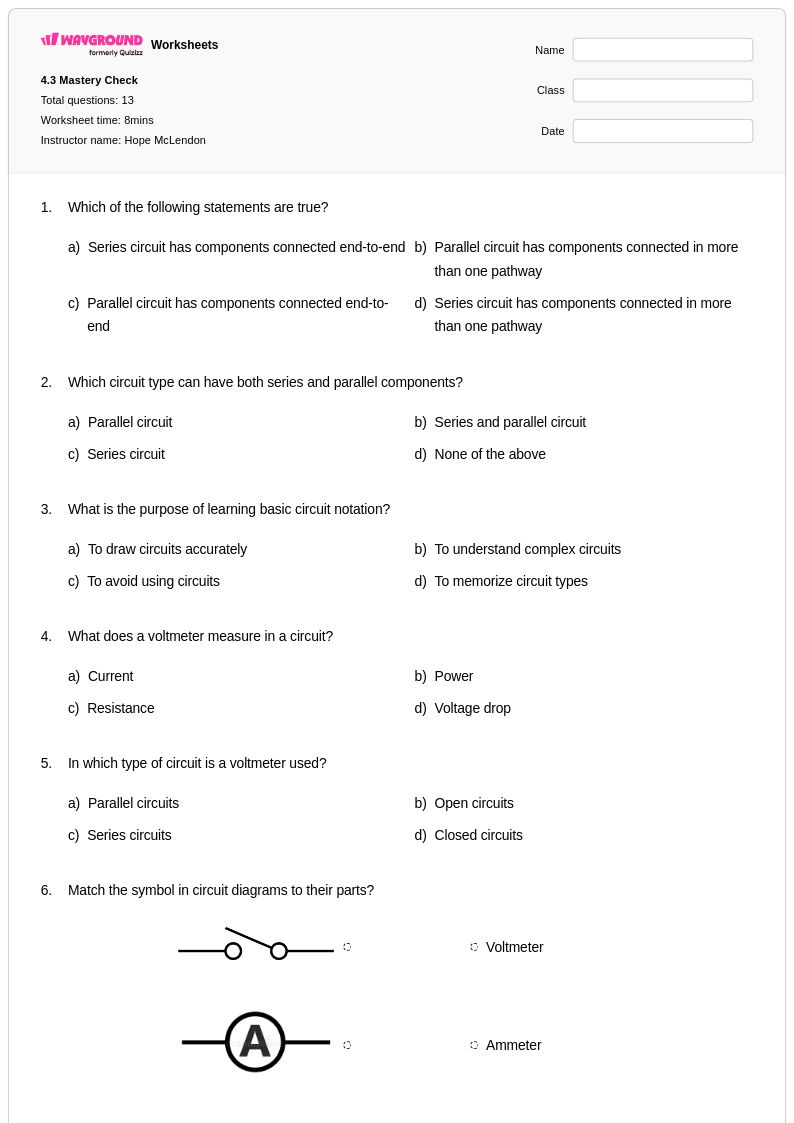
13 Q
11th
Explore Circuits Worksheets for year 11 by Topic
Explore Other Subject Worksheets for year 11
Explore printable Circuits worksheets for Year 11
Year 11 circuits worksheets available through Wayground (formerly Quizizz) provide comprehensive coverage of electrical circuit analysis, helping students master fundamental concepts in current, voltage, and resistance relationships. These expertly designed resources strengthen critical thinking skills through systematic practice problems that guide students through analyzing series and parallel circuits, applying Ohm's law, calculating power dissipation, and understanding circuit behavior under various conditions. The collection includes detailed answer keys that support independent learning and self-assessment, while printable pdf formats ensure accessibility for both classroom instruction and homework assignments. Students develop proficiency in circuit diagram interpretation, multimeter usage concepts, and mathematical problem-solving techniques essential for advanced physics coursework, with free practice materials covering everything from basic circuit construction principles to complex network analysis.
Wayground (formerly Quizizz) empowers educators with millions of teacher-created circuit worksheets that streamline lesson planning and differentiated instruction for Year 11 physics courses. The platform's robust search and filtering capabilities allow teachers to quickly locate resources aligned with specific learning standards and curriculum requirements, while customization tools enable educators to modify existing materials or create personalized assessments targeting individual student needs. These versatile worksheet collections support comprehensive instructional approaches through both printable and digital pdf formats, facilitating seamless integration into traditional classroom settings and remote learning environments. Teachers can effectively address diverse learning styles and academic levels by selecting from remediation exercises for struggling students, enrichment activities for advanced learners, and targeted skill practice materials that reinforce circuit analysis competencies across varied difficulty levels.
FAQs
How do I teach series and parallel circuits to students?
What exercises help students practice calculating resistance in circuits?
What are the most common mistakes students make with circuits?
How do I differentiate circuits worksheets for students at different skill levels?
How do I use Wayground's circuits worksheets in my classroom?
How do I help students read and draw circuit diagrams correctly?