
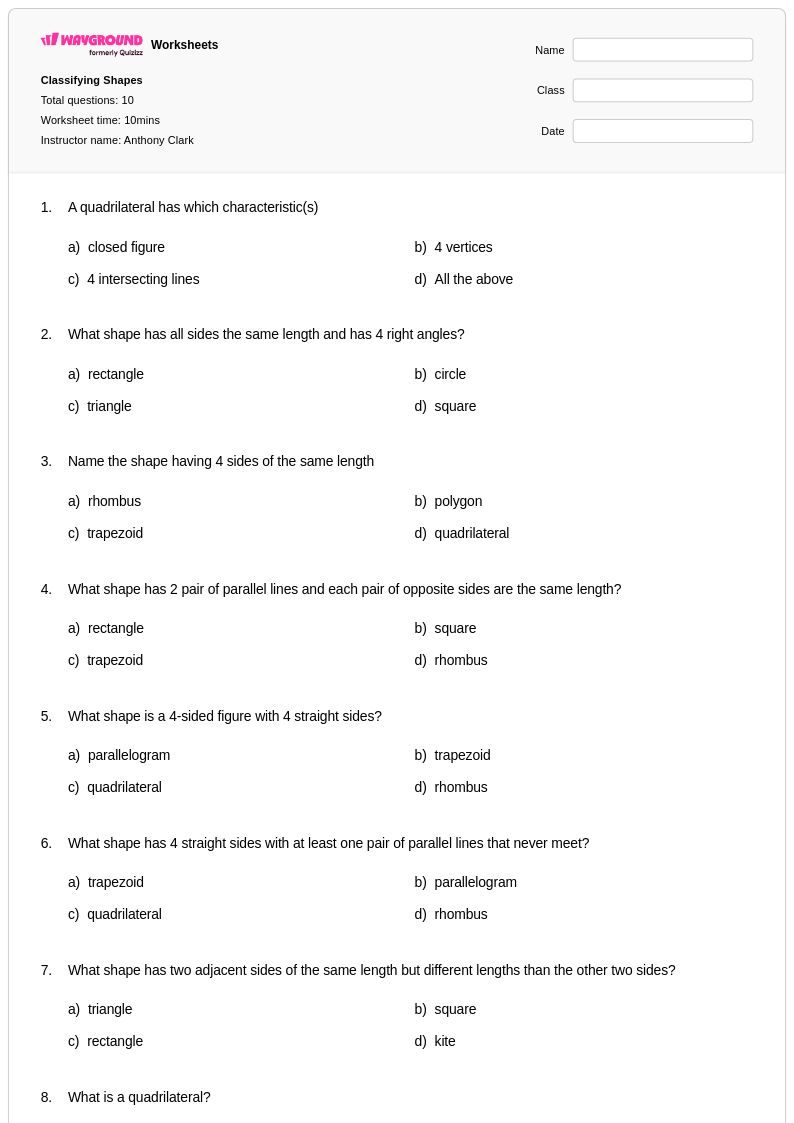
10 Q
5th - Uni
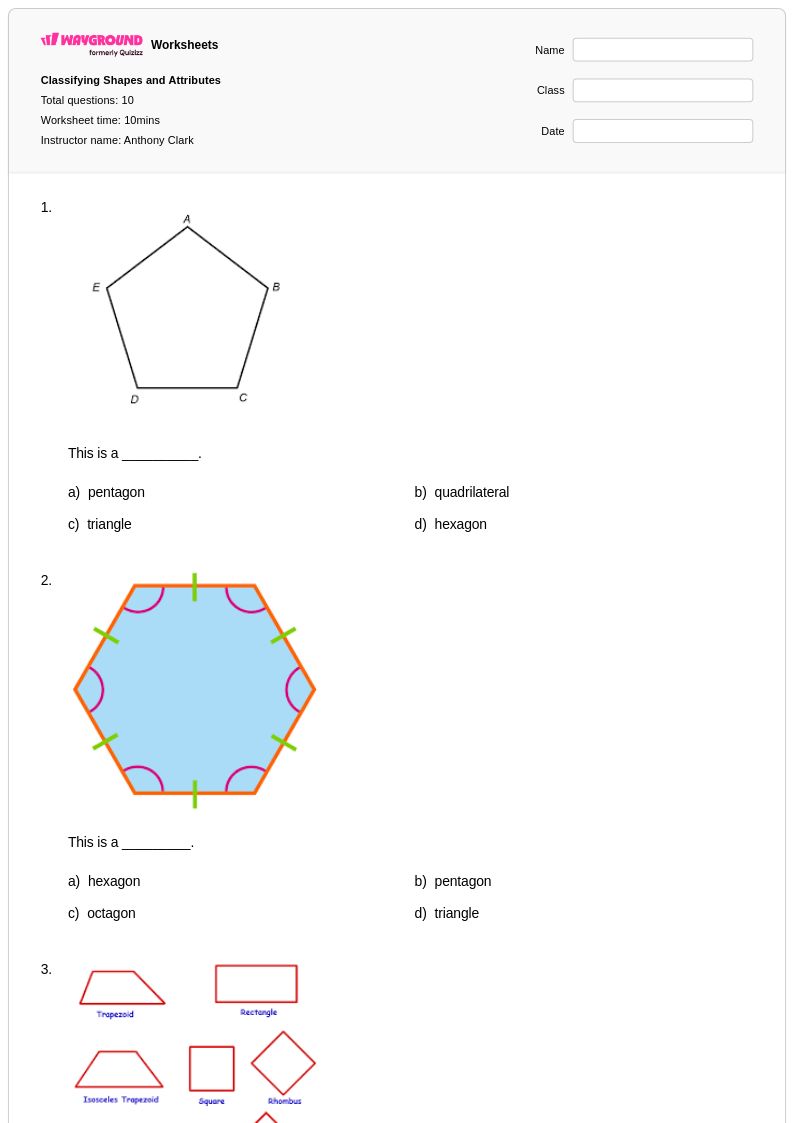
10 Q
5th - Uni
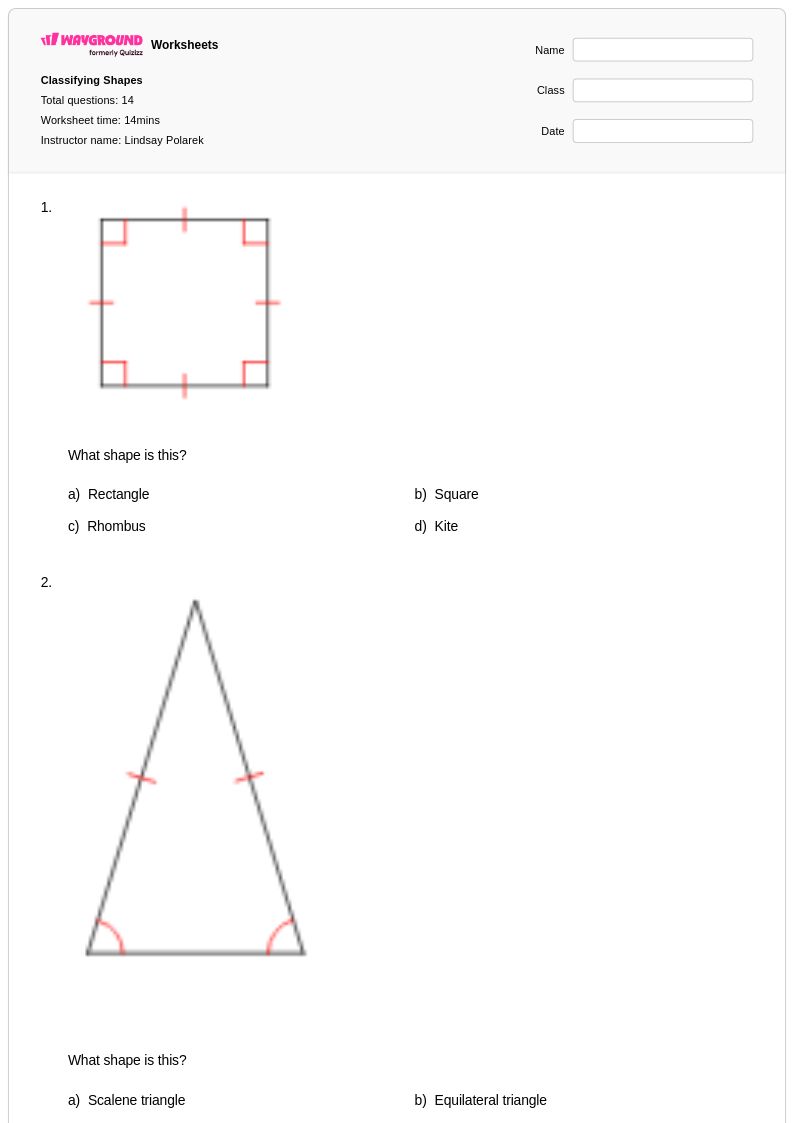
14 Q
6th - 12th
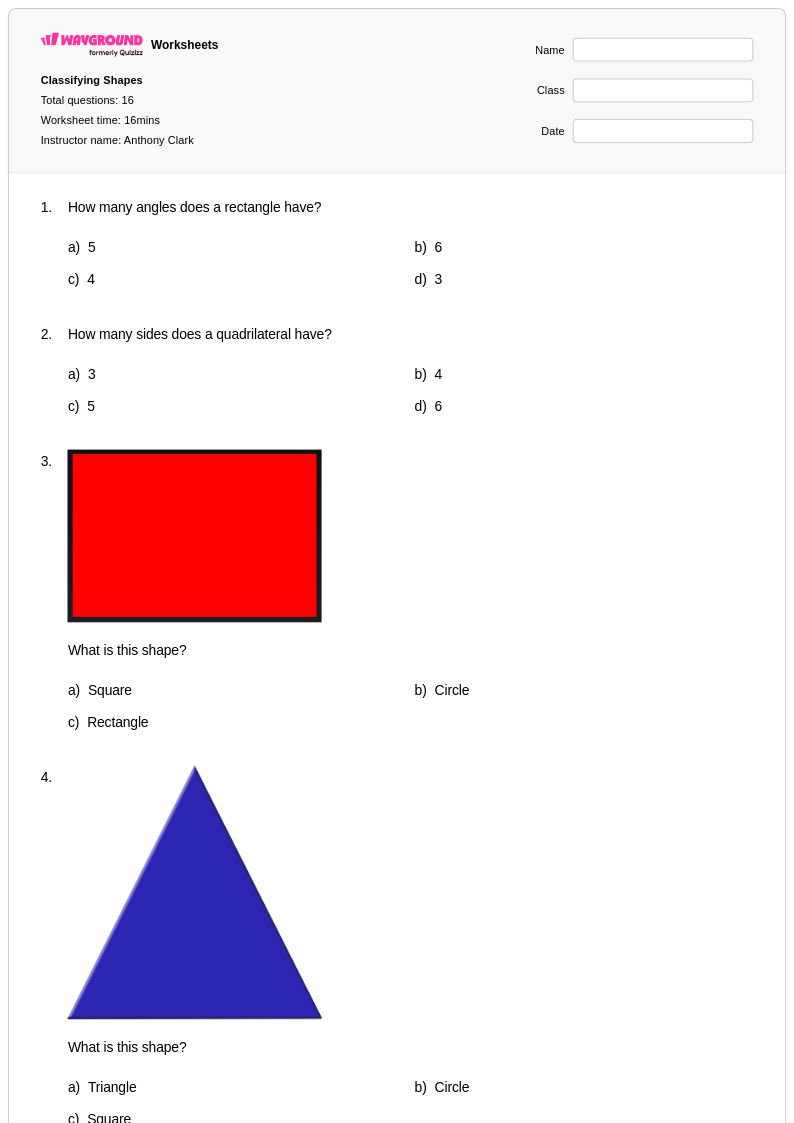
16 Q
2nd - Uni
15 Q
5th - Uni
15 Q
2nd - Uni
15 Q
KG - Uni
12 Q
5th - Uni
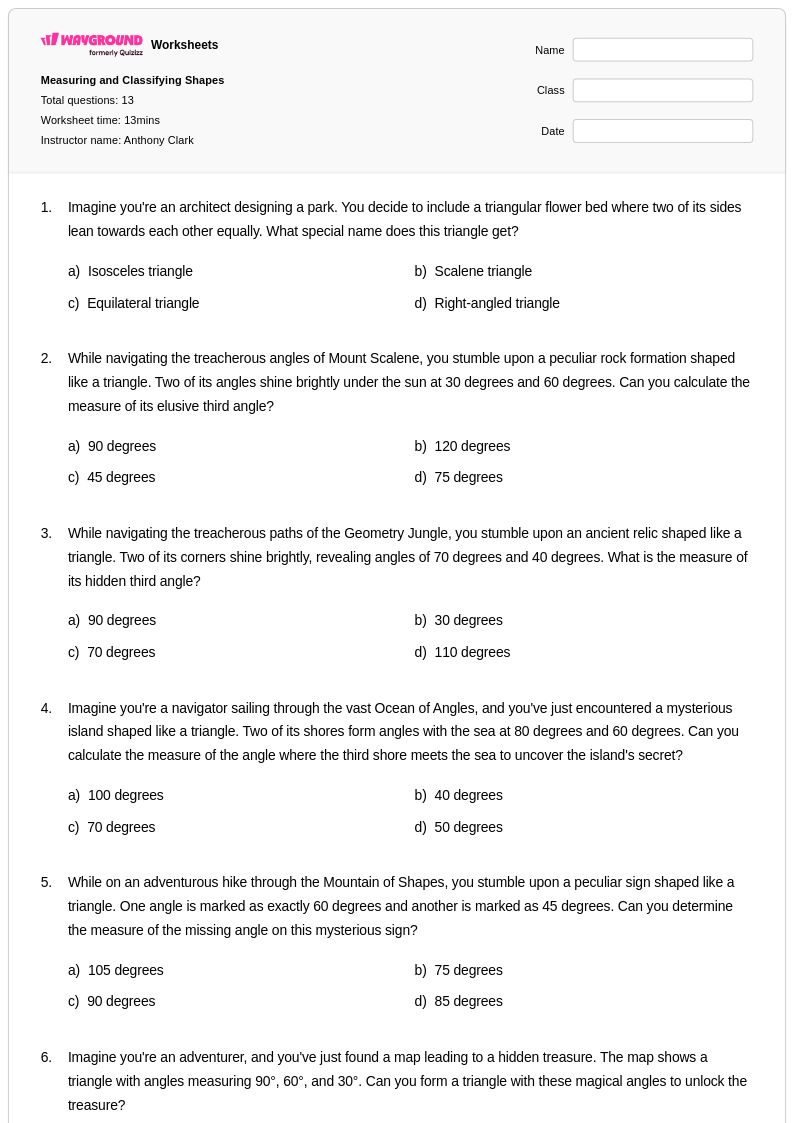
13 Q
5th - Uni
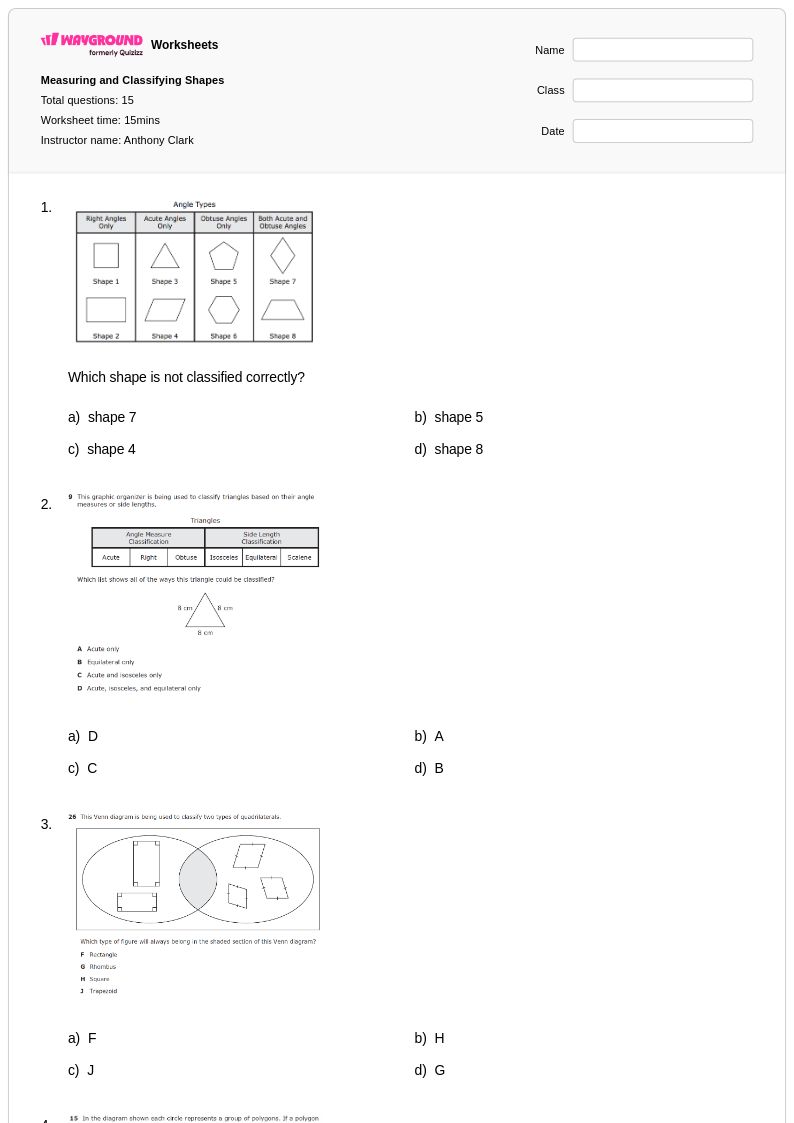
15 Q
5th - Uni
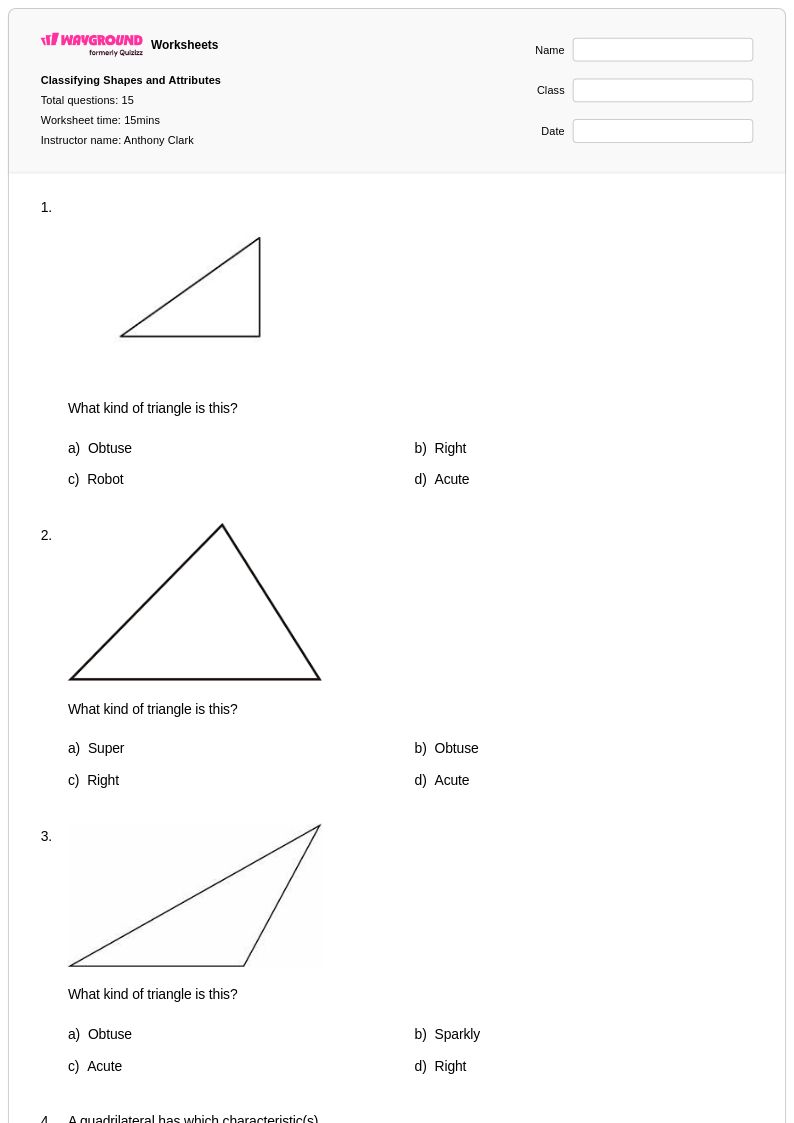
15 Q
5th - Uni
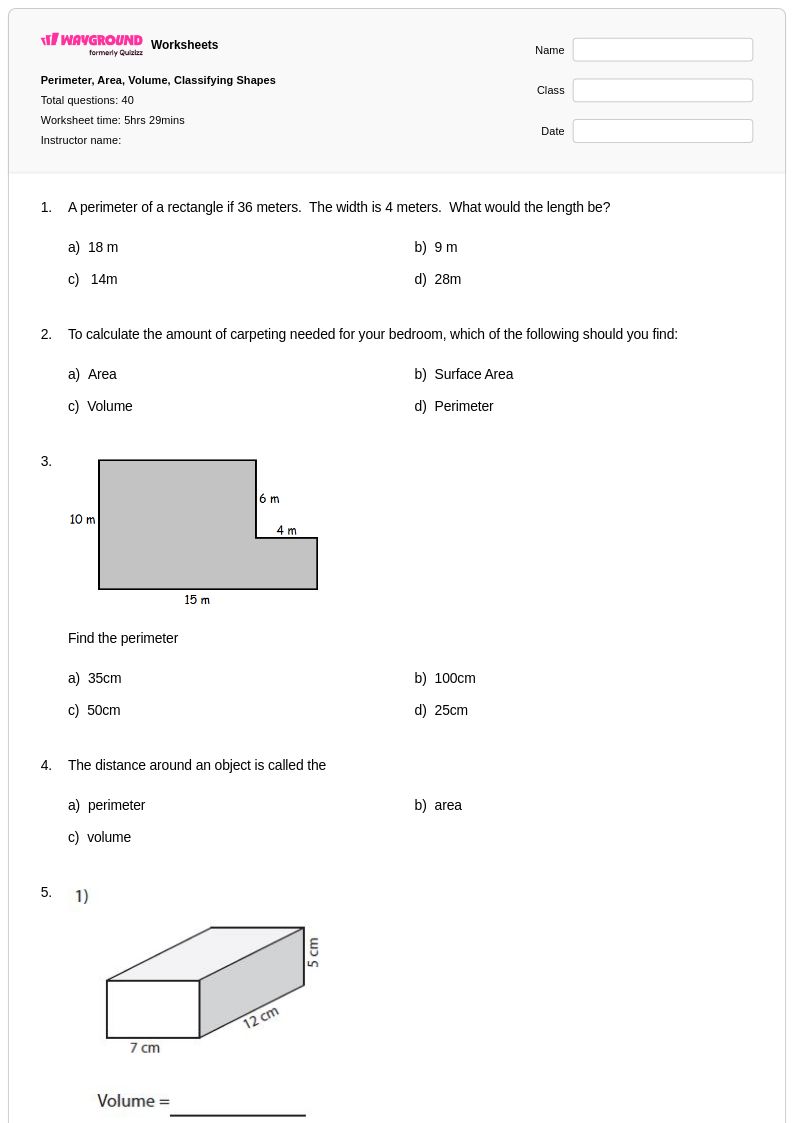
40 Q
5th - 6th
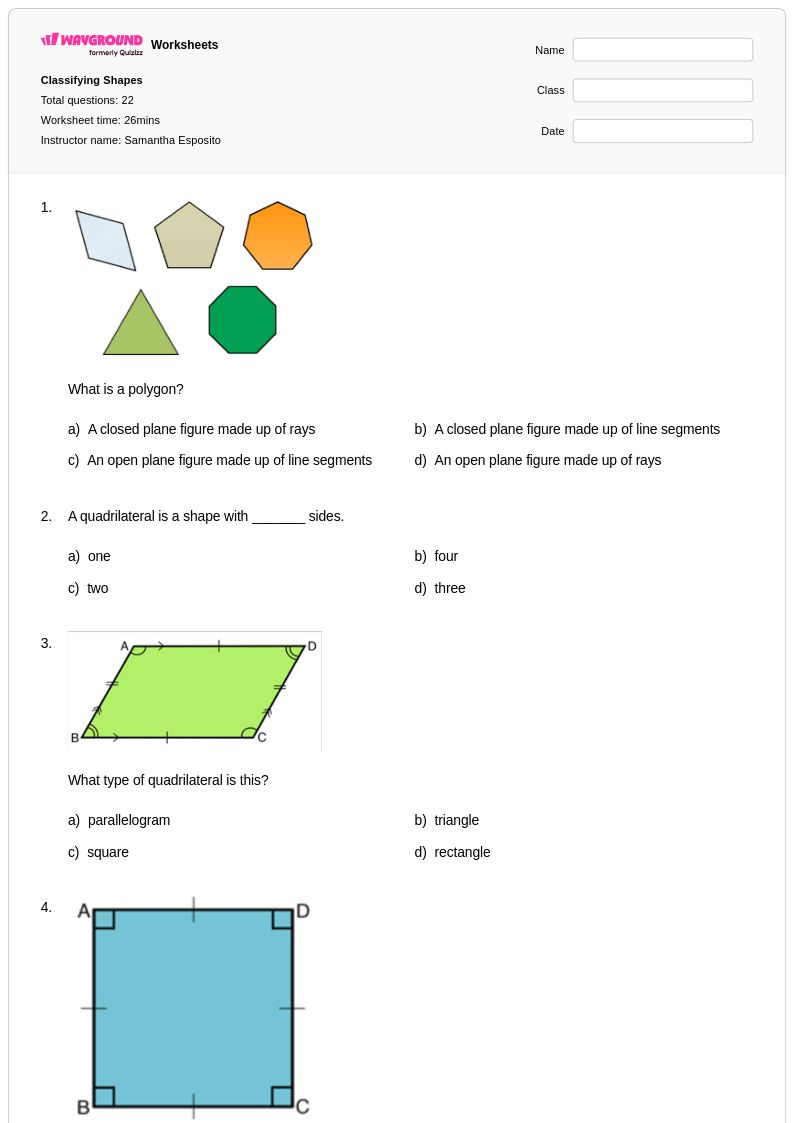
22 Q
6th - 8th
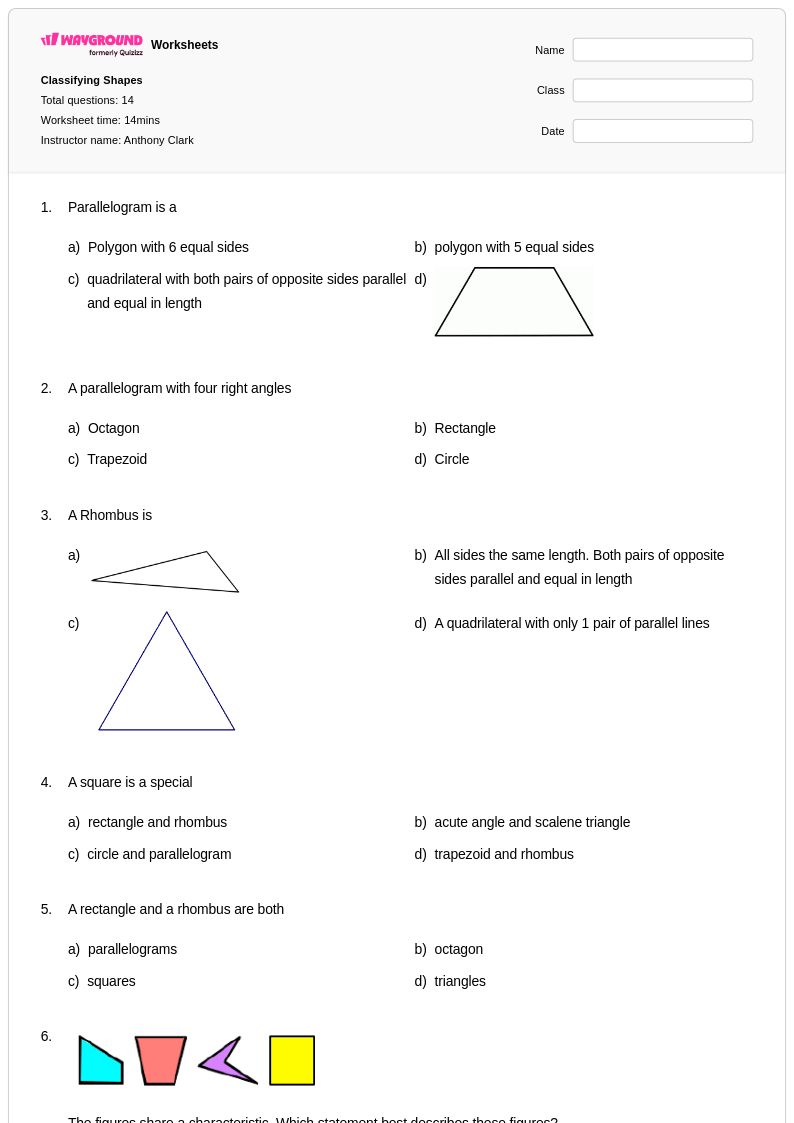
14 Q
5th - Uni
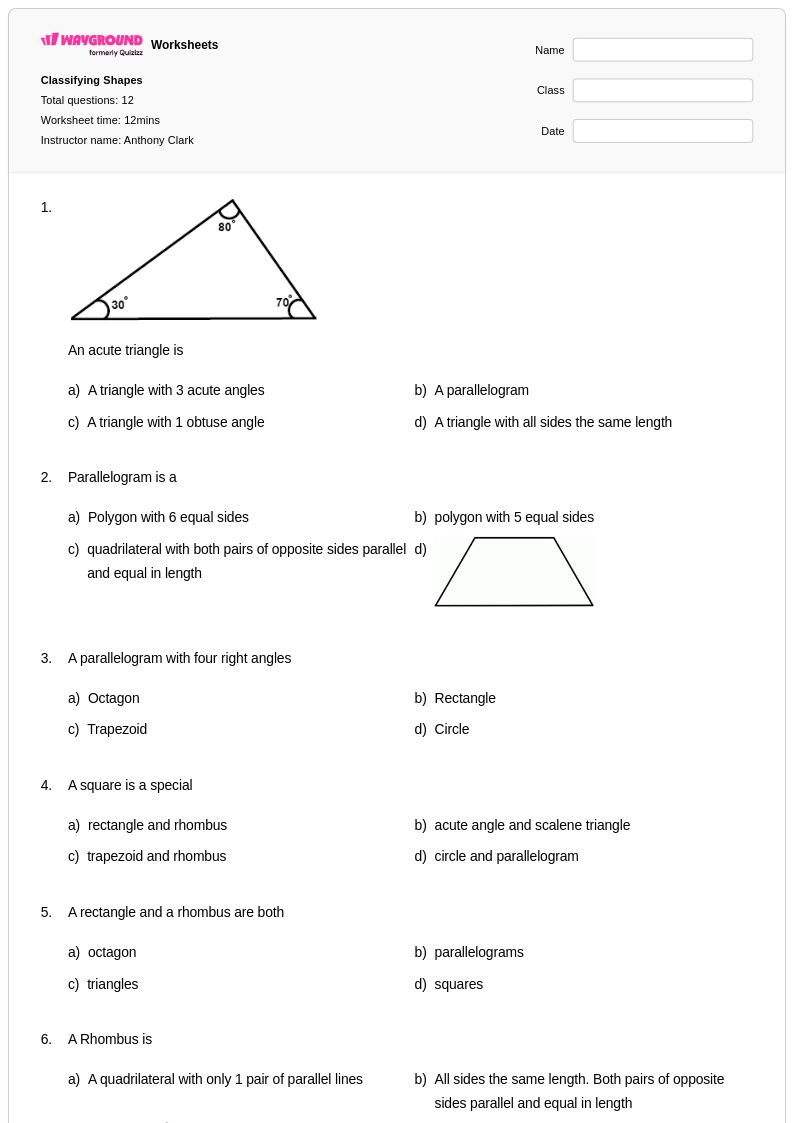
12 Q
5th - Uni
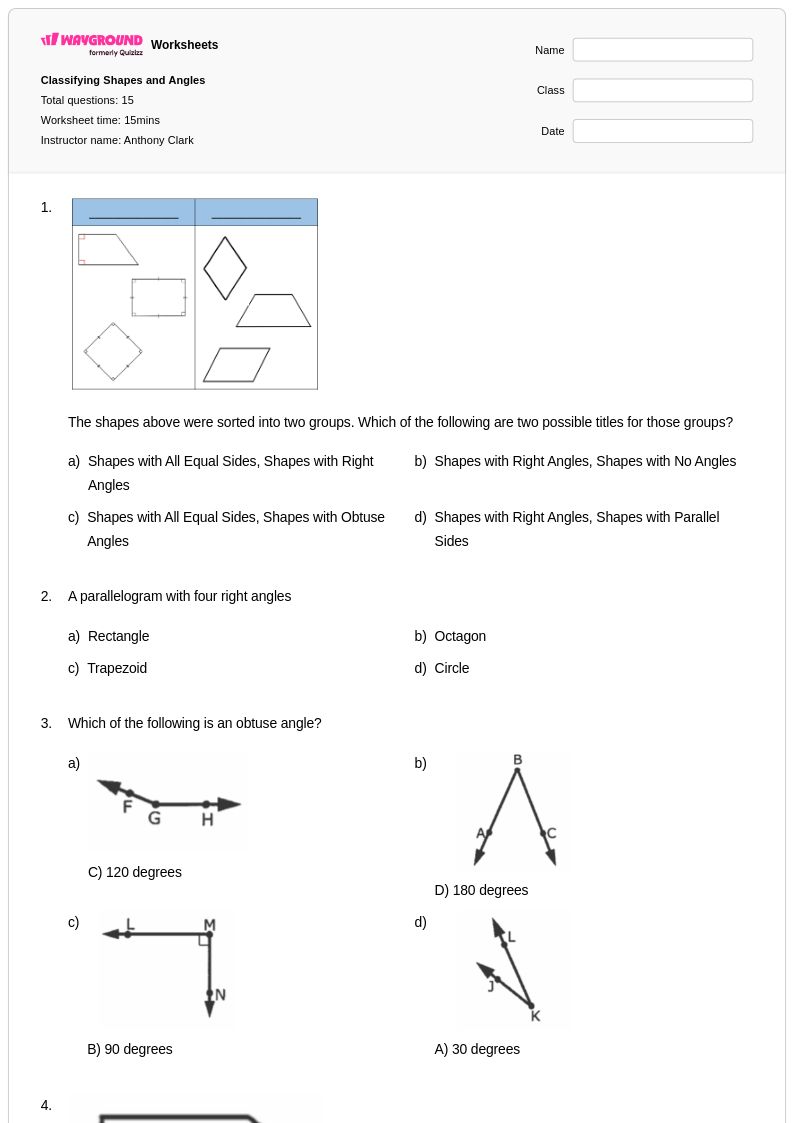
15 Q
5th - Uni
8 Q
3rd - 12th
20 Q
5th - Uni
20 Q
5th - Uni
20 Q
4th - Uni
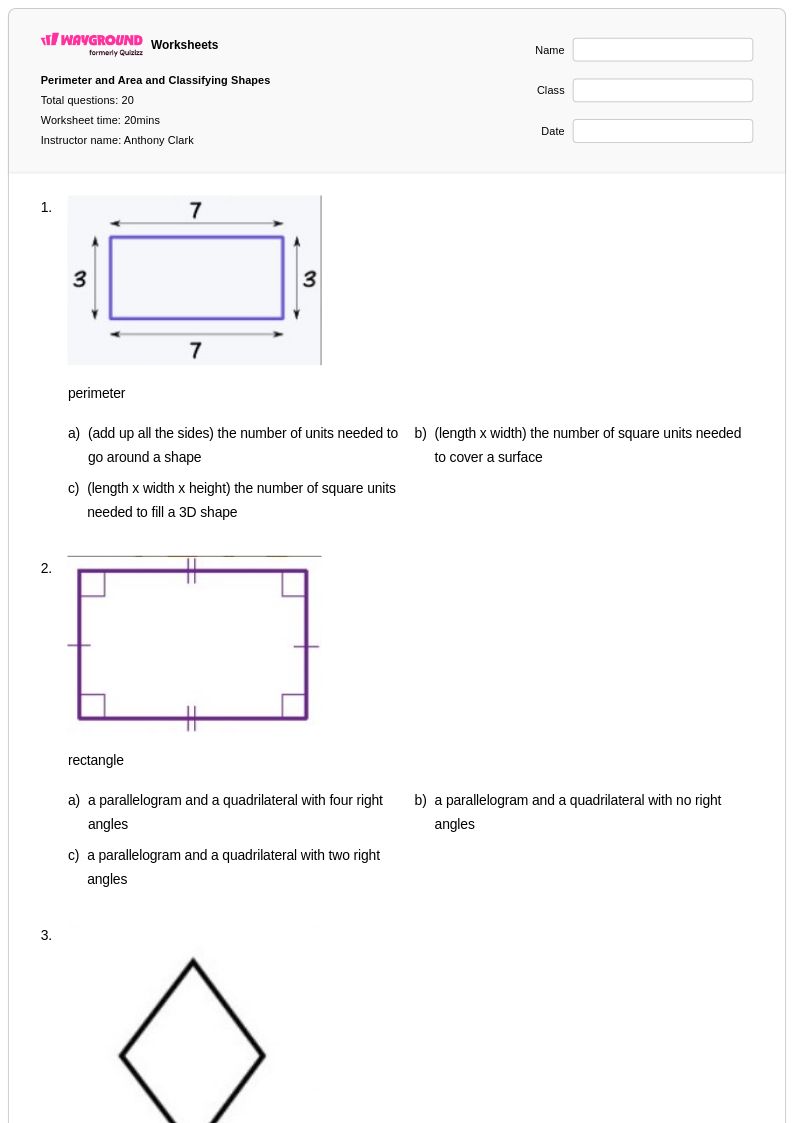
20 Q
5th - Uni
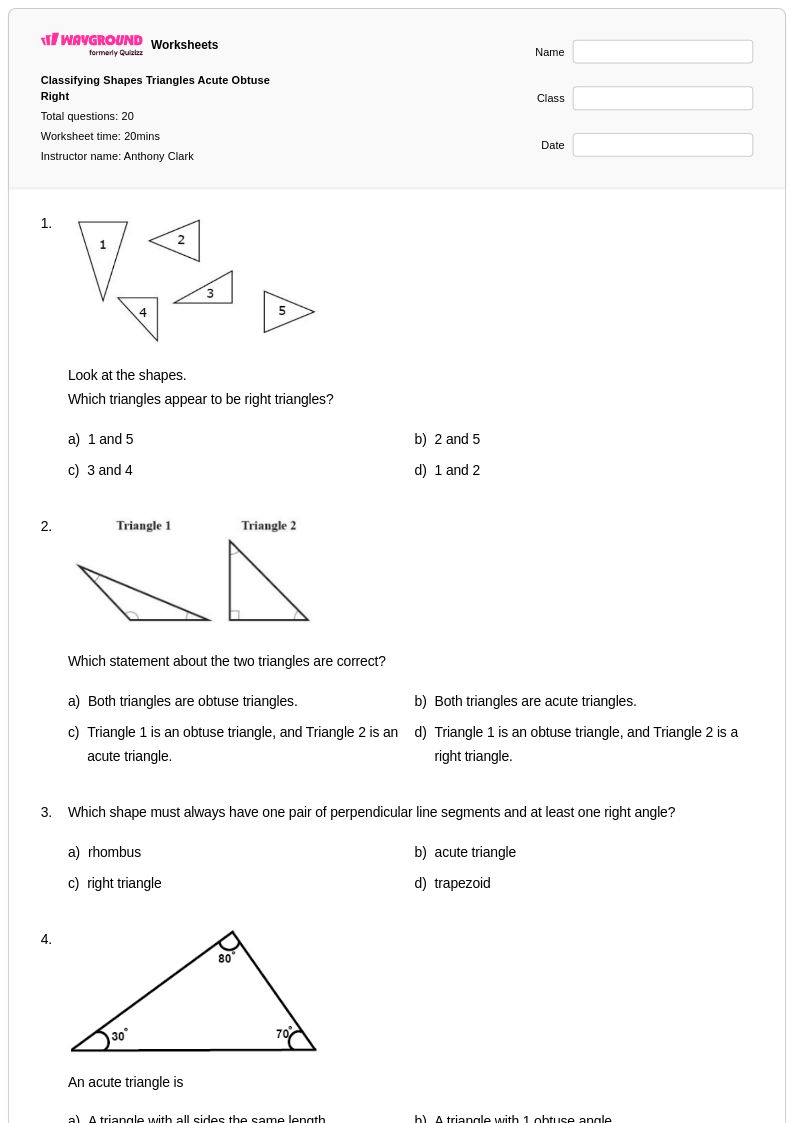
20 Q
5th - Uni
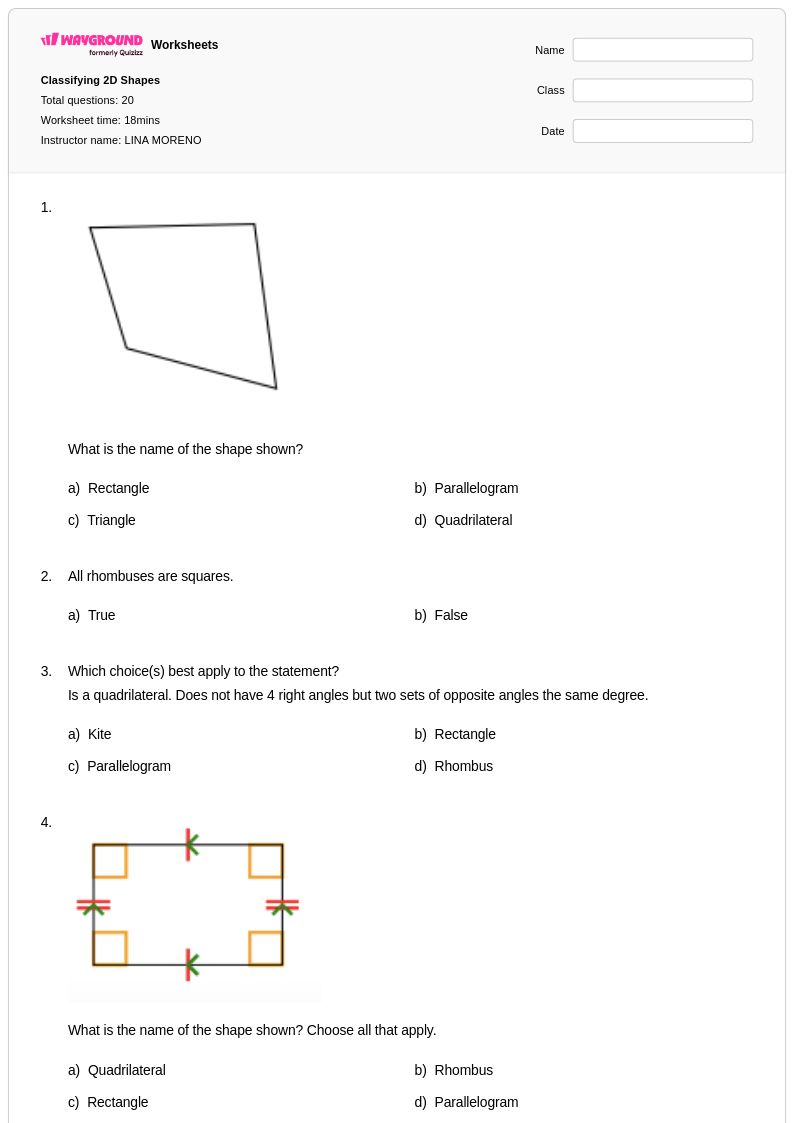
20 Q
5th - 6th
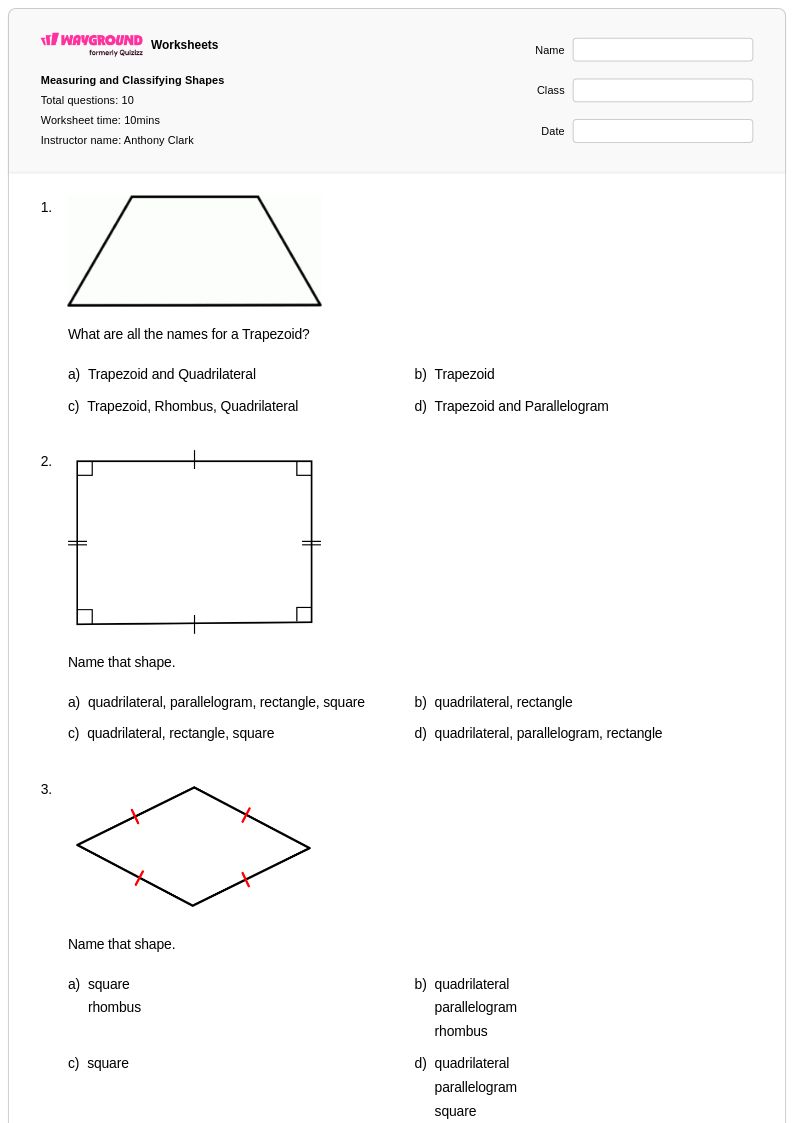
10 Q
5th - Uni
Explore Other Subject Worksheets for year 6
Explore printable Classifying Shapes worksheets for Year 6
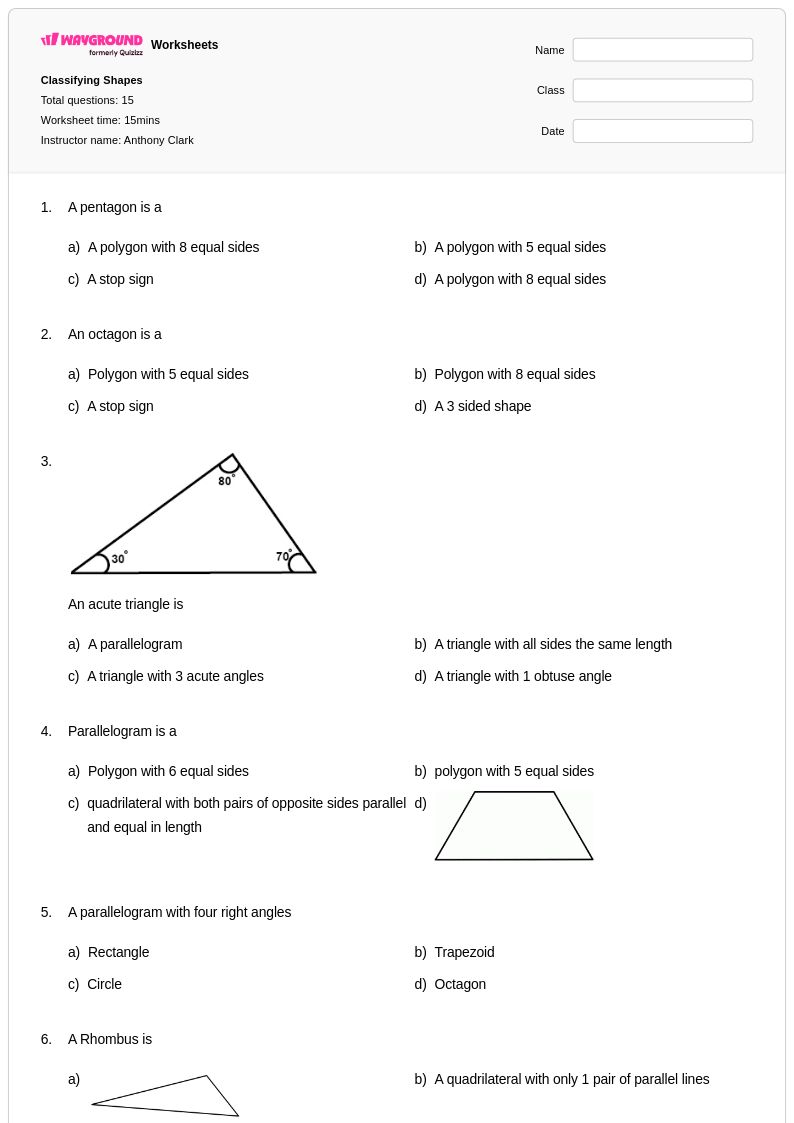
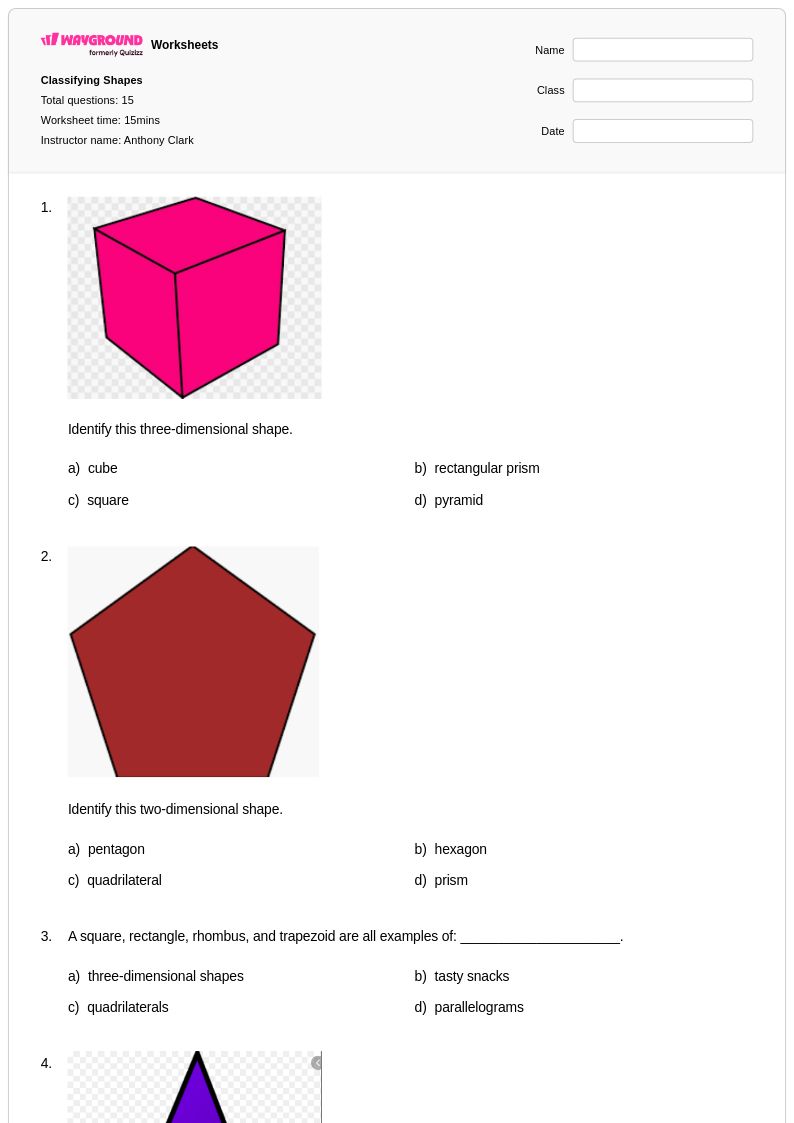
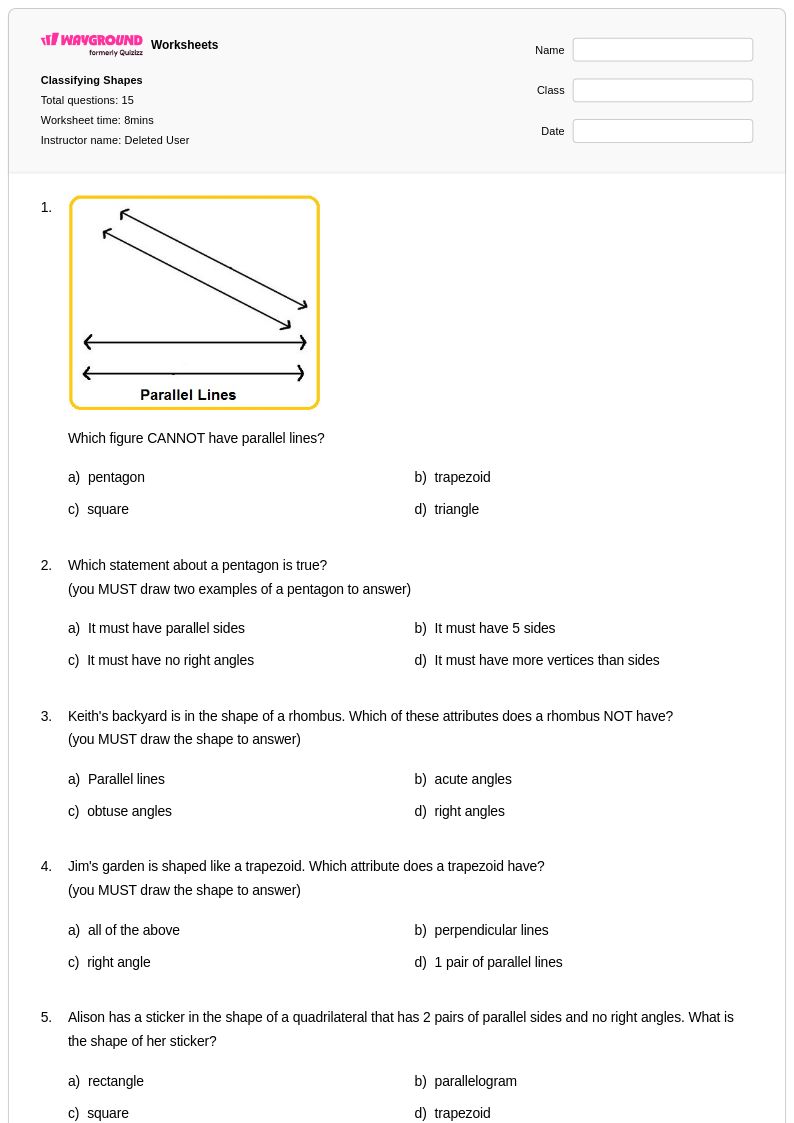
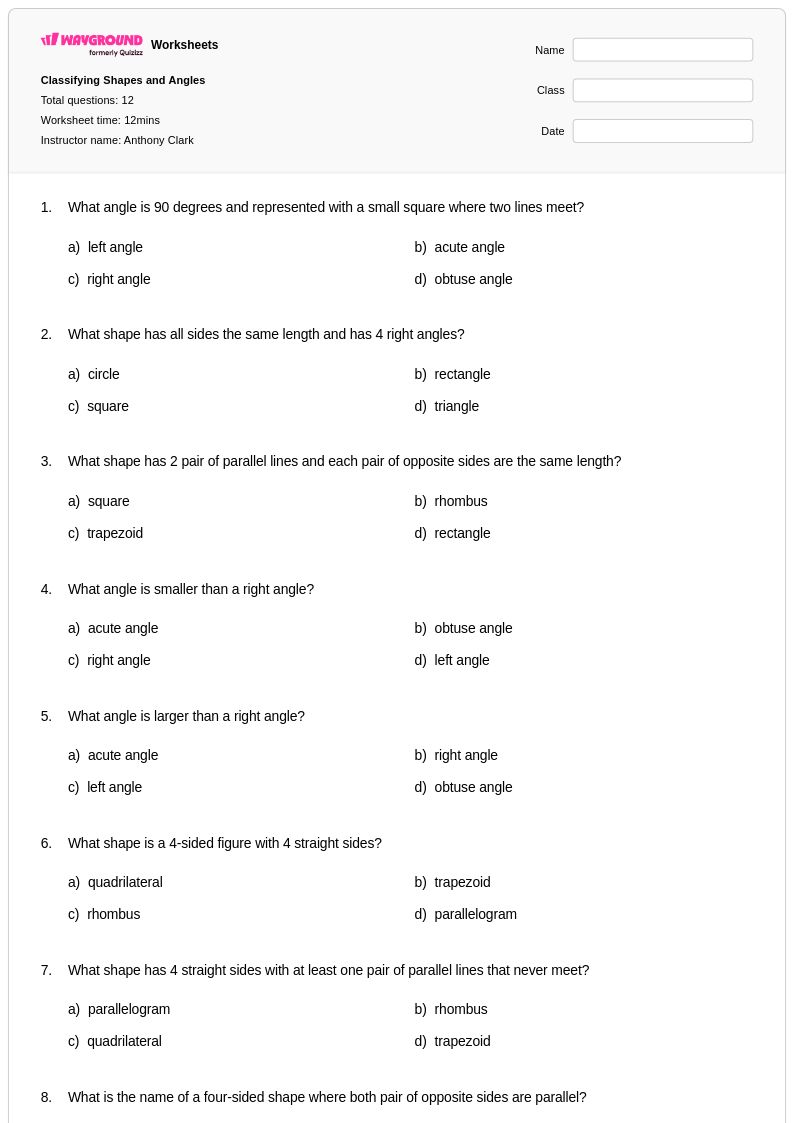
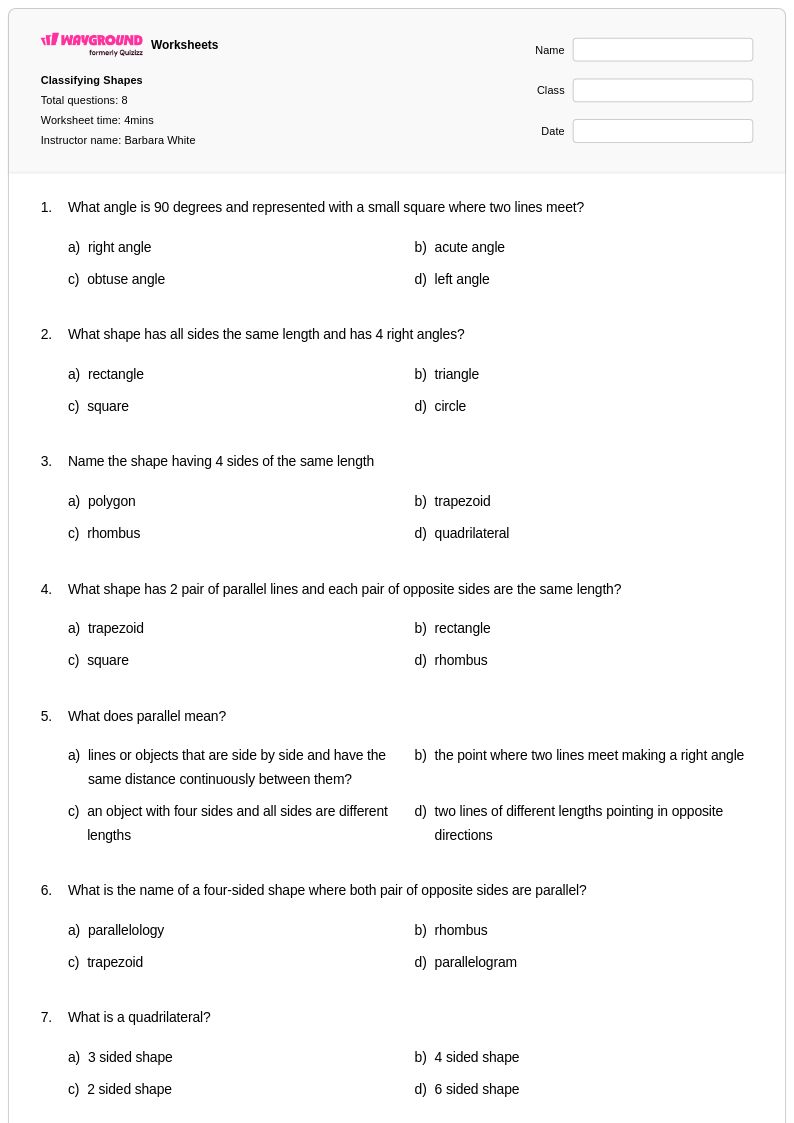
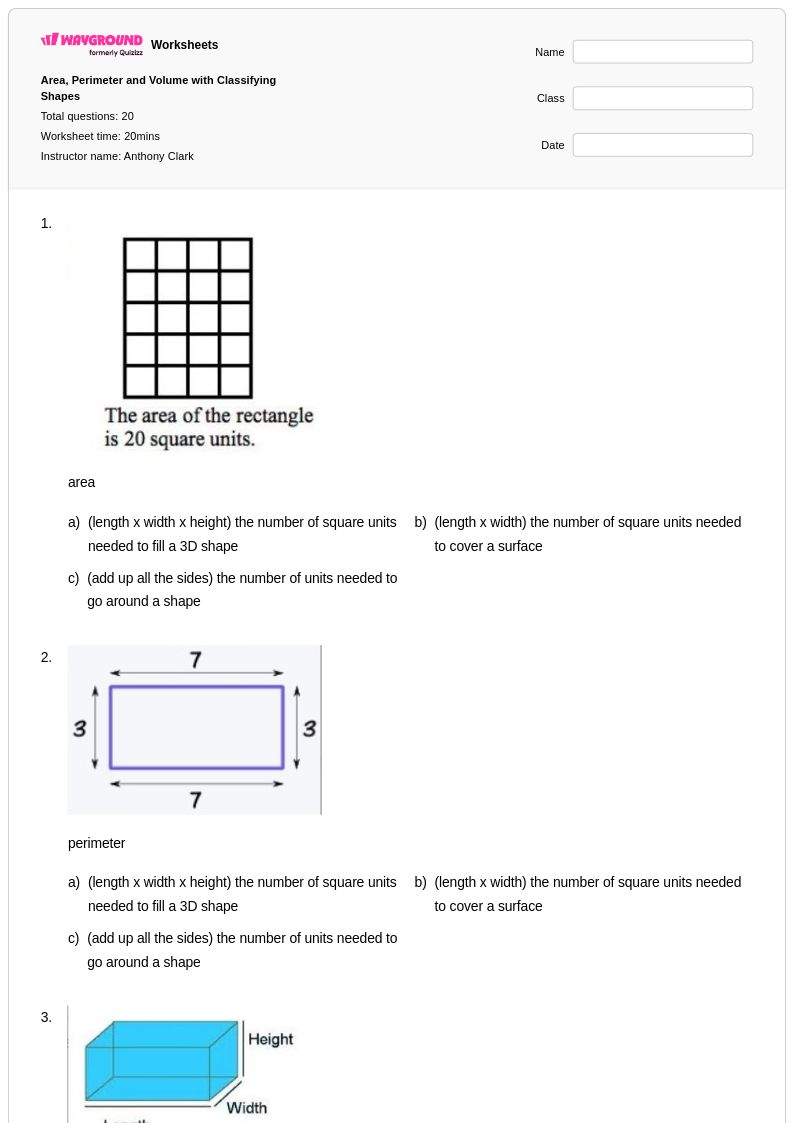
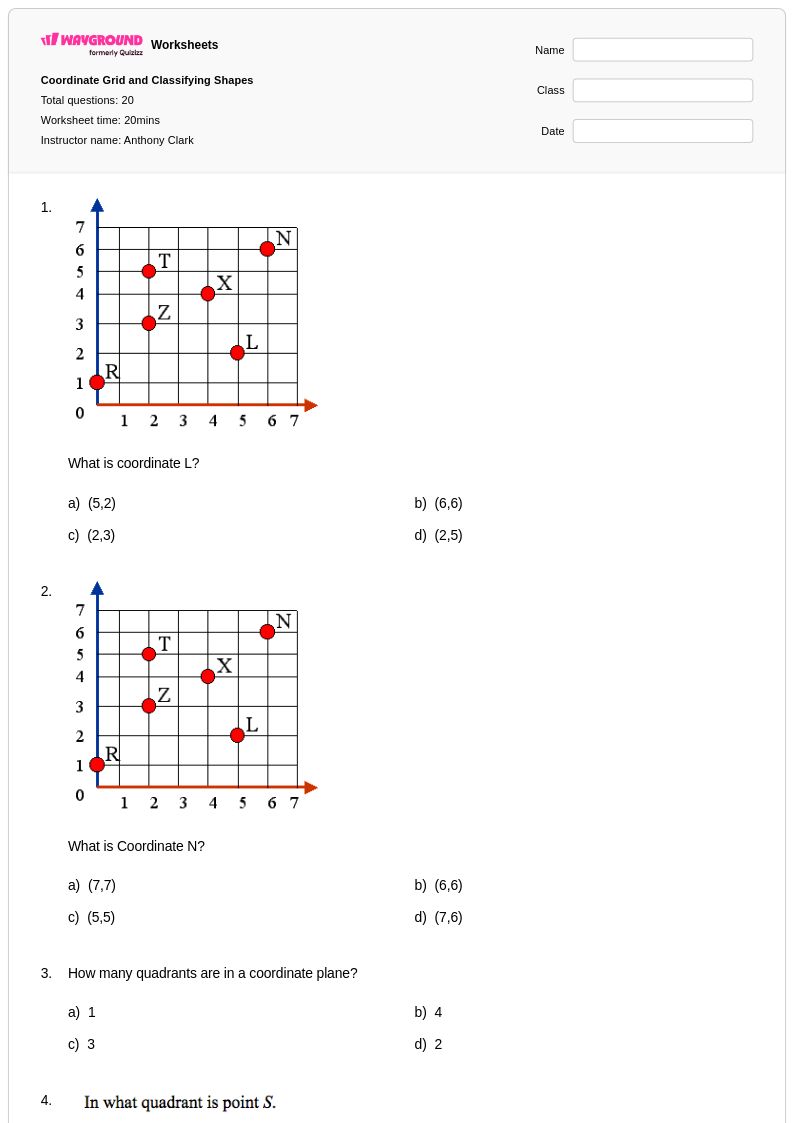
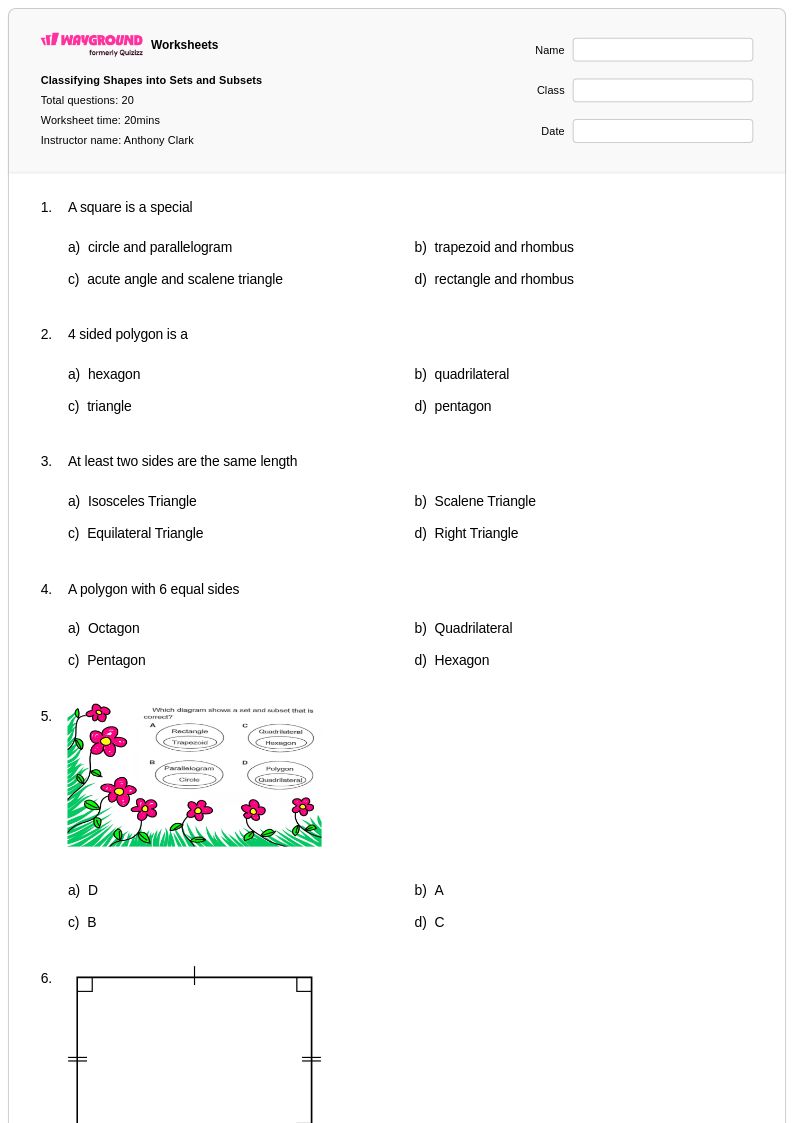
Classifying shapes worksheets for Year 6 students available through Wayground (formerly Quizizz) provide comprehensive practice in identifying, categorizing, and analyzing geometric figures based on their properties. These carefully designed worksheets strengthen essential skills including recognizing polygons by their number of sides, distinguishing between regular and irregular shapes, identifying parallel and perpendicular lines, and classifying triangles and quadrilaterals by their unique characteristics. Students work through systematic practice problems that build their ability to apply geometric vocabulary accurately while developing logical reasoning skills necessary for advanced mathematical concepts. Each worksheet comes with a complete answer key and is available as a free printable pdf, making it easy for educators to incorporate meaningful geometry practice into their curriculum while supporting independent student learning.
Wayground (formerly Quizizz) empowers teachers with an extensive collection of millions of teacher-created classifying shapes resources that can be easily searched, filtered, and customized to meet diverse classroom needs. The platform's robust standards alignment ensures that worksheets directly support curriculum objectives, while built-in differentiation tools allow educators to modify content difficulty and complexity for various learning levels within their Year 6 classrooms. Teachers can seamlessly access these materials in both printable and digital formats, including downloadable pdf versions, providing flexibility for in-person instruction, homework assignments, or remote learning environments. These comprehensive resources streamline lesson planning while offering targeted options for remediation, enrichment, and skill reinforcement, enabling educators to address individual student needs and ensure mastery of fundamental geometric classification concepts.
FAQs
How do I teach classifying shapes to sixth graders?
What exercises are useful for Grade 6 shape-classification practice?
What mistakes do sixth graders commonly make when classifying shapes?
How can I assign a Grade 6 classifying shapes worksheet?
How does classifying shapes connect to the Grade 6 Common Core math curriculum?
How can I differentiate shape-classification work in Grade 6?
What grade do students learn to classify regular and irregular shapes?