Free Printable Comparing Length Worksheets for Year 2
Discover free Year 2 comparing length worksheets and printables from Wayground that help students practice measuring and comparing objects through engaging problems, complete with answer keys and downloadable PDFs.
Explore printable Comparing Length worksheets for Year 2
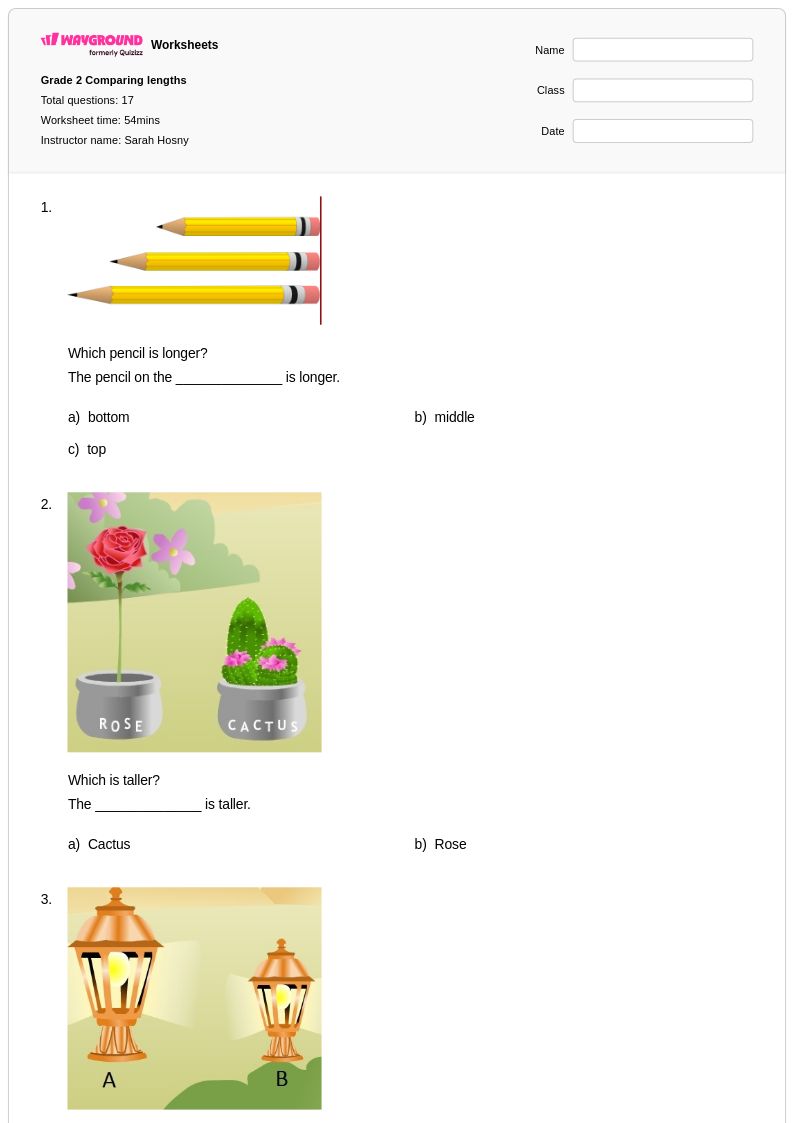
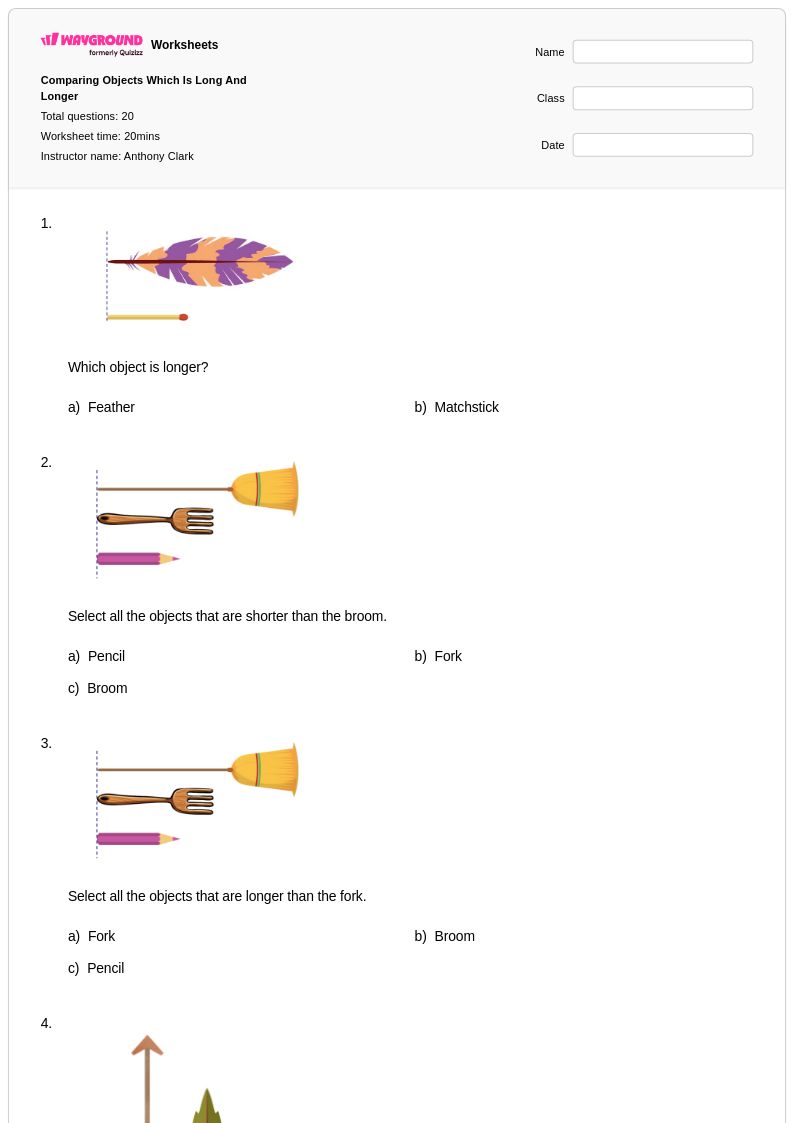
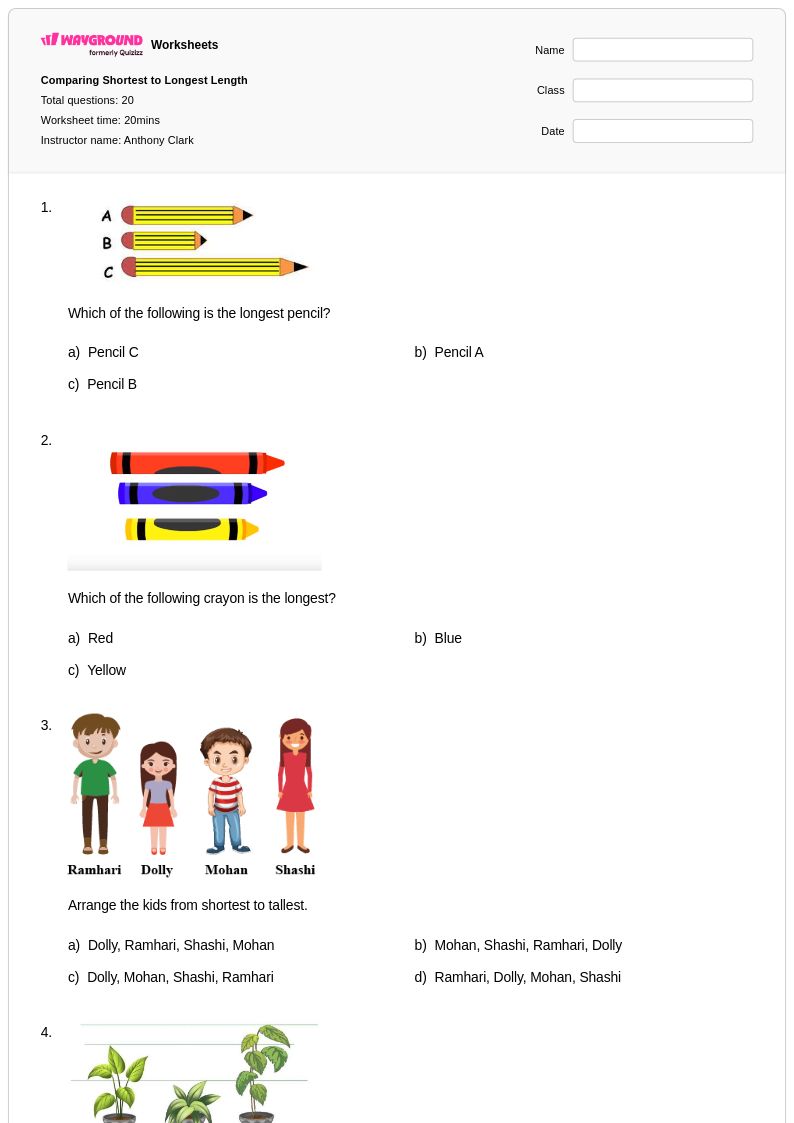
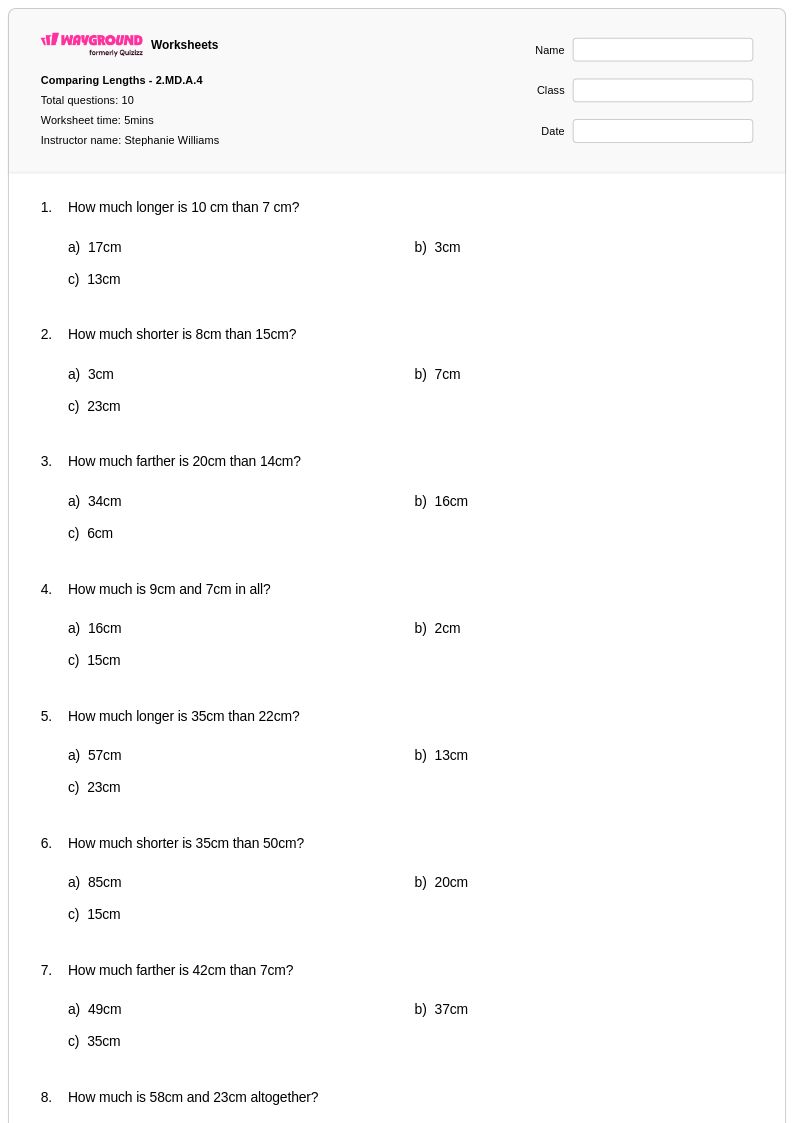
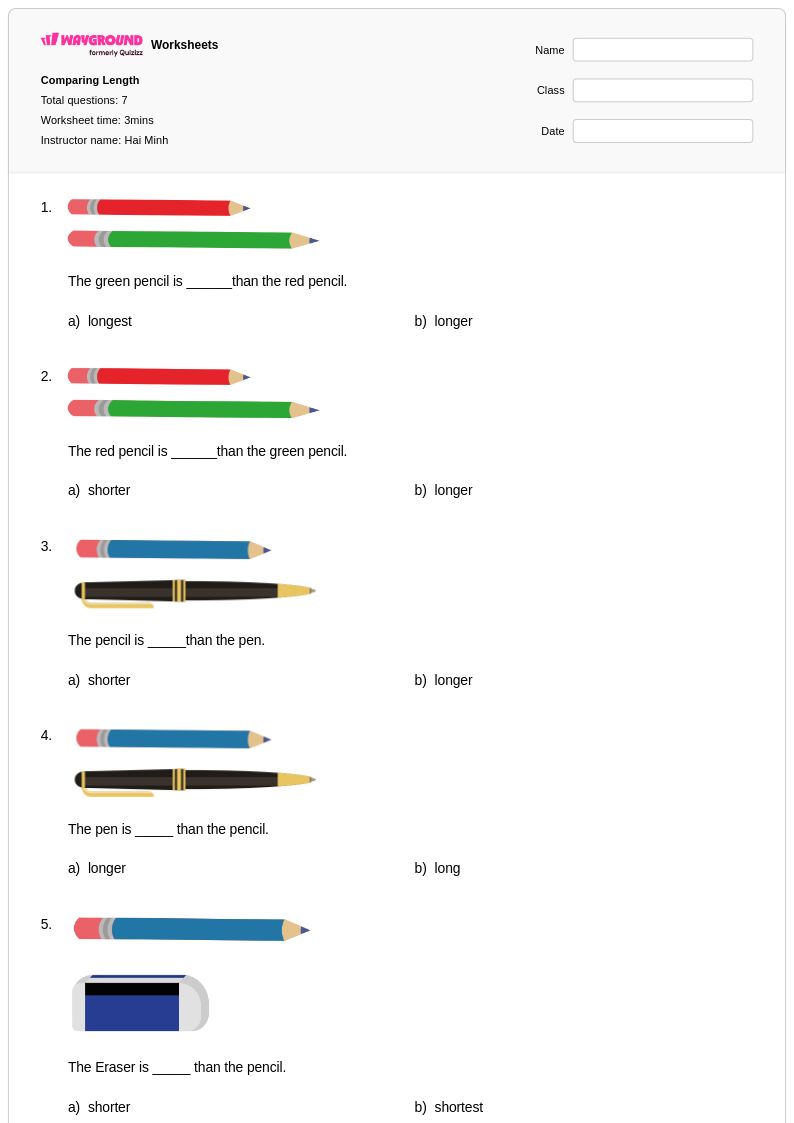
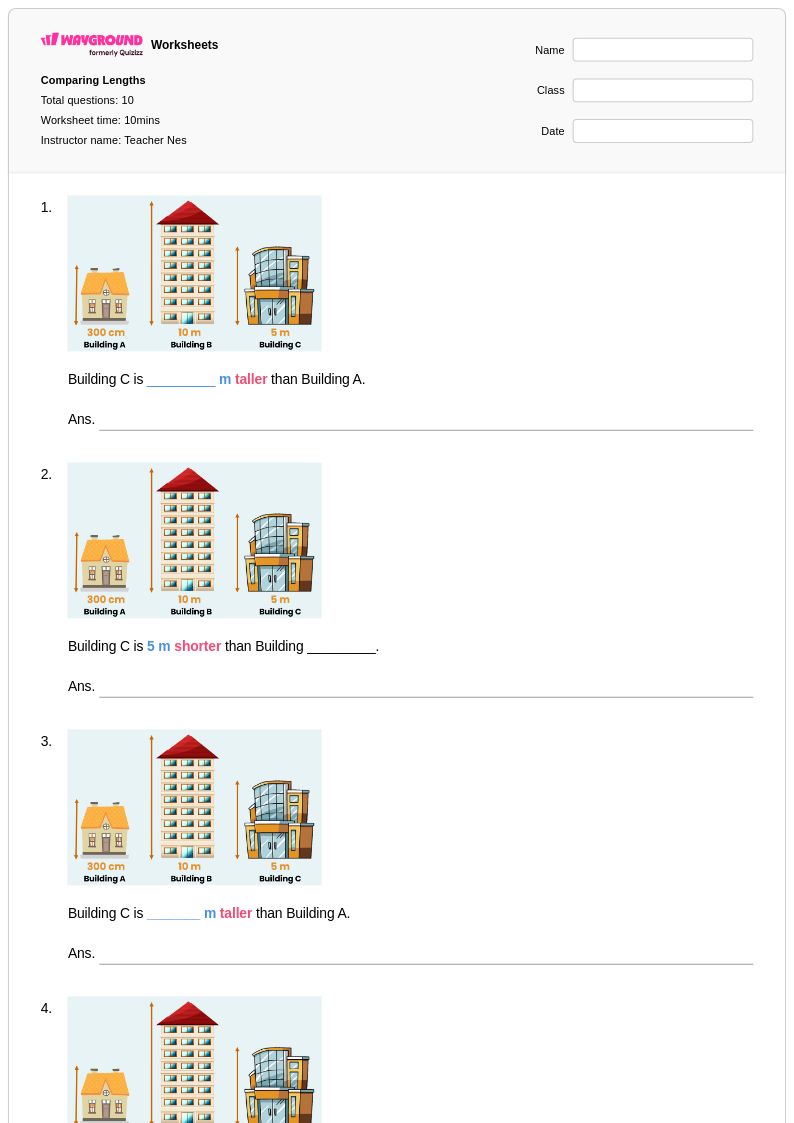
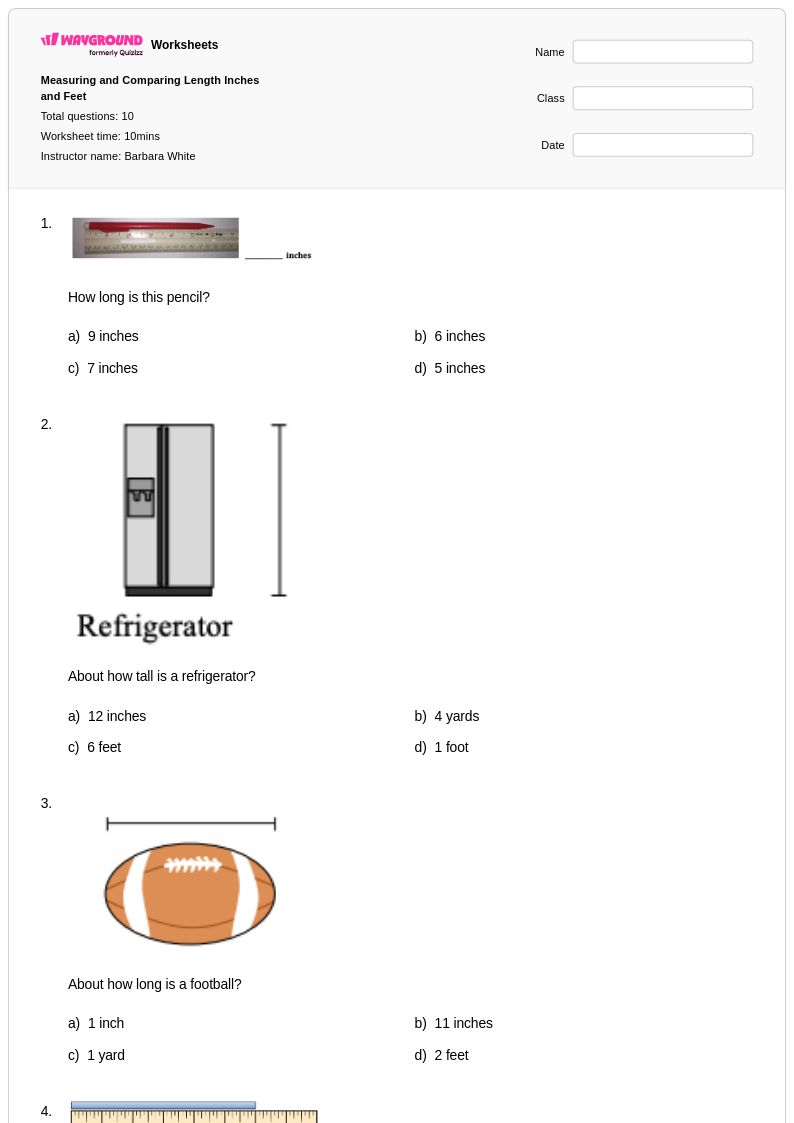
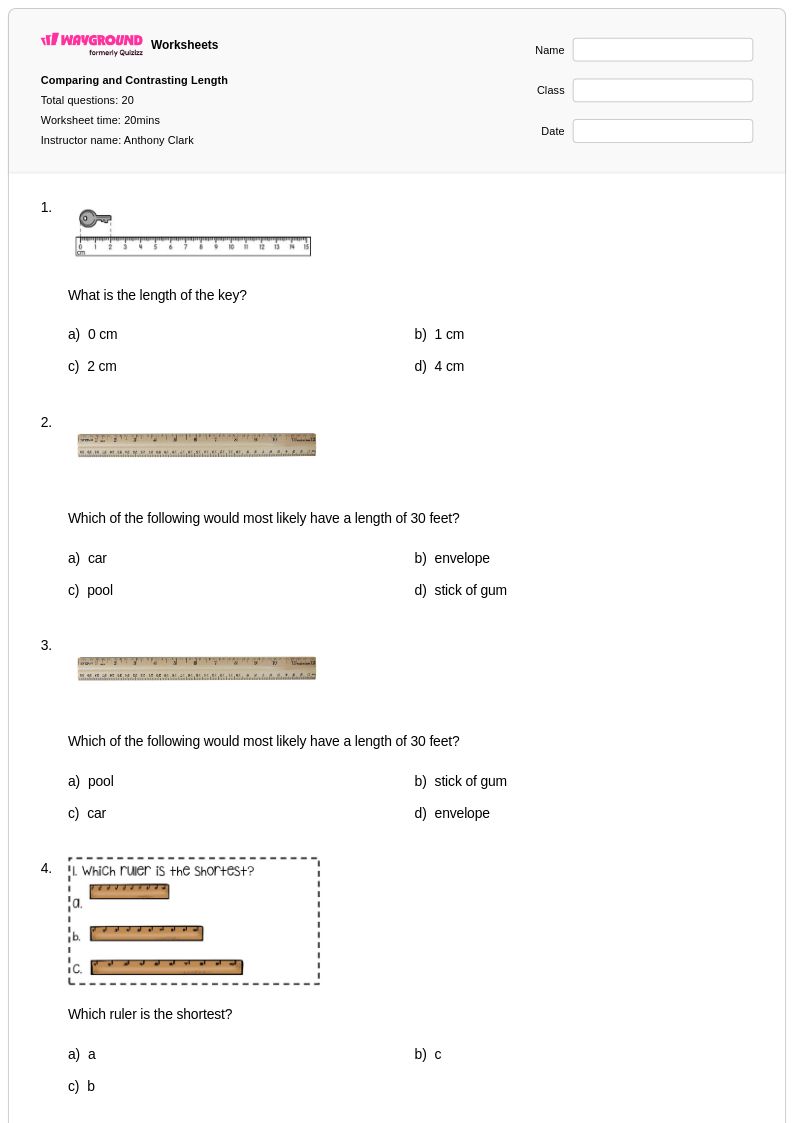
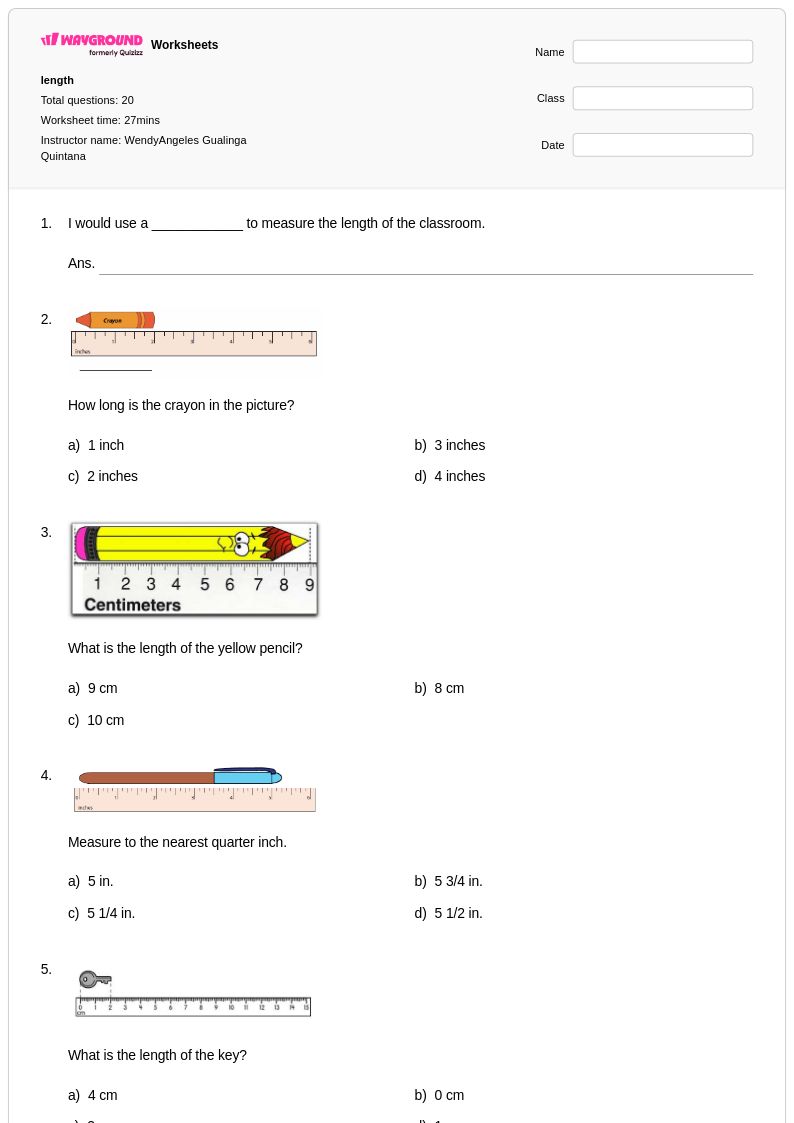
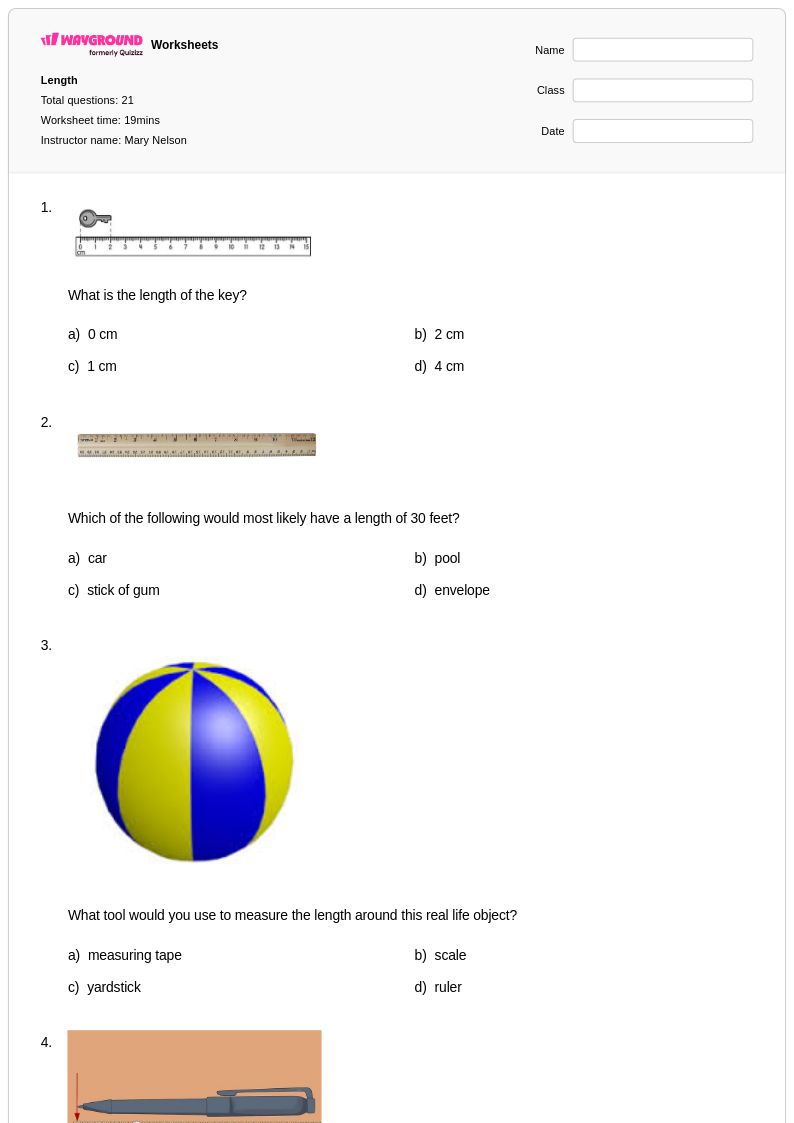
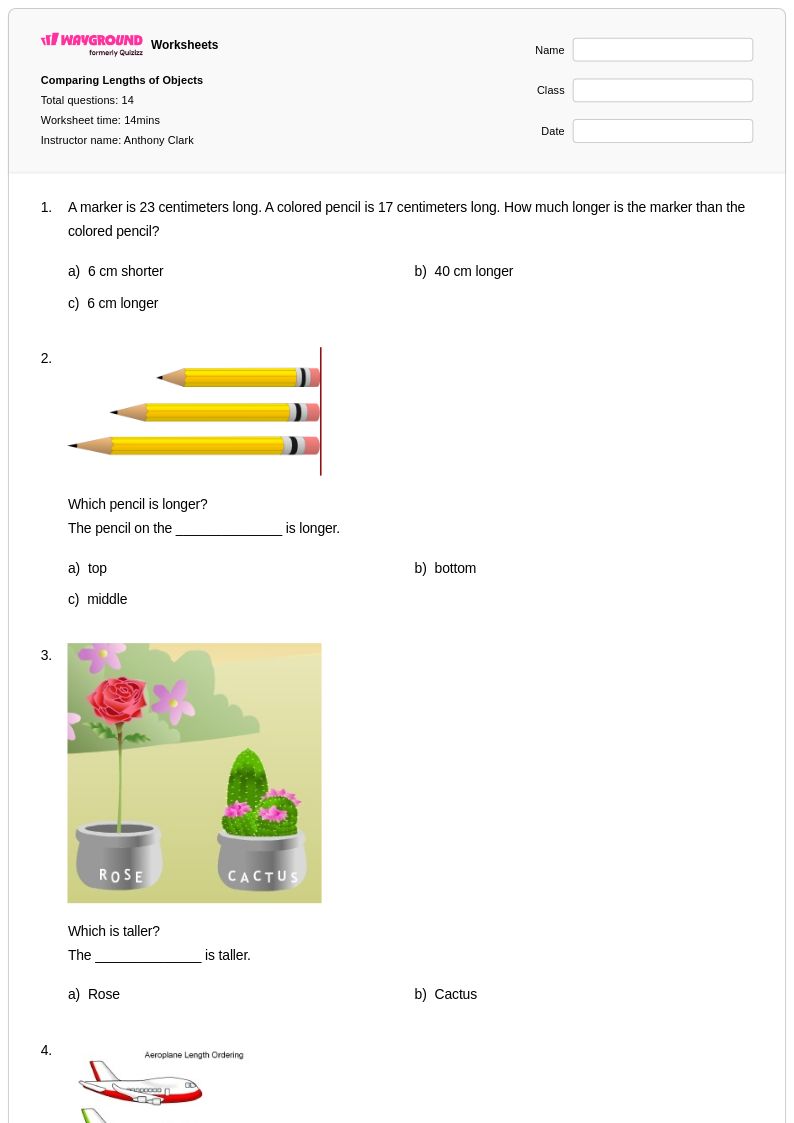
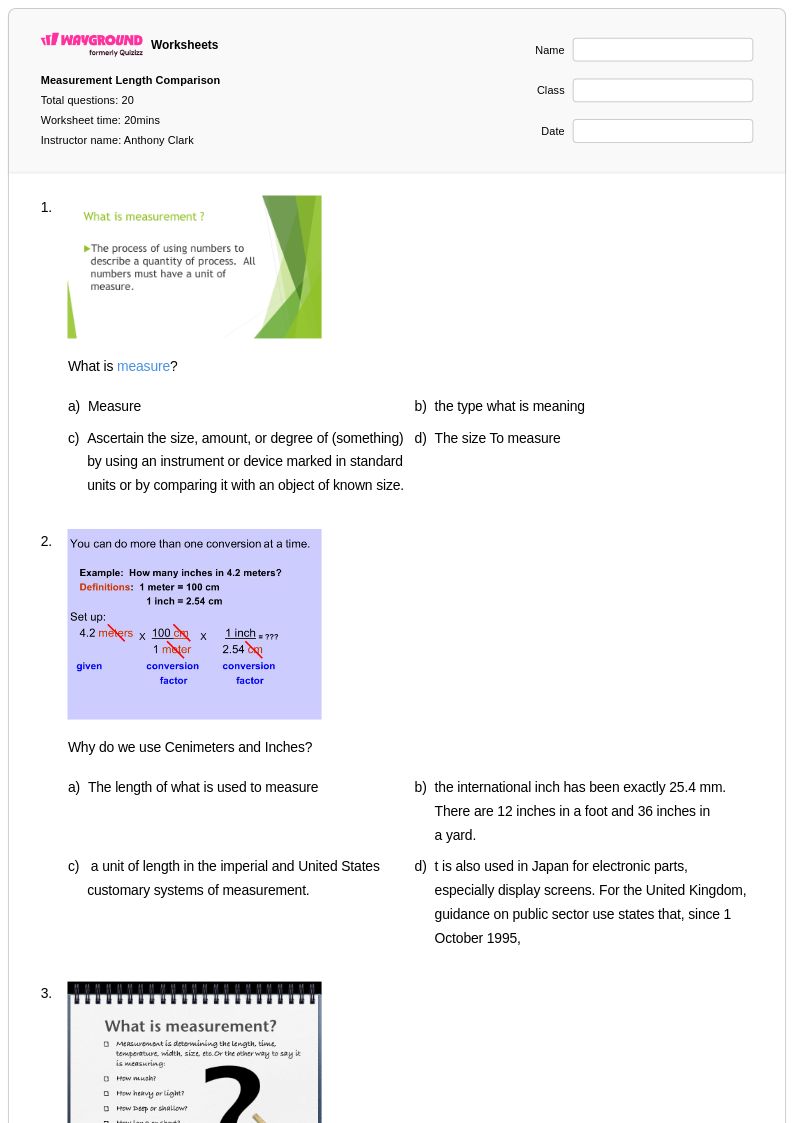
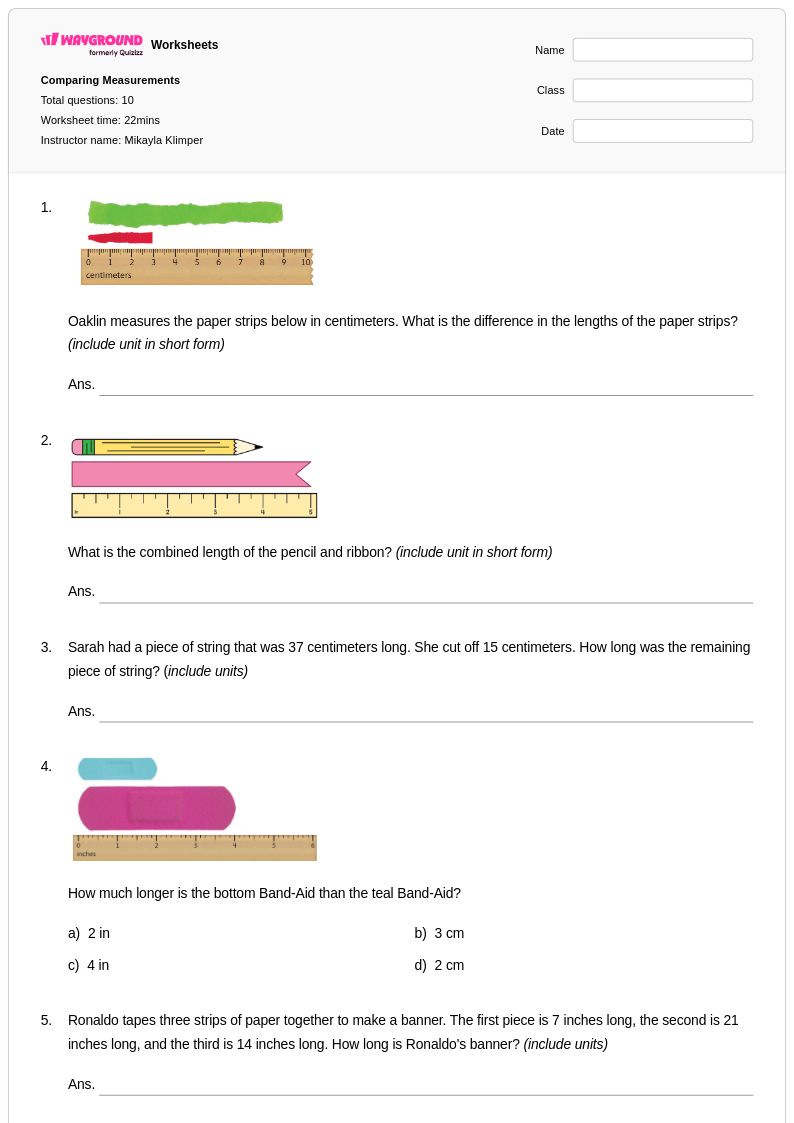
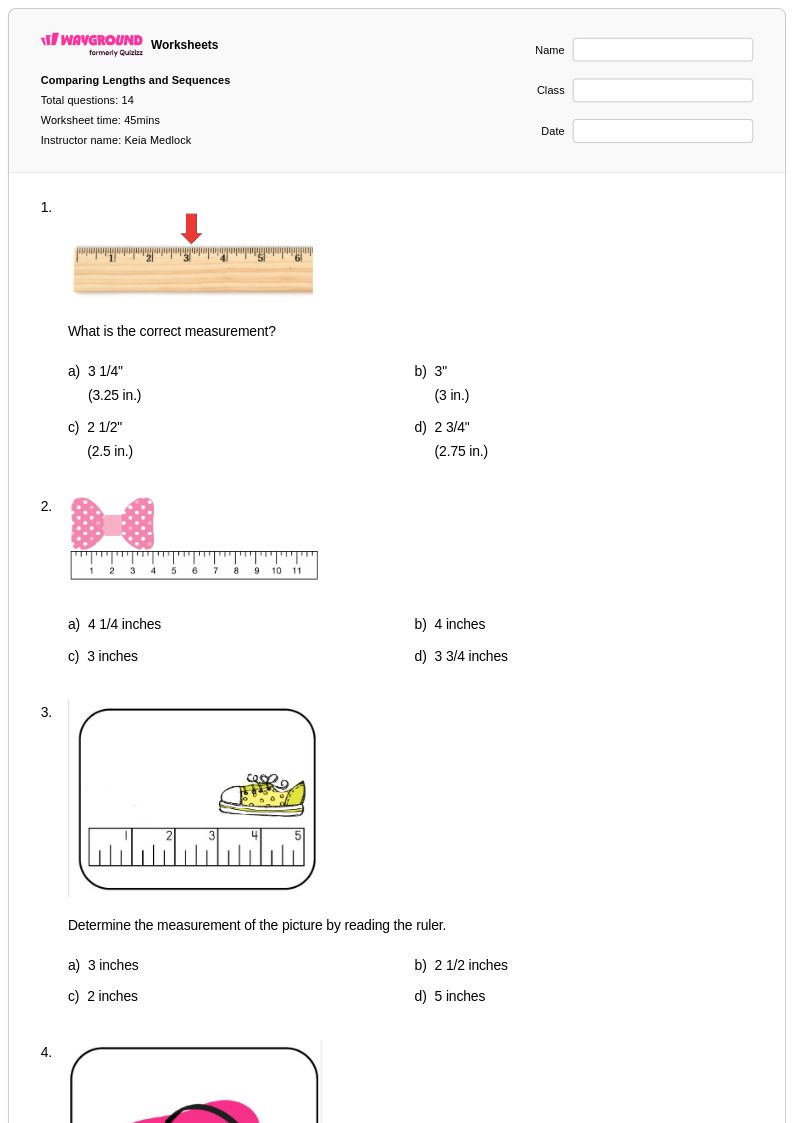
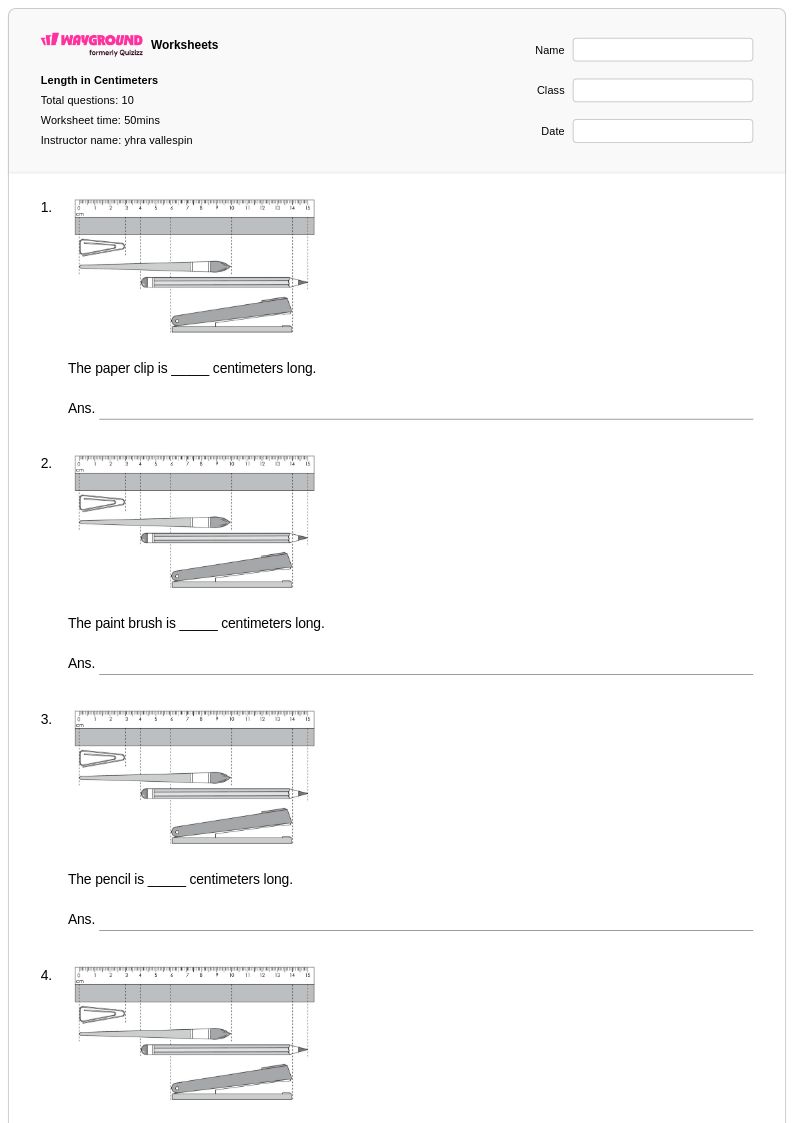
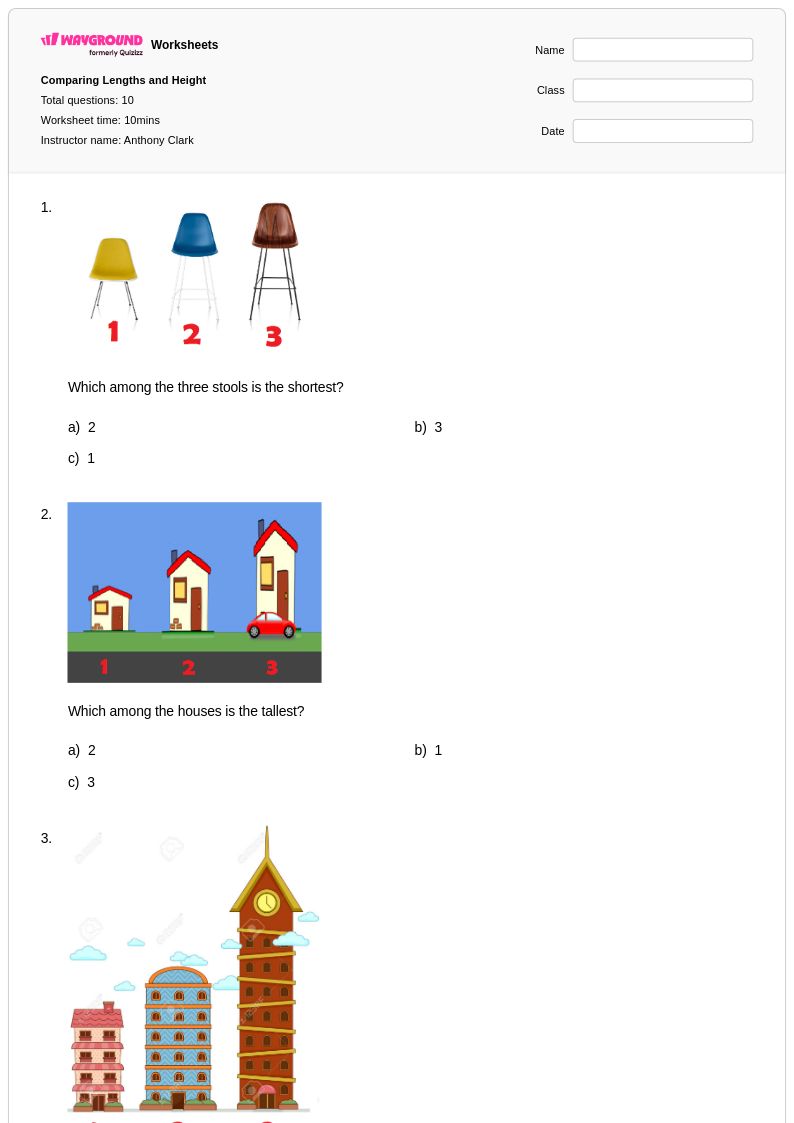
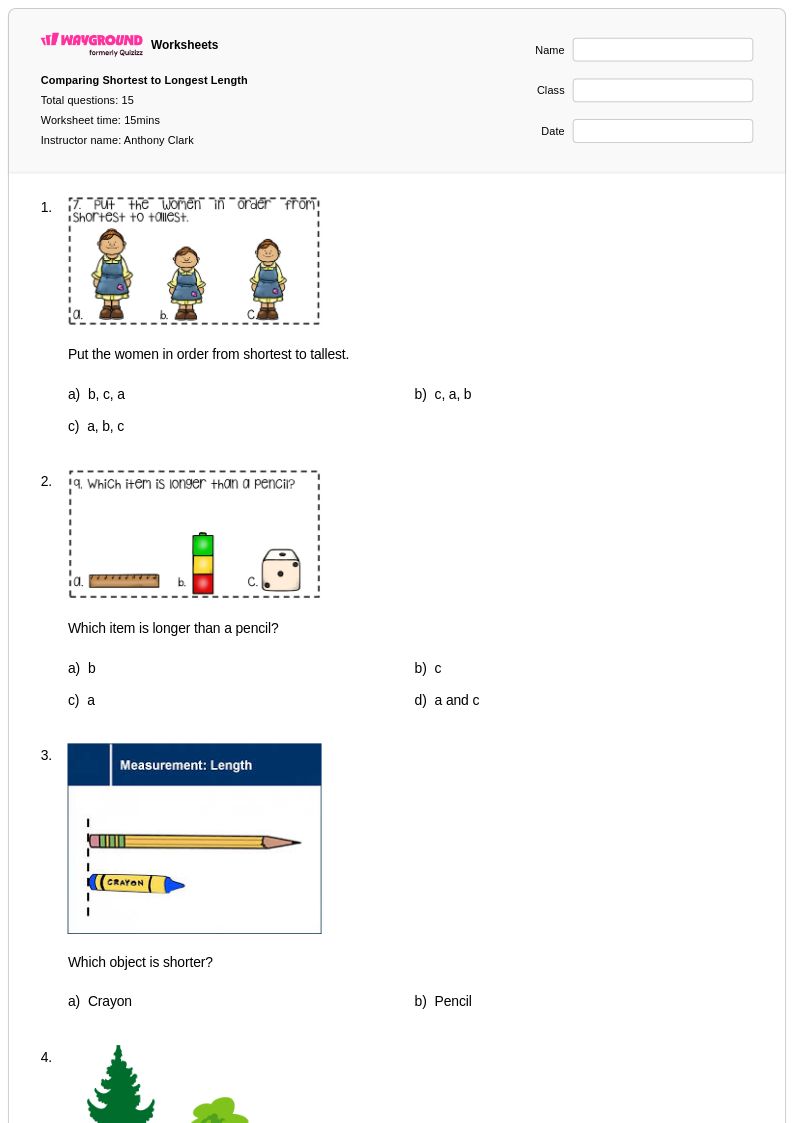
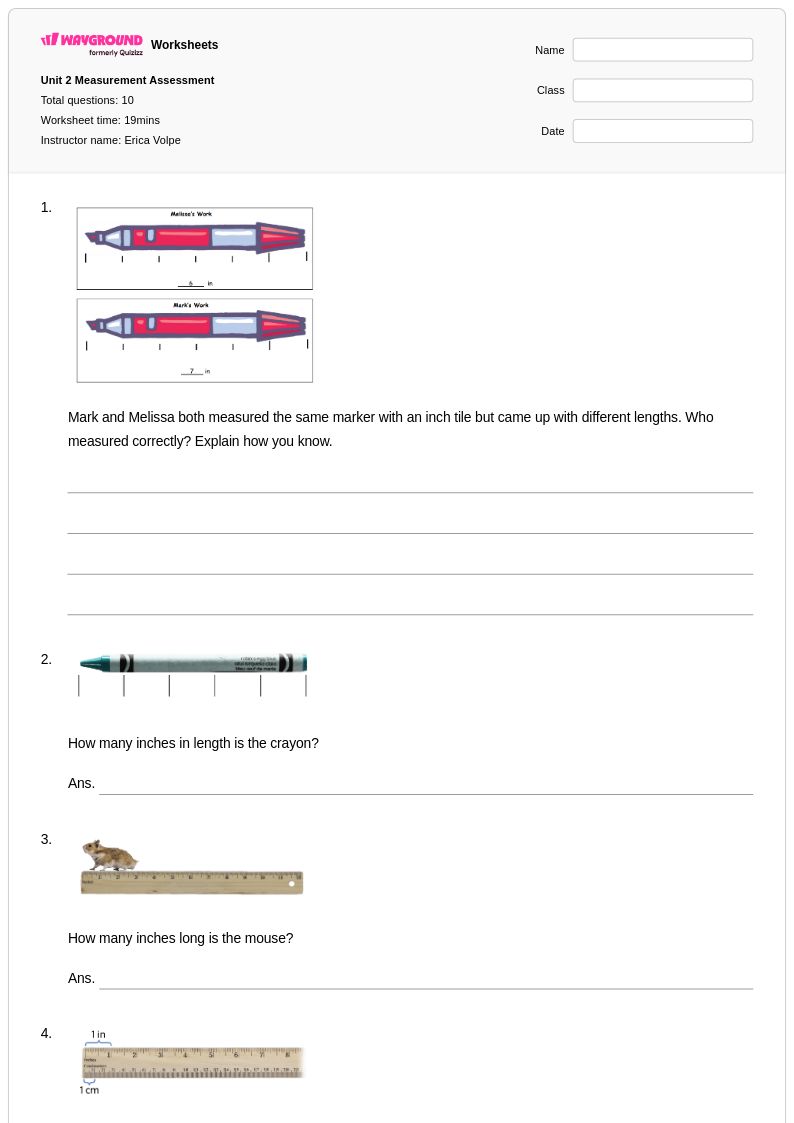
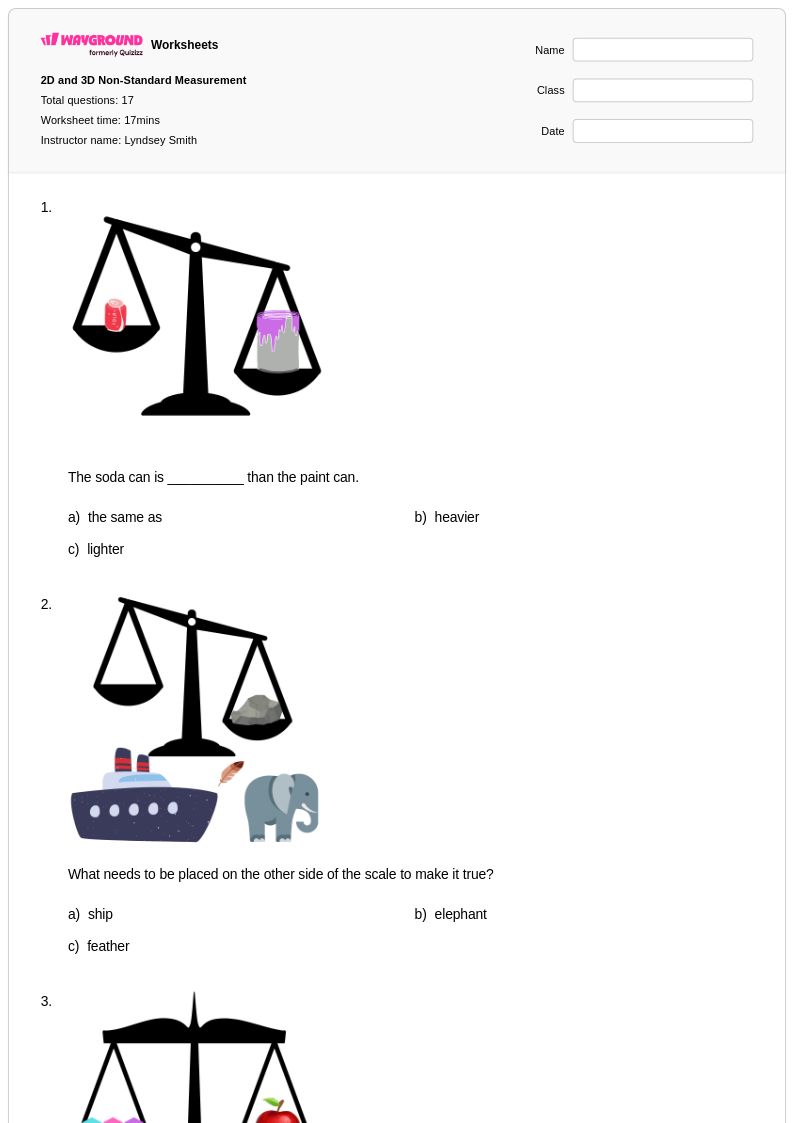
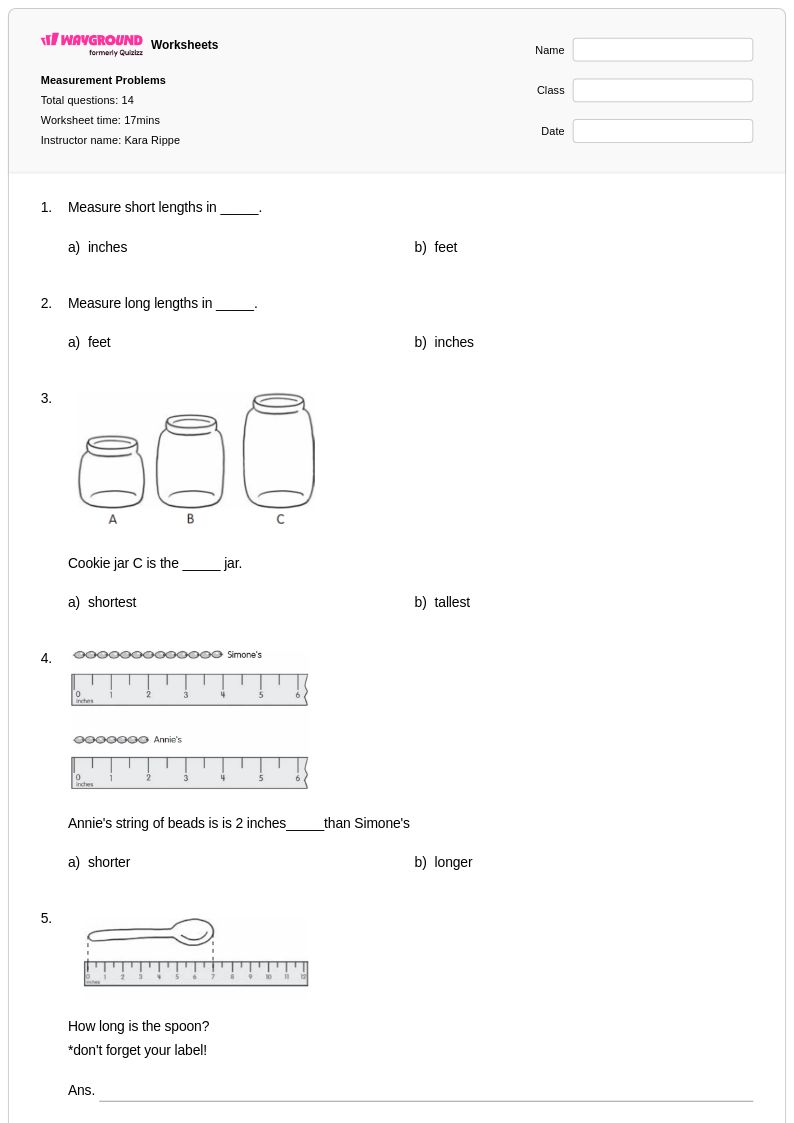
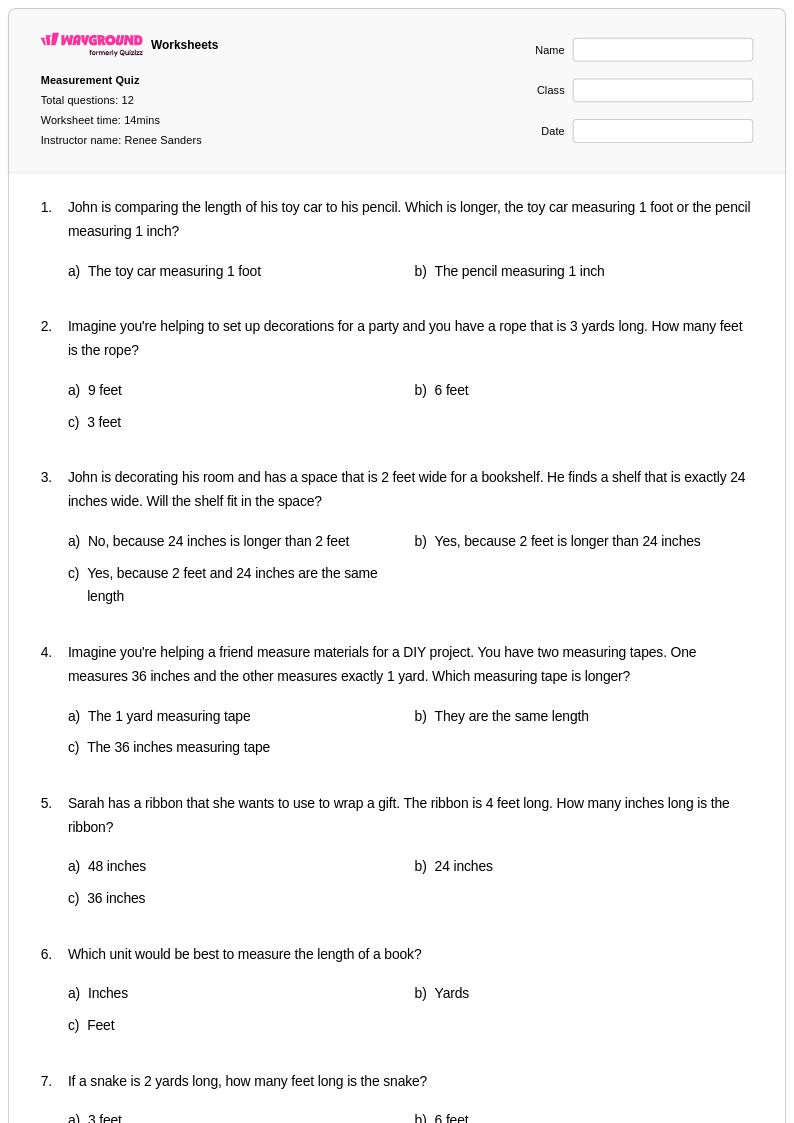
Comparing length worksheets for Year 2 from Wayground (formerly Quizizz) provide essential foundation-building activities that help young mathematicians develop critical measurement comparison skills. These comprehensive printables guide students through systematic practice with concepts such as longer, shorter, tallest, and shortest using both direct and indirect comparison methods. Each worksheet collection includes varied practice problems that progress from concrete manipulative-based comparisons to more abstract visual assessments, strengthening students' ability to analyze and compare objects of different lengths. The accompanying answer key supports both independent learning and teacher assessment, while the free pdf format ensures easy access for classroom and home use.
Wayground (formerly Quizizz) empowers educators with millions of teacher-created comparing length resources that streamline lesson planning and differentiated instruction for Year 2 mathematics. The platform's robust search and filtering capabilities allow teachers to quickly locate worksheets aligned with specific learning standards and student readiness levels, while built-in customization tools enable seamless modification of practice problems to meet diverse classroom needs. These versatile resources are available in both printable and digital formats, including downloadable pdf versions, making them ideal for in-class activities, homework assignments, remediation sessions, and enrichment opportunities. Teachers can efficiently assess student progress, identify areas requiring additional support, and provide targeted skill practice that builds confident measurement comparison abilities across all learning environments.
FAQs
How do I teach comparing length in second grade?
Review direct comparison with aligned objects, then model indirect comparison using a third object or consistent measurement unit. Ask students to estimate first, measure or compare systematically, and explain how their evidence shows which object is longer, shorter, tallest, or shortest.
What exercises help second graders practice comparing length?
Second graders should compare and order multiple objects, use manipulatives to test estimates, and solve visual problems that require direct or indirect comparison. A useful progression moves from concrete objects to drawings and then to numerical measurements expressed in a consistent unit.
What mistakes do second graders make when comparing lengths?
Students may misalign endpoints, switch measurement units, leave gaps or overlaps when iterating a unit, or compare only the numerical values without interpreting the objects. They may also confuse tallest with longest, so prompts should identify the specific dimension being compared.
How can I use a Grade 2 comparing length worksheet from Wayground?
Wayground worksheets are available as printable PDFs and digital formats, accommodating different classroom setups and student preferences. Teachers can host a worksheet as a digital quiz on Wayground or print it and assign it on paper; every worksheet includes a complete answer key. Completed physical worksheets can be scanned or captured for grading with the Wayground for Teachers app.
How does comparing length fit into the Common Core second-grade math progression?
Comparing length aligns with the Common Core emphasis on choosing appropriate tools, measuring with standard units, estimating, and determining differences between lengths. It extends earlier direct-comparison work into numerical reasoning and prepares students for more complex measurement and data problems.
How can I differentiate comparing length worksheets for second graders?
Teachers can support developing learners with concrete manipulatives, fewer comparison items, larger fonts, wider spacing, or translated worksheet versions, while advanced students can solve indirect comparisons and explain differences numerically. Digital sessions can include saved student-level accommodations such as extended time, Read Aloud, reduced answer choices, and reading mode.
What grade do students learn direct and indirect length comparison?
Students encounter direct length comparison in the early grades and develop more systematic direct and indirect methods in Grade 2. At this stage, they connect comparisons to standard measurement, estimation, and numerical differences rather than relying only on visual judgments.